

Submitted:
03 June 2026
Posted:
05 June 2026
You are already at the latest version
Abstract
Transition towers and conveyor structures in steel industries that are utilized for material transfer require regular visual inspections to ensure optimal performance. However, due to their high altitude and the challenging environmental conditions, such as strong winds and extreme dust, these inspections are both costly and labor-intensive for decision-makers. Additionally, severe dust necessitates frequent maintenance of any wireless cameras installed for continuous monitoring, as they require regular cleaning and cannot cover all sections of the area. Tilt-rotor quadcopters have emerged as a promising solution for inspecting these industrial structures at hard-to-reach locations within large-scale environments. Nevertheless, wind disturbances, particularly at high altitudes, pose a significant challenge. Therefore, implementing a robust control system capable of maintaining stable performance under such conditions is essential. In this paper, we introduce a tilt-rotor quadcopter control system based on a gain scheduling controller (GSC). Our choice of this control method is motivated by its potential to effectively manage wind disturbances during structural inspections and capture images of the specified structures. We provide a mathematical formulation of the GSC method and present performance simulations using MATLAB and a machine learning approach. Consequently, we evaluated and monitored the control method's performance, observing satisfactory chattering levels relative to those reported in the literature for the specified environment.
Keywords:
gain scheduling control
; tiltrotor quadcopter
; PID
; optimization
; steel industry
1. Introduction
Tiltrotor quadcopters were created due to the lack of easy access to runways everywhere and the inability of conventional quadcopters [1] that have fewer actuators than degrees of freedom to achieve stable flight, making it impossible to control all degrees of freedom independently.
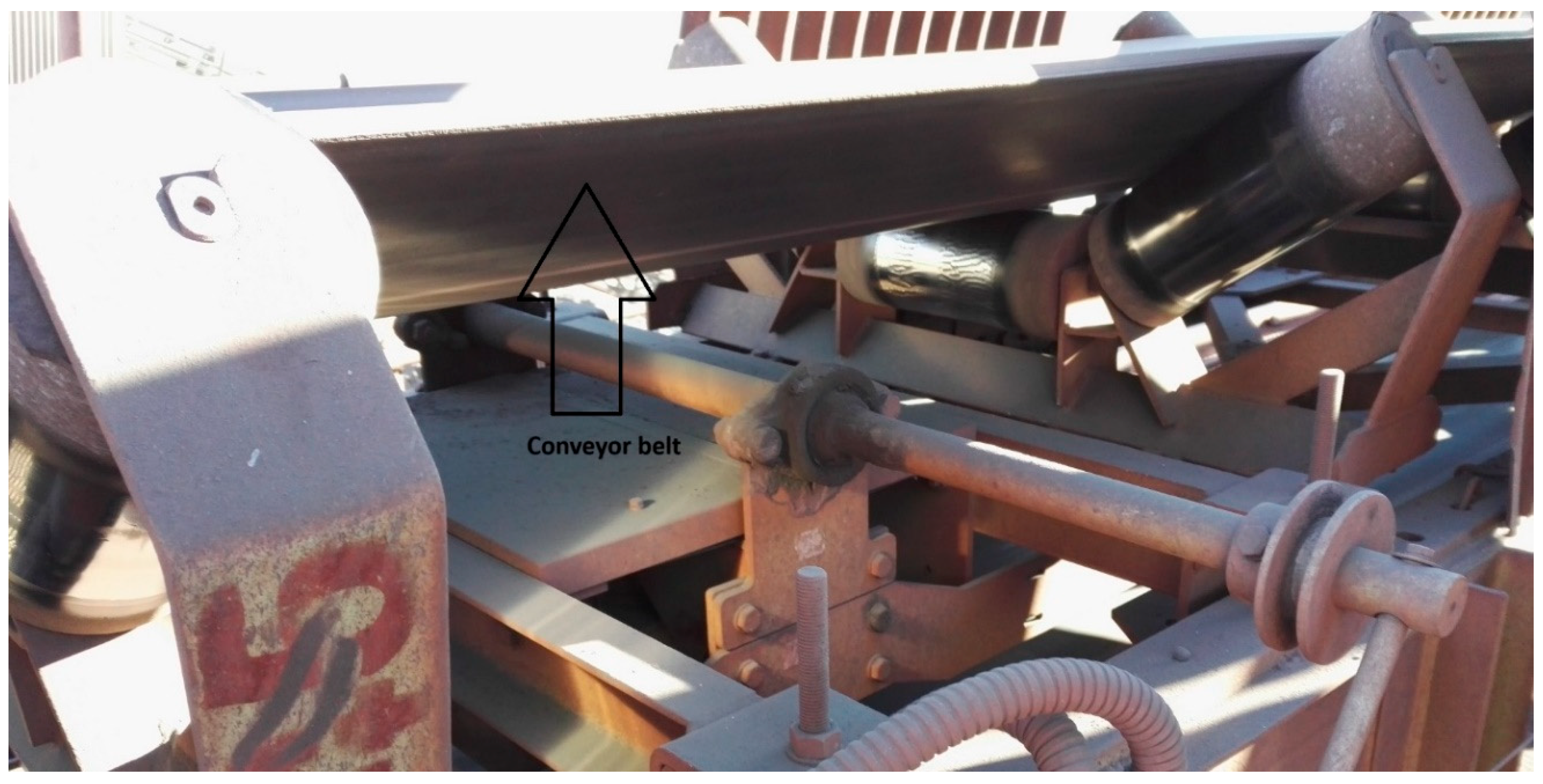
The steel industry is one of the most polluted industries that uses transition towers and conveyor lines for material transfer purposes, specifically in direct reduction iron plants (DRI) (see Fig 1). Due to the vibrations produced by the conveyors while operating, inspecting transition tower corrosion, weld joints, and conveyor performance (see Fig 2) by workers and decision-makers is indispensable and compulsory. These inspections typically require workers to enter high-altitude, dangerous, windy, dusty, and extremely hot areas, which are risky and difficult to access [2]. For instance, Kifle et al. [3] observed a high prevalence rate of work-related injuries in the iron and steel industries. Moreover, setting up a fixed on-site camera at high altitude in steel plants for observing transition towers and conveyor structures calls for ongoing maintenance costs [4], such as dust cleaning, extensive wiring, and preparation of related structures.
With the maturity of tiltrotor quadcopters in many emergent scenarios, they play an essential role in collecting precise images and videos efficiently and safely throughout the inspection process. However, applying a controller with adequate stability under wind disturbances to capture precise images using a tiltrotor quadcopter is essential. The development of the tiltrotor quadcopter control system also encounters a series of challenges.
Regarding inspection using a tiltrotor quadcopter in steel plants, Tzu-Chieh et al. [5] considered the conveyor system in the enclosed coal storage construction of China Steel Corporation (CSC) to develop and utilize an unmanned aerial vehicle (UAV) inspection system. In [6] a wide range of robotic applications in the European steel industry are discussed, including the use of UAVs and ground charging vehicles to support the UAVs during certain activities. Liang et al. [7] highlighted the prospects for drone-based construction inspection through the use of machine learning and AI for data analysis. Safie et al. [8] provided a comprehensive analysis of current practices and future directions of UAV-based inspection in chemical process plants, with a focus on regulatory, technical, and safety considerations. Jordan et al. [9] summarized the context for UAV inspection of power facilities and structures, stating that an experiment was conducted to test the precision of the system on a boiler unit of a thermal power plant.
However, they concentrated on using conventional UAVs rather than tiltrotor quadcopters to complete the inspection tasks. Also, no environmental disturbances such as wind effects were reported to analyze the stability of control system performance while operating. Given the high altitude of transition towers and conveyor structures (between 50 and 70 m), the effect of wind is inevitable.
To achieve full coverage of inspection procedures, an optimized control system for tiltrotor quadcopters to counteract disturbances is needed in order to provide fast, high-quality inspection data, resolve task complexity, and improve flight efficiency under wind disturbances. However, in many real-world applications, employing optimized controllers to stabilize the tiltrotor quadcopter during inspection operations under specific environmental disturbances is mandatory.
Recently, more and more researchers have focused on using UAVs to autonomously inspect hazardous environments and achieve optimal inspection approaches. More specifically, numerous solutions tend to use a gain scheduling controller (GSC) technique to reduce disturbances for tiltrotor quadcopters to perform a complete coverage task in real time. In this paper, we propose a GSC-based PID controller method to address the issue of wind disturbance on the tiltrotor quadcopter while operating at Shadegan Steel Industrial Company (SSIC), located at coordinates 30.56538°N 48.93327°E, Khuzestan, Iran.
Nie et al. [10] proposed a gain-scheduling-based tilt-angle-guided robust control method for mode transition. In that work, the robustness of the proposed controller was verified under simulated wind disturbances; however, the results showed an obvious fluctuation in roll and pitch transition angles. García et al. [11] presented the control during take-off, transition, and straight-and-level flight of a convertible aircraft based on the gain-scheduling technique. Hou et al. [12] focused on the flight mode transition controller design of a small, scaled V-44, which is a quad-tiltrotor, showing excellent performance by using the grey wolf optimization algorithm (GWO)-based gain-scheduling controller. However, these studies primarily focus on addressing challenges posed by the GSC technique. Importantly, the consideration of unforeseen wind disturbances in the application of tiltrotor quadcopters to the steel industry is seldom taken into account.
Figure 1.
Transition towers and conveyors lines at SSIC.
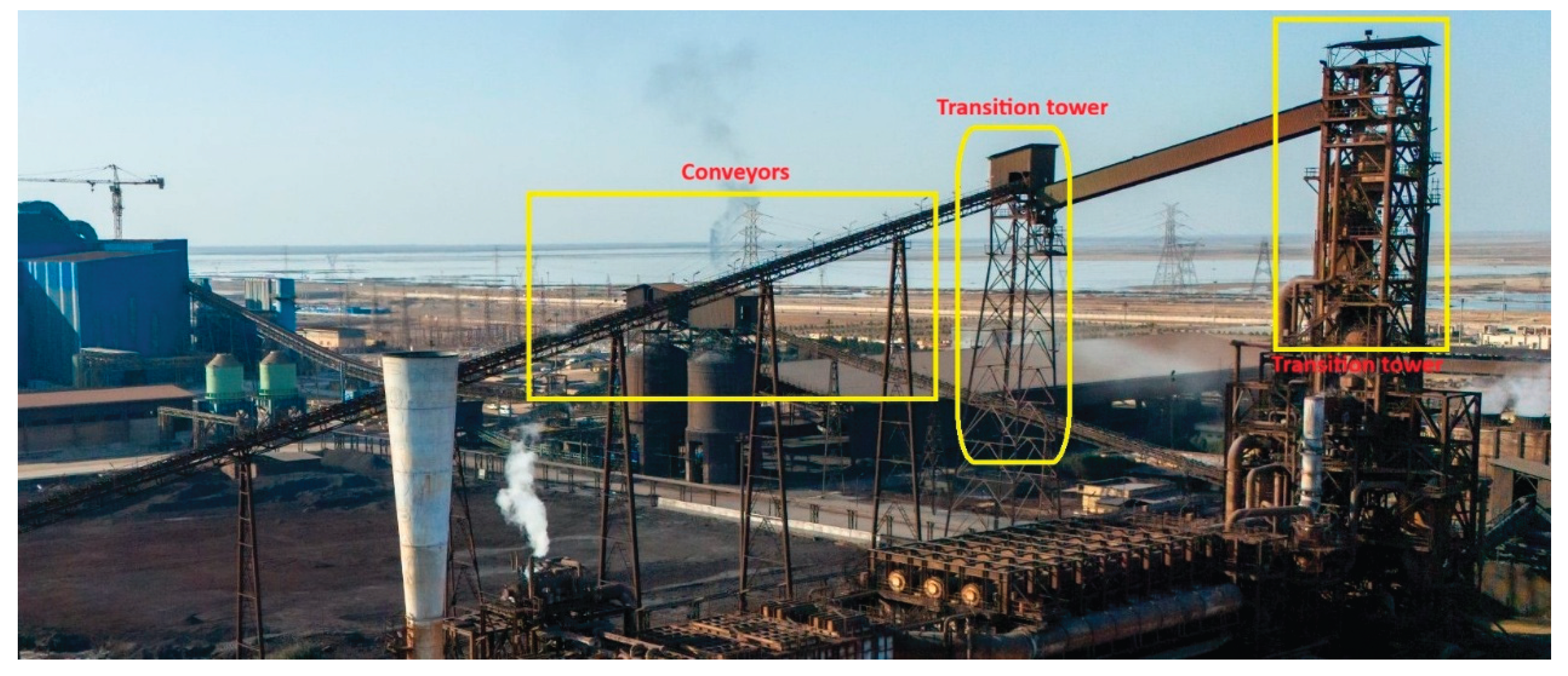
Figure 2.
Steel industrial conveyors detailed structure at SSIC.
2. Methodology
To tackle the challenge of stabilizing the tiltrotor quadcopter control system under wind disturbances, this paper presents a trustworthy control system for inspecting transition towers and conveyors in the steel industry. This approach guarantees the coverage of steel industry transition towers and conveyor inspection and enables online data collection using a visual camera. The main contributions of this paper are as follows:
- We applied the average wind information at different scheduled times at Shadegan Steel Industrial Company (SSIC).
- We designed a GSC-based PID controller method that significantly enhances precise data collection quality for a tiltrotor quadcopter under wind disturbances while inspecting transition towers and conveyor structures.
- We simulated and monitored the performance of the tiltrotor quadcopter under wind disturbances throughout data collection.
The rest of the paper is organized as follows. Section 3 introduces the overall framework of the problem. Section 4 covers the data collection framework. Section 5 describes path following and obstacle avoidance. Section 6 provides the wind disturbance scenario. Section 7 presents the proposed GSC method. Section 8 provides simulations of the proposed control system performance.
3. Problem Description
In this paper, we use a fully autonomous tiltrotor quadcopter to perform inspection tasks, such as capturing videos and images to clarify the color, surface quality, and corrosion of the transition towers and conveyors, which are inaccessible for workers during regular inspections.
An existing challenge in using a tiltrotor quadcopter for high-altitude inspection operations is developing a control system that ensures stable operation under environmental wind disturbances while inspecting transition towers and conveyor structures at SSIC. Hence, there are two issues:
- Inspecting transition towers and conveyor structures using the tiltrotor quadcopter.
- Applying a GSC controller to enhance tiltrotor quadcopter performance under wind disturbances.
For this purpose, we present the average wind data at SSIC, and the GSC-based PID method is designed and applied to the tiltrotor quadcopter based on this wind data.
4. Data Collection Framework
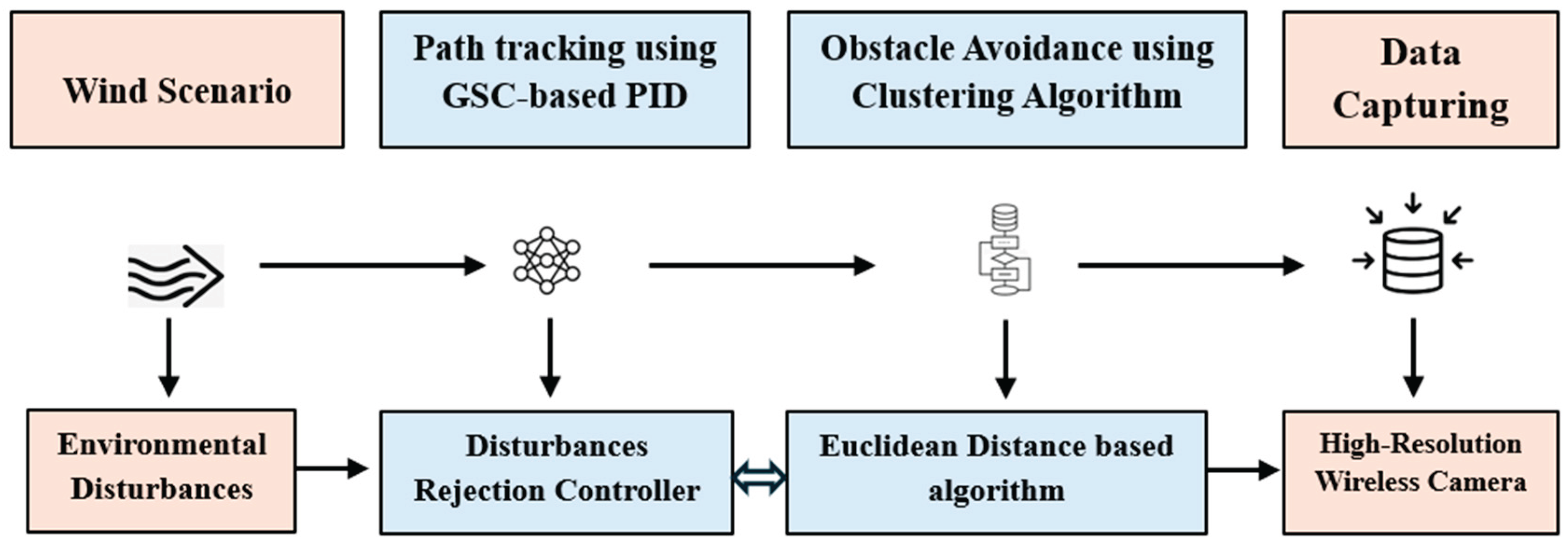
During the online inspection of the transition towers and conveyor structures, the inspection data is captured through a continuous wireless high-resolution camera and monitored to support decision-makers in understanding where intervention is needed during visual testing (VT) operations. The overall framework is shown in Fig. 3.
To fly autonomously in the specific region of the plant where the structures are located—without a 3D model of the target structures—the path trajectory must be defined. In this paper, the trajectory has been generated and tracked using the coordinates X, Y, and Z, as shown in Fig. 6.
Figure 3.
The overall framework of the tiltrotor quadcopter operation.
5. Path Following and Obstacle Avoidance
Path planning is an essential aspect of tiltrotor quadcopter operations because it allows the vehicle to navigate efficiently while avoiding obstacles and adhering to mission specifications [13]. Starting from one corner of the plant, the proposed tiltrotor quadcopter flies autonomously to the target locations from the bottom to the top along the specified path. The flight path is shown in Fig. 5.
After reaching the target regions, the tiltrotor quadcopter begins capturing images, and the data is streamed live to decision-makers. In Fig. 6, the trajectory tracking for the tiltrotor quadcopter inspection mission is generated using Python 2025.1.3 in the PyCharm environment.
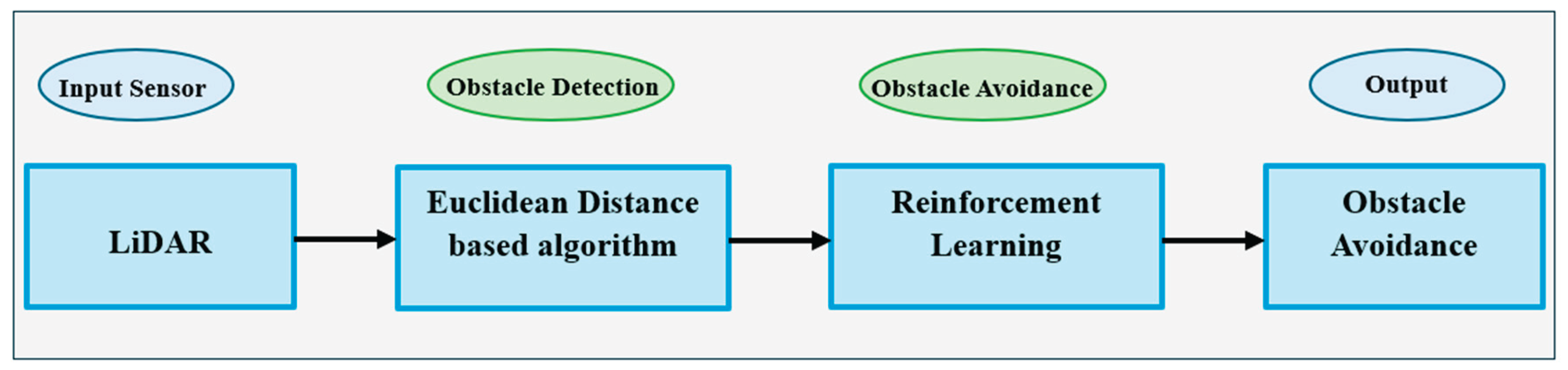
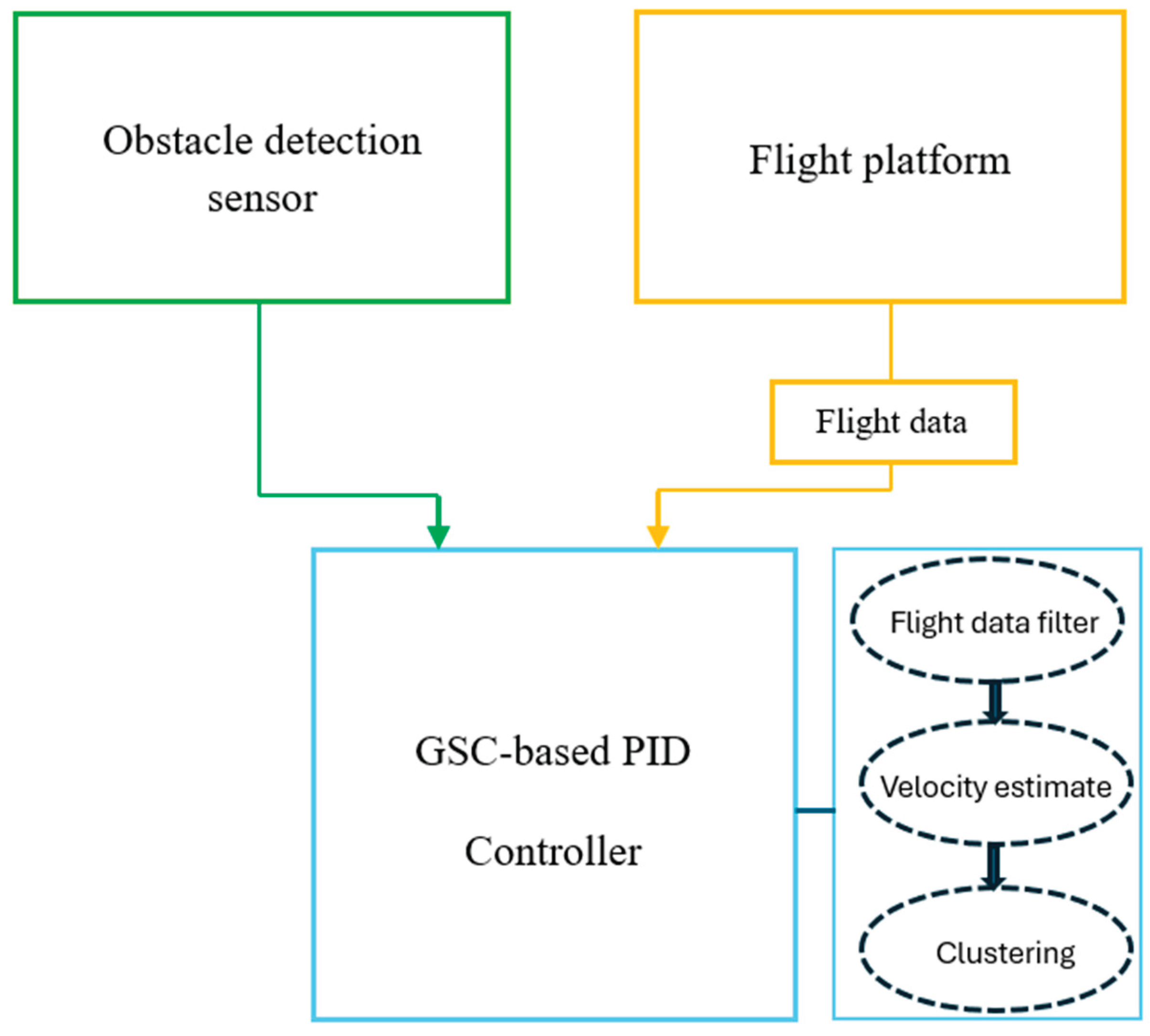
Moreover, to enable the tiltrotor quadcopter to perform intelligent tracking and obstacle avoidance [14], we first developed an appropriate obstacle detection model, as shown in Fig. 4. In this paper, a low-cost obstacle detection system based on a 2D lidar is proposed, which can detect obstacles in the environment during tiltrotor quadcopter movement using a Euclidean distance-based algorithm, as shown in Fig. 6.
Figure 4.
Obstacle avoidance flowchart.
5.1. Reinforcement Learning
In contrast to supervised and unsupervised learning, reinforcement learning is an artificial intelligence methodology that determines optimal actions through a numerical reward signal. We specify several reinforcement learning elements to create and explain our control strategy:
- Agent According to control theory, the agent is the actuator controller. It is the learner and decision-maker. In this paper, we define the GSC-based PID controller to optimize the pitch angle in transitional motion.
- Environment All external entities can interact with the agent.
- Action According to control theory, the action is the control signal—the choice made by the agent for a particular state of the environment. In this paper, and represent the tilting angles = .
- Environment state According to control theory, the environment state is an environmental feedback signal that offers details about the surroundings at a specific moment. In this paper, represents the true wind environment state, and represents the apparent wind.
- Policies Based on the perceived state of the environment, a policy develops actions and describes how the agent acts at a specific moment. In this paper, the policies are the set of all control parameters of the GSC-based PID controller.
- Reward The reward is a numerical value that assesses the agent's performance in relation to the problem being solved. We denote the pitch angle θ for the proposed controller flight scenario.
Figure 5.
Tiltrotor quadcopter path of 74 meters along the transition tower and conveyor. The red targets indicate the tiltrotor path.
Figure 5.
Tiltrotor quadcopter path of 74 meters along the transition tower and conveyor. The red targets indicate the tiltrotor path.
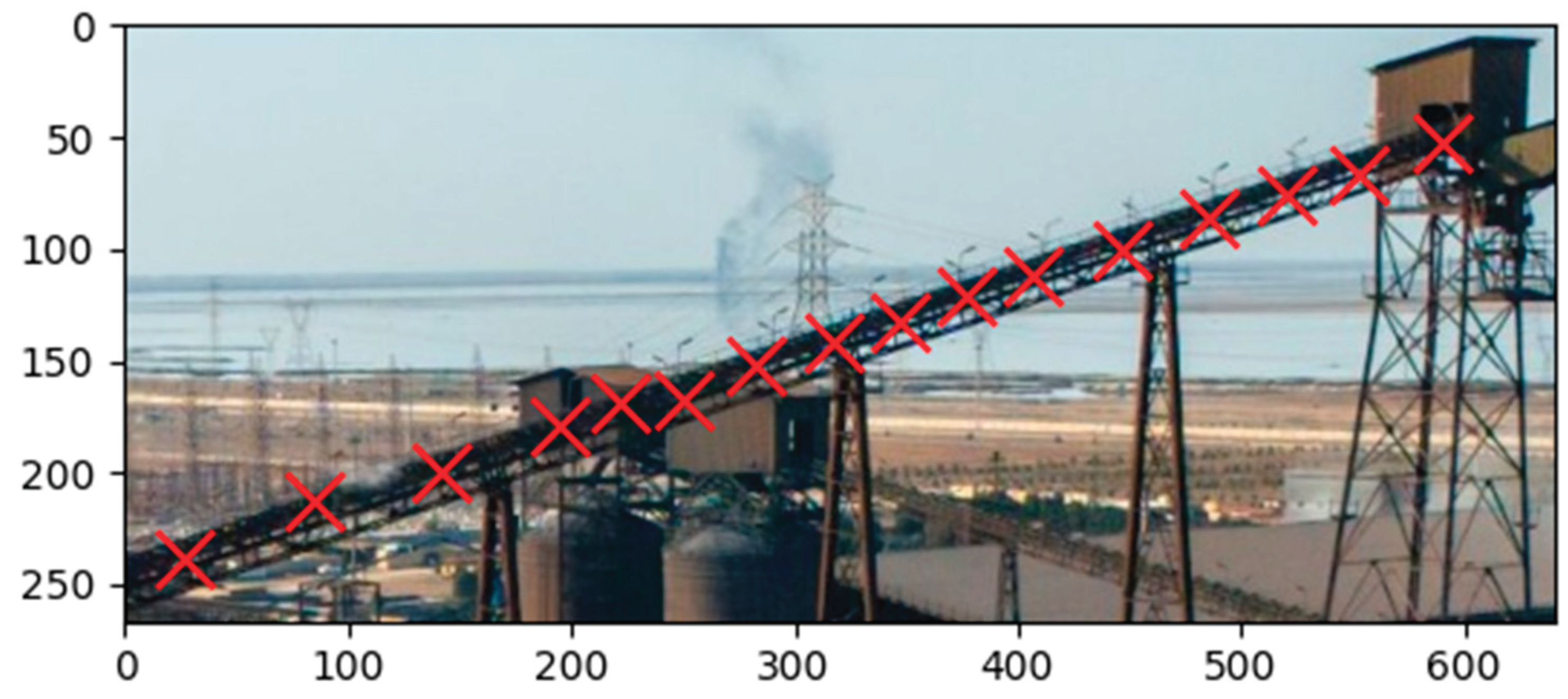
Figure 6.
Overall framework of trajectory and obstacle avoidance.
6. Wind Disturbance
6.1. Hovering Maneuvers
In this study, we assume that our tiltrotor quadcopter flies along a translational path for 180 seconds. Based on the translational flight of the tiltrotor quadcopter and wind direction, the tiltrotor quadcopter may experience significant chattering in the pitch angle. In contrast, wind affects the tilt angles, as shown in Fig. 7.
We aim to optimize the control system under wind disturbances using the GSC-based PID method to enable the tiltrotor quadcopter to move horizontally with zero chattering. We use this scenario to define and simulate the control system's performance.
Figure 7.
General schematic of the wind direction.
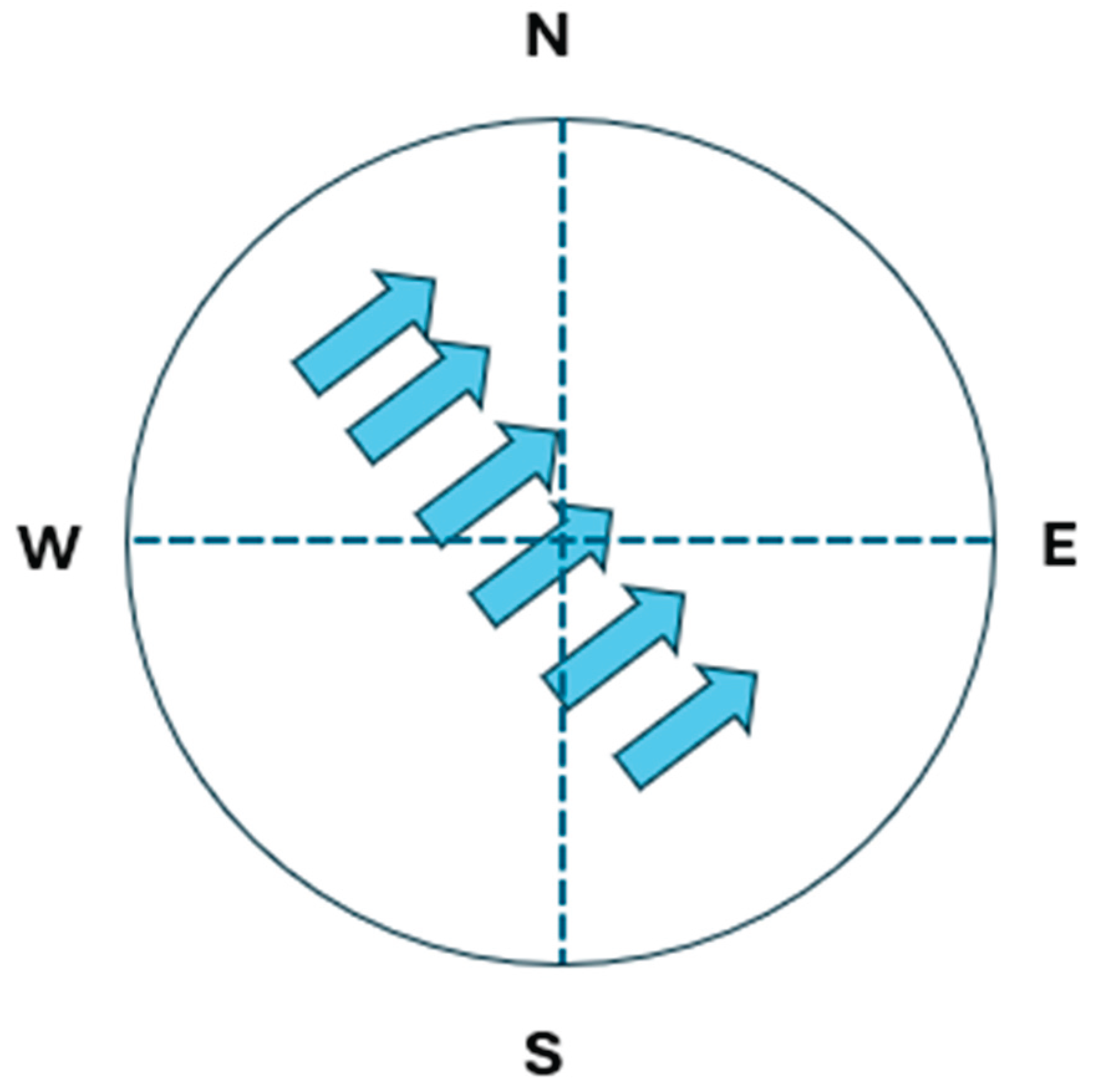
To design and apply the GSC-based PID controller, we rely on the tiltrotor quadcopter flight scenario. As shown in Fig. 7, the wind effect direction is from southwest to northeast.
6.2. True and Apparent Wind
Understanding the concepts of true wind and apparent wind is fundamental for tiltrotor quadcopter hovering. The relationship between true wind , which is the disturbance wind perceived by a stationary observer, the apparent wind , which is the wind perceived by an observer in the environment with the tiltrotor movement, and the tiltrotor quadcopter speed is presented in Eq. (1).
Using Eq. (1) and applying trigonometric and vector laws, we can derive Eq. (2) to calculate the apparent wind speed .
The wind force data for the SSIC district from mid-June to mid-August were derived from www.open-meteo.com. The average wind conditions over 180 seconds are presented in Table 1. From left to right, the first column represents the wind direction, the second column represents the wind force input, and the last column represents the duration of the wind's effect.
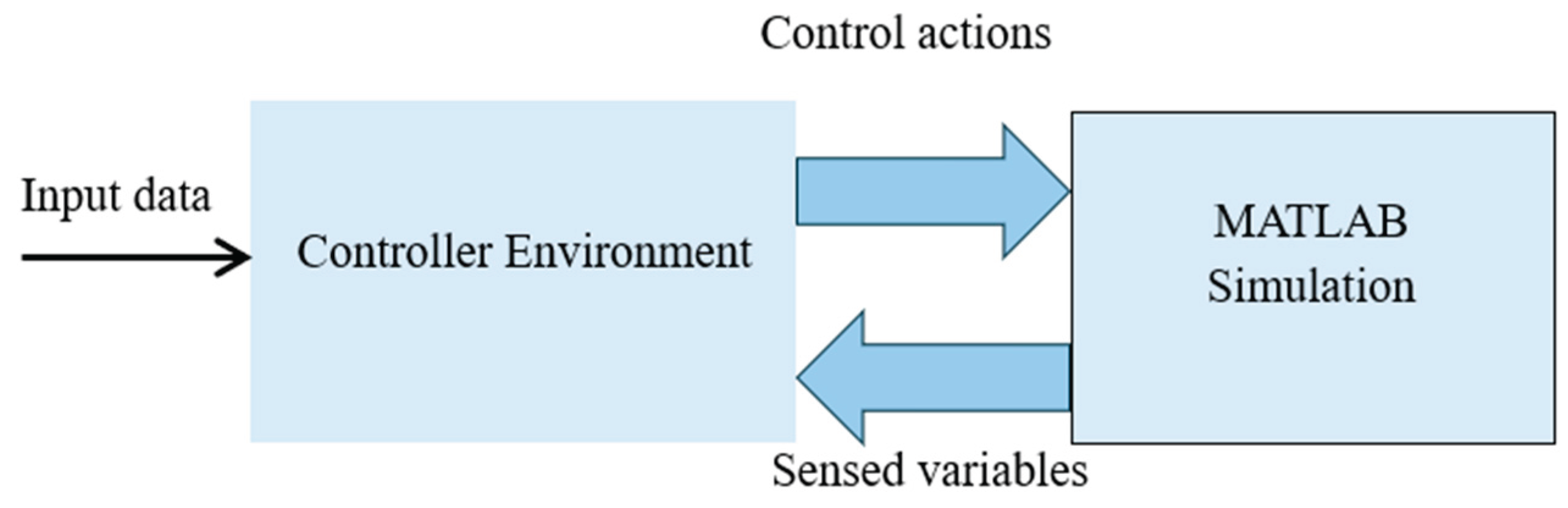
The simulation environment, as shown in Fig. 8, serves as the infrastructure for training and testing the GSC controller within the context of a PID for the tiltrotor quadcopter, enabling us to develop and run the GSC-based PID. For this purpose, we opted for the MATLAB Simulink 2024b environment to test and evaluate the proposed tiltrotor quadcopter controller's performance. A list of the modifications using MATLAB is presented below:
- We add a wind parameter to the system.
- We use an auto-tuning block diagram in the system.
Figure 8.
Blocks diagram of the developed simulation environment.
7. GSC-Based PID Controller
The GSC approach is a popular method that uses powerful linear control strategies to effectively control nonlinear systems. In control theory, gain scheduling is an approach for controlling nonlinear systems that uses a family of linear controllers, each of which provides satisfactory control for a different operating point of the system.
In this study, the GSC approach is used to control the pitch angle of the tiltrotor quadcopter motors under wind disturbances. The design discussed earlier uses four servo motors in the quadcopter. These servo motors are attached to the end of each arm, allowing the rotors to rotate freely. These control inputs help the tilting quadcopter track any desired trajectory over time.
In this study, we provide a stable control model under wind disturbances using GSC combined with PID. The proposed control model allows the tiltrotor quadcopter to fly or hover with the desired orientation.
As mentioned earlier, since the tilt angles are and , it can be noted that these constraints, in fact, make the system a fully active system.
The idea of the GSC-based PID controller is to design controllers that handle the specific constraints of the tiltrotor quadcopter application. The fundamental problem in designing systems with GSC is obtaining appropriate scheduling variables. The variables of the proposed control system are listed in Table 2. Also, the controller architecture of GSC-PID is presented in Fig. 9.
Figure 9.
The controller architecture of GSC-PID.
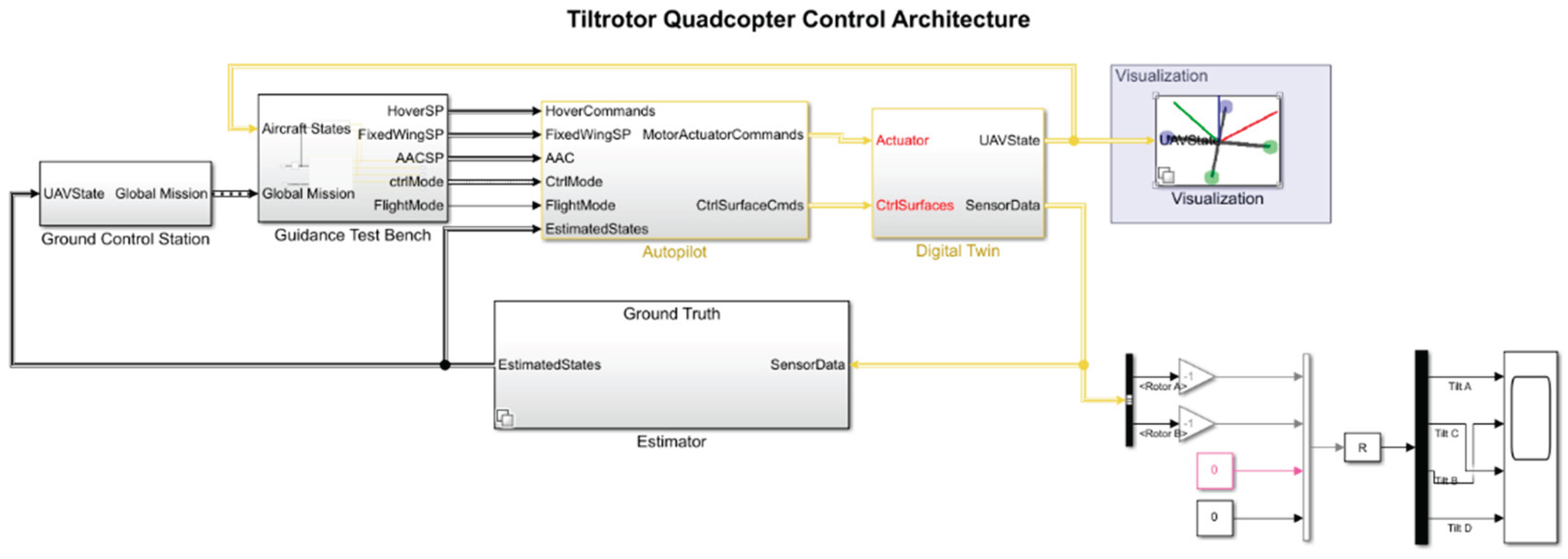
Figure 10.
Implementation sequence of gain scheduling technique.
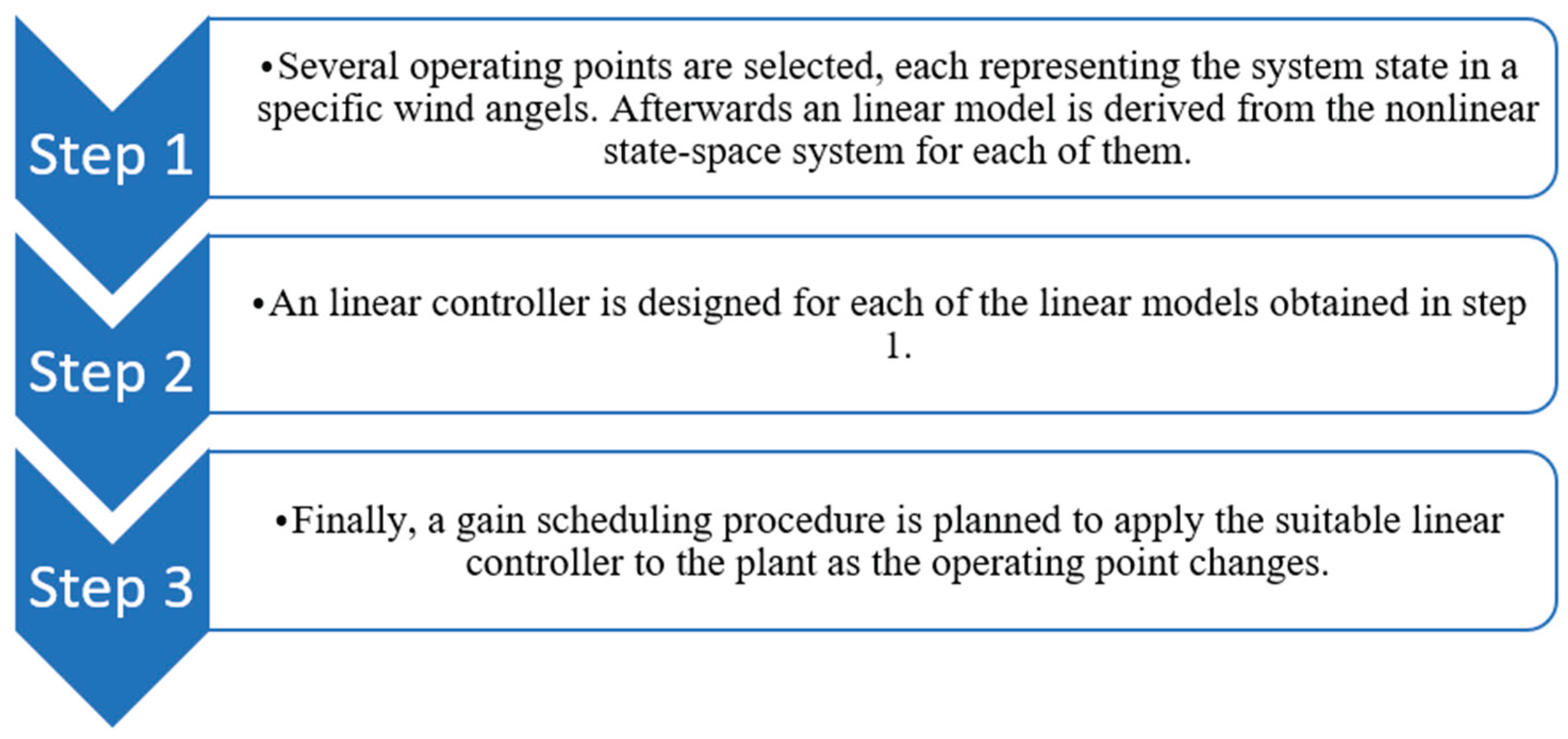
GSC is applicable to devices in which the way the operating conditions change can be parameterized using scheduling variables. These variables can be either internal or external. The design of the GSC involves three steps, as shown in Fig. 10.
7.1. Linearization of Nonlinear Equations of a Tiltrotor Quadcopter
According to the GSC definition, the nonlinear equations of the tiltrotor quadcopter are linearized for each relevant equilibrium point. To express the equations of motion in the form of a state space, we introduce state variables based on Table 2.
It is worth noting that in this study, the tiltrotor quadcopter has translational motion, and only the pitch angle is affected by wind disturbances; thus, both roll and yaw are constant. Therefore, the definition of the general state vector is as follows.
The nonlinear tiltrotor quadcopter equations are as follows:
where are the positions of the tiltrotor quadcopter in space, is the total mass, is the gravitational acceleration, and is the drag force. Given that in this research, the movement occurs in the pitch angle plane with no roll or yaw, we have:
And the control vectors according to the relationships of tilting servo motors that and :
The general form of the situation in nonlinear equations is as follows , then to find the equilibrium points, consider equations (4) and (5):
Considering the way the quadcopter moves with the desired propeller tilt, the variables will be as follows:
7.2. Finding the Optimal Operating Points
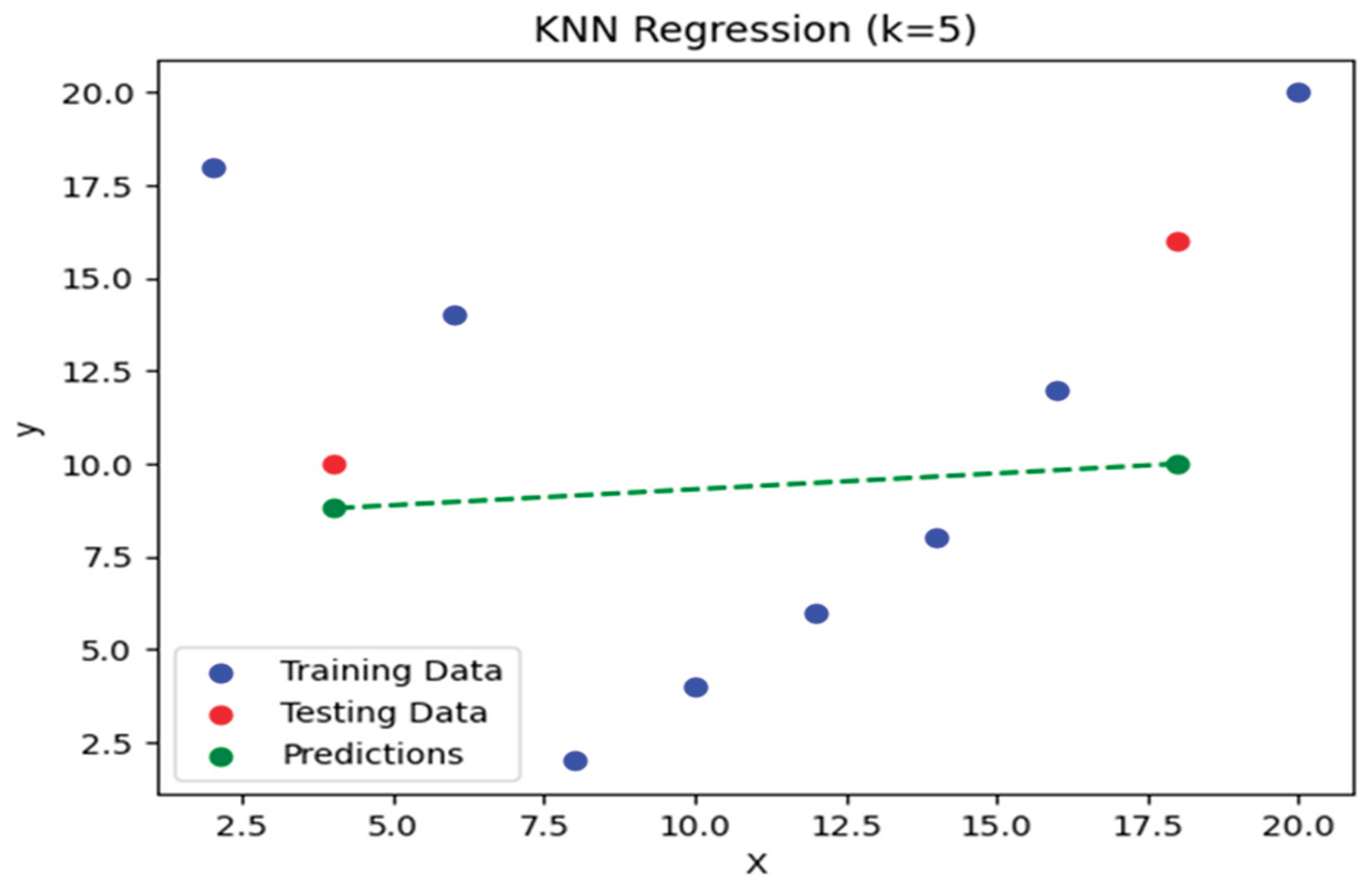
Solving equation (6) leads to the identification of stable points, which can be optimally achieved using the k-nearest neighbors (K-NN) method.
It works by finding the K closest data points to a new, unlabeled data point in a feature space and averaging their corresponding target values to make a prediction. It is a simple, sample-based learning method, meaning that it does not build a model based on assumptions about the underlying structure of the data but rather relies on the similarity between the data points.
Fig. 11 shows the extracted optimal points using Python 2025.1.3 in the PyCharm environment. The result is the Mean Squared Error (MSE) output, which is shown in Table 3.
Figure 11.
K-nearest neighbor method for finding optimal operation points.
Variables within our proposed controller method and the MSE as the variables' optimal solutions.
Therefore, considering the resulting stable points, the steady-state relations are:
Which stands for steady state, and . Therefore, the linearization of the nonlinear equations in (4) considering the steady state (4) will be equal to:
As a result, using the Jacobian matrix, the final form of the linearized equation is:
Which, , and
.
yss = (xss, yss, zss), θ1ss, θ2ss
7.3. Controllability and Observability of the Linearized Equation
Next, we consider the controllability of the linearized dynamics of the quadcopter. The controllability matrix of the linearized system (9) is represented as follows:
It can be verified (e.g., by row reduction of the matrix) that:
Since A is a matrix, the system is controllable. In order to control the output feedback, we use as the output variable. With this choice, we represent the observability matrix (11) as follows:
Therefore, it can be confirmed that:
So, we also have that the system is observable. With the guarantees of controllability and observability of the linearized dynamics, we are now prepared to develop the gain-scheduled control law for the tiltrotor quadcopter.
7.4. Fixed Gain Control
In this section, we begin by developing a fixed-gain controller, which is used as a basis for developing the GSC. In this section, we show when this controller is appropriate to use and under what circumstances GSC can be applied if the fixed-gain controller fails.
Using the linearized equation (9) and the relations , and the following control equation can be used:
For the stability of the tiltrotor quadcopter, the gain K is defined at . Note that the linearized dynamics do not depend on the coordinates in the state space of the steady state. Thus, the gain matrix K depends only on the pitch angle of the tiltrotor quadcopter, and therefore, we can use the controller in Eq. (14) to track a specific variable (base-reference):
where is the pitch deviation angle. For any fixed value of the reference signal r, we want to stabilize the quadcopter in a stable state:
where matrix C is represented in (17):
7.5. PID Controller
The PID controller is a widely used control scheme in industrial processes owing to its feasibility and ease of implementation. The PID controller continuously calculates the errors between the desired set point and the measured process variable. It attempts to minimize the error over time through proportional, integral, and derivative calculations.
The PID controller uses the proportional term to respond directly to the current error, the integral term to accumulate past errors and correct ongoing errors, and the derivative term to predict future errors and respond accordingly. The PID control function is described as follows:
where , , are the proportional, integral, and derivative gains, respectively, and is the controller input, is the error between the reference setpoint and the measured process variable, and is the integration variable.
By controlling the propeller pitch angle according to the translational movement of the quadcopter, the propeller pitch will be in the plane and the pitch angle will be equal to:
controller:
where is the desired value and are the PID controller parameters. The purpose of this equation is to achieve the desired altitude during flight.
Pitch controller:
where and are the desired values and and are the gains of the PD controller. In fact, the purpose of providing a step controller is to use the variable , which plays the role of rotational motion around the y-axis and along the x-axis. Finally, the following equation represents the system output for the step angle:
where is the controller output and and are the controller parameters.
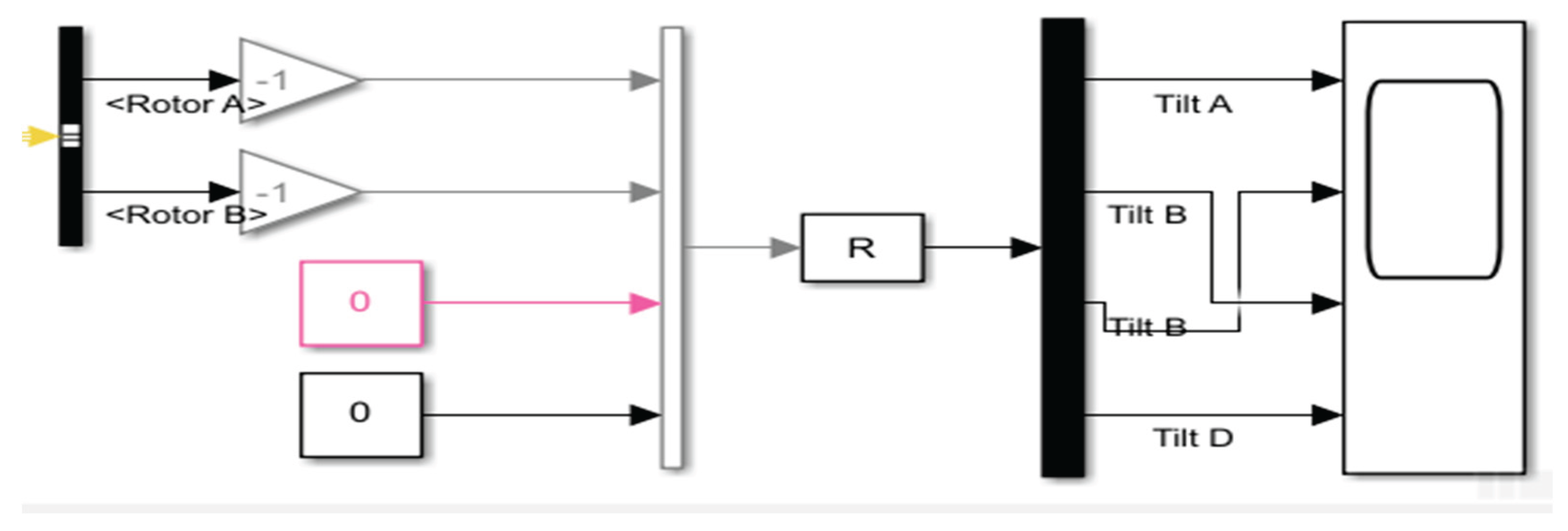
As shown in the block diagram in Fig. 12, four inputs are applied to the four servo motors that change the motion angle of the tiltrotor quadcopter: Tilt A = Tilt C and Tilt B = Tilt D, respectively. In this control block, according to the GSC-PID control method, the inputs of the servo motors are determined to create a balance against the wind force.
Figure 12.
Function and arrangement of tilting motor inputs in the block diagram.
The task of the GSC is to change the parameters of the scheduling variable so that the family of linear controllers acts as a single controller whose parameters change as the operating point of the wind disturbances changes. Hence, the limitations of linear controllers, which are valid only in the vicinity of a single operating point, are overcome, and the designed GSC is valid over the entire operating range.
7.6. Trajectory Tracking Simulation
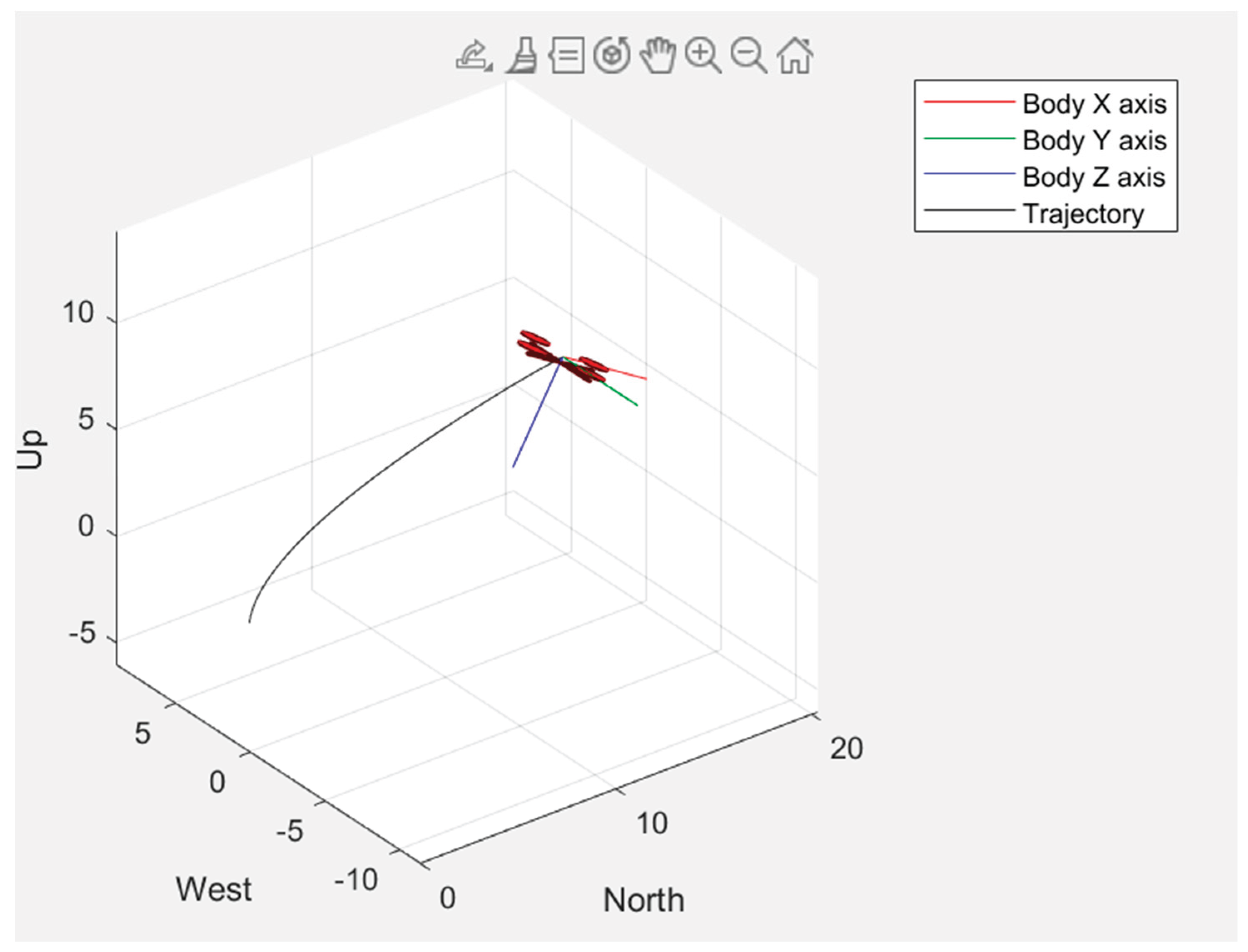
In this simulation, we investigate the trajectory tracking performance. The tiltrotor quadcopter's response to external wind disturbance is shown over the time interval from 0 to 180 seconds. Once this altitude is reached, the tiltrotor quadcopter enters a horizontal translation mode and tilts the front rotors forward to achieve the required tilt angle, as shown in Figs. 13 and 14.
To implement GSC and autotuning, we use the PID Autotuning Block with GSC in the block diagram simulation. This block allows for the implementation of the GSC, provides a way to adjust the gains under multiple operating conditions, and stores the gains for use elsewhere in the model or system.
During the simulation, perturbations are applied to the two forward rotors. Because the tilting quadcopter moves forward during the autotuning process for forward traversal, the pitch angle of the tilting quadcopter is affected more than when traversing backward.
Figure 13.
Trajectory of the tilt rotor quadcopter under wind force conditions.
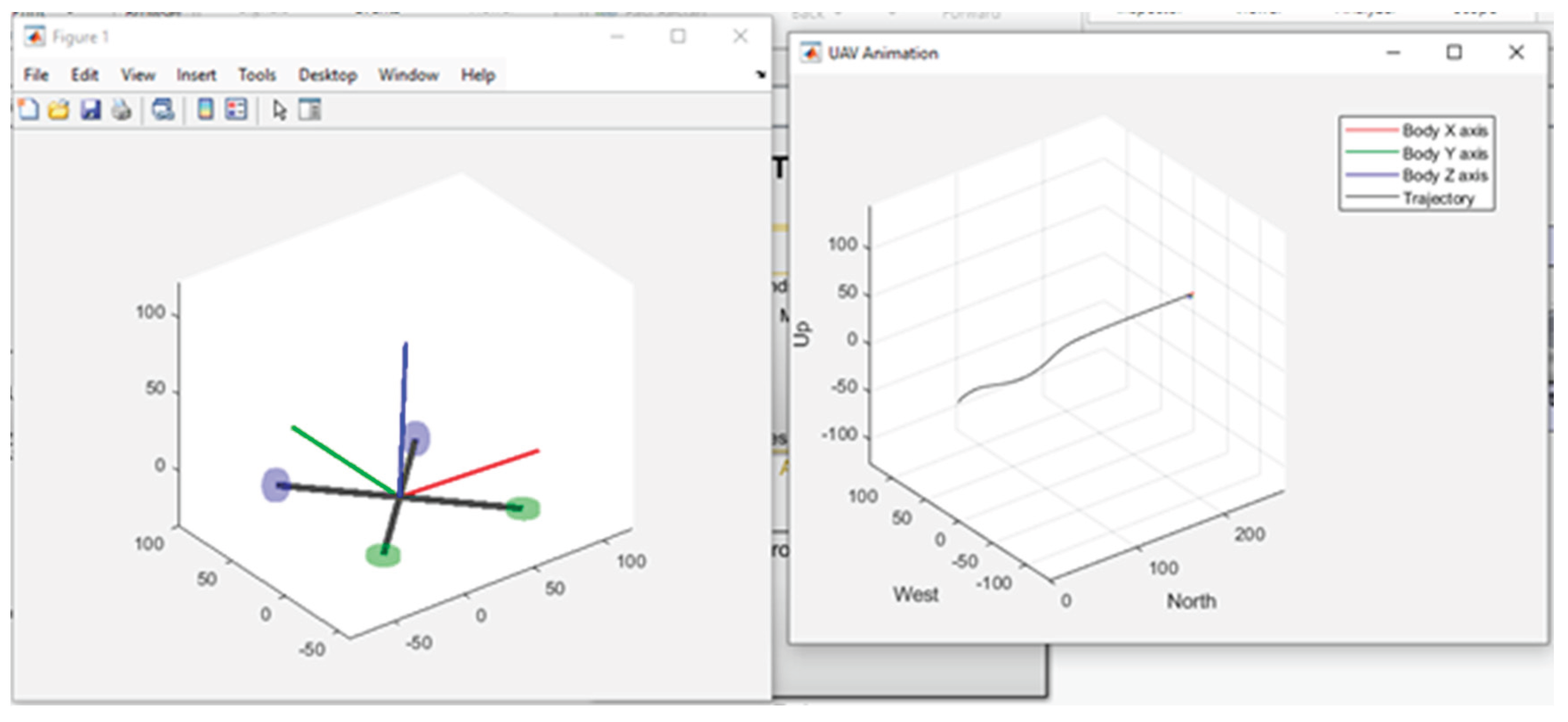
Figure 14.
Trajectory of the tiltrotor quadcopter during the translational phase of flight.
8. Simulations and Results
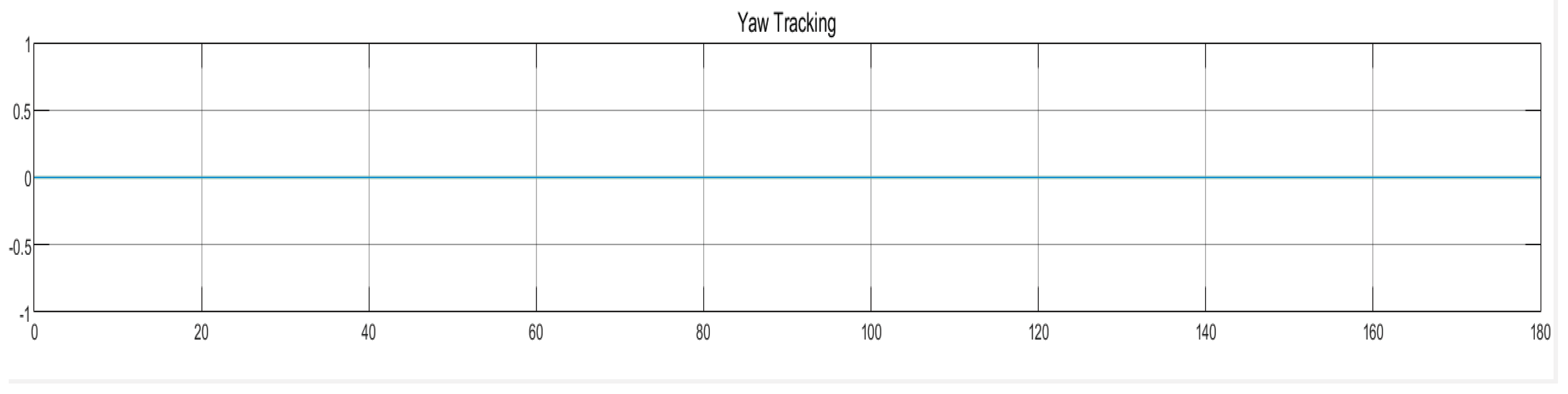
In this section, we present the simulation results obtained using MATLAB/Simulink 2024b to evaluate the performance of the proposed GSC-PID method. Considering the presence of four tilting motors, the performance of the tiltrotor quadcopter under wind disturbance conditions is shown in Figs. 15–21. In Fig. 15, considering the application of wind disturbance force on Tilt A, it is observed that the disturbances are fully suppressed in the time interval from 0 to 180 s, and the tiltrotor quadcopter navigates the path in a stable manner. However, there is chattering at the beginning of the flight because the position changes to horizontal motion throughout the specified path. The graph's curvature and variation from t = 80 s to t = 95 s are due to severe wind force at this moment (see Table 1). However, the flight stabilizes along the subsequent path as regulated by the GSC-based PID controller. In addition, in Fig. 17 (Tilt C graph), according to the aforementioned assumption that Tilt A = Tilt C, the same conditions apply to Tilt C. In Figs. 16 and 18, because the GSC-PID controller neutralizes the effect of wind force disturbance, the tilt angle Tilt B is set to zero. Given the assumption that Tilt B = Tilt D, the same conditions apply to Tilt D. The overall motion of the tiltrotor quadcopter is shown in Fig. 19. Moreover, owing to the horizontal motion of the tiltrotor quadcopter and the steady-state equation (7), the yaw and roll are not affected by the wind during flight, as shown in Figs. 20 and 21.
Figure 15.
Performance diagram of the tilting motor under the influence of wind force.

Figure 16.
Performance diagram of the tilting motor under the influence of wind force.

Figure 17.
Performance diagram of the tilting motor under the influence of wind force.

Figure 18.
Performance diagram of the tilting motor under the influence of wind force.

Figure 19.
General diagram of the performance of the tilting motors under the influence of wind force.
Figure 19.
General diagram of the performance of the tilting motors under the influence of wind force.
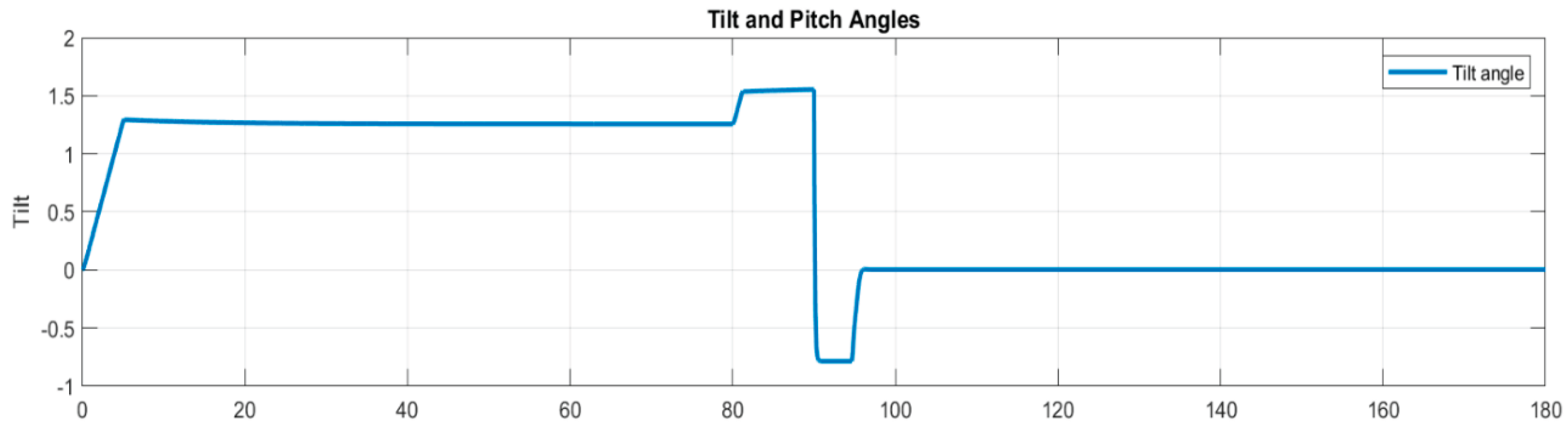
Figure 20.
Graph of the angle of rotation around the longitudinal axis under the influence of wind force.
Figure 20.
Graph of the angle of rotation around the longitudinal axis under the influence of wind force.
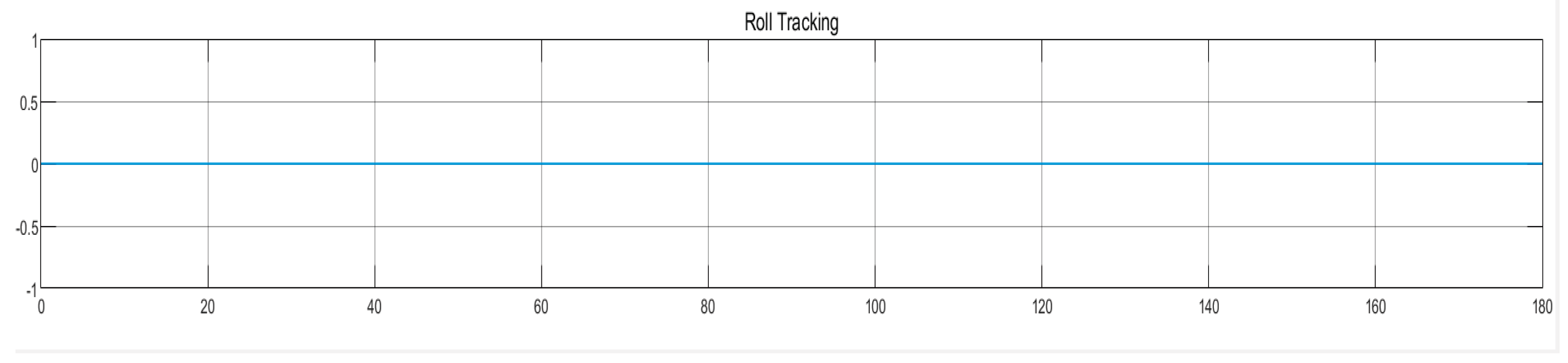
Figure 21.
Graph of the angle of rotation around the vertical axis under the influence of wind force.
Figure 21.
Graph of the angle of rotation around the vertical axis under the influence of wind force.
8.1. Feature Comparison
The smart path tracking and obstacle avoidance functions in this study are mainly based on a tiltrotor quadcopter with a GSC-based PID controller. To demonstrate the significance of this research, we cite several documents showing that their functions do not meet the research requirements. The comparison is shown in Table 4.
There is no reported application of a tiltrotor quadcopter within a steel plant in the literature. The only related study is Tao et al. [16] which lacks an autonomous controller and analysis under specific disturbances. Moreover, in Sridhar et al. [17] reported robust performance using a PID controller within 60 seconds.
9. Conclusion
In this study, we have investigated the application of tiltrotor quadcopters in the steel industry for inspecting high-altitude towers and conveyor structures at SSIC. To take advantage of the tiltrotor quadcopter application, we proposed a GSC-PID controller because wind disturbances are inevitable and significantly impact efficient task completion. The proposed control system guarantees the robustness of the tiltrotor quadcopter against wind disturbances while tracking a defined path within 180 seconds. The high-quality images captured by the tiltrotor quadcopter can help inspectors and decision-makers identify structural issues that require attention. Furthermore, the comparison results show that our control approach for application in the steel industry is novel.
Notes on contributors: Ali Doraghi received the Master of Science degree in mechatronic engineering from Shahid Chamran University, Ahvaz, Iran, in 2025. His research interests include mechatronics, robotics, industrial automation, Autonomous systems, and A.I. in healthcare. Afshin Ghanbarzadeh received the PhD degree in mechanical engineering from Cardiff University, Cardiff, Wales, United Kingdom in 2007. He is currently working as an Assistant Professor in the Department of Mechanical Engineering at Shahid Chamran University of Ahvaz. His current research interests include Bees Algorithm, Intelligent Optimization, Robotics, Control, and Swarm Intelligence by focusing on applying an optimization approach in industrial operations. Ali Reza Naeimifard received the PhD degree in mechanical engineering from Khajeh Nasir Toosi University (KNTU) in . He is currently working as an Assistant Professor and head of the department of Mechanical Engineering at Shahid Chamran University of Ahvaz. His current research interests include Artificial Intelligence, Artificial Neural Network, Algorithms and Bioengineering.
Funding
No funds, grants, or other support was received.
References
- Kumar, R.; Agarwal, S.R.; Kumar, M. Modeling and Control of a Tethered Tilt-Rotor Quadcopter with Atmospheric Wind Model. IFAC-PapersOnLine 2021, 54, 463–468. [Google Scholar] [CrossRef]
- Conejo, A.N.; Birat, J.-P.; Dutta, A. A review of the current environmental challenges of the steel industry and its value chain. J. Environ. Manag. 2020, 259, 109782. [Google Scholar] [CrossRef] [PubMed]
- Kifle, M.; Engdaw, D.; Alemu, K.; Sharma, H.R.; Amsalu, S.; Feleke, A.; Worku, W. Work related injuries and associated risk factors among iron and steel industries workers in Addis Ababa, Ethiopia. Saf. Sci. 2014, 63, 211–216. [Google Scholar] [CrossRef]
- https://livepatrol.com, The pros and cons of using job site cameras. Available online: https://livepatrol.com/the-pros-and-cons-of-using-job-site-cameras/.
- Hung, T.-C.; Li, Y.-R.; Peng, C.-C. UAV Inspection in Heavy Industry: Preliminary Trial and Challenge. 2024 International Conference on Consumer Electronics - Taiwan (ICCE-Taiwan); LOCATION OF CONFERENCE, ChinaDATE OF CONFERENCE; pp. 135–136.
- Vannucci, M.; Matino, R.; Murri, M.M.; Piancaldini, R.; Schröder, A.J.; Stroud. [PubMed]
- Liang, H.; Lee, S.-C.; Bae, W.; Kim, J.; Seo, S. Towards UAVs in Construction: Advancements, Challenges, and Future Directions for Monitoring and Inspection. Drones 2023, 7, 202. [Google Scholar] [CrossRef]
- Safie, S.; Khairil, R. Regulatory, technical, and safety considerations for UAV-based inspection in chemical process plants: A systematic review of current practice and future directions. Transp. Res. Interdiscip. Perspect. 2025, 30. [Google Scholar] [CrossRef]
- Jordan, S.; Moore, J.; Hovet, S.; Box, J.; Perry, J.; Kirsche, K.; Lewis, D.; Tse, Z.T.H. State-of-the-art technologies for UAV inspections. IET Radar Sonar Navig. 2018, 12, 151–164. [Google Scholar] [CrossRef]
- Nie, H.; Gu, F.; He, Y. Hierarchical gain scheduling based tilt angle guided robust control during mode transition for tilt-rotor unmanned aircraft vehicle. Int. J. Adv. Robot. Syst. 2024, 21. [Google Scholar] [CrossRef]
- Hernandez-Garcia, R.G.; Rodriguez-Cortes, H. Transition flight control of a cyclic tiltrotor UAV based on the Gain-Scheduling strategy. 2015 International Conference on Unmanned Aircraft Systems (ICUAS); LOCATION OF CONFERENCE, United StatesDATE OF CONFERENCE; pp. 951–956.
- Hou, J.; Cai, Z.; Liu, N.; Zhao, J.; Wang, Y.; Wu, K. GWO-Based Gain-scheduling Controller Design for a Tilt-rotor UAV’s Longitudinal Control. 2018 IEEE CSAA Guidance, Navigation and Control Conference (GNCC); LOCATION OF CONFERENCE, ChinaDATE OF CONFERENCE; pp. 1–5.
- Debnath, D.; Vanegas, F.; Sandino, J.; Hawary, A.F.; Gonzalez, F. A Review of UAV Path-Planning Algorithms and Obstacle Avoidance Methods for Remote Sensing Applications. Remote. Sens. 2024, 16, 4019. [Google Scholar] [CrossRef]
- Chen, W.-C.; Lin, C.-L.; Chen, Y.-Y.; Cheng, H.-H. Quadcopter Drone for Vision-Based Autonomous Target Following. Aerospace 2023, 10, 82. [Google Scholar] [CrossRef]
- Hu, X.; Wang, J.; Wang, L.; Yu, K. K-Nearest Neighbor Estimation of Functional Nonparametric Regression Model under NA Samples. Axioms 2022, 11, 102. [Google Scholar] [CrossRef]
- Tao, X.; Ko, S.Y. Tilt-X: Development of a Pitch-Axis Tiltrotor Quadcopter for Maximizing Horizontal Pulling Force and Yaw Moment. Appl. Sci. 2024, 14, 6181. [Google Scholar] [CrossRef]
- Sridhar, S.; Gupta, G.; Kumar, R.; Kumar, M.; Cohen, K. Tilt-Rotor Quadcopter Xplored: Hardware based Dynamics, Smart Sliding Mode Controller, Attitude Hold & Wind Disturbance Scenarios. 2019 American Control Conference (ACC); LOCATION OF CONFERENCE, USADATE OF CONFERENCE; pp. 2005–2010.
- Yih, C.-C.; Wu, S.-J. Sliding Mode Path following and Control Allocation of a Tilt-Rotor Quadcopter. Appl. Sci. 2022, 12, 11088. [Google Scholar] [CrossRef]
- Tang, J.; Mueller, M.W. PairTilt: Design and Control of an Active Tilt-Rotor Quadcopter for Improved Efficiency and Agility. Adv. Intell. Syst. 2025, 7. [Google Scholar] [CrossRef]
- Sembiring, J.; Sasongko, R.A.; Bastian, E.I.; Raditya, B.A.; Limansubroto, R.E. A Deep Learning Approach for Trajectory Control of Tilt-Rotor UAV. Aerospace 2024, 11, 96. [Google Scholar] [CrossRef]

Table 1.
Wind Disturbance Scenarios.
| Wind direction | Wind force (N) | Time (s) |
| NORTHEAST | 0 | 0 – 5 |
| 1.25 | 5 – 30 | |
| 0 | 30 – 33 | |
| 2.2 | 33 – 170 | |
| 0 | 170 – 180 | |
| Definition of the applied wind parameters of SSIC geographical location | ||
Table 2.
State variables.
| Name | Description |
| Coordinate of the tiltrotor quadcopter position | |
| Coordinate of the tiltrotor quadcopter position | |
| Coordinate of the tiltrotor quadcopter position | |
| Tiltrotor quadcopter tilt angle, which | |
| Tiltrotor quadcopter tilt angle, which |
The variables definition used in the equations of the proposed GSC-based PID.
Table 3.
Equilibrium points from the linearization of nonlinear equations.
| K-NN | |||||
| K | 1 | 2 | 3 | 4 | 5 |
| VARIABLES | |||||
| MSE | |||||
Table 4.
Feature comparison table.
| Comparator | Application Field | Controller Type | Time Frame (s) | Performance |
| This article | Transition towers and conveyors of steel plant | Gain scheduling-Based PID | 0-180 | Completely robust against wind disturbances |
| [16] | Object pulling and valves opening | Flight Controller Pixhawk 4 | 0-100 | No wind disturbances report |
| [18] | No application reported | Sliding Mode Control (SMC) | 0-20 | Obvious tilt angle disturbances |
| [19] | No application reported | Cascaded Controller | - | No wind disturbances report |
| [20] | No application reported | Deep learning-Based flight Control | 100-250 | Obvious Pitch angle disturbances |
| [1] | No application reported | Feedback Control | 0-35 | Obvious tilt-angle disturbances within the time frame |
| [17] | No application reported | Non-linear Sliding Mode Controller (SMC) and PID | 0-60 | Obvious tilt-angle disturbances by SMC and robust by PID controllers within the time frame |
Comparison of different controller types, performance reports under wind disturbances, and application in the literature of our GSC-based PID method.
Disclaimer/Publisher’s Note: The statements, opinions and data contained in all publications are solely those of the individual author(s) and contributor(s) and not of MDPI and/or the editor(s). MDPI and/or the editor(s) disclaim responsibility for any injury to people or property resulting from any ideas, methods, instructions or products referred to in the content. |
© 2026 by the authors. Licensee MDPI, Basel, Switzerland. This article is an open access article distributed under the terms and conditions of the Creative Commons Attribution (CC BY) license (http://creativecommons.org/licenses/by/4.0/).
Copyright: This open access article is published under a Creative Commons CC BY 4.0 license, which permit the free download, distribution, and reuse, provided that the author and preprint are cited in any reuse.


