

Submitted:
03 June 2026
Posted:
05 June 2026
You are already at the latest version
Abstract
Aspartase from Escherichia coli (AspA) catalyzes the direct conversion of acrylic acid to β-alanine; however, its substrate specificity and low catalytic efficiency limit its broader application. We engineered an AspA mutant capable of efficiently catalyzing the amination of acrylic acid for β-alanine synthesis, using Rosetta Enzyme Design to computationally redesign the Cβ-binding region of the acrylic acid binding site in AspA. Based on energy scores, structural configurations, and hydrogen bonding networks, 51 candidate variants with penalty scores below 30 were selected for mutant construction and performance testing; >70% of these variants exhibited enhanced catalytic activity in acrylic acid’s hydrogen amination. Four mutants achieved over 3-fold improved activity. The optimal mutant, M1 (T190I-M324I-I327L-C329), demonstrated a 7.3-fold increased specific enzyme activity and a 13.0-fold improved kcat/Km compared with the wild type. Conformational changes in the S-loop and enhanced hydrophobic interactions near the active site contributed significantly to M1's enhanced activity. Upon reaction optimization, the conversion rate of β-alanine synthesis using M1 in whole-cell catalysis increased from 5% with the wild type to 90% with M1. This study provides a reference for the biocatalytic synthesis of β-alanine, significantly enhancing the conversion rate of acrylic acid and demonstrating the enzyme's potential for industrial applications.
Keywords:
aspartase
; rational design
; β‐Alanine
; biotransformation
1. Introduction
In nature, β-amino acids are considerably less common than α-amino acids, yet they have attracted increasing attention in recent years. β-Alanine serves as a key precursor for the synthesis of numerous substances [1]—including 3-hydroxypropionic acid [2], poly(3-hydroxypropanoate) [3], pantothenic acid [4], carnosine [5], and pamidronic acid [6]. It demonstrates broad applicability across the food, feed, pharmaceutical, and chemical industries [7,8,9,10].
Production of β-alanine primarily involves chemical synthesis, microbial fermentation, and enzymatic conversion. The chemical synthesis process, particularly the acrylonitrile method, utilizes flammable, highly toxic, and environmentally hazardous raw materials. This method also requires high temperatures and pressures, significant energy consumption, complex operations, and the generation of harmful by-products. Microbial fermentation uses low-cost raw materials but faces industrial constraints, such as competition between cell growth and enzyme expression, prolonged fermentation cycles, inhibition at high concentrations, and competing metabolic pathways [11]. Enzymatic conversion has garnered attention for its short conversion cycles, high production rates, minimal by-product formation, and high product purity. Enzymatic methods are categorized into single-, double-, and triple-enzyme systems. The double-enzyme approach typically couples aspartase with L-aspartic acid-α-decarboxylase, but suffers from substrate loss, multiple reaction steps, and low yields [12].
Recently, our research group developed a triple-enzyme coupling system that achieved a 93.9% conversion rate using cost-effective maleic acid. However, tri-enzyme coupling poses considerable challenges owing to the disparate optimal reaction conditions required for each enzyme [13]. Accordingly, the single-enzyme method has emerged as a focal research area owing to its operational simplicity and high conversion efficiency, comprising the β-aminopropionitrile and L-aspartate pathways. The latter leverages L-aspartate α-decarboxylase for direct β-alanine synthesis, offering high yield and conversion rates. However, it requires substantial enzyme preparations, which raise production costs. Advancements in cost-effective, efficient enzyme preparations remain crucial for the industrialization of β-alanine production.
Directed evolution has become a widely used approach for modifying enzyme properties such as stability [14], substrate specificity [15], and selectivity [16]. In the absence of detailed structural and mechanistic information, directed evolution enables the identification of desirable mutants but often necessitates high-throughput expression platforms or extensive mutant libraries [17], which can be impractical under certain complex expression conditions [18,19,20,21]. Notably, only a few amino acid residues within an enzyme influence its catalytic function, typically within the substrate-binding pocket. Semi-rational design targets these key residues based on existing sequence, structural, and functional data, constructing a mutant library via iterative saturation mutagenesis to balance sequence diversity and screening workload. The efficacy of semi-rational design depends heavily on the depth of preliminary structural and functional information.
Rational design, another core strategy for discovering and improving enzymes [22], uses computational tools to simulate natural evolutionary processes, focusing on specific residues for virtual mutagenesis and efficient variant screening [23]. The Rosetta software suite, developed by Dr. David Baker’s laboratory at the University of Washington, has facilitated advances in computational biology, including de novo protein design, enzyme engineering, ligand docking, and biomolecular structure prediction. Its specialized module, Rosetta Enzyme Design, enables targeted redesign of protein–ligand complexes, facilitating the establishment of specific catalytic interactions and optimizing the configurations of adjacent residues [24]. This platform has enabled the design of enzymes for diverse reactions, including Kemp elimination [25], Retro-Aldol reactions [26], diene synthase activity [27], and the hydrolysis of organophosphorus compounds by zinc-dependent metalloenzymes [28].
Aspartase, a member of the aminolytase family, was initially identified in several facultative aerobic bacteria and subsequently found in a broad range of organisms, including various bacteria, plants, mammals, and viruses [29]. Despite catalyzing deamination reactions, aspartases exhibit limited similarity to other amine hydrolases and feature distinct deamination mechanisms [30].
AspB, an aspartase derived from Bacillus, exemplifies this class: it utilizes Ser318 as a general base to abstract the pro-R hydrogen from aspartate’s Cβ atom during deamination. The negative charge of the resulting enolate intermediate is stabilized through an intricate network of hydrogen bonds involving Thr101, Ser140, Thr141, Ser319, and the β-carboxylate ester group. This intermediate subsequently decomposes to yield fumarate and ammonia [31]. Previous research has highlighted key binding sites on aspartase, including T187, M321, K324, and K326 [32]. Wu et al. adjusted the enzyme’s α-carboxylate binding pocket to accommodate alternative substituents while preserving interactions within the functional β-carboxylate binding pocket. Enhanced hydrophobic interactions between the β-methyl group and surrounding substrate residues further facilitated the catalytic synthesis of various β-amino acids, including those derived from crotonic acid, (E)-2-pentenoic acid, monoamide fumarate, and (E)-cinnamic acid [33].
Aspartase from Escherichia coli (AspA) efficiently catalyzes the synthesis of L-aspartic acid from fumaric acid. To date, research conducted on AspA molecular modifications remains limited. Our previous work demonstrated AspA’s capacity to catalyze the hydrogenation of acrylic acid to β-alanine Error! Reference source not found.. Building on these findings, in the current study, we modified the loop region of the substrate-binding site—guided by structural differences between fumaric acid and acrylic acid—and computationally redesigned AspA using Rosetta enzyme design. The primary objective of the study was to engineer an AspA mutant capable of efficiently catalyzing the amination of acrylic acid for β-alanine synthesis. A highly efficient biocatalytic method for synthesizing β-alanine is presented. The protein engineering strategy employed provides valuable insights for the engineering of other microbial enzymes.
2. Results
2.1. Computational Redesign of Highly Active Aspartase Mutants
We first examined the reaction mechanism of AspA, supported by X-ray crystallography [29], site-directed mutagenesis [25], and quantum-chemical calculations [24]. Aspartase forces the substrate into a high-energy state. In the deamination direction, the general base Ser321 extracts the pro-R proton from the Cβ atom of aspartic acid. The resulting negative charge on the acrylic acid intermediate is stabilized by a hydrogen-bond network involving Thr104, Ser143, Thr144, Ser322, and the carboxyl group. The collapse of this intermediate yields acrylic acid and ammonia. Substrate binding also involves interactions between the Cα atom and the protein environment, including Asn145, Thr190, Glu191, Met324, Lys327, and Asn329. As Asn145 and Glu191 are essential for amino acid activity, they were excluded from mutagenesis. Therefore, Thr190, Met324, Lys327, and Asn329 were selected for simultaneous mutation (Figure 1a).
The protein sequence of AspA was submitted to AlphaFold2 for structural modeling (Figure S1). After docking β-alanine with AspA (Figure 1b), a 10 ns molecular dynamics simulation was performed, and 10 representative structures were extracted as input for Rosetta calculations. Based on near-attack conformation (NAC) design constraints derived from published QM/MM studies Error! Reference source not found.. Rosetta Enzyme Design predicted multiple variants with multi-site mutations to optimize functional interactions between the new substrate and AspA.
Preliminary screening considered total energy, constraint penalty scores, structural validation, and whether mutations led to unreasonable protein structures. A few promising designs were selected for experimental characterization (Figure 1c), ultimately yielding the optimal mutant, M1. A total of 881 structures were produced and filtered according to the following criteria: a penalty score (all_cst) below 30 REU, negative total energy, preservation of the β-carboxylic acid hydrogen bond network, no structurally unreasonable features from introduced mutations, and no more than two unsatisfactory hydrogen bond donors or acceptors in any design. This screening process yielded 51 mutants for experimental validation (Table S2).
2.2. Screening Aspartase Mutants
Using the recombinant plasmid pET28a-AspA as a template, seamless cloning technology was employed to introduce mutation sites. After induction and expression, crude enzyme extracts were tested to determine their specific enzyme activity and conversion rate (Table S2). Among the 51 aspartase mutants designed and computationally screened, 38 showed higher activity than the wild type (WT). Among them, M1, M5, M7, and M8 exhibited significantly enhanced activity compared to all other screened mutants. Notably, M1 (T190I–M324I–K327L–N329C) showed a 5.5-fold increase in crude enzyme activity and a 9-fold increase in conversion rate, compared to the WT enzyme (Table 1). Attempts to introduce high-activity mutations reported in the literature into the WT sequence did not yield satisfactory conversion with acrylic acid.
Using M1 as the base, we introduced additional high-activity mutations identified from patents. However, none of the resulting variants outperformed M1 (Table S3) [33]. Notably, although some single-site mutants performed poorly, most multi-site combination mutants showed superior activity. This is likely due to the fact that specificity-enhancing mutations typically occur within the active site, where interactions tend to exhibit non-additive behavior. Therefore, the traditional strategy of sequential single-site mutations followed by combinatorial mutations may no longer be effective. These results underscore the importance of rational combination strategies and demonstrate the effectiveness of Rosetta Enzyme Design.
The mutant M1, with the highest relative activity, and the WT enzyme were purified separately, and their specific activities were compared. After purification and concentration, all proteins were adjusted to an appropriate concentration, and 10 µL of each sample was loaded for protein electrophoresis verification (Figure S1). All mutants and the WT enzyme displayed electrophoretic purity, and their molecular weights were consistent with that of the WT enzyme (~52 kDa).
The optimal reaction temperatures for the WT and mutant enzymes were measured between 25 and 45 °C (Figure 2a). Enzyme activity showed a trend of first increasing and then decreasing with increasing reaction temperature, with the optimal temperature at 37 °C. Within the 25–45 °C range, the specific enzyme activity of the WT enzyme was higher than that of mutant M1. Beyond 40 °C, enzyme activity decreased sharply, likely due to high temperatures disrupting the tertiary structure of the protein.
The residual enzyme activity after 3 h of incubation at 25–45 °C was used to evaluate the enzyme's temperature stability (Figure 2b). The WT enzyme exhibited higher specific activity than the mutant M1, indicating that the mutant's thermal stability was significantly reduced compared to the WT. However, when the temperature exceeded 45 °C, both the WT and mutant enzymes were almost completely inactivated after a 3-h incubation.
The enzyme activity of the WT and mutant M1 first increased and then decreased with increasing pH (Figure 2c). The optimal pH for the WT enzyme and mutant M1 was 8.8. At pH 6.0–8.0, their activity was relatively low. However, when the pH was between 8.5 and 9.2, the activity of both enzymes increased markedly, suggesting that each enzyme exhibits optimal performance under alkaline conditions.
The stability of mutant M1 was lower than that of the WT enzyme (Figure 2d). When the pH was between 7.0 and 8.5, the mutant retained more activity after 3 h of heating in a 30 °C water bath. However, when the pH was over 8.5 or below 7.0, the residual enzyme activity of both enzymes decreased slightly.
Using different substrate concentrations, the enzyme kinetic parameters of AspA and the mutant M1 were determined, and nonlinear curve fitting was performed using the Michaelis–Menten equation in GraphPad 9.0 software (Table 2). After purification, all mutants exhibited higher specific activities than the WT enzyme, primarily due to increased catalytic constant (kcat), the main factor influencing the biotransformation process. The specific activity and kcat values of M1 were 10.11 U/mg and 262.81 min-1, respectively, while the Km value of mutant M1 was reduced, indicating an increased affinity for the substrate. Thus, the specificity constant (kcat/Km) of M1 was 13 times higher than that of the WT enzyme, increasing from 2.02 mM-1·min-1 to 26.28 mM-1·min-1, with enzyme activity increasing by 7.3-fold.
2.3. Whole-Cell Catalytic Synthesis of β-Alanine
To improve the catalytic efficiency of M1, whole cells were used as a cost-effective strategy. The catalytic efficiency of M1 was 9.5-fold greater than that of WT AspA, suggesting that M1 represents a beneficial mutation for β-alanine production. To assess the impact of M1 on β-alanine biosynthesis, WT AspA and M1 were used to convert acrylic acid to β-alanine over 12 h at different temperatures and pH values. Between pH 8.0 and 8.8, the conversion rates of the WT and mutant enzymes increased with increasing pH (Figure 3a), indicating that both enzymes prefer a slightly alkaline environment. This is consistent with the results obtained from the previous pure enzyme pH characterization. At pH 9.0–9.5, the conversion rate of the mutant began to decrease with rising pH, whereas that of the WT remained relatively unchanged. These results suggest that WT AspA exhibits superior pH stability, whereas the mutant fails to tolerate strongly alkaline conditions.
The conversion rates for the WT and mutant M1 enzymes increased with increasing temperature (Figure 3b). Notably, the WT enzyme showed a more modest increase in conversion, suggesting that its activity is less sensitive to temperature changes. When temperatures increased to 37–45 °C, the mutant's conversion rate dropped significantly, while the WT enzyme performed best at 40 °C. This suggests that the mutant has lower thermal stability than the WT. For optimal enzyme activity, the mutant reacts best at 30 °C.
Metal ions are essential for enzyme-catalyzed reactions, as they modulate enzyme activity and catalytic efficiency. K+, Zn²+, Mg²+, and Mn²+ all promoted enzyme bioconversion, with Mg²+ being the most effective activator of aspartase (Figure 3c). In contrast, Cu²+ exerted a marked inhibitory effect, reducing M1 conversion to 6.13%. Other metal ions also exhibited either promotional or inhibitory effects, though these effects were comparatively less pronounced. The impact of Mg²+ concentration was assessed, with 10 mM Mg²+ identified as the optimal concentration (Figure S3).
In biocatalytic reactions, an increase in catalyst quantity typically leads to a higher reaction rate. Thus, it is essential to optimize the catalyst concentration to achieve maximum substrate conversion while reducing catalyst waste and associated costs (Figure S4). The reaction rate increased with cell concentration (Figure 3d). For example, after 12 h of reaction, as the cell concentration increased from 10 g/L to 25 g/L, the substrate conversion gradually increased. However, when the cell concentration increased from 25 g/L to 40 g/L, the reaction reached equilibrium, and the conversion rate leveled off. Therefore, to optimize biocatalytic efficiency, a final cell concentration of 30 g/L was selected.
The whole-cell catalytic reaction time course reflects the enzymatic reaction kinetics and illustrates the overall behavior of the cells during catalysis. When the cell concentration was set at 30 g/L, the substrate conversion rate gradually increased during the 12–24 h reaction period (Figure 4). However, extending the reaction time beyond 24 h did not further increase the conversion rate, which stabilized at 81.34%. The addition of 60 mM ammonia solution after 18 h of reaction shifted the equilibrium, causing the conversion rate to reach equilibrium at 48 h and stabilize at 90.37%, with no subsequent changes. If 60 mM ammonia was added at 24 h, the equilibrium was disturbed, and the conversion rate reached 89.37% at 72 h.
3. Discussion
Kinetic simulations using YASARA revealed that AspA functions as a homotetramer, with its active site formed by residues from three separate subunits. The SS loop, containing the characteristic GSSXXPXKXN sequence, is among the most conserved regions within this family of cleaving enzymes and is thought to have a significant role in catalysis [31]. Upon substrate β-alanine binding, the SS loop (residues 317–328) from one subunit encloses the active site and actively participates in substrate binding. β-alanine adopts a high-energy conformation and establishes a hydrogen-bond network between the closed SS loop and surrounding pocket residues, thereby promoting the formation of transition states and intermediates. Crystallographic analysis and mutant experiments have confirmed the catalytic role of the SS loop [34]. In its closed conformation, Ser321 is situated near the Cβ of β-alanine, enabling proton extraction. PyMOL visualizations revealed that Gln191, Thr190, Thr104, Ser143, Thr144, Asn146, Lys327, and Ser322 form an extensive hydrogen-bond network with the substrate, helping to stabilize both transition states and intermediates. Using YASARA, we conducted 50-nanosecond molecular dynamics (MD) simulations at 300 K on docking complexes of WT AspA and the M1 mutant with β-alanine. By superimposing the structures of the post-dynamics WT ligand complex and the mutant M1 ligand complex (Figure 5), we observed that the SS loop in the WT remained open. In contrast, after the mutant M1 bound β-alanine, the SS loop moved closer to the molecule, leading to a closed active-site conformation.
Conformational analyses of the mutant and WT enzymes were performed using PyMOL software. Structural evaluation revealed that the mutation sites—Met324, Lys327, and Asn329—were all positioned within the S-loop of the AspA tertiary structure. In the M1 mutant, four residues were substituted: Thr190 was mutated to Ile, Met324 to Ile, Lys327 to Leu, and Asn329 to Cys. Notably, three non-hydrophobic amino acids were replaced by hydrophobic residues, whereas Asn329 was exchanged for the smaller side-chain cysteine. These changes may have expanded the substrate-binding pocket and enhanced local hydrophobic interactions. Given that these residues were situated in irregular loop regions, the mutations likely increased the local conformational flexibility, potentially improving substrate accommodation and catalytic performance. Despite these local changes, the overall hydrogen-bonding network remained stable, suggesting that the enhanced catalytic activity of the M1 mutant was primarily attributable to optimized microenvironments within the active site.
Comparative analysis revealed significant reductions in hydrogen bond distances at several mutation sites in the M1 mutant compared to the WT enzyme (Figure 6a, b). For instance, replacing Thr190 with Ile decreased the hydrogen bond distance from 4.0 Å (WT) to 2.3 Å. Similarly, the Met324-to-Ile mutation reduced this distance from 6.5 Å to 2.8 Å, and the Lys327-to-Leu substitution shortened the hydrogen bond distance with adjacent residues from 3.3 Å to 2.7 Å. These three hydrophobic mutations likely enhanced local hydrophobic interactions, improving the enzyme’s capacity to accommodate methylene groups and increasing its catalytic amination activity.
Additionally, substitution of Asn329 with cysteine decreased the hydrogen bond distance from 3.6 Å to 3.0 Å. The presence of a smaller cysteine side chain may further enlarge the binding pocket, facilitating improved accommodation of small molecules and promoting enzyme–substrate affinity and activity.
Ser321 is critical to the catalytic mechanism. In the WT enzyme, Ser321 forms a hydrogen bond measuring 6.0 Å with its surroundings. In the M1 mutant, a hydrogen atom on the Cβ of the substituted residue establishes a hydrogen bond with the oxygen atom of Ser321’s side chain, shortening the distance to 1.5 Å. This newly formed, close-range hydrogen bond may account for the markedly enhanced catalytic activity of the M1 mutant relative to WT AspA.
Additionally, Asn145 assists in transferring the amino group during catalysis. Its side chain oxygen bonds with a hydrogen from the substrate’s amino group (Figure 6a, b), and this bond shortens from 4.1 Å in the WT enzyme to 3.2 Å in the M1 mutant, suggesting improved positioning for efficient amino group transfer.
To understand why the M1 mutant is more active but less stable, MD simulations were performed at 300 K over 50 ns for both WT AspA and the M1 mutant bound to β-alanine. The average root mean square fluctuation (RMSF) values were lower for the WT enzyme, indicating it was generally less flexible and more stable (Figure 7). However, in the M1 mutant, residues 301–331 exhibited significantly higher RMSF values, reflecting increased local flexibility. This enhanced flexibility likely facilitates substrate accommodation and turnover, accounting for the higher catalytic efficiency observed in the M1 mutant.
Root mean square deviation (RMSD) measures the average deviation between a protein’s structure after MD simulation and its initial structure. Examining RMSD fluctuation can help to assess protein stability; smaller fluctuations imply greater structural stability. After 50 ns of simulation, both complexes reached kinetic equilibrium in the final 50 ns (Figure 8). Therefore, structural analyses used trajectory data from this final period.
The RMSD value of the WT enzyme stabilized at approximately 2.0 Å, whereas the M1 mutant’s average RMSD stabilized around 3.5 Å . RMSD values for the alpha carbon atoms, main chain, and all heavy atoms also stabilized after brief fluctuations, with ranges within 2 Å. Hence, the overall secondary structure of the WT and M1 mutant enzymes remained stable. These findings indicate that the M1 mutation did not cause notable topological changes relative to WT, supporting the formation of a stable aspartase–β-alanine complex.
Throughout the 50 ns MD simulation, distinct differences in structural fluctuations were noted between the WT and M1 mutant proteins. The mutant proteins exhibited markedly higher RMSD values compared to the WT, indicating increased conformational flexibility and decreased protein stability. Lower RMSD values correlate with greater rigidity and overall stability. These results suggest that the WT enzyme has greater structural stability than the four-site mutant, potentially accounting for its superior thermal stability relative to the M1 mutant.
The Alejandro Gran–Scheuch team successfully obtained the optimal variant BbAsp-5x through a combination of computational design and genome mining. This variant has a kcat value of 1.3 s-1, a Km of 250 mM, and a catalytic efficiency (kcat/Km) of 0.0052 mM-1·s -1 or 0.312 mM-1·min-1, which is 83 times lower than the current optimal mutant M1. Furthermore, our analysis indicated that the AspB-A7 variant (T187I/M321I/K324L/N327C), which aligns with the AspA-M1 variant (T190I/M324I/K327L/N329C), did not show the greatest improvement in their study. Notably, the AspB-A1 variant (T187I/M321I/K324M/N327C), corresponding to the AspA-M3 variant (T190I/M324I/K327M/N329C), was also not identified as the optimal solution in our investigation [35]. This underscores the complexity of enzymes of the same class from different sources in terms of structure, function, and areas of application, as well as the importance of experimental validation.
Enhancing the enzymatic activity of the M1 mutant leads to a certain degree of reduced stability. In future studies, various rational design methods can be applied to improve thermal stability, focusing on mutations outside the active site to enhance enzyme stability without compromising catalytic activity. This strategy can provide valuable guidance for subsequent engineering of aspartase enzymes. Furthermore, integrating additional rational design approaches with artificial intelligence technologies holds promise for further optimizing enzyme activity.
4. Materials and Methods
4.1. Chemicals, Plasmids, and Strains
All chemicals were of analytical grade. PrimeSTAR® Max DNA polymerase and Dpn I were purchased from Takara Biotechnology (Dalian, China). The Universal DNA Purification Kit, TIANpure Mini Plasmid Kit, and DNA marker (500–7000 bp) were purchased from Tiangen Biotech Co., Ltd. (Beijing, China). A regular range protein marker (15–130 KDa) was obtained from Sangon Biotech Co., Ltd. (Shanghai, China). Escherichia coli BL21(DE3) was used as a host for heterologous expression. The recombinant plasmid pET28a-AspA was constructed in our previous work [13].
4.2. Aspartase Computational Redesign
The AspA prediction model was constructed using AlphaFold2 (version 2.3.2, DeepMind, London, UK, 2023) on the Beikun Cloud high-performance computing platform (Shenzhen, China) [30]. The model's quality was validated using PROCHECK (https://saves.mbi.ucla.edu/, accessed December 10, 2023) [31,32]. The docked products were introduced into the AspA-predicted model using the dock_run script in YASARA Structure (version 22.5.22, YASARA Biosciences GmbH, Vienna, Austria, 2022) [33] to dock the product β-alanine to the AspA-predicted model.
A 10 ns kinetic simulation was conducted using the md_run script in YASARA. First, the complex was immersed in a water model, and counterions were added to neutralize the system's charge. Periodicity was applied, and the protein and small molecules were optimized. The system was then minimized to eliminate unreasonable side-chain structures in the amino acids. The system temperature was gradually increased from 0 K to 310 K, followed by a 10 ns kinetic simulation, with ten structures extracted as input for Rosetta calculations.
Computational design was performed using Rosetta enzyme design [34], inputting the complexes obtained from kinetic simulations and using the following command line options: -enzdes-cst_predock-cst_design-detect_design_interface-cut1 0.0-cut2 0.0-cut3 8.0-cut4 10.0-cst_min-chi_min-bb_min-packing::use_input_sc-packing::soft_rep_design -extrachi_cutoff 1-design_min_cycles3-ex1:level 4-ex2:level 4-ex1aro:level 4-ex2aro:level 4.
The Rosetta Enzyme Design application applies forces between ligands and enzymes' key catalytic groups to position them in the optimal catalytic conformation. The near-attack conformation of the complex was determined based on published QM/MM quantum-chemical calculations [24] and the crystal structure of AspB bound to the substrate (PDB: 3R6V). Rosetta Enzyme Design uses the Monte Carlo algorithm to select mutations and structural changes that reduce the overall energy, thereby generating the designed 3D structure. Predefined constraints that penalize non-catalytic conformations of catalytic residues were applied in Rosetta Enzyme Design calculations (Table S1). The constraints are established such that any deviation of the catalytic residue from its catalytic conformation incurs a penalty. Catalytic constraints are formally represented by specified distances, angles, and dihedral relationships between the catalytic residue and the substrate.
Designs were selected for experimental characterization based on the following criteria: (1) total penalty energy from the constraints was ≤ 30 REU, (2) the original carboxylic acid hydrogen bond network remained intact, (3) mutations did not produce unreasonable structures, and (4) total energy was negative.
The mutant was generated from the pET28a-AspA plasmid using seamless cloning technology (Table S1). The PCR mix (50 μL) comprised 2× PrimeSTAR®Max DNA polymerase (25 μL), forward and reverse primers (1 μL, 10 μM), plasmid DNA (pET28a-AspA, 1 μL), and sterilized water (22 μL). The reaction program was as follows: 95 °C for 10 min, 24 cycles at 98 °C for 10 s, 56 °C for 15 s, 72 °C for 75 s; final extension at 72 °C for 5 min. PCR products were digested with Dpn I at 37 °C for 4 h, then transformed into E. coli BL21 (DE3) and cultured overnight on Luria–Bertani (LB) plates. Transformant sequences were verified using DNA sequencing. Primers were synthesized by BGI (Beijing, China) and are listed in Table S4.
4.3. Enzyme Expression and Purification
4.3.1. Culture Conditions for Recombinant Bacteria and Crude Enzyme Preparation
The bacterial suspension was transferred from the glycerol tube to LB agar with 50 μg/mL kanamycin using an inoculation loop, then streaked onto a plate. The plate was incubated at 37 °C for 12–16 h. A single colony was selected and inoculated into LB liquid medium containing 50 μg/mL kanamycin. The culture was incubated at 37 °C with agitation at 200 rpm for 12 h until the OD600 reached approximately 0.3 to produce the seed culture.
The fermentation medium was prepared by introducing 2% of the seed culture into 2YT medium supplemented with 50 μg/mL kanamycin. The culture was incubated at 37 °C with shaking at 200 rpm for 2 h, until the OD600 reached approximately 0.3. IPTG was then added to achieve a final concentration of 0.2 mM, and protein expression was induced at 24 °C with continuous shaking at 200 rpm for 20 h. Subsequently, the cells were harvested by centrifugation at 8,000 rpm for 15 min at 4 °C. The pellet was washed twice with physiological saline and resuspended in 200 mM Tris-HCl (pH 8.5) to 10 gdcw/L. The cells were disrupted using a high-pressure cell disruptor at 4 °C and 1296 bar, with the process repeated twice. Following disruption, the mixture was centrifuged at 4 °C and 5,000 rpm for 30 min. The resulting supernatant was considered the crude enzyme solution.
4.3.2. Protein Purification
Lysis buffer (50 mM NaH2PO4, 300 mM NaCl, 10 mM imidazole, pH 8.5) was added to the collected bacterial cells and resuspended to a concentration of 10 g dcw/L. The suspension was placed in a beaker containing ice water. A 10 mL aliquot of the bacterial suspension was disrupted using an ultrasonic disruptor under the same conditions described above. After centrifugation at 4 °C and 12,000 rpm for 30 min. The proteins in the supernatant were purified using a Ni-NTA Beads6FF gravity column (Tian Di Ren He Biotechnology Co., Ltd., Changzhou, China) according to the manufacturer’s instructions. The purified protein was concentrated using a Millipore ultrafiltration centrifuge tube (10 kDa) and exchanged three or more times with 200 mM Tris-HCl buffer (pH 8.8) at 4 °C and 5000 rpm for 50 min to completely remove imidazole. All purified enzymes were diluted to 0.6 mg/mL for sodium dodecyl sulfate-polyacrylamide gel electrophoresis analysis to assess purification efficiency. Protein concentration was determined using the Bradford assay, with bovine serum albumin as the standard (Takara).
4.3.3. Enzyme Activity Assay Method
The reaction system comprised 200 mM Tris-HCl buffer (pH 8.8), 100 mM acrylic acid, 640 mM ammonia, 10 mM MgSO4·7H2O, and an appropriately diluted enzyme solution, incubated at 37 °C for 1 h. After derivatization, the sample was filtered through a 0.45-µm organic filter membrane, and the β-alanine concentration was analyzed using high-performance liquid chromatography (HPLC). Enzyme activity was defined as the amount of enzyme required to produce 1 µmol of β-alanine per min at 37 °C and pH 8.8, corresponding to one enzyme activity unit (U).
4.4. Screening Aspartase Mutants
The reaction system comprised 200 mM Tris-HCl buffer (pH 8.5), 400 mM acrylic acid (pH adjusted with 25% ammonia solution), 10 mM MgSO4·7H2O, and an appropriately diluted enzyme solution, and was incubated at 37 °C for 12 h. After derivatization, the sample was filtered through a 0.45-µm organic filter membrane, and the β-alanine concentration was analyzed by HPLC using a calibration curve.
4.5. HPLC Analysis Methods
For the PITC derivatization reaction, 400 μL of the reaction solution was combined with 200 μL of 1 M triethylamine-acetonitrile and 200 μL of 0.1 M PITC-acetonitrile, and the mixture was mixed thoroughly. The solution was derivatized in the dark for 1 h before adding 500 μL of hexane to terminate the reaction. A vortex mixer was employed to shake for 1 min to fully extract any excess organic solvent, followed by centrifugation at 12,000 rpm for 2 min. The lower layer of the extracted solution was filtered using a 0.45-μm water-based filter membrane before conducting liquid chromatography analysis. The HPLC detection method was then employed (Table S5).
4.6. Enzymatic Characterization
4.6.1. Optimizing Reaction Temperature and Temperature Stability
To determine the optimal reaction temperature, 0.05 mg (final concentration 0.05 mg/mL) of pure enzyme was combined with substrate at a final concentration of 100 mM (pH 8.8). Enzyme activity was measured at 25 °C, 30 °C, 37 °C, 40 °C, and 45 °C using the above enzyme activity assay method.
To evaluate temperature stability, 0.05 mg of pure enzyme was incubated at 25 °C, 30 °C, 37 °C, 40 °C, and 45 °C for 3 h. The samples were then cooled on crushed ice for 5 min. Residual enzyme activity was measured at 37 °C and pH 8.8 using the above enzyme activity assay method, with initial enzyme activity at each temperature set as 100%.
4.6.2. Optimizing Reaction pH and pH Stability
To determine the optimal reaction pH, 0.05 mg of pure enzyme (final concentration: 0.05 mg/mL) was combined with 100 mM substrate (pH 8.8) and reacted in buffers of varying pH, using the above enzyme activity assay method. Phosphate buffers at pH 6.5, 7.0, 7.5, and 7.75, and Tris-HCl buffers at pH 8.0, 8.5, 8.8, and 9.2 were used for the reactions.
For pH stability analysis, 0.05 mg of pure enzyme was mixed with the activity measurement system and buffers of different pH values. The mixtures were incubated at 30 °C for 3 h, after which residual enzyme activity was measured as enzyme activity assay method. The initial enzyme activity at each pH was set as 100%. The same buffers as described above were used for these experiments.
4.7. Determination of Kinetic Parameters of AspA and Its Mutants
In a 1 mL reaction system, 500 µL of pure enzyme (0.1 mg) was mixed with 500 µL of substrate at concentrations of 2, 4, 8, 12, 20, 60, 100, and 200 mM, resulting in final substrate concentrations of 2, 4, 8, 12, 20, 60, 100, and 200 mM. After incubation at 37 °C for an appropriate time, the reaction was terminated, and the amount of product was measured. The initial reaction rate was calculated by dividing the amount of β-alanine produced by the reaction time. Substrate concentration values were plotted on the x-axis and reaction rates on the y-axis. Nonlinear fitting was performed using GraphPad Prism (Version 8.0, GraphPad Software Inc., San Diego, CA, USA, 1995) to determine the apparent kinetic constants (Km and Vmax) and the catalytic constant (kcat).
4.8. Whole-Cell Catalytic Synthesis of β-Alanine
To optimize reaction pH, 0.2 M Tris-HCl solutions at pH 8.0, 8.5, 8.8, and 9.0, and 0.2 M Gly-NaOH solutions at pH 9.25 and 9.5 were prepared. For the stock solution, 2.88 mL of acrylic acid (final concentration 400 mM) was added to 10 mL of MgSO4·7H2O (final concentration 10 mM). The pH was adjusted to 8.5 with 25% ammonia solution, and the solution was diluted to 100 mL with 0.2 M Tris-HCl buffer at pH 8.5 before being thoroughly mixed. For the reaction setup, 500 μL of cells and 500 μL of stock solution were combined in a 1 mL reaction system, mixed thoroughly, preheated at 37 °C for 2 min, and then reacted at 37 °C and 1,000 rpm for 12 h. After derivatization, samples were filtered through a 0.45-µm organic filter membrane, and the β-alanine and acrylic acid contents in the liquid phase were measured.
The reaction temperature was optimized using a reaction system containing 1 mL of 400 mM substrate, 10 g/L cells, and 0.2 M Tris-HCl buffer (pH 8.8). Catalytic reactions were conducted at 22 °C, 25 °C, 30 °C, 37 °C, 40 °C, and 45 °C. Samples were collected after 12 h of reaction to measure the conversion rate.
The effects of metal ions were assessed in enzyme reaction systems to which 10 mM metal salt solutions—NaCl, KCl, CaCl2, ZnCl2, MgSO4·7H2O, CuCl2·2H2O, and MnCl2·4H2O—were added, and enzyme activity was recorded. The results were compared with those obtained with MgSO4·7H2O to assess the extent to which these metal ions activated the enzyme. The reaction system contained 1 mL of solution with a cell concentration of 10 g/L. A stock solution was prepared using a ratio of 0.1 M acetic acid to 0.64 M ammonia water. The buffer solution was 0.2 M Tris-HCl (pH = 8.8). After reacting at 30 °C and 1,000 rpm for 12 h, samples were collected to measure the conversion rate.
To assess the impact of cell density, the reaction system had a total volume of 1 mL, with a substrate concentration of 100 mM (prepared at a ratio of 0.1 M acrylic acid to 0.64 M ammonia water), and a buffer solution of 0.2 M Tris-HCl (pH = 8.8). The cell amounts were varied at 10, 15, 20, 25, 30, 35, 40, and 50 g/L. Samples were collected after 1 h of reaction at 30 °C and 1,000 rpm to measure the conversion rate.
The reaction time course was evaluated in a reaction system containing 1 mL total volume, 100 mM substrate (prepared at a 0.1 M acrylic acid:0.64 M ammonia water ratio), 30 g/L cells, and 0.2 M Tris-HCl buffer (pH 8.8). Samples were collected and analyzed for conversion rates at 30 °C and 1,000 rpm after 12, 18, 24, 36, 48, and 72 h of reaction.
After 24 h of reaction, the system approached equilibrium. To drive the equilibrium toward β-alanine production, ammonia was added midway through the process to assess optimal replenishment timing. The reaction system had a total volume of 1 mL, with a substrate concentration of 100 mM (prepared at a 0.1 M acrylic acid:0.64 M ammonia water ratio), a cell density of 30 g/L, and 0.2 M Tris-HCl buffer (pH 8.8). Reactions were conducted at 30 °C with agitation at 1,000 rpm, and aqueous ammonia was supplemented at 18 h and 24 h. Samples were collected at 12, 18, 24, 36, 48, and 72 h for analysis of conversion rates.
5. Conclusions
In this study, AspA from E. coli was selected for rational design-based enzyme molecular modification to improve its biocatalytic efficiency in β-alanine synthesis. Computational analysis using Rosetta was performed on AspA complexes with small molecules and descriptive data, yielding 51 mutant candidates. The mutations were constructed, expressed, and evaluated for catalytic function in crude enzyme preparations, ultimately identifying the optimal mutant, M1 (T190I-M324I-K327L-N329C). Although the optimal pH and temperature profiles of both WT and mutant M1 were comparable, M1 demonstrated reduced stability relative to the WT protein.
Kinetic parameter evaluation revealed a notable increase in the catalytic constant (kcat) for the mutant, underscoring its impact on biotransformation performance. Mutant M1 exhibited specific activity and kcat values of 10.11 U/mg and 262.81 min-1, respectively, whereas the Km value decreased, indicating enhanced substrate affinity. Therefore, the specificity constant (kcat/Km) of M1 was 13 times higher than that of the WT enzyme, increasing from 2.02 mM-1·min-1 to 26.28 mM-1·min-1, whereas the enzymatic activity increased by 7.3-fold.
Optimization of whole-cell biocatalytic conditions enabled the use of 30 g/L of M1 cells to catalyze the reaction between 100 mM acrylic acid and 640 mM aqueous ammonia at 30 °C and pH 8.8 for 48 h. An additional 60 mM of aqueous ammonia was added at 18 h, resulting in a conversion rate of 90%. This computational redesign strategy offers valuable insights as a reference framework for the rational engineering of other enzymes.
Supplementary Materials
The following supporting information can be downloaded at the website of this paper posted on Preprints.org, Figure S1: 3D structure of AspA modeling; Figure S2: SDS-PAGE of wild-type and M1mutant of AspA; Figure S3: Effect of magnesium ion concentration on the conversion of β-alanine; Figure S4: Effect of the ammonia water-to-acrylic acid molar ratio on the conversion of β-alanine; Table S1: Design constraints for maintaining the catalytic state of AspA; Table S2: Measurement results of AspA mutants constructed in this work; Table S3: Measurement results of previously reported AspA mutants; Table S4: Primers for site-directed mutagenesis; Table S5: HPLC analytical method of β-alanine.
Author Contributions
Conceptualization, Y. X.; methodology, B. M. and Y. X.; software, L. L.; validation, L. L.; formal analysis, L. L.; investigation, L. L.; resources, Y. X.; data curation, L. L.; writing-original draft preparation, L. L.; writing-review and editing, B. M. and Y. X.; visualization, L. L.; supervision, Y. X.; project administration, Y. X.; funding acquisition, Y. X and B. M. All authors have read and agreed to the published version of the manuscript.
Funding
This work was supported by the National Natural Science Foundation of China (No. 32101230), Shanghai Committee of Science and Technology (No. 13430503400), the Project of Leading Talents in Shandong Taishan Industry (No. LJNY202019) and the Recruitment Program of Foreign Faculty Members of Shanghai Institute of Technology (No. 1021GK210004008).
Institutional Review Board Statement
Not applicable.
Informed Consent Statement
Not applicable.
Data Availability Statement
Data are contained within the article.
Conflicts of Interest
The authors declare no conflict of interest.
Abbreviations
The following abbreviations are used in this manuscript:
| AspA | Aspartase from Escherichia coli |
| NAC | Near-attack conformation |
| WT | Wild type |
| MD | Molecular dynamics |
| RMSF | Root mean square fluctuation |
| RMSD | Root mean square deviation |
| LB | Luria–Bertani |
| HPLC | High-performance liquid chromatography |
References
- Ko, Y.-S.; Kim, J.W.; Chae, T.U.; Song, C.W.; Lee, S.Y. A novel biosynthetic pathway for the production of acrylic acid through β-alanine route in Escherichia coli. ACS Synth Biol 2020, 9, 1150–1159. DOI:10.1021/acssynbio.0c00019. [CrossRef]
- Chen, S.; Zhang, M.; Wu, X.; Bai, F.; Gao, L.; Shen, Y.; Dou, S.; Cai, P.; Zhou, Y.J. Promoter engineering for enhanced 3-hydroxypropionic acid production in Pichia pastoris. Synth Syst Biotechnol 2025, 10, 916–924. DOI:10.1016/j.synbio.2025.04.013. [CrossRef]
- Lacmata, S.T.; Kuiate, J.R.; Ding, Y.; Xian, M.; Liu, H.; Boudjeko, T.; Feng, X.; Zhao, G. Enhanced poly(3-hydroxypropionate) production via β-alanine pathway in recombinant Escherichia coli. PLOS One 2017, 12, e0173150. DOI:10.1371/journal.pone.0173150. [CrossRef]
- Tadi, S.R.R.; Nehru, G.; Sivaprakasam, S. Metabolic engineering of Bacillus megaterium for the production of β-alanine. Biotechnol Bioprocess Eng 2022, 27, 909–920. DOI:10.1007/s12257-022-0077-x. [CrossRef]
- Kim, M.; Ko, Y.J.; Jeong, D.W.; Jeong, W.Y.; Han, S.O. Ecofriendly synthesis of L-carnosine in metabolically engineered Corynebacterium glutamicum by reinforcing precursor accumulation. ACS Synth Biol 2021, 10, 1553–1562. DOI:10.1021/acssynbio.1c00168. [CrossRef]
- Chen, M.L.; Qi, Y.; Xiao, Y.M.; Hua, C.; Li, J.Y.; Liang, A.P. Biocatalytic synthesis of β-alanine from fumaric acid by a two-enzyme system. Bull Ferment Sci Technol 2018, 47, 231–235. DOI:10.16774/j.cnki.issn.1674-2214.2018.04.010. [CrossRef]
- Hooshmand, S.; Halabchi, F.; Hashempour, A.; Rajabian Tabesh, M.; Alizadeh, Z. Improving physical activity tolerance in sedentary overweight women under beta-alanine supplementation. Sci Sports 2019, 34, e217–e223. DOI:10.1016/j.scispo.2018.12.004. [CrossRef]
- Chakauya, E.; Coxon, K.M.; Whitney, H.M.; Ashurst, J.L.; Abell, C.; Smith, A.G. Pantothenate biosynthesis in higher plants: Advances and challenges. Physiol Plant 2006, 126, 319–329. DOI:10.1111/j.1399-3054.2006.00683.x. [CrossRef]
- Steunenberg, P.; Könst, P.M.; Scott, E.L.; Franssen, M.C.R.; Zuilhof, H.; Sanders, J.P.M. Polymerisation of β-alanine through catalytic ester–amide exchange. Eur Polym J 2013, 49, 1773–1781. DOI:10.1016/j.eurpolymj.2013.03.032. [CrossRef]
- Wang, L.; Mao, Y.; Wang, Z.; Ma, H.; Chen, T. Advances in biotechnological production of β-alanine. World J Microbiol Biotechnol 2021, 37, 79. DOI:10.1007/s11274-021-03042-1. [CrossRef]
- Li, B.; Zhang, B.; Wang, P.; Cai, X.; Chen, Y.Y.; Yang, Y.F.; Liu, Z.Q.; Zheng, Y.G. Rerouting fluxes of the central carbon metabolism and relieving mechanism-based inactivation of l-aspartate-α-decarboxylase for fermentative production of β-alanine in Escherichia coli. ACS Synth Biol 2022, 11, 1908–1918. DOI:10.1021/acssynbio.2c00055. [CrossRef]
- Wang, P.; Zhou, H.-Y.; Li, B.; Ding, W.-Q.; Liu, Z.-Q.; Zheng, Y.-G. Multiplex modification of Escherichia coli for enhanced β-alanine biosynthesis through metabolic engineering. Bioresour Technol 2021, 342, 126050. DOI:10.1016/j.biortech.2021.126050. [CrossRef]
- Wu, J.; Ma, B.-D.; Xu, Y. One-pot synthesis of β-alanine from maleic acid via three-enzyme cascade biotransformation. Catalysts 2023, 13, 267. DOI:10.3390/catal13020267. [CrossRef]
- Huang, L.; Wang, W.; Wang, K.; Li, Y.; Zhou, J.; Pang, A.; Zhang, B.; Liu, Z.; Zheng, Y. Protein rational design and modification of erythrose reductase for the improvement of erythritol production in Yarrowia lipolytica. Bioprocess Biosyst Eng 2024, 47, 1659–1668. DOI:10.1007/s00449-024-03057-6. [CrossRef]
- Conley, E.; Wadler, C.S.; Bell, B.A.; Lucier, I.; Haynie, C.; Eldred, S.; Nguyen, V.; Bugni, T.S.; Thomas, M.G. Directed evolution of an adenylation domain alters substrate specificity and generates a new catechol siderophore in Escherichia coli. Biochemistry 2024, 63, 3126–3135. DOI:10.1021/acs.biochem.4c00499. [CrossRef]
- Wang, C.X.; Hu, B.; Yang, Y.; Wang, Y.; Qin, J.; Wen, X.; Li, Y.; Li, H.; Wang, Y.; Wang, J.; et al. Structural simulation and selective inhibitor discovery study for histone demethylases KDM4E/6B from a computational perspective. Comput Biol Chem 2024, 110, 108072. DOI:10.1016/j.compbiolchem.2024.108072. [CrossRef]
- Koo, N.K.; Han, S.M.; Kim, S.B.; Baek, S.H.; Park, H.J. Establishment of high-throughput screening protocol based on isomerase using Geobacillus sp. L-rhamnose isomerase. J Microbiol Biotechnol 2025, 35, e2507026. DOI:10.4014/jmb.2507.07026. [CrossRef]
- Jochens, H.; Bornscheuer, U.T. Natural diversity to guide focused directed evolution. ChemBioChem 2010, 11, 1861–1866. DOI:10.1002/cbic.201000284. [CrossRef]
- Parvez, A.; Ravikumar, Y.; Bisht, R.; Yun, J.; Wang, Y.; Chandrika, S.P.; Zabed, H.M.; Qi, X. Functional and structural roles of the dimer interface in the activity and stability of Clostridium butyricum 1,3-propanediol oxidoreductase. ACS Synth Biol 2022, 11, 1261–1271. DOI:10.1021/acssynbio.1c00555. [CrossRef]
- Lutz, S. Beyond directed evolution—Semi-rational protein engineering and design. Curr Opin Biotechnol 2010, 21, 734–743. DOI:10.1016/j.copbio.2010.08.011. [CrossRef]
- Moroz, Y.S.; Dunston, T.T.; Makhlynets, O.V.; Moroz, O.V.; Wu, Y.; Yoon, J.H.; Olsen, A.B.; McLaughlin, J.M.; Mack, K.L.; Gosavi, P.M.; et al. New tricks for old proteins: Single mutations in a nonenzymatic protein give rise to various enzymatic activities. J Am Chem Soc 2015, 137, 14905–14911. DOI:10.1021/jacs.5b07812. [CrossRef]
- Huang, P.S.; Boyken, S.E.; Baker, D. The coming of age of de novo protein design. Nature 2016, 537, 320–327. DOI:10.1038/nature19946. [CrossRef]
- Wu, L.; Qin, L.; Nie, Y.; Xu, Y.; Zhao, Y.-L. Computer-aided understanding and engineering of enzymatic selectivity. Biotechnol Adv 2022, 54, 107793. DOI:10.1016/j.biotechadv.2021.107793. [CrossRef]
- Richter, F.; Leaver-Fay, A.; Khare, S.D.; Bjelic, S.; Baker, D. De novo enzyme design using Rosetta3. PLOS One 2011, 6, e19230. DOI:10.1371/journal.pone.0019230. [CrossRef]
- Röthlisberger, D.; Khersonsky, O.; Wollacott, A.M.; Jiang, L.; DeChancie, J.; Betker, J.; Gallaher, J.L.; Althoff, E.A.; Zanghellini, A.; Dym, O.; et al. Kemp elimination catalysts by computational enzyme design. Nature 2008, 453, 190–195. DOI:10.1038/nature06879. [CrossRef]
- Jiang, L.; Althoff, E.A.; Clemente, F.R.; Doyle, L.; Röthlisberger, D.; Zanghellini, A.; Gallaher, J.L.; Betker, J.L.; Tanaka, F.; Barbas, C.F.; et al. De novo computational design of retro-aldol enzymes. Science 2008, 319, 1387–1391. DOI:10.1126/science.1152692. [CrossRef]
- Siegel, J.B.; Zanghellini, A.; Lovick, H.M.; Kiss, G.; Lambert, A.R.; St Clair, J.L.; Gallaher, J.L.; Hilvert, D.; Gelb, M.H.; Stoddard, B.L.; et al. Computational design of an enzyme catalyst for a stereoselective bimolecular Diels-Alder reaction. Science 2010, 329, 309–313. DOI:10.1126/science.1190239. [CrossRef]
- Khare, S.D.; Kipnis, Y.; Greisen, P.; Takeuchi, R.; Ashani, Y.; Goldsmith, M.; Song, Y.; Gallaher, J.L.; Silman, I.; Leader, H.; et al. Computational redesign of a mononuclear zinc metalloenzyme for organophosphate hydrolysis. Nat Chem Biol 2012, 8, 294–300. DOI:10.1038/nchembio.777. [CrossRef]
- Asano, Y.; Kira, I.; Yokozeki, K. Alteration of substrate specificity of aspartase by directed evolution. Biomol Eng 2005, 22, 95–101. DOI:10.1016/j.bioeng.2004.12.002. [CrossRef]
- Zhang, J.; Liu, Y. A QM/MM study of the catalytic mechanism of aspartate ammonia lyase. J Mol Graph Model 2014, 51, 113–119. DOI:10.1016/j.jmgm.2014.05.003. [CrossRef]
- Puthan Veetil, V.P.; Fibriansah, G.; Raj, H.; Thunnissen, A.M.W.H.; Poelarends, G.J. Aspartase/fumarase superfamily: A common catalytic strategy involving general base-catalyzed formation of a highly stabilized aci-carboxylate intermediate. Biochemistry 2012, 51, 4237–4243. DOI:10.1021/bi300430j. [CrossRef]
- Cui, Y.; Wang, Y.; Tian, W.; Bu, Y.; Li, T.; Cui, X.; Zhu, T.; Li, R.; Wu, B. Development of a versatile and efficient C–N lyase platform for asymmetric hydroamination via computational enzyme redesign. Nat Catal 2021, 4, 364–373. DOI:10.1038/s41929-021-00604-2. [CrossRef]
- Li, R.; Wijma, H.J.; Song, L.; Cui, Y.; Otzen, M.; Tian, Y.; Du, J.; Li, T.; Niu, D.; Chen, Y.; et al. Computational redesign of enzymes for regio- and enantioselective hydroamination. Nat Chem Biol 2018, 14, 664–670. DOI:10.1038/s41589-018-0053-0. [CrossRef]
- Fibriansah, G.; Veetil, V.P.; Poelarends, G.J.; Thunnissen, A.M.W.H. Structural basis for the catalytic mechanism of aspartate ammonia lyase. Biochemistry 2011, 50, 6053–6062. DOI:10.1021/bi200497y. [CrossRef]
- Gran-Scheuch, A.; Wijma, H.J.; Capra, N.; van Beek, H.L.; Trajkovic, M.; Baldenius, K.; Breuer, M.; Thunnissen, A.W.H.; Janssen, D.B. Bioinformatics and computationally supported redesign of aspartase for β-alanine synthesis by acrylic acid hydroamination. ACS Catal 2025, 15, 928–938. DOI:10.1021/acscatal.4c05525. [CrossRef]
Figure 1.
Rational design of aspartase mutants (a) Interaction between β-Alanine and AspA, with hydrogen bonds indicated by dotted lines. (b) Three-dimensional structure of the protein predicted by AlphaFold2 and the docking results of β-Alanine. (c) Flowchart of the computational redesign of AspA.
Figure 1.
Rational design of aspartase mutants (a) Interaction between β-Alanine and AspA, with hydrogen bonds indicated by dotted lines. (b) Three-dimensional structure of the protein predicted by AlphaFold2 and the docking results of β-Alanine. (c) Flowchart of the computational redesign of AspA.
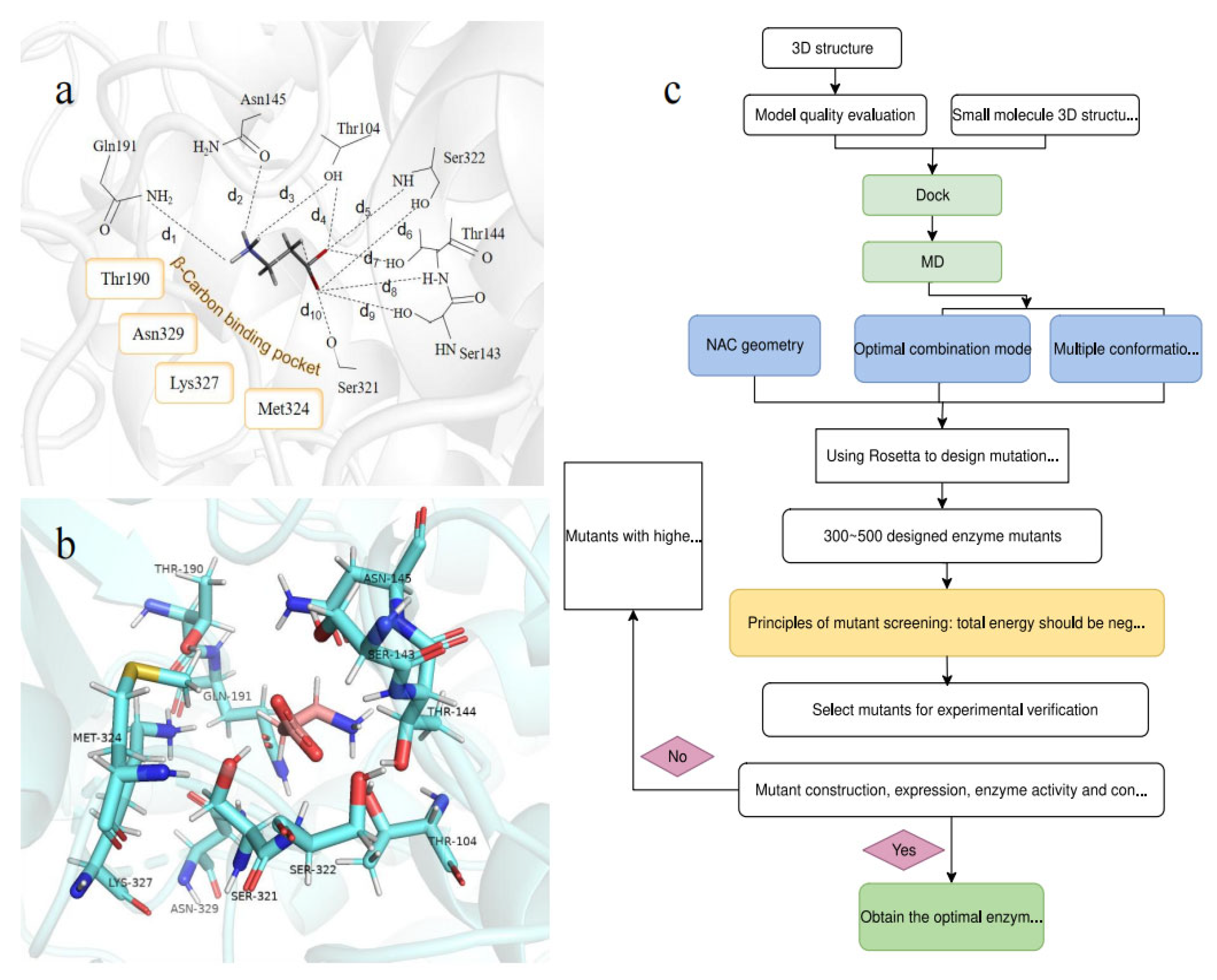
Figure 2.
Effects of temperature and pH on the activity of AspA and its mutants. (a) Optimal temperature; (b) Temperature stability; (c) Optimal pH; (d) pH stability.
Figure 2.
Effects of temperature and pH on the activity of AspA and its mutants. (a) Optimal temperature; (b) Temperature stability; (c) Optimal pH; (d) pH stability.
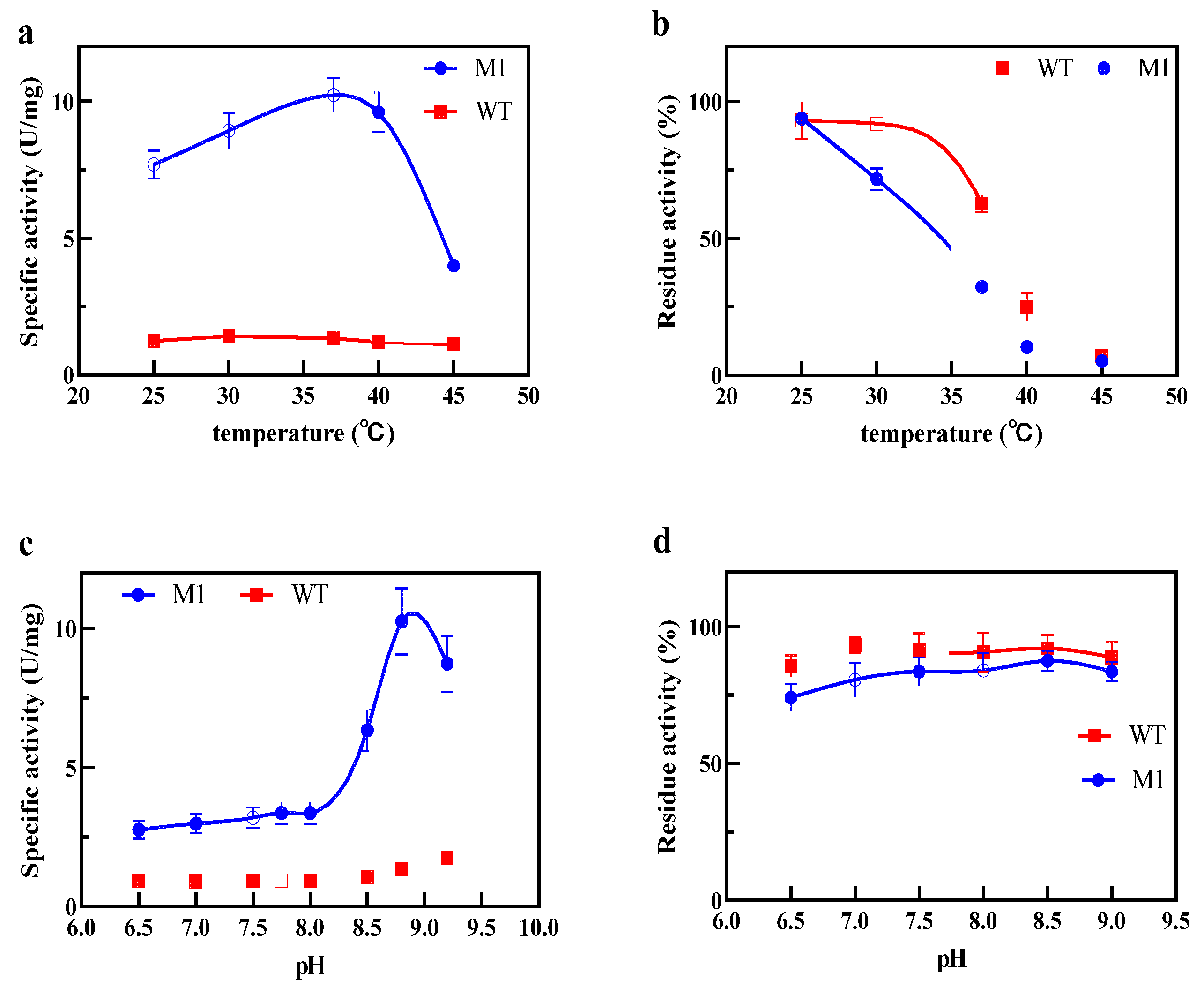
Figure 3.
(a) Effect of pH on conversion rate; (b) Effect of temperature on conversion rate; (c) Effect of different metal ions on the conversion; (d) Effect of cell amount on the conversion.
Figure 3.
(a) Effect of pH on conversion rate; (b) Effect of temperature on conversion rate; (c) Effect of different metal ions on the conversion; (d) Effect of cell amount on the conversion.
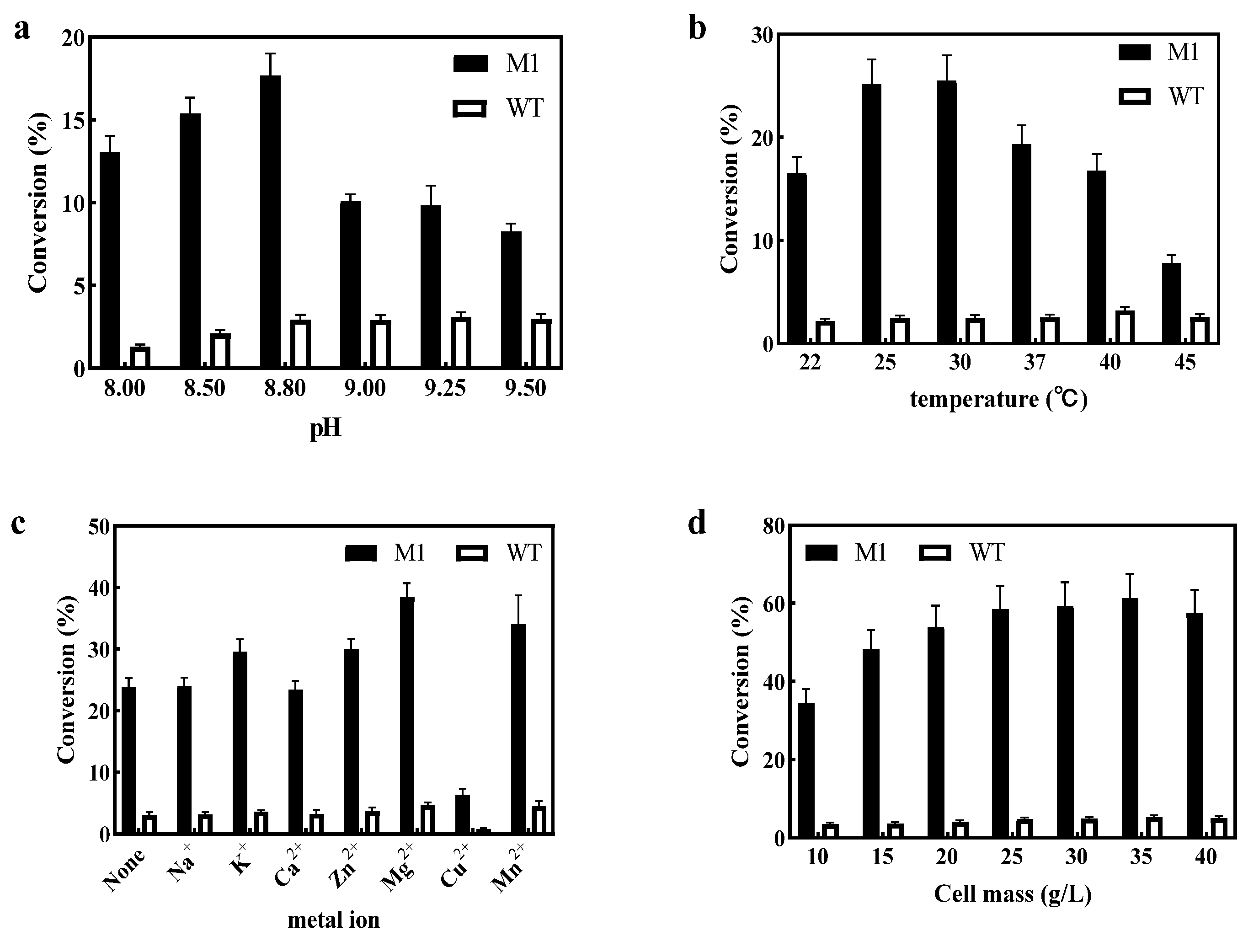
Figure 4.
Reaction time profile of whole-cell-catalyzed synthesis of β-alanine.
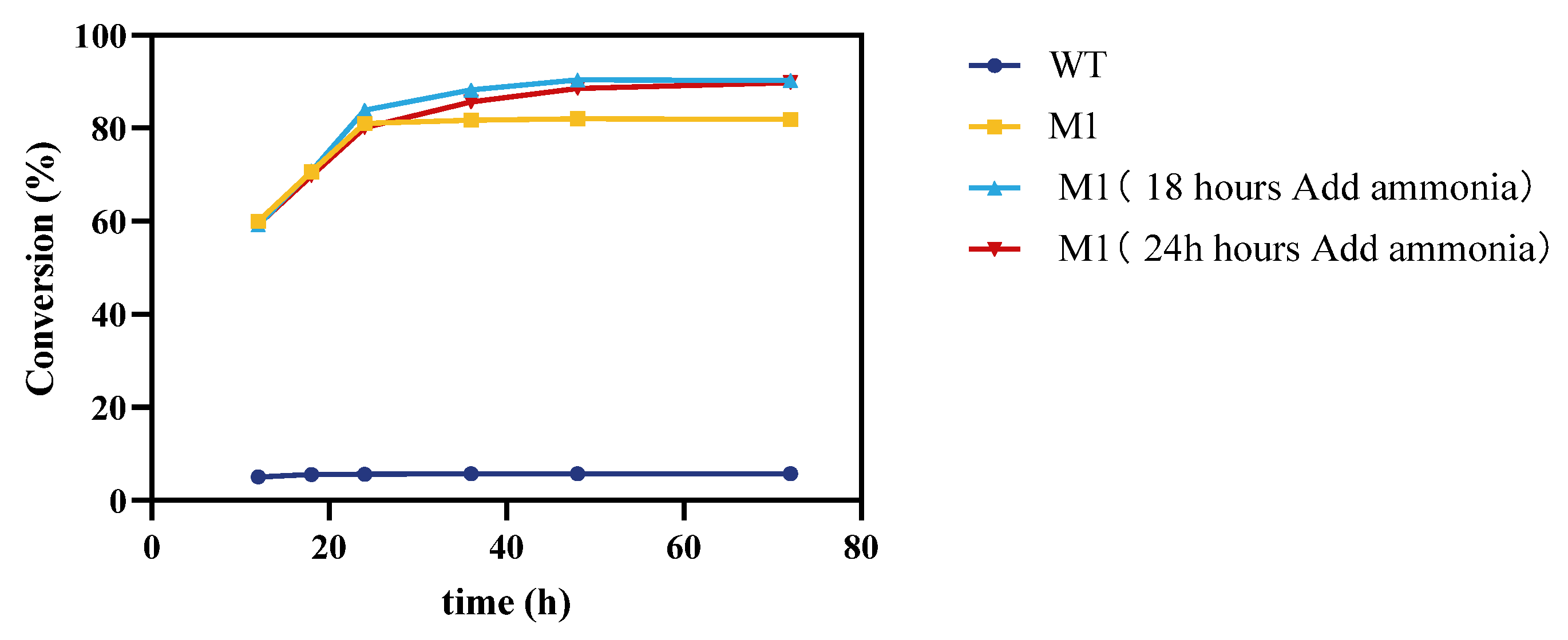
Figure 5.
Superposition of AspA and M1 on the loop after kinetic analysis; green: wild-type, open conformation; pink: M1, closed conformation; yellow: β-Alanine.
Figure 5.
Superposition of AspA and M1 on the loop after kinetic analysis; green: wild-type, open conformation; pink: M1, closed conformation; yellow: β-Alanine.
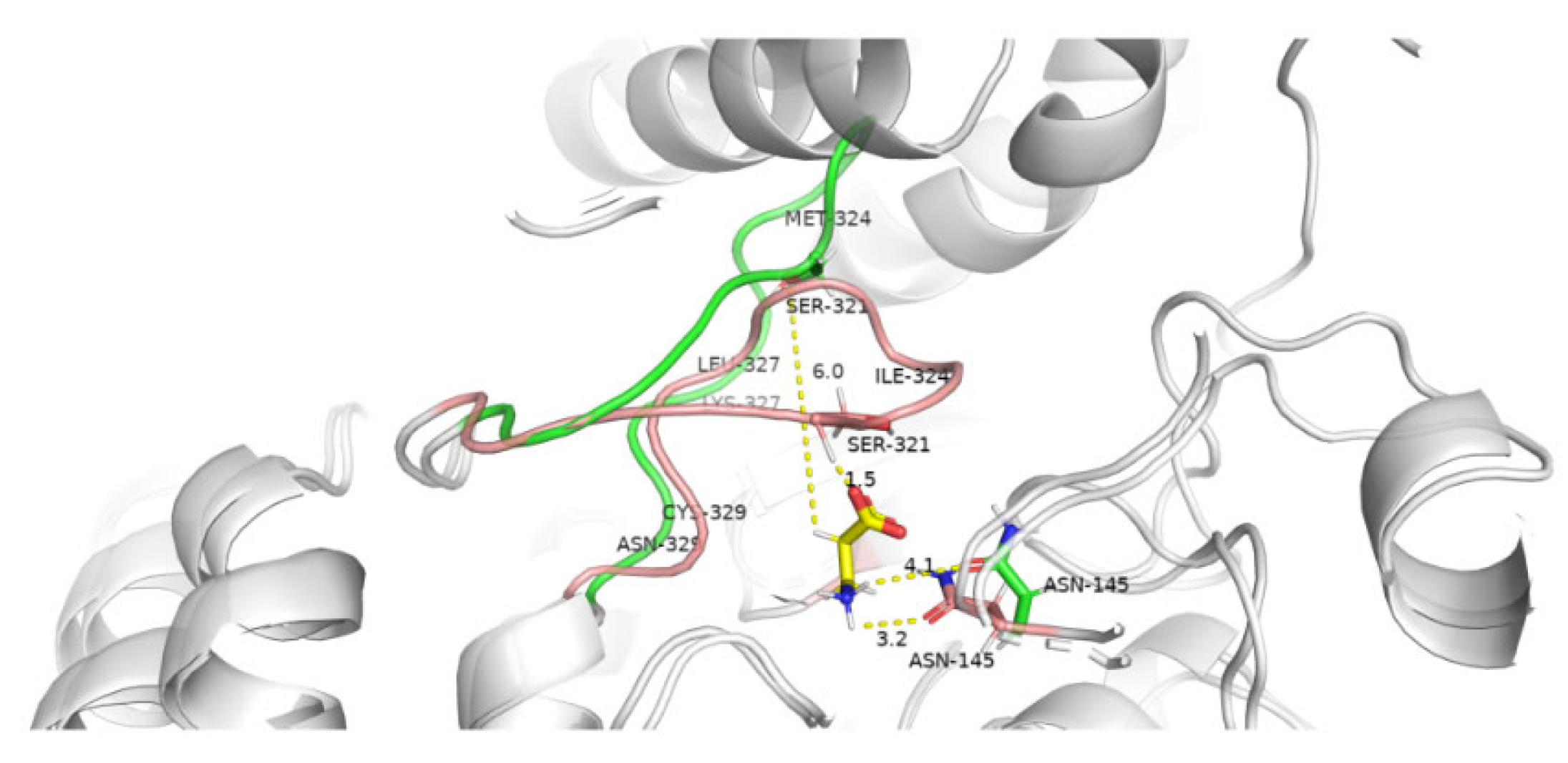
Figure 6.
Tertiary structure analysis of wild-type enzyme and mutant enzyme M1. (a) Local region of wild-type enzyme; (b) Local region of mutant enzyme M1.
Figure 6.
Tertiary structure analysis of wild-type enzyme and mutant enzyme M1. (a) Local region of wild-type enzyme; (b) Local region of mutant enzyme M1.
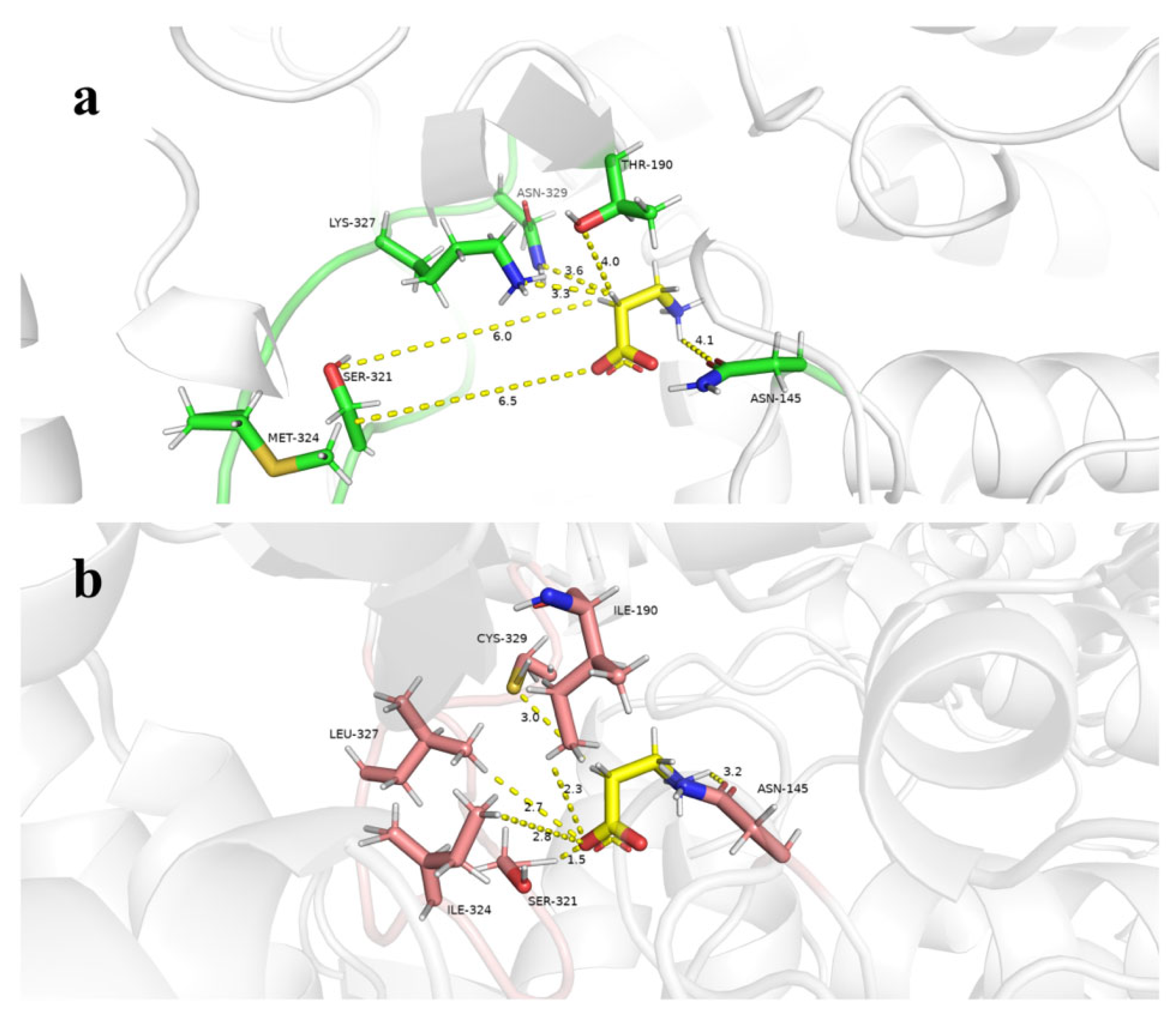
Figure 7.
RMSF values of AspA and its mutant M1.
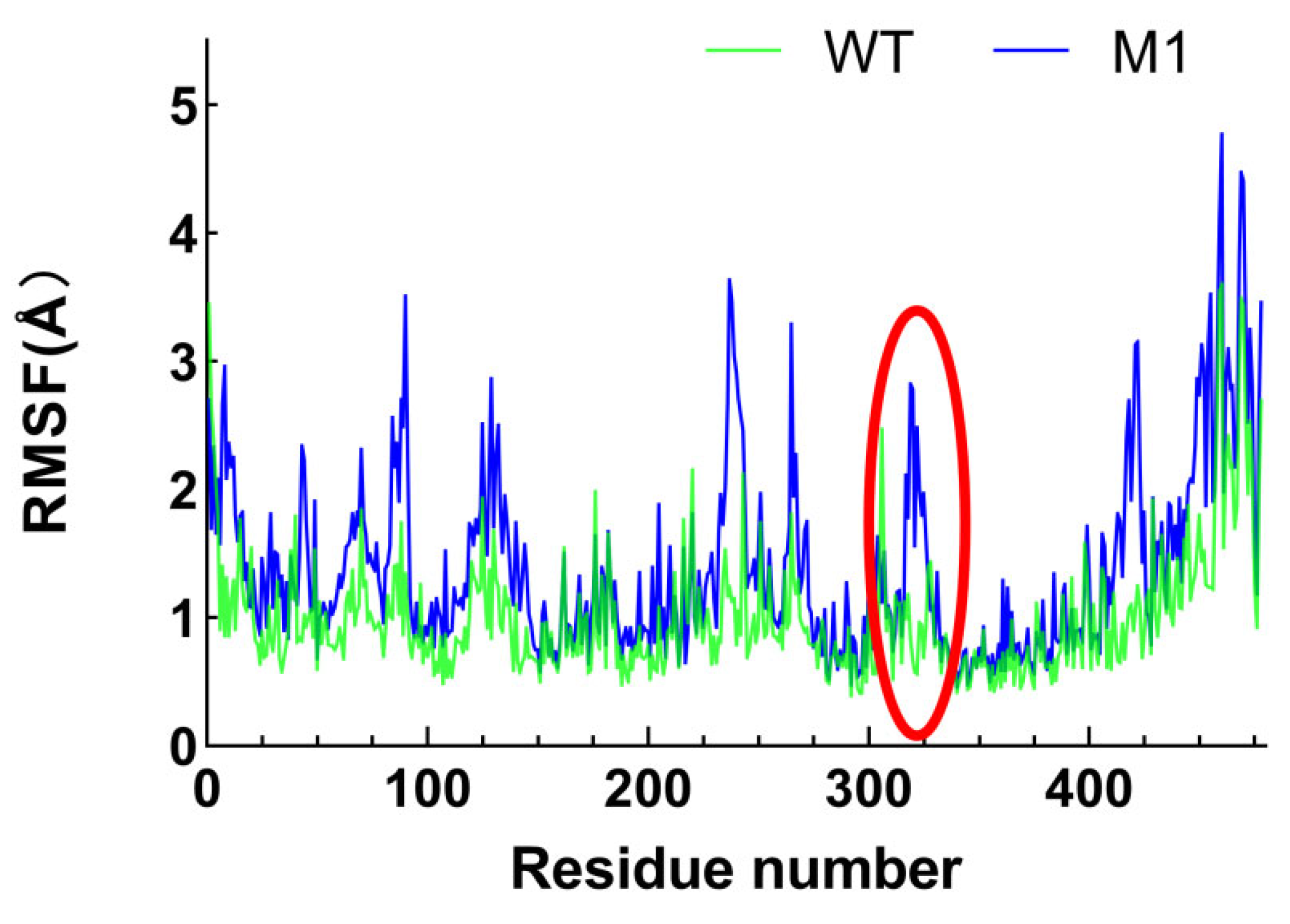
Figure 8.
RMSD versus time curve after 50 ns molecular dynamics (MD) simulation. (a): MD simulation of AspA and β-alanine complex; (b): MD simulation of M1 and β-alanine complex. RMSD values for the alpha carbon atoms (RMSDCα), main chain (RMSDBb), and all heavy atoms (RMSDAll).
Figure 8.
RMSD versus time curve after 50 ns molecular dynamics (MD) simulation. (a): MD simulation of AspA and β-alanine complex; (b): MD simulation of M1 and β-alanine complex. RMSD values for the alpha carbon atoms (RMSDCα), main chain (RMSDBb), and all heavy atoms (RMSDAll).
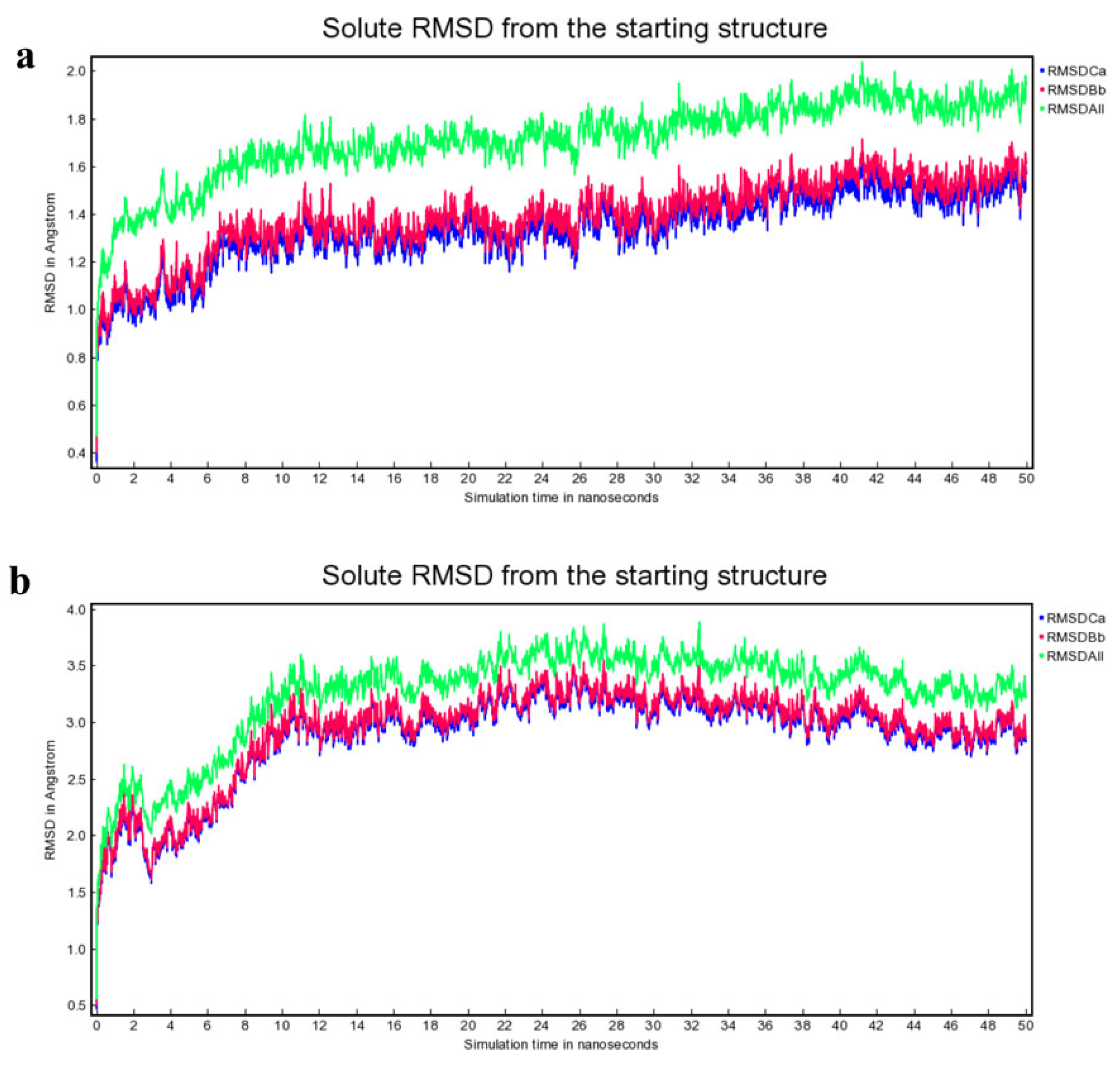

Table 1.
Screened mutants with high activity.
| AspA mutant | Specific enzyme activity (U/g) | Analytical yield of β-alanine (%) |
all_cst | |
|---|---|---|---|---|
| WT | - | 550.00 | 1.50 | - |
| M1 | T190I-M324I-K327L-N329C | 3,033.33 | 13.43 | 10.87 |
| M2 | T190V-M324I-K327L-N329C | 2,250.00 | 7.24 | 11.68 |
| M3 | T190I-M324I-K327M-N329C | 2,000.00 | 4.84 | 19.32 |
| M4 | T190I-K327I-N329C | 2,000.00 | 4.79 | 10.16 |
Table 2.
Kinetic parameters and specific activities of AspA and its mutants.
| Enzyme | Km (mM) | kcat (min-1) | kcat/Km (mM-1·min-1) | Specific activity (U·mg-1) |
|---|---|---|---|---|
| Wild-type | 17.87 ± 3.02 | 36.10 ± 1.32 | 2.02 ± 0.13 | 1.38 ± 0.02 |
| M1 | 10.00 ± 1.41 | 262.81 ± 10.26 | 26.28 ± 2.45 | 10.11 ± 1.12 |
Disclaimer/Publisher’s Note: The statements, opinions and data contained in all publications are solely those of the individual author(s) and contributor(s) and not of MDPI and/or the editor(s). MDPI and/or the editor(s) disclaim responsibility for any injury to people or property resulting from any ideas, methods, instructions or products referred to in the content. |
© 2026 by the authors. Licensee MDPI, Basel, Switzerland. This article is an open access article distributed under the terms and conditions of the Creative Commons Attribution (CC BY) license (http://creativecommons.org/licenses/by/4.0/).
Copyright: This open access article is published under a Creative Commons CC BY 4.0 license, which permit the free download, distribution, and reuse, provided that the author and preprint are cited in any reuse.


