
Submitted:
03 June 2026
Posted:
05 June 2026
You are already at the latest version
Abstract
Introduction: Reconstruction of maxillary defects remains challenging because of the complex functional and aesthetic roles of the midface. Although both prosthetic obturation and microvascular reconstruction are established options, selecting the optimal modality remains controversial, particularly in low- and middle-income countries where resources may influence decision-making. This study evaluated functional and aesthetic outcomes of fibula free flap reconstruction compared with obturator rehabilitation following unilateral maxillectomy. Patients and Methods: This retrospective comparative study included 30 patients who underwent unilateral maxillectomy followed by either FFF reconstruction (n = 10) or obturator rehabilitation (n = 20) between November 2023 and November 2025. Demographic, clinical, operative, functional, and aesthetic data were collected from medical records and follow-up assessments. Functional outcomes were evaluated using a simplified Speech Intelligibility Scale and the Functional Oral Intake Scale (FOIS). Aesthetic outcomes were assessed using patient-reported satisfaction scores. Statistical analysis was performed using SPSS, with p < 0.05 considered statistically significant. Results: Patients in the FFF group were significantly younger than those in the obturator group (30.70 ± 13.70 vs. 49.15 ± 12.01 years, p = 0.002). Operative time and hospital stay were significantly longer in the FFF group (14.20 ± 1.23 vs. 4.15 ± 1.42 hours and 7.40 ± 0.84 vs. 4.05 ± 1.64 days, respectively; p < 0.001 for both). Functional outcomes favored FFF reconstruction, with significantly better speech intelligibility and speech scores at 6 months (p = 0.017 and p = 0.011, respectively). Although FOIS scores and dietary performance tended to be better in the FFF group, these differences did not reach statistical significance. Aesthetic satisfaction was higher in the FFF group but without statistically significant difference. Complications were limited and predominantly minor in both groups. Conclusion: Fibula free flap reconstruction provided better functional outcomes, particularly speech, in carefully selected patients with unilateral maxillary defects. However, obturator rehabilitation remains a reliable and resource-conscious alternative. Therefore, reconstructive decisions should be individualized according to patient factors, functional demands, and institutional capability.
Keywords:
maxillary reconstruction
; free fibula flap
; obturators rehabilitation
; low to middle income countries
1. Introduction
The maxilla is a central midfacial structure that supports the orbit, cheeks, lips, and nose while separating the oral, nasal, and orbital cavities. It plays a critical role in facial aesthetics, speech, swallowing, and mastication. Consequently, maxillary defects following trauma or tumor resection result in significant functional and cosmetic morbidity [1].
Reconstruction of these defects remains challenging. Various microvascular free flaps including iliac crest, fibula, radial forearm, anterolateral thigh, rectus abdominis, and scapular flaps have been described, each with specific advantages and limitations [2,3,4,5].
Alternatively, prosthetic obturation remains widely used due to its relative simplicity, immediate dental rehabilitation, and facilitation of tumor surveillance. However, obturators may require repeated adjustments, particularly in irradiated patients, and can be poorly tolerated in extensive defects or younger individuals [6].
Although both free flap reconstruction and obturation are established options, the optimal approach remains controversial. This dilemma is amplified in low- to middle-income countries(LMICs), where resource availability, operative time, infrastructure, and trained personnel significantly influence decision making. Careful patient selection is therefore essential when considering microvascular reconstruction [7].
In this study, we present our institutional experience in Egypt managing unilateral maxillectomy defects using either fibula free flap (FFF) reconstruction or obturator rehabilitation. We aim to clarify when microvascular FFF should be selected in LMICs and how it can be effectively implemented, while highlighting the practical challenges encountered in our context
2. Patients and Methods
The study was designed as a comparative retrospective observational study conducted at the Department of Oral and Maxillofacial Surgery. The study included patients who underwent unilateral maxillectomy followed by either FFF reconstruction or prosthetic obturator rehabilitation.
Ethical approval was obtained from the Research Ethical Committee (REC), Faculty of Dentistry, (Meeting No. 100, Approval No. 842, Date: 30/10/2023).
Medical records of patients treated between November 2023 and November 2025 were reviewed.
2.1. Inclusion Criteria
- Patients who underwent unilateral maxillectomy for benign or malignant pathology.
- Reconstruction using either fibula free flap or obturator rehabilitation.
- Minimum follow-up period of 6 months.
2.2. Exclusion Criteria
- Maxillectomy with orbital exenteration.
- Bilateral maxillectomies.
- Incomplete medical records.
- Reconstruction using other modalities.
A total of 30 patients met the inclusion criteria:
- Group A: FFF reconstruction (n = 10)
- Group B: Obturator rehabilitation (n = 20)
Data were extracted from hospital records and operative reports. When required, follow-up information was supplemented through structured telephone interviews. Recorded variables included demographic data, histopathological diagnosis, Brown defect classification, operative parameters, hospital stay, postoperative complications, and functional and aesthetic outcomes.. Maxillary defects were classified according to the classification system described by Brown et al [8].
All patients underwent preoperative CT scanning of the head and neck. DICOM data were imported into computer-aided design software for virtual surgical planning. Materialise Mimics Medical (Version 21.0) and ProPlan CMF 3.0 were used for three-dimensional reconstruction, surgical simulation, and guide fabrication.
2.3. Surgical and Prosthetic Management
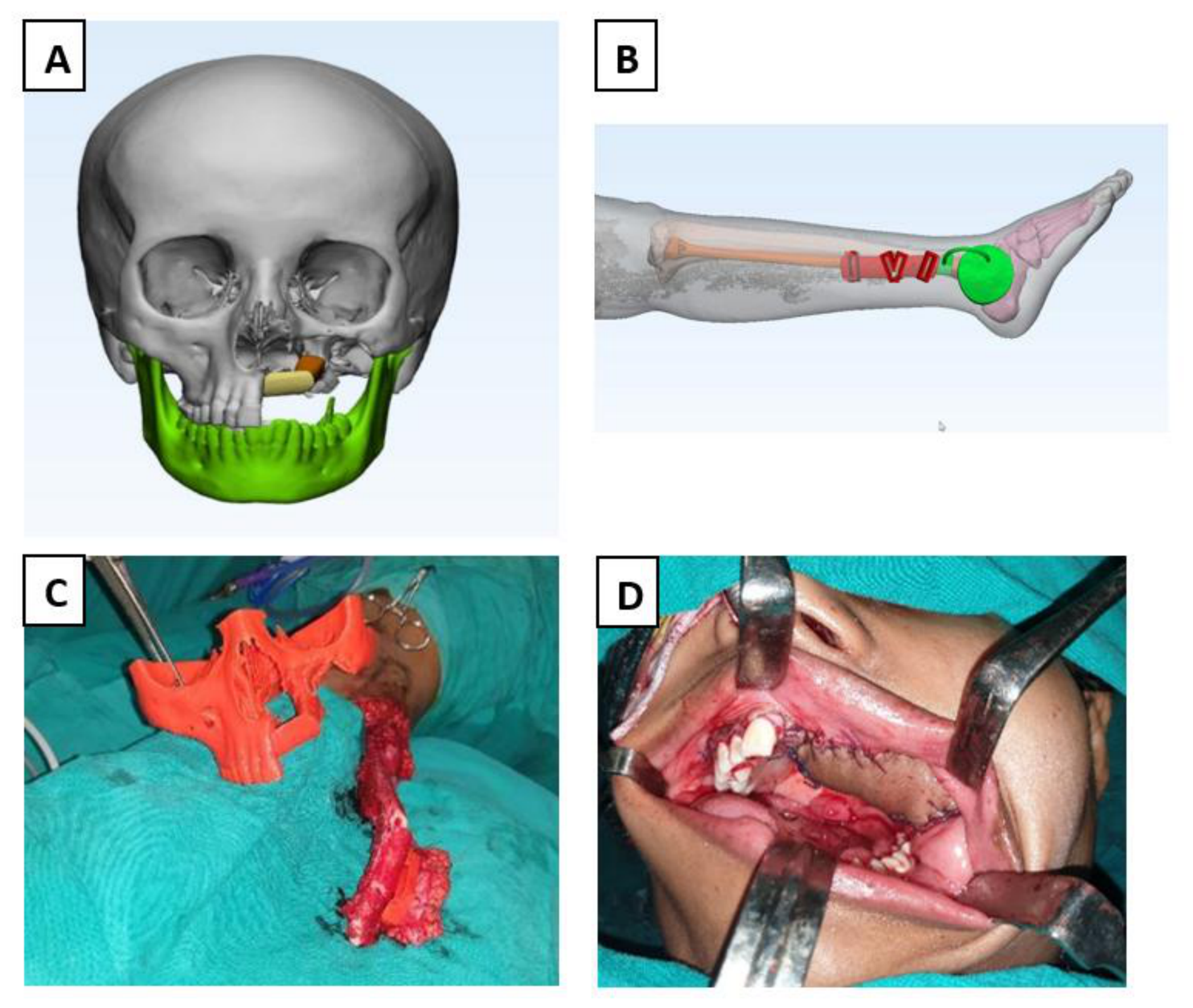
2.3.1. Fibula Free Flap Group (Figure 1)
Patients underwent immediate or delayed reconstruction using an osteocutaneous fibula free flap based on defect characteristics and oncologic considerations.
Virtual surgical planning (VSP) was utilized to design cutting guides. The fibula was osteotomized in situ using a patient-specific surgical guide to achieve the planned segment lengths and angular wedge osteotomies while preserving the vascular pedicle.
Titanium plates were used to fix the fibular segments. Accuracy of reconstruction was verified using a stereolithographic model simulating the maxillary defect.
For inset, the fibular segments along with the vascular pedicle and skin paddle were positioned to restore maxillary continuity. The inferior border of the fibula was aligned at the level of the maxillary alveolus following an occlusion-driven reconstructive concept.
In cases lacking sufficient posterior maxillary bone for fixation, the zygomatic buttress was used as an alternative fixation point.
Figure 1.
Showing case no 2 in group (A) lt maxillary ossifying fibroma. A. VSP of the fibula segments at the maxillary defect. B. Fibula surgical guide. C. Stereolithographic model for the reconstructed maxilla with fibula segments. D. FFF after insetting intra-operatively.
Figure 1.
Showing case no 2 in group (A) lt maxillary ossifying fibroma. A. VSP of the fibula segments at the maxillary defect. B. Fibula surgical guide. C. Stereolithographic model for the reconstructed maxilla with fibula segments. D. FFF after insetting intra-operatively.
2.3.2. Microvascular Anastomosis
After bone fixation, the vascular pedicle was tunneled to the ipsilateral recipient vessels without torsion or tension. Care was taken to identify and mark donor vessels before tunneling. A protective sterile glove sleeve was utilized to facilitate safe passage of the pedicle through a well-prepared cheek tunnel to the neck
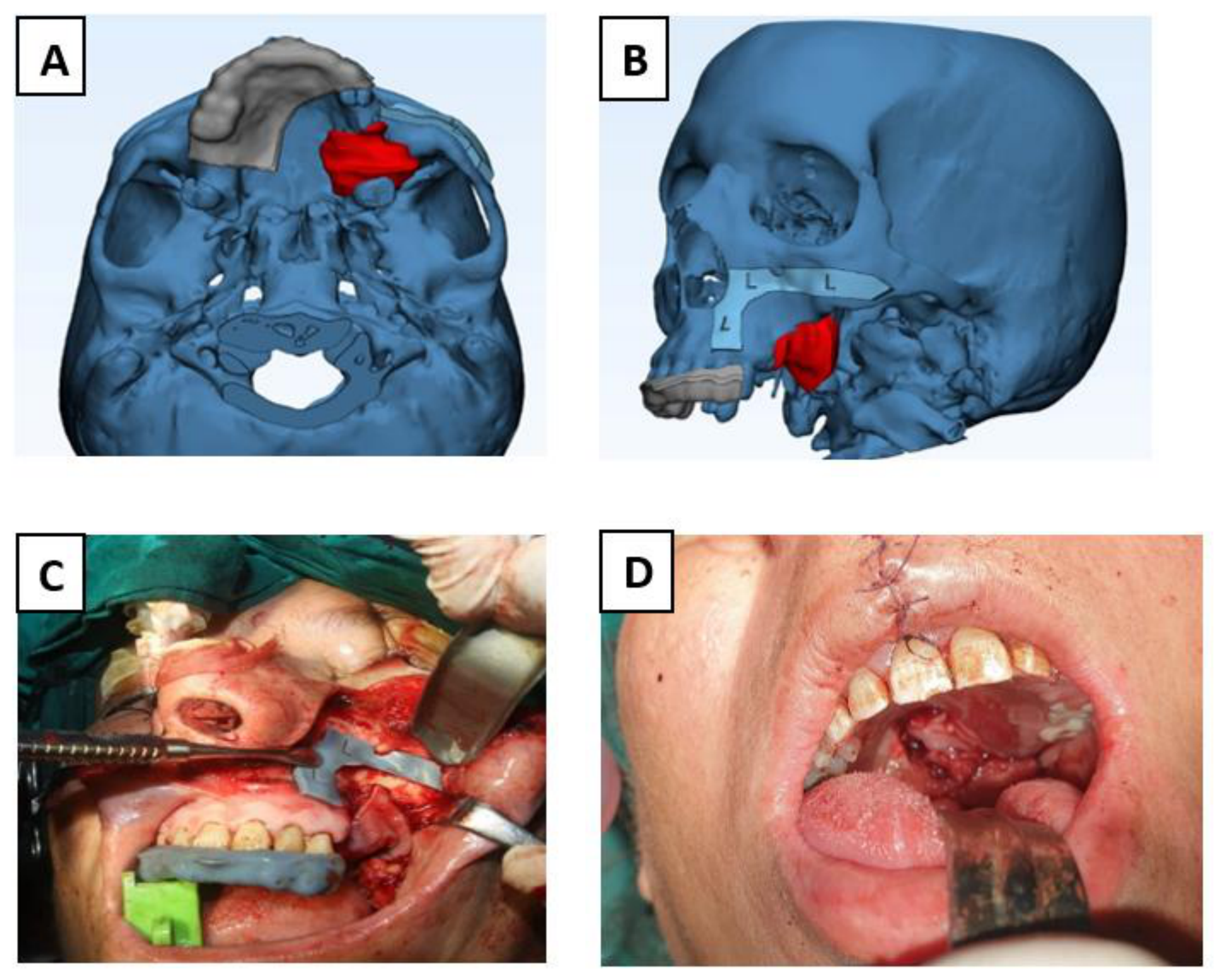
2.3.4. Obturator Group (Figure 2)
Patients in this group underwent staged prosthetic rehabilitation. A surgical obturator with teeth was placed immediately postoperatively to minimize psychological distress. This was replaced by an interim obturator after 4–6 weeks, followed by fabrication of the definitive obturator approximately 3 months postoperatively.
Functional outcomes were evaluated using a simplified Speech Intelligibility Scale, categorizing speech performance as normal, understandable with difficulty, or poor. Swallowing and dietary performance were assessed using the Functional Oral Intake Scale (FOIS), a validated 7-point scale that measures the level of oral intake from total dependence on enteral feeding to a full oral diet without restrictions [9].
Aesthetic outcomes were assessed based on patient-reported satisfaction and were categorized into three groups: satisfied, partially satisfied, and dissatisfied.
Figure 2.
Showing case no 2 in group (B) lt maxillary scc. A.VSP of the surgical guide for Lt maxillectomy. B. Surgical guide from buccal side. maxillectomy. C. Intra-operative resection. D. the obturator in place intra oral.
Figure 2.
Showing case no 2 in group (B) lt maxillary scc. A.VSP of the surgical guide for Lt maxillectomy. B. Surgical guide from buccal side. maxillectomy. C. Intra-operative resection. D. the obturator in place intra oral.
2.4. Statistical Analysis
Data were analyzed using SPSS version 26 (IBM Corp., Armonk, NY, USA). Continuous variables were expressed as mean ± SD or median (IQR) according to data distribution after assessing normality by Shapiro Wick test, while categorical variables were presented as frequencies and percentages. Between-group comparisons were performed using the independent t-test or Mann–Whitney U test for continuous variables and the chi-square or Fisher’s exact test for categorical variables. A p-value < 0.05 was considered statistically significant.
3. Results
A total of 30 patients were included in this study, comprising 10 patients who underwent fibula free flap (FFF) reconstruction and 20 patients rehabilitated with obturator prostheses. Patients in the FFF group were significantly younger than those in the obturator group (30.70 ± 13.70 vs. 49.15 ± 12.01 years, p = 0.002). Sex distribution was comparable between both groups, with equal male-to-female ratios in each cohort. Similarly, no statistically significant differences were observed regarding pathology type or Brown defect classification between the studied groups. Class IIB defects represented the most common defect pattern in both groups.
Regarding perioperative outcomes, operative time was significantly longer in the FFF group compared to the obturator group (14.20 ± 1.23 vs. 4.15 ± 1.42 hours, p < 0.001). Likewise, hospital stay duration was significantly greater among patients reconstructed with FFF (7.40 ± 0.84 vs. 4.05 ± 1.64 days, p < 0.001). Intraoral surgical access was the predominant approach in both groups, with no statistically significant difference between them. Within the FFF cohort, delayed reconstruction was more frequently performed than immediate reconstruction (70% vs. 30%). Reported complications were relatively limited in both groups, with no statistically significant difference in overall complication rate between FFF and obturator rehabilitation (30% vs. 20%, p = 0.657). Most complications were minor and managed conservatively.
Functional outcomes at 6 months demonstrated significantly superior speech performance in the FFF group. Normal speech intelligibility was achieved in 90% of FFF patients compared to 40% in the obturator group, whereas understandable speech with difficulty was more frequent among obturator patients (60% vs. 10%) (p = 0.017). Similarly, median speech score was significantly higher in the FFF group (2.0 vs. 1.0, p = 0.011). Although FFF patients showed better swallowing performance and dietary function, reflected by higher median FOIS scores and a greater proportion of patients tolerating unrestricted diets, these differences did not reach statistical significance. Soft diet dependence remained more common in the obturator group.
Concerning aesthetic outcomes, patient satisfaction tended to be higher in the FFF group, where 80% of patients reported complete satisfaction compared to 60% in the obturator group. However, the difference was not statistically significant (p = 0.419). Median aesthetic scores were also comparable between both groups. Overall, FFF reconstruction demonstrated superior functional outcomes, particularly regarding speech intelligibility, despite requiring longer operative time and hospitalization. Obturator rehabilitation, however, remained a reliable and practical alternative, especially in patients where shorter operative duration and reduced resource utilization were advantageous.

Table 1.
Baseline demographic and clinical characteristics.
| Variable | FFF (n=10) | Obturator (n=20) | P value |
|---|---|---|---|
| Age, years, mean ± SD | 30.70 ± 13.70 | 49.15 ± 12.01 | 0.002* |
|
Sex, n (%) Female Male |
5 (50.0%) 5 (50.0%) |
10 (50.0%) 10 (50.0%) |
1.000 |
|
Pathology type, n (%) Benign Malignant |
7 (70.0%) 3 (30.0%) |
12 (60.0%) 8 (40.0%) |
0.702 |
|
Brown classification, n (%) Class IB Class IIB Class IIIB |
3 (30.0%) 6 (60.0%) 1 (10.0%) |
4 (20.0%) 13 (65.0%) 3 (15.0%) |
0.804 |
Table 2.
Operative and perioperative outcomes.
| Variable | FFF (n=10) | Obturator (n=20) | P value |
|---|---|---|---|
| Operative time, hours, mean ± SD | 14.20 ± 1.23 | 4.15 ± 1.42 | <0.001* |
| Hospital stays (days) mean ± SD | 7.40 ± 0.84 | 4.05 ± 1.64 | <0.001* |
| Surgical approach, n (%) Extraoral Intraoral |
4 (40.0%) 6 (60.0%) |
6 (30.0%) 14 (70.0%) |
0.690 |
| Immediate reconstruction in FFF, n (%) | 3 (30.0%) | --- | |
| Delayed reconstruction in FFF, n (%) | 7 (70.0%) | ---- | |
|
Any reported complication, n (%) Yes No |
3 (30.0%) 7 (70.0%) |
4 (20.0%) 16 (80.0%) |
0.657 |
Table 3.
Functional and aesthetic outcomes at 6 months.
| Variable | FFF (n=10) | Obturator (n=20) | P value |
|---|---|---|---|
|
Speech intelligibility, n (%) Normal speech Understandable with difficulty |
9 (90.0%) 1 (10.0%) |
8 (40.0%) 12 (60.0%) |
0.017* |
| Speech score, median (IQR) | 2.0 (0.0) | 1.0 (1.0) | 0.011* |
| FOIS level, median (IQR) | 6.5 (1.0) | 6.0 (2.0) | 0.102 |
|
Diet consistency, n (%) Avoids hard/dry food Normal unrestricted diet Soft diet, thickened fluids |
4 (40.0%) 5 (50.0%) 1 (10.0%) |
5 (25.0%) 6 (30.0%) 9 (45.0%) |
0.159 |
|
Aesthetic satisfaction, n (%) Partially satisfied Satisfied |
2 (20.0%) 8 (80.0%) |
8 (40.0%) 12 (60.0%) |
0.419 |
| Aesthetic score, median (IQR) | 2.0 (0.0) | 2.0 (1.0) | 0.294 |
Table 4.
Descriptive demographic and baseline clinical data for FFF group.
| Case ID | Group | Diagnosis | Side | Age (years) |
Sex | Pathology Type | Brown Class |
|---|---|---|---|---|---|---|---|
| 1 | FFF | Ossifying fibroma | Left | 17 | Female | Benign | IB |
| 2 | FFF | CGCL | Left | 17 | Female | Benign | IIB |
| 3 | FFF | SCC | Right | 48 | Male | Malignant | IIB |
| 4 | FFF | Ameloblastoma | Right | 24 | Male | Benign | IIB |
| 5 | FFF | Ossifying fibroma | Left | 29 | Female | Benign | IIB |
| 6 | FFF | CGCG | Right | 21 | Female | Benign | IB |
| 7 | FFF | Mucoepidermoid carcinoma | Left | 42 | Male | Malignant | IIB |
| 8 | FFF | Ameloblastoma | Left | 35 | Male | Benign | IIIB |
| 9 | FFF | SCC | Right | 55 | Male | Malignant | IIB |
| 10 | FFF | Ossifying fibroma | Right | 19 | Female | Benign | IB |
Table 5.
Descriptive perioperative data for FFF group.
| ID | Approach | Recipient Vessels | Op Time Hours | Hospital Stay Days | Speech Intelligibility | Speech Score | FOIS Level | Diet | Satisfaction | Complication |
|---|---|---|---|---|---|---|---|---|---|---|
| 1 | Intraoral | Facial artery and vein | 15.0 | 7.0 | Normal speech | 2 | 7 | Normal unrestricted diet | Satisfied | None reported |
| 2 | Intraoral | Facial artery and vein | 15.0 | 7.0 | Normal speech | 2 | 7 | Normal unrestricted diet | Satisfied | None reported |
| 3 | Extraoral | Superior thyroid artery and vein | 12.0 | 7.0 | Normal speech | 2 | 6 | Avoids hard/dry food | Satisfied | None reported |
| 4 | Intraoral | Facial artery and vein | 14.0 | 7.0 | Normal speech | 2 | 7 | Normal unrestricted diet | Satisfied | Minor donor-site discomfort |
| 5 | Intraoral | Facial artery and vein | 13.0 | 6.0 | Normal speech | 2 | 6 | Avoids hard/dry food | Satisfied | None reported |
| 6 | Intraoral | Facial artery and vein | 15.0 | 8.0 | Normal speech | 2 | 7 | Normal unrestricted diet | Satisfied | None reported |
| 7 | Extraoral | Superior thyroid artery and vein | 13.0 | 8.0 | Understandable with difficulty | 1 | 6 | Avoids hard/dry food | Partially satisfied | Wound infection managed conservatively |
| 8 | Extraoral | Facial artery and vein | 16.0 | 9.0 | Normal speech | 2 | 6 | Avoids hard/dry food | Satisfied | None reported |
| 9 | Extraoral | Superior thyroid artery and vein | 14.0 | 8.0 | Normal speech | 2 | 5 | Soft diet, thickened fluids | Partially satisfied | Minor flap congestion resolved |
| 10 | Intraoral | Facial artery and vein | 15.0 | 7.0 | Normal speech | 2 | 7 | Normal unrestricted diet | Satisfied | None reported |
Table 6.
Descriptive demographic and baseline clinical data for obturator group.
| Case ID | Group | Diagnosis | Side | Age (years) |
Sex | Pathology Type | Brown Class |
|---|---|---|---|---|---|---|---|
| 1 | Obturator | Mucoepidermoid carcinoma | Left | 55 | Female | Malignant | IIB |
| 2 | Obturator | SCC | Left | 48 | Female | Malignant | IIB |
| 3 | Obturator | CGCG | Right | 52 | Female | Benign | IIB |
| 4 | Obturator | Ossifying fibroma | Right | 32 | Female | Benign | IB |
| 5 | Obturator | Ameloblastoma | Right | 45 | Male | Benign | IIIB |
| 6 | Obturator | Melanoma | Left | 61 | Male | Malignant | IIB |
| 7 | Obturator | CGCG | Right | 20 | Female | Benign | IB |
| 8 | Obturator | SCC | Left | 55 | Female | Malignant | IIB |
| 9 | Obturator | Mucormycosis | Left | 57 | Male | Benign | IIB |
| 10 | Obturator | Mucormycosis | Right | 48 | Male | Benign | IIIB |
| 11 | Obturator | SCC | Right | 48 | Male | Malignant | IIB |
| 12 | Obturator | Ameloblastoma | Right | 67 | Male | Benign | IIB |
| 13 | Obturator | SCC | Left | 60 | Male | Malignant | IIB |
| 14 | Obturator | Ossifying fibroma | Right | 38 | Female | Benign | IB |
| 15 | Obturator | Ameloblastoma | Left | 50 | Male | Benign | IIIB |
| 16 | Obturator | Mucoepidermoid carcinoma | Right | 63 | Female | Malignant | IIB |
| 17 | Obturator | CGCG | Left | 28 | Female | Benign | IB |
| 18 | Obturator | Mucormycosis | Right | 58 | Male | Benign | IIB |
| 19 | Obturator | SCC | Right | 52 | Male | Malignant | IIB |
| 20 | Obturator | Ameloblastoma | Left | 46 | Female | Benign | IIB |
Table 7.
Descriptive perioperative data for obturator group.
| ID | Approach | Op Time Hours | Hospital Stay Days | Speech Intelligibility | Speech Score | FOIS Level | Diet | Satisfaction | Complication |
|---|---|---|---|---|---|---|---|---|---|
| 1 | Intraoral | 3.0 | 4.0 | Understandable with difficulty | 1 | 6 | Avoids hard/dry food | Satisfied | None reported |
| 2 | Extraoral | 6.0 | 7.0 | Understandable with difficulty | 1 | 5 | Soft diet, thickened fluids | Partially satisfied | None reported |
| 3 | Intraoral | 3.0 | 5.0 | Understandable with difficulty | 1 | 6 | Avoids hard/dry food | Satisfied | None reported |
| 4 | Intraoral | 2.0 | 2.0 | Normal speech | 2 | 7 | Normal unrestricted diet | Satisfied | Minor donor-site discomfort |
| 5 | Extraoral | 5.0 | 3.0 | Normal speech | 2 | 7 | Normal unrestricted diet | Satisfied | None reported |
| 6 | Intraoral | 6.0 | 5.0 | Understandable with difficulty | 1 | 5 | Soft diet, thickened fluids | Partially satisfied | None reported |
| 7 | Intraoral | 3.0 | 3.0 | Normal speech | 2 | 7 | Normal unrestricted diet | Satisfied | Wound infection managed conservatively |
| 8 | Intraoral | 6.0 | 5.0 | Understandable with difficulty | 1 | 5 | Soft diet, thickened fluids | Satisfied | None reported |
| 9 | Intraoral | 3.0 | 2.0 | Normal speech | 2 | 6 | Avoids hard/dry food | Satisfied | Minor flap congestion resolved |
| 10 | Intraoral | 3.0 | 2.0 | Understandable with difficulty | 1 | 5 | Soft diet, thickened fluids | Partially satisfied | None reported |
| 11 | Extraoral | 6.0 | 7.0 | Understandable with difficulty | 1 | 5 | Soft diet, thickened fluids | Partially satisfied | None reported |
| 12 | Intraoral | 3.0 | 2.0 | Normal speech | 2 | 7 | Normal unrestricted diet | Satisfied | None reported |
| 13 | Extraoral | 6.0 | 6.0 | Understandable with difficulty | 1 | 5 | Soft diet, thickened fluids | Partially satisfied | None reported |
| 14 | Intraoral | 3.0 | 3.0 | Normal speech | 2 | 7 | Normal unrestricted diet | Satisfied | None reported |
| 15 | Extraoral | 5.0 | 4.0 | Understandable with difficulty | 1 | 6 | Avoids hard/dry food | Satisfied | None reported |
| 16 | Intraoral | 4.0 | 5.0 | Understandable with difficulty | 1 | 5 | Soft diet, thickened fluids | Partially satisfied | None reported |
| 17 | Intraoral | 3.0 | 3.0 | Normal speech | 2 | 7 | Normal unrestricted diet | Satisfied | None reported |
| 18 | Intraoral | 3.0 | 3.0 | Understandable with difficulty | 1 | 5 | Soft diet, thickened fluids | Partially satisfied | None reported |
| 19 | Extraoral | 6.0 | 6.0 | Understandable with difficulty | 1 | 5 | Soft diet, thickened fluids | Partially satisfied | None reported |
| 20 | Intraoral | 4.0 | 4.0 | Normal speech | 2 | 6 | Avoids hard/dry food | Satisfied | None reported |
4. Discussion
Reconstruction of maxillary defects remains one of the most demanding challenges in head and neck surgery due to the intricate three-dimensional anatomy of the midface and its essential functional and aesthetic roles. Despite major advances in microsurgery, virtual surgical planning, and implant-supported rehabilitation, the debate between prosthetic obturation and microvascular free flap reconstruction remains ongoing [1,10].
Consistent with prior reports, our findings demonstrated better functional outcomes in the FFF group, particularly regarding speech intelligibility. Patients undergoing FFF reconstruction showed a significantly greater proportion of normal speech and higher speech scores at 6 months. Although dietary performance and FOIS scores tended to be better in the FFF group, these differences did not reach statistical significance. These findings support the concept that vascularized composite tissue reconstruction may improve functional rehabilitation by restoring separation between the oral and nasal cavities, providing structural stability, and enhancing functional integration compared with prosthetic obturation, particularly in extensive palatal defect [11].
In contrast, previous studies, including that by Breeze et al., reported no significant differences in health-related quality-of-life outcomes between patients rehabilitated with obturators and those undergoing flap reconstruction [12].
This apparent discrepancy may reflect heterogeneity in defect classification, patient selection, age distribution, and follow-up duration across studies. In the present cohort, patients selected for FFF reconstruction were significantly younger and appeared to have higher functional demands, which may partly explain the more pronounced functional gains observed in this group. Therefore, age, functional expectations, and tolerance of removable prostheses should be considered important factors when selecting between obturator rehabilitation and microvascular reconstruction.
Nevertheless, the functional advantages of FFF reconstruction should be balanced against its significantly longer operative time and prolonged hospital stay, as demonstrated in the present series. This highlights an important trade-off between functional optimization and resource utilization, a consideration that is particularly relevant in low- and middle-income countries (LMICs).
In high-income countries (HICs), microvascular reconstruction is widely practiced because of well-established infrastructure, specialized multidisciplinary teams, and greater operating room availability. In contrast, LMICs face substantial challenges in implementing prolonged microsurgical procedures due to limited resources, shortage of trained personnel, restricted access to operating rooms, and variable availability of microsurgical instruments and postoperative monitoring facilities. These logistical constraints may influence patient selection, operative planning, complication management, and the overall feasibility of free flap reconstruction [13].
Our experience further supports the systemic barriers described by Shyaka et al., who identified limited microsurgical exposure during training, shortage of experienced personnel, inadequate instrumentation, and restricted access to consumables as major obstacles to free flap reconstruction in resource-constrained settings [14]. Beyond these structural limitations, we observed that successful implementation required coordinated anesthetic support, trained nursing teams for flap monitoring, and preparedness for potential re-exploration—elements that are often underdeveloped in emerging microvascular units.
In the present series, reported complications were relatively limited and predominantly minor. No total flap loss was observed in the FFF cohort, and complications such as minor flap congestion, wound infection, and donor-site discomfort were managed conservatively. These findings suggest that, with careful patient selection and appropriate perioperative support, FFF reconstruction can be safely implemented in selected cases even within resource-constrained settings.
Although aesthetic satisfaction was higher in the FFF group, statistical significance was not reached, suggesting that cosmetic perception may not differ substantially between modalities in selected unilateral defects. This finding supports the continued role of obturator rehabilitation as a viable and practical alternative, particularly for older patients, medically compromised individuals, or institutions in the early stages of microvascular program development.
Collectively, our findings support a context-driven reconstructive strategy rather than a universally superior approach. In LMICs, FFF reconstruction may be most appropriate for carefully selected patients, particularly younger individuals with extensive defects and high functional demands, provided that the institution can sustain the technical, anesthetic, and postoperative monitoring requirements of microsurgery. Obturator rehabilitation, meanwhile, continues to represent a reliable and resource-conscious alternative.
5. Conclusion
In LMICs, maxillary reconstruction using FFF offers superior functional outcomes in carefully selected patients with unilateral maxillary defects, particularly younger individuals with higher functional demands. However, obturator rehabilitation still a practical and reliable alternative. Reconstructive decision-making should therefore be individualized, balancing functional benefit, patient characteristics, and institutional capability.
Establishing a sustainable microvascular unit in LMICs requires structured multidisciplinary support and strategic resource allocation to ensure safe and effective implementation.
References
- Rogers, S.N.; Lowe, D.; McNally, D.; Brown, J.S.; Vaughan, E.D. Health-related quality of life after maxillectomy: a comparison between prosthetic obturation and free flap. J. Oral Maxillofac. Surg. 2003, 61(2), 174–81. [Google Scholar] [CrossRef] [PubMed]
- Chepeha, D.B.; Moyer, J.S.; Bradford, C.R.; Prince, M.E.; Marentette, L.; Teknos, T.N. Osseocutaneous radial forearm free tissue transfer for repair of complex midfacial defects. Arch. Otolaryngol. Head. Neck Surg. 2005, 131(6), 513–7. [Google Scholar] [CrossRef] [PubMed]
- Amin, A.; Rifaat, M.; Civantos, F.; Weed, D.; Abu-Sedira, M.; Bassiouny, M. Free anterolateral thigh flap for reconstruction of major craniofacial defects. J. Reconstr. Microsurg. 2006, 22(2), 97–104. [Google Scholar] [CrossRef] [PubMed]
- Clark, J.R.; Vesely, M.; Gilbert, R. Scapular angle osteomyogenous flap in postmaxillectomy reconstruction: defect, reconstruction, shoulder function, and harvest technique. Head. Neck 2008, 30(1), 10–20. [Google Scholar] [CrossRef] [PubMed]
- Park, S.J.; Jeong, W.J.; Ahn, S.H. Scapular tip and latissimus dorsi osteomyogenous free flap for the reconstruction of a maxillectomy defect: A minimally invasive transaxillary approach. J. Plast. Reconstr. Aesthet. Surg. 2017, 70(11), 1571–6. [Google Scholar] [CrossRef] [PubMed]
- Wang, F.; Huang, W.; Zhang, C.; Sun, J.; Qu, X.; Wu, Y. Functional outcome and quality of life after a maxillectomy: a comparison between an implant supported obturator and implant supported fixed prostheses in a free vascularized flap. Clin. Oral Implant. Res. 2017, 28(2), 137–43. [Google Scholar] [CrossRef] [PubMed]
- Cervenka, B.; Trudeau, S.; Fagan, J.; Zender, C. Reconstructive considerations in low and middle-income countries. Curr. Opin. Otolaryngol. Head. Neck Surg. 2018, 26(5), 340–6. [Google Scholar] [CrossRef] [PubMed]
- Brown, J.S.; Shaw, R.J. Reconstruction of the maxilla and midface: introducing a new classification. Lancet Oncol. 2010, 11(10), 1001–8. [Google Scholar] [CrossRef] [PubMed]
- Thiagarajan, S.; Rukmangathan, M.; Sharma, D.; Sakpal, M.; Balaji, A.; Nair, D.; et al. A prospective observational study to compare speech and swallowing outcomes in different types of oral tongue defects and reconstructions in patients undergoing treatment for oral tongue squamous cell carcinoma. J. Clin. Oncol. 2025, 43, 11113. [Google Scholar] [CrossRef]
- Shen, Y.; Sun, J.; Li, J.; Li, M-m; Huang, W.; Ow, A. Special considerations in virtual surgical planning for secondary accurate maxillary reconstruction with vascularised fibula osteomyocutaneous flap. J. Plast. Reconstr. Aesthetic Surg. 2012, 65(7), 893–902. [Google Scholar] [CrossRef] [PubMed]
- Kornblith, A.B.; Zlotolow, I.M.; Gooen, J.; Huryn, J.M.; Lerner, T.; Strong, E.W.; et al. Quality of life of maxillectomy patients using an obturator prosthesis. Head. Neck 1996, 18(4), 323–34. [Google Scholar] [CrossRef]
- Breeze, J.; Rennie, A.; Morrison, A.; Dawson, D.; Tipper, J.; Rehman, K.; et al. Health-related quality of life after maxillectomy: obturator rehabilitation compared with flap reconstruction. Br. J. Oral Maxillofac. Surg. 2016, 54(8), 857–62. [Google Scholar] [CrossRef] [PubMed]
- Hendriks, T.; Botman, M.; Rahmee, C.; Ket, J.; Mullender, M.; Gerretsen, B.; et al. Impact of short-term reconstructive surgical missions: a systematic review. BMJ Glob. Health 2019, 4. [Google Scholar] [CrossRef] [PubMed]
- Shyaka, I.; Nezerwa, Y.; Mukagaju, F.; Dang, R.R.; Furaha, C.; Ntirenganya, F. Building sustainable reconstructive microsurgery in countries with limited resources: the Rwandan experience. Plast. Reconstr. Surgery–Global Open 2023, 11(10), e5332. [Google Scholar] [CrossRef] [PubMed]
Disclaimer/Publisher’s Note: The statements, opinions and data contained in all publications are solely those of the individual author(s) and contributor(s) and not of MDPI and/or the editor(s). MDPI and/or the editor(s) disclaim responsibility for any injury to people or property resulting from any ideas, methods, instructions or products referred to in the content. |
© 2026 by the authors. Licensee MDPI, Basel, Switzerland. This article is an open access article distributed under the terms and conditions of the Creative Commons Attribution (CC BY) license (http://creativecommons.org/licenses/by/4.0/).
Copyright: This open access article is published under a Creative Commons CC BY 4.0 license, which permit the free download, distribution, and reuse, provided that the author and preprint are cited in any reuse.


