

Submitted:
31 May 2026
Posted:
03 June 2026
You are already at the latest version
Abstract
Background: The use of digital health technologies, such as chatbots and virtual assistants based on artificial intelligence, has grown significantly in maternal health. These tools have been applied at different stages of the pregnancy and postpartum cycle, with emphasis on health education, risk monitoring, breastfeeding support, and mental health care. Despite their potential, challenges remain regarding clinical effectiveness, equity of access, and ethical safety. To describe, through a narrative literature review, the use of chatbots, conversational agents, and virtual assistants as support during pregnancy, childbirth, and the postpartum period, identifying applications, benefits, limitations, and perspectives for health practice. Methods: A narrative literature review was conducted between August and September 2025 in PubMed, Scopus, Web of Science, Nursing Database, Latin American and Caribbean Literature in Health Sciences and Google Scholar. Original articles, reviews, experience reports, and theoretical reflections published in Portuguese, English, or Spanish that addressed the use of digital tools based on artificial intelligence in the pregnancy and postpartum cycle were included. The analysis of the studies was organized into five thematic axes: applications in prenatal care, support during childbirth, postpartum monitoring and breastfeeding, perinatal mental health, and ethical, technical, and implementation challenges. Results: The search identified 6,230 records, of which 13 studies were included. Findings indicate that chatbots and virtual assistants show good acceptability, promote health education, and contribute to the early detection of physical and emotional risks. However, most of the studies are exploratory, with methodological limitations, lack of clinical trials, and limited validation in socially vulnerable contexts. Conclusions: Chatbots and artificial intelligence tools are promising resources for perinatal care, particularly as a complement to face-to-face attention. Their consolidation requires robust studies, cost-effectiveness assessments, and public policies that ensure equity and digital inclusion.
Keywords:
generative artificial intelligence
; artificial intelligence
; intelligent systems
; digital health
; women's health
; pregnancy
; postpartum period
1. Introduction
Digital health, understood as the integration of digital technologies in health promotion, prevention, and care, has profoundly transformed the way services are organized and delivered. In the field of health technologies, tools focused on health education, remote monitoring of chronic conditions, and the automation of clinical processes stand out. In maternal health, digital technologies have been used for prenatal reminders, monitoring risk factors during pregnancy, and breastfeeding support. Experiences report that women benefit from greater autonomy in self-care and feel more secure when receiving personalized information through mobile apps and virtual assistants [1].
Women's health is a field particularly impacted by digital health, as the female life cycle involves multiple demands, from sexual and reproductive health to the monitoring of chronic conditions such as gynecological and cardiovascular cancer. Mobile apps have been developed for menstrual cycle tracking, support in reproductive planning, early symptom detection, and postpartum monitoring. Such tools can improve knowledge and adherence to health practices, although greater regulation and scientific validation are needed [2].
However, incorporating digital health into women's healthcare is not without its challenges. Barriers include unequal internet access, low digital literacy, risks related to the privacy of sensitive data, and a lack of integration with traditional healthcare systems. Recent reflections highlight that digital transformation will only be effective if it considers the ethical, social, and cultural aspects that permeate women's lives, especially in vulnerable contexts [3].
There is consensus in the literature that digital health can enhance advances in women's health, provided it is accompanied by regulation, robust scientific evidence, and participatory implementation strategies. The integration of emerging technologies with user-centered approaches, in dialogue with healthcare professionals, has the potential to transform women's care, strengthening equity and comprehensiveness in the healthcare system [4].
The incorporation of conversational agents and artificial intelligence virtual assistants in maternal health has intensified with the advancement of natural language processing and the ubiquity of mobile devices. These tools, which range from rule-based chatbots to hybrid machine learning assistants, promise to expand access to information, offer health education, and complement in-person clinical care, especially in resource-poor settings. A clear upward trend has been identified in scientific literature on perinatal applications of conversational agents in recent years [5]. A Scoping Review indicates that these tools (chatbots, voice assistants, hybrid agents) act as complements to in-person care, offering rapid responses, health education, and initial triage, and that their adoption is likely to intensify as models become more sophisticated [6].
During pregnancy, childbirth, and postpartum, applications described in the literature include prenatal education (guidance on exams, nutrition, and warning signs), breastfeeding support, appointment and vaccination reminders, symptom screening (e.g., signs of obstetric risk), and mental health support interventions during the perinatal period. Pregnant and postpartum women value prompt and personalized responses, and chatbots can complement the healthcare team, offering initial guidance and referrals when necessary [7].
The available empirical evidence is promising, but still largely exploratory: feasibility, acceptability, and improvements in maternal knowledge, adherence to recommendations, and indicators of psychological well-being. However, there are gaps regarding hard clinical effects, such as reduced maternal and neonatal morbidity. It also highlights the need for randomized trials, cost-effectiveness assessments, and longitudinal investigations that test impacts on care outcomes [8].
The use of chatbots in perinatal mental health has received particular attention: automated digital interventions have been shown to be acceptable and, in some controlled trials, have been associated with reduced postpartum depressive and anxiety symptoms. However, authors warn of limitations, including small sample sizes, short follow-up times, and the need for escalation systems to human professionals when risks are detected [9].
Ethical, legal, and technical issues are recurrent in the literature: protection of sensitive data, privacy, transparency about system limitations, algorithmic biases, and clinical responsibility are critical points to be addressed before large-scale adoption. Furthermore, there is a risk of widening inequalities if digital solutions fail to consider unequal internet access, digital literacy, and language barriers [10].
Future prospects point to increasingly personalized tools (tailored to the user's clinical and social profile), co-design with users and healthcare professionals, and implementation research that assesses clinical outcomes, acceptability, cost-effectiveness, and impact on care flows. Recent systematic reviews reiterate the potential of chatbots as a complement to perinatal care but emphasize the need for robust evidence to guide policy and clinical practice [11].
Despite the growing number of initiatives and preliminary evidence supporting the use of virtual assistants and chatbots in the perinatal period, important gaps remain: the methodological heterogeneity of studies, the scarcity of robust clinical outcomes, data security and regulatory issues, and the need for cultural and linguistic adaptation, particularly in low and middle-income countries. These gaps justify conducting a narrative review that synthesizes existing experiences, reflections, case reports, and reviews, integrating both national and international contributions to map the landscape, challenges, and opportunities. Thus, the objective was to carry out a narrative review to describe the use of virtual assistants and artificial intelligence tools (chatbots, conversational agents and voice assistants) as support in the pregnancy-puerperal cycle (gestation, childbirth and postpartum).
2. Materials and Methods
Type of Study
A narrative literature review is a scientific research method that allows for the critical synthesis of available evidence on a given topic, fostering an understanding of trends, gaps, and implications for practice and research. Unlike systematic reviews, this type of study does not seek exhaustiveness, but rather the theoretical and critical integration of knowledge, supported by clear and transparent selection criteria [12].
This study aimed to synthesize, critically analyze, and integrate the knowledge produced on the use of virtual assistants, chatbots and artificial intelligence (AI) tools as support during pregnancy, childbirth, and the postpartum period. The choice of a narrative review was due to the fact that this is an emerging topic, characterized by rapid technological evolution and heterogeneous approaches, which requires a broad, interpretative, and critical analysis, distinct from the exhaustive nature of systematic reviews. This type of review allows us to map the state of the art, identify trends, limitations, and gaps, and propose future directions for research and clinical practice.
Defining the Research Question
This formulation sought to encompass the entire pregnancy-postpartum cycle, including interventions focused on health education, clinical monitoring, psychosocial support, and risk management. Clarity in defining the question was essential to avoid thematic dispersion, ensuring that only articles related to the core scope were included. To this end, theoretical frameworks in digital health and methodological recommendations for narrative reviews were considered [13]. The starting point was the formulation of the guiding question, structured to guide all stages of the review: "what is the available evidence on the use of virtual assistants and artificial intelligence tools as support during pregnancy, childbirth, and the postpartum period?
Search Strategy
The strategy was adapted for each database, respecting indexing specificities. Additionally, a manual search was performed in the reference lists of the included articles, as well as in gray literature (technical reports, conference proceedings, and documents from international organizations) [14]. The search was conducted between August and September 2025, using the following information sources: Medical Literature Analysis and Retrievel System Online (MEDLINE) via PubMed (National Library of Medicine's), Scopus, Web of Science, Banco de dados de Enfermagem (BDENF), Literatura Latino-Americana e do Caribe em Ciências da Saúde (LILACS) and Google Scholar. This selection ensured global coverage, including studies published in high-impact journals and also Latin American productions, essential for the Brazilian context. Controlled descriptors from Medical Subject Headings (MeSH) and Descritores em Ciências da Saúde (DeCS) vocabularies were used, in addition to free keywords, combined by Boolean operators: “chatbot” OR “conversational agent” OR “virtual assistant” OR “artificial intelligence” OR “digital health” AND “pregnancy” OR “maternal health” OR “prenatal care” OR “childbirth” OR “postpartum” OR “women’s health”.
Inclusion and Exclusion Criteria
We included original articles, reviews (systematic, scoping and integrative), case reports, theoretical reflections, and experience reports that directly addressed the use of AI-based digital tools (chatbots, conversational agents, virtual assistants) applied to the pregnancy-postpartum cycle. Studies published in portuguese, english or spanish were considered, with no time period restrictions, as long as they were available in full text. Duplicate publications, opinion articles without scientific basis, and studies whose focus did not involve pregnant, parturient, or postpartum women were excluded.
Selection and Evaluation of Studies
Although the narrative review does not follow strict protocols like Preferred Reporting Items for Systematic Reviews and Meta-Analyses (PRISMA), a systematic approach was adopted to reduce bias. The methodological quality of the studies was analyzed using criteria adapted from the Critical Appraisal Skills Programme (CASP), considering: clarity of objectives, methodological adequacy, thematic relevance, consistency of results, and scientific contribution. This strategy made it possible to balance breadth of inclusion with evaluative rigor. The selection process took place in two phases: 1) initial screening: reading of titles and abstracts to exclude clearly irrelevant publications; and 2) full reading: detailed evaluation to confirm the relevance of the articles to the scope of the review.
Data Analysis and Synthesis
Data extracted from each study included: authorship, year of publication, country, study type, main findings, and implications for perinatal care. The synthesis was narratively organized into thematic axes: (1) applications of virtual assistants in prenatal care; (2) support during childbirth; (3) postpartum monitoring and breastfeeding; (4) perinatal mental health; and (5) ethical, technical, and implementation challenges. This strategy allowed us to identify patterns, convergences, and gaps in knowledge.
The analysis of the selected studies was conducted in two complementary stages: thematic narrative analysis and software-assisted lexical analysis. The first stage involved a thorough and comparative reading of the included articles, extracting information about context, objectives, methods, technology type, target population, and main results. This process allowed us to identify recurring patterns, singularities, and gaps in the findings. From this critical reading, five thematic axes emerged, constructed inductively, based on the content convergences observed. This analytical process followed principles of thematic analysis, according to Braun and Clarke (2006) [15], which propose the identification, organization and description of significant patterns present in the reviewed material
In the second stage, R Interface for Multidimensional Analysis of Texts and Questionnaires (IRaMuTeQ) was used, an open-access tool based on R, widely used in qualitative health research for analyzing textual data. The textual corpus consisted of the abstracts and discussions of the articles included in the review, previously processed for linguistic standardization. IRaMuTeQ enabled various complementary analyses: word cloud analysis, highlighting terms with the highest frequency and relevance, providing an overview of the words most associated with the use of AI and virtual assistants in pregnancy and childbirth; similarity analysis, which revealed connections between terms and allowed visualization of co-occurrence networks; and descending hierarchical classification, which grouped text segments into lexical classes, facilitating understanding of the main semantic dimensions related to the topic.
These textual analyses served as a triangulated strategy, strengthening the validity of the narrative synthesis by combining the researcher's manual and subjective interpretation with a statistical-computational approach. Previous studies have highlighted the usefulness of IRaMuTeQ in narrative and integrative health reviews, especially when seeking methodological robustness and greater transparency in defining thematic axes [16].
Presentation of the Review
To ensure clarity and transparency, the results were organized into descriptive text accompanied by summary tables, which present the main information of the selected articles in a structured manner. Furthermore, a flowchart representing all the stages of the search, screening, inclusion, and exclusion of articles was created to facilitate readers' understanding of the methodological process. The discussion was structured by relating the findings to the existing body of knowledge, highlighting practical implications and future perspectives.
Ethical Considerations
Because this is a narrative review, this study did not directly involve human beings or animals and, therefore, did not require approval from a research ethics committee. However, all stages were conducted with scientific rigor and transparency, respecting principles of integrity and academic responsibility.
3. Results
During the initial identification process, 6,230 records were found across different information sources. After removing 633 duplicate records, 5,597 records remained for the screening stage. During the screening phase, 2,013 records were excluded because they did not meet the thematic scope or previously defined inclusion criteria, resulting in 3,584 records eligible for full-text search and retrieval. Of these, 2,113 could not be retrieved in full, leaving 1,471 reports available for eligibility assessment. During the evaluation stage, 1,458 reports were excluded because they did not meet the methodological or relevance criteria, resulting in the inclusion of 13 studies in this narrative review, as illustrated in Figure 1.
Table 1 presents an overview of recent studies on the application of AI in maternal and perinatal health, including research originating primarily in the United States, Brazil, South Korea, and Saudi Arabia. The investigations encompass a variety of methodological designs, including acceptability studies, literature reviews, systematic reviews, mixed-method and descriptive studies, as well as technology production research. The main findings involve the use of AI in diagnosis, fetal monitoring, clinical decision support, personalized education, postpartum depression prevention, and child health promotion, also highlighting aspects related to technology acceptance, user engagement, equity of access, and ethical and methodological challenges.
Recent literature shows a significant growth in research on the application of AI in maternal and perinatal health, ranging from acceptability studies to systematic reviews. In the United States, Zhang et al. (2025) demonstrated the feasibility of a personalized AI-powered platform for preventing postpartum depression, albeit with limitations related to sample size and a lack of clinical evaluation. Similarly, Leitner et al. (2025) and Rivera Rivera et al. (2024) demonstrated high engagement among women with chatbots and conversational agents focused on postpartum care, reinforcing the acceptance of these technologies but also highlighting the need to measure clinical impacts.
Literature and scoping reviews reinforce the potential of AI in various areas of obstetrics and gynecology. In Brazil, Machado et al. (2025) highlighted advances in diagnosis and treatment planning but warned of challenges related to data quality. More broadly, El Arab et al. (2025) mapped applications in assisted reproduction, fetal diagnosis, and neonatal care, highlighting methodological weaknesses and inequalities in access, especially in low-income countries. Giaxi et al. (2025), Lee and Kim (2024), and Abuelezz et al. (2022) also emphasized the potential of AI in diagnosis, fetal monitoring, and clinical decision support, while also drawing attention to algorithmic biases and ethical gaps.
In Asian contexts, Lin et al. (2024) demonstrated improvements in predicting obstetric complications and managing labor, although they emphasize the need for greater model explainability and multicenter validation. Lee and Kim (2024), in a review focused on the use of ChatGPT, highlighted the possibilities for diagnostic and educational support, but reinforced the need for robust clinical validation before large-scale adoption. In terms of Brazilian contribution, Barreto et al. (2021) presented the development of a chatbot to promote child health, well accepted by young mothers, reinforcing the applicability of these tools in real contexts.
Another relevant aspect concerns user perceptions and health equity. Armero et al. (2022) found that most pregnant women interviewed recognize more benefits than risks in using AI, but still strongly value the presence of a physician, highlighting the importance of trust in the doctor-patient relationship. In this perspective, Bolarinwa et al. (2025) discussed how AI can promote more inclusive maternity care for women with disabilities in Africa, while highlighting challenges related to infrastructure, privacy, and cultural adaptation.
The systematic reviews by Davidson and Boland (2021) and Lin et al. (2024) confirm that AI already shows promising results in predicting complications such as preeclampsia, preterm birth, and gestational diabetes, as well as in fetal monitoring and clinical decision support. However, the literature converges in highlighting the need for external validation, algorithmic transparency, integration with clinical systems, and a user-centered approach for AI to be adopted safely, equitably, and effectively in maternal health.
The word cloud was constructed from the lexical analysis of Table 1, highlighting the relative frequency of the main terms associated with the studies included in the review. A predominance of expressions linked to the use of artificial intelligence and chatbots in the pregnancy-puerperal cycle is observed, such as 'Artificial Intelligence', 'Chatbot', 'Prenatal', 'Perinatal' and 'Postpartum', reflecting the most explored thematic areas in the analyzed literature, as illustrated in Figure 2.
Table 2, prepared based on the adapted CASP, demonstrates that the studies analyzed mostly presented reasonable methodological quality, with clear objectives and well-described designs. However, significant limitations were noted, such as small sample sizes, a predominance of retrospective studies, and a lack of external validation for most of the models evaluated. Although some systematic reviews stand out for their robustness and comprehensiveness, the overall summary highlights that scientific production still lacks greater methodological consistency and prospective studies that ensure greater validity and clinical applicability of the results.
Table 3, in turn, narratively organizes the findings into five thematic axes, allowing a structured understanding of the contributions of virtual assistants in the pregnancy-postpartum cycle. Evidence points to the use of these technologies in prenatal education and monitoring, childbirth support, postpartum monitoring, and breastfeeding promotion, as well as interventions focused on perinatal mental health. Ethical, technical, and implementation challenges are also highlighted, such as data privacy, algorithmic biases, and the need for integration with health services. Thus, the table highlights both the potential of these innovations to expand access and improve care and the gaps that still need to be addressed for their safe and equitable adoption.
4. Discussion
The advancement of AI-based technologies, especially chatbots and virtual assistants, has established itself as an innovative strategy for improving care throughout the pregnancy-postpartum cycle. The 13 articles analyzed focus on practical applications, potential benefits, and challenges for implementing these tools, offering a comprehensive overview of their use in prenatal care, childbirth, postpartum care, breastfeeding, and perinatal mental health, as well as the ethical, technical, and organizational barriers that hinder their adoption.
AI applications in prenatal care focus on three main areas: personalized education, clinical decision support, and pregnancy risk prediction. The SPECIAL study demonstrated that AI-based platforms for personalized education were well-received by pregnant women, with perceived usefulness and social influence determining intention to use.17 Another Brazilian study highlighted the potential of AI for diagnosis and treatment in obstetrics, reinforcing that the incorporation of these tools represents a new archetype for clinical practice [18].
Systematic and scoping reviews confirm the growing use of AI in predicting outcomes such as preeclampsia, gestational diabetes, and preterm birth, using machine learning and deep learning models [23,24,26,27]. However, despite methodological advances, most studies still focus on retrospective data, with little generalizability to diverse populations, limiting their immediate clinical application.
The direct application of AI in labor support is still in its infancy. Evidence suggests that AI-augmented clinical decision support systems (CDSS) could aid in real-time maternal-fetal monitoring, identifying intrapartum complications early [24]. Reviews indicate that such tools have the potential to reduce staff burden and improve maternal and neonatal safety [22]. However, empirical studies validating these models in highly complex hospital settings and during the dynamic process of childbirth are lacking.
The postpartum period and breastfeeding are the most explored areas regarding the use of chatbots. Studies such as those by Leitner et al. and Rivera Rivera et al. demonstrated that conversational agents based on natural language processing were effective in delivering information about self-care, postpartum recovery, and neonatal care. Despite good initial acceptance, both studies indicated a decline in engagement over time, suggesting the need for ongoing adherence strategies [20,23].
In Brazil, the development of the GISSA Mom-Baby chatbot confirmed the value of these technologies in promoting child health and supporting breastfeeding, highlighting the importance of culturally adapted tools [29]. Furthermore, the African study highlighted the role of AI in expanding access to care for mothers in vulnerable situations, especially those with disabilities, strengthening equity in postpartum care [21].
Perinatal mental health appears to be an emerging field for AI applications. Although few studies have focused specifically on this topic, evidence suggests that postpartum chatbots can act as a gateway for the early identification of psychological distress, including symptoms of depression and anxiety [20,23]. Reviews suggest that predictive AI models could be applied to the systematic screening of these conditions, but emphasize the need for validation in diverse populations [27,28].
Additionally, a survey of pregnant women showed that, although there is interest in using AI, there are concerns regarding the reliability, transparency, and explainability of the algorithms, especially when managing emotional issues. This highlights the importance of supervised systems and maintaining the centrality of professional listening [26].
The implementation of AI in perinatal care faces significant challenges. Ethically, concerns include data privacy, algorithmic bias, and the risk of dehumanizing care [25,26]. From a technical perspective, the literature highlights the predominance of retrospective studies, limited sample sizes, and poor interoperability with electronic health record systems [23,27,28]. Implementation challenges include resistance from healthcare professionals, the lack of clear regulatory guidelines, and the need to adapt to different sociocultural contexts [18,22,29]. In this sense, recent reviews reinforce that, beyond technical efficiency, it is essential that the development of these tools be guided by principles of equity and inclusion, avoiding increasing inequalities in access to care [19,21].
The reviewed studies have some relevant limitations. First, most research on AI and chatbots in the pregnancy-postpartum cycle is still in the exploratory phase, with a predominance of development studies, narrative reviews, and retrospective analyses [19,21,22,23,24,27,28]. This characteristic restricts the possibility of causal inference and hinders the generalization of results to different population contexts. Another recurring limitation is methodological heterogeneity, as the studies vary widely in design, target population, evaluation metrics, and types of technology employed [18,21,22].
Furthermore, few studies have conducted randomized clinical trials or multicenter evaluations, which compromises the robustness of the evidence on the actual effectiveness of these solutions in clinical settings [24]. Most initiatives focus on high-income countries, raising questions about their applicability in low- and middle-income regions, where access to digital technologies and health infrastructure is unequal [21,29]. Finally, significant gaps remain in critical areas such as perinatal mental health and the use of AI directly in labor, suggesting that these dimensions remain underexplored.
The integration of AI into various healthcare settings has advanced rapidly, including care during pregnancy and childbirth. Recent studies indicate that chatbots can serve as effective educational and support tools, increasing pregnant women's knowledge of diagnostic tests and reducing barriers to understanding during prenatal appointments. For example, the use of a chatbot for pre-test guidance in aneuploidy screening demonstrated significant gains in user understanding and was positively evaluated by healthcare professionals, reinforcing the potential of these resources to complement clinical practice [30].
Another relevant aspect is user-centered design, which has been increasingly incorporated into the development of digital tools for perinatal care. Research that applied co-creation methodologies with pregnant women, postpartum women, and professionals has shown that active user participation results in greater engagement, cultural relevance, and adherence to solutions. The pilot study of the Moment for Parents chatbot showed that interventions structured based on participatory design foster greater trust and continued use of the technology, indicating that the success of these tools depends not only on technical sophistication but also on sensitivity to the real needs of users [31].
However, there are ethical and practical risks that must be considered. Research shows that AI algorithms can reproduce racial and socioeconomic inequalities when based on inadequate risk proxies, such as healthcare spending. In the maternal and child health field, this can result in underestimating risks for vulnerable populations, widening existing disparities. Therefore, it is essential that digital tools be audited for performance across different population subgroups, incorporating social and contextual variables alongside biomedical indicators. The literature also recommends that the adoption of these resources be accompanied by training policies for healthcare professionals, integration with electronic medical records, and continuous evaluation protocols, ensuring safe and equitable implementation [32,33].
Despite their limitations, the studies offer relevant contributions to the field. First, they indicate that AI can optimize health education and personalized prenatal support, increasing pregnant women's adherence to clinical follow-up [17,18]. Another important point is the advancement in the development of chatbots for postpartum and breastfeeding, which appear to be promising tools for expanding access to quality information, especially in socially vulnerable contexts and among neglected populations [21,23,39].
Scoping and systematic reviews add value by synthesizing the main applications already tested, mapping both the potential benefits and the challenges to be overcome [19,22,27,28]. Contributions to the field of clinical decision support also stand out, with the potential to reduce risks and improve obstetric outcomes through predictive algorithms [24]. Furthermore, the studies reinforce the need for ethical and culturally sensitive approaches so that the implementation of AI does not widen inequalities but contributes to more equitable and inclusive maternal and child care [21,25,26].
Taken together, the 13 studies analyzed demonstrate that AI and chatbots applied to the pregnancy-postpartum cycle have the potential to improve health education, personalized care, early risk identification, and self-care promotion. However, significant gaps remain in terms of clinical validation, sustainable engagement, ethical safety, and large-scale applicability. Thus, while promising, these technologies should be seen as complementary tools, integrated into care models that maintain the centrality of the human-professional relationship, especially during such a sensitive period as pregnancy and postpartum.
5. Conclusions
The incorporation of chatbots and artificial intelligence into care during pregnancy, childbirth, and the postpartum period represents an innovation with significant potential for positive impact. These technologies can enhance personalized prenatal care, expand postpartum support, support breastfeeding practices, and contribute to the early detection of clinical and emotional risks. However, their use still faces ethical, technical, and implementation challenges, which need to be addressed through robust studies, multicenter clinical trials, and public policies that ensure equal access. In summary, the results indicate that AI should be understood as a complementary and integrative tool, capable of supporting, but not replacing, women's leadership and qualified professional performance in perinatal care. The future of this field will depend on strategies that reconcile technological innovation with ethical responsibility, social inclusion, and the centrality of human care.
Author Contributions
Conceptualization Santos GG and Costa ICPS.; methodology Santos GG, Franco APML, Nascimento FC.; software Santos GG.; formal analysis Santos GG, Franco APML, Nascimento FC.; investigation Santos GG, Lima MJCS, Oliveira Neto JG, Nascimento WSM, Nascimento MVF, Santos PVM, Dionizio LA, Guerra MJJ, Carvalho JMN, Dias ACRF, Bettencourt MLS and Costa ICPS.; writing—original draft preparation Santos GG, Franco APML, Nascimento FC, Oliveira LE, Lima MJCS, Oliveira Neto JG, Nascimento WSM, Nascimento MVF, Santos PVM, Dionizio LA, Guerra MJJ, Carvalho JMN, Dias ACRF, Bettencourt MLS and Costa ICPS.; writing—review and editing Santos GG, Franco APML, Nascimento FC, Oliveira LE, Lima MJCS, Oliveira Neto JG, Nascimento WSM, Nascimento MVF, Santos PVM, Dionizio LA, Guerra MJJ, Carvalho JMN, Dias ACRF, Bettencourt MLS and Costa ICPS.; visualization Santos GG and Costa ICPS.; supervision Santos GG and Costa ICPS. All authors have read and agreed to the published version of the manuscript.
Funding
This research received no external funding.
Institutional Review Board Statement
Because this is a narrative review, this study did not directly involve human beings or animals and, therefore, did not require approval from a research ethics committee.
Informed Consent Statement
Not applicable.:
Public Involvement Statement
No public involvement in any aspect of this research.
Guidelines and Standards Statement
To this end, theoretical frameworks in digital health and methodological recommendations for narrative reviews were considered [13].
Use of Artificial Intelligence
In compliance with the guidelines for academic integrity and scientific transparency, it is declared that Artificial Intelligence (AI) tools were utilized for methodological and operational support in the development of this study. ChatGPT (OpenAI) was employed for general drafting support, stylistic refinement, and spelling and grammar correction. NotebookLM (Google) was used to validate the bibliographic search strategy and to ensure alignment with the recommendations of the Joanna Briggs Institute (JBI) and the Preferred Reporting Items for Systematic Reviews and Meta-Analyses (PRISMA) guidelines. Finally, Gemini (Google) was utilized for text processing and assistance in generating the word cloud from the articles included in this review. It is emphasized that all critical analysis, data interpretation, study screening, and final writing were the sole responsibility and authorship of the researchers, ensuring the accuracy and originality of the content.
Conflicts of Interest
The authors declare no conflicts of interest.
Abbreviations
| AI | Artificial Intelligence |
| BDENF | Banco de Dados de Enfermagem |
| CASP | Critical Appraisal Skills Programme |
| CDSS | Clinical Decision Support Systems |
| DeCS | Descritores em Ciências da Saúde |
| IRaMuTeQ | R Interface for Multidimensional Analysis of Texts and Questionnaires |
| LILACS | Literatura Latino-Americana e do Caribe em Ciências da Saúde |
| MEDLINE | Medical Literature Analysis and Retrieval System Online |
| MeSH | Medical Subject Headings |
| PRISMA | Preferred Reporting Items for Systematic Reviews and Meta-Analyses |
| PubMed | National Library of Medicine’s |
References
- Bedaso, A.; Adams, J.; Peng, W.; Sibbritt, D. Correction to: Prevalence and determinants of low social support during pregnancy among Australian women: a community-based cross-sectional study. Reprod. Health 2021, 18(1), 187. [Google Scholar] [CrossRef]
- Feroz, A.S.; Ali, N.A.; Khoja, A.; Asad, A.; Saleem, S. Using mobile phones to improve young people sexual and reproductive health in low and middle-income countries: a systematic review to identify barriers, facilitators, and range of mHealth solutions. Reprod. Health 2021, 18(1), 9. [Google Scholar] [CrossRef]
- Schwamm, L.H.; Estrada, J.; Erskine, A.; Licurse, A. Virtual care: new models of caring for our patients and workforce. Lancet Digit Health 2020, 2(6), e282–e285. [Google Scholar] [CrossRef] [PubMed]
- Gray, K. Editorial: Women in digital health 2021. Front Digit Health 2023, 5, 1261285. [Google Scholar] [CrossRef]
- Lee, Y.; Kim, S.Y. Potential applications of ChatGPT in obstetrics and gynecology in Korea: a review article. Obstet. Gynecol. Sci. 2024, 67(2), 153–159. [Google Scholar] [CrossRef]
- Kwok, W.H.; Zhang, Y.; Wang, G. Artificial intelligence in perinatal mental health research: A scoping review. Comput. Biol. Med. 2024, 108685. [Google Scholar] [CrossRef]
- Chung, K.; Cho, H.Y.; Park, J.Y. A Chatbot for Perinatal Women's and Partners' Obstetric and Mental Health Care: Development and Usability Evaluation Study. JMIR Med. Inf. 2021, 9(3), e18607. [Google Scholar] [CrossRef] [PubMed]
- Chua, J.Y.X.; Choolani, M.; Chee, C.Y.I.; Chan, Y.H.; Lalor, J.G.; Chong, Y.S.; Shorey, S. Insights of Parents and Parents-To-Be in Using Chatbots to Improve Their Preconception, Pregnancy, and Postpartum Health: A Mixed Studies Review. J. Midwifery Womens Health 2023, 68(4), 480–489. [Google Scholar] [CrossRef]
- Suharwardy, S.; Ramachandran, M.; Leonard, S.A.; Gunaseelan, A.; Lyell, D.J.; Darcy, A.; Robinson, A.; Judy, A. Feasibility and impact of a mental health chatbot on postpartum mental health: a randomized controlled trial. AJOG Glob. Rep. 2023, 3(3), 100165. [Google Scholar] [CrossRef]
- Amil, S.; Da, S.M.; Plaisimond, J.; Roch, G.; Sasseville, M.; Bergeron, F.; Gagnon, M.P. Interactive Conversational Agents for Perinatal Health: A Mixed Methods Systematic Review. Healthcare 2025, 13(4), 363. [Google Scholar] [CrossRef] [PubMed]
- ShojaeiBaghini, M.; Bahaadinbeigy, K. Artificial Intelligence-powered Chatbot Intervention for Maternal Health: A Systematic Review Study. J. Res. Health 2025, 15(5), 437–446. [Google Scholar] [CrossRef]
- Rother, E.T. Revisão sistemática X revisão narrativa. Acta Paul. Enferm. [Internet] 2007A, 20(2), v–i. [Google Scholar] [CrossRef]
- Grant, M.J.; Booth, A. A typology of reviews: an analysis of 14 review types and associated methodologies. Health Info Libr J. 2009, 26(2), 91–108. [Google Scholar] [CrossRef]
- Cordeiro, A.M.; de Oliveira, G.M.; Rentería, J.M.; Guimarães, C.A. Revisão sistemática: uma revisão narrativa. Rev. Col. Bras. Cir. [Internet] 2007N, 34(6), 428–31. [Google Scholar]
- Braun, V.; Clarke, V. Using thematic analysis in psychology. Qual. Res. Psychol. 2006, 3(2), 77–101. [Google Scholar]
- Camargo, B.V.; Justo, A.M. IRAMUTEQ: um software gratuito para análise de dados textuais. Temas Em Psicol. 2013, 21(2), 513–518. [Google Scholar] [CrossRef]
- Zhang, Z.; Hao, H.; Zhu, X.; Joly, R.; Zhang, Y.; Zhang, Y. Supporting Personalized Pregnancy Care wIth Artificial Intelligence (SPECIAL): An Acceptability Study of a Personalized Educational Platform. Stud. Health Technol. Inf. 2025, 329, 1276–1280. [Google Scholar]
- Machado, C.C.; Bezerra, A.C.M.; Raposo, G.T.D.; Felzener, M.C.M. Inteligência artificial: um novo arquétipo para o diagnóstico e tratamento na ginecologia e obstetrícia. Braz. J. Hea. Rev. [Internet] . 2025, 8(4), e80998. [Google Scholar] [CrossRef]
- El Arab, R.A.; Al Moosa, O.A.; Albahrani, Z.; Alkhalil, I.; Somerville, J.; Abuadas, F. Integrating Artificial Intelligence into Perinatal Care Pathways: A Scoping Review of Reviews of Applications, Outcomes, and Equity. Nurs. Rep. 2025, 15(8), 281. [Google Scholar] [CrossRef]
- Leitner, K.; Cutri-French, C.; Mandel, A.; Christ, L.; Koelper, N.; McCabe, M.; Seltzer, E.; Scalise, L.; Colbert, J.A.; Dokras, A.; Rosin, R.; Levine, L. A Conversational Agent Using Natural Language Processing for Postpartum Care for New Mothers: Development and Engagement Analysis. JMIR AI 2025, 4, e58454. [Google Scholar] [CrossRef] [PubMed]
- Bolarinwa, O.; Mohammed, A.; Igharo, V.; Shongwe, S. Leveraging artificial intelligence for inclusive maternity care: Enhancing access for mothers with disabilities in Africa. Womens Health (Lond) 2025, 21, 17455057251326675. [Google Scholar]
- Giaxi, P.; Vivilaki, V.; Sarella, A.; Harizopoulou, V.; Gourounti, K. Artificial Intelligence and Machine Learning: An Updated Systematic Review of Their Role in Obstetrics and Midwifery. Cureus 2025, 17(3), e80394. [Google Scholar] [CrossRef] [PubMed]
- Rivera Rivera, J.N.; AuBuchon, K.E.; Smith, M.; Starling, C.; Ganacias, K.G.; Danielson, A.; Patchen, L.; Rethy, J.A.; Blumenthal, H.J.; Thomas, A.D.; Arem, H. Development and Refinement of a Chatbot for Birthing Individuals and Newborn Caregivers: Mixed Methods Study. JMIR Pediatr. Parent 2024, 7, e56807. [Google Scholar]
- Lin, X.; Liang, C.; Liu, J.; Lyu, T.; Ghumman, N.; Campbell, B. Artificial Intelligence-Augmented Clinical Decision Support Systems for Pregnancy Care: Systematic Review. J. Med. Internet Res. 2024, 26, e54737. [Google Scholar] [PubMed]
- Lee, Y.; Kim, S.Y. Potential applications of ChatGPT in obstetrics and gynecology in Korea: a review article. Obstet. Gynecol. Sci. 2024, 67(2), 153–159. [Google Scholar] [CrossRef] [PubMed]
- Armero, W.; Gray, K.J.; Fields, K.G.; Cole, N.M.; Bates, D.W.; Kovacheva, V.P. A survey of pregnant patients' perspectives on the implementation of artificial intelligence in clinical care. J. Am. Med. Inf. Assoc. 2022, 30(1), 46–53. [Google Scholar]
- Abuelezz, I.; Hassan, A.; Jaber, B.A.; Sharique, M.; Abd-Alrazaq, A.; Househ, M.; Alam, T.; Shah, Z. Contribution of Artificial Intelligence in Pregnancy: A Scoping Review. Stud. Health Technol. Inf. 2022, 289, 333–336. [Google Scholar]
- Davidson, L.; Boland, M.R. Towards deep phenotyping pregnancy: a systematic review on artificial intelligence and machine learning methods to improve pregnancy outcomes. Brief. Bioinform. 2021, 22(5), bbaa369. [Google Scholar] [CrossRef]
- Barreto, IC de HC; Barros, N.B.S.; Theophilo, R.L.; Viana, V.F.; Silveira, FR de V; de Souza, O.; et al. Desenvolvimento e avaliação do protótipo da aplicação GISSA ChatBot Mamãe-Bebê para promoção da saúde infantil. Ciênc Saúde Coletiva [Internet] 2021M, 26(5), 1679–90. [Google Scholar] [CrossRef]
- Lin, D.; Huang, A.Z.; Richards, B.A. Temporal encoding in deep reinforcement learning agents. Sci. Rep. 2023, 13(1), 22335. [Google Scholar] [CrossRef]
- Coutinho, C.M.; Georg, A.V.; Marçal, L.C.A.; Nieto-Calvache, A.J.; Adu-Bredu, T.; D'Antonio, F.; Palacios-Jaraquemada, J.M. Placenta Accreta Spectrum Disorders: Current Recommendations from the Perspective of Antenatal Imaging. Rev. Bras. Ginecol. Obstet. 2023, 45(6), 297–302. [Google Scholar] [CrossRef] [PubMed]
- Obermeyer, Z.; Powers, B.; Vogeli, C.; Mullainathan, S. Dissecting racial bias in an algorithm used to manage the health of populations. Science 2019, 366(6464), 447–453. [Google Scholar] [CrossRef] [PubMed]
- Gazquez-Garcia, J.; Sánchez-Bocanegra, C.L.; Sevillano, J.L. AI in the Health Sector: Systematic Review of Key Skills for Future Health Professionals. JMIR Med. Educ. 2025, 11, e58161. [Google Scholar] [CrossRef] [PubMed]
Figure 1.
Flowchart of search and inclusion of studies in the review.
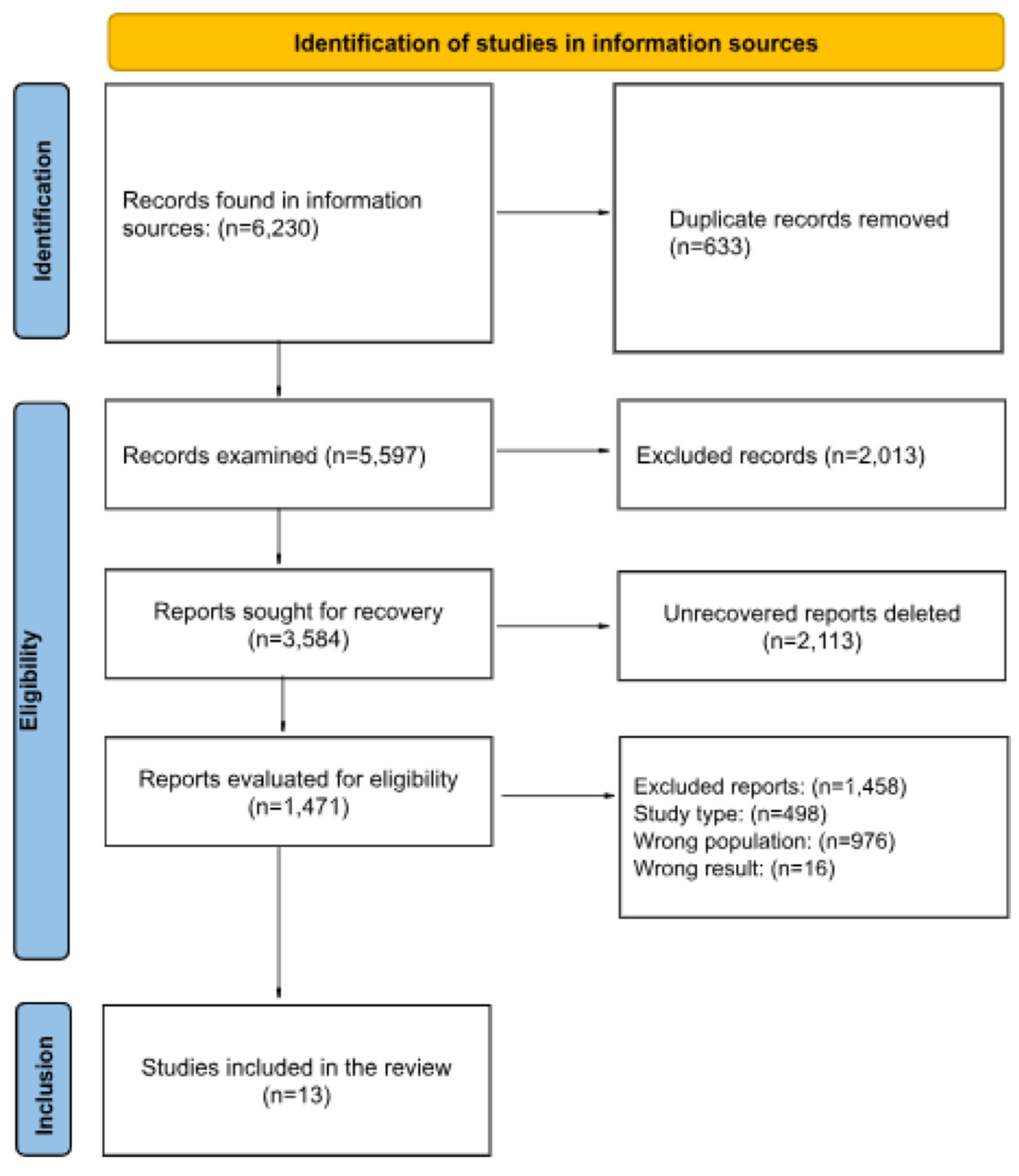
Figure 2.
Word cloud of the textual body of the review studies.
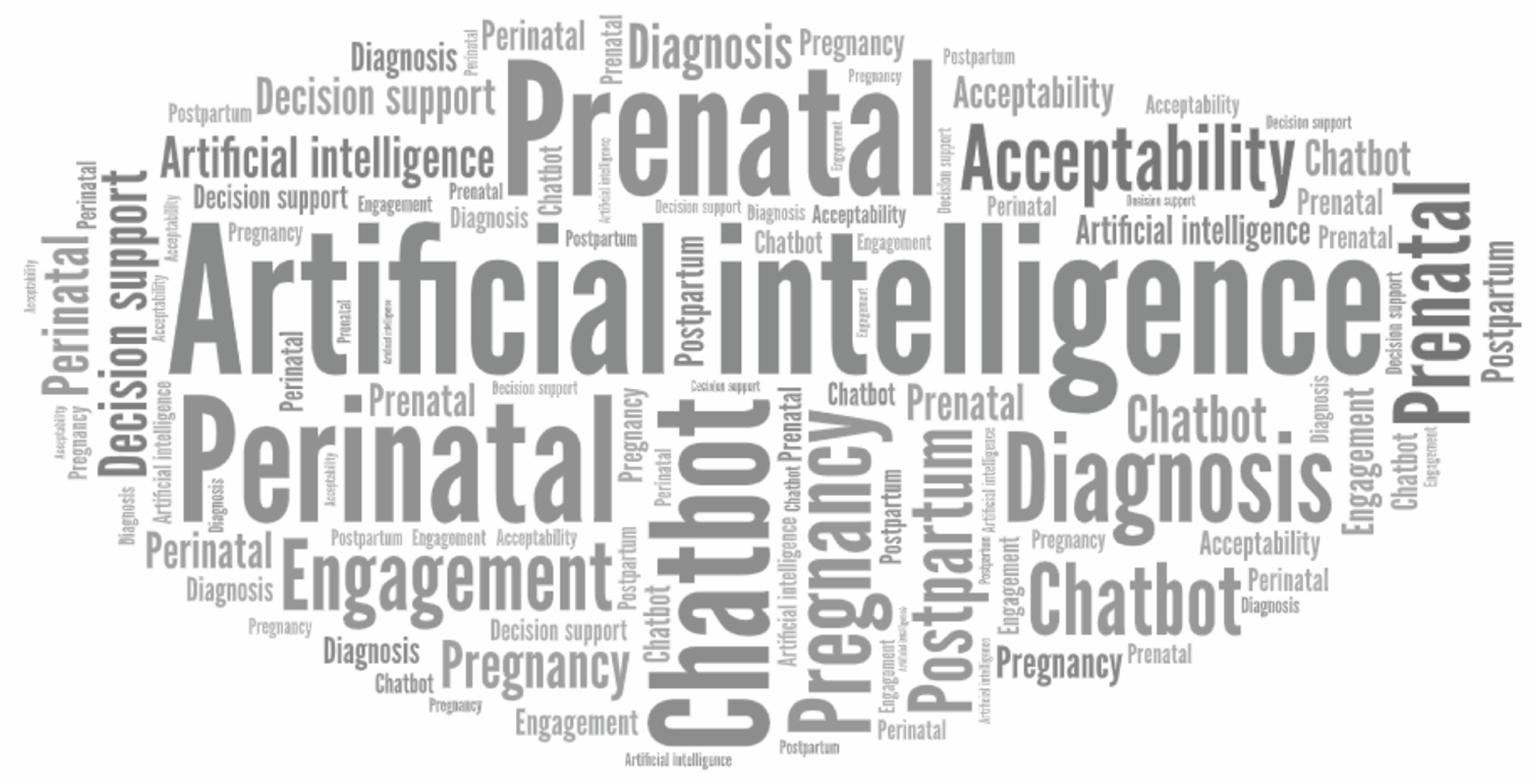

Table 1.
Knowledge synthesis of the studies included in the review.
| Authors/year | Country of origin | Methodological design | Main findings and implications |
|---|---|---|---|
| Zhang Z, Hao H, Zhu X, Joly R, Zhang Y, Zhang Y/ 202517 | United States | Acceptability study | The study evaluated the acceptability of a personalized educational platform using artificial intelligence aimed at preventing and managing postpartum depression. With 41 participants, the results indicated high acceptance of the tool, with social influence being the main factor associated with intended use. Limitations include the small sample size, possible selection bias, and the lack of clinical efficacy assessment. As a contribution, the study demonstrates the viability of personalized technologies in maternal health, providing a basis for broader future research |
| Machado CC, Bezerra ACM, Raposo GTD, Felzener MCM/ 202518 | Brazil | Literature review | They highlight that AI can increase diagnostic accuracy, reduce human variability, and accelerate processes in areas such as gynecological cancer screening, fetal assessment, and treatment planning. Among the limitations is the quality and representativeness of the data. As a contribution, it serves as a reference for future studies that test models in real-world contexts |
| El Arab RA, Al Moosa OA, Albahrani Z, Alkhalil I, Somerville J, Abuadas F/ 202519 | Saudi Arabia | Scoping Review of applications, outcomes, and equity reviews | The study reviewed reviews of the use of artificial intelligence in perinatal care, identifying effective applications in assisted reproduction, fetal diagnosis, maternal monitoring, and neonatal care, with good results in accuracy and efficiency. However, most studies are retrospective, with low methodological quality and little external validation, in addition to a scarcity of data in low-income settings. As a contribution, the work offers a comprehensive overview of the potential of AI in perinatal care and highlights the need for more robust research, focused on equity and effective integration into clinical practice |
| Leitner K, Cutri-French C, Mandel A, Christ L, Koelper N, McCabe M et al./ 202520 | United States | Technological production study | Describes the development and engagement analysis of a conversational agent based on natural language processing for postpartum care. With 290 women participating, 98.6% interacted with the system and 52% submitted questions, with an average response accuracy of 77%. Engagement was higher among first-time mothers, breastfeeding mothers, and Black women. Limitations include the study's failure to assess clinical outcomes, low response rates to satisfaction metrics, and a pandemic-related pandemic. The research contributes by demonstrating the feasibility and acceptance of automated tools to support postpartum women, pointing the way for future clinical impact and equity assessments |
| Bolarinwa O, Mohammed A, Igharo V, Shongwe S/ 202521 | United States | Descriptive study | The article discusses how AI can promote more inclusive maternal care for women with disabilities in Africa, proposing solutions such as virtual assistants, predictive analytics, and wearable devices to overcome physical, socioeconomic, and institutional barriers to accessing prenatal, assisted childbirth, and postnatal care. The authors highlight challenges such as limited technological infrastructure, data quality and availability, algorithmic biases, privacy, and cultural adaptation of tools. The main contribution lies in highlighting AI's potential to reduce inequalities in maternal care among women with disabilities, while emphasizing the need for collaborative development, ethical regulation, and contextualization for these technologies to be truly inclusive and effective |
| Giaxi P, Vivilaki V, Sarella A, Harizopoulou V, Gourounti K/ 202522 | United States | Systematic review | The study reviewed recent articles on AI and machine learning in obstetrics and midwifery, highlighting advances in diagnosis, pregnancy risk prediction, and highly accurate fetal monitoring. Despite the transformative potential, limitations such as algorithmic biases and a lack of clinical integration are highlighted. The authors emphasize the need to expand data, improve model interpretability, and strengthen partnerships to enable the clinical adoption of these technologies |
| Rivera Rivera JN, AuBuchon KE, Smith M, Starling C, Ganacias KG, Danielson A, Patchen L/ 202423 | United States | Mixed methods study | The study developed two chatbots to support postpartum mothers and newborn caregivers, with good user acceptance and engagement. The chatbots provided useful information and appointment reminders, but success depends on effective outreach strategies. The authors recommend future research to assess their impact on health outcomes and reduce inequalities |
| Lin X, Liang C, Liu J, Lyu T, Ghumman N, Campbell B/ 202424 | South Korea | Systematic review | The analysis included studies showing that these systems improved accuracy in predicting complications such as preeclampsia, gestational diabetes, and preterm birth, in addition to optimizing labor management and mode of delivery. Despite these advances, the authors highlight limitations such as the lack of external validation, limited-quality clinical data, and the need for greater explainability of the models to ensure the confidence of healthcare professionals. They conclude that, while promising, AI-based CDSS require further multicenter studies and user-centered approaches for effective and safe clinical adoption |
| Lee Y, Kim SY/ 202425 | United States | Literature review | The study presents a review of ChatGPT's potential applications in obstetrics and gynecology in South Korea. The research highlights ChatGPT's use for diagnosis, personalized education, and clinical decision support, demonstrating its ability to generate human-like responses. Despite the advances, the authors emphasize the need for rigorous clinical validation and ethical considerations before widespread implementation |
| Armero W, Gray KJ, Fields KG, Cole NM, Bates DW, Kovacheva VP/ 202226 | United States | Mixed methods study | The study evaluated the opinions of 349 pregnant women on the use of artificial intelligence in clinical settings, revealing that 69.2% see more benefits than risks. Two groups were identified: one favorable to AI and the other more cautious, valuing the presence of a physician. The study highlights the importance of patient education and maintaining doctor-patient trust for the safe implementation of AI |
| Abuelezz I, Hassan A, Jaber BA, Sharique M, Abd-Alrazaq A, Househ M, Alam T, Shah Z/ 202227 | United States | Scoping review | The study presents a scoping review of the use of AI in pregnancy care, identifying applications in the diagnosis of preeclampsia and gestational diabetes, monitoring ectopic pregnancies, and assessing risk factors. While the study does not provide details on specific limitations or contributions, it highlights the potential of AI to improve maternal health |
| Davidson L, Boland MR/ 202128 | United States | Systematic review | The study presents a systematic review of the use of AI and machine learning (ML), including deep learning (DL), to improve care during pregnancy. The analysis covered 127 studies, highlighting that supervised methods were more prevalent (69) than unsupervised ones (9). The main applications identified include the prediction of complications such as preterm birth, preeclampsia, and gestational diabetes, as well as clinical decision support and fetal monitoring. Despite the potential, the authors emphasize the need for external validation, algorithmic transparency, and integration with existing clinical systems to ensure the effectiveness and safety of these technologies |
| Barreto IC de HC, Barros NBS, Theophilo RL, Viana VF, Silveira FR de V, Souza O de, et al./ 202129 | Brazil | Mixed methods study | They developed and tested the prototype of the Mom-Baby ChatBot to promote child health, which was well received by 142 mothers. The chatbot was rated as simple, clear, and useful, especially among women aged 26 to 30. The study concludes that chatbots are a promising tool but recommends further investment and research to validate their effectiveness |
Table 2.
Critical evaluation (adapted CASP) of the included studies.
| Author/year | Type of study | CASP Judgment | Brief comment |
|---|---|---|---|
| Zhang et al., 2025 | Acceptability study | Reasonable | Clear objectives; small sample (n=41) and no clinical evaluation of efficacy |
| Machado et al., 2025 | Literature review | Reasonable | Conceptual discussion; lack of robust primary studies |
| El Arab et al., 2025 | Scoping review of reviews | Reasonable | Comprehensive; highlights methodological gaps |
| Leitner et al., 2025 | Technological development/engagement | Reasonable | High acceptance; no assessment of clinical outcomes |
| Bolarinwa et al., 2025 | Descriptive | Reasonable | Relevant to inclusion; more descriptive than empirical |
| Giaxi et al., 2025 | Systematic review | Strong | Clear synthesis; caveats regarding algorithmic bias and clinical integration |
| Rivera Rivera et al., 2024 | Mixed methods | Reasonable | Well-described development; little measurement of clinical impact |
| Lin et al., 2024 | Systematic review | Strong | Good coverage; reservations regarding external validation |
| Lee & Kim, 2024 | ChatGPT Review | Reasonable | Explores risks and possibilities; without robust empirical data |
| Armero et al., 2022 | Survey + mixed methods | Reasonable | Reasonable sample (n=349); descriptive results |
| Abuelezz et al., 2022 | Scoping review | Reasonable | Useful mapping; primary studies limited in quality |
| Davidson & Boland, 2021 | Systematic review | Strong | Extensive review with analysis of methods |
| Barreto et al., 2021 | Prototype development | Reasonable | Prototype well received; methodological limitations of sampling and follow-up |
Note: The adapted CASP judgment considered clarity of objectives, methodological adequacy, sampling/resources, validity of findings, and clinical relevance.
Table 3.
Narrative synthesis organized by thematic axes.
| Thematic axis | Exemplary studies | Narrative synthesis |
|---|---|---|
| Applications in prenatal care | Davidson & Boland (2021); Lin et al. (2024); Zhang (2025) | Personalized education, appointment reminders, initial screening, and predictive models for complications. Evidence based on reviews and acceptability studies, but lacking extensive external validation |
| Support during labor | Lin et al. (2024) | Use of clinical decision support systems for monitoring and early identification of intrapartum complications. Technical potential, but prospective validation is lacking |
| Postpartum monitoring and breastfeeding support | Leitner et al. (2025); Rivera Rivera et al. (2024); Barreto et al. (2021) | Chatbots and prototypes for breastfeeding support, reminders, and screening. Initial acceptance was high, but engagement declined over time |
| Perinatal mental health | Suharwardy et al. (2023); Zhang (2025) | Automated screening and psychoeducational chatbots for postpartum depression/anxiety. Trials suggest initial efficacy, but with small sample sizes and short follow-up |
| Ethical, technical and implementation challenges | ElArab et al. (2025); Giaxi et al. (2025); Davidson & Boland (2021) | Privacy issues, algorithmic biases, transparency, clinical integration, regulation, and digital inclusion. Consensus that audit protocols and inclusion strategies are necessary |
Disclaimer/Publisher’s Note: The statements, opinions and data contained in all publications are solely those of the individual author(s) and contributor(s) and not of MDPI and/or the editor(s). MDPI and/or the editor(s) disclaim responsibility for any injury to people or property resulting from any ideas, methods, instructions or products referred to in the content. |
© 2026 by the authors. Licensee MDPI, Basel, Switzerland. This article is an open access article distributed under the terms and conditions of the Creative Commons Attribution (CC BY) license (http://creativecommons.org/licenses/by/4.0/).
Copyright: This open access article is published under a Creative Commons CC BY 4.0 license, which permit the free download, distribution, and reuse, provided that the author and preprint are cited in any reuse.


