
Submitted:
03 June 2026
Posted:
03 June 2026
You are already at the latest version
Abstract
Foodborne pathogens remain a major public health challenge, particularly in the context of antimicrobial resistance and persistent contamination across animal, food-processing, and retail environments. This review examines bacteriophages as precision antimicrobials for controlling major foodborne bacteria, including Salmonella, Campylobacter, Shiga toxin-producing Escherichia coli (STEC), Listeria monocytogenes, and Vibrio spp., and summarizes the biological basis of phage-mediated control: strictly lytic life cycles, receptor-specific adsorption, direct bacterial killing, biofilm disruption, and resistance-associated fitness trade-offs. It further discusses pre-harvest, post-harvest, and processing-environment applications, with emphasis on matrix-dependent efficacy, delivery strategies, commercial products, and regulatory status. While bacteriophages offer high specificity, preserve the native microbiome, and integrate smoothly into multi-hurdle food-safety systems, their performance is tempered by narrow host ranges, bacterial resistance, food-matrix effects, formulation constraints, and regulatory complexities. Future implementation will hinge on rationally designed phage-cocktails, thorough genomic safety screening, matrix-specific validation studies, scalable manufacturing processes, and continuous monitoring for post-application resistance. Overall, when embedded in validated food‑safety and One Health frameworks, bacteriophages represent a promising yet context-dependent tool for reducing foodborne pathogen burdens.
Keywords:
1. Introduction
2. Biology of Bacteriophages Relevant to Food Safety
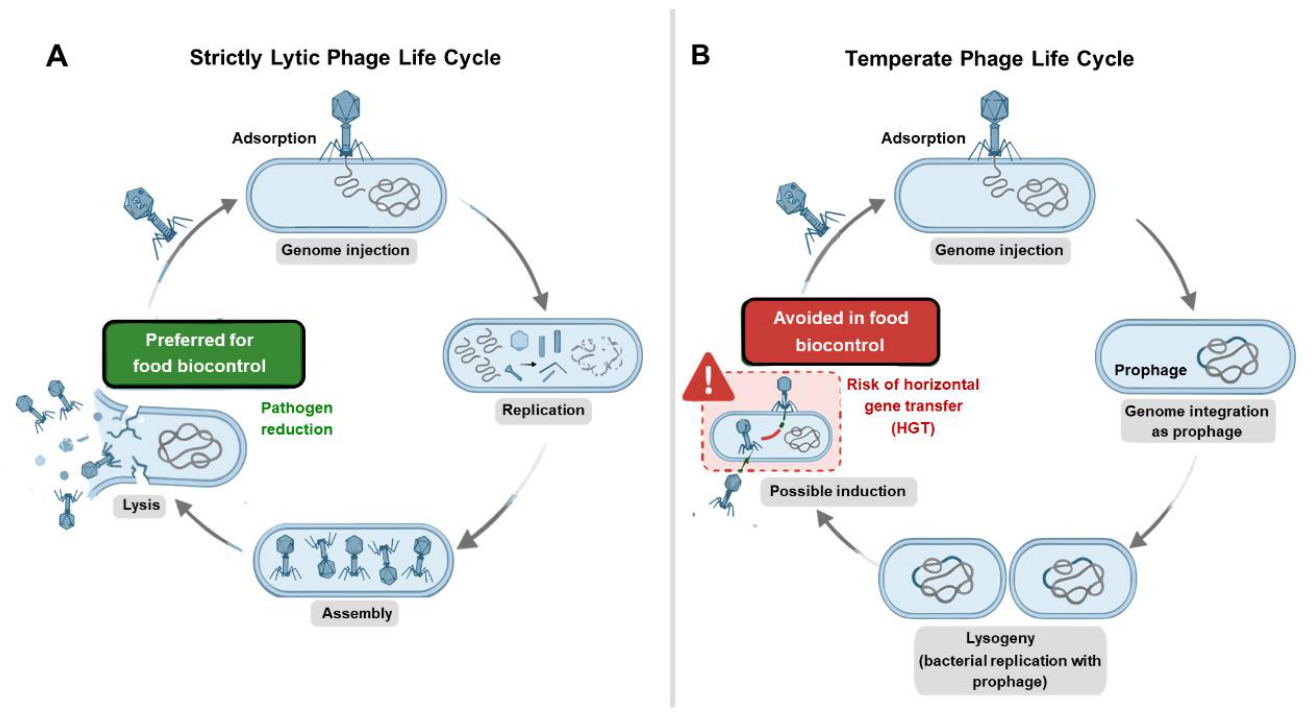
2.1. Preference for Strictly Lytic Phages in Food Biocontrol
2.2. Phage–Host Interaction Mechanisms
3. Mechanisms of Phage-Mediated Control of Foodborne Pathogens
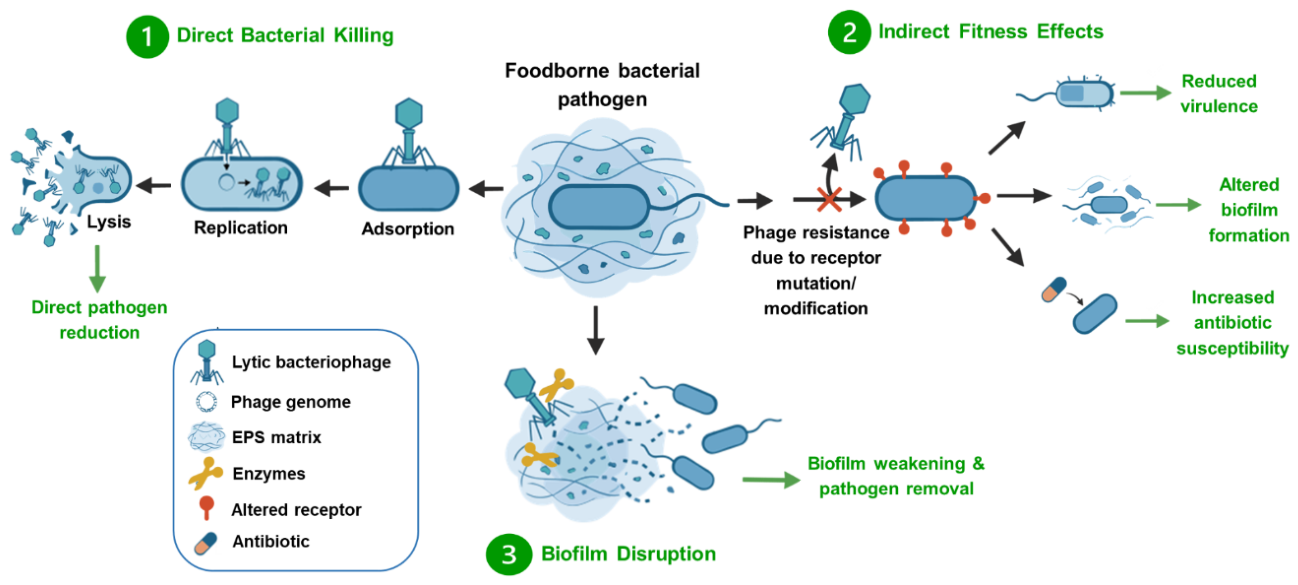
3.1. Direct Bacterial Killing
3.2. Biofilm Disruption
3.3. Indirect Effects on Bacterial Fitness
4. Application of Bacteriophages in Food Safety
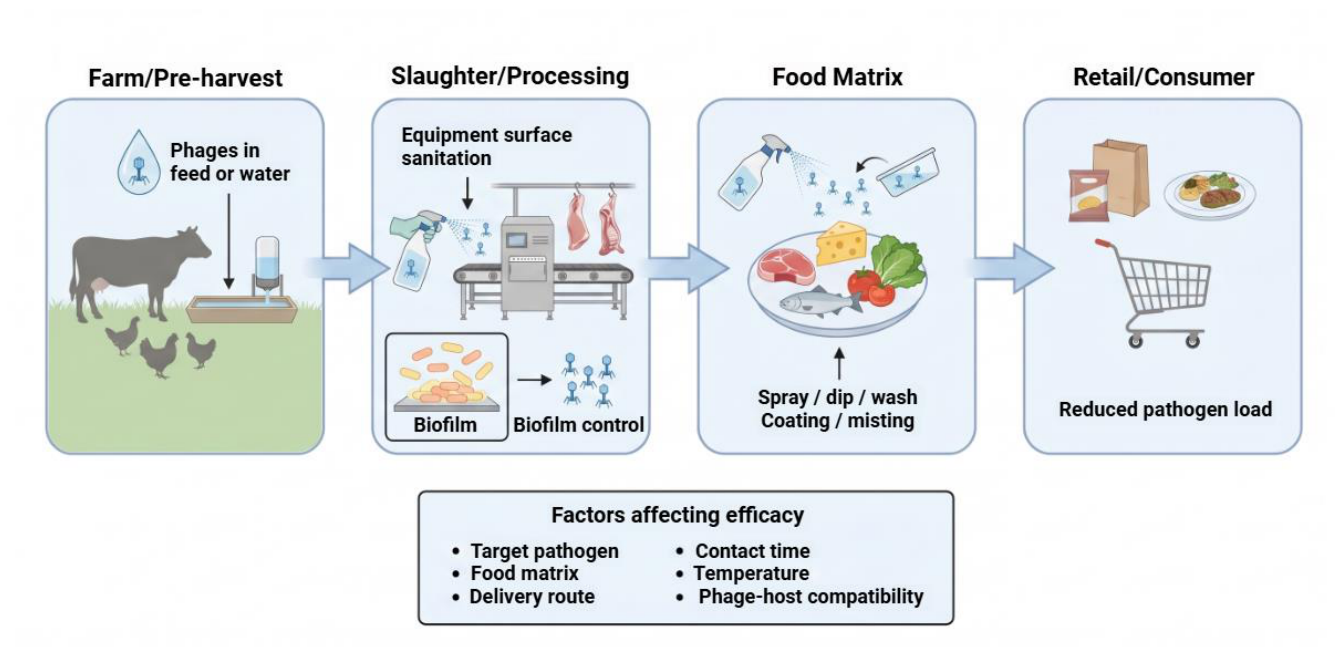
4.1. Pre-Harvest Applications
4.2. Post-Harvest and Food Processing Application
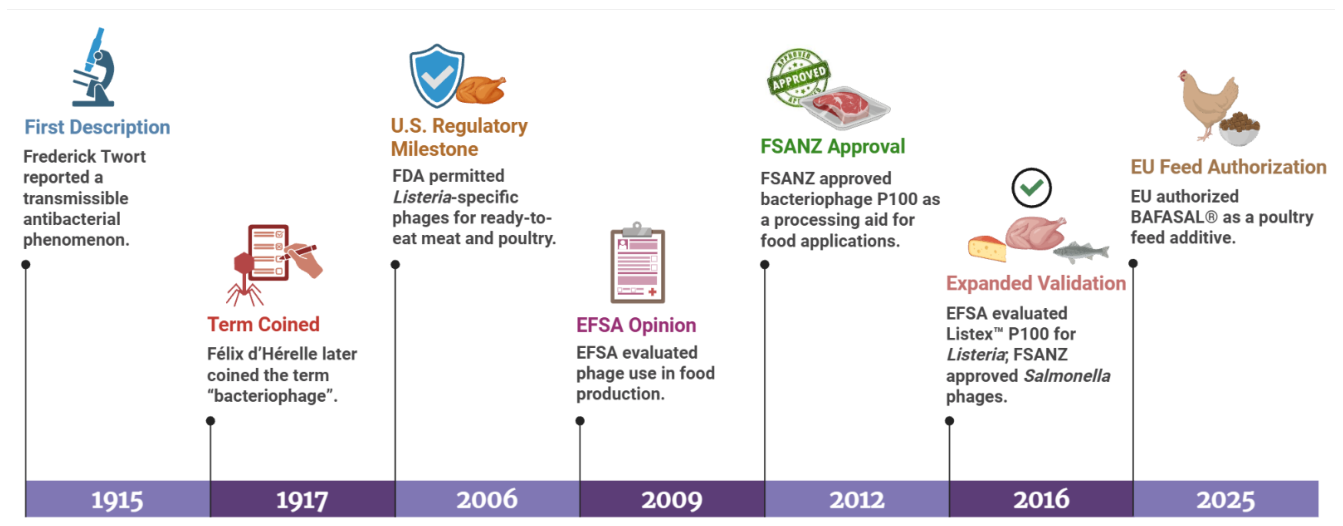
4.3. Commercial Phage Products and Regulatory Status
5. Phage Resistance in Foodborne Pathogens
5.1. Mechanisms of Bacterial Resistance to Phages
5.1.1. Receptor Modification, Masking, or Loss
5.1.2. Restriction-Modification Systems
5.1.3. CRISPR–Cas-Mediated Adaptive Immunity
5.1.4. Abortive Infection Systems
5.2. Consequences of Phage Resistance
6. Strategies to Overcome Phage Resistance
6.1. Phage Cocktails
6.2. Phage–Antibiotic Synergy (PAS)
6.3. Engineered and Synthetic Phages
7. Challenges and Limitations of Phage-Based Biocontrol
8. Future Perspectives and Research Gaps
9. Conclusions
Author Contributions
Funding
Institutional Review Board Statement
Informed Consent Statement
Data Availability Statement
Acknowledgments
Conflicts of Interest
Abbreviations
| STEC | Shiga toxin-producing E. coli |
| AMR | Antimicrobial resistance |
| EU | European Union |
| FDA | Food and Drug Administration |
| GRAS | Generally recognized as safe |
| EFSA | European Food Safety Authority |
| USDA | United States Department of Agriculture |
| EPA | Environmental Protection Agency |
| FSANZ | Food Standards Australia New Zealand |
| HGT | Horizontal gene transfer |
References
- Kirk, M.D.; Pires, S.M.; Black, R.E.; Caipo, M.; Crump, J.A.; Devleesschauwer, B.; Döpfer, D.; Fazil, A.; Fischer-Walker, C.L.; Hald, T.; et al. World Health Organization Estimates of the Global and Regional Disease Burden of 22 Foodborne Bacterial, Protozoal, and Viral Diseases, 2010: A Data Synthesis. PLoS Med. 2015, 12. [Google Scholar] [CrossRef]
- Deepa, G.; Daniel, I.; Sugumar, S. An Insight into the Applications of Bacteriophages against Food-Borne Pathogens. J. Food Sci. Technol. 2025, 62, 1–10. [Google Scholar] [CrossRef]
- Aladhadh, M. A Review of Modern Methods for the Detection of Foodborne Pathogens. Microorganisms 2023, 11. [Google Scholar] [CrossRef] [PubMed]
- Davies, Olivia Lawe. WHO’s First Ever Global Estimates of Foodborne Diseases Find Children under 5 Account for Almost One Third of Deaths. Available online: https://www.who.int/news/item/03-12-2015-who-s-first-ever-global-estimates-of-foodborne-diseases-find-children-under-5-account-for-almost-one-third-of-deaths#:~:text=Diarrhoeal%20diseases%20are%20responsible%20for,coli (accessed on 28 March 2026).
- Alsammani, A.; Farah, G.A.M.O.; Mohammed, M.A.Y.; Yavuz, M. Cholera Transmission Dynamics with Sanitation Control Measures. 2025.
- Elbehiry, A.; Abalkhail, A.; Marzouk, E.; Elmanssury, A.E.; Almuzaini, A.M.; Alfheeaid, H.; Alshahrani, M.T.; Huraysh, N.; Ibrahem, M.; Alzaben, F.; et al. An Overview of the Public Health Challenges in Diagnosing and Controlling Human Foodborne Pathogens. Vaccines . 2023, 11. [Google Scholar] [CrossRef]
- Buchy, P.; Ascioglu, S.; Buisson, Y.; Datta, S.; Nissen, M.; Tambyah, P.A.; Vong, S. Impact of Vaccines on Antimicrobial Resistance. Int. J. Infect. Dis. 2020, 90, 188–196. [Google Scholar] [CrossRef]
- Gioula, G.; Exindari, M. The Gut Microbiome and Vaccination: A Comprehensive Review of Current Evidence and Future Perspectives. Vaccines . 2025, 13. [Google Scholar] [CrossRef]
- Lloren, K.K.S.; Senevirathne, A.; Lee, J.H. Advancing Vaccine Technology through the Manipulation of Pathogenic and Commensal Bacteria. Mater. Today Bio 2024, 29. [Google Scholar] [CrossRef] [PubMed]
- Düzgüneş, N.; Sessevmez, M.; Yildirim, M. Bacteriophage Therapy of Bacterial Infections: The Rediscovered Frontier. Pharmaceuticals 2021, 14, 1–16. [Google Scholar] [CrossRef]
- Moye, Z.D.; Woolston, J.; Sulakvelidze, A. Bacteriophage Applications for Food Production and Processing. Viruses 2018, 10. [Google Scholar] [CrossRef] [PubMed]
- Imran, A.; Shehzadi, U.; Islam, F.; Afzaal, M.; Ali, R.; Ali, Y.A.; Chauhan, A.; Biswas, S.; Khurshid, S.; Usman, I.; et al. Bacteriophages and Food Safety: An Updated Overview. Food Sci. Nutr. 2023, 11, 3621–3630. [Google Scholar] [CrossRef]
- Turner, P.E.; Azeredo, J.; Buurman, E.T.; Green, S.; Haaber, J.K.; Haggstrom, D.; Kameda de Figueiredo Carvalho, K.; Kirchhelle, C.; Gonzalez Moreno, M.; Pirnay, J.P.; et al. Addressing the Research and Development Gaps in Modern Phage Therapy. In Proceedings of the PHAGE: Therapy, Applications, and Research; Mary Ann Liebert Inc., 1 March 2024; Vol. 5, pp. 30–39. [Google Scholar]
- Trząskowska, M.; Naammo, E.E.; Salman, M.; Afolabi, A.; Wong, C.W.Y.; Kołożyn-Krajewska, D. Risk Profile of Bacteriophages in the Food Chain. Foods 2025, 14. [Google Scholar] [CrossRef] [PubMed]
- Sarhan, W.A.; Azzazy, H.M.E. Phage Approved in Food, Why Not as a Therapeutic? Expert Rev. Anti. Infect. Ther. 2015, 13, 91–101. [Google Scholar] [CrossRef] [PubMed]
- Lewis, R.; Bolocan, A.S.; Draper, L.A.; Paul Ross, R.; Hill, C. The Effect of a Commercially Available Bacteriophage and Bacteriocin on Listeria Monocytogenes in Coleslaw. Viruses 2019, 11. [Google Scholar] [CrossRef]
- Kawacka, I.; Olejnik-Schmidt, A.; Schmidt, M.; Sip, A. Effectiveness of Phage-Based Inhibition of Listeria Monocytogenes in Food Products and Food Processing Environments. Microorganisms 2020, 8, 1–20. [Google Scholar] [CrossRef]
- Efenberger-Szmechtyk, M.; Nowak, A. Bacteriophage Power: Next-Gen Biocontrol Strategies for Safer Meat. Molecules 2025, 30. [Google Scholar] [CrossRef]
- Romero-Calle, D.X.; de Santana, V.P.; Benevides, R.G.; Aliaga, M.T.A.; Billington, C.; Góes-Neto, A. Systematic Review and Meta-Analysis: The Efficiency of Bacteriophages Previously Patented against Pathogenic Bacteria on Food. Syst. Rev. 2023, 12. [Google Scholar] [CrossRef] [PubMed]
- Drulis-Kawa, Z.; Majkowska-Skrobek, G.; Maciejewska, B.; Delattre, A.-S.; Lavigne, R. Send Orders of Reprints at Bspsaif@emirates.Net.Ae Learning from Bacteriophages-Advantages and Limitations of Phage and Phage-Encoded Protein Applications; 2012. [Google Scholar]
- Egido, J.E.; Costa, A.R.; Aparicio-Maldonado, C.; Haas, P.J.; Brouns, S.J.J. Mechanisms and Clinical Importance of Bacteriophage Resistance. FEMS Microbiol. Rev. 2022, 46. [Google Scholar] [CrossRef]
- European Union Listeriosis - Annual Epidemiological Report for 2023. Available online: https://www.ecdc.europa.eu/en/publications-data/listeriosis-annual-epidemiological-report-2023 (accessed on 30 March 2026).
- European Food Safety Authority. Zoonotic Diseases on the Rise in the EU: Listeriosis Cases Hit Highest Levels since 2007. Available online: https://www.efsa.europa.eu/en/news/zoonotic-diseases-rise-eu-listeriosis-cases-hit-highest-levels-2007 (accessed on 30 March 2026).
- Cunningham, N.; Jenkins, C.; Williams, S.; Garner, J.; Eggen, B.; Douglas, A.; Potter, T.; Wilson, A.; Leonardi, G.; Larkin, L.; et al. An Outbreak of Shiga Toxin-Producing Escherichia Coli (STEC) O157:H7 Associated with Contaminated Lettuce and the Cascading Risks from Climate Change, the United Kingdom, August to September 2022. Eurosurveillance 2024, 29. [Google Scholar] [CrossRef]
- Hyman, P.; Abedon, S.T. Chapter 7 - Bacteriophage Host Range and Bacterial Resistance. In Advances in Applied Microbiology; Academic Press, 2010; Vol. 70, pp. 217–248. ISSN ISBN 0065-2164. [Google Scholar]
- U.S. Food and Drug Administration. Code of Federal Regulations. 21 CFR §172.785: Listeria-Specific Bacteriophage Preparation. Available online: https://www.ecfr.gov/current/title-21/chapter-I/subchapter-B/part-172/subpart-H/section-172.785 (accessed on 11 May 2026).
- Gaynor, P.; Gaynor, D. Re GRAS Not.-Exempt. Claim Escherichia Coli-Specif. Phage Prep. 2017.
- EFSA Panel on Biological Hazards (BIOHAZ) Evaluation of the Safety and Efficacy of ListexTM P100 for Reduction of Pathogens on Different Ready-to-Eat (RTE) Food Products. EFSA J. 2016, 14. [CrossRef]
- Bertozzi Silva, J.; Storms, Z.; Sauvageau, D. Host Receptors for Bacteriophage Adsorption. FEMS Microbiol. Lett. 2016, 363, fnw002. [Google Scholar] [CrossRef] [PubMed]
- Liu, S.; Montazeri, N.; Schneider, K.R. Bacteriophages: A Potential Mitigation Strategy for Pathogenic Bacteria in Food. EDIS 2022. [Google Scholar] [CrossRef]
- Bajrak, O.; Cieślik, M.; Górski, A.; Jończyk-Matysiak, E. A Comprehensive Analysis of the Kinetics of Infection of Lytic Bacteriophages Specific to the ESKAPE and Critical Pathogens. World J. Microbiol. Biotechnol. 2026, 42. [Google Scholar] [CrossRef] [PubMed]
- Wójcicki, M.; Świder, O.; Średnicka, P.; Shymialevich, D.; Ilczuk, T.; Koperski, Ł.; Cieślak, H.; Sokołowska, B.; Juszczuk-Kubiak, E. Newly Isolated Virulent Salmophages for Biocontrol of Multidrug-Resistant Salmonella in Ready-to-Eat Plant-Based Food. Int. J. Mol. Sci. 2023, 24. [Google Scholar] [CrossRef]
- García, R.; Latz, S.; Romero, J.; Higuera, G.; García, K.; Bastías, R. Bacteriophage Production Models: An Overview. Front. Microbiol. 2019, 10. [Google Scholar] [CrossRef]
- Antani, J.D.; Turner, P.E. Rage against the Mean: A Perspective on Measuring Fitness of Individual Phage Particles. npj Viruses 2026, 4. [Google Scholar] [CrossRef]
- Abedon, S.T.; Herschler, T.D.; Stopar, D. Bacteriophage Latent-Period Evolution as a Response to Resource Availability. Appl. Environ. Microbiol. 2001, 67, 4233–4241. [Google Scholar] [CrossRef]
- Young, R. Phage Lysis: Do We Have the Hole Story Yet? Curr. Opin. Microbiol. 2013, 16, 790–797. [Google Scholar] [CrossRef]
- Young, R. Phage Lysis: Three Steps, Three Choices, One Outcome. J. Microbiol. 2014, 52, 243–258. [Google Scholar] [CrossRef]
- Cahill, J.; Young, R. Phage Lysis: Multiple Genes for Multiple Barriers. In Advances in Virus Research; Academic Press Inc., 2019; Vol. 103, pp. 33–70. ISBN 9780128177228. [Google Scholar]
- Ly-Chatain, M.H. The Factors Affecting Effectiveness of Treatment in Phages Therapy. Front. Microbiol. 2014, 5. [Google Scholar] [CrossRef]
- Costa, M.J.; Pastrana, L.M.; Teixeira, J.A.; Sillankorva, S.M.; Cerqueira, M.A. Bacteriophage Delivery Systems for Food Applications: Opportunities and Perspectives. Viruses 2023, 15. [Google Scholar] [CrossRef]
- Abdelrahman, F.; Easwaran, M.; Daramola, O.I.; Ragab, S.; Lynch, S.; Oduselu, T.J.; Khan, F.M.; Ayobami, A.; Adnan, F.; Torrents, E.; et al. Phage-Encoded Endolysins. Antibiotics 2021, 10, 1–31. [Google Scholar] [CrossRef]
- Huang, C.; Virk, S.M.; Shi, J.; Zhou, Y.; Willias, S.P.; Morsy, M.K.; Abdelnabby, H.E.; Liu, J.; Wang, X.; Li, J. Isolation, Characterization, and Application of Bacteriophage LPSE1 against Salmonella Enterica in Ready to Eat (RTE) Foods. Front. Microbiol. 2018, 9. [Google Scholar] [CrossRef]
- Abdullah, E.M.; Elariny, E.Y.T.; Abdelaziz, R.; Albalawi, A.S.; Almutrafy, A.M.; Zaki, M.S.A.; Abdel-Karim, S.A.; Tartor, Y.H. Lytic Bacteriophage Disrupts Biofilm and Inhibits Growth of Pan-Drug-Resistant Listeria Monocytogenes in Dairy Products. Front. Microbiol. 2025, 16. [Google Scholar] [CrossRef]
- Soni, K.A.; Nannapaneni, R. Bacteriophage Significantly Reduces Listeria Monocytogenes on Raw Salmon Fillet Tissue†. J. Food Prot. 2010, 73, 32–38. [Google Scholar] [CrossRef] [PubMed]
- You, H.J.; Lee, J.H.; Oh, M.; Hong, S.Y.; Kim, D.; Noh, J.; Kim, M.; Kim, B.S. Tackling Vibrio Parahaemolyticus in Ready-to-Eat Raw Fish Flesh Slices Using Lytic Phage VPT02 Isolated from Market Oyster. Food Res. Int. 2021, 150, 110779. [Google Scholar] [CrossRef]
- Khan, M.A.S.; Islam, Z.; Barua, C.; Sarkar, M.M.H.; Ahmed, M.F.; Rahman, S.R. Phenotypic Characterization and Genomic Analysis of a Salmonella Phage L223 for Biocontrol of Salmonella Spp. in Poultry. Sci. Rep. 2024, 14. [Google Scholar] [CrossRef]
- Zhou, Y.; Wan, Q.; Bao, H.; Guo, Y.; Zhu, S.; Zhang, H.; Pang, M.; Wang, R. Application of a Novel Lytic Phage VB_EcoM_SQ17 for the Biocontrol of Enterohemorrhagic Escherichia Coli O157:H7 and Enterotoxigenic E. Coli in Food Matrices. Front. Microbiol. 2022, 13. [Google Scholar] [CrossRef] [PubMed]
- Park, D.W.; Lim, G. yeon; Lee, Y. duck; Park, J.H. Characteristics of Lytic Phage VB_EcoM-ECP26 and Reduction of Shiga-Toxin Producing Escherichia Coli on Produce Romaine. Appl. Biol. Chem. 2020, 63. [Google Scholar] [CrossRef]
- Carlton, R.M.; Noordman, W.H.; Biswas, B.; de Meester, E.D.; Loessner, M.J. Bacteriophage P100 for Control of Listeria Monocytogenes in Foods: Genome Sequence, Bioinformatic Analyses, Oral Toxicity Study, and Application. Regul. Toxicol. Pharmacol. 2005, 43, 301–312. [Google Scholar] [CrossRef] [PubMed]
- Nóbrega, E.; Silva, G.; Cláudia, A.; Figueiredo, L.; Miranda, F.A.; Comastri, R.; Almeida, C. Control of Listeria Monocytogenes Growth in Soft Cheeses by Bacteriophage P100 2014.
- Nóbrega, E.; Silva, G.; Cláudia, A.; Figueiredo, L.; Miranda, F.A.; Comastri, R.; Almeida, C. Control of Listeria Monocytogenes Growth in Soft Cheeses by Bacteriophage P100 2014.
- Nie, Z.; Cheng, X.; Jiang, S.; Zhang, Z.; Zhang, D.; Chen, H.; Ling, N.; Ye, Y. Isolation and Characterization of a Cold-Adapted Bacteriophage for Biocontrol of Vibrio Parahaemolyticus in Seafood. Foods 2025, 14. [Google Scholar] [CrossRef] [PubMed]
- Sillankorva, S.M.; Oliveira, H.; Azeredo, J. Bacteriophages and Their Role in Food Safety. Int. J. Microbiol. 2012. [Google Scholar] [CrossRef] [PubMed]
- Liu, S.; Lu, H.; Zhang, S.; Shi, Y.; Chen, Q. Phages against Pathogenic Bacterial Biofilms and Biofilm-Based Infections: A Review. Pharmaceutics 2022, 14. [Google Scholar] [CrossRef]
- Chang, C.; Yu, X.; Guo, W.; Guo, C.; Guo, X.; Li, Q.; Zhu, Y. Bacteriophage-Mediated Control of Biofilm: A Promising New Dawn for the Future. Front. Microbiol. 2022, 13. [Google Scholar] [CrossRef]
- Topka-Bielecka, G.; Dydecka, A.; Necel, A.; Bloch, S.; Zena, B.; Nczyk, N.-F.; Egrzyn, G.; Egrzyn, A.; Almeida, A. Antibiotics Bacteriophage-Derived Depolymerases against Bacterial Biofilm. 2021. [Google Scholar] [CrossRef]
- Korzeniowski, P.; Śliwka, P.; Kuczkowski, M.; Mišić, D.; Milcarz, A.; Kuźmińska-Bajor, M. Bacteriophage Cocktail Can Effectively Control Salmonella Biofilm in Poultry Housing. Front. Microbiol. 2022, 13. [Google Scholar] [CrossRef]
- Jaroni, D.; Litt, P.K.; Bule, P.; Rumbaugh, K. Effectiveness of Bacteriophages against Biofilm-Forming Shiga-Toxigenic Escherichia Coli In Vitro and on Food-Contact Surfaces. Foods 2023, 12. [Google Scholar] [CrossRef]
- Brás, A.; Braz, M.; Martinho, I.; Duarte, J.; Pereira, C.; Almeida, A. Effect of Bacteriophages against Biofilms of Escherichia Coli on Food Processing Surfaces. Microorganisms 2024, 12. [Google Scholar] [CrossRef]
- Patel, J.; Sharma, M.; Millner, P.; Calaway, T.; Singh, M. Inactivation of Escherichia Coli O157:H7 Attached to Spinach Harvester Blade Using Bacteriophage.
- Cui, H.; Bai, M.; Yuan, L.; Surendhiran, D.; Lin, L. Sequential Effect of Phages and Cold Nitrogen Plasma against Escherichia Coli O157:H7 Biofilms on Different Vegetables. Int. J. Food Microbiol. 2018, 268, 1–9. [Google Scholar] [CrossRef]
- Park, D.W.; Park, J.H. Characterization of a Novel Phage Depolymerase Specific to Escherichia Coli O157:H7 and Biofilm Control on Abiotic Surfaces. J. Microbiol. 2021, 59, 1002–1009. [Google Scholar] [CrossRef] [PubMed]
- Ibarra-Sánchez, L.A.; Van Tassell, M.L.; Miller, M.J. Antimicrobial Behavior of Phage Endolysin PlyP100 and Its Synergy with Nisin to Control Listeria Monocytogenes in Queso Fresco. Food Microbiol. 2018, 72, 128–134. [Google Scholar] [CrossRef] [PubMed]
- Holle, M.J.; Miller, M.J. Lytic Characterization and Application of Listerial Endolysins PlyP40 and PlyPSA in Queso Fresco. JDS Commun. 2021, 2, 47–50. [Google Scholar] [CrossRef]
- van Nassau, T.J.; Lenz, C.A.; Scherzinger, A.S.; Vogel, R.F. Combination of Endolysins and High Pressure to Inactivate Listeria Monocytogenes. Food Microbiol. 2017, 68, 81–88. [Google Scholar] [CrossRef]
- Misiou, O.; van Nassau, T.J.; Lenz, C.A.; Vogel, R.F. The Preservation of Listeria-Critical Foods by a Combination of Endolysin and High Hydrostatic Pressure. Int. J. Food Microbiol. 2018, 266, 355–362. [Google Scholar] [CrossRef] [PubMed]
- Andres, D.; Hanke, C.; Baxa, U.; Seul, A.; Barbirz, S.; Seckler, R. Tailspike Interactions with Lipopolysaccharide Effect DNA Ejection from Phage P22 Particles in. J. Biol. Chem. 2010, 285, 36768–36775. [Google Scholar] [CrossRef]
- Steinbacher, S.; Miller, S.; Baxa, U.; Budisa, N.; Weintraub, A.; Seckler, R.; Huber, R. Phage P22 Tailspike Protein: Crystal Structure of the Head-Binding Domain at 2.3 Å, Fully Refined Structure of the Endorhamnosidase at 1.56 Å Resolution, and the Molecular Basis of O-Antigen Recognition and Cleavage11Edited by K. Nagai. J. Mol. Biol. 1997, 267, 865–880. [Google Scholar] [CrossRef]
- Steinbacher, S.; Baxat, U.; Miller, S.; Weintraub, A.; Secklert, R.; Huber, R.; Strukturforschung, A. Crystal Structure of Phage P22 Tailspike Protein Complexed with Salmonella Sp. 0-Antigen Receptors (Endoglycosidase/Hemagglutinin/Neuraminidase/Virus/Infection); 1996; Vol. 93. [Google Scholar]
- Li, W.; Yuan, M.; Che, J.; Wei, S.; Chen, Y.; Ren, J.; Song, R.; Zhao, H.; Huang, J.; Guo, Z. Identify and Characterize a Carbapenem-Resistant Salmonella Enteritidis Phage Depolymerase Dpo52. Sci. Rep. 2026. [Google Scholar] [CrossRef]
- Piracha, Z.Z.; Saeed, U. Next-Generation Bacteriophage Therapeutic Systems: CRISPR-Based Engineering, near-Infrared Bioimaging, and Precision Strategies for Treating Multidrug-Resistant and Extensively Drug-Resistant Bacterial Infections. Front. Microbiol. 2026, 17. [Google Scholar] [CrossRef]
- Karamlou, S.; Aghajani, E.; Familsamavati, M.; Azad, N.F.; Arayesh, S.; Mohsenipour, Z. Bacterial Resistance to Phage Therapy: Mechanisms and Strategies to Overcome It. Curr. Mol. Pharmacol. 2025, 18, 108–122. [Google Scholar] [CrossRef]
- López-Pérez, J.; Otero, J.; Sánchez-Osuna, M.; Erill, I.; Cortés, P.; Llagostera, M. Impact of Mutagenesis and Lateral Gene Transfer Processes in Bacterial Susceptibility to Phage in Food Biocontrol and Phage Therapy. Front. Cell. Infect. Microbiol. 2023, 13. [Google Scholar] [CrossRef]
- Sumrall, E.T.; Shen, Y.; Keller, A.P.; Rismondo, J.; Pavlou, M.; Eugster, M.R.; Boulos, S.; Disson, O.; Thouvenot, P.; Kilcher, S.; et al. Phage Resistance at the Cost of Virulence: Listeria Monocytogenes Serovar 4b Requires Galactosylated Teichoic Acids for InlB-Mediated Invasion. PLoS Pathog. 2019, 15. [Google Scholar] [CrossRef]
- Gao, D.; Ji, H.; Wang, L.; Li, X.; Hu, D.; Zhao, J.; Wang, S.; Tao, P.; Li, X.; Qian, P. Fitness Trade-Offs in Phage Cocktail-Resistant Salmonella Enterica Serovar Enteritidis Results in Increased Antibiotic Susceptibility and Reduced Virulence. Microbiol. Spectr. 2022, 10. [Google Scholar] [CrossRef]
- Wang, C.; Nie, T.; Lin, F.; Connerton, I.F.; Lu, Z.; Zhou, S.; Hang, H. Resistance Mechanisms Adopted by a Salmonella Typhimurium Mutant against Bacteriophage. Virus Res. 2019, 273, 197759. [Google Scholar] [CrossRef]
- Loc Carrillo, C.; Atterbury, R.J.; El-Shibiny, A.; Connerton, P.L.; Dillon, E.; Scott, A.; Connerton, I.F. Bacteriophage Therapy to Reduce Campylobacter Jejuni Colonization of Broiler Chickens. Appl. Environ. Microbiol. 2005, 71, 6554–6563. [Google Scholar] [CrossRef] [PubMed]
- Vikram, A.; Woolston, J.; Sulakvelidze, A. Phage Biocontrol Applications in Food Production and Processing. Curr. Issues Mol. Biol. 2020, 40, 267–302. [Google Scholar] [CrossRef]
- Ban-Cucerzan, A.; Imre, K.; Morar, A.; Marcu, A.; Hotea, I.; Popa, S.A.; Pătrînjan, R.T.; Bucur, I.M.; Gașpar, C.; Plotuna, A.M.; et al. Persistent Threats: A Comprehensive Review of Biofilm Formation, Control, and Economic Implications in Food Processing Environments. Microorganisms 2025, 13. [Google Scholar] [CrossRef]
- Carvalho, C.M.; Gannon, B.W.; Halfhide, D.E.; Santos, S.B.; Hayes, C.M.; Roe, J.M.; Azeredo, J. The in Vivo Efficacy of Two Administration Routes of a Phage Cocktail to Reduce Numbers of Campylobacter Coli and Campylobacter Jejuni in Chickens; 2010. [Google Scholar]
- Chinivasagam, H.N.; Estella, W.; Maddock, L.; Mayer, D.G.; Weyand, C.; Connerton, P.L.; Connerton, I.F. Bacteriophages to Control Campylobacter in Commercially Farmed Broiler Chickens, in Australia. Front. Microbiol. 2020, 11. [Google Scholar] [CrossRef] [PubMed]
- Agapé, L.; Menanteau, P.; Kempf, F.; Schouler, C.; Boulesteix, O.; Riou, M.; Chaumeil, T.; Velge, P. Prophylactic Phage Administration Reduces Salmonella Enteritidis Infection in Newly Hatched Chicks. Microbiologyopen 2024, 13. [Google Scholar] [CrossRef]
- Thanki, A.M.; Hooton, S.; Whenham, N.; Salter, M.G.; Bedford, M.R.; O’Neill, H.V.M.; Clokie, M.R.J. A Bacteriophage Cocktail Delivered in Feed Significantly Reduced Salmonella Colonization in Challenged Broiler Chickens. Emerg. Microbes Infect. 2023, 12. [Google Scholar] [CrossRef] [PubMed]
- Callaway, T.R.; Edrington, T.S.; Brabban, A.D.; Anderson, R.C.; Rossman, M.L.; Engler, M.J.; Carr, M.A.; Genovese, K.J.; Keen, J.E.; Looper, M.L.; et al. Bacteriophage Isolated from Feedlot Cattle Can Reduce Escherichia Coli O157:H7 Populations in Ruminant Gastrointestinal Tracts.
- Loh, B.; Gondil, V.S.; Manohar, P.; Mehmood Khan, F.; Yang, H.; Leptihn, S.; Singh, V. Encapsulation and Delivery of Therapeutic Phages; 2021. [Google Scholar]
- Vinner, G.K.; Richards, K.; Leppanen, M.; Sagona, A.P.; Malik, D.J. Microencapsulation of Enteric Bacteriophages in a PH-Responsive Solid Oral Dosage Formulation Using a Scalable Membrane Emulsification Process. Pharmaceutics 2019, 11. [Google Scholar] [CrossRef]
- Yang, Y.; Du, H.; Zou, G.; Song, Z.; Zhou, Y.; Li, H.; Tan, C.; Chen, H.; Fischetti, V.A.; Li, J. Encapsulation and Delivery of Phage as a Novel Method for Gut Flora Manipulation in Situ: A Review. J. Control. Release 2023, 353, 634–649. [Google Scholar] [CrossRef]
- Sharma, M.; Patel, J.R.; Conway, W.S.; Ferguson, S.; Sulakvelidze, A. Effectiveness of Bacteriophages in Reducing Escherichia Coli O157:H7 on Fresh-Cut Cantaloupes and Lettuce † 2009, Vol. 72.
- Carter, C.D.; Parks, A.; Abuladze, T.; Li, M.; Woolston, J.; Magnone, J.; Senecal, A.; Kropinski, A.M.; Sulakvelidze, A. Bacteriophage Cocktail Significantly Reduces Escherichia Coli O157. Bacteriophage 2012, 2, 178–185. [Google Scholar] [CrossRef] [PubMed]
- Akdemir Evrendilek, G. Bacteriophage Applications for Controlling Pathogens in Seafood Processing and Storage. Appl. Biosci. 2026, 5. [Google Scholar] [CrossRef]
- U.S. Department of Agriculture (USDA) Isolation and Use of Bacteriophage to Reduce Escherichia Coli O157:H7 in Ruminants. Available online: https://www.nal.usda.gov/research-tools/food-safety-research-projects/isolation-and-use-bacteriophage-reduce-escherichia (accessed on 21 May 2026).
- Rozema, E.A.; Stephens, T.P.; Bach, S.J.; Okine, E.K.; Johnson, R.P.; Stanford, K.; Mcallister, T.A. Oral and Rectal Administration of Bacteriophages for Control of Escherichia Coli O157:H7 in Feedlot Cattle. J. Food Prot. 2009, 72, 241–250. [Google Scholar] [CrossRef]
- European Food Safety Authority (EFSA) EFSA Evaluates Bacteriophages. Available online: https://www.efsa.europa.eu/en/news/efsa-evaluates-bacteriophages (accessed on 17 May 2026).
- Atterbury, R.J.; Connerton, P.L.; Dodd, C.E.R.; Rees, C.E.D.; Connerton, I.F. Application of Host-Specific Bacteriophages to the Surface of Chicken Skin Leads to a Reduction in Recovery of Campylobacter Jejuni. Appl. Environ. Microbiol. 2003, 69, 6302–6306. [Google Scholar] [CrossRef]
- Abuladze, T.; Li, M.; Menetrez, M.Y.; Dean, T.; Senecal, A.; Sulakvelidze, A. Bacteriophages Reduce Experimental Contamination of Hard Surfaces, Tomato, Spinach, Broccoli, and Ground Beef by Escherichia Coli O157:H7. Appl. Environ. Microbiol. 2008, 74, 6230–6238. [Google Scholar] [CrossRef]
- U.S. Food and Drug Administration. GRN No. 435 Preparation Consisting of Six Bacterial Monophage Specific to Salmonella Enterica (Monophage Cocktail). Available online: https://www.hfpappexternal.fda.gov/scripts/fdcc/index.cfm?id=435&order=DESC&search=%C2%A4%C2%A4+Salmon+oil%C2%A4&set=GRASNotices&sort=GRN_No&startrow=101&type=advanced (accessed on 17 May 2026).
- U.S. Department of Agriculture (USDA) Food Safety and Inspection Service (FSIS) Safe and Suitable Ingredients Used in the Production of Meat, Poultry, and Egg Products - Revision 61. Available online: https://www.fsis.usda.gov/policy/fsis-directives/7120.1 (accessed on 17 May 2026).
- European Union Commission Implementing Regulation (EU) 2025/1390 of 15 July 2025 Concerning the Authorisation of a Preparation of the Bacteriophages PCM F/00069, PCM F/00070, PCM F/00071 and PCM F/00097 as a Feed Additive for Poultry (Holder of Authorisation: Proteon Pharmaceuticals S.A.). Available online: https://eur-lex.europa.eu/eli/reg_impl/2025/1390/oj/eng (accessed on 17 May 2026).
- The European Medicines Agency (EMA) Quality, Safety and Efficacy of Bacteriophages as Veterinary Medicines - Scientific Guideline. Available online: https://www.ema.europa.eu/en/quality-safety-and-efficacy-bacteriophages-veterinary-medicines-scientific-guideline (accessed on 17 May 2026).
- Government of Canada Food Processing Aids. Available online: https://www.canada.ca/en/health-canada/services/food-nutrition/food-safety/food-additives/processing-aids.html (accessed on 17 May 2026).
- Phageguard by Micreos Food Safety B.V Phage Technology for Listeria Control. Available online: https://www.phageguard.com/solutions/listeria (accessed on 17 May 2026).
- Intralytix.Inc. EcoShieldTM PX Targets Shiga Toxin Producing Escherichia Coli (STEC), Including O157:H7 and All “Big Six” STEC Serotypes. Available online: https://www.intralytix.com/product/11?e=EcoShield (accessed on 17 May 2026).
- Intralytix.Inc. SalmoFreshTM Targets Contamination with Selected, Highly Pathogenic Salmonella-Serotypes in Foods and Food Processing Facilities. Available online: https://www.intralytix.com/product/3?e=SalmoFresh (accessed on 17 May 2026).
- Intralytix.Inc. CampyShieldTM Targets Campylobacter Spp., and Campylobacter Jejuni in Foods and Food Processing Facilities. Available online: https://www.intralytix.com/product/12?e=CampyShield (accessed on 17 May 2026).
- Proteon Pharmaceuticals BAFASAL®. Available online: https://bafasal.eu/en/ (accessed on 17 May 2026).
- Sørensen, M.C.H.; Gencay, Y.E.; Fanger, F.; Chichkova, M.A.T.; Mazúrová, M.; Klumpp, J.; Nielsen, E.M.; Brøndsted, L. Identification of Novel Phage Resistance Mechanisms in Campylobacter Jejuni by Comparative Genomics. Front. Microbiol. 2021, 12. [Google Scholar] [CrossRef] [PubMed]
- Cota, I.; Sánchez-Romero, M.A.; Hernández, S.B.; Pucciarelli, M.G.; García-Del Portillo, F.; Casadesús, J. Epigenetic Control of Salmonella Enterica O-Antigen Chain Length: A Tradeoff between Virulence and Bacteriophage Resistance. PLoS Genet. 2015, 11. [Google Scholar] [CrossRef] [PubMed]
- Cheng, Y.; Promadej, N.; Kim, J.W.; Kathariou, S. Teichoic Acid Glycosylation Mediated by GtcA Is Required for Phage Adsorption and Susceptibility of Listeria Monocytogenes Serotype 4b. Appl. Environ. Microbiol. 2008, 74, 1653–1655. [Google Scholar] [CrossRef] [PubMed]
- Kim, J.W.; Dutta, V.; Elhanafi, D.; Lee, S.; Osborne, J.A.; Kathariou, S. A Novel Restriction-Modification System Is Responsible for Temperature-Dependent Phage Resistance in Listeria Monocytogenes ECII. Appl. Environ. Microbiol. 2012, 78, 1995–2004. [Google Scholar] [CrossRef]
- Hooton, S.; D’Angelantonio, D.; Hu, Y.; Connerton, P.L.; Aprea, G.; Connerton, I.F. Campylobacter Bacteriophage DA10: An Excised Temperate Bacteriophage Targeted by CRISPR-Cas. BMC Genom. 2020, 21. [Google Scholar] [CrossRef]
- Mets, T.; Kurata, T.; Ernits, K.; Johansson, M.J.O.; Craig, S.Z.; Evora, G.M.; Buttress, J.A.; Odai, R.; Wallant, K.C.; Nakamoto, J.A.; et al. Mechanism of Phage Sensing and Restriction by Toxin-Antitoxin-Chaperone Systems. Cell Host Microbe 2024, 32, 1059–1073.e8. [Google Scholar] [CrossRef]
- Martinez-Soto, C.E.; McClelland, M.; Kropinski, A.M.; Lin, J.T.; Khursigara, C.M.; Anany, H. Multireceptor Phage Cocktail against Salmonella Enterica to Circumvent Phage Resistance. MicroLife 2024, 5. [Google Scholar] [CrossRef]
- Brenner, T.; Schultze, D.M.; Mahoney, D.; Wang, S. Reduction of Nontyphoidal Salmonella Enterica in Broth and on Raw Chicken Breast by a Broad-Spectrum Bacteriophage Cocktail. J. Food Prot. 2024, 87, 100207. [Google Scholar] [CrossRef]
- Mai, V.; Ukhanova, M.; Visone, L.; Abuladze, T.; Sulakvelidze, A. Bacteriophage Administration Reduces the Concentration of Listeria Monocytogenes in the Gastrointestinal Tract and Its Translocation to Spleen and Liver in Experimentally Infectedmice. Int. J. Microbiol. 2010. [Google Scholar] [CrossRef]
- Sukumaran, A.T.; Nannapaneni, R.; Kiess, A.; Sharma, C.S. Reduction of Salmonella on Chicken Breast Fillets Stored under Aerobic or Modified Atmosphere Packaging by the Application of Lytic Bacteriophage Preparation SalmoFreshTM1,2. Poult. Sci. 2016, 95, 668–675. [Google Scholar] [CrossRef]
- Gvaladze, T.; Lehnherr, H.; Hertwig, S. A Bacteriophage Cocktail Can Efficiently Reduce Five Important Salmonella Serotypes Both on Chicken Skin and Stainless Steel. Front. Microbiol. 2024, 15. [Google Scholar] [CrossRef]
- Tao, Z.; Sun, Y.; Zhou, M.; Li, T.; Lan, W.; Zhao, Y.; Sun, X. Two Novel Vibrio Parahaemolyticus Phages (VB_VpaS_1601 and VB_VpaP_1701) Can Serve as Potential Biocontrol Agents against Vibrio Parahaemolyticus Infection in Seafood. Int. J. Food Microbiol. 2025, 441, 111303. [Google Scholar] [CrossRef]
- Kim, M.; Jo, Y.; Hwang, Y.J.; Hong, H.W.; Hong, S.S.; Park, K.; Myung, H. Phageantibiotic Synergy via Delayed Lysis. Appl. Environ. Microbiol. 2018, 84. [Google Scholar] [CrossRef]
- Liu, C.G.; Green, S.I.; Min, L.; Clark, J.R.; Salazar, K.C.; Terwilliger, A.L.; Kaplan, H.B.; Trautner, B.W.; Ramig, R.F.; Maresso, A.W. Phage-Antibiotic Synergy Is Driven by a Unique Combination of Antibacterial Mechanism of Action and Stoichiometry. mBio 2020, 11, 1–19. [Google Scholar] [CrossRef] [PubMed]
- Chong, Q.; Cheng, M.; Cao, Q.; He, J.; Xiao, M.; Li, Y.; Wang, Z.; Wang, J.; Zhang, K.; Gou, H. Systematic Evaluation of Phage Cocktail-Ciprofloxacin Combination Therapy against Multidrug-Resistant Salmonella Typhimurium Induced Gut Dysbiosis. Microbiol. Spectr. 2026, 14. [Google Scholar] [CrossRef] [PubMed]
- Yehl, K.; Lemire, S.; Yang, A.C.; Ando, H.; Mimee, M.; Torres, M.D.T.; de la Fuente-Nunez, C.; Lu, T.K. Engineering Phage Host-Range and Suppressing Bacterial Resistance through Phage Tail Fiber Mutagenesis. Cell 2019, 179, 459–469.e9. [Google Scholar] [CrossRef]
- Gil, J.; Paulson, J.; Brown, M.; Zahn, H.; Nguyen, M.M.; Eisenberg, M.; Erickson, S. Tailoring the Host Range of Ackermannviridae Bacteriophages through Chimeric Tailspike Proteins. Viruses 2023, 15. [Google Scholar] [CrossRef]
- Gencay, Y.E.; Jasinskytė, D.; Robert, C.; Semsey, S.; Martínez, V.; Petersen, A.Ø.; Brunner, K.; de Santiago Torio, A.; Salazar, A.; Turcu, I.C.; et al. Engineered Phage with Antibacterial CRISPR–Cas Selectively Reduce E. Coli Burden in Mice. Nat. Biotechnol. 2024, 42, 265–274. [Google Scholar] [CrossRef]
- Huan, Y.W.; Torraca, V.; Brown, R.; Fa-Arun, J.; Miles, S.L.; Oyarzún, D.A.; Mostowy, S.; Wang, B. P1 Bacteriophage-Enabled Delivery of CRISPR-Cas9 Antimicrobial Activity Against Shigella Flexneri. ACS Synth. Biol. 2023, 12, 709–721. [Google Scholar] [CrossRef] [PubMed]
- Jo, S.J.; Park, S.C.; Kim, S.G. CRISPR/Cas9-Engineered Salmonella Phage Displaying Antimicrobial Peptide LL37 for Enhanced Antibacterial Activity. Int. J. Antimicrob. Agents 2026, 67, 107734. [Google Scholar] [CrossRef]
- U.S. Department of Agriculture (USDA) EPA, FDA, and USDA Issue Joint Regulatory Plan for Biotechnology. Available online: https://www.usda.gov/about-usda/news/press-releases/2024/05/08/epa-fda-and-usda-issue-joint-regulatory-plan-biotechnology (accessed on 19 May 2026).
- EFSA Panel on Genetically Modified Organisms (GMO) Guidance on the Risk Assessment of Genetically Modified Microorganisms and Their Products Intended for Food and Feed Use. EFSA J. 2011, 9. [CrossRef]
- European Food Safety Authority (EFSA) The Use and Mode of Action of Bacteriophages in Food Production - Endorsed for Public Consultation 22 January 2009 - Public Consultation 30 January – 6 March 2009. EFSA J. 2009, 7. [CrossRef]
- Roth, A.; Franz, C.M.A.P.; Hertwig, S.; Holzhauser, T.; Hertel, C.; Humpf, H.-U.; Engel, K.-H.; Schwarzenbolz, U.; Schlüter, O.; Jäger, H.; et al. Limitations and Safety Aspects Related to the Use of Bacteriophages in Food Production. FEMS Microbiol. Rev. 2026. [Google Scholar] [CrossRef] [PubMed]
- Azari, R.; Yousefi, M.H.; Fallah, A.A.; Alimohammadi, A.; Nikjoo, N.; Wagemans, J.; Berizi, E.; Hosseinzadeh, S.; Ghasemi, M.; Mousavi Khaneghah, A. Controlling of Foodborne Pathogen Biofilms on Stainless Steel by Bacteriophages: A Systematic Review and Meta-Analysis. Biofilm 2024, 7, 100170. [Google Scholar] [CrossRef] [PubMed]
- ANES Opinion of ANSES on the Use of Bacteriophages in Foods of Animal Origin to Control Listeria. Available online: https://www.anses.fr/en/content/opinion-anses-use-bacteriophages-foods-animal-origin-control-listeria (accessed on 20 May 2026).

| Phage Designation | Target pathogen | Genome class / characteristics | Latent period | Burst size | Reported reduction in specific food matrices | References |
|---|---|---|---|---|---|---|
| P100 / LISTEX™ P100 | L. monocytogenes | Strictly lytic tailed dsDNA phage; classified as Caudovirales, Myoviridae/SPO1-like in regulatory assessments | NR¥ | NR¥ | Raw salmon fillet: approximately 1.8–3.5 log₁₀ CFU/g reduction depending on inoculum/load and treatment conditions; soft cheese: approximately 2.1–2.3 log10 reduction within 30 min | [44,49,50,51] |
| vB_LmoP_M15 | L. monocytogenes | Lytic tailed dsDNA phage; genome approximately 48.5 kb | 15 min / 15–20 min | 172 PFU/cell | Pasteurized milk: treated samples reached approximately 5.1 log₁₀ CFU/mL compared with 7.55 log₁₀ CFU/mL in untreated controls by day 7, representing about 2.45-log₁₀ attenuation | [43] |
| L223 | S. Typhimurium / Salmonella spp. | Lytic dsDNA Salmonella phage | 30 min | 515 PFU/cell | Chicken breast: 2.17 log₁₀ CFU/piece reduction at 4 h under high-dose treatment | [46] |
| SQ17 / vB_EcoM_SQ17 | EHEC O157:H7 and ETEC | Lytic dsDNA myophage; no toxin, virulence, lysogeny, or AMR genes reported | 10 min | 71 PFU/cell | EHEC O157:H7 on lettuce: 2.23–3.83 log₁₀ CFU/piece reduction; raw beef: up to 2.35 log₁₀ reduction; milk at 4 °C: reduced to below detection limit | [47] |
| vB_EcoM-ECP26 | EHEC / STEC O157:H7 | Lytic dsDNA myovirus | 55 min | 1914 PFU/cell | Romaine lettuce at 4 °C: 0.9 log immediate reduction, 1.2 log₁₀ reduction by day 3, and undetectable level by day 5 | [48] |
| VPT02 | V. parahaemolyticus | Lytic dsDNA phage; genome 120,547 bp; no toxin or AMR genes reported | 20 min | 208 PFU/cell | Ready-to-eat raw fish flesh slices: up to 3.9 log₁₀ reduction compared with untreated control | [45] |
| XY75 | V. parahaemolyticus | Cold-adapted lytic dsDNA phage; no virulence or AMR genes reported | 5 min | 118 PFU/cell | Salmon at 4 °C: >5.98 log₁₀ CFU/g reduction within 6 h | [52] |
| Enzyme | Source phage | Enzyme type / principal substrate specificity | Demonstrated effect | Application status | References |
|---|---|---|---|---|---|
| PlyP100 | Listeria phage P100 | Endolysin; amidase activity against directly cross-linked Gram-positive peptidoglycan, especially Listeria spp. | In Queso Fresco, PlyP100 showed antilisterial activity during refrigerated storage; when combined with nisin, L. monocytogenes reached non-enumerable levels after 4 weeks, with no resistance detected to PlyP100 or nisin | Food-matrix proof-of-concept | [63] |
| PlyP40 / PlyPSA | Listeria phages P40 and PSA | Endolysins targeting Listeria peptidoglycan | Reduced L. monocytogenes counts in Queso Fresco; PlyP40 lowered counts over the 28-day shelf-life, while PlyPSA lowered counts until day 14; neither outperformed PlyP100 | Food-matrix proof-of-concept | [64] |
| Ply511 / PlyP40 / PlyP825 | Listeria phages 511, P40, and P825 | Endolysins targeting Listeria peptidoglycan | In buffer, combining endolysins with high hydrostatic pressure produced strong synergistic killing; for example, PlyP825 plus 300 MPa for 1 min reduced L. monocytogenes by 5.5 log₁₀ CFU, whereas each treatment alone caused only minor reductions | Process-combination proof-of-concept, initially buffer-based | [65] |
| PlyP825 | Listeria phage P825 | Endolysin targeting Listeria peptidoglycan | In food models, including milk and mozzarella, PlyP825 combined with high hydrostatic pressure improved inactivation of L. monocytogenes and supported milder pressure processing; effects were food-matrix dependent and were not equally effective in smoked salmon | Food-process combination proof-of-concept | [66] |
| Dpo10 | E. coli O157:H7 siphophage BECP10 | Depolymerase / tailspike protein targeting O157 O-polysaccharide/LPS; predicted pectate lyase activity | Did not directly inhibit planktonic growth but degraded O-polysaccharide, increased serum sensitivity, inhibited biofilm formation 8-fold on polystyrene, and reduced biofilm formation by 2.56 log₁₀ CFU/coupon on stainless steel | Food-contact surface proof-of-concept | [62] |
| P22 tailspike protein | Salmonella phage P22 | Tailspike endorhamnosidase recognizing and cleaving Salmonella O-antigen repeats in LPS | Serves as a mechanistic benchmark for receptor binding and receptor destruction; P22 tailspike recognizes Salmonella O-antigen repeats; endorhamnosidase activity linked to receptor degradation and DNA ejection biology | Mechanistic benchmark; not a direct food-process product | [67,68,69] |
| Dpo52 | S. Enteritidis phage vB_Sen_S₃P | Depolymerase encoded by ORF52; extracellular polysaccharide-degrading activity against biofilm-associated surface polysaccharides | Inhibited biofilm formation of carbapenem-resistant S. Enteritidis through extracellular polysaccharide degradation; Dpo52 was stable across pH 4–11 and 4–60 °C and was non-cytotoxic to macrophages in the tested model | Early in vitro / pre-application stage | [70] |
| Target organism | Application stage | Reported efficacy | Main limitations | References |
|---|---|---|---|---|
| C. jejuni in broiler chickens | Pre-harvest | Experimental broiler chicken studies reported reductions of approximately 0.5–5 log10 CFU/g in cecal contents, depending on phage–host combination, dose, and timing | Barn-to-barn variability; risk of resistance emergence; timing before slaughter is critical | [77] |
| S. Enteritidis in chicks | Pre-harvest | Prophylactic drinking-water administration of a six-phage cocktail reduced cecal colonization by approximately 3 log10 during the early post-infection period, without overt dysbiosis | Most effective when started early; field durability and commercial-scale reproducibility require further validation | [82] |
| Salmonella on poultry drinkers / flock environment | Pre-harvest / environmental reservoir | UPWr_S134 reduced S. Enteritidis on poultry drinker surfaces; treated drinkers had no detectable S. Enteritidis by day 9, while total viable counts were broadly maintained | Surface-focused rather than systemic control; requires integration with cleaning, water hygiene, and biosecurity | [57] |
| E. coli O157:H7 (STEC) in sheep and cattle models | Pre-harvest | Sheep studies showed approximately 100-fold reduction in gastrointestinal E. coli O157:H7; feedlot-cattle studies indicate that oral/rectal phage delivery can affect shedding dynamics | Ruminant gut conditions, acid exposure, uneven transit, and ecological complexity reduce predictability | [91,92] |
| L. monocytogenes on raw salmon | Post-harvest | LISTEXTM P100 at 108 PFU/g produced 1.8, 2.5, and 3.5 log10 CFU/g reductions depending on initial inoculum and also suppressed growth during refrigerated storage. | Strong matrix and inoculum effects; high local dose and uniform surface coverage are required | [44] |
| L. monocytogenes on ready-to-eat (RTE) foods | Post-harvest / processing | EFSA reported dose-dependent reductions in RTE meat/poultry, fish/shellfish, and dairy products, with estimated mean reductions of 1.7–3.4 log10 CFU at the highest tested dose | Efficacy is product- and plant-specific; monitoring for P100 susceptibility is recommended | [28,93] |
| E. coli O157:H7 (STEC) on produce and beef | Post-harvest | ECP-100 reduced E. coli O157:H7 on fresh-cut lettuce and cantaloupe during chilled storage; EcoShieldTM reduced contamination on beef by ≥94% and lettuce by 87% after 5 min | Limited residual protection; one-time application does not protect against later recontamination. | [88,89] |
| Salmonella on chicken meat | Post-harvest | Reported reductions are often measurable but modest when phages are used alone; some poultry studies reported sub-log to low-log reductions depending on dose, storage, and surface conditions | Poultry skin/meat topography, organic matter, moisture distribution, and limited phage–bacterium contact reduce efficacy | |
| C. jejuni on chicken skin | Post-harvest | Host-specific phages reduced recoverable C. jejuni on experimentally contaminated chicken skin; reductions were influenced by phage dose, storage temperature, and surface conditions | Cooling, moisture, skin topography, and attachment efficiency affect recovery and performance | [94] |
| Vibrio parahaemolyticus on raw fish / salmon | Post-harvest | VPT02-type phages have reported strong reductions on raw fish slices; cold-adapted phage XY75 reduced V. parahaemolyticus in salmon by >5.98 log10 CFU/g within 6 h at 4 °C | Often requires high multiplicity of infection (MOI), strong cold-chain control, and validation across seafood matrices | [52] |
| E. coli O157:H7 (STEC) on hard surfaces and produce | Processing environment / food-contact surfaces | ECP-100 reduced E. coli O157:H7 on hard surfaces, tomato, spinach, broccoli, and ground beef, with reductions depending on phage concentration and surface type | Surface type, organic matter, moisture, and recontamination risk affect durability | [95] |
| Bacterial defense mechanism | Typical genetic/phenotypic change | Implications for control | References |
|---|---|---|---|
| Receptor modification or loss | Mutation, phase variation, masking, or loss of LPS O-antigen, capsular polysaccharide (CPS), cell wall teichoic acid (WTA), flagella, pili, porins, or efflux-associated receptors | Most common resistance route; may generate cross-resistance if phages share the same receptor; mitigate using cocktails targeting distinct receptors and combining phages with non-phage hurdles | [21,74,108] |
| Restriction–modification systems | Acquisition, activation, or temperature-dependent expression of restriction endonuclease–methyltransferase modules | Sequence-specific intracellular barrier; lineage- and temperature-dependent effects may cause matrix-specific failure; mitigate by local strain testing, adapted phages, and receptor-diverse cocktails | [21,106,109] |
| CRISPR–Cas systems | Spacer acquisition, protospacer/PAM recognition, and Cas-mediated cleavage of phage nucleic acids | Highly sequence-specific; phage mutation, protospacer loss, PAM alteration, or anti-CRISPR activity may erode efficacy; useful for genomic surveillance of likely resistance routes | [21,106] |
| Abortive infection systems | Activation of toxin–antitoxin, toxin–antitoxin–chaperone, or related suicide/dormancy modules after phage infection | Reduces phage replication and burst size rather than adsorption; may coexist with receptor or DNA-defense mechanisms; difficult to predict phenotypically, so cocktails and hurdle integration remain important | [21] |
| Cocktail name/product | Target | Component phages or receptor targets | Reported CFU/log reductions in food matrices | References |
|---|---|---|---|---|
| ListShield™ | L. monocytogenes | 6 lytic phages: LIST-36, LMSP-25, LMTA-34, LMTA-57, LMTA-94, and LMTA-148 | Ready-to-eat foods: lettuce, 1.1 log10 reduction; cheese, 0.7 log10 reduction; smoked salmon, 1.0 log10 reduction; frozen entrées, 2.2 log10 reduction; apple slices, 1.1 log₁₀ reduction after 24 h at 4°C; elimination of detectable L. monocytogenes on naturally contaminated smoked salmon | [114] |
| ECP-100 | Shiga toxigenic E. coli O157:H7 | 3 lytic Myoviridae phages: ECML-4, ECML-117, and ECML-134 | Tomato, 94–99% reduction; spinach, 99–100% reduction; ground beef, approximately 95% reduction; hard surfaces, 85–100% reduction depending on phage titer and surface condition | [95] |
| SalmoFresh™ | S. Typhimurium, S. Heidelberg, and S. Enteritidis | Commercial lytic Salmonella phage preparation; phage cocktail applied as dip or surface treatment at 10⁹ PFU/mL | Chicken breast fillets: dip treatment reduced Salmonella by 0.7 and 0.9 log CFU/g on days 0 and 1 at 4 °C; surface treatment reduced counts by 0.8–1.0 log CFU/g under aerobic storage and by 1.1–1.2 log CFU/g under modified-atmosphere packaging | [115] |
| Broad-spectrum three-phage nontyphoidal Salmonella (NTS) cocktail | Nontyphoidal S. enterica, including S. Enteritidis, S. Typhimurium, and S. Kentucky | 3 broad-spectrum lytic phages | Raw chicken breast: >3.2 log₁₀ reduction after 5 days at 10 °C; >1.7 log10 reduction after 16 h at 22 °C | [113] |
| Multireceptor five-phage cocktail | S. enterica | 5 phage cocktail targeting O-antigen, BtuB, OmpC, and rough Salmonella phenotypes | Chicken skin: 3.5 log₁₀ CFU/cm² reduction after 48 h at 15 °C and 25 °C; 2.5 log₁₀ reduction at 4 °C | [112] |
| Six-phage Salmonella cocktail / Applied Phage Meat S2 | S. Enteritidis and a five-serotype Salmonella mixture | 6 phage cocktail; four myoviruses and two siphoviruses; applied by spray at 10⁷ PFU/cm² | Chicken skin: 1.8 log₁₀ reduction for S. Enteritidis and 1.0 log₁₀ reduction for the five-serotype mixture after 30 min; up to 3.0 log₁₀ after 4 h. Stainless steel: 1.2–1.7 log₁₀ after 30 min and up to 2.4 log₁₀ after 4 h; fresh wet contamination on stainless steel was reduced below detection after 2 h | [116] |
| Two-phage seafood cocktail | V. parahaemolyticus | vB_VpaS_1601 + vB_VpaP_1701 | Salmon: 1.53–2.74 log CFU/cm³ reduction; oysters: 1.56–2.91 log CFU/cm³ reduction | [117] |
| Modification type | Target pathogen | Demonstrated effect | Biosafety/regulatory status | References |
|---|---|---|---|---|
| Tail-fiber mutagenesis “phagebodies” | E. coli | Generated different phagebody libraries with ~10⁷-different members with altered host range; selected variants suppressed resistance over extended periods and remained active in a mouse wound model | Research-only platform; no food-use approval identified in official sources reviewed | [121] |
| Chimeric tailspike engineering | S. enterica | Expanded recognition across additional Salmonella serovars and improved specificity by eliminating off-target Citrobacter signal | Research/diagnostic prototype; no food-use approval identified | [122] |
| Tail-fiber engineering + CRISPR–Cas-armed lytic phage cocktail, SNIPR001 | E. coli | Produced complementary CRISPR-armed phages with expanded receptor usage, reduced phage-tolerant emergence, biofilm activity, and improved gut decolonization in mice compared with individual components | Entered clinical development; medicinal route rather than food-use pathway | [123] |
| P1 phagemid delivery of CRISPR–Cas9 | Shigella flexneri / E. coli | Achieved sequence-specific killing and reduced S. flexneri burden while improving host survival in zebrafish larvae | Research-only engineered delivery system; require additional safety evaluation before food-chain use | [124] |
| CRISPR/Cas9-engineered lytic phage displaying LL-37 | S. Typhimurium | Enhanced antibacterial activity, prevented detectable phage resistance, reduced adhesion/invasion/intracellular burden, and improved Galleria mellonella survival | Early-stage experimental platform; no food-use clearance identified | [125] |
Disclaimer/Publisher’s Note: The statements, opinions and data contained in all publications are solely those of the individual author(s) and contributor(s) and not of MDPI and/or the editor(s). MDPI and/or the editor(s) disclaim responsibility for any injury to people or property resulting from any ideas, methods, instructions or products referred to in the content. |
© 2026 by the authors. Licensee MDPI, Basel, Switzerland. This article is an open access article distributed under the terms and conditions of the Creative Commons Attribution (CC BY) license (http://creativecommons.org/licenses/by/4.0/).


