

Submitted:
02 June 2026
Posted:
03 June 2026
You are already at the latest version
Abstract
High-precision DC voltage transformers are the guarantee for the efficient and reliable operation of DC transmission systems. DC voltage transformers should be capable to accurately measure the DC component and certain bandwidth harmonics of the system voltage. However, the measurement accuracy is affected by various factors in the actual operating condition, such as environmental temperature, self-heating, stray parameters, leakage current, and partial discharge. This article analyzes the influencing factors on DC and AC measurement accuracy of DC voltage transformers respectively. It explores the influence mechanisms of each part, such as the primary body of the voltage divider, secondary division, conditioning and sampling, filtering, etc. It also proposes measures to reduce the impact of interference factors and improve the measurement accuracy of DC voltage transformers, which ensures the long-term stable operation in practical engineering environments.
Keywords:
DC voltage transformer
; voltage divider
; accuracy
; harmonic
; stray capacitance
; filtering
1. Introduction
In recent years, conventional HVDC (LCC-HVDC) and VSC-HVDC transmission technologies have developed rapidly in the world [1,2], and many DC transmission projects have been completed and put into operation.
DC voltage transformer(DCVT) is a key equipment for measuring, protecting and controlling DC voltage in DC transmission projects [3,4,5,6]. The DC voltage transformers in the built DC projects basically all adopt the resistance-capacitance parallel type divider(RC-divider), whose high-voltage arm and low-voltage arm are equivalent to the parallel connection of resistance and capacitance [7,8,9].
Measurement accuracy is one of the most important performance indicators of DC voltage transformers. The DC system voltage has DC component and AC harmonic, and the DC voltage transformer should accurately measure the DC component and AC harmonic of a certain frequency band. However, the DC voltage transformer is not composed of ideal resistors and capacitors, and its measurement accuracy is affected by many factors such as ambient temperature, self-heating, stray parameters, leakage current, partial discharge and so on, so how to ensure long-term accuracy in a complex engineering environment is a challenging problem. Zhengyun Fang [10] mainly studied the influence of temperature rise of the internal resistance of the high-voltage DC voltage divider on the measurement accuracy. Mohamed Agazar [11] proposed a low-cost and environmentally friendly high-voltage divider which uses modular construction and natural air insulation. Jordi-Roger Riba [12] analyzed the effect of the distributed stray capacitance to ground in the accuracy of resistive high-voltage dividers operating under DC and AC supply.
However, the DC voltage transformers used in the DC transmission systems include not only the primary voltage divider, but also the secondary circuit part, which interfaces with the DC control and protection system. The accuracy analysis should be conducted for the entire system. Currently, the research is not comprehensive, and also the consideration about the complex on-site conditions is not sufficient.
As shown in Figure 1, it is the schematic diagram of the typical DC voltage transformer used in current DC transmission systems [13]. the DC voltage transformer is mainly composed of RC divider, resistance box, remote module(RTU) and merging unit(MU). The remote module performs conditioning, filtering and sampling on the measurement signals at the primary equipment site, and then it transmits the digital sampling values through optical fibers to the merging unit. Multiple remote modules and merging units can be configured to meet the redundancy requirements of DC control protection.
In the early stage, the low-voltage signal output by the RC divider was transmitted through long cables and then subjected to secondary voltage division and isolated output. Due to the advantages of strong anti-interference ability and no additional transmission error of optical fiber, the on-site sampling and transmission through optical fiber has become the mainstream in recent years.
In order to realize accurate and stable voltage measurement under the influence of complex environment, this article studies the errors of each part of the DC voltage transformer under DC and AC working conditions.
2. Analysis of Influences on DC Measurement Accuracy and Optimization Design
2.1. RC divider
The function of the RC divider is to convert the DC high voltage into low voltage, which is composed of high-voltage arm and low-voltage arm . Under ideal conditions, the DC voltage division ratio of the RC divider is:
The high-voltage arm of the RC divider is usually composed of many resistance elements in series, which is connected in parallel with the high-voltage capacitor, fixed on the insulating support, and covered with an insulating cylinder outside, the equivalent circuit is shown in Figure 2.
From Figure 2, the error sources of the RC divider include: resistance value error and resistance value change caused by temperature; measurement error caused by leakage current [14,15]; measurement error caused by internal partial discharge.
The resistance value errors of the high-voltage arm resistance and the low-voltage arm resistance lead to a certain deviation between the actual voltage division ratio and the design voltage division ratio. Generally, this influence is reduced by selecting high-precision resistors. However, in fact, for the DC voltage transformer with digital output, the influence caused by resistance value error can be solved by software coefficient correction, and there is no need to pursue high precision of resistance value too much. Compared with the high precision of resistance value, it is more important to have the stability of resistance value in long-term operation. Resistors with high stability should be selected, which can maintain long-term stability under the action of DC voltage, impulse voltage, ambient temperature, self-heating, humidity and other factors.
The influence of temperature rise cannot be ignored. On one hand, thermal load accelerates material aging and increases the risk of insulation failure [16,17]. On the other hand, the resistance value change caused by temperature influence is inevitable. The temperature variation is not only caused by the ambient temperature change, but also due to the resistance heating under the high voltage.
The methods to reduce the temperature influence are: using resistors with small temperature coefficient, and using resistors with the same direction temperature coefficient for the high-voltage arm and low-voltage arm resistors, which can reduce the influence of ambient temperature. However, due to the heating of the high-voltage arm resistance, the internal temperature distribution of the RC divider is high at the top and low at the bottom, and the temperature of the high-voltage arm resistance is higher than that of the low-voltage arm resistance. Some studies have calculated the maximum resistance temperature under various working conditions, and the maximum temperature rise of the high-voltage arm resistance relative to the environment is about 25℃ in extreme cases. Considering the temperature difference of 30℃ between the high-voltage arm and the low-voltage arm, to meet the error change less than 0.1% in the full temperature range, the overall temperature coefficient of the resistance should be less than 33ppm.
High resistance value resistors should be used. The higher the resistance value of the high-voltage arm resistance, the smaller the working current and the lower the overall heat generation. At present, the working current under the rated voltage is generally designed to between 1mA and 2mA. Good convective heat dissipation design in the insulating cylinder. The RC divider usually adopts natural heat dissipation mode, the inside of the insulating cylinder is filled with gas or insulating oil, and the internal structure should ensure the smoothness of the upper and lower convection circulation in the insulating cylinder, reduce the convection resistance, and avoid excessive local temperature rise.
The insulating cylinder, support bracket, capacitor, gas and so on, all have insulation resistance, thus forming a certain leakage current between the high-voltage input end and the low-voltage output end, which is equivalent to connecting a resistance Rleak in parallel at both ends or inside of the high-voltage arm resistance R1. The measures to reduce the influence of leakage current are: appropriately reduce the resistance value of the high-voltage arm and increase the working current of the divider during operation. The resistance value of the high-voltage arm should not be too large, and should be selected compromise between reducing the influence of leakage current and reducing heat generation. Select structural materials with high insulation resistance. Epoxy resin, polytetrafluoroethylene and so on are usually used for insulating cylinder and support bracket, and SF6 is used for filling gas.
The external insulation is designed as a form without intermediate metal flange connection. The external insulation of equipment under DC voltage has serious pollution accumulation, which leads to the reduction of external surface insulation resistance. Rain and snow will also cause the change of external surface insulation resistance. The external insulation can not always maintain a state with large insulation resistance like the internal insulation. Therefore, it is necessary to design the external insulation of the DC divider as a form without intermediate metal flange connection, so that the leakage current of the external insulation directly enters the ground from the high-voltage end, avoiding returning to the measuring resistance branch of the high-voltage arm and low-voltage arm.
The internal partial discharge of the RC divider is mainly the tip corona discharge in the gas. The high-voltage arm resistance is usually composed of many resistors in series. Near the tip with small curvature radius inside the resistance string, partial discharge may occur due to excessive local field strength. The discharge form is usually corona discharge. The degree of partial discharge under different voltages is different, which can be a relatively stable discharge form or an early development stage in the breakdown process of the inhomogeneous electric field gap. In addition to causing measurement errors, partial discharge will also damage the resistance. The measures to reduce internal partial discharge are: fill the inside of the RC divider with gas or insulating oil with sufficient insulation strength. Optimize the overall structure of the resistance string and the leads between adjacent resistors to avoid high field strength caused by local tips. Equipotential shielding measures. The shielding potential can be provided by the measuring resistance branch itself or by the auxiliary resistance branch. The shielding effect provided by the measuring resistance branch itself is not as good as that of the auxiliary resistance, but the internal structure after introducing the auxiliary resistance branch is more complex and the cost is also increased.
2.2. Secondary Voltage Division
The voltage output by the RC divider is relatively high, which needs to be subjected to secondary voltage division before being connected to the ADC.
The resistance box is a secondary voltage division board, which transitions between the RC divider and the remote module for sampling, and realizes the functions of secondary voltage division and multi-channel independent output. The resistance box adopts the topological form of R-divider type or RC-divider type, which is usually composed of multiple voltage division branches in parallel. The equivalent circuit of R-divider type secondary voltage division circuit is shown in Figure 3.
The error influence of the single voltage division branch is mainly the same as that of the RC divider. Due to the low working voltage, the influences such as leakage current and partial discharge can be ignored, and the main influences are the accuracy and temperature of the resistance itself. The high precision and high consistency of the resistance box can be realized by selecting high precision and low temperature coefficient resistors.
2.3. Conditioning and Sampling
As shown in Figure 4, the conditioning and sampling circuit is usually composed of amplifier circuit, low-pass filter, ADC and so on.
The signal conditioning component converts the input voltage signal to make its amplitude, driving capacity, noise and so on meet the requirements of the sampling system. The main sources of measurement error are:
- (1)
- There is strong electromagnetic noise in the high-voltage equipment area, which produces interference at the input end;
- (2)
- The actual operational amplifier has input offset voltage Vos, input bias current Ib, input offset current Ios, which produce an undesired DC component at the output end, causing a non-negligible influence on the DC measurement signal.
Instrument amplifier can be used to realize high-precision measurement of weak signals. Instrument amplifier is a precision differential voltage amplifier with low DC offset, low drift, low noise, high open-loop gain, high common-mode rejection ratio and high input impedance, which is suitable for circuits requiring high accuracy and stability. An amplifier with low input offset voltage Vos, input bias current Ib and input offset current Ios should be selected. The influence of bias current is offset by external resistance matching, and the differential mode interference is suppressed by shielded cables and PCB symmetrical wiring. In addition, attention should be paid to the drift of the operational amplifier characteristics with the change of time, temperature, power supply voltage and other parameters. An operational amplifier with high stability, that is, a small drift coefficient, should be selected to ensure that the total offset voltage is always within a controllable range during the product life cycle. Usually, an operational amplifier with low Vos, Ib and Ios also has a low drift.
The sampling component converts the analog signal into a digital signal, and the core devices are ADC and reference voltage source, whose performance parameters directly affect the sampling accuracy. The reference voltage (i.e., reference voltage) of ADC is the cornerstone of its accuracy and performance [18]. The ADC integrates the reference voltage source and the reference voltage source buffer on the chip, but such devices are not optimal in terms of power consumption or performance. Compared with the internal reference voltage, the method of using an independent and specially designed reference voltage source to provide an external reference voltage for the ADC is better in terms of accuracy and stability, temperature drift, flexibility, noise performance and so on. Selecting an ultra-low noise and low temperature drift voltage reference chip can give full play to the performance of the ADC. Considering the measurement accuracy, sampling rate and conversion speed, the successive approximation analog-to-digital converter (SAR ADC) can be adopted, and attention should be paid to the parameters such as ADC resolution, integral nonlinearity (INL), differential nonlinearity (DNL), signal-to-noise ratio (SNR) and so on. In terms of component layout and wiring, the external reference voltage source should be close to the reference pin of the ADC; high-quality ceramic decoupling capacitors should be used and close to the power pin of the reference chip to avoid introducing new noise; shield with ground plane to prevent high-speed digital signal lines from passing under the reference circuit.
3. Analysis of Influences on AC Measurement Accuracy and Optimization Design
3.1. RC Divider
IEC 61869-6:2016 puts forward multiple accuracy classes related to frequency response according to different application scenarios. At present, the extended accuracy classes for quality measurement and low bandwidth DC applications are mainly used in DC projects, and the specific requirements are shown in Table 1 [19].
Under the AC voltage of 50Hz and above, the capacitive reactance of the parallel capacitor of the RC divider is much smaller than the parallel resistance value. Therefore, the AC voltage division ratio of the divider is mainly determined by the capacitance, and the divider is equivalent to the high-voltage arm and the low-voltage arm . Under ideal conditions, the AC voltage division ratio of the RC divider is:
The RC divider is usually designed as:
Therefore, under ideal conditions:
The error sources of the RC divider include: the influence of capacitor capacitance change with frequency; temperature influence; stray capacitance influence.
Polypropylene-capacitor paper composite medium or polypropylene is usually used as the medium of the capacitor element for high-voltage capacitors. With the increase of frequency, the polarization degree decreases and the dielectric constant decreases, which will cause the capacitance value to decrease. As shown in Figure 5, the polypropylene-capacitor paper composite medium is less affected by frequency in the range of 50Hz to 20kHz. Polypropylene is a weakly polar medium, and the polar effect of capacitor paper is stronger than that of polypropylene, so the all-polypropylene medium capacitor is less affected by frequency. In addition, when the low-voltage capacitor also uses film capacitor, the dielectric constant has a similar influence law with the high-voltage capacitor, and the influence on the divider transformation ratio is smaller.
It can also be obtained from Figure 5 that the temperature has little influence on the dielectric constant of the capacitor in the range of 50Hz to 20kHz. Moreover, the self-heating of the capacitor is small, and the high-voltage arm and low-voltage arm are basically in the same temperature environment, which can offset the temperature influence to a certain extent.
The RC divider is affected by the stray capacitance to ground and the stray capacitance to the high-voltage end [20,21], and the two influences act in the opposite direction. The stray capacitance to ground usually plays a major role, and the stray capacitance to the high-voltage end can offset the influence of the stray capacitance to ground to a certain extent. Here, the influence of the stray capacitance to the high-voltage end is ignored, and the influence of the stray capacitance to ground is considered in extreme cases.
Taking the ±100kV DC voltage transformer as an example, the total height of the RC divider is about 2m. Considering the most extreme scenarios that may occur in actual working conditions, i.e., the situation with maximum ground stray capacitance. Here a circular grounding wall with a height of 3 meters was set at a horizontal distance of 2 meters.
Computer-aided analysis technology (CAE) is an important tool for various designs and analysis [22,23,24], such as finite element analysis (FEA), three-dimensional frequency response analysis (3D FRA), etc. Finite element analysis(FEA) is used to analyze electric fields and stray capacitance here. We use two-dimensional axisymmetric geometry, and 100kV excitation is applied at the high-voltage end. The potential distribution obtained by simulation is shown in Figure 6, and the stray capacitance to ground can be obtained as 53pF.
The equivalent circuit of the RC divider considering the influence of stray capacitance to ground is shown in Figure 7, where C is the capacitance value of the high-voltage capacitor and is the stray capacitance to ground.
According to the theoretical analysis [25], after considering the influence of stray capacitance to ground , the equivalent capacitance of the high-voltage arm of the divider is:
Considering that the influence of stray capacitance does not exceed 2%, the capacitance value of the high-voltage arm should satisfy C≥442pF.
3.2. Secondary Voltage Division
The secondary voltage division circuit often adopts R-divider type or RC-divider type. The R-divider type is the more recommended form, as shown in Figure 3.
The working voltage of this part is low, such as several tens of volts. It can be implemented in a PCB. It is recommended to use resistors with low parasitic inductance and low parasitic capacitance.
The secondary voltage division part usually has good frequency characteristics, its impact on the overall bandwidth of the system is low.
3.3. Filtering and Sampling
As shown in Figure 4, to avoid frequency aliasing, a low-pass filter is required for the analog signal before ADC sampling.
The Butterworth filter is characterized by the maximally flat frequency response curve in the passband without ripple, and gradually drops to zero in the stopband, which is suitable for occasions requiring high measurement accuracy in the passband [26,27]. The characteristics of the Butterworth low-pass filter are:
In the above formula:
is the order of the filter;
is the cut-off frequency.
The filter parameters are designed by using passband deviation and stopband deviation. The order of the Butterworth low-pass filter is:
In the above formula:
is the passband ripple, in dB, representing the maximum allowable attenuation in the passband;
is the stopband ripple, in dB, representing the minimum allowable attenuation in the stopband;
is the passband cut-off frequency, in rad/s;
is the stopband cut-off frequency, in rad/s.
According to the frequency characteristic requirements of the DC voltage transformer, the maximum attenuation of the passband frequency 6kHz is 0.1dB (equivalent to a deviation of -1.14%), and the minimum attenuation of the stopband 25kHz is 30dB (equivalent to a deviation of -96.84%). Calculate the order of the filter:
Take N=4.
The Butterworth low-pass filter is realized by hardware. Figure 8 shows the bode diagram of the designed low-pass filter. The frequency response curve in the passband is very flat, and the amplitude attenuation at 3kHz is 0.001dB (equivalent to a deviation of -0.01%). So the low-pass filter has little influence on the frequency characteristics within 3kHz.
In the sampling part, the matching relationship between the sampling rate and the cut-off frequency and the measurement frequency band is mainly considered. The cut-off frequency of the low-pass filter should be greater than the required maximum measurement frequency of 3kHz, and the sampling rate should be at least twice the cut-off frequency. The cut-off frequency of the designed low-pass filter in Figure 8 is 13.7kHz, and the sampling rate is 50kHz.
4. Conclusion
The DC voltage transformer should have high DC accuracy and AC accuracy in order to accurately transmit the primary voltage under steady-state and transient conditions of the DC transmission system.
For the DC voltage transformer based on the RC divider, this paper analyzes the influence mechanism of each part within the entire system on measurement accuracy. The detailed analysis is gradually carried out from the initial input to the final output, and effective and feasible improvement measures are proposed. These analyses are beneficial for the design of DC voltage transformers
To improve the DC and AC measurement accuracy of DC voltage transformers, the following necessary methods should be taken into consideration:
(1)A design that has reasonable high-voltage arm resistance parameters, and compromise between reducing the influence of leakage current and reducing heat generation;
(2) Pay attention to the temperature coefficients of the high and low voltage arm resistances;
(3) Smooth convection heat dissipation in the insulating cylinder;
(4) The external insulation is designed as a form without intermediate metal flange connection;
(5) Avoid partial discharge caused by internal tips and so on;
(6) Reduce the unintended output offset caused by the operational amplifier, and adopt an external reference voltage source and an ADC with satisfactory performance;
(7) Sufficiently large high-voltage arm capacitance to adapt to the influence of stray capacitance in the installation environment;
(8) Reasonable low-pass filter design and sufficient sampling rate.
Author Contributions
Conceptualization, S.Z.; methodology, S.L.(Sunan Luo); software, G.H.; validation, Y.Z.; formal analysis, W.L.; investigation, J.W.; resources, L.X.; data curation, W.L.; writing—original draft preparation, W.L.; writing—review and editing, S.L.(Shaodong Li); visualization, H.Z.; supervision, S.Z.; project administration, H.Z.; funding acquisition, Y.Z. All authors have read and agreed to the published version of the manuscript.
Funding
This research was funded by the National Key R&D Program of China, grant No. 2023YFB2405903).
Data Availability Statement
Data sharing not applicable.
Acknowledgments
The authors would like to acknowledge the support of NR Electric Power Electronics Co., Ltd.
Conflicts of Interest
The authors declare no conflicts of interest. The funders had no role in the design of the study; in the collection, analyses, or interpretation of data; in the writing of the manuscript; or in the decision to publish the results.
References
- Tiwari, R.S.; Sharma, J.P.; Gupta, O.H.; et al. Extension of pole differential current based relaying for bipolar LCC HVDC lines. Sci. Rep. 2025, 15, 16142. [Google Scholar] [CrossRef] [PubMed]
- Martínez-Parrales, R.; Fuerte-Esquivel, C. R.; Alcaide-Moreno, B. A.; et al. A VSC-based Model for Power Flow Assessment of Multi-terminal VSC-HVDC Transmission Systems. J. Mod. Power Syst. Clean. Energy 2021, vol. 9(no. 6), 1363–1374. [Google Scholar] [CrossRef]
- IEC 61869-15; Instrument Transformers—Part 15: Additional Requirements for Voltage Transformers for DC Applications. IEC: Geneva, Switzerland, 2018.
- Hanusrichter, J.; Kuhnke, T.; Jenau, F. Surface Leakage Current Analysis of a 500 kV DC Voltage Divider under Natural Environmental Influences. 2024 59th International Universities Power Engineering Conference (UPEC); 2024, pp. 1–6.
- Hu, Y.; Zhao, Y.; Liu, P.; et al. Oscillation Mechanism and Cooperative Optimization Control Strategy for MMC-HVDC and DC Voltage Divider. IEEE Transactions on Power Electronics, 2026-05-19; PP. [Google Scholar]
- Hu, Y.; Zhao, Y.; Liu, P.; Zhang, F.; Li, Y. Oscillation Mechanism and Cooperative Optimization Control Strategy for MMC-HVDC and DC Voltage Divider. IEEE Transactions on Power Electronics, 2026. [Google Scholar]
- Tzelepis, Dimitrios; Psaras, Vasileios; Tsotsopoulou, Eleni; et al. Voltage and Current Measuring Technologies for High Voltage Direct Current Supergrids: A Technology Review Identifying the Options for Protection, Fault Location and Automation Applications. IEEE Access 2020, 8, 203398–203428. [Google Scholar] [CrossRef]
- Xie, S.; Mu, Z.; Ding, W.; et al. Development of Broadband Resistive–Capacitive Parallel–Connection Voltage Divider for Transient Voltage Monitoring. Energies 2022, 15, 451. [Google Scholar] [CrossRef]
- Zuo, Y.; Sun, H.; Ding, Y.; et al. Multi-physical Field Model and Measurement Accuracy Error Analysis for DC GIS Resistorcapacitor Voltage Dividers. 2024 7th International Conference on Energy, Electrical and Power Engineering (CEEPE), Yangzhou, China, 2024; pp. 1068–1073. [Google Scholar]
- Fang, Z.; Luo, Y.; Zhai, S.; et al. Temperature Rise Characteristics and Error Analysis of a DC Voltage Divider. Energies 2021, 14(7), 1914. [Google Scholar] [CrossRef]
- Agazar, Mohamed; et al. The Design and Development of a Low-Cost and Environmentally Friendly Voltage Divider for On-Site High-Voltage Calibration up to 850 kV. Sensors 2025, 25.13, 3964. [Google Scholar] [CrossRef] [PubMed]
- Riba, J.-R.; Capelli, F.; Moreno-Eguilaz, M. Analysis and Mitigation of Stray Capacitance Effects in Resistive High-Voltage Dividers. Energies 2019, 12, 2278. [Google Scholar] [CrossRef]
- Luo, S.; Liu, D.; Zhao, S.; Yan, C. Application of DC Current and Voltage Measurement Technology in High Voltage Flexible DC Transmission System. 2024 7th International Conference on Energy, Electrical and Power Engineering (CEEPE), Yangzhou, China, 2024; pp. 166–171. [Google Scholar]
- Hanusrichter, J.; Kuhnke, T.; Jenau, F. Surface Leakage Current Analysis of a 500 kV DC Voltage Divider under Natural Environmental Influences. 2024 59th International Universities Power Engineering Conference (UPEC), Cardiff, United Kingdom, 2024; pp. 1–6. [Google Scholar]
- Lin, F.; Zhang, H.; Shao, H.; Liang, B. Research on voltage variation of DC high-voltage resistive divider by Measuring Leakage Current. 29th Conference on Precision Electromagnetic Measurements (CPEM 2014), Rio de Janeiro, Brazil, 2014; pp. 384–385. [Google Scholar]
- Zhao, Xiaozhen; et al. Frequency-Dependent thermal modeling of high-Power, high-Frequency transformers considering material anisotropy. Electr. Power Syst. Res. 2026, 258, 113054. [Google Scholar] [CrossRef]
- Zhao, X.; Tong, H.; Wu, H.; Abu-Siada, A.; Li, K.; Yao, C. A Comprehensive Review of Reliability Analysis for Pulsed Power Supplies. Energies 2026, 19, 518. [Google Scholar] [CrossRef]
- Moisello, E.; Bonizzoni, E.; Malcovati, P. MOSFET-Based Voltage Reference Circuits in the Last Decade: A Review. Micromachines 2024, 15, 1504. [Google Scholar] [CrossRef] [PubMed]
- IEC 61869-6; Instrument Transformers—Part 6: Additional general requirements for low-power instrument transformers. IEC: Geneva, Switzerland, 2016.
- Mingotti, A.; Costa, F.; Peretto, L.; Tinarelli, R.; Mazza, P. Modeling Stray Capacitances of High-Voltage Capacitive Dividers for Conventional Measurement Setups. Energies 2021, 14, 1262. [Google Scholar] [CrossRef]
- Zhu, Tiechao; Shao, Zhenguo; Nie, Yixiong. Stray capacitances calculation and harmonic measurement of capacitor voltage transformer. Int. J. Numer. Model. Electron. Netw. Devices Fields 2022, 35.6, e3024. [Google Scholar] [CrossRef]
- Shadmand, M. B.; Balog, R. S. A finite-element analysis approach to determine the parasitic capacitances of high-frequency multiwinding transformers for photovoltaic inverters. 2013 IEEE Power and Energy Conference at Illinois (PECI), Urbana, IL, USA, 2013; pp. 114–119. [Google Scholar]
- Kurowski, P. M. Finite element analysis for design engineers. In Sae international; 2022. [Google Scholar]
- Zhao, Xiaozhen; et al. Enhanced detection of power transformer winding faults through 3D FRA signatures and image processing techniques. Electr. Power Syst. Res. 2025, 242, 111433. [Google Scholar] [CrossRef]
- Hauschild, Wolfgang; Lemke, E. High-Voltage Test and Measuring Techniques; Springer Berlin Heidelberg, 2014. [Google Scholar]
- Shouran, M.; Elgamli, E. Design and implementation of Butterworth filter. Int. J. Innov. Res. Sci. Eng. Technol. 2020, 9(9), 7975–7983. [Google Scholar]
- Ali, A. S.; Radwan, A. G.; Soliman, A. M. Fractional Order Butterworth Filter: Active and Passive Realizations. IEEE J. Emerg. Sel. Top. Circuits Syst. 2013, vol. 3(no. 3), 346–354. [Google Scholar] [CrossRef]
Figure 1.
DC voltage transformer.
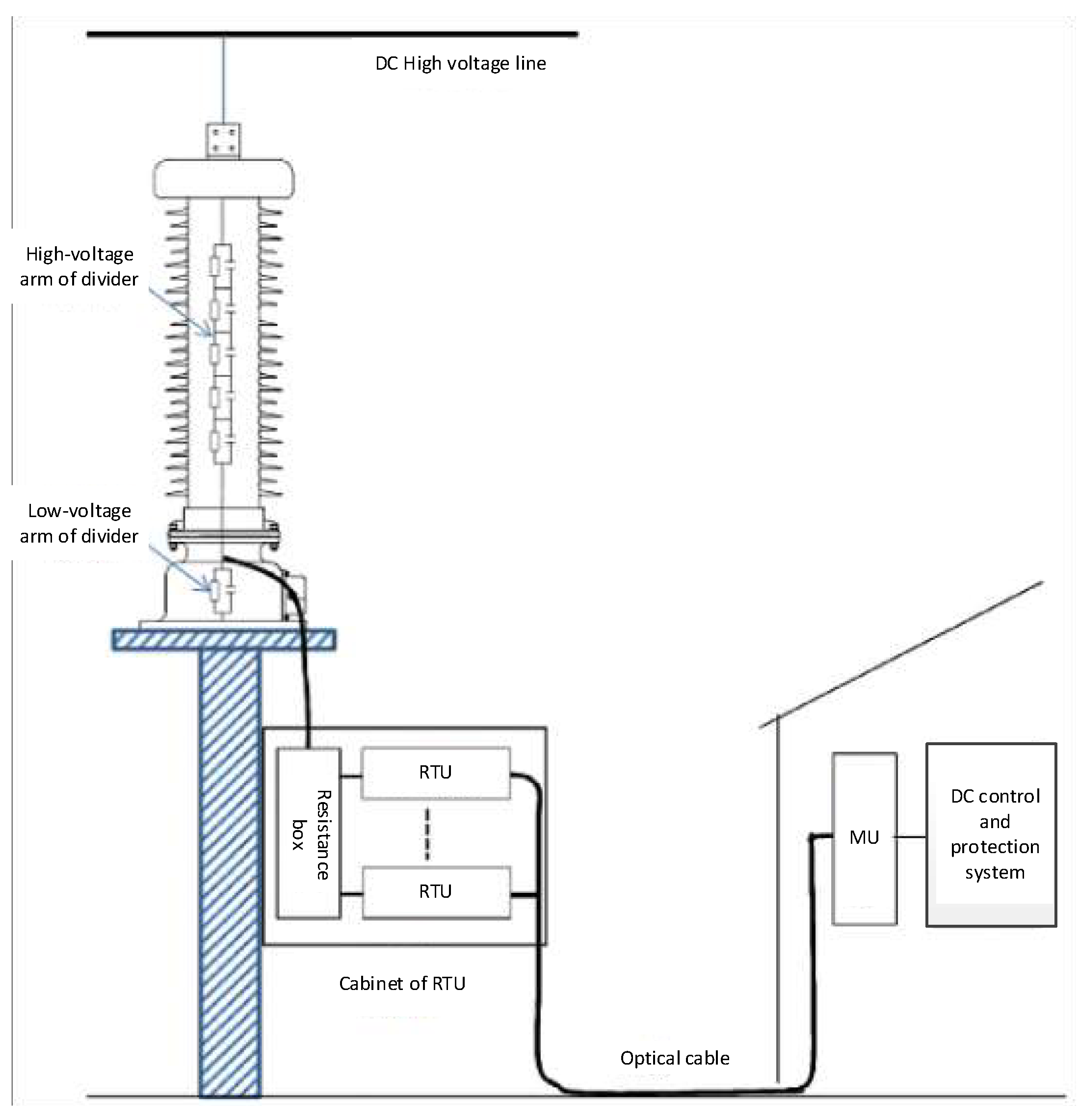
Figure 2.
The equivalent circuit of the RC divider under DC voltage.
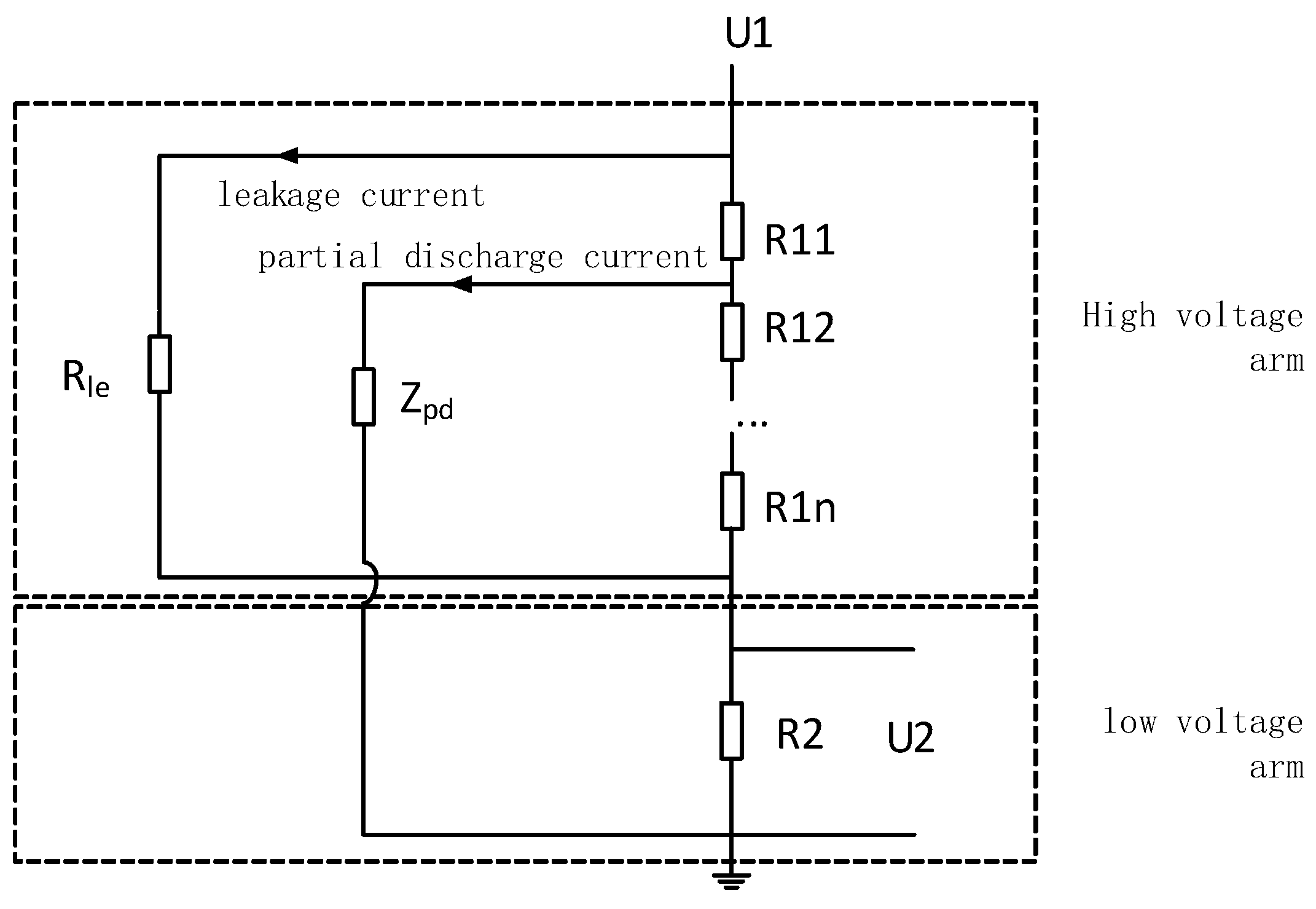
Figure 3.
The equivalent circuit of R-divider type secondary voltage division circuit.
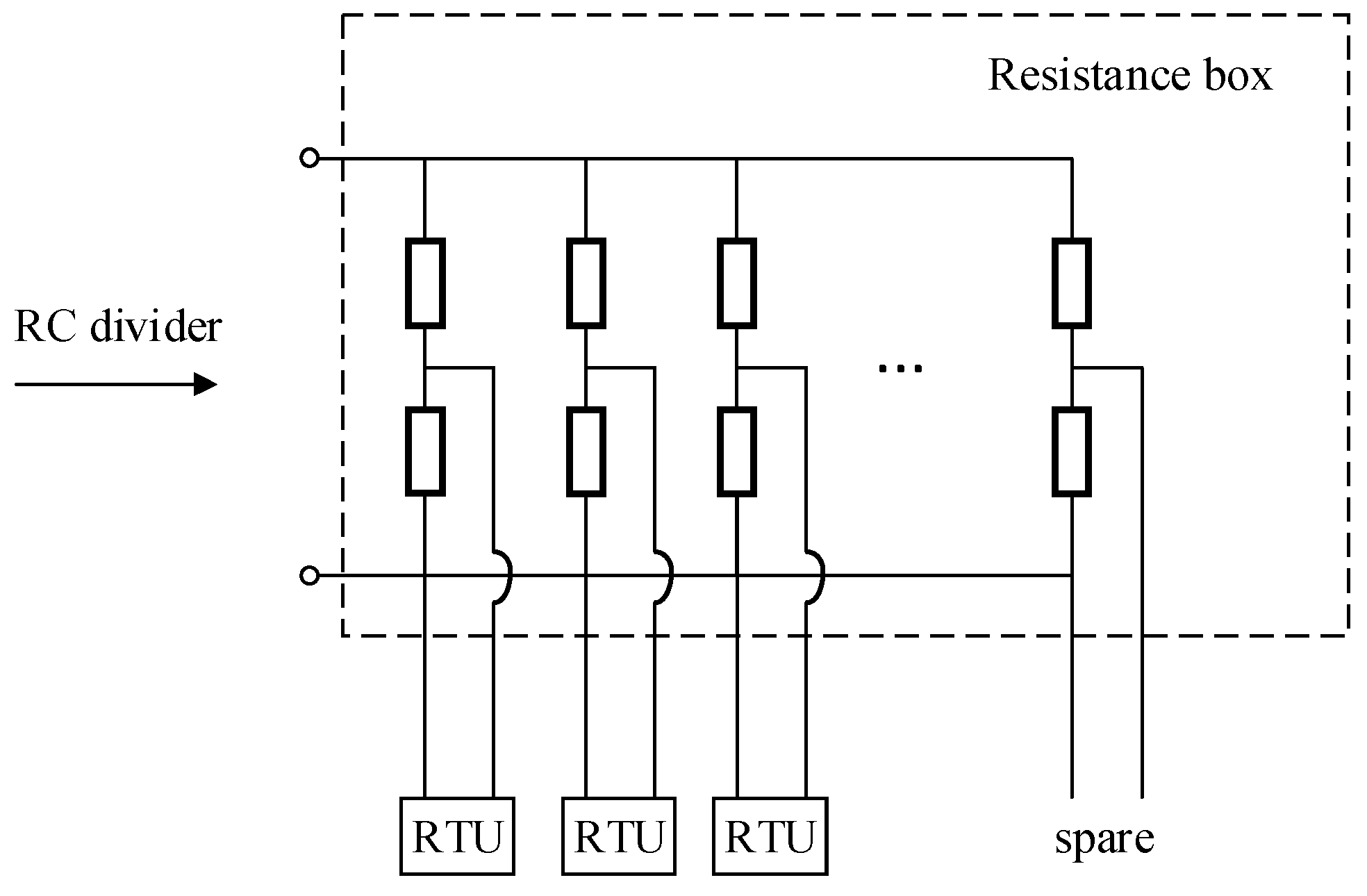
Figure 4.
Signal conditioning and sampling circuit structure.
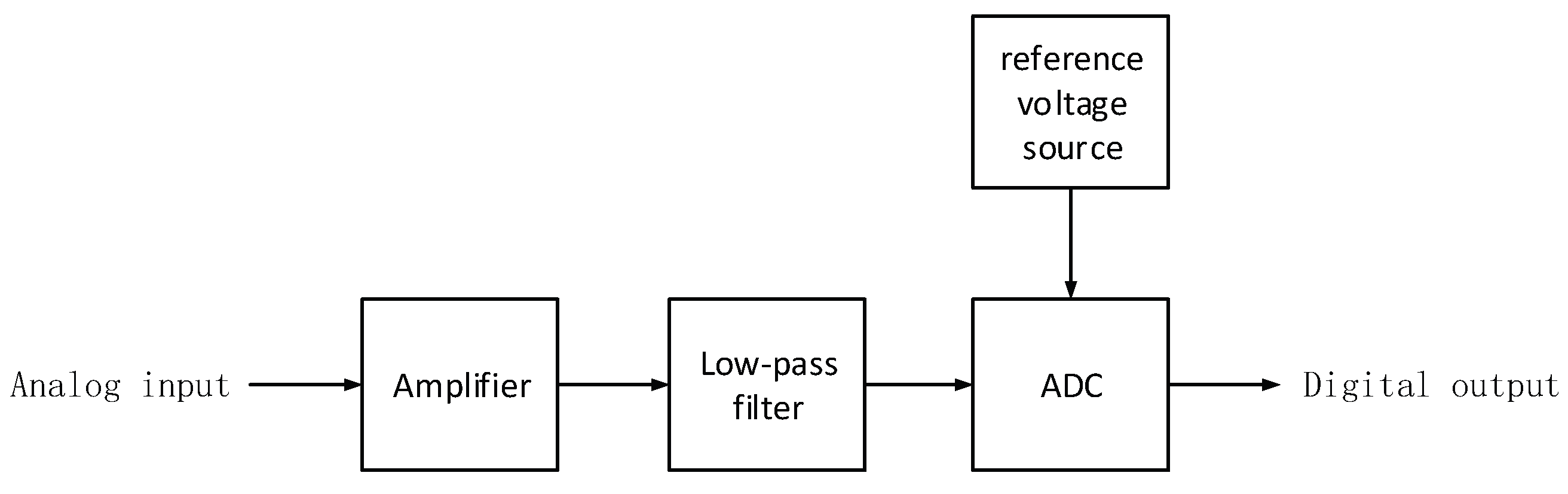
Figure 5.
Dielectric constant of polypropylene-paper composite material.
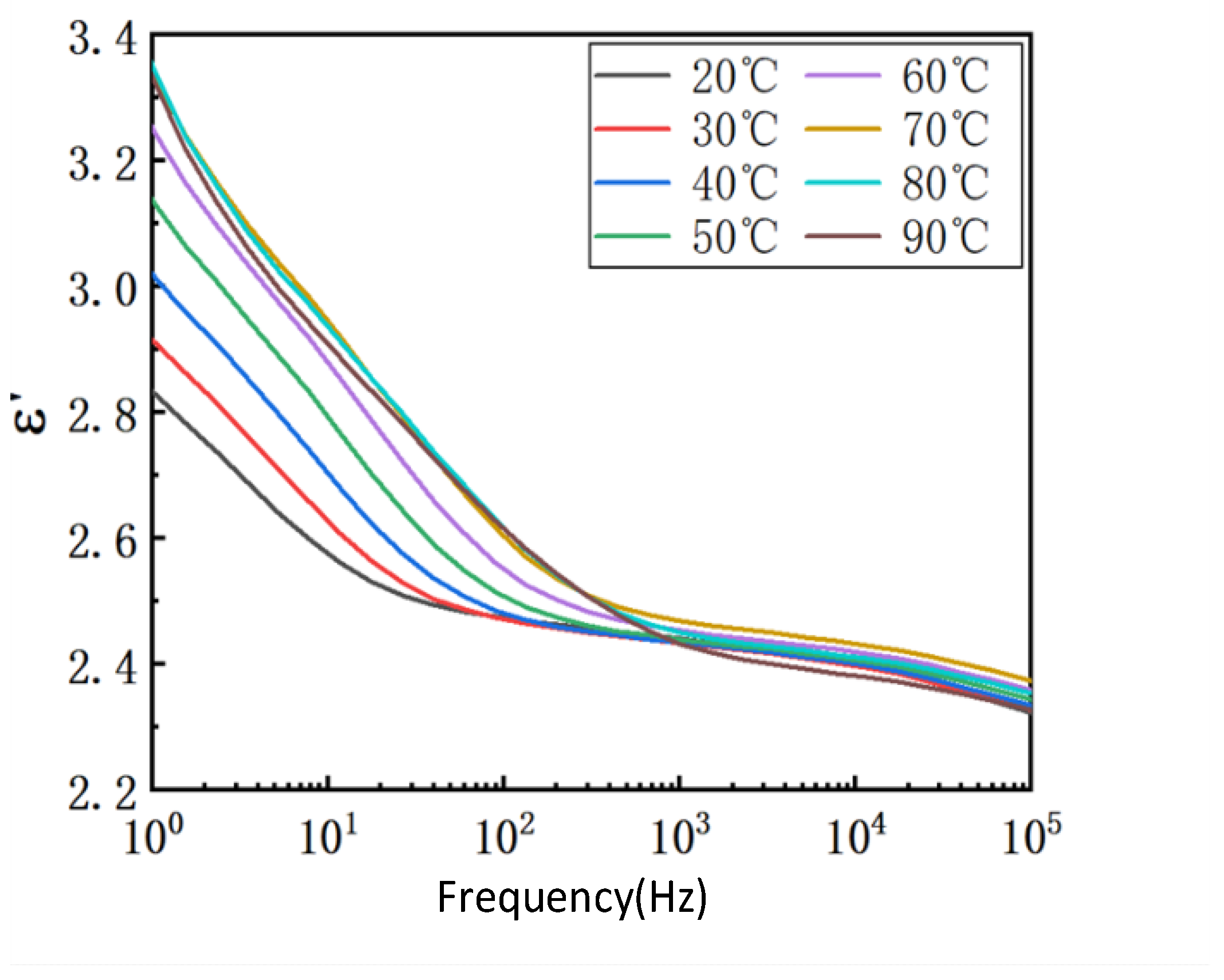
Figure 6.
The potential distribution of the ±100kV DC voltage transformer.
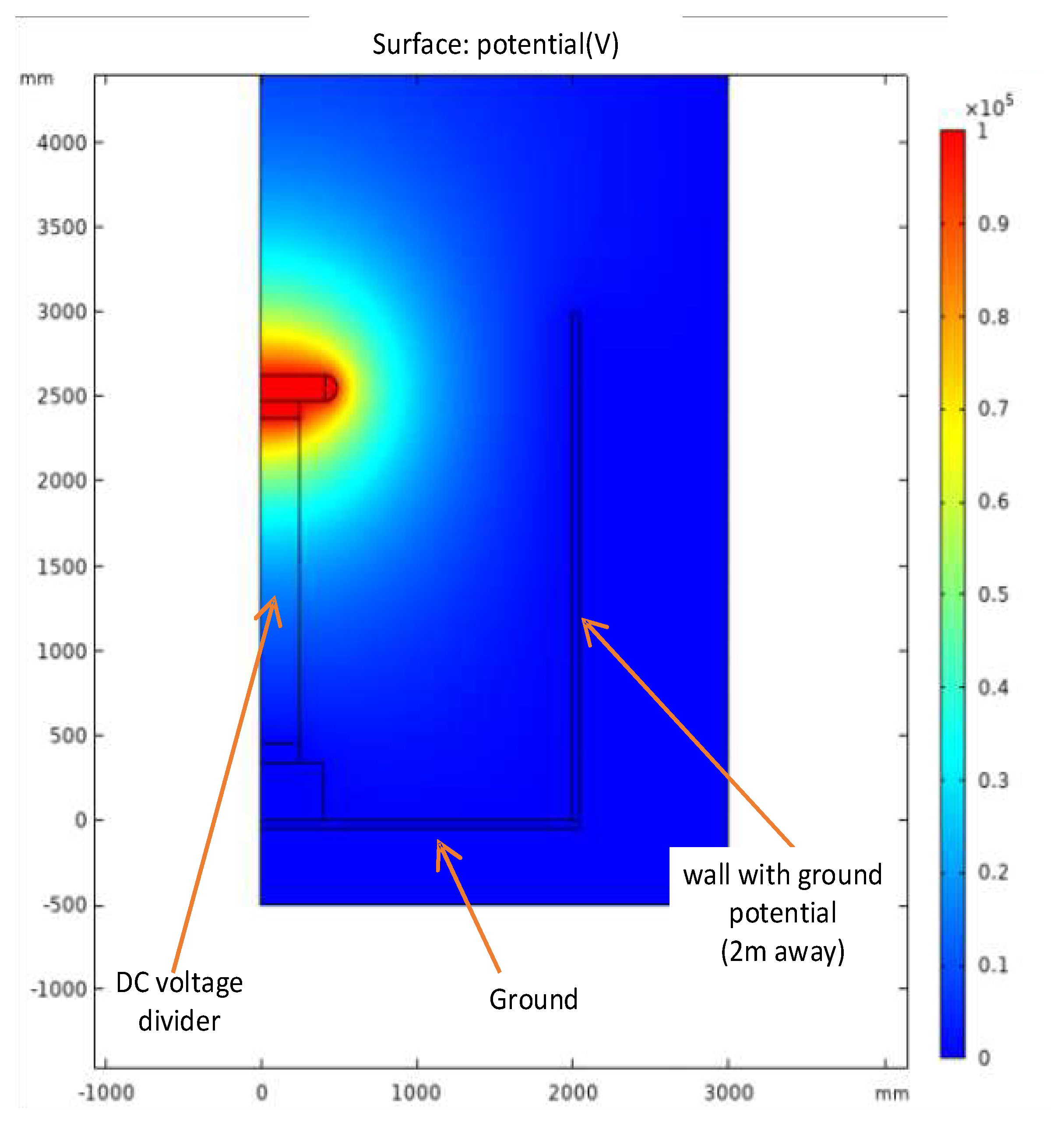
Figure 7.
Equivalent circuit of the RC divider considering the influence of stray capacitance to the ground.
Figure 7.
Equivalent circuit of the RC divider considering the influence of stray capacitance to the ground.
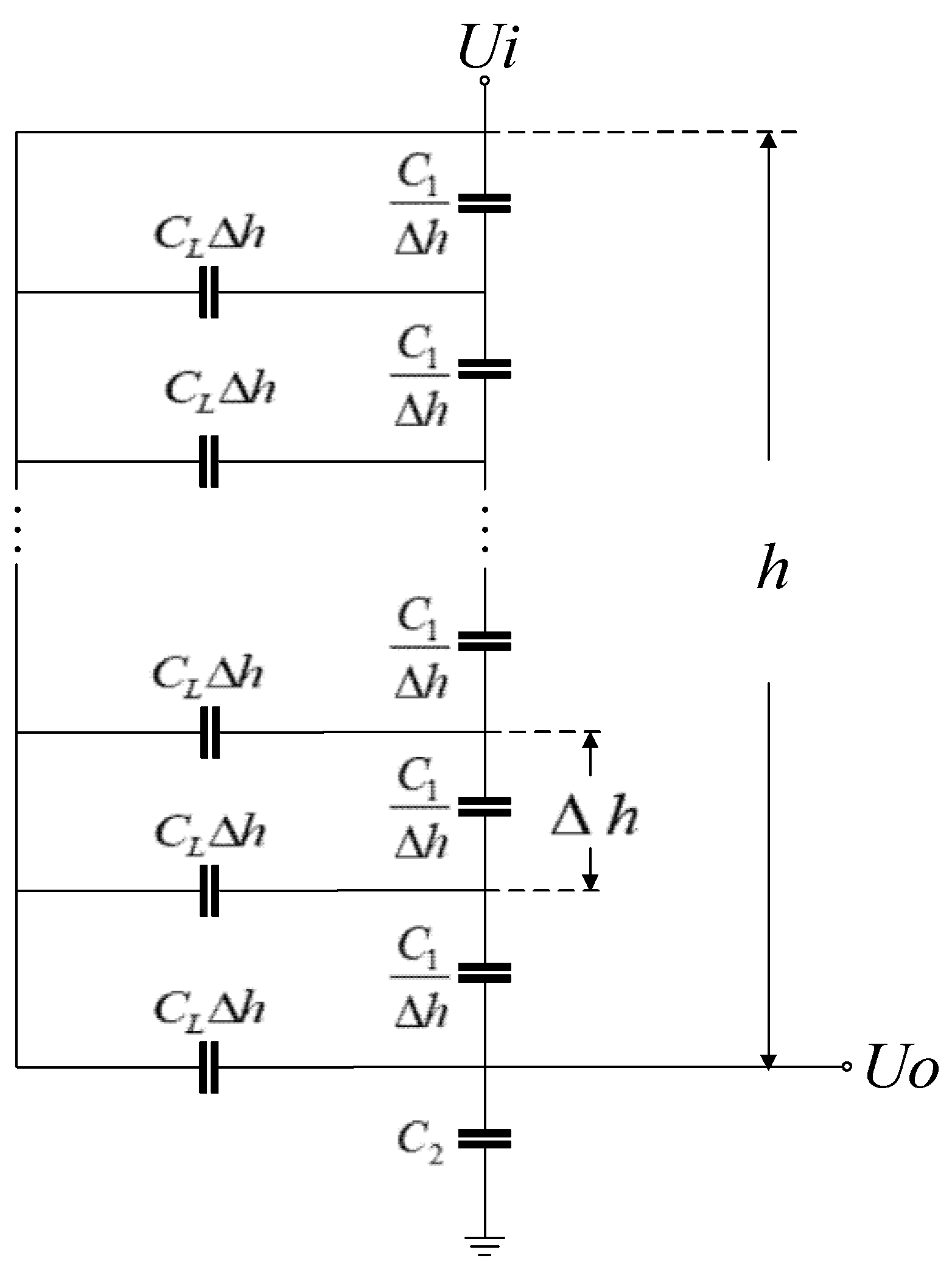
Figure 8.
Bode diagram of the designed low-pass filter.
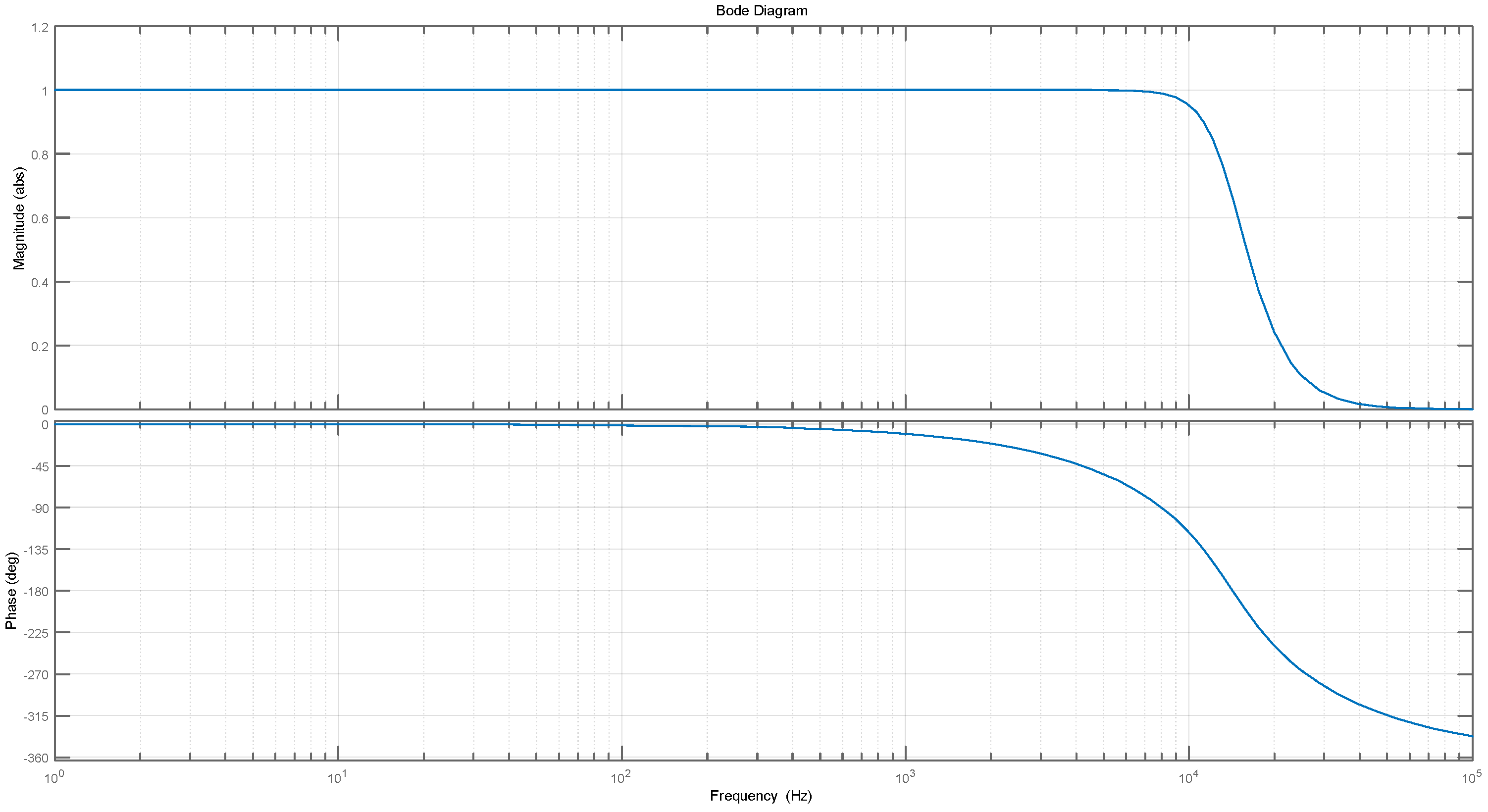

Table 1.
Accuracy classes extension for quality metering and low bandwidth d.c. applications.
| Accuracy class | Ratio error(+/-) at frequencies shown below | Phase error(+/-) at frequencies shown below | ||||
| Degree | ||||||
| (0.1≤f<1)kHz % |
(1≤f<1.5)kHz % |
(1.5≤f<3)kHz % |
(0.1≤f<1)kHz % |
(1≤f<1.5)kHz % |
(1.5≤f<3)kHz % |
|
| 0.1 | 1 | 2 | 5 | 1 | 2 | 5 |
| 0.2 | 2 | 4 | 5 | 2 | 4 | 5 |
| 0.5 | 5 | 10 | 10 | 5 | 10 | 20 |
| 1 | 10 | 20 | 20 | 10 | 20 | 20 |
Disclaimer/Publisher’s Note: The statements, opinions and data contained in all publications are solely those of the individual author(s) and contributor(s) and not of MDPI and/or the editor(s). MDPI and/or the editor(s) disclaim responsibility for any injury to people or property resulting from any ideas, methods, instructions or products referred to in the content. |
© 2026 by the authors. Licensee MDPI, Basel, Switzerland. This article is an open access article distributed under the terms and conditions of the Creative Commons Attribution (CC BY) license (http://creativecommons.org/licenses/by/4.0/).
Copyright: This open access article is published under a Creative Commons CC BY 4.0 license, which permit the free download, distribution, and reuse, provided that the author and preprint are cited in any reuse.


