
Submitted:
01 June 2026
Posted:
03 June 2026
You are already at the latest version
Preprints on COVID-19 and SARS-CoV-2
Abstract
This paper examines the impacts of the financial technology (FinTech) on the profitability of the Qatari commercial banks using panel data over two decades (2005–2024). The analysis is rooted in the two structural breaks that frame its duration: the regulatory phase in 2017, in which the Qatar Central Bank (QCB) formed its FinTech task force, the regulatory sandbox and the centralized eKYC framework; and the digital-acceleration phase in 2020, triggering by the COVID-19 pandemic and the issuance of digital banking license. To gauge the performance of banks, Return on Assets (ROA) and Return on Equity (ROE) are used, while controlling for bank size (log of total assets), and age and type (Islamic vs. conventional). Fixed-effects (FE) panel regressions with cluster-robust standard errors are estimated using an unbalanced panel of 125 bank-year observations, in combination with Hausman and Breusch–Pagan diagnostics. The results show that in general, the post-2017 reforms have led to marginally significant enhancements in ROE (β = 0.031; p ≈ 0.054) and not to any significant improvement in ROA. By contrast, the post-2020 phase reveals an effect on ROA that is positive but statistically weak, after controlling for bank size, and muted ROE effects. Interaction terms disapprove any systematic difference between Islamic and conventional banks in both phases. Results indicate an incremental rather than a transformational effect of FinTech adoption in Qatar as well as a greater influence by timing and scale economies and regulatory saturation than by bank type. The study provides empirical evidence specific to Qatar in a literature that tends to offer cross-country averages across the whole GCC and provided nuanced recommendations for bank managers and regulators aiming to deliver digital Qatar through Qatar National Vision 2030/Digital Agenda.
Keywords:
FinTech adoption
; Qatari banks
; bank profitability
; return on assets
; return on equity
; digital transformation
; COVID-19
; Islamic banking
; panel data
; fixed-effects estimation
1. Introduction
Financial technology (FinTech) is one of the most disruptive forces in modern banking, challenging cost structures, distribution channels and competitive boundaries (Vives, 2019; Boot et al., 2021; Philippon, 2020). Recently, the uptake of artificial intelligence (AI), of blockchain and open-banking platforms has gradually replaced traditional intermediation models in advanced economies (Arner et al., 2016). Adoption has not been as consistent across the Gulf Cooperation Council (GCC); regulatory precautions, existing infrastructure and cybersecurity concerns have hindered adoption in comparison to the United States, China and parts of Southeast Asia (Morshed, 2025, Khan & Al-Harby, 2022). The State of Qatar sits in this regional mosaic in a key yet little researched location.
The Qatar Central Bank (QCB) has placed digital finance at the heart of the national economic diversification agenda, under the Qatar National Vision 2030. In 2017, a national FinTech task force was established, followed by the regulatory ‘sandbox’ and in 2019 formed Qatar FinTech Hub and recently the Third Financial Sector Strategy 2024-2030 represents a thoughtful effort to establish Doha as a node of digital-finance in the region (Qatar Central Bank, 2024; SDK Finance, 2024; The FinTech Times, 2024). With the onset of the COVID-19 pandemic, this path was speeding up and the process of transitioning to digital, which had been planned for years and years, got cut short to just 2 years. But the economic impact of the regulatory and pandemic shocks to banks in Qatar is scantily quantified.
Previous empirical studies on FinTech and bank performances in the GCC have either been cross-country (Abu Khalaf et al., 2025), (Afzal et al., 2025), (Alshouha et al., 2025), (AlShouha et al., 2024) or adopted cross-sectional design (AlHares et al., 2022). Pooled estimates might overlook country-specific dynamics as Qatar’s banking sector is small, concentrated and dominated by conventional and Islamic banks. Furthermore, some country-specific findings seem to contradict each other, as Al-Kubaisi and Abu Khalaf (2023) found a negative relationship between mobile banking and profitability in Qatari banks compared with the positive relationship found in the regional studies (Alafeef et al., 2024). This dissonance is an indication for necessity to provide evidence with respect to the institutional context of Qatar.
This study addresses that gap. It evaluates how two policy-defined episodes (the regulatory reform phase of 2017 and the digital-acceleration phase of 2020) affected the profitability of banks in Qatar. The analysis is first conducted along with a 20-year sample from nine commercial banks collected from Refinitiv Eikon, exploiting the difference in the levels of the phases between banks within the same group. Also, it examines if there was a difference in the response of Islamic and conventional banks keeping in view the dual influence of Shariah-compliance constraints and the influence of Islamic banking over conventional banking in the domestic banking market (Abdul Rahman et al., 2023; Aysan et al., 2022).
This is a threefold contribution. The paper offers one of the first country specific, multi-decade, econometric studies of FinTech and bank performance in Qatar, as well as pooled countries, with within-country evidence. Second, it distinguishes between two policy episodes which are often lumped together and demonstrates that they have different effects in terms of size, sign and profitability indicator. Third, the paper contributes directly to the policy debate on Vision 2030 by providing specific recommendations for the QCB and bank managers in the new digital licensing environment.
The rest of the paper is organized follows: The review of the literature is done in Section 2 and then the hypotheses are developed. In Section 3 the data, variables and estimation strategy are described. The descriptive and regression analyses results are presented in Section 4. Section 5 discusses the findings in the light of the wider literature, and Section 6 concludes with implications for theory, management practice and regulatory design.
2. Literature Review and Hypothesis Development
2.1. Theoretical Foundations
This study integrates three complementary theoretical lenses. The Technology Acceptance Model (TAM) (Davis, 1989) suggests that perceived usefulness and perceived ease of use are the two factors that explain technology adoption. Recent findings in the banking industry indicate that trust, performance expectancy, and facilitating conditions are all key factors influencing FinTech adoption. Thus, TAM will help understand why banks with more robust IT infrastructure and more apparent benefits are more engaged with digital platforms (Galeone et al., 2024), and hence it is relevant to understand the heterogeneity among Qatari banks.
How innovations (new ideas, products, services, and frameworks) diffuse through a social system can be modelled by the Diffusion of Innovation theory (Rogers, 2003). Among other friction points for the adoption of FinTech in GCC, institutional barriers, customer inertia and limited FinTech literacy persist. Large banks like QNB and CBQ are early adopters in Qatar, while small banks are laggards, which aligns with DOI’s prediction of differential diffusion (Khan & Al-Harby, 2022).
According to the Resource-Based View (RBV; Barney, 1991) sustained competitive advantage stems from valuable, rare, inimitable, and non-substitutable (VRIN) resources. Proprietary IT infrastructure, data-analytics capability and digitally-skilled staff are keys to successful FinTech deployment in the banking environment. RBV therefore posits that the FinTech–performance association will be moderated by the scale economies and the depth of resources which is straightforwardly incorporated into the empirical specification using the control for bank size.
2.2. FinTech and Bank Performance: Global and Regional Evidence
There is an emerging global literature that highlights that the impact of FinTech on the performance of banks is context dependent. Vives (2019) explains that incremental rather than transformative improvements are likely to occur during the early adoption, and Philippon (2020) and Boot et al. (2021) claim there is a delay from an investment to bottom line improvement. Frost (2023) captures greater ROA increases in other Asian emerging markets, however with a caveat depending on customer adoption and competition levels.
The latest reports from panel studies in the MENA and GCC region suggest that the relationship between FinTech intensity in the MENA and GCC region and profitability is positive but weak or moderately positive. An increase in ROA and ROE is linked to more FinTech adoption in MENA banks, whereas Afzal et al. (2025) demonstrate that FinTech improves the stability indicators. In the ME region, Alafeef et al. (2024) present cost-efficiency improvements for all banks, but recognize that profitability benefits are reduced as core technologies become common. Providing nuanced evidence, Alshouha et al. (2025) demonstrate that FinTech lowers liquidity risk in GCC banks and contingent on bank size, whereas Khan et al. (2022) illustrate the FinTech–stability relationship is relative to the regulating environment. Lamey et al. (2024) and Thakur et al. (2023) continue the discussion by looking at the non-financial and ICT aspects of bank performance.
2.3. FinTech in Qatar and the Research Gap
Empirical work focused on Qatar itself is sparse. Khan Al-Harby (2022), meanwhile, rank Qatar fourth overall within the GCC in terms of digital financial access measures including mobile payments and debit-card penetration, trailing the UAE, Saudi Arabia and Bahrain. Khan et al (2022) discuss the legal systems in place of regional sandboxes, including that of Qatar, but does not attempt to measure performance implications. At the institutional level, conflicting findings appear: positive relationships are found between digitalisation and profitability in regional studies (AlShouha et al., 2024), while a negative connection between the specific Mobile Banking initiatives and Profitability of Qatari Banks was found (Al-Kubaisi and Abu Khalaf, 2023). These paradoxes indicate that aggregating the GCC estimates could obscure responses at the country-level.
There are two other characteristics that set Qatar’s banking sector apart. Firstly, Islamic banks hold and manage substantial assets within the system, and their FinTech solutions are influenced by Shariah-compliance factors as highlighted by Abdul Rahman et al. (2023) and Aysan et al. (2022). Second, there is a high degree of concentration in the sector with a few big firms determining patterns of system-wide adoption. These characteristics justify a country-based and multi-period treatment as is done in this paper.
2.4. Hypotheses and Conceptual Model
Drawing on the literature, this study formulates three hypotheses corresponding to two policy episodes and one cross-sectional contrast:
- H1a/H1b: The post-2017 regulatory reform phase is associated with higher ROA (H1a) and ROE (H1b) in Qatari banks.
- H2a/H2b: The post-2020 digital-acceleration phase is associated with higher ROA (H2a) and ROE (H2b).
- H3: The post-period performance effects differ between Islamic and conventional banks.
Figure 1 summarises the conceptual model. Two policy dummies and an interaction with bank type drive bank profitability, while bank size, age and type act as controls.
3. Data and Methodology
3.1. Sample, Period and Data Source
The sample comprises nine commercial banks operating in Qatar between fiscal years 2005 and 2024, yielding an unbalanced panel of 125 bank-year observations. The 20-year horizon brackets the two structural breaks of interest: the 2017 regulatory phase (QCB FinTech task force, sandbox and eKYC framework) and the 2020 digital-acceleration phase (COVID-19 and the Qatar FinTech Strategy roll-out) (SDK Finance, 2024; The FinTech Times, 2024). Commercial and Islamic banks, as defined by QCB, are included if they have: (i) been in continuous operation in Qatar in the sample window period; (ii) audited annual reports that are available during the sample period. They have chosen the institutions listed in Table 1.
The financial information is all taken from Refinitiv Eikon where financial data can be standardised, audited and regulator-approved to facilitate comparison across institutions and over time (Prasophyllaki & Zhang, 2021; Alafeef et al., 2024; Alnsour, 2023). Both for the longitudinal panel design and for the reduction of measurement error, they use one high-quality source.
3.2. Variables
The dependent variables are two profitability ratios commonly used in the banking literature: Return on Assets (ROA = net income ÷ total assets) capturing operational profitability, and Return on Equity (ROE = net income ÷ shareholders’ equity) capturing shareholder returns. Two binary policy variables drive the analysis: post2017 (= 1 for years ≥ 2017) and post2020 (= 1 for years ≥ 2020). Three controls are in line with the literature: for banks of any kind (bank size), total assets, measured in the natural log (ln_assets); bank age, the number of years since the bank was established; and bank type, a dummy equal to one for Islamic banks and zero for conventional banks. The interaction dummy terms between policy and bank type tests for bank specific policy effects.
3.3. Estimation Strategy
The study employs a fixed-effects (FE) panel data approach to control for time-invariant, bank-specific characteristics such as governance culture, risk appetite and ownership structure. The baseline specification is:\
where Yit is ROA or ROE for bank i in year t, αi is the bank-level fixed effect, Postt is either the post2017 or post2020 dummy, and εit is the idiosyncratic error. A second specification adds the interaction term Postt × BankTypei to test H3.
Yit = αi + β₁ Postt + β₂ ln(Assets)it + β₃ Ageit + εit
Model selection follows standard panel diagnostics. The Hausman test compares FE against a random-effects (RE) alternative, while the Breusch–Pagan Lagrange Multiplier test compares RE against pooled OLS. In both phases, the Hausman statistic strongly rejects RE consistency, justifying FE estimation (Section 4). Cluster-robust standard errors at the bank level correct for heteroskedasticity and within-bank serial correlation, in line with Wooldridge (2010). Estimation is carried out in R using the plm package; lmtest and sandwich provide the robust inference.
In accordance with Gujarati & Porter (2009) and Hair et al. (2019), asset size is log transformed to mitigate skewness, while Shapiro–Wilk tests are additionally reported to supplement the descriptive statistics. For explanatory ability, within-r² is reported and for statistical inference, p-values.
4. Empirical Results
4.1. Descriptive Statistics and Diagnostics
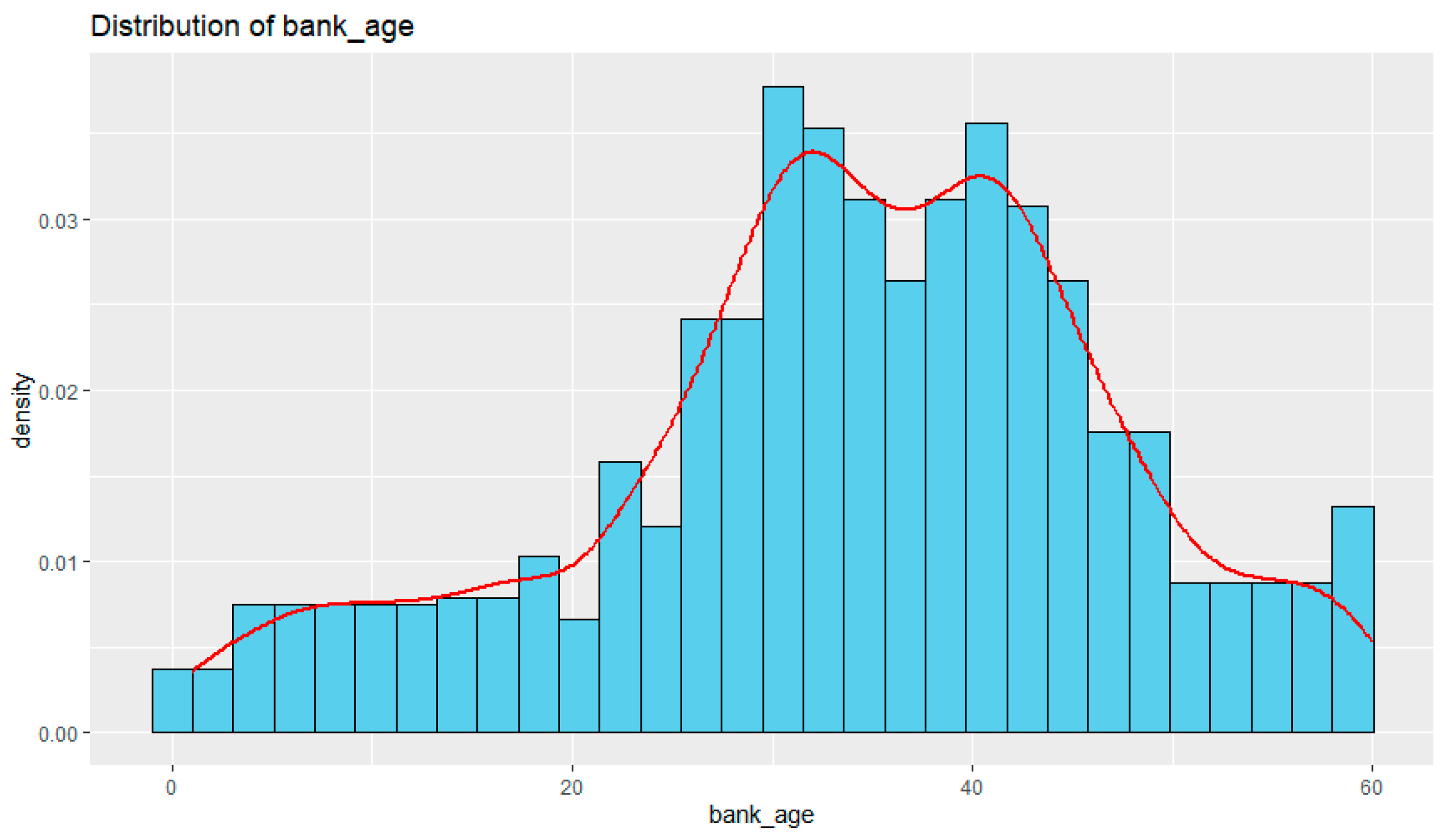
The descriptive statistics have been presented in Table 2. The distribution of ROA is positively skewed, leptokurtic with an average value of 2.0%: Most banks fall within a narrow range in terms of profitability and a few produce exceptional returns. ROE is 16.0% on average; it has not been very asymmetric (skewness = 0.18). Total assets have fallen between QAR 1.69 billion and QAR 356.13 billion, which is typical of concentrated banking markets. Following Hair et al. (2019) the log-transformation (ln_assets) reduces the skewness to 0.41. The age of the banks ranges from 1 year to 60 years (averaging to 33.9 years), including some old and young banks. There is evidence of a lack of normality (rejecting the sample normality at 0.001 levels) for all variables; Gujarati and Porter (2009) found that financial ratios often are non-normal.
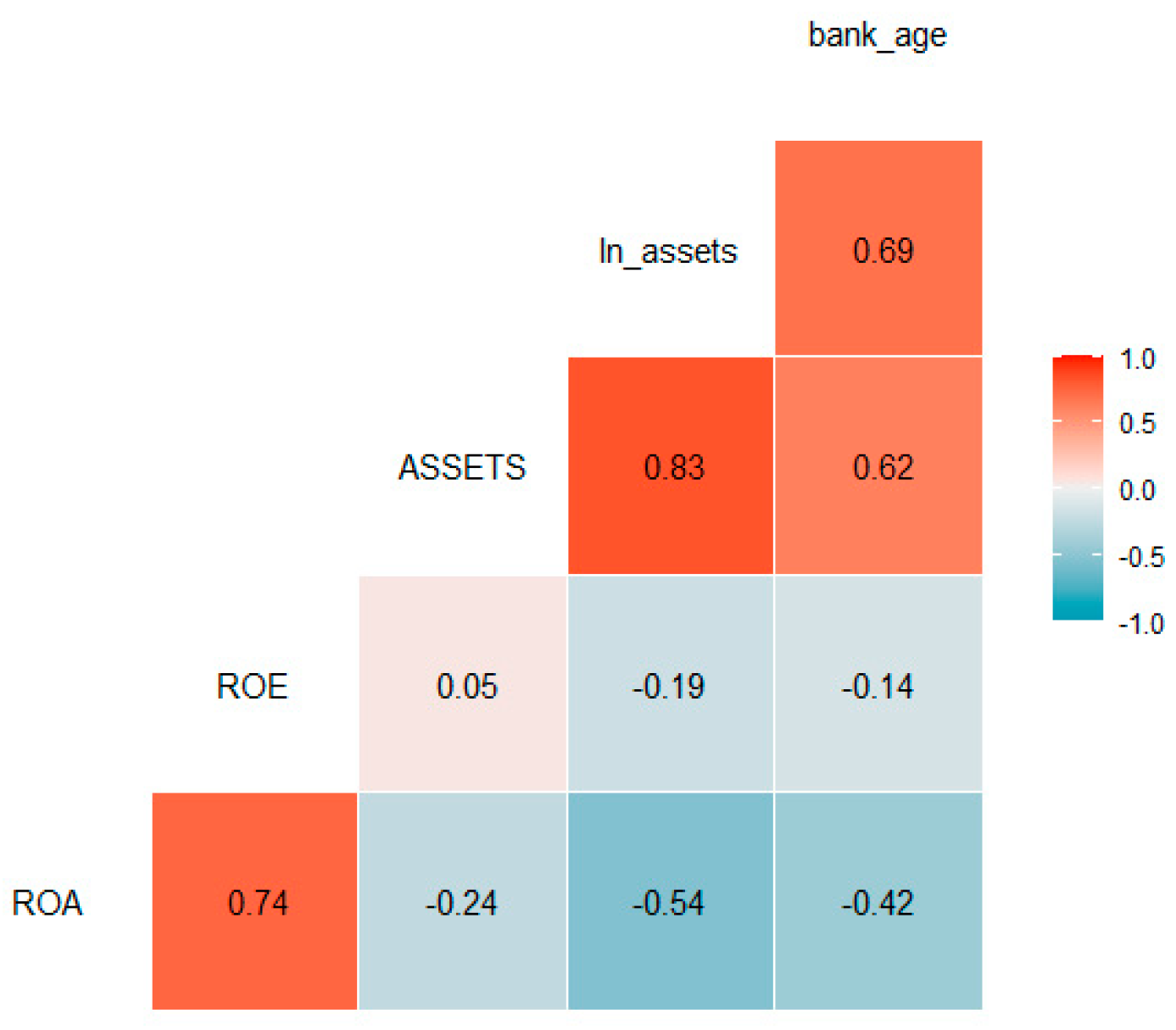
The distribution of ROA and ROE are given in figure 2. The right tail of ROA is heavier than would be consistent with the high kurtosis statistic, whereas ROE seems to be broadly symmetric with a double mode. The correlation matrix is shown in figure 3. Concentrating on the relations among the groups, as expected, ROA and ROE are very closely linked (r = 0.74) and both are negatively correlated with bank size (ROA–ln_assets r = −0.54) and bank age (ROA–age r = −0.42). This trend confirms the findings of Demirgüç-Kunt and Huizinga (2010), according to whom the smaller a bank’s size and the younger it is, the more likely it is to detect high profits.
Figure 2.
a. Distribution of ROA (right-skewed, leptokurtic).
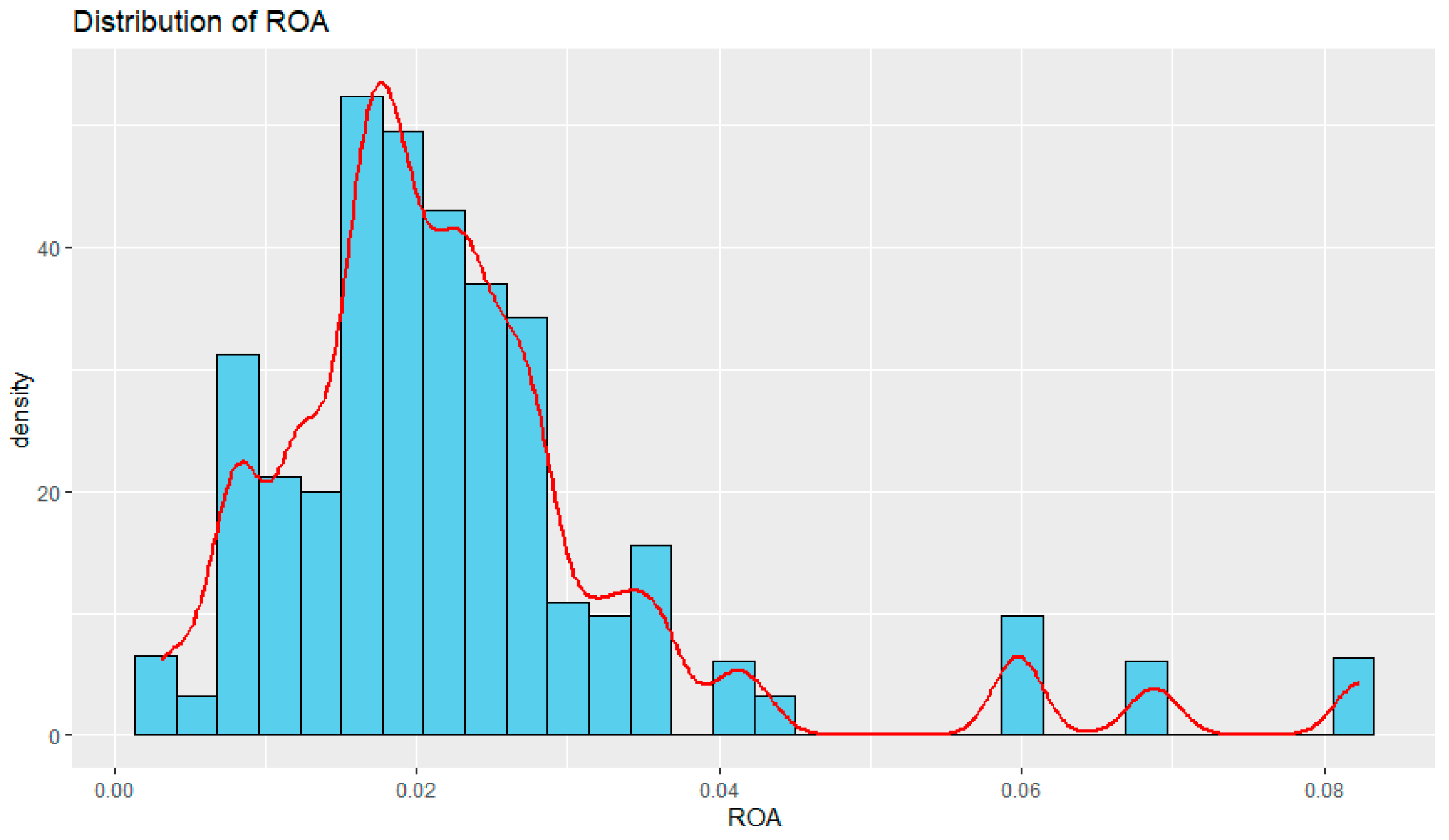
Figure 2.
b. Distribution of ROE (approximately symmetric, bimodal).
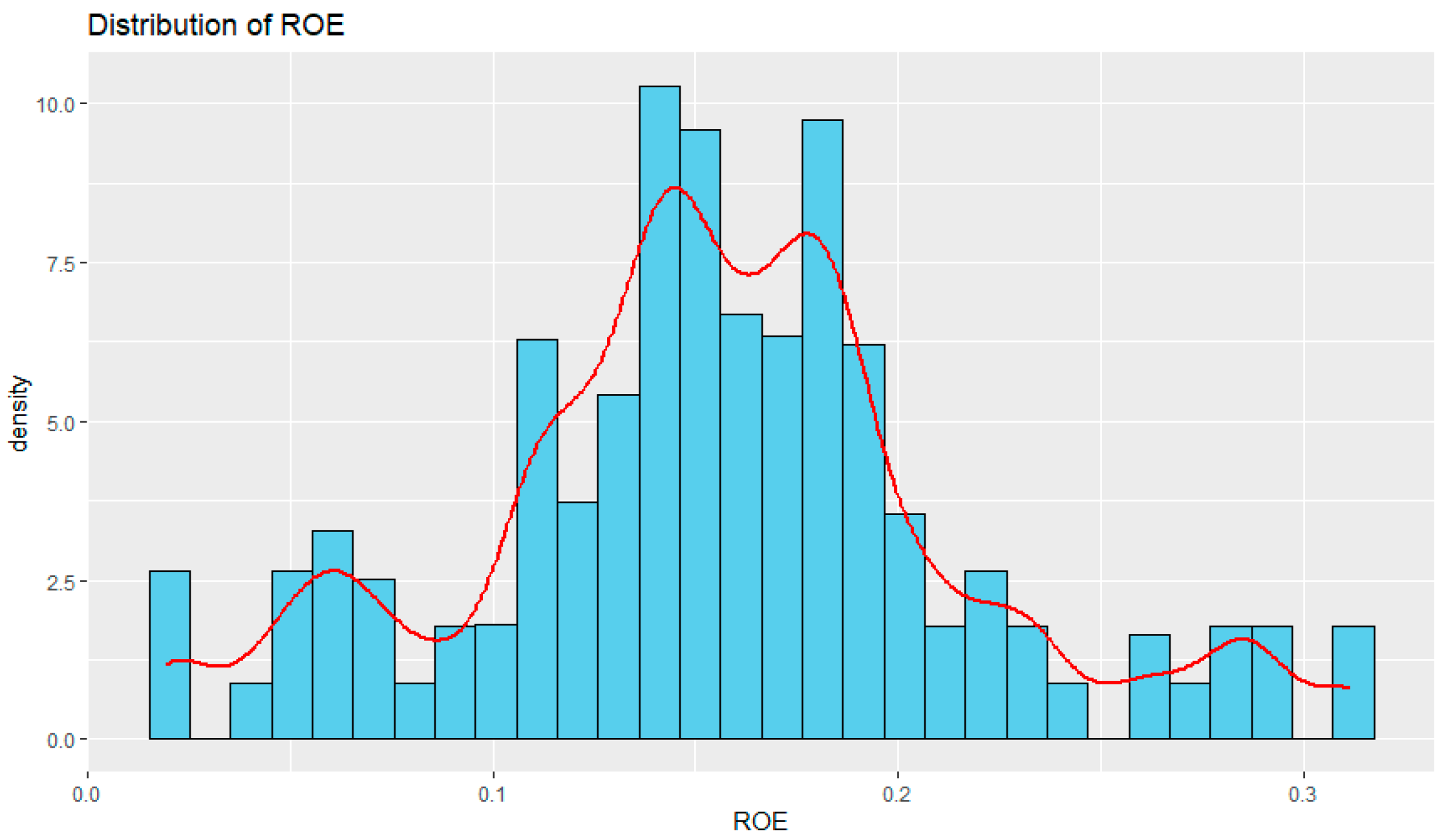
Figure 3.
Correlation matrix of the key variables. ROA and ROE are strongly positively correlated (r = 0.74); both correlate negatively with bank size and bank age.
Figure 3.
Correlation matrix of the key variables. ROA and ROE are strongly positively correlated (r = 0.74); both correlate negatively with bank size and bank age.
4.2. The Post-2017 Regulatory Phase
Table 3 reports the FE estimates for the post-2017 specification. The Hausman test shows that RE consistency is rejected strongly, as shown by χ²(3) = 138.94 with p<0.001, and also the Breusch–Pagan LM test confirms that there are significant panel effects, as seen in the Appendix Figure A1 with χ²(1) = 6.28 and p = 0.012. Based on this, the most suitable estimator is FE. ROA is practically unchanged since 2017 (β = −0.00058; p = 0.868), meaning that there was little observed in terms of differential asset-based profitability after the regulation changes. The size of the bank (β = −0.0173, p < 0.001) is significant and negative, as discussed in Demirgüç-Kunt and Huizinga (2010), supporting the agility advantage of smaller banks. The within-R² is quite large at 0.587.
For ROE, the picture is different: post2017 carries a positive coefficient of 0.0306 with p ≈ 0.054, marginally significant at the 10% level. The value of the point estimate suggests that, on average, ROE rose by about three percentage points over the years following the QCB reforms, after accounting for size and age. The ROE model does not consider the size or age of the bank. Results of the heterogeneity test along the dimension of Bank Type (the last column of the Table 3) yield an insignificant interaction term (β = −0.00424, p = 0.336); meaning that there is no systematic differential impact of Islamic banks and conventional ones.
4.3. The Post-2020 Digital-Acceleration Phase
Table 4 reports the corresponding FE estimates for the post-2020 phase. Diagnostics again favour FE (Hausman χ²(3) = 1697, p < 0.001; Breusch–Pagan LM χ²(1) = 18.667, p < 0.001). The post2020 coefficient in ROA is positive but is not significantly different than zero (β = 0.00218, p = 0.539). Bank size is strongly negative (β = −0.0160, p ≈ 0.05), however, and remains so in every specification: larger banks systematically achieve lower ROA, consistent with a case of diseconomies in asset utilisation among the large banks in Qatar.
In the ROE model, the post2020 coefficient is positive but not significant (at level β = 0.0224, p = 0.150). Bank age, on the other hand, is significantly negative (β = −0.00613, p = 0.017), indicating deteriorating shareholder returns for older banks during the pandemic/ post-pandemic year. Within R² for ROE is 0.425, which is slight lower as compared to ROA (0.588).
Again, interaction effects fail to live up to the expectations. A small and not significant interaction coefficient (β = −0.00051, p = 0.914) emerges, and bank size has a strong negative effect (β = −0.0144, p < 0.001) in the ROA model with Post2020 × BankType. The same applies to ROE with the same interaction (column 4); while bank size has again a more pronounced (negative) impact (β = −0.0469, p = 0.0026), the effect of the interaction term is not significant (β = 0.00956, p = 0.709) either. Across all four columns, H3 finds no support: Qatari Islamic and conventional banks did not respond differentially to the post-2020 shock.
4.4. Hypothesis Testing Summary
The results of the hypotheses are summarised in Table 5. H1a is rejected: the effect ROA post-2017 is not significant. H1b is partially accepted: ROE shows a marginally significant uplift after the 2017 reforms. Both H2a and H2b are disconfirmed—the post-2020 coefficients of ROA and ROE have both positive signs but are statistically testing insignificant. H3 is rejected in both intervals and there is no evidence of differential Islamic as compared to conventional dynamics.
There are two patterns of crossing that merit emphasis. First, the kind of indicator of profitability that moves varies from episode to episode: ROE moves (weakly) with the 2017 regulatory phase; ROA and ROE do not move clearly with the 2020 regulatory phase. Second, in every specification, bank size is the most robust indicator of profitability, with a negative sign. These findings seem to suggest that the quarters in which policies took effect have less of a direct contribution to the FinTech–performance nexus in Qatar, as opposed to structural factors within the banks: scale, specifically.
5. Discussion
5.1. Interpreting the Post-2017 Effects
The slight improvement in ROE following the 2017 reforms is consistent with Vives’s (2019) and Philippon’s (2020) incrementalist argument. The QCB’s task force and eKYC (electronic Know Your Customer) framework lowered compliance frictions on the early FinTech initiatives, which may have been a catalyst for increasing shareholder returns because of cost rationalisation and revenues from telecommunications channels. The lack of ROA effect is also in line with the literature, as cost-efficiency benefits may first manifest in ROE, with savings in operating expenses flowing through to improve bottom-line profitability more directly than to be added to per-asset productivity (Alafeef et al., 2024; Al-Shari & Lokhande, 2023). The trend is also consistent with Frost (2023), who observes that digitalisation impact on profitability is typically seen first in equity return, in concentrated markets with incumbents having pricing power.
While larger EM studies produced more eye-catching figures, the Qatari one is more subdued. Boot et al. (2021) identify greater immediate ROA increases in less concentrated markets of the world, while AlShouha et al. (2024) find more intensive profitability gains in markets more broadly. Perhaps Qatar’s succession of a few large incumbents and a smaller, more concentrated sector simply lacks the opportunity for FinTech to disrupt, and this reinforces much of the need for context-specific evidence.
5.2. Why Post-2020 Effects Are Muted
Three forces appear to dampen the post-2020 signal. First, the COVID-19 pandemic was a distortion, not a clean treatment. Balance sheet provisioning, lending moratoria and capital-conserving provisions did all the reverse they enhanced the balance sheet and suppressed the reported profit, thereby obscuring any gains from FinTech (Naz et al., 2022; Butt & Chamberlain, 2025). Second, it confirmed what Kalai and Toukabri (2024) documented for other international comparisons – that the economic gains from greater efficiency in the short run may have been absorbed by requirements for compliance in the new digital banking framework, as set out by the QCB in 2024. Third, during this time, the FinTech market might be saturated: the growth rate of the marginal returns to further FinTech adoption is expected to diminish once the core mobile and digital services have been mainstreamed, which largely occurred in Qatar by 2021 (Alafeef et al., 2024; AlShouha et al., 2024).
This strong negative association of bank size at each specification makes it difficult to draw an easy conclusion that “larger banks benefit more.” Larger Qatari banks, on a per-asset basis, earn less, reflecting those smaller, more troubled banks took on sovereign and corporate exposures that produced lower yields and fewer scale effects came from FinTech rollout costs. This aligns with Alshouha et al. 2025’s finding of the moderating effect of bank size in relation to liquidity risk and extends the exhypothesis to profitability.
5.3. Theoretical and Practical Implications
The findings refine TAM, DOI and RBV in the Qatari context. TAM wise, it can be seen that the ROE uplift for 2017 was limited and therefore the shareholder value realization for the perceived usefulness seems to be only at a system utilization level. It is interesting to note that Christian banks and Islamic banks, in terms of DOIs, did not show any significant difference implying that diffusion in the small banking system in Qatar has been more uniform than expected as soon as one such large incumbent bank adopts, others do so more swiftly. The steady negative size coefficient means that VRIN resources in Qatari banks: (ROA, ROE) are not currently creating any kind of differential profitability from a RBV perspective, they may be in other dimensions (resilience, regulatory position) that are not reflected in ROA or ROE.
This means two things to bank managers. Expectations for profitability from Fin Tech adoption are restricted: do not hope for transformational – rather incremental – returns. The value of cybersecurity, data analytics and customer-centric platforms created by long-run digital integration is not short-term ROA enhancements. In the context of Islamic banks, a lack of differential effect implies that Islamic-compliant FinTech, such as blockchain smart contracts and Islamic digital wallets, are not yet providing a competitive advantage over non-Islamic banks (Abdul Rahman et al., 2023).
5.4. Limitations
Three limitations qualify the findings. Firstly, the sample of nine banks represents the entire listed Qatari sector, and thus the external validity is restricted to other GCC markets. Second, using policy defined episode dummies instead of more direct FinTech-intensity measures (e.g., share of digital transaction, IT capex) is a deliberate choice of identification for the sake of granularity. Third, the identification of causal inferences is a matter of the within-bank variation explained by FE and unobserved time-varying shocks may still be a confounder. Future studies should use granular data on digital activity, extend estimates to a cross-GCC panel, and integrate econometric estimates with qualitative case studies on digital transformation in key Qatari banks (Naz et al., 2022; Kalai & Toukabri, 2024).
6. Conclusions
This paper conducted a 20-year panel study across the countries to determine the impact of FinTech adoption on the profitability of commercial banks in Qatar. Two policy-defined episodes were analyzed: the regulatory reform phase in 2017 when Qatar Central Bank created the built-out of its FinTech infrastructure and the digital-acceleration phase in 2020 when COVID-19 accelerated years of digital transition into months. The analysis used a 125-observation bank-year panel with fixed-effects inference design, and found that Return on Equity was marginally significantly related to the post-2017 reforms, which were not significantly related to the Return on Assets. In contrast, the post-2020 stage did not yield any statistically significant impact on either of the profitability variables and bank size turned out to be the most robust variable in all specifications. Differential response rejected in interaction tests, both Islamic and conventional banks.
The implications are subtle. Bank managers may find the findings a bit of a dampener to their hopes of quick and easy profit-intensivity through their FinTech investments. The degree of digital integration, especially around cybersecurity, AI and analytics, and customer experience, will be the key to achieving a lasting competitive edge and not merely FinTech uptake itself. Smaller banks should look at shared digital engagement platforms and collaborative technology to help spread the burden of fixed costs. From the empirical perspective, it is observed that although there is no immediate benefit for Islamic banks on profitability by investing in Shariah-compliant FinTech innovation, financing in this field should be pursued as a strategic differentiator.
The results imply that the next step in the FinTech regulation process should be tiered and ecosystem-centric in the eyes of regulators, especially the QCB. Uniform compliance burdens carry the risk of crowding out smaller institutions, and obsessing over adoption rates (as opposed to outcomes like financial inclusion, resilience, and consumer trust) runs the risk of inducing saturation effects like those noticed in the post-2020 outcomes. But step-up FinTech regulation in line with longer arc Qatar National Vision 2030, e-government, SME finance, regional payment interoperability, would see the harnessing of FinTech as a tool for economic diversification, not just an industry objective.
For the academic literature, the paper contributes one of the first Qatar-specific, multi-decade econometric assessments of FinTech and bank performance, complementing cross-country GCC averages with within-country evidence. Furthermore, it shows an empirical asymmetry between the impacts of policy episodes: the 2017 regulatory period resulted in a change in ROE, whereas the 2020 digital-acceleration period did not unambiguously budge either indicator a finding that should be linked to other small and concentrated markets. Future research would benefit from an expansion to include a multi-country GCC panel, the inclusion of direct proxies of FinTech intensity and the use of quantitative estimates alongside qualitative interviewing to gain deeper insights into the strategic logic of the headline coefficients.
Funding
This research received no external funding.
Data Availability Statement
The financial data analysed in this study were obtained from Refinitiv Eikon under an institutional licence. Aggregated descriptive statistics and regression outputs are available from the corresponding author upon reasonable request.
Acknowledgments
The author gratefully acknowledges the supervision of Mr. Nodir Karimov at Newcastle Business School and the helpful comments of two anonymous referees.
Conflicts of Interest
The author declares no conflict of interest.
Abbreviations
| AI | Artificial Intelligence | MENA | Middle East and North Africa |
| CBQ | Commercial Bank of Qatar | QCB | Qatar Central Bank |
| FE | Fixed Effects | QFC | Qatar Financial Centre |
| FinTech | Financial Technology | QNB | Qatar National Bank |
| GCC | Gulf Cooperation Council | RBV | Resource-Based View |
| ICT | Information and Communication Technology | RE | Random Effects |
| KYC | Know Your Customer | ROA | Return on Assets |
| LM | Lagrange Multiplier | ROE | Return on Equity |
Appendix A. Statistical Output Evidence (R plm & sandwich)
This appendix reproduces the raw R console output that underpins the regression results reported in Table 3 and Table 4. The estimation environment uses R 4.3 with the plm package for panel estimation and sandwich/lmtest for cluster-robust coefficient testing.
Figure A1.
Breusch–Pagan Lagrange Multiplier test for random effects in the ROA model. The result (χ² = 6.275, p = 0.0122) supports the presence of significant panel effects.
Figure A1.
Breusch–Pagan Lagrange Multiplier test for random effects in the ROA model. The result (χ² = 6.275, p = 0.0122) supports the presence of significant panel effects.
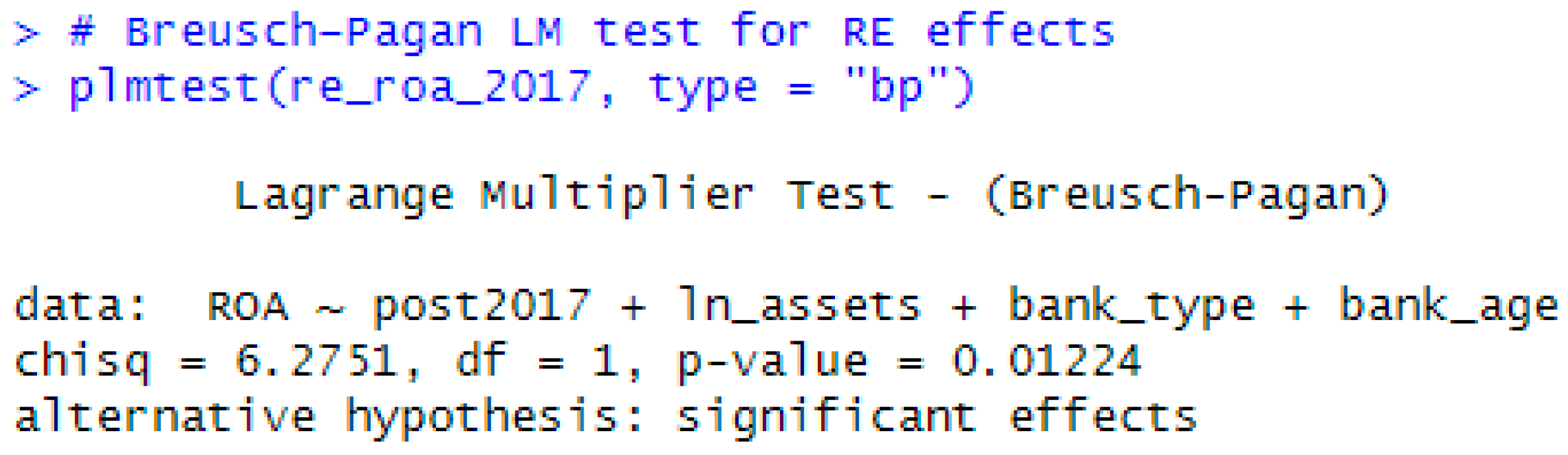
Figure A2.
FE summary – ROA, post-2017.
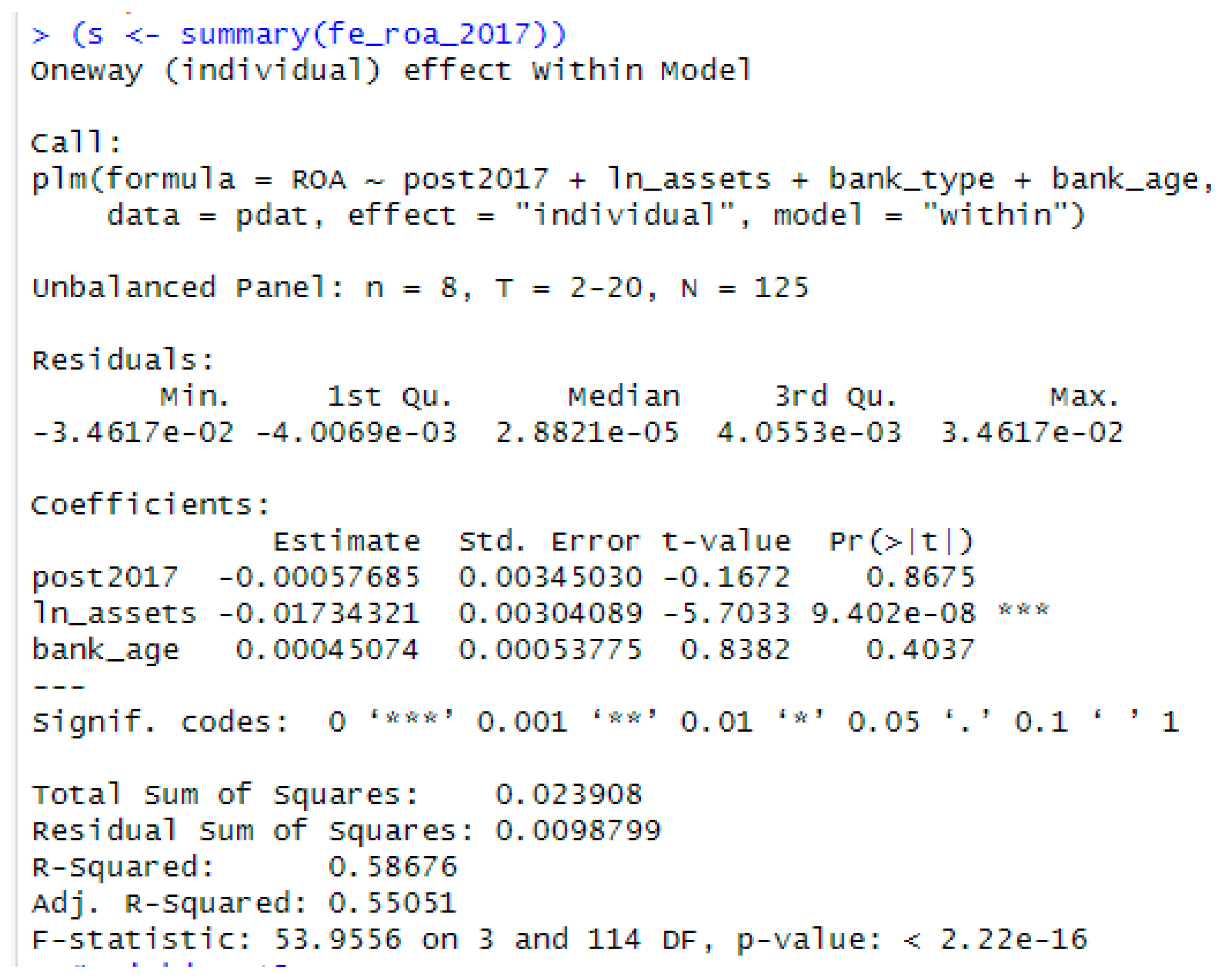
Figure A3.
Cluster-robust coefficients – ROE, post-2017.
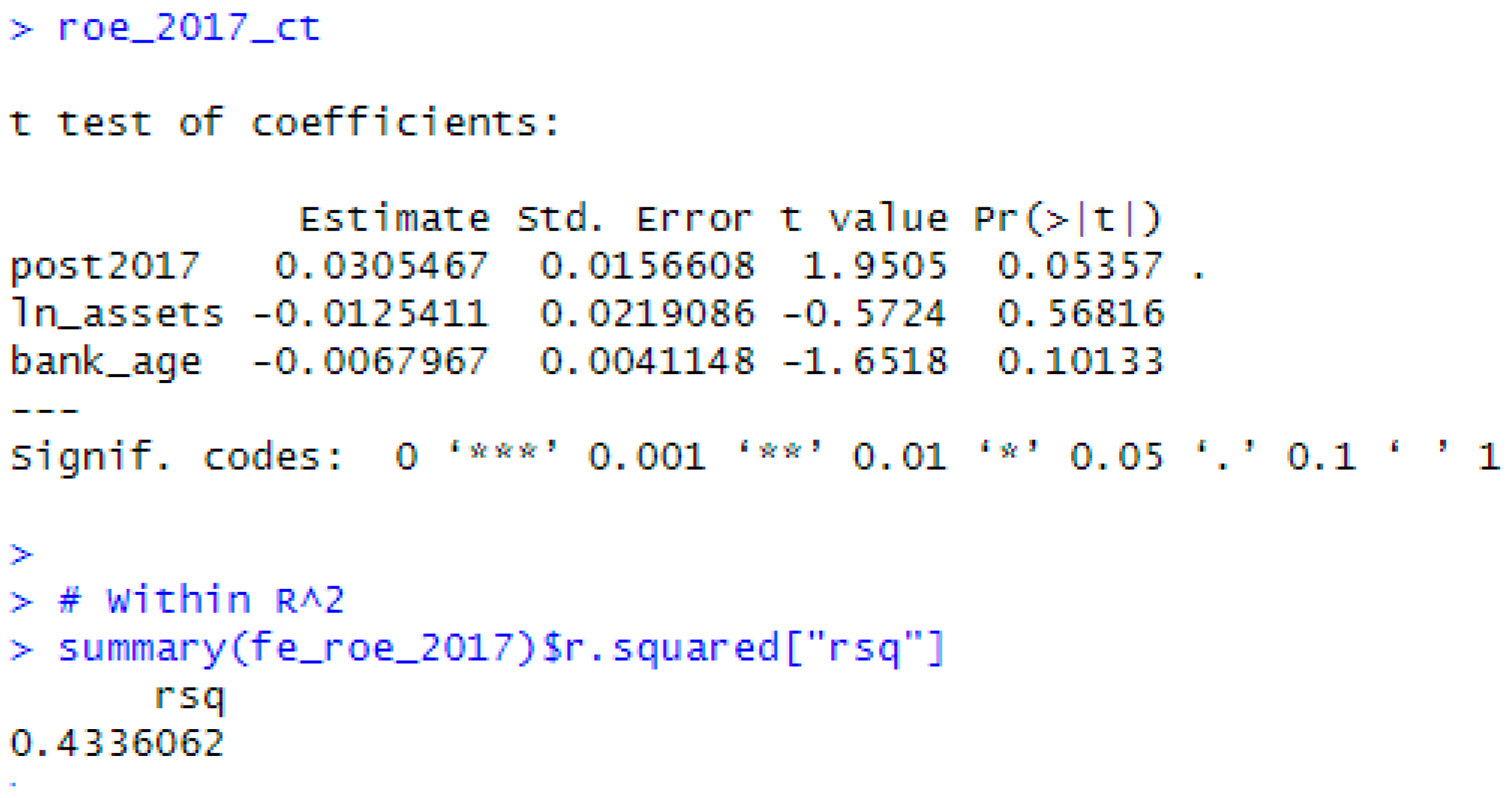
Figure A4.
Heterogeneity test for the post-2017 ROA model with the Post2017 × BankType interaction. The interaction term is insignificant (p = 0.336).
Figure A4.
Heterogeneity test for the post-2017 ROA model with the Post2017 × BankType interaction. The interaction term is insignificant (p = 0.336).
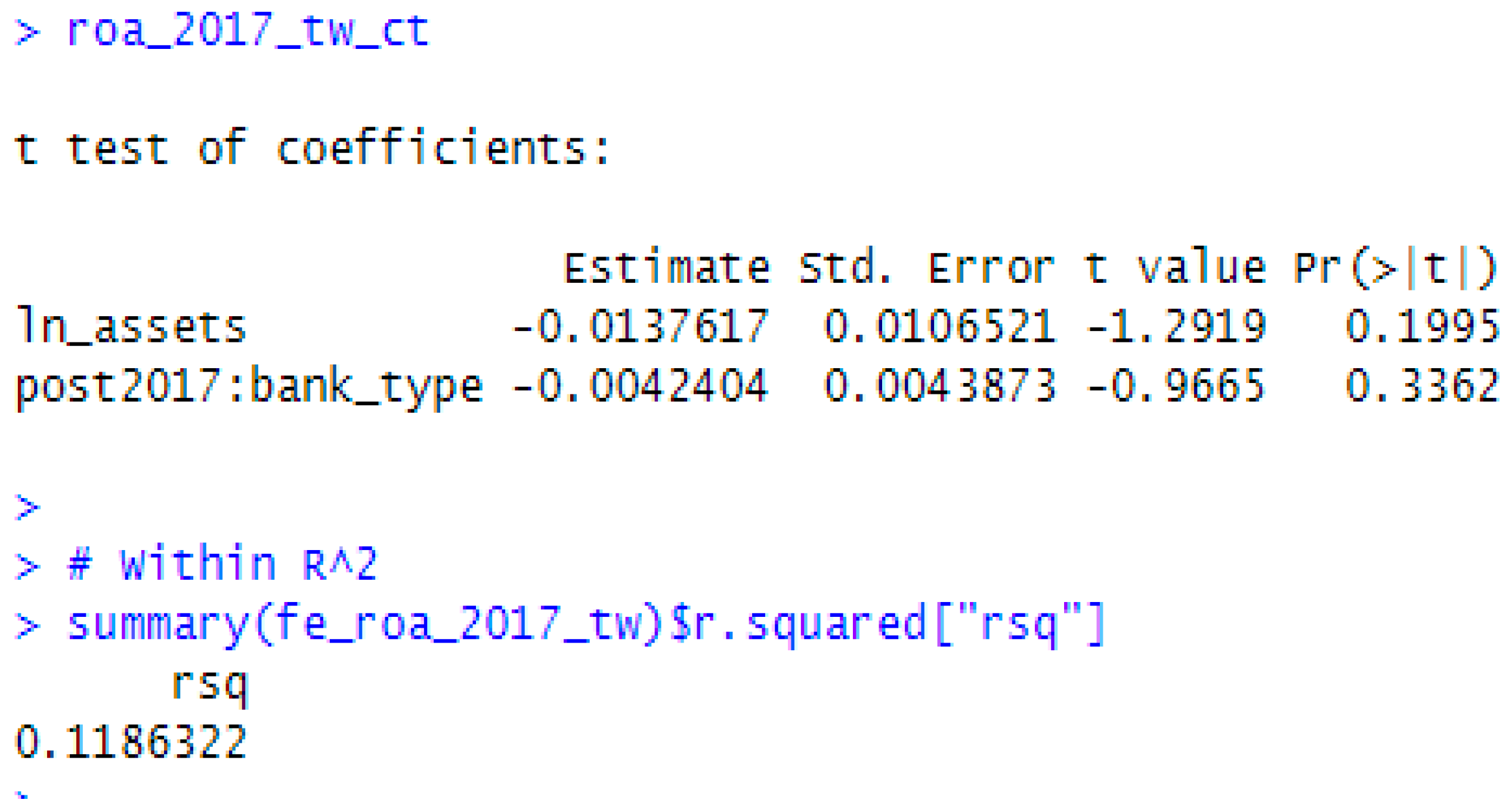
Figure A5.
FE summary – ROA, post-2020.
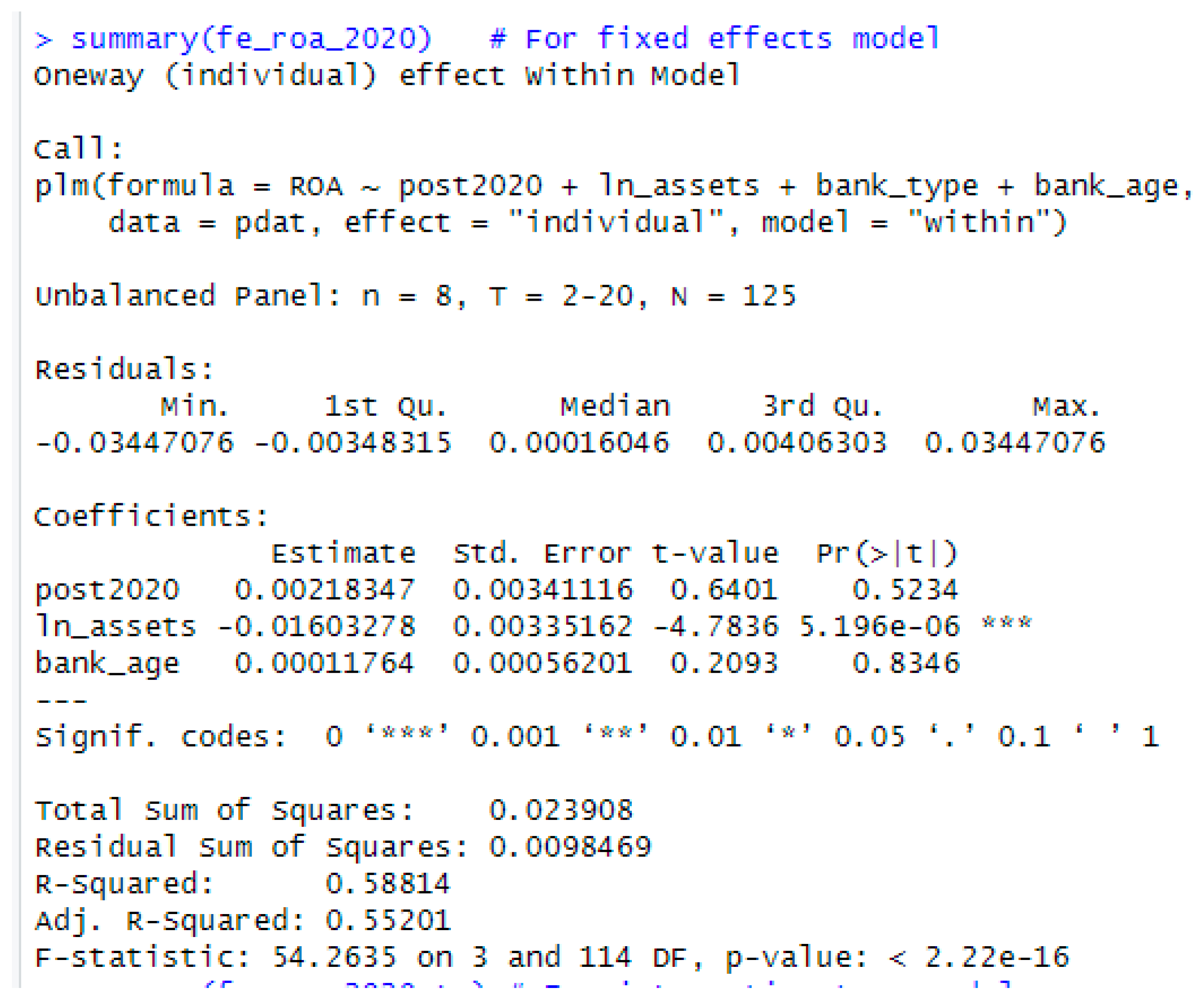
Figure A6.
ROA with Post2020 × BankType interaction.
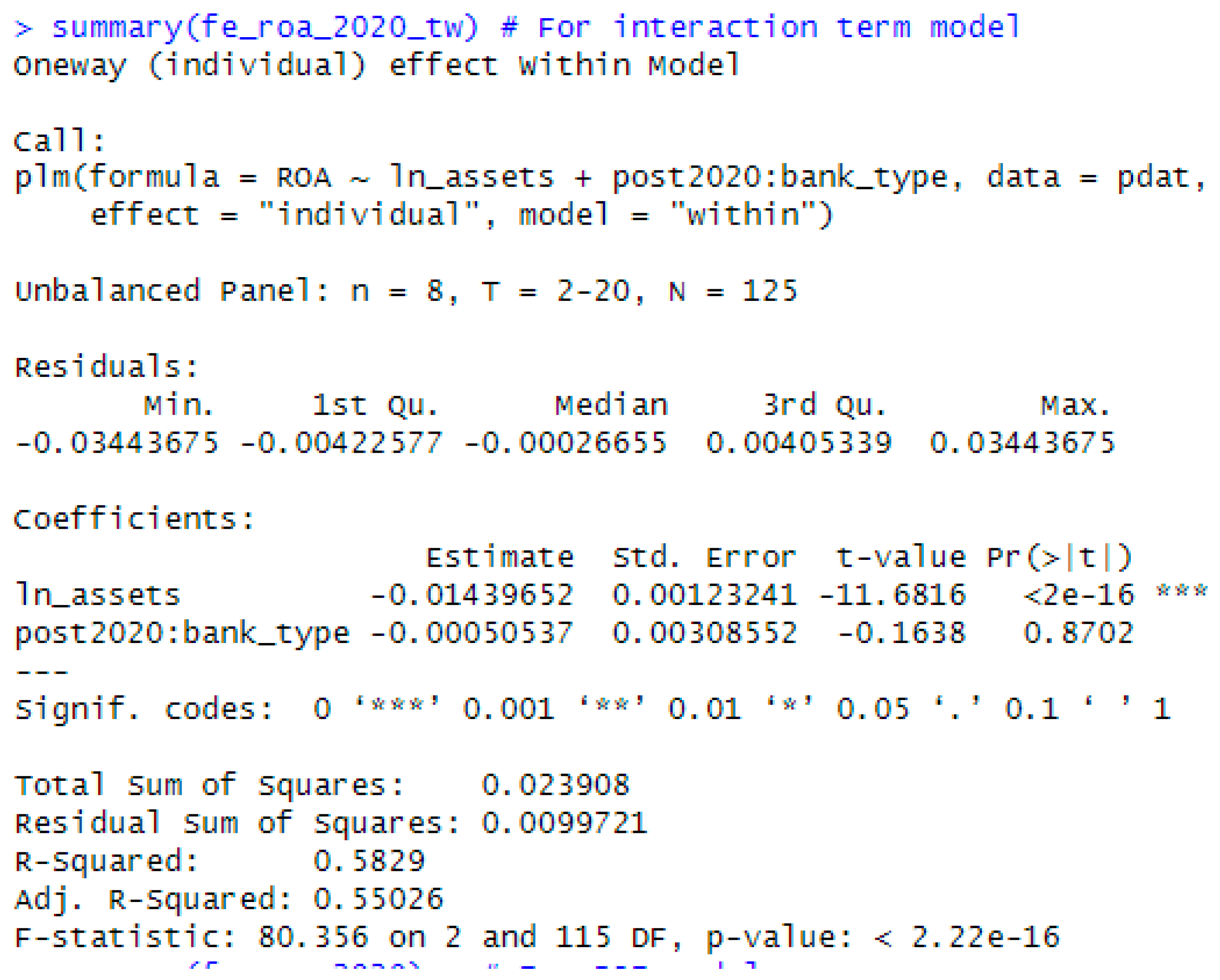
Figure A7.
FE summary – ROE, post-2020.
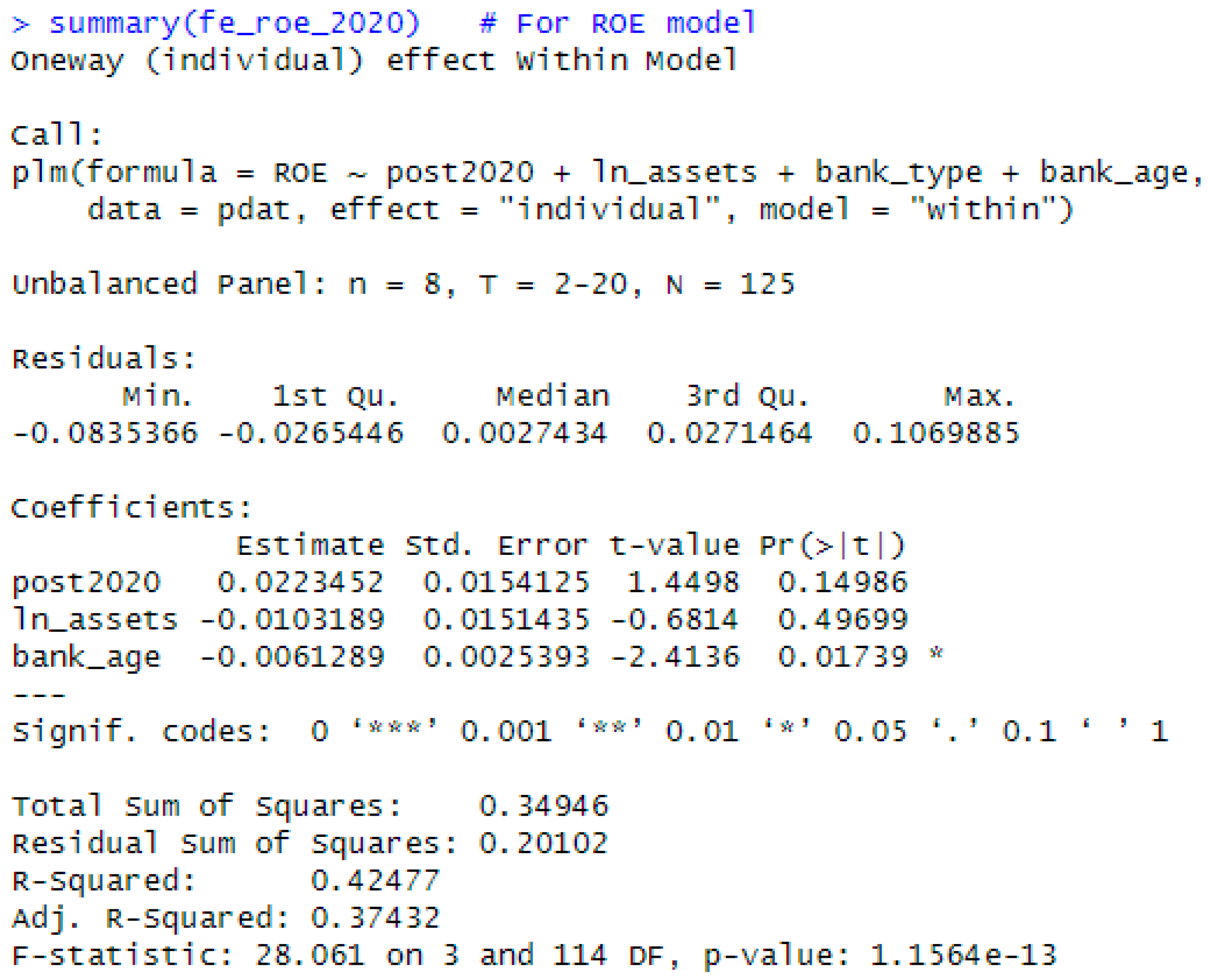
Figure A8.
Cluster-robust coefficients – ROE with interaction.
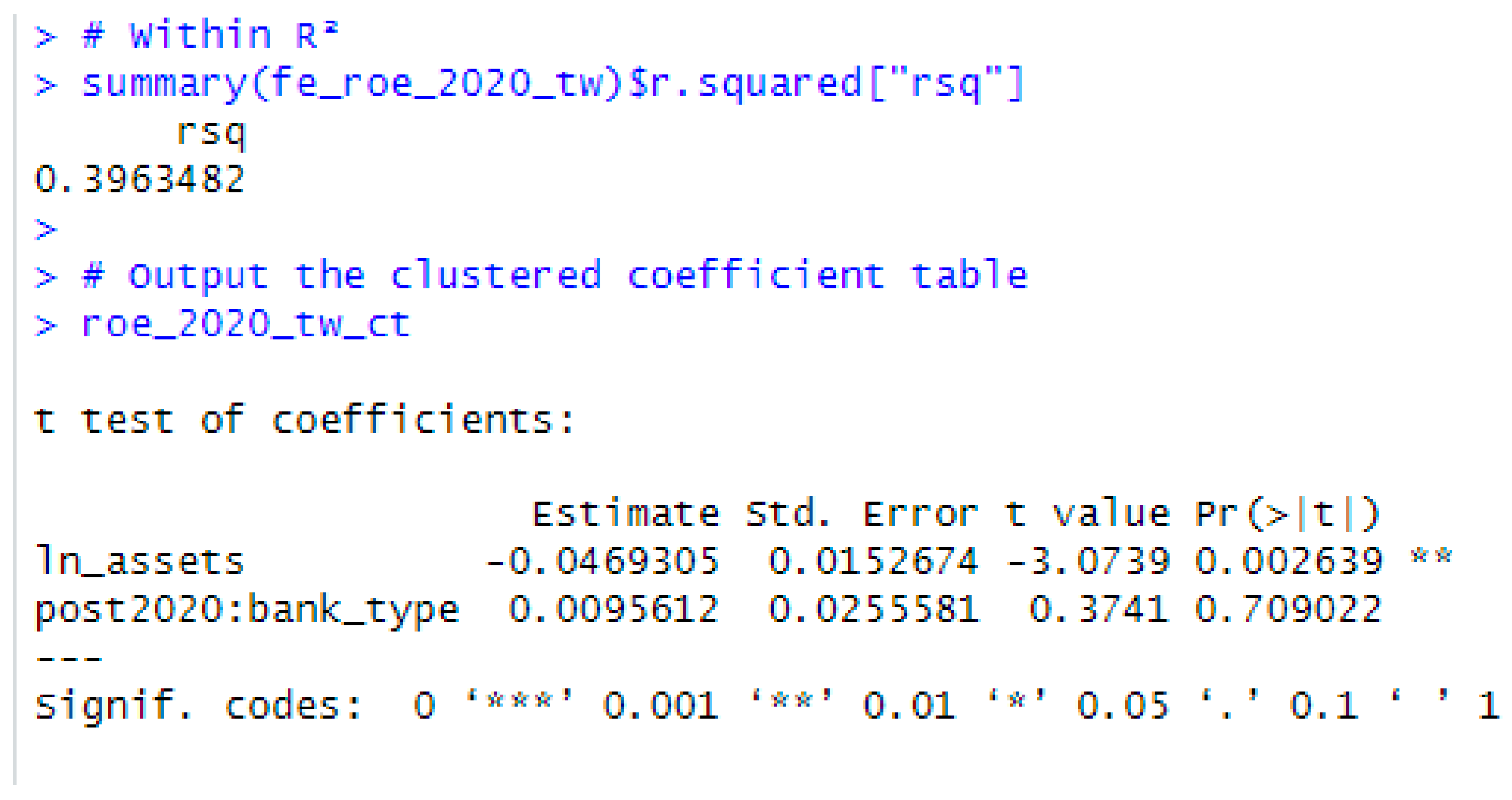
Figure A9.
Distribution of ln_assets. Log transformation reduces skewness to 0.41.
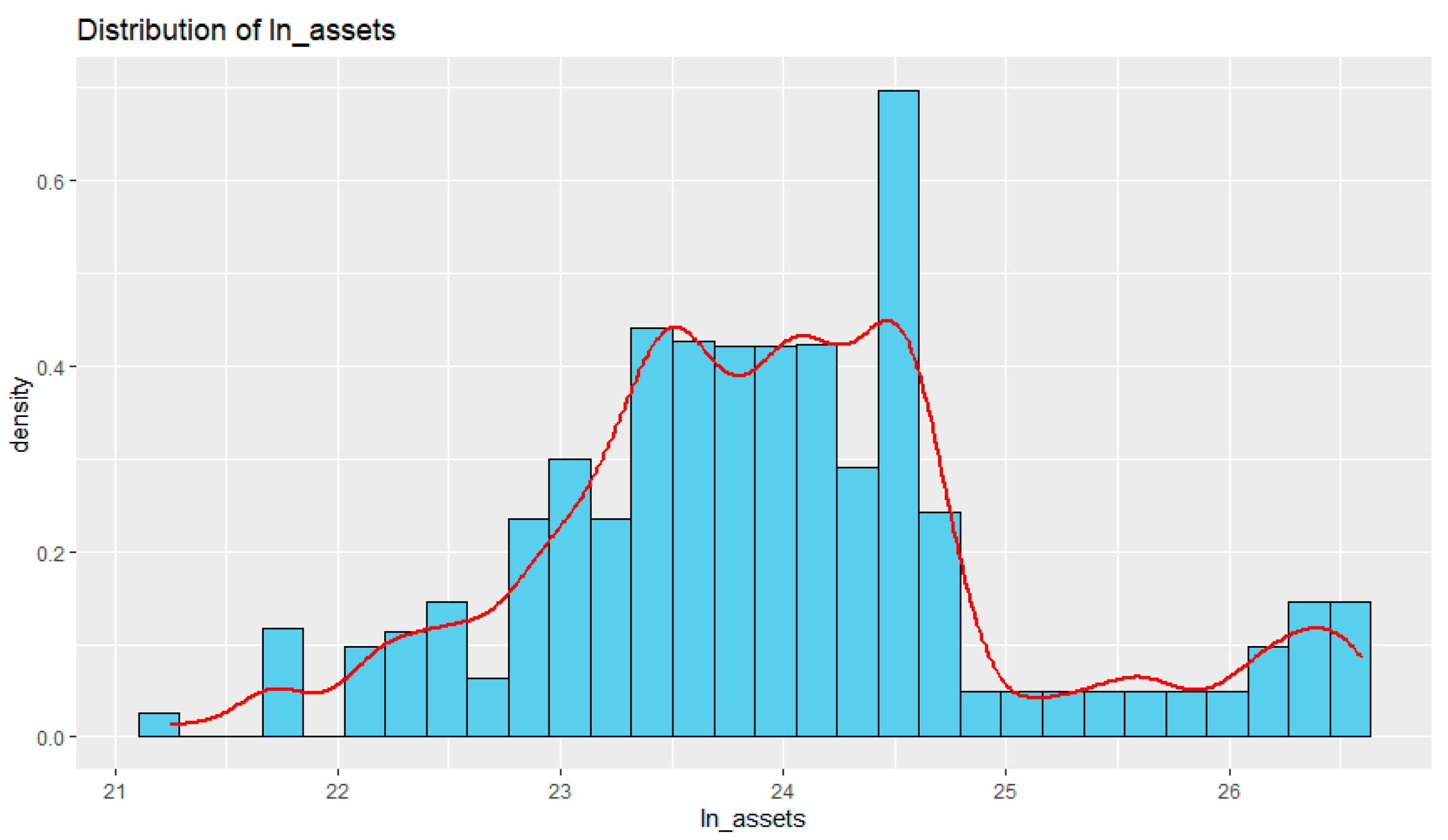
Figure A10.
Distribution of bank age.
References
- Abdul Rahman, A. A., Ur Rahiman, H., Meero, A., Amin, A. R., & Hamdan, H. (2023). FinTech innovations and Islamic banking performance: Post-pandemic challenges and opportunities. Banks and Bank Systems, 18(4), 1–14. [CrossRef]
- Abu Khalaf, B., Al-Sharkas, A., & Sarea, A. (2025). Realizing opportunities: The influence of FinTech on the success of MENA banks. Discover Sustainability, 6(1), 1–17. [CrossRef]
- Afzal, A. M., Abu Khalaf, B., Al-Naimi, M. S., & Samara, E. (2025). The impact of FinTech on the stability of Middle Eastern and North African (MENA) banks. Risks, 13(6), 1–23. [CrossRef]
- Alafeef, M. A., Kalyebara, B., Kalbouneh, N. Y., Abuoliem, N., & Bani Yousef, A. N. (2024). The impact of FinTech on banking performance: Evidence from Middle Eastern countries. International Journal of Data and Network Science, 8(2), 1–15. [CrossRef]
- AlHares, A., Dahkan, A., & Abu-Asi, T. (2022). The effect of financial technology on the sustainability of banks in the Gulf Cooperation Council countries. Corporate Governance and Organizational Behavior Review, 6(SI), 191–201. [CrossRef]
- Al-Kubaisi, M. K., & Abu Khalaf, B. (2023). Does green banking affect banks’ profitability? Journal of Governance and Regulation, 12(4), 206–216. [CrossRef]
- Alnsour, I. R. (2023). The effect of financial technology on Islamic banks’ performance in Jordan: Panel data analysis. International Journal of Data and Network Science, 7(1), 71–81. [CrossRef]
- Al-Shari, H. A., & Lokhande, M. A. (2023). The relationship between the risks of adopting FinTech in banks and their impact on the performance. Cogent Business & Management, 10(1), 1–18. [CrossRef]
- AlShouha, L., Khasawneh, O., El-qawaqneh, S., Al-Naimi, A. A., Saram, M., & Ismail, W. N. S. W. (2024). The impact of financial technology on bank performance in Arabian countries. Banks and Bank Systems, 19(2), 234–247. [CrossRef]
- Alshouha, L., Khasawneh, O., Alshannag, F., & Al Tanbour, K. (2025). Nexus between FinTech innovations and liquidity risk in GCC banks: The moderating role of bank size. Journal of Risk and Financial Management, 18(5), 1–18. [CrossRef]
- Arner, D. W., Barberis, J., & Buckley, R. P. (2016). The evolution of FinTech: A new post-crisis paradigm? Georgetown Journal of International Law, 47, 1271–1319. [CrossRef]
- Aysan, A. F., Belatik, A., Unal, I. M., & Ettaai, R. (2022). FinTech strategies of Islamic banks: A global empirical analysis. FinTech, 1(2), 206–215. [CrossRef]
- Barney, J. (1991). Firm resources and sustained competitive advantage. Journal of Management, 17(1), 99–120. [CrossRef]
- Berisha, V., & Rayfield, B. (2025). Impact of internal FinTech on bank profitability. Investment Management and Financial Innovations, 22(1), 278–291. [CrossRef]
- Boot, A., Hoffmann, P., Laeven, L., & Ratnovski, L. (2021). FinTech: What’s old, what’s new? Journal of Financial Stability, 53, 100837. [CrossRef]
- Bouteraa, M., Chekima, B., Lajuni, N., & Anwar, A. (2023). Understanding consumers’ barriers to using FinTech services in the United Arab Emirates: Mixed-methods research approach. Sustainability, 15(4), 1–23. [CrossRef]
- Butt, U., & Chamberlain, T. (2025). Performance of Islamic banks during the COVID-19 pandemic: An empirical analysis and comparison with conventional banking. Journal of Risk and Financial Management, 18(6), 1–15. [CrossRef]
- Creswell, J. W., & Creswell, J. D. (2018). Research design: Qualitative, quantitative, and mixed methods approaches (5th ed.). SAGE Publications.
- Davis, F. D. (1989). Perceived usefulness, perceived ease of use, and user acceptance of information technology. MIS Quarterly, 13(3), 319–340. [CrossRef] [PubMed]
- Demirgüç-Kunt, A., & Huizinga, H. (2010). Bank activity and funding strategies: The impact on risk and returns. Journal of Financial Economics, 98(3), 626–650. [CrossRef]
- The FinTech Times. (2024). Qatar Central Bank launches FinTech strategy. https://thefintechtimes.com/qatar-central-bank-launches-fintech-strategy/.
- Frost, J. (2023). The economic forces driving FinTech adoption in emerging markets. BIS Quarterly Review, March 2023, 45–62.
- Galeone, G., Ranaldo, S., & Fusco, A. (2024). ESG and FinTech: Are they connected? Research in International Business and Finance, 66, 102225. [CrossRef]
- Gujarati, D. N., & Porter, D. C. (2009). Basic econometrics (5th ed.). McGraw-Hill Irwin.
- Hair, J. F., Black, W. C., Babin, B. J., & Anderson, R. E. (2019). Multivariate data analysis (8th ed.). Cengage Learning.
- Kalai, L., & Toukabri, M. (2024). Risks, regulations, and impacts of FinTech adoption on commercial banks in the United States and Canada: A comparative analysis. Thunderbird International Business Review, 66(5), 554–569. [CrossRef]
- Khan, S., Khan, H. H., & Ghafoor, A. (2022). FinTech adoption, the regulatory environment and bank stability: An empirical investigation from GCC economies. Borsa Istanbul Review, 23(6), 1263–1281. [CrossRef]
- Khan, J., Dahdal, A., & Ibrahim, I. A. (2022). Sandboxes in the desert: Is a cross-border ‘Gulf Box’ feasible? Law, Innovation and Technology, 14(2), 203–229.
- Khan, S., & Al-Harby, A. S. A. (2022). The use of FinTech and its impact on financial intermediation: A comparison of Saudi Arabia with other GCC economies. Intellectual Economics, 16(2), 1–19.
- Lamey, Y. M., Tawfik, O. I., Durrah, O., & Elmaasrawy, H. E. (2024). FinTech adoption and banks’ non-financial performance: Do circular economy practices matter? Journal of Risk and Financial Management, 17(8), 1–20. [CrossRef]
- Morshed, A. (2025). Navigating tradition and modernity: Digital accounting and financial integration in family-owned enterprises in the Arab Gulf. Sustainable Futures, 7(1), 100345. [CrossRef]
- Naz, F., Karim, S., Houcine, A., & Naeem, M. A. (2022). FinTech growth during COVID-19 in MENA region: Current challenges and future prospects. Electronic Commerce Research, 22(4), 933–958. [CrossRef]
- Philippon, T. (2020). On FinTech and financial inclusion. Annual Review of Financial Economics, 12, 141–158.
- Qatar Central Bank. (2024). Third financial sector strategy 2024–2030. QCB Publications, Doha.
- Rogers, E. M. (2003). Diffusion of innovations (5th ed.). Free Press.
- Saunders, M., Lewis, P., & Thornhill, A. (2019). Research methods for business students (8th ed.). Pearson Education.
- SDK Finance. (2024). The complete list of FinTech regulations in the Middle East. https://sdk.finance/fintech-regulations-middle-east/.
- Tariq, M., Maryam, S. Z., & Shaheen, W. A. (2024). Cognitive factors and actual usage of FinTech innovation: Exploring the UTAUT framework for digital banking. Heliyon, 10(8), e35582. [CrossRef] [PubMed]
- Thakur, S., Rastogi, S., Parashar, N., Tejasmayee, P., & Kappal, J. M. (2023). The impact of ICT on the profitability of Indian banks: The moderating role of NPA. Journal of Risk and Financial Management, 16(4), 1–19. [CrossRef]
- Vives, X. (2019). Digital disruption in banking. Annual Review of Financial Economics, 11, 243–272. [CrossRef]
- Wooldridge, J. M. (2010). Econometric analysis of cross section and panel data (2nd ed.). MIT Press.
Figure 1.
Conceptual model: drivers of bank profitability in Qatar (2005–2024). The model relates the two policy-defined episodes (post-2017 regulatory reform, post-2020 digital acceleration) and their interaction with bank type to ROA and ROE, controlling for bank size, age and type.
Figure 1.
Conceptual model: drivers of bank profitability in Qatar (2005–2024). The model relates the two policy-defined episodes (post-2017 regulatory reform, post-2020 digital acceleration) and their interaction with bank type to ROA and ROE, controlling for bank size, age and type.
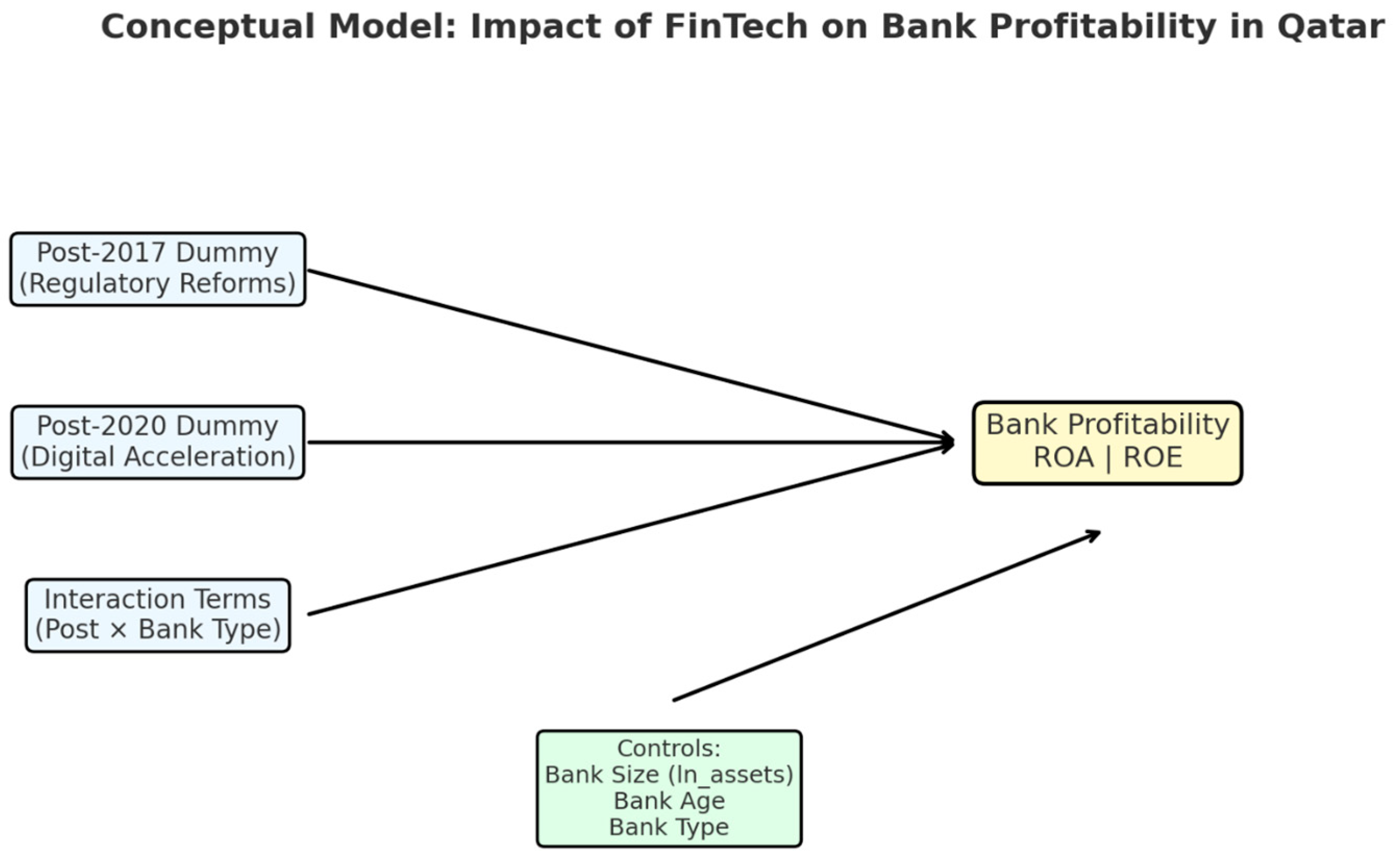

Table 1.
Qatari commercial banks included in the analysis.
| No. | Bank Name |
| 1 | Qatar National Bank QPSC |
| 2 | Qatar International Islamic Bank QPSC |
| 3 | Qatar Islamic Bank QPSC |
| 4 | Ahli Bank QPSC |
| 5 | Doha Bank QPSC |
| 6 | Commercial Bank PSQC |
| 7 | Masraf Al Rayan QPSC |
| 8 | Lesha Bank LLC (Public) |
| 9 | Dukhan Bank QPSC |
Source: Authors’ compilation from Refinitiv Eikon.
Table 2.
Descriptive statistics for key variables (2005–2024).
| Variable | Mean | SD | Median | Skew | Kurtosis | Min | Max |
| ROA | 0.0200 | 0.0100 | 0.0200 | 2.07 | 5.29 | 0.000 | 0.080 |
| ROE | 0.1600 | 0.0600 | 0.1500 | 0.18 | 0.28 | 0.020 | 0.310 |
| Assets (QAR bn) | 48.88 | 73.85 | 25.67 | 2.80 | 7.05 | 1.69 | 356.13 |
| ln_assets | 23.97 | 1.07 | 23.97 | 0.41 | 0.40 | 21.25 | 26.60 |
| Bank age (yr) | 33.89 | 13.01 | 35.00 | −0.42 | −0.10 | 1 | 60 |
N = 125 bank-year observations, 9 banks, 20 years. Source: Refinitiv Eikon; authors’ calculations.
Table 3.
Fixed-effects panel regressions for the post-2017 phase.
| (1) ROA | (2) ROE | (3) ROA – Interaction | |
| post2017 | −0.00058 | 0.0306† | – |
| (0.00345) | (0.0157) | – | |
| ln_assets | −0.0173*** | −0.0125 | −0.0138 |
| (0.00304) | (0.0219) | (0.0107) | |
| bank_age | 0.00045 | −0.00680 | – |
| (0.00054) | (0.00411) | – | |
| post2017 × bank_type | – | – | −0.00424 |
| (0.00439) | |||
| Bank fixed effects | Yes | Yes | Yes |
| Cluster-robust SE | Yes | Yes | Yes |
| Within R² | 0.587 | 0.434 | 0.119 |
| Observations (N) | 125 | 125 | 125 |
| Banks (n) | 8 | 8 | 8 |
Cluster-robust standard errors at the bank level in parentheses. Hausman χ²(3) = 138.94, p < 0.001; Breusch–Pagan LM χ²(1) = 6.28, p = 0.012. Significance: *** p < 0.01, ** p < 0.05, * p < 0.1, † p < 0.10. Source: Refinitiv Eikon; author’s estimation in R (plm).
Table 4.
Fixed-effects panel regressions for the post-2020 phase.
| (1) ROA | (2) ROA – Inter. | (3) ROE | (4) ROE – Inter. | |
| post2020 | 0.00218 | – | 0.0224 | – |
| (0.00354) | – | (0.0154) | – | |
| ln_assets | −0.0160* | −0.0144*** | −0.0103 | −0.0469*** |
| (0.00812) | (0.00386) | (0.0151) | (0.0153) | |
| bank_age | 0.00012 | – | −0.00613** | – |
| (0.00096) | – | (0.00254) | – | |
| post2020 × bank_type | – | −0.00051 | – | 0.00956 |
| (0.00467) | (0.0256) | |||
| Bank fixed effects | Yes | Yes | Yes | Yes |
| Cluster-robust SE | Yes | Yes | Yes | Yes |
| Within R² | 0.588 | 0.583 | 0.425 | 0.396 |
| Observations (N) | 125 | 125 | 125 | 125 |
| Banks (n) | 8 | 8 | 8 | 8 |
Cluster-robust standard errors at the bank level in parentheses. Hausman χ²(3) = 1697, p < 0.001; Breusch–Pagan LM χ²(1) = 18.667, p < 0.001. Significance: *** p < 0.01, ** p < 0.05, * p < 0.1. Source: Refinitiv Eikon; author’s estimation in R (plm).
Table 5.
Hypothesis outcomes.
| Hypothesis | Empirical finding | Decision |
| H1a: Post-2017 → ↑ ROA | β = −0.00058, p = 0.868 | Rejected |
| H1b: Post-2017 → ↑ ROE | β = 0.0306, p ≈ 0.054 | Partially accepted |
| H2a: Post-2020 → ↑ ROA | β = 0.00218, p = 0.539 | Rejected |
| H2b: Post-2020 → ↑ ROE | β = 0.0224, p = 0.150 | Rejected |
| H3: Islamic ≠ Conventional response | All interaction terms insignificant | Rejected |
Disclaimer/Publisher’s Note: The statements, opinions and data contained in all publications are solely those of the individual author(s) and contributor(s) and not of MDPI and/or the editor(s). MDPI and/or the editor(s) disclaim responsibility for any injury to people or property resulting from any ideas, methods, instructions or products referred to in the content. |
© 2026 by the authors. Licensee MDPI, Basel, Switzerland. This article is an open access article distributed under the terms and conditions of the Creative Commons Attribution (CC BY) license (http://creativecommons.org/licenses/by/4.0/).
Copyright: This open access article is published under a Creative Commons CC BY 4.0 license, which permit the free download, distribution, and reuse, provided that the author and preprint are cited in any reuse.


