
Submitted:
01 June 2026
Posted:
03 June 2026
You are already at the latest version
Abstract
The endothelium is currently considered a complex endocrine "organ" actively involved in the regulation of vascular tone, blood coagulation, inflammatory responses, angiogenesis and other processes. Acting as a physical barrier between blood and tissue, the endothelium continuously integrates signals from the bloodstream and surrounding tissues, thereby fine-tuning numerous physiological processes. Endothelial dysfunction is a key factor in the development of many cardiovascular diseases and metabolic disorders, such as lysosomal storage diseases (in particular, sphingolipidoses). Sphingolipidoses are characterized by the accumulation of certain sphingolipid groups in the lysosomal compartment due to inborn errors of metabolism. This review summarizes current understanding of the role of endothelial dysfunction (ED) in the pathogenesis of lysosomal storage diseases such as Gaucher, Niemann-Pick and Fabry diseases, as well as the role of accumulated sphingolipids in the development of ED. Particular attention is paid to how the accumulation of sphingolipids (glucocerebroside, sphingomyelin and globotriaosylceramide) disrupts the balance of signaling molecules - ceramide and sphingosine-1-phosphate (S1P).
Keywords:
sphingolipids
; sphingolipidoses
; endothelial dysfunction
; S1P
; ceramide
; Gaucher disease
; Fabry disease
; Niemann–Pick disease
1. Introduction
The endothelium is an actively functioning "endocrine organ" involved in the regulation of vascular tone, hemostasis, immune response, angiogenesis, etc [1]. The endothelium is formed by a monolayer of polarized cells attached to a basement membrane rich in collagen types IV and V, fibronectin and laminin, etc. Adhesion of endothelial cells to the basement membrane is ensured by integrin receptors of various types [2]. In turn, a key component of the apical surface of endothelial cells is the glycocalyx - a multilayer structure with a thickness ranging from several hundred nanometers to 8 μm, consisting of proteoglycans and glycosaminoglycans, mainly heparan sulfate. The functions of the glycocalyx are extremely diverse, for example, it acts as a shear stress sensor between the blood and the vessel wall, forms a selective barrier that controls the adhesion and transfer of substances, fluids, and cells from the blood through the vascular wall, etc [3]. Disruption of the integrity of the glycocalyx, for example, in the Fabry disease model, is accompanied by increased adhesion of monocytes to the endothelial cell monolayer [4].
Endothelial barrier and transport functions
The most important function of the endothelium is to create a barrier between the blood and tissues. This function is achieved primarily through a complex system of intercellular contacts. There are three types of contacts between endothelial cells: adherens junctions, tight junctions and gap junctions [5,6]. These junctions provide mechanical communication between cells by linking the actin cytoskeletons of adjacent endothelial cells and are also involved in regulating vascular wall permeability and transmitting intracellular signals. However, the endothelial barrier is selectively permeable to certain substances and other cells. Barrier permeability is achieved through the restructuring of intercellular endothelial contacts. In the context of sphingolipid metabolism disorders, it is interesting to note that the primary regulation of vascular permeability is realized through receptors for sphingosine-1-phosphate [7], the role of which in endothelial function will be discussed below.
Endothelial secretory function and regulation of vascular tone
The endothelium synthesizes a large number of bioactive molecules. These include vasoactive factors, the key one being endothelial NO synthase (eNOS), as well as prostacyclin, endothelial-derived hyperpolarizing factor (EDHF), endothelin and others. However, the secretory function of the endothelium is not limited to the synthesis of vasoactive molecules. Weibel-Palade bodies have been shown to contain a wide range of cytokines and chemokines (IL-1, IL-5, IL-6, IL-8, IL-11, and IL-15, granulocyte-macrophage colony-stimulating factor GM-CSF, CCL2, etc.) [8].
Hemostasis
Under normal physiological conditions, the endothelium performs an anticoagulant function. This process involves several mechanisms, including the binding of heparin sulfate to antithrombin circulating in the blood plasma, the secretion of tissue factor pathway inhibitor (TFPI) and the synthesis of thrombomodulin, which, in combination with thrombin, activates protein C [9]. In addition to maintaining blood flow, the endothelium plays a pivotal role in thrombus formation under appropriate conditions.
Angiogenesis
The formation of new vessels can occur through two pathways: vasculogenesis and angiogenesis. Vasculogenesis is characterized by the formation of new vessels during embryonic development. Angiogenesis, in turn, is the process of forming new vessels from existing ones, which enables the expansion and remodeling of the vascular network [10]. The following stages can be distinguished during angiogenesis: endothelial activation, subsequent inhibition of endothelial cell migration and proliferation and restoration of intercellular contacts [10].
Sphingolipids in the endothelium
Sphingolipids (SL) are a class of lipids composed primarily of sphingosine linked by an amide bond to a fatty acid. De novo SL synthesis begins in the endoplasmic reticulum membrane with the condensation of L-serine and a saturated acyl-coenzyme A, typically palmitoyl-CoA, by serine palmitoyltransferase (SPT) (Figure 1). The resulting 3-ketosphinganine is converted to sphinganine by 3-ketosphinganine reductase (3KSR). Sphinganine then undergoes condensation with acyl-CoA by ceramide synthase (CERS) to form dihydroceramide. Dihydroceramide, in turn, is converted to ceramide by dihydroceramide desaturase (DES). The subsequent fate of ceramide involves various pathways. Part of the ceramide is phosphorylated by ceramide kinases to ceramide 1-phosphate. The second pathway of ceramide metabolism is its breakdown into sphingosine, followed by phosphorylation to sphingosine 1-phosphate. In addition, sphingomyelin and glycosphingolipids can be formed [7].
Sphingolipids perform a variety of functions in the endothelium, which have been described in detail in a number of studies [11,12,13].
Sphingosine-1-phosphate (S1P), the most studied bioactive sphingolipid, plays a crucial role in the regulation of endothelial lining permeability, lymphocyte migration, angiogenesis, etc [7]. The main pathway for S1P synthesis in endothelial cells is de novo synthesis: phosphorylation of sphingosine by sphingosine kinases SphK1 and SphK2 (Fig. 1). Synthesized S1P is transported via SPNS2, entering the bloodstream. Because S1P has hydrophobic properties, it is transported in association with apolipoprotein M in high-density lipoproteins or albumin. It is then able to bind to specific S1PR receptors types 1-5 on the surface of endothelial cells and mediate auto- and paracrine effects.
The role of S1P in regulating barrier function was first demonstrated in 2000 in a study showing that mice deficient in S1PR1 (EDG-1) died due to increased vascular permeability [14]. Additional knockout of S1PR2 and S1PR3 led to an increase in this phenotype. However, there are studies showing that knockout of S1PR1 did not lead to death of experimental mice, but caused an increase in vascular permeability [15]. It was also shown that incubation of endothelial cells with exogenous S1P led to an increase in endothelial barrier properties [16]. Active signaling through S1PR leads to rapid activation of Rac GTPase, which causes a reorganization of the cortical actin network and an improvement in barrier properties. Another study demonstrated that activation of the small GTPases Rac and Rho is necessary for S1P-induced adherens junction assembly [17]. However, Feng M, et al [18], who studied the effect of the Sphk1/S1P pathway on the blood-brain barrier, obtained conflicting data. It was shown that cerebral hemorrhages in humans and mice are accompanied by increased SPHK1 expression and S1P plasma levels. Furthermore, Sphk1 inhibition resulted in decreased hematoma and cerebrospinal fluid volume, stabilization of tight junctions between endothelial cells, and a decrease in endothelial transcytosis. Thus, the role of S1P in maintaining the endothelial barrier is controversial and requires further investigation.
The involvement of S1P in the regulation of vascular tone has also been described in the literature. S1P is primarily involved in mechanotransduction signaling in response to changes in blood flow. For example, mice knockout of the sphingosine 1-phosphate transporter gene SPNS2 exhibited reduced levels of blood flow-mediated vasodilation [19]. The role of S1P in regulating vascular tone was also studied by Kerage D, et al [20], who demonstrated activation of endothelial NO synthase (eNOS) in response to intravascular administration of S1P. eNOS, in turn, stimulates the production of NO, which is a vasodilator. However, some S1P can penetrate the tunica media, where it causes smooth muscle contraction and vasoconstriction. These data indicate a bidirectional effect of S1P on the regulation of vascular lumen.
In addition, S1P is involved in other endothelial functions, such as thrombus formation, migration of other cell types through the endothelial lining and angiogenesis. S1P has been shown to modulate PAR1-AP-mediated platelet aggregation [21]. S1P also plays a role in lymphocyte migration and, consequently, the development of the immune response. Because S1P concentrations in blood are higher than in lymph, this gradient promotes S1PR1-dependent lymphocyte migration into the blood or lymph [22]. Sphingosine signaling in the endothelium during angiogenesis is described in detail by Argraves KM, et al [23].
The concept of endothelial dysfunction (ED) and the sphingolipids’ role in the ED development
The concept of endothelial dysfunction encompasses a variety of processes that lead to endothelial dysfunction. ED underlies many cardiovascular [24,25] and metabolic diseases [26]. The causes of dysfunction are extremely diverse and range from hypertension, diabetes and hyperlipidemia to factors such as smoking and obesity. Aging, inflammation, oxidative stress, impaired autophagy, and other factors also play a significant role in the development of ED. Despite the diversity of ED causes, common stages of its development can be identified. Early events typically include endothelial activation, remodeling of intercellular contacts, increased vascular permeability, and impaired endothelial secretory activity (e.g., abnormal NO secretion). As the dysfunction progresses, there is an increase in the prothrombotic state, followed by thrombus formation, atherosclerosis, aging and ultimately endothelial cell death [27].
Thus, a number of the most common disturbances characteristic of endothelial dysfunction can be identified: impaired autophagy and state of lysosomal compartment, oxidative stress, acquisition of a senescent phenotype and, in the context of sphingolipidoses, alterations in the sphingolipid rheostat [28]. In this paper, the term "sphingolipid rheostat" refers to the regulated balance of sphingolipid anabolism and catabolism, primarily two interconvertible signaling lipids: ceramide and sphingosine-1-phosphate (S1P). Ultimately, these disturbances lead to functional changes, such as increased adhesion or impaired NO synthesis.
Alterations in the sphingolipid rheostat underlie ED in coronary atherosclerosis. Certain lipids, such as ceramide 18:0, ceramide 16:0, and ceramide 24:1, have been shown to participate in inflammatory, thrombotic, and low-density lipoprotein (LDL)-mediated atherogenesis pathways [29]. Conversely, S1P levels are reduced in patients with coronary artery disease [30]. Obesity is associated with suppressed de novo synthesis of ceramides and S1P, leading to the activation of proinflammatory genes [11].
Impaired autophagy has been widely described in diseases such as atherosclerosis and diabetes mellitus [31,32]. It is worth noting that patients with diabetes (mainly type 2) exhibit dyslipidemia, characterized by triglyceride accumulation, low HDL levels, and high LDL levels due to impaired lipophagy [31]. In lymphatic endothelial cells, impaired lipophagy stimulates lipid droplet accumulation, as well as decreased mitochondrial ATP synthesis and leads to angiogenesis defects [33]. It has also been shown that mechanical stress, such as that caused by portal hypertension, can lead to excessive activation of autophagy, causing ferroptotic cell death [34]. The state of the lysosomal compartment also changes in endothelial dysfunction. It has been shown that in endothelial dysfunction induced by incubation with advanced glycation end products, the first stage is characterized by lysosome permeabilization, resulting in the accumulation of GM3, GD1b, and GT1b gangliosides and apoptosis. Cells that survive the initial apoptotic crisis enter a state of stress-induced senescence after 3-5 days. This is manifested by cell enlargement, cell cycle retardation and the appearance of a senescence marker, senescence-associated β-galactosidase [35].
The acquisition of a mature phenotype by endothelial cells exacerbates some diseases [36]. For example, it has been shown that elderly patients with metabolic-associated steatohepatitis (MASLD) have a more severe course of the disease and a higher risk of cirrhosis compared to younger individuals [37,38]. This is due to the fact that sinusoidal liver endothelial cells begin to acquire a senescent phenotype quite early, associated with oxidative stress, triglyceride accumulation, inductive changes, etc. Transplantation of senescent endothelial cells into healthy mice induces bone loss and metabolic dysfunction leading to obesity, while elimination leads to a reversal of the proinflammatory environment and an improvement in the metabolic state [39].
The final stage of endothelial dysfunction is cell death. Various regulated cell death pathways may be involved in the development of endothelial dysfunction, for instance, apoptosis (including mediated autophagy), necroptosis, pyroptosis, entosis, ferroptosis, ferroautophagy, parthanatosis, netotic cell death, lysosome-dependent cell death, alkaliptosis, oxaptosis, cuproptosis and panoptosis [40].
2. Endothelial Dysfunction in Gaucher Disease
Gaucher disease is a rare disorder belonging to a group of lysosomal storage disorders. It is caused by a mutation in the glucocerebrosidase gene GBA1 (Figure 2). This mutation leads to the accumulation of glucocerebroside (glucosylceramide or Gb1), its deacetylated form lyso-Gb1 and other substrates in lysosomes [41]. The incidence of Gaucher disease is 1 in 50,000–100,000 live births, but in the Ashkenazi Jewish population, this rate is significantly higher—approximately 1 in 850 [42].
Traditionally, several subtypes of Gaucher disease are distinguished depending on the time of onset and clinical manifestations. The adult type (GD-1) is characterized by hepatosplenomegaly, bone deformities and cytopenias. The childhood type (GD-2) has the most severe manifestations, including hepatosplenomegaly and significant neurological impairment. Patients with the juvenile type (GD-3) may experience symptoms characteristic of the first two types, albeit less severe. Life expectancy in GD-3 is higher compared to GD-1 and GD-2 [44]. The most characteristic cardiovascular manifestations in Gaucher disease are restrictive cardiomyopathy [45], leading to heart failure, thrombocytopenia and, less commonly, anemia and leukopenia [46]. Patients with Gaucher disease are also noted to have a tendency to subcutaneous hemorrhages, which are usually associated with thrombocytopenia and coagulation disorders [42]. However, this may be directly related to the state of the endothelial barrier, but research on this topic is extremely limited.
Endothelial cell changes in GD are observed at both the morphological and functional levels. It is currently known that Gaucher disease is associated with an increase in the number of capillaries in the dermis and changes in capillary architecture. Ultrastructural analysis of skin biopsies from patients with GD revealed changes in the morphology of endothelial cells: cell size increases, the membrane becomes more tortuous and uneven, the volume of the ER increases, intercellular contacts become loosened and a large number of electron-dense granules accumulate in the cytoplasm [47].
The absence of a functional glucocerebrosidase enzyme leads to changes in the sphingolipid rheostat of cells. Primarily, there is an accumulation of the main substrate of glucocerebrosidase, glucosylceramide (Gb1) [48]. Glucosylceramide can be deacetylated to lyso-Gb1, whose concentration is also elevated in GD [49]. In addition, increased levels of ceramide, trihexosylceramide (THC), GM3, GM2, GM1 and a significant decrease in the level of GT gangliosides in the spleen, liver and brain are noted [41,50] . It is worth noting that increased ceramide levels are not an obvious manifestation of GD. Since ceramide is a product of glucosylceramide catabolism, decreased ceramide levels are expected with GBA1 deficiency. This may suggest de novo activation of the ceramide synthesis pathway or other pathways.
An increase in S1P concentrations has also been observed in Gaucher disease models [51]. In parallel, a paper by Salah NY, et al [52], demonstrated a significant increase in VEGF concentrations in the plasma of patients with Gaucher disease compared to controls. Based on these findings, the following molecular mechanism can be proposed (Figure 3). In the absence of functional β-glucocerebrosidase (GBA1), Gb1 cannot be broken down into glucose and ceramide in lysosomes. However, it can be deacylated in the cell cytoplasm to lyso-Gb1 by ceramidase. Lyso-Gb1 can then be converted to sphingosine (Sph) by non-lysosomal glucocerebrosidase (GBA2). Sphingosine is then phosphorylated by sphingosine kinases (Sphk1/Sphk2) to S1P. S1P exits the cell and enters the blood, where it can exert auto- and paracrine effects on other cells. Therefore, the elevated S1P levels observed in the study [41] may be associated with activation of the compensatory Gb1 metabolism pathway.
In neighboring cells, S1P binds to S1PR receptors (S1PR1, 2, 3 are predominantly present on the surface of endothelial cells). This can trigger various signaling pathways. For instance, the PI3K/Akt pathway, on the one hand, leads to increased synthesis of the vasodilator eNOS, on the other hand, regulates the mTOR complex. In this case, the increased VEGF ligand levels in patients with Gaucher disease are understandable [52]. Immunoprecipitation and immunocytochemistry have shown that S1PR1 and VEGFR2 receptors form physical functional complexes on the cell surface [53]. Activated PKC-beta 1 phosphorylates ERK1/2 kinases, which in turn induce the synthesis of VEGF-A. VEGF-A enters the blood plasma and affects cells through auto- and paracrine mechanisms. By binding to its receptors (mainly VEGFR1 and VEGFR2), VEGF-A, for example, triggers the PI3K/Akt pathway, leading to the synthesis of eNOS. However, convincing data on changes in the expression of VEGFR receptors on the surface of endothelial cells in Gaucher disease are lacking. Assuming that VEGFR levels were unchanged, this may explain why the mouse model of [41] showed a reduction in vessel length and volume, as angiogenesis was not induced.
Impaired autophagy is one of the key mechanisms for the development of pathology in GD [54]. It is currently known that glucocerebrosidase deficiency is associated with increased levels of p62 protein, a participant in selective autophagy, and LAMP2 protein, a lysosomal marker, in mouse neurons and astrocytes [55,56]. Other authors have noted decreased levels of LAMP1 and LAMP2 proteins in iPSC cells derived from fibroblasts of GD patients, which may indicate depletion of the lysosomal compartment [56]. The levels of key autophagy proteins, such as the Atg5/12 complex [57], also decreased. In the absence of the Atg5/12 complex, phosphatidylethanolamine does not bind to LC3I, and therefore normal autophagosome formation does not occur. Data on the content of the LC3 protein itself (LC3II/LC3I) are somewhat contradictory. Both an increase in LC3 [56] and a decrease in it have been shown in neuronal cells deficient in glucocerebrosidase [57]. Furthermore, neuronal cells exhibit impaired expression of TFEB, a transcription factor that induces the expression of autophagy genes [56]. Based on these data, it can be concluded that autophagy is blocked at early stages in GD. Direct evidence confirming similar disturbances in endothelial cells in GD was not found. This issue requires further study.
These molecular changes lead to ED. A scratch test on a monolayer of HUVEC cells incubated with exogenous lyso-Gb1 demonstrated a significant reduction in wound closure and cytokinesis impairment, which may lead to impaired angiogenesis and ED. This is consistent with a decrease in vessel length and volume in the brain of model mice [41]. The mechanisms by which deacylated monohexosylceramide molecules influence angiogenesis remain unclear. β-glucosylsphingosine and β-galactosylsphingosine are known to stimulate phospholipase A2 (PLA2) activity, which in turn synthesizes lysophosphatidylcholine, an antiangiogenic factor. These molecules can also inhibit the synthesis of the proangiogenic factor thrombin [41]. Endothelial cell death likely occurs through the activation of RIPK3 and MLKL, two major effectors of necroptosis, as in macrophages in LBP [58].
3. Endothelial Dysfunction in Niemann-Pick Disease Types A, B and A/B
Niemann-Pick disease is a lysosomal storage disorder associated with a mutation in the acid sphingomyelinase (SMPD1) gene. Deficiency of this enzyme leads to intracellular accumulation of sphingomyelin and its aberrant metabolites (Figure 4). It is worth noting that Niemann-Pick disease types A, A/B and B are associated with abnormalities in the SMPD1 gene, while type C is associated with a mutation in the NPC1 or NPC2 gene and is not discussed in this review [59].
The main symptoms of Niemann-Pick disease are hepatosplenomegaly, liver cirrhosis, thrombocytopenia, neurological manifestations (dysphagia, ataxia, dystonia), depression, psychosis and many others [59]. Cardiovascular manifestations are somewhat more pronounced in Niemann-Pick disease type B and include coronary artery disease, bleeding and heart failure [60].
Endothelial dysfunction in NPD has been described very fragmentarily. Morphological changes in NPD type A/B include numerous layered myelin-like granules in the cytoplasm of endothelial cells [61]. A similar picture is observed in NPD type C [62]. The primary accumulating substrate in acid sphingomyelinase deficiency is sphingomyelin. Other sphingomyelin-derived lipids, such as ceramide and its derivatives – sphingosine, lyso-SM, glycosphingolipids and bis-monoacylglycerol phosphate – also accumulate [63]. Concurrently, increased cholesterol, LDL, triglyceride levels are observed, while HDL level decreases [64]. The accumulation of cholesterol in lysosomes, in addition to sphingomyelin, is not fully understood but may be related to sphingomyelin's high affinity for cholesterol. This leads to impaired cholesterol efflux from lysosomes and its accumulation [65]. A state of "autophagic stress" is characteristic of various cell types in NPD. It was found that in NPD type A, there is an accumulation of autophagosomes and ubiquitinated proteins in fibroblasts and brain cells [66], while in lymphocytes in NPD type B, autophagosomes also accumulated, and lipophagy and mitophagy were impaired [67]. More recent studies have linked impaired autophagic flux to the activation of c-Abl kinase, which regulates the transcription of p73, HDAC2, APP and TFEB, one of the autophagy activators [68]. The authors suggest that the accumulation of sphingomyelin and other lipids may directly activate c-Abl in NPD. Furthermore, in vascular smooth muscle cells, acid sphingomyelinase deficiency caused the accumulation of early autophagosomes and prevented their fusion with lysosomes [69]. Sphingomyelinase deficiency inhibits mTOR, which can no longer phosphorylate the downstream kinase P70-S6k, and TFEB is dephosphorylated and translocated to the nucleus, where it activates autophagy gene expression [70]. Neurons from SMPD1 knockout mice demonstrated normal levels of early autophagy proteins, such as the Atg5/Atg12 complex, and increased levels of LC3II, LAMP1 and LAMP2 proteins. These results, together with the increased size of autophagosomes and lysosomes, indicate a disruption in the late stages of degradation. Similar data were obtained in fibroblasts from patients with type A NPP [66]. However, we found no articles directly demonstrating impaired autophagy in endothelial cells in NPD. Therefore, further research on this topic is needed.
The low substrate degradation capacity in NPD may be explained by impaired lysosomal protease activity. Sphingomyelinase deficiency has been shown to result in lysosome permeabilization and leakage of cathepsin B, a cysteine protease, into the cellular cytosol [66].
4. Endothelial Dysfunction in Fabry Disease
Fabry disease is a rare X-linked disorder caused by a mutation in the α-galactosidase A (GLA) gene. This enzyme plays a key role in sphingolipid metabolism, hydrolyzing the α(1→4) bonds of globotriasylceramide Gb3 (Figure 5). Gb3 is an important component of cell membranes and is involved in intracellular signaling and intercellular communication. Deficiency of functional α-galactosidase A leads to the accumulation of Gb3, as well as its deacetylated form, lyso-Gb3, in various tissues and organs [73].
Clinical manifestations of Fabry disease include neurological pain, acroparesthesia, angiokeratomas, anhidrosis and verticillary corneal opacity [74]. Cardiovascular manifestations of the disease deserve special attention. These include left ventricular hypertrophic cardiomyopathy, less commonly right ventricular hypertrophy, fibrosis, heart failure, arrhythmia and angina pectoris [75,76]. Endothelial dysfunction has been described in more details than in Gaucher disease.
Morphological changes in endothelial cells in Fabry disease have long been described. A study by Nepomnyashchikh GI, et al [77], revealed the accumulation of electron-dense granules, fibrillar structures and specific granules with a regular architecture in the cytoplasm of endothelial cells. A similar phenotypic picture was shown in the work of Najafian B, et al [78]. Structural changes in cells also affect the glycocalyx of endothelial cells. In cells with the GLA gene knockout, a decrease in the content of L-fucose and N-acetylglucosamine – the main components of the glycocalyx – and, consequently, glycocalyx thinning were shown [4]. Moreover, exposure of endothelial cells to exogenous lyso-Gb3 leads to the same result. Glycocalyx degradation causes increased adhesion of other cell types, such as monocytes, to the endothelial cell monolayer. These data are consistent with previous results showing increased expression of adhesion molecules (such as ICAM-1, VCAM-1, and E-selectin) in GLA deficiency [79].
In FD, changes in sphingolipid levels are observed directly in cells, as well as in blood plasma. Primarily, the substrate of α-galactosidase A, Gb3, accumulates [80] and this accumulation occurs at the level of the endoplasmic reticulum membrane [81]. Moreover, the accumulation of Gb3 can induce the NF-κB signaling pathway, its downstream targets [80], and other signaling pathways. Interestingly, the endothelial dysfunction observed in FD is primarily due to Gb3 accumulation, and not α-galactosidase A deficiency [82]. However, Gb3 can be metabolized by deacetylation to lyso-Gb3. Consequently, lyso-Gb3 concentrations are also elevated in FD [83]. Additionally, glycosphingolipid levels, such as galabiosylceramide Gb2, may be elevated [84]. Lyso-Gb3 and S1P levels are significantly elevated in the plasma of patients with Fabry disease [83,85].
Autophagy impairment is also a key step in the development of endothelial dysfunction in FD. Lyso-Gb3 has been shown to induce autophagy in ARPE-19 human retinal pigment epithelial cells, with the primary type being endoplasmic reticulum-selective autophagy. Furthermore, lyso-Gb3 is capable of inducing inflammation and necroptosis in an autophagy-dependent manner [86]. The same study also found that the culture medium from ARPE-19 cells incubated with exogenous lyso-Gb3 induced endothelial necroptosis and inflammation in HUVEC cells. These data suggest the ability of lyso-Gb3 to activate autophagic, necroptotic, and inflammatory pathways, as well as the possible role of the microenvironment in the development of ED. Other studies conducted on HEK293T cells expressing mutant GLA describe an increase in the LC3-II/LC3-I ratio and p62 expression, as well as increased autophagosome levels [87]. However, the number of autophagosomes in cells with mutant GLA does not change over time, which may indicate impaired autophagosome-lysosome fusion. Lysosome status is also altered by α-galactosidase A deficiency. Increased LAMP2 protein and an increased number of LysoTracker-positive dots are observed in cells overexpressing mutant forms of GLA [87].
The pathological effect is not only caused by sphingolipids (Gb3, lyso-Gb3), but also by the misfolded enzyme accumulating in the ER lumen. Elevated levels of mutant α-galactosidase A lead to chronic ER stress and a response to misfolded proteins [88].
These phenotypic and molecular changes lead to functional alterations in the endothelium. GLA-deficient endothelial cells are unable to form tubular structures in Matrigel, a classic model of angiogenesis [89]. Furthermore, decreased expression of angiogenic factors (VEGF-A, ANG2) and increased expression of antiangiogenic factors (THBS1 and THBS2) have been demonstrated. This indicates active inhibition of angiogenesis in FD. Moreover, the observed decrease in VE-cadherin and eNOS may cause increased vascular permeability and the appearance of multiple angiokeratomas. Aberrant NO synthase synthesis, as well as increased production of reactive oxygen species (ROS), lead to oxidative stress [90]. GLA deficiency has also been shown to increase the expression of cyclooxygenase-2 (COX-2), a proinflammatory factor that increases inflammation in the vascular region [90]. These data are consistent with the results of a histological study demonstrating the presence of perivascular inflammation in FD [91].
5. Conclusions
Thus, as demonstrated above, lysosomal storage diseases (Gaucher, Fabry and Niemann-Pick diseases) are characterized by ED. This dysfunction manifests itself in both morphological and functional changes in the endothelial lining, which can be summarized in Table 1. The morphological changes in these storage diseases are quite similar: an increase in cell size is observed, as well as the formation of numerous granules in the cytoplasm. These changes are explained by the physical accumulation of substrates in lysosomal and other cellular compartments. However, the molecular and functional changes are more diverse and require further study. Understanding the mechanisms of ED and the role of sphingolipids in this process may be an important step in the development of diagnostic and therapeutic approaches to sphingolipidoses.
Funding
This research received no external funding.
Institutional Review Board Statement
Not applicable.
Informed Consent Statement
Not applicable.
Data Availability Statement
No new data were created or analyzed in this study. Data sharing is not applicable to this article.
Conflicts of Interest
The authors declare no conflict of interest.
Abbreviations
The following abbreviations are used in this manuscript:
| ED | Endothelial disfunction |
| eNOS SL SPT 3KSR CERS DES PLPP CERK SMPD SGMS ASAH SPHK SGPP UGCG S1P SPNS2 S1PR1 S1PR2 S1PR3 GBA1 PI3K Akt mTOR VEGF-A VEGFR1 VEGFR2 LAMP1 LAMP2 SMPD1 GLA FD GD HDL LDL NPD |
Endothelial NO synthase Sphingolipids Serine palmitoyltransferase 3-keto-steroid reductase Ceramide synthase Sphingolipid delta(4)-desaturase Phosphate phosphohydrolase Ceramide kinase Sphingomyelin phosphodiesterase Sphingomyelin synthase Acid ceramidase Sphingosine kinase Sphingosine-1-phosphate phosphatase Ceramide glucosyltransferase Sphingosine-1-phosphate Sphingosine-1-phosphate transporter SPNS2 Sphingosine 1-phosphate receptor 1 Sphingosine 1-phosphate receptor 2 Sphingosine 1-phosphate receptor 3 Glucocerebrosidase Phosphatidylinositol 3-kinase Protein kinase B Serine/threonine-protein kinase mTOR Vascular endothelial growth factor A Vascular endothelial growth factor receptor 1 Vascular endothelial growth factor receptor 2 Lysosome-associated membrane glycoprotein 1 Lysosome-associated membrane glycoprotein 2 Acid sphingomyelinase α-galactosidase A Fabry disease Gaucher disease High-density lipoproteins Low-density lipoprotein Niemann-Pick disease |
References
- Mallick, R.; Duttaroy, A.K. Modulation of endothelium function by fatty acids. Mol. Cell Biochem. 2022, 477(1), 15–38. [Google Scholar] [CrossRef] [PubMed]
- Aman, J.; Margadant, C. Integrin-Dependent Cell-Matrix Adhesion in Endothelial Health and Disease. Circ. Res. 2023, 132(3), 355–378. [Google Scholar] [CrossRef] [PubMed]
- Moore, K.H.; Murphy, H.A.; George, E.M. The glycocalyx: a central regulator of vascular function. Am. J. Physiol. Regul. Integr. Comp. Physiol. 2021, 320(4), R508–R518. [Google Scholar] [CrossRef]
- Pollmann, S.; Scharnetzki, D.; Manikowski, D.; Lenders, M.; Brand, E. Endothelial Dysfunction in Fabry Disease Is Related to Glycocalyx Degradation. Front Immunol. 2021, 12, 789142. [Google Scholar] [CrossRef]
- Garnier, O.; Vilgrain, I. Dialogue between VE-Cadherin and Sphingosine 1 Phosphate Receptor1 (S1PR1) for Protecting Endothelial Functions. Int. J. Mol. Sci. 2023, 24(4), 4018. [Google Scholar] [CrossRef]
- Hellenthal, K.E.M.; Brabenec, L.; Wagner, N.M. Regulation and Dysregulation of Endothelial Permeability during Systemic Inflammation. Cells 2022, 11(12), 1935. [Google Scholar] [CrossRef]
- Weigel, C.; Bellaci, J.; Spiegel, S. Sphingosine-1-phosphate and its receptors in vascular endothelial and lymphatic barrier function. J. Biol. Chem. 2023, 299(6), 104775. [Google Scholar] [CrossRef]
- Kozanoglu, I.; Pepedil-Tanrikulu, F. Functions of the endothelium and its role in hematopoietic cell transplantation. Transfus. Apher. Sci. 2022, 61(1), 103368. [Google Scholar] [CrossRef]
- Schönichen, C.; Sun, S.; Middelveld, H.; et al. Functionally distinct anticoagulant mechanisms of endothelial cells. Thromb. Res. 2024, 244, 109208. [Google Scholar] [CrossRef] [PubMed]
- Dudley, A.C.; Griffioen, A.W. Pathological angiogenesis: mechanisms and therapeutic strategies. Angiogenesis 2023, 26(3), 313–347. [Google Scholar] [CrossRef]
- Rubinelli, L.; Manzo, O.L.; Sungho, J.; et al. Suppression of endothelial ceramide de novo biosynthesis by Nogo-B contributes to cardiometabolic diseases. Nat. Commun. 2025, 16(1), 1968. [Google Scholar] [CrossRef]
- SenthilKumar, G.; Katunaric, B.; Zirgibel, Z.; et al. Necessary Role of Ceramides in the Human Microvascular Endothelium During Health and Disease. Circ. Res. 2024, 134(1), 81–96. [Google Scholar] [CrossRef]
- SenthilKumar, G.; Zirgibel, Z.; Cohen, K.E.; et al. Ying and Yang of Ceramide in the Vascular Endothelium. Arterioscler. Thromb. Vasc. Biol. 2024, 44(8), 1725–1736. [Google Scholar] [CrossRef]
- Liu, Y.; Wada, R.; Yamashita, T.; et al. Edg-1, the G protein-coupled receptor for sphingosine-1-phosphate, is essential for vascular maturation. J. Clin. Invest. 2000, 106(8), 951–961. [Google Scholar] [CrossRef]
- Knipe, R.S.; Spinney, J.J.; Abe, E.A.; et al. Endothelial-Specific Loss of Sphingosine-1-Phosphate Receptor 1 Increases Vascular Permeability and Exacerbates Bleomycin-induced Pulmonary Fibrosis. Am. J. Respir. Cell Mol. Biol. 2022, 66(1), 38–52. [Google Scholar] [CrossRef]
- Garcia, J.G.; Liu, F.; Verin, A.D.; et al. Sphingosine 1-phosphate promotes endothelial cell barrier integrity by Edg-dependent cytoskeletal rearrangement. J. Clin. Invest. 2001, 108(5), 689–701. [Google Scholar] [CrossRef]
- Lee, M.J.; Thangada, S.; Claffey, K.P.; et al. Vascular endothelial cell adherens junction assembly and morphogenesis induced by sphingosine-1-phosphate. Cell. 1999, 99(3), 301–312. [Google Scholar] [CrossRef]
- Feng, M.; An, Y.; Qin, Q.; et al. Sphk1/S1P pathway promotes blood-brain barrier breakdown after intracerebral hemorrhage through inducing Nlrp3-mediated endothelial cell pyroptosis. Cell Death Dis. 2024, 15(12), 926. [Google Scholar] [CrossRef]
- Del Gaudio, I.; Rubinelli, L.; Sasset, L.; Wadsack, C.; Hla, T.; Di Lorenzo, A. Endothelial Spns2 and ApoM Regulation of Vascular Tone and Hypertension Via Sphingosine-1-Phosphate. J. Am. Heart Assoc. 2021, 10(14), e021261. [Google Scholar] [CrossRef]
- Kerage, D.; Gombos, R.B.; Wang, S.; Brown, M.; Hemmings, D.G. Sphingosine 1-phosphate-induced nitric oxide production simultaneously controls endothelial barrier function and vascular tone in resistance arteries. Vasc. Pharmacol. 2021, 140, 106874. [Google Scholar] [CrossRef]
- Liu, H.; Jackson, M.L.; Goudswaard, L.J.; Moore, S.F.; Hutchinson, J.L.; Hers, I. Sphingosine-1-phosphate modulates PAR1-mediated human platelet activation in a concentration-dependent biphasic manner. Sci. Rep. 2021, 11(1), 15308. [Google Scholar] [CrossRef]
- Pérez-Jeldres, T.; Alvarez-Lobos, M.; Rivera-Nieves, J. Targeting Sphingosine-1-Phosphate Signaling in Immune-Mediated Diseases: Beyond Multiple Sclerosis. Drugs 2021, 81(9), 985–1002. [Google Scholar] [CrossRef] [PubMed]
- Argraves, K.M.; Wilkerson, B.A.; Argraves, W.S. Sphingosine-1-phosphate signaling in vasculogenesis and angiogenesis. World J. Biol. Chem. 2010, 1(10), 291–297. [Google Scholar] [CrossRef] [PubMed]
- Grzywocz, P.; Mizia-Stec, K.; Wybraniec, M.; Chudek, J. Adipokines and endothelial dysfunction in acute myocardial infarction and the risk of recurrent cardiovascular events. J. Cardiovasc Med. 2015, 16(1), 37–44. [Google Scholar] [CrossRef]
- Xu, S.; Ilyas, I.; Little, P.J.; et al. Endothelial Dysfunction in Atherosclerotic Cardiovascular Diseases and Beyond: From Mechanism to Pharmacotherapies. Pharmacol. Rev. 2021, 73(3), 924–967. [Google Scholar] [CrossRef]
- Steyers, C.M., 3rd; Miller, F.J., Jr. Endothelial dysfunction in chronic inflammatory diseases. Int. J. Mol. Sci. 2014, 15(7), 11324–11349. [Google Scholar] [CrossRef]
- Naderi-Meshkin, H.; Setyaningsih, W.A.W. Endothelial Cell Dysfunction: Onset, Progression, and Consequences. Front Biosci. (Landmark Ed) 2024, 29(6), 223. [Google Scholar] [CrossRef]
- Lai, Y.; Tian, Y.; You, X.; Du, J.; Huang, J. Effects of sphingolipid metabolism disorders on endothelial cells. Lipids Health Dis. 2022, 21(1), 101. [Google Scholar] [CrossRef]
- Akhiyat, N.; Vasile, V.; Ahmad, A.; et al. Plasma Ceramide Levels Are Elevated in Patients With Early Coronary Atherosclerosis and Endothelial Dysfunction. J. Am. Heart Assoc. 2022, 11(7), e022852. [Google Scholar] [CrossRef]
- Manzo, O.L.; Nour, J.; Sasset, L.; et al. Rewiring Endothelial Sphingolipid Metabolism to Favor S1P Over Ceramide Protects From Coronary Atherosclerosis. Circ. Res. 2024, 134(8), 990–1005. [Google Scholar] [CrossRef]
- Salemkour, Y.; Lenoir, O. Endothelial Autophagy Dysregulation in Diabetes. Cells 2023, 12(6), 947. [Google Scholar] [CrossRef] [PubMed]
- Zhang, G.; He, C.; Wu, Q.; et al. Impaired Autophagy Induced by oxLDL/β2GPI/anti-β2GPI Complex through PI3K/AKT/mTOR and eNOS Signaling Pathways Contributes to Endothelial Cell Dysfunction. Oxid. Med. Cell Longev. 2021, 2021, 6662225. [Google Scholar] [CrossRef] [PubMed]
- Meçe, O.; Houbaert, D.; Sassano, M.L.; et al. Lipid droplet degradation by autophagy connects mitochondria metabolism to Prox1-driven expression of lymphatic genes and lymphangiogenesis. Nat. Commun. 2022, 13(1), 2760. [Google Scholar] [CrossRef]
- Dong, G.; Chen, S.; Wang, L.; Huang, X. Mechanical stretch accelerates endothelial cell injury by inducing endoplasmic reticulum stress-mediated, autophagy-dependent ferroptosis in endothelial cells. Cell Signal. 2026, 138, 112271. [Google Scholar] [CrossRef]
- Patschan, S.; Chen, J.; Gealekman, O.; et al. Mapping mechanisms and charting the time course of premature cell senescence and apoptosis: lysosomal dysfunction and ganglioside accumulation in endothelial cells. Am. J. Physiol. Ren. Physiol. 2008, 294(1), F100–F109. [Google Scholar] [CrossRef]
- Bloom, S.I.; Islam, M.T.; Lesniewski, L.A.; Donato, A.J. Mechanisms and consequences of endothelial cell senescence. Nat. Rev. Cardiol. 2023, 20(1), 38–51. [Google Scholar] [CrossRef] [PubMed]
- Dai, Q.; Ain, Q.; Seth, N.; Zhao, H.; Rooney, M.; Zipprich, A. Aging-Associated Liver Sinusoidal Endothelial Cells Dysfunction Aggravates the Progression of Metabolic Dysfunction-Associated Steatotic Liver Disease. Aging Cell. 2025, 24(5), e14502. [Google Scholar] [CrossRef]
- Wan, Y.; Li, X.; Slevin, E.; et al. Endothelial dysfunction in pathological processes of chronic liver disease during aging. FASEB J. 2022, 36(1), e22125. [Google Scholar] [CrossRef]
- Suda, M.; Chaib, S.; Langhi Prata, L.G.P.; et al. Endothelial senescent-cell-specific clearance alleviates metabolic dysfunction in obese mice. Cell Metab. 2025, 37(12), 2455–2465.e6. [Google Scholar] [CrossRef]
- Shen, J.; San, W.; Zheng, Y.; et al. Different types of cell death in diabetic endothelial dysfunction. BioMed Pharmacother. 2023, 168, 115802. [Google Scholar] [CrossRef]
- Smith, N.J.; Fuller, M.; Saville, J.T.; Cox, T.M. Reduced cerebral vascularization in experimental neuronopathic Gaucher disease. J. Pathol. 2018, 244(1), 120–128. [Google Scholar] [CrossRef] [PubMed]
- Azoulay, D.; Naamad, M.; Frydman, D.; et al. Brain-Derived Neurotrophic Factor (BDNF) Is Associated with Platelet Activity and Bleeding Tendency in Patients with Gaucher Disease. Int. J. Mol. Sci. 2022, 23(22), 13982. [Google Scholar] [CrossRef]
- Ridova, N.; Trajkova, S.; Chonevska, B.; et al. Gaucher disease in North Macedonia: Unexpected prevalence of the N370S GBA1 allele with attenuated disease expression. Mol. Genet Metab. Rep. 2022, 32, 100895. [Google Scholar] [CrossRef]
- Méndez-Cobián, D.A.; Guzmán-Silahua, S.; García-Hernández, D.; et al. An Overview of Gaucher Disease. Diagnostics 2024, 14(24), 2840. [Google Scholar] [CrossRef]
- Kundu, S.; Dasgupta, M.K.; Majumder, B.; Pradhan, S. Restrictive cardiomyopathy: A rare presentation of gaucher disease. Ann. Afr. Med. 2021, 20(2), 138–140. [Google Scholar] [CrossRef]
- Özdemir, G.N.; Gündüz, E. Gaucher Disease for Hematologists. Turk. J. Haematol. 2022, 39(2), 136–139. [Google Scholar] [CrossRef]
- Hůlková, H.; Poupetová, H.; Harzer, K.; Mistry, P.; Aerts, J.M.; Elleder, M. Abnormal nonstoring capillary endothelium: a novel feature of Gaucher disease. Ultrastructural study of dermal capillaries. J. Inherit. Metab. Dis. 2010, 33(1), 69–78. [Google Scholar] [CrossRef] [PubMed]
- Giuffrida, G.; Markovic, U.; Condorelli, A.; et al. Glucosylsphingosine (Lyso-Gb1) as a reliable biomarker in Gaucher disease: a narrative review. Orphanet J. Rare Dis. 2023, 18(1), 27. [Google Scholar] [CrossRef] [PubMed]
- Zimran, A.; Revel-Vilk, S.; Dinur, T.; et al. Evaluation of Lyso-Gb1 as a biomarker for Gaucher disease treatment outcomes using data from the Gaucher Outcome Survey. Orphanet J. Rare Dis. 2025, 20(1), 43. [Google Scholar] [CrossRef]
- Lake, A.; Fuller, M. Sphingolipids in Gaucher disease: a systematic review. Orphanet J. Rare Dis. 2025, 20(1), 565. [Google Scholar] [CrossRef] [PubMed]
- Dupuis, L.; Chipeaux, C.; Bourdelier, E.; et al. Effects of sphingolipids overload on red blood cell properties in Gaucher disease. J. Cell Mol. Med. 2020, 24(17), 9726–9736. [Google Scholar] [CrossRef]
- Salah, N.Y. Vascular endothelial growth factor (VEGF), tissue inhibitors of metalloproteinase-1 (TIMP-1) and nail fold capillaroscopy changes in children and adolescents with Gaucher disease; relation to residual disease severity. Cytokine 2020, 133, 155120. [Google Scholar] [CrossRef]
- Bergelin, N.; Löf, C.; Balthasar, S.; Kalhori, V.; Törnquist, K. S1P1 and VEGFR-2 form a signaling complex with extracellularly regulated kinase 1/2 and protein kinase C-alpha regulating ML-1 thyroid carcinoma cell migration. Endocrinology 2010, 151(7), 2994–3005. [Google Scholar] [CrossRef]
- Palhegyi, A.M.; Seranova, E.; Dimova, S.; Hoque, S.; Sarkar, S. Biomedical Implications of Autophagy in Macromolecule Storage Disorders. Front Cell Dev. Biol. 2019, 7, 179. [Google Scholar] [CrossRef]
- Sun, Y.; Liou, B.; Ran, H.; et al. Neuronopathic Gaucher disease in the mouse: viable combined selective saposin C deficiency and mutant glucocerebrosidase (V394L) mice with glucosylsphingosine and glucosylceramide accumulation and progressive neurological deficits. Hum. Mol. Genet. 2010, 19(6), 1088–1097. [Google Scholar] [CrossRef]
- Awad, O.; Sarkar, C.; Panicker, L.M.; et al. Altered TFEB-mediated lysosomal biogenesis in Gaucher disease iPSC-derived neuronal cells. Hum. Mol. Genet. 2015, 24(20), 5775–5788. [Google Scholar] [CrossRef]
- Osellame, L.D.; Rahim, A.A.; Hargreaves, I.P.; et al. Mitochondria and quality control defects in a mouse model of Gaucher disease--links to Parkinson's disease. Cell Metab. 2013, 17(6), 941–953. [Google Scholar] [CrossRef]
- Messelodi, D.; Bertuccio, S.N.; Indio, V.; et al. iPSC-Derived Gaucher Macrophages Display Growth Impairment and Activation of Inflammation-Related Cell Death. Cells 2021, 10(11), 2822. [Google Scholar] [CrossRef]
- Pfrieger, F.W. The Niemann-Pick type diseases - A synopsis of inborn errors in sphingolipid and cholesterol metabolism. Prog. Lipid Res. 2023, 90, 101225. [Google Scholar] [CrossRef]
- Hosseini, K.; Fallahi, J.; Razban, V.; Sirat, R.Z.; Varasteh, M.; Tarhriz, V. Overview of clinical, molecular, and therapeutic features of Niemann-Pick disease (types A, B, and C): Focus on therapeutic approaches. Cell Biochem Funct. 2024, 42(4), e4028. [Google Scholar] [CrossRef]
- Grafft, C.A.; Fervenza, F.C.; Semret, M.H.; Orloff, S.; Sethi, S. Renal involvement in Neimann-Pick Disease. NDT Plus 2009, 2(6), 448–451. [Google Scholar] [CrossRef]
- Elleder, M.; Jirásek, A.; Šmíd, F. Niemann-Pick disease (Crocker's type C). Acta Neuropathol. 1975, 33, 191–200. [Google Scholar] [CrossRef]
- Walkley, S.U.; Vanier, M.T. Secondary lipid accumulation in lysosomal disease. Biochim Biophys. Acta 2009, 1793(4), 726–736. [Google Scholar] [CrossRef]
- Geberhiwot, T.; Wasserstein, M.; Wanninayake, S.; et al. Consensus clinical management guidelines for acid sphingomyelinase deficiency (Niemann-Pick disease types A, B and A/B). Orphanet J. Rare Dis. 2023, 18(1), 85. [Google Scholar] [CrossRef]
- Ridgway, N.D. Interactions between metabolism and intracellular distribution of cholesterol and sphingomyelin. Biochim Biophys. Acta 2000, 1484(2-3), 129–141. [Google Scholar] [CrossRef]
- Gabandé-Rodríguez, E.; Boya, P.; Labrador, V.; Dotti, C.G.; Ledesma, M.D. High sphingomyelin levels induce lysosomal damage and autophagy dysfunction in Niemann Pick disease type A. Cell Death Differ. 2014, 21(6), 864–875. [Google Scholar] [CrossRef]
- Canonico, B.; Cesarini, E.; Salucci, S.; et al. Defective Autophagy, Mitochondrial Clearance and Lipophagy in Niemann-Pick Type B Lymphocytes. PLoS ONE 2016, 11(10), e0165780. [Google Scholar] [CrossRef]
- Marín, T.; Dulcey, A.E.; Campos, F.; et al. c-Abl Activation Linked to Autophagy-Lysosomal Dysfunction Contributes to Neurological Impairment in Niemann-Pick Type A Disease. Front Cell Dev. Biol. 2022, 10, 844297. [Google Scholar] [CrossRef]
- Li, X.; Xu, M.; Pitzer, A.L.; et al. Control of autophagy maturation by acid sphingomyelinase in mouse coronary arterial smooth muscle cells: protective role in atherosclerosis. J. Mol. Med. (Berl) 2014, 92(5), 473–485. [Google Scholar] [CrossRef]
- Justice, M.J.; Bronova, I.; Schweitzer, K.S.; et al. Inhibition of acid sphingomyelinase disrupts LYNUS signaling and triggers autophagy. J. Lipid Res. 2018, 59(4), 596–606. [Google Scholar] [CrossRef]
- Poczobutt, J.M.; Egersdorf, N.; Hiltabidle; et al. Short-Term Acid Sphingomyelinase Deficiency Exerts Proinflammatory and Antiapoptotic Effects during LPS-induced Lung Injury in Mice. Am. J. Respir. Cell Mol. Biol. 2025, 73(2), 275–287. [Google Scholar] [CrossRef]
- Peña, L.A.; Fuks, Z.; Kolesnick, R.N. Radiation-induced apoptosis of endothelial cells in the murine central nervous system: protection by fibroblast growth factor and sphingomyelinase deficiency. Cancer Res. 2000, 60(2), 321–327. [Google Scholar]
- Weissman, D.; Dudek, J.; Sequeira, V.; Maack, C. Fabry Disease: Cardiac Implications and Molecular Mechanisms. Curr. Heart Fail Rep. 2024, 21(2), 81–100. [Google Scholar] [CrossRef]
- Germain, D.P.; Fouilhoux, A.; Decramer, S.; et al. Consensus recommendations for diagnosis, management and treatment of Fabry disease in paediatric patients. Clin. Genet. 2019, 96(2), 107–117. [Google Scholar] [CrossRef]
- Germain, D.P. Fabry disease. Orphanet J. Rare Dis. 2010, 5, 30. [Google Scholar] [CrossRef] [PubMed]
- Azevedo, O.; Cordeiro, F.; Gago, M.F.; et al. Fabry Disease and the Heart: A Comprehensive Review. Int. J. Mol. Sci. 2021, 22(9), 4434. [Google Scholar] [CrossRef]
- Nepomnyashchikh, G.I.; Soboleva, M.K.; Aidagulova, S.V. Pathohistological and ultrastructural study of systemic vasculopathy (Fabry disease). Bull. Exp. Biol. Med. 2003, 135(2), 202–205. [Google Scholar] [CrossRef]
- Najafian, B.; Tøndel, C.; Svarstad, E.; Sokolovkiy, A.; Smith, K.; Mauer, M. One Year of Enzyme Replacement Therapy Reduces Globotriaosylceramide Inclusions in Podocytes in Male Adult Patients with Fabry Disease. PLoS ONE 2016, 11(4), e0152812. [Google Scholar] [CrossRef]
- Shen, J.S.; Meng, X.L.; Moore, D.F.; et al. Globotriaosylceramide induces oxidative stress and up-regulates cell adhesion molecule expression in Fabry disease endothelial cells. Mol. Genet Metab. 2008, 95(3), 163–168. [Google Scholar] [CrossRef]
- Maier, N.; Gatterer, C.; Haider, P.; et al. MiRNA Let-7a and Let-7d Are Induced by Globotriaosylceramide via NF-kB Activation in Fabry Disease. Genes 2021, 12(8), 1184. [Google Scholar] [CrossRef]
- Shu, L.; Shayman, J.A. Caveolin-associated accumulation of globotriaosylceramide in the vascular endothelium of alpha-galactosidase A null mice. J. Biol. Chem. 2007, 282(29), 20960–20967. [Google Scholar] [CrossRef]
- Namdar, M.; Gebhard, C.; Studiger, R.; et al. Globotriaosylsphingosine accumulation and not alpha-galactosidase-A deficiency causes endothelial dysfunction in Fabry disease. PLoS ONE 2012, 7(4), e36373. [Google Scholar] [CrossRef]
- Xie, J.M.; Li, Q.; Xiao, Z.Q.; Zheng, Z.J. Case Report: Fabry disease presenting with electrocardiographic findings mimicking acute myocardial infarction: a diagnostic challenge. Front Cardiovasc Med. 2026, 13, 1727546. [Google Scholar] [CrossRef]
- Gervas-Arruga, J.; Barba-Romero, M.Á.; Fernández-Martín, J.J.; et al. In Silico Modeling of Fabry Disease Pathophysiology for the Identification of Early Cellular Damage Biomarker Candidates. Int. J. Mol. Sci. 2024, 25(19), 10329. [Google Scholar] [CrossRef]
- Brakch, N.; Dormond, O.; Bekri, S.; et al. Evidence for a role of sphingosine-1 phosphate in cardiovascular remodelling in Fabry disease. Eur. Heart J. 2010, 31(1), 67–76. [Google Scholar] [CrossRef] [PubMed]
- Hwang, A.R.; Park, S.; Woo, C.H. Lyso-globotriaosylsphingosine induces endothelial dysfunction via autophagy-dependent regulation of necroptosis. Korean J. Physiol. Pharmacol. 2023, 27(3), 231–240. [Google Scholar] [CrossRef]
- Li, P.; Xi, Y.; Zhang, Y.; et al. GLA Mutations Suppress Autophagy and Stimulate Lysosome Generation in Fabry Disease. Cells 2024, 13(5), 437. [Google Scholar] [CrossRef]
- Živná, M.; Dostálová, G.; Barešová, V.; et al. Misprocessing of α -Galactosidase A, Endoplasmic Reticulum Stress, and the Unfolded Protein Response. J. Am. Soc. Nephrol. 2025, 36(4), 628–644. [Google Scholar] [CrossRef]
- Do, H.S.; Park, S.W.; Im, I.; et al. Enhanced thrombospondin-1 causes dysfunction of vascular endothelial cells derived from Fabry disease-induced pluripotent stem cells. EBioMedicine 2020, 52, 102633. [Google Scholar] [CrossRef]
- Faro, D.C.; Di Pino, F.L.; Monte, I.P. Inflammation, Oxidative Stress, and Endothelial Dysfunction in the Pathogenesis of Vascular Damage: Unraveling Novel Cardiovascular Risk Factors in Fabry Disease. Int. J. Mol. Sci. 2024, 25(15), 8273. [Google Scholar] [CrossRef] [PubMed]
- Gayathri, N.; Yasha, T.C.; Kanjalkar, M.; et al. Fabry's disease: An ultrastructural study of nerve biopsy. Ann. Indian Acad. Neurol. 2008, 11(3), 182–184. [Google Scholar] [CrossRef] [PubMed]
Figure 1.
Simplified diagram of ceramide metabolism. SPT – serine palmitoyltransferase, 3KSR – 3-keto-steroid reductase, CERS – ceramide synthase, DES – sphingolipid delta(4)-desaturase, PLPP – phosphate phosphohydrolase, CERK – ceramide kinase, SMPD – sphingomyelin phosphodiesterase, SGMS – sphingomyelin synthase, ASAH – acid ceramidase, SPHK – sphingosine kinase, SGPP – sphingosine-1-phosphate phosphatase, UGCG – ceramide glucosyltransferase.
Figure 1.
Simplified diagram of ceramide metabolism. SPT – serine palmitoyltransferase, 3KSR – 3-keto-steroid reductase, CERS – ceramide synthase, DES – sphingolipid delta(4)-desaturase, PLPP – phosphate phosphohydrolase, CERK – ceramide kinase, SMPD – sphingomyelin phosphodiesterase, SGMS – sphingomyelin synthase, ASAH – acid ceramidase, SPHK – sphingosine kinase, SGPP – sphingosine-1-phosphate phosphatase, UGCG – ceramide glucosyltransferase.
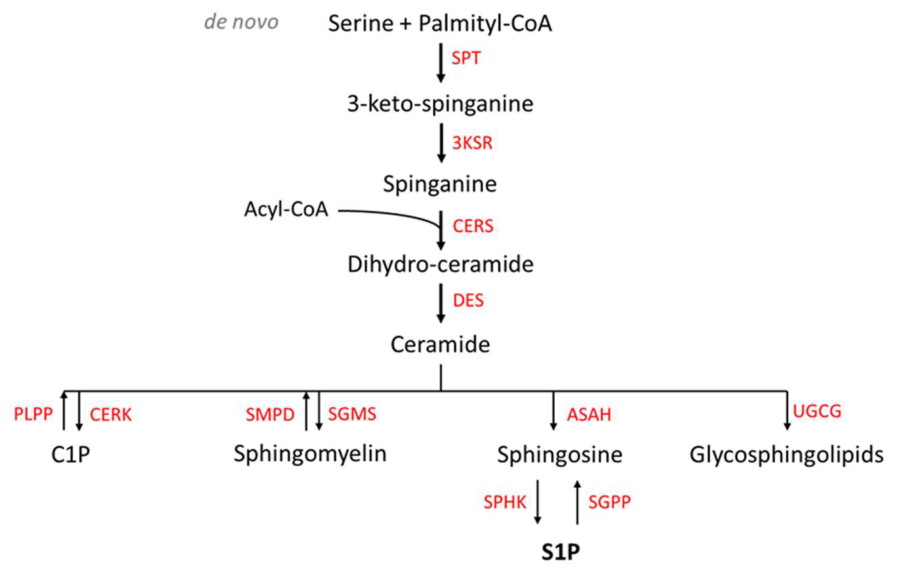
Figure 2.
Glucocerebrosidase (GBA1) deficiency leads to accumulation of glucosylceramide (Gb1) in the lysosomes of endothelial cells. The main mutation in the GBA1 gene in Gaucher disease is N370S [43].
Figure 2.
Glucocerebrosidase (GBA1) deficiency leads to accumulation of glucosylceramide (Gb1) in the lysosomes of endothelial cells. The main mutation in the GBA1 gene in Gaucher disease is N370S [43].
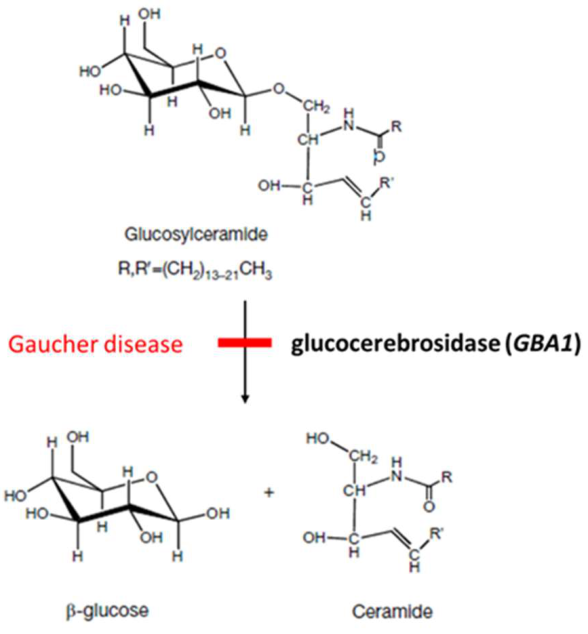
Figure 3.
Proposed molecular mechanism of glucosylceramide (Gb1) metabolism. 1 – ceramidase, 2 – non-lysosomal glucosylceramidase (GBA2), 3 – sphingosine kinase (SPHK1/SPHK2), Sph – sphingosine, S1P – sphingosine-1-phosphate.
Figure 3.
Proposed molecular mechanism of glucosylceramide (Gb1) metabolism. 1 – ceramidase, 2 – non-lysosomal glucosylceramidase (GBA2), 3 – sphingosine kinase (SPHK1/SPHK2), Sph – sphingosine, S1P – sphingosine-1-phosphate.
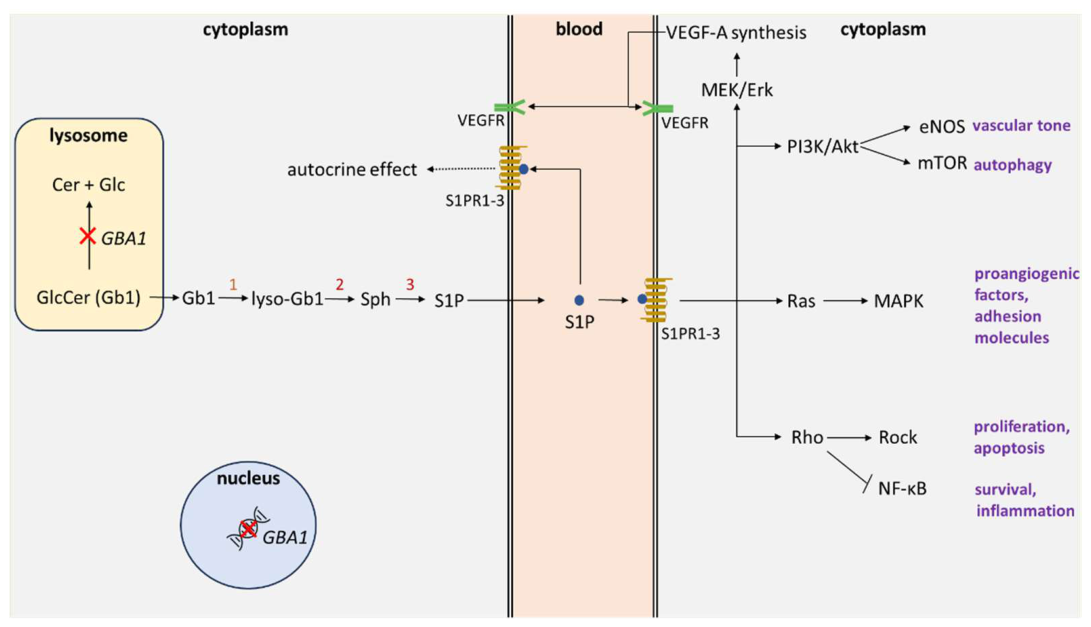
Figure 4.
In deficiency of functional acid sphingomyelinase enzyme (SMPD1), sphingomyelin accumulates in the lysosomal compartment of endothelial cells.
Figure 4.
In deficiency of functional acid sphingomyelinase enzyme (SMPD1), sphingomyelin accumulates in the lysosomal compartment of endothelial cells.
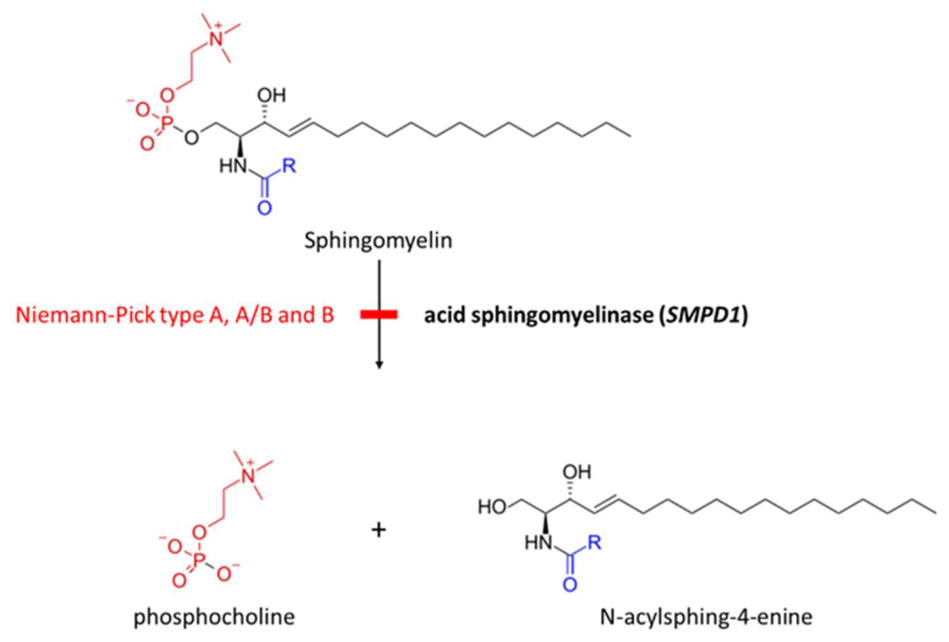
Figure 5.
α-galactosidase A (GLA) deficiency results in accumulation of globotriasylceramide (Gb3) in endothelial cell lysosomes.
Figure 5.
α-galactosidase A (GLA) deficiency results in accumulation of globotriasylceramide (Gb3) in endothelial cell lysosomes.
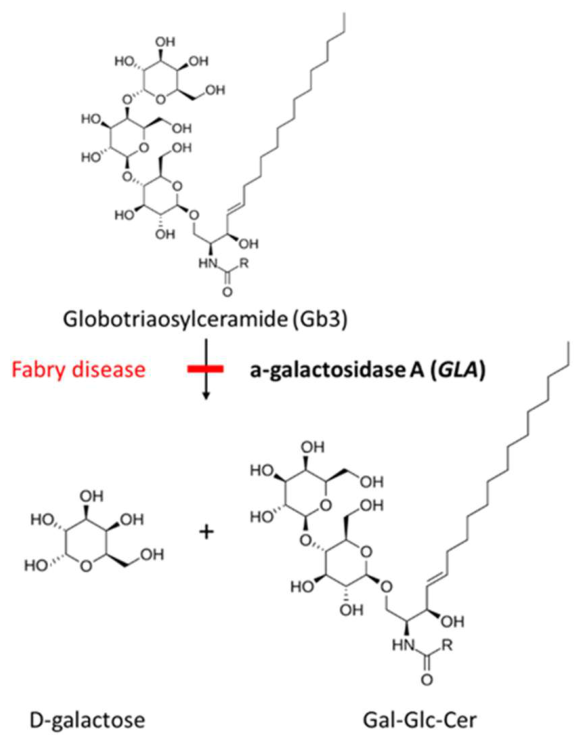

Table 1.
Summary of morphological and molecular changes in the endothelium in Gaucher disease, Niemann-Pick disease types A, B, A/B and Fabry disease.
Table 1.
Summary of morphological and molecular changes in the endothelium in Gaucher disease, Niemann-Pick disease types A, B, A/B and Fabry disease.
| Gaucher disease | Niemann-Pick disease A, B and A/B | Fabry disease | |
|---|---|---|---|
| Main accumulative substrate | Gb1, lyso-Gb1 | sphingomyelin, lyso-SM, lyso-SM-509, Gb1, GM2, GM3 | Gb3, lyso-Gb3, Gb2 |
| Endothelial cell’s morphology | cells are enlarged, membrane is folded, apical parts of cells protrude into the lumen of the vessels, intercellular contacts are partially loose | numerous membranous cytoplasmic bodies | cells are enlarged, many electron-dense granules in the cytoplasm, thinned glycocalyx |
| Endothelial barrier permeability | loosening of intercellular contacts | presumably decrease | VE-cadherin decrease |
| VEGF level | increase | no data found | decrease |
| S1P level | increase | presumably increase | increase |
| Angiogenesis | presumably decrease | decrease | decrease |
| Autophagy | presumably blocking autophagy at early stages (Atg5/Atg12 decresae) | late-stage autophagy blockade: mTOR inhibition; LC3-II increase |
late-stage autophagy blockade: LC3-II/LC3-I, p62 increase; accumulation of autophagosomes |
| Lysosomes | conflicting data (LAMP1, LAMP2 increase/decrease) | LAMP1, LAMP2 increase | LAMP2 increase; LysoTracker-positive cells increase |
| Cell death | necroptosis | antiapoptotic effect of acid sphingomyelinase deficiency | necroptosis |
Disclaimer/Publisher’s Note: The statements, opinions and data contained in all publications are solely those of the individual author(s) and contributor(s) and not of MDPI and/or the editor(s). MDPI and/or the editor(s) disclaim responsibility for any injury to people or property resulting from any ideas, methods, instructions or products referred to in the content. |
© 2026 by the authors. Licensee MDPI, Basel, Switzerland. This article is an open access article distributed under the terms and conditions of the Creative Commons Attribution (CC BY) license (http://creativecommons.org/licenses/by/4.0/).
Copyright: This open access article is published under a Creative Commons CC BY 4.0 license, which permit the free download, distribution, and reuse, provided that the author and preprint are cited in any reuse.


