
Submitted:
01 June 2026
Posted:
02 June 2026
You are already at the latest version
Abstract
To the best of our knowledge, population-based studies about the prevalence of dry eye in Germany are rare. The aim of our study was to reintroduce the topic of dry eye in the conversation about ophthalmological diseases and to identify relevant risk factors by assessing the usage of artificial tears as a proxy for treated dry eye in an older German population. For this, data was gathered from the medication plan of the first cohort of participants of the Hamburg City Health Study (n= 10 000, aged 46 – 78 years old). The calculated prevalence of self-reported artificial tears’ usage in Hamburg was 4.7% (CI – 95% [4.2%; 5.1%]), with women being four times more likely to use them than men. Since artificial tears are a fundamental part of the dry eye therapy, in this study we defined dry eye as the consistent use of artificial tears. Based on this definition, the prevalence of self-reported dry eye was 7.5% among women and 1.7% among men. A significant in-crease in the dry eye prevalence above the age of 58 was noticed as well. Lifestyle choices, pre-existing conditions and other medication were tested as possible risk factors. In conclusion, this study provides empirical evidence of the dry eye’s distribution and its risk factors.
Keywords:
dry eye
; artificial tears
; risk factor
; sex
; age
1. Introduction
According to Tear Film and Ocular Surface Society Dry Eye Workshop (TFOS DEWS) II, the prevalence of dry eye worldwide lies between 5 and 50%. A missing standardized definition and no established diagnostic procedure for dry eye, which have over time resulted in different studies using different defining criteria, are some of the main reasons for this wide prevalence range. While several studies choose to determine the presence of dry eye based on positive symptomatic, others use clinical signs such as tear breakup time (TBUT) ≤ 10 sec, Schirmer Test ≤ 5 mm, fluorescein staining of the eye surface or a combination of all of them, to define this disease. Yet, as these clinical tests are also known to show pathological values in asymptomatic individuals, they may lead to an overestimation of the prevalence of dry eye. Additionally, the effect of ethnicity and environmental factors must be taken into consideration when talking about the heterogenous prevalence values. It is estimated that Asians are 1.5–2.2 times more likely to suffer from dry eye in comparison to Caucasians. Furthermore, an increased atmospheric pressure, elevated aerosol optic depth, high ozone concentration and low humidity also pose a risk for this disease [1].
The few population-based cohort studies on the distribution of dry eye in Germany place its prevalence between 2 and 31.5% [2,3,4,5]. While these studies are set apart by their chosen age demographic, they also define dry eye differently. Whereas Siffel et al. looked at the healthcare service claim data of 3.6 million Germans, who had statutory health insurance [2], Münch et al. evaluated the dry eye prevalence with the help of SPEED questionnaires [3]. The KORA-Age Study did gather diagnosis with the help of questionnaires; however, they also asked ophthalmologists to confirm the answers given by the patients [4]. The most recent one by Stang et al. used the Women’s Health Study questionnaire to determine the presence of dry eye in its participants, who were between 62 and 91 years old [5].
Given that the management of dry eye is mostly adapted to the symptoms reported by the patients [6,7] and that artificial tears are a fundamental part of the therapy [6], our study measured the self-reported artificial tears’ usage as a proxy for treated dry eye disease in a large cohort of the Hamburg City Health Study (HCHS) to get an idea of the distribution of dry eye and its risk factors in Hamburg, Germany.
2. Materials and Methods
The HCHS is a prospective cohort study of the population of the second largest city in Germany, Hamburg. Citizens aged 45 to 74 from all 7 districts of Hamburg are chosen randomly from the list of residents and are invited to the study, to undergo a 6-hour long examination, during which different organ systems are examined and detailed information is gathered about their medical history, their medications, their lifestyle, environmental factors and their psychosocial condition [8,9,10].
Our study analyzed the data from the first 10 000 participants of the HCHS. The participants were asked to bring with them all medications and supplements that they took regularly, so that they could be noted down and grouped into respective categories based on the Anatomic Therapeutic Chemical (ATC) coding system of the “Gelbe Liste”[11]. In this context, dry eye was defined as every person who used artificial tears consistently. As artificial tears counted all over the counter medications that were registered under the following ATC codes: S01XA02, S01XA12, S01XA20, S01XA50, S01XA52, S01XC01, S01XC02, S01XC05, S01XC07, S01XC08, S01XC20, S01XC21, S01XC55.
Menopause was defined as the end of menstruation following the loss of ovarian follicular function. It was determined by the self-reported lack of periods for 12 months [12]. We also focused on some elements of lifestyle. As an ex-smoker was considered anyone who had stopped smoking at least 6 months ago. Alcohol intake was recorded according to the g/day amount of consumption. The socioeconomic status index was the sum of the points from three sub scores: education, job status and income, in each of which subjects could accumulate a maximum of 7 points [13]. Weekly TV and PC screen time were computed from the amount of time subjects spent watching TV or using the PC before and after 6PM, during the week, as well as on the weekend. These formulas recognize a maximum score of 70 h/week, as the value of each variable ranged from 0 up to 5 (0: didn’t watch TV/ didn’t use the PC, 1 up to 1 hour; 2 for up to 2 hours; 3 for up to 3 hours, 4 for up to 4 hours and 5 for more than 4 hours).
Further on, medical history was assessed with the help of questionnaires. Diabetes mellitus was defined as anyone who: had reported having diabetes; had reported having insulin-dependent diabetes; had reported having non-insulin-dependent diabetes; had a glucose level > 126 mg/dl when they had not eaten in the last 8 hours; had a glucose level > 200 mg/dl when they had eaten in the last 8 hours or took any medication from the ATC group A10. With arterial hypertension was diagnosed anyone who: took medication from one of these ATC groups: C09A, C09C, C07A, C03C, C03A, C03D, C08C, C02D, C02A, C09X, C01D; had a systolic blood pressure > 140 mmHg; had a diastolic blood pressure > 90 mmHg or reported being diagnosed with hypertension from a doctor in the past. In our study, allergy was interpreted as suffering from either seasonal allergies or dust mite allergies.
The Patient Health Questionnaire -9 (PHQ-9) and the Generalized anxiety disorder -7 (GAD-7) score were used to evaluate the severity of depression and anxiety symptoms in participants. Nine questions were asked regarding depression and 7 regarding anxiety, with each question having 4 answering options (0: not at all – 3: nearly every day) based on the intensity of the symptoms [14,15]. Further on, the data were grouped into half-open intervals of the form [a,b), where the lower bound is included and the upper bound is not.
All medications were categorized based on the ATC coding system of the “Gelbe Liste” [11]. In our study, the tested systemic and topical medications were classified as follow: vitamin supplements A11; antihypertensive medications C02; diuretics C03; statins C10AA; ß blockers C07A; estrogens G03C; progestogens G03D; progestogen and estrogen combinations G03F; drugs for benign prostatic hyperplasia (BPH) G04C; antidepressants N06A; anxiolytics N05B; antihistamines R06A; inhaled steroids R03BA; vitamin D A11CC; vitamin A A11CA; carbonic anhydrase inhibitor eye drops S01EC; sympathomimetic eye drops S01EA; ß blocker eye drops S01ED; prostaglandin analog eye drops S01EE; cholinergic agent eye drops S01EB; NSAID eye drops S01BC.
3. Results
The 10,000 participants of this study ranged between 46 and 78 years old. Their mean age was 62.37 years old (CI-95% [62.20; 62.53]). The distribution of the two sexes was very even, with nearly 49% of participants being men and 51% women (Table 1). The mean age for men was 62.80 (CI-95% [62.57; 63.04]) and for women 61.95 (CI-95% [61.72; 62.18]).
Among ophthalmic medication, the majority (52%) were artificial tears, followed by glaucoma medications (36%) and antiallergics (7.8%). The prevalence of the self-reported artificial tears’ usage in Hamburg was estimated to be 4.7% (CI-95% [4.2%; 5.1%]). Based on our definition, dry eye was found in 1.7% (CI – 95% [1.3%; 2.1%]) of men and 7.5% (CI – 95% [6.8%; 8.2%]) of women (Table 1). Sex played a significant role (p < 0.001) in the prevalence of treated dry eye, with women being 4 times more likely than men to suffer from the disease (Figure 1A). Participants with dry eye were significantly older (Figure 1 B), with the odds of dry eye increasing by 5.3% for each added year of age. Given this slight change, age was divided into three nearly equal groups: subjects between 46 and 58 years old, those between 59 and 67 years old and subjects older than 68. Pairwise comparison suggested that the increase in dry eye prevalence was statistically significant under and above the age of 58 (p < 0.001) (between the first and the two other age groups). However, there was no significant difference between the second and third group (p = 0.245). The prevalence of treated dry eye in participants 46–58 years old was 2.3%. For the other two age groups it stood at 5.5% and 6.4% respectively (Table 1). For both male and female participants, the percentage of dry eye increased as they aged, as shown in Figure 1C. 3.5% of women aged 46 to 58 suffered from dry eyes, in comparison to 0.9% of men in the same age group. The prevalence surged steeply for females, reaching 10.4% for those older than 68 years old, while only 2.7% of their male counterpart were affected by the disease.
Taking into consideration that the mean age for menopause in the general population is 51 years [12] and that most women experience menopause between the ages of 45 and 55 [16], the prevalence of treated dry eye in pre-, peri- and postmenopausal women was only studied in the first age group [46, 59). Here menstrual status showed no significant correlation to dry eye (Figure 2).
Regarding lifestyle choices, smokers were less likely to report artificial tear use, likely reflecting reduced healthcare-seeking behavior (2.6%) when compared to non-smokers (4.6%) or ex-smokers (5.6%). Backward variables selection with AIC from the saturated model with age, sex and smoking status revealed that, besides the main effects of age and sex, the main effect of smoking and its interaction with sex was significant as well, with p < 0.001 and p = 0.027 respectively, proving that active smokers had the lowest chances to be using artificial teardrops. Entering alcohol groups to the binary logistic regression model with age and sex demonstrated no statistically significant correlation of dry eye to alcohol (p = 0.92). The computed mean socioeconomic index was 12.6 for participants without dry eye and 12.3 for those with the disease (Table 1). Using the median 12 as a cut-off point, socioeconomic status was divided into two groups: from 3.3 to 12 points and 12 points and higher. The binary logistic regression showed that the odds for dry eye in SES = [12,21] are 22% higher than in SES = [3.3,12), but the difference was not statistically significant (p = 0.051).
As for the average weekly screen time, participants watched 25.75 h TV per week and used their PCs for approximately 17h (Table 1). Both TV and PC screen time were divided into three equal groups based on their 33% and 66% quantiles. There was a noticeable difference in the prevalence of treated dry eye for people who watched less than 20 h of TV per week (3.7%) compared to those who watched 20 h or more (5.1% in the group [20,30) and 5.7% in the group [30,70]). Meanwhile, the prevalence of treated dry eye in all three groups of PC screen time (up to 13h/week, 14 to 20 h/week and more than 20 h/week) was statistically equal (4.9%, 5.0% and 4.6%). Entering either grouped TV screen time, or grouped PC screen time to the model with age and sex didn’t improve the prediction for dry eye.
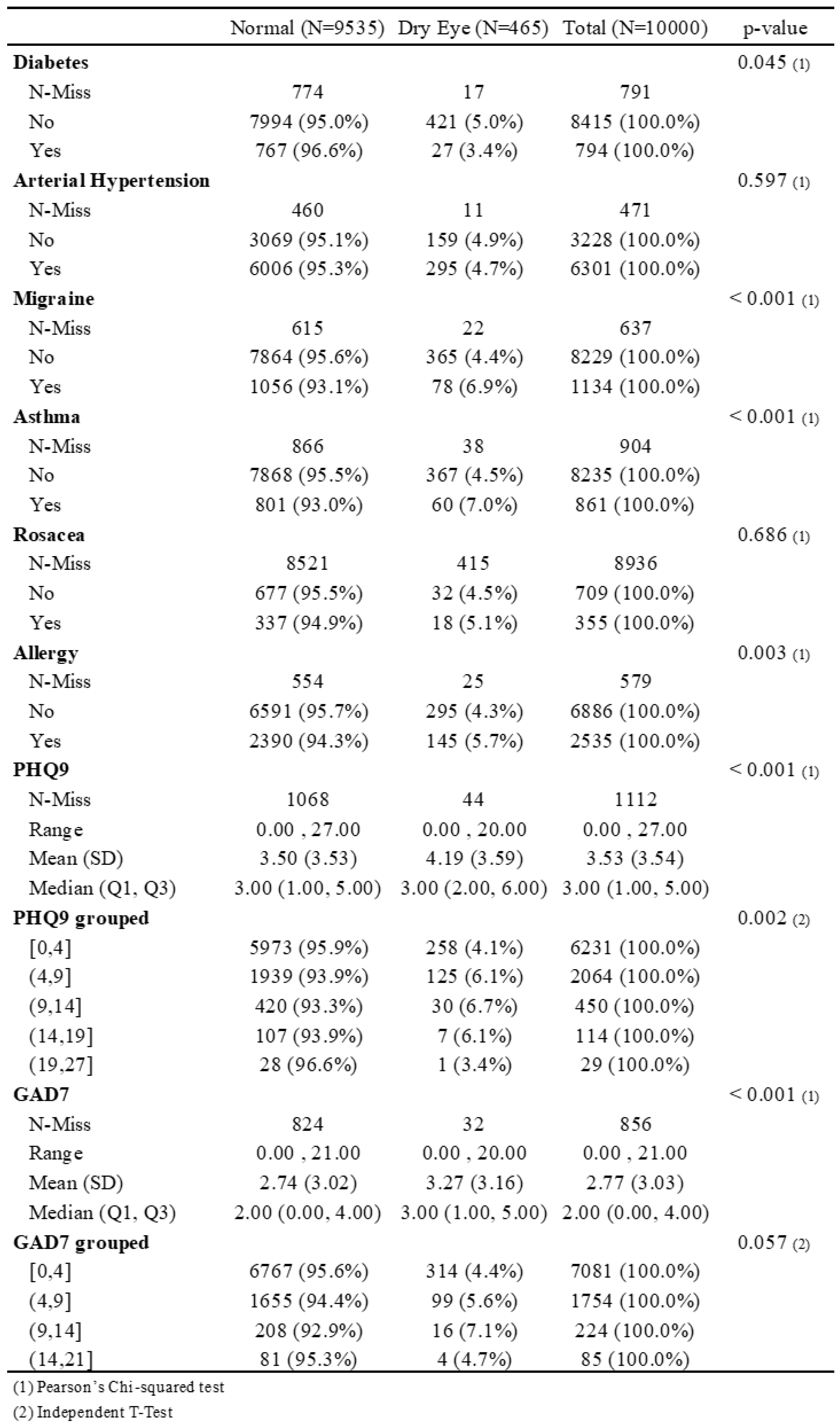
Analyzing the data from various systemic diseases showed that the odds for dry increased by 45% if the participant had asthma, by 28% if they had allergy and by 63% if they had migraine. After adjusting for age and sex, diabetes mellitus and arterial hypertension still didn’t play a significant role in predicting dry eye prevalence. The prevalence of treated dry eye was 4.1% in people with minimal depression and over 6% in those with more severe forms of depression (Table 2). Concurrently, the prevalence of treated dry eye increased from 4.4% among subjects with low anxiety levels to up to 7.1% in those with moderate anxiety (Table 2). When adjusted for age and sex, more severe forms of depression (PHQ9 (4,27]) increased the chances for dry eye by 4 times compared to minimal symptoms (PHQ9 [0,4]), while anxiety showed no correlation to the disease.
Separate binary logistic regression models were calculated for each gender factoring in only the systemic drugs that were relevant to them. As a result, only estrogens, out of the possible hormone replacement therapies for women, showed a direct connection to dry eye, by nearly doubling the chances for the disease. In men, no association was found between drugs for benign prostate hyperplasia and dry eye. Lastly, a binary regression model including both genders and systemic drugs, that are used by men and women, indicated that inhaled steroids and antihistamines were all important risk factors for dry eye. Vitamin supplements also showed a significant correlation to the disease, likely due to both vitamin supplements and artificial tears being over the counter drugs and a sign of a health-conscious lifestyle. After adjusting for sex and age, the other systemic drugs studied (allopurinol, antihypertensive medications, diuretics, statins, ß blockers, antidepressants, anxiolytics and vitamin D) showed no relation to dry eye. Only 3 participants had reported taking Vitamin A, that is why the variable was left out of the binary regression model. Topical drugs such as ß blocker eye drops, prostaglandin analogs, sympathomimetics and carbonic anhydrase inhibitors had no significant effect on dry eye, too.
4. Discussion
According to our results, 4.7% of the population of Hamburg used artificial tears regularly. This value nearly matches the lower bound of the dry eye prevalence as per the findings of TFOS DEWS II (5–50%) [1] and lies toward the lower end of the ranges reported in Germany, which varied from 2% to 31.5% [2,3,4,5]. It however remains under the prevalence interval 10 to 22% reported by other European countries such as France, Spain and Britain [2]. Given that these studies use different criteria to define dry eye, a direct comparison to our results is not possible. However, Malet et al. reported that, in people over 72 years old, only 36.5% of the subjects reportedly suffering from dry eye were using artificial tears [17]. This suggests that the number of people suffering from dry eye in Hamburg could be much higher and only the portion of them that used treatment was detected in this study. As the first 10 000 participants of HCHS had neither undergone any relevant ophthalmological examination nor had completed questionnaires related specifically to dry eye, we could only use their medication history to derive information about this disease. Nevertheless, since upcoming subjects will be asked to fill out an OSDI form, it could be interesting to see the numerical difference between those who take artificial tears and those who experience dry eye related symptoms in future studies.
Similar to the majority of outcomes about dry eye [1,3,4,17,18], we also confirmed that there is a significant difference regarding dry eye between women and men, with their respective prevalences being 7.5% and 1.7% respectively. This 4 times higher risk for females to suffer from dry eye can be attributed to a couple of factors. Firstly, physiological and hormonal differences have been noticed between the two sexes, affecting, among others, structures such as the cornea, the conjunctiva, the lacrimal gland, the meibomian gland. Hormonal differences refer not only to variations in sex hormones, but also a distinction in the action of thyroid hormones, insulin and glucocorticoids [18]. Women are also more likely to wear contact lenses, undergo LASIK and blepharoplasty or get repeated Botulinum toxin injections, all practices that have been linked with dry eye disease [3,19]. Furthermore, a difference between the sexes has also been observed when it comes to health awareness and compliance levels. Female patients diagnosed with dry eye are significantly more likely to use artificial tears regularly than their male counterparts [17,20]. Women in Germany have also shown to be more inclined than men to report symptoms and seek medical help [21].
Additionally, we found a significant increase in dry eye prevalence above the age of 58. In the other two age groups, [59,68) and [68,78], the prevalence of treated dry eye continued to rise from 5.5% to 6.4 %, however not in a statistically significant level. Despite our prevalence values being lower than the TFOS DEWS II results, due to us measuring the usage of artificial tears, our findings also confirmed that the increase in prevalence for women starts at an earlier age as a statistical difference was noticed from the age of 58 in women as opposed to 68 in men [1,19]. The change in prevalence with advancing years was noticeable in both women and men, with dry eye being present in 3.5% of women in the first age group and 10.4% of women in the eldest age group, in contrast to the prevalences for men, that grew gradually from 0.9% to 2.7%.
At least some part of the increase of dry eye prevalence with age in both men and women can be attributed to the decrease in androgen levels [7]. Androgens have been proven to facilitate the lipid production and prevent the keratinization of the meibomian gland [18,22,23], as well as to prompt the activity of the lacrimal glands [23]. While the effect of estrogen on lacrimal glands is debated, studies have found a tendency of this hormone to hinder the lipid secretion of the meibomian gland [23]. This observation aligns with our results, which showed that estrogen intake increased the risk for dry eye in women by 2.4 times (p < 0.001). When tested separately in pre- (p < 0.008) and postmenopausal women (p < 0.001), estrogen intake was still a significant risk factor for dry eye. Hence, the effect of estrogen on dry eye seems to be independent of menopausal status.
Although estrogen levels fall drastically after menopause [24], in our study, menopausal status had no effect on the risk for dry eye in women in the first age group [46,59), 60.6% of whom had recently entered menopause. Among postmenopausal women there was a significant increase in dry eye prevalence (OR= 0.4, p < 0.001) when comparing the first [46,59) to the second [59, 68) age group, however there was no difference between the second and third age group. This finding goes hand in hand with the observation that androgen levels show a steadier fall than estrogen after menopause [24], with a more noticeable drop between the ages of 50 and 60, only to remain constantly low afterwards [25]. Consequently, our results support the theory that the increase in dry eye prevalence in aging women may more likely be caused by an androgen deficiency than an estrogen one [22].
Another category of risk factors that we considered was lifestyle. Active smokers in our study were less likely to use artificial tears in comparison to ex-smokers or nonsmokers. Smokers have shown lower tear stability than nonsmokers and are more likely to have signs of ocular surface damage [26]. However, literature doesn’t always agree on whether or not smoking poses a risk for dry eye, with some studies reporting a correlation between them [27] and others not being able to confirm these results [17,28]. The TFOS DEWS II Report therefore classified smoking as an inconclusive risk factor [1]. Our results can most likely be explained by the decreased health consciousness and health promoting actions of active smokers, which lead to a lower compliance with artificial tears, too.
On the other hand, socioeconomic index and the daily amount of alcohol intake showed no association to dry eye. Even though, alcohol also lands in the tears, disrupting the normal homeostasis of the tear film [29], studies about a possible connection to dry eye have shown different results. Our findings agree with the Beaver Dam study, that there is no correlation between dry eye and current alcohol intake [27].
Dry eye was significantly more prevalent in participants who watched more than 20 hours of TV per week. In contrast, PC screen time didn’t seem to influence the prevalence of this disease. It is worth noting that while participants watched in average 25.75 h/week TV, the mean value of PC screen time was 17.31 h/week or roughly 2.5 h per day. This outcome might be explained by the fact that half of our cohort was above the age of 63. It would be interesting to see how the weekly PC usage changes in younger age groups and whether there is a connection there to dry eye, but that demographic is not included in the Hamburg City Health Study.
Regarding medical conditions, migraine, allergy and asthma showed a significant effect on the chances to suffer from dry eye (OR = 1.63, OR = 1.28, OR = 1.45 respectively). There has been increasing evidence that links these diseases with dry eye [28,30,31]. The association to migraine traces back to the assumption that there is a link between dry eye and forms of chronic pain, whether this be due to an elevated pain perceptiveness or a common dysfunction in neurologic pathways [1,30]. For our study, allergy was defined as allergy against dust mites or grass pollen. Both these types of allergies are associated with allergic conjunctivitis [32], which presents itself with similar symptoms to dry eye [33]. The possibility of a misdiagnosis could at part explain the increased usage of artificial tears by people suffering from allergies. However, it is also important to note that allergic conjunctivitis and dry eye can coexist, partially due to the drying impact of allergy medications on the eye surface [33]. Especially antihistamines with an anticholinergic effect, but not exclusively, can lead to a decreased tear and mucin production, as they block muscarinic receptors [34]. We confirmed an association between antihistamines and dry eye, as their intake was a relevant risk factor for the disease in our study after adjusting for age and sex (OR = 1.67, p < 0.015). Additionally, dry eye was significantly more common in participants who suffered from asthma (OR = 1.45, p < 0.017). Inhaled steroids doubled the odds for dry eye in our study (p < 0.006), as also previously reported by Paulsen et al. [28]. Further research is needed to determine if the connection of the dry eye to allergy and asthma is a result of increased usage of antihistamines and inhaled steroids to relieve symptoms, or if some other underlying mechanism is present.
Adjusted for age and sex, depression (PHQ9 (4,27]) nearly quadrupled the chances for dry eye as compared to minimal symptoms (PHQ9 [0,4]) (p < 0.017), while anxiety interestingly showed no statistically significant association to dry eye. The percentage of regular artificial tears users didn’t change much in more serious forms of depression (6.1% for mild depression, 6.7% for moderate depression, 6.1% for moderate severe depression). Severe depression was rare in our cohort and therefore not possible to statistically analyze. Earlier scientific research has already noticed a connection between mental health and dry eye, even though it is difficult to pinpoint whether depression is the cause or the result of dry eye [1]. However, knowing that mental health conditions have only shown an association to dry eye symptoms and not clinical signs [30,35], it can be hypothesized that the connection lies on an increased pain perception. Supporting this theory, Verhof et al. suggested that dry eye disease is a form of chronic pain syndrome with a genetic predisposition and a mutual pathway to other such diseases [30]. In contrast to former results [28,29], our study didn’t find any connection between dry eye and antidepressants, which leads us to believe that there is an association between dry eye and depression that is not influenced by possible side effects of antidepressants.
The increased prevalence of treated dry eye in vitamin supplements users can be attributed to an increased health consciousness and therefore an increased tendency to using artificial tears.
We didn’t find any connection between topical eye medications and dry eye. However, only a small fraction of the participants of HCHS used ophthalmological medications, thus the precision of the coefficients of the binary logistic regression was reduced. So, to gain a better understanding of a possible association, a study focused on patients coming to the eye clinic is needed.
By inviting participants from all districts of Hamburg and randomly selecting them from the resident list, this study has achieved a diverse pool of participants. Nonetheless, it also has its limitations. Defining dry eye based on the reported artificial tears use poses a risk for selection bias, as participants with undiagnosed dry eye or those who do not take medication despite the diagnosis are considered to not have the disease. Thus, our operational definition captures treated dry eye rather than true disease prevalence. This approach likely underestimates the total burden and introduces behavioral confounding, as treatment use depends on symptom perception, healthcare access, and health awareness. Therefore, our findings should be interpreted as reflecting the epidemiology of treated dry eye rather than the disease itself. Additionally, as we rely on patients’ self-report for most of our data, recall bias cannot be excluded. To ensure the best standard for these data, quality controls were performed each week [8]. While we acknowledge the possible limitations and biases that come with this interpretation, the main goal of this study was to reintroduce dry eye into the conversation about ophthalmological diseases by emphasizing its commonness in the demographic of a large German city like Hamburg and raise some important questions about possible risk factors that will need further research.
Author Contributions
Hegi Beliu: conceptualization, data curation, formal analysis, methodology, writing- original draft preparation, writing- review and editing, visualization; Carsten Grohmann: conceptualization, methodology, project administration, supervision, writing-original draft preparation, writing-review and editing; Vasyl Druchkiv: conceptualization, formal analysis, validation, writing- original draft preparation, writing- review and editing; Elena Butenko: project administration, conceptualization, supervision, writing- original draft preparation, writing- review and editing; Ansgar Beuse: project administration, supervision, writing- original draft preparation, writing- review and editing; Martin S. Spitzer: conceptualization, methodology, supervision, writing- original draft preparation, writing- review and editing; Christian Wolfram: conceptualization, methodology, visualization, supervision, project administration, writing-original draft preparation, writing-review and editing,.
Funding
The authors received no specific funding for the present work. Regarding the overall funding of the HCHS, participating institutes and departments from the University Medical Center Hamburg-Eppendorf contribute all with individual and scaled budgets. The HCHS is additionally funded by the Joachim Herz Foundation, the Kühne Foundation, the Leducq Foundation [Grant Number 16 CVD 03], the euCanSHare grant agreement [Grant Number 825903-euCanSHare H2020], and the Innovative medicine initiative [Grant Number 116074]. The HCHS is further supported by Deutsche Gesetzliche Unfallversicherung (DGUV), Deutsches Krebsforschungszentrum (DKFZ), Deutsches Zentrum für Herz-Kreislauf-Forschung (DZHK), Deutsche Stiftung für Herzforschung, Seefried Stiftung, Bayer, Amgen, Novartis, Schiller, Siemens, Topcon, Unilever and by donations from the “Förderverein zur Förderung der HCHS e.V.”, and TePe® (2014). Sponsor funding has in no way influenced the content or management of this study.
Institutional Review Board Statement
The Hamburg City Health Study was conducted in accordance with the Declaration of Helsinki and approved by the Ethics Committee of the Hamburg Medical Association (protocol code PV5131, date of approval: 20.10.2015).
Informed Consent Statement
Informed consent was obtained from all subjects involved in the study.
Data Availability Statement
Restrictions apply to the availability of these data. Data were obtained from Hamburg City Health Study and are available from the corresponding author with the permission of the Hamburg City Health Study.
Conflicts of Interest
The authors declare no conflicts of interest.
Abbreviations
The following abbreviations are used in this manuscript:
| TBUT | Tear Breakup Time |
| TFOS DEWS | Tear Film and Ocular Surface Society Dry Eye Workshop |
| HCHS | Hamburg City Health Study |
References
- Stapleton, F.; Alves, M.; Bunya, V.Y.; Jalbert, I.; Lekhanont, K.; Malet, F.; Na, K.S.; Schaumberg, D.; Uchino, M.; Vehof, J.; et al. TFOS DEWS II Epidemiology Report. Ocul. Surf. 2017, 15, 334–365. [Google Scholar] [CrossRef]
- Siffel, C.; Hennies, N.; Joseph, C.; Lascano, V.; Horvat, P.; Scheider, M.; Ganzera, F. Burden of dry eye disease in Germany: a retrospective observational study using German claims data. Acta Ophthalmol. 2020, 98, e504–e512. [Google Scholar] [CrossRef]
- Münch, K.; Nöhre, M.; Westenberger, A.; Akkus, D.; Morfeld, M.; Brähler, E.; Framme, C.; de Zwaan, M. Prevalence and Correlates of Dry Eye in a German Population Sample. Cornea 2024, 43, 685–692. [Google Scholar] [CrossRef]
- Reitmeir, P.; Linkohr, B.; Heier, M.; Molnos, S.; Strobl, R.; Schulz, H.; Breier, M.; Faus, T.; Kuster, D.M.; Wulff, A.; et al. Common eye diseases in older adults of southern Germany: results from the KORA-Age study. Age Ageing 2017, 46, 481–486. [Google Scholar] [CrossRef]
- Stang, A.; Schmidt, B.; Schramm, S.; Kowall, B.; Jöckel, K.-H.; Erbel, R.; Kuss, O.; Geerling, G. Synergism between coexisting eye diseases and sex in increasing the prevalence of the dry eye syndrome. Sci. Rep. 2024, 14, 314. [Google Scholar] [CrossRef]
- Jones, L.; Downie, L.E.; Korb, D.; Benitez-Del-Castillo, J.M.; Dana, R.; Deng, S.X.; Dong, P.N.; Geerling, G.; Hida, R.Y.; Liu, Y.; et al. TFOS DEWS II Management and Therapy Report. Ocul. Surf. 2017, 15, 575–628. [Google Scholar] [CrossRef]
- Craig, J.P.; Nelson, J.D.; Azar, D.T.; Belmonte, C.; Bron, A.J.; Chauhan, S.K.; de Paiva, C.S.; Gomes, J.A.P.; Hammitt, K.M.; Jones, L.; et al. TFOS DEWS II Report Executive Summary. Ocul. Surf. 2017, 15, 802–812. [Google Scholar] [CrossRef]
- Jagodzinski, A.; Johansen, C.; Koch-Gromus, U.; Aarabi, G.; Adam, G.; Anders, S.; Augustin, M.; der Kellen, R.B.; Beikler, T.; Behrendt, C.A.; et al. Rationale and Design of the Hamburg City Health Study. Eur. J. Epidemiol. 2020, 35, 169–181. [Google Scholar] [CrossRef]
- Hamburg City Health Study. Die HCHS auf einen Blick. Available online: https://hchs.hamburg/aktuelles/zahlen-und-fakten/ (accessed on 20.03.2026).
- Beuse, A.; Hoppert, I.; Wolfram, C.; Spitzer, M.S.; Birtel, J.; Grohmann, C. Hamburg City Health Study: Design and ocular baseline characteristics of the first 10,000 participants. Investig. Ophthalmol. Vis. Sci. 2025(66), 2009–2009.
- Liste, Gelbe. ATC Codes. Available online: https://www.gelbe-liste.de/atc (accessed on 20.12.2024).
- Greendale, G.A.; Lee, N.P.; Arriola, E.R. The menopause. The Lancet 1999, 353, 571–580. [Google Scholar] [CrossRef]
- Klimesch, A.; Ascone, L.; Schmager, A.; Petersen, E.; Hoven, H.; von dem Knesebeck, O.; Gallinat, J.; Kühn, S. The differential role of socioeconomic status dimensions in depressive symptoms of aging adults: data from the Hamburg City Health cohort Study. Front Public Health 2024, 12, 1430325. [Google Scholar] [CrossRef]
- Kroenke, K.; Spitzer, R.L.; Williams, J.B. The PHQ-9: validity of a brief depression severity measure. J. Gen. Intern Med. 2001, 16, 606–613. [Google Scholar] [CrossRef]
- Spitzer, R.L.; Kroenke, K.; Williams, J.B.; Löwe, B. A brief measure for assessing generalized anxiety disorder: the GAD-7. Arch. Intern Med. 2006, 166, 1092–1097. [Google Scholar] [CrossRef]
- World Health Organization. Menopause. Available online: https://www.who.int/news-room/fact-sheets/detail/menopause (accessed on 29.05.2025).
- Malet, F.; Le Goff, M.; Colin, J.; Schweitzer, C.; Delyfer, M.N.; Korobelnik, J.F.; Rougier, M.B.; Radeau, T.; Dartigues, J.F.; Delcourt, C. Dry eye disease in French elderly subjects: the Alienor Study. Acta Ophthalmol. 2014, 92, e429-436. [Google Scholar] [CrossRef]
- Sullivan, D.A.; Rocha, E.M.; Aragona, P.; Clayton, J.A.; Ding, J.; Golebiowski, B.; Hampel, U.; McDermott, A.M.; Schaumberg, D.A.; Srinivasan, S.; et al. TFOS DEWS II Sex, Gender, and Hormones Report. Ocul. Surf. 2017, 15, 284–333. [Google Scholar] [CrossRef]
- Matossian, C.; McDonald, M.; Donaldson, K.E.; Nichols, K.K.; MacIver, S.; Gupta, P.K. Dry Eye Disease: Consideration for Women's Health. J. Womens Health (Larchmt) 2019, 28, 502–514. [Google Scholar] [CrossRef]
- Schaumberg, D.A.; Uchino, M.; Christen, W.G.; Semba, R.D.; Buring, J.E.; Li, J.Z. Patient reported differences in dry eye disease between men and women: impact, management, and patient satisfaction. PLoS ONE 2013, 8, e76121. [Google Scholar] [CrossRef]
- Ladwig, K.H.; Marten-Mittag, B.; Formanek, B.; Dammann, G. Gender differences of symptom reporting and medical health care utilization in the German population. Eur. J. Epidemiol. 2000, 16, 511–518. [Google Scholar] [CrossRef]
- Nuzzi, R.; Caselgrandi, P. Sex Hormones and Their Effects on Ocular Disorders and Pathophysiology: Current Aspects and Our Experience. Int. J. Mol. Sci. 2022, 23. [Google Scholar] [CrossRef]
- Gorimanipalli, B.; Khamar, P.; Sethu, S.; Shetty, R. Hormones and dry eye disease. Indian J. Ophthalmol. 2023, 71, 1276–1284. [Google Scholar] [CrossRef]
- Markopoulos, M.C.; Kassi, E.; Alexandraki, K.I.; Mastorakos, G.; Kaltsas, G. Hyperandrogenism after menopause. Eur. J. Endocrinol. 2015, 172, R79–91. [Google Scholar] [CrossRef]
- Labrie, F.; Bélanger, A.; Cusan, L.; Gomez, J.L.; Candas, B. Marked decline in serum concentrations of adrenal C19 sex steroid precursors and conjugated androgen metabolites during aging. J. Clin. Endocrinol. Metab. 1997, 82, 2396–2402. [Google Scholar] [CrossRef]
- Thomas, J.; Jacob, G.P.; Abraham, L.; Noushad, B. The effect of smoking on the ocular surface and the precorneal tear film. Australas. Med. J. 2012, 5, 221–226. [Google Scholar] [CrossRef]
- Moss, S.E.; Klein, R.; Klein, B.E. Prevalence of and risk factors for dry eye syndrome. Arch. Ophthalmol. 2000, 118, 1264–1268. [Google Scholar] [CrossRef]
- Paulsen, A.J.; Cruickshanks, K.J.; Fischer, M.E.; Huang, G.H.; Klein, B.E.; Klein, R.; Dalton, D.S. Dry eye in the beaver dam offspring study: prevalence, risk factors, and health-related quality of life. Am. J. Ophthalmol. 2014, 157, 799–806. [Google Scholar] [CrossRef]
- Gomes, J.A.P.; Azar, D.T.; Baudouin, C.; Efron, N.; Hirayama, M.; Horwath-Winter, J.; Kim, T.; Mehta, J.S.; Messmer, E.M.; Pepose, J.S.; et al. TFOS DEWS II iatrogenic report. Ocul. Surf. 2017, 15, 511–538. [Google Scholar] [CrossRef]
- Vehof, J.; Kozareva, D.; Hysi, P.G.; Hammond, C.J. Prevalence and risk factors of dry eye disease in a British female cohort. Br. J. Ophthalmol. 2014, 98, 1712–1717. [Google Scholar] [CrossRef]
- Huang, Y.C.; Chan, W.C.; Wang, J.D.; Fu, L.S.; Tsan, Y.T. Association between dry eye disease and asthma: a nationwide population-based study. PeerJ 2018, 6, e5941. [Google Scholar] [CrossRef]
- Mourão, E.M.; Rosário, N.A.; Silva, L.; Shimakura, S.E. Ocular symptoms in nonspecific conjunctival hyperreactivity. Ann. Allergy Asthma Immunol. 2011, 107, 29–34. [Google Scholar] [CrossRef]
- Wolffsohn, J.S.; Arita, R.; Chalmers, R.; Djalilian, A.; Dogru, M.; Dumbleton, K.; Gupta, P.K.; Karpecki, P.; Lazreg, S.; Pult, H.; et al. TFOS DEWS II Diagnostic Methodology report. Ocul. Surf. 2017, 15, 539–574. [Google Scholar] [CrossRef]
- Bielory, L. Ocular toxicity of systemic asthma and allergy treatments. Curr. Allergy Asthma Rep. 2006, 6, 299–305. [Google Scholar] [CrossRef]
- Basilious, A.; Xu, C.Y.; Malvankar-Mehta, M.S. Dry eye disease and psychiatric disorders: A systematic review and meta-analysis. Eur. J. Ophthalmol. 2022, 32, 1872–1889. [Google Scholar] [CrossRef]
Figure 1.
Prevalence of dry eye (defined by the consistent use of artificial tears) by sex and age (A) Prevalence by sex with exact binomial 95% confidence intervals (B) Box plot for age by dry eye. A box shows 25th, 50th and 75th percentiles. The red dots are the means. (C) Prevalences are estimated with binary logistic model. 95% confidence intervals are calculated on the logit scale and transformed to probabilities. The p-values correspond to deviance comparison where terms are added sequentially (first to last).
Figure 1.
Prevalence of dry eye (defined by the consistent use of artificial tears) by sex and age (A) Prevalence by sex with exact binomial 95% confidence intervals (B) Box plot for age by dry eye. A box shows 25th, 50th and 75th percentiles. The red dots are the means. (C) Prevalences are estimated with binary logistic model. 95% confidence intervals are calculated on the logit scale and transformed to probabilities. The p-values correspond to deviance comparison where terms are added sequentially (first to last).
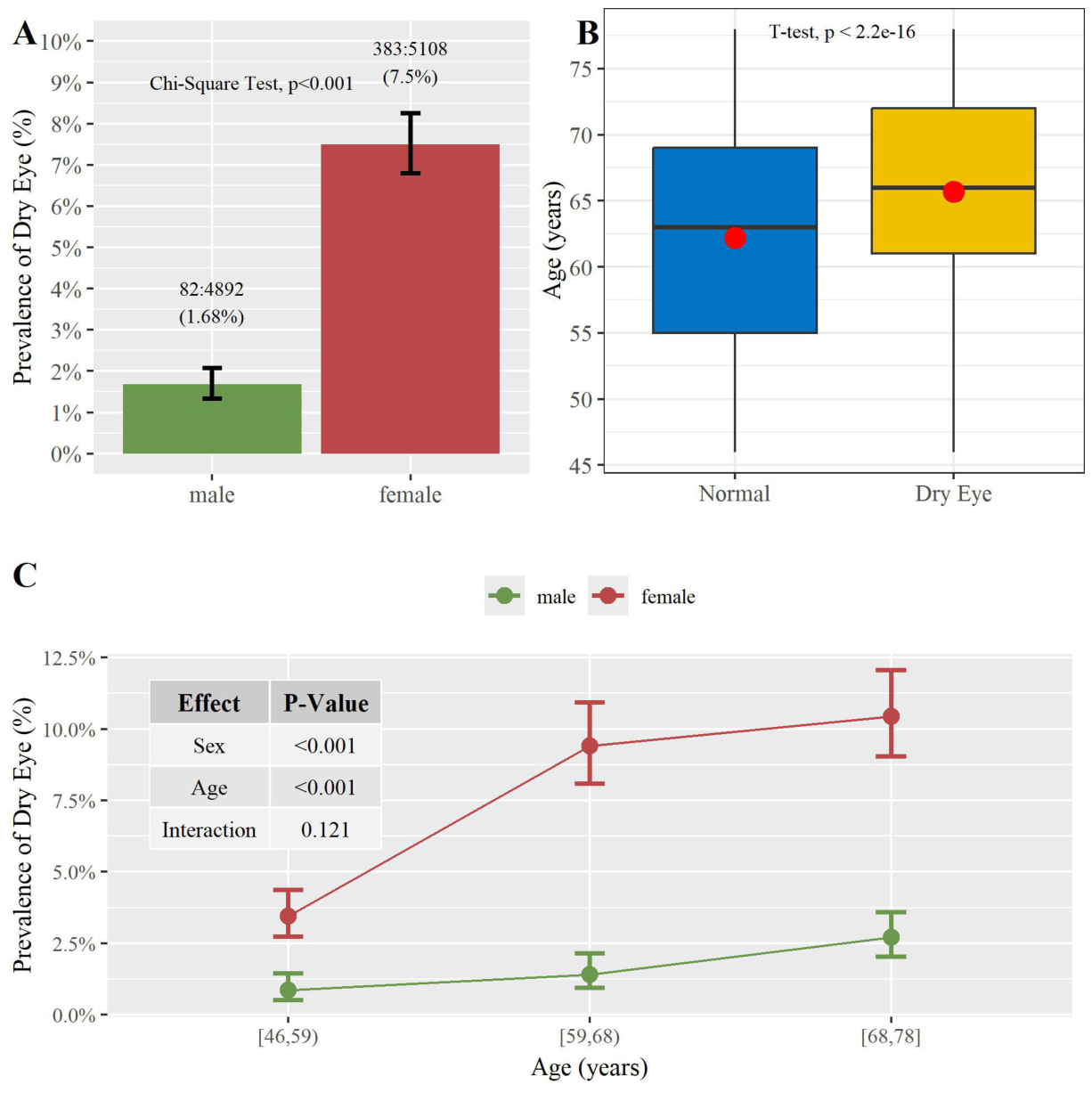
Figure 2.
Prevalence of dry eye by menstrual status.
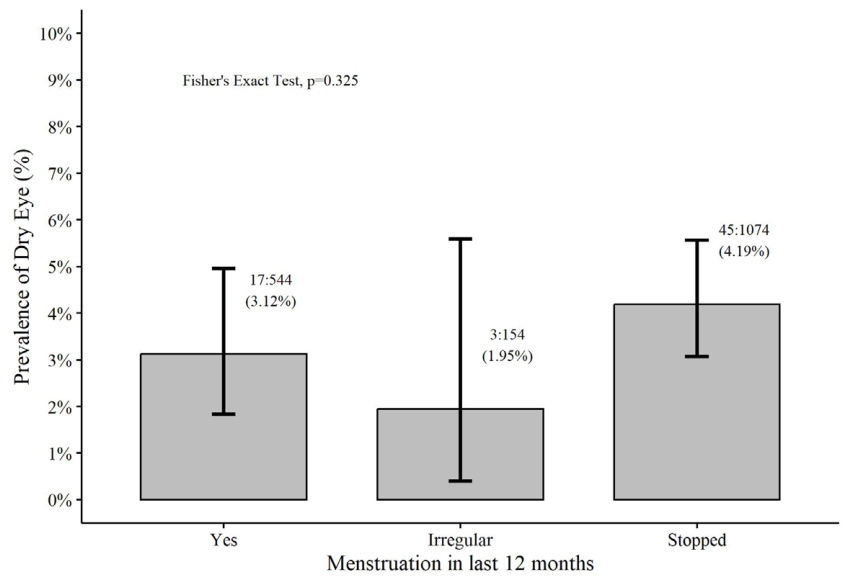

Table 1.
Summary table of patients' characteristics and lifestyle choices.
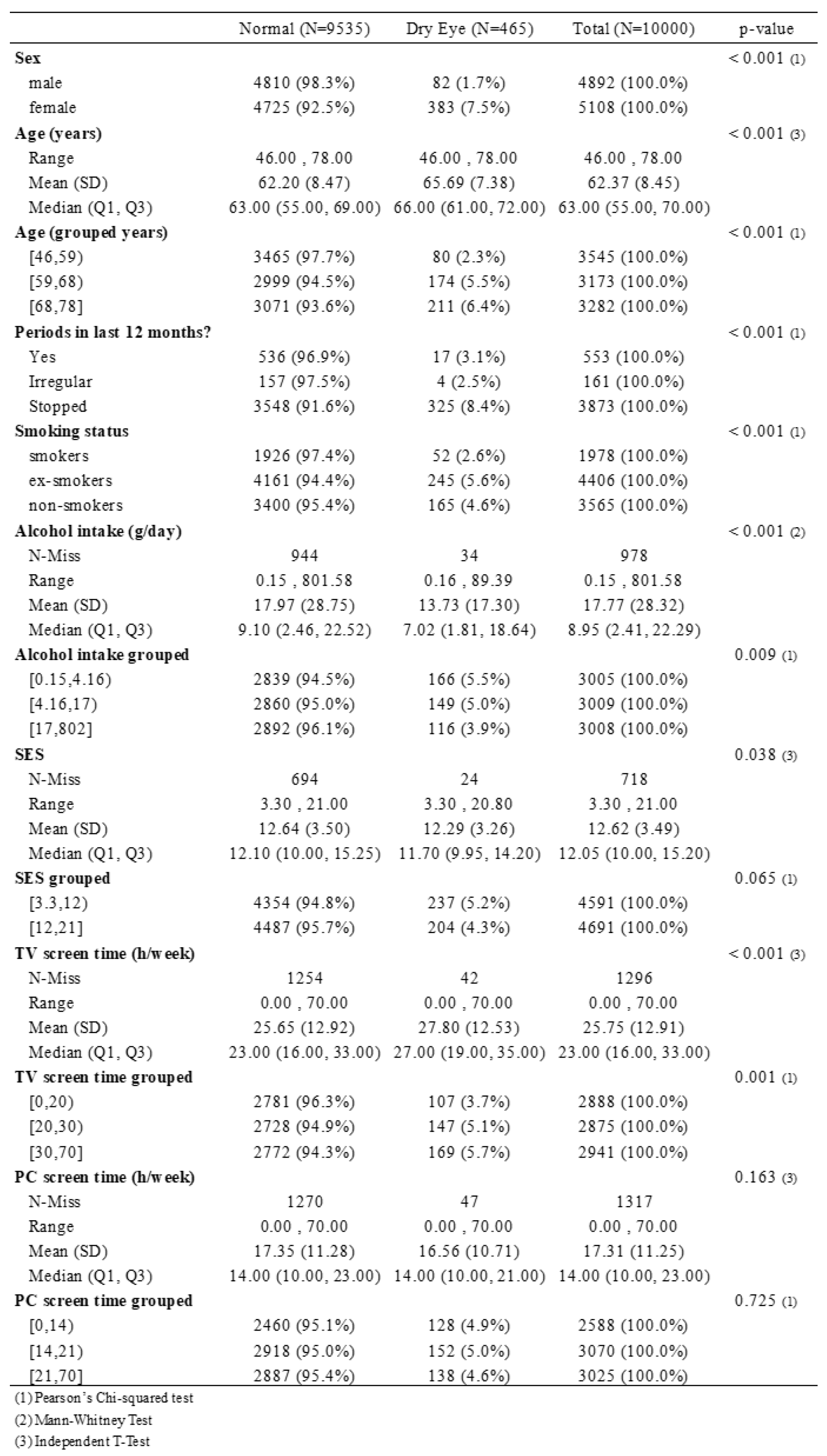 |
Table 2.
Summary table of diseases.
 |
Disclaimer/Publisher’s Note: The statements, opinions and data contained in all publications are solely those of the individual author(s) and contributor(s) and not of MDPI and/or the editor(s). MDPI and/or the editor(s) disclaim responsibility for any injury to people or property resulting from any ideas, methods, instructions or products referred to in the content. |
© 2026 by the authors. Licensee MDPI, Basel, Switzerland. This article is an open access article distributed under the terms and conditions of the Creative Commons Attribution (CC BY) license (http://creativecommons.org/licenses/by/4.0/).
Copyright: This open access article is published under a Creative Commons CC BY 4.0 license, which permit the free download, distribution, and reuse, provided that the author and preprint are cited in any reuse.


