

Submitted:
01 June 2026
Posted:
02 June 2026
You are already at the latest version
Abstract
Background/Objectives: Alcohol consumption and medication use have increased among the elderly population, raising the risk of alcohol–drug interactions and adverse outcomes. Sex-related biological differences may further influence these effects. This study aimed to assess sex-related differences among older adults with risky alcohol consumption, con-sidering medication use, comorbidities, and hepatic biomarkers. Methods: A cross-sectional, multicenter study was conducted in adults aged ≥65 years. A total of 455 participants with risky alcohol consumption were included. Sociodemographic and clini-cal characteristics, medication prescriptions, and blood analytical parameters were col-lected. Results: Of the participants, 41% were women, with a mean age of 71 years. The mean weekly alcohol consumption was 8.4 ± 8.3 standard drink units. Overall, 71.2% were taking at least one medication, with antihypertensives being the most commonly pre-scribed (62%). Significant sex differences were observed (p ≤ 0.01): men showed higher use of antidiabetic drugs (24%), anticoagulants (8%), and nitrates (4%), whereas women more frequently used anxiolytics (35%), non-steroidal anti-inflammatory drugs (22%), and anti-depressants (18%). Significant differences were also observed in hepatic biomarkers, with higher gamma-glutamyl transferase levels in men and a higher AST/ALT ratio in women (p ≤ 0.01). Although risky alcohol consumption was more prevalent among men, women had a higher overall medication use. Conclusions: A high proportion of older adults with risky alcohol consumption are exposed to concurrent pharmacological treatments, in-creasing the potential for clinically relevant alcohol–drug interactions. The observed sex differences in comorbidities, medication use, and hepatic biomarkers underscore the im-portance of incorporating a sex-based perspective in research and clinical practice.
Keywords:
alcohol drinking
; aged
; prescription drugs
; sex differences
; primary health care
1. Introduction
Alcohol consumption among the elderly has increased in recent decades [1,2,3]. It is estimated that around 8% to 20% of adults aged 65 years and over consume alcohol in excess [4,5,6]. In Spain, one in four older adults consumes alcohol in quantities that exceed the recommended amount [7,8,9]. Concurrently, there has been an increase in the utilization of medications, and the phenomenon of polypharmacy is becoming increasingly prevalent [10]. In the elderly population, polypharmacy, defined as the use of five or more drugs [11], affects approximately 22% of adults aged 65 and older [12].
This context suggests that a significant percentage of older adults consume alcohol in conjunction with medications. A meta-analysis revealed that between 21% and 35% of older adults consume alcohol concurrently with drugs that may have the potential for interaction [13,14]. In this regard, even moderate alcohol consumption has been associated with a 24% increase in the risk of adverse drug reactions [15]. In addition to these factors, physiological changes associated with aging contribute to an increased vulnerability to interactions with substances. These changes include alterations in the distribution and metabolism of substances, as well as a heightened sensitivity of the central nervous system [16,17].
Interactions between alcohol and medications have the potential to interfere with the effectiveness of drugs, cause adverse side effects, reduce or exacerbate their effects, and consequently worsen health problems [14]. Evidence suggests that even low levels of alcohol consumption, or any alcohol intake at all, may produce harmful effects when combined with certain medications [14]. In this regard, alcohol has been demonstrated to potentiate the sedative effects of antidepressants, barbiturates, benzodiazepines, and opioids, thereby increasing the risk of falls; exacerbate the gastrointestinal and renal adverse effects associated with nonsteroidal anti-inflammatory drugs (NSAIDs) [18]; and augment the risk of hypoglycemia in diabetics undergoing hypoglycemic treatment [19]. However, the existing literature has yet to explore the differences linked to biological sex in a comprehensive manner.
While research has documented variations in alcohol consumption patterns between men and women, studies have also demonstrated that women exhibit a heightened vulnerability to the effects of alcohol [20]. This vulnerability is partly attributable to biological differences [14], including body composition, pharmacokinetic differences in alcohol metabolism, effects on the brain, and the influence of sex hormones [21]. These disparities also influence the pharmacokinetics and pharmacodynamics of medications, modulating their efficacy, safety, and metabolism [22,23]. However, in individuals with excessive alcohol consumption, there is a paucity of research on potential gender disparities in medication utilization patterns and their correlation with clinical and analytical profiles.
In this context, the present study aims to evaluate sex differences in older adults with risky alcohol consumption, considering medication use, comorbidity burden, and liver biomarkers. This approach provides relevant evidence for future clinical strategies for the detection, prevention, and management of alcohol consumption in older adults who use medications.
2. Materials and Methods
2.1. Study Design and Participants
This community-based study utilizes data from a two-phase population study (ALANE cohort). The cohort included individuals registered at 25 Primary Health Care centers (PHC) in the Barcelona Nord and Maresme areas (Catalonia, Spain), recruited between 2015 and 2021. The study area covers a population of approximately 700,000 inhabitants, of whom 82,903 are aged ≥65 years.
Participants were randomly selected from the Primary Care Information System (SIAP), which includes all individuals with national healthcare cards and is equivalent to the population census of Catalonia. This database comprises all the individuals assigned to PHCs in the study area, regardless of healthcare utilization. For more details regarding the study design, please refer to the previous publication [24].
The study population included subjects of both sexes who were 65 years of age or older and were assigned to the participating PHCs. Individuals with conditions that could impede data collection or follow-up were excluded from the study. Such conditions included disabling diseases, cognitive impairment, residence in long-stay centers, or a diagnosis of alcohol dependence according to the International Classification of Diseases (ICD-10).
The term “risky drinker” in ALANE cohorts was defined as [24]:
- Males: consumption of more than 1 SDU (equivalent to 10 g of pure alcohol) per day; or more than 7 SDU per week; or more than 2 SDU on one drinking occasion [25]; or any consumption if they have a medical condition that worsens with alcohol consumption or are taking medications that interact with alcohol.
- Females: from 1 SDU (equivalent to 10 g of pure alcohol) per day; or 7 SDU per week; or more than 1 SDU on one drinking occasion [25]; or any consumption if they have a condition that worsens with alcohol consumption or are taking medications that interact with alcohol.
2.2. Variables
The following variables were collected: sociodemographic variables (age, sex, and educational level), clinical variables (comorbidities, medication intake recorded in computerized medical history or self-reported, and body mass index), substance use (alcohol recorded in SDU and tobacco), and laboratory variables (aspartate aminotransferase (AST), alanine aminotransferase (ALT), and gamma-glutamyl transferase (GGT)).
A pair of indices were calculated based on analytical data, with the purpose of determining the presence of liver disease: AST/ALT ratio, also known as the De Ritis index, was calculated as the ratio between AST and ALT values. This index has demonstrated its efficacy in the diagnosis and prognosis of various liver diseases, including alcoholic liver disease [26]. An AST/ALT ratio > 1.5 strongly suggests alcohol-induced liver damage, and a ratio > 2.0 is almost certainly indicative of alcohol-induced liver damage [27].
The FIB-4 index is a non-invasive serological marker used to stratify the risk of advanced liver fibrosis in patients with suspected chronic liver disease, such as those with excessive alcohol consumption [28]. The calculation was derived using the following formula [29]:
FIB-4 = [age (years) × AST (U/L)] / [platelet count (× 109/L) ×]
In the population over 65 years of age, a value less than 2.0 allows the presence of advanced liver fibrosis to be ruled out [30].
2.3. Data Collection
Participants were selected using random sampling from SIAP, and initial contact was made by telephone.
Participants who provided consent were scheduled for an initial visit at their respective PHCs, with the objective of identifying individuals who exhibited risky drinking behaviors. During the visit, the inclusion and exclusion criteria were verified, the study information sheet was provided, and written informed consent was obtained.
The identification of at-risk drinkers was conducted through the utilization of computerized medical records and a questionnaire designed to assess healthy habits. The questionnaire encompassed the following inquiries: The quantity and regularity of habitual alcohol consumption over the course of the previous three months. Those classified as at-risk drinkers underwent a blood test.
2.4. Statistical Analysis
Distributions of continuous variables were assessed using histograms. Variables following a normal distribution are presented as means and standard deviations, whereas non-normally distributed variables are reported as medians and interquartile ranges. Categorical variables are summarized as frequencies and percentages.
For group comparisons, independent samples t-tests were used for normally distributed continuous variables. The Mann-Whitney U test was used when normality assumptions were not met. The Kruskal-Wallis test was applied for comparisons involving more than two groups. Categorical variables were compared using the χ² test or Fisher’s exact test, as appropriate.
All tests were two-sided, and a p-value < 0.05 was considered statistically significant. Analyses were performed using Stata (v18) and RStudio (v4.4.0).
3. Results
3.1. Characteristics of the Total Sample
The total sample included 931 participants, of whom 513 were women (55%), with a mean age of 71 ± 5 years. Overall, 63% of the participants consumed alcohol, with 78% of these individuals exhibiting risky consumption patterns; among risky drinkers, 59% were men.
The median number of medications consumed per participant was 2, with antihypertensive medications being the most prevalent (51%), followed by analgesics (32%) and anxiolytics, antiepileptics, and hypnotics (23%). The number of medications was significantly lower among participants with non-risk alcohol consumption (p < 0.01). Individuals who did not consume alcohol had a higher prevalence of polypharmacy (5% vs. 2–3%; p < 0.01). The main descriptive characteristics are shown in Table 1.
3.2. Characteristics of High-Risk Alcohol Consumers
Table 2 shows the characteristics of high-risk consumers (n = 455) according to sex. The female population constituted 41% of the sample. A statistically significant difference was identified in the mean SDU for both weekly and per-occasion consumption, with higher values observed in the male population (p < 0.01). Also, the proportion of current and former smokers was notably higher in the male group (p < 0.01).
Regarding the presence of comorbidities, the most prevalent were dyslipidemia (65%), hypertension (63%), and diabetes mellitus (25%). The mean total number of comorbidities was marginally higher among males (2.51 ± 1.43 vs. 2.14 ± 1.27, p = 0.02). Significant differences were observed in the prevalence by sex of heart disease (22% vs. 8%, p < 0.01), cancer (13% vs. 6%, p = 0.01), and chronic obstructive pulmonary disease (12% vs. 4%, p < 0.01).
Among participants with risky alcohol consumption, 10% were not taking any medication, 65% were taking one or two medications. A total of 62% of high-risk consumers were prescribed antihypertensive medications or alpha blockers, followed by analgesics (40%), with no statistically significant differences observed based on sex. The analysis revealed that women exhibited a similar mean number of drugs consumed (2.02 ± 1.15 vs. 1.83 ± 1.27, p = 0.08), with a significant increase in the use of anxiolytics, antiepileptics and hypnotics (35% vs. 19%, p < 0.01), anti-inflammatories (22% vs. 14%, p = 0.02), and antidepressants (18% vs. 6%, p < 0.01). Conversely, a higher proportion of male patients exhibited increased consumption of antidiabetics (24% vs. 15%, p = 0.03), anticoagulants (8% vs. 3%, p = 0.02), and nitrates (4% vs. 1%, p = 0.01) (Figure 1).
3.3. Blood Biochemistry Parameters of High-Risk Alcohol Consumers
Mean GGT level were significantly higher in men than in women: 41.52 ± 44.31 U/L vs. 21.88 ± 12.57 U/L, respectively (p < 0.001). The distribution of GGT values by sex is shown in Figure 2a.
Statistically significant differences were also observed in the De Ritis index or AST/ALT ratio by sex (p = 0.01). The mean value for males was 1.10 (0.45–1.91), while for females it was 1.24 (0.48–2.89). These results are shown in Figure 2b.
Twenty-four percent of the participants had FIB-4 scores above 2.0, while 10% had scores above 2.67. After excluding participants with chronic liver disease, these prevalences decreased slightly to 22% and 9%, respectively. A statistically significant difference was identified between male and female subjects (p < 0.001). Specifically, 13% of male subjects demonstrated scores above 2.67, while this proportion was 4% among female subjects (Figure 3).
4. Discussion
The findings of this study indicate a significant proportion of older adults with risky alcohol consumption who are simultaneously receiving pharmacological treatment. This coexistence is clinically relevant, as it may increase the likelihood of alcohol–drug interactions and the occurrence of adverse effects. It has been suggested that even with lower amounts of alcohol use (less than 40g of alcohol per day) may be associated with a higher frequency of adverse drug reactions, with some evidence indicating that this risk could be greater in women; however, sex-specific data remain limited [14,15].
Consistent with previous studies, men reported higher alcohol consumption than women, both weekly and per occasion. However, recent evidence suggests that alcohol consumption among women has increased over time [31,32,33]. Despite reporting lower levels of consumption, women may be more susceptible to the effects of alcohol due to physiological and metabolic differences. Specifically, women exhibit lower levels of gastric alcohol dehydrogenase activity, a lower proportion of total body water, and a higher percentage of adipose tissue, which contributes to higher blood alcohol concentrations [34,35,36]. In addition, women appear to be more biologically vulnerable to alcohol-related liver damage than men at comparable levels of alcohol exposure, potentially placing them at increased risk even with moderate alcohol consumption in older age [37,38]. These sex-related differences may be further amplified by ageing, becoming more pronounced in older populations.
Approximately 90% of participants with risky alcohol consumption were taking at least one medication, with antihypertensive drugs and analgesics being the most frequently prescribed. Moreover, almost 60% of the sample were taking two or more medications, and 2.9% fulfilled criteria for polypharmacy (≥5 drugs), highlighting a subgroup at particularly increased risk of alcohol–drug interactions and adverse events.
Although men presented a higher burden of comorbidities, women showed a slightly higher mean number of medications consumed with a higher prevalence of polypharmacy; however, this difference did not reach statistical significance. Distinct medication use patterns were nevertheless observed according to sex. Women more frequently used medications related to pain management and mood disorders, whereas men were more likely to receive treatments aimed at the management and prevention of cardiovascular diseases. These findings are consistent with the distribution of comorbidities observed in our sample and with previous epidemiological evidence [39]. The trend towards a higher pharmacological burden among women, despite a lower comorbidity burden, has also been described previously and may be partially explained by sex differences in healthcare utilization, symptom reporting, and the higher prevalence of affective and somatic conditions among women [40,41].
These differences in disease profiles and prescribing patterns underscore the importance of considering potential sex-specific consequences of alcohol use in older adults receiving pharmacological treatment. Previous evidence has shown that the concomitant use of alcohol and anxiolytics, hypnotics, antidepressants, and other central nervous system (CNS) depressants may increase the risk of sedation, cognitive impairment, and falls [42,43,44,45]. Likewise, the combined use of NSAIDs and alcohol has been associated with an elevated risk of gastric mucosal injury and gastrointestinal bleeding [46,47]. In men, who more frequently used cardiovascular medications, alcohol consumption in combination with these treatments has been associated with adverse outcomes such as hypoglycemia in patients receiving antidiabetic treatment [19], hypotension among individuals taking antihypertensive drugs [48,49], and increased bleeding risk in those treated with antiplatelet agents [28,50]. Overall, our findings suggest that older women with risky alcohol consumption may be particularly vulnerable to adverse effects resulting from the concomitant use of alcohol and CNS-active or anti-inflammatory medications, despite reporting lower levels of alcohol consumption than men. In contrast, older men may be more prone to alcohol-related complications associated with cardiovascular pharmacotherapy.
When we analyzed serological markers associated with alcohol consumption, mean ALT, AST, and GGT levels did not reach clinically relevant thresholds; however, significant sex-related differences were observed. Men showed higher GGT levels, consistent with previous studies reporting a stronger association between alcohol intake and GGT elevation in males [51]. In addition, the AST/ALT ratio (De Ritis ratio) was greater than 1 in both sexes and significantly higher in women, although values remained below those commonly associated with advanced alcohol-related liver disease [52,53]. Previous studies have shown that women may experience elevated GGT levels even with lower levels of alcohol consumption [51,54,55] and they may also have higher ALT/AST ratios [56]. These findings suggest that, although men showed higher absolute levels of biochemical markers of alcohol-related liver injury, the evidence of increased biological susceptibility in women indicates that the risk of liver-related damage should not be underestimated in older female drinkers.
Finally, alcohol consumption is a well-established risk factor for the development of fibrosis, cirrhosis and hepatocellular carcinoma (HCC) [28]. Biological and metabolic differences appear to make women more susceptible to alcohol-induced liver damage and, therefore, more likely to develop HCC than men [38]. We found a high proportion of participants that showed altered FIB-4 index values, particularly among men. To our knowledge, there are currently no precise data regarding the prevalence of liver fibrosis among adults aged >65 years with risky alcohol consumption. Previous studies have reported that, among risky drinkers without age restrictions, approximately 20% present markers of advanced fibrosis [28,57]. FIB-4 is a useful non-invasive marker to rule out advanced fibrosis [30], its accuracy may be limited by factors such as age, the presence of comorbidities, and the use of certain medications [58,59]. Consequently, the interpretation of these results should be regarded with caution within the context of the study.
This study has several limitations that should be considered when interpreting the findings. Firstly, it should be noted that the data originates from a cohort that was recruited more than a decade ago; therefore, they may not fully reflect current alcohol consumption and prescribing patterns. However, this is a well-characterized community sample and, despite the limited literature available on this population group, the results obtained are generally consistent with the evidence published to date. Secondly, the study was not originally designed to specifically characterize the pharmacological profile, comorbidities, or blood biochemistry parameters. This limitation limited the ability to explore associations in greater depth. Conversely, the absence of biochemical data on participants exhibiting risky consumption patterns and those who abstain from alcohol altogether hinders the capacity for direct comparisons between the various alcohol consumption groups. Thirdly, hepatic fibrosis was determined using non-invasive serological markers calculated retrospectively from previously collected variables and in light of the most recent scientific evidence. Consequently, a gold standard was not available to confirm these findings. The advanced age of the cohort, in conjunction with the aforementioned factors, may have led to an overestimation of the risk of liver fibrosis, particularly when employing indices such as FIB-4. Notwithstanding these limitations, the present study furnishes pertinent information regarding sex-based differences in the pharmacological profile, comorbidities, and hepatic biochemical parameters in older adults with risky alcohol consumption, thereby establishing the foundation for the development of future studies with a specific focus on sex.
5. Conclusions
A significant proportion of people aged 65 and older consume alcohol in amounts that pose a health risk while undergoing long-term medication treatment. The social normalization of alcohol consumption and the frequent use of medications in daily life can contribute to the risk of interactions between these two substances going unnoticed, both by the individuals affected and by healthcare professionals. In this context, our study provides relevant data for routine clinical practice, particularly in primary care, suggesting the need to systematically integrate the assessment of alcohol consumption into patients’ medical histories, inform them of the potential health consequences, and periodically reassess pharmacological treatments to identify and prevent clinically significant interactions. Overall, these findings highlight the need for greater awareness of alcohol consumption and its potential interaction with medications in older adults, identifying sex differences in comorbidities, medication prescribing patterns, and laboratory biomarkers, and underscoring the importance of incorporating a sex-specific perspective into research and clinical practice.
Author Contributions
Conceptualization, P.T., S.M., C.C. and G.P.; methodology, I.A., M.C., I.R., P.M., C.R., S.M. and G.P.; formal analysis, G.P and M.C.; investigation, I.A., M.C., C.C., G.D., M.P. and F.N.; writing—original draft preparation, I.A. and M.C.; writing—review and editing, I.A., M.C., G.P., C.C., G.D., I.R., M.P., F.N., C.V., P.M., C.R., S.M. and P.T.; supervision, P.T., and G.P.; project administration, C.C., G.D., S.M. and P.T.; funding acquisition, P.T. and S.M. All authors have read and agreed to the published version of the manuscript.
Funding
The project received a research grant from the Carlos III Institute of Health, Ministry of Economy and Competitiveness (Spain), awarded on the call under the Health Strategy Action 2013–2016, within the National Research Program oriented to Societal Challenges, within the Technical, Scientific and Innovation Research National Plan 2013–2016, with reference PI11/01569, co-funded with European Union ERDF funds (European Regional Development Fund).
Institutional Review Board Statement
The study was conducted in accordance with the Declaration of Helsinki and approved by the Ethics Committee of Foundation University Institute for Primary Health Care Research Jordi Gol I Gurina (P10/35, 30 June 2010).
Informed Consent Statement
Informed consent was obtained from all subjects involved in the study.
Data Availability Statement
The data presented in this study are available on request from the corresponding author due to ethical and privacy restrictions.
Conflicts of Interest
The authors declare no conflict of interest.
Abbreviations
The following abbreviations are used in this manuscript:
| NSAIDs | Nonsteroidal anti-inflammatory drugs |
| PHC | Primary Health Care centers |
| PAPPS | Preventive Activities and Health Promotion Program |
| ICD-10 | International Classification of Disease |
| SDU | Standard Drink Units |
| AST | Aspartate aminotransferase |
| ALT | Alanine aminotransferase |
| GGT | Gamma-glutamyl transferase |
| SIAP | Primary Care Information System |
| A3 | Anxiolytics, antiepileptics and hypnotics |
| ANTH | Antihistamines antiallergics |
| H1 | Antihistaminics H1 and antiemetics |
| OPIO | Morphine and opioids |
| HTA | Antihypertensive and alpha blockers |
| COPD | Chronic Obstructive Pulmonary Disease |
| ANAG | Analgesics |
| ADBT | Antidiabetics |
| ADP | Antidepressants |
| DIC | Dicoumarinics |
| NITR | Nitrates |
| APSY | Antipsychotics |
| APK | Antiparkinsonian |
| CNS | Central Nervous System |
| HCC | Hepatocellular Carcinoma |
References
- Geels, L.M.; Vink, J.M.; Van Beek, J.H.D.A.; Bartels, M.; Willemsen, G.; Boomsma, D.I. Increases in Alcohol Consumption in Women and Elderly Groups: Evidence from an Epidemiological Study. BMC Public Health 2013, 13 13, 207. [Google Scholar] [CrossRef] [PubMed]
- Britton, A.; Ben-Shlomo, Y.; Benzeval, M.; Kuh, D.; Bell, S. Life Course Trajectories of Alcohol Consumption in the United Kingdom Using Longitudinal Data from Nine Cohort Studies. BMC Med. 2015, 13:1 13, 47. [Google Scholar] [CrossRef] [PubMed]
- Jemberie, W.B.; Niklasson, J.; Lönnroth, K.; Boman, E. Prevalence and Gender-Specific Correlates of Hazardous and Binge Drinking among Swedish and Finnish Older Adults. Alcohol Clin. Exp. Res. 2025, 49, 1744–1758. [Google Scholar] [CrossRef] [PubMed]
- Immonen, S.; Valvanne, J.; Pitkala, K.H. Prevalence of At-Risk Drinking among Older Adults and Associated Sociodemographic and Health-Related Factors. J. Nutr. Health Aging 2011, 15, 789–794. [Google Scholar] [CrossRef]
- Bosque-Prous, M.; Brugal, M.T.; Lima, K.C.; Villalbí, J.R.; Bartroli, M.; Espelt, A. Hazardous Drinking in People Aged 50 Years or Older: A Cross-Sectional Picture of Europe, 2011-2013. Int. J. Geriatr. Psychiatry 2017, 32, 817–828. [Google Scholar] [CrossRef]
- Wilson, S.R.; Knowles, S.B.; Huang, Q.; Fink, A. The Prevalence of Harmful and Hazardous Alcohol Consumption in Older U.S. Adults: Data from the 2005-2008 National Health and Nutrition Examination Survey (NHANES). J. Gen. Intern Med. 2014, 29, 312–319. [Google Scholar] [CrossRef]
- Soler-Vila, H.; Ortolá, R.; García-Esquinas, E.; León-Muñoz, L.M.; Rodríguez-Artalejo, F. Changes in Alcohol Consumption and Associated Variables among Older Adults in Spain: A Population-Based Cohort Study. Sci. Rep. 2019, 9 9, 10401. [Google Scholar] [CrossRef]
- León-Muñoz, L.M.; Galán, I.; Donado-Campos, J.; Sánchez-Alonso, F.; López-García, E.; Valencia-Martín, J.L.; Guallar-Castillón, P.; Rodríguez-Artalejo, F. Patterns of Alcohol Consumption in the Older Population of Spain, 2008-2010. J. Acad. Nutr. Diet. 2015, 115, 213–224. [Google Scholar] [CrossRef]
- Donat, M.; Politi, J.; Guerras, J.M.; Sordo, L.; Cea-Soriano, L.; Pulido, J.; Ronda, E.; Regidor, E.; Barrio, G.; Belza, M.J. Changes in Alcohol Intake by Educational Level Among Older Men and Women in Spain During the 21st Century. Innov. Aging 2024, 8, igae097. [Google Scholar] [CrossRef]
- Hernández-Rodríguez, M.Á.; Sempere-Verdú, E.; Vicens-Caldentey, C.; González-Rubio, F.; Miguel-García, F.; Palop-Larrea, V.; Orueta-Sánchez, R.; Esteban-Jiménez, Ó.; Sempere-Manuel, M.; Arroyo-Aniés, M.P.; et al. Evolution of Polypharmacy in a Spanish Population (2005-2015): A Database Study. Pharmacoepidemiol. Drug Saf. 2020, 29, 433–443. [Google Scholar] [CrossRef]
- Masnoon, N.; Shakib, S.; Kalisch-Ellett, L.; Caughey, G.E. What Is Polypharmacy? A Systematic Review of Definitions. BMC Geriatr. 2017, 17 17, 230. [Google Scholar] [CrossRef]
- Carmona-Torres, J.M.; Cobo-Cuenca, A.I.; Recio-Andrade, B.; Laredo-Aguilera, J.A.; Martins, M.M.; Rodríguez-Borrego, M.A. Prevalence and Factors Associated with Polypharmacy in the Older People: 2006–2014. J. Clin. Nurs. 2018, 27, 2942–2952. [Google Scholar] [CrossRef]
- Holton, A.E.; Gallagher, P.; Fahey, T.; Cousins, G. Concurrent Use of Alcohol Interactive Medications and Alcohol in Older Adults: A Systematic Review of Prevalence and Associated Adverse Outcomes. BMC Geriatr. 2017, 17 17, 148. [Google Scholar] [CrossRef] [PubMed]
- Moore, A.A.; Whiteman, E.J.; Ward, K.T. Risks of Combined Alcohol/Medication Use in Older Adults. Am. J. Geriatr. Pharmacother. 2007, 5, 64–74. [Google Scholar] [CrossRef]
- Onder, G.; Landi, F.; Della Vedova, C.; Atkinson, H.; Pedone, C.; Cesari, M.; Bernabei, R.; Gambassi, G. Moderate Alcohol Consumption and Adverse Drug Reactions among Older Adults. Pharmacoepidemiol. Drug Saf. 2002, 11, 385–392. [Google Scholar] [CrossRef] [PubMed]
- Vestal, R.E.; McGuire, E.A.; Tobin, J.D.; Andres, R.; Norris, A.H.; Mezey, E. Aging and Ethanol Metabolism. Clin. Pharmacol. Ther. 1977, 21, 343–354. [Google Scholar] [CrossRef] [PubMed]
- White, A.M.; Orosz, A.; Powell, P.A.; Koob, G.F. Alcohol and Aging - An Area of Increasing Concern. Alcohol 2023, 107, 19–27. [Google Scholar] [CrossRef]
- Kurzthaler, I.; Wambacher, M.; Golser, K.; Sperner, G.; Sperner-Unterweger, B.; Haidekker, A.; Pavlic, M.; Kemmler, G.; Fleischhacker, W.W. Alcohol and Benzodiazepines in Falls: An Epidemiological View. Drug Alcohol Depend. 2005, 79, 225–230. [Google Scholar] [CrossRef]
- Krentz, A.J.; Ferner, R.E.; Bailey, C.J. Comparative Tolerability Profiles of Oral Antidiabetic Agents. Drug Saf. 1994, 11, 223–241. [Google Scholar] [CrossRef]
- Holmila, M.; Raitasalo, K. Gender Differences in Drinking: Why Do They Still Exist? Addiction 2005, 100, 1763–1769. [Google Scholar] [CrossRef]
- Erol, A.; Karpyak, V.M. Sex and Gender-Related Differences in Alcohol Use and Its Consequences: Contemporary Knowledge and Future Research Considerations. Drug Alcohol Depend. 2015, 156, 1–13. [Google Scholar] [CrossRef]
- Moore, C.J.; Holstege, C.P.; Papin, J.A. Metabolic Modeling of Sex-Specific Liver Tissue Suggests Mechanism of Differences in Toxicological Responses. PLoS Comput. Biol. 2023, 19, e1010927. [Google Scholar] [CrossRef]
- Farkouh, A.; Riedl, T.; Gottardi, R.; Czejka, M.; Kautzky-Willer, A. Sex-Related Differences in Pharmacokinetics and Pharmacodynamics of Frequently Prescribed Drugs: A Review of the Literature. Adv. Ther. 2020, 37, 644–655. [Google Scholar] [CrossRef]
- Torán, P.; Montesinos, S.; Pachón-Camacho, A.; Diez-Fadrique, G.; Ruiz-Rojano, I.; Arteaga, I.; Pera, G.; Montellà-Jordana, N.; Montero-Alía, P.; Rodríguez-Pérez, C.; et al. Risky Alcohol Consumption in the Elderly: Screening and Brief Intervention from Primary Care. The ALANE Study, a Randomized Clinical Trial. Beverages 2023, Vol. 9 9, 100. [Google Scholar] [CrossRef]
- Observatorio Español de las Drogas y las Adicciones Monografía alcohol 2021. Consumo y consecuencias; Ministerio de Sanidad: Madrid, 2021.
- Williams, A.L.; Hoofnagle, J.H. Ratio of Serum Aspartate to Alanine Aminotransferase in Chronic Hepatitis. Relationship to Cirrhosis. Gastroenterology 1988, 95, 734–739. [Google Scholar] [CrossRef]
- Sharpe, P.C. Biochemical Detection and Monitoring of Alcohol Abuse and Abstinence. Ann. Clin. Biochem. 2001, 38, 652–664. [Google Scholar] [CrossRef] [PubMed]
- Jophlin, L.L.; Singal, A.K.; Bataller, R.; Wong, R.J.; Sauer, B.G.; Terrault, N.A.; Shah, V.H. ACG Clinical Guideline: Alcohol-Associated Liver Disease. Am. J. Gastroenterol. 2024, 119, 30–54. [Google Scholar] [CrossRef]
- Sterling, R.K.; Lissen, E.; Clumeck, N.; Sola, R.; Correa, M.C.; Montaner, J.; Sulkowski, M.S.; Torriani, F.J.; Dieterich, D.T.; Thomas, D.L.; et al. Development of a Simple Noninvasive Index to Predict Significant Fibrosis in Patients with HIV/HCV Coinfection. Hepatology 2006, 43, 1317–1325. [Google Scholar] [CrossRef] [PubMed]
- Castera, L.; Rinella, M.E.; Tsochatzis, E.A. Noninvasive Assessment of Liver Fibrosis. N. Engl. J. Med. 2025, 393, 1715–1729. [Google Scholar] [CrossRef] [PubMed]
- White, A.; Castle, I.-J.P.; Chen, C.M.; Shirley, M.; Roach, D.; Hingson, R. Converging Patterns of Alcohol Use and Related Outcomes Among Females and Males in the United States, 2002 to 2012. Alcohol Clin. Exp. Res. 2015, 39, 1712–1726. [Google Scholar] [CrossRef]
- Stelander, L.T.; Høye, A.; Bramness, J.G.; Wynn, R.; Grønli, O.K. Sex Differences in At-Risk Drinking and Associated Factors-a Cross-Sectional Study of 8,616 Community-Dwelling Adults 60 Years and Older: The Tromsø Study, 2015-16. BMC Geriatr. 2022, 22, 170. [Google Scholar] [CrossRef]
- Geigl, C.; Spagert, L.; Janssen, C. Gender-Specific Differences in at-Risk Alcohol Consumption among Older German Adults. Eur. J. Public Health 2023, 33. [Google Scholar] [CrossRef]
- Greenblatt, D.J.; Harmatz, J.S.; Shapiro, L.; Engelhardt, N.; Gouthro, T.A.; Shader, R.I. Sensitivity to Triazolam in the Elderly. N Engl. J. Med. 1991, 324, 1691–1698. [Google Scholar] [CrossRef] [PubMed]
- Epstein, E.E.; Fischer-Elber, K.; Al-Otaiba, Z. Women, Aging, and Alcohol Use Disorders. J. Women Aging 2007, 19, 31–48. [Google Scholar] [CrossRef] [PubMed]
- Ely, M.; Hardy, R.; Longford, N.T.; Wadsworth, M.E. Gender Differences in the Relationship between Alcohol Consumption and Drink Problems Are Largely Accounted for by Body Water. Alcohol Alcohol 1999, 34, 894–902. [Google Scholar] [CrossRef] [PubMed]
- Kezer, C.A.; Simonetto, D.A.; Shah, V.H. Sex Differences in Alcohol Consumption and Alcohol-Associated Liver Disease. Mayo Clin. Proc. 2021, 96, 1006–1016. [Google Scholar] [CrossRef]
- Bizzaro, D.; Becchetti, C.; Trapani, S.; Lavezzo, B.; Zanetto, A.; D’Arcangelo, F.; Merli, M.; Lapenna, L.; Invernizzi, F.; Taliani, G.; et al. Influence of Sex in Alcohol-Related Liver Disease: Pre-Clinical and Clinical Settings. United Eur. Gastroenterol. J. 2023, 11, 218–227. [Google Scholar] [CrossRef]
- Cebrino, J.; Portero de la Cruz, S. Polypharmacy and Associated Factors: A Gender Perspective in the Elderly Spanish Population (2011–2020). Front. Pharmacol. 2023, 14. [Google Scholar] [CrossRef]
- Liemburg, E.J.; Wardenaar, K.J.; Krol, S.; van Veen, M.M.; Doornbos, B.; Risselada, A.; Cath, D.C. Gender Differences in Psychotropic Medication Use: A Naturalistic Study Among Psychiatric Outpatients in Secondary Care. J. Clin. Psychopharmacol. 2026, 46, 44–54. [Google Scholar] [CrossRef]
- Orlando, V.; Mucherino, S.; Guarino, I.; Guerriero, F.; Trama, U.; Menditto, E. Gender Differences in Medication Use: A Drug Utilization Study Based on Real World Data. Int. J. Env. Res. Public Health 2020, 17, 3926. [Google Scholar] [CrossRef]
- Linnoila, M.; Stapleton, J.M.; Lister, R.; Moss, H.; Lane, E.; Granger, A.; Eckardt, M.J. Effects of Single Doses of Alprazolam and Diazepam, Alone and in Combination with Ethanol, on Psychomotor and Cognitive Performance and on Autonomic Nervous System Reactivity in Healthy Volunteers. Eur. J. Clin. Pharmacol. 1990, 39, 21–28. [Google Scholar] [CrossRef] [PubMed]
- Gudin, J.A.; Mogali, S.; Jones, J.D.; Comer, S.D. Risks, Management, and Monitoring of Combination Opioid, Benzodiazepines, and/or Alcohol Use. Postgrad. Med. 2013, 125, 115–130. [Google Scholar] [CrossRef]
- Liljequist, R.; Linnoila, M.; Mattila, M.J.; Saario, I.; Seppälä, T. Effect of Two Weeks’ Treatment with Thioridazine, Chlorpromazine, Sulpiride and Bromazepam, Alone or in Combination with Alcohol, on Learning and Memory in Man. Psychopharmacologia 1975, 44, 205–208. [Google Scholar] [CrossRef]
- Traccis, F.; Presciuttini, R.; Pani, P.P.; Sinclair, J.M.A.; Leggio, L.; Agabio, R. Alcohol-Medication Interactions: A Systematic Review and Meta-Analysis of Placebo-Controlled Trials. Neurosci. Biobehav Rev. 2022, 132, 519–541. [Google Scholar] [CrossRef]
- Strate, L.L.; Singh, P.; Boylan, M.R.; Piawah, S.; Cao, Y.; Chan, A.T. A Prospective Study of Alcohol Consumption and Smoking and the Risk of Major Gastrointestinal Bleeding in Men. PLoS ONE 2016, 11, e0165278. [Google Scholar] [CrossRef] [PubMed]
- Kaufman, D.W.; Kelly, J.P.; Wiholm, B.E.; Laszlo, A.; Sheehan, J.E.; Koff, R.S.; Shapiro, S. The Risk of Acute Major Upper Gastrointestinal Bleeding among Users of Aspirin and Ibuprofen at Various Levels of Alcohol Consumption. Am. J. Gastroenterol. 1999, 94, 3189–3196. [Google Scholar] [CrossRef]
- Narkiewicz, K.; Cooley, R.L.; Somers, V.K. Alcohol Potentiates Orthostatic Hypotension: Implications for Alcohol-Related Syncope. Circulation 2000, 101, 398–402. [Google Scholar] [CrossRef]
- Kawano, Y.; Abe, H.; Kojima, S.; Takishita, S.; Omae, T. Effects of Propranolol on Cardiovascular and Neurohumoral Actions of Alcohol in Hypertensive Patients. Blood Press 1999, 8, 37–42. [Google Scholar] [CrossRef] [PubMed]
- Deykin, D.; Janson, P.; McMahon, L. Ethanol Potentiation of Aspirin-Induced Prolongation of the Bleeding Time. N Engl. J. Med. 1982, 306, 852–854. [Google Scholar] [CrossRef]
- Stranges, S.; Freudenheim, J.L.; Muti, P.; Farinaro, E.; Russell, M.; Nochajski, T.H.; Trevisan, M. Differential Effects of Alcohol Drinking Pattern on Liver Enzymes in Men and Women. Alcohol Clin. Exp. Res. 2004, 28, 949–956. [Google Scholar] [CrossRef]
- Botros, M.; Sikaris, K.A. The de Ritis Ratio: The Test of Time. Clin. Biochem Rev. 2013, 34, 117–130. [Google Scholar]
- Sorbi, D.; Boynton, J.; Lindor, K.D. The Ratio of Aspartate Aminotransferase to Alanine Aminotransferase: Potential Value in Differentiating Nonalcoholic Steatohepatitis from Alcoholic Liver Disease. Am. J. Gastroenterol. 1999, 94, 1018–1022. [Google Scholar] [CrossRef]
- Eagon, P.K. Alcoholic Liver Injury: Influence of Gender and Hormones. World J. Gastroenterol. 2010, 16, 1377–1384. [Google Scholar] [CrossRef]
- Rehm, J.; Taylor, B.; Mohapatra, S.; Irving, H.; Baliunas, D.; Patra, J.; Roerecke, M. Alcohol as a Risk Factor for Liver Cirrhosis: A Systematic Review and Meta-Analysis. Drug Alcohol Rev. 2010, 29, 437–445. [Google Scholar] [CrossRef]
- Mera, J.R.; Dickson, B.; Feldman, M. Influence of Gender on the Ratio of Serum Aspartate Aminotransferase (AST) to Alanine Aminotransferase (ALT) in Patients with and without Hyperbilirubinemia. Dig. Dis. Sci. 2008, 53, 799–802. [Google Scholar] [CrossRef]
- Minea, H.; Singeap, A.-M.; Sfarti, C.V.; Girleanu, I.; Chiriac, S.; Muzica, C.; Cuciureanu, T.; Petrea, O.C.; Huiban, L.; Zenovia, S.; et al. The Impact of Alcohol Consumption Pattern on Liver Fibrosis in Asymptomatic Patients. J. Clin. Med. 2023, 12, 7405. [Google Scholar] [CrossRef]
- Sterling, R.K.; Patel, K.; Duarte-Rojo, A.; Asrani, S.K.; Alsawas, M.; Dranoff, J.A.; Fiel, M.I.; Murad, M.H.; Leung, D.H.; Levine, D.; et al. AASLD Practice Guideline on Blood-Based Noninvasive Liver Disease Assessment of Hepatic Fibrosis and Steatosis. Hepatology 2025, 81, 321–357. [Google Scholar] [CrossRef]
- Hamelius, L.; Nordin, G.; Bjellerup, P.; Larsson, A. Age- and Sex-Specific Reference Values for FIB-4 Derived from the Nordic Reference Interval Project (NORIP). Scand. J. Clin. Lab Invest 2025, 85, 462–467. [Google Scholar] [CrossRef]
Figure 1.
Medication use among the risk drinker by sex (n = 455). Note: Medications not used by any participants (methotrexate and lithium carbonate) were excluded from the graph. *p < 0.05, ** p < 0.01, *** p < 0.001. AHTA, Antihypertensive and alpha blockers; ANAG, Analgesics; A3, Anxiolytics, antiepileptics and hypnotics; ADBT, Antidiabetics; NSAID, Non-steroidal anti-inflammatory drug; ADP, Antidepressants; DIC, Dicoumarinics; NITR, Nitrates; H1, Antihistaminics H1 and antiemetics; ANTH, Antihistamines antiallergics; APSY, Antipsychotics; OPIO, Morphine and opioids; APK, Antiparkinsonian.
Figure 1.
Medication use among the risk drinker by sex (n = 455). Note: Medications not used by any participants (methotrexate and lithium carbonate) were excluded from the graph. *p < 0.05, ** p < 0.01, *** p < 0.001. AHTA, Antihypertensive and alpha blockers; ANAG, Analgesics; A3, Anxiolytics, antiepileptics and hypnotics; ADBT, Antidiabetics; NSAID, Non-steroidal anti-inflammatory drug; ADP, Antidepressants; DIC, Dicoumarinics; NITR, Nitrates; H1, Antihistaminics H1 and antiemetics; ANTH, Antihistamines antiallergics; APSY, Antipsychotics; OPIO, Morphine and opioids; APK, Antiparkinsonian.
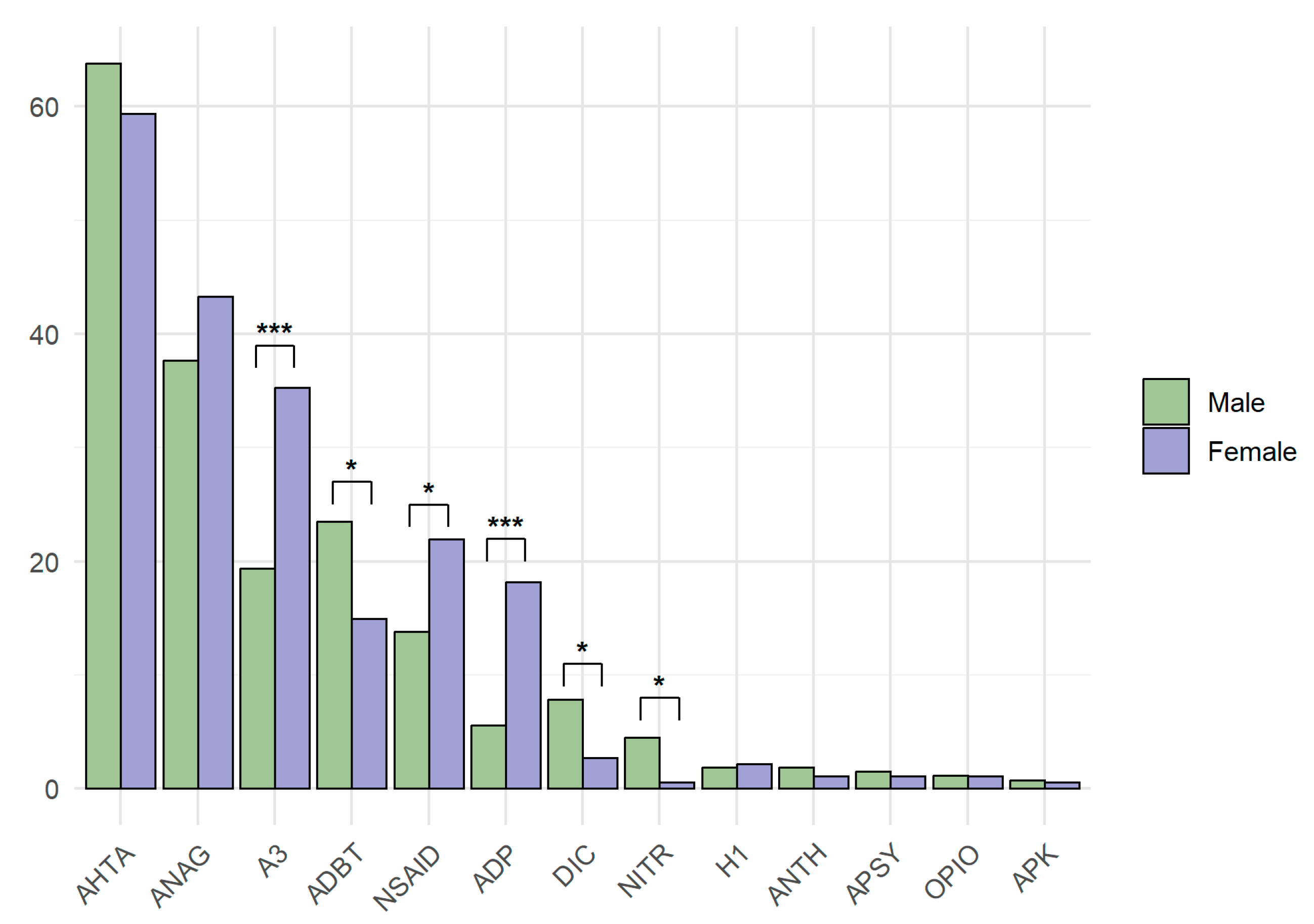
Figure 2.
(a) Distribution of Gamma-glutamyl transferase (U/L) by sex. (b) De Ritis ratio by sex.
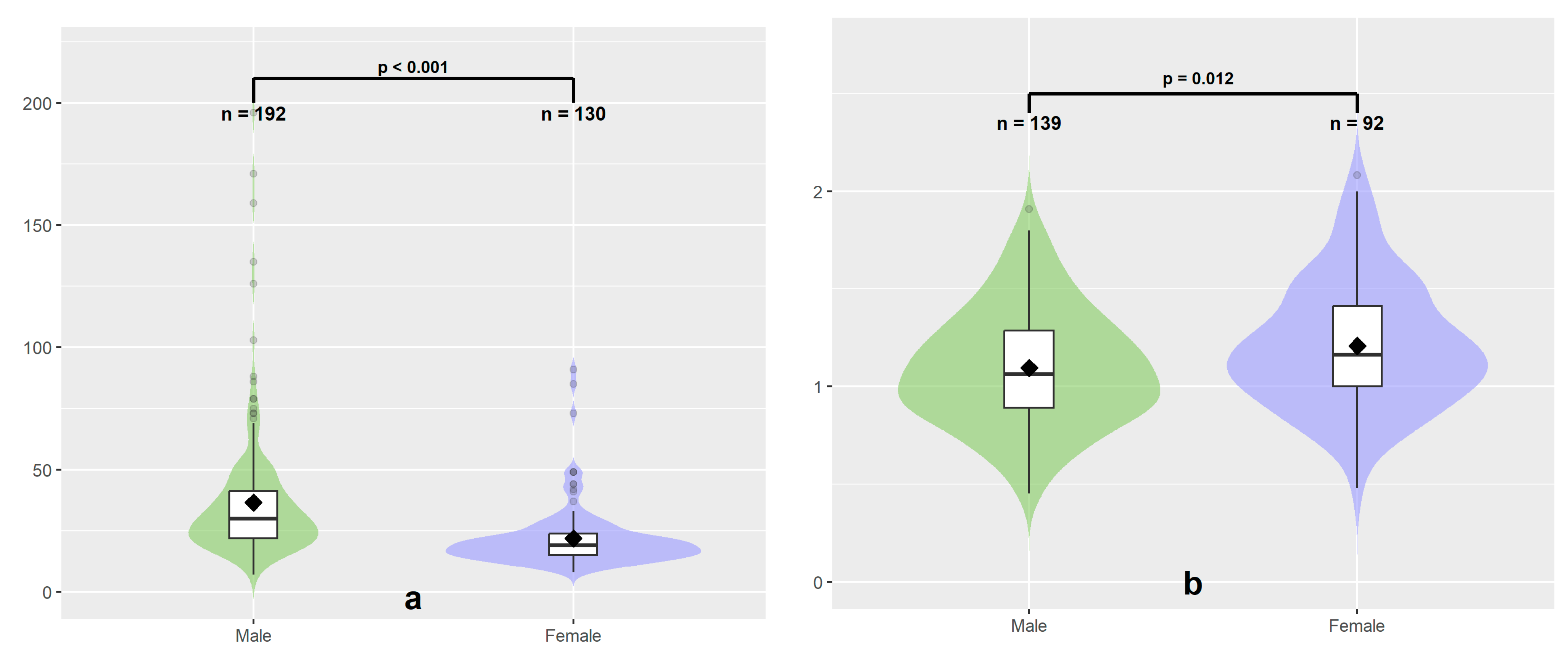
Figure 3.
Distribution of FIB-4 by sex (n = 223; male = 131, female = 92). Note: Participants with known chronic liver disease, viral or non-viral, were excluded from this analysis (n = 19).
Figure 3.
Distribution of FIB-4 by sex (n = 223; male = 131, female = 92). Note: Participants with known chronic liver disease, viral or non-viral, were excluded from this analysis (n = 19).
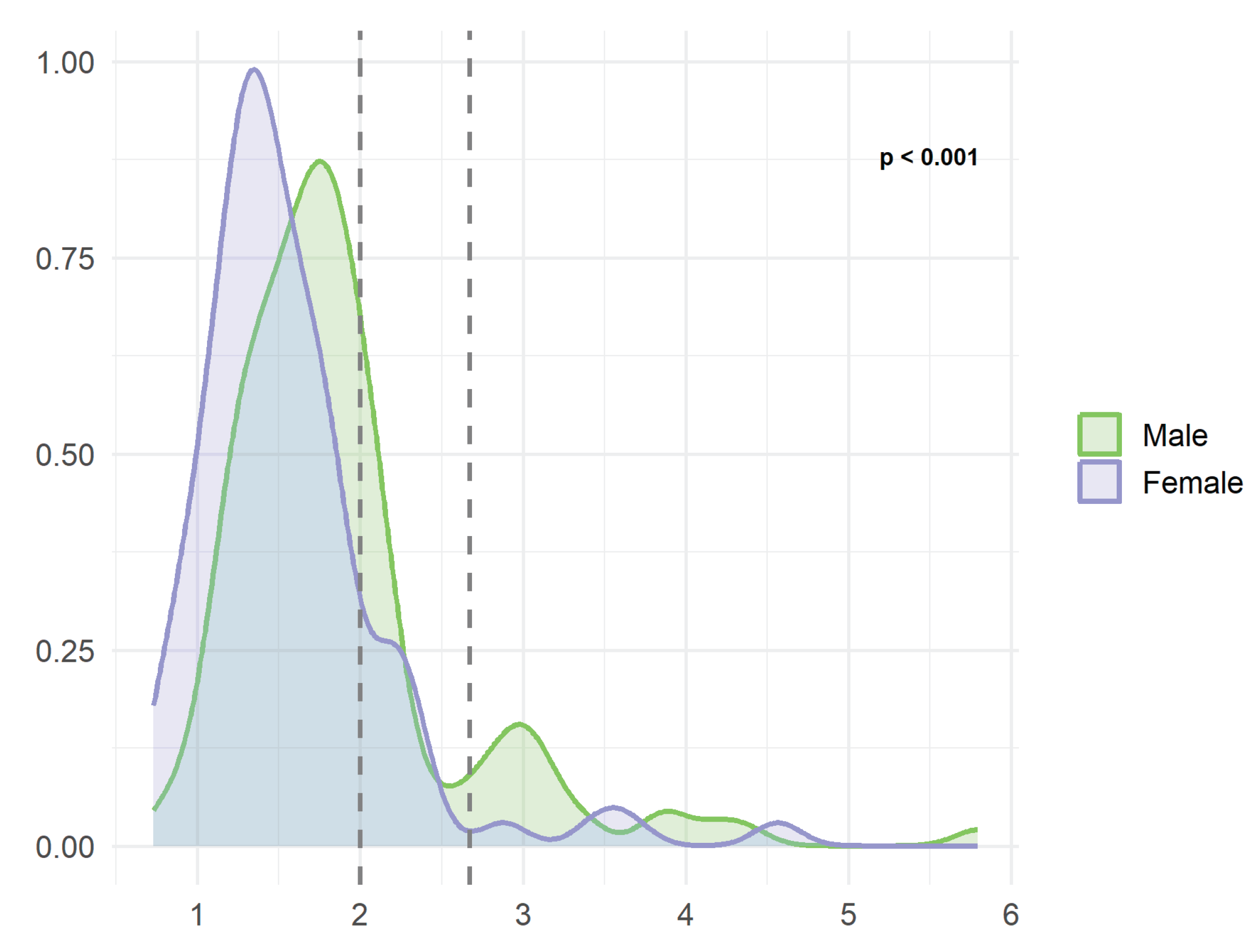

Table 1.
Characteristics of the total sample (n = 931).
| Abstainer (n = 349) |
Non-risk drinker (n = 127) |
Risk drinker (n = 455) |
Total (n = 931) |
p | |
|---|---|---|---|---|---|
| Sex | |||||
| Male | 88 (25.2%) | 62 (48.8%) | 268 (58.9%) | 418 (44.9%) | < 0.01 |
| Female | 261 (74.8%) | 65 (51.2%) | 187 (41.1%) | 513 (55.1%) | |
| Age | 70.0 (67.5-75.1) | 70.0 (67.8-75.4) | 69.8 (67.8-72.8) | 70.0 (67.7-74.1) | 0.30 |
| Educational level | |||||
| No formal education | 127 (36.6%) | 33 (26.8%) | 88 (19.8%) | 248 (27.1%) | < 0.01 |
| Primary education | 172 (49.6%) | 71 (57.7%) | 238 (53.6%) | 481 (52.6%) | |
| Secondary or higher education | 48 (13.8%) | 19 (15.5%) | 118 (26.6%) | 185 (20.2%) | |
| Alcohol consumption | |||||
| SDU per week | 0 (0) | 1 (0-3) | 7 (2-14) | 0 (0-7) | < 0.01 |
| SDU per time | 0 (0) | 1 (1-1) | 2 (1-2) | 1 (0-2) | < 0.01 |
| Number of drugs | |||||
| 0 | 114 (32.7%) | 92 (72.4%) | 45 (9.9%) | 251 (27.0%) | < 0.01 |
| 1 | 51 (14.6%) | 17 (13.4%) | 146 (32.1%) | 214 (23.0%) | |
| 2 | 74 (21.2%) | 8 (6.3%) | 133 (29.2%) | 215 (23.1%) | |
| 3 | 55 (15.8%) | 6 (4.7%) | 83 (18.2%) | 144 (15.5%) | |
| 4 | 36 (10.3%) | 2 (1.6%) | 35 (7.7%) | 73 (7.8%) | |
| ≥5 | 19 (5.44%) | 2 (1.6%) | 13 (2.9%) | 34 (3.7%) | |
| Drugs consumption | |||||
| NSAID | 62 (17.8%) | 16 (12.6%) | 78 (17.1%) | 156 (16.8%) | 0.39 |
| Analgesics | 107 (30.7%) | 8 (6.3%) | 182 (40.0%) | 297 (31.9%) | < 0.01 |
| Nitrates | 12 (3.4%) | 1 (0.8%) | 13 (2.9%) | 26 (2.8%) | 0.33 |
| Dicoumarinics | 19 (5.4%) | 1 (0.8%) | 26 (5.7%) | 46 (4.9%) | 0.04 |
| Antidepressants | 49 (14.0%) | 2 (1.6%) | 49 (10.8%) | 100 (10.7%) | < 0.01 |
| A3 | 89 (25.5%) | 5 (3.9%) | 118 (25.9%) | 212 (22.8%) | < 0.01 |
| ANTH | 3 (0.9%) | 2 (1.6%) | 7 (1.5%) | 12 (1.3%) | 0.66 |
| Antipsychotics | 6 (1.7%) | 0 (0%) | 6 (1.3%) | 12 (1.3%) | 0.44 |
| Antiparkinsonian | 0 (0%) | 0 (0%) | 3 (0.7%) | 3 (0.3%) | 0.38 |
| H1 | 8 (2.3%) | 2 (1.6%) | 9 (2.0%) | 19 (2.0%) | 0.95 |
| Opioids | 8 (2.3%) | 4 (3.2%) | 5 (1.1%) | 17 (1.8%) | 0.20 |
| Methotrexate | 1 (0.3%) | 1 (0.8%) | 0 (0%) | 2 (0.2%) | 0.12 |
| Antidiabetics | 72 (20.6%) | 8 (6.3%) | 91 (20.0%) | 171 (18.4%) | < 0.01 |
| HTA | 173 (49.6%) | 19 (15.0%) | 282 (62.0%) | 474 (50.9%) | < 0.01 |
Note: NSAID, Non-steroidal anti-inflammatory drug; A3, Anxiolytics, antiepileptics and hypnotics; ANTH, Antihistamines antiallergics; H1, Antihistaminics H1 and antiemetics; HTA, Antihypertensive and alpha blockers. Categorical variables are presented as n (%), and continuous variables as mean ± standard deviation (normally distributed variables) or median (interquartile range) (non-normally distributed variables).
Table 2.
Characteristics of the risk drinkers by sex (n = 455).
| Female (n = 187) |
Male (n = 268) |
Total (n = 455) |
p | |
|---|---|---|---|---|
| Age | 69.59 (67.59-72.12) | 70.25 (67.83-73.18) | 69.84 (67.78-72.80) | 0.14 |
| Educational level | ||||
| No formal education | 45 (24.7%) | 43 (16.4%) | 88 (19.8%) | 0.05 |
| Primary education | 97 (53.3%) | 141 (53.8%) | 238 (53.6%) | |
| Secondary or higher education | 40 (22.0%) | 78 (29.8%) | 118 (26.6%) | |
| IMC | 29.2 ± 4.5 | 29.0 ± 3.9 | 29.1 ± 4.2 | 0.72 |
| Tabaco | ||||
| No smoker | 154 (88.0%) | 56 (22.6%) | 210 (49.7%) | < 0.01 |
| Ex-smoker | 14 (8.0%) | 145 (58.5%) | 159 (37.6%) | |
| Smoker | 7 (4.0%) | 47 (19.0%) | 54 (12.8%) | |
| Alcohol consumption | ||||
| SDU per week | 2 (1-7) | 9 (6-16) | 7 (2-14) | < 0.01 |
| SDU per time | 1 (1-2) | 2 (1-3) | 2 (1-2) | < 0.01 |
| Number of drugs | ||||
| 0 | 8 (4.3%) | 37 (13.8%) | 45 (9.9%) | |
| 1 | 65 (34.8%) | 81 (30.2%) | 146 (32.1%) | |
| 2 | 56 (30.0%) | 77 (28.7%) | 133 (29.3%) | 0.08 |
| 3 | 37 (19.8%) | 46 (17.2%) | 83 (18.2%) | |
| 4 | 15 (8.0%) | 20 (7.5%) | 35 (7.7%) | |
| ≥5 | 6 (3.21%) | 7 (2.6%) | 13 (2.9%) | |
| Number of comorbidities | 2 (1-3) | 2 (2-3) | 2 (1-3) | 0.02 |
| Comorbidities | ||||
| Hypertension | 107 (60.1%) | 161 (64.4%) | 268 (62.6%) | 0.37 |
| Diabetes Mellitus | 40 (22.5%) | 69 (27.6%) | 109 (25.5%) | 0.23 |
| Dyslipidemia | 122 (68.5%) | 158 (63.2%) | 289 (65.4%) | 0.25 |
| Obesity | 41 (23.0%) | 61 (24.4%) | 102 (23.8%) | 0.74 |
| Heart disease | 15 (8.4%) | 54 (21.6%) | 69 (16.1%) | < 0.01 |
| Cerebrovascular accident | 6 (3.4%) | 15 (6.0%) | 21 (4.9%) | 0.26 |
| Psychiatric disorders | 16 (9.0%) | 11 (4.4%) | 27 (6.3%) | 0.05 |
| Peripheral artery disease | 1 (0.6%) | 9 (3.6%) | 10 (2.3%) | 0.05 |
| Chronic non-viral liver disease | 3 (1.7%) | 10 (4.0%) | 13 (3.0%) | 0.25 |
| Chronic viral liver disease | 2 (1.1%) | 5 (2.0%) | 7 (1.6%) | 0.70 |
| Gastroduodenal ulcer | 3 (1.7%) | 7 (2.8%) | 10 (2.3%) | 0.53 |
| Bronchial asthma | 8 (4.5%) | 4 (1.6%) | 12 (2.8%) | 0.08 |
| COPD | 7 (3.9%) | 31 (12.4%) | 38 (8.9%) | < 0.01 |
| Cancer | 10 (5.6%) | 32 (12.8%) | 42 (9.8%) | 0.01 |
Note: COPD, Chronic Obstructive Pulmonary Disease. Categorical variables are presented as n (%), and continuous variables as mean ± standard deviation (normally distributed variables) or median (interquartile range) (non-normally distributed variables).
Disclaimer/Publisher’s Note: The statements, opinions and data contained in all publications are solely those of the individual author(s) and contributor(s) and not of MDPI and/or the editor(s). MDPI and/or the editor(s) disclaim responsibility for any injury to people or property resulting from any ideas, methods, instructions or products referred to in the content. |
© 2026 by the authors. Licensee MDPI, Basel, Switzerland. This article is an open access article distributed under the terms and conditions of the Creative Commons Attribution (CC BY) license (http://creativecommons.org/licenses/by/4.0/).
Copyright: This open access article is published under a Creative Commons CC BY 4.0 license, which permit the free download, distribution, and reuse, provided that the author and preprint are cited in any reuse.


