
Submitted:
01 June 2026
Posted:
02 June 2026
You are already at the latest version
Abstract
Inner Mongolia is the dominant spring wheat production area in northern China and a core commodity grain supply base. Against the background of global warming, mete-orological disasters, such as drought, dry-hot winds, and frost, are occurring more frequently and with increasing overlap, posing a threat to stable spring wheat produc-tion. This study covers the period 1961–2020 and draws on observational data from 107 meteorological stations alongside agricultural and socioeconomic data. Using the Standardized Precipitation Evapotranspiration Index, dry-hot wind index, and frost index, we constructed a reginal disaster index system encompassing drought, dry-hot winds, and frost. Comprehensive risk assessment and zoning were conducted across four dimensions: hazard, exposure, vulnerability, and disaster prevention and mitiga-tion capacity. The results showed that: (1) Temporally, the study area exhibited a sig-nificant warm and dry trend, with intensifying aridification across all growth periods and an abrupt change concentrated in the 1990s. The occurrence range of dry-hot wind trended upward, while that of frost trended downward. (2) Spatially, the comprehen-sive hazard presented a pattern dominated by drought-dry hot wind in the west, drought-frost in the east, and multiple disasters overlapping in the central part. (3) High exposure occurred in major production areas, such as eastern Hulunbuir, Xing'an League, and Bayannur, while vulnerability followed the pattern central part > eastern > western regions. (4) Comprehensive risk analysis showed that sub-high and high-risk areas were concentrated in central Xilingol League and parts of Hulunbuir, whereas low- and sub-low-risk areas occurred in irrigated agricultural regions west of Baotou. The zoning results were consistent with the spatial distributions of yield reduction rate and vulnerability. This study clarifies the spatiotemporal evolution and risk differen-tiation mechanisms of meteorological disasters affecting spring wheat in Inner Mon-golia, providing a scientific basis for disaster prevention, mitigation, and cli-mate-adaptive spring wheat production.
Keywords:
Inner Mongolia
; spring wheat
; meteorological disasters
; risk assessment
1. Introduction
Food security is an important cornerstone of national security systems. As a major grain crop in China [1], the sustained and stable yield of wheat is of great significance for ensuring grain supply, stabilizing the agricultural economy, and promoting social development. The Inner Mongolia Autonomous Region, located in the arid and semi-arid transitional region of northern China, is the sixth-largest grain-producing province and a major grain-exporting province in China [2], occupying a key position in the production layout of spring wheat in northern China.
Against the background of global warming, the temperature in Inner Mongolia has increased significantly (0.36 °C 10a-1), a rate higher than the global warming rate (0.13 °C 10a-1e) [3]. Meanwhile, evapotranspiration has increased, and precipitation patterns have changed markedly, with the frequency and intensity of extreme temperature and precipitation events showing an upward trend [4,5]. Meteorological disasters such as drought, dry-hot winds, and frost occur frequently and are characterized by overlapping disasters and chain-induced damage, which have become the primary constraints restricting steady improvement in spring wheat yield [6,7,8]. In recent years, extensive studies have been conducted worldwide on major meteorological disasters affecting wheat, risk assessment, and regionalization, forming a relatively complete theoretical and methodological system. For example, Zhao [n] accurately reflected the characteristics of drought stress during the key growth periods of winter wheat using the modified standardized precipitation evapotranspiration index (PMRS–SPEI), thereby improving the monitoring applicability of agricultural drought indices [9]. Many scholars have established discriminant indices for dry-hot winds by growth stage and intensity based on regional climatic characteristics and crop growth processes, effectively improving the accuracy of regional dry-hot wind monitoring and risk assessment. Li et al. [10] analyzed observational data from 12 meteorological stations across Ningxia and found that air temperature, humidity, and precipitation were the key meteorological factors affecting high-temperature low-humidity-type and post-rain wilting-type dry-hot wind events affecting spring wheat, respectively. The established regression equation can effectively simulate the occurrence of dry-hot winds in various agro-ecological regions [10]. For frost disasters, spring frost is the dominant low-temperature stress during the wheat seedling stage in northern China. Most studies have considered the critical minimum temperature as the core index for classifying light, moderate, and severe frost levels, revealing their occurrence frequency and spatial distribution patterns, thus providing a scientific basis for frost damage prevention [11,12,13].
Various approaches have been developed for risk assessment, including mathematical statistics based on meteorology and yield [14], risk assessment methods based on fuzzy mathematics [15], neural network models [16], and natural disaster risk theory [17]. Natural disaster risk assessment overcomes the limitations of single-method frameworks by integrating meteorological drought characteristics (hazard), crop planting distribution and yield scale (exposure), natural conditions and production levels in growing areas (vulnerability), and regional disaster prevention facilities and technical capacity (disaster prevention and mitigation capacity) into a unified analytical system, enabling comprehensive, multi-factor, and multi-dimensional evaluation. Natural disaster risk theory can be combined with quantitative methods such as the analytic hierarchy process (AHP), geographical information system spatial analysis, Mann–Kendall (M–K) mutation test, and wavelet periodic analysis, thereby achieving a comprehensive analysis of disaster trends, mutation characteristics, and periodic variations [18,19,20]. Although considerable progress has been made in research on meteorological disaster risk for wheat, refined, systematic, and multi-hazard coupled risk assessments tailored to the actual production conditions of spring wheat in Inner Mongolia remain insufficient. Existing studies have mostly focused on single-hazard analyses; however, spring wheat is rarely affected by a single hazard during its growth period. Drought, dry-hot winds, late frost, and other disasters often occur simultaneously, and research on the comprehensive effects of multi-hazard synergistic impacts remains scarce. Inner Mongolia spans a large extent from east to west, with remarkable differences in agroecological and planting regions, leading to distinct spatiotemporal variations in spring wheat growth stages across areas. Nevertheless, most assessment models adopt uniform standards and lack targeted indicator systems designed according to the region and growth stage. Some studies have relied solely on conventional meteorological observation data without sufficiently coupling agricultural production conditions and socioeconomic support capacity for disaster prevention, resulting in limited systematicity and decision-making support for risk assessments. In addition, research on the spatiotemporal evolution of disasters based on long-term observational data is relatively limited, making it difficult to systematically reveal the internal driving mechanisms of meteorological disaster risk evolution for spring wheat in Inner Mongolia under global warming.
Against the above research background and existing problems, this study considers the main spring wheat–producing areas in Inner Mongolia as the research object and the period from 1961 to 2020 as the research timeframe. Focusing on three major meteorological disasters—drought, dry-hot winds, and frost—this study systematically analyzes the occurrence characteristics and conducts a comprehensive risk assessment of meteorological disasters during the spring wheat–growing season. Based on the agroecological zoning and differences in spring wheat growth stages in Inner Mongolia, the study area was divided into two major regions. A differentiated disaster index system was constructed for early, middle, and late growth stages. The multi-time scale SPEI was used to quantitatively characterize drought intensity and occurrence frequency, dry-hot wind disaster grades were determined based on regionally revised criteria, and frost disaster grades were classified using critical minimum temperatures at the seedling stage. The M–K test and wavelet analysis were applied to reveal the temporal evolution trends, abrupt change characteristics, and periodic patterns of each disaster. A comprehensive risk assessment model for spring wheat meteorological disasters was established based on four dimensions: the hazard of disaster-causing factors, exposure of hazard-affected bodies, vulnerability, and disaster prevention and mitigation capacity. This study aims to clarify the spatiotemporal evolution characteristics of major meteorological disasters affecting spring wheat in Inner Mongolia and to identify risk grades and distribution patterns in different ecological regions and growth stages. These results provide a scientific basis for the safe production of spring wheat, agricultural disaster prevention and mitigation planning, planting structure optimization, and the formulation of climate adaptation strategies in Inner Mongolia.
2. Materials and Methods
2.1. Overview of the Study Area
The study area was the Inner Mongolia Autonomous Region (Figure 1), located on the northern frontier of China and the southeastern part of the Mongolian Plateau. Its geographical coordinates range from 97°10′E to 126°29′E and 37°30′N to 53°23′N, presenting a long and narrow shape with an east–west straight-line distance of 2,400 km and a north–south span of approximately 1,700 km. Geographically, it stretches across northeast, north, and northwest China, covering an area of approximately 1.183 million km2, accounting for 12.1% of China’s total land area [21]. Situated in the mid-latitude interior of the Eurasian continent, the region features extensive plateaus, with most areas exceeding 1,000 m in elevation. Distant from the ocean and blocked by mountain ranges along its borders, it is influenced by the East Asian monsoon, forming a typical temperate continental monsoon climate with four distinct seasons: a sharp temperature rise and strong winds in spring; short and hot summers with concentrated precipitation; a rapid temperature drop and frost in autumn; and long and severe winters with frequent cold waves [22]. The regional distribution of heat and moisture differs significantly: the annual average temperature increases from −4 °C in the northeast to 10 °C in the southwest, while annual precipitation decreases from 500 mm in the northeast to less than 50 mm in the southwest, exhibiting a pattern of low temperature and humidity in the northeast and high temperature and drought in the southwest. In terms of geomorphology, plains, mountains, and plateaus are interlaced from the northeast to the southwest, affecting the surface redistribution of heat and moisture and shaping unique natural resource conditions. Relying on abundant natural and climatic resources, the region has developed diverse natural ecosystems, including forests, grasslands, deserts, and barren deserts, as well as characteristic agricultural and pastoral ecosystems, such as forest-pasture ecotones, farming-pastoral ecotones, and rain-fed agricultural systems.
Maize, spring wheat, and soybeans are the principal grain crops. Among them, spring wheat was once the most widely planted grain crop in Inner Mongolia. Owing to its strong adaptability, it is cultivated in both the cool northern regions and the warm southern regions.
2.2. Data Sources
2.2.1. Meteorological Data
The meteorological and agrometeorological data used in this study were obtained from the China Meteorological Data Network (http://www.nmic.cn/). A total of 120 meteorological stations were initially collected, and stations with missing data accounting for more than 25% of the total time series (i.e., more than 10 years) were excluded based on a data integrity assessment, followed by a second round of quality control on the remaining data. Finally, 107 stations with continuous and complete observation series from 1961 to 2020 were retained (their spatial distribution is shown in Figure 1), primarily involving daily meteorological elements such as wind speed, precipitation, air temperature, sunshine duration, and humidity at the 107 meteorological stations from 1961 to 2020. Agrometeorological data mainly included the growth duration, plant height, and planting density of different crops at 11 stations in Inner Mongolia from 1991 to 2008. After sorting the agrometeorological data of spring wheat across 11 stations in Inner Mongolia and referring to the ecological zoning results of the Department of Agriculture and Animal Husbandry of Inner Mongolia Autonomous Region [23], the growth periods of spring wheat in Inner Mongolia were broadly classified into two categories according to the principle of similar meteorological conditions and growth stages: the first category included the northern foot of Yinshan Mountain, the northern foot of the Greater Khingan Range, and the southern foot of the Greater Khingan Range, while the second category included the northern foot of Yinshan Mountain, the southern part of the eastern region, and the western region.

Table 1.
Overview of spring wheat growth periods across different regions of Inner Mongolia.
| Region | Ecological region | Early Growth Stage (Sowing–Emergence) | Middle Growth Stage (Emergence–Milk) | Late Growth Stage (Milk–Maturity) |
|---|---|---|---|---|
| Region 1 | Northern foot of Yinshan Mountain, Southern part of eastern region, and Western region | Late March–Mid-April | Late April–Mid-June | Late June–Mid-July |
| Region 2 | Northern foot of Yinshan Mountain, Northern foot of Greater Khingan Range, and Southern foot of Greater Khingan Range | Mid-April–Early May | Mid-May–Mid-July | Late July–Mid-August |
2.2.2. Crop Production and Economic Indicators
Crop production data mainly included statistical information on spring wheat planting area, yield, and fertilizer application rate, covering nearly 60 years of spring wheat production data for 12 leagues and cities: Baotou, Chifeng, Tongliao, Ordos, Hulunbuir, Ulanqab, Bayannur, Hinggan, Alxa, Xilingol, and Wuhai. The economic indicators consisted of seven items: labor force, irrigated farmland area, per capita net income, total agricultural machinery power, agricultural film application rate, agricultural chemical fertilizer application rate, and rural electricity consumption. The data were obtained from statistical publications, including Fifty Years of Agricultural and Animal Husbandry Economy in Inner Mongolia, Inner Mongolia Statistical Yearbook, and Inner Mongolia Economic and Social Survey Yearbook.
2.3. Construction of Disaster Indicators
2.3.1. Drought Index
SPEI is a drought index that comprehensively considers the effects of precipitation and evapotranspiration. It features multiple timescales and reflects the interannual drought variations at different temporal scales and regions. SPEI values can be calculated using the monthly mean temperature and total precipitation data [24]. Drought is classified into five grades according to internationally accepted SPEI classification standards: no drought, light drought, moderate drought, severe drought, and extreme drought.
Drought frequency represents the frequency of drought occurrence and is defined as the ratio of the number of drought years to the total number of years. The frequency of occurrence of each drought grade at each station during the different growth stages of spring wheat was obtained by annually counting the drought grades and occurrences. Drought range is defined as the proportion of stations experiencing drought relative to the total number of stations in a given year.
The spring wheat growing season was divided into three periods: early, middle, and late growth stages. The early growth stage corresponded to the period from sowing to emergence; the middle growth stage corresponded to the period from emergence to milking; and the late growth stage corresponded to the period from milking to maturity. The occurrence frequencies of the different drought grades during each growth stage were calculated separately. According to the growth stages of spring wheat in each region, the early growth stage of Region 1 mainly covered March to April, and its drought characteristics were represented by the 2-month scale SPEI for April (April SPEI-2). The middle growth stage mainly covered April to June and was represented by the 3-month scale SPEI for June (June SPEI-3). The late growth stage mainly covered June to July and was represented by the 2-month scale SPEI for July (July SPEI-2). Similarly, the early growth stage of Region 2 was represented by the 2-month scale SPEI for May (May SPEI-2), the middle growth stage by the 3-month scale SPEI for July (July SPEI-3), and the late growth stage by the 2-month scale SPEI for August (August SPEI-2).
2.3.2. Dry-Hot Wind Index
Dry-hot winds mainly affect spring wheat during the heading, flowering, grain-filling, and milking stages. Therefore, three growth stages of spring wheat, namely heading–anthesis, anthesis–milk, and milk–maturity, were selected for the assessment of dry-hot wind disasters. Considering the climatic characteristics of dry-hot winds and actual disaster conditions in Inner Mongolia, and drawing on relevant research results by Liu et al. [25] and Yang et al. [23], the disaster grade indices of dry-hot winds suitable for each growth stage of spring wheat in Inner Mongolia were determined (Table 2). The occurrence frequency and range of dry-hot winds at different growth stages of spring wheat were statistically analyzed.
2.3.3. Frost Index
Frost (hereinafter referred to as spring frost) is one of the most severe agriculture-related extreme events in the temperate regions of the Northern Hemisphere, and its occurrence risk is increasing [26]. This study focused on the impact of frost on the seedling growth of spring wheat and analyzed the occurrence frequency and spatial extent of frost across different growth stages. The grading indices for spring wheat frost damage are listed in Table 3.
2.4. Disaster Risk Assessment
2.4.1. Comprehensive Hazard
Based on the occurrence characteristics of drought, dry-hot winds, and frost during the spring wheat growth period, quantitative calculations were conducted to determine the comprehensive hazard of different disasters at each growth stage. For drought hazards during the spring wheat growth period, the occurrence frequencies of different grades of drought were counted separately during the early, middle, and late growth stages of spring wheat. Weights of 0.1, 0.2, 0.3, and 0.4 were assigned to light drought, moderate drought, severe drought, and extreme drought, respectively. Drought hazard at a single growth stage was obtained by multiplying the frequency of occurrence of each drought grade by the corresponding weight. The drought hazard for the entire growth period was calculated through the weighted summation of drought hazards at each growth stage using the corresponding weights, where the weight of each stage was determined by the correlation coefficient between the disaster index and meteorological yield. The calculation methods for dry-hot wind and frost hazards were consistent with those used for drought. The dry-hot wind hazard was derived from the weighted summation of the hazards at three key growth stages: heading–anthesis, anthesis–milk, and milk–maturity. The frost hazard was calculated based on the disaster hazard at the seedling stage. Finally, the comprehensive hazard was derived through weighted calculations by assigning corresponding weights to the drought, dry-hot wind, and frost hazards.
2.4.2. Exposure and Vulnerability Indices
In general, for a given region, the larger the spring wheat cultivation scale, the greater the potential agricultural losses and meteorological disaster risks. Therefore, this study adopted the relative exposure index (E) of the spring wheat planting area in each banner and county to characterize disaster sensitivity and reflect the differences in regional exposure levels. A higher index value indicates a higher degree of exposure. The ratio between the two was used as a quantitative indicator of spring wheat disaster exposure in the region by statistically analyzing the spring wheat planting area and total crop planting area in each banner, county, and district.
Vulnerability is typically characterized by the degree of disaster loss of the hazard-affected body. Commonly used indicators include disaster-affected areas and disaster impact degrees. Limited by the lack of measured data, such as disaster-affected areas and disaster degree in each banner and county of Inner Mongolia, this study collected statistics on spring wheat yield and planting area from 1961 to 2020 across 12 leagues and cities of Inner Mongolia and calculated the yield reduction rate of spring wheat using the five-year moving average method. The yield reduction rate was used as a quantitative indicator of the vulnerability of hazard-affected bodies.
2.4.3. Disaster Prevention and Mitigation Capacity
Regional disaster prevention and mitigation capacity depends not only on the stress resistance of crops themselves but is also jointly affected by the level of regional economic development and agricultural production conditions. Using banners, counties, and districts as research units, this study selected seven indicators to comprehensively characterize the agricultural disaster prevention and mitigation capacity of each region: the size of the rural labor force, irrigated land area, per capita net income of farmers, total agricultural machinery power, agricultural film usage, agricultural fertilizer application rate, and agricultural electricity consumption.
2.4.4. Construction of Risk Assessment Index
The core components of the meteorological disaster risk assessment during the spring wheat growth period included four aspects: disaster hazards, exposure of hazard-affected bodies, vulnerability of hazard-affected bodies, and disaster prevention and mitigation capacity. These four factors are coupled and interact synergistically, jointly determining the overall changes in regional agricultural disaster risk. These indicators were subjected to range standardization, and the four standardized indicators were weighted and integrated to calculate the regional agricultural disaster risk assessment index. The index is positively correlated with the regional disaster risk level; that is, the higher the index value, the higher the regional agricultural disaster risk level. Conversely, the lower the index value, the lower the regional agricultural disaster risk level. The formula is as follows:
where R is the comprehensive risk assessment index of meteorological disasters for spring wheat, which is positively correlated with the degree of risk of meteorological disasters caused by spring wheat. That is, the higher the index value, the greater the meteorological disaster risk faced by spring wheat. D denotes the total evaluation value of the hazard of major meteorological disaster factors; E denotes the total evaluation value of the exposure of hazard-affected bodies; F denotes the total evaluation value of the vulnerability of hazard-affected bodies; T denotes the total evaluation value of disaster prevention and mitigation capacity; and WD, WE, WF, and WT are the weight coefficients of disaster-causing factor hazards, exposure of hazard-affected bodies, vulnerability of hazard-affected bodies, and disaster prevention and mitigation capacity, respectively, which are used to quantify the contribution of each dimensional indicator in the comprehensive risk assessment. The risk assessment system for major meteorological disasters during the spring wheat growth period is shown in Table 4, where the weights are calculated using the AHP.
3. Results
3.1. Characteristics of Drought During the Spring Wheat Growth Period
3.1.1. Temporal Variation of Drought During the Spring Wheat Growth Period
The interannual variations in SPEI during the spring wheat growth period across different regions of Inner Mongolia are shown in Figure 2. In the early growth stage, the SPEI values across all regions showed a decreasing trend, indicating a drying tendency. Among them, SPEI values in Region 1 ranged from −1.64 to 1.43, with 2004 being the driest year and 2010 the wettest year. In 1962, the UF curve shifted from negative to positive, indicating a transition from dry to wet conditions. After the 1970s, the UF curve changed from positive to negative and exceeded the 0.05 significance level in 2004, indicating a significant downward trend in the SPEI and an evident drying tendency. Region 2 and the entire region exhibited the same SPEI variation pattern; the UF curve changed from positive to negative in 1965 and exceeded the 0.05 significance level in 1998, showing a significant drying trend. According to the M–K mutation test, the abrupt years when the SPEI shifted from wet to dry were 1994 for Region 1, 1989 for Region 2, and 1994 for the entire region. The SPEI trends across all regions during the middle and late growth stages were consistent with those during the early growth stage, with negative climate tendency rates indicating a drying tendency. During the middle growth stage, Region 1 and the entire region showed a drying trend only in a few years from 1969 to 1971 before 2000, and a wetting trend in all other years. Region 2 exhibited a drying trend from 1965 to 1973 and a wetting trend in the other years. After 2000, the UF curves for all regions were below zero, indicating a drying tendency. During the late growth stage, Region 1 showed alternating dry and wet trends before 2000, which shifted to a persistent drying trend. The UF curve of Region 2 was positive only in 1985, 1988, 1990, 1993, 1996, and 1998, indicating a wetting tendency, whereas it exhibited a drying trend in all the other years. The wet years for the entire region were concentrated between 1992 and 1999. Based on the M–K mutation test, multiple intersections between the UF and UB curves were observed across all regions during the early growth stage, indicating highly unstable drought and flood variations. During the late growth stage, abrupt drought years for Region 2 and the entire region were mainly concentrated in 1996. Region 1 exhibited multiple intersections between its UF and UB curves, suggesting unstable drought and flood fluctuations.
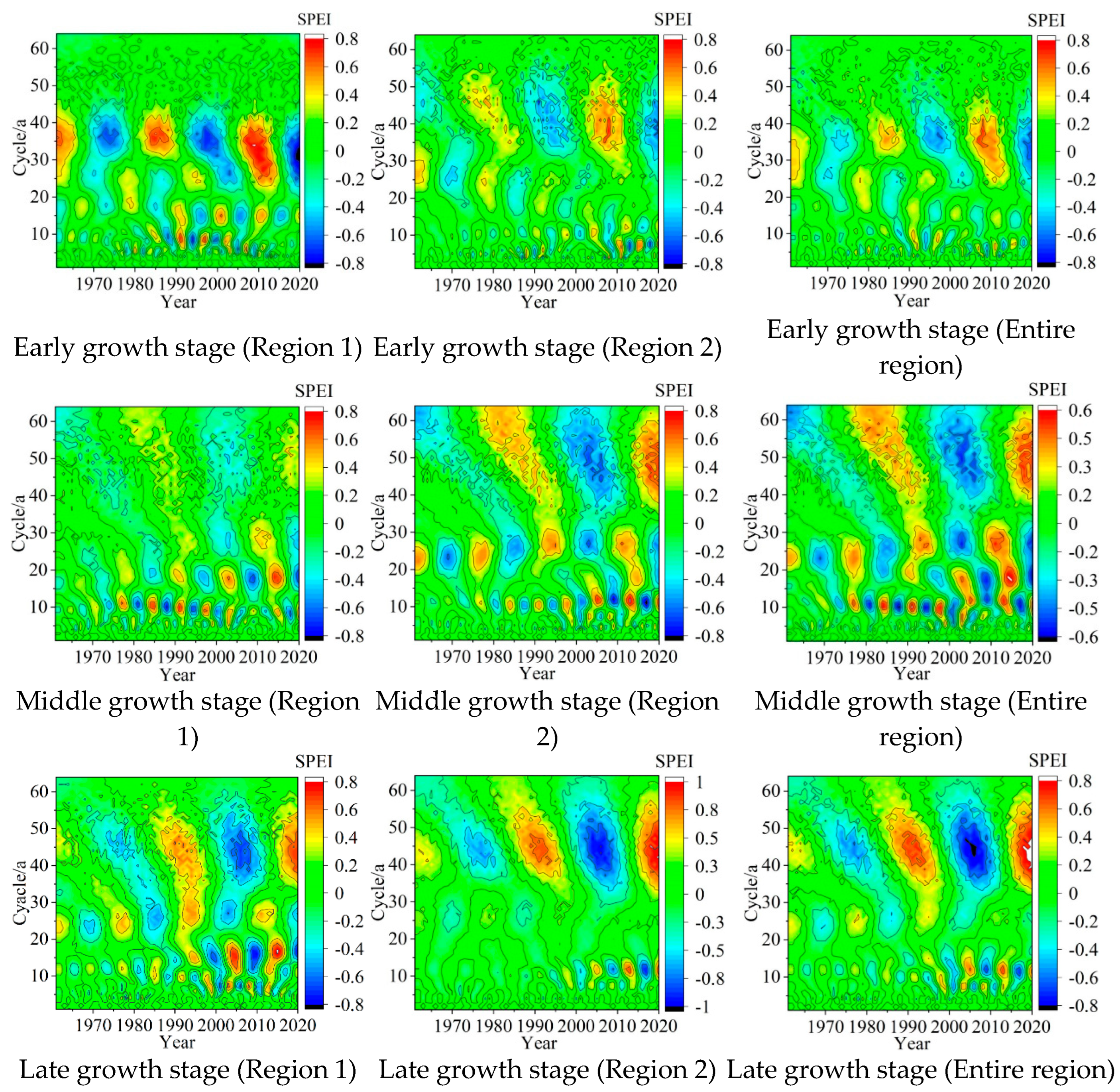
In this study, the non-orthogonal Morlet wavelet was used as the basis function to perform a continuous wavelet transform on the SPEI time series, to reveal the periodic oscillation intensity and spatial differentiation characteristics of SPEI at different timescales in the spring wheat planting area. In the early growth stage, wavelet analysis showed that Region 1 and the entire region exhibited a 24-year dry–wet cycle at the 36-year timescale and a 17-year dry–wet cycle at the 26-year timescale. Oscillations were more frequent at the 15- and 7-year scales, with more dry–wet cycles. Region 2 showed a 30-year dry–wet cycle at the 46-year scale and a 17-year dry–wet cycle at the 26-year scale, with denser dry–wet cycles at the 11- and 7-year scales. In the middle growth stage, all three study regions presented a 37-year dry–wet cycle at the 56-year scale and a 17-year dry–wet cycle at the 27-year scale. Periodic oscillations in each region were more active at the 11-year scale, showing significant dry–wet cycle characteristics. In addition, Region 1 and the entire region displayed distinct dry–wet cycles at the 18-year scale. In the late growth stage, all three regions exhibited an 18-year dry–wet cycle at the 44-year scale. Region 1 and the entire region showed a 17-year dry–wet cycle at the 26-year scale. Further subdivision revealed that Region 1 exhibited significant dry–wet cycles at the 16- and 7-year scales, Region 2 exhibited an evident dry–wet cycle at the 12-year scale, and the entire region presented distinct dry–wet cycle patterns at the 11- and 7-year scales.
Figure 3.
Contour map of SPEI wavelet variation at different growth stages of spring wheat in Inner Mongolia.
Figure 3.
Contour map of SPEI wavelet variation at different growth stages of spring wheat in Inner Mongolia.
3.1.2. Spatial Variation Characteristics of Drought Across Spring Wheat Growth Stages
The spatial distribution characteristics of the occurrence frequency of drought at different grades during various growth stages of spring wheat are shown in Figure 4. In the early growth stage, the occurrence frequency of light drought ranged from 5% to 23%, with an average of 15%. The frequency was relatively high in East Ujimqin Banner, Xianghuang Banner, Baotou, Hangjin Banner, Ejin Horo Banner, Ongniud Banner, Chifeng, and Kulun, whereas it was relatively low in Chahar Right Middle Banner, Uxin Banner, and Horqin Left Middle Banner. The occurrence frequency of moderate drought was 2–17%, with relatively high values (above 16%) in Boketu, Bayan Obo, Etuoke Banner, Jarud Banner, and Linxi, whereas that in Xianghuang Banner was relatively low. Areas with a high incidence of severe drought were concentrated in Yabrai and Chahar Right Middle Banner. Spatially, the occurrence frequency of extreme drought was 0–1% in most regions, remaining at a low level overall. In the middle growth stage, the average occurrence frequency of light drought was 15%. The frequency was relatively high (> 23%) in East Ujimqin Banner, Darhan Muminggan United Banner, Shangdu, Dalad Banner, Fuhe, and Taibus Banner and low (below 5%) in Alxa Right Banner and Chifeng. Regions with a high occurrence frequency of moderate drought (11–17%) were mainly distributed across Alxa League in western Inner Mongolia and the central areas. The occurrence frequency of severe drought was relatively high in Wuhai and Ningcheng County, but low in Siziwang Banner and Fuhe. The occurrence frequency of extreme drought was generally low across all regions, ranging from 1% to 5%. In the late growth stage, the occurrence frequency of light drought in most areas ranged from 14% to 18%. The overall occurrence frequencies of moderate and severe droughts in the western region were relatively low. High-incidence areas of moderate drought mainly included Sonid Right Banner, Xilinhot, and Zhengxiangbai Banner, and the spatial distribution of the high-incidence areas of severe drought was relatively scattered. Except for the relatively high frequency of extreme drought events observed in the western regions, occurrences in other areas remained predominantly within the 0–2% range. In summary, drought grades during various growth stages of spring wheat were dominated by light and moderate droughts, among which light drought exhibited the highest occurrence frequency, whereas severe and extreme droughts occurred less frequently.
3.1.3. Characteristics of Dry-Hot Wind Disasters During the Growth Period of Spring Wheat
A statistical analysis was conducted on the occurrence frequency of dry-hot winds during the three growth stages of spring wheat, with the results presented in Figure 5. During the heading–anthesis stage (Figure 5a), the occurrence frequency of dry-hot winds ranged from approximately 0% to 17%, with a mean of 5%. The frequency at most stations was below 7%, accounting for 78% of all stations, which were concentrated in the central and eastern regions. Spatially, areas with a relatively high occurrence frequency were mainly distributed in Xin Barag Right Banner, Ejin Banner, Dengkou, Baotou, Gaolianban, Linxi, and other regions, showing a scattered distribution pattern. Statistics on the occurrence frequency of dry-hot winds at different intensity levels across various leagues and cities (Figure 5d) indicated that dry-hot winds were dominated by light intensity across all leagues and cities, except for Alxa League. Bayannur City recorded the highest occurrence frequency (8%). The frequency of moderate and severe dry-hot winds was zero in certain regions, such as Wuhai and Ulanqab. During the anthesis–milk stage, the occurrence frequency of dry-hot winds varied from 0% to 95%, with an average of 30%. The high-value regions were concentrated in Alxa League in the western part of the study area, whereas the low-value regions were mainly distributed in Hohhot, southern Siziwang Banner, and Hulunbuir, where the frequency was below 21%. Dry-hot winds across the leagues and cities were dominated by severe and light intensities. Alxa League recorded the highest severe dry-hot wind frequency (57%), substantially exceeding that of the other regions. The occurrence frequency of dry-hot winds at all intensity levels was below 10% in Wuhai, Ulanqab, and Hulunbuir, indicating a low incidence. During the milk–maturity stage, the occurrence frequency of dry-hot winds ranged from 0% to 92%, with a mean of 9%. Spatial differentiation was more pronounced; Alxa League in the western region exhibited a high occurrence frequency of over 37%, whereas the frequency was relatively low in the central and eastern regions, with most stations recording frequencies below 18%. Severe dry-hot winds were predominant across the leagues and cities. The frequency of severe dry-hot winds exceeded 59% in Alxa League and Wuhai, whereas that in other regions was below 15%.
The temporal variation characteristics of the occurrence range of dry-hot winds during different growth periods were analyzed, with the results shown in Figure 6. The drought range exhibited an increasing trend across all growth periods, among which the increasing trend was the largest at the anthesis–milk stage, with a rate of 2.83% per decade. At the heading–anthesis stage, the occurrence range of dry-hot winds was below 10% in most years, with the maximum extent (17%) appearing in 2001. In terms of interdecadal variation, the occurrence range of dry-hot winds first increased before declining, rising from 2.4% during 1980–1999 to 8.51% during 2000–2009, and falling to 7.51% during 2010–2020. At the anthesis–milk stage, the occurrence range of dry-hot winds ranged from 14% to 60%, mostly below 40%, with the maximum value observed in 2010. Its interdecadal variation was similar to that observed at the heading-to-anthesis stage, showing an initial increase followed by a decrease, from 26% to 37% and then declining to 34%. At the milk–maturity stage, the occurrence range of dry-hot winds remained below 20% in most years, exceeding this threshold only in 2001, 2016, and 2017, with the highest recorded value (30%) observed in 2016. Interdecadal variation was consistent with the former two stages, increasing from 6% to 12% and then decreasing to 11%. The M–K mutation test indicated that the mutation years of dry-hot wind occurrence at the heading–anthesis and anthesis–milk stages were 1995 and 1996, respectively. No significant mutation year was detected during the milk–maturity stage.
3.1.4. Characteristics of Frost Disasters During the Spring Wheat Growth Period
Frost disasters in spring wheat primarily occur during the seedling stage. In this study, the occurrence frequencies of frost disasters at different grades during the seedling stage of spring wheat were statistically analyzed, with the results shown in Figure 7. The spatial distribution of the light frost damage frequency is shown in Figure 7a. The occurrence frequency of light damage ranged from 0% to 89%, with an average of 26%. Regions with high occurrence frequencies (above 53%) were distributed in Chifeng, Hulunbuir, and other areas, whereas the central and western regions had relatively low frequencies. The spatial distributions of moderate and severe damage frequencies were consistent with those of light damage. The occurrence frequencies of moderate and severe damage ranged from 0% to 81% and 0% to 86%, with average values of 19% and 20%, respectively. Frost damage during the seedling stage was dominated by light damage.
Temporal variations in the extent of frost damage at different grades during the spring wheat seedling stage are shown in Figure 8. From 1961 to 2020, the extent of light, moderate, and severe frost damage showed decreasing trends, among which severe frost damage had the largest decreasing trend at a rate of 2.6% per decade. The extent of light damage ranged from 5% to 38%, with the largest extent appearing in 1977 and the smallest (5%) occurring in 1997, 2007, and 2014. Interdecadal variation showed a trend of first increasing, then decreasing, and then increasing again, rising from 19% during 1961–1969 to 26% during 1970–1979, then decreasing to 12% during 2000–2010, and finally increasing to 13% during 2011–2019. The extent of moderate damage ranged from 1% to 31%, with the largest extent in 1972 and the smallest in 1998. Interdecadal variation showed an increase followed by a decrease, rising from 17% to 19% and then declining to 10%. The extent of dry-hot wind occurrence in the late growth period ranged from 1% to 27%, with the largest extent in 1967 and the smallest in 2009 and 2014. Interdecadal variation showed a decreasing trend, falling from 18% during 1961–1968 to 5% during 2011–2020. According to the M–K mutation test, the mutation years for light, moderate, and severe damage were 1989, 1991, and 1988, respectively.
3.2. Risk Assessment of Meteorological Disasters During the Spring Wheat Growth Period
3.2.1. Spatial Distribution of Meteorological Disaster Hazard During the Spring Wheat Growth Period
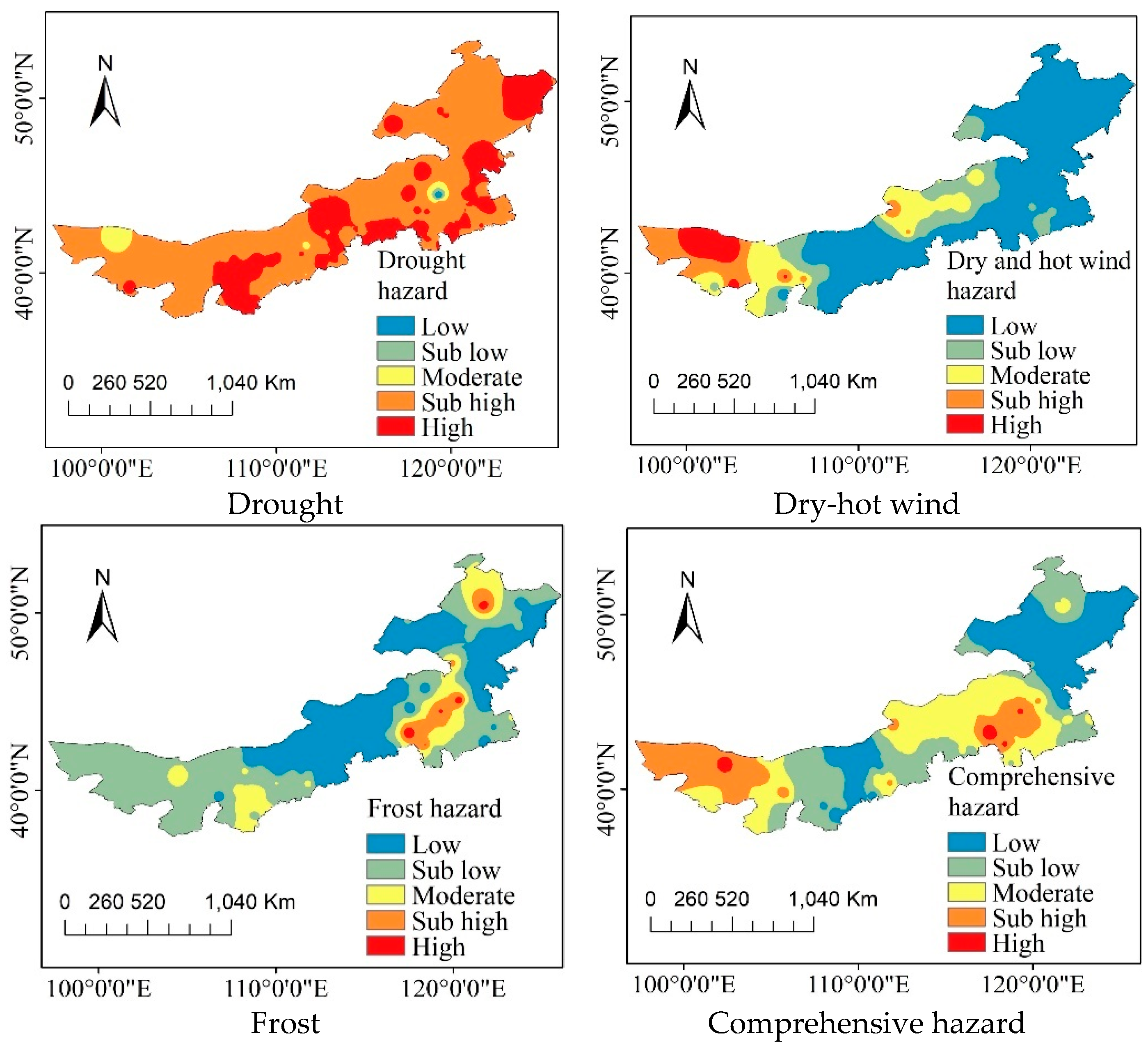
The hazards of drought, dry-hot wind, and frost disasters were calculated based on the frequency of occurrence at different severity levels and their corresponding weights. The comprehensive hazard was derived through a weighted calculation, with the respective weights assigned to the three individual disaster hazards, reflecting the superimposed effect of the three disasters. For drought hazards, the entire region was dominated by sub-high hazard regions, with the proportion of stations in the sub-high and above hazard grades reaching up to 90%. For dry-hot wind disaster hazards, sub-high and high hazard regions were mainly concentrated in Alxa League and Wuhai in the western part, whereas low-hazard regions were concentrated in the central–western, eastern, and northeastern parts of Inner Mongolia. For frost hazards, high-hazard regions were distributed in Chifeng, northern parts of Hinggan League and Tongliao, and Genhe and Tulihe in Hulunbuir. For comprehensive hazards, areas above moderate hazard levels were concentrated in Alxa League, Xilingol League, Chifeng, Tongliao, Hinggan League, and other regions.
Figure 9.
Distribution of meteorological disaster hazards in spring wheat planting areas of Inner Mongolia.
Figure 9.
Distribution of meteorological disaster hazards in spring wheat planting areas of Inner Mongolia.
3.2.2. Assessment of Exposure and Disaster Prevention and Mitigation Capacity in Spring Wheat Planting Areas
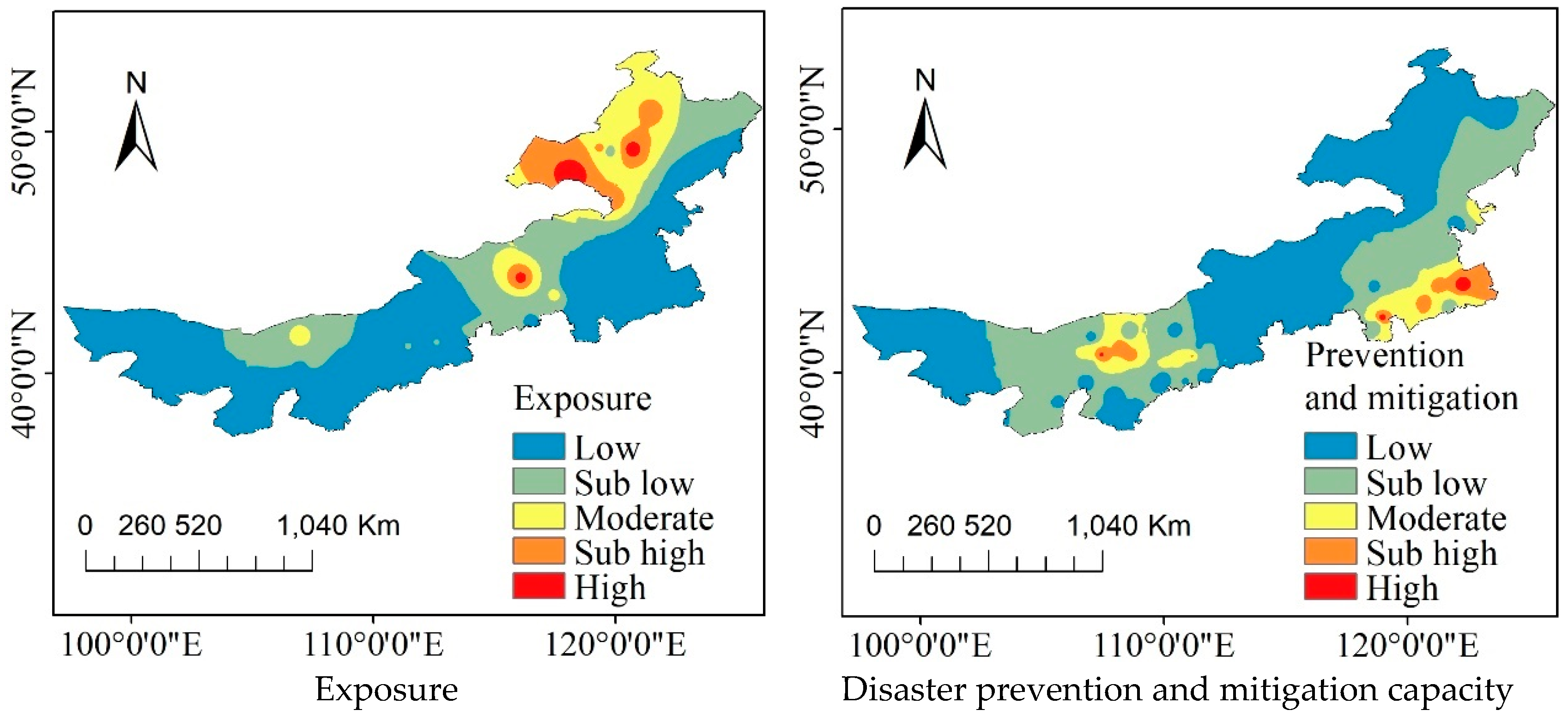
Taking counties and banners as basic units, this study used the ratio of spring wheat planting area to cultivated land area to characterize the exposure of regional disaster-bearing bodies. Limited by historical data, data on the spring wheat sown area and cultivated land area at the banner–county level in Inner Mongolia from 1959 to 2018 were substantially incomplete. Therefore, this study adopted the proportion of spring wheat planting area to cultivated land area over the past 16 years to conduct an exposure assessment. The spatial distribution of exposure in spring wheat planting areas in Inner Mongolia is shown in Figure 8. The exposure of spring wheat planting areas varied significantly among regions. The natural breaks method was used to divide exposure into five grades. Areas with moderate and above exposures were mainly distributed in the eastern part of Hulunbuir, Arxan of Hinggan League, Urat Rear Banner of Bayannur, Xilinhot of Xilingol League, and Hexigten Banner of Chifeng. Most of the other areas were low- and sub-low-exposure regions.
The spatial differentiation of disaster prevention and mitigation capacities in the study area was significant. The regions with moderate, sub-high, and high disaster prevention and mitigation capacities were mainly distributed in Bayannur City and the eastern parts of Chifeng and Tongliao, such as Wuyuan County, Hanggin Rear Banner, Urat Front Banner, Horqin Left Middle Banner, Kailu County, Tongliao City, and Naiman Banner. Most spring wheat planting areas in Inner Mongolia were classified as having low to sub-low w disaster prevention and mitigation capacity, accounting for 78% of all stations. Among them, Arxan in Hinggan League and Sonid Right Banner, Xianghuang Banner, Zhengxiangbai Banner, and Zhenglan Banner in Xilingol League exhibited the weakest disaster prevention and mitigation capacity.
Figure 10.
Assessment of exposure index and disaster prevention and mitigation capacity in spring wheat planting areas of Inner Mongolia.
Figure 10.
Assessment of exposure index and disaster prevention and mitigation capacity in spring wheat planting areas of Inner Mongolia.
3.2.3. Vulnerability Distribution in Spring Wheat Planting Areas
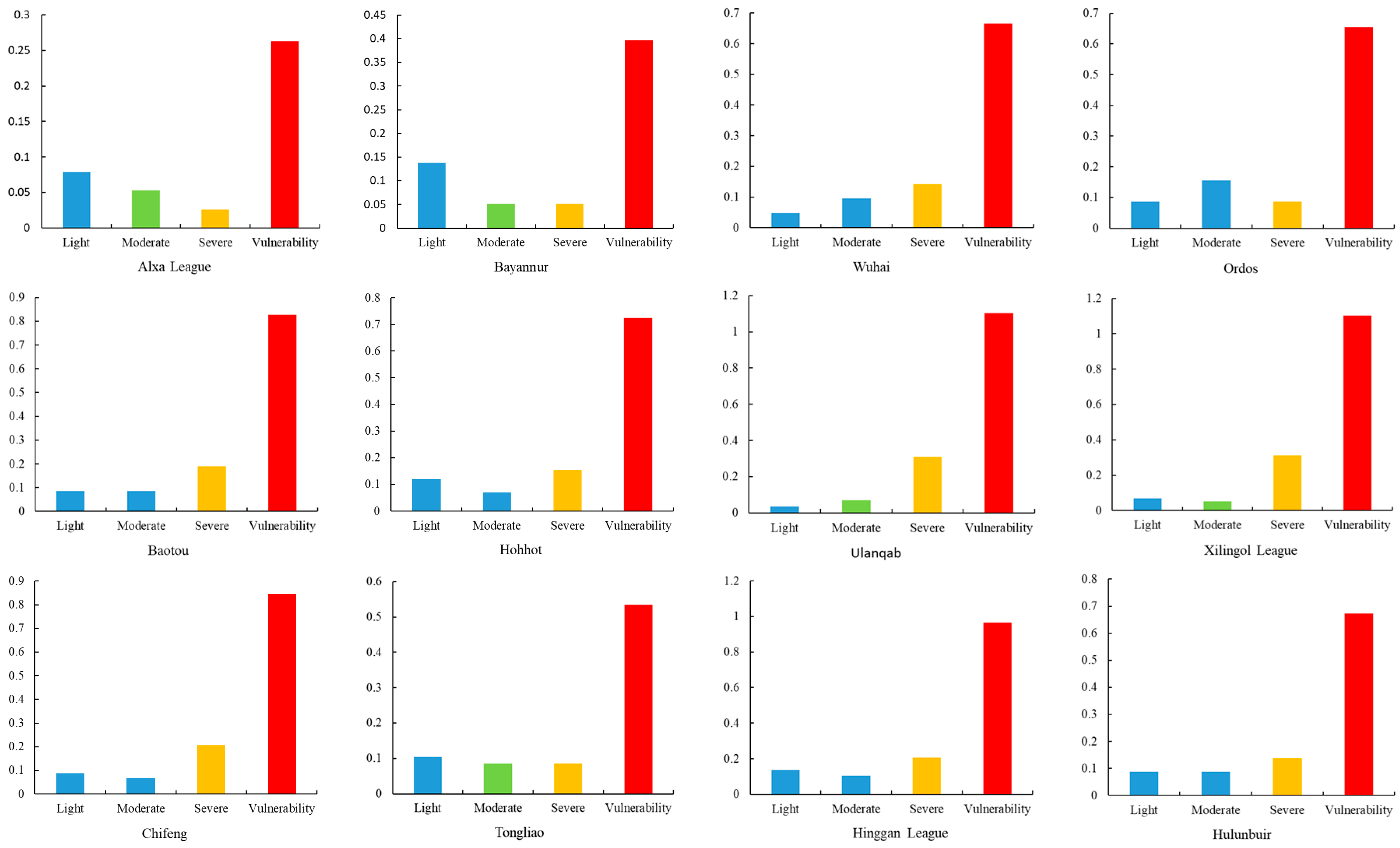
In this study, the yield reduction rate of spring wheat was calculated at the prefecture-level city and league scale to which each banner and county belonged to represent the yield reduction rate of spring wheat in the corresponding banner and county. The yield reduction rate was divided into three grades: light yield reduction for −10% to −5%, moderate yield reduction for −15% to −10%, and severe yield reduction for ≤ −15%. On this basis, an assignment method was adopted, with values of 1, 2, and 3 assigned to light, moderate, and severe yield reduction, respectively. The vulnerability index of regional disaster-bearing bodies was defined as the product of the assigned value of each grade and its occurrence frequency. Figure 7 shows the occurrence frequencies of different yield reduction grades and vulnerability indices across the 12 leagues and cities. In the western region, Alxa League and Bayannur City were dominated by light yield reduction years, Wuhai by severe yield reduction years, and Ordos by moderate yield reduction years. The frequency of total yield reduction years in each league and city ranged from 0.15 to 0.32. In terms of vulnerability index, the order was Wuhai > Ordos > Bayannur > Alxa. In the central region, each league and city was dominated by severe yield reduction years, with occurrence frequencies ranging from 0.15 to 0.31, while the frequencies of moderate and light yield reduction years were relatively low. The frequency of total yield reduction years ranged from 0.34 to 0.43, and the central vulnerability index ranged from 0.72 to 1.1. Among them, Ulanqab and Xilingol League exhibited the highest values, and Hohhot showed the lowest. In the eastern region, Chifeng, Hinggan League, Hulunbuir, and other areas were dominated by severe yield reduction years, whereas Tongliao was mainly characterized by light yield reduction. The vulnerability index in the eastern region ranged from 0.53 to 0.96, with a relatively low value in Tongliao and a high-value area in Hinggan League, following the order Hinggan League > Chifeng > Hulunbuir > Tongliao. Overall, the disaster-bearing body vulnerability index in the central region was generally higher than those in the eastern and western regions.
Figure 11.
Vulnerability assessment of spring wheat planting areas in Inner Mongolia.
3.2.4. Risk Assessment and Regionalization of Major Meteorological Disasters in Spring Wheat Planting Areas
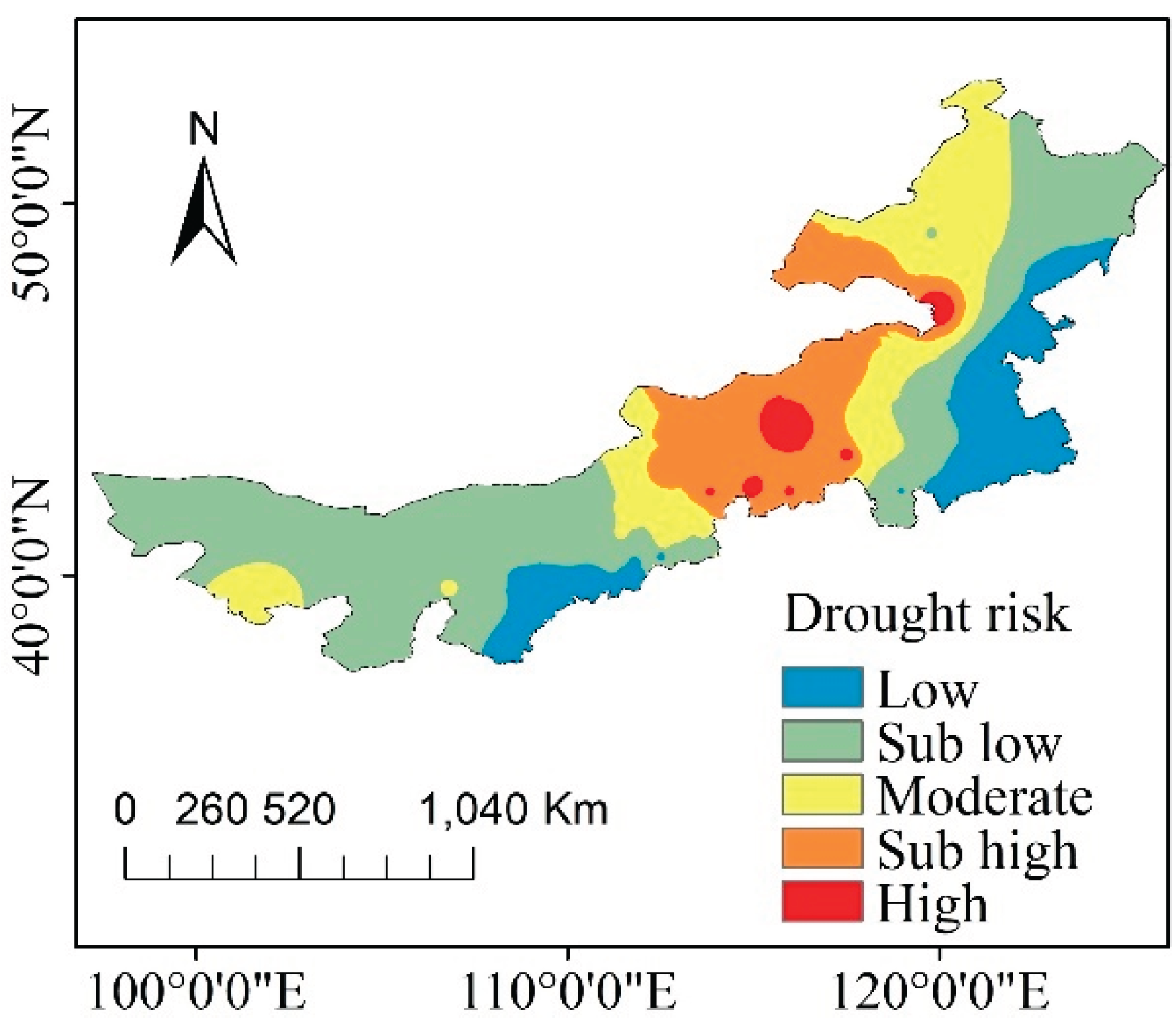
This study established a comprehensive natural disaster risk assessment system based on the hazard dimensions of major meteorological disasters during the spring wheat growth period, exposure and vulnerability of disaster-bearing bodies, and regional disaster prevention and mitigation capacity. A quantitative assessment of the risk of major meteorological disasters during the spring wheat growth period was conducted, with the results shown in Figure 8.
The results indicate that the distribution ranges of high-risk and sub-high-risk regions are relatively small and are mainly concentrated in the central part of Xilingol League and parts of Hulunbuir. Moderate-risk regions are adjacent to sub-high-risk regions and are mainly distributed in Ulanqab, eastern Xilingol League, Chifeng, Hinggan League, Tongliao, and western Hulunbuir. Sub-low-risk and low-risk regions are widely distributed, covering all areas west of Baotou and Hohhot, as well as most parts of Chifeng, Hinggan League, and Tongliao.
To verify the reliability of the risk regionalization results for major meteorological disasters affecting spring wheat, a comparative validation was conducted between the risk regionalization outputs, the multi-year frequency of yield reduction years, and the vulnerability index across 12 leagues and cities in Inner Mongolia. Compared to other regions, the central leagues and cities showed the highest frequency of yield reduction years and vulnerability indices, which is consistent with the distribution of sub-high-risk regions. The frequency of yield reduction years and vulnerability index in the western region were relatively low, which is in good agreement with the distribution characteristic that areas west of Baotou and Hohhot are low-risk regions. The above comparative results indirectly verify that the multi-hazard meteorological disaster risk assessment method constructed in this study is rational and feasible.
Figure 12.
Spatial distribution of meteorological disaster risk index for spring wheat in Inner Mongolia.
Figure 12.
Spatial distribution of meteorological disaster risk index for spring wheat in Inner Mongolia.
4. Discussion
Against the background of global warming, the temperature rise rate in Inner Mongolia has increased significantly, precipitation is unevenly distributed in time and space, and extreme events occur frequently, which have significantly altered the pattern of meteorological disasters affecting spring wheat [27,28,29]. At the temporal scale, this study found that the SPEI during each spring wheat growth period showed a decreasing trend in different regions, with regional dry–wet conditions shifting from humid to arid. The abrupt change points mainly occurred around the 1990s, synchronous with the overall warming and drying processes in Inner Mongolia [27]. The aridification trend was most significant during the early growth stage, indicating that sowing-to-seedling emergence stage of spring wheat is particularly sensitive to climate warming. Water deficit at the seedling stage directly affects emergence rate and population establishment, becoming an early limiting factor for yield formation [30]. Wavelet analysis revealed that droughts in the study area exhibited long-period oscillations of 17–37 years and short-period oscillations of 7–11 years. The long period reflects the forcing of large-scale climate systems, such as the El Niño–Southern Oscillation, Pacific Decadal Oscillation, and East Asian Summer Monsoon, which are highly correlated with the SPEI in Inner Mongolia and exert considerable impacts on regional drought [20]. The short period is related to fluctuations in regional precipitation, interannual monsoon variability [31], and sunspot activity cycles [32], and provides a basis for medium- and long-term drought prediction. Spatially, the drought frequency during each spring wheat growth period in Inner Mongolia showed significant regional differentiation and gradient variation, characterized by higher values in the central and western regions and lower values in the east, with high-frequency centers located in the agro-pastoral ecotones of the western and central parts. This pattern is highly consistent with the regional climatic background and hydrothermal resource distribution. The spring wheat growth period mainly corresponds to spring and summer, during which drought is dominated by light and moderate grades, whereas the frequency of severe and extreme droughts is generally low, consistent with previous findings [33]. These results suggest that drought in the study area follows an approximately normal distribution and is primarily of moderate or lower severity, indicating that long-term water stress represents a widespread meteorological constraint on spring wheat growth and development. High-frequency drought regions in the early growth stage are concentrated in the central rain-fed agricultural areas and Chifeng region, where rapid spring warming and strong winds enhance evapotranspiration and exacerbate water deficits, directly impairing seedling emergence. In the middle growth stage, high-frequency regions expand to the western and central agro-pastoral ecotones, which constitute the critical water requirement period for wheat. Persistent light-to-moderate drought easily leads to insufficient tillering and floret abortion [34,35]. During the late growth stage, high-frequency regions are mainly located in central Xilingol League, where the agro-pastoral ecotone is more vulnerable to late-stage drought owing to poor irrigation conditions.
Dry-hot winds show pronounced regional and stage differences in their spatiotemporal characteristics and are key disasters during the spring wheat grain-filling period. The frequency and extent of dry-hot winds during heading to anthesis are low and dominated by light damage. The intensity and extent of disasters increase significantly during the anthesis–milk stage and milk–maturity stage, with Alxa League in the west serving as a high-value center where the frequency of severe dry-hot winds exceeds 50%. This is highly consistent with the climatic background of high temperatures, low humidity, and strong winds in the western desert regions. The grain-filling stage is crucial for wheat yield; sustained high temperatures and low humidity accelerate grain filling, reduce 1,000-grain weight, and induce forced ripening and yield loss [36,37]. Temporally, the occurrence extent of dry-hot winds during all three growth periods showed an increasing trend, peaking from 2000 to 2009, which was directly related to the regional temperature rise and more frequent extreme high-temperature events. The abrupt change points were concentrated in 1995–1996, which is consistent with the transition node of climatic warming and drying. The eastern and central regions present a low dry-hot wind risk owing to their relatively humid environments and suitable thermal conditions, where disasters are predominantly light and have limited impact on yield. Frost mainly threatens the seedling growth of spring wheat, with its occurrence frequency and extent showing a spatial pattern distinct from those of drought and dry-hot winds. Light frost is the dominant type, and high-frequency regions are concentrated in cool eastern agricultural areas, such as Chifeng, Hulunbuir, and Hinggan League, whereas frost risk is relatively low in western and central agricultural regions. This is because spring temperature recovery is unstable, and cold air activities are frequent in the east, making seedlings prone to low-temperature freeze injury, whereas spring temperatures rise rapidly in the west, resulting in a significantly reduced freeze risk. Temporally, the occurrence ranges of light, moderate, and severe frost have shown a decreasing trend since 1961, with the reduction rate of severe frost extent reaching 2.6% per decade, which is closely associated with rising spring temperatures and advanced last frost dates. Abrupt change points were concentrated during 1988–1991, indicating that climate warming has effectively alleviated spring frost stress, which is consistent with the frost variation pattern in northern agricultural areas [38,39].
Drought, dry-hot winds, and late frost differ in their spatiotemporal distribution and often overlap, jointly constituting major disaster-causing factors during the spring wheat growth period. In terms of comprehensive hazards, the western region is dominated by drought combined with dry-hot winds, the eastern region by drought combined with late frost, and the central region by multi-hazard superposition. The comprehensive hazard in the central region is significantly higher than that of single disasters, acting as the core driver of the risk pattern. High-exposure regions are mainly concentrated in traditional major spring wheat–producing areas, such as eastern Hulunbuir, Hinggan League, and Bayannur [40], where contiguous yield reductions and large potential losses tend to occur once a disaster strikes, requiring precise management as key disaster prevention areas. Most of the central–western regions and scattered planting areas in the east are characterized as medium–low exposure regions with diverse cropping structures, which effectively disperse disaster impacts. The spatial pattern of vulnerability follows the order of central region > eastern region > western region. Ulanqab and central Xilingol League have the highest vulnerability indices, characterized by rain-fed farming and poor irrigation facilities, leading to strong yield reduction responses after disasters. Bayannur and Alxa League in the west rely on irrigation guarantees, mainly suffering from light yield reduction with markedly low vulnerability. The eastern regions, including Chifeng, Hinggan League, and Hulunbuir, are at an intermediate level and are dominated by severe yield reduction, whereas Tongliao shows relatively low vulnerability. Overall, irrigation conditions represent the core regulatory factor of vulnerability, and a lack of water buffering capacity in rain-fed areas is the fundamental cause of high regional vulnerability [41]. The comprehensive risk regionalization results show that high- and medium-high-risk regions are concentrated in central Xilingol League and parts of Hulunbuir and are characterized by multi-hazard superposition, high exposure, strong vulnerability, and weak disaster prevention capacity. Medium-risk regions are distributed in Ulanqab, Chifeng, Hinggan League, and other areas. Low- and medium-low-risk regions are concentrated in irrigated agricultural areas west of Baotou and Hohhot, where sound irrigation systems and high production levels effectively reduce disaster risk.
The meteorological disaster risk for spring wheat in Inner Mongolia results from the synergistic effects of climatic warming and drying, planting distribution, production conditions, and disaster prevention capacity, all of which require targeted zonal prevention and control measures. Priority should be given to improving irrigation infrastructure to mitigate drought and dry-hot wind impacts in the western region, optimizing sowing dates to avoid late frost in the eastern region, and upgrading infrastructure to reduce vulnerability in the central region, thereby establishing a differentiated disaster prevention and mitigation system.
5. Conclusions
Based on long-term meteorological, agricultural, and socioeconomic data from 1961 to 2020, this study systematically analyzed the spatiotemporal evolution characteristics of three major meteorological disasters during the growth period of spring wheat in Inner Mongolia: drought, dry-hot winds, and late frost. A comprehensive risk assessment model was established using four dimensions: hazard, exposure, vulnerability, and disaster prevention and mitigation capacity, and regional disaster risk zoning was completed. The main conclusions are as follows:
(1) In the context of climatic warming and drying, the study area shows a significant drying trend, with abrupt changes concentrated around the 1990s and a prominent water deficit during the early growth stage. The area affected by dry-hot winds exhibits an overall increasing trend, with the most severe damage occurring in Alxa League in the western region. In contrast, the frost-affected area has decreased significantly, as climate warming has effectively alleviated low-temperature stress at the seedling stage. The comprehensive hazard presents a spatial pattern dominated by drought and dry-hot winds in the western region, drought and frost in the eastern region, and multi-hazard superimposition in the central region.
(2) The risk pattern of meteorological disasters for spring wheat in Inner Mongolia is jointly regulated by hazard-affected bodies and disaster prevention conditions, with significant regional differences. High-value exposure zones are mainly distributed in major spring wheat–producing areas, such as eastern Hulunbuir, Hinggan League, and Bayannur, where large-scale and contiguous planting leads to greater potential losses when disasters occur. Vulnerability follows a spatial pattern of central > eastern > western regions. Ulanqab and Xilingol Leagues in the central region, dominated by rain-fed agriculture and weak irrigation infrastructure, constitute highly vulnerable zones across the study area. Overall disaster prevention and mitigation capacity is relatively weak, with approximately 78% of the region at or below the medium-low level. Only irrigated agricultural areas and agriculturally advantaged regions, such as Bayannur, Chifeng, and Tongliao, possess relatively strong capacity.
(3) A comprehensive risk assessment indicates that high- and medium-high-risk zones are concentrated in central Xilingol League and parts of Hulunbuir, driven by the combination of multi-hazard superimposition, high exposure, high vulnerability, and low disaster prevention capacity. Medium-risk zones are distributed in Ulanqab, Chifeng, Hinggan League, and other regions. Low- and medium-low-risk zones are mainly located in irrigated agricultural areas west of Baotou and Hohhot. The risk zoning results show high consistency with the spatial distribution of yield reduction rates and vulnerability indices at the league and city levels, verifying the rationality and reliability of the assessment system. This study provides a scientific basis for disaster prevention and mitigation, optimization of planting structure, adjustment of sowing date, and climate-adaptive production of spring wheat in Inner Mongolia, and has important practical significance for ensuring regional food security.
Author Contributions
Conceptualization, S.Q. and X.Y.; methodology, F.Y.; software, S.Q.; validation, L.Y., L.Z. and K.W.; formal analysis, S.Y.; investigation, Z.W.; resources, L.Y.; data curation, Y.Y.; writing—original draft preparation, S.Q.; writing—review and editing, X.Y.; visualization, F.Y.; supervision, L.Z.; project administration, S.H.; funding acquisition, S.H. All authors have read and agreed to the published version of the manuscript.
Funding
This research was funded by Inner Mongolia Autonomous Region Science and Technology Program Project, grant no. 2025YFHH0252; Key Special Project of the "Science and Technology for Revitalizing Inner Mongolia" Action, grant no. NMKJXM202201; Key Special Project of the "Science and Technology for Revitalizing Inner Mongolia" Action, grant no. NMKJXM202302; Bayannur City Science and Technology Program Project, grant no. NMKJXM202408; Hetao College Talent Introduction and Research Launch Project, grant no. HYRC202305, and Hetao College Talent Introduction and Research Launch Project, grant no. HYRC202306.
Data Availability Statement
The data for this study will be available upon request.
Conflicts of Interest
The authors declare no conflicts of interest.
References
- Nie, L.; Guo, Z.; Wang, X.; He, R. The evolution analysis of the grain production concentration in China. Res. Agric. Mod. 2015, 36, 380–386. [Google Scholar]
- Zhu, Y.; Liu, B.; Liu, Y.; Shirazi, Z. Assessment regional grain yield loss- formulation of agrometeorological disaster-yield model of Inner Mongolia Autonomous Region. Chin. J. Agrometeorol. 2023, 44, 36–46. [Google Scholar]
- Tong, S.Q. Spatio-temporal Evolution and Projection of Meteorological Drought in Inner Mongolia Under Climate Change. Doctoral Dissertation, Northeast Normal University, 2019. [Google Scholar]
- Wang, Z.; Wang, Y.; Xu, Z.; Xue, W. Changes characteristics and dominant factors of potential evapotranspiration in different dry and wet zones of Inner Mongolia. Arid Land Geogr. 2025, 48, 612–622. [Google Scholar]
- Xu, F.; Ma, L.; Huang, X.; Chen, Y. Changes in extreme temperature and precipitation and their responses to climate drivers in Inner Mongolia from 1960 to 2021. Res. Soil Water Conserv. 2025, 32, 225–235. [Google Scholar]
- Liu, H.; Xie, Y.; Hai, Q. Spatiotemporal characteristics and onset processes of flash droughts during the growing season in Inner Mongolia, China. J. Mt. Sci. 2026, 23, 139–155. [Google Scholar] [CrossRef]
- Kang, Y.; Guo, E.; Wang, Y.; Bao, G.; Gu, X.; Bao, Y.; Mandula, N.; Wang, C. Response of gross primary productivity to compound dry and hot events in Inner Mongolia under large-scale circulation patterns. Glob. Planet. Change 2026, 260, 105392. [Google Scholar] [CrossRef]
- Meng, W.; Gao, Y.; Meng, J.; Wei, J. Study on frost disasters in Inner Mongolia from 1912 to 2016. Areal Res. Dev. 2019, 38, 159–163. [Google Scholar]
- Zhao, H.G.; Huang, Y.; Wang, X.; Li, X. The Performance of SPEI Integrated Remote Sensing Data for Monitoring Agricultural Drought in the North China Plain. SSRN Electron. J. 2025. [Google Scholar] [CrossRef]
- Li, X.; Tan, J.; Dong; L. Wang, X. Analysis and prediction of influencing factors of spring wheat dry⁃hot wind disaster in Ningxia Hui Autonomous Region. Agric. Res. Arid Areas 2023, 41, 283–292. [Google Scholar]
- Xu, J.; Zhang, J.; Wei, X.; Zhi, F.; Zhao, Y.; Guo, Y.; Wei, S.; Cui, Z.; Ga, R. Study on frost damage index and hazard assessment of wheat in the Huanghuaihai region. Ecol. Indic. 2024, 167, 112679. [Google Scholar] [CrossRef]
- Huo, Z.; Li, M.; Zhang, H.; Kong, R.; Jiang, M.; Mi, Q.; Huo, Y. Review on frost damage of winter wheat in china. Chin. J. Agric. Resour. Reg. Plan. 2023, 44, 16–31. [Google Scholar]
- Ma, Q.; Huang, J.G.; Hänninen, H.; Berninger, F. Divergent trends in the risk of spring frost damage to trees in Europe with recent warming. Glob. Change Biol. 2019, 25, 351–360. [Google Scholar] [CrossRef] [PubMed]
- Wang, J.; Fang, F.; Wang, S.; Li, Z. Risk assessment of crop yield suffering the agrometeorological disaster in China based on the probability method. Meteorol. Environ. Sci. 2023, 46, 9–18. [Google Scholar]
- Yu, S.; Ren, Y.; Qin, B. Research on the lightning risk assessment method for Chongqing based on fuzzy mathematics. J. Catastrophology 2015, 30, 75–78, 84. [Google Scholar]
- Li, B.; Feng, Q.; Qi, K. Economic loss prediction of meteorological disaster based on improved neural network model: Taking the Guangdong typhoon as an example. J. Chongqing Univ. Technol. (Nat. Sci.) 2021, 35, 247–253. [Google Scholar]
- Lu, T.; Guo, J.; Cheng, M.; Li, H.; Yusupujiang, A.; Liu, Y. Model establishment and zoning of wind—Dust risk assessment to featured forestry and fruit industry in Xinjiang. Trans. Chin. Soc. Agric. Eng. 2016, 32(supp. 2), 169–176. [Google Scholar]
- Li, L.; Kuang, Z.; Mo, J.; Meng, C. Assessment of risk ranking for autumn drought in Guangxi Province based on AHP and GIS. Trans. Chin. Soc. Agric. Eng. 2013, 29, 193–201. [Google Scholar]
- Guo, J.; Bai, X.; Shi, W.; Li, R.; Hao, X.; Wang, H.; Gao, Z.; Guo, J.; Lin, W. Risk assessment of freezing injury during overwintering of wheat in the northern boundary of the Winter Wheat Region in China. PeerJ 2021, 9, e12154. [Google Scholar] [CrossRef]
- Wang, T.; Song, C.; Chen, X. Clarifying the relationship between annual maximum daily precipitation and climate variables by wavelet analysis. Atmos. Res. 2023, 295, 106981. [Google Scholar] [CrossRef]
- Li, H. Study on the Migration of Vegetation Type Boundaries and Spring Phenological Dynamics in Inner Mongolia Under Climate Change; Inner Mongolia University: Hohhot, China, 2025. [Google Scholar]
- Ren, X.; Yu, R.; Liu, X.; Sun, H.; Geng, Y.; Qi, Z.; Zhang, Z.; Li, X.; Wang, J.; Zhu, P.; Guo, Z.; Wang, L.; Xu, J. Spatial changes and driving factors of lake water quality in Inner Mongolia, China. J. Arid Land 2023, 15, 164–179. [Google Scholar] [CrossRef]
- Yang, Z.; Jin, L.; Wu, R.; Wang, H.; Wu, R. Refined Risk Division of Dry-hot wind disaster for spring wheat in Inner Mongolia based on GIS. Arid Meteorol. 2019, 37, 866–872. [Google Scholar]
- Zhou, Z.; Shi, H.; Fu, Q.; Li, T.; Gan, T.Y.; Liu, S. Assessing spatiotemporal characteristics of drought and its effects on climate-induced yield of maize in Northeast China. J. Hydrol. 2020, 588, 125097. [Google Scholar] [CrossRef]
- Liu, J.; Ma, L.; Zhang, X.; Liu, Y.; Wu, W.; Sun, Y. A method for monitoring dry-hot wind of spring wheat and estimating its yield losses: An example in irrigated areas of Ningxia. J. Appl. Meteorol. Sci. 2004, 2, 217–225. [Google Scholar]
- Lamichhane, J.R. Rising risks of late-spring frosts in a changing climate. Nat. Clim. Change 2021, 11, 554–555. [Google Scholar] [CrossRef]
- Ma, Z.; Yu, H.; Zhang, Q.; Cao, C. Characteristics and abrupt change of temperature and precipitation in Inner Mongolia area over the period 1960–2016. Res. Soil Water Conserv. 2019, 26, 114–121. [Google Scholar]
- Yan, Z.; Wang, Y.; Zhang, S.; Chen, X. Spatiotemporal characteristics of extreme temperatures and their response to atmospheric circulation factors in Inner Mongolia Region using GEE. Trans. Chin. Soc. Agric. Eng. 2025, 41, 137–146. [Google Scholar]
- Yu, X.; Gao, Y.; Wei, G.; Zhang, S.; Zhang, W. Spatio-temporal pattern of vegetation resilience and its response to extreme climate in Inner Mongolia Autonomous Region. Sci. Silvae Sin. 2025, 61, 48–58. [Google Scholar]
- Ren, Y.; Yan, A.; Zhang, F.; Xia, X.; Xie, L.; Geng, H. Identification and evaluation of drought tolerance of 301 wheat varieties (lines) at germination stage. Agric. Res. Arid Areas 2019, 37, 1–14. [Google Scholar]
- Cheng, S.; Yu, H.; Ren, Y.; Zhou, J.; Luo, H.; Liu, C.; Gong, Y. Research progress on the influence mechanism of climate anomalies in arid and semi-arid regions in China. J. Desert Res. 2023, 43, 21–35. [Google Scholar]
- Zhao, S.; Zhou, Q.; Wang, W.; Wu, Y. Dry-wet climate characteristics of Inner Mongolia based on standardized precipitation index. J. China Inst. Water Resour. Hydropower Res. 2022, 20, 10–19. [Google Scholar]
- Guo, X.; Tong, S.; Bao, Y.; Ren, J. Spatial and temporal variation trend analysis of drought in Inner Mongolia in the past 55 years based on SPEI. Geom. World 2021, 28, 42–48, 79. [Google Scholar]
- Xue, R.; Jiang, Y.; Li, H.; Shi, B. Review of advancements and challenges in delayed irrigation: Enhancing crop water productivity and sustainable crop production. Agric. Water Manag. 2025, 318, 109739. [Google Scholar] [CrossRef]
- Zeng, R.; Lin, X.; Welch, S.M.; Yang, S.; Huang, N.; Sassenrath, G.F.; Yao, F. Impact of water deficit and irrigation management on winter wheat yield in China. Agric. Water Manag. 2023, 287, 108431. [Google Scholar] [CrossRef]
- Huang, J.; Wang, J.; Ge, C.; Cao, Y.; Qiao, J.; Liao, P.; Guo, C.; Qi, S.; Lu, W. Relationship between grain filling characteristics of wheat and meteorological factors in Luohe City. Jiangsu Agric. Sci. 2022, 50, 86–92. [Google Scholar]
- Huo, Z.; Shang, Y.; Wu, D.; Wu, L.; Wang, P.; Yang, J.; Wang, C.; Fan, Y. Review on disaster of hot dry wind for Wheat in China. J. Appl. Meteorol. Sci. 2019, 30, 129–141. [Google Scholar]
- Zhao, Y.; Qian, C.; Zhang, W.; He, D.; Qi, Y. Extreme temperature indices in Eurasia in a CMIP6 multi-model ensemble: Evaluation and projection. Int. J. Climatol. 2021, 41, 5368–5385. [Google Scholar] [CrossRef]
- Zhong, Y.; Qian, C. Historical change and future projection of spring frost in China. Clim. Environ. Res. 2022, 27, 50–62. [Google Scholar]
- Miao, Q.; Rong, X.; Yang, S.; Bai, C.; Zhou, X. Current situation and development countermeasures of wheat production in Inner Mongolia Autonomous Region. China Agric. Technol. Ext. 2025, 41, 3–6. (in Chinese). [Google Scholar]
- Zhang, L.; Bai, Y.; Jin, J.; Yu, H.; Zhou, Y.; Zhou, T. Optimization study of drought-limited water level and wa-ter supply strategy of the reservoir in the irrigation district based on fuzzy set pair analysis method. J. Hydraul. Eng. 2022, 53, 1154–1167. [Google Scholar]
Figure 1.
Distribution of the study area and meteorological stations.
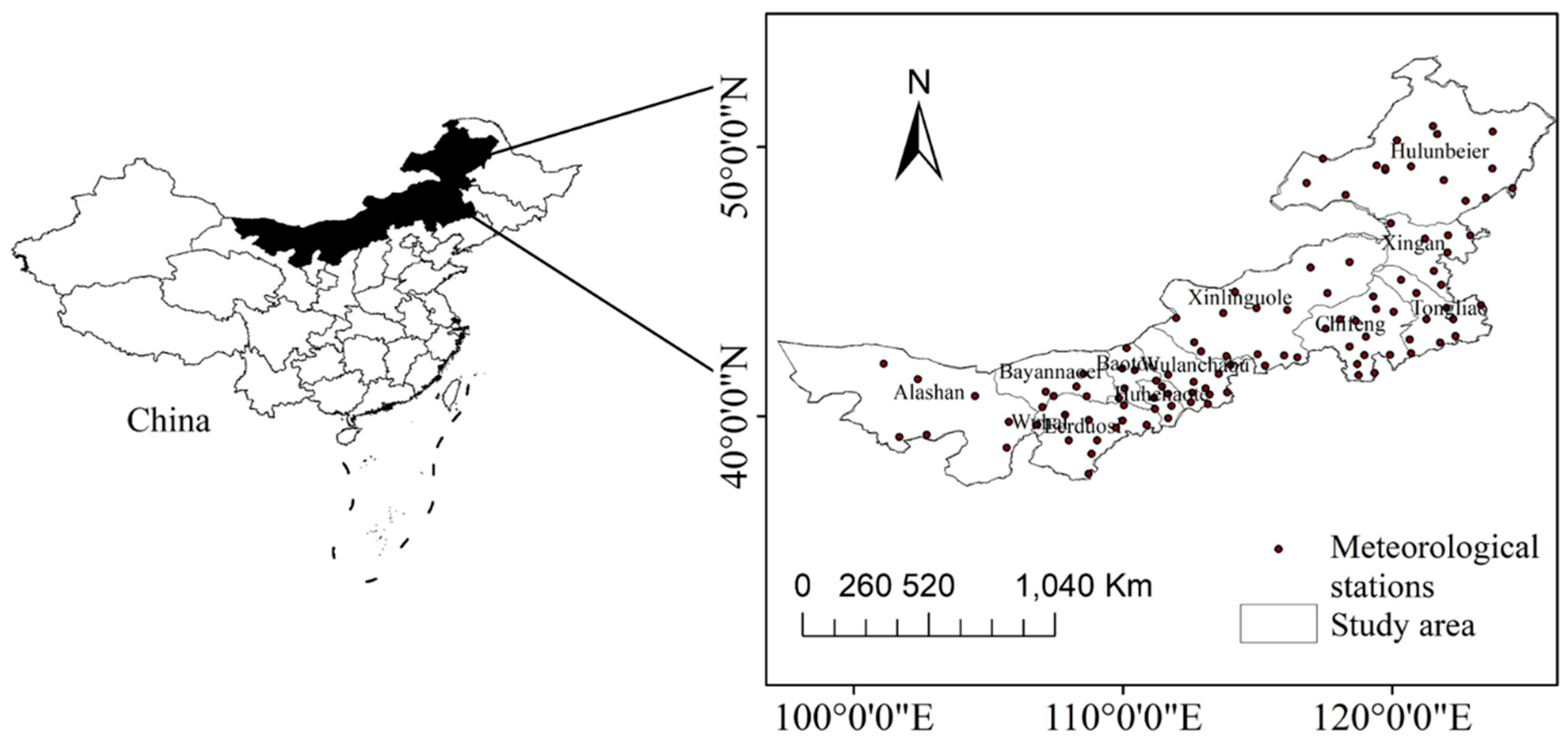
Figure 2.
Variations in SPEI during different growth stages of spring wheat from 1961 to 2020.
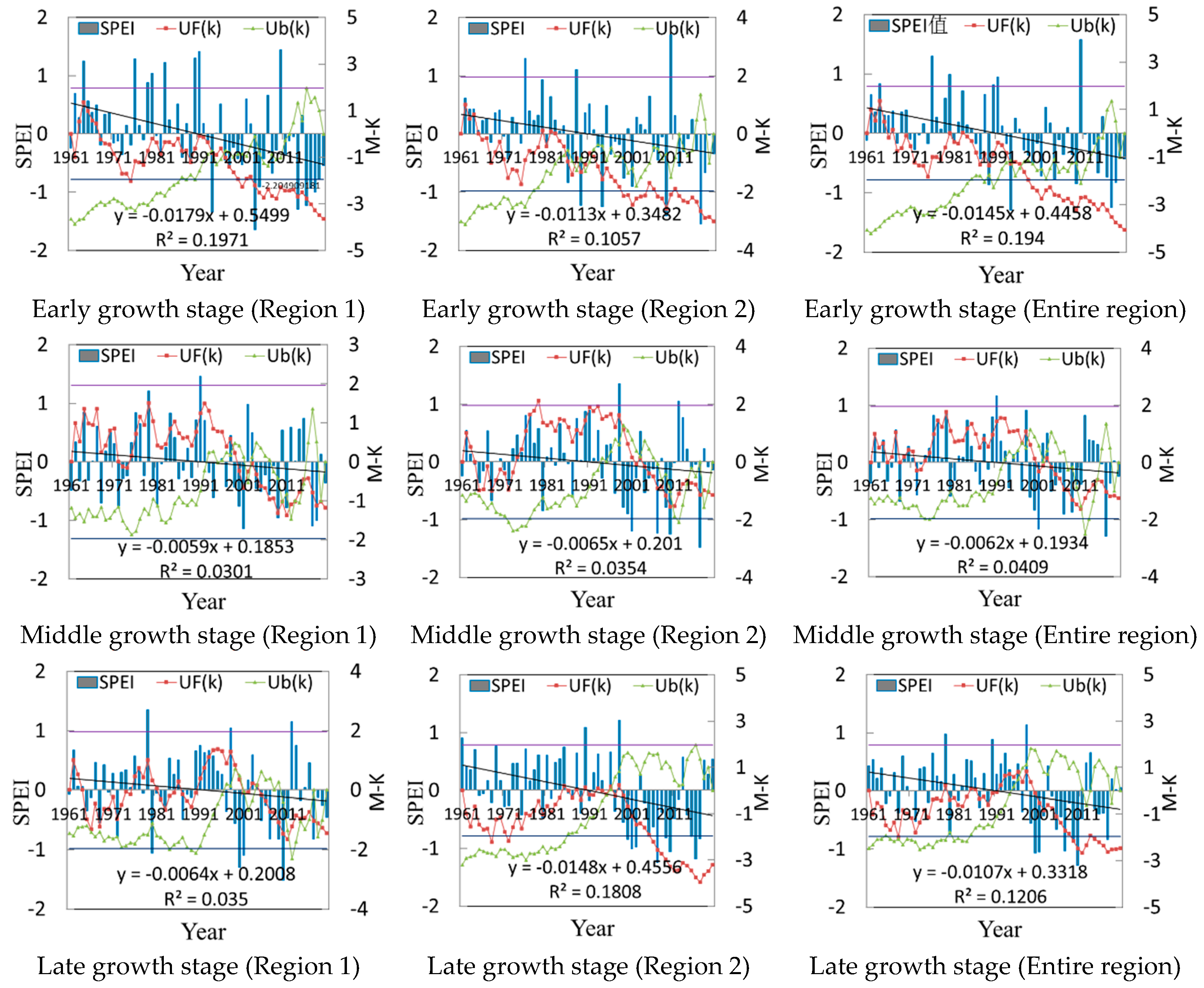
Figure 4.
Spatial distribution of drought occurrence frequencies across growth stages of spring wheat in Inner Mongolia.
Figure 4.
Spatial distribution of drought occurrence frequencies across growth stages of spring wheat in Inner Mongolia.
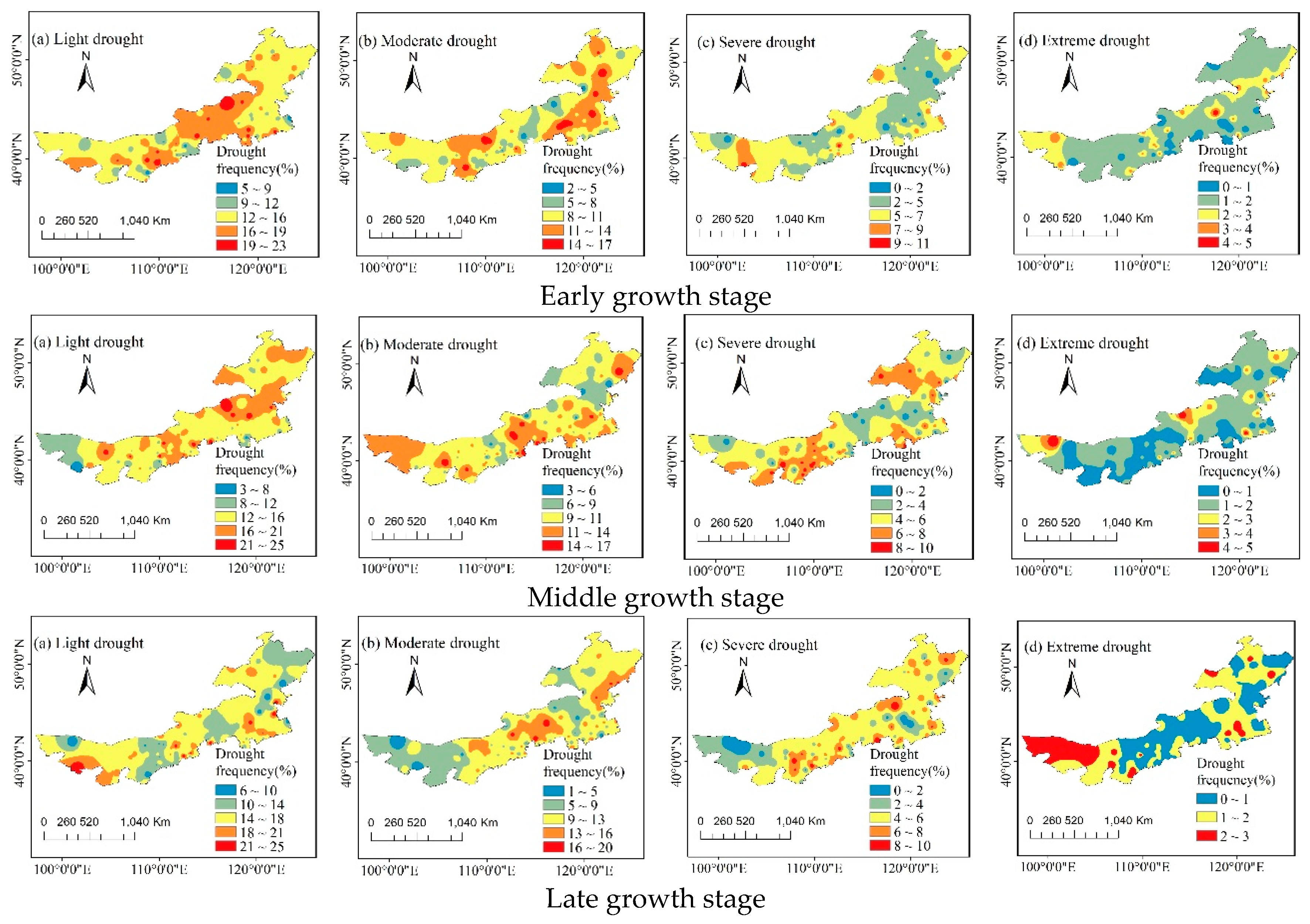
Figure 5.
Occurrence frequency of dry-hot winds in spring wheat in Inner Mongolia.
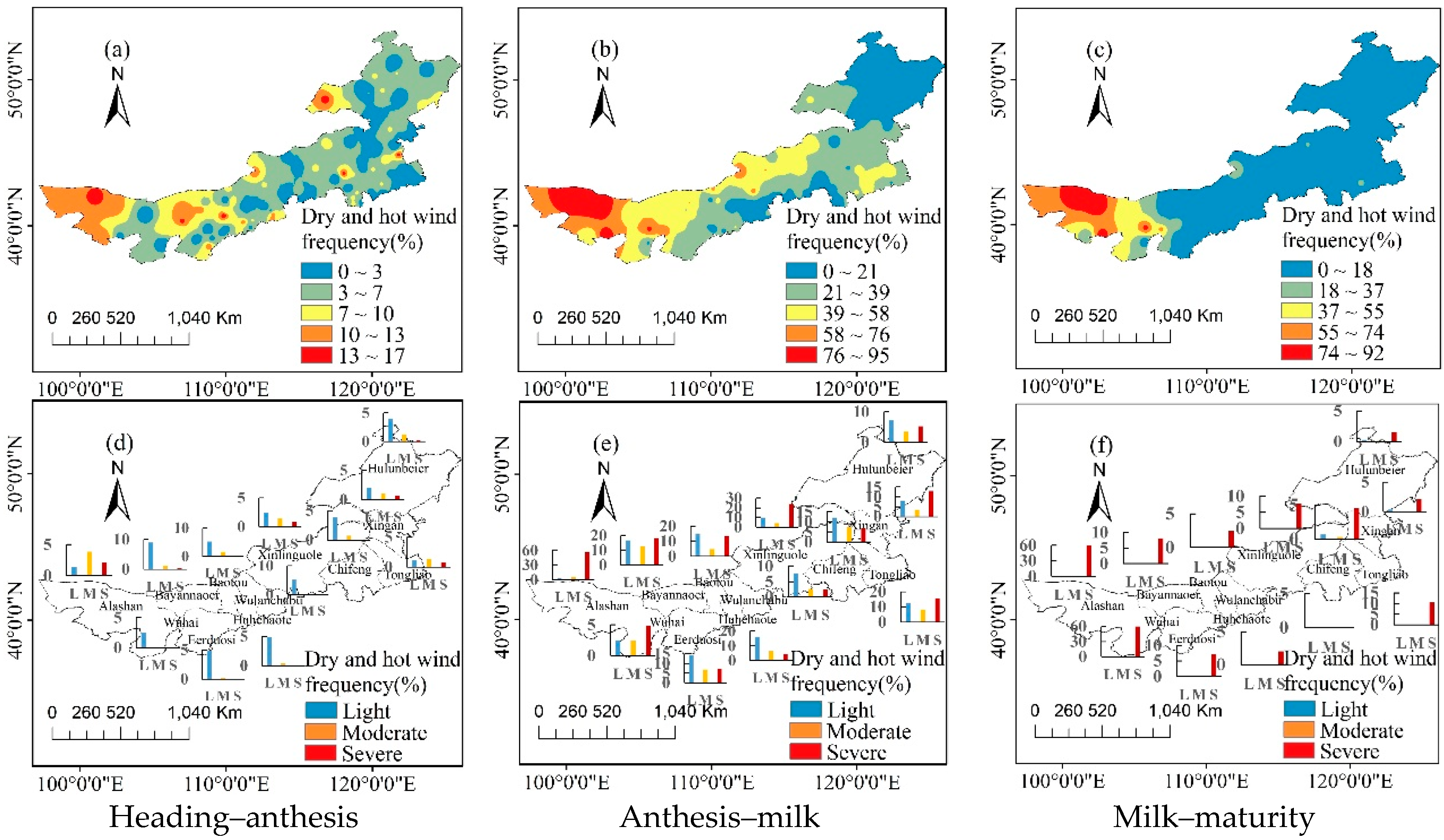
Figure 6.
Temporal variation characteristics of the occurrence range of dry-hot wind for spring wheat in Inner Mongolia.
Figure 6.
Temporal variation characteristics of the occurrence range of dry-hot wind for spring wheat in Inner Mongolia.
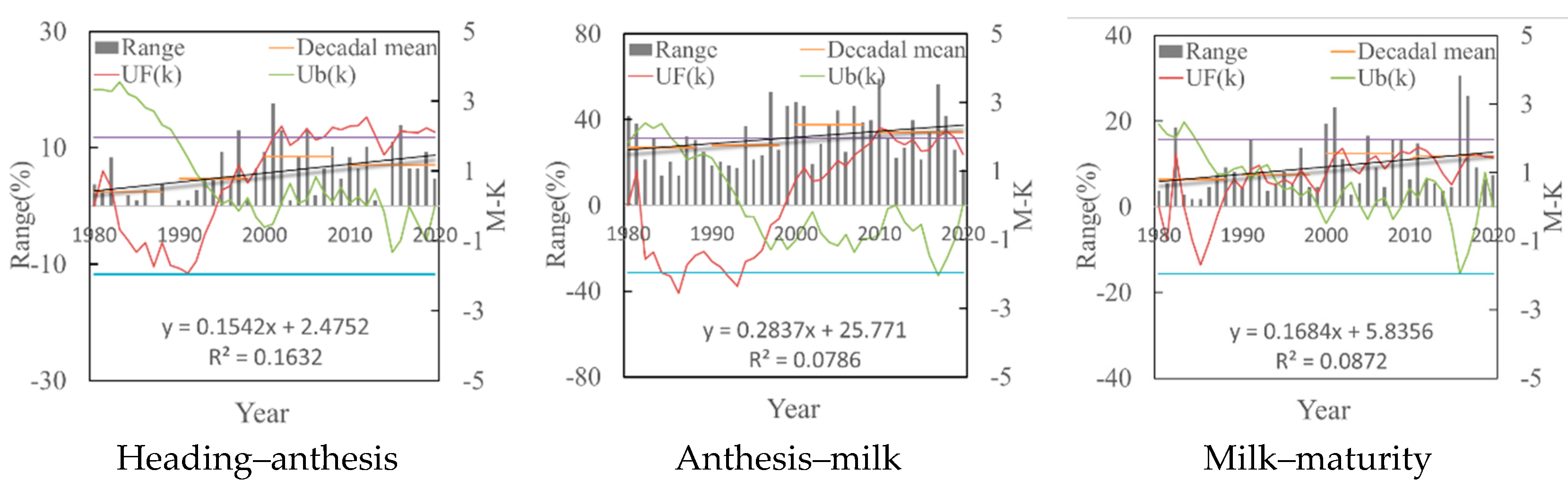
Figure 7.
Spatial distribution of frost occurrence frequency during the seedling stage of spring wheat in Inner Mongolia.
Figure 7.
Spatial distribution of frost occurrence frequency during the seedling stage of spring wheat in Inner Mongolia.
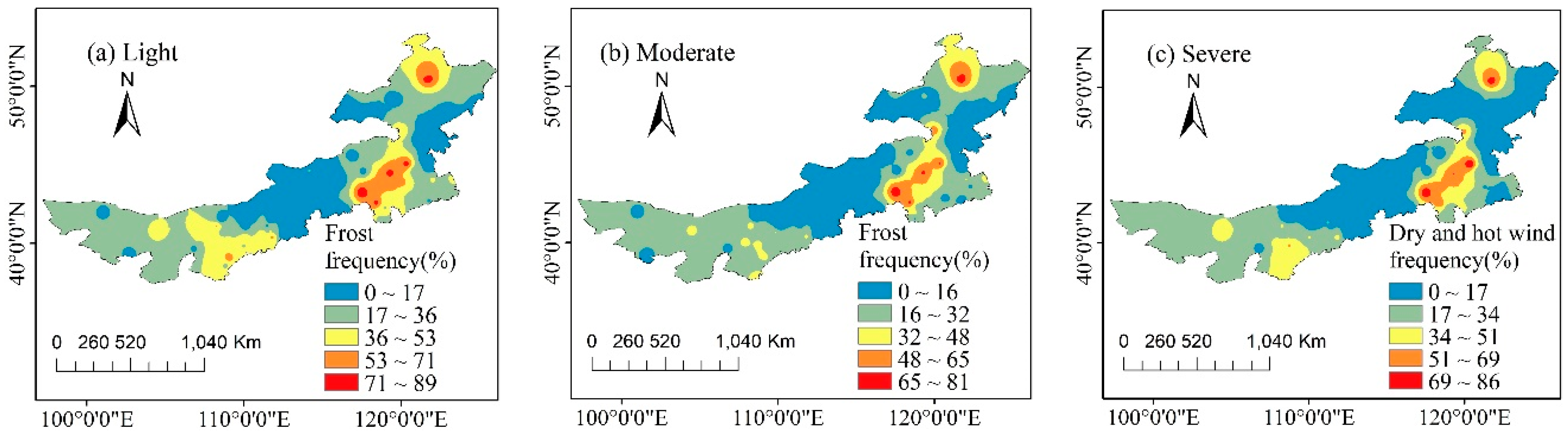
Figure 8.
Temporal variation characteristics of frost occurrence extent during the seedling stage of spring wheat in Inner Mongolia.
Figure 8.
Temporal variation characteristics of frost occurrence extent during the seedling stage of spring wheat in Inner Mongolia.
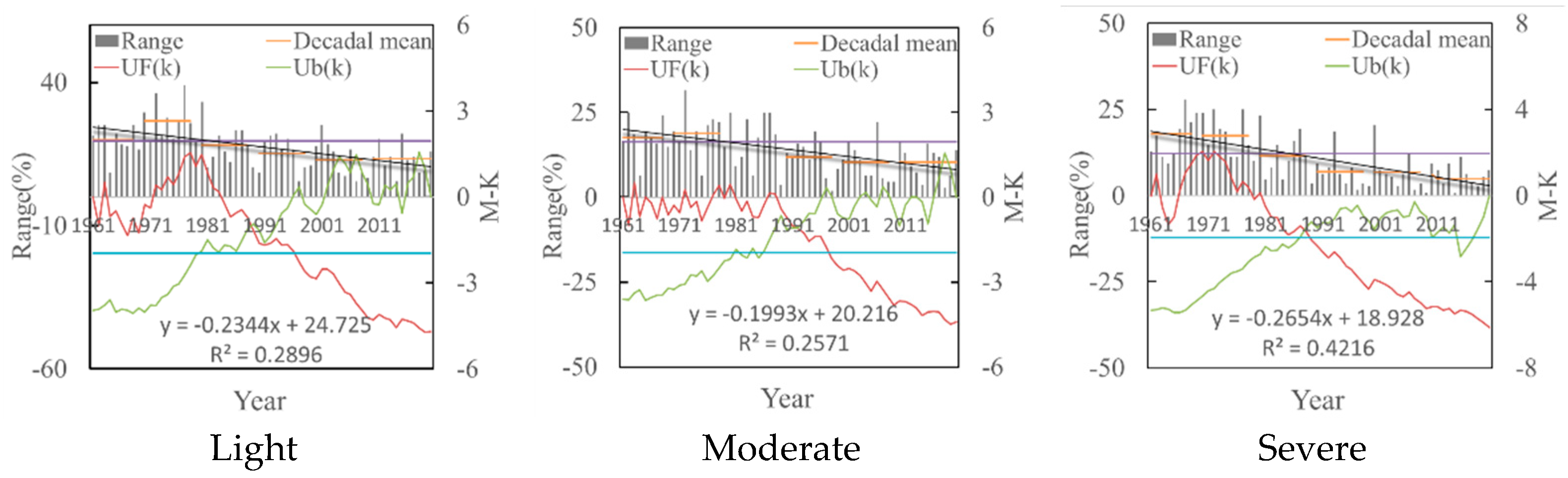
Table 2.
Dry-hot wind disaster indicators for spring wheat planting areas in Inner Mongolia.
| Growth Stage | Indicator | Dry-Hot Wind Disaster Grades | ||
|---|---|---|---|---|
| Light | Moderate | Severe | ||
| Heading–Anthesis | Days with daily maximum temperature (Tmax) ≥ 32 ℃/d | 1~2 | 3~4 | ≥5 |
| Extreme maximum temperature (Teh) / ℃ | 31.5~33.0 | 33.1~33.9 | ≥34.0 | |
| Days with mean wind speed ≥ 2.5 m·s⁻¹/d | 1~2 | 1~2 | ≥5 | |
| Anthesis–Milk | Days with daily maximum temperature (Tmax)≥32℃ / d | 1~2 | 1~2 | ≥5 |
| Extreme maximum temperature (Teh) /℃ | 32.0~33.2 | 33.3~34.3 | ≥34.4 | |
| Minimum relative humidity (RHmin) /% | 26~30 | 23~26 | <23 | |
| Mean wind speed / (m·s⁻¹) | 2.5~2.8 | 2.9~3.4 | ≥3.5 | |
| Milk–Maturity | Days with daily maximum temperature Tmax≥32℃/d | 1~2 | 1~2 | ≥5 |
| Days with minimum relative humidity (RHmin) ≤ 30% /d | 1~2 | 1~2 | ≥5 | |
| Days with mean wind speed ≥2.5 m·s⁻¹/d | 1~2 | 1~2 | ≥5 | |
| Extreme maximum temperature (Teh) / ∘C | 32.4~33.9 | 34.0~35.0 | >35.0 | |
| Minimum relative humidity (RHmin) / % | 29~31 | 25~28 | ≤24 | |
Table 3.
Grading indices of frost disaster for spring wheat in Inner Mongolia.
| Crop Type | Light frost | Moderate frost | Severe frost |
|---|---|---|---|
| Seedling stage of spring wheat | −4<Tmin≤−3 | −5<Tmin≤−4 | Tmin≤−5 |
Table 4.
Risk assessment system for major meteorological disasters during the spring wheat growth period.
Table 4.
Risk assessment system for major meteorological disasters during the spring wheat growth period.
| Target Layer | Criterion Layer | Sub-factor | Indicator Layer | Weight |
|---|---|---|---|---|
| Meteorological Disaster Risk Evaluation System | Comprehensive Hazard (0.3212) | Drought (weight determined by correlation coefficients between SPEI and yield across growth stages) | Light Drought | 0.1 |
| Moderate Drought | 0.2 | |||
| Severe Drought | 0.3 | |||
| Extreme Drought | 0.4 | |||
| Dry-hot wind (weight determined by correlation coefficients between dry-hot wind indicators and yield across growth stages) | Light | 0.1 | ||
| Moderate | 0.2 | |||
| Severe | 0.3 | |||
| Frost (weight determined by correlation coefficients between frost indicators and yield across growth stages) | Light | 0.1 | ||
| Moderate | 0.2 | |||
| Severe | 0.3 | |||
| Exposure (0.1825) | Ratio of spring wheat sown area to total cultivated land area | |||
| Vulnerability (0.2116) |
Light yield reduction rate | |||
| Moderate yield reduction rate | ||||
| Severe yield reduction rate | ||||
| Disaster Prevention and Mitigation Capacity (0.2847) |
Labor force | 0.1489 | ||
| Irrigated land area | 0.2809 | |||
| Per capita net income | 0.0871 | |||
| Total power of agricultural machinery | 0.1812 | |||
| Agricultural film application rate | 0.1168 | |||
| Agricultural fertilizer application rate | 0.1119 | |||
| Rural electricity consumption | 0.0732 | |||
Disclaimer/Publisher’s Note: The statements, opinions and data contained in all publications are solely those of the individual author(s) and contributor(s) and not of MDPI and/or the editor(s). MDPI and/or the editor(s) disclaim responsibility for any injury to people or property resulting from any ideas, methods, instructions or products referred to in the content. |
© 2026 by the authors. Licensee MDPI, Basel, Switzerland. This article is an open access article distributed under the terms and conditions of the Creative Commons Attribution (CC BY) license (http://creativecommons.org/licenses/by/4.0/).
Copyright: This open access article is published under a Creative Commons CC BY 4.0 license, which permit the free download, distribution, and reuse, provided that the author and preprint are cited in any reuse.


