

Submitted:
30 May 2026
Posted:
02 June 2026
You are already at the latest version
Abstract
Aim:
Severe aortic stenosis (AS) with cardiogenic shock (CS) presents a complex clinical challenge. For these patients, the optimal management strategy- either direct transcatheter aortic valve replacement (TAVR) or a staged approach with balloon aortic valvuloplasty (BAV) as a bridge to TAVR (BAV-TAVR) is uncertain. We aimed to compare the outcomes of these two
strategies.
Methods:
We conducted a retrospective cohort study using TriNetX database. In this study, we identified patients with CS undergoing TAVR or BAV-TAVR. After matching propensity scores, 198 patients were analyzed in each group (total 396). The primary outcome was major adverse cardiovascular events (MACE) at 30 days, 1 year, and 3 years.
Results:
The analysis included 396 matched patients (198 in each cohort). There was no significant difference in the primary endpoint of MACE at 30 days between the staged BAV and direct TAVR groups (HR 1.14; 95% CI 0.79–1.64; p=0.91), and this finding was consistent at 1 and 3 years with HR 1.20 and 1.17 respectively. Similarly, no differences were observed in secondary outcomes including all-cause mortality, stroke, and new permanent pacemaker implantation, at 30 days, 1, and 3 years.
Conclusion:
For patients with severe AS complicated by CS, a staged strategy of using BAV-TAVR resulted in comparable short and long-term outcomes to direct TAVR. These findings suggest that BAV is a viable and safe bridging option in high-risk patients whose immediate candidacy for definitive therapy is uncertain.
Keywords:
aortic stenosis
; cardiogenic shock
; TAVR
; heart failure
1. Introduction
Aortic stenosis (AS) is the most common valvular disease in the developed world and carries high morbidity and mortality once symptomatic.[1,2,3,4] Without valve replacement, life expectancy is only 2–3 years.[4] Cardiogenic shock (CS), a severe complication of AS, is marked by low cardiac output and end-organ hypoperfusion, and remains associated with extremely high mortality. [5,6]
Balloon aortic valvuloplasty (BAV) was historically used as palliative therapy due to its temporary hemodynamic benefit and poor long-term durability.[7] With the advent of TAVR, interest has grown in BAV as a stabilizing or bridging therapy. Current guidelines support BAV as a Class IIb option in critically ill patients, such as those with refractory pulmonary edema or CS, when immediate valve replacement is not feasible.[8] Contemporary studies suggest BAV can be performed safely in these high-risk settings with careful attention to timing, as intervention within 48 hours of shock onset is critical for the best outcomes.[9,10,11,12]
As life expectancy increases, the burden of AS will inevitably rise. Given the poor prognosis for these patients and a lack of robust evidence-based guidelines, more research is required. This study aims to assess BAV’s role in bridging to TAVR (BAV-TAVR) compared to direct TAVR in patients with severe AS complicated by cardiogenic shock.
2. Method
This retrospective cohort study utilized data from the TriNetX U.S. Collaborative Network, a federated cloud-based research platform comprising de-identified electronic health records from over 72 healthcare organizations across the United States. We identified adult patients diagnosed with severe aortic valve stenosis using ICD-10 codes I35.0 (nonrheumatic aortic valve stenosis), with concurrent cardiogenic shock (ICD-10 code R57.0), to form the eligible population for inclusion.
Cohort Definition:
Two mutually exclusive treatment cohorts were defined based on procedural codes.
Cohort 1 included patients who underwent TAVR alone, identified using CPT codes 33361 to 33369. Patients with prior surgical aortic valve replacement were excluded using CPT codes 33405, 33406 and 33410-33413, resulting in 1,701 eligible individuals.
Cohort 2 consisted of patients who underwent TAVR as a separate procedure within 30 days of BAV. These individuals were identified using a combination of CPT codes 33361–33369 (TAVR) and CPT 92986 (BAV) and were similarly excluded if prior surgical valve replacement was recorded (CPT 33405, 33406 or 33410-33413), yielding 201 eligible patients.
To minimize confounding, we performed 1:1 propensity score matching between the two cohorts using a nearest-neighbor algorithm without replacement. Matching was based on multiple baseline characteristics including age, sex, race, comorbidities (e.g., ischemic heart disease, heart failure, atrial fibrillation, diabetes, hypertension, chronic kidney disease, cerebrovascular accident, cardiac arrest, malnutrition, obesity/ overweight), procedures (e.g., cardiac assist including Impella and IABP, ECMO/ECLS services, emergent endotracheal intubation), lab values (e.g., hemoglobin, creatinine, albumin, HbA1c, BMI, BNP, LVEF, troponin) and Medication (e.g., vasopressors). After matching, the final analytic sample comprised 396 patients: 198 patients who underwent direct TAVR alone and 198 who received BAV-TAVR.
Outcomes were assessed over three predefined timeframes: 30 days, 1 year, and 3 years following the index procedure.
The primary endpoint was the incidence of major adverse cardiovascular events (MACE), defined as a composite of all-cause mortality, acute myocardial infarction (AMI), and stroke. Secondary endpoints included individual incidence of acute myocardial infarction, heart failure, new pacemaker implantation, atrial fibrillation, cerebral infarction (stroke), new hemodialysis, and all-cause mortality. Figure 1 depicts the schematics of study design.
A separate analysis of treatment pathway was performed to determine the median time to TAVR which included patients from 40 HCOs and was not a part of the study. However, this was done to know the median time to TAVR in patients who underwent BAV.
All statistical analyses were performed within the TriNetX platform on October 2nd 2025, which ensures real-time access to de-identified, aggregated patient-level data while maintaining compliance with HIPAA and institutional ethical standards. Institutional Board Review was not required due to deidentified nature of the database. Cox-proportional hazard analysis was done with the TriNetX inbuilt software to obtain the results which were reported as hazard ratio, p-value of < 0.05 was considered significant. Artificial intelligence was used to generate tables and figures from raw data extracted from the database.
3. Results
3.1. Baseline Characteristics
Prior to propensity score matching, significant differences were observed between patients undergoing direct TAVR (n = 1,701) and those receiving BAV-TAVR (n = 201). Patients in the BAV-TAVR group presented with a higher burden of comorbidities. Notably, the prevalence of heart failure was significantly greater in the BAV-TAVR cohort (97.5% vs. 80.7%; p < 0.001). Other cardiovascular diagnoses, including ischemic heart disease (87.1% vs. 77.8%; p = 0.002) and atrial fibrillation or flutter (61.2% vs. 50.4%; p = 0.004), were also significantly more common. Malnutrition was more frequently documented among BAV-TAVR patients (26.9% vs. 15%; p < 0.001), and they had significantly higher use of cardiac assist procedures (31.8% vs. 8.6%; p < 0.001), emergency endotracheal intubation (14.4% vs. 5.4%; p < 0.001), and extracorporeal membrane oxygenation (5% vs. 1.5%; p = 0.001).
Laboratory profiles further highlighted the severity of illness in the BAV-TAVR cohort. Hemoglobin (9.7 ± 2.4 vs. 11.1 ± 2.3 g/dL; p < 0.001), serum albumin (3.1 ± 0.5 vs. 3.4 ± 0.6 g/dL; p < 0.001), and natriuretic peptide B levels (8,134 ± 12,970 vs. 3,788 ± 8,156 pg/mL; p < 0.001) were significantly different between groups, suggesting greater hemodynamic compromise and malnutrition in the BAV-TAVR cohort. The median time to TAVR was 4 days.
Following 1:1 propensity score matching, 198 patients were included in each cohort. After matching, there were no statistically significant differences in baseline demographics, comorbidities, procedural characteristics, or laboratory values (all p > 0.05), indicating successful balancing of the cohorts for comparative analysis. Table 1 shows the patient characteristics before and after propensity matching respectively.
3.2. 30 Days Clinical Outcomes
At 30 days, there were no statistically significant differences between the direct TAVR and BAV-TAVR groups across all measured clinical outcomes. MACE occurred in 30.3% of patients in the direct TAVR group compared with 27.3% in the BAV-TAVR group (hazard ratio [HR]: 1.14; 95% confidence interval [CI]: 0.79–1.64; p = 0.91). All-cause mortality was observed in 15.3% of patients in the direct TAVR group and 13% of patients in the BAV-TAVR group (HR: 1.19; 95% CI: 0.70–2.04 p = 0.71).
Other secondary outcomes were similarly balanced between groups. New permanent pacemaker implantation occurred in 5.8% of direct TAVR patients versus 7% in the BAV-TAVR group (p = 0.47). The incidence of atrial fibrillation was 27.3% in the direct TAVR group and 25.8% in the BAV-TAVR group (p = 0.10). Heart failure occurred in 69.2% of the direct TAVR group compared with 70.2% of the BAV-TAVR group (p = 0.33). There were no significant differences in the rates of AMI (16.7% vs. 16.2%; p = 0.99), cerebral infarction (8.1% vs. 5.6%; p = 0.93), or new requirement for hemodialysis (7.1% vs. 7.6%; p = 0.35). Detailed results are shown in Table 2 and Figure 2.
3.3. 1-Years Clinical Outcomes
At one-year follow-up, outcomes remained comparable between the two groups. MACE was observed in 47.5% of patients undergoing direct TAVR and 41.9% of those in the BAV-TAVR group (HR: 1.20; 95% CI: 0.89–1.61 p = 0.84). Mortality was 28.9% in the direct TAVR group compared to 22.8% in the BAV-TAVR group (HR: 1.32; 95% CI: 0.90–1.96; p = 0.64).
New pacemaker implantation are similar in both groups (6.8% vs. 7.5%; p = 0.95), as did atrial fibrillation (38.9% vs. 35.9%; p = 0.88). Incidence of heart failure (79.3% in both; p = 0.69), AMI (24.2% vs. 22.7%; p = 0.62), cerebral infarction (11.1% vs. 8.1%; p = 0.80), and new hemodialysis (7.6% in both; p = 0.21) were also statistically indistinguishable. Detailed results are shown in Table 3 and Figure 3.
3.4. 3-Years Clinical Outcomes
By three years post-procedure, long-term outcomes remained consistent with earlier findings. The cumulative incidence of MACE was 56.6% in the direct TAVR group and 52.5% in the BAV-TAVR group (HR: 1.17; 95% CI: 0.89–1.53; p = 0.67). Mortality was 39.5% for direct TAVR and 34.7% for BAV-TAVR (HR 1.21; 95% CI 0.87–1.69; p = 0.46), again showing no statistically significant difference.
Permanent pacemaker implantation occurred in 7.9% of direct TAVR patients and 8.0% of BAV-TAVR patients (p = 0.75). Atrial fibrillation was reported in 40.9% and 38.4% of patients, respectively (p = 0.81). Heart failure was highly prevalent at three years, occurring in 79.8% of both direct TAVR patients and BAV-TAVR patients (p = 0.67). Rates of AMI (27.8% vs. 26.8%; p = 0.86), cerebral infarction (13.1% vs. 9.1%; p = 0.69), and hemodialysis (7.6% in both; p = 0.21) also remained statistically similar. Detailed results are shown in Table 4 and Figure 4. In addition, Figure 5 and Figure 6 depict the Kaplan-Meier survival curves for MACE and mortality at three years respectively.
4. Discussion
4.1. TAVR vs. BAV-TAVR Outcomes
Our study concluded that in patients with severe AS complicated by CS, BAV-TAVR, in comparison to direct TAVR, does not compromise short or long-term outcomes. These findings align with a large 2020 U.S. registry in which ~40% of patients underwent TAVR after bridging with BAV, typically within 90 days, and demonstrated comparable in-hospital and one-year outcomes to direct TAVR after propensity matching.[13] That study also reported lower index hospitalization costs in the BAV group. Therefore, BAV remains an important tool for the heart team in triaging, stabilizing, and optimizing patients when immediate TAVR is not yet feasible.
Mechanistically, BAV temporarily relieves stenosis by enlarging the aortic valve area (AVA), lowering transvalvular gradients, and improving stroke volume and organ perfusion.[12] Improvement in renal function after BAV, an important prognostic marker in shock, has been documented following BAV and may explain why dialysis rates were not higher in our bridged group.[14] Hemodynamic improvement has been studied and confirmed these effects. Bularga et al. reported an average 8 mmHg reduction in mean gradient on echo at one week,[15] while Kumar et. al demonstrated a 54% gradient reduction (40 → 18 mmHg) and AVA increase from 0.67 to 1.04 cm² when measured invasively immediately post-procedure.[16] Despite differences in measurement timing, both confirmed improved hemodynamics with acceptable procedural safety.
4.2. Role as a Bridge
BAV has mainly served as a temporizing measure in patients too unstable for valve replacement. Early series demonstrated that patients selected for BAV typically had worse baseline status, yet still showed symptomatic and hemodynamic improvements comparable to direct TAVR once stabilized.[10,11,17] Later registry data reinforced that BAV is most beneficial as a bridge, since BAV alone carries high mortality.[11] A contrasting 2024 Japanese registry suggested BAV–TAVR was associated with worse in-hospital outcomes compared to direct TAVR, though this likely reflects unadjusted baseline differences, as those that received BAV were older with more comorbidities.[18]
4.3. Bridge-to-Decision and Diagnostic Value
Beyond serving as a bridge for stabilization and optimization, BAV can assist with determining patient eligibility. Saia et al. demonstrated that BAV can clarify candidacy when the heart team is uncertain, using BAV as a “bridge-to-decision,” as it helped to predict LV contractile reserve and mitral regurgitation grade reduction.[19] In low-LVEF patients, recovery was more likely when baseline gradients were higher (42 vs. 31 mmHg), and nearly all with EF improvement were subsequently selected for definitive valve replacement. Of note, the change in gradients, not AVA, were predictive of recovery.
4.4. Durability and Timing
Recent work has shown that BAV’s hemodynamic effects peak within 6 months, with improvements in EF (>40% at 1 month) predicting suitability for definitive replacement.[20,21,22] However, durability is limited, with a 2025 meta-analysis finding that delaying TAVR for staged BAV, on average 2 months to almost 1 year, was linked with higher mortality compared to immediate TAVR, although complication rates were similar.[23] These findings emphasize that BAV should be used selectively as a short-term bridge, ideally leading to definitive therapy as soon as possible. The median time in patients getting TAVR post BAV in CS was 4 days in the database.
4.5. Emerging Stepwise Strategies
There are emerging adjunctive strategies. A 2025 case report described a “BAV–PELLA–TAVR” approach, where BAV was combined with Impella support as a stepwise bridge in three elderly patients with severe AS and shock, all of whom survived to definitive TAVR.[24] Similarly, Frerker et al. demonstrated how baseline cardiac output <3L/min and renal impairment were strongly predictive of mortality after emergent TAVR, reinforcing the logic behind staged optimization with BAV and even mechanical circulatory support in selected patients.[25]
4.6. Limitations
Our study was not immune to traditional misclassification bias using databases as it relies on various codes to identify diagnoses, procedures, and outcomes. Our study was a retrospective cohort study, subject to inherent limitations of non-randomizations. There might be selection bias as the cohort may not be fully representative of the general population, as it only includes patients seeking care at participating institutes. Moreover, our study did not include patients that underwent BAV followed by TAVR during a subsequent hospitalization after 30 days, which would have provided a larger study population. Whether patients had a prior BAV outside of the time window was not specified, which could have impacted results. The study design also restricts our ability to establish causality; hence, HR was used to measure outcomes. Additionally, there might be potential variability in clinical practice and coding in different healthcare systems which may impact the generalizability of the findings.
5. Conclusions
For high-risk patients presenting with cardiogenic shock and severe aortic stenosis, a staged strategy using BAV can be considered as a safe and effective option for short term stabilization. These results demonstrate the BAV-TAVR staged approach does not compromise the long-term outcomes in these critically ill patients. These results reinforce the selective use of BAV as a bridge to TAVR in modern management of severe aortic stenosis with cardiogenic shock, especially for patients whose immediate candidacy for definitive therapy is uncertain.
Supplementary Materials
The following supporting information can be downloaded at the website of this paper posted on Preprints.org.
Statement of Authorship
Aditya M. Desai, takes responsibility for all aspects of the reliability and freedom from bias of the data presented and their discussed interpretation.
Conflicts of Interest/Disclosures/Acknowledgements
None.
References
- Aluru JS, Barsouk A, Saginala K, Rawla P, Barsouk A. Valvular Heart Disease Epidemiology. Medical sciences. 2022;10(2). [CrossRef]
- Tan MC, Yeo YH, San BJ, et al. Trends and Disparities in Valvular Heart Disease Mortality in the United States From 1999 to 2020. J Am Heart Assoc. 2024;13(8):30895. [CrossRef]
- Thaden JJ, Nkomo VT, Enriquez-Sarano M. The Global Burden of Aortic Stenosis. Prog Cardiovasc Dis. 2014;56(6):565-571. [CrossRef]
- Kanwar A, Thaden JJ, Nkomo VT. Management of Patients With Aortic Valve Stenosis. Mayo Clin Proc. 2018;93(4):488-508. [CrossRef]
- Nair RM, Chawla S, Abdelghaffar B, et al. Comparison of Contemporary Treatment Strategies in Patients With Cardiogenic Shock Due to Severe Aortic Stenosis. J Am Heart Assoc. 2024;13(10). [CrossRef]
- Schrage B, Weimann J, Dabboura S, et al. Patient characteristics, treatment and outcome in non-ischemic vs. Ischemic cardiogenic shock. J Clin Med. 2020;9(4). [CrossRef]
- Lieberman EB, Bashore TM, Hermiller JB, et al. Balloon Aortic Valvuloplasty in Adults: Failure of Procedure to Improve Long-Term Survival. Vol 26.; 1995.
- Otto CM, Nishimura RA, Bonow RO, et al. 2020 ACC/AHA Guideline for the Management of Patients With Valvular Heart Disease: Executive Summary: A Report of the American College of Cardiology/American Heart Association Joint Committee on Clinical Practice Guidelines. Circulation. 2021;143(5). [CrossRef]
- Moreno PR, Jang I kyung, Newell JB, Block PC, PALACIOS FACC Rotton IF. The Role of Percutaneous Aortic Balloon Valvuloplasty in Patients With Cardiogenic Shock and Critical Aortic Stenosis.; 1994.
- Ussia GP, Capodanno D, Barbanti M, et al. Balloon aortic valvuloplasty for severe aortic stenosis as a bridge to high-risk transcatheter aortic valve implantation. Journal of Invasive Cardiology. 2010;22(4):161-166.
- Ben-Dor I, Maluenda G, Dvir D, et al. Balloon aortic valvuloplasty for severe aortic stenosis as a bridge to transcatheter/surgical aortic valve replacement. Catheterization and Cardiovascular Interventions. 2013;82(4). [CrossRef]
- Debry N, Kone P, Vincent F, et al. Urgent balloon aortic valvuloplasty in patients with cardiogenic shock related to severe aortic stenosis: Time matters. EuroIntervention. 2018;14(5):e519-e525. [CrossRef]
- Kawsara A, Alqahtani F, Eleid MF, El-Sabbagh A, Alkhouli M. Balloon Aortic Valvuloplasty as a Bridge to Aortic Valve Replacement: A Contemporary Nationwide Perspective. JACC Cardiovasc Interv. 2020;13(5):583-591. [CrossRef]
- Naidu SS, Baran DA, Jentzer JC, et al. SCAI SHOCK Stage Classification Expert Consensus Update: A Review and Incorporation of Validation Studies. Journal of the Society for Cardiovascular Angiography & Interventions. 2022;1(1). [CrossRef]
- Bularga A, Bing R, Shah AS, et al. Clinical outcomes following balloon aortic valvuloplasty. Open Heart. 2020;7(2):e001330. [CrossRef]
- Kumar A, Shah R, Young LD, et al. Safety and Efficacy of Balloon Aortic Valvuloplasty Stratified by Acuity of Patient Illness. Structural Heart. 2021;5(5):520-529. [CrossRef]
- Eltchaninoff H, Durand E, Borz B, et al. Balloon aortic valvuloplasty in the era of transcatheter aortic valve replacement: Acute and long-term outcomes. Am Heart J. 2014;167(2):235-240. [CrossRef]
- Fujimoto T, Zen K, Kataoka E, et al. Balloon aortic valvuloplasty bridge to transcatheter aortic valve replacement is associated with worse in-hospital mortality. Int J Cardiol. 2024;413. [CrossRef]
- Saia F, Moretti C, Dall’Ara G, et al. Balloon aortic valvuloplasty as a bridge-to-decision in high risk patients with aortic stenosis: A new paradigm for the heart team decision making. In: Journal of Geriatric Cardiology. Vol 13. Science Press; 2016:475-482. [CrossRef]
- Kleczynski P, Kulbat A, Brzychczy P, et al. Balloon aortic valvuloplasty for severe aortic stenosis as rescue or bridge therapy. J Clin Med. 2021;10(20). [CrossRef]
- Zhong J, Kamp N, Bansal A, et al. Balloon Aortic Valvuloplasty in the Modern Era: A Review of Outcomes, Indications, and Technical Advances. Journal of the Society for Cardiovascular Angiography and Interventions. 2023;2(4). [CrossRef]
- Saia F, Marrozzini C, Moretti C, et al. The role of percutaneous balloon aortic valvuloplasty as a bridge for transcatheter aortic valve implantation. EuroIntervention. 2011;7(6):723-729. [CrossRef]
- Doma M, Huang W, Hernandez S, et al. Immediate transcatheter aortic valve replacement versus temporizing balloon aortic valvuloplasty in severe aortic stenosis: A systematic review and meta-analysis immediate TAVR vs. temporizing BAV. Cardiovascular Revascularization Medicine.Elsevier Inc. 2025;77:112-121. Epub ahead of print. [CrossRef]
- Watanabe Y, Nakata J, Matsushita H, et al. Case Report: Balloon aortic valvuloplasty with subsequent Impella support as bridge therapy to transcatheter aortic valve replacement in cardiogenic shock with severe aortic stenosis. Front Cardiovasc Med. 2025;12. [CrossRef]
- Frerker C, Schewel J, Schlüter M, et al. Emergency transcatheter aortic valve replacement in patients with cardiogenic shock due to acutely decompensated aortic stenosis. EuroIntervention. 2016;11(13):1530-1536. [CrossRef]
- References were generated with assistance from Mendeley Cite software.
Figure 1.
Schematic of study design using TrinetX US Colloborative Network. Legend: BAV = Balloon Aortic Valvuloplasty; TAVR = Transcatheter Aortic Valve Replacement; MACE = Major Adverse Cardiovascular Events.
Figure 1.
Schematic of study design using TrinetX US Colloborative Network. Legend: BAV = Balloon Aortic Valvuloplasty; TAVR = Transcatheter Aortic Valve Replacement; MACE = Major Adverse Cardiovascular Events.
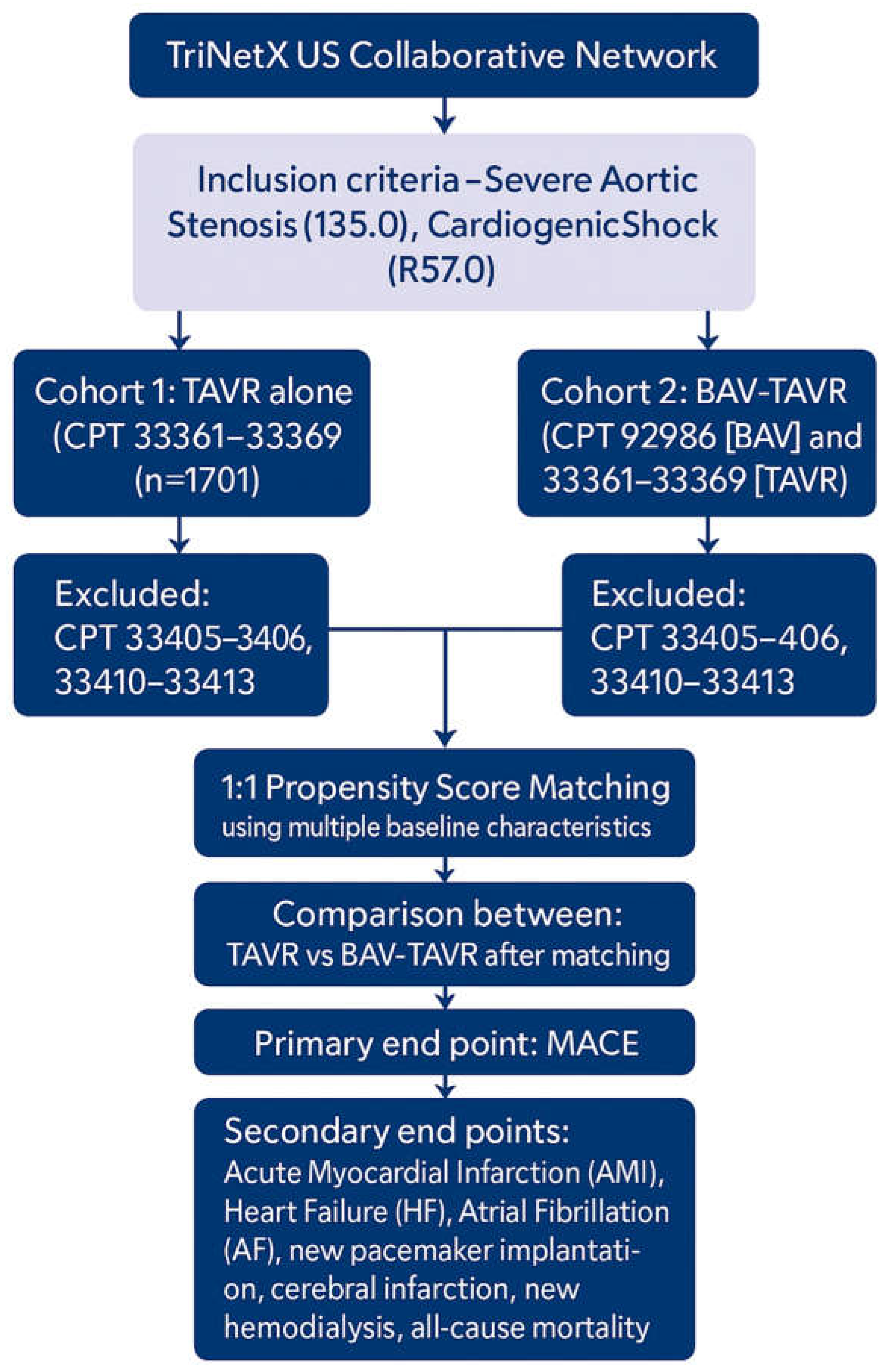
Figure 2.
Risk Percentages of Clinical Outcomes at 30 Days After Matching.
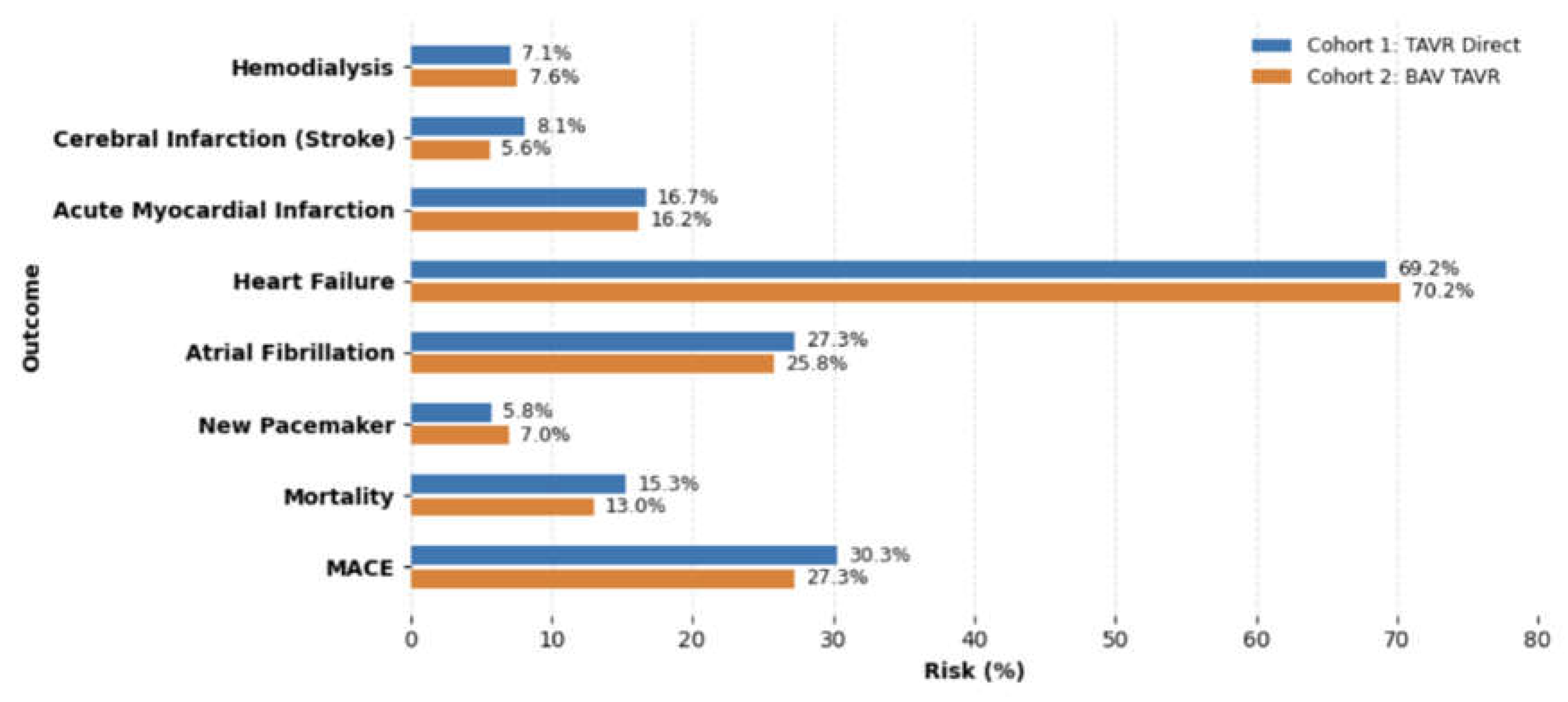
Figure 3.
Risk Percentages of Clinical Outcomes at 1 Year After Matching.
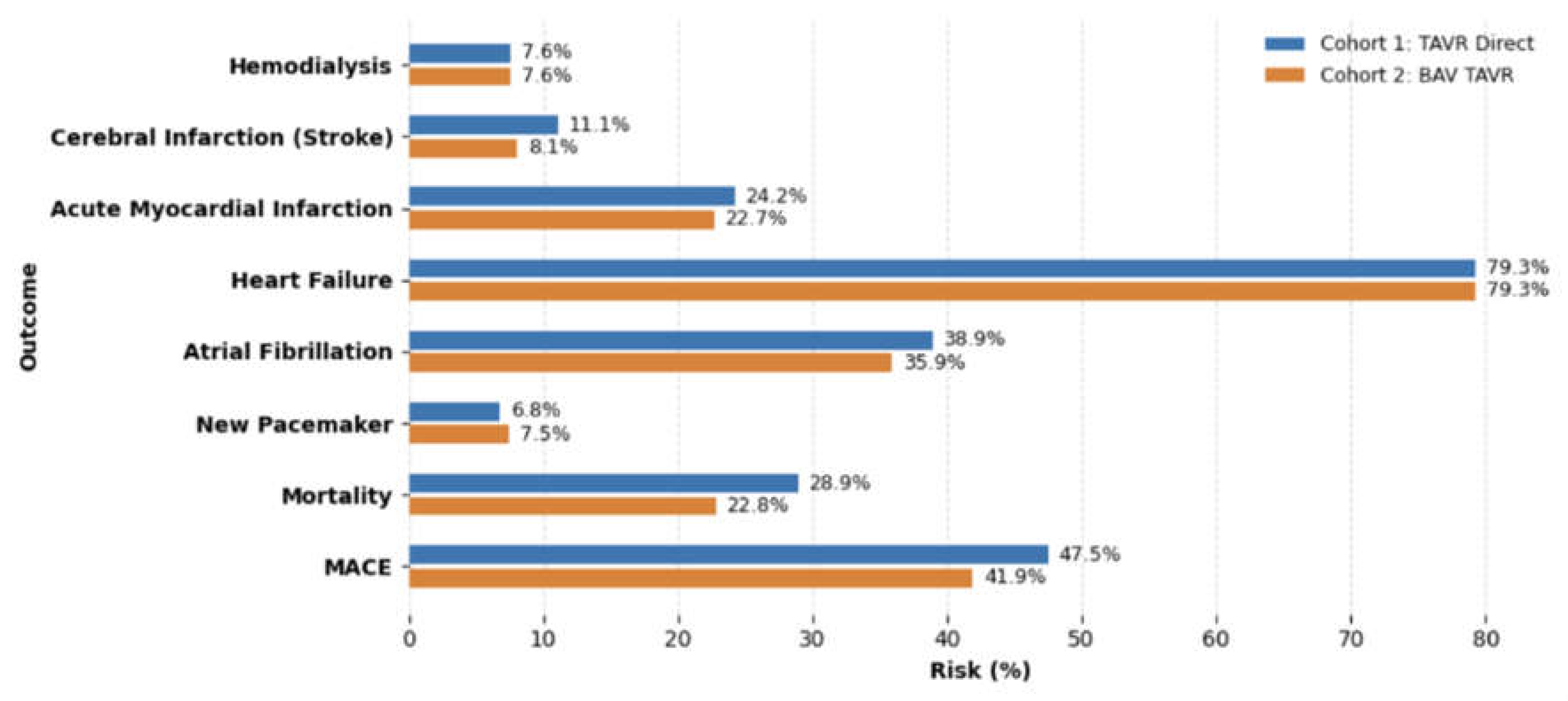
Figure 4.
Risk Percentages of Clinical Outcomes at 3 Years After Matching.
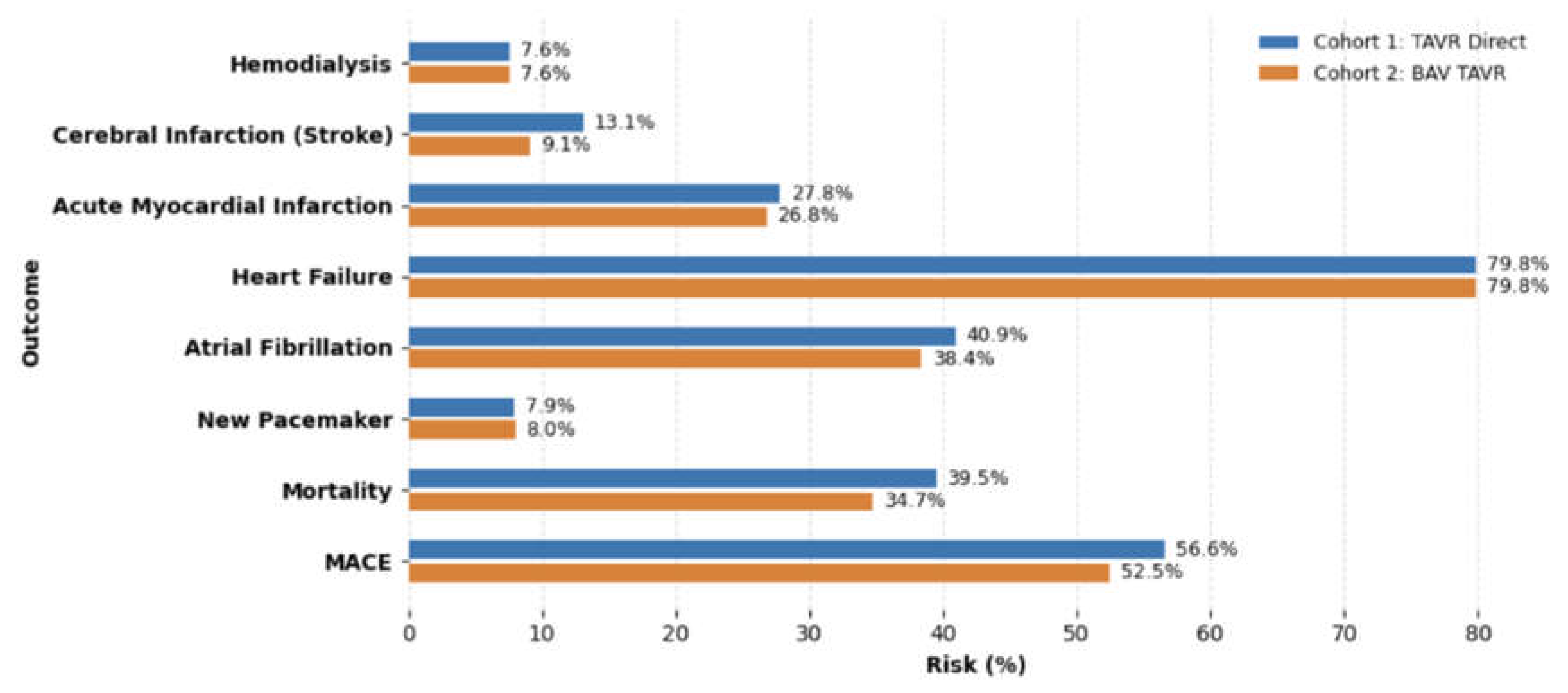
Figure 5.
Kaplan-Meier Survival Curve of MACE at 3 Years.
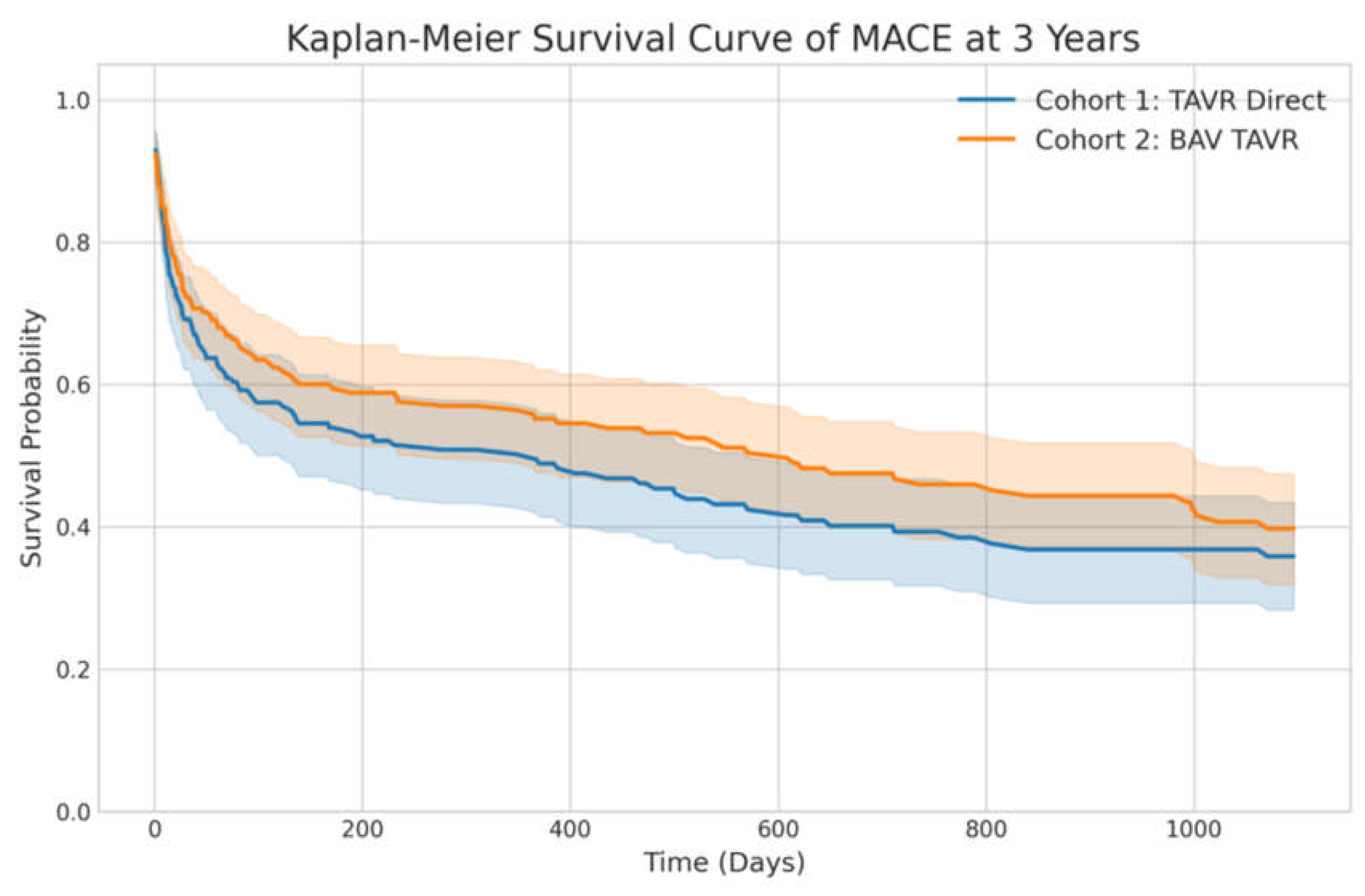
Figure 6.
Kaplan-Meier Survival Curve of Mortality at 3 Years.
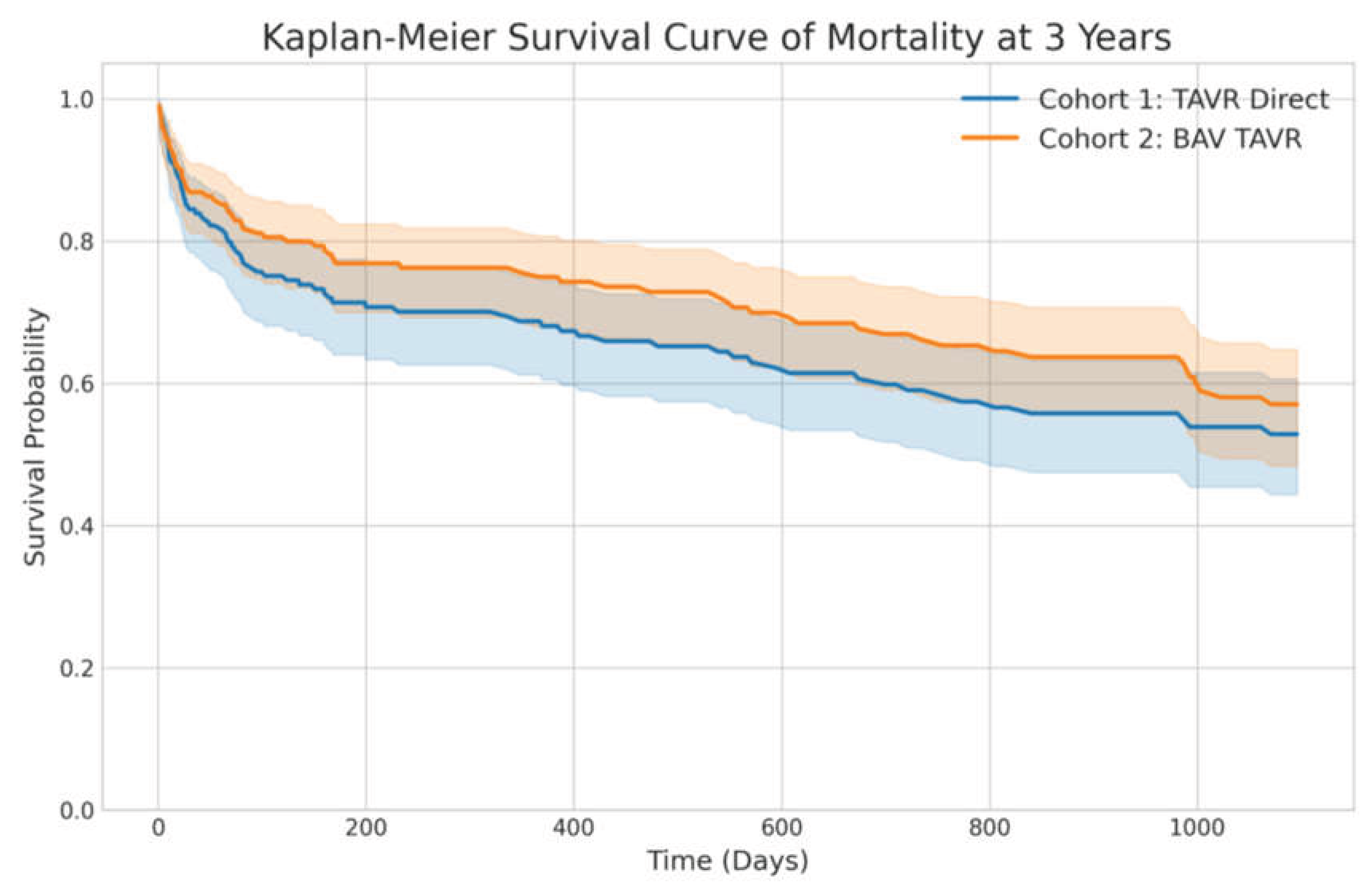

Table 1.
Baseline Patient Characteristics Before and After Propensity Score Matching.
| Characteristic | Before Propensity Score Matching | After Propensity Score Matching | ||||
|---|---|---|---|---|---|---|
| Characteristic | Direct TAVR (n=1,701) | BAV-TAVR (n=201) | p-value | Direct TAVR (n=198) | BAV-TAVR (n=198) | p-value |
| Demographics | ||||||
| Age at Index, mean ± SD | 75.5 ± 10.6 | 76.4 ± 9.3 | 0.23 | 76.4 ± 9.8 | 76.3 ± 9.2 | 0.96 |
| Male, n (%) | 1,003 (59.0) | 112 (55.7) | 0.37 | 114 (57.6) | 112 (56.6) | 0.83 |
| White, n (%) | 1,347 (79.2) | 145 (72.1) | 0.02 | 144 (72.7) | 144 (72.7) | 1.00 |
| Black or African American, n (%) | 99 (5.8) | 10 (5.0) | 0.62 | 11 (5.6) | 10 (5.1) | 0.82 |
| Asian, n (%) | 46 (2.7) | 11 (5.5) | 0.02 | 10 (5.1) | 11 (5.6) | 0.82 |
| Diagnoses | ||||||
| Heart failure, n (%) | 1,372 (80.7) | 196 (97.5) | <0.001 | 193 (97.5) | 193 (97.5) | 1.00 |
| Ischemic heart diseases, n (%) | 1,323 (77.8) | 175 (87.1) | 0.002 | 172 (86.9) | 172 (86.9) | 1.00 |
| Hypertensive diseases, n (%) | 1,344 (79.0) | 171 (85.1) | 0.04 | 167 (84.3) | 169 (85.4) | 0.77 |
| Atrial fibrillation and flutter, n (%) | 858 (50.4) | 123 (61.2) | 0.004 | 120 (60.6) | 121 (61.1) | 0.91 |
| Chronic kidney disease, n (%) | 803 (47.2) | 108 (53.7) | 0.08 | 106 (53.5) | 107 (54.0) | 0.92 |
| Diabetes mellitus, n (%) | 698 (41.0) | 94 (46.8) | 0.11 | 97 (49.0) | 92 (46.5) | 0.61 |
| Malnutrition, n (%) | 255 (15.0) | 54 (26.9) | <0.001 | 53 (26.8) | 53 (26.8) | 1.00 |
| Cerebrovascular diseases, n (%) | 376 (22.1) | 43 (21.4) | 0.81 | 51 (25.8) | 43 (21.7) | 0.34 |
| Overweight and obesity, n (%) | 393 (23.1) | 44 (21.9) | 0.69 | 47 (23.7) | 44 (22.2) | 0.72 |
| Cardiac arrest, n (%) | 157 (9.2) | 26 (12.9) | 0.09 | 37 (18.7) | 26 (13.1) | 0.13 |
| Procedures | ||||||
| Impella and IABP, n (%) | 147 (8.6) | 64 (31.8) | <0.001 | 63 (31.8) | 62 (31.3) | 0.91 |
| Emergency Endotracheal Intubation, n (%) | 92 (5.4) | 29 (14.4) | <0.001 | 26 (13.1) | 28 (14.1) | 0.77 |
| ECMO or ECLS, n (%) | 26 (1.5) | 10 (5.0) | 0.001 | 10 (5.1) | 10 (5.1) | 1.00 |
| Medications | ||||||
| Vasopressors, n (%) | 756 (44.4) | 163 (81.1) | <0.001 | 161 (81.3) | 160 (80.8) | 0.89 |
| Labs | ||||||
| Hemoglobin (g/dL), mean ± SD | 11.1 ± 2.3 | 9.7 ± 2.4 | <0.001 | 10.0 ± 2.5 | 9.8 ± 2.4 | 0.33 |
| Creatinine (mg/dL), mean ± SD | 1.6 ± 1.4 | 1.6 ± 1.5 | 0.91 | 1.7 ± 1.4 | 1.6 ± 1.5 | 0.95 |
| Albumin (g/dL), mean ± SD | 3.4 ± 0.6 | 3.1 ± 0.5 | <0.001 | 3.1 ± 0.5 | 3.1 ± 0.5 | 0.68 |
| BMI, mean ± SD | 28.5 ± 6.7 | 28.1 ± 6.3 | 0.48 | 28.3 ± 6.5 | 28.2 ± 6.3 | 0.88 |
| Natriuretic peptide B (pg/mL), mean ± SD | 3,788 ± 8,156 | 8,134 ± 12,970 | <0.001 | 7,839 ± 11,747 | 7,856 ± 13,029 | 0.99 |
| LVEF (%), mean ± SD | 37.2 ± 17.6 | 35.0 ± 17.5 | 0.35 | 32.7 ± 14.8 | 35.2 ± 17.7 | 0.39 |
| Troponin I.cardiac (ng/mL), mean ± SD | 4.1 ± 25.1 | 5.2 ± 8.1 | 0.77 | 5.4 ± 9.7 | 5.2 ± 8.1 | 0.91 |
Data presented as n (%) or mean ± standard deviation (SD). TAVR: Transcatheter Aortic Valve Replacement; BAV: Balloon Aortic Valvuloplasty; IABP: Intra-aortic balloon pump; ECMO: Extracorporeal Membrane Oxygenation; ECLS: Extracorporeal Life Support; BMI: Body Mass Index; LVEF: Left Ventricular Ejection Fraction.
Table 2.
Clinical Outcomes at 30 Days (After Matching).
| Outcome | TAVR Direct (n, %) | BAV TAVR (n, %) | Hazard Ratio (95% CI) | HR p-value |
|---|---|---|---|---|
| MACE | 60 (30.3%) | 54 (27.3%) | 1.14 (0.79, 1.64) | 0.91 |
| Mortality | 29 (15.3%) | 25 (13.0%) | 1.19 (0.70, 2.04) | 0.71 |
| New Pacemaker | 11 (5.8%) | 13 (7.0%) | 0.83 (0.37, 1.86) | 0.47 |
| Atrial Fibrillation | 54 (27.3%) | 51 (25.8%) | 1.09 (0.75, 1.60) | 0.10 |
| Heart Failure | 137 (69.2%) | 139 (70.2%) | 1.01 (0.80, 1.28) | 0.33 |
| Acute Myocardial Infarction | 33 (16.7%) | 32 (16.2%) | 1.03 (0.63, 1.68) | 0.99 |
| Cerebral Infarction (Stroke) | 16 (8.1%) | 11 (5.6%) | 1.47 (0.68, 3.18) | 0.93 |
| Hemodialysis | 14 (7.1%) | 15 (7.6%) | 0.93 (0.45, 1.92) | 0.35 |
MACE: Major Adverse Cardiovascular Events; CI: Confidence Interval.
Table 3.
Clinical Outcomes at 1 Year (After Matching).
| Outcome | TAVR Direct (n, %) | BAV TAVR (n, %) | Hazard Ratio (95% CI) | HR p-value |
|---|---|---|---|---|
| MACE | 94 (47.5%) | 83 (41.9%) | 1.20 (0.89, 1.61) | 0.84 |
| Mortality | 55 (28.9%) | 44 (22.8%) | 1.32 (0.90, 1.96) | 0.64 |
| New Pacemaker | 13 (6.8%) | 14 (7.5%) | 0.91 (0.43, 1.95) | 0.95 |
| Atrial Fibrillation | 77 (38.9%) | 71 (35.9%) | 1.13 (0.82, 1.56) | 0.88 |
| Heart Failure | 157 (79.3%) | 157 (79.3%) | 1.05 (0.84, 1.31) | 0.70 |
| Acute Myocardial Infarction | 48 (24.2%) | 45 (22.7%) | 1.10 (0.73, 1.65) | 0.62 |
| Cerebral Infarction (Stroke) | 22 (11.1%) | 16 (8.1%) | 1.44 (0.75, 2.73) | 0.80 |
| Hemodialysis | 15 (7.6%) | 15 (7.6%) | 1.00 (0.49, 2.04) | 0.21 |
MACE: Major Adverse Cardiovascular Events; CI: Confidence Interval.
Table 4.
Clinical Outcomes at 3 Years (After Matching).
| Outcome | TAVR Direct (n, %) | BAV TAVR (n, %) | Hazard Ratio (95% CI) | HR p-value |
|---|---|---|---|---|
| MACE | 112 (56.6%) | 104 (52.5%) | 1.17 (0.89, 1.53) | 0.67 |
| Mortality | 75 (39.5%) | 67 (34.7%) | 1.21 (0.87, 1.69) | 0.46 |
| New Pacemaker | 15 (7.9%) | 15 (8.0%) | 0.99 (0.49, 2.03) | 0.75 |
| Atrial Fibrillation | 81 (40.9%) | 76 (38.4%) | 1.11 (0.81, 1.52) | 0.81 |
| Heart Failure | 158 (79.8%) | 158 (79.8%) | 1.05 (0.84, 1.31) | 0.67 |
| Acute Myocardial Infarction | 55 (27.8%) | 53 (26.8%) | 1.09 (0.75, 1.60) | 0.86 |
| Cerebral Infarction (Stroke) | 26 (13.1%) | 18 (9.1%) | 1.53 (0.84, 2.79) | 0.69 |
| Hemodialysis | 15 (7.6%) | 15 (7.6%) | 1.00 (0.49, 2.04) | 0.21 |
MACE: Major Adverse Cardiovascular Events; CI: Confidence Interval.
Disclaimer/Publisher’s Note: The statements, opinions and data contained in all publications are solely those of the individual author(s) and contributor(s) and not of MDPI and/or the editor(s). MDPI and/or the editor(s) disclaim responsibility for any injury to people or property resulting from any ideas, methods, instructions or products referred to in the content. |
© 2026 by the authors. Licensee MDPI, Basel, Switzerland. This article is an open access article distributed under the terms and conditions of the Creative Commons Attribution (CC BY) license (http://creativecommons.org/licenses/by/4.0/).
Copyright: This open access article is published under a Creative Commons CC BY 4.0 license, which permit the free download, distribution, and reuse, provided that the author and preprint are cited in any reuse.


