
Submitted:
29 May 2026
Posted:
01 June 2026
You are already at the latest version
Abstract
Fluorinated isoquinoline-1,3-diones possess important biological activities and application value in many fields such as medicine, pesticides, and organic synthesis.This review summarizes the synthetic methods of fluorinated isoquinoline-1,3-diones in recent years,mainly including traditional synthesis methods,visible light catalysis, electroorganic synthesis. Moreover, the advantages and disadvantages of these methods are discussed. In this review, these synthetic methods are summarized, in order to provide a reference for the design and research of these compounds. Future perspectives on method development are also briefly considered.
Keywords:
fluorinated isoquinoline-1
; 3-diones
; classical synthetic methods
; electroorganic synthesis
; visible-light-induced catalysis
; research progress
1. Introduction
The trifluoromethyl (CF₃) group, as the smallest perfluoroalkyl unit, is characterized by strong electron-withdrawing ability, pronounced lipophilicity, and high chemical stability. Beyond the CF₃ group, other perfluoroalkyl or polyfluoroalkyl moieties (e.g., C₃F₇, C₄F₉, C₆F₁₃, C₈F₁₇, C₁₀F₂₁, ect) also possess similar appealing properties. Incorporation of these fluorinated moieties into target molecules often leads to improved lipophilicity, enhanced bioavailability, increased metabolic stability, optimized hydrophobicity, and improved binding selectivity [1] . Consequently, fluorinated compounds have found widespread applications in pharmaceuticals, agrochemicals, and functional materials [2,3]. Isoquinoline-1,3-dione derivatives constitute an important class of nitrogen-containing heterocyclic compounds that are widely found in natural products and pharmaceutical agents, exhibiting diverse and significant biological activities [4,5,6,7,8,9].
Given the distinctive properties of the various fluorinated groups and the promising pharmaceutical potential of isoquinoline-1,3-dione derivatives, the incorporation of a trifluoromethyl moiety into the isoquinoline-1,3-dione scaffold is of considerable significance. Consequently, the synthesis and application of such compounds have attracted increasing attention from chemists worldwide and have become an active area of research. To date, the reported intermolecular strategies for the construction of trifluoromethylated isoquinoline-1,3-dione derivatives mainly include classical synthetic methods, visible-light-induced catalytic methods, and electroorganic synthesis.
2. Synthesis of Fluorinated Isoquinoline-1,3-diones
2.1. Classical Synthetic Methods
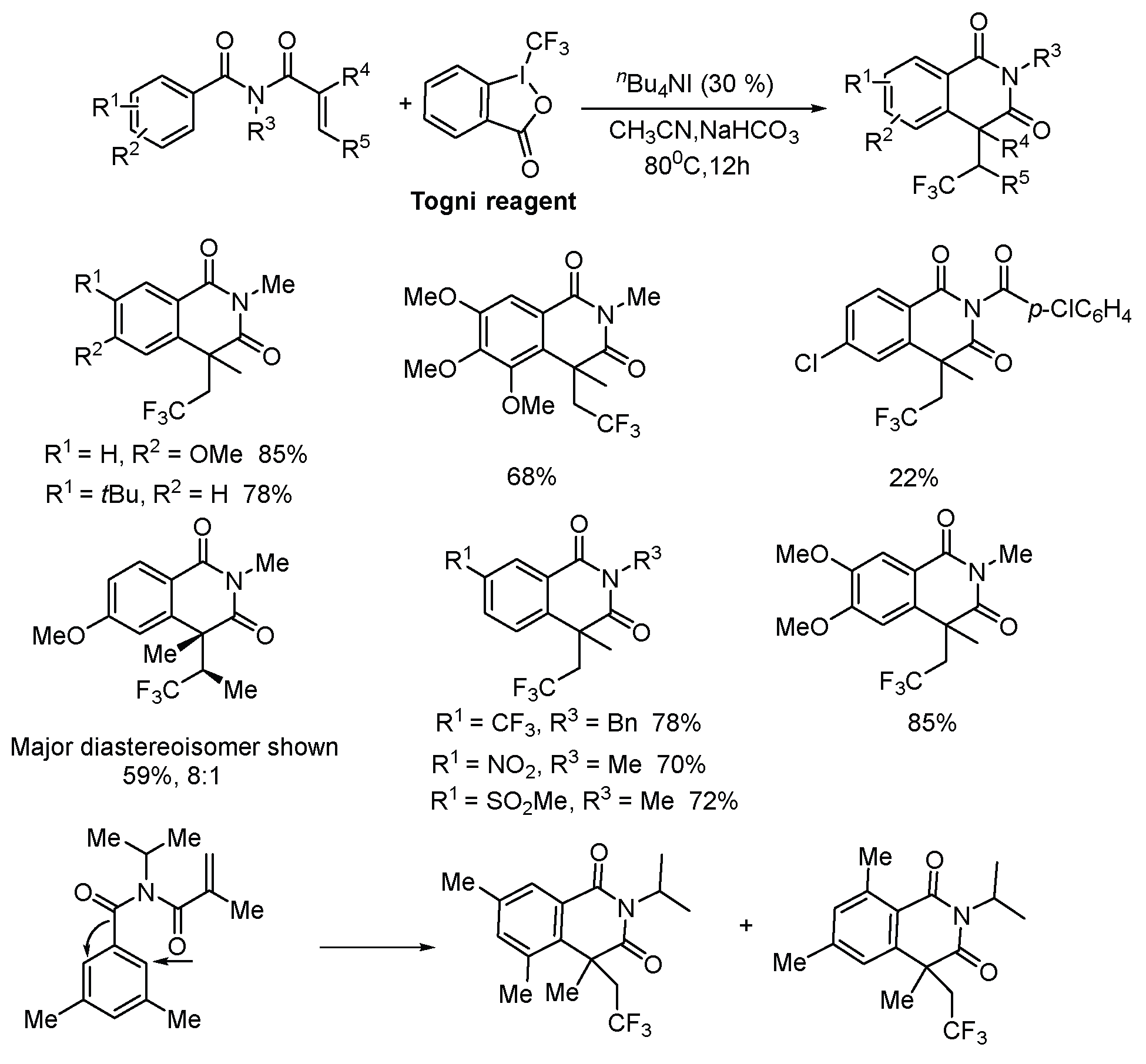
In 2013, Nevado and co-workers [10] reported a metal-free approach using N-alkyl-N-methacryloyl arylamides as substrates (Scheme 1). In this strategy, tetrabutylammonium iodide activates the Togni reagent to generate a highly reactive iodine(III) species, which subsequently reacts with the alkene moiety to form a C–CF₃ bond, followed by an intramolecular cyclization process to afford the desired products. This method exhibits good substrate compatibility, tolerating various functional groups such as electron-withdrawing groups, sterically hindered groups, and polysubstituted alkenes, while effectively constructing the isoquinolinedione skeleton. However, its limitations include relatively low reaction efficiency for certain substrates (yields ranging from 22% to 68%).
Scheme 1.
TBAI-activated Togni reagent for isoquinoline-1,3-dione synthesis.
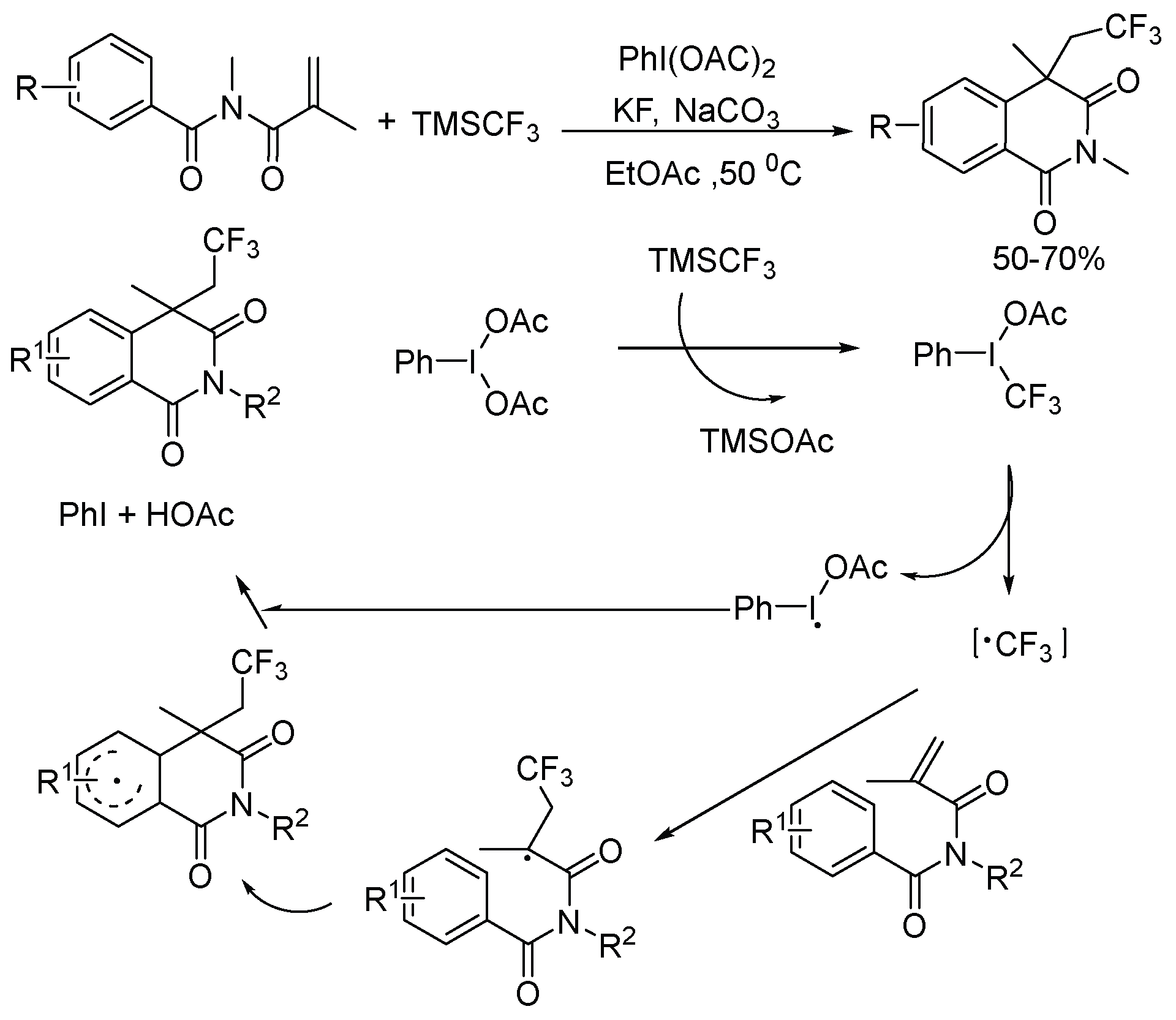
In 2014, Liu and co-workers [11] developed a metal-free trifluoromethylation of α,β-unsaturated imides using TMSCF₃ and PhI(OAc)₂ under mild conditions (50 °C in EtOAc), which avoids transition metal deactivation by imide groups and tolerates various aryl substituents to give 50–70% yields (Scheme 2).
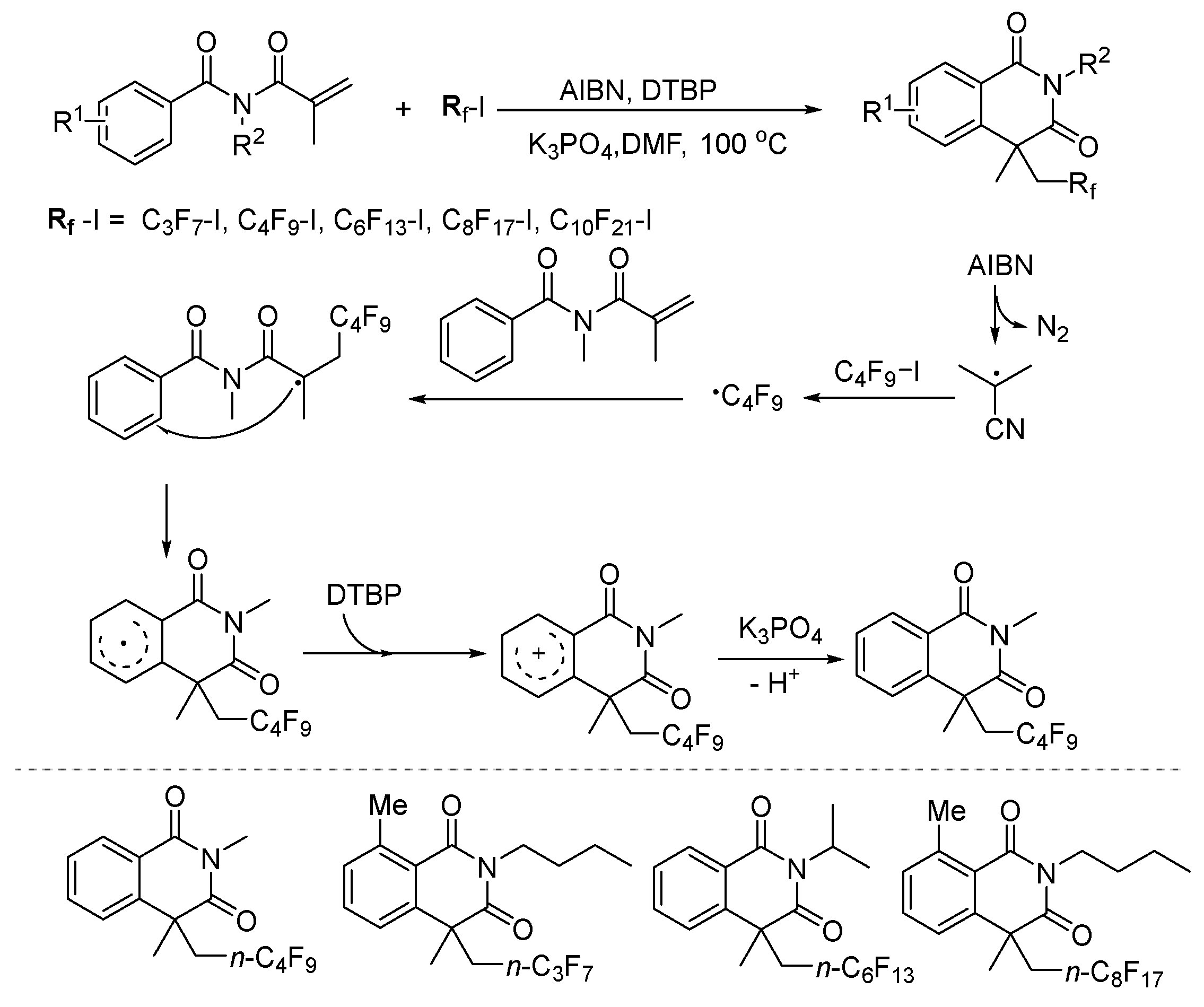
In 2016, Sheng and co-workers [12] reported a radical-based approach using N-alkyl acrylbenzamides as substrates (Scheme 3). In this protocol, azobisisobutyronitrile (AIBN) was employed to initiate perfluoroalkyl iodides, generating perfluoroalkyl radicals. These radicals then underwent a radical addition/cyclization cascade to afford perfluoroalkylated isoquinoline-1,3-dione derivatives. Notably, various perfluoroalkyl iodides, including C₃F₇I, C₆F₁₃I, and C₈F₁₇I, were found to be reactive under the perfluoroalkylation conditions, producing isoquinolinediones bearing different perfluorinated moieties in moderate yields.
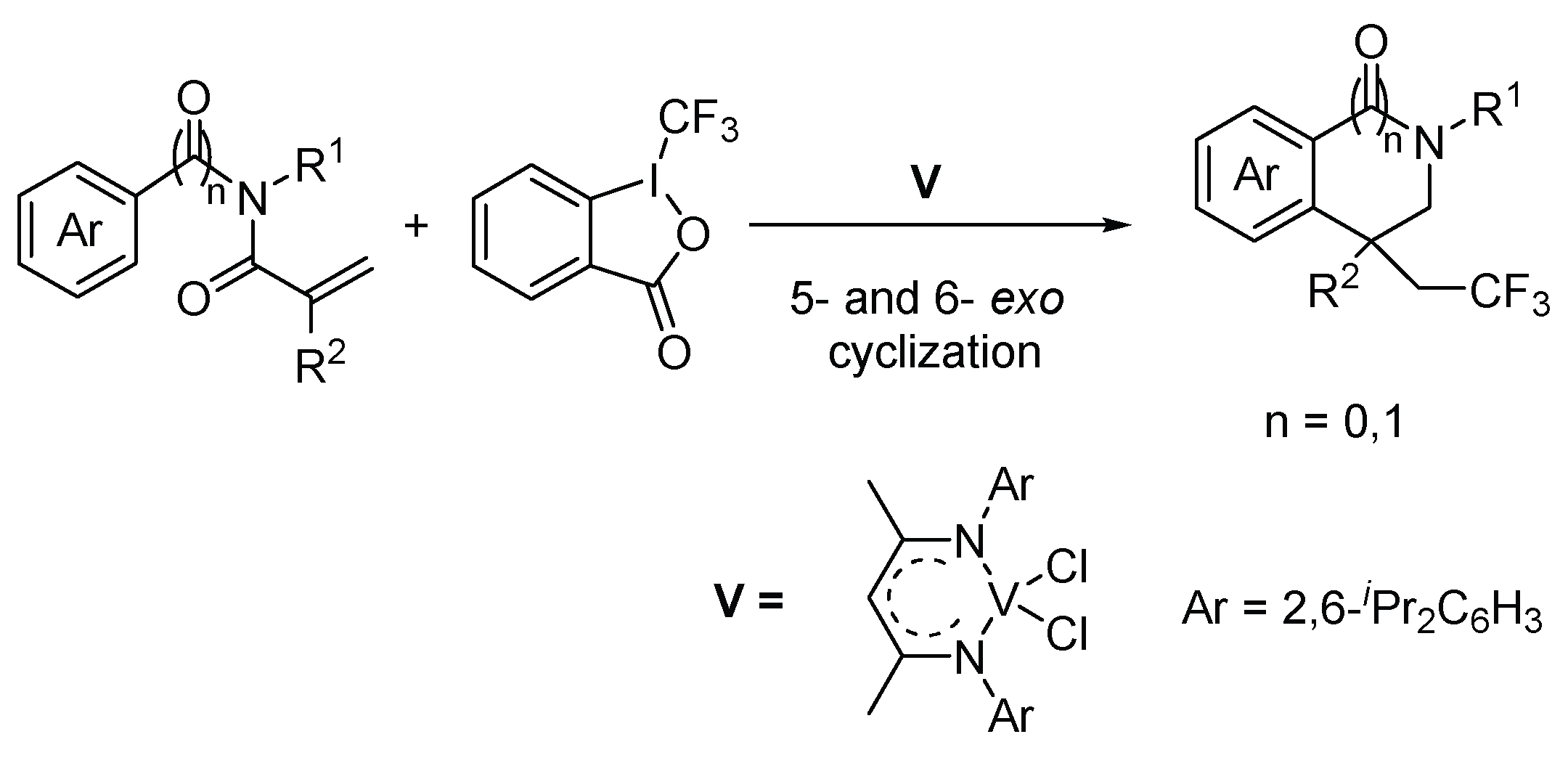
In 2025, Zhang and co-workers [13] developed a vanadium-catalyzed radical cascade trifluoromethylation/(bi)cyclization reaction of alkenes and 1,7-enynes with the Togni-II reagent. This protocol enables the efficient synthesis of trifluoromethylated oxindoles, isoquinoline-1,3-diones and indeno[1,2-c]quinolines. Furthermore, these transformations feature broad substrate scope and excellent regioselectivity (Scheme 4).
2.2. Visible-Light-Induced Catalytic Methods
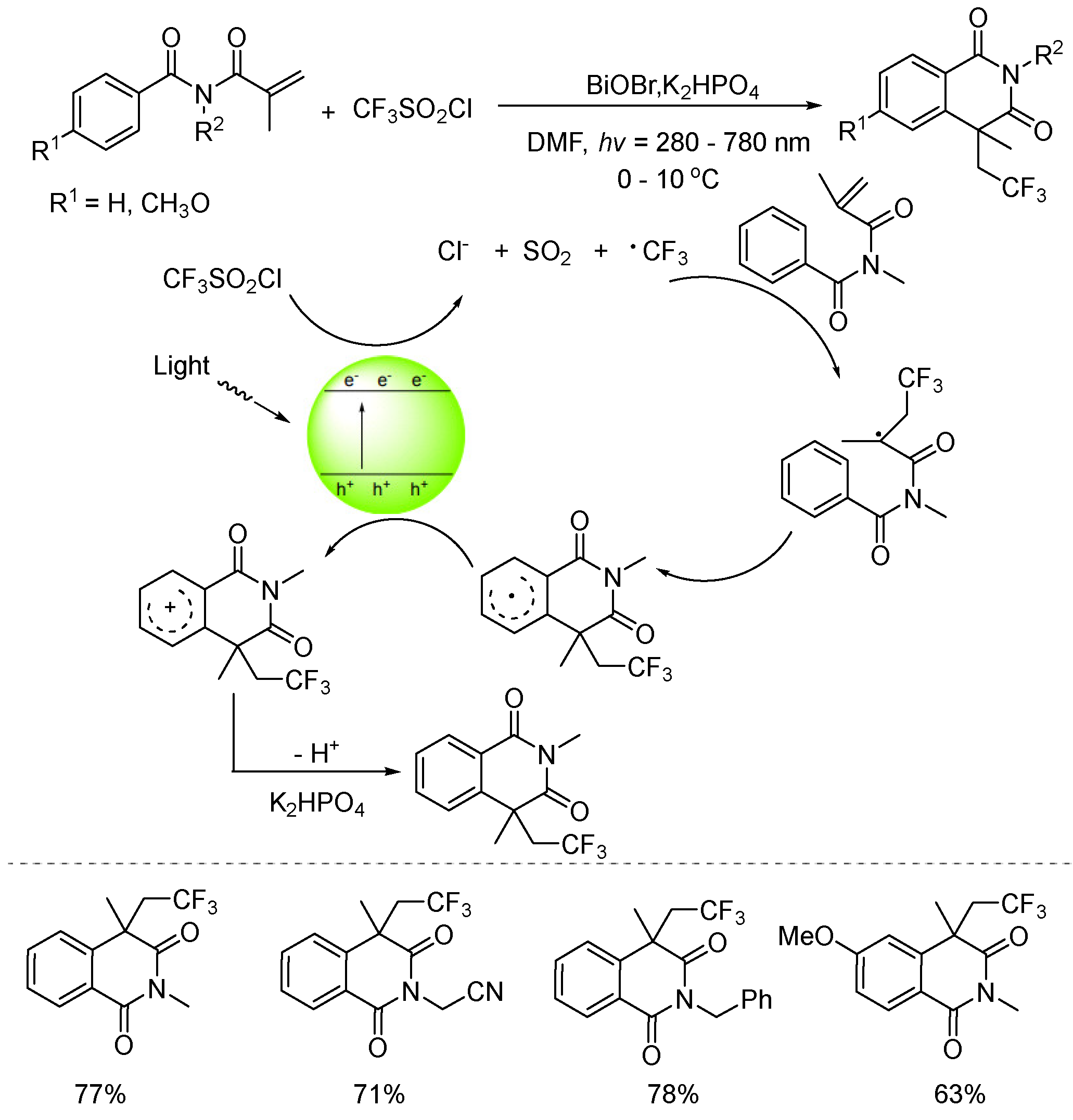
In 2015, Zhang and co-workers [14] reported a visible-light-induced strategy using N-alkyl acrylarylformamides as substrates (Scheme 5). In this approach, BiOBr nanosheets were employed to activate the inexpensive trifluoromethanesulfonyl chloride(CF3SO2Cl) under light irradiation, generating trifluoromethyl radicals. These radicals subsequently underwent a cascade trifluoromethylation/cyclization reaction with the alkene moiety, leading to the formation of CF₃-containing isoquinoline-1,3-dione derivatives.
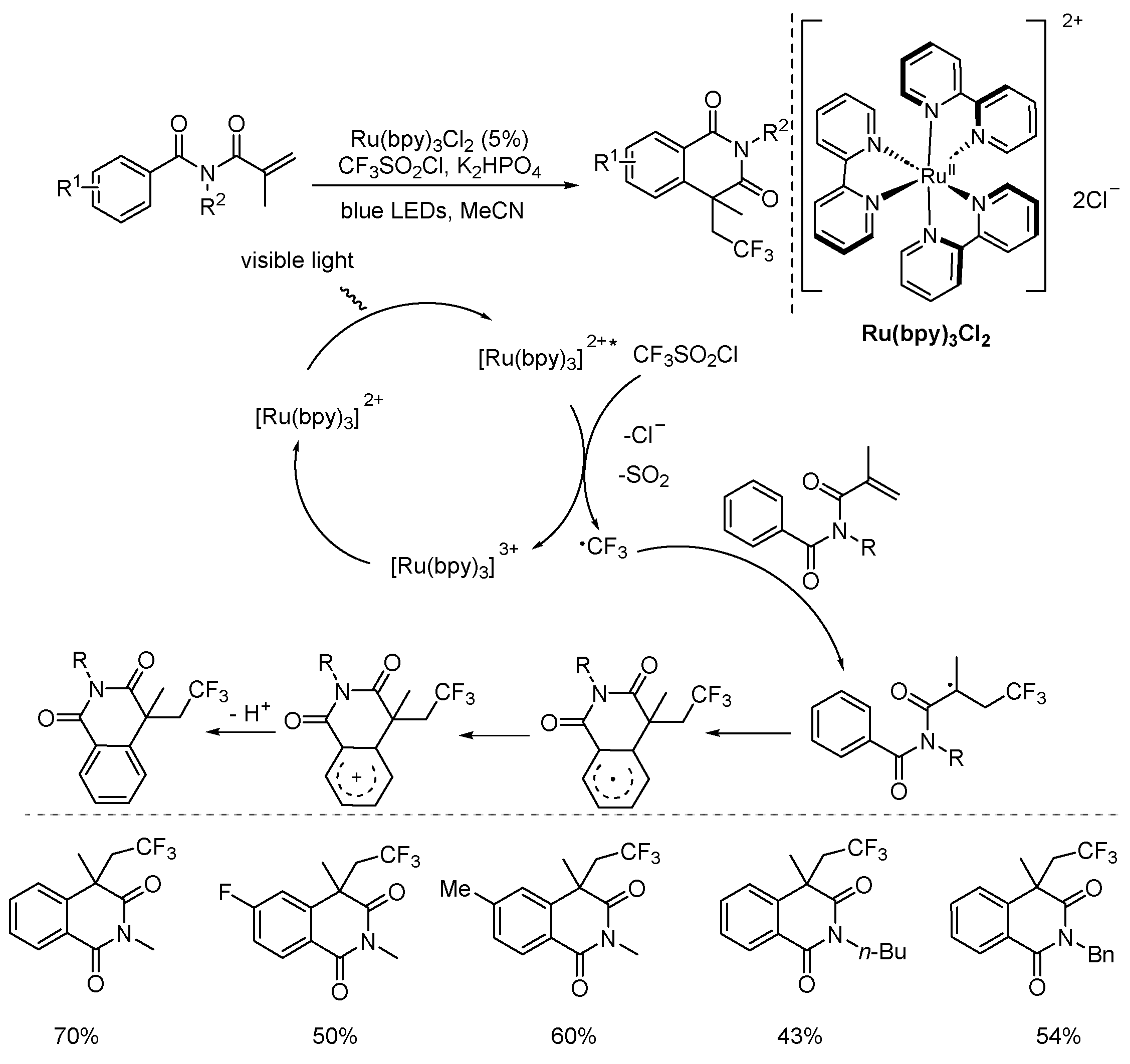
In 2015, Xia and co-workers [15] developed a visible-light-mediated strategy in which tris(2,2′-bipyridyl)ruthenium(II) chloride was excited under visible-light irradiation and subsequently activated trifluoromethanesulfonyl chloride via an energy-transfer process to generate trifluoromethyl radicals,These radicals then participated in a cascade radical addition/cyclization reaction, affording trifluoromethylated isoquinoline-1,3-dione derivatives (Scheme 6),In this method, the photosensitizer was Ru(bpy)₃Cl₂.
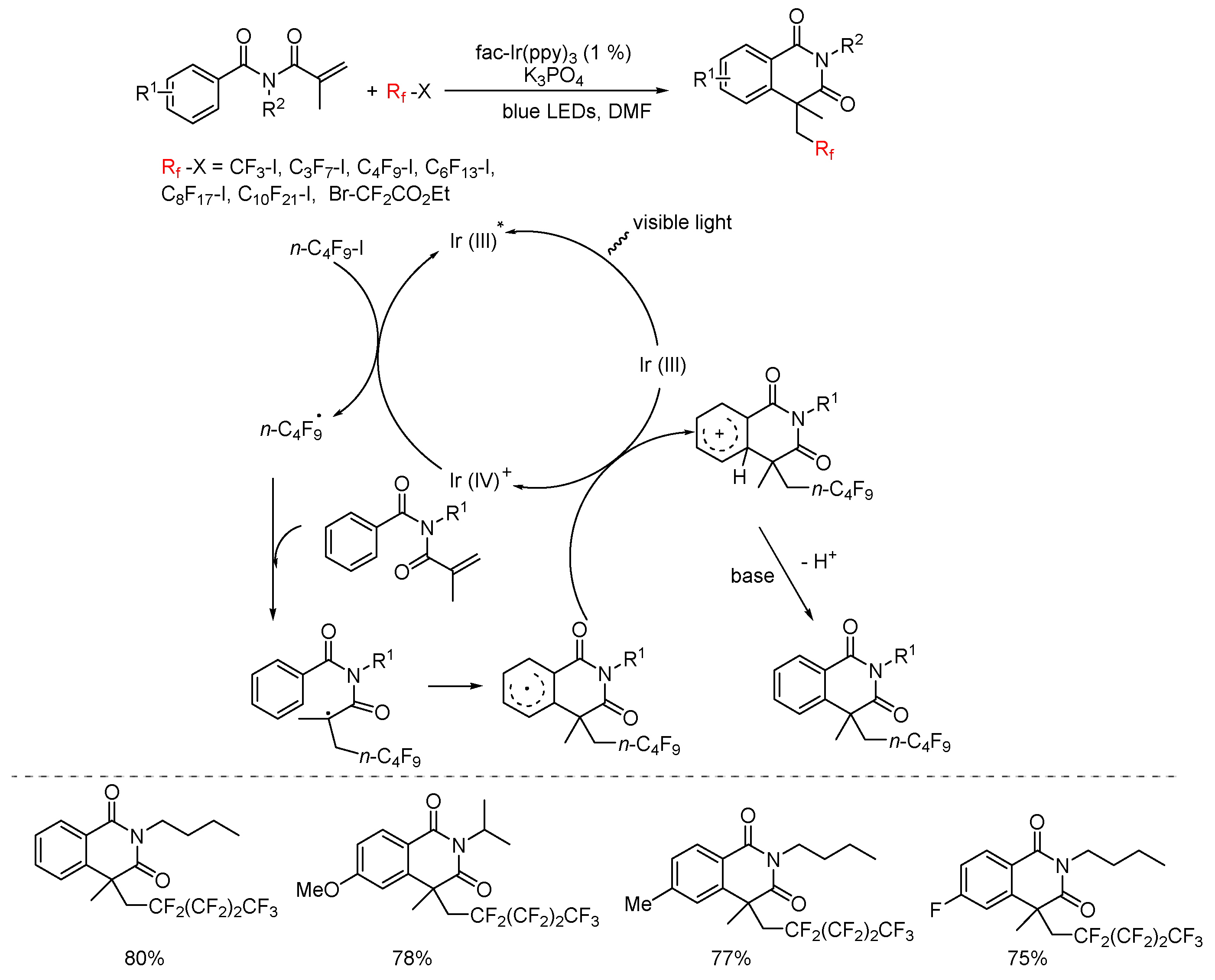
In 2015, Sheng and co-workers [16] reported a blue-light-induced protocol using N-alkyl acrylarylformamides as substrates, with perfluoroalkyl iodides or bromides serving as perfluoroalkyl sources. Under blue LED irradiation, the reaction enabled efficient perfluoroalkylation of alkenes, providing rapid access to perfluoroalkylated isoquinoline-1,3-dione derivatives (Scheme 7). A wide range of perfluoroalkyl groups could be introduced, including CF₃, C₃F₇, C₄F₉, C₆F₁₃, C₈F₁₇, C₁₀F₂₁, and CF₂CO₂Et.
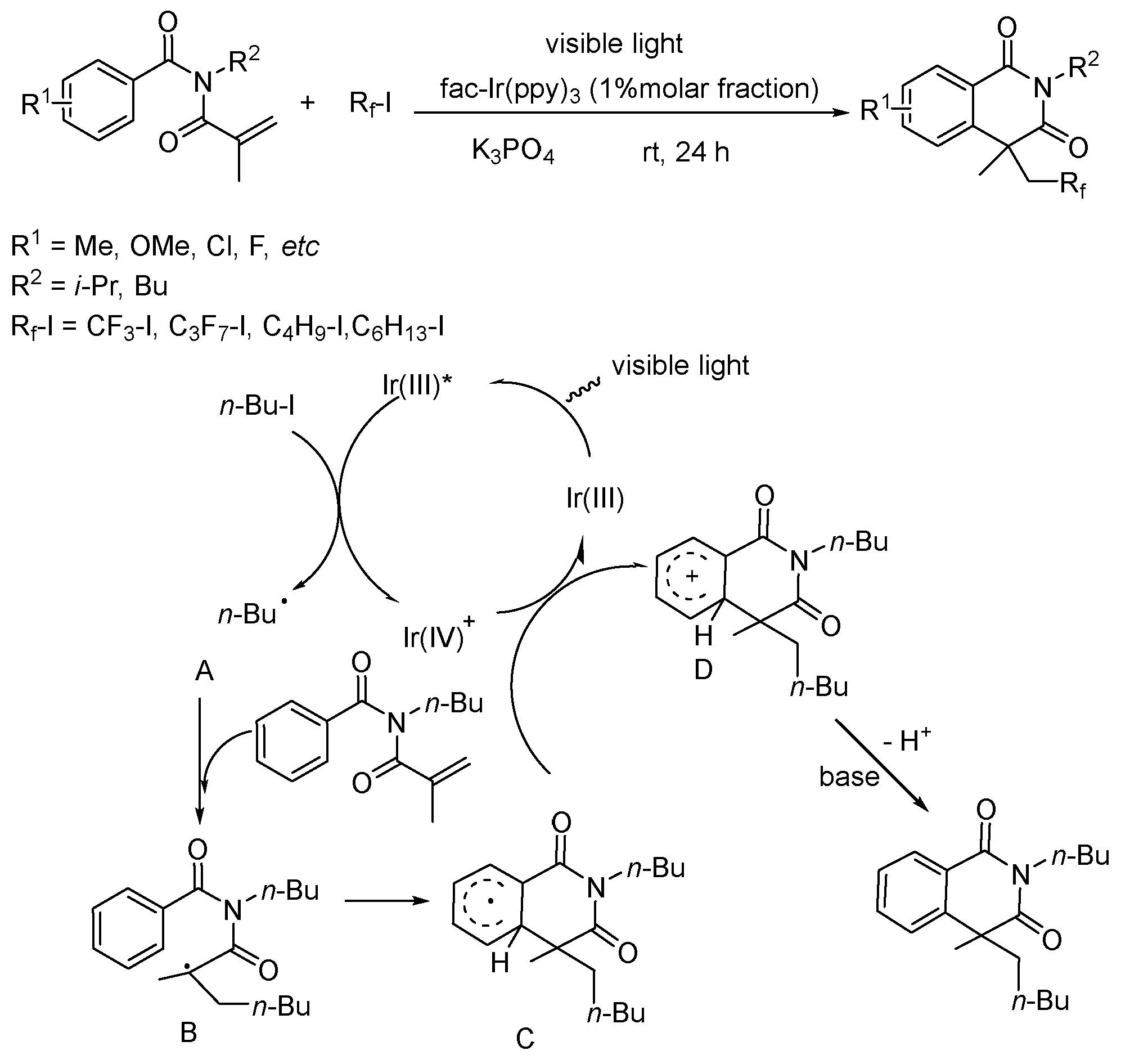
Deng and co-workers reported a visible-light-induced cascade addition/cyclization reaction between activated alkenes and perfluoroalkyl iodides for the synthesis of polyfluorinated isoquinoline-1,3-dione derivatives [17] (Scheme 8). Under visible-light irradiation, a variety of N-acryloyl-N-butylbenzamide derivatives underwent radical cascade addition and cyclization with perfluoroalkyl iodides, affording a series of polyfluoro-substituted isoquinoline-1,3-dione derivatives in moderate to good yields (54%–80%).
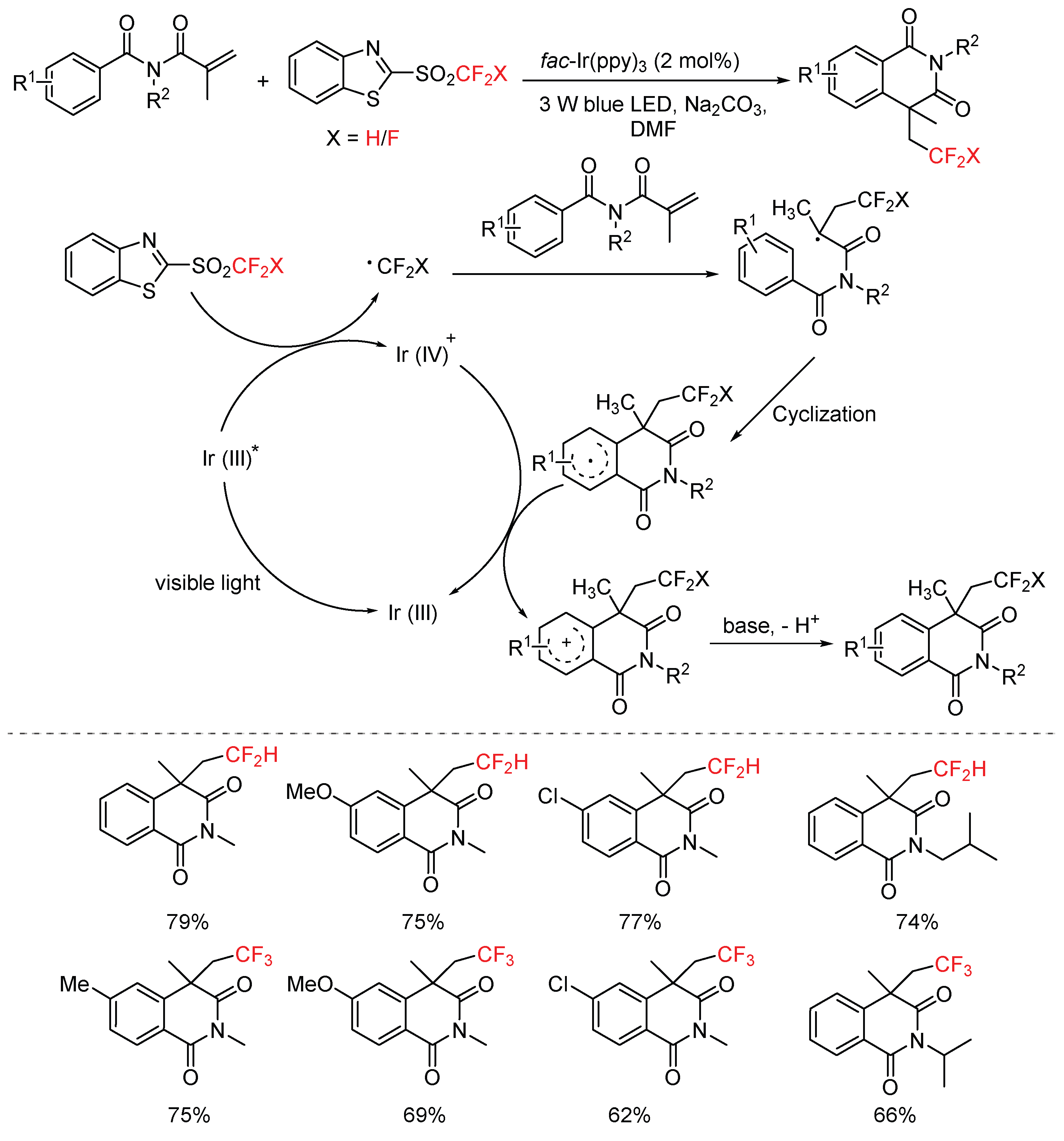
In 2017, Zou and co-workers [18] reported a visible-light-mediated strategy using N-alkyl acrylbenzamide derivatives as substrates, with difluoromethyl sulfone or trifluoromethyl sulfone serving as fluorine-containing radical precursors(Scheme 9). Upon visible-light irradiation, difluoromethyl or trifluoromethyl radicals were generated, which subsequently reacted with alkenes to form new C–CF₂H and C–CF₃ bonds. The resulting intermediates then underwent intramolecular cyclization to afford fluorinated isoquinoline-1,3-dione derivatives.
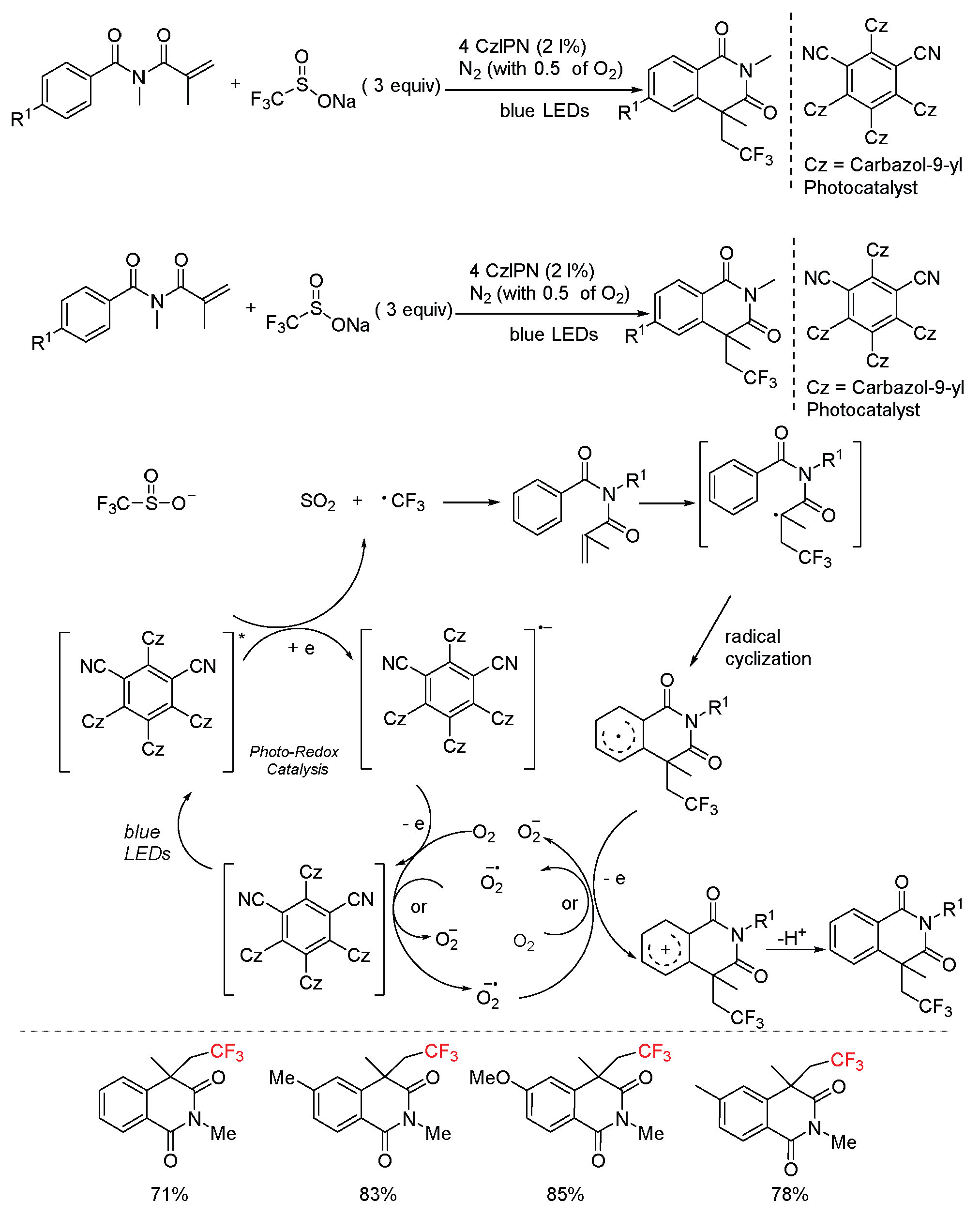
In 2018, Cai and co-workers [19] developed a mild and direct visible-light photocatalytic method for the intramolecular oxidative aryltrifluoromethylation of activated alkenes using N-methyl acrylbenzamide derivatives as substrates and the Langlois reagent (CF₃SO₂Na) as the trifluoromethyl source. The reaction was carried out under visible-light irradiation in the presence of an organic photocatalyst, 4CzIPN, under strong oxidant-free and transition metal-free conditions with oxygen as the green oxidant. Using this approach, a series of CF₃-containing isoquinoline-1,3-dione derivatives were successfully synthesized (Scheme 10).

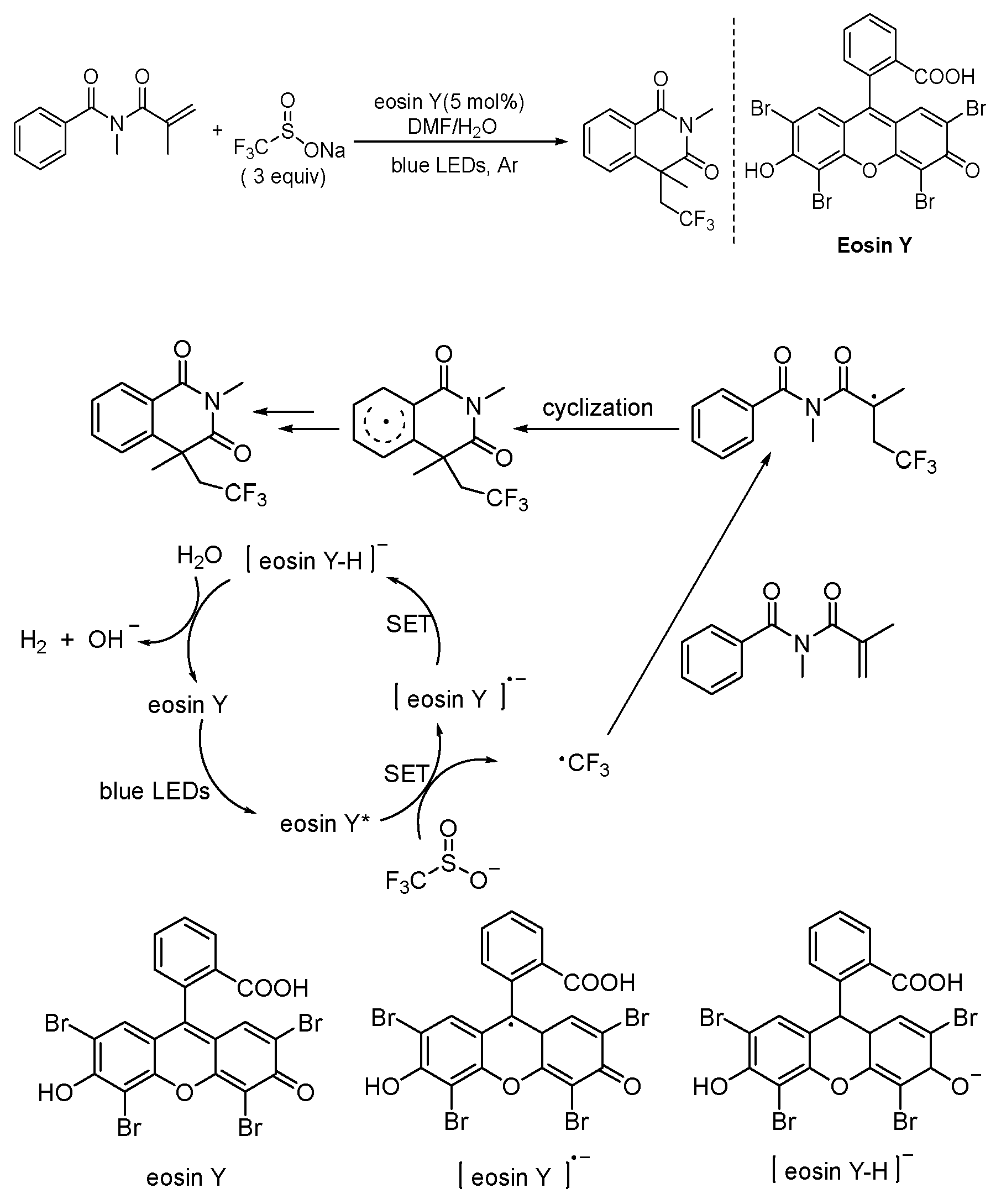
In 2019, Guan et al. developed a mild radical cascade reaction for the synthesis of trifluoromethylated isoquinolinediones [20], in which trifluoromethyl radicals can be readily accessed from simple sodium sulfinates under visible light and eosin Y catalysis. This tandem approach features a broad range of substrates and excellent functional group tolerance (Scheme 11).
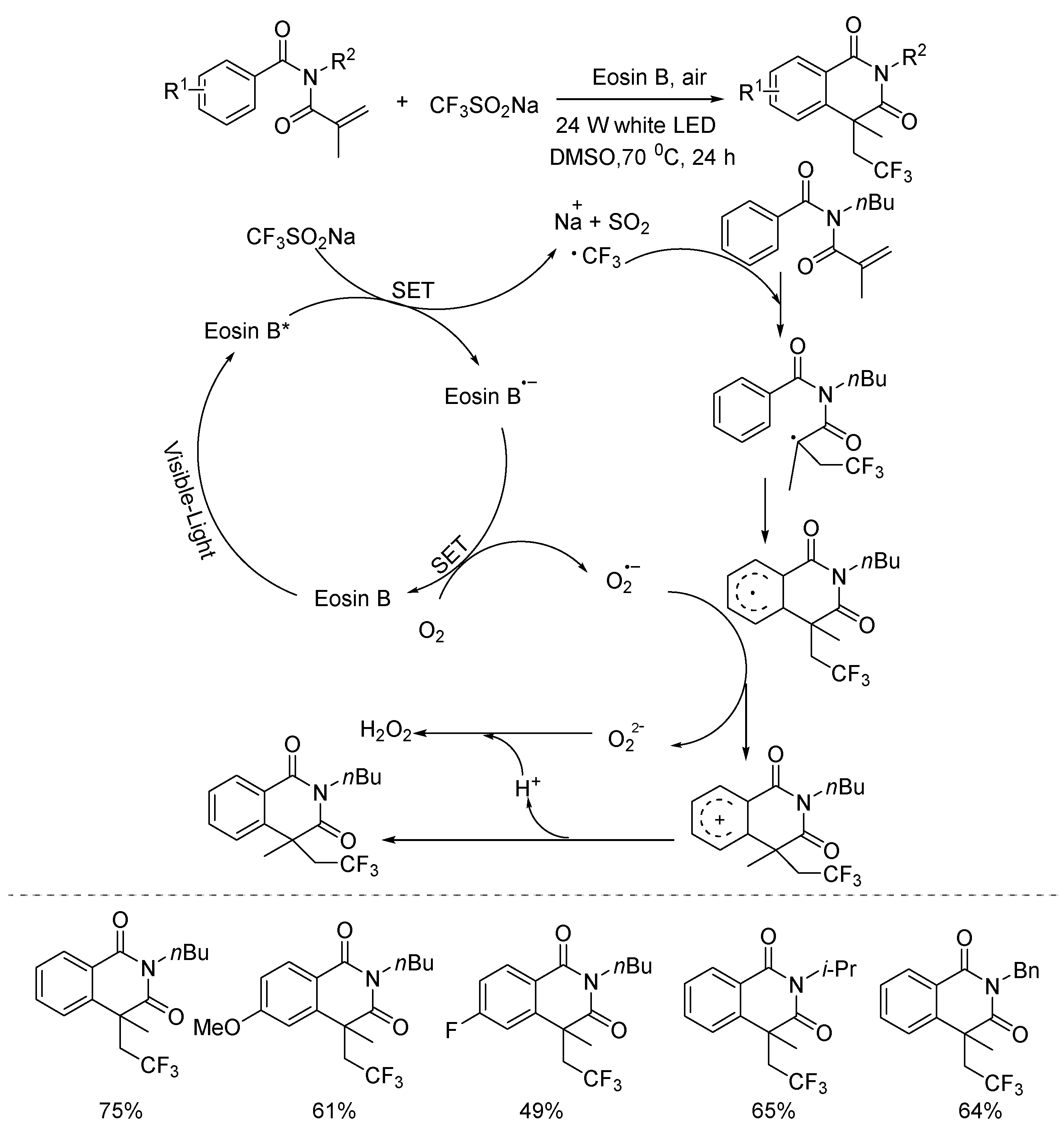
In 2019, Zhang and co-workers[21] also developed a novel visible-light-induced radical cascade trifluoromethylation/cyclization of N-benzamides using CF₃SO₂Na as the trifluoromethyl radical source (Scheme 12). This protocol provided an efficient strategy for the synthesis of CF₃-containing isoquinoline-1,3-diones under mild reaction conditions. Notably, this reaction featured metal-free conditions, air oxidation, the use of CF₃SO₂Na as the CF₃ source, no need for additional additives, and operational simplicity. The reaction mechanism of this work is highly similar to that reported by Guan et al. [20], both involving a visible-light-induced radical addition/cyclization cascade process of trifluoromethyl radicals to N-benzamide substrates.
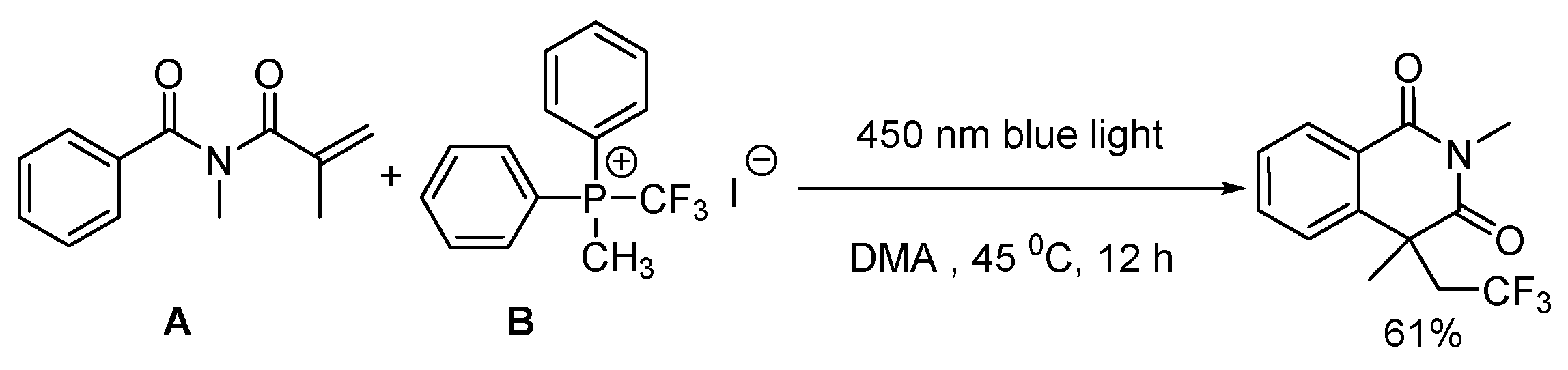
In 2021, Chen and co-workers [22] developed a trifluoromethylating reagent B. Using this reagent as the fluorine source, the reaction with acryloylbenzamide A was carried out under 450 nm blue light irradiation at 45 °C for 24 hours, affording the fluorinated isoquinoline compound in 61% yield (Scheme 13).
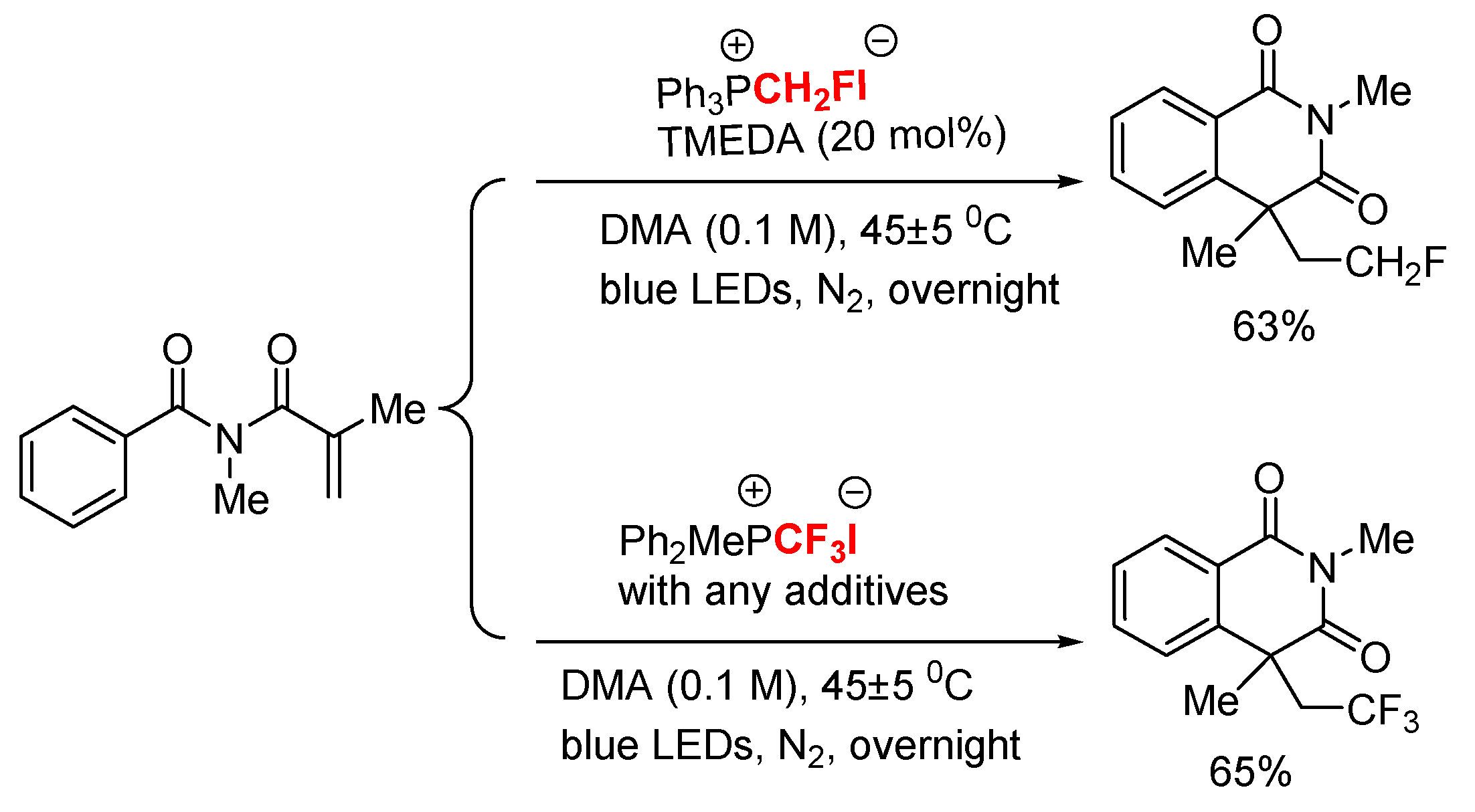
In 2021, Chen and co-workers [23] developed a visible-light-induced, photocatalyst-free strategy for monofluoromethylation, difluoromethylation, and trifluoromethylation of alkenes using readily available phosphonium iodide salts(Scheme 14). Notably, the trifluoromethylation using Ph₂MePCF₃I proceeded efficiently under identical conditions without any additive, yielding the product in 65% yield[23].
2.3. Electroorganic Synthesis
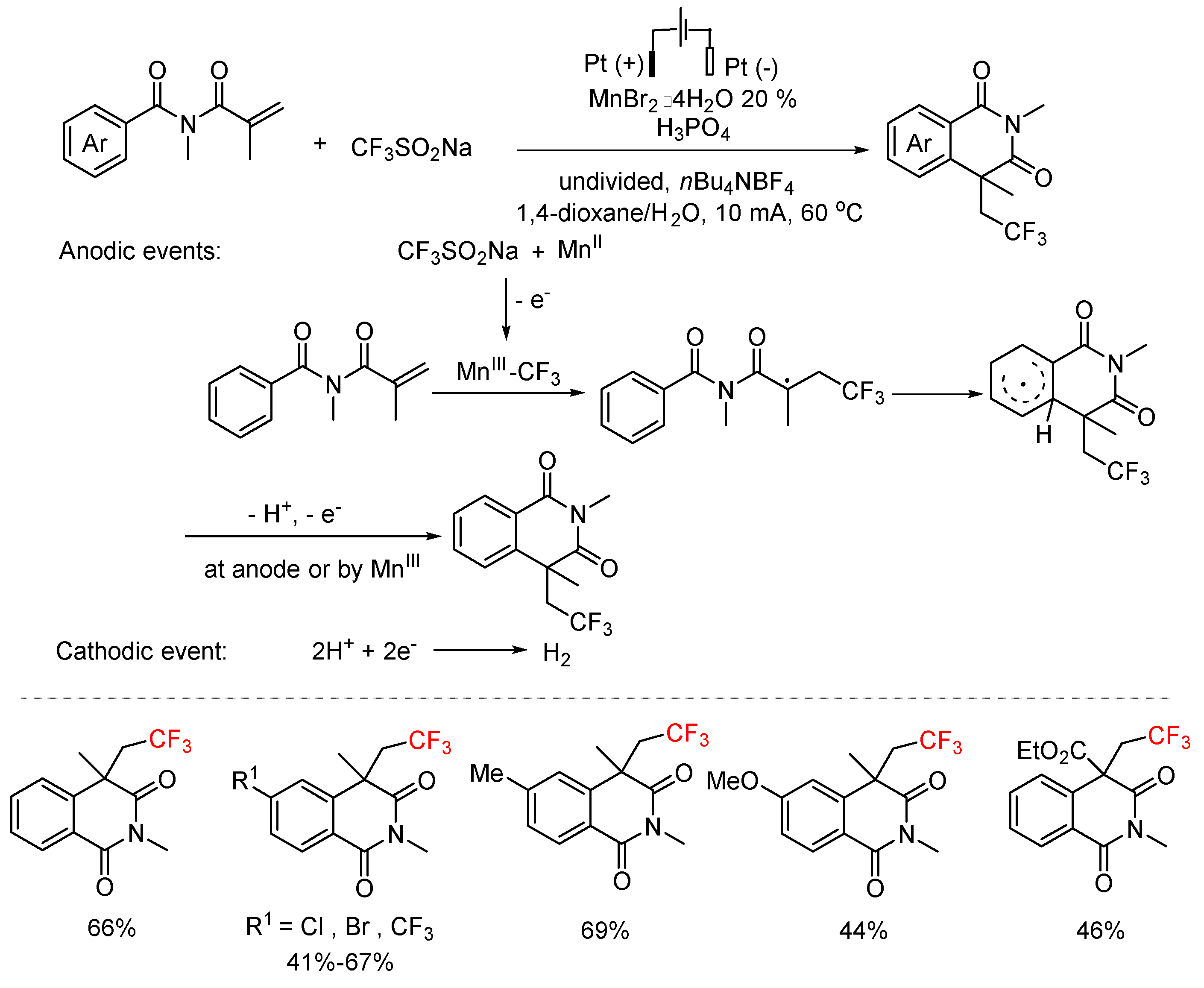
In 2019, Mo and co-workers [24] developed a manganese-catalyzed strategy to achieve trifluoromethylation/C(sp²)–H functionalization for the construction of trifluoromethylated isoquinoline-1,3-dione derivatives (Scheme 15). In this work, Mn(II) is first oxidized at the anode to Mn(III), which subsequently reacts with CF₃SO₂Na to generate a Mn(III)–CF₃ species. This intermediate then produces trifluoromethyl radicals, which undergo radical addition and cyclization to afford the desired products.
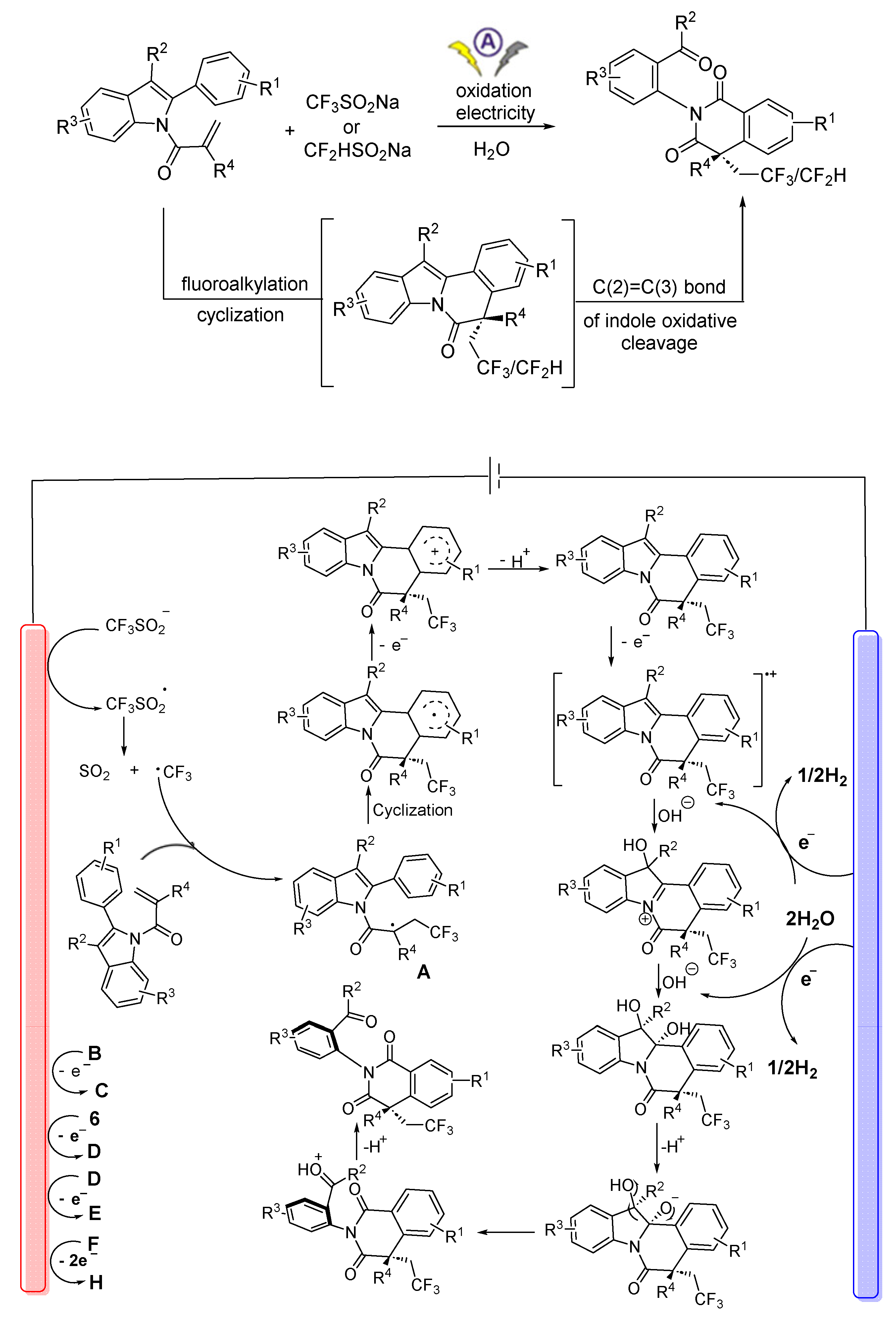
In 2021, Guo and co-workers [25] employed the readily accessible Langlois reagent (CF₃SO₂Na) as the fluoroalkyl source to synthesize a series of trifluoromethyl- and difluoromethyl-substituted 2-(2-acetylphenyl)isoquinoline-1,3-dione derivatives with excellent stereoselectivity and good yields(Scheme 16). Notably, this new protocol enables the fluoroalkylation/cyclization of N-substituted acrylamide alkenes under oxidant-free conditions.
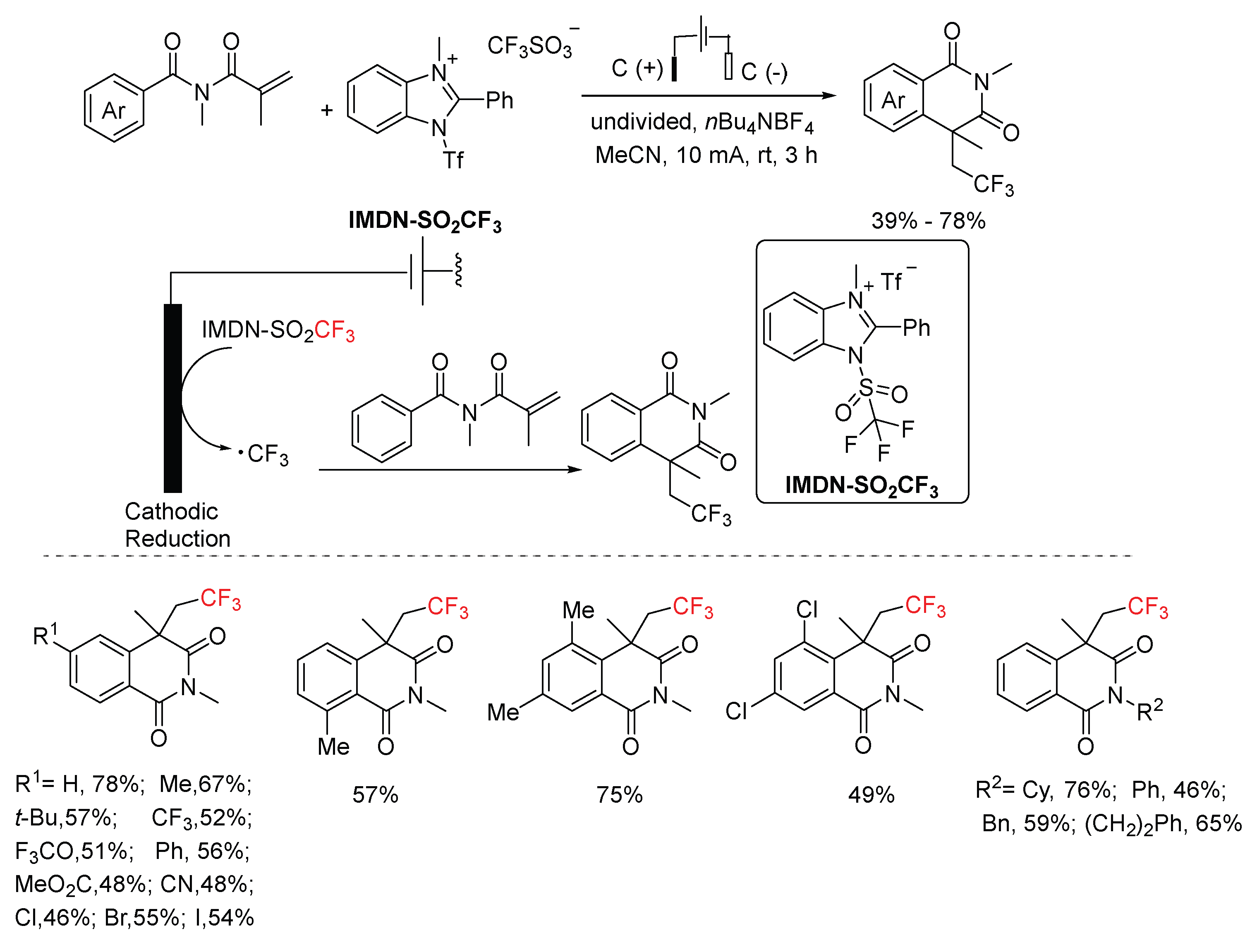
In 2021, Wang and co-workers [26] reported an electrochemical trifluoromethylation/cyclization strategy for the synthesis of isoquinoline-1,3-dione derivatives. In this work, IMDN-SO₂CF₃ served as the trifluoromethyl source. Under electrochemical conditions, cathodic reduction of IMDN-SO₂CF₃ generates trifluoromethyl radicals, which subsequently undergo trifluoromethylation and cyclization to afford the corresponding isoquinoline-1,3-dione (Scheme 17). This protocol has good functional group tolerance and abroad substrate scope.
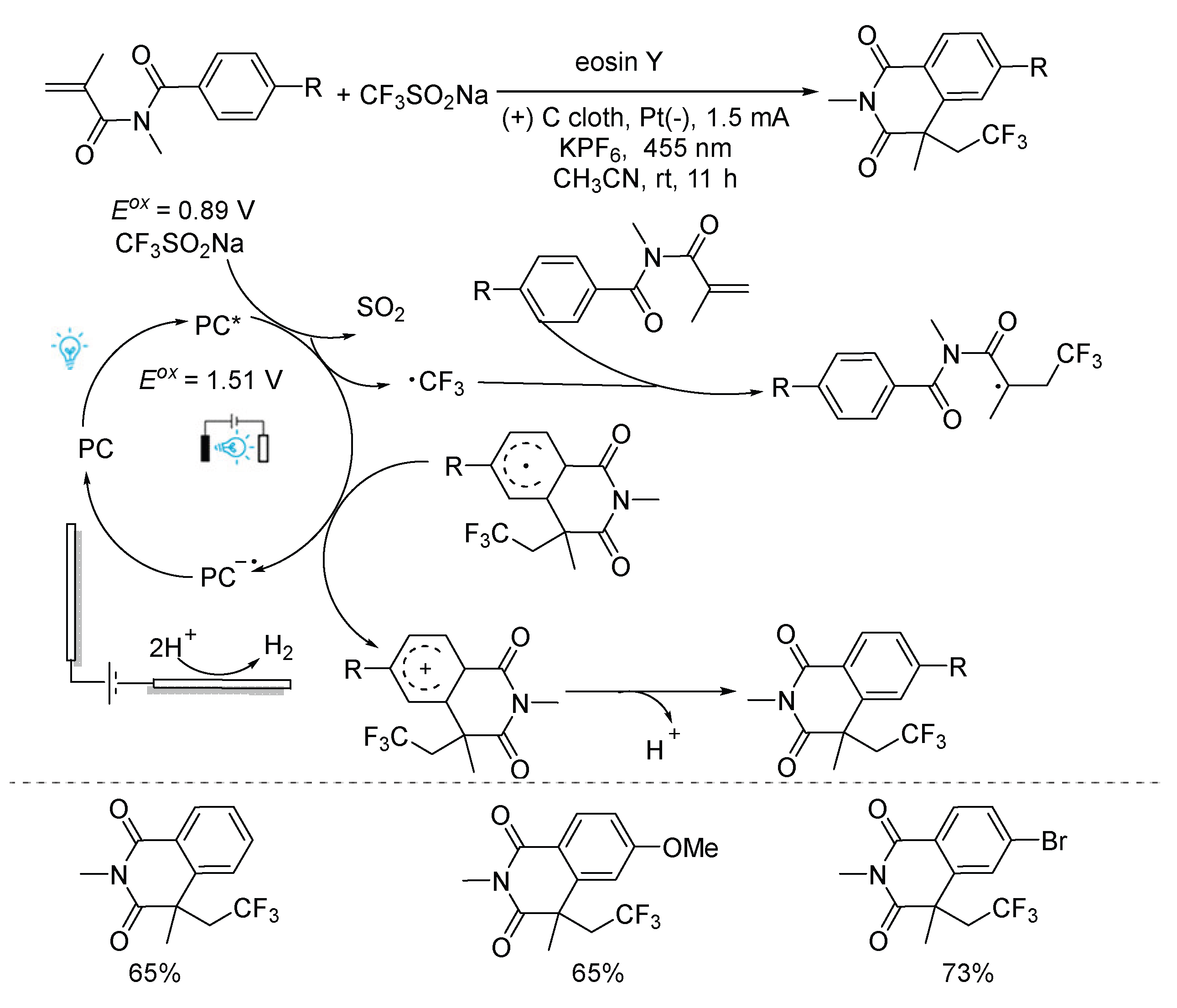
In 2023, Liang and co-workers developed an electrophotocatalytic protocol for the tri- or difluoromethylative cyclization of alkenes [27]. The system uses eosin Y as a low-cost photocatalyst and CF₃SO₂Na as the trifluoromethyl radical source. The reaction was carried out in acetonitrile with KPF₆ as the supporting electrolyte, using a carbon cloth anode and a platinum plate cathode, under 455 nm blue light irradiation at a constant current of 1.5 mA at room temperature for 11 hours (Scheme 18).
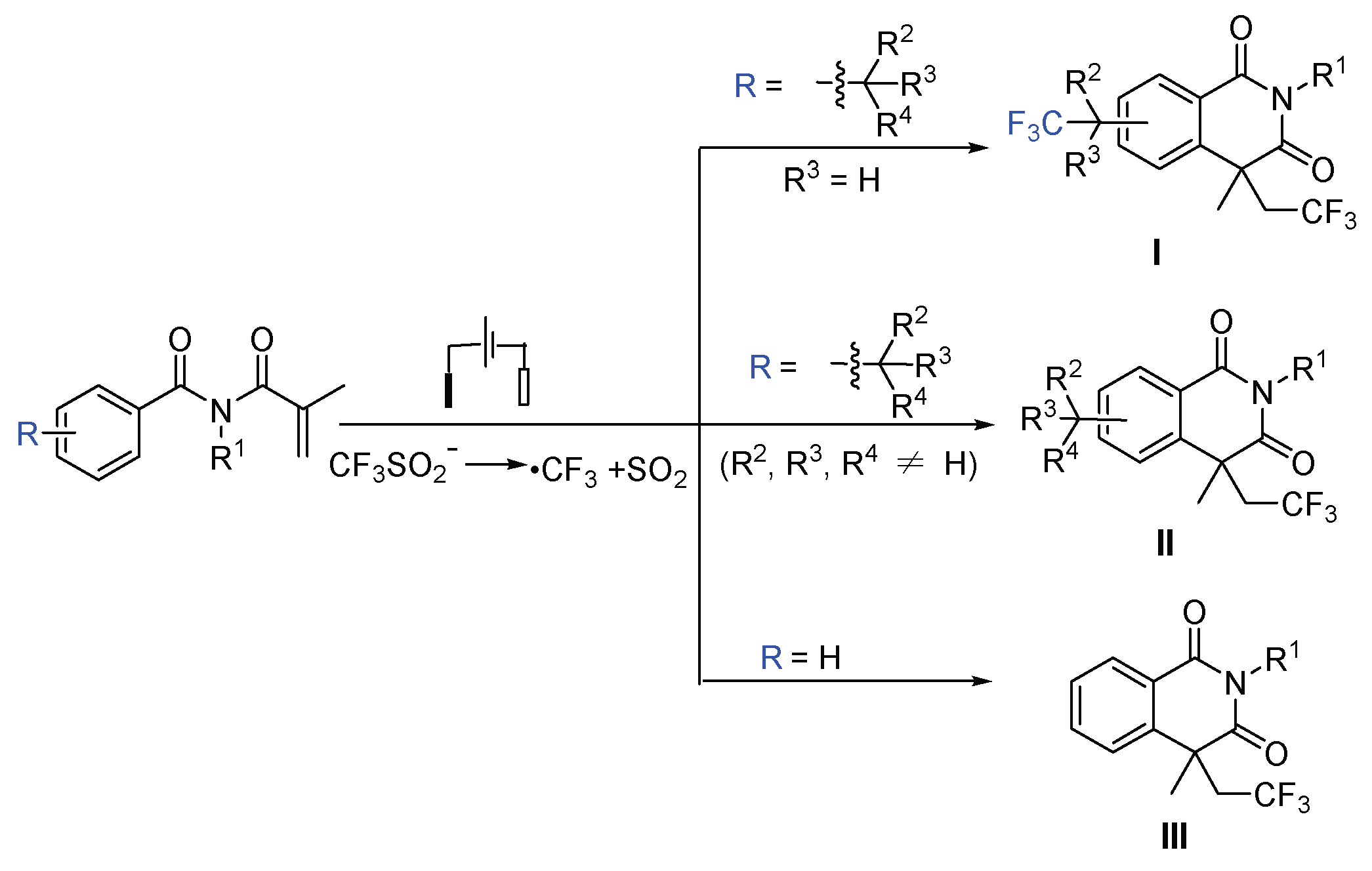
In 2025, our group [28] developed an electrooxidative protocol using N-methacryloylbenzamides as substrates. The Langlois reagent (CF₃SO₂Na) is directly oxidized at the anode to produce trifluoromethyl radicals, which then engage in radical addition/cyclization with N-alkylacryloyl arylcarboxamides, providing structurally diverse trifluoromethylated isoquinoline-1,3-diones in moderate to good yields.When the phenyl ring of the N-alkyl acrylarylformamide substrate contains benzylic C–H bonds, leading to products bearing both a trifluoromethyl group and a CF₃ substitution at the benzylic position of the isoquinoline-1,3-dione framework. In contrast, when no benzylic C–H bond is present in the aromatic ring, only mono-trifluoromethylated isoquinoline-1,3-dione derivatives are obtained (Scheme 19).
3. Conclusions
This review provides a comprehensive overview of recent advances in the synthetic methodologies toward fluorinated isoquinoline-1,3-dione, covering three major categories: classical synthetic approaches, visible-light photocatalysis, and organic electrochemical synthesis. In addition to discussing the underlying reaction mechanisms and highlighting the key advantages and limitations of each strategy, this review is intended to provide valuable insights for researchers in the field and to further promote the broad application of these compounds in drug discovery and materials science. Nevertheless, several issues remain to be further addressed. For instance, the range of substrates for the synthesis of isoquinoline diones is still relatively narrow, with most studies focusing almost exclusively on acryloyl benzamide derivatives. In addition, substrate tolerance remains unsatisfactory, and only a limited number of product examples have been reported in some studies.
Author Contributions
A. Liu conceived, designed, wrote, and revised the entire manuscript, and performed all analyses. The other authors (H. Zhang, R. Wang, Y. Wang, T. Wang, W. Zheng, J. Shi, Z. Fu, Y. Wang, X. Tian, R. Abulimiti, R. Wang, X. Ma, X. Hao, L. Wang) assisted with literature collection and proofreading. All authors have read and agreed to the published version of the manuscript.
Funding
This work was supported by the innovation Fund for University Teachers of Gansu Province, China (2026A-278), Gansu Provincial University Youth Doctoral Support Project (2025QB-109), the Industrial Support Program for Universities of Gansu Province (2026CYZC-071), 2025 Enterprise Technology Needs Project of Gansu Chemical Industry Research Institute (2025GH-12). The authors thank all workers whose names appear in the references for their dedication and hard work.
Acknowledgments
We thank Professor Yonghai Chai and Associate Professor Qi Zhang from Shaanxi Normal University for their guidance and assistance.
Conflicts of Interest
The authors declare no conflicts of interest.
References
- Purser, S.; Moore, P. R.; Swallow, S.; Gouverneur, V. Fluorine in medicinal chemistry. Chem. Soc. Rev. 2008, 37, 320–330. [Google Scholar] [CrossRef]
- Muller, K.; Faeh, C.; Diederich, F. Fluorine in pharmaceuticals: looking beyond intuition. Science. 2007, 317, 1881–1886. [Google Scholar] [CrossRef]
- (a) Schlosser, M.; CF3-bearing aromatic and heterocyclic building blocks; Ma, (b); Cahard, J.-A. D.J. Strategies for nucleophilic, electrophilic, and radical trifluoromethylations. Angew. Chem. Int. Ed.;J. Fluor. Chem. 2006, 45 128, 5432-5446 975–996. [Google Scholar]
- Chen, Y.-L.; Tang, J.; Kesler, M. J.; Sham, Y. Y.; Vince, R.; Geraghty, R. J.; Wang, Z. The design, synthesis and biological evaluations of C-6 or C-7 substituted 2-hydroxyisoquinoline-1,3-diones as inhibitors of hepatitis C virus. Bioorg. Med. Chem. 2012, 20, 467–479. [Google Scholar] [CrossRef]
- Snow, R. J.; Cardozo, M. G.; Morwick, T. M.; Busacca, C. A.; Dong, Y.; Eckner, R. J.; Jacober, S.; Jakes, S.; Kapadia, S.; Lukas, S.; Panzenbeck, M.; Peet, G. W.; Peterson, J. D.; Prokopowicz, A. S.; Sellati, R.; Tolbert, R. M.; Tschantz, M. A.; Moss, N. Discovery of 2-Phenylamino-imidazo[4,5-h]isoquinolin-9-ones: a New class of inhibitors of Lck kinase. J. Med. Chem. 2002, 45, 3394–3405. [Google Scholar] [CrossRef]
- Vernekar, S. K. V.; Liu, Z.; Nagy, E.; Miller, L.; Kirby, K. A.; Wilson, D. J.; Kankanala, J.; Sarafianos, S. T.; Parniak, M. A.; Wang, Z. Design, synthesis, biochemical, and antiviral evaluations of C6 Benzyl and C6 biarylmethyl substituted 2-hydroxylisoquinoline-1,3-diones: dual inhibition against HIV reverse transcriptase-associated R Nase H and polymerase with antiviral activities. J. Med. Chem. 2015, 58, 651–664. [Google Scholar] [CrossRef] [PubMed]
- Billamboz, M.; Bailly, F.; Lion, C.; Touati, N.; Vezin, H.; Calmels, C.; Andreola, M.-L.; Christ, F.; Debyser, Z.; Cotelle, P. Magnesium chelating 2-hydroxyiso- quinoline-1,3(2H,4H)-diones, as inhibitors of HIV-1 integrase and/or the HIV-1 reverse transcriptase ribonuclease H domain: discovery of a novel selective inhibitor of the ribonuclease H function. J. Med.Chem. 2011, 54, 1812–1824. [Google Scholar] [CrossRef] [PubMed]
- Kankanala, J.; Marchand, C.; Abdelmalak, M.; Aihara, H.; Pommier, Y.; Wang, Z. Isoquinoline-1,3-diones as selective inhibitors of tyrosyl DNA phosphodiesterase II (TDP2). J. Med. Chem. 2016, 59, 2734–2746. [Google Scholar] [CrossRef] [PubMed]
- Tsou, H.-R.; Liu, X.; Birnberg, G.; Kaplan, J.; Otteng, M.; Tran, T.; Kutterer, K.; Tang, Z.; Suayan, R.; Zask, A.; Ravi, M.; Bretz, A.; Grillo, M.; McGinnis, J. P.; Rabindran, S. K.; Ayral-Kaloustian, S.; Mansour, T.S. Discovery of 4-(benzylaminomethylene) isoquinoline-1,3-(2H,4H)-diones and 4-[(pyridylmethyl)aminomethylene]isoquinoline-1,3-(2H,4H)-diones as potent and selective inhibitors of the cyclin-dependent kinase 4. J. Med. Chem. 2009, 52, 2289–2310. [Google Scholar] [CrossRef]
- Kong, W.; Casimiro, M.; Fuentes, N.; Merino, E.; Nevado, C. Metal-free aryltrifluoromethylation of activated alkenes. Angew. Chem. Int. Ed. 2013, 52, 13086–3090. [Google Scholar] [CrossRef]
- Li, L.; Deng, M.; Zheng, S.; Xiong, Y.; Tan, B.; Liu, X. Metal-free direct intramolecular carbotrifluoromethylation of alkenes to functionalized trifluoromethyl azaheterocycles. Org. Lett. 2014, 16, 504–507. [Google Scholar] [CrossRef]
- Deng, Y.; Tang, S.; Ding, G.; Wang, M.; Li, J.; Li, Z.; Yuan, L.; Sheng, R. Radical-mediated divergent cyclization of benzamides toward perfluorinated or cyanated isoquinolinediones. Org. Biomol. Chem. 2016, 14, 9348–9353. [Google Scholar] [CrossRef]
- Zhang, L.; Liu, M. D.; Zhao, J. J.; Li, S. D. Vanadium-Catalyzed Trifluoromethylation/Cyclization of Alkenes and 1,7-Enynes with Togni-II Reagent to Access Trifluoromethylated Oxindoles, Isoquinoline-1,3-diones, and Indeno[1,2-c]quinolines. J. Org. Chem. 2025, 90, 7468–7475. [Google Scholar] [CrossRef]
- Liu, C.; Zhao, W.; Huang, Y.; Wang, H.; Zhang, B. Light-induced BiOBr nanosheets accelerated highly regioselective intermolecular trifluoromethylation/arylation of alkenes to synthesize CF3-containing aza-heterocycles. Tetrahedron 2015, 71, 4344–4351. [Google Scholar] [CrossRef]
- Zheng, L.; Yang, C.; Xu, Z.; Gao, F.; Xia, W. Difunctionalization of alkenes via the visible-light-induced trifluoromethylarylation/1,4-aryl shift/desulfonylation cascade reactions. J. Org. Chem. 2015, 80, 5730–5736. [Google Scholar] [CrossRef] [PubMed]
- Tang, S.; Deng, Y.; Li, J.; Wang, W.; Ding, G.; Wang, M.; Xiao, Z.; Wang, Y.; Sheng, R. Synthesis of perfluorinated isoquinolinediones through visible-light-induced cyclization of alkenes. J. Org. Chem. 2015, 80, 12599–2605. [Google Scholar] [CrossRef]
- Deng, Y. L.; Tang, S.; Zhang, Q.; Wang, Q.; Peng, M.L.; Yu, L.M. Visible-light-induced cascade addition cyclization of alkenes toward perfluoroalkylated isoquinolinediones. Chin. J. Appl. Chem. 2016, 33, 685–692. [Google Scholar]
- Zou, G. L.; Wang, X. L. Visible-light induced di-and trifluoromethylation of N-benzamides with fluorinated sulfones for the synthesis of CF2H/CF3-containing isoquinolinediones. Org. Biomol. Chem. 2017, 15, 8748–8754. [Google Scholar] [CrossRef] [PubMed]
- Lu, M.; Liu, Z.; Zhang, J.; Tian, Y.; Qin, H.; Huang, M.; Hu, S.; Cai, S. Synthesis of oxindoles through trifluoromethylation of N-aryl acrylamides by photoredox catalysis. Org. Biomol. Chem. 2018, 16, 6564–6568. [Google Scholar] [CrossRef]
- Zuo, K.; He, Y.; Guan, Z. Metal-free visible-light photocatalytic tandem radical addition-cyclization strategy for the synthesis of sulfonyl-containing iso- quinolinediones. Eur. J. Org. Chem. 2019, 939–948. [Google Scholar] [CrossRef]
- Wang, S. W.; Dai, P.; Yan, Z.C.; Wang, Y. J.; Shao, J.X.; Wu, Y.H.; Deng; C. Zhang, W.H. Metal-free, Visible-Light-Induced Radical Trifluoromethylation/Cyclization of N-benzamides with CF3SO2Na to Synthesize CF3-Containing Isoquinoline-1,3-diones. ChemistrySelect 2019, 4, 10329–10333. [Google Scholar] [CrossRef]
- Chen, X.; Liu, Q.; Wang, Z. Synthesis method of trifluoromethyl reagent and its application in preparation of trifluoromethylated product. CN113861240 A 2021-12-31; China.
- Liu, Q.; Lu, Y.; Sheng, H.; Zhang, C.-S.; Su, X.-D.; Wang, Z.-X.; Chen, X. Y. Visible-Light-Induced Selective Photolysis of Phosphonium Iodide Salts for Monofluoromethylations. Angew. Chem. Int. Ed. 2021, 60, 25477–25484. [Google Scholar] [CrossRef]
- Zhang, Z.; Zhang, L.; Cao, Y.; Li, F.; Bai, G.; Liu, G.; Yang, Y.; Mo, F. Mn-mediated electrochemical tyrifluoromethylation/C(sp2)-H functionalization cascade for the synthesis of azaheterocycles. Org. Lett. 2019, 21, 762–766. [Google Scholar] [CrossRef] [PubMed]
- Cui,X.Y.; Y-S.; Zhang,X-P.; Qin,L-Z.; Li,Q-S.; X-D.; L-C.; G-G.; Qiu,J-K.; Guo. K. ElectrochemicalTri-andDifluoromethylation-Triggered Cyclization Accompanied by the Oxidative Cleavage of Indole Derivatives. Chem.Eur. J. 2021, 27, 6522–6528.
- Guo, Y.; Wang, R.; Song, H.; Liu, Y.; Wang, Q. Electrochemical trifluoromethy- lation/cyclization for the synthesis of isoquinoline-1,3-diones and oxindoles. Chem. Commun. 2021, 57, 8284–8287. [Google Scholar] [CrossRef] [PubMed]
- Chen, D. N.; Yang, X. G.; Wang, D. Y.; Li, Y. N.; Shi, L.; Liang, D.Q. Electrophotocatalytic tri- or difluoromethylative cyclization of alkenes. Org. Chem. Front. 2023, 10, 2482–2490. [Google Scholar] [CrossRef]
- Liu, A.; Wang, J.; Wang, G. An electrochemical preparation method for the synthesis of fluoro-substituted isoquinoline-1,3-dione compounds via trifluoromethylation cyclization. CN 115747843 B; China. 24 01 2025. [Google Scholar]
Scheme 2.
PhI(OAc) 2 as oxidant.
Scheme 3.
Initiation of perfluoroalkyl iodides by AIBN.
Scheme 4.
Vanadium-catalyzed radical cascade trifluoromethylation/cyclization.
Scheme 5.
Photoinduced via BiOBr.
Scheme 6.
Ru(II) complex as photosensitizer.
Scheme 7.
Visible-light-induced synthesis of perfluorinated isoquinolinediones.
Scheme 8.
Visible-light-induced.
Scheme 9.
Ir(III) complex as photosensitizer.
Scheme 10.
4CzIPN as organic photosensitizer.
Scheme 11.
eosin Y as organic photosensitizer.
Scheme 12.
Visible-light-induced radical trifluoromethylation/cyclization.
Scheme 13.
Blue-light-induced trifluoromethylation/cyclization using reagent B.
Scheme 14.
phosphonium iodide salts as fluoroalkylating reagents.
Scheme 15.
Mn(II)-catalyzed indirect oxidation.
Scheme 16.
electrochemical trifluoromethylation/difluoromethylation for isoquinoline.
Scheme 17.
synthesis of fluorinated isoquinolines via cathodic reduction.
Scheme 18.
electrophotocatalytic tri- or difluoromethylative cyclization of alkenes.
Scheme 19.
Electrochemical synthesis of mono- and difluorinated isoquinolines.
Disclaimer/Publisher’s Note: The statements, opinions and data contained in all publications are solely those of the individual author(s) and contributor(s) and not of MDPI and/or the editor(s). MDPI and/or the editor(s) disclaim responsibility for any injury to people or property resulting from any ideas, methods, instructions or products referred to in the content. |
© 2026 by the authors. Licensee MDPI, Basel, Switzerland. This article is an open access article distributed under the terms and conditions of the Creative Commons Attribution (CC BY) license (http://creativecommons.org/licenses/by/4.0/).
Copyright: This open access article is published under a Creative Commons CC BY 4.0 license, which permit the free download, distribution, and reuse, provided that the author and preprint are cited in any reuse.


