
Submitted:
28 May 2026
Posted:
29 May 2026
You are already at the latest version
Abstract
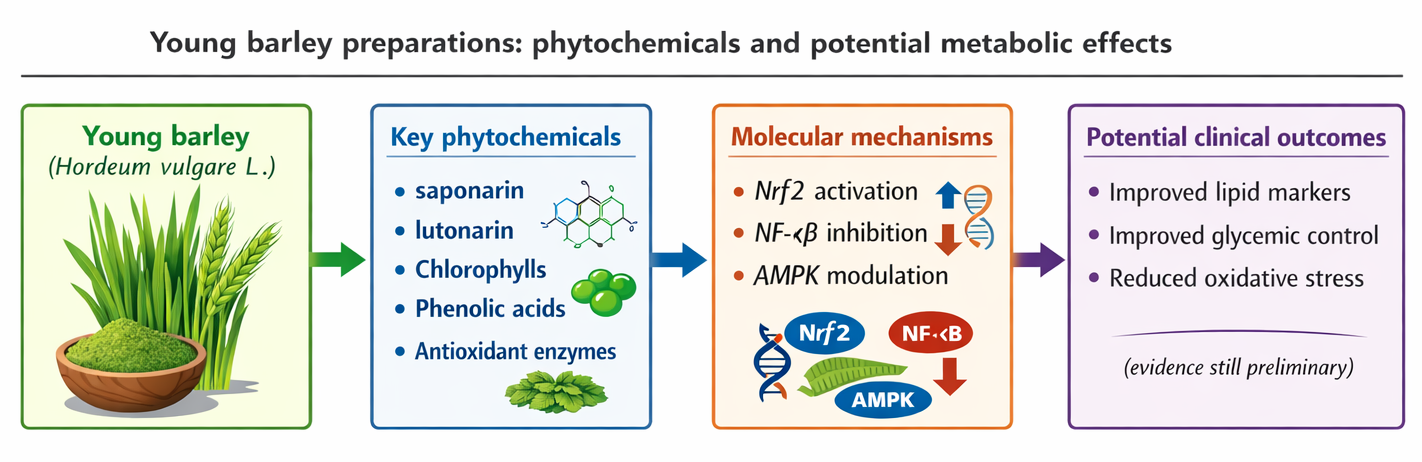
Young barley, derived from the early vegetative stage of Hordeum vulgare L., constitutes a plant-based functional ingredient whose phytochemical profile differs markedly from that of mature grain. Two principal commercial forms exist — dried grass powder and juice-derived products — differing in matrix composition and bioactive compound concentration. This narrative review critically evaluates the current knowledge on the phytochemical composition, biological activity, and translational relevance of young barley preparations considered as a functional plant food. The phytochemical spectrum is dominated by C-glycosyl flavones, particularly saponarin and lutonarin, alongside phenolic acids, chlorophylls, enzymatic antioxidants, vitamins, and minerals. Experimental evidence implicates the modulation of redox homeostasis, inflammatory signaling, and metabolic regulators as the primary biological mechanisms. In vitro studies additionally demonstrate antiproliferative activity in human cancer cell lines and immunomodulatory properties mediated by polysaccharide-rich fractions, extending the biological profile of young barley beyond classical antioxidant activity. Although preclinical models consistently demonstrate antioxidant and metabolic effects, high experimental doses and limited preparation standardization restrict the direct extrapolation to human supplementation contexts. Available clinical trials suggest modest improvements in selected lipid, glycemic, and oxidative stress markers; yet, most are small in scale and brief in duration. Agronomic variables including fertilization strategy and soil composition represent additional, underappreciated sources of phytochemical variability and safety concern. Overall, the current evidence supports the biological plausibility of young barley as a functional plant food; yet, the clinical data remain preliminary. Future research should prioritize preparation standardization, dose–response characterization, and agronomic transparency to strengthen translational reliability.
Keywords:
young barley
; barley grass
; Hordeum vulgare
; saponarin
; lutonarin
; functional plant food
; antioxidant activity
; phytochemical variability
; narrative review
Copyright: This open access article is published under a Creative Commons CC BY 4.0 license, which permit the free download, distribution, and reuse, provided that the author and preprint are cited in any reuse.


