

Submitted:
28 May 2026
Posted:
01 June 2026
You are already at the latest version
Abstract
Shiga toxins (Stx), produced by Stx-producing Escherichia coli (STEC), are known to target Gb3-expressing cells, contributing to organ pathology such as kidney and brain. However, the sensitivity of human B-lymphoblastoid cell lines to Stx2 and their Gb3 expression profiles remain poorly understood. In this preliminary study, we assessed the susceptibility of human B-lymphoblastoid cell lines to Stx2 and identified distinct resistance and sensitivity patterns. Eight representative lines were further analyzed for Gb3 expression by mass spectrometry and flow cytometry. Susceptible cell lines (e.g., GM02473, GM07019) displayed significantly higher total and membrane-associated Gb3 levels, while resistant lines had lower or undetectable Gb3. Exosomal Gb3 quantification revealed similar expression trends, contradicting the hypothesis that Gb3-positive exosomes neutralize Stx2. Interestingly, partially resistant cell line GM17658 showed discordant total and exosomal Gb3 levels. Immunofluorescence microscopy and flow cytometry revealed heterogeneous Gb3 expression within cell lines, with susceptible lines having a higher proportion of Gb3-positive cells. These findings suggest that Stx2 susceptibility is associated with Gb3 expression frequency rather than intensity and raise the possibility that Gb3-positive exosomes might contribute to toxicity. Future studies need to validate the role of exosomal Stx2 transfer and the functional impact of variable levels of Gb3-positive versus Gb3-negative subpopulations in toxin response.
Keywords:
Shiga toxin
; Gb3
; globotriaosylceramide
; B-lymphoblastoid cells
1. Introduction
Globotriaosylceramide, (Gb3, also known as CD77), plays a critical role in the binding and internalization of Shiga toxin (Stx) into host cells [1,2]. This receptor is a glycosphingolipid expressed on the surface of various mammalian cell types, including endothelial cells in the kidneys and intestines [3]. The B subunit of Stx specifically binds to Gb3, facilitating the toxin’s attachment to cell membranes. This interaction enables internalization of the toxin, which ultimately leads to inhibition of protein synthesis and activation of cellular damage pathways [4]. Stx type 1 and/or 2 are produced by certain strains of Escherichia coli that are lysogenized with stx-converting bacteriophages. Such Stx-producing E. coli (STEC), including O157:H7 outbreak strains, are responsible for severe gastrointestinal diseases and systemic sequela, including the hemolytic uremic syndrome (HUS) [5,6]. Understanding the role of the Gb3 receptor in Stx binding has been essential for developing targeted therapeutic strategies to prevent or mitigate toxin-related pathologies [7].
Importantly, cells that lack or express only minimal levels of Gb3 on their surface are generally resistant to the cytotoxic effects of Stx because this receptor serves as the primary binding site for the toxin [8,9]. Therefore, all the cells with minimal or absent Gb3 expression exhibit natural resistance to the damage mediated by Stx [8,10]. Once Stx binds Gb3, it is internalized and retrogradely transported to the endoplasmic reticulum and ribosomes, where the enzymatic A subunit of Stx exerts its cytotoxicity by catalytically inactivating the 23S rRNA of the large ribosomal subunit. This toxin action inhibits protein synthesis and induces cell death [11]. Several types of host cells fall into this category of having limited or no Gb3 and demonstrate natural resistance [12], including: a) most mammalian epithelial cells, such as those lining the respiratory tract; b) neuronal cells; c) fibroblasts; d) erythrocytes and; e) platelets.
The resistance of these cell types underscores the essential role of Gb3 as the mediator of Stx's toxic effects. In contrast, cells that do express Gb3, such as certain renal and vascular endothelial cells, are susceptible to Stx-induced damage, which can result in severe complications like HUS [5,6]. Previous studies showed that B lymphocytes isolated from human samples and several B lymphoblast lines, but not bone marrow or pre-B cells, were sensitive to Stx and expressed Gb3 [13,14]. Further, Stx susceptibility/resistance and Gb3 expression have been reported in some Burkitt’s lymphoma cells and germinal centers [15]. The finding that certain B cells subsets express Gb3 led to some research exploring the role of Gb3 in B cell maturation [16,17,18] and the potential use of Stx or moieties containing the Stx binding B subunit pentamer as possible treatments for Gb3-positive cancers [19,20,21]. In this context, our preliminary and limited study focused on analyzing the relative sensitivity to Stxs of human B-lymphoblastoid cells isolated from a variety of sources including those with no known pathology because it is important to determine whether expression levels of Gb3 correlate with sensitivity or resistance to Stx. Furthermore, since human lymphoblastoid cells have emerged as a promising model system in the study of drug response, it is relevant to understand biological differences among the various sources of B cells [22].
2. Materials and Methods
2.1. Ethical Statement
The study received IRB approval from 59 MDW with the protocol number FWH20220111N and it was considered non-human research as defined by DoD regulation 32 CFR 219 and FDA regulation 21 CFR 56. At UTMB, the protocol was reviewed by the Institutional Biosafety Committee and received approval under the NOU# 2018035. The cell lines used in this study were obtained from the NHGRI Sample Repository for Human Genetic Research at the Coriell Institute for Medical Research.
2.2. B Cell Line Culture and Stxs
B-lymphoblastoid cells were purchased from the Coriell Institute (https://www.coriell.org/) and tested as described. The cell lines used are listed in Table 1. The cells were maintained at 37˚C with 5% CO2 in complete RPMI (Gibco), supplemented with 1mM sodium pyruvate, 1× non-essential amino acids, penicillin (100 U/mL), streptomycin (100 µg/mL) and 10% heat-inactivated FBS. Stx1, Stx2, and a subtype of Stx2, Stx2d, were purified as described previously [7,23].
For toxicity assays, cells were seeded at approximately 6×10⁵ cells/mL, distributed as 3×10⁴ cells/well in a total volume of 50 μL. Each cell line was seeded on a 96-well plate in triplicate for each condition and incubated overnight at 37°C at 5% CO2. The day after the seeding, cells were exposed to 10-fold dilutions of purified toxin stocks. Untreated cells were used as controls. The plates were then incubated for 72 h at 37°C with 5% CO2.
After the incubation time, CellTiter-Glo® Luminescent Cell Viability Assay (Promega) was used to measure the level of ATP as an indicator of cell viability following manufacturer’s protocol. Luminescence was measured by luminometer (GloMax, Promega or Synergy H1, BioTek). The 50% cytotoxic dose (CD50) was estimated as the amount of toxin required to kill 50% of the cells.
For data analysis and normalization, the reads from the toxin untreated controls were considered to reflect 100% viability, and the corresponding values from each cell line that received the toxin dilutions were normalized to the untreated controls.
For the binding and imaging assays, B cells were pelleted by centrifugation and resuspended in phosphate-buffered saline (PBS). Then 0.5 mL of the suspension at 105-106 cells/mL was added to a glass coverslip in a 24-well plate and incubated at room temperature for 30 min. The PBS was then removed and the cells fixed with 0.5 mL formalin for 10 min. The formalin was removed and the cells washed with PBS. Next, the cells were overlaid with 0.5 mL Stx1 and Stx2 (1 ug/mL) and incubated at room temperature for about 1 h. The toxin mixture was removed, the coverslip washed and overlaid with blocking solution (10% normal rabbit serum, Thermo Fisher) for 30 min, then washed again and overlaid with both rabbit polyclonal anti-Stx1, and monoclonal anti-Stx2 (11E10) diluted 1:2,000 in 10% normal rabbit serum for 1 h. The coverslip was washed again and incubated overnight at 4°C with secondary antibodies (Alexa Fluor 633 goat anti-rabbit IgG and AlexaFluor 488 donkey anti-mouse IgG, both from Thermo Fisher) diluted 1:2,000 in 10% normal rabbit serum. Next, the coverslips were washed three times with PBS and mounted onto glass slides using Slowfade 4',6-diamidino-2-phenylindole (DAPI, Thermo Scientific).
2.3. Mass Spectrometry Absolute Quantification of Total Gb3 Receptor Expression and Exosome-Expressed Gb3 Receptor.
We cultured eight representative human B lymphoblastoid lines (GM00333, GM00607, GM02473, GM06989, GM07019, GM17197, GM17645, and GM17658) to ≥ 106 cells/mL. The 106 cells were collected into 1.5 mL tubes, which were centrifuged at 400 x g for 10 min and supernatant was carefully pipetted off and discarded. The resulting pellet was then washed twice with PBS and stored at -80°C until ready for mass spectrometry sample processing. We separately cultured the same cell lines in media containing exosome-depleted FBS (Thermo Fisher Scientific) until cells reached ≥ 106 cells/mL. Cells were then collected and centrifuged at 400 x g for 10 min at 4°C. One mL of culture supernatant was collected, and exosomes were isolated using Total Exosome Isolation reagent (Thermo Fisher Scientific) according to manufacturer directions. At the end of the protocol, exosome-containing pellets were reconstituted in 25 μL of PBS. Total protein concentration of the exosomes was measured using a MicroBCA kit (Thermo Fisher Scientific) according to manufacturer instructions, and protein concentrations were used as a surrogate measure of exosome concentration. Exosomes were stored at -20°C until ready for mass spectrometry sample processing.
Prior to extraction of cells or exosomes, 10 μL of a mixture of isotopically labeled lipid standards containing 1:10 diluted UltimateSPLASH ONE (Avanti Polar Lipids) and 1:10 diluted SphingoSPLASH I (Avanti Polar Lipids) were added to samples. Samples were then extracted using a modified methyl tert-butyl ether extraction (MTBE, LC/MS Grade, Fisher Chemical) [24]. The organic phase was aspirated off and dried under nitrogen gas. Dried extracts were resuspended in 200 μL of dichloromethane/methanol (1:1, v/v) (DCM, HPLC grade, Thermo Scientific; MeOH, Optima LC/MS grade, Fisher Chemical).
To quantitate Gb3 content, a standard curve was prepared with Gb3 18:1;O2/17:0 (Cayman Chemical) with dilutions from 1 to 5,000 ng/mL. Each dilution was prepared in DCM/MeOH (1:1, v/v) with 10 μL of the same 1:10 diluted internal standards as the samples. Peak areas of calibrants or samples were normalized to the peak area of the LPE 19:0[D5] internal standard as part of the UltimateSPLASH ONE mix to produce peak area ratios. Peak area ratios of the calibrants were plotted as a linear curve against the prepared Gb3 18:1;O2/17:0 concentrations. A linear regression produced the equation of a line used to calculate the concentrations of Gb3 within samples. Gb3 concentrations within exosomes were further normalized to the corresponding protein concentration as determined by the MicroBCA assay described above. For quantitative comparisons, all sample values were normalized to 106 cells.
LC-MS/MS was performed with an Acquity Premier HPLC System (Waters) coupled to a QTRAP 6500 mass spectrometer (SCIEX). The Gb3 lipids were separated by HILIC chromatography on a Luna NH2 column (Phenomenex, 3 μm, 150 x 4.6 mm). Mobile phases and LC conditions are the same as previously published for polar lipidomics analysis [25]. Mobile phases included: A) acetonitrile/water/hexane (92:6:2, v/v) + 10 mM ammonium acetate, pH 9.3, B) acetonitrile/water (1:1, v/v) + 10 mM ammonium acetate, pH 9.3. Gb3 lipids were detected using multiple reaction monitoring (MRM). Source conditions were optimized using the Analyst software (SCIEX, v1.7.3) Compound Optimization functionality. Q1 masses were detected as protonated adducts ([M+H]+) while the Q3 masses were detected as the long chain base fragment ion. MRM transitions were calculated for Gb3 lipids with either a ceramide or dihydroceramide base and a variety of fatty acid chain lengths from 16 to 24 (see Supplementary Table 1 for full list of MRM transitions monitored). The source parameters included: declustering potential (DP) of 116 V, entrance potential (EP) of 10 V, collision energy (CE) of 65 V, collisional exit potential (CXP) of 18 V, curtain gas (CUR) of 30 psi, collisional activation dissociation (CAD) set to Medium, ion spray voltage (IS) set to 5500 V, ion spray temperature (TEM) set to 425°C, nebulizing gas (GS1) set to 50 psi, and heating gas (GS2) set to 55 psi. LCMS peak areas were integrated using MultiQuant software (v3.0.3, SCIEX). Total Gb3 amount and Gb3 species were plotted using R/RStudio (R v4.3.3, RStudio v2024.04.0) and the following R packages: data.table (v1.15.4) and ggplot2 (v3.5.1).
2.4. Flow Cytometry Assessment of Cell Membrane-Expressed Gb3.
Eight representative human B lymphoblastoid lines (GM00333, GM00607, GM02473, GM06989, GM07019, GM17197, GM17645, and GM17658) were grown to ≥ 106 cells/mL. We then collected 106 cells from each into separate 1.5 mL tubes. These were centrifuged at 400 x g for 5 min at 4°C into a pellet and the pellet was washed twice with 100 µL PBS. Cells were then stained for 30 min at 4°C with 100 µL of 1.25 µg/mL mouse anti-Gb3 IgG2b (TCI America). The cells were then washed again two times with PBS. Next, the cells were stained for 30 min at 4°C with 100 µL of 1.25 µg/mL rat anti-mouse IgG2b-PE (BioLegend) and 1:1000 diluted Zombie NIR (BioLegend) in the dark. The cells were washed again twice in PBS and subsequently fixed in Fixation Buffer (BioLegend) for 20 min in the dark. The cells were washed in PBS two more times before pellets were finally reconstituted in 1 mL of FACS buffer (BioLegend). Samples were run on an LSR Fortessa flow cytometer, and 20,000 cells were analyzed per sample. FlowJo v10.10 was used for all data analysis.
3. Results and Discussion
3.1. Stx2 Citotoxicity Experiments with Human B Lymphoblastic Cell Lines.
Stxs produced by STEC are released in the intestine of infected patients and transferred across the intestinal epithelium into the circulation. While Stx-mediated damage to Gb3-expressing cells, such as those found in the kidney and brain is well documented [26], the sensitivity of B-lymphoblastic cells to Stx and the levels of the Gb3 receptor on those cells has not been studied to any appreciable degree. We initially obtained a set of five B-lymphoblastoid cells lines (GM00333, GM00607, GM02473, GM07019 and GM17135), which were used for an intoxication assay with Stx2. Three cell lines GM02473, GM07019, and GM17135 displayed different levels of sensitivity to the toxin, while B-lymphoblastoid cells GM00607 and GM00333 were either completely resistant (GM00607) or highly resistant (GM00333) to Stx2 up to 1000 ng/mL and 1 ng/mL, respectively (Figure 1 and Table 1 for summary data).
To visualize Stx2 binding to the cells we overlaid GM17154 (CD50 = 0.1 ng/mL) and GM04258 (CD50 = 2 ng/mL) with Stx2 and observed toxin binding by immunofluorescence (Figure 2). As expected, the susceptible cell line GM17154 exhibited markedly higher Stx binding than the resistant cell line GM04258. We found that the binding pattern matched the cytotoxicity data in that GM17154 bound more Stx2 than GM04258. We also noted that in both cell lines, only a subset of cells was capable of binding Stx to a detectable level, and many cells completely lacked Stx binding. Additional cell lines were tested for susceptibility to Stx1 and Stx2d (Supplemental Figure 1), and we again noted a wide difference in susceptibility to the toxins. On some cell lines, there was considerable variation in susceptibility, for reasons that were not initially understood. However, we hypothesized that the differences we noted were due to differences in Gb3 levels and/or populations and how the toxins bound to the cells.
To 2. while others were resistant, we first decided to explore whether the Stx2 receptor Gb3 is differentially expressed by two different methods (i.e., mass spectrometry and flow cytometry), to evaluate which provides the relative level of Gb3 expression in the susceptible versus the resistant cells in a quantitative way.
3.2. Mass Spectrometry Absolute Quantification of Total Gb3 Receptor Expression.
We hypothesized that susceptible cells would have a higher expression of Gb3 on their surface than resistant cells, leading to an increase in Stx2 internalization. Therefore, we explored whether the Stx2 susceptibility of the immortalized human B lymphoblastoid lines was correlated to the abundance of the Stx2 receptor Gb3. We cultured eight representative cell lines (GM00333, GM00607, GM02473, GM06989, GM07019, GM17197, GM17645, and GM17658) and performed lipid extraction on cell pellets as described in the methods section.
Eleven distinct species of Gb3 were identified, though Gb3 (18:1;O2_16:0) was the dominant species for all cell lines that had detectable Gb3 (Figure 3A). Two cell lines, GM02473 and GM07019, had particularly elevated levels of total Gb3 (Figure 3B), which correlates well with high sensitivity to Stx2 (Figure 1). In contrast, GM17197 and GM06989 exhibited low Gb3 levels, but both cell lines are highly susceptible to Stx2. The Stx2 resistance of GM17645, GM00333, and GM00607 is also consistent with their very low levels of Gb3 (Table 1, Figure 3B). Notably, GM00607 had undetectable levels of Gb3 (Figure 3B). It is not currently understood why each cell line displayed different levels of Gb3, though it should be noted that prior studies have found that only germinal center B cells and some B cell lymphoma cells express Gb3 [18]. It may be worth exploring by other researchers whether expression of Gb3 in these cell lines is related to the phenotype of the B cells that were collected for immortalization, or genetic/environmental factors related to the donor (see Table 1).
3.3. Mass Spectrometry Absolute Quantification of Exosome-Expressed Gb3 Receptor.
We then explored whether exosomes displaying Gb3 might be playing a role in promoting Stx2 resistance by serving as a sort of “sponge” for Stx2. A similar phenomenon has recently been demonstrated using synthetic Gb3-coated exosomes as a potential therapeutic to neutralize the toxin [27], and human-derived exosomes from various sources are known to be able to harbor Gb3 [28,29]. We cultured the same eight representative cell lines as before, this time using exosome-depleted FBS to reduce assay interference from bovine-derived exosomes. Supernatants were collected after the cells had sufficiently grown, and exosomes were isolated and measured for total protein content. Lipids were then extracted from the exosome preparations and analyzed by LC-MS/MS.
Contradicting our hypothesis, the exosome-expressed Gb3 concentrations shared a similar profile with total cell Gb3 expression, indicating that susceptible cells have elevated levels of both total Gb3 and exosome-expressed Gb3 (Figure 4B). Therefore, it is unlikely that Gb3-coated exosomes are neutralizing the toxin, at least in these cell lines. In this exploratory experiment, only 6 species of Gb3 were identified, though the dominant species was Gb3 (18:1;O2_16:0) (Figure 4A). One notable difference between the exosome-derived and total cell-derived Gb3 profiles was observed in GM17658, a cell line partially resistant to the toxin. Despite apparently having low levels of total Gb3 (Figure 3), these cells had a relatively high concentration of exosome derived Gb3 (Figure 4). Because the susceptible cells also had high Gb3 expression in exosomes, our working hypothesis was that Gb3-expressing exosomes are not serving to neutralize the toxin. Instead, it appears likely that Gb3-expressing exosomes may promote Stx2 toxicity, possibly as the nearby cells take up Gb3 containing exosomes with the toxin bound. This phenomenon has previously been reported in a study that showed that Stx2-treated macrophages secrete Stx2-containing exosomes that are taken up by other cell types, which the authors speculated may contribute to HUS complications [30].
3.4. Flow Cytometry Assessment of Cell Membrane-Expressed Gb3.
To confirm the mass spec results and measure only cell surface-expressed Gb3, we decided to employ a flow cytometric approach (Figure 5A). The same eight representative cell lines were incubated with mouse anti-Gb3 IgG2b and then an anti-IgG2b-PE secondary antibody to fluorescently stain surface Gb3.
As suggested by the Stx binding assay (Figure 2), Gb3 expression was not uniform within each cell line. Instead, there were distinct Gb3-negative and Gb3-postive populations (Figure 5A). Furthermore, the proportion of Gb3-positive cells differed drastically between the cell lines, and this profile matched the mass spectrometry results closely (Figure 3 and 5B). Meanwhile, the median fluorescent intensity (MFI) of the Gb3-positive population was consistent between all cell lines, indicating there were not major differences in the relative abundance of membrane Gb3 between cell lines (Figure 5C). This suggests that the susceptible cell lines GM02473 and GM07019 may have a higher proportion of Stx2-sensitive cells, leading to a higher number of dead cells upon Stx2 treatment. At this time and due to the exploratory nature of this study, we cannot conclude whether the Gb3-negative population is resistant to Stx2 treatment or not because it is possible that some cells of different lineage in each population may not even express Gb3. Future studies by other researchers may utilize cell sorting to separate the Gb3-positive and negative cells independently and then treat them with the toxin. Furthermore, it should be investigated whether the presence of Gb3-positive cells increases the susceptibility of Gb3-negative cells to Stx2 via Stx2-loaded exosomes. Lastly, it remains to be explored why individual human lymphoblastoid cell lines have such heterogenous expression of Gb3.
4. Conclusions
This preliminary study demonstrates that human B-lymphoblastoid cell lines exhibit a wide range of sensitivities to Stx2. Immunofluorescence, mass spectrometry and flow cytometry confirmed generally that susceptibility correlates with the proportion of Gb3-positive cells, rather than the amount of Gb3 per cell. Interestingly, Gb3-expressing exosomes do not appear to neutralize Stx2 but may instead facilitate toxicity by transferring the toxin to otherwise resistant cells. Although the analysis is limited due to availability of resources, these findings highlight the complexity of Stx2 interactions and suggest that both Gb3 expression and exosomes contribute to cellular susceptibility.
Supplementary Materials
The following supporting information can be downloaded at the website of this paper posted on Preprints.org, Figure S1: Susceptibility of B-lymphoblastoid cell lines to Stx1 and Stx2d. Table S1: MRM transitions for Gb3 lipid species.
Author Contributions
Conceptualization (A.G.T., G.J.C., A.M.-C.) project administration (A.G.T., G.J.C., C.C.B, A.M.-C.), data curation (I.C.-G), formal analysis (A.J.B., S.O.-T., A.G.T., A.M.-C.), funding acquisition administration (A.G.T., G.J.C., C.C.B, A.M.-C.), investigation (A.J.B., S.O.-T., I.C.-G; E.O., R.R.A.), methodology (A.J.B., S.O.-T., I.C.-G; E.O., R.R.A), validation (A.J.B., I.C.-G), supervision (A.G.T., A.M.-C), writing- original draft (A.G.T.), writing- review & editing (A.G.T., A.J.B., S.O.-T., I.C.-G; E.O., R.R.A., G.J.C., A.M.-C.).
Funding
This project was supported by DHA Restoral Funding in collaboration with the 59 MDW Chief Scientist Office through subcontract ID07200010-2701. The views expressed are those of the authors and do not reflect the official views or policy of the Department of Defense or its components, or the Henry M. Jackson Foundation for the Advancement of Military Medicine.
Data Availability Statement
All the research data generated for this study is included in the manuscript.
Acknowledgments
We want to thank Trevor Romsdahl and William Russell from the UTMB mass spec core for their support processing and analyzing samples, and Meredith Weglarz from the UTMB flow cytometry core for assisting with instrumentation.
Conflicts of Interest
The authors declare no conflicts of interest. The funders had no role in the design of the study; in the collection, analyses, or interpretation of data; in the writing of the manuscript; or in the decision to publish the results.
Abbreviations
The following abbreviations are used in this manuscript:
| Stx | Shiga toxin |
| STEC | Stx-producing Escherichia coli |
| Gb3 | Globotriaosylceramide |
| DoD | Department of Defense |
| IRB | Institutional Review Board |
| NOU | Notification of Use |
| FBS | Fetal Bovine Serum |
| RPMI | Roswell Park Memorial Institute Media |
| CD50 | Cytotoxic dose |
| PBS | Phosphate Buffered Saline |
| MTBE | Methyl tert-butyl ether extraction |
| DCM | Dichloromethane/methanol |
| MRM | Multiple reaction monitoring |
| DP | Declustering potential |
| EP | Entrance potential |
| CE | Collision energy |
| CXP | Collisional exit potential |
| CUR | Curtain gas |
| CAD | Collisional activation dissociation |
| IS | Ion spray voltage |
| TEM | Ion spray temperature |
| GS1 | Nebulizing gas |
| GS2 | Heating gas |
| MFI | Median fluorescent intensity |
References
- Lingwood, C.A. Role of verotoxin receptors in pathogenesis. Trends Microbiol. 1996, 4, 147–53. [Google Scholar] [CrossRef]
- Sandvig, K.; van Deurs, B. Transport of protein toxins into cells: pathways used by ricin, cholera toxin and Shiga toxin. FEBS Lett. 2002, 529, 49–53. [Google Scholar] [CrossRef]
- Schüller, S. Shiga toxin interaction with human intestinal epithelium. Toxins 2011, 3, 626–39. [Google Scholar] [CrossRef]
- Melton-Celsa, A.R. Shiga Toxin (Stx) Classification, Structure, and Function. Microbiol. Spectr. 2014, 2, EHEC-0024-2013. [Google Scholar] [CrossRef]
- Karmali, M.A.; Gannon, V.; Sargeant, J.M. Verocytotoxin-producing Escherichia coli (VTEC). Vet. Microbiol. 2010, 140, 360–70. [Google Scholar] [CrossRef]
- Tarr, P.I.; Gordon, C.A.; Chandler, W.L. Shiga-toxin-producing Escherichia coli and haemolytic uraemic syndrome. Lancet 2005, 365, 1073–86. [Google Scholar] [CrossRef]
- Melton-Celsa, A.R.; O'Brien, A.D. New Therapeutic Developments against Shiga Toxin-Producing Escherichia coli. Microbiol. Spectr. 2014, 5, EHEC-0013-2013. [Google Scholar] [CrossRef]
- Johannes, L.; Römer, W. Shiga toxins—from cell biology to biomedical applications. Nat. Rev. Microbiol. 2010, 8, 105–16. [Google Scholar] [CrossRef] [PubMed]
- Waddell, T.; Head, S.; Petric, M.; Cohen, A.; Lingwood, C.A. Globotriaosyl ceramide is specifically recognized by the Escherichia coli verotoxin 1. Biochem Biophys. Res. Commun. 1998, 152, 674–9. [Google Scholar] [CrossRef] [PubMed]
- Detzner, J.; Pohlentz, G.; Müthing, J. Enterohemorrhagic Escherichia coli and a Fresh View on Shiga Toxin-Binding Glycosphingolipids of Primary Human Kidney and Colon Epithelial Cells and Their Toxin Susceptibility. Int. J. Mol. Sci. 2022, 23, 6884. [Google Scholar] [CrossRef] [PubMed]
- Lee, M.S.; Tesh, V.L. Roles of Shiga Toxins in Immunopathology. Toxins 2019, 11, 212. [Google Scholar] [CrossRef] [PubMed]
- Cao, W.; Haudek, S.B.; Bohnsack, J.F. Expression of globotriaosylceramide (Gb3/CD77) in human tissues and cell lines: implications for Shiga toxin pathogenesis. Toxicon 2005, 45, 779–84. [Google Scholar]
- Cohen, A.; Madrid-Marina, V.; Estrov, Z.; Freedman, M.H.; Lingwood, C.A.; Dosch, H.M. Expression of glycolipid receptors to Shiga-like toxin on human B lymphocytes: a mechanism for the failure of long-lived antibody response to dysenteric disease. Int. Immunol. 1990, 2, 1–8. [Google Scholar] [CrossRef]
- Mangeney, M. L.C.; Taga, S.; Caillou, B.; Tursz, T.; Wiels, J. Apoptosis induced in Burkitt's lymphoma cells via Gb3/CD77, a glycolipid antigen. Cancer Res. 1993, 53, 5314–9. [Google Scholar] [PubMed]
- Imai, Y.; Fukui, T.; Ikegaya, A.; Ishikawa, T.; Ono, Y.; Kurohane, K. Lack of Shiga-like toxin binding sites in germinal centres of mouse lymphoid tissues. Immunology 2002, 105, 509–14. [Google Scholar] [CrossRef]
- Maloney, M.D.; Lingwood, C.A. CD19 has a potential CD77 (globotriaosyl ceramide)-binding site with sequence similarity to verotoxin B-subunits: implications of molecular mimicry for B cell adhesion and enterohemorrhagic Escherichia coli pathogenesis. J. Exp. Med. 1994, 180, 191–201. [Google Scholar] [CrossRef]
- Mori, T.; Kiyokawa, N.; Katagiri, Y.U.; Taguchi, T.; Suzuki, T.; Sekino, T.; et al. Globotriaosyl ceramide (CD77/Gb3) in the glycolipid-enriched membrane domain participates in B-cell receptor-mediated apoptosis by regulating lyn kinase activity in human B cells. Exp. Hematol. 2000, 28, 1260–8. [Google Scholar] [CrossRef]
- Sharma, P.; Zhang, X.; Ly, K.; Hu, Y.; Ye, A.Y.; Hu, J.; et al. The lipid globotriaosylceramide promotes germinal center B cell responses and antiviral immunity. Science 2024, 383, eadg0564. [Google Scholar] [CrossRef]
- Arbus, G.S.; Grisaru, S.; Segal, O.; Dosch, M.; Pop, M.; Lala, P.; et al. Verotoxin targets lymphoma infiltrates of patients with post-transplant lymphoproliferative disease. Leuk. Res. 2000, 24, 857–64. [Google Scholar] [CrossRef]
- Lin, C.; Galal, A.; Rizzieri, D.; Chawla, S.; Lee, S.T.; Georgy, A.; et al. Combinatorial Efficacy and Toxicity of an Engineered Toxin Body MT-3724 with Gemcitabine and Oxaliplatin in Relapsed or Refractory Diffuse Large B Cell Lymphoma. Cancer Invest. 2023, 31, 1–10. [Google Scholar] [CrossRef]
- Gariépy, J. The use of Shiga-like toxin 1 in cancer therapy. Crit. Rev. Oncol. Hematol. 2001, 39, 99–106. [Google Scholar] [CrossRef] [PubMed]
- Wheeler, H.E.; Dolan, M.E. Lymphoblastoid cell lines in pharmacogenomic discovery and clinical translation. Pharmacogenomics 2012, 13, 55–70. [Google Scholar] [CrossRef]
- Bunger, J.C.; Melton-Celsa, A.R.; O'Brien, A.D. Shiga toxin type 2dact displays increased binding to globotriaosylceramide in vitro and increased lethality in mice after activation by elastase. Toxins 2013, 5, 2074–92. [Google Scholar] [CrossRef]
- Matyash, V.; Liebisch, G.; Kurzchalia, T.V.; Shevchenko, A.; Schwudke, D. Lipid extraction by methyl-tert-butyl ether for high-throughput lipidomics. J. Lipid Red. 2008, 49, 1137–46. [Google Scholar] [CrossRef]
- Romsdahl, T.B.; Cocuron, J.C.; Pearson, M.J.; Alonso, A.P.; Chapman, K.D. A lipidomics platform to analyze the fatty acid compositions of non-polar and polar lipid molecular species from plant tissues: Examples from developing seeds and seedlings of pennycress (Thlaspi arvense). Front Plant Sci. 2022, 13, 1038161. [Google Scholar] [CrossRef]
- Lingwood, C. Verotoxin Receptor-Based Pathology and Therapies. Front Cell Infect. Microbiol. 2020, 10, 123. [Google Scholar] [CrossRef]
- Lu, M.; Zhu, Y.; Li, D.; Zhou, Z.; Lin, H.; Hong, H.; et al. Gb3-Coated Bovine Milk Exosomes as a Practical Neutralizer for Shiga Toxin. ACS Appl. Bio Mater. 2023, 6, 5798–808. [Google Scholar] [CrossRef] [PubMed]
- Skotland, T.; Hessvik, N.P.; Sandvig, K.; Llorente, A. Exosomal lipid composition and the role of ether lipids and phosphoinositides in exosome biology. J. Lipid Res. 2019, 60, 9–18. [Google Scholar] [CrossRef]
- Lam, S.M.; Zhang, C.; Wang, Z.; Ni, Z.; Zhang, S.; Yang, S.; et al. A multi-omics investigation of the composition and function of extracellular vesicles along the temporal trajectory of COVID-19. Nat. Metab. 2021, 3, 909–22. [Google Scholar] [CrossRef] [PubMed]
- Lee, K.S.; Lee, J.; Lee, P.; Kim, C.U.; Kim, D.J.; Jeong, Y.J.; et al. Exosomes released from Shiga toxin 2a–treated human macrophages modulate inflammatory responses and induce cell death in toxin receptor expressing human cells. Cell Microbiol. 2020, 22, e13249. [Google Scholar] [CrossRef]
Figure 1.
Stx2 cytotoxicity assay for selected B-lymphoblastoid cell lines. The cell lines GM00333, GM02473, GM17135, GM00607 and GM07019 were intoxicated with 10-fold serial dilutions of Stx2 and after 72 h, the viability was evaluated using CellTiter Glo. Viability of cells that received no Stx2 was set at 100%, and it was used as the normalization standard.
Figure 1.
Stx2 cytotoxicity assay for selected B-lymphoblastoid cell lines. The cell lines GM00333, GM02473, GM17135, GM00607 and GM07019 were intoxicated with 10-fold serial dilutions of Stx2 and after 72 h, the viability was evaluated using CellTiter Glo. Viability of cells that received no Stx2 was set at 100%, and it was used as the normalization standard.
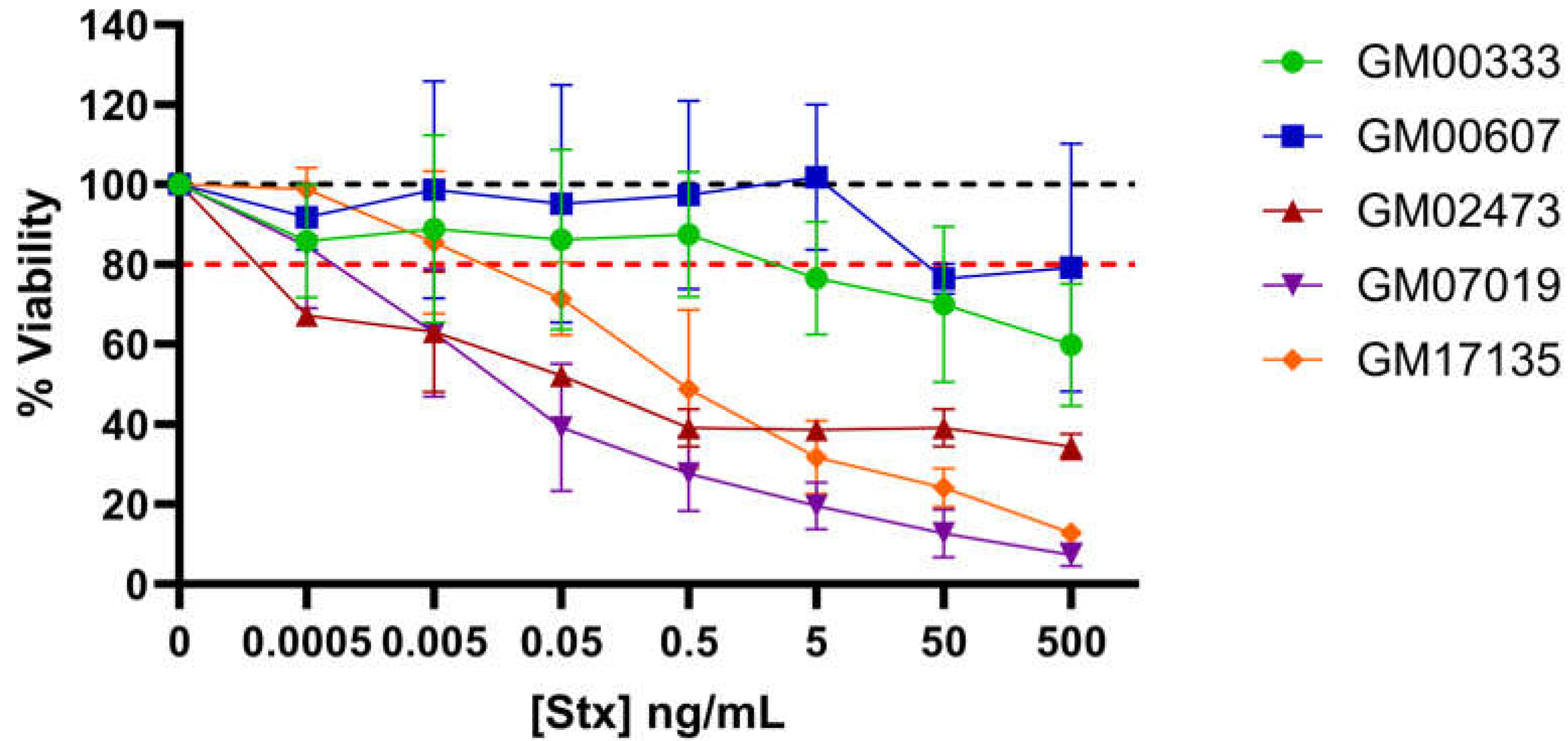
Figure 2.
Stx2 binding to B-lymphoblastoid cell lines shown by immunofluorescence. GM04258 (left panel) and GM17154 (right panel) were overlaid with Stx2 (green).
Figure 2.
Stx2 binding to B-lymphoblastoid cell lines shown by immunofluorescence. GM04258 (left panel) and GM17154 (right panel) were overlaid with Stx2 (green).
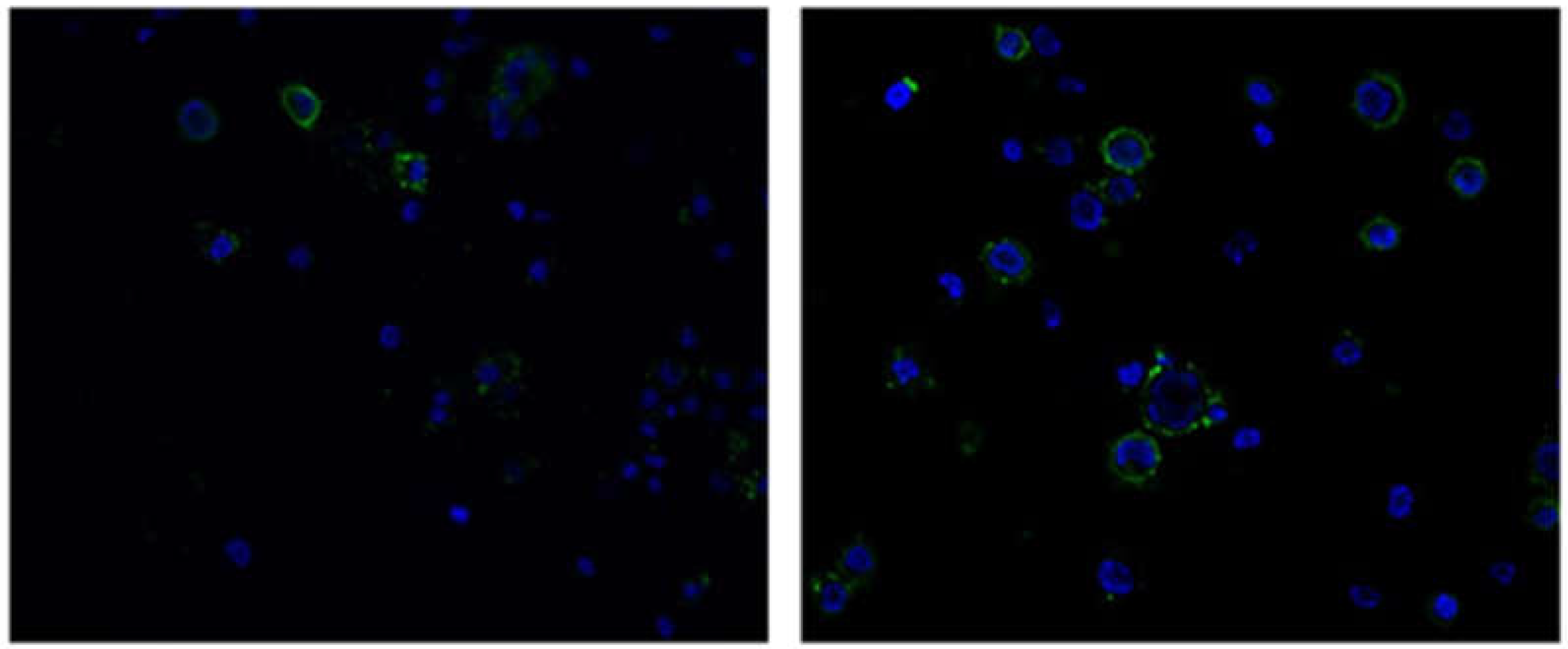
Figure 3.
Mass spectrometry of human B-lymphoblastoid cell lines. Absolute quantification of individual Gb3 species (A) or total Gb3 (B) extracted from immortalized human B lymphoblastoid lines was performed by mass spectroscopy. Individual lipid species are labelled according to their LIPID MAPS Structure Database shorthand designation (e.g., 18:1;O2 denotes a dihydroxy long-chain base) followed by the shorthand designation of the fatty acid chain.
Figure 3.
Mass spectrometry of human B-lymphoblastoid cell lines. Absolute quantification of individual Gb3 species (A) or total Gb3 (B) extracted from immortalized human B lymphoblastoid lines was performed by mass spectroscopy. Individual lipid species are labelled according to their LIPID MAPS Structure Database shorthand designation (e.g., 18:1;O2 denotes a dihydroxy long-chain base) followed by the shorthand designation of the fatty acid chain.
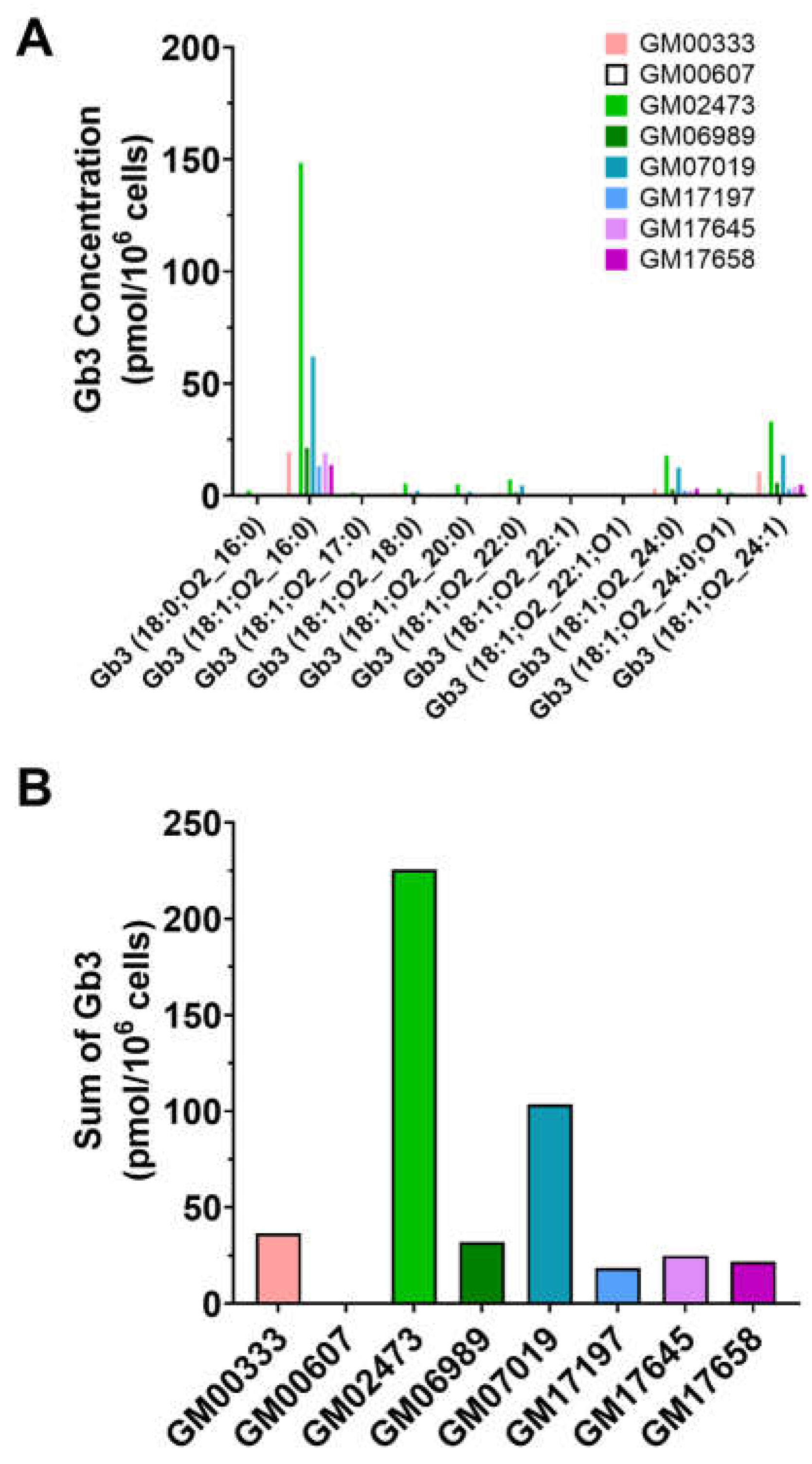
Figure 4.
Mass spectrometry of exosomes. Absolute quantification of individual Gb3 species (A) or total Gb3 (B) extracted from exosomes derived from different immortalized human B lymphoblastoid lines was performed by mass spectroscopy. Individual lipid species are labelled according to their LIPID MAPS Structure Database shorthand designation (e.g., 18:1;O2 denotes a dihydroxy long-chain base) followed by the shorthand designation of the fatty acid chain.
Figure 4.
Mass spectrometry of exosomes. Absolute quantification of individual Gb3 species (A) or total Gb3 (B) extracted from exosomes derived from different immortalized human B lymphoblastoid lines was performed by mass spectroscopy. Individual lipid species are labelled according to their LIPID MAPS Structure Database shorthand designation (e.g., 18:1;O2 denotes a dihydroxy long-chain base) followed by the shorthand designation of the fatty acid chain.
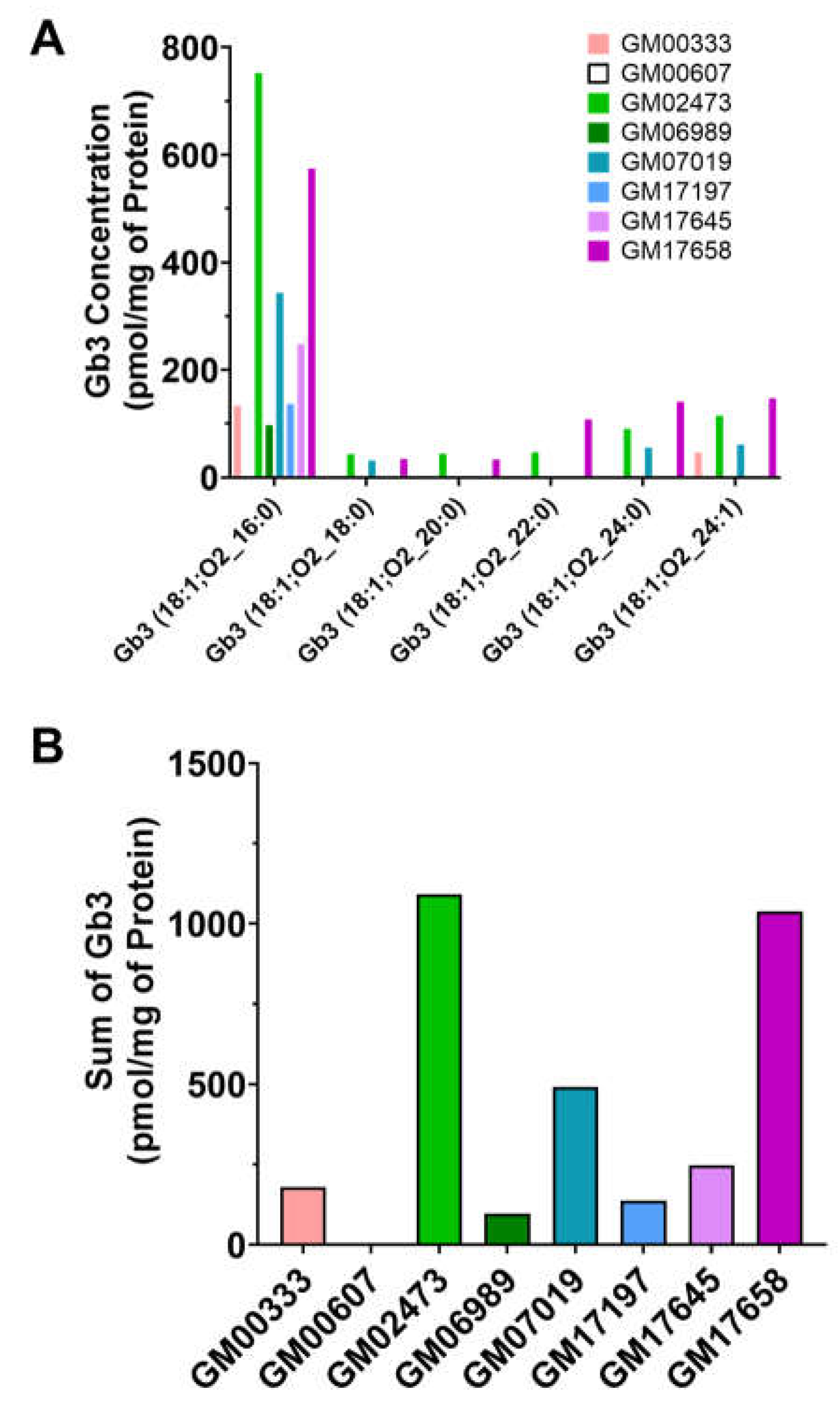
Figure 5.
Flow cytometric analysis. Gb3 expression in representative human B lymphoblastoid cells was performed by flow cytometry. Gating strategy (A). Percentage of total live cells that are Gb3+ (B). Median fluorescence intensity (MFI) of the Gb3 signal in Gb3+ cells (C).
Figure 5.
Flow cytometric analysis. Gb3 expression in representative human B lymphoblastoid cells was performed by flow cytometry. Gating strategy (A). Percentage of total live cells that are Gb3+ (B). Median fluorescence intensity (MFI) of the Gb3 signal in Gb3+ cells (C).
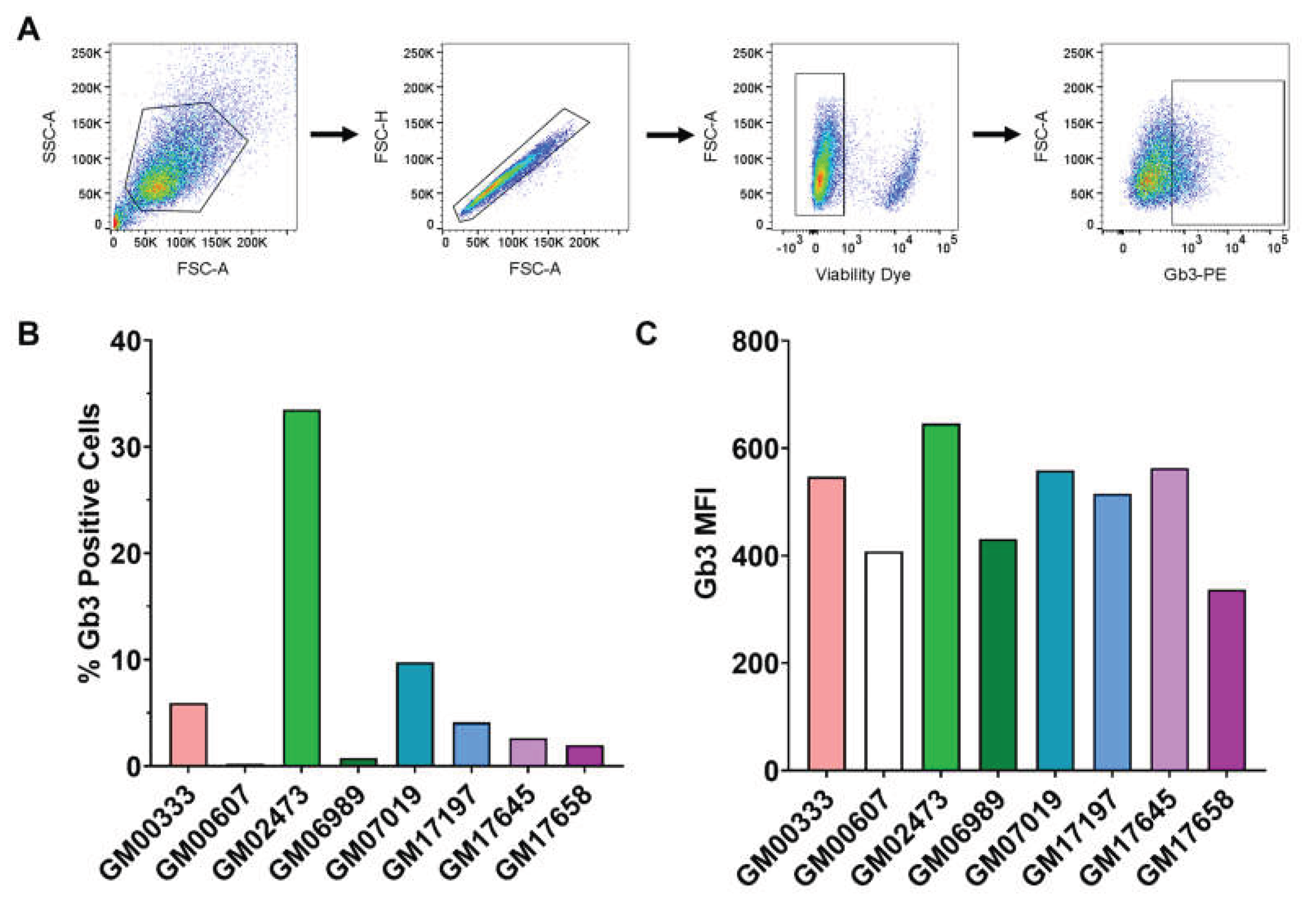

Table 1.
B-lymphoblastoid cell line differential susceptibility to Stx2.
| Cell line | Description provided by Coriell | CD50 of Stx2 (ng/mL) |
| GM17135 | No disease reported | 0.05 |
| GM17139 | No disease reported | 0.5 |
| GM17154 | No disease reported | 0.08 |
| GM17158 | No disease reported | 50 |
| GM17197 | No disease reported | 0.06 |
| GM17464 a | No disease reported | >2000 |
| GM17619 | No disease reported | 50 |
| GM17645 | No disease reported | 130 |
| GM17658 | No disease reported | >500 |
| GM00333 | no disease reported | >500 |
| GM00607 | No disease reported | >500 |
| GM04258 | Severe combined immunodeficiency | 2 |
| GM03380 | Ataxia-Telangiectasia | 0.5 |
| GM02473 | Xeroderma pigmentosum | 0.005 |
| GM06989 | CEPH/Utah pedigree 1328 | 0.07 |
| GM07019 | CEPH/Utah pedigree 1340 | 0.05 |
| GM07014 | CEPH/Utah pedigree 13292 | 50 |
* This cell line was also resistant to Stx1 and Stx2d.
Disclaimer/Publisher’s Note: The statements, opinions and data contained in all publications are solely those of the individual author(s) and contributor(s) and not of MDPI and/or the editor(s). MDPI and/or the editor(s) disclaim responsibility for any injury to people or property resulting from any ideas, methods, instructions or products referred to in the content. |
© 2026 by the authors. Licensee MDPI, Basel, Switzerland. This article is an open access article distributed under the terms and conditions of the Creative Commons Attribution (CC BY) license (http://creativecommons.org/licenses/by/4.0/).
Copyright: This open access article is published under a Creative Commons CC BY 4.0 license, which permit the free download, distribution, and reuse, provided that the author and preprint are cited in any reuse.


