
Submitted:
28 May 2026
Posted:
29 May 2026
You are already at the latest version
Abstract
This research aims to analyze audiovisual productions in the development of tourism at the Armero ruins, delving into how narratives and audiovisual productions shape perceptions and the tourist experience. The methodology used is qualitative and was carried out in two phases. This research began in August 2023 with interviews of visi-tors to Armero and a content analysis of YouTube videos that recount the Armero tragedy. The impact on collective memory and the sense of belonging among visitors is highlighted. The visitors' personal productions show that the experience in Armero becomes an emotional journey, where history is tangled with the hope of rebuilding the social fabric and honoring the memory of the thousands who lost their lives. This re-search reveals a range of emotions: from awe at the natural beauty to respect and sadness when remembering the tragedy that buried this prosperous Colombian city in 1985. Conclusion: The importance of preserving historical memory is evident, so that tragedies like Armero are not forgotten and can promote reflection on natural risk management and community resilience.
Keywords:
dark tourism
; imaginary tourism
; filmic tourism
1. Introduction
This article analyzes the dynamics of tourism at the Armero ruins, beginning with an exploration of the desires and motivations of travelers who choose to visit this site. Understanding the perceptions that drive people to travel there and how these expectations influence their experience is fundamental. Currently, many tourists express a particular interest in learning the details of the tragedy, whether for cultural, educational, leisure, or even macabre reasons.
The tourist imaginary is part of the social imaginary and is composed of representations that influence how travel is conceived and experienced. (Hiernaux-Nicolas, 2002). In this sense, the study focuses on analyzing the images and narratives that travelers construct before visiting Armero and how these transform after their experience there. Each individual perceives reality differently, so the emotions and reflections that arise during the visit vary according to personal experience. Some visitors experience nostalgia or sadness while exploring the ruins, while others develop a more rational or historical interest. Even so, this desolate site continues to evoke a particular attraction, prompting us to question what elements transform these spaces into places of tourist interest.
To provide context for the reader, this research addresses the collective imagination and experiences in a desolate territory marked by an unprecedented tragedy that occurred on November 13, 1985, in Tolima, Colombia. On that day, the eruption of the Nevado del Ruiz volcano triggered a mudslide that swept down the Lagunilla, Gualí, and Azufrado rivers, burying the city and causing approximately 28,000 deaths. The disaster resulted from the melting of the volcano's glacier, which generated enormous flows of debris and mud. Despite signs of volcanic activity and prior warnings, preventive measures proved insufficient. This event unleashed a humanitarian crisis with thousands injured and displaced, in addition to the total devastation of the city, highlighting shortcomings in risk management and disaster prevention in Colombia (Ospina, 2013).
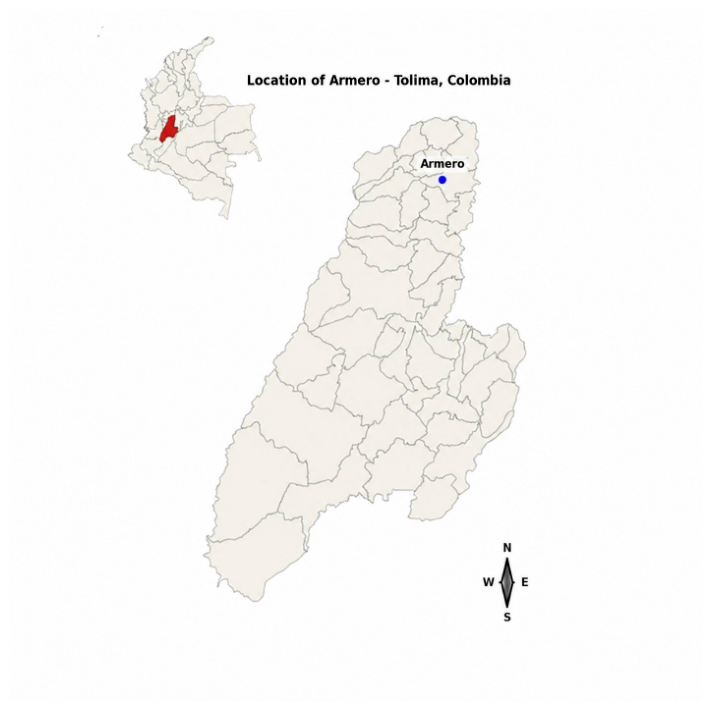
Figure 1.
Colombian Map, Armero, Tolima.
Local practices not only enrich the visitor experience but also reflect the community's identity and cultural resilience. Authors such as Magano et al. (2022) and Mora et al. (2023) point out that the authenticity of cultural practices can be a determining factor in visitor satisfaction and perception. In Armero, analyzing how these practices are integrated into the tourism supply and how they influence the tourist experience allows for a better understanding of the relationship between local dynamics and cultural practices in tragic settings.
In terms of its infrastructure, Armero was a small but constantly growing and modernizing town. It had paved streets that facilitated vehicular and pedestrian traffic, numerous schools serving children and young people, several churches that served as spiritual centers and community meeting places, and basic services such as water, electricity, and sewage systems that guaranteed decent urban living conditions (Ujueta & Mojica, 1995). In addition, it had a health center equipped to attend to emergencies and the medical needs of the population, a police station that ensured citizen security, and various commercial establishments that boosted the local economy (Ramírez, 2010). Armero's urban infrastructure reflected the characteristic progress of Colombian intermediate cities of the time, with public spaces, parks, and recreational areas that fostered social interaction (García, 2005; Martínez & Sánchez, 2008).
The city also possessed a rich history and cultural tradition deeply rooted in the identity of its inhabitants, visible in its local celebrations and festivities, especially the patron saint festivals honoring various saints, which significantly strengthened the sense of community and belonging (García, 2005). These celebrations included religious processions, popular festivals, musical performances, and sporting events that brought together not only the residents of Armero but also visitors from neighboring municipalities, consolidating Armero as a cultural and social benchmark in the Tolima region (Ujueta & Mojica, 1995; Vargas, 2012). Oral traditions, local gastronomy, and artistic expressions contributed to shaping a distinctive cultural identity that was transmitted from generation to generation (Mendoza, 2007). Popular music, band concerts in the main park, and Sunday family gatherings were integral parts of the social fabric that defined daily life in Armero (García, 2005; López, 2014).
Likewise, its privileged geographic location at the foot of the Nevado del Ruiz volcano and along the banks of the Lagunilla River offered abundant opportunities for outdoor activities and the use of natural resources (Torres, 2009). Residents and visitors enjoyed hikes in the surrounding mountains, where they could appreciate the region's biodiversity and the landscapes of the Central Mountain Range, as well as recreational outings along the river, which served both for artisanal fishing and for family leisure time (García, 2005; Patiño, 2011). The natural environment not only provided scenic beauty but also essential water resources for agriculture and human consumption (Ujueta & Mojica, 1995; Gómez & Herrera, 2013). This close relationship between the community and its natural environment was an essential part of Armero's identity, although paradoxically, this same geographical context would become the determining factor in the tragedy that years later would wipe this prosperous city off the map (García, 2005; Cardona, 2006).
Economically, Armero stood out as an important agricultural and livestock center in the department of Tolima. The fertility of its lands, a product of volcanic sediments, allowed for the cultivation of rice, cotton, sorghum, and other products that supplied both the local and regional markets (Ramírez, 2010; Vargas, 2012). Commercial activity was dynamic, with small and medium-sized enterprises generating employment and well-being for its inhabitants (Mendoza, 2007). The municipal market functioned as an epicenter of commercial exchange where farmers and merchants met weekly, strengthening the economic and social ties of the region (López, 2014). This economic prosperity justified the nickname "white city," referring both to the predominant color of its buildings and to the purity of its cotton, one of its main export products (Martínez & Sánchez, 2008; Torres, 2009).
Social life in Armero was characterized by a strong sense of community and solidarity among its inhabitants. Families maintained close ties, and community activities were frequent, ranging from gatherings in the central park to events at schools and the church (Patiño, 2011). Children played freely in the streets, neighbors knew each other, and a network of mutual support defined interpersonal relationships (Gómez & Herrera, 2013). This social cohesion was also reflected in civic participation and pride in belonging to a prosperous and growing community (Cardona, 2006). However, this tranquility and prosperity were abruptly interrupted on the night of November 13, 1985, when the eruption of the Nevado del Ruiz volcano triggered a mudslide that buried the city in a matter of minutes (Ramírez, 2010; Vargas, 2012), marking one of the most tragic episodes in Colombian history and leaving an indelible mark on the national collective memory.
Currently, tourist destinations have incorporated audiovisual elements as strategic tools to enhance the visitor experience and strengthen the interpretation of spaces (Sharma & Sharma, 2024). These tools allow for the recreation of historical contexts, the transmission of emotions, and a deeper understanding of the events that shaped a place, especially in sites associated with tragedies. Thus, according to Laaksonen & Varga (2024), places like Chernobyl and the Auschwitz concentration camps (Poland) have developed within the realm of memory tourism or “dark tourism,” combining physical visits with audiovisual resources that contextualize the events and reinforce historical learning. Through documentaries, interactive videos, guided tours with multimedia materials, and digital experiences, tourists can better understand the magnitude of tragic events and their human and social consequences (Basaraba, 2024). This combination of technology and tourism contributes to preserving historical memory and raising visitors' awareness of the importance of prevention and reflection.
The objective of this research is to analyze audiovisual productions related to tourism development at the Armero ruins. This analysis seeks to understand the perceptions and tourist experiences of both visitors and the local community. By addressing this objective, it is hoped to contribute to the understanding of the interaction between tourism and culture, providing a solid foundation for future research and for the development of practices related to film tourism in places marked by tragedy.
Audiovisual productions that focus on narrating fictional stories set in the context of the Armero tragedy will be excluded from this review. This includes feature films and medium-length films based on these events, such as the Colombian film Armero (2017) by director Christian Mantilla, and the 1997 audiovisual adaptation of the novel No Morirás. Armero, un día después by journalist Germán Santamaría. This exclusion aims to focus on the real perspectives of the individuals depicted in the audiovisual material without distorting them through the narratives of fictional characters.
1.1. Dark Tourism and Its Relationship with Cinema
Dark tourism involves visiting places associated with death, tragedy, and suffering. This type of tourism has gained relevance due to the growing interest in exploring tragic historical sites and the increasing availability of specialized tours (Iliev, 2021; Lewis et al., 2022; Mora et al., 2023). Dark tourism allows for the processing of loss and grief (Po-doshen, 2013), while the mind-body connection deepens emotions and historical understanding (Sun & Lv, 2021). Interaction with tragic sites fosters empathy, critical reflection, and a re-examination of values, promoting social awareness and ethical commitment among visitors (Ongun et al., 2021).
Its relationship with society is complex, as it involves emotional, historical, and ethical dimensions that generate debates about the morality of turning these spaces into tourist attractions. According to Salgado et al. (2024) also plays a key role in preserving historical memory through narratives and preservation policies that strengthen critical awareness of collective and personal memory. The offerings range from concentration camps and cemeteries to disaster sites, museums, and memorials (Mejía et al., 2021). Dark tourism associated with the Holocaust can generate both negative and positive impacts on the psychological, emotional, and spiritual well-being of visitors (Magano et al., 2023).
Dark tourism involves visiting places linked to tragedy and suffering, and in film, it manifests itself through the representation of these scenarios. The combination of responsible marketing and appropriate narrative mediation influences both public perception and the growing demand for dark tourism (Kumar et al., 2024). According to Beauvais & Camille (2022), dark tourism cinema combines an attraction to the macabre with human curiosity, exploring emotional motivations and raising public awareness through narratives that humanize painful events, such as the Holocaust reenactments in Schindler's List. Furthermore, film can stimulate tourism to these sites, promote intercultural dialogue, and support conservation, while also generating local economic benefits by attracting visitors interested in the filming locations (Stadler & Hawkes, 2022).
In dark tourism, cinema can trivialize violence or glorify perpetrators, generating ethical dilemmas about the exploitation of real crime as entertainment (Tevely et al., 2022; Ironside & James, 2024). Dark tourism evolves from place-centered approaches to narrative-mediated models, revealing how personal interpretation shapes meanings, experiences, and ethical tensions between memory, the market, and social sensitivity (Zerva, 2023). Contemporary jungle adventure films are not innocent: they are a symbolic technology that perpetuates, in a modern key, the imperial logic of exoticism, appropriation, and power. The cinematic “tourist gaze” maintains the jungle as a consumable object, thereby reconfiguring the relationships between spectators, territories, and memories of domination (Vermoesen & Soberon, 2025). From a practical perspective, it can serve as a guide for tourism managers seeking to develop marketing strategies based on popular culture and film, maximizing economic and image benefits (Araújo et al., 2024).
1.2. Imaginaries of Tourism and Cinema
Film and audiovisual fiction have become established as producers of tourist imaginaries capable of shaping viewers' perceptions of specific places, activating travel desires to those destinations. In this sense, films not only represent landscapes or monuments, but also construct symbolic narratives that incorporate values, emotions, and cultural meanings associated with the territory (Sánchez-Castillo, 2020; Nieto-Ferrando, Sánchez-Castillo & Gómez-Morales, 2021). These media representations contribute to forming an idealized image of the destination, which can motivate tourism even if the viewer has not previously visited the portrayed place.
To rigorously understand this phenomenon, it is essential to approach its study from a critical and diverse methodological perspective. In her review, Sánchez-Castillo (2020) warns that many studies on film-induced tourism rely on anecdotal accounts of tourism successes, which limits the validity and generalizability of the findings. Consequently, she proposes developing more robust methodologies. Subsequently, Sánchez-Castillo (2022) expands on this methodological proposal by suggesting the use of mixed methods approaches, including quantitative analysis and the use of digital data, to more precisely identify the audiovisual elements that act as stimuli for tourism. Meanwhile, from a geographical perspective, da Costa and Sizzo (2021) propose a methodology focused on the concept of “used territory,” which allows for the analysis of how filmic representations influence the real transformation of geographical space, not only symbolically, but also in its material and social dimensions.
The territorial dimension then becomes relevant, because by considering the real space transformed by tourist flows induced by film, the physical and socioeconomic impact on the portrayed places becomes visible. For da Costa and Sizzo (2021), territory ceases to be a mere cinematic backdrop and becomes an active actor that can be reconfigured based on the images generated by audiovisual fiction. This reconfiguration implies that destinations are not only symbolically represented, but also become integrated into real tourist circuits, which can modify their social, economic, and cultural structure.
On the other hand, the audience plays a fundamental role in the construction of tourist imaginaries. Nieto-Ferrando, Lozano-Aguilar, and Gómez-Morales (2024) show that viewers do not passively receive audiovisual content, but rather reinterpret it from their own cultural frameworks, prior experiences, and personal expectations. This reinterpretation means that a film's impact on tourism depends not only on the cinematic representation itself, but also on how each audience assimilates and reinterprets that representation. Thus, the effectiveness of cinema as a creator of tourist imaginaries is contingent upon the viewer's cultural and identity context.
Furthermore, the experience of the film-induced tourist also incorporates an emotional and symbolic dimension that transcends the merely visual or geographical. According to Oshriyeh and Capriello (2022), many people who travel motivated by a film do so with the desire to recreate scenes, sensations, or emotions experienced during the screening, attempting to materialize an aesthetic or affective experience in their trip. In this process, the audiovisual medium operates as a symbolic antecedent of the journey, and the visit to the destination becomes the fulfillment of a previously constructed desire. Complementarily, Nieto-Ferrando, Sánchez-Castillo, and Gómez-Morales (2021) emphasize that the textual analysis of audiovisual fictions allows for the identification of the aesthetic and symbolic narratives that predispose the viewer to idealize a destination, thus influencing their tourist motivation.
In short, the tourism imaginaries generated by film come as a result of a complex intersection between audiovisual representation, audience mediation, and the transformation of the real territory. Films construct narratives loaded with meaning, viewers interpret them from their own cultural and aspirational frameworks, and these imaginaries, when materialized in real trips, can produce tangible effects on destinations. Therefore, the study of film tourism requires a multidimensional approach that incorporates audiovisual communication, cultural geography, reception studies, and spatial economics to understand both the symbolic and the real in destination production.
2. Materials and Methods
The methodology employed in this research is qualitative. A content analysis was conducted on 30 videos published on YouTube, a technique that allowed for an in-depth examination of various elements present in the audiovisual materials, such as texts, images, narratives, and concepts. This type of analysis facilitates the identification of patterns, recurring themes, and underlying meanings, and is fundamental for understanding social and cultural contexts, validating theoretical propositions, and synthesizing complex information (Campos & Mújica, 2008). Thanks to this, researchers can recognize significant nuances and expand knowledge in different disciplines, especially in the social sciences, where certain phenomena may go unnoticed using traditional methods.
As a second methodological instrument, three research videos were produced to explore people's social imaginaries regarding the Armero tragedy and their associated experiences. The use of multimedia content as a research tool allows for the capture and analysis of data in multiple formats—video, audio, images, and text—enabling a richer and more detailed approach to complex phenomena. This strategy fosters a deeper understanding of human experiences, behaviors, and social dynamics, as it employs advanced content analysis techniques capable of revealing perspectives that can be difficult to obtain through exclusively written or traditional visual methods (Schuck & Kearney, 2006).
In July 2023, a field visit was conducted in Armero, Tolima, with the purpose of recording two videos titled “Learn the History of Armero” and “What is Your Perception of Armero?” The comments made by viewers were collected and analyzed from these videos. The videos were published on the YouTube channel “Tourism Researcher,” which broadened the scope of the data collection and allowed for the gathering of diverse perceptions associated with the case study. In a field study conducted in November 2024, 10 interviews were carried out with visitors to Armero, in order to find out how people learned about the tragedy, through what means and how audiovisual productions have influenced the development of the tourist experience.
3. Results
The results of the video analysis fall into two main categories. First, a study was conducted of videos whose audiovisual production is oriented toward a documentary-style format. These videos typically present a structured narrative, emphasizing objective information, historical, cultural, or social data about the destination, and aim to offer the viewer a deeper and more detailed understanding of the place. Second, an analysis was carried out of videos that adopt a more experiential approach to the destination. In this type of video, the focus is on conveying the sensations, emotions, and experiences of visitors, showcasing activities, landscapes, and lived moments, with the goal of generating an emotional connection and encouraging a visit to the place. Both approaches allow for an understanding of different audiovisual communication strategies in tourism.
YouTube videos about Armero play an important role in fostering historical memory and disseminating crucial information about this tragedy. Armero, marked by the devastating eruption of the Nevado del Ruiz volcano in 1985, left a profound mark on Colombian history. The videos on this platform offer visual testimonies, survivor accounts, and documentaries that keep the memory of that catastrophic event alive. Furthermore, these videos serve as an educational tool, enabling current and future generations to understand the magnitude of the natural disaster, its impact on the community, and the importance of prevention in the face of similar events. Thus, YouTube becomes a valuable archive that honors the victims, preserves their legacy, and promotes awareness of risk management in areas vulnerable to natural disasters (Table 1).
Videos about the Armero tragedy present diverse approaches that combine historical reconstruction and personal testimonies, generating significant debates among viewers. Some materials adopt a documentary approach, reconstructing the events through real images, survivor accounts, and analyses of the human, social, and emotional impact of the catastrophe. These videos generates comments of sadness, solidarity, and remembrance, highlighting the importance of remembering to prevent future negligence and honor the victims. Other videos focus on local stories, legends, and elements associated with "dark tourism."
User comments reflect divided opinions: some value the dissemination of information and the visibility of the memory, while others criticize the lack of sensitivity and question the ethical boundaries of this type of content. The direct testimonies of those who lived through the tragedy provide a profound human dimension. People who lost family members or who helped during the avalanche recount traumatic experiences, processes of emotional reconstruction, and heroic acts, such as those of a doctor who attended to the injured throughout the chaos. The comments reflect empathy, admiration for resilience, and sorrow in the face of these stories, highlighting the importance of preserving historical memory.

Table 2.
YouTube videos about Armero, travel-style experiences.
| No | Video Title | Video summary | Comments summary |
| 1 | El pueblo que desapareció: Armero | A documentary reconstructing the disappearance of Armero, featuring testimonies, historical images, and reflections on its causes, emotional impact, and collective memory. | Comments express deep sadness, solidarity with the victims, acknowledgment of past mistakes, and the need to keep the memory of the tragedy alive. |
| 2 | Armero: recorrido conociendo la Historia | A video guide through the ruins of Armero, narrating key events, significant locations, local stories, and reflections on dark tourism and memory. | Comments appreciate the historical overview, thank the narrator for their clarity, and highlight the importance of respecting the site and avoiding sensationalism. |
| 3 | Armero 37 años después de la tragedia | A report showing what Armero looks like decades later, including ruins, monuments, current testimonies, and reflections on state abandonment and community memory. | Comments bemoan the deterioration, emphasize the need to preserve the site, and express solidarity with survivors and their families still affected. |
| 4 | La historia oculta de Armero: “la ciudad blanca” antes de la tragedia | It presents what Armero was like before the disaster, describing its economy, culture, daily life and reputation as a prosperous “white city”. | Comments show nostalgia for the past, surprise at its regional importance, and recognition of the enormous cultural impact of the loss. |
| 5 | Historias paranormales en Armero | It recounts alleged supernatural events in the ruins, combining local testimonies, legends, apparitions, and elements of mystery tourism. | Comments are divided between curiosity and criticism; some believe in the experiences, while others consider it disrespectful to link tragedy with paranormal entertainment. |
| 6 | Tragedia en Armero es lo peor que he visto en mi carrera | The professional recounts how he experienced the tragedy from his work perspective, describing painful scenes, difficult decisions, and the permanent emotional impact. | Comments acknowledge the courage shown, thank the author for their testimony, reflect on professional trauma, and highlight the need to improve risk management in Colombia. |
Note. Author’s own elaboration.
The controversy surrounding the documentary ARMERO, produced by La Liendra, stems from the sensitivity of the subject matter and the way in which the tragedy of 1985 is depicted. Various sectors have questioned the use of emotionally charged images, considered by some to be a sensationalist tactic that could violate the memory and dignity of the victims. The possibility that the filmmaker might profit financially or gain visibility from collective suffering has also been criticized, generating ethical debates about the monetization of pain. Added to this is the perception of a limited narrative approach that could oversimplify a complex historical event. Although La Liendra argues that its intention is educational and seeks to preserve memory, the controversy reveals the tension between creative freedom and the ethical responsibility of representing tragedies.
The videos analyzed play a significant role in preserving the collective memory of Armero. In them, participants share memories of their loved ones, family photographs, images of the old houses, and records of the town's ruins. They also disseminate information about the tragedy, historical data, local and national news, as well as content related to volcanic activity and the search for missing children. Some groups also promote small businesses run by the victims' families, becoming platforms for community support. Although publications with commemorative and educational purposes predominate, in some cases, diverse content that deviates from the main objective is observed. Collectively, these groups constitute communication and memory networks that strengthen the bond between survivors, descendants, and residents of the present-day municipality of Armero-Guayabal.
Table 3.
Audiovisual products generated.
| Name | Views | Link to the Video |
| Conoce la historia de Armero | 402 | https://www.youtube.com/watch?v=ySCHkFxqAYk |
| ¿Qué percepción tienes de Armero? | 417 | https://www.youtube.com/watch?v=fk-whUCcSis |
Note. Author’s own elaboration.
The comments on the video "Know the History of Armero" reflect its significant impact on the audience, highlighting its cinematic quality and its ability to convey the history and importance of the Armero tragedy. The way viewers express their interest in and admiration for the video, as well as their desire to learn more about this historical event, shows how audiovisual storytelling can generate empathy and awareness of past events. Furthermore, the reflection on the importance of remembering these tragedies to prevent their repetition demonstrates how the video successfully conveys a profound and relevant message about historical memory and collective responsibility.
The comments on the video "What is your perception of Armero?" reflect a deep impression of the history and impact of the Armero tragedy. Several key ideas stand out: the importance of remembering and learning from history to prevent similar tragedies in the future, the need for solidarity and preparedness in the face of natural disasters, and the interest in visiting Armero to better understand its history and culture.
The community recognizes Armero as an emblematic place that has provided a great lesson, despite the tragedy. The energy and unique experience offered by this site are highlighted. Furthermore, the importance of not forgetting the history of Armero is emphasized, as it serves as a powerful reminder of the force of nature and the importance of solidarity and preparedness for natural disasters. Overall, the comments demonstrate a deep respect and sensitivity toward the Armero tragedy, as well as a genuine desire to learn from it and honor the memory of the victims.
The audiovisual materials created to address the Armero tragedy have successfully captured the audience's attention, as evidenced by the views on YouTube. The video "Learn the Story of Armero," with 402 views, and the video "What's Your Perception of Armero?", with 417 views, reflect significant viewer interest in better understanding this historical event. These videos provide information about the tragedy, its context, and its repercussions, sparking public interest in exploring and reflecting on the history of Armero. Choosing platforms like YouTube to disseminate this content demonstrates an effective strategy to reach diverse audiences and raise awareness about the importance of remembering and learning from the history of Armero.
3.1. Interviews
Analysis of the question, "How did you learn about the Armero tragedy?" reveals an interesting disparity in responses. The majority of participants (35%) learned of the event through audiovisual media, followed by family stories (29%) and print media (25%). These figures demonstrate that knowledge about the Armero tragedy does not circulate uniformly, but rather is mediated by communication mechanisms and forms of symbolic authority that structure what is remembered, how it is remembered, and who has the legitimacy to narrate it.
The predominance of audiovisual and print media in transmitting the event suggests a dependence on institutionalized sources of information, which tend to frame the narrative from official or media perspectives. From a critical standpoint, this allows us to question not only which aspects of the tragedy are emphasized or silenced, but also how collective memories can be shaped by editorial, economic, or even political interests.
On the other hand, the high percentage of family narratives as a means of transmission (29%) highlights the importance of oral knowledge and intimate memories, which, although less institutionalized, play a key role in the construction of social knowledge about the past. This type of transmission represents embodied, affective, and situated knowledge, reflecting an alternative epistemology that challenges hegemonic narratives. However, its dependence on lived experience or generational proximity implies a risk of loss over time, especially in contexts where new generations have no direct connection to the event.
In contrast, social media (1%) and word-of-mouth transmission (5%) occupy a marginal place, which can be interpreted as a weak digital or community appropriation of the memory of the tragedy. This absence may be related to a lack of historical memory strategies in digital or educational spaces, which limits the intergenerational reach of this knowledge. When visitors were asked, "What motivated you to visit Armero?" Many expressed historical interest and personal curiosity. Many are drawn to learn the story of the Armero tragedy, as well as the details about the girl Omaira and the fate of the survivors. Visiting the site and witnessing the ruins, especially the hospital, is part of this motivation. Similarly, some were invited by friends or family, while others mentioned feeling a personal connection to the history of Armero after visiting the site for the first time.
Some visitors expect to experience paranormal phenomena at the site, while others seek to understand the historical background and not just rely on information received through the media. On the other hand, for many, research and history are driving forces that motivate them to visit Armero. The opportunity to get involved in projects related to the region is seen as a way to better understand what happened. In short, the motivations for visiting Armero are diverse, ranging from historical interest and personal curiosity to the influence of friends or family, the emotional connection to the tragedy, and the desire to understand history from a deeper perspective. In addition, there is a search for both paranormal experiences and knowledge in an attempt to understand and honor what happened in this place.
4. Discussion
As Sarkar et al. (2021) mention, dark tourists tend to reevaluate their beliefs and values after visiting or learning about tragic sites. This is reflected in the comments and reactions these videos have generated on social media, where viewers reflect on human vulnerability and the importance of social justice. However, Shekhar & Valeri (2022) advocate for the need for sensitivity and respect when it comes to dark tourism, something that could also be applied to the consumption of content on social media and platforms like YouTube. The video "Exploring the Mysteries of Armero" could attract both the curious and those seeking a deeper understanding, and the authors highlight the importance of an ethical approach in these cases.
Miller (2008) suggests that disaster tourism can be perceived as an exploitation of affected communities if visitors or viewers do not respect cultural norms. This could be related to videos that explore paranormal or more sensationalist aspects, moving away from deep reflection and risking the commercialization of suffering. Similarly, Beauvais & Camille (2022) and Stadler & Hawkes (2022) point out that dark tourism is also explored through audiovisual media such as film, as reflected in documentaries and YouTube videos about Armero. These representations allow viewers to process complex emotions from a safe perspective, acting as a form of catharsis. Furthermore, Lewis argues that tourism has the potential to promote social justice and greater political awareness. This approach can be seen in videos such as "I Survived Armero," the story of Dr. Juan Gaitán, which highlights the personal impact of the tragedy and fosters a greater understanding of human rights.
Some videos goes deeper into the history and lessons learned, while others, such as Paranormal Stories in Armero, explore lighter levels of darkness, focusing on the fascination with the paranormal. In this way, Stokowski et al. (2021) and Iliev (2021) agree that tourist imaginaries are social and cultural constructs that affect tourist experiences. While Stokowski et al. focus on rural tourism, Iliev applies this concept to the imaginaries of dark tourism, highlighting the cultural influence on tourists' motivations. Similarly, Leite (2014) and Gravari-Barbas (2019) align with the idea of how tourist imaginaries transform sites of tragedy into attractive products through symbolic narratives. Both authors discuss the creation of cultural representations that influence visitors' perceptions and experiences.
In the observed results, YouTube videos about the Armero tragedy tend toward emotive and tragic narratives that keep the memory of the event alive. This simplified, tragedy-centered representation aligns with what Hiernaux-Nicolas et al. (2002) mention regarding the construction of tourist imaginaries that tend to stereotype destinations, reducing their diversity and authenticity. In this case, the focus on the disaster generates a limited perception of Armero, which is associated almost exclusively with the 1985 disaster. Hiernaux-Nicolas et al. (2002) emphasize that these types of narratives, driven by the media and tourism, can distort the perception of a destination by highlighting specific aspects while omitting others, which is evident in the videos that dominate social media platforms.
5. Conclusions
This research reveals a range of emotions that characterize the experience of Armero as a destination: from astonishment at learning the history of what was once a prosperous "white city" of regional economic and cultural importance, to respect and profound sadness upon encountering the ruins and testimonies of the tragedy that buried this Colombian city in 1985. Visitors experience a complex mix of feelings, including historical curiosity, solidarity with the victims, admiration for the resilience of the survivors, and an inevitable confrontation with the collective grief. This emotional duality manifests itself in the diverse motivations for visiting the site: some seek to understand the magnitude of the disaster and learn about risk management, others wish to honor the memory of those who lost their lives, while a minority is drawn to paranormal elements or dark tourism, generating tensions about the ethics of these practices.
Audiovisual content on YouTube acts as an emotional catalyst, amplifying these contradictory perceptions. Documentary videos that reconstruct the events through survivor testimonies and historical material generate comments filled with empathy, sadness, and reflection on the importance of preserving memory to prevent future negligence. In contrast, content produced by influencers and digital creators provokes polarized reactions: while some users appreciate the increased visibility of the issue among younger audiences, others express outrage at what they perceive as a lack of sensitivity or an attempt to monetize suffering. This division reveals how format, tone, and communicative intent directly influence the reception of the message, transforming the same historical event into a source of education or an object of controversy depending on how it is presented.
The construction of collective memory about Armero reveals multiple layers of meaning that go beyond the factual account of the disaster. The narratives circulating on digital platforms, family stories, and traditional media not only report on what happened but also actively shape how current and future generations understand and emotionally relate to the tragedy. The comments on the videos reflect a genuine desire to learn, recognition of the heroism of those who helped during the catastrophe, and a need to keep the memory alive as an act of justice toward the victims. However, they also highlight the risk that certain narrative approaches may trivialize or sensationalize the suffering, especially when entertainment elements are linked to an event of such magnitude. This tension between education and spectacle, between respect and morbid curiosity, defines the complex emotional and ethical landscape surrounding Armero as a site of historical memory.
Author Contributions
Conceptualization, J.A.M.F methodology, J.A.M.F.; software, J.A.M.F.; validation, J.A.M.F, formal analysis, J.A.M.F; investigation, J.A.M.F, resources, X.X.; data curation, J.A.M.F; writing—original draft preparation, J.A.M.F.; writing—review and editing, J.A.M.F; visualization, J.A.M.F; supervision, J.A.M.F; project administration, J.A.M.F; funding acquisition, J.A.M.F.
Conflicts of Interest
The authors declare no conflicts of interest.
References
- Araújo-Vila, N.; Cardoso, L.; Almeida, G. G. F.; Almeida, P. Film-induced tourism as a key factor for promoting tourism destination image: The James Bond Saga Case. Adm. Sci. 2024, 14(5), 94. [Google Scholar] [CrossRef]
- Basaraba, N. The rise of paranormal investigations as virtual dark tourism on YouTube. In Journal of Heritage Tourism; STRING:ARTICLE/CHAPTER: PAGE, 2024; Volume 19, 2, pp. 287–309. [Google Scholar] [CrossRef]
- Beauvais, C. Dark tourism, “Netflix tourism”: stakes and conflicts of actors in Medellin. Via. Tour. Rev. 2022, (22). [Google Scholar] [CrossRef]
- da Costa, E. B.; Sizzo, I. A. Territorio usado, turismo y cine: Propuesta metodológica. Finisterra 2021, 56(118), 175–198. [Google Scholar] [CrossRef]
- Cardona, O. D. Desastres naturales y prevención en Colombia: El caso de Armero; Universidad Nacional de Colombia, 2006; Available online: https://repositorio.unal.edu.co/handle/unal/cardona2006.
- García, L. Armero, un luto permanente; Apidama Ediciones; 2005; Available online: https://descubridor.banrepcultural.org/permalink/57BDLRDC_INST/2b09q5/alma991016519369707486.
- Gómez, J.; Herrera, M. Recursos naturales y desarrollo comunitario en el Tolima pre-tragedia. Ediciones Académicas Colombianas. 2013. Available online: https://www.edicionesacademicas.com.co/gomez-herrera2013.
- Hiernaux-Nicolas, D.; Cordero, A.; Montijn, L. Imaginarios sociales y turismo sostenible. Facultad Latinoamericana de Ciencias Sociales (FLACSO). 2002. Available online: http://www.sidalc.net/cgi-bin/wxis.exe/?IsisScript=COLEC.xis&method=post&formato=2&cantidad=1&expresion=mfn=019433.
- Hiernaux-Nicolas, D. ¿Cómo definir el turismo? Aportes Y Transf. 2002, 6(2), 11–27. Available online: http://nulan.mdp.edu.ar/id/eprint/258.
- Iliev, D. Consumption, motivation and experience in dark tourism: A conceptual and critical analysis. Tour. Geogr. 2021, 23(5-6), 963–984. [Google Scholar] [CrossRef]
- Ironside, G.; James, K. Selling loyalist and republican memories: The prospects for dark (Troubles) tourism in Northern Ireland. Cogent Soc. Sci. 2024, 10(1), 2319378. [Google Scholar] [CrossRef]
- Kumar, J.; Kularajasingam, J.; Jieyao, Z. Exploring Marketing Strategies and Media Influences in Dark Tourism. In Dark Tourism: Theory, Interpretation and Attraction; Emerald Publishing Limited, 2024; pp. 89–98. [Google Scholar] [CrossRef]
- Laaksonen, S. H.; Varga, P. Assessing the impact of selfie-taking tourists on local tour guides in the Chernobyl Exclusion Zone: a netnographic analysis of a dark tourism location. In Journal of Heritage Tourism; CTYPE:STRING:JOURNAL, 2024; Volume 19, 3, pp. 331–346. [Google Scholar] [CrossRef]
- Lewis, H.; Schrier, T.; Xu, S. Dark tourism: Motivations and visit intentions of tourists. Int. Hosp. Rev. 2022, 36(1), 107–123. [Google Scholar] [CrossRef]
- López, C. Vida cotidiana y tradiciones en las ciudades intermedias del Tolima. Fondo Editorial Tolimense. 2014. Available online: https://editorial.tolima.gov.co/lopez2014.
- Magano, J.; Fraiz-Brea, J. A.; Leite, Â. Dark tourism, the holocaust, and well-being: A systematic review. Heliyon 2023, 9(1). Available online: https://www.cell.com/heliyon/fulltext/S2405-8440(23)00271-2. [CrossRef]
- Martínez, P.; Sánchez, R. Urbanización y desarrollo en el valle del Magdalena; Editorial Andina; 2008; Available online: https://www.editorialandina.com/martinez-sanchez2008.
- Mendoza, A. Identidad cultural y patrimonio inmaterial en el Tolima; Universidad del Tolima, 2007; Available online: https://repositorio.ut.edu.co/handle/ut/mendoza2007.
- Mora, J.; Bohorquez, L.; León-Gómez, A. Dark Tourism in Colombia: Motivation of Travellers and Community Practices. Geoj. Tour. Geosites 2022, 44(4), 1503–1508. [Google Scholar] [CrossRef]
- Mora Forero, J. A. Analysis of Tourism Practices and Experiences in the Ruins of Armero. Emerald Handb. Int. Dark Tour. 2025, 201. [Google Scholar] [CrossRef]
- Nieto-Ferrando, J.; Lozano-Aguilar, A.; Gómez-Morales, B. Turismo y cine de autor: Almodóvar impulsor de la imagen de España en Francia. Rev. Lat. De Comun. Soc. 82 2024, 1–20. [Google Scholar] [CrossRef]
- Nieto-Ferrando, J.; Sánchez-Castillo, S.; Gómez-Morales, B. M. Ficción audiovisual y promoción turística: Incidencia del cine y la televisión en la imagen de los destinos y aportaciones del análisis textual. El Prof. De La Inf. 2021, 30(6). [Google Scholar] [CrossRef]
- Oshriyeh, O.; Capriello, A. Film-induced tourism: A consumer perspective. In Contemporary Approaches Studying Customer Experience in Tourism Research; Emerald Publishing, 2022; pp. 223–244. [Google Scholar] [CrossRef]
- Ospina enciso, A. F. El sacrilegio sagrado: narrativa, muerte y ritual en las tragedias de Armero. Rev. Colomb. De Antropol. 2013, 49(1), 177–198. [Google Scholar] [CrossRef]
- Patiño, G. Geografía humana y aprovechamiento de recursos en zonas volcánicas. Editorial Geográfica de Colombia. 2011. Available online: https://www.geograficacolombia.com/patino2011.
- Podoshen, J. S. Dark tourism motivations: Simulation, emotional contagion and topographic comparison. Tour. Manag. 2013, 35, 263–271. [Google Scholar] [CrossRef]
- Ramírez, S. Armero: Historia de una ciudad desaparecida. Planeta Colombiana. 2010. Available online: https://www.planetadelibros.com.co/ramirez2010.
- Sánchez-Castillo, S. La investigación sobre el cine como inductor del turismo: una revisión metodológica. L’Atalante. Rev. De Estud. Cinematográficos 30 2020, 109–122. Available online: https://revistaatalante.com/index.php/atalante/article/view/815.
- Sánchez-Castillo, S. Estímulo del turismo a través de la ficción audiovisual: métodos de investigación. Espejo De Monogr. De Comun. Soc. 6 2022, 25–47. Available online: https://espejodemonografias.comunicacionsocial.es/article/view/4487. [CrossRef]
- Sharma, S.; Sharma, N. Unearthing the Digital Dark: Enhancing Dark Tourism Through Online Platforms. Dark Tour. Theory Interpret. Attract. 2024, 279–295. [Google Scholar] [CrossRef]
- Stadler, J.; Hawkes, L. Serial Killer Cinema and Dark Tourism: The Affective Contours of Genre and Place. In Screen Tourism and Affective Landscapes; Routledge, 2022; pp. 158–179. Available online: https://www.academia.edu/94287973/Serial_Killer_Cinema_and_Dark_Tourism_The_Affective_Contours_of_Genre_and_Place.
- Sun, J.; Lv, X. Feeling dark, seeing dark: Mind–body in dark tourism. Ann. Tour. Res. 2021, 86, 103087. [Google Scholar] [CrossRef]
- Tevely, V.; Smith, T.; Kayb, M. Blurring the boundaries between fact and fiction: serial killers in the context of dark tourism. Tour. Herit. J. 2022, 4(4), 53–75. [Google Scholar] [CrossRef]
- Torres, H. Paisajes andinos y comunidades rurales en Colombia; Editorial Universidad de Caldas, 2009; Available online: https://repositorio.ucaldas.edu.co/handle/ucaldas/torres2009.
- Ujueta, G.; Mojica, J. Fotointerpretación y observaciones de campo del flujo de escombros de noviembre 13 de 1985 en armero (tolima, colombia). Geol. Colomb. 1995, 19, 5–20. Available online: https://revistas.unal.edu.co/index.php/geocol/article/view/31323/0.
- Vargas, L. Economía agrícola y desarrollo regional en el Tolima (1950-1985). Editorial Banco de la República. 2012. Available online: https://www.banrepcultural.org/vargas2012.
- Vermoesen, S.; Soberon, L. A tale that time forgot: contemporary jungle-adventure cinema, imperial power, and the tourist gaze. Postcolonial Stud. 2025, 1–20. [Google Scholar] [CrossRef]
- Zerva, K. Dark tourism on Netflix: From place to person-dependent. Tour. Manag. Perspect. 2021, 38, 100823. [Google Scholar] [CrossRef]
Table 1.
YouTube videos about Armero with a documentary-style.
| No | Video Title | Video summary | Comments summary |
| 1 | Armero: la tragedia que conmovió al planeta | A documentary that reconstructs the Armero tragedy through real images, testimonies, and analysis of the human, social, and emotional impact. | Comments express sadness, solidarity, and remembrance; they highlight the importance of remembering, preventing future negligence, and honoring the victims of the disaster. |
| 2 | Recorriendo los misterios de Armero – Paulette | A YouTuber visits Armero, explores the ruins and cemetery, and recounts local stories, legends, and elements associated with dark tourism and memory. | Comments debate respect, sensationalism, and remembrance; some appreciate the informative visit, while others criticize the approach for being insensitive to the pain. |
| 3 | Sobrevivientes de Armero | Testimonies from people who lived through the avalanche narrate their losses, traumatic experiences, and the emotional reconstruction process following the tragedy. | Comments show empathy, admiration for resilience, and sorrow upon hearing the accounts; users appreciate the preservation of these historical memories. |
| 4 | Sobreviví Armero, la historia del médico Juan Gaitán | A doctor who survived by helping the injured describes the chaos, pain, and difficult decisions he made on the night of the avalanche. | Comments highlight the doctor's bravery, acknowledge his work, and express gratitude for learning about human stories that demonstrate heroism amidst the disaster. |
| 5 | Egresado de U. de Caldas cuenta testimonio de experiencia en avalancha de Armero | A former student recounts his experience during the tragedy, explaining how he escaped, what he saw, and how it marked his personal and professional life. | Comments emphasize the importance of testimony, express respect for survivors, and reflect on disaster preparedness. |
| 6 | Documental "Armero ¿poder de Dios o negligencia humana?" | The documentary analyzes whether the tragedy could have been prevented, presents opinions on institutional responsibility, and blends religious reflections with social critiques. | Comments debate state responsibility, question previous decisions, and reflect on how faith and science interpret human catastrophes. |
| 7 | Armero - Dos días después de la tragedia 15 noviembre 1985 | Original audiovisual footage with scenes immediately after the avalanche shows destruction, rescues, ruins, and initial testimonies. | Comments value the historical material, express sorrow and respect, and point out the importance of remembering to avoid repeating institutional errors. |
| 8 | Armero documental - La Liendra | An influencer visits Armero to showcase the site, reflects on the tragedy, and blends history, personal opinion, and elements of digital tourism. | Comments are divided: some appreciate making the memory visible, while others criticize the lighthearted tone; there is a debate about the ethical limits of tourism content. |
Note. Author’s own elaboration.
Disclaimer/Publisher’s Note: The statements, opinions and data contained in all publications are solely those of the individual author(s) and contributor(s) and not of MDPI and/or the editor(s). MDPI and/or the editor(s) disclaim responsibility for any injury to people or property resulting from any ideas, methods, instructions or products referred to in the content. |
© 2026 by the author. Licensee MDPI, Basel, Switzerland. This article is an open access article distributed under the terms and conditions of the Creative Commons Attribution (CC BY) license.
Copyright: This open access article is published under a Creative Commons CC BY 4.0 license, which permit the free download, distribution, and reuse, provided that the author and preprint are cited in any reuse.


