

Submitted:
27 May 2026
Posted:
29 May 2026
You are already at the latest version
Abstract
Dementia affects approximately 9.6% of Americans aged 65 or older with these numbers predicted to continue to rise, making it a significant growing public health concern that physical therapists may encounter. Dementia affects a large amount of the PT patient population, yet physical therapists report reduced confidence in treating this population due to the lack of education in academia and reduced exposure to dementia care in clinical practice. This experimental pre-post test study examined the implementation of the Leveraging Existing Abilities in Dementia™ training program on confidence levels handling various situations and the utilization of communication and treatment strategies discussed in the LEAD™ training program when treating individuals with dementia. Eight rehabilitation providers completed the 12-hour LEAD™ training program. Pre-program, post-program, and 3-month surveys were administered to capture confidence in communication, implementation strategies and dementia knowledge. Provider confidence significantly increased after LEAD™ training (49.3 → 67.4/70, p=0.003). At baseline, participants were unfamiliar with 5 of 10 validated dementia care practices, but by 3-month follow-up, 90% reported using these strategies at least weekly. Notable gains included intent-to-use the K.I.S.S. method (+73%) and Spaced Retrieval (+29%). Although dementia is highly prevalent, many rehabilitation providers lack confidence in dementia care due to limited training. The LEAD™ program shows potential to bridge this gap, but continued evaluation is needed to assess long-term effects on practice and patient outcomes.
Keywords:
dementia
; confidence
; education
; training
; physical therapy
; communication
1. Introduction
Dementia is a progressive neurocognitive disorder that results in the decline of cognitive functioning, including thinking, reasoning, and memory, to a degree that interferes with daily activities and independence. In the United States, dementia affects approximately 9.6% of adults aged 65 years and older, and these numbers are projected to rise substantially with the aging population, positioning dementia as a growing public health concern that healthcare professionals, including rehabilitation professionals such as physical therapists, occupational therapists, and speech-language pathologists, will increasingly encounter (Bennett et al., 2021). The increasing prevalence underscores the urgent need for an informed, well-prepared rehabilitation workforce capable of addressing the multifaceted challenges associated with dementia care.
Dementia encompasses a range of disorders caused by progressive neurodegeneration and neuronal loss, with Alzheimer’s disease being the most common form (National Institute on Aging, n.d.). Individuals with dementia may experience memory loss, language impairments, disorientation, and changes in mood and behavior that compromise mobility, safety, and participation in meaningful activities (National Institute on Aging, n.d.). Although dementia is more prevalent with advancing age - affecting about one-third of individuals aged 85 and older - it is not a normal part of aging (National Institute on Aging, n.d.). Given its complex presentation, dementia care requires an interdisciplinary approach in which rehabilitation professionals play a vital role in maintaining physical function, preventing secondary complications, and enhancing quality of life. However, despite this essential role, research suggests that many healthcare professionals, especially rehabilitation professionals, report limited dementia-specific training and lower confidence when working with individuals with dementia (IWD) (Foley et al., 2020; Duarte et al., 2023).
In terms of current dementia-specific staff training, the literature largely focuses on programs for nursing staff and direct service caregivers (Duarte et al., 2023; Eggenberger et al., 2013; Lewis et al., 2010; Pleasant et al., 2017). While the successes of these programs are encouraging, participants receiving training were primarily identified as nurses, nursing aides, mental health providers, or other care staff, with only one study including 2% physical therapists and 2% occupational therapists (Karline et al., 2013). This gap is significant given that rehabilitation providers interact with these patients almost daily, often with distinct clinical goals and therapeutic roles that differ from those other care providers. To optimize person-centered care, training programs must therefore be accessible, relevant, and tailored to the specific competencies and decision-making needs of rehabilitation professionals.
Additionally, a recent scoping review by Omaña et al. examined the extent of dementia-related research published in physiotherapy journals over a decade (2011–2021). Out of more than 11,000 articles reviewed, only 67 were relevant to people living with dementia (PLWD) or mild cognitive impairment (MCI), with no significant growth trend observed over time (Omaña et al., 2025). Most studies were lower on the hierarchy of evidence and close to half lacked specificity regarding dementia type. This limited scholarly representation suggests that dementia is underemphasized in physiotherapy and other rehabilitation research and education, leaving clinicians without consistent access to evidence-based guidance. The authors concluded that rehabilitation professionals must often seek dementia-related knowledge from general medical or multidisciplinary literature, reflecting a research and educational gap in the field (Omaña et al., 2025)
Building on this framework, White et al. (2022) conducted a scoping review to better understand PTs’ and PT students’ experiences and views on providing services to people with dementia. The authors identified persistent barriers to effective care, including limited exposure during academic education, insufficient interprofessional collaboration, and a lack of organizational support for dementia-specific training (White et al., 2022) The review highlighted four critical gaps in the dementia care workforce applicable to physical therapy: recruitment and retention, cost and financing of training, interprofessional education, and translation of evidence into clinical practice.6 These findings reinforce the need for targeted educational programs to improve PTs’ preparedness and confidence when managing this complex population. Recently, Taylor et al. (2025) established an international, PT-specific core capability framework (137 capabilities across five domains), underscoring the breadth of dementia-related knowledge, assessment, communication, and intervention skills expected for high-quality PT care. While competency frameworks such as the international physiotherapy e-Delphi study represent a significant step forward, they highlight a broader weakness: the disconnect between competency identification and practical, scalable implementation strategies. The established competency domains provide information on what physiotherapists should know and be able to do, but the literature offers limited guidance on how to build, disseminate, and evaluate training programs capable of achieving these competencies at scale.
Recognizing this need for specialized dementia training, The Leveraging Existing Abilities in Dementia (LEAD™) Framework (see Figure 1) for Rehabilitation Professionals and its associated Training Program was developed to enhance rehabilitation professionals’ knowledge, confidence, and use of evidence-based strategies in dementia care (Dawson et al., 2019). The LEAD™ program adopts a Strength-Based Approach, emphasizing the preservation of existing abilities and capacities rather than focusing solely on cognitive or functional decline. In a previous study with rehabilitation professionals of a home health agency, results revealed significant improvements in participants’ confidence and dementia-related knowledge immediately after training and at three-month follow-up, suggesting that structured educational interventions can positively influence practice behaviors and clinician self-efficacy (Dawson et al., 2019).
In light of these challenges, the current study seeks to expand the evidence supporting the LEAD™ training program by evaluating its implementation among rehabilitation professionals in a Continuous Care Retirement Community (CCRC) setting, which works across various settings on a single campus. Specifically, this study examines whether participation in the LEAD™ program increases providers’ confidence in handling dementia-related situations and enhances the use of communication and treatment strategies with IWD. Given the projected rise in dementia prevalence and the ongoing educational deficiencies in rehabilitation professionals’ training and practice, this investigation aims to contribute to the growing body of evidence promoting structured, evidence-informed dementia education for rehabilitation professionals.
2. Methods
2.1. Study Design
This study used a single-arm non-randomized repeated measures design to assess the impact of the LEAD™ training program on rehabilitation providers’ confidence, knowledge, and use of evidence-based communication and treatment strategies when working with individuals with dementia. Data were collected at three time points, including pre- and post-program surveys and a 3-month follow-up survey. Pre- and post-program surveys were completed in person at time of training. The 3-month follow up survey was distributed electronically using Qualtrics software.
2.2. Description of the LEADΤΜ Training Program for Rehabilitation Professionals
Based on the comprehensive Strength-Based Approach principles, LEADTM is an organized two day, 12-hour training program that incorporates lecture material, discussions, case studies, active learning activities and physical samples of specific treatment facilitation strategies such as external memory aids and spaced-retrieval. The curriculum encompasses six content areas: 1) Overview of Dementia; 2) Strength-Based Approach to Rehabilitation; 3) Treatment Strategies to Facilitate Successful Outcomes; 4) Identifying and Addressing Barriers to Management of Individuals with Dementia; 5) Assessment and Developing Therapeutic Goals and Plans of Care; and 6) Documentation and Reimbursement Issues in Dementia Care. Following the two-day course, attendees received access to a resource webpage with additional literature, videos and sample tools for future patient use. A Zoom follow-up call was conducted 6 weeks after the initial course for further feedback regarding the in-person instruction and resource webpage.
With the barriers in current literature identified, the learning objectives of the LEADTM program are: a) distinguish between normal and pathological cognitive aging; (b) understand the different types of dementia and their impact on various aspects of communication, functional activities, self-care, and well-being; (c) identify differences between Strength-Based Approach and traditional medical model; (d) assess remaining strengths and domains requiring compensation in patients with dementia; (e) develop appropriate treatment goals for each stage of dementia; (f) develop plans of care using current evidenced-based interventions and best practices in literature; and (g) demonstrate ability to document medical necessity and skill needed for reimbursement.
The LEADTM Training Program was developed and taught collaboratively by a cognitive aging psychologist (KJ) and a board-certified geriatric physical therapist with academic and research training in applied aging psychology (ND). Both developers have over 20 years of experience in their respective fields including direct interactions with IWDs and their family caregivers.
2.3. Evaluation of the LEADΤΜ Training Program for Rehabilitation Professionals
2.3.1. Procedure
Attendees were those rehabilitation professionals and employees of a CCRC near Jacksonville, FL. Data collection occurred across three time points between February 2025 and June 2025. The initial pre-program and immediate post-program surveys were collected on paper as part of the training evaluation process. Prospective follow-up surveys were distributed electronically through Qualtrics at approximately 3 months after course completion.
Prior to the course, participants completed a baseline questionnaire that included demographic information and practice experience, the Dementia Knowledge Assessment Scale (DKAS) (Annear et al., 2019) and self-reported measures of practice confidence using the Confidence in Working with People with Dementia (CODE) (Elvish et al., 2018; Lorio et al., 2017) and current use of various dementia-specific communication and treatment strategies in their daily practice. Immediately following the two-day training, participants completed a post-program survey that included items assessing program acceptability, changes in confidence (CODE) (Elvish et al., 2018; Lorio et al., 2017), and intent to apply learned strategies in clinical practice. Participants also completed the DKAS again post-program. At the follow-up interval of 3 months, participants completed identical versions of the post-program survey to allow for comparison of changes over time to assess practice confidence and current practice patterns including use of the dementia-specific treatment strategies taught in the LEADTM training program.
2.3.2. Statistical Analyses
Data were analyzed using JASP statistical software (version 0.19.3 Intel). Descriptive statistics were used to summarize sample characteristics. Frequencies were calculated to determine the level of endorsement for survey items related to practice patterns. A paired-samples t-test was conducted to evaluate changes in dementia knowledge. A repeated measures ANOVA was conducted to examine whether there were significant differences in confidence in working with people with dementia at time 1, time 2 and time 3.
3. Results
3.1. Participants
Eight rehabilitation providers participated in the study and completed the 12-hour LEAD™ training program. Participants included licensed clinicians working in rehabilitation settings, such as physical therapists, occupational therapists, and speech-language pathologists. Prior to program participation, attendees provided demographic information, including professional designation, highest educational degree, years of practice, and previous experience working with individuals with dementia.
All participants were recruited from Vicar’s Landing, a Continuous Care Retirement Community (CCRC) located in Ponte Vedra Beach, Florida, where the LEAD™ training program was implemented. The sample consisted of four physical therapists or physical therapist assistants, three occupational therapists or certified occupational therapy assistants, and one speech-language pathologist. Educational backgrounds varied: three participants completed two years of formal education to attain their degree, four completed three years, and one completed four years. On average, participants had 22.5 years of experience working in healthcare and 20.2 years of experience working with individuals with dementia. Prior to completing the LEAD™ program, participants reported an average of 16.2 hours of previous dementia-specific training. Seven of the eight participants held two dementia-specific certifications, and one participant held one dementia-specific certification.
3.2. Pre-Post Comparison of Dependent Measures
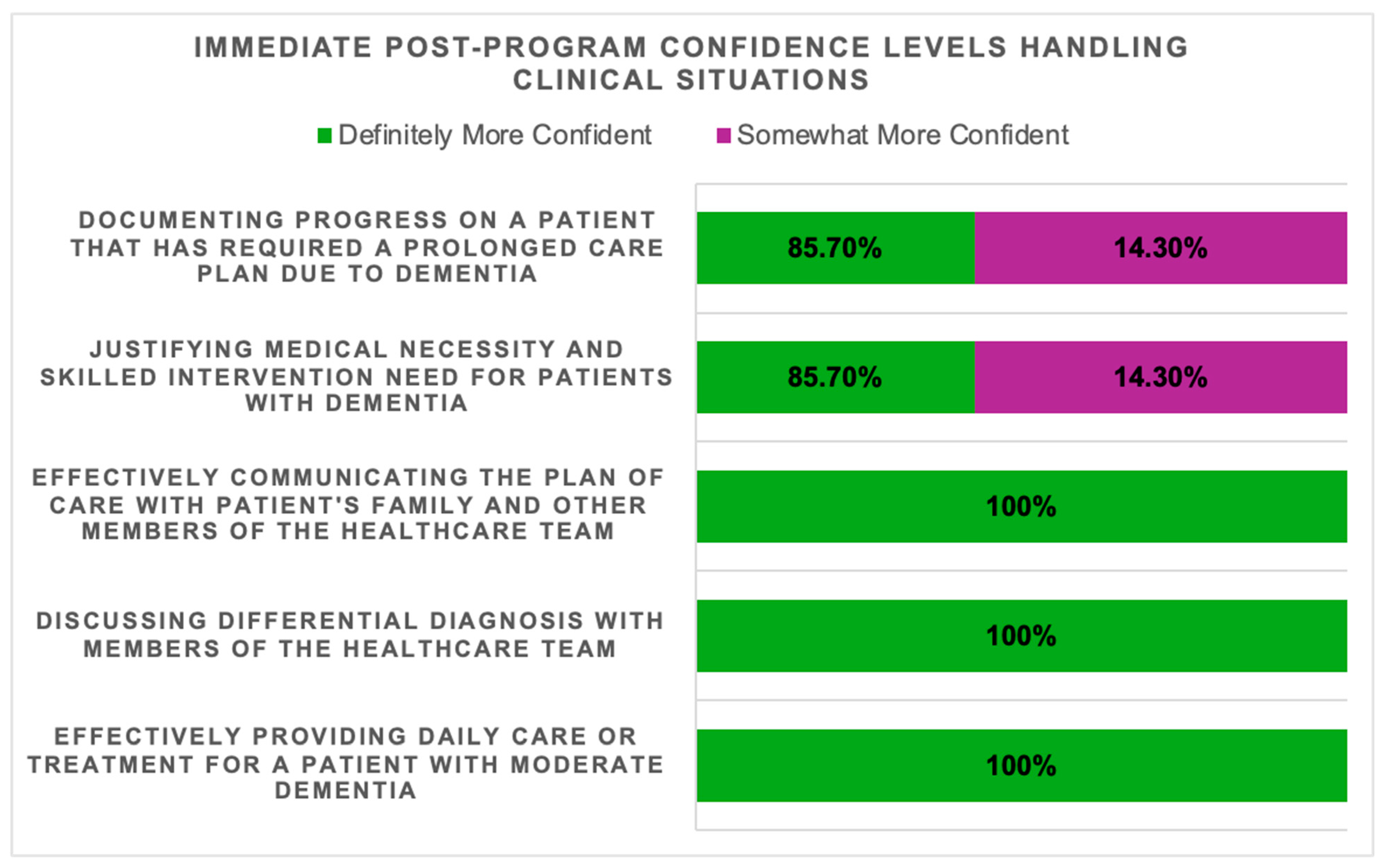
Some outcomes demonstrated improvements, with others remaining constant. Paired sample t-tests and descriptive analysis showed scores on the DKAS remained relatively constant between pre and post program testing with a pre-program mean of 22.6 (max 27) and post-program mean of 22.3 (t=0.424, p=0.685), indicating attendees were selecting similar answers regarding dementia knowledge pre and post program (see Figure 2). Following the LEAD™ training program, attendees demonstrated significant increases in practice confidence as measured on the CODE involving handling situations, communication techniques and treatment strategies for those with dementia from a mean of 49.7 (max 70) to 69.1 at post-test (p<0.001). Specifically, 100% of attendees are “definitely more confident” in providing daily treatment to those with moderate dementia, discussing differential diagnosis with members of the healthcare team, and effectively communicating the plan of care to the patient’s family and 85.7% are "definitely more confident” in justifying medical necessity and skilled intervention for patients with dementia and documenting progress on a patient that has required a prolonged care plan due to dementia following participation in the LEAD™ program (see Figure 3).
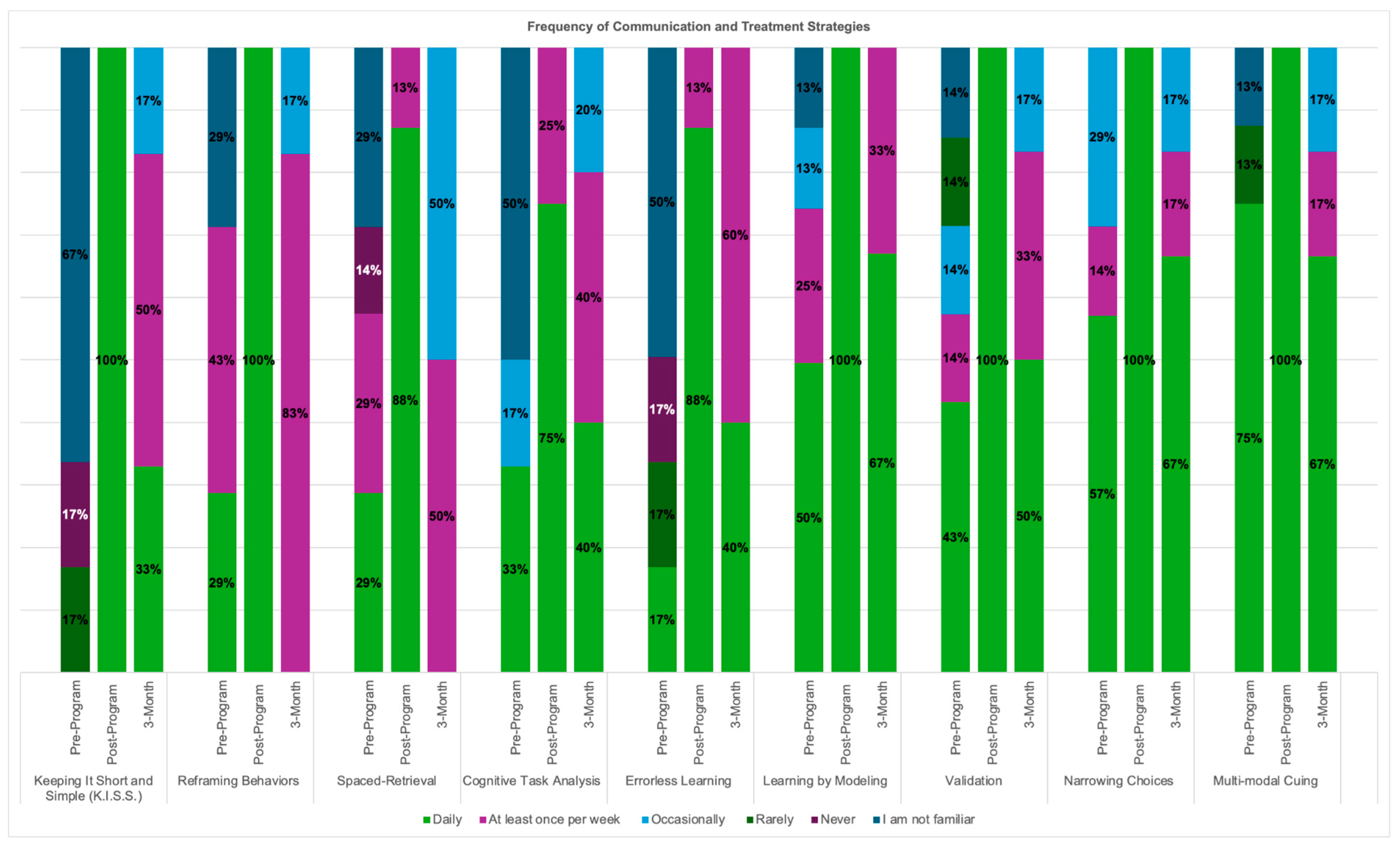
Additional findings showed that despite previous dementia-specific education and certifications, participants were unfamiliar with 9/10 evidence-based dementia care practice patterns which include tailored communication and treatment strategies prior to the LEAD™ training program (Figure 5). The “Keeping it Short and Simple” (K.I.S.S.) strategy is deemed the most unfamiliar with 67% of participants marking “I am not familiar” when asked how often they used this method prior to LEAD™. Following implementation of LEAD™, all attendees showcase planning to include the communication and treatment strategies covered in the program. All responses showcase the intent to implement these practice patterns either “daily” or “at least once a week” with 6/10 strategies at 100% for daily usage and the remaining strategies ranging from 75-88% for intent to use daily.
3.3. 3-Month Follow-Up Measure
Of the 8 attendees at the LEAD™ training program, 6 (75%) responded to the 3-month follow-up survey. A repeated measures ANOVA was conducted to examine whether there were significant differences in confidence in working with people with dementia at time 1, time 2 and time 3 (see Figure 3). The data met assumptions of Mauchly's test of sphericity (p = 0.724) therefore, no adjustments were needed in analyses. There was a significant main effect of time for the CODE overall score F(2,10) = 15.469, p < .001, ηₚ² = 0.756 indicating a very large effect size. Post hoc pairwise comparisons were conducted to investigate whether differences between the means occurred between T1 and T2, or T2 and T3. The comparisons indicated that there was a significant difference between the average score, which was lower at T1 (x̄= 49.67 (9.771)) than T2 (x̄ = 69.17(1.329)), p = 0.015. There was no significant difference between T2 and T3 (x̄ = 63.33 (6.919)), p = 0.296 suggesting sustained improvements in confidence at the 3-month follow-up. Attendees continued to report the frequency of using dementia care practice patterns (see Figure 4) as either “occasionally”, “at least once a week” or “daily” to showcase the use of these evidence-based strategies was sustained throughout the 3-month follow-up. No attendee ever reported “never” using these learned techniques or “I don’t know that method” on the 3-month follow-up survey.
Figure 4.
Confidence in Working with People with Dementia (CODE) mean scores at pre-game, post-program, and 3-month follow up.
Figure 4.
Confidence in Working with People with Dementia (CODE) mean scores at pre-game, post-program, and 3-month follow up.
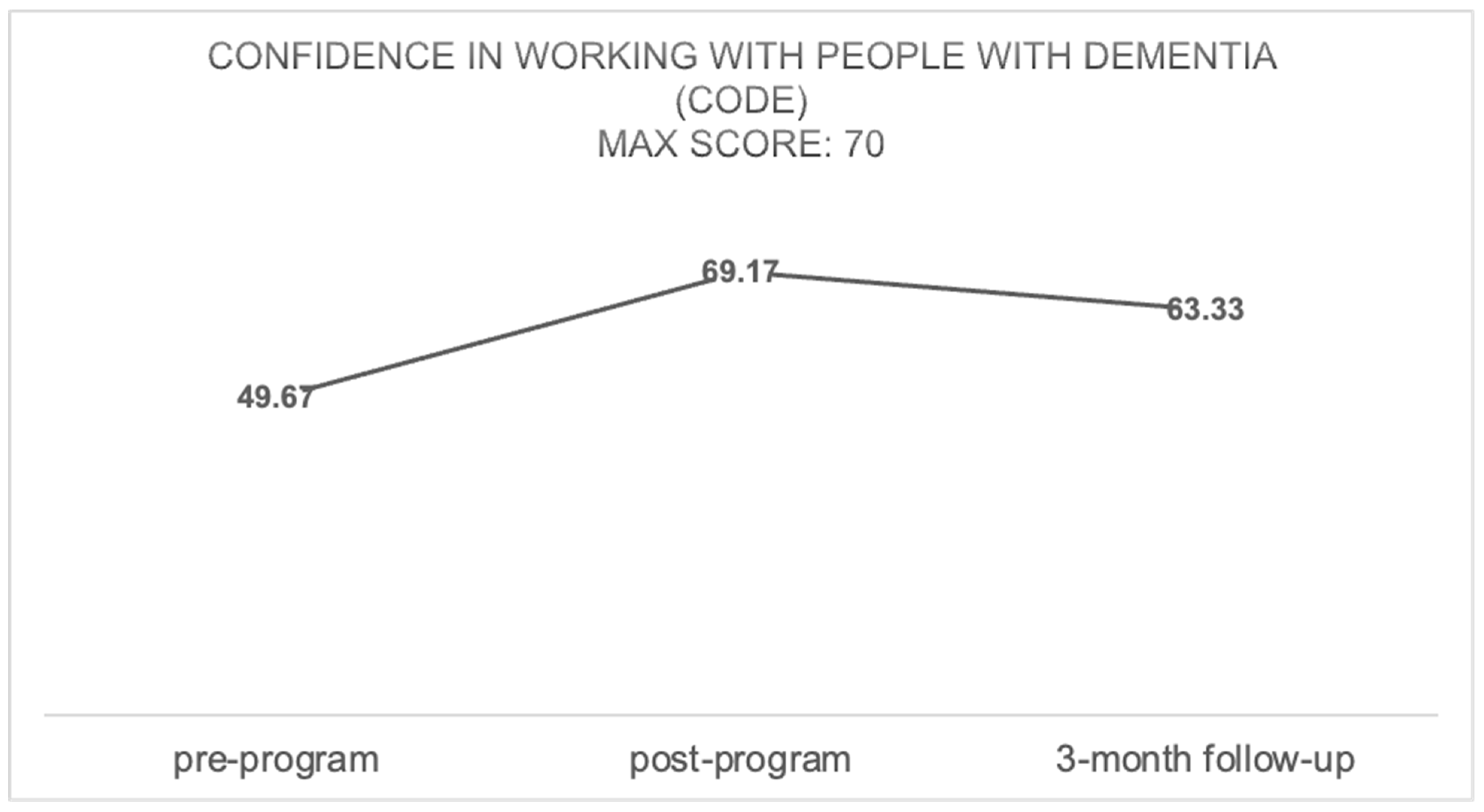
Figure 5.
Frequency of using communication and treatment strategies. Note: Survey question: How often do you use the following communication and treatment strategies? Answers rated using a 5-point Likert scale (0 being "I am not familiar” and 5 being”Daily”).
Figure 5.
Frequency of using communication and treatment strategies. Note: Survey question: How often do you use the following communication and treatment strategies? Answers rated using a 5-point Likert scale (0 being "I am not familiar” and 5 being”Daily”).
4. Discussion
Findings from the LEAD™ training program suggest meaningful improvements in participant confidence and implementation of evidence-based dementia care strategies into daily practice, even though dementia knowledge scores (DKAS) remained relatively stable between pre- and post-testing. The significant gains in practice confidence (p = 0.003) indicate that the LEADTM training program effectively enhanced attendees’ self-efficacy in managing complex situations, communication strategies, and treatment planning for individuals with dementia despite their prior experiences and training in this area. These improvements reflect an important outcome, as confidence is a key precursor to behavior change and clinical skill application. Furthermore, post-program responses demonstrate a strong intention to adopt validated dementia care strategies in daily practice, reflecting meaningful translation of training content into anticipated clinical behavior. The 3-month follow-up responses revealed sustained improvements in confidence at the 3-month follow-up along with daily and weekly use of evidence-based treatment strategies.
No significant change in dementia knowledge as measured by the DKAS was observed following the LEADTM training program. This likely reflects a ceiling effect due to extensive prior experience among participants, including an average of 20 years working with individuals living with dementia, prior dementia-related certifications, and approximately 16 hours of previous training and the fact that the DKAS measures general dementia knowledge. However, these same participants reported low baseline confidence in delivering dementia-specific rehabilitation care and limited familiarity with evidence-based treatment strategies (e.g., KISS, spaced-retrieval, and cognitive task analysis). These findings suggest that existing educational programs, while sufficient for foundational knowledge acquisition, may not adequately address the applied, discipline-specific needs of rehabilitation professionals. In contrast, the LEADTM program was explicitly designed to bridge this gap by translating dementia knowledge into actionable, rehabilitation-focused clinical strategies. The large effect size observed in practice confidence measured by the CODE (η² = .756), along with reported changes in the use of evidence-based interventions, indicates that LEADTM not only enhanced clinician confidence but also meaningfully influenced day-to-day clinical practice. Collectively, these findings underscore the critical need for targeted, rehabilitation-specific dementia education that moves beyond general knowledge to support implementation of skilled, person-centered interventions.
This supports current literature that many current dementia-specific staff training focus on nursing staff and direct service caregivers. While these caregiver-focused programs show benefits in knowledge, confidence, stress reduction, and behavioral outcomes, they do not address the unique therapeutic decision-making, motor learning principles, and functional outcome targets central to rehabilitation practice. This gap leaves rehabilitation professionals without accessible, discipline-specific tools tailored to the demands of their clinical roles. The LEAD™ Framework for Rehabilitation Professionals and its associated training Program have great potential to meet this need as it incorporates all 5 key domains outlined in the e-Delphi study. Rehabilitation professionals demonstrated improved confidence in their ability to manage and treat this complex population and adopted sustained use of evidence-based treatment strategies following their training.
While these results contribute significantly to the current body of literature on dementia training in rehabilitation professionals, the reader should consider a few limitations when interpreting these findings. The sample size was relatively small, which may limit generalizability to broader rehabilitation or interdisciplinary healthcare populations. Participant diversity in professional background and prior experience with dementia care may have contributed to variability in baseline knowledge and confidence levels. Future directions of research in this area should include patient-level outcomes (e.g., transitions in level of care, aging in place versus institutionalization, falls, behaviors) to determine if the LEADTM training program leads to improved outcomes with patients. Additionally, translating the training program to an online learning platform to allow accessibility to a wider population of rehabilitation professionals would be prudent.
In summary, the LEAD™ training program demonstrated meaningful improvements in provider confidence and regular use of evidence-based dementia care strategies in service provision, reinforcing the importance of structured, interdisciplinary education in this area. Although dementia knowledge scores remained stable, the program successfully enhanced attendees’ perceived competence in clinical decision-making, communication, and treatment planning for individuals with dementia. These findings suggest that confidence-building and skill reinforcement may be key mechanisms for translating training into improved patient outcomes. The LEADTM training program directly addresses a long-standing and critical gap in the literature: the near absence of dementia-specific training programs designed for and tested with physical therapists, occupational therapists, and speech-language pathologists. Whereas most existing programs target nurses, aides, or family caregivers, rehabilitation providers are seldom included, despite their central role in restoring function, promoting mobility, and reducing disability for people living with ADRD. By centering the needs, competencies, and practice realities of rehabilitation professionals, this study represents a needed contribution to the dementia care landscape. Moreover, effective dementia rehabilitation requires a collaborative, team-based approach in which PT, OT, and SLP professionals integrate their complementary expertise to optimize patient outcomes.
Funding
no funding to declare.
Acknowledgments
Authors would like to acknowledge the administration and team at Vicar’s Landing in Ponte Vedra, Florida for their hospitality and support of this project.
Conflicts of Interest
Authors have no competing interests to declare.
References
- Annear, M.J.; Toye, C.M.; Eccleston, C.E.; et al. Dementia Knowledge Assessment Scale: Development and Preliminary Psychometric Properties. J. Am. Geriatr. Soc. 2015, 63(11), 2375–2381. [Google Scholar] [CrossRef] [PubMed]
- Bennett, E.E.; Kwan, A.; Gianattasio, K.Z.; Engelman, B.; Dowling, N.M.; Power, M.C. Estimation of dementia prevalence at the local level in the United States. Alzheimers Dement (N Y) Published. 2021, 7(1), e12237. [Google Scholar] [CrossRef] [PubMed]
- Dawson, N.; Judge, K. S.; Trapuzzano, A. *Knowledge gains and intent to change practice patterns after the Leveraging Existing Abilities in Dementia (LEAD)™ Training Program*. *Dementia 2019, 0*(0), 1–12. [Google Scholar] [CrossRef] [PubMed]
- Duarte, N.; Alves, S.; Gomes, B. Evaluation of a Dementia Training Course for Staff of a Center of Dementia Care. Dement Geriatr. Cogn. Disord. 2023, 52(4), 205–213. [Google Scholar] [CrossRef] [PubMed] [PubMed Central]
- Eggenberger, E.; Heimerl, K.; Bennett, M.I. Communication skills training in dementia care: a systematic review of effectiveness, training content, and didactic methods in different care settings. Int. Psychogeriatr. 2013, 25(3), 345–358. [Google Scholar] [CrossRef] [PubMed]
- Elvish, R.; Burrow, S.; Cawley, R.; et al. 'Getting to Know Me': The second phase roll-out of a staff training programme for supporting people with dementia in general hospitals. Dementia 2018, 17(1), 96–109. [Google Scholar] [CrossRef] [PubMed]
- Foley, T.; Sheehan, C.; Jennings, A.A.; O'Sullivan, T. A qualitative study of the dementia-care experiences and educational needs of physiotherapists in the Republic of Ireland. Physiotherapy 2020, 107, 267–274. [Google Scholar] [CrossRef] [PubMed]
- Karlin, B.; Visnic, S.; Mcgee, J.; Teri, L. STAR-VA Online First. Published online September 20, 2013.
- Lewis, M.L.; Hobday, J.V.; Hepburn, K.W. Internet-Based Program for Dementia Caregivers. Am. J. Alzheimers Dis. Other Demen 2010, 25(8), 674–679. [Google Scholar] [CrossRef] [PubMed]
- Lorio, A.K.; Gore, J.B.; Warthen, L.; Housley, S.N.; Burgess, E.O. Teaching dementia care to physical therapy doctoral students: A multimodal experiential learning approach. Gerontol. Geriatr. Educ. 2017, 38(3), 313–324. [Google Scholar] [CrossRef] [PubMed]
- National Institute on Aging. (n.d.). What is dementia?. Retrieved June 15, 2025, from [https://www.nia.nih.gov/health/what-dementia](https://www.nia.nih.gov/health/what-dementia).
- Omaña, H.; Twum-Ampofo, W.; Nascimento, L. R. Research among people living with dementia or mild cognitive impairment in physiotherapy journals: A scoping review. In Journal of Geriatric Physical Therap; Advance online publication, 2025. [Google Scholar] [CrossRef]
- Pleasant, M.L.; Molinari, V.; Hobday, J.V.; Fazio, S.; Cullen, N.; Hyer, K. An evaluation of the CARES® Dementia Basics Program among caregivers. Int. Psychogeriatr. 2017, 29(1), 45–56. [Google Scholar] [CrossRef] [PubMed]
- Taylor, M.E.; Sverdrup, K.; Ries, J.; et al. A core capability framework for physiotherapists to deliver quality care when working with people living with dementia and their families/caregivers: an international modified e-Delphi study. Physiotherapy. [CrossRef] [PubMed]
- White, L.W.; Dawson, N.; Saale, B.P.; Lemley, T. Physical Therapists' and Physical Therapist Students' Experiences and Views on the Provision of Physical Therapy Services to People With Dementia: A Scoping Review. J. Geriatr. Phys. Ther. 2022, 46(3), 174–182. [Google Scholar] [CrossRef] [PubMed]
Figure 1.
Leveraging Existing Abilities in DementiaTM Rehabilitation Framework showcasing the three C’s; Communication, Cognition, and Coping with corresponding strategies.
Figure 1.
Leveraging Existing Abilities in DementiaTM Rehabilitation Framework showcasing the three C’s; Communication, Cognition, and Coping with corresponding strategies.
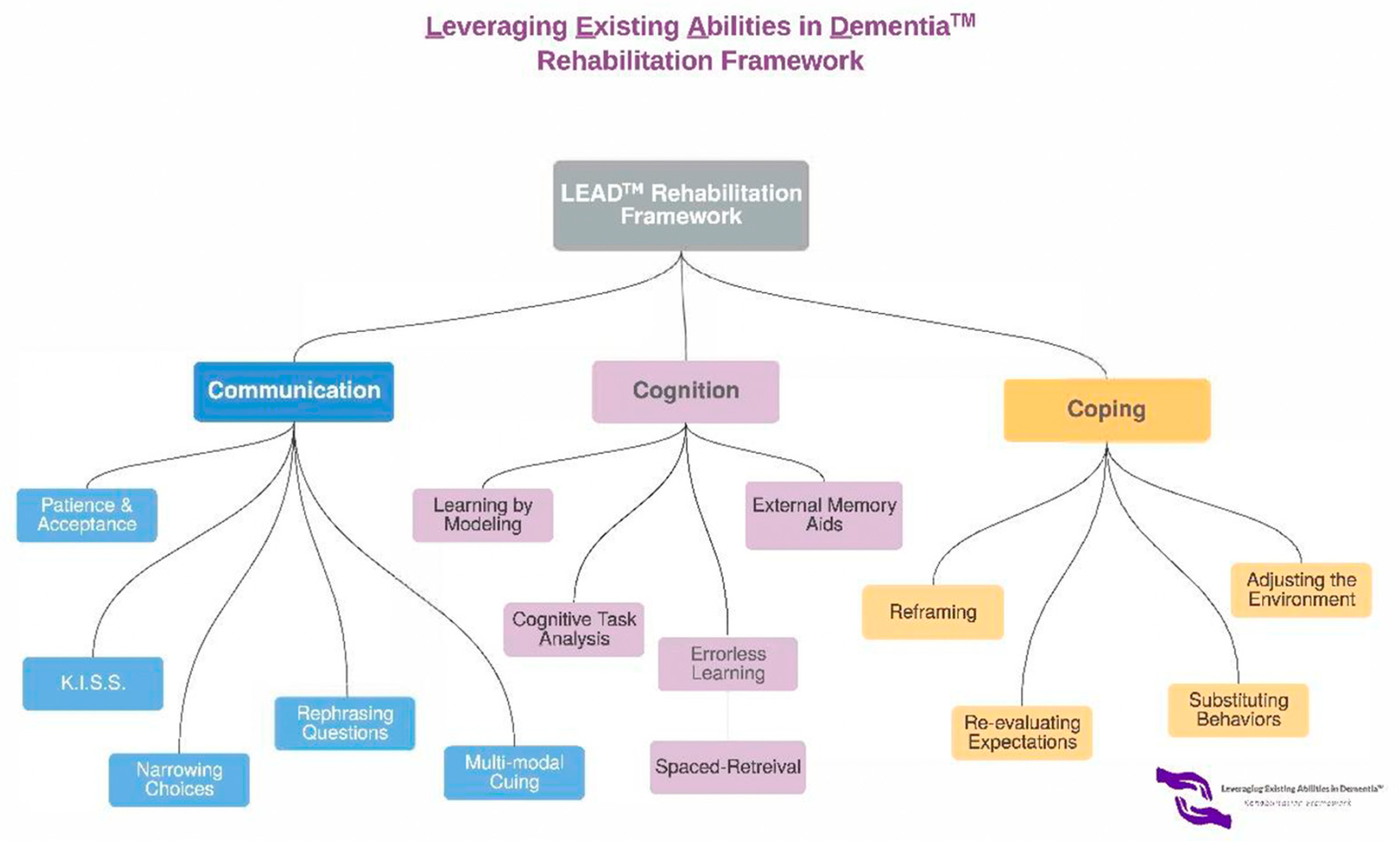
Figure 2.
Dementia Knowledge Assessment Scale (DKAS), pre-program and post-program mean scores.
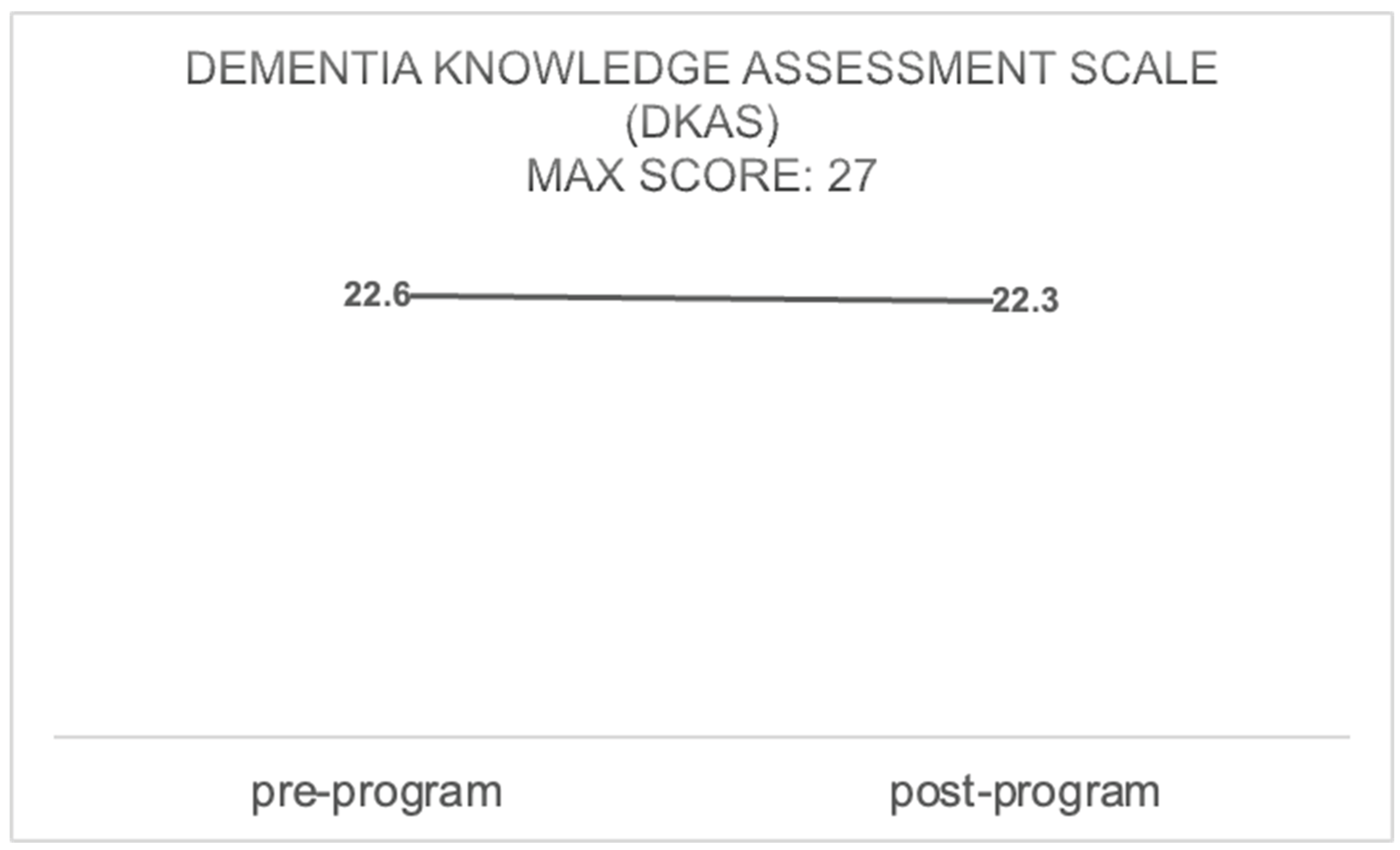
Figure 3.
Immediate post-program confidence levels handling clinical situations. Note: Survey question: How confident are you in the following situations? Answers rated using a 5-point Likert scale (1 being “Feel Less Confident” and 5 being “Definitely More Confident).
Figure 3.
Immediate post-program confidence levels handling clinical situations. Note: Survey question: How confident are you in the following situations? Answers rated using a 5-point Likert scale (1 being “Feel Less Confident” and 5 being “Definitely More Confident).
Disclaimer/Publisher’s Note: The statements, opinions and data contained in all publications are solely those of the individual author(s) and contributor(s) and not of MDPI and/or the editor(s). MDPI and/or the editor(s) disclaim responsibility for any injury to people or property resulting from any ideas, methods, instructions or products referred to in the content. |
© 2026 by the authors. Licensee MDPI, Basel, Switzerland. This article is an open access article distributed under the terms and conditions of the Creative Commons Attribution (CC BY) license (http://creativecommons.org/licenses/by/4.0/).
Copyright: This open access article is published under a Creative Commons CC BY 4.0 license, which permit the free download, distribution, and reuse, provided that the author and preprint are cited in any reuse.


