

Submitted:
26 May 2026
Posted:
28 May 2026
You are already at the latest version
Abstract
Forecasting is a process that must be accurate, reliable, and fast, if it is applied on a sort-term or on-line basis. It plays a significant role in decision-making, enabling the overcoming of economic and operational problems. Traditional methods are proven effective when applied to linear or stationary assumptions. However, recent challenges are non-linear, high-dimensional and include more noise, requiring more complex methods. In order to overcome such a complexity, a hybrid approach, combining the Multimodel Partitioning Filter (MMPF) and a Genetic Algorithm for Resource Allocation (GARA), will be presented. The method aims to refine the initial probabilities (weights) provided by the MMPF through an iterative, fitness-driven search for optimal weight values. The comparison will be made between the proposed method and one previously presented that combined MMPF with Support Vector Machines (SVM).
Keywords:
equivalent salt deposit density (ESDD)
; multi-model partitioning filter (MMPF)
; genetic algorithm for resource allocation (GARA)
; adaptive forecasting
; electricity load prediction
; real data analysis
; mean absolute percentage error (MAPE)
I. Introduction
Forecasting plays an important role in power systems, supporting tasks such as predictive maintenance, energy planning, and system reliability assurance. The ability to assess the system’s behavior can significantly reduce operational costs and prevent failures.
Accurate forecasts are often based on historical measurements in order to enable optimal scheduling and dispatch. Prediction accuracy is critical, and considering the case where the available data is typically nonlinear, noisy, and time-dependent, the proposed forecasting methods must be both adaptive and robust.
Recent research has moved from conventional deterministic models to hybrid and ensemble approaches. One adaptive approach is the Multi-Model Partitioning Filter (MMPF), which combines the outputs of several Kalman Filters (typically ten), calculating dynamically updated performance-based weights. MMPF has been successfully applied in diverse applications, leveraging its ability to track model accuracy over time and to produce reliable ensemble outputs even in the presence of uncertainty [1,2,3,4,5].
Despite its good performance, MMPF’s procedure may overlook hidden patterns or nonlinearities. To overcome this limitation, this study proposes a hybrid extension in which the model weighting process is further refined using a Genetic Algorithm for Resource Allocation (GARA). The aim is to enhance prediction accuracy by searching for an improved set of model weights starting from the MMPF-based initialization.
The performance of the proposed MMPF+GARA approach is evaluated and compared against a previously established configuration that combines MMPF with a Support Vector Machine (SVM) as a post-processor, successfully applied in various problems [6,7,8]. The comparative analysis focuses on the predictive performance of the two approaches under real-world scenarios. The first one is the prediction of the equivalent salt deposit density of medium voltage insulators, a problem where the algorithm can be used offline. The second application is the electric load forecasting of the Hellenic Grid.
II. Method Presentantion
A. MMPF+ EKF
The structure of the MMPF with Extended Kalman Filters applied in this work follows the architecture analytically described and validated in [9]. As illustrated in Figure 1, each MMPF implements a bank of Extended Kalman Filters (EKF), typically ten, depending on the application and model complexity.
During each iteration, the MMPF assigns posterior probabilities to the models. As the process evolves, the probability of the best model approaches one, while the probabilities of the remaining models converge toward zero. The overall system estimate may then be derived either from the single model with the maximum posterior probability (MAP estimate) or from a weighted sum of all model outputs. In this work, the weighted estimate is selected.
A notable advantage of the MMPF configuration is that each EKF is executed separately, enabling full parallelization of the filter bank, drastically reducing computational time, especially in real-time applications or when high-dimensional state spaces are involved [10].
The optimal Minimum Mean Square Error (MMSE) estimate of y(k) is given by:
The probabilities are calculated online in a recursive manner as follows:
where,
and is given by the Extended Kalman filter equations.
Increasing the number of EKFs generally enhances the prediction accuracy but also raises the computational cost. Since this study focuses on off line forecasting, a value of M=10 EKFs was selected in (1), as a compromise that improves accuracy while preventing an excessive computational burden.
B. MMPF + SVM
This hybrid method is analytically presented in [6] The output of this hybrid model is the sum of the linear output (k) produced by the MMPF and the non-linear one (k) calculated by the SVM. Actually the SVM models the residuals of the MMPF and give a refined prediction. Figure 2 depicts this architecture.
where,
is the MMPF estimation error at any time interval k.
The residuals modelling by SVM is given by
where f is nonlinear and Δk is random error. The final output is given by
ek = f(ek-1,…ek-n) + Δk
C. MMPF + GARA
The proposed approach is depicted in Figure 3.
The term wMMPF refers to a probabilistic weight vector containing the individual probabilities p(θ1/k) …. p(θM/k), assigned by the Multi-Model Partitioning Filter (MMPF) to each candidate model, given the current data. At this point we should bear in mind that =1.
In order to refine the forecast and overcome any data non- linearities GARA is used to search for an improved weight vector in the local vicinity of the MMPF solution.
D. Chromosome Initialization
Each chromosome in the GARA population represents a candidate vector of model weights:
with = 1, and [0,1].
The number of chromosomes in the population is denoted by P. The initialization process is designed to explore a local neighborhood around the MMPF solution, while maintaining diversity.
The first chromosome is initialized directly using the vector of posterior probabilities estimated by the MMPF:
w1 = wMMPF = [p(θ1/k) …. p(θM/k)]
The remaining P−1 chromosomes are initialized by applying small random perturbations around wMMPF Specifically a uniformly sampled deviation δi ∼ Uniform (−δ,δ) is added as follows:
After every iteration the vector is re-normalized so that = 1.
At this point it should be noted that the value of δ is important for the overall estimation. A value that is too small leads to chromosomes very close or identical to the ones produced by the MMPF, limiting the exploration. On the other hand, if the value is too large, the population diverges significantly from the MMPF values, behaving like a random initialization. In this work the value of δ chosen was δ = 0.05, corresponding to a ±5% deviation around each MMPF weight. This localized initialization strategy leverages the statistically informed solution of the MMPF, while maintaining sufficient diversity in the initial population to facilitate effective search by the genetic algorithm.
E. Fitness Evaluation
The fitness of each chromosome is based on the prediction error produced by the corresponding weights. Given a candidate vector w(j), the forecast is calculated as:
The Root Mean Square Error (RMSE) between the predicted and the actual value xk is computed as:
This formulation ensures that chromosomes producing lower prediction errors are assigned higher fitness values. The use of the negative RMSE, was chosen over its reciprocal, because it avoids numerical instability in case of value zero or very close to zero. This enables smooth, continuous fitness that facilitates convergence.
F. Selection Procedure
Parent selection is implemented using the roulette wheel method, based on the fitness values. Since the fitness values are negative, a linear transformation is applied to ensure non-negative selection probabilities:
where , and
The probabilities Pj define the likelihood of each chromosome being selected for crossover.
G. Mutation Operator
Selected parent chromosomes are recombined using an arithmetic crossover scheme. Given two parent vectors w(p1) and w(p2), an offspring is generated as follows:
where α ∼Uniform(0,1).
woffspring = α ∙ w(p1) + (1-α) ∙ w(p2)
After crossover, the offspring vector is normalized to maintain valid probabilistic constraints such as
where [0,1]
H. Final Forecast
After an appropriate number of evolutions, the chromosome with the highest fitness is selected as
wbest = argmax(j) Fitness(j).
The final GARA optimized forecast is given by
This output represents the refined prediction, starting from the statistically derived MMPF weights and enhanced through evolutionary searchparent chromosomes
III. Results
A. ESDD Prediction
The Equivalent Salt Deposit Density (ESDD) is used as the key indicator of insulator contamination and serves as the main criterion for planning maintenance actions, particularly the cleaning or washing of medium-voltage insulators. ESSD remains one of the leading causes of surface flashovers on insulators, often leading to power outages and service disruptions in distribution networks [11,12,13]. To improve the prediction of ESDD and support proactive maintenance strategies, the two presented strategies developed are being compared.
This research is grounded in operational data, collected from the Hellenic Electricity Distribution Network Operator S.A. from 2020 to 2024. This dataset enabled accurate modeling and training of both prediction techniques, and it formed the basis for validating the predicted ESDD values against actual field measurements. Although traditional ESDD measurements are costly and time-consuming, they remain the most widely used standard for diagnosing pollution severity.
The results of this paper show that both techniques successfully predicted ESDD values with high accuracy when tested against real measured data. These findings underline the practical value of using actual field data in model development.
Figure 4 shows that both methods successfully estimated the ESSD values. The available dataset covers a period of four consecutive years, offering a thorough view of ESDD variations under real environmental and operating conditions. The data from the first three years are used for the training and modeling of the proposed methods, while the fourth year is utilized for evaluation. The prediction task involves estimating the average ESDD value across the samples for the fourth year. To assess the accuracy of the predictions, the Mean Absolute Percentage Error (MAPE) is employed, because it expresses the prediction error as a percentage relative to the actual measured values, allowing for a scale-independent comparison and easy interpretability.
The MAPE is calculated as
where Ai is the actual value, Pi is the predicted value and n is the total number of samples. The MAPE for MMPF+GARA was 3.2% and for MMPF+SVM was 4.1%. The outcomes are close, but the proposed method performs better (improvement of 21.9%) in terms of MAPE.
B. Electric Load Prediction
In this study, the electricity demand load was categorized into two distinct behavioral patterns: weekdays (normal working days) and weekends, acknowledging the inherent differences in consumption across the week, [14,15]. Unlike traditional approaches that require prior modeling assumptions or the removal of seasonal components, the proposed algorithms were trained and validated directly on the raw data, without any seasonal preprocessing. This approach allows the models to capture the underlying periodicity in the data and evaluate performance in a more realistic and operationally relevant setting. The study was based on real data for the year 2024 provided by the Independent Power Transmission Operator.
Figure 5, Figure 6, Figure 7, Figure 8, Figure 9, Figure 10, Figure 11 and Figure 12 depict the performance of the proposed method MMPF+GARA in comparison with MMPF+SVM.
Figure 5 and Figure 6 depict that both methods effectively predict the weekday electricity load. However, the MMPF+GARA approach presents lower prediction error, with values ranging from 0.201% to 1.876%, with an average value of 0.92%, compared to MMPF+SVM which presents 0.413% to 2.376% (Figure 6), with an average value of 1.24%. Although the absolute reduction is 0.32% and seems small, the relative improvement is 26%, which shows that the proposed method is more accurate.
At this stage, a variation of the method was also tested. A comparison was conducted between MMPF+GARA using 8 Extended Kalman Filters (EKFs) and MMPF+SVM using 10 EKFs. The results show that MMPF+GARA, although utilizing fewer EKFs, achieved performance comparable to MMPF+SVM. This finding is particularly important, as using fewer filters means reduced computational load and shorter execution time, which are critical factors for short-term prediction applications.
The same procedure was applied to estimate the electric load during the weekend period (Saturday–Sunday). As in the previous case, the MMPF+GARA method demonstrated superior performance compared to MMPF+SVM when both techniques were implemented using 10 Extended Kalman Filters (EKFs). Additionally, even when MMPF+GARA implemented 8 EKFs, still matched the performance of MMPF+SVM using 10 EKFs. This further reinforces the advantage of the MMPF+GARA in terms of computational burden.
For the weekday load prediction, compared to MMPF+SVM, which implements ten filters and has an average error of 1.24%, the MMPF+GARA approach achieves a superior performance with just eight filters and a lower error of 1.16%. This corresponds to a 6.5% relative improvement, indicating better performance with reduced complexity (Figure 8).
Under identical filter configurations for weekend predictions, MMPF+GARA achieves a lower average error, 1.24% compared to MMPF+SVM with 1.32%, resulting in a 6.06% relative improvement. This indicates better adaptability of the proposed method in cases with limited data (Figure 10).
Despite using two fewer filters, MMPF+GARA achieves a lower weekend average prediction error of 1.25% compared to MMPF+SVM which is 1.32%. This shows an improvement of 5.30%. The performance is also nearly identical to the proposed method’s ten-filter setup, only 0.01% higher, which underlines the method’s efficiency even under constrained conditions (Figure 12). Table 1 tabulates the above results.
The results highlight the versatility of AI-based approaches, which are increasingly applied not only in power systems but also in domains such as e-commerce and wireless sensor networks [16].
IV. Conclusions
This study presented and evaluated a new hybrid forecasting method that combines the Multi-Model Partitioning Filter (MMPF) with a Genetic Algorithm for Resource Allocation (GARA). The task was to enhance the predictive performance while reducing the computational complexity. The proposed MMPF+GARA approach was assessed against an established MMPF+SVM configuration using real data for two applications, namely the prediction of the Equivalent Salt Deposit Density (ESDD) of medium-voltage insulators and the short-term forecasting of electricity demand. In both cases, the proposed method achieved comparable or superior prediction accuracy, as measured by the Mean Absolute Percentage Error (MAPE). Additionally, demonstrated the ability to perform equally well using fewer Extended Kalman Filters (EKFs). This reduction in computational load is very important for real-time or short-term forecasting scenarios, where speed and efficiency are critical. Future research could also explore deep learning approaches, such as Bidirectional LSTM networks [17], which have recently shown promising results in load prediction tasks.
Contribution of Individual Authors to the Creation of a Scientific Article (Ghostwriting Policy)
The authors equally contributed in the present research, at all stages from the formulation of the problem to the final findings and solution.
Funding
No funding was received for conducting this study.
References
- Moussas; Katsikas, S. K. “A Multi-Model Approach to Fatigue Crack Growth Monitoring and Prediction”. In IWSSIP’05, the 12th International Workshop on Systems, Signals & Image Processing”; Chalkida, Greece, 22-24 September 2005; pp. 57–61. ISBN 0907776205. [Google Scholar]
- Katsikas, S. K.; Leros, A. K.; Lainiotis, D. G. Passive tracking of a maneuvering target: an adaptive approach. IEEE Trans. Signal Process. 1994, vol. 42(no. 7), 1820–1825. [Google Scholar] [CrossRef]
- Moussas; Likothanassis, S. D.; Katsikas, S. K.; Leros, A. K. “Adaptive On-Line Multiple Source Detection”. ICASSP’05, IEEE International Conference on Acoustics, Speech and Signal Processing, Philadelphia Pennsylvania (PA), USA, March 18-23, 2005; Vol. 4, pp. 1029–1032. [Google Scholar]
- Lainiotis, D.G.; Katsikas, S.K.; Likothanassis, S.D. “Optimal seismic deconvolution”. In Signal Processing; 1988; Volume 15, Issue 4, pp. 375–404. ISSN 0165-1684. [Google Scholar] [CrossRef]
- Pappas, S. Sp.; Ekonomou, L.; Karamousantas, D. Ch.; Chatzarakis, G. E.; Katsikas, S. K.; Liatsis, P. Electricity demand loads modeling using autoregressive moving average (ARMA) models. Energy 2008, vol. 33(no. 9), 1353–1360. [Google Scholar] [CrossRef]
- Pappas, S. Sp.; Karamousantas, D. Ch.; Chatzarakis, G. E. A new hybrid forecasting strategy applied to mean hourly wind speed time series. J. Wind Energy 2014, vol. 2014. [Google Scholar] [CrossRef]
- Pappas, S. Sp. Application and comparison of evolutionary techniques for forecasting the Hellenic grid electricity load. Int. J. Power Energy Res. 2017, 139–149. [Google Scholar] [CrossRef]
- Pappas, S. Sp. Adaptive forecasting techniques applied to short time wind speed forecasting. Proc. Int. Conf. Control, Artif. Intell., Robot. Optim. (ICCAIRO), Majorca Island, Spain, 2019; pp. 121–128. [Google Scholar]
- Pappas, S. Sp.; Ekonomou, L.; Karampelas, P.; Karamousantas, D. C.; Katsikas, S. K.; Chatzarakis, G. E.; Skafidas, P. D. Electricity demand load forecasting of the Hellenic power system using an ARMA model. Electr. Power Syst. Res. 2010, vol. 80(no. 3), 256–266. [Google Scholar] [CrossRef]
- Beligiannis, G.; Skarlas, L.; Likothanassis, S. A generic applied evolutionary hybrid technique. IEEE Signal Process. Mag. 2004, vol. 21(no. 3), 28–38. [Google Scholar] [CrossRef]
- Ahmad, S.; Ghosh, P. S.; Ahmed, S. S.; Aljunid, S. A. K. Assessment of ESDD on high-voltage insulators using artificial neural network. Electr. Power Syst. Res. 2004, vol. 72(no. 2), 131–136. [Google Scholar] [CrossRef]
- Zhang, et al. Research on the prediction method of porcelain insulator pollution degree based on electric field monitoring. Electr. Power Syst. Res. 2024, vol. 233, Art.(no. 110488). [Google Scholar] [CrossRef]
- Salam, M. A.; Al-Alawi, S. M.; Maqrashi, A. A. Prediction of equivalent salt deposit density of contaminated glass plates using artificial neural networks. J. Electrostat. 2008, vol. 66(nos. 9–10), 526–530. [Google Scholar] [CrossRef]
- Yu, W.; Hsu, C. H.; Yang, S. M. A Model Integrating ARIMA and ANN with Seasonal and Periodic Characteristics for Forecasting Electricity Load Dynamics in a State. 2019 IEEE 6th International Conference on Energy Smart Systems (ESS), Kyiv, Ukraine, 2019; pp. 19–24. [Google Scholar] [CrossRef]
- Silfiani, M.; Aprillia, H.; Fitriani, Y. Comparing Various Combined Techniques at Seasonal Autoregressive Integrated Moving Average (SARIMA) for Electrical Load Forecasting. 2023 International Seminar on Intelligent Technology and Its Applications (ISITIA), Surabaya, Indonesia, 2023; pp. 376–381. [Google Scholar] [CrossRef]
- Basingab, M. S.; et al. AI-based decision support system optimizing wireless sensor networks for consumer electronics in e-commerce. Appl. Sci. 2024, vol. 14(no. 12, Art. no. 4960). [Google Scholar] [CrossRef]
- Pavlatos, C.; Makris, E.; Fotis, G.; Vita, V.; Mladenov, V. Enhancing electrical load prediction using a bidirectional LSTM neural network. Electronics 2023, vol. 12(no. 22, Art. no. 4652). [Google Scholar] [CrossRef]
Figure 1.
MMPF+EKF block diagram. Each EKF implements an ARMA model.
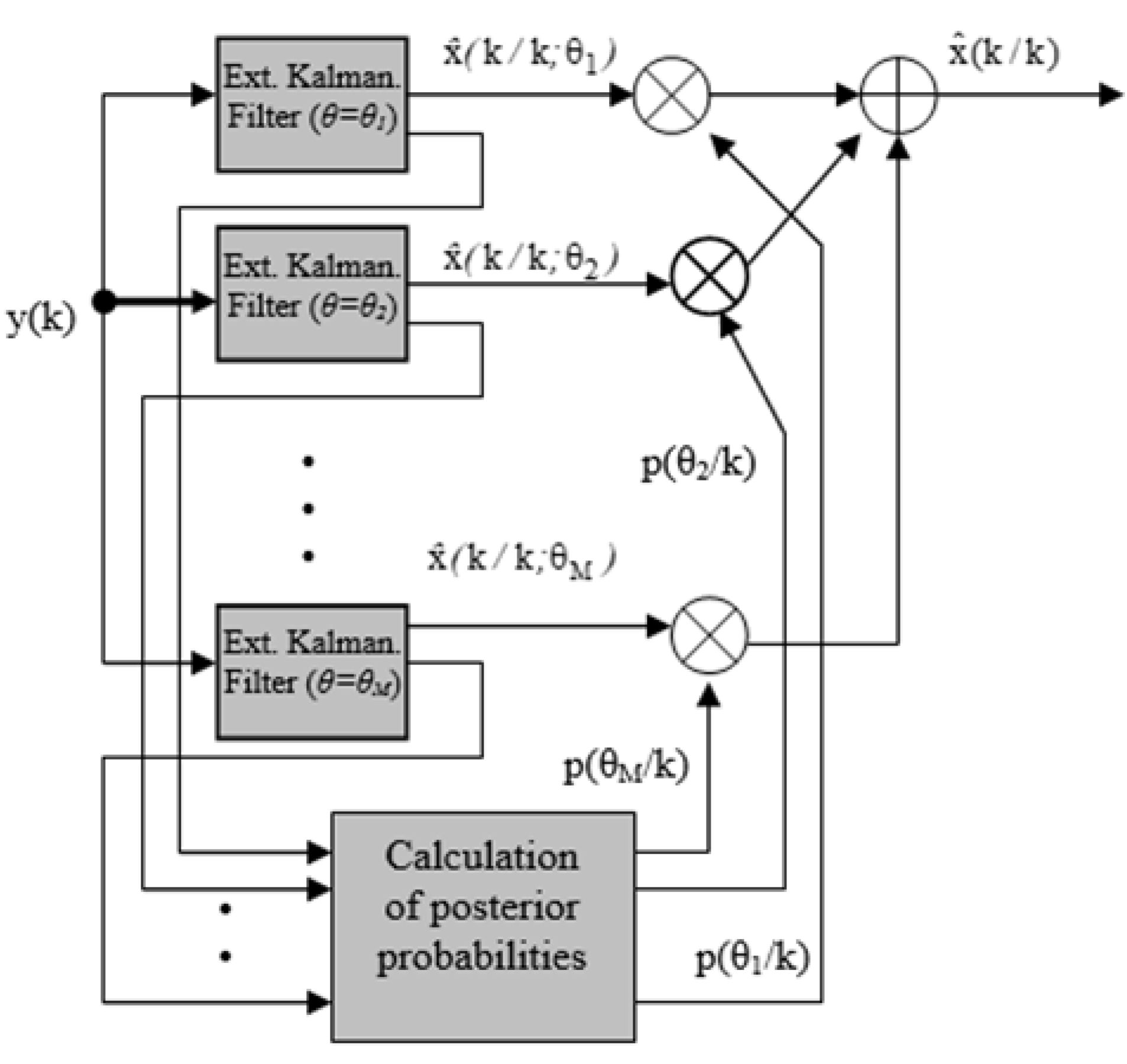
Figure 2.
MMPF+SVM block diagram.
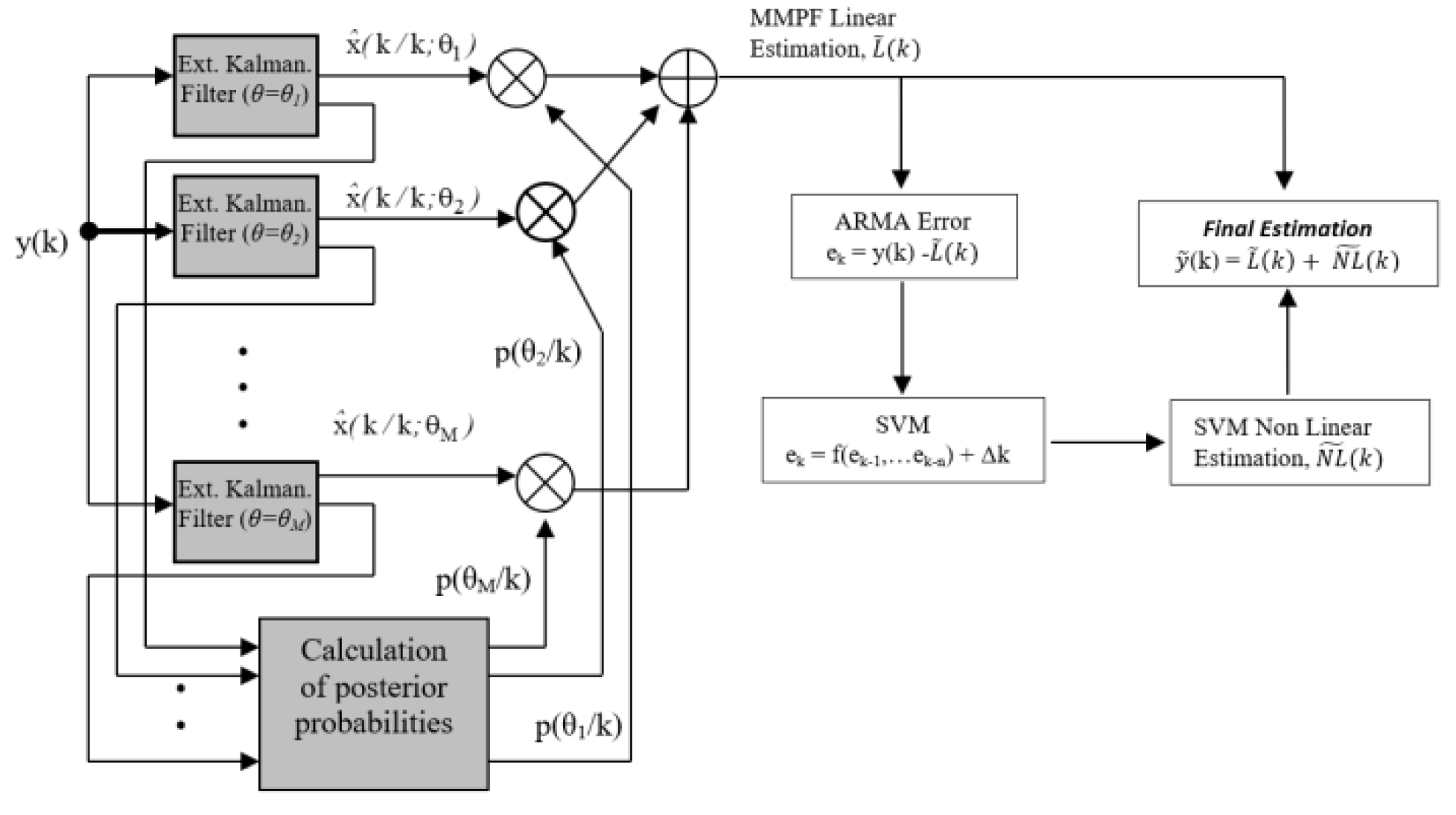
Figure 3.
MMPF+GARA block diagram.The MMPF output , form now on MMPF, serves as the reference solution, and the corresponding weight vector wMMPF is used as the center of the search space in the next stage.
Figure 3.
MMPF+GARA block diagram.The MMPF output , form now on MMPF, serves as the reference solution, and the corresponding weight vector wMMPF is used as the center of the search space in the next stage.
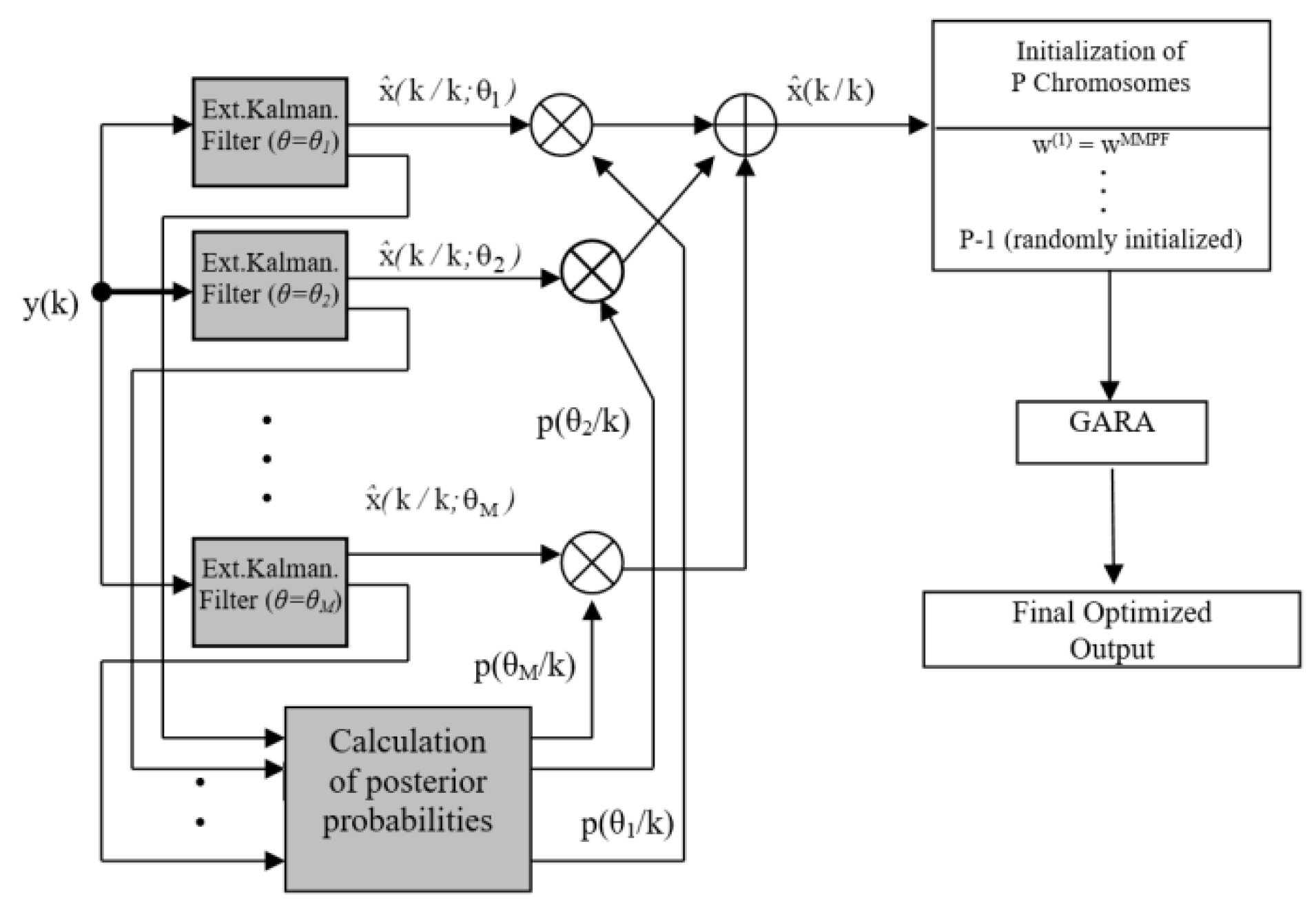
Figure 4.
ESDD actual and predicted values.
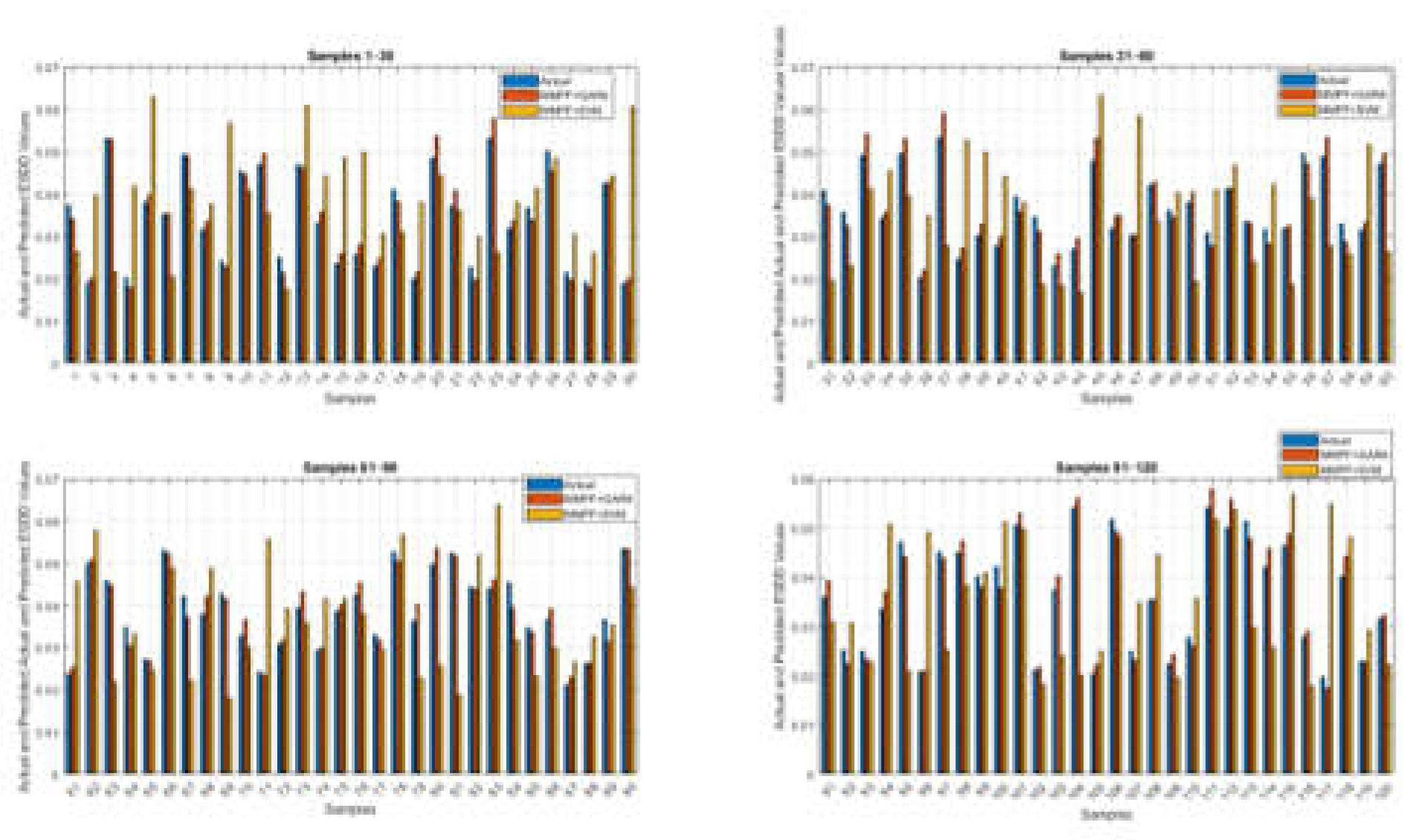
Figure 5.
Actual and Predicted Values for Weekdays (Monday-Friday). Both methods utilize 10 EKF’s.
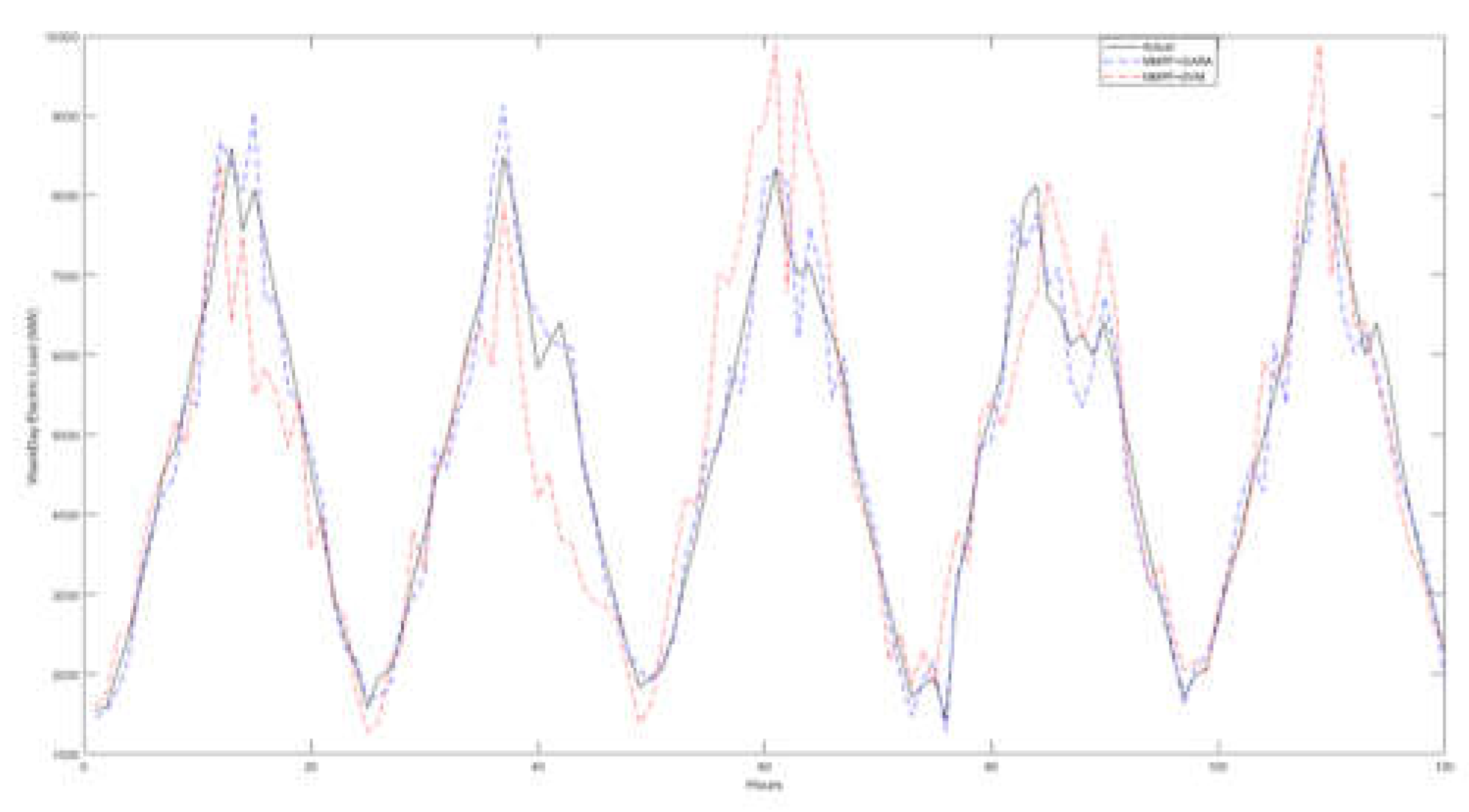
Figure 6.
Weekday Prediction Errors. Both methods utilize 10 EKF’s.
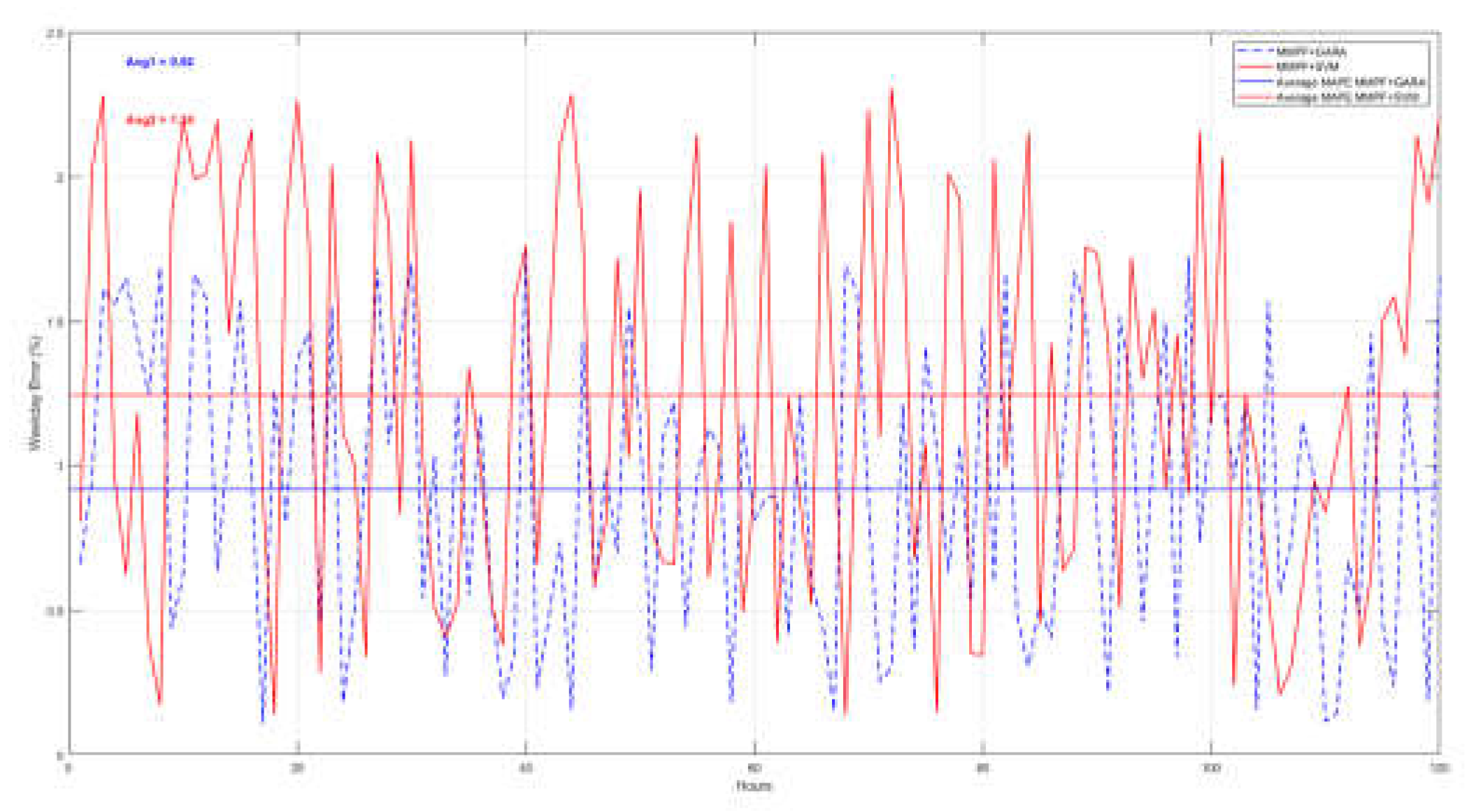
Figure 7.
Actual and Predicted Values for Weekdays (Monday-Friday). MMPF+GARA implements 8 EKF’s, while MMPF+SVM 10 EKF’s.
Figure 7.
Actual and Predicted Values for Weekdays (Monday-Friday). MMPF+GARA implements 8 EKF’s, while MMPF+SVM 10 EKF’s.
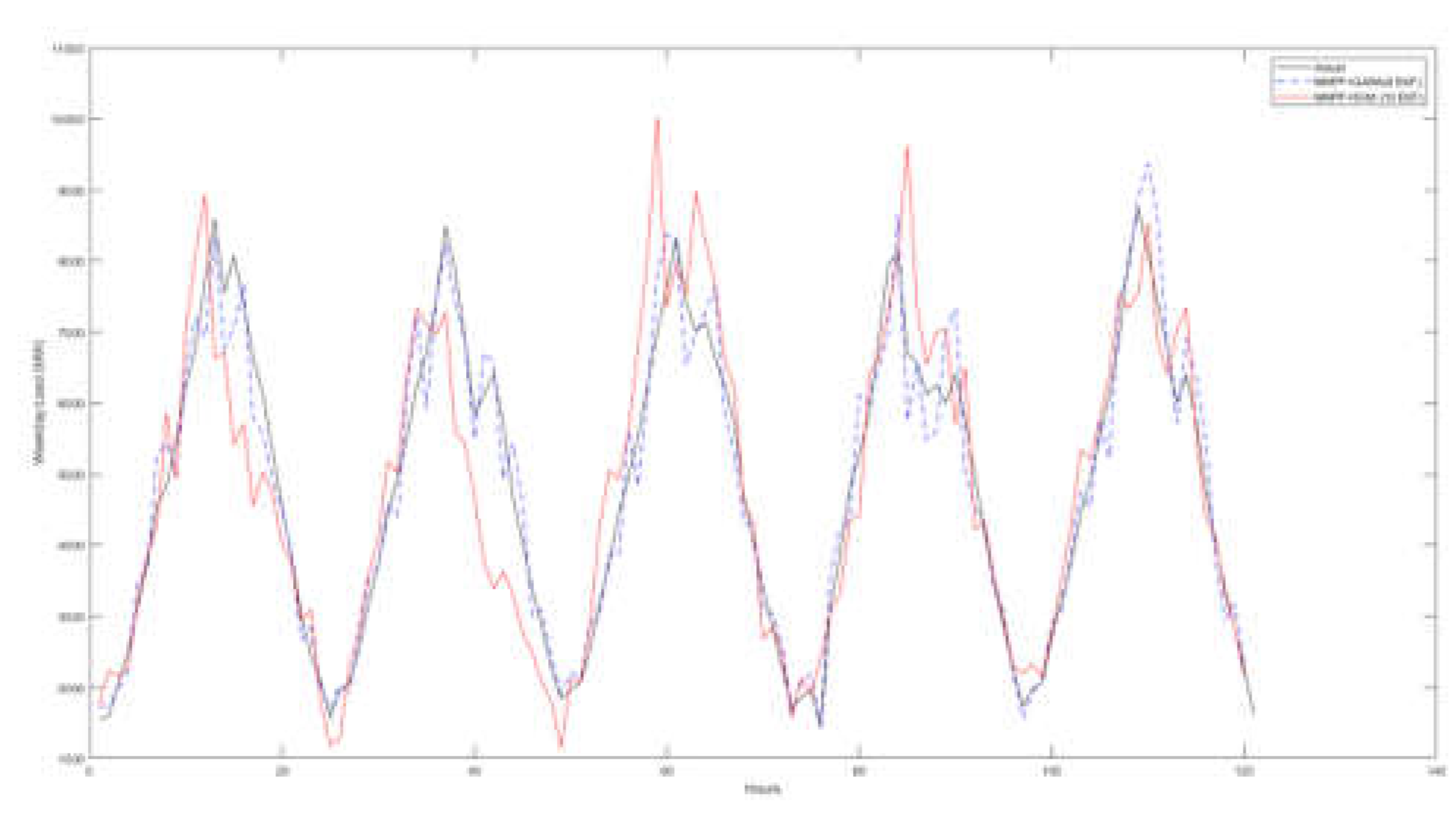
Figure 8.
Weekday Prediction Error. MMPF+GARA implements 8 EKF’s, while MMPF+SVM 10 EKF’s.
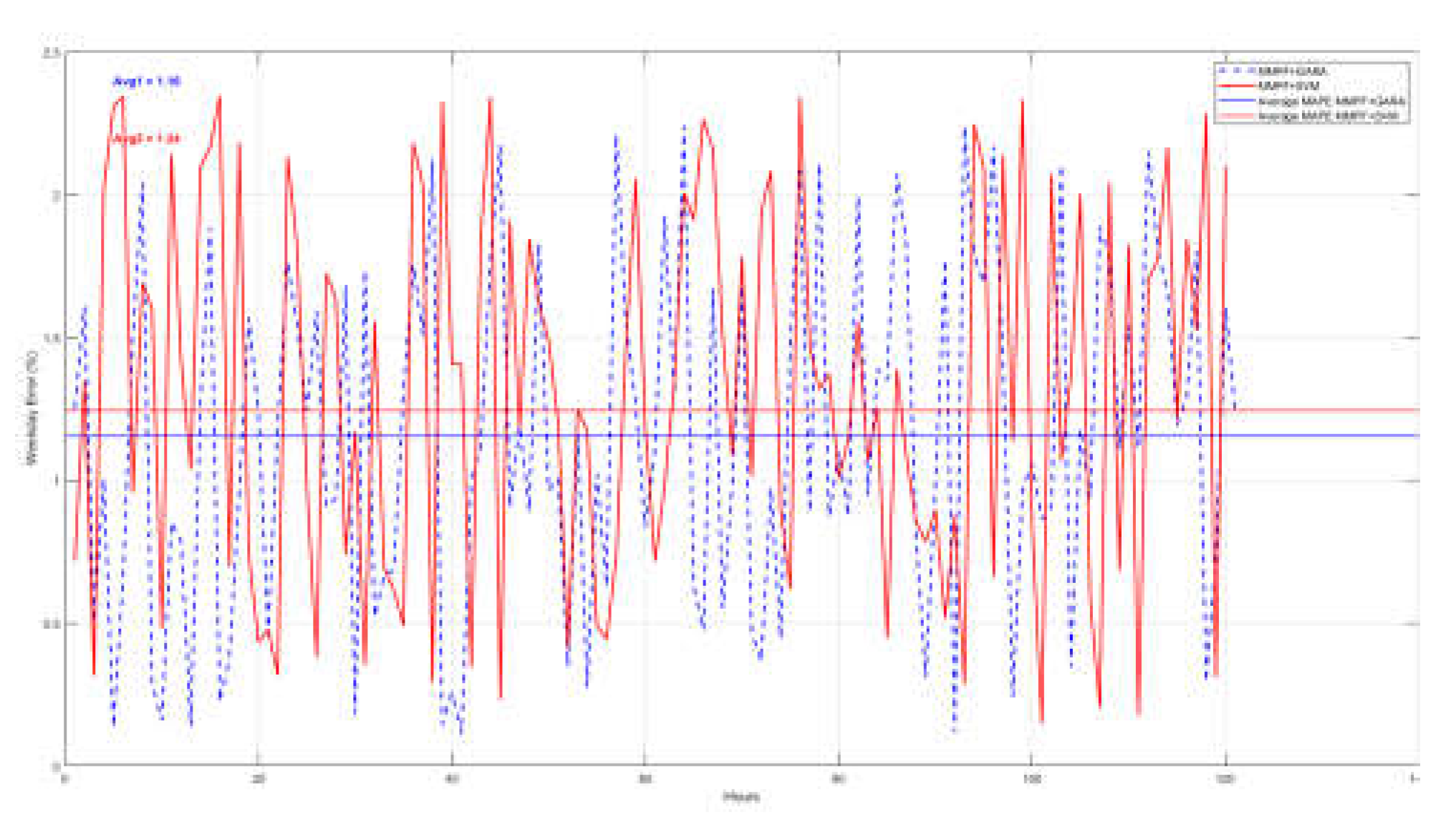
Figure 9.
Actual and Predicted Values for Weekend (Saturday-Sunday). Both methods utilize 10 EKF’s.
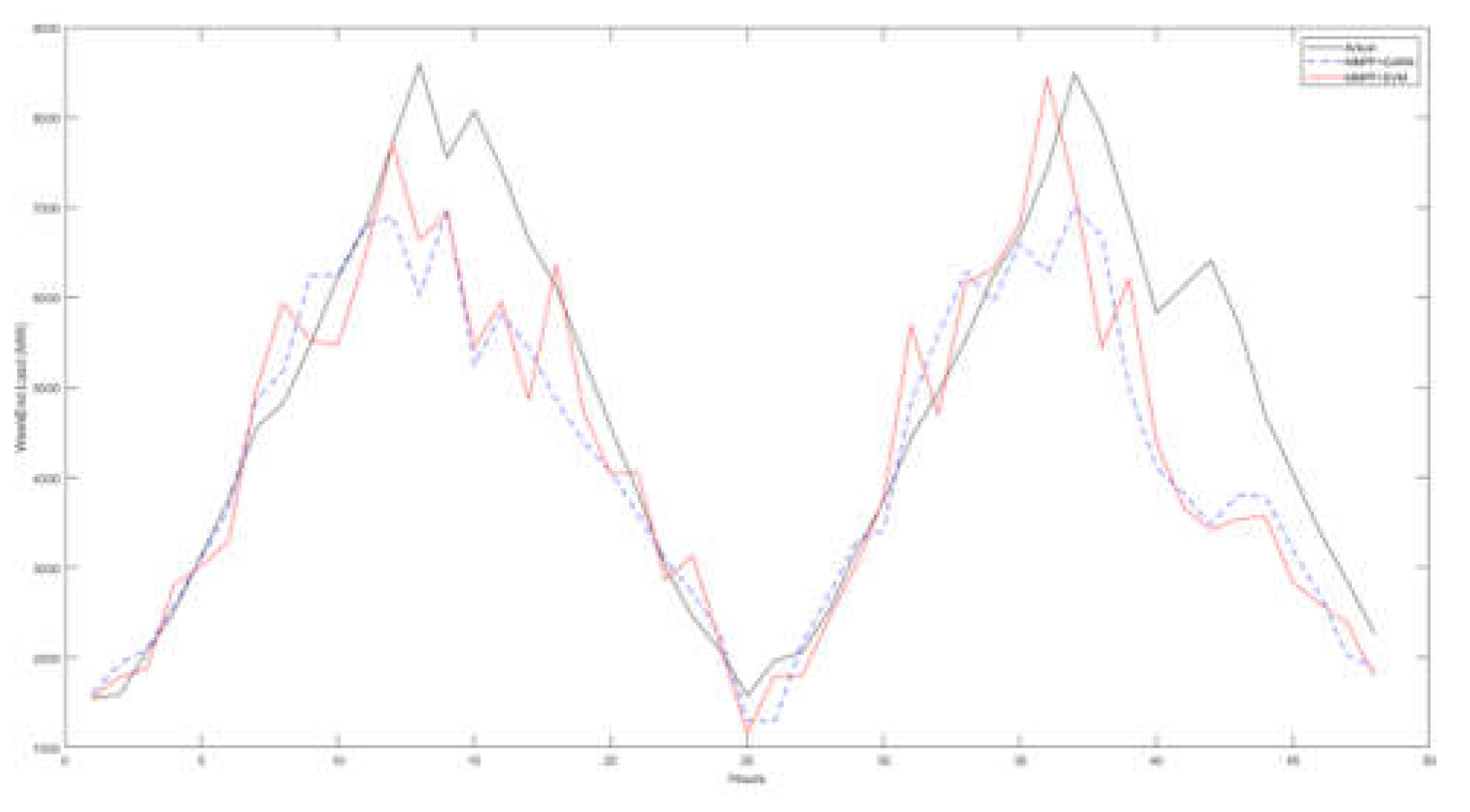
Figure 10.
Weekend Prediction Errors. Both methods utilize 10 EKF’s.
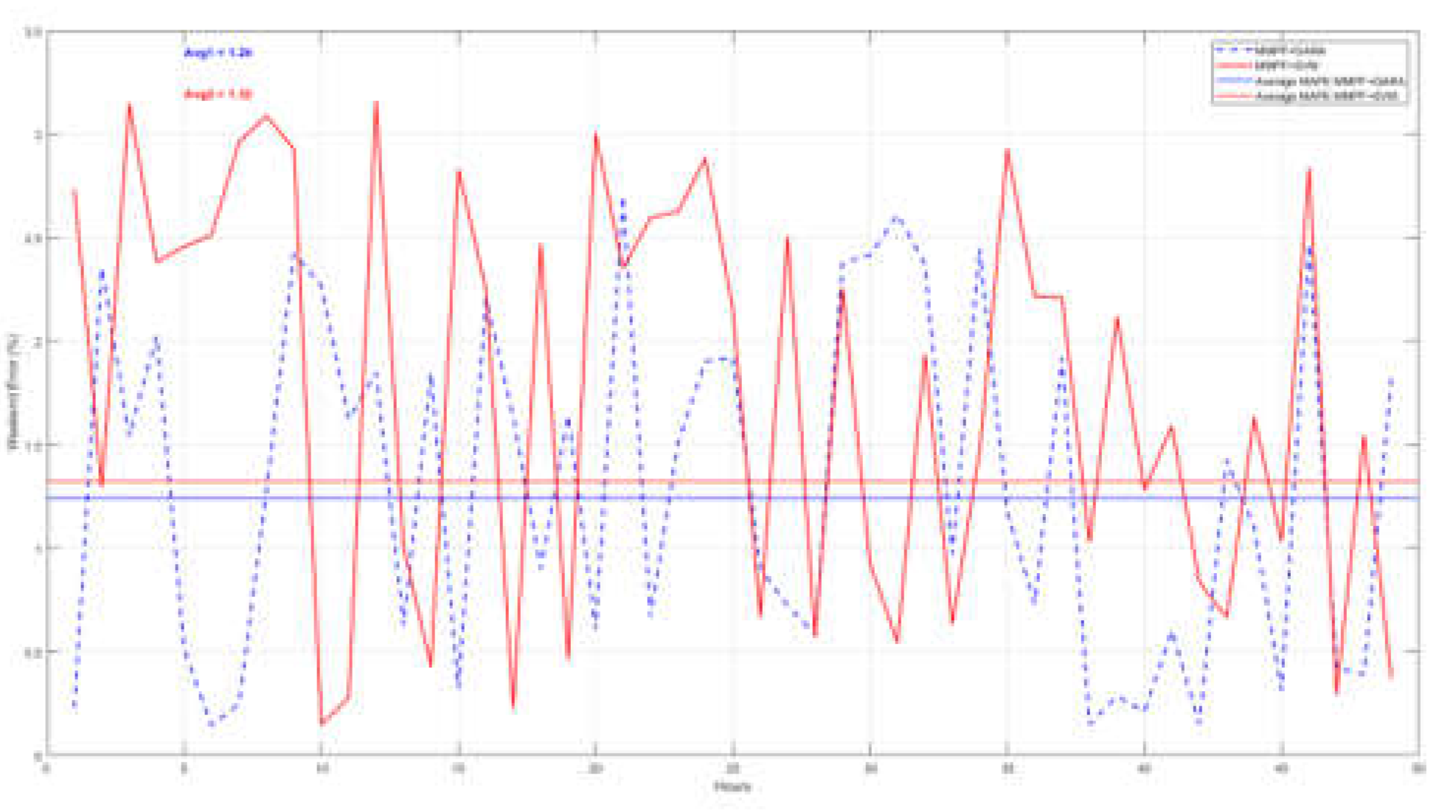
Figure 11.
Actual and Predicted Values for Weekend (Saturday - Sunday). MMPF+GARA implements 8 EKF’s, while MMPF+SVM 10 EKF’s.
Figure 11.
Actual and Predicted Values for Weekend (Saturday - Sunday). MMPF+GARA implements 8 EKF’s, while MMPF+SVM 10 EKF’s.
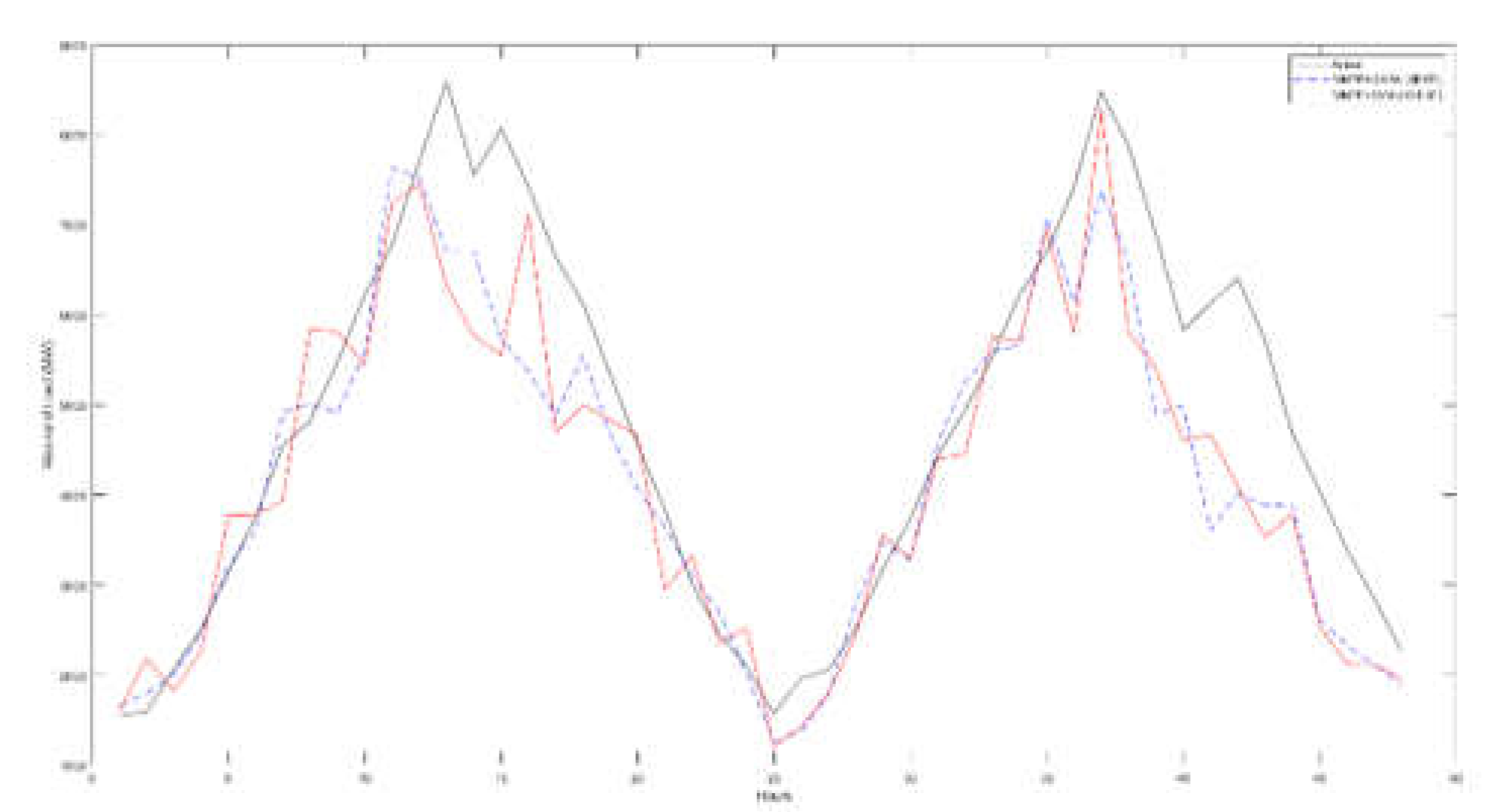
Figure 12.
Weekend Prediction Error. MMPF+GARA implements 8 EKF’s, while MMPF+SVM 10 EKF’s.
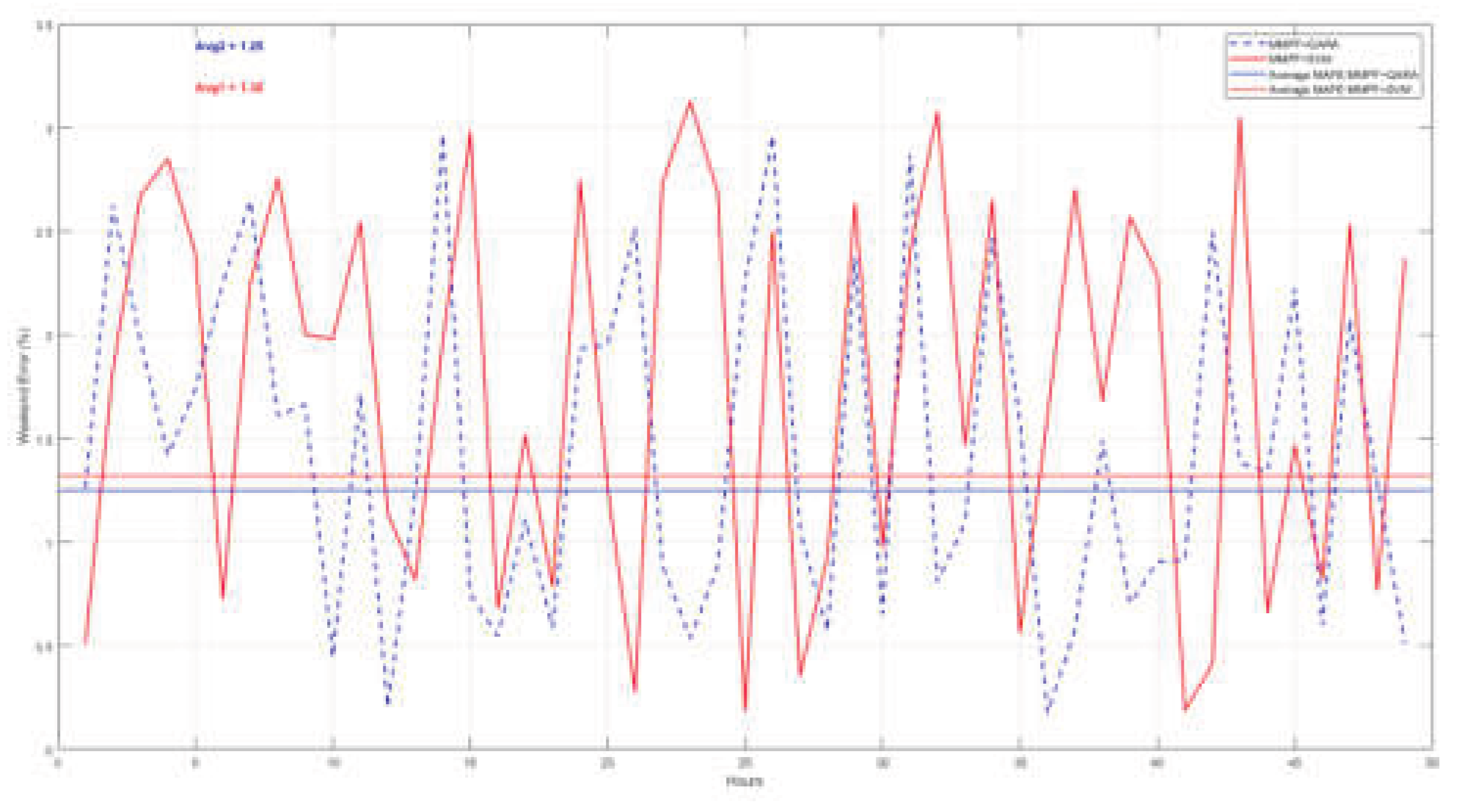

Table 1.
Comparison of Prediction Errors and Relative Improvement – Load Forecasting Test.
| Scenario | Method | Number of filters |
Average Error % |
Relative Improvement |
| Weekday | MMPF+ GARA |
10 | 0.92 | =25.81% |
| MMPF+ SVM |
10 | 1.24 | - | |
| Weekend | MMPF+ GARA |
10 | 1.24 | =6.06% |
| MMPF+ SVM |
10 | 1.32 | - | |
| Weekday | MMPF+ GARA |
8 | 1.16 | =6.45% |
| MMPF+ SVM |
10 | 1.24 | - | |
| Weekend | MMPF+ GARA |
8 | 1.25 | =5.30% |
| MMPF+ SVM |
10 | 1.32 | - |
Disclaimer/Publisher’s Note: The statements, opinions and data contained in all publications are solely those of the individual author(s) and contributor(s) and not of MDPI and/or the editor(s). MDPI and/or the editor(s) disclaim responsibility for any injury to people or property resulting from any ideas, methods, instructions or products referred to in the content. |
© 2026 by the authors. Licensee MDPI, Basel, Switzerland. This article is an open access article distributed under the terms and conditions of the Creative Commons Attribution (CC BY) license (http://creativecommons.org/licenses/by/4.0/).
Copyright: This open access article is published under a Creative Commons CC BY 4.0 license, which permit the free download, distribution, and reuse, provided that the author and preprint are cited in any reuse.


