

Submitted:
26 May 2026
Posted:
27 May 2026
You are already at the latest version
Abstract
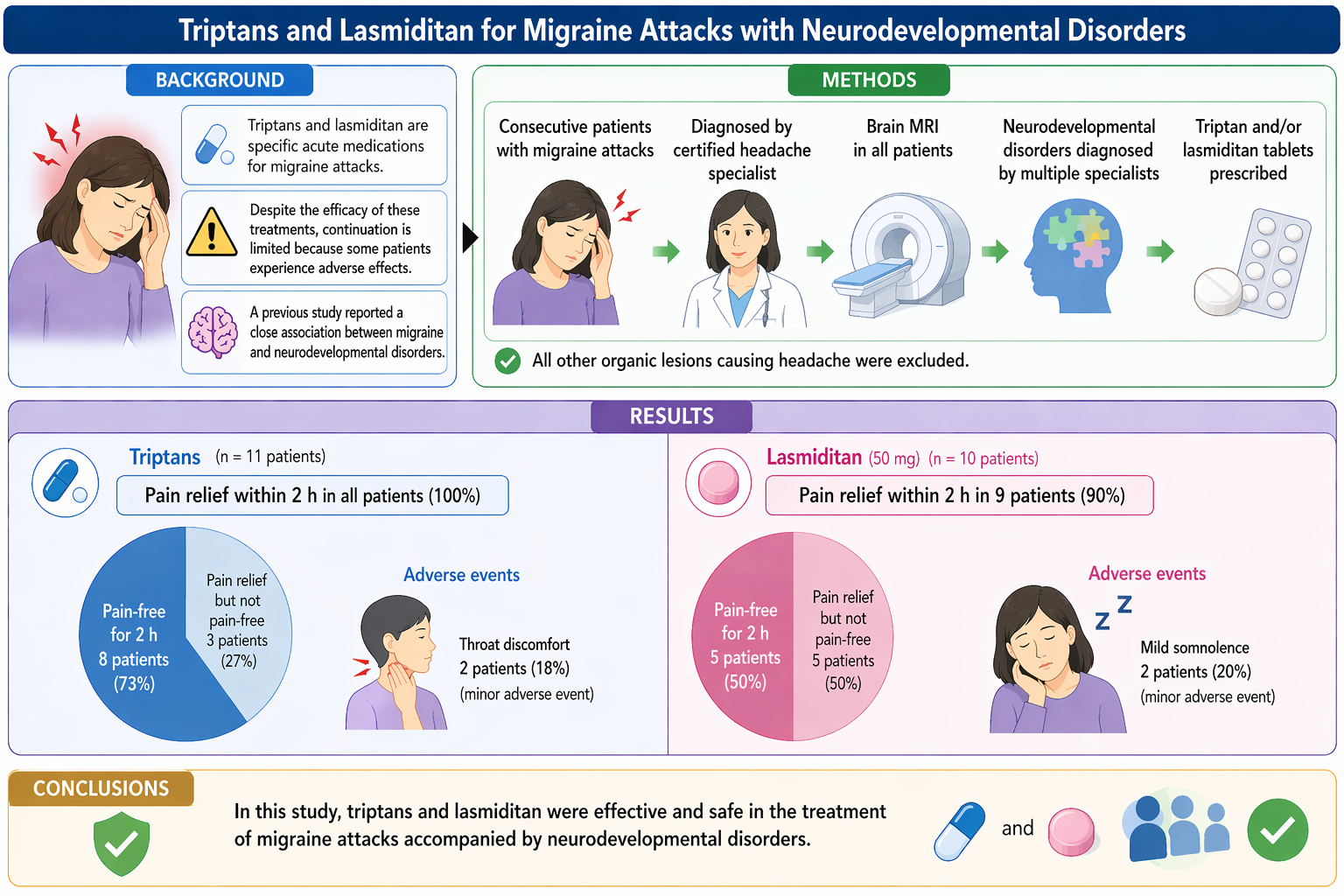
Background: Triptans and lasmiditan are considered specific acute medications for migraine attacks. Despite the efficacy of these treatments, continuation of these medications was limited because some patients experienced adverse effects. A previous study reported a close association between migraine and neurodevelopmental disorders. The present study investigated triptans and lasmiditan in the treatment of consecutive patients with migraine attacks accompanied by neurodevelopmental disorders. Methods: The enrolled patients were diagnosed with migraine by a certified headache specialist. Brain magnetic resonance imaging was performed in all patients, and all other organic lesions causing headache were excluded. Neurodevelopmental disorders were diagnosed by multiple specialists. Triptan and/or lasmiditan tablets were prescribed for all patients. Results: Triptans were effective in these patients, providing pain relief within 2 h in all patients, and eight patients (73%) were pain-free for 2 h. However, throat discomfort was detected in two patients, and it was regarded as a minor adverse event. Lasmiditan (50 mg) was prescribed to 10 patients, and it provided pain relief for 2 h in 9 patients (90%) and pain-free for 2 h in 5 patients (50%). Conversely, mild somnolence was detected in two patients. Conclusions: In this study, triptans and lasmiditan were effective and safe in the treatment of migraine attacks accompanied by neurodevelopmental disorders.
Keywords:
migraine
; triptan
; lasmiditan
; neurodevelopmental disorder
1. Introduction
Migraine is considered a highly prevalent neurological disorder [1]. Because of the higher prevalence of migraine in patients of working age, its socioeconomic burden has been considered large [2]. Multiple medications have been used to mitigate acute migraines. Nonsteroidal anti-inflammatory drugs (NSAIDs) have been frequently used to treat acute migraines, but they are not always effective. Long-term NSAID overuse increases the risk of several complications, such as medication overuse headache [3]. Thus, more effective and specific drugs lacking deleterious effects should be used as acute treatments for migraine attacks. For more than 30 years, triptans have been used as specific acute medications for migraine. The drugs are available as subcutaneous injections, tablets, nasal injections, and rapidly dissolved tablets. Although triptans are effective against most migraines, they do not alleviate some migraine attacks, and some patients experience adverse effects [4]. Frequent use of triptans can also cause medication overuse headaches.
Several previous basic and clinical studies reported calcitonin gene-related peptide (CGRP) as one of the main neurotransmitters causing migraine attacks [5,6,7,8]. Thus, anti-CGRP monoclonal and anti-CGRP receptor monoclonal antibodies are clinically available as effective treatments to prevent migraine attacks. These monoclonal antibodies do not penetrate the blood–brain barrier because of their high molecular weights; thus, their main working sites are the trigeminal nerve terminals and trigeminal ganglia. Gepants are small-molecule CGRP receptor antagonists available under multiple clinical brands [9,10]. Some gepants are regarded as acute medications, and others are used as preventive treatments for migraine attacks.
Triptans are serotonin (5-HT) 1D (5-HT1D) and 1B (5-HT1B) receptor agonists. The 5-HT1D receptor is located on the A꩜-fiber terminals of the trigeminal nerves. Triptans inhibit signal transduction by A꩜-fibers. Conversely, the 5-HT1B receptor is distributed on blood vessels. Thus, triptans have vasoconstrictive effects.
Ditans are selective 5-HT1F receptor agonists. The 5-HT1F receptor exists on both the C-fiber and A꩜-fiber terminals of the trigeminal nerves [11]. Ditans inhibit both the release of CGRP from the C-fiber terminal and signal transduction in A꩜-fibers. Lasmiditan is a newly developed ditan used in the acute treatment of migraine. Lasmiditan has a high rate of adverse effects, including somnolence and dizziness, despite its high efficacy in alleviating migraine attacks [12]. This high rate of adverse effects of lasmiditan is attributed to the fact that it easily enters the central nervous system because of its high lipophilicity.
Neurodevelopmental disorders also represent highly prevalent health issues [13]. The American Psychiatric Association has defined the diagnostic criteria and classified these health issues, as published in the 5th edition of the Diagnostic and Statistical Manual of Mental Disorders (DSM-5-TR) [14]. In reference to the DSM-5, neurodevelopmental disorders have been classified into several types, including communication and special learning disorders, intellectual disability, motor disorders, autism spectrum disorder (ASD), and attention-deficit/hyperactivity disorder (ADHD).
Several studies have reported a close association between migraine and neurodevelopmental disorders [15,16,17]. Compared with the findings in healthy subjects, the concentration of 5-HT was lower in the brain and higher in the blood in patients with neurodevelopmental disorders [18,19]. Additionally, patients with neurodevelopmental disorders have been found to exhibit reduced 5-HT metabolism and lower 5-HT receptor expression in the brain [20,21]. For patients with migraine accompanied by neurodevelopmental disorders, prior studies suggested mild effects associated with 5-HT agonists. However, the clinical effects of triptans and lasmiditan in the treatment of migraine attacks accompanied by neurodevelopmental disorders have not been previously reported. In this study, consecutive patients with migraine accompanied by neurodevelopmental disorders were prospectively treated with triptans and/or lasmiditan, and their efficacy and adverse effects were investigated.
2. Materials and Methods
In this single-center prospective clinical study, patients were diagnosed with migraine by a certified headache specialist according to the International Classification of Headache 3rd edition [22]. For all patients, brain magnetic resonance imaging was performed, and other organic lesions causing headache were eliminated. Before this study, neurodevelopmental disorders were diagnosed by several specialists. Triptan and/or lasmiditan tablets were prescribed for consecutive patients after the diagnosis of migraine attacks and neurodevelopmental disorders. Triptans, eletriptan or zolmitriptan was prescribed. However, in this study, lasmiditan was used at a dose of 50 mg because the 100 mg dose led to greater adverse effects in Japanese patients [23]. Using a paper diary, all enrolled patients were instructed to record their headaches, the effects of triptans or lasmiditan, and their adverse effects. At the next clinical visit, typically occurring 1 month later, the efficacy and adverse effects of the treatments were confirmed, and the patients were interviewed. Based on the recorded information in the paper diary, 2-h pain relief and 2-h pain-free rate were evaluated, and additional interviews were conducted during the clinical visits. Moreover, any deleterious effects were confirmed in the paper diary, and both patients and their caregivers were interviewed. Before starting the investigation, this clinical study was approved by the internal review board of the University of Tsukuba, Mito Medical Center (code no. 24-85). Written informed consent was obtained from all participants and their caregivers.
This study was conducted using a single-arm design without a control group, and no statistical analysis was performed.
3. Results
Sixteen patients with migraine and neurodevelopmental disorders were screened for study eligibility, and 13 patients were included (Table 1). The ages of these patients ranged from 9 to 39 years. The cohort included six males and seven females. Migraine attacks associated with and without aura were observed in four and nine patients, respectively. The frequency of migraine attacks was episodic and chronic in six patients and seven patients, respectively. Preventive medications for migraine were prescribed to ten patients, and two patients were prescribed both oral medication and anti-CGRP monoclonal antibodies. Concerning neurodevelopmental disorders, five patients were diagnosed with ASD, two patients were diagnosed with Asperger’s syndrome, and six patients were diagnosed with ADHD. All patients were Japanese, and all patients had the ability to describe their headaches and the efficacy and adverse effects of the medications.
Triptans were prescribed for 11 patients. Triptans provided pain relief for 2 h in all patients, and eight patients (73%) were pain-free at 2 h (Figure 1). Throat discomfort was recorded as a minor adverse effect of triptans in two patients (18%). Lasmiditan (50 mg) was prescribed for 10 patients. Pain relief for 2 h was achieved in nine patients (90%), and five patients (50%) were pain-free for 2 h (Figure 2). Meanwhile, mild somnolence was recorded in two patients (20%).
4. Discussion
4.1. Clinical Problems in the Acute Treatment of Migraine
To treat acute migraine, some specific drugs have been used. Triptans have long been prescribed and are generally considered effective for most patients. They have been recommended as the first choice for treatment for acute migraine attacks in clinical guidelines issued by the International Headache Society and the American Headache Society [24,25].
Triptans are available in several brands and drug forms, such as subcutaneous injections, hard tablets, nasal injections, and rapidly dissolved tablets [4]. Triptan use has been associated with adverse effects, including throat discomfort. Because triptans are 5-HT1B receptor agonists, these drugs are contraindicated in patients with cardiac or cerebrovascular diseases because of their vasoconstrictive effects [26].
Lasmiditan is a newly marketed ditan, considered a class of specific 5-HT1F receptor agonists. The adverse effects of ditans are not worrying because they do not target the 5-HT1B receptor. However, the adverse effects of lasmiditan, including somnolence and dizziness, are frequent because the drug is highly lipophilic, and these adverse effects limit the wide-scale clinical use of this treatment. Phase 2/3 clinical trials of lasmiditan reported frequent adverse effects and strong impacts [12,23,27].
Gepants comprise a new class of oral anti-CGRP receptor antagonists. Ubrogepant and rimegepant are used in the acute treatment of migraine attacks [28,29]. The adverse effect rate of gepants is lower than those of triptans and lasmiditan. The clinical efficacy of gepants for the treatment of migraine attacks was comparable to that of triptans and lasmiditan [30]. However, gepants have longer half-lives in the blood than triptans and lasmiditan. Thus, they can suppress migraines for a longer period. The high costs of gepants compared with those of triptans and lasmiditan prevent their wide-scale use in the treatment of migraine attacks.
4.2. The Association of Migraine and Neurodevelopmental Disorders
The clinical relationship between migraine and neurodevelopmental disorders has been investigated. The global prevalence of ADHD is high in males at approximately 5% [13]. Both migraine attacks and tension-type headache have strong associations with ADHD [13]. Clinical evidence has suggested several common pathological mechanisms leading to both migraine attacks and neurodevelopmental disorders, although the mechanisms have not been clearly revealed.
5-HT is a key neurotransmitter used in the treatment of both migraine attacks and neurodevelopmental disorders. Triptans and lasmiditan are 5-HT receptor agonists used in the acute treatment of migraine attacks. Frequently used treatments for neurodevelopmental disorders include 5-HT reuptake inhibitors (SSRIs) and 5-HT noradrenaline reuptake inhibitors. The therapeutic effects of SSRIs in patients with migraine attacks have been reported [31]. Combined use of triptans and SSRIs has been found by the US Food and Drug Administration to cause 5-HT syndrome. However, several studies have supported the safe concomitant use of triptans and SSRIs [32,33].
4.3. 5-HT Abnormalities in Neurodevelopmental Disorders
There is an increment in the 5-HT concentration in the blood during the fetal period, but the number of 5-HT receptors declines in the brain under normal development. After birth, the number of 5-HT receptors in the brain is elevated until 2 years old, after which it decreases [34]. In ASD and during the fetal period, the 5-HT concentration in the blood does not increase. In addition, the number of 5-HT synapses does not decrease after birth. Patients with ASD are characterized as having a weak ability to produce 5-HT [35] but high 5-HT concentrations in the blood and platelets [36], in addition to low 5-HT2A receptor connectivity in the cerebrum and platelets [20].
Patients with ASD have been reported to have low 5-HT concentrations in the brain and cerebrospinal fluid but high concentrations in platelets [18,19]. Previous imaging studies in such patients, including positron emission tomography and single-photon emission computed tomography, revealed the low density of 5-HT transporters in the frontal lobe and basal ganglia [21,34,36].
4.4. Clinical Implications of the Results of this Study
For patients with migraine attacks, triptans have high efficacy and low rates of adverse effects. For Japanese patients with migraine attacks, a phase 3 study of eletriptan (20 mg) revealed a high pain-relief rate of 64% at 2 h post-dose; however, the observed pain-free rate at 2 h post-dose was 24% [37]. Meanwhile, a phase 3 study of zolmitriptan (2.5 mg) in Japanese patients with migraine attacks recorded a similar high pain-relief rate of 56% at 2 h post-dose and a 2-h pain-free rate of 19% [38]. In prior research, the adverse event rate was 16% for eletriptan (20 mg) and 19% for zolmitriptan (2.5 mg; Figure 1), in line with the rate of 18% in the current study. In the current population of patients with migraine attacks accompanied by neurodevelopmental disorders, the pain-relief rate and pain-free rate at 2 h post-dose for triptans were 100% and 73%, respectively. In a phase 3 clinical trial of Japanese patients, the recorded pain-relief rates and pain-free rates at 2 h post-dose for eletriptan and zolmitriptan were approximately 60% and 20%, respectively. Thus, the pain relief and pain-free rates were higher in the current population of patients with migraine attacks accompanied by neurodevelopmental disorders. In a phase 2/3 study, lasmiditan exhibited strong efficacy in the treatment of the Japanese patients with migraine [23]. For lasmiditan (100 mg), the rate of adverse events was high (81%), but the pain-relief rate at 2 h post-dose was 80%, and the 2-h pain-free rate was 32%. At a lasmiditan dose of 50 mg, the observed pain-relief rate at 2 h post-dose was 68%, the pain-free rate was 24%, and the rate of adverse events was 65%. The effects of lasmiditan as an additional treatment for triptan nonresponders were reported in a previous study [39]. Treatment with triptans followed by lasmiditan (50 mg), used as a preplanned step of care, led to a pain-relief rate of 86% and a pain-free rate of 57%, surpassing the rates in the phase 2/3 clinical trial [23]. The recorded rates of adverse events were similar to those of lasmiditan 50 mg (Figure 2). In the present study, the pain-relief rate of lasmiditan 50 mg was 90% at 2 h post-dose, and the pain-free rate was 50%. These results indicated better efficacy than was observed in previous clinical trials in Japan [23] and similar efficacy to our previously conducted clinical trial, which used lasmiditan as an additional treatment for triptan nonresponders [39]. In the current population study, the adverse event rate of lasmiditan was 20%.
For patients with migraine attacks accompanied by neurodevelopmental disorders, the current results revealed the high efficacy and low adverse event rates of triptans and lasmiditan. Meanwhile, a high rate of adverse events has represented a major clinical problem for lasmiditan. Health claims data had clearly demonstrated early discontinuation of lasmiditan treatment in Japanese patients with migraine attacks [40]. Adverse effects on the central nervous system were considered the cause of treatment discontinuation [41]. In the present study population, lasmiditan was associated with infrequent adverse effects. This result indicated that the central nervous system of patients with neurodevelopmental disorders is resistant to the deleterious effects of 5-HT receptor agonists, mainly triptans and lasmiditan. The observed low rate of adverse effects was suggestive of strong clinical efficacy, low discontinuation rates, and longer treatment continuation.
The mean number of monthly migraine days in the phase 3 study of zolmitriptan (2.5 mg) in Japanese patients with migraine was 3 [38]. The number of monthly migraine days in the phase 2/3 study of lasmiditan in Japanese patients with migraine ranged from 3 to 8 [23]. Only 37.5% of the patients in this phase 2/3 study of lasmiditan were prescribed preventive medications for migraine attacks. The current study included 54% of patients with chronic migraine, and 76% of patients were prescribed preventive medications for migraine attacks. Therefore, the current study population was a more severe and difficult-to-treat cohort.
Triptans and lasmiditan are the most commonly used specific drugs for the acute treatment of migraine attacks. However, some patients did not experience sufficient efficacy, and others displayed adverse effects. For patients with migraine attacks accompanied by neurodevelopmental disorders, the current study supported the strong efficacy and low adverse event rates of triptans and lasmiditan. Thus, triptans and lasmiditan should be positively prescribed for patients with migraine attacks accompanied by neurodevelopmental disorders. The recorded clinical efficacy and adverse effects of lasmiditan were dose-dependent [42]. The dose of lasmiditan could be increased to achieve sufficient efficacy for patients with neurodevelopmental disorders, given its low rate of adverse effects.
Several previous studies examined the 5-HT concentration in platelets and the 5-HT receptor density in patients with medication overuse headache [43,44]. The 5-HT concentrations in the platelets of patients with migraine attacks were the same as those in the healthy controls. However, patients with medication overuse headache displayed remarkably lower 5-HT concentrations. In patients with medication overuse headache, the 5-HT receptor density was the same as that in the healthy controls, but patients with migraine exhibited a considerably lower density. This study additionally demonstrated that the 5-HT receptor density was lower in the early phase of migraine attacks. When the migraine attacks progressed to medication overuse headache, 5-HT concentrations in platelets decreased. The pathophysiology of migraine and therapeutic medications could be considered the causes of these observed changes. Opposing the trends of medication overuse headache, patients with neurodevelopmental disorders displayed a high 5-HT concentration in platelets and a low 5-HT receptor density. These findings support the possibility that patients with neurodevelopmental disorders are resistant to medication overuse headaches. Accordingly, more prospective clinical research is needed to answer this question.
4.5. Limitation of This Study
This study had several limitations. Although this was a prospective study, the number of patients was small. Moreover, this was a single-institutional study, and all patients were Japanese. Therefore, the obtained results might not be applicable to other ethnicities. The effects of the medications were subjectively evaluated by the patients themselves. A paper diary was used to record migraine attacks and the effects of the medications. Some patients might not have been able to record these results immediately after migraine attacks. Thus, the possibility of recall bias cannot be excluded. The use of an e-diary or an automatic recording system might help eliminate recall bias in future studies. The therapeutic and adverse effects of the treatments were only evaluated for 2 h. Therefore, their long-term impacts were not determined. Frequent medication use might lead to different therapeutic and adverse effects. A clinical study of lasmiditan recorded a gradual decrease in delirious effects after continuous intake [45]. Accordingly, the adverse effects of lasmiditan could decrease following continuous intake.
In the current study, tablets of eletriptan, zolmitriptan, or lasmiditan (50 mg) were only prescribed as acute treatments for migraine attacks. Several triptans have variable dosage forms, such as nasal and subcutaneous injections. The effects of other drug brands, forms, or doses were not evaluated. In a future study, appropriate selection of triptan brands, forms, and doses should be investigated in large patient populations. Because this study is open-label, the placebo effect should be considered when comparing this study with double-blind phase 3 studies. However, this study demonstrated real-world evidence of the efficacy and safety of lasmiditan for patients with migraine and neurodevelopmental disorders.
5. Conclusions
Triptans and lasmiditan exhibited efficacy and safety in the treatment of migraine attacks accompanied by neurodevelopmental disorders. The obtained results of this study should be clarified in larger patient populations.
Author Contributions
Y.S. conceived the study, collected and analyzed the data, wrote and reviewed the manuscript.
Funding
This research received no external funding.
Institutional Review Board Statement
This clinical study was approved by the internal review board of University of Tsukuba, Mito Medical Center (code no. 24-85).
Informed Consent Statement
Informed consent was obtained from all participants or their caregivers involved in the study.
Data Availability Statement
No datasets were generated during this study.
Acknowledgments
The author acknowledges all study participants for their contributions to this research.
Conflicts of Interest
The author declares no competing interests.
Abbreviations
The following abbreviations are used in this manuscript:
| ADHD | Attention-deficit/hyperactivity disorder |
| ASD | Autism spectrum disorder |
| CGRP | Calcitonin gene-related peptide |
| DSM | Diagnostic and Statistical Manual of Mental Disorders |
| 5-HT | Serotonin |
| M | Male |
| F | Female |
| MoA | Migraine without aura |
| MwA | Migraine with aura |
| NSAIDs | Nonsteroidal anti-inflammatory drugs |
References
- Ashina, M.; Katsarava, Z.; Do, T.P.; Buse, D.C.; Pozo-Rosich, P.; Özge, A.; Krymchantowski, A.V.; Lebedeva, E.R.; Ravishankar, K.; Yu, S. Migraine: Epidemiology and systems of care. Lancet 2021, 397, 1485–1495. [Google Scholar] [CrossRef]
- Saylor, D.; Steiner, T. The global burden of headache. Semin. Neurol. 2018, 38, 182–190. [Google Scholar] [CrossRef]
- Ljubisavljevic, S.; Ljubisavljevic, M.; Damjanovic, R.; Kalinic, S. A descriptive review of medication-overuse headache: From pathophysiology to the comorbidities. Brain Sci. 2023, 13, 1408. [Google Scholar] [CrossRef]
- Goadsby, P.J.; Lipton, R.B.; Ferrari, M.D. Migraine — current understanding and treatment. N. Engl. J. Med. 2002, 346, 257–270. [Google Scholar] [CrossRef]
- Lassen, L.; Haderslev, P.; Jacobsen, V.; Iversen, H.; Sperling, B.; Olesen, J. CGRP may play a causative role in migraine. Cephalalgia 2002, 22, 54–61. [Google Scholar] [CrossRef] [PubMed]
- Hansen, J.M.; Hauge, A.W.; Olesen, J.; Ashina, M. Calcitonin gene-related peptide triggers migraine-like attacks in patients with migraine with aura. Cephalalgia 2010, 30, 1179–1186. [Google Scholar] [CrossRef] [PubMed]
- Edvinsson, L.; Haanes, K.A.; Warfvinge, K.; Krause, D.N. CGRP as the target of new migraine therapies — successful translation from bench to clinic. Nat. Rev. Neurol. 2018, 14, 338–350. [Google Scholar] [CrossRef] [PubMed]
- Russell, F.A.; King, R.; Smillie, S.-J.; Kodji, X.; Brain, S.D. Calcitonin gene-related peptide: Physiology and pathophysiology. Physiol. Rev. 2014, 94, 1099–1142. [Google Scholar] [CrossRef]
- Croop, R.; Goadsby, P.J.; Stock, D.A.; Conway, C.M.; Forshaw, M.; Stock, E.G.; Coric, V.; Lipton, R.B. Efficacy, safety, and tolerability of rimegepant orally disintegrating tablet for the acute treatment of migraine: A randomised, phase 3, double-blind, placebo-controlled trial. Lancet 2019, 394, 737–745. [Google Scholar] [CrossRef]
- Goadsby, P.J.; Dodick, D.W.; Ailani, J.; Trugman, J.M.; Finnegan, M.; Lu, K.; Szegedi, A. Safety, tolerability, and efficacy of orally administered atogepant for the prevention of episodic migraine in adults: A double-blind, randomised phase 2b/3 trial. Lancet Neurol. 2020, 19, 727–737. [Google Scholar] [CrossRef]
- Clemow, D.B.; Johnson, K.W.; Hochstetler, H.M.; Ossipov, M.H.; Hake, A.M.; Blumenfeld, A.M. Lasmiditan mechanism of action—review of a selective 5-HT1F agonist. J. Headache Pain 2020, 21, 71. [Google Scholar] [CrossRef] [PubMed]
- Tepper, S.J.; Vasudeva, R.; Krege, J.H.; Rathmann, S.S.; Doty, E.; Vargas, B.B.; Magis, D.; Komori, M. Evaluation of 2-hour post-dose efficacy of lasmiditan for the acute treatment of difficult-to-treat migraine attacks. Headache 2020, 60, 1601–1615. [Google Scholar] [CrossRef] [PubMed]
- Genizi, J.; Gordon, S.; Kerem, N.C.; Srugo, I.; Shahar, E.; Ravid, S. Primary headaches, attention deficit disorder and learning disabilities in children and adolescents. J. Headache Pain 2013, 14, 54. [Google Scholar] [CrossRef]
- American Psychiatric Association. Diagnostic and Statistical Manual of Mental Disorders, 5th ed.; American Psychiatric Association: Washington, DC, USA, 2025. [Google Scholar]
- Nwaobi, S.E. Useful considerations for treating migraine in patients with autism. Headache 2026, 66, 768–770. [Google Scholar] [CrossRef] [PubMed]
- Grant Tejada, M.P.; Klomhaus, A.M.; Ortiz, R.; Tibbe, T.D.; Nwaobi, S.E. Migraine prevalence and phenotype in autism: A retrospective cohort study using a US National Health Survey and large academic health system electronic health record. Headache 2025, 66, 712–724. [Google Scholar] [CrossRef]
- Alabaf, S.; Gillberg, C.; Lundström, S.; Lichtenstein, P.; Kerekes, N.; Råstam, M.; Anckarsäter, H. Physical health in children with neurodevelopmental disorders. J. Autism Dev. Disord. 2019, 49, 83–95. [Google Scholar] [CrossRef]
- Hollander, E.; Novotny, S.; Allen, A.; Aronowitz, B.; Cartwright, C.; DeCaria, C. The relationship between repetitive behaviors and growth hormone response to sumatriptan challenge in adult autistic disorder. Neuropsychopharmacology 2000, 22, 163–167. [Google Scholar] [CrossRef]
- Faraone, S.V.; Ward, C.L.; Boucher, M.; Elbekai, R.; Brunner, E. Role of serotonin in the neurobiology of attention-deficit/hyperactivity disorder: A systematic literature review. Expert Opin. Ther. Targets 2025, 29, 637–654. [Google Scholar] [CrossRef]
- Murphy, D.G.M.; Daly, E.; Schmitz, N.; Toal, F.; Murphy, K.; Curran, S.; Erlandsson, K.; Eersels, J.; Kerwin, R.; Ell, P. Cortical serotonin 5-HT2A receptor binding and social communication in adults with Asperger’s syndrome: An in vivo SPECT study. Am. J. Psychiatry 2006, 163, 934–936. [Google Scholar] [CrossRef]
- Makkonen, I.; Riikonen, R.; Kokki, H.; Airaksinen, M.M.; Kuikka, J.T. Serotonin and dopamine transporter binding in children with autism determined by SPECT. Dev. Med. Child. Neurol. 2008, 50, 593–597. [Google Scholar] [CrossRef]
- Headache Classification Committee of the International Headache Society (IHS). The international classification of headache disorders, 3rd edition. Cephalalgia 2018, 38, 1–211. [Google Scholar] [CrossRef]
- Sakai, F.; Takeshima, T.; Homma, G.; Tanji, Y.; Katagiri, H.; Komori, M. Phase 2 randomized placebo-controlled study of lasmiditan for the acute treatment of migraine in Japanese patients. Headache 2021, 61, 755–765. [Google Scholar] [CrossRef]
- Marmura, M.J.; Silberstein, S.D.; Schwedt, T.J. The acute treatment of migraine in adults: The American Headache Society evidence assessment of migraine pharmacotherapies. Headache 2015, 55, 3–20. [Google Scholar] [CrossRef] [PubMed]
- Puledda, F.; Sacco, S.; Diener, H.-C.; Ashina, M.; Al-Khazali, H.M.; Ashina, S.; Burstein, R.; Liebler, E.; Cipriani, A.; Chu, M.K. International Headache Society global practice recommendations for the acute pharmacological treatment of migraine. Cephalalgia 2024, 44, 03331024241252666. [Google Scholar] [CrossRef]
- Peles, I.; Shneyour, R.S.; Levanon, E.; Steen, Y.M.; Abu Salameh, I.; Gordon, M.; Abuhasira, R.; Novack, V.; Ifergane, G. Cardiovascular risk and triptan usage among patients with migraine. Headache 2025, 65, 1095–1106. [Google Scholar] [CrossRef] [PubMed]
- Ashina, M.; Buse, D.C.; Ashina, H.; Pozo-Rosich, P.; Peres, M.F.P.; Lee, M.J.; Terwindt, G.M.; Halker Singh, R.; Tassorelli, C.; Do, T.P. Migraine: Integrated approaches to clinical management and emerging treatments. Lancet 2021, 397, 1505–1518. [Google Scholar] [CrossRef]
- Dodick, D.W.; Lipton, R.B.; Ailani, J.; Halker Singh, R.B.; Shewale, A.R.; Zhao, S.; Trugman, J.M.; Yu, S.Y.; Viswanathan, H.N. Ubrogepant, an acute treatment for migraine, improved patient-reported functional disability and satisfaction in 2 single-attack phase 3 randomized trials, ACHIEVE I and II. Headache 2020, 60, 686–700. [Google Scholar] [CrossRef]
- Lipton, R.B.; Blumenfeld, A.; Jensen, C.M.; Croop, R.; Thiry, A.; L’Italien, G.; Morris, B.A.; Coric, V.; Goadsby, P.J. Efficacy of rimegepant for the acute treatment of migraine based on triptan treatment experience: pPooled results from three phase 3 randomized clinical trials. Cephalalgia 2023, 43, 03331024221141686. [Google Scholar] [CrossRef]
- Polavieja, P.; Belger, M.; Venkata, S.K.; Wilhelm, S.; Johansson, E. Relative efficacy of lasmiditan versus rimegepant and ubrogepant as acute treatments for migraine: Network meta-analysis findings. J. Headache Pain 2022, 23, 76. [Google Scholar] [CrossRef]
- Brandenburg, C.; Blatt, G.J. Differential serotonin transporter (5-HTT) and 5-HT2 receptor density in limbic and neocortical areas of adults and children with autism spectrum disorders: Implications for selective serotonin reuptake inhibitor efficacy. J. Neurochem. 2019, 151, 642–655. [Google Scholar] [CrossRef] [PubMed]
- Mathew, N.; Tietjen, G.; Lucker, C. Serotonin syndrome complicating migraine pharmacotherapy. Cephalalgia 1996, 16, 323–327. [Google Scholar] [CrossRef]
- Evans, R.W.; Tepper, S.J.; Shapiro, R.E.; Sun-Edelstein, C.; Tietjen, G.E. The FDA alert on serotonin syndrome with use of triptans combined with selective serotonin reuptake inhibitors or selective serotonin-norepinephrine reuptake inhibitors: American Headache Society position paper. Headache 2010, 50, 1089–1099. [Google Scholar] [CrossRef]
- Boylan, C.B.; Blue, M.E.; Hohmann, C.F. Modeling early cortical serotonergic deficits in autism. Behav. Brain Res. 2007, 176, 94–108. [Google Scholar] [CrossRef]
- Chugani, D.C. Serotonin in autism and pediatric epilepsies. Ment. Retard. Dev. Disabil. Res. Rev. 2004, 10, 112–116. [Google Scholar] [CrossRef] [PubMed]
- Nakamura, K.; Sekine, Y.; Ouchi, Y.; Tsujii, M.; Yoshikawa, E.; Futatsubashi, M.; Tsuchiya, K.J.; Sugihara, G.; Iwata, Y.; Suzuki, K. Brain serotonin and dopamine transporter bindings in adults with high-functioning autism. Arch. Gen. Psychiatry 2010, 67, 59. [Google Scholar] [CrossRef]
- Fukuuchi, Y. Efficacy and safety of eletriptan 20 mg, 40 mg and 80 mg in Japanese migraineurs. Cephalalgia 2002, 22, 416–423. [Google Scholar] [CrossRef] [PubMed]
- Sakai, F.; Iwata, M.; Tashiro, K.; Itoyama, Y.; Tsuji, S.; Fukuuchi, Y.; Sobue, G.; Nakashima, K.; Morimatsu, M. Zolmitriptan is effective and well tolerated in Japanese patients with migraine: A dose-response study. Cephalalgia 2002, 22, 376–383. [Google Scholar] [CrossRef]
- Shibata, Y.; Sato, H.; Sato, A.; Harada, Y. Efficacy of lasmiditan as a secondary treatment for migraine attacks after unsuccessful treatment with a triptan. Neurol. Int. 2024, 16, 643–652. [Google Scholar] [CrossRef]
- Katsuki, M.; Yamada, Y.; Ichihara, T.; Matsumori, Y. Time-series clustering analysis for treatment pattern of lasmiditan for 2 years from the initial prescription. Ther. Adv. Neurol. Disord. 2025, 18, 17562864251381900. [Google Scholar] [CrossRef]
- Tassorelli, C.; Bragg, S.; Krege, J.; Doty, E.; Ardayfio, P.; Ruff, D.; Dowsett, S.; Schwedt, T. Safety findings from CENTURION, a phase 3 consistency study of lasmiditan for the acute treatment of migraine. J. Headache Pain 2021, 22, 132. [Google Scholar] [CrossRef] [PubMed]
- Goadsby, P.J.; Wietecha, L.A.; Dennehy, E.B.; Kuca, B.; Case, M.G.; Aurora, S.K.; Gaul, C. Phase 3 randomized, placebo-controlled, double-blind study of lasmiditan for acute treatment of migraine. Brain 2019, 142, 1894–1904. [Google Scholar] [CrossRef]
- Srikiatkhachorn, A.; Anthony, M. Platelet serotonin in patients with analgesic-induced headache. Cephalalgia 1996, 16, 423–426. [Google Scholar] [CrossRef]
- Srikiatkhachorn, A.; Anthony, M. Serotonin receptor adaptation in patients with analgesic-induced headache. Cephalalgia 1996, 16, 419–422. [Google Scholar] [CrossRef]
- Ashina, M.; Reuter, U.; Smith, T.; Krikke-Workel, J.; Klise, S.R.; Bragg, S.; Doty, E.G.; Dowsett, S.A.; Lin, Q.; Krege, J.H. Randomized, controlled trial of lasmiditan over four migraine attacks: findings from the CENTURION study. Cephalalgia 2021, 41, 294–304. [Google Scholar] [CrossRef] [PubMed]
Figure 1.
Pain-free and pain-relief rates of triptans compared with reported clinical trial data in Japan.
Figure 1.
Pain-free and pain-relief rates of triptans compared with reported clinical trial data in Japan.
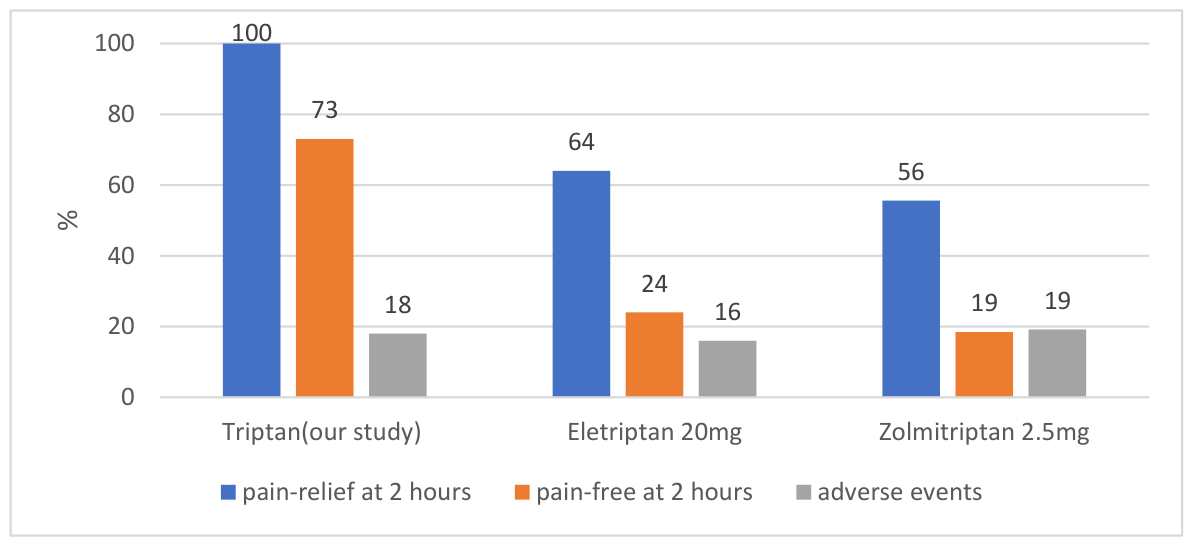
Figure 2.
Pain-free and pain-relief rates of lasmiditan compared with the reported clinical trial data in Japan.
Figure 2.
Pain-free and pain-relief rates of lasmiditan compared with the reported clinical trial data in Japan.
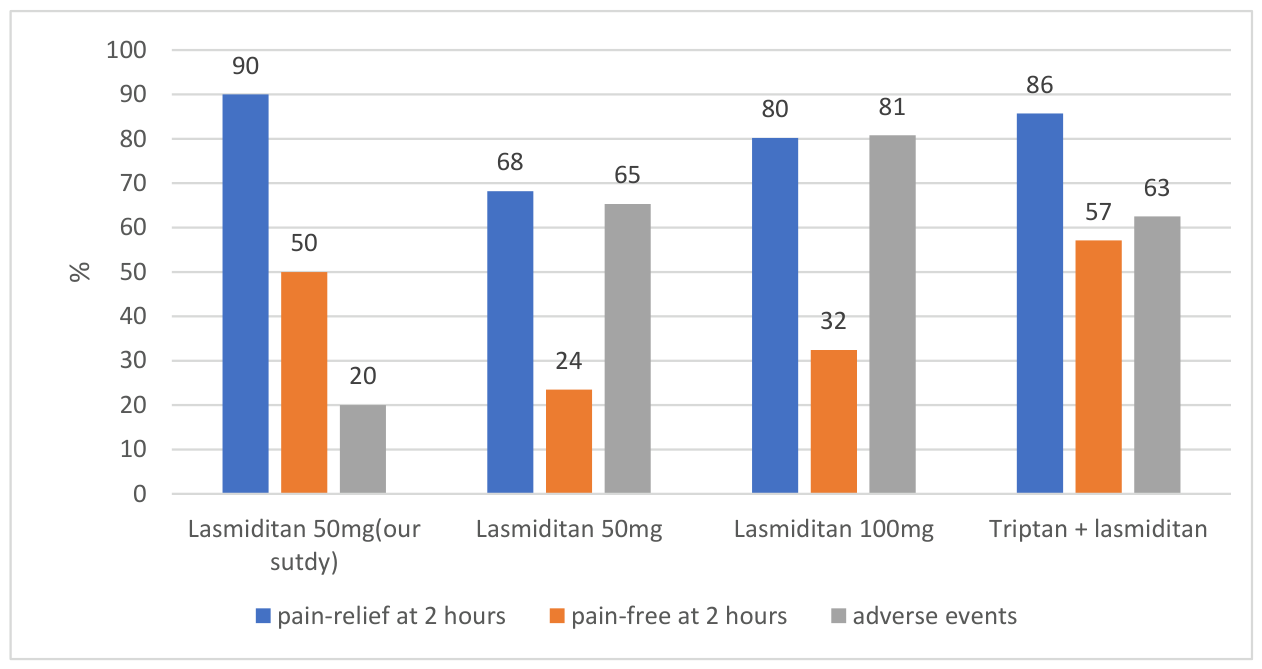

Table 1.
Characteristics of the study population.
| age | sex | migraine | preventive medication | neurodevelopmental disorder | triptan | lasmiditan 50 | |||
|---|---|---|---|---|---|---|---|---|---|
| brand | pain relief/pain free | adverse event | pain relief/pain free | adverse event | |||||
| 18 | F | CM,MoA | lomerizine | ASD | eletriptan | +/+ | - | −/− | mild somnolence |
| 12 | M | CM, MwA | lomerizine | ASD | zolmitriptan | +/+ | throat discomfort | +/+ | mild somnolence |
| 15 | M | EM, MoA | none | ADHD | zolmitriptan | +/− | throat discomfort | +/− | - |
| 30 | F | CM, MoA | lomerizine, fremanezumab | ASD | zolmitriptan | +/+ | - | +/+ | - |
| 39 | M | EM, MoA | lomerizine | Asperger | not given | - | +/− | - | |
| 14 | F | CM, MwA | lomerizine | ADHD | not given | - | +/− | - | |
| 36 | M | EM, MoA | lomerizine | ADHD | eletriptan | +/+ | - | +/+ | - |
| 29 | F | CM, MwA | lomerizine | Asperger | eletriptan | +/+ | - | +/+ | - |
| 39 | F | CM, MoA | lomerizine, galcanezumab |
ASD | eletriptan | +/− | - | +/− | - |
| 10 | M | EM, MwA | none | ADHD | zolmitriptan | +/− | - | not given | - |
| 13 | F | CM, MoA | amitriptyline | ASD | eletriptan | +/+ | - | not given | - |
| 23 | F | EM, MoA | lomerizine | ADHD | eletriptan | +/+ | - | +/+ | - |
| 9 | M | EM, MoA | none | ADHD | eletriptan | +/+ | - | not given | - |
M: male, F: female, MoA: migraine without aura, MwA: migraine with aura, ASD: autism spectrum disorder, ADHD: attention-deficit hyperactive disorder, N/A: not available. −: not observed, +/+: achieved both pain relief and pain free, +/−: achieved only pain relief, −/−: did not achieve pain relief.
Disclaimer/Publisher’s Note: The statements, opinions and data contained in all publications are solely those of the individual author(s) and contributor(s) and not of MDPI and/or the editor(s). MDPI and/or the editor(s) disclaim responsibility for any injury to people or property resulting from any ideas, methods, instructions or products referred to in the content. |
© 2026 by the authors. Licensee MDPI, Basel, Switzerland. This article is an open access article distributed under the terms and conditions of the Creative Commons Attribution (CC BY) license (http://creativecommons.org/licenses/by/4.0/).
Copyright: This open access article is published under a Creative Commons CC BY 4.0 license, which permit the free download, distribution, and reuse, provided that the author and preprint are cited in any reuse.


