

Submitted:
26 May 2026
Posted:
27 May 2026
You are already at the latest version
Abstract
This study was conducted to understand the reinfection pattern of cocoa swollen shoot disease (CSSD) in rehabilitation pilot plots in the cocoa landscape on Nawa region (Soubre) in Côte d’Ivoire. For that, the monitoring of CSSD was carried out on a ran-domly selected representative sample size of rehabilitating trials over time by assessing the epidemiological parameters of the disease through field observations combined with molecular samples analysis on-farm and at landscape level. Results showed that the reinfection appeared earlier than expected with high speed of incidence estimated to 6.95 % from 2020 to 2022. Grafting technology with clones on matures cocoa trees seems more susceptible to reinfection compared to grafting on seedling and hybrids. The use of PCR as molecular diagnostic indicated some miss infections in the removal strategy when considering the buffer zone recommended in the cutting out process currently in force. Recommendations for an efficient protection of rehabilitated farms after the cutting out campaigns were highlighted.
Keywords:
cocoa replantation
; grafting technology
; virus epidemy
; CSSD reinfection
; PCR
1. Introduction
Cocoa swollen shoot disease (CSSD) is a vector-transmitted disease that causes drastic yield decreases and rapid decline of an infected cocoa tree. The main symptoms of the disease are red veins banding on young cocoa leaves, fern pattern mosaic on old leaves, and shoot swelling [1]. The disease was first reported in Ghana in 1936 (Steven 1936). Since its reappearance in Côte d’Ivoire in 2003 [2], a cumulative area of 130,986.90 ha of infected trees has been cut off from 2018 to 2022. Meanwhile, at least 60,000 ha of cocoa trees are still affected [3]. These figures do not include the cocoa trees in field that have already died from this disease [4]. The disease is caused by a group of Badnavirus species, namely cocoa swollen shoot virus (CSSV). A complex diversity of the species was reported in Togo, Nigeria, Ghana, and Côte d’Ivoire where virulent strains have been identified [5,6,7,8,9,10,11]. The genome of CSSV is circular of double strains DNA of 7.2 kpb [12] with five open reading frames (ORF) [13]. At least 14 species of mealybugs, belonging to the Pseudococcidae family, are a vector in the natural transmission of the virus [14]. Some tree species have been described as a host of CSSV from which cocoa could be infected [15]. CSSD is controlled by cutting out infected areas, including a buffer zone, then replanting with tolerant planting material, and applying good agricultural practices, including agroforestry systems [16,17,18,19,20]. However, after 100 years of combatting CSSD in West Africa, limited knowledge of the disease epidemiology has led to mixed results [21]. Cocoa farmers in the endemic areas are still reluctant to adopt the removal method to combat CSSD. Instead, they continue applying unsustainable practices such as deforestation. These do not remove CSSD, and lead to landscape degradation, extensive cocoa monoculture, and heightened impacts of climate change. In Côte d’Ivoire, the reemergence of the disease and its quick spread across the cocoa belt [6] justified the intensive phase of cut and replant campaign in 2018 to combat the disease [3]. The limited success on replanted areas could be one of the causes of the bans on improved planting material propagation for a better understanding of the ongoing situation of the disease in field. Thus, the assessment of the epidemiology principles of virus disease in the CSSD management strategy in field will help on optimizing the protection of replanted areas in an integrated management. The present research aims to update the on-field disease propagation pattern of cocoa swollen shoot disease in replanted areas through the evaluation of the statue of rehabilitation technologies for supporting policy decisions around replantation campaigns. In this paper, we reported the monitoring of CSSD in experimental trials over time by assessing the epidemiological pattern of the disease through field observations combined with molecular data on-farm and at landscape level.
2. Materials and Methods
An on-farm cocoa rehabilitation pilot trial of 1200 plots without plants barriers was set up in 2016 including three technologies: grafting on asymptomatic mature trees (GVV), replantation with grafted seedling (RPG), and replantation with hybrid seedlings (RPH). A total of four types of planting material represented by cocoa clones identified by the codes C1, C9, C15, and C16 were used for the grafting technology on old trunk and on seedlings while the hybrids were composed by the improved cocoa planting material already shared to farmers. The performance criteria for selecting those clones were based on the productivity (More than 2 Tones /ha), the butter quality, the resistance to black pod disease and, the compatibility factors between these planting materials. The approach of this study was based on three interventions: (i) survey at landscape level for presence/ absence of the disease in the replanted plots, (ii) on-farm observations of the CSSD characteristics on infected plots, and (iii) molecular in analysis laboratory through asymptomatic cocoa leaves samples collected around the CSSD outbreaks in field.
2.1. Assessing CSSD Epidemiology at Landscape Level in the Rehabilitated Farm
- Determining prevalence and incidence of the swollen shoot disease at landscape level
CSSD prevalence and incidence were monitored through on-site field assessment from 2020 to 2022, which was 4–6 years after the pilot implementation. Two surveys for the presence or absence of the disease in the rehabilitated plots were conducted. The first survey, in 2020, was carried out on a randomly selected representative sample size of 234 plots from the 1200 plots of the pilot. The second survey was performed from 2021 to 2022 on 200 different plots of the same pilot.
For that effect, the farms were investigated individually during the most appropriate period of the year for symptoms appearance (February to April). Only characteristic symptoms of red vein band, fern pattern mosaic, and swollen shoot were considered as indicators of CSSD presence. Incidence data and geospatial information were collected on each farm.
- Evaluation of CSSD impact on cocoa yield
CSSD effect on yield was estimated by collecting production data on 68 selected plots from only GVV technology of the pilot based on the precocity of this technology on pod early appearance. Production data were collected each two weeks in 2021 from quarter 1 to quarter 3 (Q1–Q3) by counting the number of healthy pods harvested.
2.2. On-Farm Characterization of CSSD Typical Infection
CSSD characterization on farm were performed on selected sites where the disease was present through the field survey as described above. For significant statistical data analysis, 3 sites of observations per technology were considered. Equitable number of infected plots per technologies was required and the technology with insufficient infected plots was dropped. The sites were selected from the list of infected farms within each technology based on the level of degradation and the access facility.
Data on CSSD typical infection pattern were collected by considering epidemiology parameters at farm level mainly the number and size of the disease outbreaks, the prevalence, the incidence, the severity of the disease on cocoa varieties or clones and the abundance of mealybugs vectors. The selected plots were re-visited at tree months after the initial recording. Thus, the number of outbreaks per farm was determined by identifying and localizing the disease outbreaks by analyzing CSSD-specific symptoms, die-back, and cocoa tree mortality in group. The prevalence and the incidence were also assessed by counting symptomatic cocoa trees over the time. Only characteristic symptoms of red vein bands, fern pattern mosaic, and swollen shoot were considered to indicate CSSD presence in the farm. The GPS reference of infected cocoa trees was determined per farm and neighboring infections were identified and mapped. Disease severity was estimated per clone and per rehabilitation trial using a scale [18,20]: 1—red vein-banding on flush leaves; 2—chlorotic vein flecking; 3—chlorotic vein clearing/green vein-banding; 4—diffused flecking; 5—swelling and die-back; 6—death of plants. For the vector, mealybug abundance was determined on cocoa stems between ground level and 1.5 m height on pods and young leaves using a magnifying glass. Mealybugs were counted separately on symptomatic and asymptomatic cocoa trees.
2.3. Molecular Characterization of CSSD Epidemiology
Polymerase chain reactions (PCR) methods were used to make the diagnostic of asymptomatic trees in latency phase where infected cocoa trees did not show any symptoms. The latency phase was characterized on three ranges of 6 m, 12 m, and 18 m buffer from the symptomatic trees around the outbreaks based on the currently enforced cutting out procedure. A randomized sample was taken of 10 asymptomatic cocoa trees per range zone for a laboratory PCR analysis. A total number of 3–5 leaves were collected per sampling trees. The DNA extraction of each leaf sample was done the day after sampling at the West and Central African Virus Epidemiology laboratory. The Plant Dneasy kit of Qiagen was used as described by the manufacturer with 50 mg of leaf tissue removed from the bottom part of the leaf blade. The DNA solution obtained was stored at −20 °C for PCR analysis. The Taq DNA polymerase from Promega was used to amplify the viral DNA and the specific primers CSSD1 R/F (5′-CTTCYTCYCCAATTATCCAGACTGC-3′ and 5′-AAYTGGCARAAYGGAGARGC-3′) of 400 bp designed in the ORF3 of the CSSV genome [10].
The PCR reaction mix of 25 µL volume contained 1 µL each of forward and reverse primer, Taq DNA polymerase (0.125 µL), 5 µL of 5X PCR buffer, dNTPs (0.5 µL), Mgcl2 (1 µL) and 2 µL of DNA. The amplification program, run in a Mastercycler Eppendorf type flexlid, consisted of 35 cycles with initial denaturation at 94 °C (2 min), denaturation (20 s), primer annealing 55 °C for 15 s and extension at 72 °C (30 s), and a final extension of 5 min at 72 °C. At the end of the amplification process, 10 µL of amplified product was used for electrophoresis in 0.8% agarose gel and photographed under UV illumination with an imaging system. A clone of CSSV DNA for CSSD1 F/R primers sent by the University of Arizona (US) was used as positive control. Only visible light spot-on agarose gel was considered as positive after the electrophoresis photography.
2.4. Data Analysis
The prevalence rate was calculated using the number of infected farms/trees out of the total number observed. The incidence rate was calculated by considering the number of newly infected farms/trees.
The yields were estimated using the formula Y (kg. ha−1) = N * D * 0.04 (N= Number of healthy pods per tree;
D = Numbers of trees per hectare; 0.04 = bean weight (kg) per pod according [22]. The resulting production count was compared between asymptomatic and symptomatic plots at landscape level.
The severity data at farm level were analyzed by cumulating the score per infected cocoa clones. CSSD vectors were characterized by mealybug observation on each selected farm. Thus, Statistical comparative analysis was performed on the resulting data. Statistical analysis was performed using SPSS. Diagrams and box plots were designed with R. The maps were generated using QGIS software version 3.16.8-Hannover.
3. Results
3.1. CSSD Epidemiology at Landscape Level
3.1.1. Prevalence and CSSD Mapping in the Pilot Network
Characteristics of the CSSD infection rate on the pilot plots network during the three surveys revealed that the disease appeared in the rehabilitated farms with a prevalence of 3.42% in 2020, i.e., four years after implementation in field. Also, the number of infected plots in the observed sample more than doubled from year 5 (2021) to year 6 (2022)—from 10 to 23 infected plots. The location of asymptomatic and CSSD diseased pilot farms is shown in Figure 1. Infected farms are unequally distributed on the areas covered by the rehabilitation in the Nawa region. Infected farms are mostly observed in the areas of Méagui, Gnammangui, and Buyo. No infection was observed in the areas of Dabouyo and Okrouyo near Gueyo.
3.1.2. Spread Dynamics of CSSD Infection Within the Rehabilitation Pilot
Infection data of the selected samples throughout the three surveys for 2020, 2021, and 2022 show a CSSD incidence rate of 1.05% between year 4 (2020) and year 5 (2021) after planting. The proportion of this rate becomes exponential between year 5 (2021) and year 6 (2022) where an incidence rate of 6.95% has been observed (Figure 2). These results indicated the CSSD spreads rapidly over time in the rehabilitation plots despite use of improved planting material. Also, the repartition of infected plots per technology shown a high rate of infection with GVV plots (70%) while RPG presented the lower rate (10%), Table 1.
3.1.3. Impact of CSSD Infection on Cocoa Yield in the Pilot
From the total number of 68 GVV plots monitored for cocoa production in quarters 1 and 3 in 2021, 52 were asymptomatic and 16 were symptomatic. The overall recorded yield was between 1000 and 1900 Kg/ha. No significant difference was found for cocoa yield between symptomatic and asymptomatic plots when considering the entire cocoa plot irrespective of the cocoa variety and technology applied (Table 2).
3.2. CSSD Epidemiology At-Farm Level
3.2.1. CSSD Mapping on Rehabilitated Farm
The required number of tree infected plots for this study was obtained with GVV and RPH rehabilitation technology. The mapping of CSSD-infected cocoa trees inside the six selected farms for GVV and RPH technologies indicated unequal distribution of the infection on each plot. In the GVV trials, CSSD presents massive infection on cocoa trees in the centre of the plots and sporadic points along the borders. When using seedlings of improved planting material (RPH), CSSD infections were identified mostly at the plot borders on the rehabilitation plots. This is evidence that reinfection of replanted young farms after the cutting out process depends on the disease pressure in the neighboring plots. There were fewer CSSD reinfections in RPH trials when the surrounding CSSD outbreaks were limited in size (case of Koda and Logboya 1). However, the disease spread rapidly, and the number of infected trees grew with increasing size of the neighboring outbreaks (case of Logboya 2).
In both cases (GVV and RPH), the rehabilitations were at risk of infection in the presence of bordering CSSD outbreaks. These had previously occurred in Petit-Tiémé and Krohon B for GVV, and at Logboya 2 for RPH (Figure 3).
3.2.2. CSSD Prevalence and Incidence On-Farm
Prevalence and incidence showed a high rate on GVV farms in comparison to RPH farms, confirming the mass infection on the farms with grafting technology (GVV) (Table 3). Results indicated that CSSD propagated more rapidly on GVV farms where the initial number of infected trees was found to be increased. CSSD infection spread slowly on farms that were replanted entirely.
3.2.3. Mealybug Abundance on Infected Farms
At on-farm level, the results indicate a slightly increased number of mealybugs observed on the trunks of asymptomatic cocoa trees compared to infected cocoa trees (Figure 4).
3.2.4. CSSD Infection on Cocoa Clones in Field
For the rehabilitation with grafting technology, the infection rate by clones indicates that CSSD highly infected all four types of clones (C1, C9, C15, and C16), even if C9 showed slightly lower infection rates (Figure 5a). All the clones presented the same level of susceptibility according to the severity score of CSSD-infected cocoa clones (Figure 5b).
3.2.5. CSSD Infection on Hybrids Cocoa Varieties
CSSD outbreaks at initial stage were observed for the rehabilitation farms with cocoa hybrids five years after planting of the seedling. The number of infected cocoa seedlings in the plots increased with the number of CSSD out-breaks (Figure 6).
3.3. Molecular Epidemiology of CSSD Around the Disease Spots on Farm
The selected plots were categorized by visibly infected trees per outbreak, according to the official protocol of cutting out. All the tree GVV plots were in the category of 11–100 infected trees. On these farms, cuts of 12 m in diameter around infected trees is officially recommended to eliminate the virus. The three other RPH farms containing 1–10 infected trees per outbreak are categorized for cutting out in a 6 m diameter. The molecular PCR results (Figure 7) on symptomless trees adjacent to visibly infected ones showed CSSD infection with variable infection rate according to the distance around the outbreaks.
For the outbreaks containing 1–10 infected trees, the collected samples in the 6 m buffer zone showed an 87% CSSD infection rate on asymptomatic trees. However, in the 12 m buffer around the same outbreaks,80% of infection rate was observed with the PCR analysis on asymptomatic trees. Even in the 18 m buffer, a 20% infection rate was detected (Figure 8). Under current control measures, these latency infections in the 12 and 18 m buffers zones around the CSSD spots would not be considered and thus not removed during the treatment of those outbreaks.
In the outbreaks containing 11–100 infected trees, the buffer zone from 6–12 m showed an 83% infection rate detected by PCR. This confirms the approach of cutting out of all trees in this radius when a respective infection outbreak occurs. However, the buffer of 18 m around the outbreaks still showed a 30% latency infection rate that is neglected according to the official CSSD treatment control measure. The results indicate a high percentage of missed infection in the small outbreaks (80%) in comparison to the large outbreaks (30%).
4. Discussion
This study was conducted to understand the cocoa swollen shoot reinfection and how it spreads over time through rehabilitation plots with three innovative propagating technologies. The data presented here was collected on a subsample of the pilot, as we are not able to visit all the farms of the pilot that included 1200 plots. However, the random sample method using statistical approach made the results representative of what is happening in field. The pattern of the CSSD infection in the pilot is discussed at landscape and farm level.
4.1. CSSD Propagation at Landscape
The CSSD spread was mapped at a landscape level. Some areas such as Gueyo were still virus- free, while other localities including Méagui and Buyo showed infection/reinfection of newly planted farms. These results confirmed previous observations in the Soubré area where less CSSD infection was observed in areas with diversified landscape farms compared to extensive cocoa monoculture [23]. The spread of CSSD is greatly facilitated at this level of landscape diversity at Méagui, Soubré, and Buyo. However, the lower rate of infection observed in the Gueyo area could be explained by the alternance of palm oil plantations with cocoa farms [19].
4.2. CSSD Reinfection and Sustainability in Rehabilitated Cocoa Farms
This study was conducted in the Nawa region on cocoa rehabilitation pilots. The pilots were established in 2016 for validating the on-farm agronomic performance of innovation technologies at small scale. Results of the on-field survey indicate early CSSD infection/reinfection in this pilot, four years after the rehabilitation. The CSSD prevalence recorded in the pilot at landscape level showed an exponential propagation incidence up to 7%, which doubled between year 5 in 2021 and year 6 in 2022. The lack of barriers around these trial plots, likely associated to the latency infection phase, facilitated the rapid infection observed. For GVV trials, the initial selection of virus-free mature farms for rehabilitation by grafting was based on visual observations for presence/absence of CSSD characteristic symptoms. The mapping of the disease spots inside those trials showed that most infected cocoa trees have been in the Centre of the plots. This result indicates that some of the selected plots for grafting were infected from the beginning of the pilot but did not show any symptoms at the time of selection. The latency phase of CSSD constitutes one of the main challenges for infield inspections. In addition, results indicate that the disease spread from outbreaks in neighboring plots and increased pressure from the virus on the trial plots. Thus, for rehabilitation success, the use of an early detection tool in-field is a key to scale up any productivity-increasing technology based on improved planting material [24].
For RPH technology with hybrid planting material, the selected infected farms were cut individually without treating the neighboring infected farms before establishment of the pilot. Observations indicated the presence of the disease outbreaks around the trials and the appearance of infections on seedlings along the border. This clearly indicates the disease migration from infections outside of the newly planted cocoa farms. The lack of barriers around these trials left the pilot more susceptible to disease reinfection, which thus greatly facilitated the spread of CSSD [19]. However, the sporadic occurrence of disease observed in the Centre of the trials could be explained by poor application of the CSSD management risks protocol/guide in the rehabilitated farms by farmers. The early reinfection observed on those rehabilitated plots with improved planting material also indicates that partial or sporadic cutting out in areas of CSSD mass infection was not the appropriate measure to properly eliminate the virus pressure and all sources of infection in the surrounding environment. Systematic cleaning of the virus in the environment before replanting in area of CSSD mass infection associated with farmers education on risks management would be helpful on mitigating the CSSD rapid spreading and ensure the sustainability of replanted cocoa farms.
4.3. CSSD Infection and Planting Material Tolerance on Farm
The improved planting materials (clones and hybrids) in these trials were infected four years after their establishment under farmer field conditions. They were thus all susceptible to CSSD. This situation calls for building a research program for development of CSSD-resistant cocoa varieties. A harmonized approach could combine field trials with molecular screening while considering major productivity challenges in West Africa [25]. Thus, the use of tolerant planting material without integrating any other control measure cannot protect adequately the replanted farm against CSSD reinfection. Consequently, more investigation is needed for the breeding program in West Africa regarding the selection of resistant cocoa varieties for CSSD control. To date, the best way on combatting the disease will be integrated management that combines cross-protection tools, agroforestry, barriers, tolerant planting material and capacity building for farmers.
4.4. Missed Infections in the Current Application of the CSSD Control Measures
The PCR early detection results on the randomly selected asymptomatic trees around the disease outbreaks on farm show that the recommended buffer largely underestimates the actual infection on the three-buffer zone delimited around the CSSD outbreak. For category 1 (between 1–10 infected trees) with an officially recommended 6 m buffer, a substantial part of asymptomatic trees remains in the field. Results show 80% of infection on asymptomatic trees in the 6–12 m buffer and 20% in the 12–18 m buffer. In category 2 (between 11–100 infected trees), with a recommended 12 m buffer, a non-neglectable part of asymptomatic trees remains outside of the buffer zone. This remains true even if the largest part of asymptomatic trees is cut out with the recommended method. The recommended buffer for category 2 reflects the reality of more CSSD infection. Even so, it underestimates the need to remove all the infected trees around the outbreak. This finding can help refine the recommendations for the categories 1 and 2 to ensure better success of the cut-out method to combat CSSD. This result is in conformity with [26] and [27], which concluded that about 30–40% of asymptomatic trees around CSSD outbreak are in latency phase. The latency infection causes the failure of the CSSD control in field (when this control is based solely on visual inspection for delimiting cut-out areas around the disease outbreak).
Furthermore, results indicate that the rate of trees in latency phase is high at the initial stage of CSSD infection when 1–10 symptomatic trees were observed. Thus, training farmers on CSSD risk management should be a focus of detection strategies in the asymptomatic phase and the spread of the virus by the vector. In fact, before the mass infection, the disease presents early characteristic signs and symptoms that farmers should recognize for an early intervention. According to [28] and [29], control measures are more efficient when the disease is detected at an early stage in field. Thus, strengthening the notion that an in-field detection tool to detect the asymptomatic trees can play an important role by enabling frequent surveillance of new planting farms [24].
5. Conclusions
This study addressed epidemiology characteristics of CSSD in newly planted/established/ rehabilitated farms in regions like Nawa that had existing CSSD infection pressure. Before rehabilitation, farmers should consider cutting all the trees on infected farms rather than the current practice of sporadic cuts of only infected areas. Based on results, the following suggestions for improving the CSSD control measure in field in Côte d’Ivoire can be drawn: (i) establish a permanent/sustainable education system for farmers on CSSD detection and risk management using an update guide of CSSD control for training extensionists, (ii) use virus-free cocoa planting materiel and appropriate barriers in replantation and, (iii) investigate new replantation frequently for early detection of the disease using early detection tools.
Supplementary Materials
The following supporting information can be downloaded at the website of this paper posted on Preprints.org, Figure 1. Distribution of the CSSD infection in the rehabilitated pilot farms in the Nawa region in Côte d’Ivoire; Figure 2. Characteristics of CSSD propagation over time in the pilot plots from 2020 to 2022; Distribution of CSSD-infected cocoa trees on GVV technology in the rehabilitation pilot plots in the Nawa region in Côte d’Ivoire; Figure 4. Mealybug abundance on CSSD-infected cocoa in the pilot; Figure 5. CSSD infection rate and severity score on infected cocoa clones at five years after establishment in field; Figure 6. CSSV infection status on Mercedes cocoa variety after five years of planting on three farms in the Nawa region; Figure 7. PCR results for asymptomatic samples of cocoa leaves collected on CSSD outbreaks in fields at Soubré in Côte d’Ivoire; Latency area and missed trees in the cutting out process compared to the officially recommended cocoa tree removal area; Table 1: Distribution of CSSD prevalence per technology; Table 2. Trends of estimated cocoa yield (Kg/ha) on symptomatic and asymptomatic plots through the GVV technology of the rehabilitation pilot in the Nawa region; Table 3. Prevalence and incidence rate on CSSD-infected farms in the pilot at five years after establishment in field.
Author Contributions
Conceptualization, K.K. and J.P.M.; methodology, K.K. and A.B.B.; software, V.W.; validation, K.K., C.K. and J.P.M.; formal analysis, K.K.; investigation, K.K., A.B.B., L.B., N.K., T.K.A., S.G. and J.K.T.; data curation, A.M. writing—original draft preparation, K.K.; writing—review and editing, K.K., A.B.B., L.B., N.K., V.W. and C.K.; visualization, K.K.; supervision, C.K. and J.P.M.; project administration, C.K.; funding acquisition, J.P.M. All authors have read and agreed to the published version of the manuscript.
Funding
This research was funding by MARS Wrigley for supporting this research through Vision for Change (V4C) project implemented in Côte d’Ivoire by World Agroforestry (ICRAF).
Institutional Review Board Statement
Not Applicable.
Informed Consent Statement
Not Applicable.
Data Availability Statement
The data presented in this study are available on request from the corresponding author.
Acknowledgments
The authors thank MARS Wrigley. for supporting this research through Vision for change project (V4C) implemented in Côte d’Ivoire by World Agroforestry (ICRAF).
Conflicts of Interest
The authors declare no conflict of interest.
References
- Kouakou, K.; et al. Impact de la Maladie Virale du Swollen Shoot du Cacaoyer sur la Production de Cacao en Milieu Paysan à Bazré (Côte d’Ivoire). 2011. Available online: https://agritrop.cirad.fr/563759.
- Kebe, B.I.; Kouakou, K.; N’Guessan, K.F. Swollen shoot in Côte d’Ivoire: Host pathogen biology of CSSV, its spread in Côte d’Ivoire, and huge attempts to eradicate. In Proceedings of the 15th International Cocoa Research Conference, San José, Costa Rica, 9–14 October 2006. [Google Scholar]
- Le conseil du café-cacao de Côte d’Ivoire. Evolution de La Filière Café-Cacao de 2017 à 2022 et Perspectives. 64 pages (2022).
- Kouakou, K. Diversité moléculaire du CSSV (Cocoa swollen shoot virus) et épidémiologie de la maladie du swollen shoot du cacaoyer (Theobroma cacao L.) en Côte d’Ivoire. (Université Félix Houphouët Boigny, 2014).
- Muller, E.; Jacquot, E.; Yot, P. Early detection of cacao swollen shoot virus using the polymerase chain reaction. J. Virol. Methods 2001, 93, 15–22. [Google Scholar] [CrossRef] [PubMed]
- Kouakou, K.; et al. Geographical Distribution of Cacao swollen shoot virus Molecular Variability in Côte d’Ivoire. Plant Dis. 2012, 96, 1445–1450. [Google Scholar] [CrossRef] [PubMed]
- Abrokwah, F.; Dzahini-Obiatey, H.; Galyuon, I.; Osae-Awuku, F.; Muller, E. Geographical Distribution of Cacao swollen shoot virus Molecular Variability in Ghana. Plant Dis. 2016, 100, 2011–2017. [Google Scholar] [CrossRef] [PubMed]
- Aka, R.A.; et al. Cocoa swollen shoot disease in Côte d’Ivoire: History of expansion from 2008 to 2016. Int. J. Sci. 2020, 9, 52–60. [Google Scholar] [CrossRef]
- Obok, E.E.; Aikpokpodion, P.O.; Ani, O.C.; Allainguillaume, J.; Wetten, A. Cacao swollen shoot virus detection and DNA barcoding of its vectors and putative vectors in Theobroma cacao L. by using polymerase chain reaction. BioTechnologia 2021, 102, 229. [Google Scholar] [CrossRef] [PubMed]
- Ramos-Sobrinho, R.; et al. Molecular detection of cacao swollen shoot badnavirus species by amplification with four PCR primer pairs, and evidence that Cacao swollen shoot Togo B virus-like isolates are highly prevalent in Côte d’Ivoire. Eur. J. Plant Pathol. 2021, 159, 941–947. [Google Scholar] [CrossRef]
- Ameyaw, G.A.; Domfeh, O.; Gyamera, E. Epidemiology and Diagnostics of Cacao Swollen Shoot Disease in Ghana: Past Research Achievements and Knowledge Gaps to Guide Future Research. Viruses 2024, 16, 43. [Google Scholar] [CrossRef] [PubMed]
- Lot, H.; Djiekpor, E.; Jacquemond, M. Characterization of the genome of cacao swollen shoot virus. J. General. Virol. 1991, 72, 1735–1739. [Google Scholar] [CrossRef] [PubMed]
- Muller, E.; et al. Next generation sequencing elucidates cacao badnavirus diversity and reveals the existence of more than ten viral species. Virus Res. 2018, 244, 235–251. [Google Scholar] [CrossRef] [PubMed]
- Roivainen, O. Transmission of Cocoa Viruses by Mealybugs (Homoptera: Pseudococcidae). 1976. Available online: https://www.cabidigitallibrary.org/doi/full/10.5555/19761329497.
- Tinsley, T.W.; Wharton, A.L. STUDIES ON THE HOST RANGES OF VIRUSES FROM THEOBROMA CACAO L. Ann. Appl. Biol. 1958, 46, 1–6. [Google Scholar] [CrossRef]
- Thresh, J.M. The Control of Cacao Swollen Shoot Disease in West Africa. A Review of the Present Situation. 1958. Available online: https://www.cabidigitallibrary.org/doi/full/10.5555/19580304064.
- Ollennu, L.A.A.; Owusu, G.K.; Thresh, J.M. Spread of cocoa swollen shoot virus to recent plantings in Ghana. Crop Prot. 1989, 8, 251–264. [Google Scholar] [CrossRef]
- Padi, F.K.; Domfeh, O.; Takrama, J.; Opoku, S. An evaluation of gains in breeding for resistance to the cocoa swollen shoot virus disease in Ghana. Crop Prot. 2013, 51, 24–31. [Google Scholar] [CrossRef]
- Domfeh, O.; et al. Use of Immune Crops as Barrier in the Management of Cacao Swollen Shoot Virus Disease (CSSVD)—Long-Term Assessment. Plant Dis. 2016, 100, 1889–1893. [Google Scholar] [CrossRef] [PubMed]
- Andres, C.; et al. Agroforestry systems can mitigate the severity of cocoa swollen shoot virus disease. Agric. Ecosyst. Environ. 2018, 252, 83–92. [Google Scholar] [CrossRef]
- Amon-Armah, F.; Domfeh, O.; Baah, F.; Dzahini-Obiatey, H.K. Effectiveness of the eradication campaign of cocoa swollen shoot virus disease in Ghana: The extension and implementation problem. Int. J. Pest. Manag. 2024, 70, 36–49. [Google Scholar] [CrossRef]
- Alexis, A.A.; et al. Rentabilité économique des techniques de réhabilitation et de replantation des vieux vergers de cacaoyers (Theobroma cacao L.) en Côte d’Ivoire. J. Anim. Plant Sci. 2012, 14, 1939–1951. [Google Scholar]
- Diby, L.; et al. Cocoa Land Health Surveillance: An Evidence-Based Approach to Sustainable Management of Cocoa Landscapes in the Nawa Region, South-West Côte d’Ivoire; World Agroforestry Centre (ICRAF): Abidjan, Côte d’Ivoire, 2014; Volume 193. [Google Scholar]
- Marelli, J.-P. et al. Development of an in-field detection and cost-effective kit for cacao swollen shoot disease (CSSD) in Côte d’Ivoire and Ghana. (2023). [CrossRef]
- Ofori, A.; et al. Field evaluation of the impact of cocoa swollen shoot virus disease infection on yield traits of different cocoa (Theobroma cacao L.) clones in Ghana. PLoS ONE 2022, 17, e0262461. [Google Scholar] [CrossRef] [PubMed]
- Posnette, A.F. Virus Diseases of Cacao in West Africa: The Present Position. 1953. Available online: https://www.cabidigitallibrary.org/doi/full/10.5555/19551100068.
- Benstead: Swollen Shoot Disease-WACRI—Google Scholar. Available online: https://scholar.google.com/scholar_lookup?hl=en&publication_year=1953&author=R.+J.+Benstead&title=Swollen%E2%80%90shoot+disease.+W.A.C.R.I.+Paper+no.+18.
- Legg, J.T.; Ollennu, L.A.O. Joint CRIG/Cocoa production division coppicing trials to assess latent virus infection. Rep. Cocoa Res. Inst. Ghana 1973, 1974, 70. [Google Scholar]
- Thresh, J.M.; Owusu, G.L.K.; Ollennu, L.A.A. Cocoa swollen shoot: An archetypal crowd disease/Afrikanische Sproßschwellung an Kakaobäumen: Eine archetypische ‘crowd’-Krankheit. Z. Pflanzenkrankh. Pflanzenschutz/J. Plant Dis. Prot. 1988, 95, 428–446. [Google Scholar]
Figure 1.
Distribution of the CSSD infection in the rehabilitated pilot farms in the Nawa region in Côte d’Ivoire.
Figure 1.
Distribution of the CSSD infection in the rehabilitated pilot farms in the Nawa region in Côte d’Ivoire.
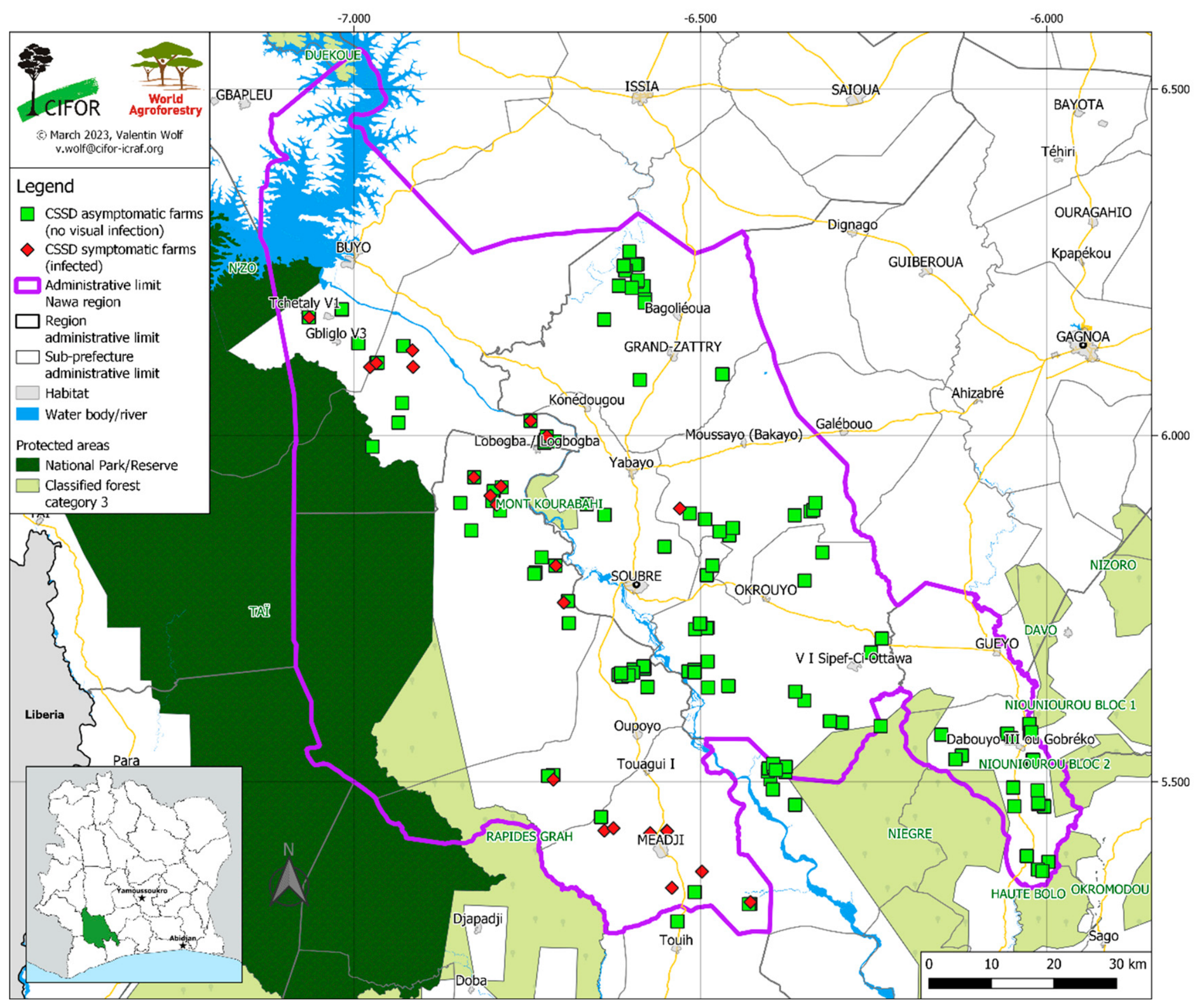
Figure 2.
Characteristics of CSSD propagation over time in the pilot plots from 2020 to 2022. Note: The red line with numbers represents the evolution of CSSD incidence rate at landscape level of the pilot farms.
Figure 2.
Characteristics of CSSD propagation over time in the pilot plots from 2020 to 2022. Note: The red line with numbers represents the evolution of CSSD incidence rate at landscape level of the pilot farms.
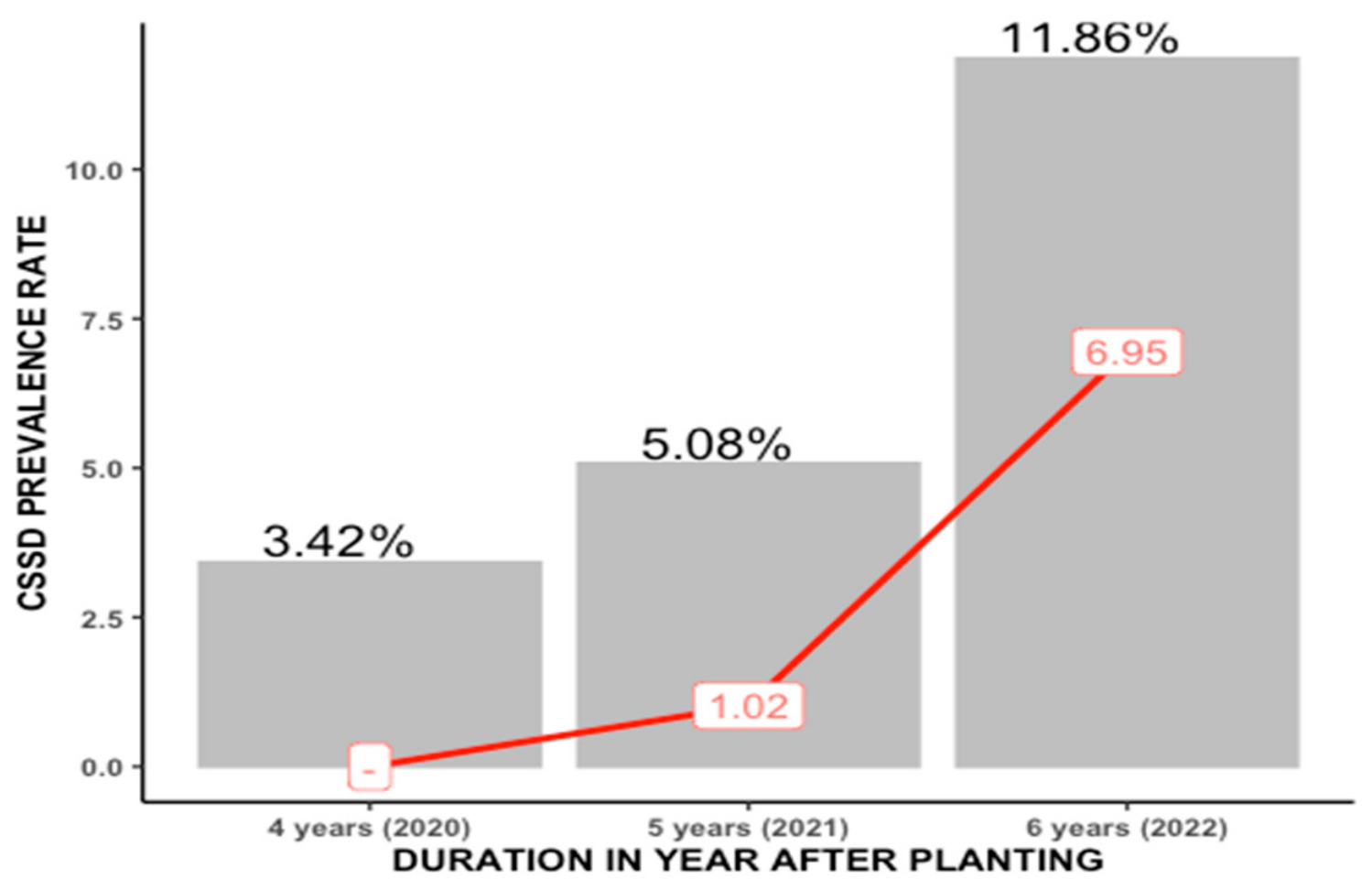
Figure 3.
Distribution of CSSD-infected cocoa trees on GVV technology in the rehabilitation pilot plots in the Nawa region in Côte d’Ivoire.
Figure 3.
Distribution of CSSD-infected cocoa trees on GVV technology in the rehabilitation pilot plots in the Nawa region in Côte d’Ivoire.
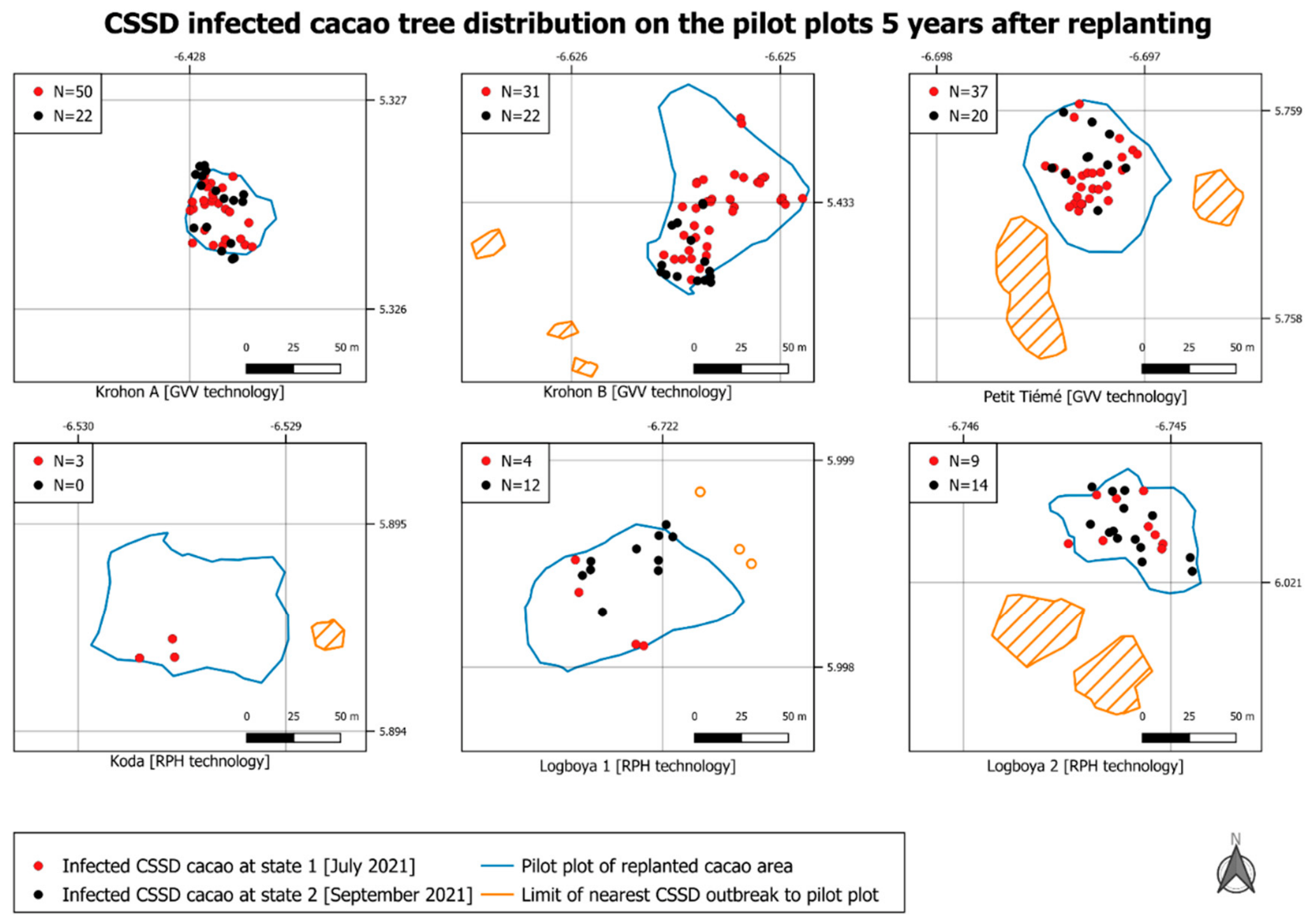
Figure 4.
Mealybug abundance on CSSD-infected cocoa in the pilot.
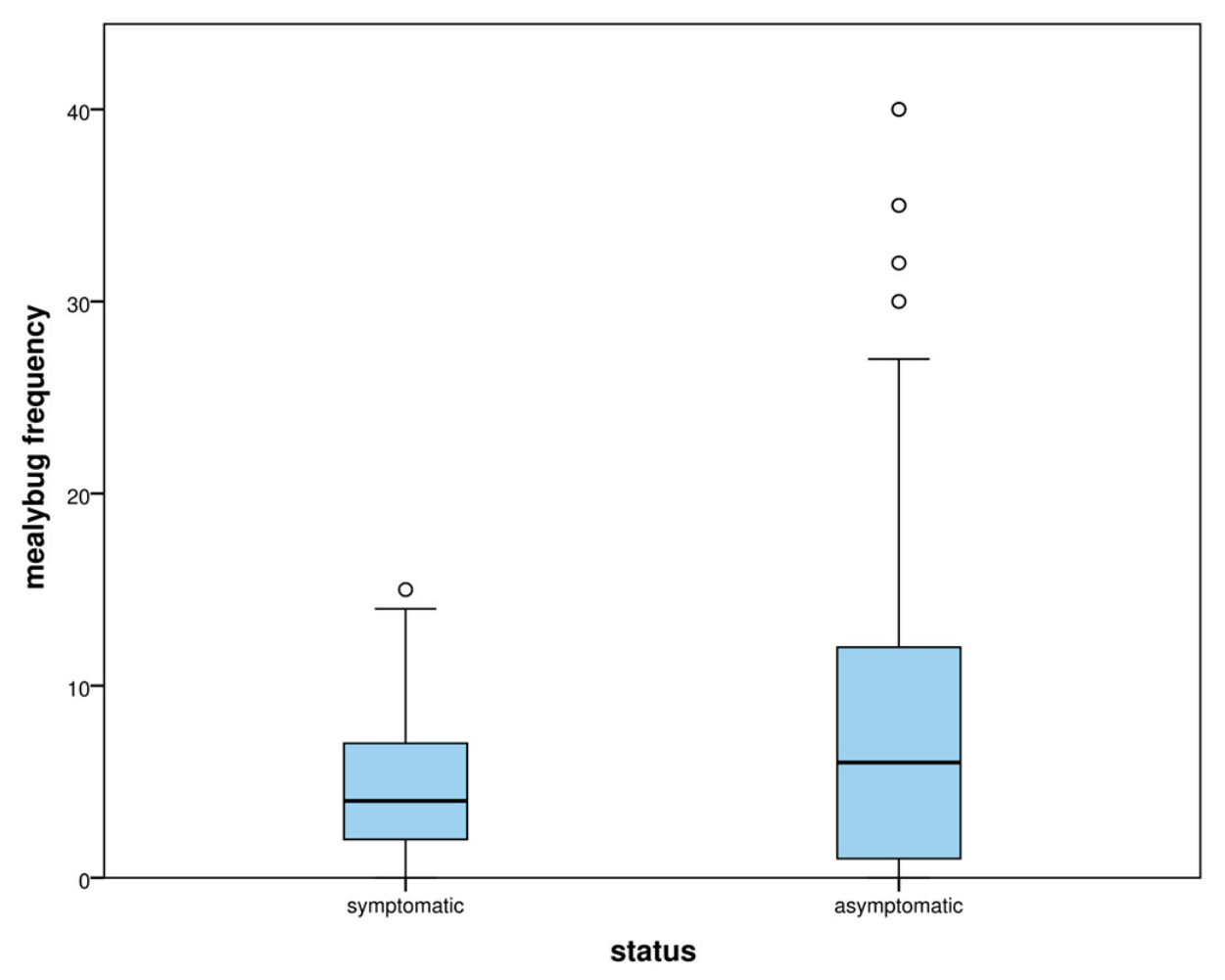
Figure 5.
CSSD infection rate and severity score on infected cocoa clones at five years after establishment in field; (a) CSSD infection rate on cocoa clones grafted on old trunk in field; (b) CSSD severity score on cocoa clones grafted on old trunk in field.
Figure 5.
CSSD infection rate and severity score on infected cocoa clones at five years after establishment in field; (a) CSSD infection rate on cocoa clones grafted on old trunk in field; (b) CSSD severity score on cocoa clones grafted on old trunk in field.
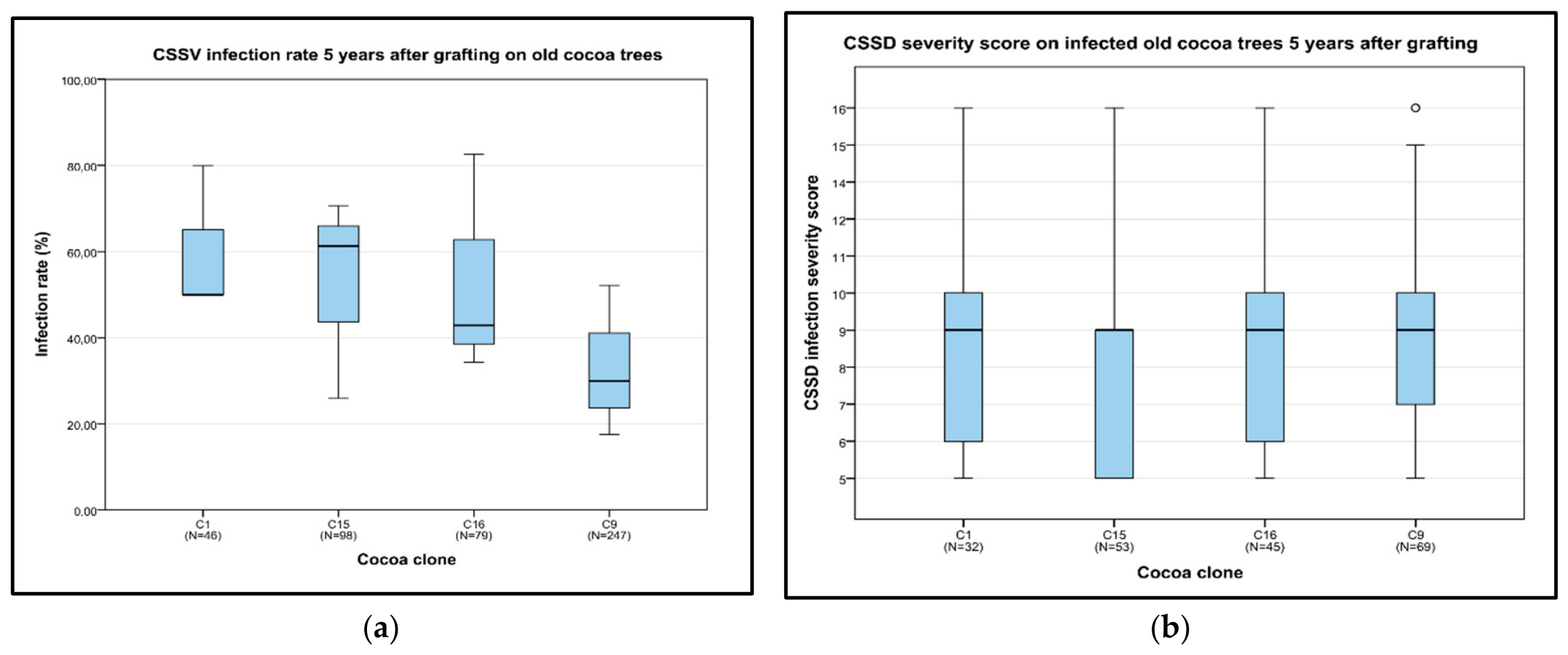
Figure 6.
CSSV infection status on Hybrids cocoa variety after five years of planting on three farms in the Nawa region in Côte d’Ivoire.
Figure 6.
CSSV infection status on Hybrids cocoa variety after five years of planting on three farms in the Nawa region in Côte d’Ivoire.
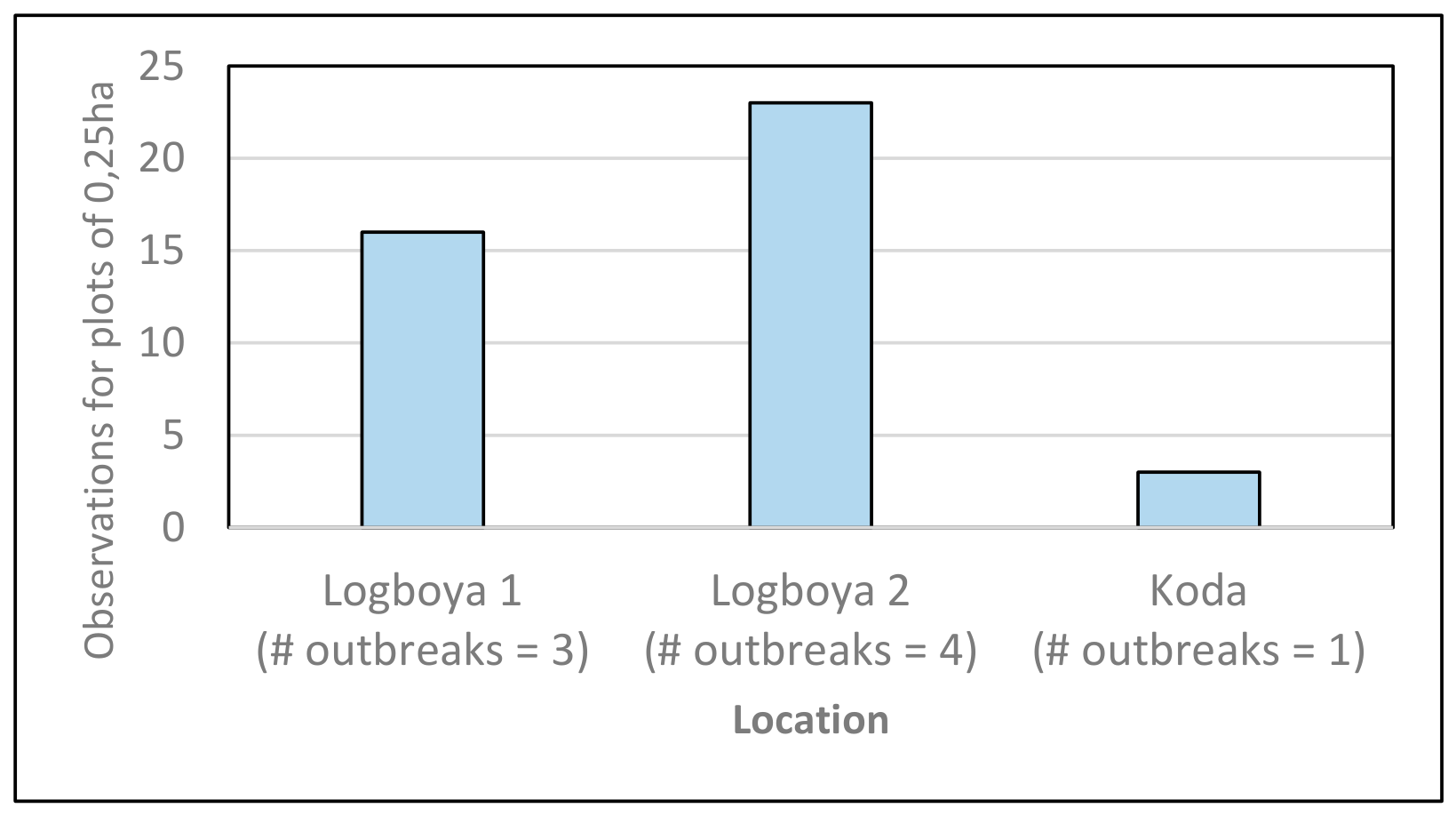
Figure 7.
PCR results for asymptomatic samples of cocoa leaves collected on CSSD outbreaks in fields at Soubré in Côte d’Ivoire: (a) Ladder graduation; (b) electrophoresis 0.8% agarose gel with light-spot at 400 bp indicated the presence of the CSSV (M: Ladder; # 1–17: well containing the product of the DNA amplification of cocoa leaves samples analyzed; T−: Negative control; T+: Positive control).
Figure 7.
PCR results for asymptomatic samples of cocoa leaves collected on CSSD outbreaks in fields at Soubré in Côte d’Ivoire: (a) Ladder graduation; (b) electrophoresis 0.8% agarose gel with light-spot at 400 bp indicated the presence of the CSSV (M: Ladder; # 1–17: well containing the product of the DNA amplification of cocoa leaves samples analyzed; T−: Negative control; T+: Positive control).
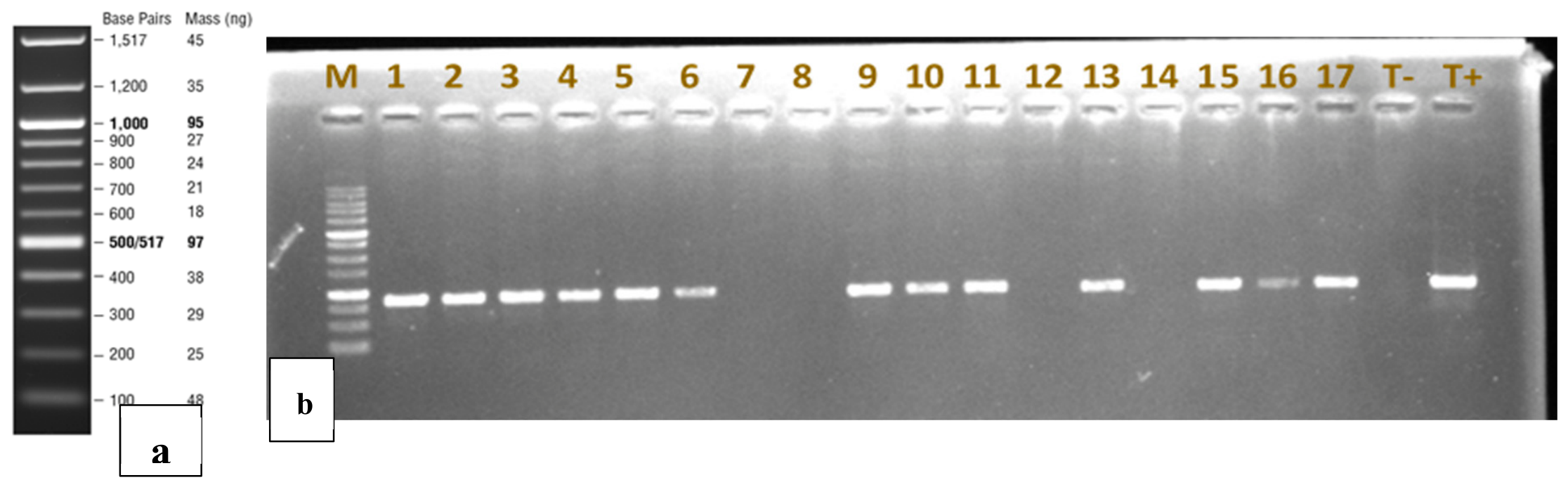
Figure 8.
Latency area and missed trees in the cutting out process compared to the officially recommended cocoa tree removal area.
Figure 8.
Latency area and missed trees in the cutting out process compared to the officially recommended cocoa tree removal area.
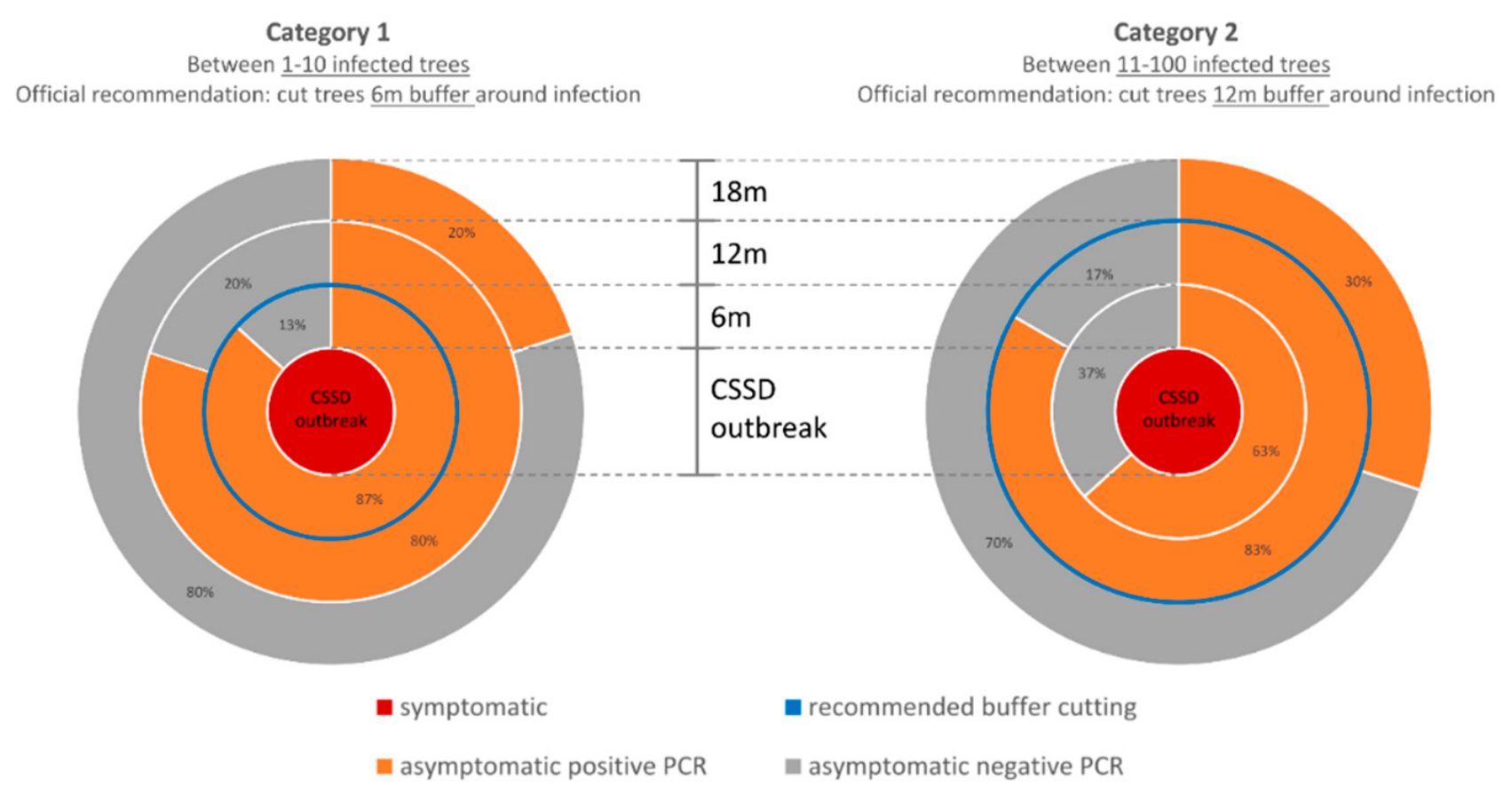

Table 1.
Distribution of CSSD prevalence per technology.
| Variable | No Infection Plots | CSSD Infection Plots | Overall | p Value |
|---|---|---|---|---|
| 0.076 | ||||
| Total plots (%) | 171 (94.48%) | 10 (5.52%) | 181 | |
| GVV | 57 (33.33%) | 7 (70.00%) | 64 (35.36%) | |
| RPG | 58 (33.92%) | 1 (10.00%) | 59 (32.60%) | |
| RPH | 56 (32.75%) | 2 (20.00%) | 3 (32.04%) |
Table 2.
Trends of estimated cocoa yield (Kg/ha) on symptomatic and asymptomatic plots through the GVV technology of the rehabilitation pilot in the Nawa region.
Table 2.
Trends of estimated cocoa yield (Kg/ha) on symptomatic and asymptomatic plots through the GVV technology of the rehabilitation pilot in the Nawa region.
| Parameters of Pods Production | Cocoa Yield and CSSD Status on GVV Plots (0.25 ha) in Q1 and Q3 in 2021 | p Value | ||
|---|---|---|---|---|
| Asymptomatic Plots (N = 52) | Symptomatic Plots (N = 16) | Total of Plots (N = 68) |
||
| Mean (SD) | 1533.73 (857.97) | 1315.68 (491.2) | 1482.42 (789.18) | 0.474 |
| Median (Q1; Q3) |
1479.5 (1111.25; 1884.5) |
1388 (1069.75; 1616) |
1,460,000 (1111.25; 1834.5) |
|
Table 3.
Prevalence and incidence rate on CSSD-infected farms in the pilot at five years after establishment in field.
Table 3.
Prevalence and incidence rate on CSSD-infected farms in the pilot at five years after establishment in field.
| Technologies | Villages | Prevalence (%) | Incidence (%) At 3 Months After The Initial Recording |
|---|---|---|---|
| GVV | Krohon A | 34.96 | 15.38 |
| Krohon B | 28.7 | 49.1 | |
| Petit Tiemé | 16.89 | 9.13 | |
| RPH | Lobogba 1 | 2.3 | 6 |
| Lobogba 2 | 2.92 | 4.5 | |
| Koda | 0.5 | 0 |
Disclaimer/Publisher’s Note: The statements, opinions and data contained in all publications are solely those of the individual author(s) and contributor(s) and not of MDPI and/or the editor(s). MDPI and/or the editor(s) disclaim responsibility for any injury to people or property resulting from any ideas, methods, instructions or products referred to in the content. |
© 2026 by the authors. Licensee MDPI, Basel, Switzerland. This article is an open access article distributed under the terms and conditions of the Creative Commons Attribution (CC BY) license (http://creativecommons.org/licenses/by/4.0/).
Copyright: This open access article is published under a Creative Commons CC BY 4.0 license, which permit the free download, distribution, and reuse, provided that the author and preprint are cited in any reuse.


