

Submitted:
25 May 2026
Posted:
27 May 2026
You are already at the latest version
Abstract
The rapid expansion of biologic therapies for immune-mediated inflammatory diseases has raised significant clinical concerns regarding malignancy risk, particularly for patients with a history of cancer. This narrative review explores the safety of targeted therapies across dermatology, rheumatology, respiratory medicine, and gastroenterology to guide clinicians in these therapeutic dilemmas. We conducted a non-systematic review of the literature, prioritizing longitudinal registry and real-world cohort data over clinical trials to better capture malignancy outcomes with long latency periods. Results indicate that tumor necrosis factor (TNF) inhibitors, which have the most extensive evidence base, do not consistently demonstrate an increased risk of overall malignancy or recurrence across specialties. Newer agents, including interleukin (IL)-17 and IL-23 inhibitors, show particularly reassuring safety profiles in both trial and registry data, with some evidence suggesting a potential reduction in certain cancer incidences. While dupilumab is associated with the potential unmasking of cutaneous T-cell lymphoma, overall cancer rates remain stable among users. Most clinical guidelines support an individualized, multidisciplinary approach involving oncology consultation. We conclude that current biologic therapies generally pose a lower malignancy risk compared to older systemic treatments. Future management requires validated decision frameworks and mandatory participation in real-world registries to refine long-term safety assessments.
Keywords:
malignancy
; biologic
; DMARD
; psoriasis
; rheumatoid arthritis
; Crohn’s disease
; asthma
; registry data
1. Introduction
Historically the oncology- immune mediated inflammatory disease therapeutic interface has been one of alignment with the use of cytotoxic agents such as cyclophosphamide and methotrexate in both disease types. This interface became more nuanced in the past 5 decades with the Nobel prize winning development of mono-clonal antibodies by Milstein and Kohler [1]. Since then, a transformative exponential rise has occurred in the armamentarium of monoclonal antibodies in both disease types (Figure 1, Table 1). B-cell depletion therapies such as rituximab have pivotal roles in both spheres, while disease modifying antirheumatic drugs (DMARDs) are limited to one sphere but their potentially deleterious effects on anti-tumor immunity have led to concerns about an increased risk of malignancy for patients [2,3,4,5]. This concern is even greater in patients with a history of cancer, where an increased cancer relapse rate could be a bystander effect of an otherwise quality of life transforming therapy.
Cancer and immune mediated inflammatory diseases are among the most common and increasing non-communicable diseases globally [6]. Clinicians can encounter clinical dilemmas of prescribing DMARDs in patients with a prior malignancy. While the available evidence does not support a deleterious effect in patients with cancer, the available evidence has shortcomings, most studies include long term survivors rather than patients with newly diagnosed cancer [7]. Patients with cancer were often excluded from pivotal studies. Furthermore, the range of available personalised therapies is expanding precluding even expert panels from formulating universal recommendations [8]. Available median follow up in many studies is limited (4.52 years in one recent metanalysis [9]) limiting reassurance for patients such as those with breast cancer where delayed relapse (5 years or more post diagnosis) is common. Finally, to address the informational needs of patients in these therapeutic dilemmas we need their insights. However the patient voice is missing from many of the available studies in this area. In 2025 the first ever study of the perspectives of patients with rheumatoid arthritis and concomitant cancer was published [10].
In light of the above shortcomings, it prompted us to establish a multidisciplinary group to review this area. This article is a narrative, non-systematic review of the literature across dermatology, rheumatology, respiratory, and gastroenterology. Relevant publications were identified through searches of PubMed and other search engines, supplemented by manual review of reference lists of key articles. Studies were selected based on relevance to the topic. Where available, registry and real-world cohort data are prioritised because malignancy outcomes are uncommon and often have long latency periods (Table 2).
Randomised clinical trials and their extensions can support short-term safety signals but are frequently underpowered for malignancy endpoints and commonly exclude patients with recent cancer (Table 3). As a result, clinical trial data are usually most useful when they explicitly include patients with a prior malignancy or report longer follow-up in relevant subgroups (Table 2) [11]. In our review we have incorporated relevant registry data bases and if clinical trials were included we favored open label extensions or longer periods of reporting (Table 2 and Table 3).
2.0. Malignancies in Patients with Auto-Immune Disease
2.1. Psoriasis
Malignancy is an important consideration in patients with immune-mediated conditions such as psoriasis. Whether psoriasis confers an independent increase in malignancy risk, or whether malignancy represents a comorbidity, particularly for site-specific cancers, has been examined in epidemiological studies and subsequent systematic reviews and meta-analyses [1]. The biological plausibility of an association is supported by the role of chronic inflammation in psoriasis and its contribution to carcinogenesis [1,2].
The most consistently reported associations are with immunosensitive malignancies, including lymphoma and skin cancers, although many data sources are not derived from prospective registry studies [3,4,5,6,7,8]. Other reported site-specific cancers include those of the oral cavity, larynx, pharynx, colon, lung, and kidney [3,8,9,10,11,12]. A 2015 systematic review found no increased overall malignancy risk across all cancers, lymphoma, melanoma, prostate, colorectal, and breast cancer other than non-melanomatous skin cancer [13]. Observed excess risks in other studies [3,4,5,6,7,8] may reflect treatment exposures, lifestyle factors, or surveillance bias.
The first meta-analysis by Trafford et al. evaluating cancer mortality in psoriasis demonstrated substantial attenuation of risk after adjustment for smoking, alcohol use, and obesity [1]. However, another systematic review and meta-analysis reported increased risks of selected solid tumours (respiratory tract, upper aerodigestive tract, urinary tract, and liver cancers), haematological malignancies (non-Hodgkin lymphoma), and skin cancers (squamous cell carcinoma and basal cell carcinoma) [14]. Smoking prevalence is high among patients with psoriasis [15], and certain site-specific cancers, including oesophageal and liver cancer, are independently associated with obesity, smoking, and alcohol consumption [16].
Older systemic therapies, including PUVA, cyclosporine, and possibly methotrexate, have also been associated with increased malignancy risk [17,18,19]. Adjustment for lifestyle factors may be methodologically complex, as these variables may lie on the causal pathway. Notably, few studies report duration of treatment exposure, underscoring the need for prospective pharmacovigilance registries.
Overall, observational evidence supports an association between psoriasis and selected malignancies, but whether psoriasis independently increases malignancy risk remains uncertain when treatment exposure, lifestyle confounding, and surveillance bias are considered [1].
2.2. Systemic Rheumatic Disease
Rheumatic diseases and malignancy have a complex bidirectional association. Dermatomyositis, polymyositis, rheumatoid arthritis, systemic lupus erythematosus, Sjögren’s syndrome, and systemic sclerosis are linked to increased cancer risk in and of themselves, and may occasionally represent paraneoplastic autoimmunity. Furthermore, immunosuppressive therapies used in these conditions can contribute to malignancy risk [20]. Malignancies can initially manifest with musculoskeletal symptoms affecting joints, muscles, or peri-articular tissues. Hematologic cancers, particularly leukaemia and lymphomas, are most frequently implicated, although solid tumours may also give rise to paraneoplastic rheumatic features [21]. Additionally, oncologic treatments can precipitate immune-mediated rheumatic syndromes.
Across multiple meta-analyses and large cohort studies, systemic rheumatic diseases are consistently associated with a modest to substantial increase in overall malignancy risk, although the magnitude and tumor type vary by condition [20,22]. Rheumatoid arthritis and systemic lupus erythematosus confer a small but significant elevation in overall cancer risk with a predominance of lymphoproliferative malignancies and lung cancer [23,24]. Systemic sclerosis is associated with a higher relative risk particularly for lung and selected solid organ cancers [25]. The strongest associations are observed in idiopathic inflammatory myopathies, especially dermatomyositis, where overall cancer risk is markedly elevated, with increased incidence across a broad range of solid tumours [26]. Extended myositis antibody panels further help the risk of malignancy stratification with Anti-TIF1-γ and anti-NXP2 having the strongest associations. Sjögren’s disease and ANCA-associated vasculitis also demonstrate increased overall malignancy risk, notably driven by non-Hodgkin lymphoma and selected solid tumours [27].
Collectively, these data highlight important disease-specific patterns of cancer susceptibility that have implications for risk stratification and malignancy surveillance in rheumatology practice.
2.3. Inflammatory Bowel Disease
The risk of colorectal cancer is increased in patients with IBD compared to the general population. A population based cohort study of over 96,000 patients with ulcerative colitis found that compared with those without UC, those with UC are at increased risk of developing colorectal cancer, are often diagnosed with less advanced colorectal cancer and are at increased risk of dying from it [28]. Regarding UC the duration, extent and activity of disease affect the likelihood of colorectal cancer developing [28,29,30,31].
Studies have shown a comparable risk of colorectal cancer in chronic Crohn disease involving the colon to UC [32,33]. A 1990 population based study found the relative risk of colon cancer was 2.5 in CD overall but if their disease affected the colon only the relative risk increased to 5.6 [32]. These findings are consistent across studies [34]. Other malignancies which have been reported in patients with CD liver, pancreas, lung, prostate, testicular, kidney and (squamous cell) skin cancers; endocrine tumours and leukaemia [35]. The strength of these associations is unclear however, one of the most consistent findings in other studies is an association with haematologic malignancies [35,36].
2.4. Chronic Airway Inflammatory Disease
Chronic airway inflammatory disorders such as asthma and Chronic obstructive pulmonary disease (COPD), although not prototypical immune-mediated inflammatory diseases, provide a relevant comparator for understanding malignancy risk in conditions characterised by chronic immune dysregulation and increasingly treated with biologic or targeted therapies.
Across large population-based studies, asthma is associated with a modest overall increased risk of malignancy, with reported hazard ratios for incident malignancy ranging from 1.19 to 1.44 across diverse populations and healthcare systems [37,38,39,40,41].
The most consistent and biologically plausible signal relates to lung cancer. Multiple cohort studies, including—the HUNT study- demonstrate higher lung cancer incidence among adults with active or partially controlled asthma compared with those without asthma, even after adjustment for potential confounders [42]. This association is observed in both smokers and never-smokers, although effect estimates are higher in current or former smokers [39,41,43]. A recent mendelian randomisation analyses further support a potential causal association between asthma genetic liability and lung cancer [43]. Associations with breast and stomach cancer have also been reported previously [37,44] potentially reflecting chronic inflammation pathways involved in asthma [45]. However, findings across studies are heterogeneous, and some studies report no association between asthma and overall cancer risk [46,47]. Further research is required to clarify underlying mechanisms and to better define risk estimates for non-lung cancers [38,48].
Similar observations have been made in COPD, where chronic airway inflammation confers an increased lung cancer risk independent of smoking, reinforcing the broader concept that persistent airway immune activation contributes to carcinogenesis [49].
3.0. Biologic and Targeted Therapies in the Context of Malignancy
Immunomodulatory agents and biologic therapies are used by many medical specialties for immune mediated disease and their use is rapidly expanding. They are targeted therapies which downregulate these overactive immune pathways, delivering improved outcomes but immunologic effects can be of concern in the setting of malignancy. Oncologists are often consulted when patients with a past or current malignancies require these systemic treatments. This complex patient cohort require careful consideration regarding the commencement or cessation of newer biologic treatments.
Generally, immunosuppressants may contribute to the development of new cancers and the recurrence of existing ones through several mechanisms, including reduced immunosurveillance [50], enhanced activity of oncogenic viruses [51], and direct DNA alteration [52]. These mechanisms vary significantly across different immunosuppressants and cancer types. The interplay between the chosen biologic agent, their specific malignancy type and the impact on their quality of life are all essential factors which require considered deliberation. There is often no direct, high-level evidence which exists to address these concerns. This review aims to explore the interface between medical specialities and oncologists for those patients with a chronic medical diagnosis requiring treatment with a biologic agent and a history or malignancy.
3.1. Drug Class Evidence
The available evidence for malignancy risk differs across drug classes and diseases, and is most robust where long-running registries and real-world cohorts exist. In contrast, randomised trials often have short follow-up and frequently exclude patients with recent malignancy, limiting their ability to quantify malignancy incidence or recurrence risk [53].
3.1.1. TNF-Inhibitors in Dermatology
Tumour necrosis factor (TNF) is a cytokine which exerts necrotising effects when exposed to tumour cells in vitro and is produced by activated T cells and macrophages. TNF is now known to have pro and antitumorigenic effects which are dependent on unique conditions, the type of producer and responder cell, the type of TNF receptor involved and on the tissue environment. TNF-inhibitors are a widely used treatment for inflammatory dermatoses, with the majority of data being in those patients with psoriasis. As previously discussed, patients with psoriasis may have an increased risk of malignancy, particularly nonmelanoma skin cancers and lymphomas [54]. A 2020 systematic review and meta-analysis of 112 studies and over 2 million patients found the overall prevalence of cancer in patients with psoriasis was 4.78%. They noted no increased risk of cancer in those patients treated with a biologic agent however, they did not include detail on the type of biologic agent [54]. The dermatology literature indicates that TNF inhibitors have been associated with increased risk of lymphoma and nonmelanomatous skin cancers [55,56,57]. A retrospective cohort study of Korean patients with RA or psoriasis taking TNF-inhibitors found no increase of incident cancer but did find an increased risk of lymphoma and leukaemia, particularly for infliximab [58].
The Psoriasis Longitudinal Assessment and Registry (PSOLAR) which is a US-based registry of over 12,000 patients found that TNF-inhibitor treatment for over 12 months increased the risk of lung cancer. However, they report wide confidence intervals and low event numbers [55]. Further research from the PSOLAR registry indicated no statistically significant risk of malignancy when individual anti-TNF agents were considered [59]. A systematic review of psoriasis patients completed in 2018 found no increase in malignancy, except for nonmelanomatous skin cancers, with TNF-inhibitors when compared to the U.S. population [60]. The ESPRIT registry similarly showed no significant increased cancer risk in patients with psoriasis treated with TNF-inhibitors over a 7 year period [61]. Cross-speciality evidence including phase II trials demonstrating the efficacy of infliximab in metastatic renal cell cancer, show the potential for underutilisation of these medications because of safety concerns and poor dissemination of relevant data [62]. An umbrella review of potential cancer risk associated with common medications included TNF-inhibitors but noted the pooled estimate in a larger scale meta-analysis did not demonstrate an increased risk (RR 0.95) [63].
Overall, available dermatology registry and synthesis data do not demonstrate a consistent increase in overall malignancy risk with TNF inhibitors in psoriasis, with the most consistent signals relating to nonmelanomatous skin cancer and selected site-specific outcomes [55,56,59,60,61]. There have been no prospective or randomised studies where patients with psoriasis and a history of malignancy are treated with an anti-TNF agent.
3.1.2. TNF-Inhibitors in Gastroenterology
Generally gastroenterologists use TNF-inhibitors to manage inflammatory bowel disease (IBD), which includes Crohn’s disease and ulcerative colitis. TNF-inhibitor data for IBD patients should be interpreted in the context of their use with thiopurines. It has been established that receiving thiopurines carries an increased risk of lymphoproliferative disorders, particularly when prescribed in addition to TNF-inhibitors [64,65]. A metanalysis in 2008 found no increased incidence of malignancy though patients with a history of malignancy were not included in the studies [66]. Axelrad et al. performed a retrospective analysis of 333 individuals with IBD with a history of cancer and noted no associated increased risk of incident cancer compared with patients who had not received an TNF-inhibitor or antimetabolite [67]. Comparable findings from a 2014 systematic review did not find an increased risk of malignancy in patients with IBD. Though patients with a history of malignancy were not included and the follow up period was maximum 1 year [68]. Similarly, pooled analysis of clinical trials for adalimumab found no increased cancer risk, unless it was co-prescribed with another immunomodulator which is reassuring for use as a monotherapy [69].
In the TREAT Registry study the minimum follow up period for active patients was approximately 5 years. They found no association of systemic therapy and malignancy [70]. A large Danish study found no increased overall cancer risk in IBD patients treated with TNF-alpha inhibitors after a median follow-up of 3.7 years. Current evidence indicates that TNF blockade alone does not substantially elevate long-term cancer risk, even with follow-up extending to 19 years [71]. Large cohort and synthesis studies continue to show no clear increase in overall incident cancer with anti-TNF monotherapy in IBD and the most consistent signals relate to nonmelanomatous skin cancer and potentially melanoma [72]. A recent retrospective review observed a low prevalence rate of cancer, even in the context of a wide variation of biologic and immunosuppressive treatments being used [73]. In patients with pre-existing malignancy, the most directly applicable evidence is observational, and available IBD data do not show an excess of new cancers among those exposed to anti-TNF agents [67].
3.1.3. TNF-Inhibitors in Rheumatology
Rheumatic diseases and cancer share complex bidirectional associations. Disorders such as dermatomyositis, rheumatoid arthritis (RA) and systemic lupus erythematosus (SLE) carry an elevated malignancy risk and, in some cases, may arise secondary to cancer-induced autoimmunity [74]. There is a paucity of data regarding cancer risk in patients with psoriatic arthritis (PSA) [54] but it is generally accepted that inflammatory arthropathies are associated with malignancy in and of themselves [75].
TNF-inhibitors are an essential biologic agent for the treatment of rheumatoid arthritis, psoriatic arthritis and spondyloarthropathies. The German biologics register (RABBIT) was set up to investigate malignancies in patients with RA receiving systemic therapy. They found no significant difference in the either the overall incidence of malignancies or recurrent malignancies in patients exposed to TNF-inhibitors or anakinra [76]. The British Society for Rheumatology (BSR) Biologics Register, a prospective observational study established in 2001, identified 293 patients with a prior history of malignancy treated with TNF-inhibitors and found no increased risk of incident malignancy when compared with those receiving DMARD therapy [77]. Additionally a systematic review for the 2019 update of the EULAR recommendations for the management of psoriatic arthritis did not reveal new malignancy signals for TNF-inhibitors [78].
A large cohort of RA patients from the Swedish cancer registry showed lymphoma risk was not elevated in anti-TNF treated patients when compared to other patient groups [79]. A 2006 [80] and 2011 [81] systematic review and metanalysis found TNF-inhibitors do not increase the risk of malignancy, particularly lymphoma. The 2006 review did note a significant increase in malignancy rate with higher doses of TNF-inhibitors [80]. A further study explored the incident cancer cases in over 13,000 patients between 1998 until 2005 (49,000 patient years) and found a positive association between biologic therapy and skin cancer but no association with biologic therapy and other malignancies. The biologics included with infliximab, etanercept, adalimumab and anakinra [82]. Similarly data from Swedish (Anti-Rheumatic Therapy in Sweden (ARTIS) and Danish (DANBIO) biologics registers, which included 8703 patients, found in patients with spondyloarthropathies, TNF-inhibitors were not associated with increased risks of malignancy [83]. This was noted in previous research from the DANBIO registry in 2013 for patients with RA [84]. A more recent systematic review published in 2025 similarly found no increased risk of malignancy with TNF-inhibitors though the median length of follow-up was 41 weeks (interquartile range of 24–64 weeks) [85].
A randomised non-inferiority trial comparing tofacitinib with anti-TNF therapy (median follow-up 4 years) reported an incident cancer rate of 2.9% (42/1451) in the tofacitinib group—statistically higher than anti-TNF therapy, though the absence of a conventional DMARD arm limits broader comparisons [86]. A Danish nationwide registry-based cohort study of RA patients looked at overall cancer numbers in several groups of patients taking systemic agents and found the TNF-inhibitor and bDMARD-naïve groups as comparable statistically to each other and to other RA patients taking tocilizumab/sarilumab, abatacept or rituximab [87]. Westermann et al. also reviewed the cancer recurrence risk with bDMARD treatment in patients with RA and a history of cancer (breast, colorectal, melanoma, bladder, endometrial and lung) and found no statistically significant increased hazards ratio for cancer recurrence for any type of DMARD, TNF-inhibitor or rituximab [88]. The BIOBADASER III registry data for RA patients from 2000–2023, found no increased cancer risk associated with a biologic agent or targeted synthetic DMARD when compared to TNF-inhibitors, though patients with a history of malignancy were excluded [89]. Similarly the Swedish Rheumatology Quality Register (2016–2020 prospective data) found reassuring hazard ratios for malignancy in patients receiving TNF-inhibitors, though follow up time was relatively shorter at less than 3 years [90].
The most recent EULAR guidelines recommends TNF inhibitors iin patients with a history solid organ malignancy, as it has the largest body of evidence indicating no significant association with malignancy [75]. Across rheumatology registries, TNF inhibitors have the largest evidence base in patients with prior malignancy, and recurrence signals have not been consistently demonstrated [75,76,77].
3.1.4. Anti-IL-23 Antibodies in Dermatology
The effects of interleukin(IL)-12, IL-23 and IL-17 on tumorigenesis, particularly regarding their inhibition, has not been fully elucidated [91,92]. Generally, anti-IL-23 antibodies are associated with lower rates of serious adverse events compared with TNF-inhibitors, likely reflecting their more targeted immunologic mechanism [93]. They are used by dermatology to control psoriasis and are also utilised for psoriatic arthritis. The VOYAGE 1 and 2 trials did include patients with a history of malignancy, without recurrence, for at least 5 years. Within this group of 20 patients, only two malignancies were reported following gusulkumab therapy [53].
Current evidence from large population-based studies and meta-analyses indicates that anti-IL-23 antibodies do not increase malignancy risk in patients with psoriasis or psoriatic arthritis, including those with a prior cancer history [94,95,96,97]. Overall, the incidence of total malignancies, nonmelanoma skin cancers, and other site-specific cancers in patients receiving anti-IL-23 antibodies is comparable to rates seen with TNF-inhibitors and placebo [94]. Some analysis suggests a potentially lower risk of non-Hodgkin lymphoma, hepatobiliary cancer, and basal cell carcinoma with anti-IL-23 antibody therapy [95]. The joint guideline from the American Academy of Dermatology (AAD) and the National Psoriasis Foundation (NPF) states that, while long-term data on the effects of guselkumab and other anti-IL-23 antibodies on solid organ and lymphoreticular malignancies remain limited, no safety signals have been identified to date [97].
3.1.5. Anti-IL-23 Antibodies in Gastroenterology
Anti-IL-23 antibodies are approved for moderate-to-severe Crohn’s disease and ulcerative colitis and are commonly used in patients refractory to TNF-inhibitor therapy [98,99,100,101].
Current evidence indicates that IL-23 inhibition does not increase malignancy risk in inflammatory bowel disease. Randomized controlled trials and meta-analyses report low rates of serious adverse events, including malignancy, with no signal of elevated cancer risk compared with placebo or other biologic classes [93,98,99,102].
Long term data is emerging but is largely from open-label extensions as opposed to registry-level population-representative data for anti-IL-23 antibody agents in IBD. The LUCENT-3 open label extension (to week 152) found malignancy occurred in 0.3% of patients without concerning safety signals [103]. Risankizumab is being examined in the ongoing FORTIFY open-label extension (approximately 3 years reported) and 2 malignancies in total have been reported, excluding nonmelanomatous skin cancer [104]. The phase 3 GALAXI trials for guselkumab and Crohn’s disease have not indicated an increased risk for malignancy at induction or maintenance phases [105]. A further systematic review including patients with UC and Crohn’s disease demonstrated reduced serious adverse events and no increase in malignancy during both induction (12 week) or maintenance (52 week maximum) phases [106].
Anti-IL-23 inhibitors are relatively new agents in gastroenterology and as such, robust registry data with detailed malignancy incidence are not yet available. Extrapolation from malignancy rates dermatology and rheumatology literature does not indicate an elevated risk [93]. The American Gastroenterological Association (AGA) notes that, while long-term population-level data remain limited, no malignancy-related safety concerns have been identified to date [107]. Importantly, although trial follow-up remains relatively short, there is no emerging signal of increased incident malignancy, and current data do not suggest excess recurrence risk in the limited cohorts including prior malignancy [99,103].
3.1.6. Anti-IL-23 Antibodies in Rheumatology
Anti-IL-23 antibodies are incorporated into treatment algorithms for psoriatic arthritis but are generally not recommended for axial disease. Findings regarding malignancy across systematic reviews have been somewhat inconsistent. A 2019 systematic review and metanalysis by Bilal et al. pooled results from 74 clinical trials and concluded that those exposed to biologic agents, compared to placebo, had an increased risk of opportunistic infections and malignancy [108]. They did not group the various biologic agents by class and included multiple rheumatologic conditions. They also included nonmelanomatous skin cancers with all other malignancies and grouped extension trials with randomised control trials. These factors may have inflated the malignancy risk for those rheumatology patients receiving these agents [108]. Taken together the interpretation of malignancy risk is challenging as it may have been overstated [108].
Subsequently a meta-analysis of 48 randomized clinical trials, including studies in rheumatology, dermatology and gastroenterology populations, found no evidence of an association between anti-IL-23 antibodies and cancer incidence, with serious adverse events occurring infrequently. The review concluded that anti-IL-23 antibodies demonstrate a favourable overall safety profile with no signal for malignancy [109]. A comprehensive review, published in the Lancet, of anti-IL-23 antibodies across chronic inflammatory diseases, including psoriatic arthritis, found accumulating long-term safety data showing comparable rates of serious adverse events and infections to placebo, with no clear signal of increased malignancy risk [93].
3.1.7. Anti-IL-17 Antibodies in Dermatology
IL-17 is a powerful pro-inflammatory cytokine and has been shown to contribute to the initiation, growth and proliferation of multiple malignancies [92]. Elevated levels of IL-17 have been associated with worse outcomes in several malignancies therefore, extrapolating from this suggests anti-IL-17 antibodies may reduce malignancy risk [92]. Kridin et al. reported that treatment with anti–IL-17 inhibitors was associated with a reduced incidence of several malignancies, including non-Hodgkin lymphoma, colorectal, hepatobiliary, and ovarian cancers, as well as melanoma and basal cell carcinoma [95].
Registry data, including findings from Psonet, have not demonstrated an association between biologic therapy and malignancy though the exact number of patients who received anti-IL-17 agents is not provided [110]. This study was limited by insufficient statistical power to assess and compare risks across specific agents or cancer types [110]. Battista et al. 2024 retrospectively reviewed 20 adult patients of which 15 had a preceding diagnosis of malignancy prior to biologic treatment. The most frequently prescribed biologic agents were anti-IL-17 antibodies (47.7%) and anti-IL-23 antibodies (36.8%) which demonstrated sustained efficacy with a favourable safety profile [111]. A pooled analysis from 28 clinical trials of secukinumab and a post-marketing safety surveillance in psoriasis, psoriatic arthritis and ankylosing spondylitis patients found the rate of malignancy was consistent with previous reports and more in depth data sets for longer time periods did not increase malignancy numbers, indicating a favourable safety profile [112]. More recent reviews of the newer anti-IL-17 antibodies, bimekizumab, have shown no increased signal for malignancy as part of their 3 year extension trial [113].
Olivares-Guerrero et al. assessed the safety profile of biologic drugs used for psoriasis in those patients included in the Spanish Registry of Adverse Events of Biological Therapy (BIOBADADERM), compared to that of adalimumab [114]. They noted that ixekizumab, secukinumab and guselkumab were associated with a lower risk of benign, malignant and unspecified neoplasms compared to adalimumab [114]. A recent study with some data for Secukinumab, found malignancy rates were low and generally reassuring [115]. Papp et al. described the outcome from a multidisciplinary expert panel and concluded that those patients with psoriasis and a history of treated solid organ tumours with favourable prognosis, have similar outcomes to those without solid organ tumours if treated with systemic biologic therapies. They highlighted that individuals with a poor prognosis in the context of solid organ tumours, the quality of life benefits of treating psoriasis may outweigh the theoretical risks [116]. Across dermatology data, IL-17 inhibition has not demonstrated an increased malignancy signal, and limited observational data in patients with prior solid organ malignancy are reassuring [111,116].
3.1.8. Anti-IL-17 Antibodies in Rheumatology
Anti-IL-17 antibodies are generally used by rheumatologists to treat psoriatic arthritis and axial spondyloarthropathies. They were included in the systematic review by Bilal et al. which concluded that those exposed to biologic agents may be at increased risk of malignancy [108]. However, subgroup analyses for individual anti-IL-17 agents did not reach statistical significance, likely due to small sample sizes and short follow-up [108]. Long-term extension trials and population-based studies in psoriasis and psoriatic arthritis, including cohorts with rheumatologic manifestations, show low exposure-adjusted malignancy rates with IL-17 inhibitors, with no signal of increasing risk with continued treatment [94]. The long-term safety of bimekizumab in adult patients with axial spondyloarthritis or psoriatic arthritis was evaluated in pooled results from integrated phase IIb/III clinical studies with a median exposure of 116 weeks. They reported most malignancies as singular events and no specific trends were observed [117]. They illustrated a reassuring safety profile, even at higher doses [117].
The brodalumab pharmacovigilance report, which included 7 years of data, found no new safety signal for malignancy with the crude rate of malignancy in 7 years of 1.01/100 patients which was less than in PSOLAR (1.78/100 patients) [118,119]. Similarly the data for ixekizumab is reassuring with observed malignancies in a pooled analysis of PSO and PSA data showing no increase incidence of cancer compared with the US population [120]. 5 year post marketing safety data for Secukinumab was also reassuring [121]. Longer term, prospective pharmacovigilance data is lacking for the newer IL-17 inhibitors and safety is inferred from other agents and trial data.
3.1.9. Anti-IL-17 Antibodies in Gastroenterology
Anti-IL-17 antibodies are not used in gastroenterology as trials in CD showed clinical deterioration rather than improvement. Their blockade impairs mucosal barrier function and can enhance intestinal inflammation, making them unsuitable for IBD. For this reason, anti-IL-17 antibodies are generally avoided or contraindicated in patients with established IBD [122].
3.1.10. Ustekinumab in Dermatology
Ustekinumab targets the shared p40 subunit of both IL-12 and IL-23, both of which play an important role in carcinogenesis. IL-23 specifically, plays a vital role in gut tumorigenesis [123]. In dermatology literature, PSOLAR registry data has shown no increased risk of malignancy with ustekinumab for individuals prescribed treatment for less than or greater than 12 months [55].
The AAD/NPF guidelines state that ustekinumab may be used in patients with a prior solid-tumor malignancy who have not responded to other therapies [97]. A 2012 study of cumulative safety data from 4 studies, with patients with psoriasis exposed to ustekinumab for up to 3 years, found that rates of malignancies, excluding nonmelanomatous skin cancer, were not increased and were in line with rates in the general US population [124]. A recent study found ustekinumab showed a trend toward lower 5-year cancer risk compared with adalimumab, though this was not statistically significant without a 24-month lag [115].
3.1.11. Ustekinumab in Rheumatology
Ustekinumab is used for psoriatic arthritis, systemic lupus erythematosus and giant cell arteritis [125]. There is a paucity of large, long-term ustekinumab studies focused exclusively on psoriatic arthritis, and registry data remain limited. A meta-analysis of 48 randomized trials in rheumatologic diseases reported that serious adverse events and malignancies were uncommon with anti–IL-23 therapies, including ustekinumab. While IL-12/23 p40 inhibitors showed slightly higher overall adverse event rates than IL-23 p19 agents, cancer incidence was not linked to IL-23 pathway blockade. Overall, ustekinumab and other IL-23 inhibitors demonstrated a favourable safety profile with no signal for increased malignancy risk [109]. The 3-year results from the PsABio real-world study of psoriatic arthritis noted 3/494 malignancies in the ustekinumab group and 4/557 in the anti-TNF group, when a lag time of 1 year was applied indicating a reassuring safety profile [126].
A study by Fiorentino et al. from the PSOLAR psoriasis registry found no increase in malignancy risk with ustekinumab in patients treated for over 12 months when compared to no ustekinumab treatment [55]. A 2019 study which integrated the 1 year safety data from 12 ustekinumab registrational trials included patients with moderate-severe psoriasis, psoriatic arthritis, or Crohn’s disease and found low and comparable incidences of nonmelanomatous or solid organ malignancies with placebo groups after 1 year of treatment [127]. Overall, ustekinumab has a reassuring safety profile for rheumatologic conditions though some data has been extrapolated from other inflammatory conditions.
3.1.12. Ustekinumab in Gastroenterology
Ustekinumab is used to treat IBD. The 5 year follow-up data in CD from the IM-UNITI ustekinumab trial noted malignancy rates remained low, and concomitant therapies did not appear to affect ustekinumab’s safety or efficacy however, the sample size may be insufficient to identify rare events [128]. A 2023 meta-analysis of head-head cohort trials found that ustekinumab had a reassuring safety profile, particularly compared to TNF-inhibitors [129]. IBD data was aggregated in a meta-analysis of 18 randomised controlled trials and explored anti-IL-23 antibodies, including ustekinumab, in moderate-severe CD [130]. It observed a lower risk of adverse events than placebo but did not include malignancy or cancer incidence as a distinct endpoint or provide pooled data on malignancy risk [130].
A retrospective cohort study of 390 patients with IBD and a history of cancer found exposure to ustekinumab or vedolizumab does not appear to be associated with an increased risk of subsequent new or recurrent cancer [131]. Additionally, final pooled safety analysis of 2575 patients with IBD treated with ustekinumab, found malignancy events were not reported more frequently in ustekinumab treated patients [99]. Among IBD biologics, ustekinumab has one of the more reassuring datasets in patients with prior malignancy based on available retrospective cohort evidence [131].
3.1.13. Tocilizumab in Rheumatology
Tocilizumab is used to treat RA, giant cell arteritis and juvenile idiopathic arthritis. An evaluation of the tocilizumab therapy in human cancers describes the potential use of this anti-IL-6 antibody to supress IL-6 in tumour microenvironments, benefitting patients [132]. Current evidence indicates that tocilizumab is not associated with an increased malignancy risk in rheumatologic patients compared with DMARDs, TNF inhibitors, or other biologic therapies. Large cohort studies and meta-analyses consistently show reassuring hazard ratios for invasive solid and hematologic cancers (excluding nonmelanomatous skin cancer) [133,134]. However, higher risk groups such as nursing home residents, patients with pre-existing malignancies and rituximab users were excluded from that cohort study [134].
Integrated safety data from tocilizumab trials with a follow up of mean 2.4 years did not show and increased risk of malignancy [135]. A further meta-analysis has found no apparent increase in the rate of malignancy compared to controls [136]. Data for 1496 RA patients followed for a mean 32 months, from the French national registry ‘REGATE’ found no additional risk factors of cancer.
3.1.14. Anti-Integrin Medications in Gastroenterology
Anti-integrin therapies such as vedolizumab and natalizumab block leukocyte trafficking into inflamed tissue, thereby reducing immune-driven inflammation. Current evidence indicates that anti-integrin therapies, including vedolizumab and natalizumab, are not associated with an increased malignancy risk in gastrointestinal diseases such as Crohn’s disease [137]. Meta-analyses and systematic reviews of randomized trials and observational cohorts consistently show no elevation in overall cancer, lymphoma, or skin cancer compared with placebo or other biologics [137,138,139]. Pooled analyses likewise demonstrate no statistically significant increase in malignancy for either gut-selective agents (vedolizumab) or non–gut selective agents (natalizumab), with relative risks near 1 and broad confidence intervals [137,138].
3.1.15. Anti-IL-4 and Anti-IL-13 Antibodies in Dermatology
Dupilumab and IL-13 pathway inhibitors have a generally reassuring malignancy safety profile in clinical trials, but observational studies raise specific concerns regarding cutaneous T-cell lymphoma (CTCL) and diagnostic unmasking. Dupilumab is a human monoclonal IgG4 antibody that inhibits IL-4 and IL-13 signalling by binding to the IL-4Rα subunit, thereby blocking the inflammatory pathways central to type 2 immune-mediated diseases [141]. Dupilumab is used to treat of moderate-to-severe atopic dermatitis in adults and children, as well as for prurigo nodularis and other type 2 inflammatory conditions [141,142].
Tralokinumab and lebrikizumab, both anti-IL-13 antibodies approved for moderate-to-severe atopic dermatitis in adults and adolescents [141]. The SOLO 1 and SOLO 2 studies for AD utilising dupilumab did not identify any signal for malignancy. The patient population was median age 36 and they were followed up for 16 weeks [143]. A 5 year open label extension study for patients diagnosed with AD did not find any association with malignancy [144]. Case series utilising dupilumab in patients with advanced solid organ cancer have indicated that AD can be safely controlled despite a malignancy diagnosis [145,146]. A pooled analysis of phase II and III placebo-controlled clinical trials of tralokinumab for moderate to severe AD did not show any increased risk of malignancy compared to placebo up to 52 weeks [147]. A 2020 systematic review of anti-IL-13 antibodies highlighted an excellent safety profile [148].
Several population-based studies, pharmacovigilance reports, and systematic reviews have suggested a possible association between dupilumab treatment for atopic dermatitis and an elevated risk of cutaneous T-cell lymphoma (CTCL). CTCL can present in a clinically similar way to AD and is associated with the newer treatments for AD and anti-IL-13 antibodies are implicated in exacerbating or negatively impacting the severity of CTCL [149]. In a large retrospective cohort analysis, dupilumab exposure was linked to a markedly higher likelihood of developing CTCL, with the majority of cases emerging more than a year after treatment initiation. No corresponding increase was observed for other types of cutaneous or lymphoid cancers [150]. These data support an association rather than proof of causation. Current evidence does not indicate that dupilumab or anti-IL-13 therapies exert a direct oncogenic effect, and the leading explanation is unmasking or acceleration of pre-existing malignant clones in patients misclassified as having AD or in whom early CTCL was not recognized [141,142]. Although data on anti-IL-13 agents such as tralokinumab remain limited, similar theoretical concerns exist due to their overlapping immunologic pathways.
Interestingly, the cytokine IL-13 is has a positive impact on survival in colorectal cancer [151]. However, elevated IL-13Rα2 (a cell surface receptor that binds IL-13 with high affinity) expression is frequently linked to tumour invasiveness, advanced disease stage, and metastatic potential, contributing to a poorer prognosis in malignancies such as glioblastoma, colorectal cancer and breast cancer [60,61,62]. Further research is needed to tease out the link between IL-13, CTCL and other malignancies.
3.1.16. Anti-IL-4/IL-13 Pathway Biologics in Respiratory Medicine
Anti- IL-4/Anti-IL-13 pathway biologics are utilised in respiratory medicine to treat severe asthma and, increasingly, COPD. In a large US cohort, dupilumab-treated patients demonstrated a higher incidence of lymphoma, particularly T/NK-cell lymphomas- compared with those on standard inhaled corticosteroid/long-acting β-agonist therapy. Despite this, overall cancer rates were unchanged, and all-cause mortality was lower among dupilumab users [152]. Randomized trials and meta-analyses in asthma and COPD populations have shown no increased risk of solid tumours or other hematologic cancers with dupilumab, and long-term data up to five years continue to support an overall favourable safety profile, aside from the observed lymphoma signal [152,153,154,155,156].
For tralokinumab and lebrikizumab, clinical trials and pooled analysis report no increased incidence of lymphoma or other malignancies, with no treatment-related cancers identified [157,158,159]. However, the trials included in the systematic reviews generally excluded patients with a prior malignancy, limiting conclusions in this subgroup [157]. Pre-clinical and clinical evidence reviewed by Braddock et al. found no evidence of elevated cancer risk associated with IL-13 pathway inhibition [160].
3.1.17. Anti-IL-5 and IL-5R Therapies—Respiratory
Anti-IL-5 biologics (mepolizumab and reslizumab) and the IL-5 receptor antagonist bendralizumab are widely used in severe eosinophilic asthma and have emerging roles in the management of COPD. Current evidence from randomized trials, meta-analyses, and post-marketing surveillance shows no increased malignancy risk associated with anti-IL-5 therapies s for these conditions [161,162]. Large systematic reviews, including a Cochrane analysis report no additional cancer risk compared with placebo, and long-term extension studies (up to 4.5 years) support a favourable and sustained safety profile [162,163]. A 5-year comparative safety analysis of benralizumab and mepolizumab noted small and similar numbers of malignancies across both studies [161].
3.1.18. Omalizumab in Respiratory Medicine
Omalizumab, an anti-IgE monoclonal antibody, is established in the management of severe allergic asthma and chronic spontaneous urticaria. Early pooled clinical trial data reported malignancies in 0.5% of omalizumab-treated patients compared with 0.2% of control subjects [164], leading to inclusion of malignancy as a potential risk in the product label. However, subsequent pooled analysis in 2012 found no association between omalizumab treatment and malignancy risk, with a rate ratio below one implying that a causal link between omalizumab use and cancer development is unlikely [164].
Similarly, The EXCELS observational study, with a median follow-up of five years, found no significant difference in cancer incidence between omalizumab users and controls [165]. However, the follow-up duration was insufficient to account for cancers with a long latency period. Overall, omalizumab is considered safe with no malignancy signals in recent research [164,165].
3.1.19. Omalizumab in Dermatology
Long-term data show no evidence of increased malignancy risk in patients with chronic urticaria treated with omalizumab. Large real-world and multicentre cohort studies with follow-up periods of up to eight years confirm its favourable long-term safety, with no treatment discontinuations or malignancy signals reported [166,167]. Furthermore, meta-analyses and systematic reviews of clinical trials and observational studies consistently indicate that omalizumab is well tolerated, with malignancy not identified as a safety concern [168,169].
Recent comprehensive reviews across all approved indications likewise conclude that cancer risk remains comparable to background rates, and post-marketing surveillance has revealed no new safety issues [170]. Overall contemporary evidence supports a neutral malignancy risk profile for omalizumab across respiratory and dermatologic indications [164,165,166,167,169,170].
3.2. Current Guidelines
3.2.1. Dermatology
Regarding the dermatology guidelines, there are no cancer-specific recommendations provided or recommendations for particular biologics in the setting of malignancy. The AAD offers the most detailed discussion, stating that TNF inhibitors are not associated with an increased malignancy risk and can be used in patients with a previous cancer diagnosis. The guideline supports ustekinumab in this setting, advises that further evidence is needed for IL-17 inhibitors, and does not recommend IL-23 inhibitors for patients with a history of malignancy [97]. In contrast, the EADV takes a more permissive view, noting that TNF inhibitors, ustekinumab, and IL-17/23 inhibitors may be considered after consultation with oncology [56]. The BAD stresses individualized decision-making with multidisciplinary involvement but does not endorse or exclude specific biologic classes [171]. These differing positions underscore the complexity of managing psoriasis in patients with malignancy and highlight the need for clearer, more unified international guidance. (Table 4 and Table 5)
3.2.2. Gastroenterology
The ECCO, AGA, and ACG guidelines all provide structured, evidence-based assessments of malignancy risk associated with biologic therapy in inflammatory bowel disease [107,140,172]. ECCO offers the most detailed guidance, emphasizing differential malignancy risks across therapeutic classes—highlighting the established association between thiopurines and lymphoma and noting the absence of a clear cancer signal with newer agents such as vedolizumab and Ustekinumab [140]. The AGA similarly evaluates malignancy risk across biologics, concluding that anti-TNF agents carry a small but measurable lymphoma risk, whereas gut-selective and IL-12/23–targeted therapies have reassuring safety profiles [107]. The ACG guidelines reinforce these themes, underscoring the elevated cancer risk with thiopurines and the comparatively lower risk with targeted biologics, and advising individualized treatment in patients with current or prior malignancy [172]. Together, these guidelines consistently position vedolizumab and ustekinumab as preferred options when malignancy risk is a clinical concern (Table 4 and Table 5).
3.2.3. Rheumatology
The EULAR, ACR, and BSR guidelines all address malignancy considerations in the use of biologic agents [75,173,174]. The 2024 EULAR “Points to Consider” indicate that current evidence regarding the use of TNF inhibitors in patients with a prior history of malignancy is generally consistent and reassuring, demonstrating no significant increase in cancer recurrence compared with other therapeutic options. Nonetheless, EULAR advises that treatment decisions should be individualized, carefully considering the nature and timing of the previous cancer, the patient’s disease status, and made in collaboration with oncology specialists to ensure an informed and multidisciplinary approach to care [75]. They note particularly reassuring data for IL-17 and IL-12/23 inhibitors [75]. ACR similarly incorporates comparative malignancy evidence, noting no clear increased risk with newer non-TNF biologics [173]. BSR emphasises the favourable malignancy profile of IL-17 and IL-12/23 inhibitors [174]. Collectively, these guidelines support targeted non-TNF biologics when malignancy risk is a key clinical concern. Rituximab can also be used for RA when lymphoma risk is a concern (Table 4 and Table 5).
3.2.4. Respiratory Medicine
The 2026 Global Initiative for Asthma (GINA) [175,176], American Thoracic Society/European Respiratory Society (ATS/ERS) [177], and British Thoracic Society (BTS) [178] severe asthma guidelines provide detailed recommendations on the use of biologic therapies but do not explicitly address malignancy risk or provide guidance for patients with a cancer history. All three documents focus on efficacy, eligibility criteria, and general safety monitoring, without commenting on long-term oncologic outcomes. As a result, clinicians must rely on trial data and post-marketing evidence, rather than formal respiratory guidelines, when considering biologic therapy in patients with prior malignancy (Table 4 and Table 5).
4.0. Discussion
The interface between oncology and medical specialities prescribing biologic agents is clinically complex and requires a nuanced approach. The majority of conditions which are treated with biologic agents are chronic and mediated by immune dysregulation and chronic systemic inflammation [93]. Modern biologic treatments have radically improved outcomes for patients and have transformed our ability to treat safely and effectively though no treatment is without risk. Some patients may have been treated with historical therapies, like thiopurines, which have contributed to perceived elevated malignancy risk [179].
Some chronic inflammatory conditions may be associated with an increased risk of malignancy. For example, meta-analysis of 112 studies involving more than two million individuals with psoriasis or psoriatic arthritis reported a modest increase in overall cancer risk among patients with psoriasis, with a relative risk of 1.21 [54]. However, appropriate and effective disease control for inflammatory conditions improves the symptoms of the affected tissue, positively impacts systemic inflammation and contributes to overall health and general wellbeing [110,125,180,181,182].
This review has shown that reassuring data is emerging from pharmacovigilance registries and large prospective studies including many inflammatory conditions [55,119]. Evaluating true malignancy risk with new therapies is difficult as many malignancies have long latency periods and occur infrequently, even in the general population. Large patient numbers over prolonged periods are required to fully assess risk. Patients with a history of malignancy are often excluded from clinical trials with some exceptions [53]. Clinical trials often have relatively short follow-up periods and recruit only younger, generally well individuals and as such cannot account fully for malignancy risk. The global population is ageing and the variety of biologic therapies available is increasing. The number of patients with cancer-related comorbidities and those living beyond cancer treatment is steadily rising [183].
When oncologists and medical specialities are called to discuss malignancy risk with patients who require biologic medications, the discussion should be balanced, evidence-based and generally reassuring. Patients with a newly diagnosed malignancy of any type are understandably anxious and vulnerable to unnecessary avoidance of biologic therapies to treat their chronic disease. In the situation of an active or metastatic malignancy, particularly of an immunosensitive type, an individualised approach is required as the data regarding specific malignancies and named biologic drugs is limited to low quality data and case reports [184]. The impact on a patients quality of life from uncontrolled psoriasis, RA or IBD is significant. Drugs may need to be stopped temporarily in the event of a newly diagnosed malignancy but undertreating this group of inflammatory conditions because of a theoretical impacts on immunosurveillance and cancer risk is suboptimal.
The majority of data reported is reassuring for these targeted immune therapies and larger studies with longer follow-up times and of higher quality data support this. Where the question is safety in pre-existing malignancy, the most informative evidence is observational and registry-based, including cohorts that explicitly evaluate new or recurrent cancer following biologic exposure, such as BSRBR in rheumatology and IBD cohorts including patients with prior cancer [67,77,131]. Clinical trial data are generally supportive but usually not definitive for malignancy outcomes, except when trials include relevant prior-cancer subgroups or provide longer follow-up for malignancy events [53,99,103,185].
Guidelines for dermatology [56,97,171], rheumatology [173,174] and gastroenterology [65,172,186] recommend discussion with oncology colleagues in the setting of a newly diagnosed or historic malignancy. Inter-speciality collaboration, attention to emerging data and participation in large scale pharmacovigilance registries is essential to further our understanding of this complex area and to better treat our patients.
Across the conditions reviewed, the key limitation remains the relative absence of high-level evidence directly addressing recurrence risk in patients with prior malignancy. Where available, registry studies and retrospective cohorts provide the most clinically relevant signals, while randomised trials primarily inform short-term safety in selected populations. Case reports and case series can offer some additional evidence.
5.0. Conclusions
This review has described the safety profiles of many biologic agents with regards to malignancy risk and has examined cross speciality data. In general, biologic agents can be considered safer than older immune-suppressants or DMARDs. Many biologic agents are considered to minimally increase the risk of non-melanoma skin cancer including TNF-inhibitors, anti-IL-17 and anti-IL-23 agents.
When a patient with malignancy and a chronic immune mediated inflammatory disease requires systemic therapy, the following points are of relevance. Biologic agents such as TNF-inhibitors may be of concern for an active immune-sensitive cancer such as lymphoma, but reassurance for solid organ cancers can be drawn from rheumatology data and EULAR guidelines. When discussing individual agents with favourable safety profiles, newer biologics such as anti-IL-17 and -23 agents have less long-term data however their preclinical studies and pharmacovigilance data is particularly reassuring. Anti-IL-23 agents have shown positive safety signals when trialed in those with a history of malignancy, although the numbers were small. There is a concern regarding dupilumab and the potential ‘unmasking’ or association with CTCL and further exploration is warranted. There is a clear need for validated decision frameworks that incorporate cancer type, stage, prior therapies, and latency, alongside the clinical impact of chronic immune mediated diseases.
The number of younger patient (less than 50 years old) diagnosed with new malignancy is increasing globally so the number of patients prescribed these agents in the setting of cancer will undoubtedly increase [187]. We recommend mandatory engagement with real world registries and databases as a condition of approval for new biologic agents which could be done with a pragmatic monitoring approach. Post marketing surveillance provides the most clinically relevant information regarding true malignancy risks. Appropriately treating the complex clinical situation of patients with inflammatory and immune mediated disease with a concomitant diagnosis of malignancy is an essential focus of future research and clinical guidelines.
Supplementary Materials
Inforgraphic 1. Graphic abstract.
Author Contributions
Dr. Stephanie Bowe is the first author for this manuscript. Her contributions include comceptualisation, methodology, investigation, data curation, writing original draft, reviewing and editing subsequent drafts and figures and tables. Prof. Seamus O’Reilly and Dr. John Bourke are the senior authors and supervisors for this review article. They contributed to conceptualization and reviewing and editing the manuscript draft. Dr. Anne O’Mahony, Prof. Sinead Harney, Dr. Akbar Zulquernain contributed to reviewing and editing the manuscript draft.
Funding
No dedicated funding was received for this work.
Institutional Review Board Statement
Ethical approval was not required for this review article.
Informed Consent Statement
Not applicable.
Data Availability Statement
All data used in this review is publically available.
Acknowledgments
Seamus O’Reilly receives salary support from Health Research Board Ireland. Generative artificial intelligence programs were use in preparing a graphic abstract for this work (NotebookLM) and in curating reference lists (Claude AI).
Conflicts of Interest
The authors declare no conflicts of interest.
Abbreviations
The following abbreviations are used in this manuscript:
| AAD | American Academy of Dermatology |
| ACG | American College of Gastroenterology |
| ACR | American College of Rheumatology |
| AD | Atopic Dermatitis |
| AGA | American Gastroenterological Association |
| ANCA | Anti-neutrophil cytoplasmic antibodies |
| ARTIS | Anti-Rheumatic Therapy in Sweden |
| ATS/ERS | American Thoracic Society/European Respiratory Society |
| BAD | British Association of Dermatologists |
| bDMARD | Biologic Disease-Modifying Antirheumatic Drug |
| BSR | British Society for Rheumatology |
| BSRBR | British Society for Rheumatology Biologics Register |
| BTS | British Thoracic Society |
| CD | Crohn’s Disease |
| COPD | Chronic Obstructive Pulmonary Disease |
| CTCL | Cutaneous T-cell Lymphoma |
| DMARD | Disease-Modifying Antirheumatic Drug |
| EADV | European Academy of Dermatology and Venereology |
| ECCO | European Crohn’s and Colitis Organisation |
| EULAR | European Alliance of Associations for Rheumatology |
| GINA | Global Initiative for Asthma |
| IBD | Inflammatory Bowel Disease |
| IgE | Immunoglobulin E |
| IL | Interleukin |
| NPF | National Psoriasis Foundation |
| NXP2 | Nuclear matrix protein 2 (an autoantibody) |
| PsA | Psoriatic Arthritis |
| PSOLAR | Psoriasis Longitudinal Assessment and Registry |
| PUVA | Psoralen plus Ultraviolet A |
| RA | Rheumatoid Arthritis |
| SLE | Systemic Lupus Erythematosus |
| TIF1-γ | Transcription intermediary factor 1-gamma (an autoantibody) |
| TNF | Tumour Necrosis Factor |
| UC | Ulcerative Colitis |
References
- Chan, A.C.; Martyn, G.D.; Carter, P.J. Fifty years of monoclonals: The past, present and future of antibody therapeutics. Nat. Rev. Immunol. 2025, 25, 745–765. [Google Scholar] [CrossRef]
- Ramiro, S.; Sepriano, A.; Chatzidionysiou, K.; Nam, J.L.; Smolen, J.S.; van der Heijde, D.; et al. Safety of synthetic and biological DMARDs: A systematic literature review informing the 2016 update of the EULAR recommendations for management of rheumatoid arthritis. Ann. Rheum. Dis. 2017, 76, 1093–1101. [Google Scholar] [CrossRef] [PubMed]
- Simon, T.A.; Dong, L.; Suissa, S.; Michaud, K.; Pedro, S.; Hochberg, M.; et al. Abatacept and non-melanoma skin cancer in patients with rheumatoid arthritis: A comprehensive evaluation of randomised controlled trials and observational studies. Ann. Rheum. Dis. 2024, 83, 177–183. [Google Scholar] [CrossRef] [PubMed]
- Russell, M.D.; Stovin, C.; Alveyn, E.; Adeyemi, O.; Chan, C.K.D.; Patel, V.; et al. JAK inhibitors and the risk of malignancy: A meta-analysis across disease indications. Ann. Rheum. Dis. 2023, 82, 1059–1067. [Google Scholar] [CrossRef]
- Shasti-Nazem, B.; Chandra, S.; Strouse, J.; Singh, N. Treatment of Persons with Rheumatoid Arthritis with a History of Cancer. Curr. Rheumatol. Rep. 2025, 27, 34. [Google Scholar] [CrossRef]
- Watkins, D.A.; Msemburi, W.T.; Pickersgill, S.J.; Kawakatsu, Y.; Gheorghe, A.; Dain, K.; et al. NCD Countdown 2030: Efficient pathways and strategic investments to accelerate progress towards the Sustainable Development Goal target 3.4 in low-income and middle-income countries. Lancet 2022, 399, 1266–1278. [Google Scholar] [CrossRef] [PubMed]
- Pundole, X.; Suarez-Almazor, M.E. Cancer and Rheumatoid Arthritis. Rheum. Dis. Clin. North. Am. 2020, 46, 445–462. [Google Scholar] [CrossRef]
- Fraenkel, L.; Bathon, J.M.; England, B.R.; St.Clair, E.W.; Arayssi, T.; Carandang, K.; et al. 2021 American College of Rheumatology Guideline for the Treatment of Rheumatoid Arthritis. Arthritis Care Res. 2021, 73, 924–939. [Google Scholar] [CrossRef]
- Sebbag, E.; Molina-Collada, J.; Ndoye, R.; Aletaha, D.; Askling, J.; Gente, K.; et al. Systematic literature review and meta-analysis informing the EULAR points to consider on the initiation of targeted therapies in patients with inflammatory arthritis and a history of cancer. Ann. Rheum. Dis. 2025, 84, 643–652. [Google Scholar] [CrossRef]
- Ruiz, J.I.; Madramootoo, S.T.; Lopez-Olivo, M.A.; Singh, N.; Suarez-Almazor, M.E. Beliefs, preferences, and informational needs of patients with rheumatoid arthritis and concomitant cancer: A qualitative study. BMC Rheumatol. 2025, 9, 79. [Google Scholar] [CrossRef]
- Blauvelt, A.; Thaçi, D.; Papp, K.A.; Ho, V.; Ghoreschi, K.; Kim, B.S.; et al. Safety of guselkumab in patients with psoriasis with a history of malignancy: 5-year results from the VOYAGE 1 and VOYAGE 2 trials. Br. J. Dermatol. 2023, 189, 132–134. [Google Scholar] [CrossRef]
- Trafford, A.M.; Parisi, R.; Kontopantelis, E.; Griffiths, C.E.M.; Ashcroft, D.M. Association of Psoriasis With the Risk of Developing or Dying of Cancer: A Systematic Review and Meta-analysis. JAMA Dermatol. 2019, 155, 1390–1403. [Google Scholar] [CrossRef]
- Coussens, L.M.; Werb, Z. Inflammation and cancer. Nature 2002, 420, 860–867. [Google Scholar] [CrossRef]
- Boffetta, P.; Gridley, G.; Lindelöf, B. Cancer risk in a population-based cohort of patients hospitalized for psoriasis in Sweden. J. Investig. Dermatol. 2001, 117, 1531–1537. [Google Scholar] [CrossRef]
- Brauchli, Y.B.; Jick, S.S.; Miret, M.; Meier, C.R. Psoriasis and risk of incident cancer: An inception cohort study with a nested case-control analysis. J. Investig. Dermatol. 2009, 129, 2604–2612. [Google Scholar] [CrossRef] [PubMed]
- Chen, Y.J.; Wu, C.Y.; Chen, T.J.; Shen, J.L.; Chu, S.Y.; Wang, C.B.; et al. The risk of cancer in patients with psoriasis: A population-based cohort study in Taiwan. J. Am. Acad. Dermatol. 2011, 65, 84–91. [Google Scholar] [CrossRef]
- Chiesa Fuxench, Z.C.; Shin, D.B.; Ogdie Beatty, A.; Gelfand, J.M. The Risk of Cancer in Patients With Psoriasis: A Population-Based Cohort Study in the Health Improvement Network. JAMA Dermatol. 2016, 152, 282–290. [Google Scholar] [CrossRef]
- Frentz, G.; Olsen, J.H. Malignant tumours and psoriasis: A follow-up study. Br. J. Dermatol. 1999, 140, 237–242. [Google Scholar] [CrossRef]
- Gelfand, J.M.; Berlin, J.; Van Voorhees, A.; Margolis, D.J. Lymphoma rates are low but increased in patients with psoriasis: Results from a population-based cohort study in the United Kingdom. Arch. Dermatol. 2003, 139, 1425–1429. [Google Scholar] [CrossRef] [PubMed]
- Gelfand, J.M.; Shin, D.B.; Neimann, A.L.; Wang, X.; Margolis, D.J.; Troxel, A.B. The risk of lymphoma in patients with psoriasis. J. Investig. Dermatol. 2006, 126, 2194–2201. [Google Scholar] [CrossRef] [PubMed]
- Margolis, D.; Bilker, W.; Hennessy, S.; Vittorio, C.; Santanna, J.; Strom, B.L. The risk of malignancy associated with psoriasis. Arch. Dermatol. 2001, 137, 778–783. [Google Scholar] [CrossRef] [PubMed]
- Paul, C.F.; Ho, V.C.; McGeown, C.; Christophers, E.; Schmidtmann, B.; Guillaume, J.C.; et al. Risk of malignancies in psoriasis patients treated with cyclosporine: A 5 y cohort study. J. Investig. Dermatol. 2003, 120, 211–216. [Google Scholar] [CrossRef]
- Patel, R.V.; Clark, L.N.; Lebwohl, M.; Weinberg, J.M. Treatments for psoriasis and the risk of malignancy. J. Am. Acad. Dermatol. 2009, 60, 1001–1017. [Google Scholar] [CrossRef]
- Peleva, E.; Exton, L.S.; Kelley, K.; Kleyn, C.E.; Mason, K.J.; Smith, C.H. Risk of cancer in patients with psoriasis on biological therapies: A systematic review. Br. J. Dermatol. 2018, 178, 103–113. [Google Scholar] [CrossRef]
- Pouplard, C.; Brenaut, E.; Horreau, C.; Barnetche, T.; Misery, L.; Richard, M.A.; et al. Risk of cancer in psoriasis: A systematic review and meta-analysis of epidemiological studies. J. Eur. Acad. Dermatol. Venereol. 2013, 27, 36–46. [Google Scholar] [CrossRef]
- Kimball, A.B.; Schenfeld, J.; Accortt, N.A.; Anthony, M.S.; Rothman, K.J.; Pariser, D. Cohort study of malignancies and hospitalized infectious events in treated and untreated patients with psoriasis and a general population in the United States. Br. J. Dermatol. 2015, 173, 1183–1190. [Google Scholar] [CrossRef]
- Torre, L.A.; Bray, F.; Siegel, R.L.; Ferlay, J.; Lortet-Tieulent, J.; Jemal, A. Global cancer statistics, 2012. CA Cancer J. Clin. 2015, 65, 87–108. [Google Scholar] [CrossRef]
- Naldi, L. Malignancy concerns with psoriasis treatments using phototherapy, methotrexate, cyclosporin, and biologics: Facts and controversies. Clin. Dermatol. 2010, 28, 88–92. [Google Scholar] [CrossRef]
- Richard, M.A.; Barnetche, T.; Horreau, C.; Brenaut, E.; Pouplard, C.; Aractingi, S.; et al. Psoriasis, cardiovascular events, cancer risk and alcohol use: Evidence-based recommendations based on systematic review and expert opinion. J. Eur. Acad. Dermatol. Venereol. 2013, 27, 2–11. [Google Scholar] [CrossRef] [PubMed]
- Archier, E.; Devaux, S.; Castela, E.; Gallini, A.; Aubin, F.; Le Maître, M.; et al. Carcinogenic risks of psoralen UV-A therapy and narrowband UV-B therapy in chronic plaque psoriasis: A systematic literature review. J. Eur. Acad. Dermatol. Venereol. 2012, 26, 22–31. [Google Scholar] [CrossRef] [PubMed]
- Cappelli, L.C.; Shah, A.A. The relationships between cancer and autoimmune rheumatic diseases. Best. Pract. Res. Clin. Rheumatol. 2020, 34, 101472. [Google Scholar] [CrossRef]
- Franks, A.L.; Slansky, J.E. Multiple associations between a broad spectrum of autoimmune diseases, chronic inflammatory diseases and cancer. Anticancer. Res. 2012, 32, 1119–1136. [Google Scholar] [CrossRef] [PubMed]
- Bernal-Bello, D.; Frutos-Pérez, B.; Duarte-Millán, M.; Toledano-Macías, M.; Jaenes-Barrios, B.; Morales-Ortega, A. Cancer Risk in Autoimmune and Immune-Mediated Diseases: A Narrative Review for Practising Clinicians. J. Clin. Med. 2025, 14, 5954. [Google Scholar] [CrossRef]
- Simon, T.A.; Thompson, A.; Gandhi, K.K.; Hochberg, M.C.; Suissa, S. Incidence of malignancy in adult patients with rheumatoid arthritis: A meta-analysis. Arthritis Res. Ther. 2015, 17, 212. [Google Scholar] [CrossRef]
- Bernatsky, S.; Ramsey-Goldman, R.; Labrecque, J.; Joseph, L.; Boivin, J.F.; Petri, M.; et al. Cancer risk in systemic lupus: An updated international multi-centre cohort study. J. Autoimmun. 2013, 42, 130–135. [Google Scholar] [CrossRef]
- Onishi, A.; Sugiyama, D.; Kumagai, S.; Morinobu, A. Cancer incidence in systemic sclerosis: Meta-analysis of population-based cohort studies. Arthritis Rheum. 2013, 65, 1913–1921. [Google Scholar] [CrossRef]
- Yang, Z.; Lin, F.; Qin, B.; Liang, Y.; Zhong, R. Polymyositis/dermatomyositis and malignancy risk: A metaanalysis study. J. Rheumatol. 2015, 42, 282–291. [Google Scholar] [CrossRef]
- Liang, Y.; Yang, Z.; Qin, B.; Zhong, R. Primary Sjogren’s syndrome and malignancy risk: A systematic review and meta-analysis. Ann. Rheum. Dis. 2014, 73, 1151–1156. [Google Scholar] [CrossRef]
- Olén, O.; Erichsen, R.; Sachs, M.C.; Pedersen, L.; Halfvarson, J.; Askling, J.; et al. Colorectal cancer in ulcerative colitis: A Scandinavian population-based cohort study. Lancet 2020, 395, 123–131. [Google Scholar] [CrossRef] [PubMed]
- Beaugerie, L.; Itzkowitz, S.H. Cancers complicating inflammatory bowel disease. N. Engl. J. Med. 2015, 372, 1441–1452. [Google Scholar] [CrossRef] [PubMed]
- Jess, T.; Simonsen, J.; Jørgensen, K.T.; Pedersen, B.V.; Nielsen, N.M.; Frisch, M. Decreasing risk of colorectal cancer in patients with inflammatory bowel disease over 30 years. Gastroenterology 2012, 143, 375–381.e1, quiz e13–e14. [Google Scholar] [CrossRef]
- Jess, T.; Loftus, E.V., Jr.; Velayos, F.S.; Harmsen, W.S.; Zinsmeister, A.R.; Smyrk, T.C.; et al. Risk of intestinal cancer in inflammatory bowel disease: A population-based study from olmsted county, Minnesota. Gastroenterology 2006, 130, 1039–1046. [Google Scholar] [CrossRef]
- Ekbom, A.; Helmick, C.; Zack, M.; Adami, H.O. Increased risk of large-bowel cancer in Crohn’s disease with colonic involvement. Lancet 1990, 336, 357–359. [Google Scholar] [CrossRef] [PubMed]
- Maykel, J.A.; Hagerman, G.; Mellgren, A.F.; Li, S.Y.; Alavi, K.; Baxter, N.N.; et al. Crohn’s colitis: The incidence of dysplasia and adenocarcinoma in surgical patients. Dis. Colon. Rectum 2006, 49, 950–957. [Google Scholar] [CrossRef]
- Friedman, S.; Rubin, P.H.; Bodian, C.; Harpaz, N.; Present, D.H. Screening and surveillance colonoscopy in chronic Crohn’s colitis: Results of a surveillance program spanning 25 years. Clin. Gastroenterol. Hepatol. 2008, 6, 993–998, quiz 53–54. [Google Scholar] [CrossRef] [PubMed]
- Hemminki, K.; Li, X.; Sundquist, J.; Sundquist, K. Cancer risks in Crohn disease patients. Ann. Oncol. 2009, 20, 574–580. [Google Scholar] [CrossRef]
- Wang, L.H.; Yang, Y.J.; Cheng, W.C.; Wang, W.M.; Lin, S.H.; Shieh, C.C. Higher Risk for Hematological Malignancies in Inflammatory Bowel Disease: A Nationwide Population-based Study in Taiwan. Am. J. Gastroenterol. 2016, 111, 1313–1319. [Google Scholar] [CrossRef]
- Woo, A.; Lee, S.W.; Koh, H.Y.; Kim, M.A.; Han, M.Y.; Yon, D.K. Incidence of cancer after asthma development: 2 independent population-based cohort studies. J. Allergy Clin. Immunol. 2021, 147, 135–143. [Google Scholar] [CrossRef] [PubMed]
- Salameh, L.; Mahboub, B.; Khamis, A.; Alsharhan, M.; Tirmazy, S.H.; Dairi, Y. Asthma severity as a contributing factor to cancer incidence: A cohort study. PLoS ONE 2021, 16, e0250430. [Google Scholar] [CrossRef]
- Huang, Q.; Huang, Y.; Xu, S.; Yuan, X.; Liu, X.; Chen, Z. Association of asthma and lung cancer risk: A pool of cohort studies and Mendelian randomization analysis. Medicine 2024, 103, e35060. [Google Scholar] [CrossRef] [PubMed]
- Guo, Y.; Bian, J.; Chen, Z.; Fishe, J.N.; Zhang, D.; Braithwaite, D.; et al. Cancer incidence after asthma diagnosis: Evidence from a large clinical research network in the United States. Cancer Med. 2023, 12, 11871–11877. [Google Scholar] [CrossRef]
- Qu, Y.L.; Liu, J.; Zhang, L.X.; Wu, C.M.; Chu, A.J.; Wen, B.L.; et al. Asthma and the risk of lung cancer: A meta-analysis. Oncotarget 2017, 8, 11614–11620. [Google Scholar] [CrossRef]
- Jiang, L.; Sun, Y.Q.; Langhammer, A.; Brumpton, B.M.; Chen, Y.; Nilsen, T.I.; et al. Asthma and asthma symptom control in relation to incidence of lung cancer in the HUNT study. Sci. Rep. 2021, 11, 4539. [Google Scholar] [CrossRef]
- Ye, L.; Wang, F.; Wu, H.; Yuan, Y.; Zhang, Q. Evidence of the association between asthma and lung cancer risk from mendelian randomization analysis. Sci. Rep. 2024, 14, 23047. [Google Scholar] [CrossRef]
- Merrill, R.M.; Isakson, R.T.; Beck, R.E. The association between allergies and cancer: What is currently known? Ann. Allergy Asthma Immunol. 2007, 99, 102–116, quiz 17–19+50. [Google Scholar] [CrossRef]
- Azad, N.; Rojanasakul, Y.; Vallyathan, V. Inflammation and lung cancer: Roles of reactive oxygen/nitrogen species. J. Toxicol. Environ. Health B Crit. Rev. 2008, 11, 1–15. [Google Scholar] [CrossRef]
- Kantor, E.D.; Hsu, M.; Du, M.; Signorello, L.B. Allergies and Asthma in Relation to Cancer Risk. Cancer Epidemiol. Biomark. Prev. 2019, 28, 1395–1403. [Google Scholar] [CrossRef]
- Rahman, H.H.; Niemann, D.; Munson-McGee, S.H. Association between asthma, chronic bronchitis, emphysema, chronic obstructive pulmonary disease, and lung cancer in the US population. Environ. Sci. Pollut. Res. Int. 2023, 30, 20147–20158. [Google Scholar] [CrossRef]
- Liu, X.; Hemminki, K.; Försti, A.; Sundquist, J.; Sundquist, K.; Ji, J. Cancer risk and mortality in asthma patients: A Swedish national cohort study. Acta Oncol. 2015, 54, 1120–1127. [Google Scholar] [CrossRef]
- Fang, H.; Dong, T.; Li, S.; Zhang, Y.; Han, Z.; Liu, M.; et al. A Bibliometric Analysis of Comorbidity of COPD and Lung Cancer: Research Status and Future Directions. Int. J. Chron. Obstruct Pulmon Dis. 2023, 18, 3049–3065. [Google Scholar] [CrossRef] [PubMed]
- Zitvogel, L.; Tesniere, A.; Kroemer, G. Cancer despite immunosurveillance: Immunoselection and immunosubversion. Nat. Rev. Immunol. 2006, 6, 715–727. [Google Scholar] [CrossRef] [PubMed]
- Münz, C.; Moormann, A. Immune escape by Epstein-Barr virus associated malignancies. Semin. Cancer Biol. 2008, 18, 381–387. [Google Scholar] [CrossRef]
- O’Donovan, P.; Perrett, C.M.; Zhang, X.; Montaner, B.; Xu, Y.-Z.; Harwood, C.A.; et al. Azathioprine and UVA light generate mutagenic oxidative DNA damage. Science 2005, 309, 1871–1874. [Google Scholar] [CrossRef]
- Vaengebjerg, S.; Skov, L.; Egeberg, A.; Loft, N.D. Prevalence, Incidence, and Risk of Cancer in Patients With Psoriasis and Psoriatic Arthritis: A Systematic Review and Meta-analysis. JAMA Dermatol. 2020, 156, 421–429. [Google Scholar] [CrossRef]
- Fiorentino, D.; Ho, V.; Lebwohl, M.G.; Leite, L.; Hopkins, L.; Galindo, C.; et al. Risk of malignancy with systemic psoriasis treatment in the Psoriasis Longitudinal Assessment Registry. J. Am. Acad. Dermatol. 2017, 77, 845–854.e5. [Google Scholar] [CrossRef]
- Nast, A.; Smith, C.; Spuls, P.I.; Avila Valle, G.; Bata-Csörgö, Z.; Boonen, H.; et al. EuroGuiDerm Guideline on the systemic treatment of Psoriasis vulgaris—Part 2: Specific clinical and comorbid situations. J. Eur. Acad. Dermatol. Venereol. 2021, 35, 281–317. [Google Scholar] [CrossRef]
- Menter, A.; Strober, B.E.; Kaplan, D.H.; Kivelevitch, D.; Prater, E.F.; Stoff, B.; et al. Joint AAD-NPF guidelines of care for the management and treatment of psoriasis with biologics. J. Am. Acad. Dermatol. 2019, 80, 1029–1072. [Google Scholar] [CrossRef] [PubMed]
- Song, J.; Kim, S.R.; Kim, Y.J.; Park, S.J.; Jeong, S.; Park, S.M. Risk of hematologic malignancies in psoriasis and rheumatoid arthritis patients using long term TNF-α inhibitors: A retrospective nationwide study. Sci. Rep. 2025, 15, 7949. [Google Scholar] [CrossRef]
- Papp, K.A.; Strober, B.; Augustin, M.; Calabro, S.; Londhe, A.; Chevrier, M. PSOLAR: design, utility, and preliminary results of a prospective, international, disease-based registry of patients with psoriasis who are receiving, or are candidates for, conventional systemic treatments or biologic agents. J. Drugs Dermatol. 2012, 11, 1210–1217. [Google Scholar] [CrossRef] [PubMed]
- Peleva, E.; Exton, L.S.; Kelley, K.; Kleyn, C.E.; Mason, K.J.; Smith, C.H. Risk of cancer in patients with psoriasis on biological therapies: A systematic review. Br. J. Dermatol. 2018, 178, 103–113. [Google Scholar] [CrossRef]
- Menter, A.; Thaçi, D.; Wu, J.J.; Abramovits, W.; Kerdel, F.; Arikan, D.; et al. Long-Term Safety and Effectiveness of Adalimumab for Moderate to Severe Psoriasis: Results from 7-Year Interim Analysis of the ESPRIT Registry. Dermatol. Ther. (Heidelb) 2017, 7, 365–381. [Google Scholar] [CrossRef]
- Harrison, M.L.; Obermueller, E.; Maisey, N.R.; Hoare, S.; Edmonds, K.; Li, N.F.; et al. Tumor necrosis factor alpha as a new target for renal cell carcinoma: Two sequential phase II trials of infliximab at standard and high dose. J. Clin. Oncol. 2007, 25, 4542–4549. [Google Scholar] [CrossRef] [PubMed]
- Ioannidis, J.P.; Zhou, Y.; Chang, C.Q.; Schully, S.D.; Khoury, M.J.; Freedman, A.N. Potential increased risk of cancer from commonly used medications: An umbrella review of meta-analyses. Ann. Oncol. 2014, 25, 16–23. [Google Scholar] [CrossRef]
- Beaugerie, L.; Brousse, N.; Bouvier, A.M.; Colombel, J.F.; Lémann, M.; Cosnes, J.; et al. Lymphoproliferative disorders in patients receiving thiopurines for inflammatory bowel disease: A prospective observational cohort study. Lancet 2009, 374, 1617–1625. [Google Scholar] [CrossRef]
- Gordon, H.; Biancone, L.; Fiorino, G.; Katsanos, K.H.; Kopylov, U.; Al Sulais, E.; et al. ECCO Guidelines on Inflammatory Bowel Disease and Malignancies. J. Crohns Colitis 2023, 17, 827–854. [Google Scholar] [CrossRef]
- Peyrin–Biroulet, L.; Deltenre, P.; de Suray, N.; Branche, J.; Sandborn, W.J.; Colombel, J.F. Efficacy and Safety of Tumor Necrosis Factor Antagonists in Crohn’s Disease: Meta-Analysis of Placebo-Controlled Trials. Clin. Gastroenterol. Hepatol. 2008, 6, 644–653. [Google Scholar] [CrossRef]
- Axelrad, J.; Bernheim, O.; Colombel, J.F.; Malerba, S.; Ananthakrishnan, A.; Yajnik, V.; et al. Risk of New or Recurrent Cancer in Patients With Inflammatory Bowel Disease and Previous Cancer Exposed to Immunosuppressive and Anti-Tumor Necrosis Factor Agents. Clin. Gastroenterol. Hepatol. 2016, 14, 58–64. [Google Scholar] [CrossRef] [PubMed]
- Williams, C.J.; Peyrin-Biroulet, L.; Ford, A.C. Systematic review with meta-analysis: Malignancies with anti-tumour necrosis factor-α therapy in inflammatory bowel disease. Aliment. Pharmacol. Ther. 2014, 39, 447–458. [Google Scholar] [CrossRef]
- Osterman, M.T.; Sandborn, W.J.; Colombel, J.F.; Robinson, A.M.; Lau, W.; Huang, B.; et al. Increased risk of malignancy with adalimumab combination therapy, compared with monotherapy, for Crohn’s disease. Gastroenterology 2014, 146, 941–949. [Google Scholar] [CrossRef]
- Lichtenstein, G.R.; Feagan, B.G.; Cohen, R.D.; Salzberg, B.A.; Diamond, R.H.; Langholff, W.; et al. Drug therapies and the risk of malignancy in Crohn’s disease: Results from the TREAT™ Registry. Am. J. Gastroenterol. 2014, 109, 212–223. [Google Scholar] [CrossRef] [PubMed]
- Nyboe Andersen, N.; Pasternak, B.; Basit, S.; Andersson, M.; Svanström, H.; Caspersen, S. Association between tumor necrosis factor-α antagonists and risk of cancer in patients with inflammatory bowel disease. JAMA 2014, 311, 2406–2413. [Google Scholar] [CrossRef]
- Axelrad, J.E.; Hashash, J.G.; Itzkowitz, S.H. AGA Clinical Practice Update onManagement of Inflammatory Bowel Disease in Patients With Malignancy: Commentary. Clin. Gastroenterol. Hepatol. 2024, 22, 1365–1372. [Google Scholar] [CrossRef]
- Kafel, A.J.; Muzalyova, A.; Schnoy, E. Malignancy and Inflammatory Bowel Disease (IBD): Incidence and Prevalence of Malignancy in Correlation to IBD Therapy and Disease Activity-A Retrospective Cohort Analysis over 5 Years. Biomedicines 2025, 13, 1395. [Google Scholar] [CrossRef]
- Carsons, S. The association of malignancy with rheumatic and connective tissue diseases. Semin. Oncol. 1997, 24, 360–372. [Google Scholar]
- Sebbag, E.; Lauper, K.; Molina-Collada, J.; Aletaha, D.; Askling, J.; Gente, K.; et al. 2024 EULAR points to consider on the initiation of targeted therapies in patients with inflammatory arthritis and a history of cancer. Ann. Rheum. Dis. 2024. ahead of print. [Google Scholar] [CrossRef]
- Strangfeld, A.; Hierse, F.; Rau, R.; Burmester, G.R.; Krummel-Lorenz, B.; Demary, W.; et al. Risk of incident or recurrent malignancies among patients with rheumatoid arthritis exposed to biologic therapy in the German biologics register RABBIT. Arthritis Res. Ther. 2010, 12, R5. [Google Scholar] [CrossRef] [PubMed]
- Dixon, W.G.; Watson, K.D.; Lunt, M.; Mercer, L.K.; Hyrich, K.L.; Symmons, D.P. Influence of anti-tumor necrosis factor therapy on cancer incidence in patients with rheumatoid arthritis who have had a prior malignancy: Results from the British Society for Rheumatology Biologics Register. Arthritis Care Res. 2010, 62, 755–763. [Google Scholar] [CrossRef]
- Kerschbaumer, A.; Smolen, J.S.; Dougados, M.; de Wit, M.; Primdahl, J.; McInnes, I.; et al. Pharmacological treatment of psoriatic arthritis: A systematic literature research for the 2019 update of the EULAR recommendations for the management of psoriatic arthritis. Ann. Rheum. Dis. 2020, 79, 778–786. [Google Scholar] [CrossRef]
- Askling, J.; Fored, C.M.; Baecklund, E.; Brandt, L.; Backlin, C.; Ekbom, A.; et al. Haematopoietic malignancies in rheumatoid arthritis: Lymphoma risk and characteristics after exposure to tumour necrosis factor antagonists. Ann. Rheum. Dis. 2005, 64, 1414–1420. [Google Scholar] [CrossRef] [PubMed]
- Bongartz, T.; Sutton, A.J.; Sweeting, M.J.; Buchan, I.; Matteson, E.L.; Montori, V. Anti-TNF antibody therapy in rheumatoid arthritis and the risk of serious infections and malignancies: Systematic review and meta-analysis of rare harmful effects in randomized controlled trials. JAMA 2006, 295, 2275–2285. [Google Scholar] [CrossRef] [PubMed]
- Mariette, X.; Matucci-Cerinic, M.; Pavelka, K.; Taylor, P.; van Vollenhoven, R.; Heatley, R.; et al. Malignancies associated with tumour necrosis factor inhibitors in registries and prospective observational studies: A systematic review and meta-analysis. Ann. Rheum. Dis. 2011, 70, 1895–1904. [Google Scholar] [CrossRef]
- Wolfe, F.; Michaud, K. Biologic treatment of rheumatoid arthritis and the risk of malignancy: Analyses from a large US observational study. Arthritis Rheum. 2007, 56, 2886–2895. [Google Scholar] [CrossRef]
- Hellgren, K.; Dreyer, L.; Arkema, E.V.; Glintborg, B.; Jacobsson, L.T.; Kristensen, L.E.; et al. Cancer risk in patients with spondyloarthritis treated with TNF inhibitors: A collaborative study from the ARTIS and DANBIO registers. Ann. Rheum. Dis. 2017, 76, 105–111. [Google Scholar] [CrossRef]
- Dreyer, L.; Mellemkjær, L.; Andersen, A.R.; Bennett, P.; Poulsen, U.E.; Juulsgaard Ellingsen, T.; et al. Incidences of overall and site specific cancers in TNFα inhibitor treated patients with rheumatoid arthritis and other arthritides—A follow-up study from the DANBIO Registry. Ann. Rheum. Dis. 2013, 72, 79–82. [Google Scholar] [CrossRef]
- Driscoll, C.B.; Rich, J.M.; Isaacson, D.; Nicolas, J.; Jiang, Y.; Mi, X.; et al. Tumor Necrosis Factor-Alpha Inhibitor Use and Malignancy Risk: A Systematic Review and Patient Level Meta-Analysis. Cancers 2025, 17, 390. [Google Scholar] [CrossRef] [PubMed]
- Ytterberg Steven, R.; Bhatt Deepak, L.; Mikuls Ted, R.; Koch Gary, G.; Fleischmann, R.; Rivas Jose, L.; et al. Cardiovascular and Cancer Risk with Tofacitinib in Rheumatoid Arthritis. N. Engl. J. Med. 2022, 386, 316–326. [Google Scholar] [CrossRef]
- Westermann, R.; Cordtz, R.L.; Duch, K.; Mellemkjaer, L.; Hetland, M.L.; Magnussen, B.; et al. Cancer risk with tocilizumab/sarilumab, abatacept and rituximab treatment in patients with rheumatoid arthritis: A Danish cohort study. Rheumatology 2025, 64, 1019–1028. [Google Scholar] [CrossRef] [PubMed]
- Westermann, R.; Cordtz, R.; Duch, K.; Mellemkjaer, L.; Hetland, M.L.; Rasmussen, L.A.; et al. Cancer recurrence risk with bDMARD treatment in patients with rheumatoid arthritis and a history of cancer: A nationwide Danish register-based cohort study. RMD Open 2025, 11, e005247. [Google Scholar] [CrossRef]
- Molina-Collada, J.; Otero-Varela, L.; Vela, P.; Manrique, S.; Erausquin, C.; Campos, C.; et al. Cancer risk in patients with rheumatoid arthritis receiving biologic and targeted synthetic disease-modifying antirheumatic drugs: Results from the BIOBADASER III registry. Rheumatology 2026, 65, keaf556. [Google Scholar] [CrossRef] [PubMed]
- Huss, V.; Bower, H.; Hellgren, K.; Frisell, T.; Askling, J. Cancer risks with JAKi andbiological disease-modifying antirheumatic drugs in patients with rheumatoid arthritis or psoriatic arthritis: A national real-world cohort study. Ann. Rheum. Dis. 2023, 82, 911–919. [Google Scholar] [CrossRef] [PubMed]
- Chyuan, I.T.; Lai, J.H. New insights into the IL-12 and IL-23: From a molecular basis to clinical application in immune-mediated inflammation and cancers. Biochem Pharmacol. 2020, 175, 113928. [Google Scholar] [CrossRef]
- Zhao, J.; Chen, X.; Herjan, T.; Li, X. The role of interleukin-17 in tumor development and progression. J. Exp. Med. 2020, 217, e20190297. [Google Scholar] [CrossRef] [PubMed]
- Jairath, V.; Acosta Felquer, M.L.; Cho, R.J. IL-23 inhibition for chronic inflammatory disease. Lancet 2024, 404, 1679–1692. [Google Scholar] [CrossRef] [PubMed]
- Wu, S.; Xu, Y.; Yang, L.; Guo, L.; Jiang, X. Short-term risk and long-term incidence rate of infection and malignancy with IL-17 and IL-23 inhibitors in adult patients with psoriasis and psoriatic arthritis: A systematic review and meta-analysis. Front. Immunol. 2023, 14, 1294416. [Google Scholar] [CrossRef]
- Kridin, K.; Abdelghaffar, M.; Mruwat, N.; Ludwig, R.J.; Thaçi, D. Are interleukin 17 and interleukin 23 inhibitors associated with malignancies?-Insights from an international population-based study. J. Eur. Acad. Dermatol. Venereol. 2024, 38, 315–324. [Google Scholar] [CrossRef] [PubMed]
- Satolli, F.; Gerosa, S.; Burlando, M.; Cozzani, E.C.; Lasagni, C.; Manfredini, M.; et al. Psoriasis vulgaris in patients with a recent history of neoplasia: Safety of interleukin-23 inhibitors. A multicentre retrospective study. Clin. Exp. Dermatol. 2025, 50, 1827–1833. [Google Scholar] [CrossRef]
- Menter, A.; Strober, B.E.; Kaplan, D.H.; Kivelevitch, D.; Prater, E.F.; Stoff, B.; et al. Joint AAD-NPF guidelines of care for the management and treatment of psoriasis with biologics. J. Am. Acad. Dermatol. 2019, 80, 1029–1072. [Google Scholar] [CrossRef]
- Peyrin-Biroulet, L.; Chapman, J.C.; Colombel, J.F.; Caprioli, F.; D’Haens, G.; Ferrante, M.; et al. Risankizumab versus Ustekinumab for Moderate-to-Severe Crohn’s Disease. N. Engl. J. Med. 2024, 391, 213–223. [Google Scholar] [CrossRef]
- Ghosh, S.; Feagan, B.G.; Ott, E.; Gasink, C.; Godwin, B.; Marano, C.; et al. Safety of Ustekinumab in Inflammatory Bowel Disease: Pooled Safety Analysis Through 5 Years in Crohn’s Disease and 4 Years in Ulcerative Colitis. J. Crohn’s Colitis 2024, 18, 1091–1101. [Google Scholar] [CrossRef]
- Sandborn, W.J.; Ferrante, M.; Bhandari, B.R.; Berliba, E.; Hibi, T.; D’Haens, G.R.; et al. Efficacy and Safety of Continued Treatment With Mirikizumab in a Phase 2 Trial of Patients With Ulcerative Colitis. Clin. Gastroenterol. Hepatol. 2022, 20, 105–115.e14. [Google Scholar] [CrossRef]
- Jaber, F.; Ayyad, M.; Alsakarneh, S.; Alsharaeh, T.; Salahat, A.J.; Jaber, M.; et al. Efficacy and Safety of Interleukin-12/23 and Interleukin-23 Inhibitors for Ulcerative Colitis: A Systematic Review and Meta-Analysis of Randomized Controlled Trials. Am. J. Ther. 2025, 32, e17–e29. [Google Scholar] [CrossRef] [PubMed]
- Biskup, L.; Semeradt, J.; Rogowska, J.; Chort, W.; Durko, Ł.; Małecka-Wojciesko, E. New Interleukin-23 Antagonists’ Use in Crohn’s Disease. Pharmaceuticals 2025, 18, 447. [Google Scholar] [CrossRef]
- Sands, B.E.; D’Haens, G.; Clemow, D.B.; Irving, P.M.; Johns, J.T.; Gibble, T.H.; et al. Three-Year Efficacy and Safety of Mirikizumab Following 152 Weeks of Continuous Treatment for Ulcerative Colitis: Results From the LUCENT-3 Open-Label Extension Study. Inflamm. Bowel Dis. 2025, 31, 1876–1890. [Google Scholar] [CrossRef]
- Ferrante, M.; Panaccione, R.; Colombel, J.F.; Dubinsky, M.; Hisamatsu, T.; Lindsay, J.O.; et al. DOP53 Long-term Efficacy and Safety of Risankizumab in Patients With Moderate to Severe Crohn’s Disease up to 3 Years of Treatment: Results From the FORTIFY Open-Label Long-term Extension. J. Crohn’s Colitis 2024, 18, i167–i169. [Google Scholar] [CrossRef]
- Danese, S.; Panaccione, R.; Feagan, B.G.; Afzali, A.; Rubin, D.T.; Sands, B.E.; et al. Efficacy and safety of 48 weeks of guselkumab for patients with Crohn’s disease: Maintenance results from the phase 2, randomised, double-blind GALAXI-1 trial. Lancet Gastroenterol. Hepatol. 2024, 9, 133–146. [Google Scholar] [CrossRef] [PubMed]
- Wang, S.; Sun, H.; Wang, Q.; Xiao, H. Efficacy and safety of IL-23 p19 inhibitors in the treatment for inflammatory bowel disease: A systematic review and meta-analysis. Front. Pharmacol. 2025, 16, 1490667. [Google Scholar] [CrossRef]
- Singh, S.; Loftus, E.V., Jr.; Limketkai, B.N.; Haydek, J.P.; Agrawal, M.; Scott, F.I.; et al. AGALiving Clinical Practice Guideline on Pharmacological Management of Moderate-to-Severe Ulcerative Colitis. Gastroenterology 2024, 167, 1307–1343. [Google Scholar] [CrossRef]
- Bilal, J.; Berlinberg, A.; Riaz, I.B.; Faridi, W.; Bhattacharjee, S.; Ortega, G.; et al. Risk ofInfections and Cancer in Patients With Rheumatologic Diseases Receiving Interleukin Inhibitors: A Systematic Review and Meta-analysis. JAMA Netw. Open 2019, 2, e1913102. [Google Scholar] [CrossRef] [PubMed]
- Ru, Y.; Ding, X.; Luo, Y.; Li, H.; Sun, X.; Zhou, M.; et al. Adverse Events Associated With Anti-IL-23 Agents: Clinical Evidence and Possible Mechanisms. Front. Immunol. 2021, 12, 670398. [Google Scholar] [CrossRef]
- Garcia-Doval, I.; Descalzo, M.A.; Mason, K.J.; Cohen, A.D.; Ormerod, A.D.; Gómez-García, F.J.; et al. Cumulative exposure to biological therapy and risk of cancer in patients with psoriasis: A meta-analysis of Psonet studies from Israel, Italy, Spain, the U.K. and Republic of Ireland. Br. J. Dermatol. 2018, 179, 863–871. [Google Scholar] [CrossRef]
- Battista, T.; Gallo, L.; Martora, F.; Fattore, D.; Potestio, L.; Cacciapuoti, S.; et al. Biological Therapy for Psoriasis in Cancer Patients: An 8-Year Retrospective Real-Life Study. J. Clin. Med. 2024, 13, 1940. [Google Scholar] [CrossRef]
- Gottlieb, A.B.; Deodhar, A.; McInnes, I.B.; Baraliakos, X.; Reich, K.; Schreiber, S.; et al. Long-term Safety of Secukinumab Over Five Years in Patients with Moderate-to-severe Plaque Psoriasis, Psoriatic Arthritis and Ankylosing Spondylitis: Update on Integrated Pooled Clinical Trial and Post-marketing Surveillance Data. Acta Derm. Venereol. 2022, 102, adv00698. [Google Scholar] [CrossRef] [PubMed]
- Warren, R.B.; Lebwohl, M.; Thaçi, D.; Gooderham, M.; Pinter, A.; Paul, C.; et al. Bimekizumab efficacy and safety through 3 years in patients with moderate-to-severe plaque psoriasis: Long-term results from the BE RADIANT phase IIIb trial open-label extension period. Br. J. Dermatol. 2025, 193, 44–55. [Google Scholar] [CrossRef] [PubMed]
- Olivares-Guerrero, M.; Daudén, E.; Riera-Monroig, J.; González-Quesada, A.; Sahuquillo-Torralba, A.; Rivera-Díaz, R.; et al. Risk of adverse events of psoriasis treatment with biologic agents and new small molecules—BIOBADADERM Registry. J. Eur. Acad. Dermatol. Venereol. 2025, 39, 1643–1655. [Google Scholar] [CrossRef]
- Schwarz, C.W.; Rasmussen, M.K.; Bertelsen, T.; Iversen, L.; Skov, L.; Loft, N. Comparative Cancer Risk in Patients With Psoriasis Treated With Adalimumab, Secukinumab, or Ustekinumab. JAMA Dermatol. 2025. [Google Scholar] [CrossRef]
- Papp, K.A.; Melosky, B.; Sehdev, S.; Hotte, S.J.; Beecker, J.R.; Kirchhof, M.G.; et al. Use of Systemic Therapies for Treatment of Psoriasis in Patients with a History of Treated Solid Tumours: Inference-Based Guidance from a Multidisciplinary Expert Panel. Dermatol. Ther. (Heidelb) 2023, 13, 867–889. [Google Scholar] [CrossRef]
- Mease, P.J.; Gensler, L.S.; Orbai, A.M.; Warren, R.B.; Bajracharya, R.; Ink, B.; et al. Longterm safety of bimekizumab in adult patients with axial spondyloarthritis or psoriatic arthritis: Pooled results from integrated phase IIb/III clinical studies. RMD Open 2025, 11, e005026. [Google Scholar] [CrossRef]
- Gottlieb, A.B.; Kalb, R.E.; Langley, R.G.; Krueger, G.G.; de Jong, E.M.; Guenther, L.; et al. Safety observations in 12095 patients with psoriasis enrolled in an international registry (PSOLAR): Experience with infliximab and other systemic and biologic therapies. J. Drugs Dermatol. 2014, 13, 1441–1448. [Google Scholar] [CrossRef]
- Lebwohl, M.G.; Koo, J.Y.; Armstrong, A.W.; Strober, B.E.; Yoon, S.H.; Rawnsley, N.N.; et al. Brodalumab: Seven-Year US Pharmacovigilance Report. Dermatol. Ther. (Heidelb) 2025, 15, 3025–3035. [Google Scholar] [CrossRef] [PubMed]
- Merola, J.F.; Papp, K.A.; Deodhar, A.; Blauvelt, A.; Kronbergs, A.; Feely McDonald, M.; et al. Ixekizumab and Malignant Neoplasms: A Pooled Analysis of Data From 25 Randomized Clinical Trials. JAMA Dermatol. 2025, 161, 1048–1056. [Google Scholar] [CrossRef]
- Lebwohl, M.; Deodhar, A.; Griffiths, C.E.M.; Menter, M.A.; Poddubnyy, D.; Bao, W.; et al. The risk of malignancy in patients with secukinumab-treated psoriasis, psoriatic arthritis and ankylosing spondylitis: Analysis of clinical trial and postmarketing surveillance data with up to five years of follow-up. Br. J. Dermatol. 2021, 185, 935–944. [Google Scholar] [CrossRef]
- Hueber, W.; Sands, B.E.; Lewitzky, S.; Vandemeulebroecke, M.; Reinisch, W.; Higgins, P.D. Secukinumab, a human anti-IL-17A monoclonal antibody, for moderate to severe Crohn’s disease: Unexpected results of a randomised, double-blind placebo-controlled trial. Gut 2012, 61, 1693–1700. [Google Scholar] [CrossRef]
- Ngiow, S.F.; Teng, M.W.; Smyth, M.J. A balance of interleukin-12 and -23 in cancer. Trends Immunol. 2013, 34, 548–555. [Google Scholar] [CrossRef]
- Gordon, K.B.; Papp, K.A.; Langley, R.G.; Ho, V.; Kimball, A.B.; Guzzo, C.; et al. Long-termsafety experience of ustekinumab in patients with moderate to severe psoriasis (Part II of II): Results from analyses of infections and malignancy from pooled phase II and III clinical trials. J. Am. Acad. Dermatol. 2012, 66, 742–751. [Google Scholar] [CrossRef]
- van Vollenhoven, R.F.; Hahn, B.H.; Tsokos, G.C.; Wagner, C.L.; Lipsky, P.; Touma, Z.; et al. Efficacy and safety of ustekinumab, an IL-12 and IL-23 inhibitor, in patients with active systemic lupus erythematosus: Results of a multicentre, double-blind, phase 2, randomised, controlled study. Lancet 2018, 392, 1330–1339. [Google Scholar] [CrossRef] [PubMed]
- Gossec, L.; Siebert, S.; Bergmans, P.; de Vlam, K.; Gremese, E.; Joven-Ibáñez, B. Long-term effectiveness and persistence of ustekinumab and TNF inhibitors in patients with psoriatic arthritis: Final 3-year results from the PsABio real-world study. Ann. Rheum. Dis. 2023, 82, 496–506. [Google Scholar] [CrossRef] [PubMed]
- Ghosh, S.; Gensler, L.S.; Yang, Z.; Gasink, C.; Chakravarty, S.D.; Farahi, K. Ustekinumab Safety in Psoriasis, Psoriatic Arthritis, and Crohn’s Disease: An Integrated Analysis of Phase II/III Clinical Development Programs. Drug Saf. 2019, 42, 751–768. [Google Scholar] [CrossRef] [PubMed]
- Sandborn, W.J.; Rebuck, R.; Wang, Y.; Zou, B.; Adedokun, O.J.; Gasink, C.; et al. Five-Year Efficacy and Safety of Ustekinumab Treatment in Crohn’s Disease: The IM-UNITI Trial. Clin. Gastroenterol. Hepatol. 2022, 20, 578–590.e4. [Google Scholar] [CrossRef]
- Solitano, V.; Ma, C.; Hanžel, J.; Panaccione, R.; Feagan, B.G.; Jairath, V. AdvancedCombination Treatment With Biologic Agents and Novel Small Molecule Drugs for Inflammatory Bowel Disease. Gastroenterol. Hepatol. 2023, 19, 251–263. [Google Scholar] [CrossRef]
- Vuyyuru, S.K.; Solitano, V.; Hogan, M.; MacDonald, J.K.; Zayadi, A.; Parker, C.E.; et al. Efficacy and Safety of IL-12/23 and IL-23 Inhibitors for Crohn’s Disease: Systematic Review and Meta-Analysis. Dig. Dis. Sci. 2023, 68, 3702–3713. [Google Scholar] [CrossRef]
- Hong, S.J.; Zenger, C.; Pecoriello, J.; Pang, A.; Vallely, M.; Hudesman, D.P.; et al. Ustekinumab and Vedolizumab Are Not Associated With Subsequent Cancer in IBD Patients with Prior Malignancy. Inflamm. Bowel Dis. 2022, 28, 1826–1832. [Google Scholar] [CrossRef]
- Ghasemi, K.; Ghasemi, K. Evaluation of the Tocilizumab therapy in human cancers: Latest evidence and clinical potential. J. Clin. Pharm. Ther. 2022, 47, 2360–2368. [Google Scholar] [CrossRef] [PubMed]
- Wadström, H.; Frisell, T.; Askling, J.; Group ftA-RTiSS. Malignant Neoplasms in Patients With Rheumatoid Arthritis Treated With Tumor Necrosis Factor Inhibitors, Tocilizumab, Abatacept, or Rituximab in Clinical Practice: A Nationwide Cohort Study From Sweden. JAMA Intern. Med. 2017, 177, 1605–1612. [Google Scholar] [CrossRef]
- Kim, S.C.; Pawar, A.; Desai, R.J.; Solomon, D.H.; Gale, S.; Bao, M.; et al. Risk of malignancy associated with use of tocilizumab versus other biologics in patients with rheumatoid arthritis: A multi-database cohort study. Semin. Arthritis Rheum. 2019, 49, 222–228. [Google Scholar] [CrossRef]
- Schiff, M.H.; Kremer, J.M.; Jahreis, A.; Vernon, E.; Isaacs, J.D.; van Vollenhoven, R.F. Integrated safety in tocilizumab clinical trials. Arthritis Res. Ther. 2011, 13, R141. [Google Scholar] [CrossRef]
- Campbell, L.; Chen, C.; Bhagat, S.S.; Parker, R.A.; Östör, A.J. Risk of adverse events including serious infections in rheumatoid arthritis patients treated with tocilizumab: A systematic literature review and meta-analysis of randomized controlled trials. Rheumatology 2011, 50, 552–562. [Google Scholar] [CrossRef] [PubMed]
- Luthra, P.; Peyrin-Biroulet, L.; Ford, A.C. Systematic review and meta-analysis: Opportunistic infections and malignancies during treatment with anti-integrin antibodies in inflammatory bowel disease. Aliment. Pharmacol. Ther. 2015, 41, 1227–1236. [Google Scholar] [CrossRef]
- Bonovas, S.; Fiorino, G.; Allocca, M.; Lytras, T.; Nikolopoulos, G.K.; Peyrin-Biroulet, L.; et al. Biologic Therapies and Risk of Infection and Malignancy in Patients With Inflammatory Bowel Disease: A Systematic Review and Network Meta-analysis. Clin. Gastroenterol. Hepatol. 2016, 14, 1385–1397.e10. [Google Scholar] [CrossRef]
- Ge, W.S.; Fan, J.G. Integrin antagonists are effective and safe for Crohn’s disease: A meta-analysis. World J. Gastroenterol. 2015, 21, 4744–4749. [Google Scholar] [CrossRef] [PubMed]
- Gordon, H.; Biancone, L.; Fiorino, G.; Katsanos, K.H.; Kopylov, U.; Al Sulais, E.; et al. ECCO Guidelines on Inflammatory Bowel Disease and Malignancies. J. Crohn’s Colitis 2022, 17, 827–854. [Google Scholar] [CrossRef]
- Müller, S.; Maintz, L.; Bieber, T. Treatment of atopic dermatitis: Recently approved drugs and advanced clinical development programs. Allergy 2024, 79, 1501–1515. [Google Scholar] [CrossRef] [PubMed]
- Thaçi, D.; E, L.S.; Deleuran, M.; Kataoka, Y.; Chen, Z.; Gadkari, A.; et al. Efficacy and safety of dupilumab monotherapy in adults with moderate-to-severe atopic dermatitis: A pooled analysis of two phase 3 randomized trials (LIBERTY AD SOLO 1 and LIBERTY AD SOLO 2). J. Dermatol. Sci. 2019, 94, 266–275. [Google Scholar] [CrossRef]
- Thaçi, D.; L. Simpson, E.; Deleuran, M.; Kataoka, Y.; Chen, Z.; Gadkari, A.; et al. Efficacy and safety of dupilumab monotherapy in adults with moderate-to-severe atopic dermatitis: A pooled analysis of two phase 3 randomized trials (LIBERTY AD SOLO 1 and LIBERTY AD SOLO 2). J. Dermatol. Sci. 2019, 94, 266–275. [Google Scholar] [CrossRef] [PubMed]
- Beck, L.A.; Bissonnette, R.; Deleuran, M.; Nakahara, T.; Galus, R.; Coleman, A.; et al. Dupilumab in Adults With Moderate to Severe Atopic Dermatitis: A 5-Year Open-Label Extension Study. JAMA Dermatol. 2024, 160, 805–812. [Google Scholar] [CrossRef]
- Tanczosova, M.; Hugo, J.; Gkalpakiotis, S. Treatment of Severe Atopic Dermatitis with Dupilumab in Patients with Advanced Cancer. J. Clin. Med. 2023, 12, 1191. [Google Scholar] [CrossRef]
- Ferreira, C.; Freitas, E.; Torres, T. Efficacy and safety of dupilumab in a patient with metastatic clear cell renal cell carcinoma. J. Int. Med. Res. 2024, 52, 3000605241297551. [Google Scholar] [CrossRef]
- Simpson, E.L.; Merola, J.F.; Silverberg, J.I.; Reich, K.; Warren, R.B.; Staumont-Sallé, D.; et al. Safety of tralokinumab in adult patients with moderate-to-severe atopic dermatitis: Pooled analysis of five randomized, double-blind, placebo-controlled phase II and phase III trials. Br. J. Dermatol. 2022, 187, 888–899. [Google Scholar] [CrossRef]
- Zhang, Y.; Jing, D.; Cheng, J.; Chen, X.; Shen, M.; Liu, H. The efficacy and safety of IL-13 inhibitors in atopic dermatitis: A systematic review and meta-analysis. Front. Immunol. 2022, 13, 923362. [Google Scholar] [CrossRef]
- Park, A.; Wong, L.; Lang, A.; Kraus, C.; Anderson, N.; Elsensohn, A. Cutaneous T-cell lymphoma following dupilumab use: A systematic review. Int. J. Dermatol. 2023, 62, 862–876. [Google Scholar] [CrossRef]
- Hasan, I.; Parsons, L.; Duran, S.; Zinn, Z. Dupilumab therapy for atopic dermatitis is associated with increased risk of cutaneous T cell lymphoma: A retrospective cohort study. J. Am. Acad. Dermatol. 2024, 91, 255–258. [Google Scholar] [CrossRef] [PubMed]
- Formentini, A.; Braun, P.; Fricke, H.; Link, K.H.; Henne-Bruns, D.; Kornmann, M. Expression of interleukin-4 and interleukin-13 and their receptors in colorectal cancer. Int. J. Colorectal Dis. 2012, 27, 1369–1376. [Google Scholar] [CrossRef]
- Ma, K.S.; Brumbaugh, B.; Saff, R.R.; Phipatanakul, W.; Tsai, S.Y.; Westmeijer, M.; et al. Dupilumab and lymphoma risk among patients with asthma: A population-based cohort study. Eur. Respir. J. 2025, 66, 2500139. [Google Scholar] [CrossRef]
- Zaazouee, M.S.; Alwarraqi, A.G.; Mohammed, Y.A.; Badheeb, M.A.; Farhat, A.M.; Eleyan, M.; et al. Dupilumab efficacy and safety in patients with moderate to severe asthma: A systematic review and meta-analysis. Front. Pharmacol. 2022, 13, 992731. [Google Scholar] [CrossRef] [PubMed]
- Brusselle, G.G.; Koppelman, G.H. Biologic Therapies for Severe Asthma. N. Engl. J. Med. 2022, 386, 157–171. [Google Scholar] [CrossRef] [PubMed]
- Castro, M.; Corren, J.; Pavord, I.D.; Maspero, J.; Wenzel, S.; Rabe, K.F.; et al. Dupilumab Efficacy and Safety in Moderate-to-Severe Uncontrolled Asthma. N. Engl. J. Med. 2018, 378, 2486–2496. [Google Scholar] [CrossRef]
- Bhatt, S.P.; Rabe, K.F.; Hanania, N.A.; Vogelmeier, C.F.; Cole, J.; Bafadhel, M.; et al. Dupilumab for COPD with Type 2 Inflammation Indicated by Eosinophil Counts. N. Engl. J. Med. 2023, 389, 205–214. [Google Scholar] [CrossRef]
- Gallagher, A.; Edwards, M.; Nair, P.; Drew, S.; Vyas, A.; Sharma, R.; et al. Anti-interleukin 13 and anti-interleukin-4 agents versus placebo, anti-interleukin-5 or anti-immunoglobulin-E agents, for people with asthma. Cochrane Database Syst. Rev. 2021, 10, Cd012929. [Google Scholar] [CrossRef]
- Panettieri, R.A., Jr.; Sjöbring, U.; Péterffy, A.; Wessman, P.; Bowen, K.; Piper, E.; et al. Tralokinumab for severe, uncontrolled asthma (STRATOS 1 and STRATOS 2): Two randomised, double-blind, placebo-controlled, phase 3 clinical trials. Lancet Respir. Med. 2018, 6, 511–525. [Google Scholar] [CrossRef]
- Corren, J.; Lemanske, R.F.; Hanania, N.A.; Korenblat, P.E.; Parsey, M.V.; Arron, J.R.; et al. Lebrikizumab Treatment in Adults with Asthma. N. Engl. J. Med. 2011, 365, 1088–1098. [Google Scholar] [CrossRef]
- Braddock, M.; Hanania, N.A.; Sharafkhaneh, A.; Colice, G.; Carlsson, M. Potential Risks Related to Modulating Interleukin-13 and Interleukin-4 Signalling: A Systematic Review. Drug Saf. 2018, 41, 489–509. [Google Scholar] [CrossRef] [PubMed]
- Bourdin, A.; Chupp, G.; Jackson, D.J.; Cohen, D.; Emerath, U.; Shavit, A.; et al. MELTEMI and COLUMBA: 5-Year Comparative Safety Analysis of Benralizumab and Mepolizumab. J. Allergy Clin. Immunol. Pract. 2024, 12, 2074–2083.e4. [Google Scholar] [CrossRef] [PubMed]
- Farne, H.A.; Wilson, A.; Milan, S.; Banchoff, E.; Yang, F.; Powell, C.V. Anti-IL-5 therapies for asthma. Cochrane Database Syst. Rev. 2022, 7, Cd010834. [Google Scholar] [CrossRef]
- Holguin, F.; Cardet, J.C.; Chung, K.F.; Diver, S.; Ferreira, D.S.; Fitzpatrick, A.; et al. Management of severe asthma: A European Respiratory Society/American Thoracic Society guideline. Eur. Respir. J. 2020, 55, 1900588. [Google Scholar] [CrossRef]
- Busse, W.; Buhl, R.; Fernandez Vidaurre, C.; Blogg, M.; Zhu, J.; Eisner, M.D.; et al. Omalizumab and the risk of malignancy: Results from a pooled analysis. J. Allergy Clin. Immunol. 2012, 129, 983–989.e6. [Google Scholar] [CrossRef]
- Long, A.; Rahmaoui, A.; Rothman, K.J.; Guinan, E.; Eisner, M.; Bradley, M.S.; et al. Incidence of malignancy in patients with moderate-to-severe asthma treated with or without omalizumab. J. Allergy Clin. Immunol. 2014, 134, 560–567.e4. [Google Scholar] [CrossRef]
- Calzari, P.; Chiei Gallo, A.; Barei, F.; Bono, E.; Cugno, M.; Marzano, A.V.; et al. Omalizumab for the Treatment of Chronic Spontaneous Urticaria in Adults and Adolescents: An Eight-Year Real-Life Experience. J. Clin. Med. 2024, 13, 5610. [Google Scholar] [CrossRef]
- Soegiharto, R.; Van der Wind, E.; Alizadeh Aghdam, M.; Sørensen, J.A.; Van Lindonk, E.; Bulut Demir, F.; et al. Spectrum and Impact of Reported Side Effects of Omalizumab in Patients With Chronic Urticaria: A Long-Term Multicentre Real-World Study. Clin. Exp. Allergy 2025, 55, 481–492. [Google Scholar] [CrossRef] [PubMed]
- Tharp, M.D.; Bernstein, J.A.; Kavati, A.; Ortiz, B.; MacDonald, K.; Denhaerynck, K.; et al. Benefits and Harms of Omalizumab Treatment in Adolescent and Adult Patients With Chronic Idiopathic (Spontaneous) Urticaria: A Meta-analysis of “Real-world” Evidence. JAMA Dermatol. 2019, 155, 29–38. [Google Scholar] [CrossRef]
- Kolkhir, P.; Bonnekoh, H.; Metz, M.; Maurer, M. Chronic Spontaneous Urticaria: A Review. JAMA 2024, 332, 1464–1477. [Google Scholar] [CrossRef] [PubMed]
- Pongdee, T.; Li, J.T. Omalizumab safety concerns. J. Allergy Clin. Immunol. 2025, 155, 31–35. [Google Scholar] [CrossRef]
- Smith, C.H.; Jabbar-Lopez, Z.K.; Yiu, Z.Z.; Bale, T.; Burden, A.D.; Coates, L.C.; et al. British Association of Dermatologists guidelines for biologic therapy for psoriasis 2017. Br. J. Dermatol. 2017, 177, 628–636. [Google Scholar] [CrossRef] [PubMed]
- Lichtenstein, G.R.; Loftus, E.V.; Afzali, A.; Long, M.D.; Barnes, E.L.; Isaacs, K.L.; et al. ACG Clinical Guideline: Management of Crohn’s Disease in Adults. Off. J. Am. Coll. Gastroenterol. 2025, 120, 1225–1264. [Google Scholar] [CrossRef]
- Fraenkel, L.; Bathon, J.M.; England, B.R.; St Clair, E.W.; Arayssi, T.; Carandang, K.; et al. 2021 American College of Rheumatology Guideline for the Treatment of Rheumatoid Arthritis. Arthritis Care Res. 2021, 73, 924–939. [Google Scholar] [CrossRef] [PubMed]
- Bechman, K.; Song, K.; Abhishek, A.; Adas, M.; Ahmed, A.; Bray, L.; et al. The 2025 British Society for Rheumatology guideline for the prescription and monitoring of conventional synthetic disease-modifying anti-rheumatic drugs. Rheumatology 2025, 65, keaf522. [Google Scholar] [CrossRef] [PubMed]
- Reddel, H.K.; Bacharier, L.B.; Bateman, E.D.; Brightling, C.E.; Brusselle, G.G.; Buhl, R.; et al. Global Initiative for Asthma Strategy 2021: Executive Summary and Rationale for Key Changes. Am. J. Respir. Crit. Care Med. 2022, 205, 17–35. [Google Scholar] [CrossRef]
- Halpin, D.M.G.; Masekela, R.; Vogelmeier, C.F.; Ozoh, O.B.; Cruz, A.A.; Reddel, H.K.; et al. Addressing the global challenges of COPD and asthma: A shared vision from the Global Initiative for Chronic Obstructive Pulmonary Disease (GOLD) and the Global Initiative for Asthma (GINA). Eur. Respir. J. 2026, 67, 2502244. [Google Scholar] [CrossRef]
- Chung, K.F.; Wenzel, S.E.; Brozek, J.L.; Bush, A.; Castro, M.; Sterk, P.J.; et al. International ERS/ATS guidelines on definition, evaluation and treatment of severe asthma. Eur. Respir. J. 2013, 43, 343–373. [Google Scholar] [CrossRef]
- BTS/NICE/SIGN joint guideline on asthma: Diagnosis, monitoring and chronic asthma management (November 2024)—Summary of recommendations. Thorax 2025, 80, 416–424. [CrossRef]
- Beaugerie, L.; Rahier, J.F.; Kirchgesner, J. Predicting, Preventing, and Managing Treatment-Related Complications in Patients With Inflammatory Bowel Diseases. Clin. Gastroenterol. Hepatol. 2020, 18, 1324–1335.e2. [Google Scholar] [CrossRef]
- Blauvelt, A.; Papp, K.A.; Griffiths, C.E.; Randazzo, B.; Wasfi, Y.; Shen, Y.K.; et al. Efficacy and safety of guselkumab, an anti-interleukin-23 monoclonal antibody, compared with adalimumab for the continuous treatment of patients with moderate to severe psoriasis: Results from the phase III, double-blinded, placebo- and active comparator-controlled VOYAGE 1 trial. J. Am. Acad. Dermatol. 2017, 76, 405–417. [Google Scholar] [CrossRef]
- Chaparro, M.; Baston-Rey, I.; Fernández-Salgado, E.; González García, J.; Ramos, L.; Diz-Lois Palomares, M.T.; et al. Long-Term Real-World Effectiveness and Safety of Ustekinumab in Crohn’s Disease Patients: The SUSTAIN Study. Inflamm. Bowel Dis. 2022, 28, 1725–1736. [Google Scholar] [CrossRef]
- Feagan, B.G.; Rutgeerts, P.; Sands, B.E.; Hanauer, S.; Colombel, J.F.; Sandborn, W.J.; et al. Vedolizumab as induction and maintenance therapy for ulcerative colitis. N. Engl. J. Med. 2013, 369, 699–710. [Google Scholar] [CrossRef]
- Bray, F.; Laversanne, M.; Sung, H.; Ferlay, J.; Siegel, R.L.; Soerjomataram, I.; et al. Global cancer statistics 2022: GLOBOCAN estimates of incidence and mortality worldwide for 36 cancers in 185 countries. CA Cancer J. Clin. 2024, 74, 229–263. [Google Scholar] [CrossRef] [PubMed]
- Finnegan, P.; Ahmad, K.; Sadlier, M.; Lynch, M. A retrospective review of the management of patients following a malignancy diagnosis on biologic therapies for the treatment of dermatological disorders. JAAD Case Rep. 2023, 39, 81–87. [Google Scholar] [CrossRef] [PubMed]
- Sandborn, W.J.; Lawendy, N.; Danese, S.; Su, C.; Loftus, E.V., Jr.; Hart, A.; et al. Safety and efficacy of tofacitinib for treatment of ulcerative colitis: Final analysis of OCTAVE Open, an open-label, long-term extension study with up to 7.0 years of treatment. Aliment. Pharmacol. Ther. 2022, 55, 464–478. [Google Scholar] [CrossRef]
- Feuerstein, J.D.; Ho, E.Y.; Shmidt, E.; Singh, H.; Falck-Ytter, Y.; Sultan, S.; et al. AGA Clinical Practice Guidelines on the Medical Management of Moderate to Severe Luminal and Perianal Fistulizing Crohn’s Disease. Gastroenterology 2021, 160, 2496–2508. [Google Scholar] [CrossRef]
- Kundu, R.; Mukhopadhyay, A.; Kal, N.; Pal, T.S.; Sarkar, N.; Ball, S.; et al. Global Epidemiologic Trends of Early-Onset Cancers From 1990 to 2021 and Projection to 2040. JCO Glob. Oncol. 2026, 12, e2500170. [Google Scholar] [CrossRef] [PubMed]
Figure 1.
The increasing number of biologic agents approved in Ireland grouped in 5 year intervals.
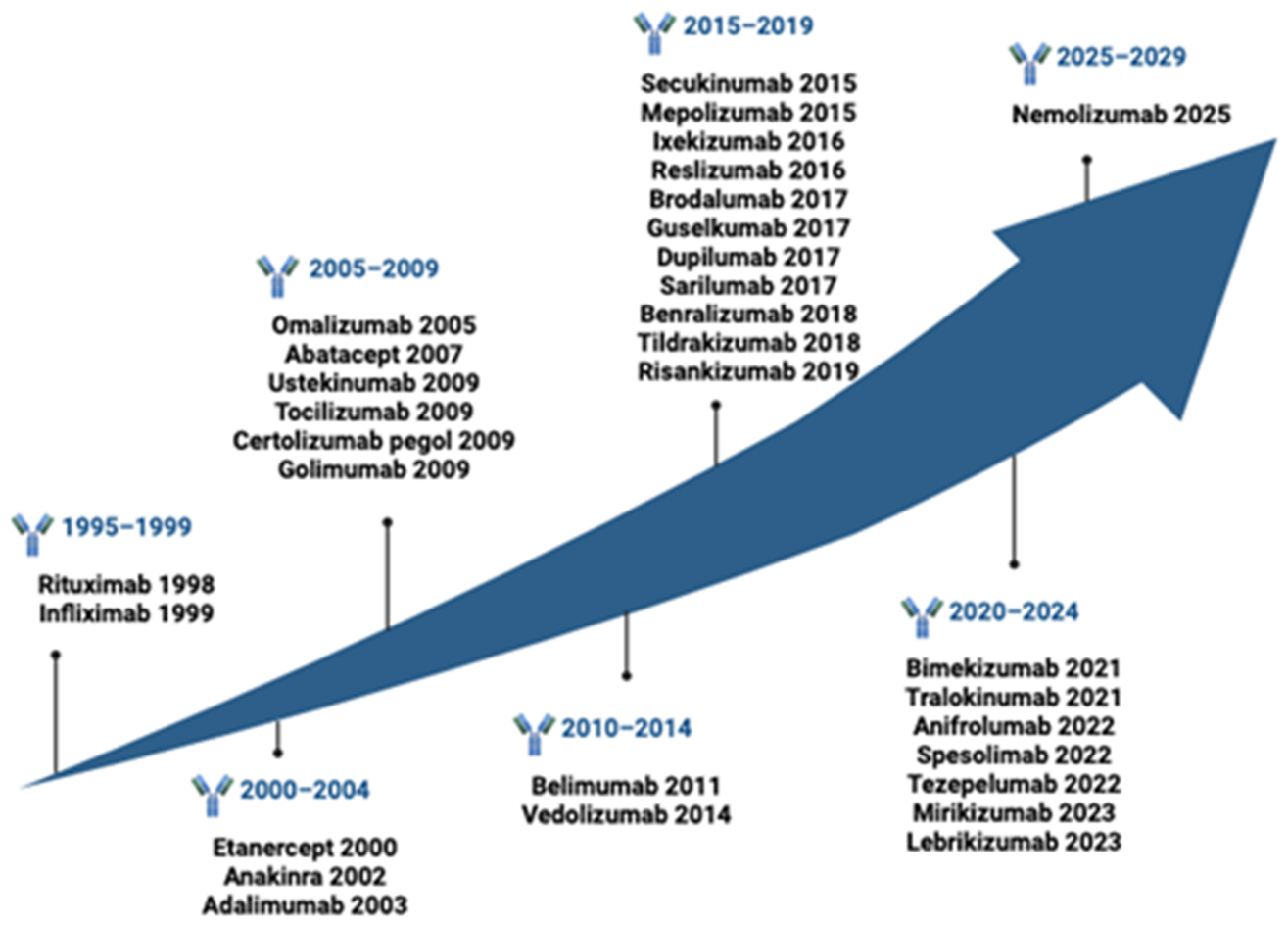

Table 1.
Biologic Agents (Derm, Rheum, Resp, Gastro) Approved in Ireland.
| 5-Year Period | Drug | Approval Year | Specialty Area(s) |
|---|---|---|---|
| 1995–1999 | Rituximab | 1998 | Rheum/Derm |
| 1995–1999 | Infliximab | 1999 | Rheum/Gastro/Derm |
| 2000–2004 | Etanercept | 2000 | Rheum/Derm |
| 2000–2004 | Anakinra | 2002 | Rheum |
| 2000–2004 | Adalimumab | 2003 | Rheum/Gastro/Derm |
| 2005–2009 | Omalizumab | 2005 | Resp/Derm |
| 2005–2009 | Abatacept | 2007 | Rheum |
| 2005–2009 | Ustekinumab | 2009 | Derm/Rheum/Gastro |
| 2005–2009 | Tocilizumab | 2009 | Rheum |
| 2005–2009 | Certolizumab pegol | 2009 | Rheum/Derm |
| 2005–2009 | Golimumab | 2009 | Rheum/Gastro |
| 2010–2014 | Belimumab | 2011 | Rheum |
| 2010–2014 | Vedolizumab | 2014 | Gastro |
| 2015–2019 | Secukinumab | 2015 | Derm/Rheum |
| 2015–2019 | Mepolizumab | 2015 | Resp/Rheum |
| 2015–2019 | Ixekizumab | 2016 | Derm/Rheum |
| 2015–2019 | Reslizumab | 2016 | Resp |
| 2015–2019 | Brodalumab | 2017 | Derm |
| 2015–2019 | Guselkumab | 2017 | Derm/Rheum/Gastro |
| 2015–2019 | Dupilumab | 2017 | Derm/Resp |
| 2015–2019 | Sarilumab | 2017 | Rheum |
| 2015–2019 | Benralizumab | 2018 | Resp |
| 2015–2019 | Tildrakizumab | 2018 | Derm |
| 2015–2019 | Risankizumab | 2019 | Derm/Rheum/Gastro |
| 2020–2024 | Bimekizumab | 2021 | Derm/Rheum |
| 2020–2024 | Tralokinumab | 2021 | Derm |
| 2020–2024 | Anifrolumab | 2022 | Rheum |
| 2020–2024 | Spesolimab | 2022 | Derm |
| 2020–2024 | Tezepelumab | 2022 | Resp |
| 2020–2024 | Mirikizumab | 2023 | Gastro |
| 2020–2024 | Lebrikizumab | 2023 | Derm |
| 2025–2029 | Nemolizumab | 2025 | Derm |
Table 2.
Summary of Registry and Real-World Observational Data.
| Registry/Study Name | Specialty | Patient Population/Size | Key Malignancy Findings |
|---|---|---|---|
| PSOLAR | Dermatology | >12,000 patients with psoriasis | TNF-inhibitor use >12 months was associated with an increased risk of lung cancer (though with wide confidence intervals); no significant risk found for individual anti-TNF agents or ustekinumab. |
| BSRBR | Rheumatology | 293 patients with a prior history of malignancy | Found no increased risk of incident malignancy in patients with prior cancer treated with TNF-inhibitors compared to those on DMARD therapy. |
| RABBIT | Rheumatology | Large cohort of patients with Rheumatoid Arthritis (RA) | Found no significant difference in the incidence of overall or recurrent malignancies in patients exposed to TNF-inhibitors or anakinra. |
| BIOBADADERM | Dermatology | Psoriasis patients | Ixekizumab, secukinumab, and guselkumab were associated with a lower risk of benign and malignant neoplasms compared to adalimumab. |
| ARTIS & DANBIO | Rheumatology | 8703 patients with spondyloarthropathies | Combined data showed TNF-inhibitors were not associated with increased risks of malignancy. |
| TREAT Registry | Gastroenterology | Patients with Crohn’s disease | Follow-up of approximately 5 years found no association between systemic therapy and malignancy. |
| ESPRIT Registry | Dermatology | Psoriasis patients | A 7-year interim analysis showed no significant increase in cancer risk for patients treated with adalimumab. |
| Psonet | Dermatology | Multi-national psoriasis cohorts | Found no association between biologic therapy and malignancy, though statistical power was limited for specific agent comparisons. |
| Swedish Cancer Registry | Rheumatology | Large RA patient cohort | Lymphoma risk was not elevated in patients treated with anti-TNF agents compared to other patient groups. |
| PsABio | Rheumatology | 1051 patients (494 ustekinumab, 557 anti-TNF) | A 3-year real-world study showed a reassuring safety profile for both groups regarding malignancy when a 1-year lag was applied. |
| EXCELS Study | Respiratory | Moderate-to-severe asthma patients | A 5-year observational study of omalizumab found no significant difference in cancer incidence between users and controls. |
| Swedish Nationwide Cohort (Wadström et al.) | Rheumatology | RA patients in clinical practice | Reported reassuring hazard ratios for invasive solid and haematologic cancers in patients treated with TNF-inhibitors, tocilizumab, abatacept, or rituximab. |
| Danish National Registry Study (Andersen et al.) | Gastroenterology | Large IBD cohort | Follow-up extending up to 19 years found no clear increase in overall incident cancer with anti-TNF monotherapy. |
| Brodalumab US Pharmacovigilance | Dermatology | 12,095 patients with psoriasis | 7-year data showed a crude malignancy rate (1.01/100 patients) that was lower than that reported in the PSOLAR registry. |
| BIOBADASER III | Rheumatology | RA patients (2000–2023) | Found no increased cancer risk associated with any biologic agent or targeted synthetic DMARD when compared specifically to TNF-inhibitors. |
| Korean Retrospective Cohort (Song et al. 2025) | Rheumatology/Dermatology | RA and psoriasis patients | Found no increase in overall incident cancer, but noted an increased risk of lymphoma and leukaemia for TNF-inhibitors, particularly infliximab. |
| French National Registry ‘REGATE’ | Rheumatology | 1496 RA patients | Evaluation of tocilizumab (mean 32-month follow-up) found no additional risk factors for cancer. |
| Swedish Rheumatology Quality Register | Rheumatology | RA and PsA patients (2016–2020) | Provided reassuring hazard ratios for malignancy in patients receiving TNF-inhibitors, though follow-up was relatively short (less than 3 years). |
| Large US Cohort (Ma et al. 2025) | Respiratory | Asthma patients | Observed a higher lymphoma incidence in dupilumab users (specifically T/NK-cell), though overall cancer rates were unchanged. |
| Danish Nationwide Registry (Westermann et al. 2025) | Rheumatology | RA patients with a history of cancer | Found no statistically significant increased hazard ratio for cancer recurrence across all DMARD types, TNF-inhibitors, or rituximab. |
| International Population-Based Study (Kridin et al. 2024) | Dermatology | Multi-specialty inflammatory diseases | Found that IL-17 and IL-23 inhibitors were associated with a reduced incidence of several malignancies, including non-Hodgkin lymphoma and colorectal cancer. |
| Real-World Urticaria Cohorts (Calzari et al./Soegiharto et al.) | Dermatology | Chronic spontaneous urticaria patients | 8-year and long-term data confirm omalizumab has a favourable safety profile with no malignancy signals reported. |
| SUSTAIN Study | Gastroenterology | Crohn’s disease patients | Provided long-term real-world evidence of a reassuring safety profile for ustekinumab. |
Table 3.
Summary of Clinical Trial Data on Biologic-Associated Malignancy Risk.
| Biologic/Drug Class | Clinical Trial or Trial Program | Study Type/Population/Duration | Key Findings Regarding Malignancy |
|---|---|---|---|
| Guselkumab (Anti-IL-23) | VOYAGE 1 & 2 | 5-year results; subgroup of 20 patients with a history of malignancy. | Only two malignancies were reported in this specific subgroup following therapy. |
| Secukinumab (Anti-IL-17) | Pooled Analysis | 28 clinical trials; psoriasis, PsA, and AS patients. | Malignancy rates were consistent with previous reports and did not increase with longer follow-up. |
| Bimekizumab (Anti-IL-17) | BE RADIANT | 3-year Phase IIIb open-label extension. | Showed no increased signal for malignancy. |
| Bimekizumab (Anti-IL-17) | Integrated Phase IIb/III | Pooled results from patients with AxSpA or PsA; median exposure 116 weeks. | Reported most malignancies as singular events with no specific trends observed. |
| Ixekizumab (Anti-IL-17) | Pooled Analysis | 25 randomized clinical trials (PSO and PSA data). | Showed no increased incidence of cancer compared with the US population. |
| Mirikizumab (Anti-IL-23) | LUCENT-3 | Open-label extension (week 152) for Ulcerative Colitis. | Malignancy occurred in 0.3% of patients without concerning safety signals. |
| Risankizumab (Anti-IL-23) | FORTIFY | Open-label extension; approximately 3 years follow-up in Crohn’s Disease. | 2 malignancies in total reported (excluding nonmelanomatous skin cancer). |
| Guselkumab (Anti-IL-23) | GALAXI Trials | Phase 3 trials in Crohn’s Disease. | No increased risk identified during induction or maintenance phases. |
| Adalimumab (Anti-TNF) | Pooled Analysis | Pooled analysis of clinical trials in IBD. | Found no increased cancer risk, unless co-prescribed with another immunomodulator. |
| Ustekinumab (Anti-IL-12/23) | IM-UNITI | 5-year follow-up in Crohn’s Disease. | Malignancy rates remained low. |
| Ustekinumab (Anti-IL-12/23) | Pooled Safety Analysis | Final pooled analysis of 2575 patients with IBD. | Malignancy events were not reported more frequently in treated patients. |
| Tocilizumab (Anti-IL-6) | Integrated Safety Data | Integrated trial data; mean follow-up of 2.4 years. | Did not show an increased risk of malignancy. |
| Tralokinumab (Anti-IL-13) | Pooled Analysis | 5 randomized trials in atopic dermatitis; up to 52 weeks. | Did not show any increased risk compared to placebo. |
| Dupilumab (Anti-IL-4/13) | SOLO 1 & 2 | Two Phase 3 randomized trials (atopic dermatitis); 16-week follow-up. | Did not identify any signal for malignancy. |
| Dupilumab (Anti-IL-4/13) | Open-Label Extension | 5-year extension study in atopic dermatitis. | Did not find any association with malignancy. |
| Benralizumab & Mepolizumab (Anti-IL-5) | MELTEMI & COLUMBA | 5-year comparative safety analysis in respiratory medicine. | Noted small and similar numbers of malignancies across both studies. |
| Omalizumab (Anti-IgE) | Pooled Analysis | 2012 pooled analysis of asthma clinical trials. | Found no association between treatment and malignancy risk (rate ratio below one). |
| Tofacitinib (JAK Inhibitor) | OCTAVE Open | Open-label, long-term extension; up to 7 years treatment in UC. | Final analysis was used to support evidence that clinical trials inform safety in selected populations. |
Table 4.
Summary of Clinical Guidelines on Biologics and Malignancy Risk.
| Specialty | Organization/Guideline | Key Recommendations and Positions on Malignancy |
|---|---|---|
| Dermatology | AAD (American Academy of Dermatology) | States TNF inhibitors are not associated with increased risk and can be used in patients with previous cancer. Supports ustekinumab, advises more evidence is needed for IL-17 inhibitors, and currently does not recommend IL-23 inhibitors in this setting. |
| Dermatology | EADV (European Academy of Dermatology and Venereology) | Takes a more permissive view, noting that TNF inhibitors, ustekinumab, and IL-17/23 inhibitors may be considered following consultation with oncology. |
| Dermatology | BAD (British Association of Dermatologists) | Emphasises individualised decision-making and multidisciplinary involvement, though it does not explicitly endorse or exclude specific biologic classes. |
| Gastroenterology | ECCO (European Crohn’s and Colitis Organisation) | Provides detailed guidance on differential risks; highlights the link between thiopurines and lymphoma while noting the absence of cancer signals for vedolizumab and ustekinumab. |
| Gastroenterology | AGA (American Gastroenterological Association) | Concludes anti-TNF agents carry a small but measurable lymphoma risk. Positions vedolizumab and IL-12/23-targeted therapies (like ustekinumab) as preferred options due to reassuring safety profiles. |
| Gastroenterology | ACG (American College of Gastroenterology) | Underscores elevated cancer risk with thiopurines versus lower risk with targeted biologics; advises individualised treatment for patients with current or prior malignancy. |
| Rheumatology | EULAR (European Alliance of Associations for Rheumatology) | 2024 “Points to Consider” state TNF inhibitors in patients with prior malignancy show no significant increase in recurrence. Recommends multidisciplinary collaboration and notes particularly reassuring data for IL-17 and IL-12/23 inhibitors. |
| Rheumatology | ACR (American College of Rheumatology) | Incorporates comparative evidence showing no clear increased risk with newer non-TNF biologic therapies. |
| Rheumatology | BSR (British Society for Rheumatology) | Emphasises lymphoma risk with TNF inhibitors and highlights the favourable malignancy profile of IL-17 and IL-12/23 inhibitors. |
| Respiratory | GINA, ATS/ERS, & BTS | These severe asthma guidelines focus on efficacy and general safety but do not explicitly address malignancy risk or provide guidance for patients with a cancer history. |
Table 5.
Shows the biologic agents discussed in the review, which medical specialty prescribe, the observed malignancy signals, evidence from prior malignancy cohorts and the relevant guideline recommendations regarding malignancy.
Table 5.
Shows the biologic agents discussed in the review, which medical specialty prescribe, the observed malignancy signals, evidence from prior malignancy cohorts and the relevant guideline recommendations regarding malignancy.
| Biologic Agent/ Drug Class |
Medical Specialty | Primary Condition(s) Treated | Observed Malignancy Signals | Evidence from Prior Malignancy Cohorts | Guideline Recommendations Regarding Malignancy |
|---|---|---|---|---|---|
| TNF-Inhibitors | Dermatology, Gastroenterology, Rheumatology | Psoriasis, Inflammatory Bowel Disease (Crohn’s disease, Ulcerative colitis), Rheumatoid Arthritis (RA), Psoriatic Arthritis (PsA), Spondyloarthropathies | Nonmelanomatous skin cancer (NMSC), melanoma, and lymphomas. Potential lung cancer signal with >12 months exposure. Lymphoma risk in IBD often associated with concomitant thiopurines. No significant increase in overall malignancy across major registers (RABBIT, BSRBR, ARTIS, DANBIO). | Retrospective data and BSRBR show no increased risk of incident or recurrent cancer in patients with a history of malignancy compared to DMARDs. No prospective or randomised studies available. | AAD: Can be used in patients with prior cancer. EADV: May be considered after oncology consultation. AGA: Small but measurable lymphoma risk. ECCO: Absence of clear signal with monotherapy. EULAR (2024): Recommended for patients with history of solid organ malignancy. |
| Ustekinumab (IL-12/23) | Dermatology, Gastroenterology, Rheumatology | Psoriasis, PsA, Crohn’s Disease, UC | No increased risk in PSOLAR or IM-UNITI; trend toward lower 5-year risk compared to adalimumab. | Retrospective IBD cohorts show no association with subsequent new or recurrent cancer. | AAD: May be used in patients with prior solid-tumor malignancy. AGA/ECCO: Preferred option for high-risk patients. |
| Anti-IL-23 Antibodies | Dermatology, Gastroenterology | Psoriasis, Psoriatic Arthritis, Crohn’s disease, Ulcerative colitis | No safety signals identified; rates comparable to placebo and TNF-inhibitors in clinical trials (LUCENT-3, FORTIFY, GALAXI). | VOYAGE 1/2 trials included 20 patients with prior malignancy (2 cases reported post-treatment). Current data do not suggest excess recurrence risk in limited cohorts. | AAD/NPF: Does not currently recommend for patients with prior malignancy due to limited long-term data. AGA/ECCO: Positioned as preferred options when malignancy risk is a concern. |
| Anti-IL-17 Antibodies | Dermatology, Rheumatology | Psoriasis, PsA, Axial Spondyloarthritis | Neutral or potentially reduced risk of certain cancers (NMSC, melanoma) in some studies; generally reassuring safety profile. | Limited observational data in patients with prior solid organ malignancy are reassuring. | AAD: Further evidence needed. EULAR: Notes particularly reassuring data for IL-17 inhibitors. |
| Anti-Integrin (Vedolizumab) | Gastroenterology | Inflammatory Bowel Disease | No elevation in overall cancer, lymphoma, or skin cancer due to gut-selective mechanism. | Retrospective studies (390 patients) show no increased risk of new or recurrent cancer. | AGA/ECCO: Frequently considered preferred in patients where malignancy risk is a major concern. |
| Anti-IL-4/Anti-IL-13 (Dupilumab) | Dermatology, Respiratory | Atopic Dermatitis, Asthma, COPD | Potential association with cutaneous T-cell lymphoma (CTCL) unmasking; asthma cohort showed increased T/NK-cell lymphoma. | Case series in advanced solid organ cancer show atopic dermatitis can be safely controlled. | GINA/ATS/ERS: Do not explicitly address malignancy risk; focus on efficacy. |
| Omalizumab (Anti-IgE) | Respiratory, Dermatology | Asthma, Chronic Spontaneous Urticaria | Historical 0.5% vs. 0.2% trial signal led to label warning; subsequent pooled analyses (EXCELS) found no causal link. | Not in source | Neutral risk profile supported by contemporary evidence. |
| Anti-IL-5 Antibodies | Respiratory | Asthma, COPD | No increased risk observed in randomized trials or meta-analyses. | Not in source | Not explicitly addressed in severe asthma guidelines. |
| Tocilizumab (anti-IL-6 antibody) | Rheumatology | RA, giant cell arteritis and juvenile idiopathic arthritis | Large cohort studies and meta-analyses found reassuring safety data. | Not in Source | EULAR: No indication that there is an increased risk of malignancy compared to anti-TNF agents. |
Disclaimer/Publisher’s Note: The statements, opinions and data contained in all publications are solely those of the individual author(s) and contributor(s) and not of MDPI and/or the editor(s). MDPI and/or the editor(s) disclaim responsibility for any injury to people or property resulting from any ideas, methods, instructions or products referred to in the content. |
© 2026 by the authors. Licensee MDPI, Basel, Switzerland. This article is an open access article distributed under the terms and conditions of the Creative Commons Attribution (CC BY) license (http://creativecommons.org/licenses/by/4.0/).
Copyright: This open access article is published under a Creative Commons CC BY 4.0 license, which permit the free download, distribution, and reuse, provided that the author and preprint are cited in any reuse.


