

Submitted:
25 May 2026
Posted:
27 May 2026
You are already at the latest version
Abstract
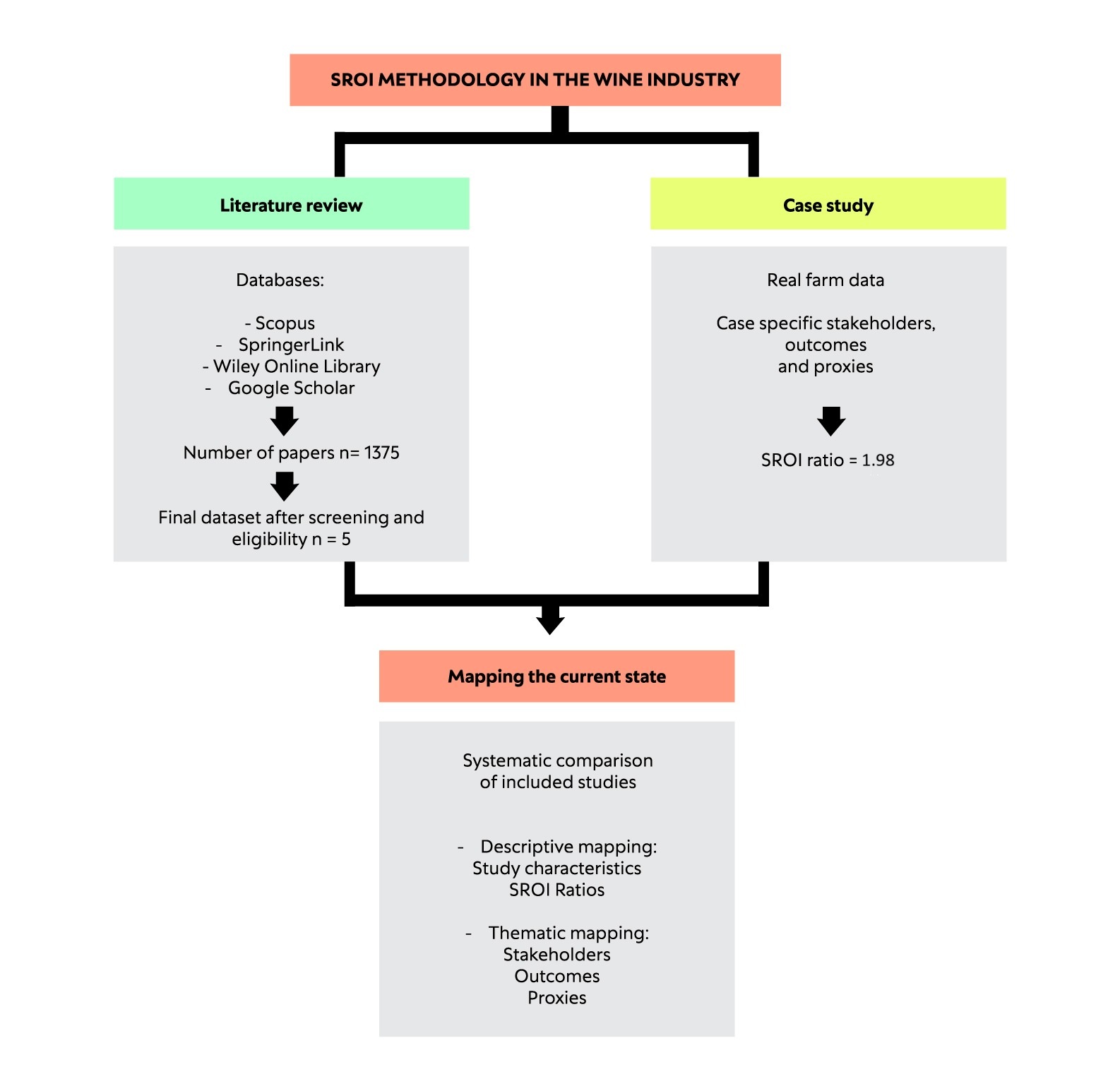
The Social Return on Investment (SROI) methodology as a model for assessing the value creation is widely applied across different sectors, but its applicability in the wine industry is limited. This study addresses this gap by firstly providing a systematic literature review following the PRISMA 2020 (Preferred Reporting Items for Systematic Reviews and Meta-Analyses) 2020 framework, using multiple databases (Scopus, SpringerLink, Wiley Online Library) and Google Scholar. The review highlights the growing relevance of SROI as a practical and reliable framework for multidimensional impact assessment, while also revealing a limited number of empirical evidence in this industry. Second, the studied methodology is applied on an empirical real case study of organic wine production, assessing the value of change generated by the introduction of an IoT-based sensor network. Using farm-level data and geographically specific financial proxies, the analysis yields a SROI ratio of 1.98, indicating a positive return on investment. The study provides a structured foundation of stakeholders, indicators, and proxies that can contribute to methodological standardization, and policy-oriented decision-making in the wine industry and related agricultural sectors, and serves as a basis for creating practical SROI tools.
Keywords:
social return on investment (SROI)
; impact assessment
; sustainable agriculture
; wine industry
; digital technology
1. Introduction
Assessing the economic efficiency is no longer a sufficient metric for evaluating business performance nowadays. Companies are interested in a more comprehensive approach, assessing their effects on the involved stakeholders, the community and even broadly, the environment, which is why traditional methods like cost-benefit analyses are of little use [1]. This encouraged the creation of new assessment models such the Social Return on Investment (SROI) which can incorporate non financial metrics i.e. environmental and social in its analysis [2].
The process of measuring the social return on investment consist from a few steps, following the official guidelines for SROI calculation [2]. It starts by defining project goal and the main stakeholders involved or affected. It continues with the so called “income map” where incomes, outputs, and outcomes are identified. In the next, third stage these outcomes are being measured or quantified. Since the analysis covers three different aspects, environmental, economic and social, some of them can be directly quantified and measured, however for some of them like in the social aspects, this is not directly possible. In this situation are used so called “financial proxies” which represent an approximate estimation of the value measured. The next stage of the analysis is establishing impact, which continues with further improvement of the calculation by including the following factors: deadweight, displacement, attribution, and drop-off. The fifth step is related to the actual calculation of the SROI ratio and the final step is sharing and reporting findings.
The SROI methodology is being applied in different areas such as sports [3], health care [4] construction [5], public administration [6], social enterprises [7]. In agriculture, it is mainly used in social farming [8,9].
Sustainable agriculture is well established topic in the literature, including research on agricultural productivity with environmental, economic and social sustainability [10,11]. In practice, organizations like Food and Agriculture Organization (FAO), actively support food security and climate related agricultural practices [12]. Moreover, the United Nations 2030 Agenda, includes the support of small scale, family farmers, focusing on sustainability in agriculture and management of chemicals use [13]. Within the agricultural sector, the wine industry represents an important branch oriented towards sustainable production [14], since winemakers operate in a strongly regulated environment [15]. Additionally, there is a need in the wine industry for providing information on the value created in order to meet sustainability goals and standards [16]. By assessing the social, environmental, and economic performance, wine producers can meet this criteria and also represent a model for other agricultural industries oriented towards sustainable production [17,18].
Lastly, the consumers' demand also plays a key role in defining future directions and dynamic [19]. As a respond to the increased consumer demand on environmentally responsible viticulture and wine production, organic wine production is becoming a global trend [20]. Within this context digitalization and especially the use of Internet of Things (IoT) sensors have an important role [21], as they can help farmers to better understand the need for pesticides in their fields [22]. Spraying pesticides is a common activity in viticulture, serving to control the diseases and pests, covering different resources, such as labor, time, energy, water and other active substances [23]. All of them influence on the overall farm management which has implications on all the aspects of sustainability.
1.1. Research Gap
In [24] authors provide literature review on the SROI methodology showing that SROI is used in practical examples and studies from different fields. Although the topic sustainable agriculture represents an important and highly researched topic, the applicability of SROI in agriculture is mainly related to social farming [25] and food safety [26] and the applicability in the wine industry is still limited [16]. This makes room for further improvement in the wine industry. As part of the sustainable agriculture is the social factor, which is under researched [27,28]. Quantifying and measuring social values is a key challenge, and this is where SROI comes in practice [29]. Additionally, SROI is not a one-size-fits-all method [2]. The practice shows that there is insufficient available data on important outcomes to be included in the calculation [30]. Also, there is no universal criteria or standard for assessing whether selected proxies are valid [31]. Organizations choose the proxies relevant to their example [32]. In this regard, authors in [16] call for future industry specific research on the topic for standardization of proxies. The literature also show disadvantages of applying SROI in agriculture related to the process of measuring and monetizing environmental impacts [25]. We address this challenge by using precisely measured data from the vineyard representing the case study and by using relevant financial proxies to monetize them. As a consequence, because of the use of different indicators, the results cannot be directly compared [33] and a systematization of current research and greater applicability of the methodology in a specific industry will allow for setting some standards such as identification of the stakeholders, defining outcomes and proxies [25], something that we try to do with this study.
1.2. Contribution Statement
The aim of this paper is to systematically review and synthesize existing studies of the application of the SROI methodology for impact assessment in the wine industry. The intended contribution to science is to provide impact assessment of the value of change generated by the observed differences in labor, pesticide and water use before and after the technology introduction in organic wine production. In this regard, our study provides:
- Literature review on the SROI methodology in the wine industry following the PRISMA 2020 (Preferred Reporting Items for Systematic Reviews and Meta-Analyses) framework which provides structured guidelines for choosing relevant literature, allows better transparency and minimizes bias [34,35]. The goal is to provide an understanding and systematization of how SROI was applied, evaluated or discussed in this industry.
- An empirical case study applying the SROI methodology to a real example in organic wine production. This approach helps to test SROI in a specific context, as recommended by previous research [24] and as done in other sectors [36]. We conduct an evaluative SROI assessment, quantifying the environmental, economic and social value generated from the introduction of digital technologies in a vineyard transitioning to organic production. It represents an evaluative analysis, that uses real operational data collected from stakeholder survey for the specific vineyard, collected by using specific data collection guidelines, developed whiting the Horizon Europe project CODECS [37]. We provide a careful choice of indicators, relevant for the case study of organic spraying, including labor hours, number of treatments, active ingredients copper and Sulphur, and water use. We monetize these indicators by using region specific proxy values. Choosing only case specific relevant indicators strengthens the validity and robustness of the analysis.
The paper is structured as follows: in Section 2 we present the systematic review consisting of methodology description and results. In the same style, in Section 3 we present the use-case study including the methodology description and results. In Section 4 we discuss the results and in in Section 5 we provide the conclusions of the study.
2. Systematic Review of SROI in the Wine Industry
2.1. Methodology
The methodological section of this study provides a systematic literature review with qualitative systematization.
2.1.1. General Overview
Related to the research objective 1, to systematically review and synthesize existing studies of the application of SROI methodology for impact assessment in the wine industry, to understand how it has been applied, evaluated or discussed in wine industry and related branches, we are performing a literature review on the topic. We follow a PRISMA 2020 framework, which provides structured guidelines for choosing relevant literature, allows better transparency and minimizes bias [34]. The review process was conducted using the Rayyan software [38]. Related agricultural branches are considered viticulture, winemaking, sales and distribution and wine tourism.
2.1.2. Identification, Screening, Eligibility and Inclusion
The initial search was performed using the following databases: Scopus, SpringerLink, Wiley Online Library and Google Scholar. The search was conducted on December 5, 2025. Two clusters of keywords were used. The first one was related to the methodology, including only the Social Return on Investment or SROI as keywords ("Social Return on Investment" OR "SROI"), because we wanted to look specifically into papers who use this methodology and not any other types of socially related or economic cost benefit analyses. In relation to the second cluster of keywords, we used a broader but related terminology covering wine, viticulture, agriculture and farming (wine OR vineyard* OR viticultur* OR winery OR wineries OR "wine industry" OR agriculture OR "digital agriculture" OR "precision agriculture" OR "smart farming" OR farm OR farming). Search strings were applied to titles, abstracts, and keywords in Scopus, while full-text searches were applied in SpringerLink, Wiley Online Library, and Google Scholar. No publication year restrictions or other exclusion criteria were applied at this stage. This resulted in total of 1375 records (Scopus - 408, Springer - 203, Wiley Online Library - 139, Google Scholar - 625). All records were imported into the Rayyan software. The selection of studies and data extraction were conducted by a single reviewer following the predefined criteria. Although the review was conducted by a single author, methodological rigor was ensured through the use of predefined inclusion and exclusion criteria applied consistently across all stages. The final selection was unambiguous, as only a small number of studies met the criteria.
The next phase was screening, where the duplicates were removed, decreasing the dataset to 1265. In the next phase, eligibility, the records were screened by title, authors and abstract. The exclusion criteria applied was removing records that do not include: i) specifically the SROI methodology; ii) are not related to the wine industry or associated branches: viticulture, wineries, wine value chains, wine tourism; iii) were not in English language iv) are not peer-reviewed journal articles. Records for which some of these criteria were not explicitly visible from title, abstract and keywords were included in the next phase of full text screening. After applying these criteria, 87 studies remained. After the final stage of full text screening, the final database consisted of five studies. The whole process is summarized in Figure 1.
2.2. Results
The results from the literature review, providing in total five studies in the final database, show that the applicability of the SROI methodology in the wine industry is limited, but in rise in the recent years. Due to the limited number of studies, we are adopting a descriptive systematization of the results, providing in depth qualitative analysis of results, rather then a quantitative synthesis.
Bibliographic characteristics such as authors, year of publication, were examined allowing temporal analysis of the research. We can see that the studies are published between 2018 and 2025 with some gaps in publication years, which means that the research on this topic is recent and still emerging. One author dominates in three of the total five studies. All studies are journal articles. From a geographical point of view, the papers are coming from countries known for wine production, namely Italy and Spain, and one study done on a European level, including different countries.
Most of the studies are performed through case studies of small wineries. Only one of them explicitly applies the SROI methodology in order to explore its applicability only in the wine industry [16]. The rest of the studies are performed as a result of assessing social farming practices which include wine related examples among other different agricultural practices performed in these type of cooperatives that support social faming [8,9,39,40]. Looking into the methodological approach and study objectives, all studies include a combination of data collection either using quantitative or qualitative type of research and adopting a practical example of calculating the SROI ratio on a real case study. The reported SROI ratios vary mainly because of the heterogeneity of the indicators, proxies, and industries in the agricultural sector, but they all reported positive values, above 1. Social farming related assessment results show higher values (>2 in all cases) [8,9,39,40], whereas the SROI ratio in the agri-industrial context report a SROI of 1.44 [16]. This is expected, as socially related projects include more social factors in the analysis. Described data is systematized in Table 1.
The synthesis of results from all five studies where SROI methodology was applied show the use of different, but to some extend repeating type of stakeholders, outcomes and proxies. In all the cases, the SROI value was a result of all three dimensions included in the calculations, environmental, economic and social. All the stakeholders, outcomes, proxies and sustainability dimension that they cover are provided in Table 2.
3. Use-Case study
3.1. Methodology
The methodological section of this study provides an evaluative SROI, conducted ex-post, based on actual outcomes achieved in a real case study. The process of calculating the SROI ratio is in line with the official guidelines for SROI calculation [2], including the following steps: defining the project goals and stakeholders, mapping inputs, outputs, and outcomes, and quantifying these outcomes. This is followed by establishing impact through adjustments for deadweight, displacement, attribution, and drop-off, and finally calculating the SROI ratio and sensitivity analysis.
3.1.1. Case Study Description
Data used in this paper was collected during the Horizon Europe project CODECS [41]. The project aims to strengthen the understanding of the sustainable digitalization of agriculture by connecting different stakeholders to work on assessing the costs and benefits of digitalization. It operates through a network of Living Labs across different European countries providing real world evidence collected from real farms. Data on environmental, economic and social costs and benefits of digitalization at farm level has been collected for each Living Lab. It was collected following a strict methodological guidelines for structured data collection [37]. The data used in this study [42] comes rom the Doppler Winery [43], part of the Slovenian Smart Villages Network Living Lab [44] and serving as a demo farm as part of this Living Lab within the same project [45]. It represents a family owned winery located in the Slovenian Styria region, transitioning towards organic production [43].
The characteristics of this vineyard is a very rugged terrain with variable microclimate, which produces different disease risk conditions within the same vineyard. Namely, some areas of the fields are more windy so there’s less moisture accumulation, which consequently means lower risk for infections and no need for spraying, whereas it is the opposite to some other parts of the same field. Different climatic conditions require different vinicultural treatments, which makes the vineyard management more challenging [46,47]
3.1.2. Decision Support System Architecture
In order to address this challenge, the solution applied is a sensor based decision support system. The system consisted from dispersed IoT sensors, sending data to a cloud platform for data storage and a mobile application for the end user. The network architecture is explained in details in the following text.
The sensors network consists from the following type of sensors:
The sensors were installed at the appropriate locations within the vineyard to capture spatial variability, on a range of average of 15km. They are connected to a gateway using Long Range Wide Area Network (LoRaWAN) connection for data sharing, which can operates on either Ethernet or Wi-Fi network. The data is then stored to a cloud platform Thingsboard,available for further use via an application programming interface (API). The data is then visualized in an end-user dashboard. Using a predefined rules, alarms for the farmers are set up whenever some parameters exceed certain values, in order to support the wine production processes. Farmers access the data through a mobile application, where they can monitor the data in real time and through which they receive alerts, with the exact location, for exceeded values of the parameters. These parameters are monitored daily, and based on the collected insights, there is a proper planning of vineyard activities and treatments only when and where needed. The goal is to reduce the number of spraying events, or to perform spraying only to the places where that is needed, and with that reduce water and use of active ingredients, energy and labor consumption while maintaining crop protection performance based on the organic wine production standards and requirements [46,47]. The system architecture is presented in Figure 2.
3.2. Results
The decision-making of the farmer for spraying of pesticide used to rely on the National weather agency and Austrian weather Agency data due to the closeness of the winery to the Slovenian–Austrian border, and in person inspections of the vineyard. Based on these data, and the winemakers own past experience, they would make their subjective assessments and predictions. In order to prevent possible diseases from too much moisture, they decide weather or not there should be a treatment (pesticide spraying). In order to gain a better control of the current situation in different parts of the field, and for more informed decision-making about the need for pesticide spraying and shifting towards organic wine production, the farm introduces a sensor network technology in the vineyard [46].
The goal of this case study is specifically related to assessing the value of change generated by the observed differences in labor, pesticide and water use before and after the technology introduction in organic wine production. Consequently, the identified stakeholder in this case is the winery itself. Inclusion of this stakeholder only is in line with the specific objective of the analysis. Additionally, data availability is limited to this stakeholder. Also, as provided in the guidelines, including more stakeholders in this case might weaken the analysis [2]. The spraying season lasts for about four months, starting in May and ending in August. The farmer uses the products copper (commercial name Curzate), Sulphur (Pipeline) and water [46], hence we are measuring the change in the workload, use of copper, Sulphur and water. This affects some of the social aspects of the farmer like the farmer’s health, due to the lower exposure to pesticide use. Additionally, with the use of digital technology, farmer’s digital skills are improving. All these represent the outcomes or indicators in this analysis. For each indicator there is a proxy name, proxy description and quantity as collected from the data collection, with unit of measurement. Each of these indicators is dedicated a financial proxy Where direct monetary proxies were unavailable in the scientific literature, proxy values were derived from publicly accessible and verifiable sources. Preference was given to local and context-specific values. Sources were selected based on their relevance, transparency, conservativeness, and data availability, while ensuring consistency with the local agricultural and socioeconomic context. This approach is consistent with the SROI methodology, which allows the application of reasonable and evidence-based financial proxies [2]. The use of conservative estimates and locally relevant financial proxies reduces the risk of overestimating social value and increases the robustness and credibility of the SROI result and contributes to more realistic and methodologically robust SROI results [2,52]. All the data about each of the indicators are reported in Table 3. The calculation of the ratio is for the period of three years, the time between the technology installation and data collection. The initial investment and at the same time total costs of the investment are 3142,11 EUR.
In the next phase, we calculate whether the outcomes result from this analysis. For this we introduce leakage, deadweight, attribution, yearly drop-off and displacement. All the parameters explained and their values are presented in the Table 4.
The analysis followed the standard SROI framework and the project-specific formula set. The analysis was conducted over a three-year period, from installation of the technology to data collection. The present value of benefits was calculated by discounting annual benefits to the investment year using a discount rate of 3.5% as recommended [2], while the investment cost was kept at its original value because it occurred at project start. In this regard, the following SROI formula was applied:
SROI = Present Value of Benefits/ Initial Investment
The SROI ratio equals 1.98. This result is interpreted as: for every €1 invested, the IoT system network installed in the vineyard generated approximately €1.98 of quantifiable socio-environmental value over the period of three years.
Sensitivity Analysis
In order to test the results, we performed sensitivity analysis by using different values for attribution and deadweight. The goal of this analysis is to see the changes caused by the changes of some of the assumptions made, with the aim to “test which assumptions have the greatest effect” on the model [2]. We took into account the base scenario, which was already calculated and two more scenarios, conservative and optimistic where attribution and deadweight were set to levels higher and lower than 30%, namely 40 and 20% respectively. The rest of the factors like outcomes, value of inputs or financial proxies remain the same. In the first case, the conservative assumption, the SROI ratio is 1.46, and the optimistic scenario gave a SROI ratio of 2.59. The results show that the SROI ratio is sensitive to attribution and deadweight. However, in all scenarios the benefits are positive, indicating positive impact. The results of the sensitivity analysis are presented in Table 5.
4. Discussion
The purpose of this research is to study the application of the SROI methodology for impact assessment in the wine industry. To answer the research question, we first review and synthesize empirical and methodological literature on the use of the SROI methodology for impact assessment in this industry. The results show SROI ratios greater than 1, indicating a positive return, suggesting that the SROI methodology is a reliable and practical approach for evaluating social, economic, and environmental impacts in the wine industry.
Second, we apply the SROI methodology on a real case study. The example uses real farm data. Additionally, only quantifiable outcomes were included, by using real, geographically specific proxies. Using geographically specific proxies in the case study represents a strength and a weakness at the same time. On one hand that doesn’t allow for direct comparisons with other cases, but on the other hand, using location specific proxies provides the most relevant results to the farm, which is the goal od this methodology. The assessment yielded a SROI ratio of 1.98, indicating positive return. The findings show that SROI applied in the wine industry shows meaningful results related to the sustainability aspect from IoT sensor network introduction for organic farming. The results are aligned with other practices of sustainability assessment in agriculture [17,33]. At the same time it is lower than other SROI ratios as seen in the literature, reported in social farming, which are often higher than 2. However this is understandable and expected, as social farming case studies incorporate more social factors in their analyses [8,9,39]. Additionally, as suggested by [59], it is not advisable to do direct comparisons of the SROI values of different cases, because of contextual differences, such as using different stakeholders, outcomes and financial proxies, but rather to interpret the result within the specific context [60].
Beyond the theoretical contribution, this study also offers practical contribution. Namely, the synthesis of the included stakeholders, indicators and proxies serves as a basis for the future development of SROI tools, offering a set of factors to be included in SROI databases. Additionally, the case study also helps in bridging the gap between theory and practice. By applying the methodology on a real case study, it contributes to the possibilities of standardization of the methodology in this industry, by providing empirical reference.
Despite the contributions of this study, there are some limitations that should be considered. The review includes only English-language publications and peer-reviewed journal studies. In the future, grey literature could be considered as cases of the methodology implementation could be found in other type of literature different than research papers. A major limitation is the low number of literature available, due to the novelty of the method in this field. Similar analysis should be conducted in few years when more literature becomes available, hopefully due to the impact of this paper in popularizing the SRIO method to be used in the wine industry.
The results of this research have their implications on agricultural and rural policies. By quantifying the changes and the value created, the SROI assessment can be part of funding criteria for public support. Additionally, it can serve as a foundation for policy regulated development of standardized proxies. Having unified proxies in the analysis will increase cooperability between cases and with that strengthen the importance and credibility of these assessments.
From the conducted literature review, what is currently missing is the application of both, the predictive and evaluative SROI analysis, applied within the same case study. Consequently, future research can be focused on the comparisons between the results from a predictive and evaluative analysis on a same case study, which will improve results validation and improve credibility. As the use od technology in precision agriculture is more common and expanding, future research should focus on assessing their value in agriculture in order to understand better the value created from technology in agriculture.
Moreover, cross-regional studies are something that is currently missing because of the geographical sensitivity of the analysis. Clearly, there is a need for more standardized indicators, which is why future research should try to align the methodological standards, for improving comparability between studies and enhance methodological robustness. In addition, comparative studies across different production models and regions are needed in order to understand what conditions lead to higher social value creation. Lastly, future research should explore how SROI can be integrated in policy development and decision making processes.
To conclude, the results from this study show meaningful insights of the applicability of SROI on a real life example from the wine industry. However, the application of SROI in the wine industry is quite recent so more research is needed for more robust results and wider usefulness. In this regard, this study contributes to making the field more visible by clearly defining its scope and methodological approach, building a good basis for further research on the topic. Additionally, it represents a foundation of future research of impact assessment in other industries in the agricultural sector.
5. Conclusions
This study helps in bridging the gap between theory and applicability of SROI in agricultural research, precisely in the wine industry. The contribution is twofold. Theoretically we provide a systematization of the SROI methodology applied in the wine industry, which contributes towards standardization of the process of stakeholders identification, outputs and proxies. Practically, the study contributes to the research gap of applicability of SROI on real case examples in the wine industry, by demonstrating how it can be used for quantifying the value creation resulting from technological innovation in organic wine production. The case study also contributes to standardization by providing a transparent, replicable, and comparable empirical reference. Although one example doesn’t crate a standard, it help in contributing to the practical and comparable evidence that can help align the metrics in similar examples and create a shared metrics that could allow a consistent application of the methodology.
This study represents a concluding stage of a broader research effort on digitalization in agriculture, which started with a review of rural policies [61], and study of the challenges and opportunities of small rural entities for IoT technology adoption for digitalization of their business models [62], followed by developing and testing a machine learning model for irrigation prediction based on IoT sensor data in vineyards [63] and finishing with an assessment of the SROI from technology introduction in viticulture.
Author Contributions
All authors, S.S., M.V., A.S., A.K., and E.S.D. have designed the paper structure and methodology. All authors, S.S., M.V., A.S., A.K., and E.S.D. were equally responsible for the provision of the study materials. A.K. and E.S.D. were responsible for the funding acquisition. All authors, S.S., M.V., A.S., A.K., and E.S.D. reviewed and edited the paper. All authors have read and agreed to the published version of the manuscript.
Funding
This research was funded by Horizon Europe project CODECS—maximizing the CO-benefits of agricultural digitalization through conducive digital ECoSystems, grant agreement ID: 101060179 (HORIZON-CL6-2021-GOVERNANCE-01) and the Slovenian Research and Innovation Agency (ARIS), P2-0425: Decentralized solutions for the digitalization of industry and smart cities and communities.
Data Availability Statement
Data for this study are publicly available in the University of Ljubljana Repository (Repozitorij Univerze v Ljubljani) under PID: 20.500.12556/RUL-181476, accessible through COBISS+ (COBISS.SI-ID: 275181827).
Acknowledgments
We acknowledge the contribution of INRAE (France) and ELGO-DIMITRA (Greece) in providing the survey instrument used in this study. The survey was originally developed within the framework of the CODECS Project and is described in Deliverable "D4.2 Synthesis Report on Environmental, Economic, and Social C&B of Farm Digitalisation, draft M36”, which is cited in the manuscript. The authors gratefully acknowledge Dr. Kristina Stojmenova Pečečnik for her insightful comments and constructive feedback, which significantly contributed to improving the quality of this paper. We thank Anja Kohek for preparing the graphical abstract and Erik Mažgon for preparing “Figure 2. Decision support system architecture in a vineyard” used in this paper. ChatGPT (OpenAI) was used to assist with text editing, including the correction of typographical and grammatical errors, improving semantic clarity.
Conflicts of Interest
The authors declare no conflicts of interest.
Abbreviations
The following abbreviations are used in this manuscript:
| SROI | Social Return on Investment |
| IoT | Internet of Things |
References
- Hoogmartens, R.; Van Passel, S.; Van Acker, K.; Dubois, M. Bridging the gap between LCA, LCC and CBA as sustainability assessment tools. Environ. Impact Assess. Rev. 2014, 48, 27–33. [Google Scholar] [CrossRef]
- Nicholls, J.; Lawlor, E.; Neitzert, E.; Goodspeed, T. A guide to social return on investment. Cabinet Office. 2009. Available online: https://roadsafetyevaluation.com/docs/social-return-on-investment.pdf (accessed on 15 May 2026).
- Davies, L. E.; Taylor, P.; Ramchandani, G.; Christy, E. Social return on investment (SROI) in sport: a model for measuring the value of participation in England. Int. J. Sport Policy Politics 2019, 11(4), 585–605. [Google Scholar] [CrossRef]
- Merino, M.; Jiménez, M.; Manito, N.; Casariego, E.; Ivanova, Y.; González-Domínguez, A.; Blanch, C. The social return on investment of a new approach to heart failure in the Spanish National Health System. ESC. Heart Fail. 2020, 7(1), 131–138. [Google Scholar] [CrossRef] [PubMed]
- Cartigny, T.; Lord, W. Defining social value in the UK construction industry. Proc. Inst. Civ. Eng.-Manag. Procure. Law. 2017, 170(3), 107–114. [Google Scholar] [CrossRef]
- Purwohedi, U.; Gurd, B. Using Social Return on Investment (SROI) to measure project impact in local government. Public Money Manag. 2019, 39(1), 56–63. [Google Scholar] [CrossRef]
- Kim, D. J.; Ji, Y. S. The evaluation model on an application of SROI for sustainable social enterprises. J. Open Innov. Technol. Mark. Complex. 2020, 6(1), 7. [Google Scholar] [CrossRef]
- Basset, F.; Giarè, F. The sustainability of social farming: a study through the Social Return on Investment methodology (SROI). Ital. Rev. Agric. Econ. (REA) 2021, 76(2), 45–55. [Google Scholar] [CrossRef]
- Tulla, A. F.; Vera, A.; Guirado, C.; Valldeperas, N. The return on investment in social farming: a strategy for sustainable rural development in rural Catalonia. Sustainability 2020, 12(11), 4632. [Google Scholar] [CrossRef]
- Kamakaula, Y. Sustainable agriculture practices: Economic, ecological, and social approaches to enhance farmer welfare and environmental sustainability. West Sci. Nat. Technol. 2024, 2(02), 47–54. [Google Scholar] [CrossRef]
- Terán-Samaniego, K.; Robles-Parra, J. M.; Vargas-Arispuro, I.; Martínez-Téllez, M. Á.; Garza-Lagler, M. C.; Félix-Gurrlola, D.; Espinoza-López, P. C. Agroecology and sustainable agriculture: Conceptual challenges and opportunities—A systematic literature review. Sustainability 2025, 17(5), 1805. [Google Scholar] [CrossRef]
- Batkai, M.; Brown Varela, V.; Seeley, E. 122 organizations transforming food systems in 2022. Food Tank. 29 December 2021. Available online: https://foodtank.com/news/2021/12/organizations-transforming-food-systems/ (accessed on 15 May 2026).
- United Nations. Transforming our world: The 2030 Agenda for Sustainable Development. 2015. Available online: https://sdgs.un.org/2030agenda (accessed on 15 May 2026).
- Marshall, R. S.; Cordano, M.; Silverman, M. Exploring individual and institutional drivers of proactive environmentalism in the US wine industry. Bus. Strategy Environ. 2005, 14(2), 92–109. [Google Scholar] [CrossRef]
- Bandinelli, R.; Acuti, D.; Fani, V.; Bindi, B.; Aiello, G. Environmental practices in the wine industry: an overview of the Italian market. Br. Food J. 2020, 122(5), 1625–1646. [Google Scholar] [CrossRef]
- Landoni, P.; Moratti, A. Impact Assessment in the Wine Industry: Potential and Limitations of the Social Return on Investment (SROI). Adm. Sci. 2025, 15(9), 346. [Google Scholar] [CrossRef]
- Gilinsky, A., Jr.; Newton, S. K.; Vega, R. F. Sustainability in the global wine industry: Concepts and cases. Agric. Agric. Sci. Procedia 2016, 8, 37–49. [Google Scholar] [CrossRef]
- Mariani, A.; Vastola, A. Sustainable winegrowing: Current perspectives. Int. J. Wine Res. 2015, 37–48. [Google Scholar] [CrossRef]
- Sultan, P.; Tarafder, T.; Pearson, D.; Henryks, J. Intention-behaviour gap and perceived behavioural control-behaviour gap in theory of planned behaviour: moderating roles of communication, satisfaction and trust in organic food consumption. Food Qual. Prefer. 2020, 81, 103838. [Google Scholar] [CrossRef]
- Larvoe, N.; Kallas, Z. Unveiling the credence value: Consumer premium for pesticide-free practices in organic winegrowing. Future Foods 2025, 11, 100646. [Google Scholar] [CrossRef]
- Kudryashova, E.; Casetti, M. The internet of things-the nearest future of viticulture. AGRIS On.-Line Pap. Econ. Inform. 2021, 13(2), 79–86. [Google Scholar] [CrossRef]
- Rajak, P.; Ganguly, A.; Adhikary, S.; Bhattacharya, S. Internet of Things and smart sensors in agriculture: Scopes and challenges. J. Agric. Food Res. 2023, 14, 100776. [Google Scholar] [CrossRef]
- Lan, Y.; Chen, S. Current status and trends of plant protection UAV and its spraying technology in China. Int. J. Precis. Agric. Aviat. 2018, 1(1), 1–9. [Google Scholar] [CrossRef]
- Corvo, L.; Pastore, L.; Mastrodascio, M.; Cepiku, D. The social return on investment model: a systematic literature review. Meditari Account. Res. 2022, 30(7), 49–86. [Google Scholar] [CrossRef]
- Basset, F. The evaluation of social farming through social return on investment: A review. Sustainability 2023, 15(4), 3854. [Google Scholar] [CrossRef]
- Clare, G.; Diprose, G.; Lee, L.; Bremer, P.; Skeaff, S.; Mirosa, M. Measuring the impact of food rescue: A social return on investment analysis. Food Policy 2023, 117, 102454. [Google Scholar] [CrossRef]
- Bacon, C. M.; Getz, C.; Kraus, S.; Montenegro, M.; Holland, K. The social dimensions of sustainability and change in diversified farming systems. Ecol. Soc. 2012, 17(4). [Google Scholar] [CrossRef]
- Janker, J.; Mann, S.; Rist, S. Social sustainability in agriculture–A system-based framework. J. Rural Stud. 2019, 65, 32–42. [Google Scholar] [CrossRef]
- Maldonado, M. O.; Corbey, M. Social Return on Investment (SROI): a review of the technique. Maandbl. Voor Account. En. Bedrijfsecon. 2016, 90(3), 79–86. [Google Scholar] [CrossRef]
- Głowacki, J. Social return on investment–does the tool work in practice? Soc. Entrep. Rev. 2021, 2, 34–40. [Google Scholar] [CrossRef]
- Nielsen, J. G.; Lueg, R.; Van Liempd, D. Challenges and boundaries in implementing social return on investment: An inquiry into its situational appropriateness. Nonprofit Manag. Leadersh. 2021, 31(3), 413–435. [Google Scholar] [CrossRef]
- Maier, F.; Schober, C.; Simsa, R.; Millner, R. SROI as a method for evaluation research: Understanding merits and limitations. Volunt. Int. J. Volunt. Nonprofit Organ. 2015, 26(5), 1805–1830. [Google Scholar] [CrossRef]
- Baiano, A. An overview on sustainability in the wine production chain. Beverages 2021, 7(1), 15. [Google Scholar] [CrossRef]
- Page, M. J.; McKenzie, J. E.; Bossuyt, P. M.; Boutron, I.; Hoffmann, T. C.; Mulrow, C. D.; Moher, D. The PRISMA 2020 statement: an updated guideline for reporting systematic reviews. BMJ 2021, 372. [Google Scholar] [CrossRef]
- Moher, D.; Liberati, A.; Tetzlaff, J.; Altman, D.G.; PRISMA Group. “Preferred reporting items for systematic reviews and meta-analyses: the PRISMA statement”. PLoS Med. 2009, Vol. 6(No. 7), e1000097. [Google Scholar] [CrossRef] [PubMed]
- Gosselin, V.; Boccanfuso, D.; Laberge, S. Social return on investment (SROI) method to evaluate physical activity and sport interventions: a systematic review. Int. J. Behav. Nutr. Phys. Act. 2020, 17(1), 26. [Google Scholar] [CrossRef]
- CODECS Consortium. D4.2: CB farm digitalisation (Draft M36). 2025. Available online: https://www.horizoncodecs.eu/wp-content/uploads/2025/10/D4-2_CB_Farm_digitalisation_DraftM36_30092025.pdf (accessed on 15 May 2026).
- Ouzzani, M.; Hammady, H.; Fedorowicz, Z.; Elmagarmid, A. Rayyan—a web and mobile app for systematic reviews. Syst. Rev. 2016, 5(1), 210. [Google Scholar] [CrossRef] [PubMed]
- Tulla, A. F.; Vera, A. Could social farming be a strategy to support food sovereignty in Europe? Land 2019, 8(5), 78. [Google Scholar] [CrossRef]
- Tulla, A. F.; Vera, A.; Valldeperas, N.; Guirado, C. Social return and economic viability of social farming in Catalonia: A case-study analysis. Eur. Countrys. 2018, 10(3), 398–428. [Google Scholar] [CrossRef]
- CODECS. Maximising the co-benefits of agricultural digitalisation through conducive digital ecosystems. Available online: https://www.horizoncodecs.eu/ (accessed on 15 May 2026).
- Superina, A. Digitalization of organic wine production: Sensor-based vineyard management dataset: Research data underlying the article. Univerza v Ljubljani. 2026. Available online: https://repozitorij.uni-lj.si/IzpisGradiva.php?id=181476 (accessed on 15 May 2026).
- Doppler. Hiša vina Doppler. Available online: https://www.doppler.si/sl (accessed on 15 May 2026).
- 4PDIH. Slovenian smart villages network. Available online: https://4pdih.com/en/slovenian-smart-villages-network/ (accessed on 15 May 2025).
- CODECS. Doppler winery | Hiša vina Doppler. Available online: https://www.horizoncodecs.eu/farm/doppler-winery-hisa-vina-doppler (accessed on 15 May 2026).
- Stojanova, S.; Drobnič, F.; Mali, L.; Superina, A. Socio-technical process modelling report (T3.3.): IoT pilot setup in viticulture and beekeeping. Zenodo. accessed. 2025. (accessed on 15 May 2026). [CrossRef]
- Stojanova, S.; Stojmenova, E.; Kos, A.; Volk, M. Short paper: IoT applications in viticulture: A case study on sensor network and data-driven vineyard management. In Proceedings of the 2024 IEEE 10th World Forum on Internet of Things (WF-IoT), 2024, November. [Google Scholar]
- Senzemo. Leaf wetness sensor. Available online: https://senzemo.com/products/leaf-wetness-sensor/ (accessed on 15 May 2026).
- Senzemo. Soil moisture sensor. Available online: https://senzemo.com/products/soil-moisture-sensor/ (accessed on 15 May 2026).
- Senzemo. Rain meter. Available online: https://senzemo.com/products/rain-meter/ (accessed on 15 May 2026).
- Senzemo. Outdoor Microclimate Sensor. Available online: https://senzemo.com/products/outdoor-microclimate-sensor/ (accessed on 15 May 2026).
- Nicholls, J.; Lawlor, E.; Neitzert, E.; Goodspeed, T. Measuring value: A guide to social return on investment. New Economics Foundation. 2012. Available online: https://ifcsia.org/wp-content/uploads/pdf/publications/Measuring-Value-A-Guide-to-Social-Return-on-Investment.pdf (accessed on 15 May 2026).
- Statistical Office of the Republic of Slovenia. [Dataset: 0714707S]. SiStat Database. Available online: https://pxweb.stat.si/SiStatData/pxweb/sl/Data/-/0714707S.PX/ (accessed on 15 May 2026).
- Nexles. Curzate Manox, 1 kg, Dupont fungicide. Available online: https://www.nexles.com/si/dupont-fungicid-curzate-manox-1-kg.html (accessed on 15 May 2026).
- Nexles. Sulphur 80 WG, 500 g, Agrostulln fungicide. Available online: https://www.nexles.com/eu/agrostulln-fungicide-sulphur-80-wg-500-g.html (accessed on 15 May 2026).
- JAVNO PODJETJE VODOVOD KANALIZACIJA SNAGA d.o.o. Cenik storitev oskrbe s pitno vodo ter storitev odvajanja in čiščenja komunalne in padavinske odpadne vode. Uradni list Republike Slovenije, 6/2026. 2026. Available online: https://www.uradni-list.si/glasilo-uradni-list-rs/vsebina/2026-01-0211/cenik-storitev-oskrbe-s-pitno-vodo-ter-storitev-odvajanja-in-ciscenja-komunalne-in-padavinske-odpadne-vode (accessed on 15 May 2026).
- Fantke, P.; Friedrich, R.; Jolliet, O. Health impact and damage cost assessment of pesticides in Europe. Environ. Int. 49 2012, 9–17. [Google Scholar] [CrossRef]
- Dundalk Institute of Technology. Certificate in sustainable agricultural technologies and energy. Available online: https://www.dkit.ie/courses/certificate-in-sustainable-agricultural-technologies-and-energy#overview (accessed on 15 May 2026).
- Banke-Thomas, A. O.; Madaj, B.; Charles, A.; Van Den Broek, N. Social Return on Investment (SROI) methodology to account for value for money of public health interventions: a systematic review. BMC Public Health 2015, 15(1), 582. [Google Scholar] [CrossRef]
- Cooney, K.; Lynch-Cerullo, K. Measuring the social returns of nonprofits and social enterprises: The promise and perils of the SROI. Nonprofit Policy Forum 2014, 5(3), 367–393. Available online: https://www.degruyterbrill.com/document/doi/10.1515/npf-2014-0017/html. [CrossRef]
- Stojanova, S.; Lentini, G.; Niederer, P.; Egger, T.; Cvar, N.; Kos, A.; Stojmenova Duh, E. Smart villages policies: Past, present and future. Sustainability 2021, 13, 1663. [Google Scholar] [CrossRef]
- Stojanova, S.; Cvar, N.; Verhovnik, J.; Božić, N.; Trilar, J.; Kos, A.; Stojmenova Duh, E. Rural digital innovation hubs as a paradigm for sustainable business models in europe’s rural areas. Sustainability 2022, 14(21), 14620. [Google Scholar] [CrossRef]
- Stojanova, S.; Volk, M.; Balkovec, G.; Kos, A.; Stojmenova Duh, E. The Future of Vineyard Irrigation: AI-Driven Insights from IoT Data. Sensors 2025, 25(12), 3658. [Google Scholar] [CrossRef]
Figure 1.
PRISMA model flowchart, adapted from [36].
Figure 1.
PRISMA model flowchart, adapted from [36].
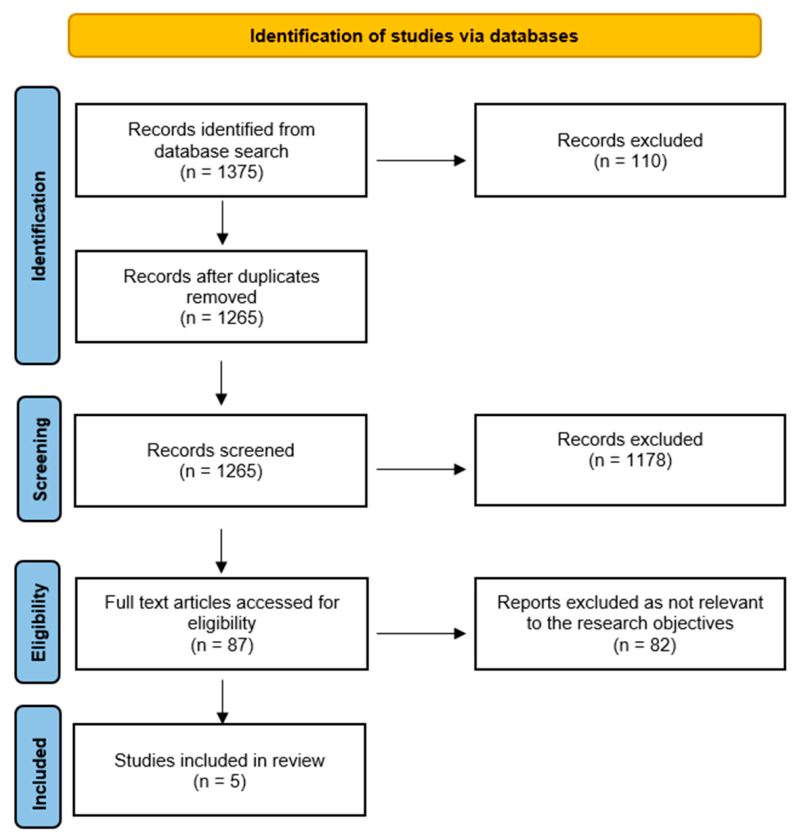
Figure 2.
Decision support system architecture in a vineyard.
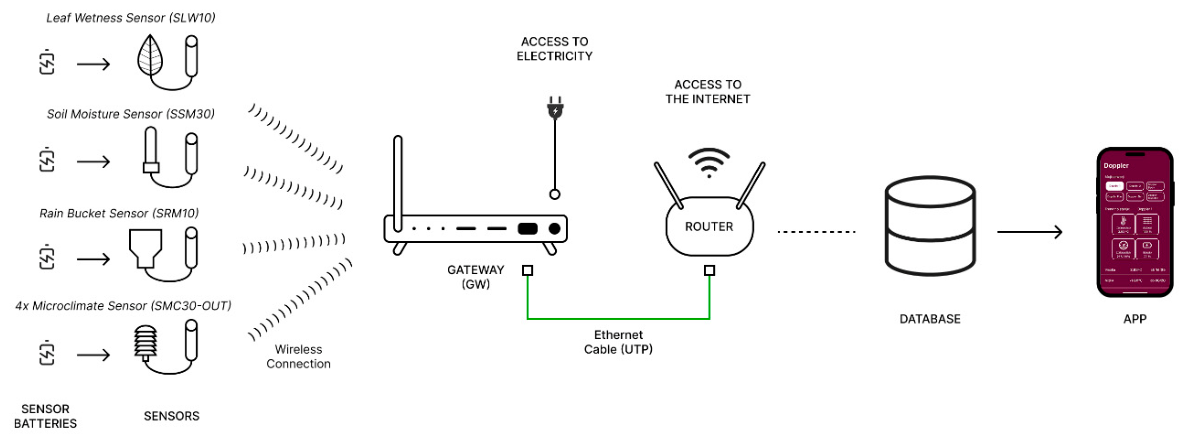

Table 1.
Descriptive overview of studies included in the PRISMA-based systematic review.
| No. | Title | Authors and Year | Country | Context | Study Objective | Methodology | SROI Ratio |
| 1 | Impact Assessment in the Wine Industry: Potential and Limitations of the Social Return on Investment (SROI) [16] |
Landoni & Moratti (2025) | Italy | Wine production and related activities | To explore the main impact evaluation frameworks; To assess the potential and limitations of applying SROI in the wine industry |
Data collection through online questionnaire; Case study using SROI in a wine cellar | Approximately 1.44 |
| 2 | The sustainability of social farming: a study through the Social Return on Investment methodology (SROI) [8] |
Basset & Giarè (2021) | Italy | Social farming of organic production including wine-growing | To analyze and evaluate the sustainability of social farming using SROI methodology |
Interviews; Evaluative and predictive SROI analysis |
SROI ranges from 1.89 to 4.10 |
| 3 | The Return on Investment in Social Farming: A Strategy for Sustainable Rural Development in Rural Catalonia [9] |
Tulla et al. (2020) | Spain (Rural Catalonia) | Different social farming projects including viticulture | To assess social farming as a strategy for sustainable rural development | Interviews, questionnaire, SROI methodology to five cases of social farming | Average SROI 2.22 – 2.90 |
| 4 | Could Social Farming Be a Strategy to Support Food Sovereignty in Europe? [39] |
Tulla & Vera (2019) | Europe | Social farming and food sovereignty | To explore social farming’s contribution to food sovereignty, proximity farming and sustainable economy. | Surveys, interviews and SROI assessment | No single ratio; positive SROI evidence reported, higher than 3. |
| 5 | Social Return and Economic Viability of Social Farming in Catalonia: A Case -Study Analysis [40] |
Tulla et al. (2018) | Spain (Catalonia) | Social farming | To analyze social return and economic viability of social farming | Questionnaires, in depth interviews, business and SROI analyses. | SROI ratios average of 3 |
Table 2.
Synthesis of stakeholders, outcomes, proxies, and sustainability dimensions across studies included in the PRISMA-based systematic review.
Table 2.
Synthesis of stakeholders, outcomes, proxies, and sustainability dimensions across studies included in the PRISMA-based systematic review.
| Stakeholders | Outcomes | Proxies | Sustainability Dimension |
| Farm/s | Decreased production costs [8]; Improved reputation [8]; Increase social value of the company [8] |
Decreased labor costs [8]; Higher revenue [8]; Savings from tutoring or employee training [8]; Decreased costs of medical examination [8] |
Economic |
| Employees [16]; Technical stuff [9,39,40]; Users [8]; Beneficiaries [40] |
Development of social, cognitive, managerial and creative skills [16]; Cooperation and sense of community [16]; Job satisfaction; Improved life quality [8]; Reduction of social isolation [8]; Access to employment [8] |
Trainings and courses [16]; Job satisfaction [16]; Team work [16]; Improved quality of life [8]; Costs for psychological recovery [8]; Salaries [8]; Reduced healthcare use or treatment costs [8] |
Economic, Social |
| Customers [9]; Clients [16,39,40] |
User satisfaction [16]; Perceived innovation [16]; Loyalty and willingness to repeat the purchases [16] |
Average expenditure [16] | Economic |
| Suppliers [9,16,39,40] | Improved brand reputation [16]; Stable commercial relationships |
Brand identity value [16]; Contract stability |
Economic |
| Environment [8] | Increased organic farming [8]; Better management of natural resources [8]; Reduced chemicals used [8]; Lower CO₂ emissions [8]; Land management [8] |
Reduction of environmental risk [8]; Reduction of CO2 emissions [8]; Decreased risk of fires [8] |
Environmental |
| Public Administration (Local/Regional/State) [9,39,40] | Savings in unemployment [40]; Help with access to funding and grants [39,40]; Social cohesion [8] |
Reduced different costs for unemployed [8] | Economic, Social |
| Municipality [8]; Local Community and Territory [9,39,40] |
Production of local products [39,40] | Local spending [39,40]; Community development [39,40] |
Social, Economic |
| Shareholders [16] | Economic growth [16] | Revenue rates [16] | Economic |
| Other associations and collaborating institutions [9,39,40] | Service providers [9]; Advisors [9] Funding [9], Marketing trainings [39]; Crowdfunding [39] |
Economic and other type of support [9,39] | Social, Economic |
| Volunteers / Interns [9,39,40] | Job satisfaction, Skill acquisition [9,39,40] Acquisition of skills and knowledge [9,39,40] |
Wage for voluntary hours; Increased satisfaction [9,39,40] | Social, Economic |
| Family Members of Beneficiaries [9,40,41] | Emotional and material well-being [9,39,40]; | Well-being proxies | Social |
Table 3.
Impact map of the SROI analysis.
| Indicator name | Proxy name | Proxy description | Default Quantity | Unit of Measurement | Financial Proxy/ Proxy Value | Source for the financial proxy/proxy value |
| Decreased workload | Labor cost avoided by reduced spraying time | Money saved from the avoided labor costs for spraying | 48 | Hours of work avoided per year | 9,92€ / hour | [53] |
| Decrease of copper | Avoided purchase cost of copper active ingredient | Money saved from the avoided purchase of copper | 48 | Kg of copper avoided per year | 22€ / kg | [54] |
| Decrease of Sulphur | Avoided purchase cost of Sulphur active ingredient | Money saved from the avoided purchase of Sulphur | 72 | Kg of Sulphur avoided per year | 32 € / kg | [55] |
| Decrease of water | Avoided cost of water used for spraying | Money saved from the avoided costs of water used for spraying pesticides | 7200 | Liters of water avoided per year | 0.00066€ / l |
[56] |
| Lower exposure to pesticides | Avoided health cost from pesticide exposure | Reduced health risks due to lower pesticide use | 1 | Money saved per year | 0.17 € /year | [57] |
|
Improved digital skills |
Value of the gained digital skills | Increased farmer digital competence and efficiency | 1 | Money saved per year | 700 €/year | [58] |
Table 4.
Impact adjustments of the SROI analysis.
| Factor | What it means | Explanation | Value range |
| Leakage | benefit happening outside the vineyard | No other stakeholders benefiting from this | 0% |
| Deadweight | would this change have happened without IoT sensors | There is low probability that this change would occur in absence of sensors | 30% |
| Attribution | how much of this change is caused by IoT sensors and not something else | The improvement is happening due to the IoT sensors, but not only because of them. Lower rain level can be another natural reason. | 30% |
| Yearly Drop-off | how much the effect declines in every year | The benefit is the same every year. | 0% |
| Displacement | is this benefit reduced somewhere else because of this | Less spraying here does not affect the spraying elsewhere. | 0% |
Table 5.
Sensitivity analysis.
| Scenario | Attribution | Deadweight | SROI Ratio |
| Conservative | 40% | 40% | 1.46 |
| Base | 30% | 30% | 1.98 |
| Optimistic | 20% | 20% | 2.59 |
Disclaimer/Publisher’s Note: The statements, opinions and data contained in all publications are solely those of the individual author(s) and contributor(s) and not of MDPI and/or the editor(s). MDPI and/or the editor(s) disclaim responsibility for any injury to people or property resulting from any ideas, methods, instructions or products referred to in the content. |
© 2026 by the authors. Licensee MDPI, Basel, Switzerland. This article is an open access article distributed under the terms and conditions of the Creative Commons Attribution (CC BY) license.
Copyright: This open access article is published under a Creative Commons CC BY 4.0 license, which permit the free download, distribution, and reuse, provided that the author and preprint are cited in any reuse.


