

Submitted:
26 May 2026
Posted:
26 May 2026
You are already at the latest version
Abstract
Low-temperature stress severely limits early-spring melon (Cucumis melo L.) production. However, the regulatory roles of NAC transcription factors in melon responses to abiotic stress remain insufficiently understood. In this study, the melon cultivar ‘Xizhoumi No. 17’ was used as the experimental material, and an Agrobacterium-mediated root transformation system was employed to generate CmNAC29-overexpressing and empty-vector control plants. Phenotypic analysis, physiological measurements, transcriptome sequencing, and molecular interaction assays were performed to systematically investigate the regulatory mechanism by which CmNAC29 mediates chilling tolerance in melon roots. The results showed that CmNAC29 overexpression significantly alleviated cold stress-induced growth inhibition in melon seedlings, reduced membrane lipid peroxidation, and enhanced antioxidant enzyme activities and proline accumulation. Transcriptome analysis revealed that differentially expressed genes associated with CmNAC29 overexpression were significantly enriched in functional categories related to oxidoreductase activity. Further validation showed that CmNAC29 upregulated the expression of antioxidant enzyme genes, the key proline biosynthesis gene CmP5CS1, and core components of the ICE-CBF-COR pathway. Molecular assays confirmed that CmNAC29 possesses transcriptional activation activity and directly binds to the promoters of CmP5CS1-1 and CmCOR413 by recognizing NAC-binding sites, thereby activating their transcription. Taken together, these findings demonstrate that CmNAC29 positively regulates chilling tolerance in melon seedlings by coordinately enhancing antioxidant defense, osmotic adjustment, and cold signal transduction. This study provides an important genetic resource and theoretical basis for the molecular breeding of cold-tolerant melon cultivars.
Keywords:
melon seedlings
; NAC transcription factor
; root transformation
; redox homeostasis
; osmotic adjustment
; promoter binding
1. Introduction
Low-temperature stress is a major abiotic factor that constrains global crop yield, quality, and geographical distribution, particularly in warm-season crops [1]. At the molecular and physiological levels, low temperature directly disrupts membrane fluidity, compromises the structural stability of proteins and RNA, and inhibits the activity of key metabolic enzymes. These disturbances promote the excessive accumulation of reactive oxygen species (ROS) [2]. Excess ROS can attack intracellular macromolecules, disrupt photosynthetic and respiratory metabolism, and ultimately cause growth arrest, leaf wilting, or even plant death under severe stress conditions [3]. Melon (Cucumis melo L.) is a typical warm-season crop that is highly sensitive to low-temperature stress, especially at the seedling stage. Cold-induced damage to melon seedlings has therefore become a major bottleneck restricting the expansion of melon cultivation areas and the stability of melon production [4]. To cope with low-temperature stress, plants have evolved a conserved and complex regulatory network for chilling tolerance, in which the antioxidant defense system and the ICE-CBF-COR signaling pathway represent two core response mechanisms [5]. The antioxidant defense system maintains cellular redox homeostasis by scavenging excess ROS through the coordinated actions of enzymes such as superoxide dismutase (SOD), catalase (CAT), and peroxidase (POD), thereby forming a primary defense against cold-induced oxidative damage [6]. The ICE-CBF-COR pathway is recognized as a central signaling module in plant cold responses and shows a highly conserved regulatory framework across plant species. Upon perception of cold signals, ICE transcription factors bind to the promoters of CBF (C-repeat-binding factor) genes and induce their expression. CBF proteins then activate downstream COR (cold-responsive) genes, thereby enhancing plant chilling tolerance through multilayered regulation [4]. Previous studies have demonstrated that this pathway plays a pivotal role in several crops and model plants, including Arabidopsis, rice, and watermelon. In addition, silencing of CBF family genes significantly reduces plant chilling tolerance [7,8,9].
The NAC (NAM, ATAF1/2, and CUC2) transcription factor family is a large plant-specific regulatory protein family that is widely involved in plant growth, development, and abiotic stress responses. In recent years, the molecular mechanisms by which NAC transcription factors regulate chilling tolerance have attracted increasing attention [10]. NAC transcription factors modulate plant chilling tolerance through multiple pathways. For example, apple MdNAC104 directly binds to the promoters of MdCBF1/3 and activates their expression, while also upregulating antioxidant enzyme-related genes such as MdFSD2 and MdPRX1.1. This enhances chilling tolerance through both CBF-dependent and CBF-independent pathways [11]. In Arabidopsis, the NAC transcription factor NTL6 is activated by cold signals and promotes salicylic acid accumulation [12]. In rice, ONAC095 is induced by drought and abscisic acid (ABA) but suppressed by low temperature. It possesses transcriptional activation activity and negatively regulates drought responses while positively regulating low-temperature responses, thereby exerting opposite regulatory effects on drought and chilling tolerance in an ABA-dependent manner [13,14]. These findings indicate that NAC family members play important regulatory roles in plant chilling tolerance.
Melon (Cucumis melo L.) is an economically important crop cultivated worldwide. Its optimal growth temperature ranges from 25 to 35 °C, and it is highly sensitive to low-temperature stress [15]. Although several low-temperature-responsive genes have been identified in melon, the molecular network underlying chilling tolerance remains incompletely understood. In particular, the function and regulatory mechanism of NAC transcription factors in the melon cold response have not yet been reported [16]. NAC family members exhibit both functional conservation and regulatory diversity across different crops and stress conditions. For example, rice ONAC066 functions as a transcriptional activator by directly binding to the JBS-like cis-element in the OsDREB2A promoter, thereby activating its expression and positively regulating tolerance to drought and oxidative stress [17]. In tobacco, NtNAC053 is significantly upregulated under salt and drought stresses and enhances stress tolerance [18]. Transgenic plants overexpressing stress-responsive NAC (SNAC) genes in Arabidopsis and rice also show improved drought tolerance [19]. In pepper, CaNAC064 is strongly induced by low temperature and positively regulates chilling tolerance through direct interaction with low-temperature-induced proteins, such as cysteine proteases [20]. Together, these studies suggest that NAC transcription factors can integrate antioxidant defense and core stress-signaling pathways through mechanisms such as direct binding to target gene promoters or protein-protein interactions. Given the partial overlap among molecular responses to low temperature and other abiotic stresses, we hypothesized that CmNAC29 may participate in the regulation of chilling tolerance in melon seedlings by modulating the antioxidant defense system and activating the ICE-CBF-COR pathway. Therefore, this study aimed to clarify the function of CmNAC29 in the melon response to low-temperature stress and to systematically dissect its molecular mechanism in enhancing chilling tolerance by strengthening antioxidant defense and activating core cold-signaling pathways. The findings provide a theoretical basis and candidate gene resource for the genetic improvement of chilling tolerance in melon.
2. Materials and Methods
2.1. Generation of CmNAC29-Overexpressing Melon Seedlings Using a Root Transformation System
The melon cultivar ‘Xizhoumi No. 17’ was obtained from Hebei Liertian Seed Industry Co., Ltd. Seeds were treated with distilled water at 55 °C for 15 min, soaked at 25 °C for 6 h, and then placed in 10-cm Petri dishes lined with three layers of moist filter paper for dark germination at 28 °C. After radicle emergence, the germinated seeds were sown in 50-cell seedling trays and grown in a growth chamber under a 14 h light/10 h dark photoperiod, a light intensity of 250 μmol·m-2·s-1, and day/night temperatures of 30 °C/20 °C. The CmNAC29 (MELO3C012114) overexpression vector was constructed according to the method described by Peng et al. and transformed into Escherichia coli DH5α. Subsequently, the empty vector and the pKSE403 vector carrying the target fragment were introduced into Agrobacterium tumefaciens K599 (Shanghai Weidi Biotechnology Co., Ltd.) [21]. The original roots of melon seedlings were excised, and the hypocotyl region below the cotyledons was infected with K599 for 4 d before transplantation. After new roots emerged, seedlings without red fluorescent roots were removed every 5 d, and only seedlings with red fluorescent roots were retained. The expression level of CmNAC29 was verified by quantitative real-time PCR (qRT-PCR). When the positive seedlings reached the two-leaf-one-heart stage, they were transferred to hydroponic cups (upper diameter, 90 mm; lower diameter, 57 mm; height, 135 mm) containing 400 mL of half-strength Hoagland nutrient solution. The pH of the nutrient solution was adjusted to 6.5 using 1 M KOH.
2.2. Cold Stress Treatment
Melon seedlings at the two-leaf-one-heart stage were subjected to either normal-temperature control treatment (CK) or cold stress treatment (CS). The control group was maintained at 30 °C/20 °C day/night temperatures, whereas the cold stress group was exposed to 15 °C/6 °C day/night temperatures. Both treatments were conducted under a 14 h light/10 h dark photoperiod. Each treatment included three biological replicates [22]. Root samples were collected after 24 h of cold treatment, immediately frozen in liquid nitrogen, and stored at −80 °C for subsequent analyses. On day 5 of treatment, seedlings were randomly selected for phenotypic observation and photographed.
2.3. Measurement of Phenotypic Parameters
On day 5 of cold stress treatment, the shoots and roots of melon seedlings were harvested separately. Fresh weight (FW) was measured using an electronic analytical balance (LICHEN, LA-FC, Shanghai, China) [23]. For dry weight (DW) determination, the samples were dried in an oven at 80 °C until a constant weight was reached.
2.4. Measurement of Physiological Parameters
After 1 day of cold stress treatment, root samples were collected to determine malondialdehyde (MDA) and proline (PRO) contents, as well as the activities of SOD, POD, and CAT. All assays were performed using commercial assay kits from Aidi Biological Co., Ltd., according to the manufacturer’s instructions. The catalog numbers were as follows: MDA (ADS-W-YH002-48), SOD (ADS-W-KY011-48), POD (ADS-W-KY003-48), CAT (ADS-W-KY002-48), and PRO (ADS-W-AJS004-48) [24].
2.5. Transcriptome Sequencing
Root samples of melon seedlings were collected after 1 day of cold stress treatment for transcriptome sequencing. RNA sequencing was performed by Beijing Tsingke Biotech Co., Ltd. The reference genome sequence was obtained from the Cucurbit Genomics Database (http://cucurbitgenomics.org/), and clean reads were mapped to the melon DHL92 genome v4. Quality control analysis showed that the Q20 values of all samples exceeded 85%, and the Q30 values exceeded 80%. Gene expression levels were calculated as transcripts per million (TPM), and differentially expressed genes (DEGs) were identified using DESeq2 software [25]. Genes with |log2(fold change)| > 1.0 and p < 0.05 were considered significantly differentially expressed [26]. The transcriptome sequencing data have been deposited in the NCBI database under accession number PRJNA1405096.
2.6. qRT-PCR Analysis
Root samples of melon seedlings were collected after 1 day of cold stress treatment, immediately frozen in liquid nitrogen, and stored at −80 °C for subsequent RNA extraction. Total RNA was extracted following previously reported methods [27]. Briefly, 0.2 g of root tissue was accurately weighed, rapidly frozen in liquid nitrogen, and ground into a fine powder. Total RNA was then extracted using the TransZol Up Plus RNA Kit (TransGen Biotech, Beijing, China). For cDNA synthesis, 2 μg of total RNA was reverse-transcribed using the Hifair® III 1st Strand cDNA Synthesis Kit (Vazyme, Nanjing, China). The resulting cDNA was diluted to 200 ng·μL-1 with nuclease-free water and stored at −20 °C until use. qRT-PCR was performed on an ABI 6500 HT system (Applied Biosystems, USA). Each 10 μL reaction mixture contained 1 μL of cDNA template, 0.5 μL each of forward and reverse primers (final concentration, 0.25 μM), 5 μL of TransStart® Top Green qPCR SuperMix (TransGen Biotech, Beijing, China), and 3 μL of nuclease-free water. The thermal cycling conditions were as follows: initial denaturation at 94 °C for 30 s; 40 cycles of denaturation at 94 °C for 5 s, annealing at 56 °C for 30 s, and extension at 72 °C for 10 s; followed by melting curve analysis to confirm amplification specificity. Relative gene expression levels were calculated using the 2⁻ΔΔCt method, with CmActin used as the internal reference gene. The primer sequences are listed in Supplementary Table S1.
2.7. Yeast One-Hybrid Assay
The promoter sequences 2000 bp upstream of the translation start site (ATG) of CmP5CS1-1 and CmCOR413 were retrieved from the melon genome database. PlantCARE and JASPAR databases were used to predict cis-acting elements and screen for potential CmNAC29-binding sites. For the yeast one-hybrid assay, the pB42AD vector was linearized using EcoRI and XhoI restriction enzymes, and the CmNAC29 coding sequence (CDS) was cloned into the corresponding restriction sites. The predicted CmNAC29-binding sequences (G-box elements) in the promoters of CmP5CS1-1 and CmCOR413 were synthesized by Beijing Tsingke Biotech Co., Ltd., tandemly repeated three times, and inserted into the pLacZi vector. The recombinant pB42AD-CmNAC29 and pLacZi-G-box constructs were co-transformed into EGY48 yeast cells. Yeast cells co-transformed with the empty pB42AD vector and pLacZi-G-box were used as the negative control. Single colonies were selected on SD/−Trp/−Ura solid medium, inoculated into SD/−Trp/−Ura liquid medium, and cultured overnight at 28 °C with shaking at 200 rpm. The yeast culture was then diluted to an OD600 of 0.1, and 10 μL of the diluted suspension was spotted onto SD/−Trp/−Ura/Gal/Raf/X-Gal solid medium. Plates were incubated at 30 °C for 3–5 days to assess reporter activation.
2.8. Dual-Luciferase Reporter Assay
The dual-luciferase reporter assay was performed following previously reported methods [21]. The G-box elements from the promoters of CmP5CS1-1 and CmCOR413 were tandemly repeated three times and inserted into the pGreenII 0800-LUC reporter vector. The full-length CmNAC29 CDS was cloned into the pGreenII 62-SK effector vector. The successfully constructed plasmids were transformed into Agrobacterium tumefaciens GV3101, which was then used to infiltrate tobacco epidermal cells. The infiltrated tobacco plants were cultured in the dark under normal conditions for 2-5 days. D-Luciferin potassium salt (Beyotime, Shanghai, China) was sprayed onto the abaxial surface of the leaves, and luminescence signals were observed using a NightSHADE LB985 imaging system (Berthold, Germany).
2.9. Electrophoretic Mobility Shift Assay (EMSA)
EMSA was performed following previously reported methods [21]. 6-FAM-labeled probes containing the NAC-binding sites (NACbs) in the promoters of CmP5CS1-1 and CmCOR413 were synthesized by Beijing Tsingke Biotech Co., Ltd. Corresponding unlabeled competitor probes and mutant probes were also synthesized to verify binding specificity. For the binding reaction, 1 μL of labeled probe, approximately 100 nM, was mixed with 2 μL of 10× binding buffer (100 mM Tris, 500 mM KCl, 10 mM DTT, pH 7.5), 1 μL of 50% glycerol, 1 μL of 100 mM MgCl₂, and an appropriate volume of ddH2O to a final volume of 10 μL. The mixture was pre-incubated at 4 °C for 10 min. Subsequently, different molar excesses (10×, 50×, and 100×) of unlabeled competitor probes or mutant probes were added, and the reaction mixture was incubated at 4 °C for 30 min to allow DNA-protein binding. The samples were separated on a 5% native polyacrylamide gel in 0.5× TBE buffer at 100 V for 1 h at 4 °C. After electrophoresis, the gel was briefly rinsed with deionized water and scanned in a dark chamber using a multicolor fluorescence chemiluminescence imaging system FM 1038 (Bio-Techne, USA).
2.10. Statistical Analysis and Graph Preparation
All data were analyzed using two-way analysis of variance ANOVA to evaluate the effects of treatment and genotype. When significant differences were detected, Duncan’s multiple range test DMRT was used for multiple comparisons. Statistical significance was set at p < 0.05. Statistical analyses and graph preparation were performed using RStudio 4.0.3.
3. Results
3.1. CmNAC29 Enhances Chilling Tolerance in Melon Seedlings
Based on our previous transcriptome data (PRJNA1398061), CmNAC29 expression was upregulated by 1.83-fold under cold stress compared with the CK (Figure 1, a), indicating that this gene may be involved in the regulation of the low-temperature stress response in melon. Therefore, CmNAC29 was selected as a candidate gene for further investigation. To further explore the role of CmNAC29 in melon chilling tolerance, melon seedlings carrying either the empty vector or the CmNAC29 overexpression vector were generated using a root transformation system. qRT-PCR analysis showed that, compared with empty-vector root-transformed seedlings, CmNAC29 expression in the roots of CmNAC29-overexpressing root-transformed seedlings was increased by 14.73-fold (Figure 1, b). Phenotypic analysis was then performed to evaluate the effect of CmNAC29 overexpression on melon seedling growth under low-temperature stress. After 5 days of cold stress treatment, CmNAC29-overexpressing root-transformed seedlings showed a clear growth advantage over empty-vector seedlings under both normal-temperature and cold-stress conditions (Figure 1, c). Under control conditions, shoot fresh weight, root fresh weight, shoot dry weight, and root dry weight were all significantly higher in CmNAC29-overexpressing seedlings than in empty-vector seedlings (Figure 1, d–g). Under cold stress, the shoot fresh weight, root fresh weight, shoot dry weight, and root dry weight of empty-vector seedlings decreased by 83.1%, 77.1%, 82.2%, and 73.8%, respectively, compared with those under control conditions. In contrast, the corresponding decreases in CmNAC29-overexpressing seedlings were 52.7%, 50.1%, 53.4%, and 56.2%, respectively (Figure 1, d–g). These results indicate that CmNAC29 overexpression markedly alleviated cold-induced growth inhibition in melon seedlings, suggesting that CmNAC29 positively regulates chilling tolerance in melon.
3.2. CmNAC29 Enhances Antioxidant Enzyme Activities and Proline Accumulation in Melon Seedlings
To clarify the effects of CmNAC29 overexpression on the physiological responses of melon seedlings under cold stress, MDA content, antioxidant enzyme activities, including SOD, POD, and CAT, and proline content were measured. Under control conditions, compared with empty-vector root-transformed seedlings, CmNAC29-overexpressing root-transformed seedlings showed no significant changes in MDA content, SOD activity, CAT activity, or proline content, whereas POD activity was significantly increased (Figure 2, a–e). Under cold stress, however, CmNAC29-overexpressing seedlings exhibited significantly lower MDA content and significantly higher SOD, POD, and CAT activities, as well as higher proline content, than empty-vector seedlings. Compared with their respective normal-temperature controls, cold stress increased MDA content by 103.1% in empty-vector seedlings, accompanied by a 1.2% increase in SOD activity, a 32.5% increase in POD activity, a 13.9% decrease in CAT activity, and a 7.9% decrease in proline content. In contrast, in CmNAC29-overexpressing seedlings, cold stress increased MDA content by 59.7%, while SOD activity, POD activity, CAT activity, and proline content increased by 11.2%, 32.4%, 28.6%, and 47.9%, respectively (Figure 2, a–e). These results indicate that CmNAC29 overexpression alleviates cold-induced oxidative damage in melon seedlings by enhancing antioxidant enzyme activities and promoting the accumulation of the osmoprotectant proline.
3.3. Transcriptome Analysis of CmNAC29-Overexpressing Melon Roots
Transcriptome sequencing was performed on melon roots after 1 day of cold stress treatment to investigate the effect of CmNAC29 overexpression on gene expression. Principal component analysis (PCA) showed that the three biological replicates of each treatment group clustered within the 95% confidence ellipse, indicating good reproducibility among samples (Figure 3, a). Differential expression analysis showed that, after 1 day of cold stress, 1,616 genes were upregulated and 3,173 genes were downregulated in empty-vector (EV) roots compared with the corresponding control. In CmNAC29-overexpressing (OENAC29) roots, 1,615 genes were upregulated, and 2,450 genes were downregulated under cold stress compared with the corresponding control (Figure 3, b). GO enrichment analysis of the 4,065 DEGs identified in OENAC29 roots revealed significant enrichment of molecular function terms related to oxidoreductase activity and peroxidase activity (Figure 3, c). These results suggest that CmNAC29 may enhance chilling tolerance in melon seedlings by regulating antioxidant enzyme-related processes in the roots.
3.4. CmNAC29 Upregulates Genes Related to Antioxidant Enzymes and Proline Biosynthesis
To evaluate the regulatory role of CmNAC29 in antioxidant enzyme- and proline biosynthesis-related genes in melon roots, gene expression analysis was performed after 1 day of cold treatment. Among the POD-related genes, CmPOD and CmPER39 showed relatively high expression levels and were both cold-inducible. Under control conditions, the expression levels of these two genes were relatively low in empty-vector root-transformed seedlings but were significantly upregulated in CmNAC29-overexpressing root-transformed seedlings (Figure 4, a, d–e). Among the CAT-related genes, CmCAT2-1 showed the highest expression level. Under control conditions, CmCAT2-1 was expressed at a low level in empty-vector seedlings but was significantly upregulated in CmNAC29-overexpressing seedlings (Figure 4, b, f). Among the proline biosynthesis-related genes, CmP5CS1 showed relatively stable expression. Under control conditions, CmP5CS1 expression was lower in empty-vector seedlings than in CmNAC29-overexpressing seedlings, with marked upregulation observed in the overexpression line (Figure 4, c, g). Further qRT-PCR analysis showed that, after 1 day of cold treatment, the expression levels of CmPOD, CmPER39, CmCAT2-1, and CmP5CS1 in CmNAC29-overexpressing seedlings were increased by 29.0%, 69.3%, 65.2%, and 75.2%, respectively, compared with those in empty-vector seedlings (Figure 4, d–g). Taken together, these findings indicate that CmNAC29 overexpression coordinately activates antioxidant enzyme-related genes and proline biosynthesis-related genes, thereby enhancing ROS-scavenging capacity and osmotic adjustment under cold stress. This regulatory effect may contribute to the improved low-temperature tolerance of melon seedlings.
3.5. CmNAC29 Activates the Expression of Genes Related to the ICE-CBF-COR Pathway
To evaluate the regulatory role of CmNAC29 in the cold-responsive signaling pathway of melon seedlings, gene expression analysis was performed after 1 day of cold treatment. Among the ICE genes, CmICE2 expression was markedly affected by cold treatment. Under cold stress, CmICE2 expression was slightly decreased in empty-vector root-transformed seedlings, whereas it was significantly upregulated in CmNAC29-overexpressing root-transformed seedlings (Figure 5, a). Among the CBF genes, CmCBF1 was strongly induced by low temperature. Although CmCBF1 expression was also induced in empty-vector seedlings under cold stress, the induction level was relatively low. In contrast, CmCBF1 was markedly upregulated in CmNAC29-overexpressing seedlings under cold stress (Figure 5, a). Among the COR genes, CmCOR413 showed only weak induction in empty-vector seedlings, whereas its expression was significantly increased in CmNAC29-overexpressing seedlings (Figure 5, a). Further qRT-PCR analysis revealed distinct expression patterns of cold-responsive genes between empty-vector and CmNAC29-overexpressing seedlings after 1 day of cold treatment. Compared with their respective normal-temperature controls, CmICE2 expression in empty-vector seedlings decreased by 10.8%, whereas CmCBF1 and CmCOR413 expression increased by 47.0% and 14.5%, respectively. In CmNAC29-overexpressing seedlings, the expression levels of CmICE2, CmCBF1, and CmCOR413 increased by 98.8%, 3.0-fold, and 2.1-fold, respectively (Figure 5, b–d). Taken together, these findings indicate that CmNAC29 overexpression coordinately activates key genes in the ICE-CBF-COR cold-responsive signaling pathway, thereby enhancing cold signal perception and transduction under low-temperature stress. This activation may contribute to the positive regulatory role of CmNAC29 in melon seedling chilling tolerance.
3.6. CmNAC29 Directly Binds to the Promoters of Downstream Target Genes
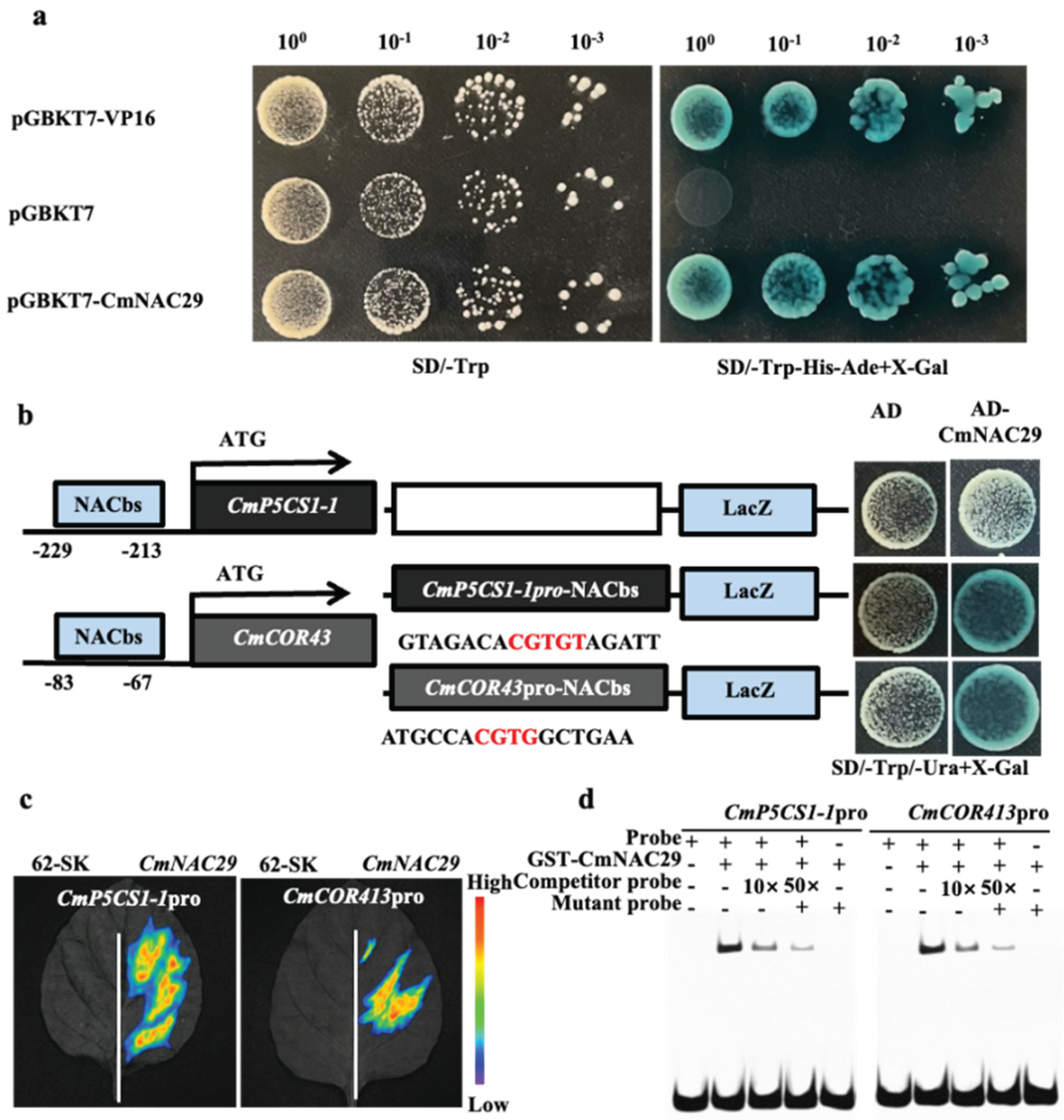
To further dissect the regulatory mechanism by which CmNAC29 regulates downstream target genes, pGBKT7-CmNAC29 was first transformed into Y2HGold yeast cells to assess its transcriptional activation activity. On SD/−Trp/−His/−Ade/X-Gal medium, yeast cells transformed with pGBKT7-CmNAC29 formed blue colonies, whereas those transformed with the negative control pGBKT7 showed no coloration. The positive control pGBKT7-VP16 also produced blue colonies (Figure 6, a), indicating that CmNAC29 possesses transcriptional activation activity. Subsequent promoter sequence analysis showed that the 5′ upstream regions of CmP5CS1-1 and CmCOR413 contained predicted CmNAC29-binding sites, namely NAC-binding sites (NACbs) (Figure 6, b). When each predicted binding sequence was inserted into the LacZ reporter vector and co-transformed with AD-CmNAC29 into yeast cells, all tested combinations produced blue colonies on X-Gal medium, whereas the reporter-only control showed no coloration. These results suggest that CmNAC29 can bind to the predicted cis-elements in the promoters of CmP5CS1-1 and CmCOR413 in yeast (Figure 6, b). The dual-luciferase reporter assay further showed that, compared with the 62-SK empty-vector control, tobacco leaves co-transformed with CmNAC29 and either CmP5CS1-1pro or CmCOR413pro exhibited markedly enhanced luciferase signals. This result indicates that CmNAC29 activates the transcription of these promoter fragments in tobacco leaves (Figure 6, c). EMSA analysis confirmed the direct binding of CmNAC29 to these promoter regions. When GST-CmNAC29 protein was incubated with labeled probes corresponding to the CmP5CS1-1pro and CmCOR413pro NACbs, clear shifted bands were observed. These shifted bands were weakened by the addition of 10× unlabeled competitor probes and were further reduced or abolished by 50× competitor probes. In contrast, no shifted bands were detected when GST-CmNAC29 was incubated with mutant probes (Figure 6, d). These results demonstrate that CmNAC29 directly binds to the NACbs in the promoters of CmP5CS1-1 and CmCOR413.
4. Discussion
4.1. CmNAC29 Positively Regulates Chilling Tolerance in Melon Seedlings
Among the various abiotic stresses that constrain plant growth and development, low temperature is one of the major factors severely affecting crop yield and quality. To cope with adverse environments, plants activate complex regulatory networks that integrate osmotic adjustment and stress-responsive signaling pathways to function coordinately [28,29]. As one of the largest transcription factor families in plants, the NAC family plays a central role in this regulatory system by modulating the expression of stress-responsive genes, thereby enhancing stress resistance in multiple plant species [30,31]. For instance, the tomato NAC transcription factor SlNAC1 positively regulates chilling tolerance. Overexpression of SlNAC1 increases leaf number and enhances seedling growth under normal conditions, although the plants exhibit a relatively dwarf phenotype. Under low-temperature stress at 4 °C, transgenic plants show milder chilling injury symptoms, reduced damage severity, lower growth inhibition rates, and overall better growth performance than wild-type plants, indicating that SlNAC1 overexpression promotes vegetative growth while enhancing chilling tolerance [32]. Similarly, the pepper NAC transcription factor CaNAC064 positively regulates chilling tolerance. Silencing of CaNAC064 results in more severe wilting symptoms, a higher chilling injury index, and stronger growth inhibition under low-temperature stress, whereas overexpression of CaNAC064 in Arabidopsis significantly reduces the chilling injury index and relative electrolyte leakage, leading to alleviated wilting and improved growth after low-temperature treatment [20]. In rice, the NAC transcription factor OsNAC5 positively regulates chilling tolerance by directly activating and stabilizing the OsABI5 protein, thereby inducing downstream cold-responsive genes. This regulation is reflected by improved seed germination and seedling survival under low temperature, reduced ion leakage, and enhanced post-stress recovery growth [13]. These studies demonstrate that NAC transcription factors participate in the regulation of plant chilling tolerance through multiple mechanisms, including activation of cold-responsive signaling pathways, maintenance of cell membrane stability, and modulation of overall plant growth. Consistent with these findings, our results showed that CmNAC29 overexpression markedly alleviated cold-induced growth inhibition in melon seedlings. Under low-temperature stress, CmNAC29-overexpressing root-transformed seedlings maintained significantly higher shoot and root fresh weights and dry weights than empty-vector seedlings. These findings suggest that CmNAC29, as an important member of the melon NAC family, positively regulates chilling tolerance by mitigating cold-induced growth suppression and maintaining seedling biomass accumulation under low-temperature conditions. Therefore, CmNAC29 may serve as a candidate gene resource for the molecular breeding of chilling-tolerant melon cultivars.
In this study, CmNAC29 was identified as a positive regulator of chilling tolerance in melon (Figure 1, a–b). The CmNAC29-overexpressing root-transformed line OENAC29 showed enhanced growth capacity under low-temperature stress (Figure 1, a–g). After 5 days of low-temperature treatment, OENAC29 seedlings exhibited significantly higher shoot and root fresh weights and dry weights than EV control seedlings (Figure 1, e–g). These regulatory characteristics of CmNAC29 under low-temperature stress are consistent with its previously reported protective role under high-temperature stress [28]. The results of this study are also consistent with those reported for pepper CaNAC064, which positively regulates plant chilling tolerance and maintains cell membrane stability by reducing electrolyte leakage. However, unlike CaNAC064, which functions through protein interaction with low-temperature-induced cysteine proteases, the specific protein-interaction mechanism of CmNAC29 remains to be further elucidated [20]. Meanwhile, our findings are similar to those reported for rice ONAC066, which positively regulates drought and oxidative stress tolerance [17]. Both ONAC066 and CmNAC29 alleviate membrane lipid peroxidation damage to enhance plant stress resistance. However, ONAC066 directly binds to the JBS-like cis-acting element in the OsDREB2A promoter to activate downstream gene expression, whereas whether CmNAC29 regulates chilling tolerance through an analogous DREB-type regulatory route remains unclear. Unlike strawberry FvNAC29, which specifically enhances chilling tolerance through the CBF pathway [33], CmNAC29 may participate in broader stress-response regulation. Its function is similar to that of soybean GmNAC20, which positively regulates tolerance to multiple stresses; however, GmNAC20 also promotes lateral root formation and upregulates auxin signaling-related genes [34]. In contrast, CmNAC29 in this study primarily promoted biomass accumulation in both shoots and roots under low-temperature stress. These similarities and differences suggest that, although NAC family genes are conserved participants in the regulation of plant chilling tolerance, their downstream mechanisms and regulatory networks are species-specific, which may be associated with differences in interacting proteins and target gene promoter sequences among different crops.
4.2. CmNAC29 Enhances Chilling Tolerance in Melon by Regulating Antioxidant Enzymes and Related Genes
Under low-temperature stress, the membrane system of plant cells is disrupted, and the dynamic balance of electron transport and redox homeostasis is impaired, leading to excessive accumulation of ROS [35,36]. Therefore, the rapid activation of the antioxidant defense system is essential for plant stress resistance [37]. Previous studies have shown that NAC transcription factors can enhance cellular antioxidant capacity by regulating genes associated with antioxidant enzymes and osmoregulatory substances, thereby reducing ROS accumulation and alleviating oxidative damage to membrane lipids. For instance, overexpression of SlNAC1 in tomato enhances antioxidant capacity by reducing the accumulation of ROS, including H2O2 and O₂•⁻, and increasing the activities of antioxidant enzymes such as SOD and CAT. This alleviates oxidative damage caused by low-temperature stress. Meanwhile, SlNAC1 also enhances chilling tolerance by upregulating the key cold-responsive gene SlCBF1 and modulating the expression of antioxidant enzyme-related genes, including CAT and FeSOD [32]. The pepper NAC transcription factor CaNAC064 also positively regulates chilling tolerance. Silencing of CaNAC064 causes severe wilting symptoms and substantial ROS accumulation in pepper seedlings under low-temperature stress, whereas overexpression of CaNAC064 in Arabidopsis significantly reduces MDA content and enhances the activities of SOD, POD, and CAT, thereby alleviating membrane lipid peroxidation damage [20]. In rice, OsNAC5 enhances chilling tolerance by directly activating and stabilizing the OsABI5 protein, which subsequently activates downstream cold-responsive genes, such as OsDREB1A and OsMYB2, as well as the peroxidase gene OsPRX70 [13]. In addition, studies of NAC genes in Rosaceae crops, such as strawberry, have provided important references for the molecular breeding of stress resistance in fruit crops [38,39]. Collectively, these studies demonstrate that NAC transcription factors regulate plant chilling tolerance through multiple mechanisms, including modulation of antioxidant defense and antioxidant enzyme-related genes.
The results of the present study are consistent with previous findings in tomato, pepper, rice, and other crops, indicating that NAC transcription factors can positively regulate plant chilling tolerance by upregulating antioxidant enzyme-related genes and enhancing ROS-scavenging capacity [13,20,32]. Specifically, similar to SlNAC1, CaNAC064, and OsNAC5, CmNAC29 activated key antioxidant enzyme-related genes, including CmPOD, CmPER39, and CmCAT2-1, thereby alleviating low-temperature-induced membrane lipid peroxidation damage (Figure 4, d–f). However, the present study also revealed several notable differences. First, the regulatory targets of CmNAC29 were mainly concentrated in POD family genes, including CmPOD and CmPER39, and the CAT-related gene CmCAT2-1, without obvious involvement of SOD-related genes. This differs from previous reports showing that SlNAC1 regulates FeSOD expression and that CaNAC064 enhances SOD activity [20,32]. This difference may be related to the specificity of NAC transcription factor-binding motifs and the evolutionary divergence of antioxidant enzyme gene families among different species. Second, this study employed a root-transformed overexpression system, whereas previous studies mainly used whole-plant overexpression or heterologous expression strategies [13,20]. Because roots are the primary organs responsible for water and nutrient absorption, localized enhancement of antioxidant defense in roots may be more directly associated with the adaptability of melon seedlings to low-temperature soil environments. In conclusion, CmNAC29 exhibits target-gene selectivity on the basis of its conserved antioxidant defense function.
4.3. CmNAC29 Enhances Chilling Tolerance by Binding to the Promoters of CmP5CS1-1 and CmCOR413 to Regulate Proline Biosynthesis and the ICE-CBF-COR Pathway
The ICE-CBF-COR signaling cascade is widely recognized as a core regulatory module during plant cold acclimation. Upon perception of low-temperature signals, the upstream transcription factor ICE1 directly binds to the promoters of CBF genes and activates their transcription [40,41]. Subsequently, CBF transcription factors recognize C-repeat/dehydration-responsive elements (CRT/DREs) in the promoters of downstream COR genes and induce the accumulation of osmoregulatory substances, thereby systematically enhancing plant freezing tolerance [42,43]. In melon, CmCBF4 forms a synergistic regulatory module with CmABF1 and directly binds to and activates the promoter of the arginine decarboxylase gene CmADC, promoting the synthesis of protective polyamines such as putrescine and significantly enhancing seedling chilling tolerance [44]. Notably, the NAC transcription factor family has also been shown to participate in this core cold-resistance regulatory network through direct promoter binding. In rice, ONAC066 activates the transcription of OsDREB2A by directly binding to the JBSL cis-acting element in its promoter, thereby positively regulating drought and oxidative stress responses; accordingly, overexpression lines show significantly increased proline content under stress [17]. Additionally, overexpression of soybean GmNAC20 in transgenic rice significantly enhances chilling tolerance, accompanied by increased proline accumulation under cold stress [34]. Meanwhile, the melon DUF239 family gene CmDUF239-1 participates in cold stress regulation by activating the ICE-CBF-COR pathway, including significant upregulation of CmCBF1, CmCBF2, and downstream CmCOR413-2, further confirming the functional conservation of proteins with different structural domains in this core cold-resistance network [4]. Collectively, these studies demonstrate that NAC transcription factors participate in the regulation of plant chilling tolerance through mechanisms including direct promoter binding, regulation of the ICE-CBF-COR pathway, and modulation of proline biosynthesis.
This study reveals the molecular mechanism by which CmNAC29 positively regulates low-temperature tolerance in melon seedlings through direct binding to downstream target gene promoters, thereby coordinately regulating proline biosynthesis and the ICE-CBF-COR cold-responsive signaling pathway. In the proline biosynthesis pathway, CmP5CS1, a key rate-limiting enzyme gene, showed a clear low-temperature-induced expression advantage in melon seedlings with root-specific overexpression of CmNAC29. Its expression level was substantially upregulated after cold treatment compared with the normal-temperature control, whereas the expression of this gene slightly decreased in seedlings carrying the root-transformed empty vector (Figure 4, c). Promoter sequence analysis revealed that the 5′ upstream region of CmP5CS1-1 contains a G-box cis-acting element, and yeast one-hybrid, dual-luciferase reporter, and EMSA confirmed that CmNAC29 can directly bind to this element and activate the transcription of CmP5CS1-1 (Figure 6, a–d). These results indicate that CmNAC29 enhances the accumulation capacity of osmoregulatory substances under low-temperature stress by directly targeting the promoter of a proline biosynthesis gene. In the ICE-CBF-COR cold-responsive signaling pathway, the induction levels of CmICE2, CmCBF1, and CmCOR413 in melon seedlings with root-specific overexpression of CmNAC29 after cold treatment were all significantly higher than those in seedlings carrying the root-transformed empty vector (Figure 5, a–d). Promoter analysis further revealed that the 5′ upstream region of CmCOR413 also contains a G-box element, and yeast one-hybrid, LUC, and EMSA assays confirmed that CmNAC29 can directly bind to this promoter and activate its expression (Figure 6, a–d). Thus, CmNAC29, as a transcriptionally active NAC family transcription factor, can simultaneously recognize and bind to G-box cis-elements in the promoter regions of both CmP5CS1-1 and CmCOR413, thereby integrating the regulation of the proline biosynthesis pathway and the ICE-CBF-COR cold-responsive pathway. On the one hand, it activates proline biosynthesis to enhance cellular osmotic adjustment and ROS-scavenging capacity; on the other hand, it activates downstream COR effector genes to strengthen cold signal perception and transduction efficiency. This dual positive regulation of osmotic adjustment and cold signal transduction synergistically enhances the overall tolerance capacity of melon seedlings under low-temperature stress, providing experimental evidence for a deeper understanding of the functional mechanisms of NAC transcription factors in the melon cold stress response.
5. Conclusions
In summary, CmNAC29, a transcriptionally active member of the NAC family in melon, positively regulates low-temperature tolerance in melon seedlings. Mechanistically, CmNAC29 directly binds to the promoters of the target genes CmP5CS1-1 and CmCOR413, thereby coordinately upregulating antioxidant enzyme-related genes, proline biosynthesis-related genes, and key components of the ICE-CBF-COR pathway. This regulation enhances ROS-scavenging capacity, osmotic adjustment, and cold signal transduction efficiency under low-temperature stress. These findings enrich the understanding of NAC transcription factor functions in cucurbit crops and provide valuable gene resources and a theoretical basis for the molecular breeding of chilling-tolerant melon cultivars.
Supplementary Materials
The following supporting information can be downloaded at: Preprints.org, Table S1: Primers of q-RT PCR.
Author Contributions
Conceptualization, Y.L and ZM.T; methodology, Q.L; software, YQ.L; validation, XY.L; formal analysis, XT.L; investigation, Y.L, ZM.T and Q.L; resources, YQ.L and XY.L; data curation, XT.L; writing—original draft preparation, Y.L and ZM.T.; writing—review and editing, CY. L and YQ.P.; visualization, CY. L and YQ.P.; supervision, CY. L and YQ.P.; project administration, YQ.P. and ZM.T.; funding acquisition, YQ.P. and ZM.T. All authors have read and agreed to the published version of the manuscript.
Funding
This research was funded by the Tianshan Talent Science and Technology Innovation Team Program, grant number 2024TSYCTD0019; the Science and Technology Program of the Xinjiang Production and Construction Corps, grant number 2023AB071; the Science and Technology Program of the First Division Alar City, grant number 2024NY04; Xinjiang Production & Construction Corps Key Laboratory of Protected Agriculture, grant number NJSS2024101.
Data Availability Statement
The data presented in this study are available on request from the corresponding author. (please specify the reason for restriction, e.g., the data are not publicly available due to privacy or ethical restrictions.).
Acknowledgments
Not applicable.
Conflicts of Interest
The authors declare no conflicts of interest.
References
- Jahed, K.R.; Saini, A.K.; Sherif, S.M. Coping with the cold: unveiling cryoprotectants, molecular signaling pathways, and strategies for cold stress resilience. Front. Plant Sci. 2023, 14. [Google Scholar] [CrossRef]
- Bai, H.; Liao, X.; Li, X.; Wang, B.; Luo, Y.; Yang, X.; Tian, Y.; Zhang, L.; Zhang, F.; Pan, Y.; Jiang, B.; Jia, Y.; Liu, Q. DgbZIP3 interacts with DgbZIP2 to increase the expression ofDgPODfor cold stress tolerance in chrysanthemum. Hortic. Res. 2022, 9. [Google Scholar] [CrossRef] [PubMed]
- Wang, Y.; Wang, J.; Sarwar, R.; Zhang, W.; Geng, R.; Zhu, K.-M.; Tan, X.-L. Research progress on the physiological response and molecular mechanism of cold response in plants. Front. Plant Sci. 2024, 15. [Google Scholar] [CrossRef] [PubMed]
- Li, Y.; Tan, Z.; Liu, Y.; Wu, X.; Zhu, J.; Peng, Y. Overexpression of CmDUF239-1 Enhances Cold Tolerance in Melon Seedlings by Reinforcing Antioxidant Defense and Activating the ICE-CBF-COR Pathway. Agronomy 2025, 15(12), 2725. [Google Scholar] [CrossRef]
- Kidokoro, S.; Shinozaki, K.; Yamaguchi-Shinozaki, K. Transcriptional regulatory network of plant cold-stress responses. Trends Plant Sci. 2022, 27(9), 922–935. [Google Scholar] [CrossRef]
- Zhou, L.; Ullah, F.; Zou, J.; Zeng, X. Molecular and Physiological Responses of Plants that Enhance Cold Tolerance. Int. J. Mol. Sci. 2025, 26(3), 1157. [Google Scholar] [CrossRef]
- Wan, F.; Pan, Y.; Li, J.; Chen, X.; Pan, Y.; Wang, Y.; Tian, S.; Zhang, X. Heterologous expression of Arabidopsis C-repeat binding factor 3 (AtCBF3) and cold-regulated 15A (AtCOR15A) enhanced chilling tolerance in transgenic eggplant (Solanum melongena L.). Plant Cell Rep. 2014, 33(12), 1951–1961. [Google Scholar] [CrossRef]
- Shah, S.H.; Ali, S.; Qureshi, A.A.; Zia, M.A.; Din, J.; Ali, G.M. Chilling tolerance in three tomato transgenic lines overexpressing CBF3 gene controlled by a stress inducible promoter. Environ. Sci. Pollut. Res. 2017, 24(22), 18536–18553. [Google Scholar] [CrossRef]
- Caccialupi, G.; Milc, J.; Caradonia, F.; Nasar, M.F.; Francia, E. The Triticeae CBF Gene Cluster—To Frost Resistance and Beyond. Cells 2023, 12(22), 2606. [Google Scholar] [CrossRef] [PubMed]
- Xiong, H.; He, H.; Chang, Y.; Miao, B.; Liu, Z.; Wang, Q.; Dong, F.; Xiong, L. Multiple roles of NAC transcription factors in plant development and stress responses. J. Integr. Plant Biol. 2025, 67(3), 510–538. [Google Scholar] [CrossRef]
- Mei, C.; Yang, J.; Mei, Q.; Jia, D.; Yan, P.; Feng, B.; Mamat, A.; Gong, X.; Guan, Q.; Mao, K.; Wang, J.; Ma, F. MdNAC104 positively regulates apple cold tolerance via CBF-dependent and CBF-independent pathways. Plant Biotechnol. J. 2023, 21(10), 2057–2073. [Google Scholar] [CrossRef]
- Seo, P.J.; Kim, M.J.; Park, J.Y.; Kim, S.Y.; Jeon, J.; Lee, Y.H.; Kim, J.; Park, C.M. Cold activation of a plasma membrane-tethered NAC transcription factor induces a pathogen resistance response in Arabidopsis. Plant J. Cell Mol. Biol. 2010, 61(4), 661–671. [Google Scholar] [CrossRef] [PubMed]
- Huang, L.; Hong, Y.; Zhang, H.; Li, D.; Song, F. Rice NAC transcription factor ONAC095 plays opposite roles in drought and cold stress tolerance. BMC Plant Biol. 2016, 16(1), 203. [Google Scholar] [CrossRef]
- Diao, Q.; Tian, S.; Cao, Y.; Yao, D.; Fan, H.; Jiang, X.; Zhang, W.; Zhang, Y. Physiological, transcriptomic, and metabolomic analyses of the chilling stress response in two melon (Cucumis melo L.) genotypes. BMC Plant Biol. 2024, 24(1), 1074. [Google Scholar] [CrossRef]
- Li, L.; Li, Q.; Chen, B.; Wang, J.; Ding, F.; Wang, P.; Zhang, X.; Hou, J.; Luo, R.; Li, X.; Zheng, J.; Yang, S.; Yang, L.; Zhu, L.; Sun, S.; Ma, C.; Li, Q.; Li, Y.; Hu, J. Identification of candidate genes that regulate the trade-off between seedling cold tolerance and fruit quality in melon (Cucumis melo L.). Hortic. Res. 2023, 10(7), uhad093. [Google Scholar] [CrossRef] [PubMed]
- Li, Q.; Li, L.; Hou, J.; Luo, R.; Wang, R.; Hu, J.; Huang, S. Advances on Mechanism of Cucurbit Crops in Response to Low- temperature Stress. Acta Hortic. Sin. 2022, 49(6), 1382–1394. [Google Scholar]
- Yuan, X.; Wang, H.; Cai, J.; Bi, Y.; Li, D.; Song, F. Rice NAC transcription factor ONAC066 functions as a positive regulator of drought and oxidative stress response. BMC Plant Biol. 2019, 19, 278. [Google Scholar] [CrossRef]
- Li, X.; Wang, Q.; Guo, C.; Sun, J.; Li, Z.; Wang, Y.; Yang, A.; Pu, W.; Guo, Y.; Gao, J.; Wen, L. NtNAC053, A Novel NAC Transcription Factor, Confers Drought and Salt Tolerances in Tobacco. Front. Plant Sci. 2022, 13. [Google Scholar] [CrossRef]
- Nakashima, K.; Takasaki, H.; Mizoi, J.; Shinozaki, K.; Yamaguchi-Shinozaki, K. NAC transcription factors in plant abiotic stress responses. Biochim. Et. Biophys. Acta (BBA) -Gene Regul. Mech. 2012, 1819(2), 97–103. [Google Scholar] [CrossRef]
- Hou, X.; Zhang, H.; Liu, S.; Wang, X.; Zhang, Y.; Meng, Y.; Luo, D.; Chen, R. The NAC transcription factor CaNAC064 is a regulator of cold stress tolerance in peppers. Plant Sci. 2020, 291, 110346. [Google Scholar] [CrossRef] [PubMed]
- Peng, Y.Q.; Cao, H.S.; Cui, L.J.; Wang, Y.; Wei, L.X.; Geng, S.Y.; Yang, L.; Huang, Y.; Bie, Z.L. CmoNAC1 in pumpkin rootstocks improves salt tolerance of grafted cucumbers by binding to the promoters of CmoRBOHD1, CmoNCED6, CmoAKT1;2 and CmoHKT1;1 to regulate H₂O₂, ABA signaling and K⁺/Na⁺ homeostasis. Hortic. Res. 2023, 10, uhad157. [Google Scholar] [CrossRef]
- Liu, Y.; Li, Y.; Wang, Y.; Cao, X. Exogenous glucose irrigation alleviates cold stress by regulating soluble sugars, ABA and photosynthesis in melon seedlings. Environ. Exp. Bot. 2023, 212, 105–116. [Google Scholar] [CrossRef] [PubMed]
- Weng, J.; Rehman, A.; Li, P.; Chang, L.; Zhang, Y.; Niu, Q. Physiological and Transcriptomic Analysis Reveals the Responses and Difference to High Temperature and Humidity Stress in Two Melon Genotypes. Int. J. Mol. Sci. 2022, 23(2), 734. [Google Scholar] [CrossRef]
- Li, Y.; Tan, Z.; Liu, Y.; Wu, X.; Zhu, J.; Peng, Y. Overexpression of CmDUF239-1 enhances cold tolerance in melon seedlings by reinforcing antioxidant defense and activating the ice-cbf-cor pathway. Agronomy 2025, 15(12). [Google Scholar] [CrossRef]
- Niedziela, G.; Szabelska-Beręsewicz, A.; Zyprych-Walczak, J.; Graczyk, M. Application of edgeR and DESeq2 methods in plant experiments based on RNA-seq technology. Biom. Lett. 2022, 59(2), 127–139. [Google Scholar] [CrossRef]
- Li, D.; Zand, M.S.; Dye, T.D.; Goniewicz, M.L.; Rahman, I.; Xie, Z. An evaluation of RNA-seq differential analysis methods. PLoS ONE 2022, 17(9), e0264246. [Google Scholar] [CrossRef] [PubMed]
- Bai, L.; Zhu, H.; Shi, Y.; Li, Y.; Miao, Y.; Yu, X.; Zhang, Y.; Li, Y. Antisense Overexpression of Gγ Subunit CsGG3.1-2 Reduces Soluble Sugar Content and Chilling Tolerance in Cucumber. Horticulturae 2023, 9(2), 240. [Google Scholar] [CrossRef]
- Zhu, J.K. Abiotic stress signaling and responses in plants. Cell 2016, 167(2), 313–324. [Google Scholar] [CrossRef]
- Thomashow, M.F. Molecular basis of plant cold acclimation: Insights gained from studying the CBF cold response pathway. Plant Physiol. 2010, 154(2), 571–577. [Google Scholar] [CrossRef]
- Xiong, H.; He, H.; Chang, Y.; Miao, B.; Liu, Z.; Wang, Q.; Dong, F.; Xiong, L. Multiple roles of NAC transcription factors in plant development and stress responses. J. Integr. Plant Biol. 2025, 67(3), 510–538. [Google Scholar] [CrossRef]
- Jensen, M.K.; Skriver, K. Nac transcription factor gene regulatory and protein-protein interaction networks in plant stress responses and senescence. IUBMB Life 2014, 66(3), 156–166. [Google Scholar] [CrossRef]
- Ma, N.; Zuo, Y.; Liang, X.; Yin, B.; Wang, G.; Meng, Q. The multiple stress-responsive transcription factor SlNAC1 improves the chilling tolerance of tomato. Physiol. Plant. 2013, 149(4), 474–486. [Google Scholar] [CrossRef]
- Li, W.; Li, H.; Wei, Y.; Han, J.; Wang, Y.; Li, X.; Zhang, L.; Han, D. Overexpression of a Fragaria vesca NAM, ATAF, and CUC (NAC) transcription factor gene (FvNAC29) increases salt and cold tolerance in Arabidopsis thaliana. Int. J. Mol. Sci. 2024, 25, 4088. [Google Scholar] [CrossRef] [PubMed]
- Yarra, R.; Wei, W. The NAC-type transcription factor GmNAC20 improves cold, salinity tolerance, and lateral root formation in transgenic rice plants. Funct. Integr. Genom. 2021, 21(3–4), 473–487. [Google Scholar] [CrossRef] [PubMed]
- Mittler, R.; Zandalinas, S.I.; Fichman, Y.; et al. Reactive oxygen species signalling in plant stress responses. Nat. Rev. Mol. Cell Biol. 2022, 23, 663–679. [Google Scholar] [CrossRef]
- Hasanuzzaman, M.; Bhuyan, M.H.M.B.; Zulfiqar, F.; Raza, A.; Mohsin, S.M.; Mahmud, J.A.; Fujita, M.; Fotopoulos, V. Reactive Oxygen Species and Antioxidant Defense in Plants under Abiotic Stress: Revisiting the Crucial Role of a Universal Defense Regulator. Antioxidants 2020, 9(8), 681. [Google Scholar] [CrossRef]
- Dumanović, J.; Nepovimova, E.; Natić, M.; Kuča, K.; Jaćević, V. The significance of reactive oxygen species and antioxidant defense system in plants: A concise overview. Front. Plant Sci. 2021, 11, 552969. [Google Scholar] [CrossRef]
- Li, W.; Li, H.; Wei, Y.; Han, J.; Wang, Y.; Li, X.; Zhang, L.; Han, D. Overexpression of a Fragaria vesca NAM, ATAF, and CUC (NAC) Transcription Factor Gene (FvNAC29) Increases Salt and Cold Tolerance in Arabidopsis thaliana. Int. J. Mol. Sci. 2024, 25(7), 4088. [Google Scholar] [CrossRef] [PubMed]
- Wang, L.; Chen, X.; Li, M.; Zhang, Y.; Liu, H. NAC transcription factors in Rosaceae crops: Roles in abiotic stress responses and molecular breeding. Int. J. Mol. Sci. 2024, 25(3), 1456. [Google Scholar]
- Tang, K.; Zhao, L.; Ren, Y.; Yang, S.; Zhu, J.; Zhao, C. The transcription factor ICE1 functions in cold stress response by binding to the promoters of CBF and COR genes. J. Integr. Plant Biol. 2020, 62(3), 258–263. [Google Scholar] [CrossRef]
- Song, Y.; Zhang, X.; Li, M.; Yang, H.; Fu, D.; Lv, J.; Ding, Y.; Gong, Z.; Shi, Y.; Yang, S. The direct targets of CBFs: In cold stress response and beyond. J. Integr. Plant Biol. 2021, 63(11), 1874–1887. [Google Scholar] [CrossRef]
- Wang, X.; Li, Z.; Shi, Y.; Liu, Z.; Zhang, X.; Gong, Z.; Yang, S. Strigolactones promote plant freezing tolerance by releasing the WRKY41-mediated inhibition of CBF/DREB1 expression. EMBO J. 2023, 42(19), e112999. [Google Scholar] [CrossRef]
- Park, J.; Jung, J.H. Revalidation of the ICE1–CBF Regulatory Model in Arabidopsis Cold Stress Response. J. Plant Biol. 2024, 67(5), 391–398. [Google Scholar] [CrossRef]
- Li, M.; Duan, X.D.; Gao, G.; Liu, T.; Qi, H. Cmabf1 and cmcbf4 cooperatively regulate putrescine synthesis to improve cold tolerance of melon seedlings. Hortic. Res. 2022, 9. [Google Scholar] [CrossRef]
Figure 1.
Effects of CmNAC29 overexpression on the growth of melon seedlings. (a) Transcript per million (TPM) values of CmNAC29 in melon roots under control and cold stress conditions; (b) Relative expression level of CmNAC29 in OENAC29 roots; (c–g) Phenotype of melon seedlings after 5 days of cold stress treatment (c), shoot fresh weight (d), root fresh weight (e), shoot dry weight (f), and root dry weight (g). Data are presented as “mean ± standard error” (n = 3). Different lowercase letters indicate significant differences among treatments (P < 0.05). EV (melon seedlings with root transformation of the empty vector); OENAC29 (melon seedlings with root-specific overexpression of the CmNAC29 gene); CK (control); CS (cold stress).
Figure 1.
Effects of CmNAC29 overexpression on the growth of melon seedlings. (a) Transcript per million (TPM) values of CmNAC29 in melon roots under control and cold stress conditions; (b) Relative expression level of CmNAC29 in OENAC29 roots; (c–g) Phenotype of melon seedlings after 5 days of cold stress treatment (c), shoot fresh weight (d), root fresh weight (e), shoot dry weight (f), and root dry weight (g). Data are presented as “mean ± standard error” (n = 3). Different lowercase letters indicate significant differences among treatments (P < 0.05). EV (melon seedlings with root transformation of the empty vector); OENAC29 (melon seedlings with root-specific overexpression of the CmNAC29 gene); CK (control); CS (cold stress).
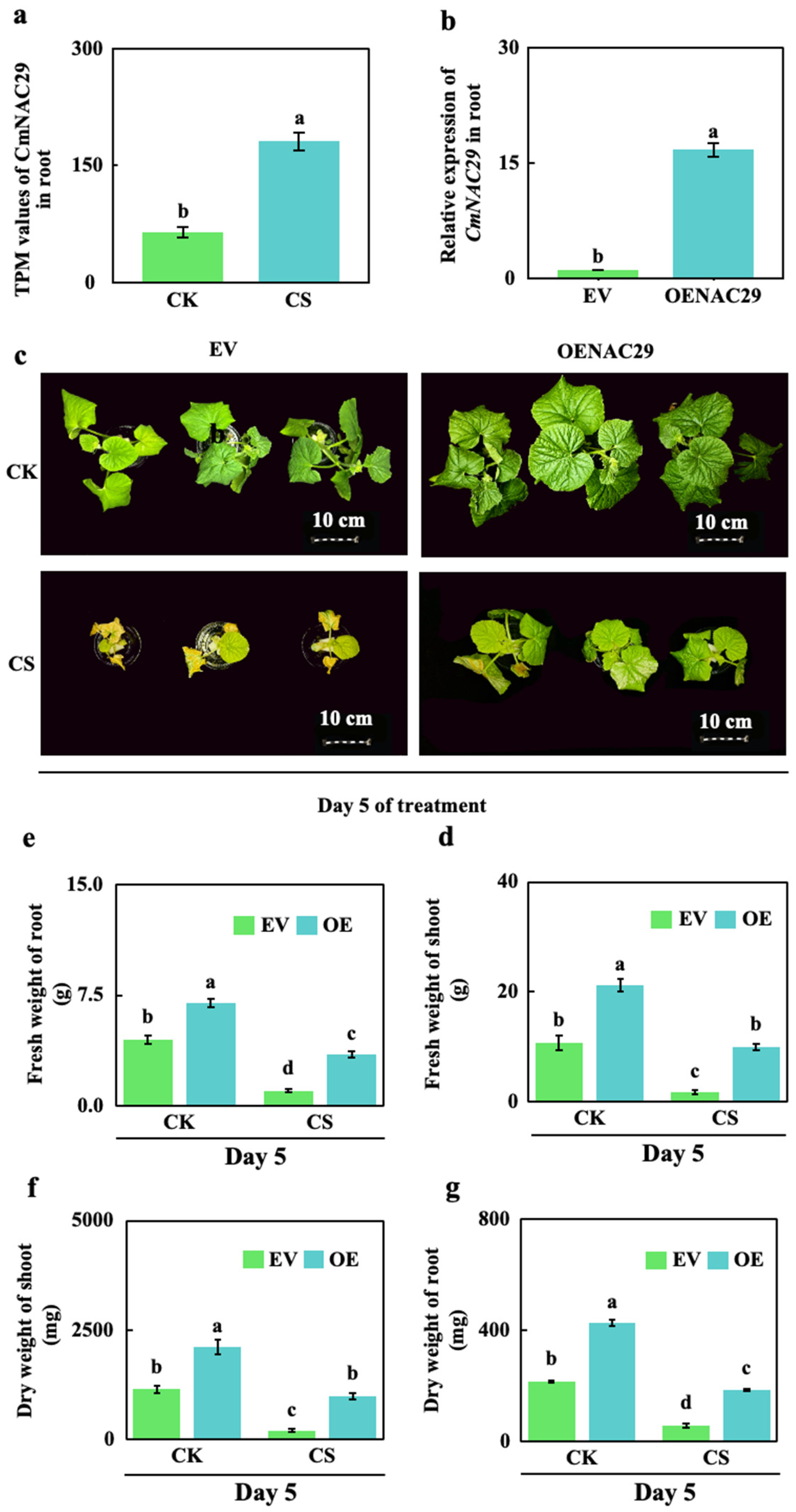
Figure 2.
Effects of CmNAC29 overexpression on malondialdehyde and proline contents and antioxidant enzyme activities in melon seedling roots. (a) Malondialdehyde (MDA) content; (b) Superoxide dismutase (SOD) activity; (c) Peroxidase (POD) activity. (d) Catalase (CAT) activity. (e) Proline content. Data are presented as “mean ± standard error” (n = 3). Different lowercase letters indicate significant differences among treatments (P < 0.05). EV (melon seedlings with root transformation of the empty vector); OENAC29 (melon seedlings with root-specific overexpression of the CmNAC29 gene); CK (control); CS (cold stress).
Figure 2.
Effects of CmNAC29 overexpression on malondialdehyde and proline contents and antioxidant enzyme activities in melon seedling roots. (a) Malondialdehyde (MDA) content; (b) Superoxide dismutase (SOD) activity; (c) Peroxidase (POD) activity. (d) Catalase (CAT) activity. (e) Proline content. Data are presented as “mean ± standard error” (n = 3). Different lowercase letters indicate significant differences among treatments (P < 0.05). EV (melon seedlings with root transformation of the empty vector); OENAC29 (melon seedlings with root-specific overexpression of the CmNAC29 gene); CK (control); CS (cold stress).
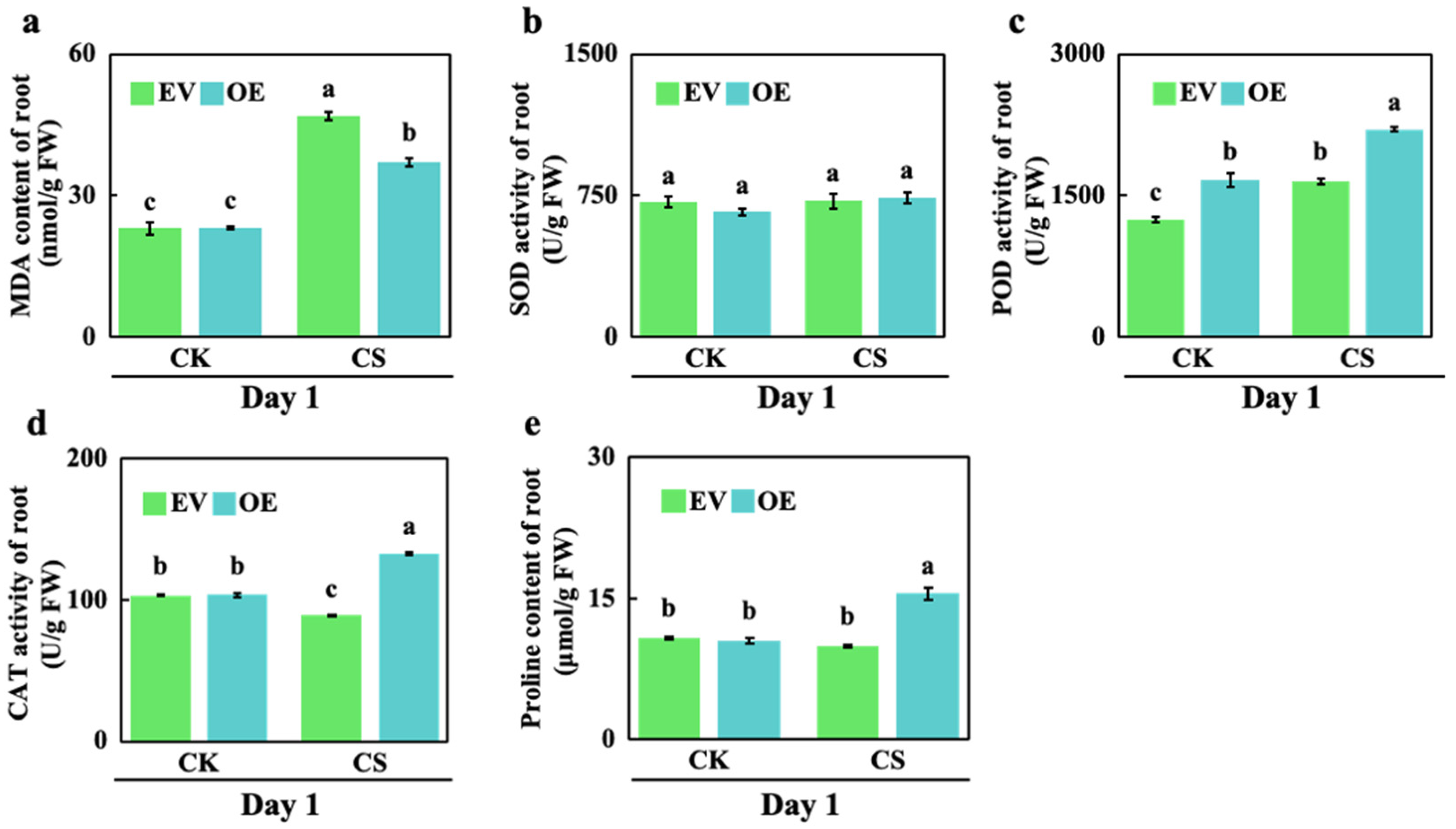
Figure 3.
Transcriptome analysis of melon roots. (a) Principal component analysis (PCA) of transcriptome data; (b) Number of differentially expressed genes (DEGs); (c) Gene Ontology (GO) enrichment analysis. N1 (CK + EV); N2 (CK + OENAC29); N3 (cold stress condition + empty vector); N4 (cold stress condition + CmNAC29 overexpression). EV (melon seedlings with root transformation of the empty vector); OENAC29 (melon seedlings with root-specific overexpression of the CmNAC29 gene); CK (control); CS (cold stress).
Figure 3.
Transcriptome analysis of melon roots. (a) Principal component analysis (PCA) of transcriptome data; (b) Number of differentially expressed genes (DEGs); (c) Gene Ontology (GO) enrichment analysis. N1 (CK + EV); N2 (CK + OENAC29); N3 (cold stress condition + empty vector); N4 (cold stress condition + CmNAC29 overexpression). EV (melon seedlings with root transformation of the empty vector); OENAC29 (melon seedlings with root-specific overexpression of the CmNAC29 gene); CK (control); CS (cold stress).
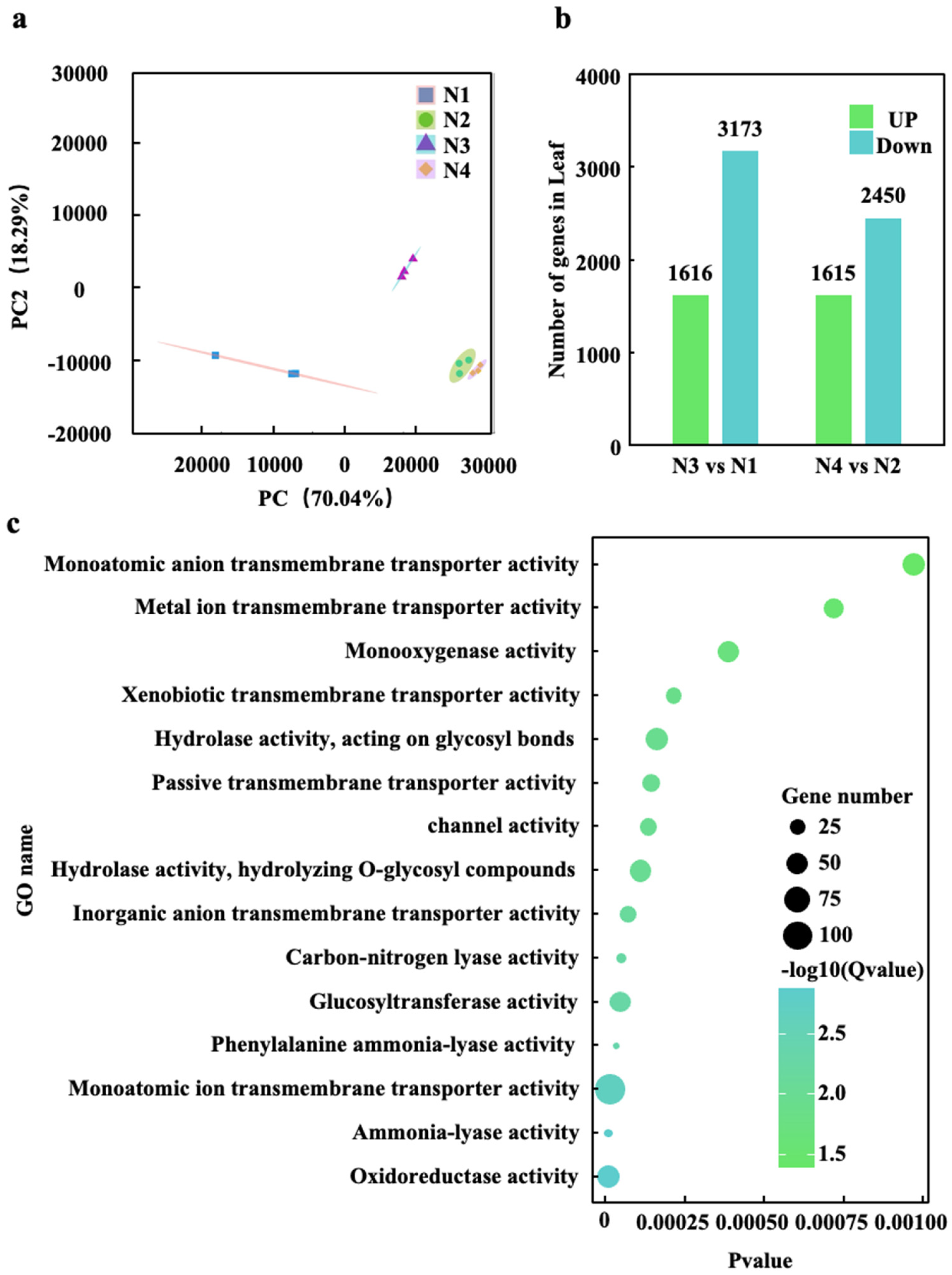
Figure 4.
Effects of CmNAC29 overexpression on the expression of antioxidant enzyme- and proline-related genes in melon seedling roots. (a) Heatmap analysis of peroxidase (POD)-related genes; (b) Heatmap analysis of catalase (CAT)-related genes; (c) Heatmap analysis of genes involved in proline biosynthesis and degradation; (d-g) Relative expression levels of (d) CmPOD1, (e) CmPER39, (f) CmCAT2-1, and (g) CmP5CS1-1 in melon seedling roots after 1 day of cold stress treatment. Data are presented as “mean ± standard error” (n = 3). Different lowercase letters indicate significant differences among treatments (P < 0.05). N1 (CK + EV); N2 (CK + OENAC29); N3 (cold stress condition + empty vector); N4 (cold stress condition + CmNAC29 overexpression). EV (melon seedlings with root transformation of the empty vector); OENAC29 (melon seedlings with root-specific overexpression of the CmNAC29 gene); CK (control); CS (cold stress).
Figure 4.
Effects of CmNAC29 overexpression on the expression of antioxidant enzyme- and proline-related genes in melon seedling roots. (a) Heatmap analysis of peroxidase (POD)-related genes; (b) Heatmap analysis of catalase (CAT)-related genes; (c) Heatmap analysis of genes involved in proline biosynthesis and degradation; (d-g) Relative expression levels of (d) CmPOD1, (e) CmPER39, (f) CmCAT2-1, and (g) CmP5CS1-1 in melon seedling roots after 1 day of cold stress treatment. Data are presented as “mean ± standard error” (n = 3). Different lowercase letters indicate significant differences among treatments (P < 0.05). N1 (CK + EV); N2 (CK + OENAC29); N3 (cold stress condition + empty vector); N4 (cold stress condition + CmNAC29 overexpression). EV (melon seedlings with root transformation of the empty vector); OENAC29 (melon seedlings with root-specific overexpression of the CmNAC29 gene); CK (control); CS (cold stress).
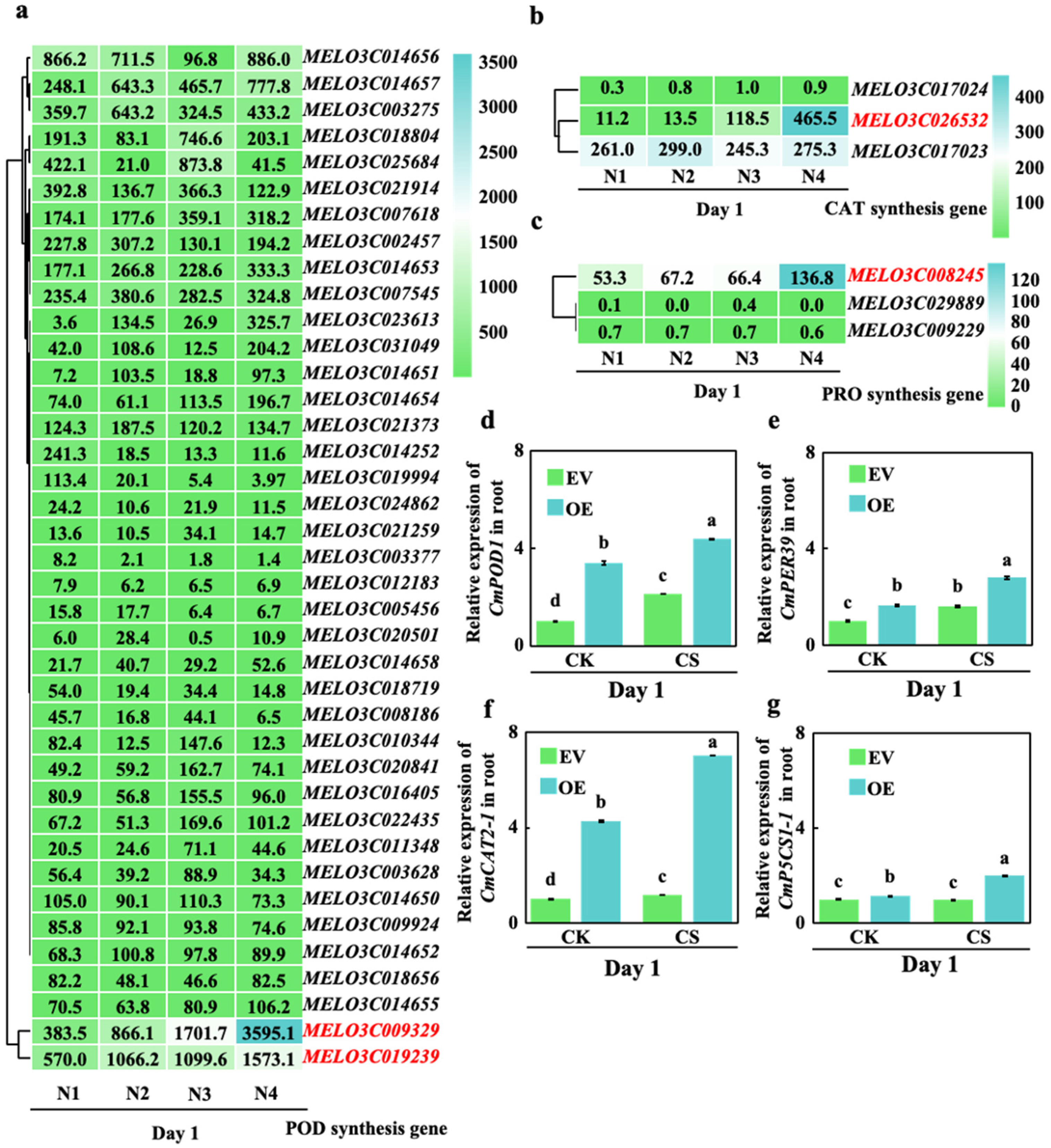
Figure 5.
Effects of CmNAC29 overexpression on the expression of ICE-CBF-COR-related genes in melon seedling roots. (a) Heatmap analysis of ICE-CBF-COR gene expression; (b-d) Relative expression levels of (b) CmICE2, (c) CmCBF1, and (d) CmCOR413 in melon seedling roots after 1 day of cold stress treatment. Mean ± standard error (n = 3). Different lowercase letters indicate significant differences among treatments (P < 0.05). N1 (CK + EV); N2 (CK + OENAC29); N3 (cold stress condition + empty vector); N4 (cold stress condition + CmNAC29 overexpression). EV (melon seedlings with root transformation of the empty vector); OENAC29 (melon seedlings with root-specific overexpression of the CmNAC29 gene); CK (control); CS (cold stress).
Figure 5.
Effects of CmNAC29 overexpression on the expression of ICE-CBF-COR-related genes in melon seedling roots. (a) Heatmap analysis of ICE-CBF-COR gene expression; (b-d) Relative expression levels of (b) CmICE2, (c) CmCBF1, and (d) CmCOR413 in melon seedling roots after 1 day of cold stress treatment. Mean ± standard error (n = 3). Different lowercase letters indicate significant differences among treatments (P < 0.05). N1 (CK + EV); N2 (CK + OENAC29); N3 (cold stress condition + empty vector); N4 (cold stress condition + CmNAC29 overexpression). EV (melon seedlings with root transformation of the empty vector); OENAC29 (melon seedlings with root-specific overexpression of the CmNAC29 gene); CK (control); CS (cold stress).
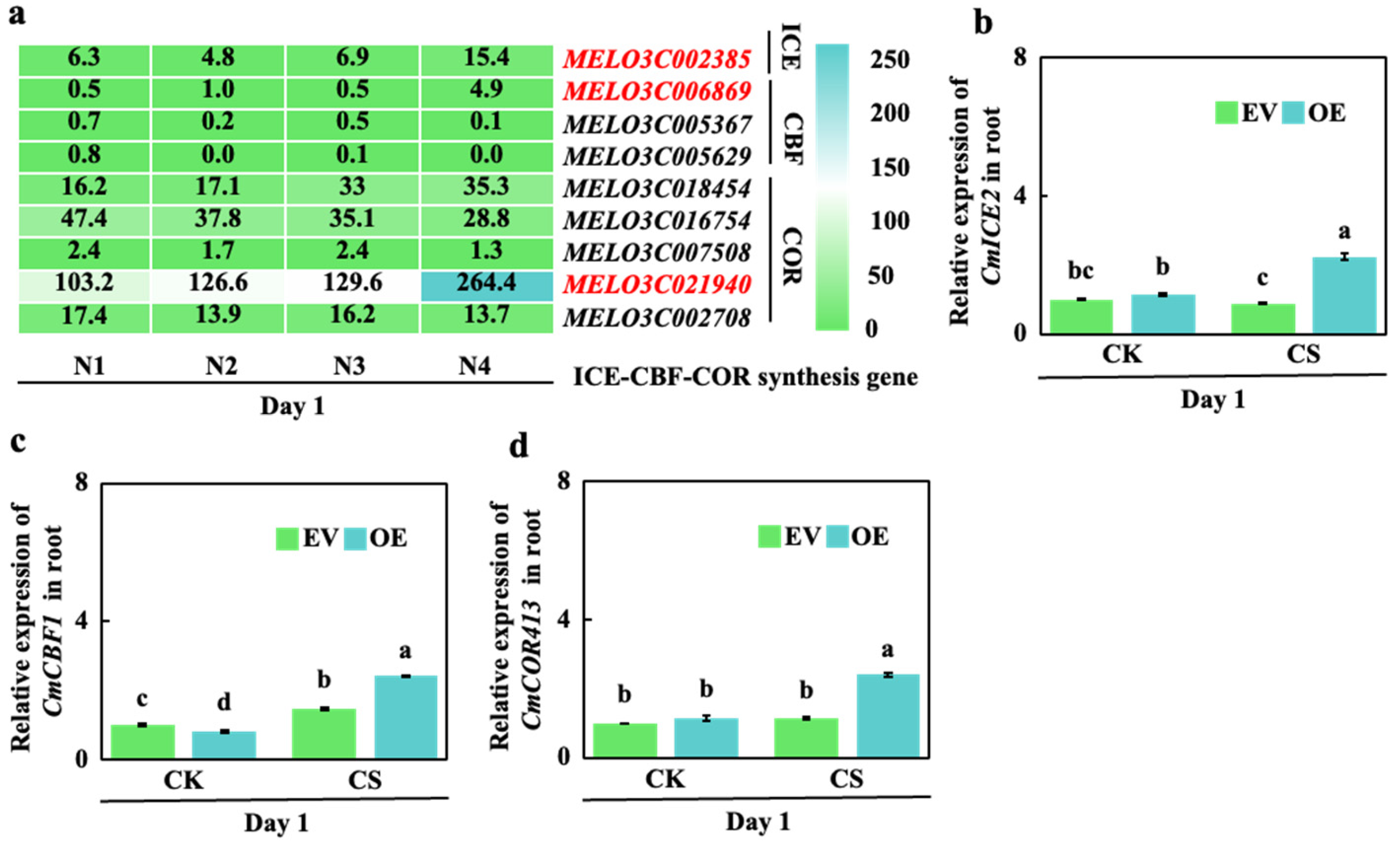
Figure 6.
Interaction analysis of CmNAC29 with the promoters of proline biosynthesis- and COR-related genes. (a) Transcriptional activation activity of CmNAC29 in yeast; (b) Yeast one-hybrid analysis, (c) dual-luciferase reporter assay, and (d) electrophoretic mobility shift assay (EMSA) showing the interaction between CmNAC29 and the promoters of CmP5CS1-1 and CmCOR413.
Figure 6.
Interaction analysis of CmNAC29 with the promoters of proline biosynthesis- and COR-related genes. (a) Transcriptional activation activity of CmNAC29 in yeast; (b) Yeast one-hybrid analysis, (c) dual-luciferase reporter assay, and (d) electrophoretic mobility shift assay (EMSA) showing the interaction between CmNAC29 and the promoters of CmP5CS1-1 and CmCOR413.
Disclaimer/Publisher’s Note: The statements, opinions and data contained in all publications are solely those of the individual author(s) and contributor(s) and not of MDPI and/or the editor(s). MDPI and/or the editor(s) disclaim responsibility for any injury to people or property resulting from any ideas, methods, instructions or products referred to in the content. |
© 2026 by the authors. Licensee MDPI, Basel, Switzerland. This article is an open access article distributed under the terms and conditions of the Creative Commons Attribution (CC BY) license (http://creativecommons.org/licenses/by/4.0/).
Copyright: This open access article is published under a Creative Commons CC BY 4.0 license, which permit the free download, distribution, and reuse, provided that the author and preprint are cited in any reuse.


