
Submitted:
25 May 2026
Posted:
26 May 2026
You are already at the latest version
Abstract
Abstract
Background: Primary pulmonary vascular leiomyosarcoma is an exceptionally rare and highly aggressive malignancy that frequently masquerades as pulmonary embolism, thereby delaying definitive treatment. The development of sinoatrial node dysfunction secondary to local tumor invasion represents an even rarer, life-threatening complication with sparse documentation in the literature. This case underscores this unique clinical presentation and its associated diagnostic challenges.
Case presentation: A 53-year-old male presented with cough and chest discomfort. Initial non-contrast computed tomography indicated a pulmonary artery filling defect. Subsequent CT angiography delineated a mass involving the main and right pulmonary arteries with protrusion into the superior vena cava. Histopathological evaluation confirmed pulmonary artery spindle cell sarcoma with myogenic differentiation. Despite multiple lines of chemotherapy—including PD-1 inhibitors, docetaxel, and gemcitabine—the disease progressed. Terminally, the patient developed symptomatic bradycardia secondary to sinoatrial node dysfunction, which was attributed to direct tumor invasion and compression. Following the patient's refusal of pacing therapy, palliative supportive care was initiated. The patient ultimately succumbed to respiratory failure following massive hemoptysis 14 months post-diagnosis.
Conclusions: This case underscores the highly aggressive nature and dismal prognosis of pulmonary vascular leiomyosarcoma. Furthermore, it illustrates that local tumor invasion can precipitate critical complications, notably sinoatrial node dysfunction, thereby accelerating clinical deterioration. Prompt and accurate differentiation from pulmonary embolism via multimodal imaging remains paramount, albeit clinically challenging. Given the refractory nature of this malignancy to current multimodal therapies, there is an urgent need for heightened clinical vigilance and the investigation of novel therapeutic modalities.
Keywords:
pulmonary vascular leiomyosarcoma
; sinoatrial node dysfunction
; filling defect
; diagnostic radiology
; misdiagnosis
1. Introduction
Pulmonary vascular leiomyosarcoma is an exceedingly rare malignant tumor originating from the smooth muscle cells within the medial layer of elastic arteries. It is classified as a rare subtype of pulmonary artery sarcoma. The disease is highly aggressive and is frequently misdiagnosed as pulmonary embolism due to nonspecific clinical and imaging findings, leading to delays in diagnosis. Although surgical resection is the primary treatment, the overall prognosis remains exceedingly poor. Without treatment, survival is very short, and even after surgery, recurrence and metastasis are common [1]. This tumor falls under the category of primary cardiac sarcomas. Given its extremely low incidence, only a few medical centers have reported individual cases [2], and there have been few updates in the recent literature [3] Owing to its rarity, pulmonary vascular leiomyosarcoma is often clinically mistaken for pulmonary embolism. Current management strategies include surgery, chemotherapy, and radiotherapy; however, these are largely palliative, aimed at prolonging symptom-free survival rather than achieving a cure [4].
2. Case Presentation
A 53-year-old male patient presented to our respiratory department with cough and chest discomfort of unknown cause. Initial non-contrast chest CT soft-tissue window revealed heterogeneous density within the main pulmonary artery and its right branch (Figure 1). To rule out acute pulmonary embolism, CTA was promptly performed, showing filling defects in the main and right pulmonary arteries with local protrusion into the superior vena cava causing significant luminal narrowing, and involvement of the proximal right upper pulmonary artery, suggestive of pulmonary artery sarcoma or leiomyosarcoma (Figure 2). For definitive diagnosis, the patient was transferred to the Department of Thoracic Surgery at Beijing China-Japan Friendship Hospital. Biopsy revealed a grayish-red, hemorrhagic, unencapsulated lesion composed of spindle cells arranged in fascicles or storiform patterns, with abundant cytoplasm, hyperchromatic nuclei, and collagenous stroma. Immunohistochemistry was positive for α-SMA, Vimentin, and Caldesmon, and negative for CK(AE1/AE3), EMA, CD34, S100, and MyoD1. Ki-67 was approximately 10%. Pathology confirmed pulmonary artery spindle cell sarcoma with myogenic differentiation (Figure 3).
After diagnosis, the patient returned to our hospital for chemotherapy and follow-up. Initial PD-1 monotherapy for 3 cycles was switched to PD-1 plus docetaxel and gemcitabine for 6 cycles due to disease progression (Figure 4A,B). Docetaxel monotherapy in cycles 7–8 achieved stable disease (Figure 4C, D). Progression at cycle 9 led to one cycle of PD-1 plus docetaxel and gemcitabine. Early the next year, treatment was adjusted to docetaxel plus bevacizumab for 2 cycles, followed by 1 cycle of docetaxel alone. After 12 cycles, enhanced chest CT showed marked tumor enlargement involving the main, bilateral, and right upper branch pulmonary arteries, and superior vena cava, with mediastinal lymphadenopathy (Figure 4E, F, G). The patient developed bradycardia (38–40 bpm) due to sinus node dysfunction. Isoproterenol infusion and pacemaker implantation were advised but declined. Symptoms improved with supportive care, and the patient was discharged.
Eighty-seven days later, the patient experienced massive hemoptysis and was admitted via emergency service. Chest CT showed significant tumor enlargement, cardiac compression, pericardial effusion, bilateral pulmonary infiltrates, and pleural effusions (Figure 4H, I). With deteriorating condition and conscious conservatism chosen by the family, the patient died of respiratory failure the following morning. Overall survival from diagnosis was 14 months.
3. Discussion
Pulmonary artery sarcoma (PAS), pulmonary vascular leiomyosarcoma, and pulmonary artery intimal sarcoma (PAIS) are often used interchangeably in clinical practice, yet they differ significantly in pathological basis. PAS is a broader category, with the vast majority of cases being intimal sarcomas (i.e., PAIS) originating from the pulmonary artery intima. Microscopically, these often present as undifferentiated sarcomas or show fibroblastic/myofibroblastic differentiation. However, PAS also includes an extremely rare "mural" type—such as pulmonary vascular leiomyosarcoma—which arises not from the intima but from the smooth muscle cells within the medial layer of elastic arteries, differing from PAIS in both origin and histologic features.
Primary pulmonary artery sarcoma was first identified and reported by Mandelstamm in 1923 during an autopsy [3], with an incidence of approximately 0.001%–0.03% [5]. Pulmonary vascular leiomyosarcoma is even rarer, and its incidence lacks statistical data. The disease is often asymptomatic until pulmonary vascular obstruction occurs, unless incidentally detected on routine imaging. Most patients present with symptoms related to pulmonary hypertension and are subsequently diagnosed via imaging studies. According to research by Fumihiro Kashizaki et al. [6], the mean age of PAS patients is 52.6±13.1 years, with a similar gender distribution. The right main pulmonary artery is the most commonly involved site (72.3%, 95% CI 70.9–79.6), consistent with the present case.
Due to overlapping clinical and imaging features with pulmonary embolism, PAS is often misdiagnosed. Laboratory markers such as D-dimer, BNP, CRP, and ESR can be elevated in both conditions and are not useful for differentiation [7]. In this patient, pulmonary embolism could not be ruled out based on non-contrast CT alone. Contrast-enhanced CT has limitations, though an average enhancement of approximately 25 HU may suggest PAS [3], whereas thromboemboli typically do not enhance. MRI is more reliable, as PAS often shows gadolinium enhancement, with the degree of enhancement correlating with tumor differentiation [2]. FDG PET-CT is valuable in differential diagnosis [7] and is often used when CT and MRI are inconclusive. Another middle-aged female patient with pathologically confirmed PAS at our hospital showed invasion of perivascular tissues and other sarcoma-related features on enhanced CT—such indirect signs can help exclude pulmonary embolism at an early stage (Figure 5).
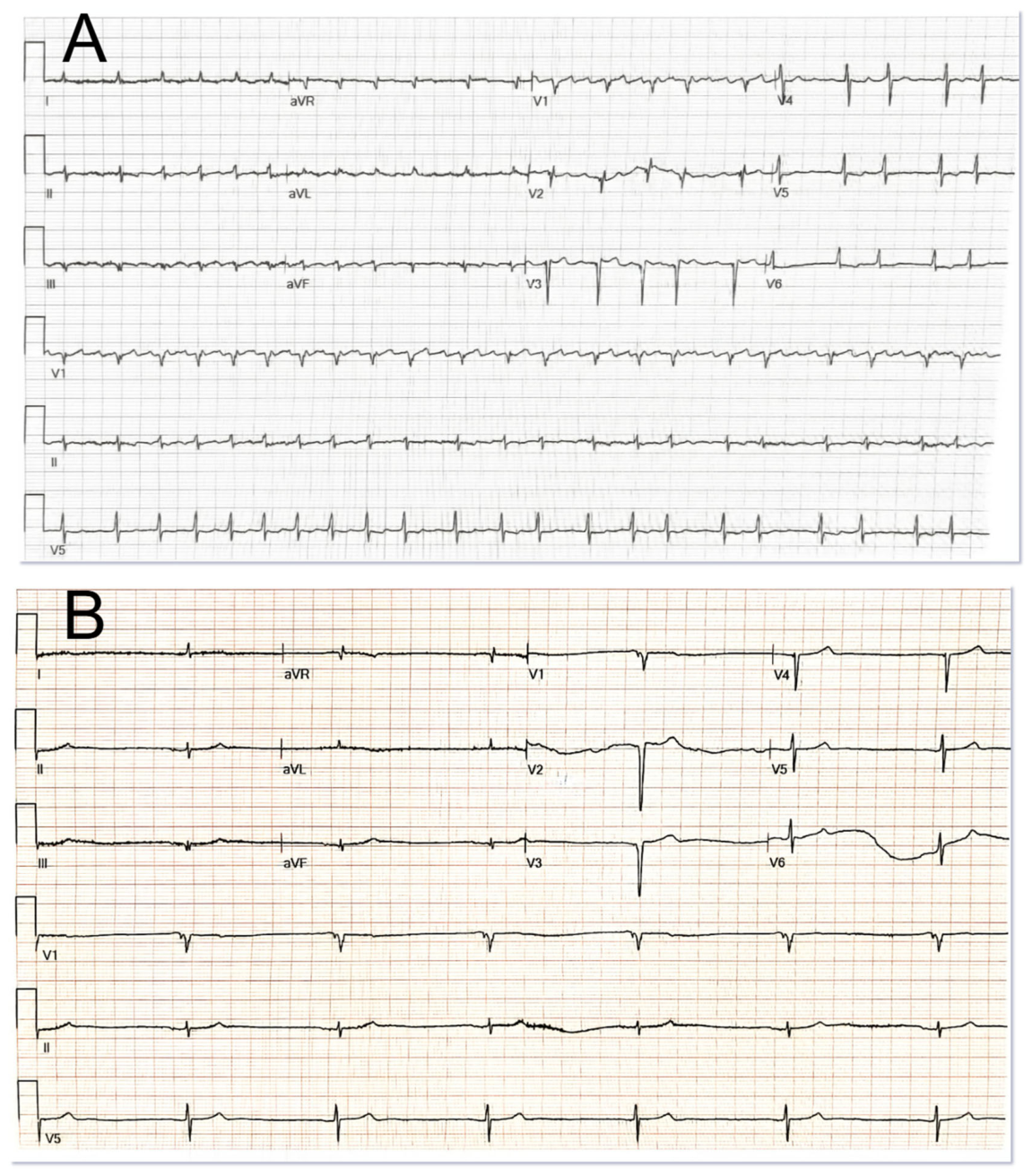
Notably, the present patient developed sinus node dysfunction in the end-stage phase(Figure 6). The sinus node, located at the junction of the superior vena cava and the right atrium, serves as the heart’s primary pacemaker [8]. On enhanced CT prior to death, the PAS had enlarged significantly, invading the superior vena cava and lying in close proximity to the right atrium. Anatomically, although the sinus node is surrounded by a fibrous matrix, it is not completely isolated from the atrial myocardium; its peripheral branches interweave with atrial muscle fibers, facilitating electrical conduction [9]. Given its smooth muscle origin and anatomic proximity, the PAS in this case may have directly invaded the sinus node region, causing myocardial compression and significant pericardial effusion. We speculate that tumor compression of the superior right atrium led to degeneration of perinodal myocardium and fibrous tissue, compounded by preexisting coronary artery disease (the patient had two prior PCI procedures in 2009 and 2010), collectively contributing to sinus node dysfunction. Studies by Moritz C. Wyler von Ballmoos et al. [2] indicate that PAS can cause tachyarrhythmias, conduction abnormalities, pericardial effusion, and tamponade [2]. This patient exhibited atrial flutter during hospitalization, followed by persistent sinus node dysfunction. Atrial flutter may represent the “tachy” phase of tachy-brady syndrome, with sinus node dysfunction serving as a substrate for atrial arrhythmias—the two may form a vicious cycle. Sinus node dysfunction in this case likely hastened the patient’s death.
PAS is rarely curable. Surgical resection—including pulmonary endarterectomy, lobectomy, pneumonectomy, tumor resection with pulmonary artery replacement, or cardiopulmonary transplantation—remains the best option [1], aiming to restore blood flow [10]. To date, chemotherapy and radiotherapy have not shown significant palliative benefit [1]. This patient was inoperable at diagnosis and responded poorly to chemotherapy. PAS is highly aggressive and carries a poor prognosis: median survival is approximately 2 months without surgery and may extend to 10 months post-resection [1].
4. Conclusions
Primary pulmonary vascular leiomyosarcoma is highly aggressive and carries a poor prognosis. As demonstrated in this case, direct local tumor invasion can precipitate critical and life-threatening complications, notably sinoatrial node dysfunction, which significantly accelerates clinical deterioration. Furthermore, the tumor's propensity to masquerade as pulmonary embolism highlights the diagnostic challenges. Because this malignancy responds poorly to current chemotherapy and radiotherapy , early diagnosis and accurate differentiation using multimodal imaging, along with close follow-up, are critical for monitoring disease progression. Ultimately, this report underscores the urgent need for heightened clinical awareness of this rare entity and its atypical complications, as well as the exploration of novel and more effective therapeutic strategies.
Author Contributions
Conceptualization, H.M. and X.L.; methodology, S.T.; software, J.T.; validation, J.T. and F.Z.; formal analysis, F.Z. and H.M.; investigation, H.M., J.T. and X.L.; data curation, H.M. and J.T.; writing—original draft preparation, H.M.; writing—review and editing, J.T. and X.L.; visualization, H.M.; supervision, X.L.; project administration, X.L. All authors have read and agreed to the published version of the manuscript.
Funding
This research received no external funding.
Institutional Review Board Statement
The study was conducted in accordance with the Declaration of Helsinki, and ethical review and approval were waived for this study by the Ethics Committee of the First Affiliated Hospital of Jinzhou Medical University due to the retrospective nature of the case report.
Informed Consent Statement
Informed consent was obtained from all subjects involved in the study.
Data Availability Statement
The de-identified digital imaging data and other relevant clinical examination results presented in this case report are available from the corresponding author upon reasonable request.
Acknowledgments
The authors would like to express their sincere gratitude to the First Affiliated Hospital of Jinzhou Medical University for providing an excellent scientific research platform. Special and heartfelt thanks go to Jiacheng Wang, whose invaluable insights, relentless encouragement, and perhaps an infinite supply of coffee truly kept this manuscript—and the authors' sanity—alive during the grueling late-night drafting sessions. We also sincerely thank Director Zhang Xianglin and Director Lyu Xiaohong for their guidance.
Conflicts of Interest
The authors declare no conflicts of interest.
Abbreviations
The following abbreviations are used in this manuscript:
| CT | Computed Tomography |
| CTA | CT Angiography |
| PD-1 | Programmed Cell Death Protein 1 |
| IHC | Immunohistochemistry |
| HE | Hematoxylin and Eosin |
| CECT | Contrast-Enhanced CT |
| MRI | Magnetic Resonance Imaging |
| HU | Hounsfield Unit |
| FDG PET-CT | Fluorodeoxyglucose Positron Emission Tomography-CT |
| PAS | Pulmonary Artery Sarcoma |
| PAIS | Pulmonary Artery Intimal Sarcoma |
| PCI | Percutaneous Coronary Intervention |
| BNP | B-type Natriuretic Peptide |
| CRP | C-reactive Protein |
| ESR | Erythrocyte Sedimentation Rate |
| bpm | beats per minute |
| VR | Volume Rendering |
References
- Jamieson, S.W. Pulmonary artery sarcoma. Eur. J. Cardio-Thorac. Surg. 2013, 43, 793–794.
- Wyler von Ballmoos, M.C.; Chan, E.Y.; Reardon, M.J. Imaging and surgical treatment of primary pulmonary artery sarcoma. Int. J. Cardiovasc. Imaging 2019, 35, 1429–1433. [CrossRef]
- Assi, T.; Kattan, J.; Rassy, E.; Moussa, T.; Nassereddine, H.; Honore, C.; et al. A comprehensive review on the diagnosis and management of intimal sarcoma of the pulmonary artery. Crit. Rev. Oncol. Hematol. 2020, 147, 102889. [CrossRef]
- Skiba, R.; Stamp, N.; Kehoe, M.; Merry, C. A rare pulmonary artery sarcoma masquerading as pulmonary embolus. Ann. Thorac. Surg. 2020, 109, e103–e105. [CrossRef]
- Petrarulo, S.; Ravaglia, C.; De Grauw, A.J.; Oldani, S.; Paul, S.; Dubini, A.; et al. Endobronchial ultrasound-guided cryobiopsy of pulmonary artery intimal sarcoma. Am. J. Respir. Crit. Care Med. 2024, 209, 1497–1500. [CrossRef]
- Kashizaki, F.; Chen, H.; Tsuchiya, N.; Matsumoto, S.; Osada, R.; Miyasaka, A.; et al. Clinical features of primary pulmonary artery sarcoma: a systematic review and pooled analysis. Arch. Bronconeumol. 2025, 61, 536–543. [CrossRef]
- Atahan, C.; Güral, Z.; Yücel, S.; Ağaoğlu, F. Pulmonary artery intimal sarcoma: case report of a patient managed with multimodality treatment and a comprehensive literature review. Strahlenther. Onkol. 2024, 200, 725–729. [CrossRef]
- De Ponti, R.; Marazzato, J.; Bagliani, G.; Leonelli, F.M.; Padeletti, L. Sick sinus syndrome. Card. Electrophysiol. Clin. 2018, 10, 183–195.
- Manoj, P.; Kim, J.A.; Kim, S.; Li, T.; Sewani, M.; Chelu, M.G.; et al. Sinus node dysfunction: current understanding and future directions. Am. J. Physiol. Heart Circ. Physiol. 2023, 324, H259–H278. [CrossRef]
- Li, J.; Liu, L.; Song, L.X.; Zhang, Y.H.; Liu, Y.; Gu, S.; et al. Clinical features and outcomes of pulmonary artery sarcoma. Heart Lung Circ. 2022, 31, 230–238. [CrossRef]
Figure 1.
The first conventional chest CT scan images of the patients ; A : Conventional chest CT scan ( lung window ) showed no definite abnormal changes in both lung fields ; B : conventional chest CT scan ( soft tissue window ) aortic trunk and the right branch of the uneven density.
Figure 1.
The first conventional chest CT scan images of the patients ; A : Conventional chest CT scan ( lung window ) showed no definite abnormal changes in both lung fields ; B : conventional chest CT scan ( soft tissue window ) aortic trunk and the right branch of the uneven density.
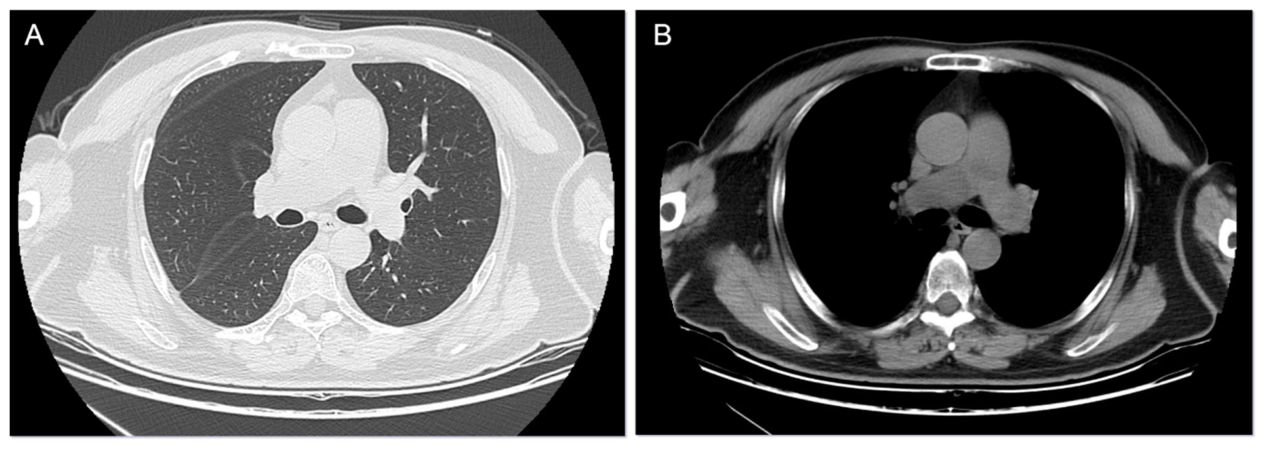
Figure 2.
The filling defect of the main pulmonary artery and the right pulmonary artery trunk, the local lesion protruded into the superior vena cava and caused obvious stenosis of the lumen, and the proximal end of the right anterior pulmonary artery was involved. VR reconstruction showed ( white arrow ) stenosis of the right trunk of the pulmonary artery, showing filling defect-like changes.
Figure 2.
The filling defect of the main pulmonary artery and the right pulmonary artery trunk, the local lesion protruded into the superior vena cava and caused obvious stenosis of the lumen, and the proximal end of the right anterior pulmonary artery was involved. VR reconstruction showed ( white arrow ) stenosis of the right trunk of the pulmonary artery, showing filling defect-like changes.
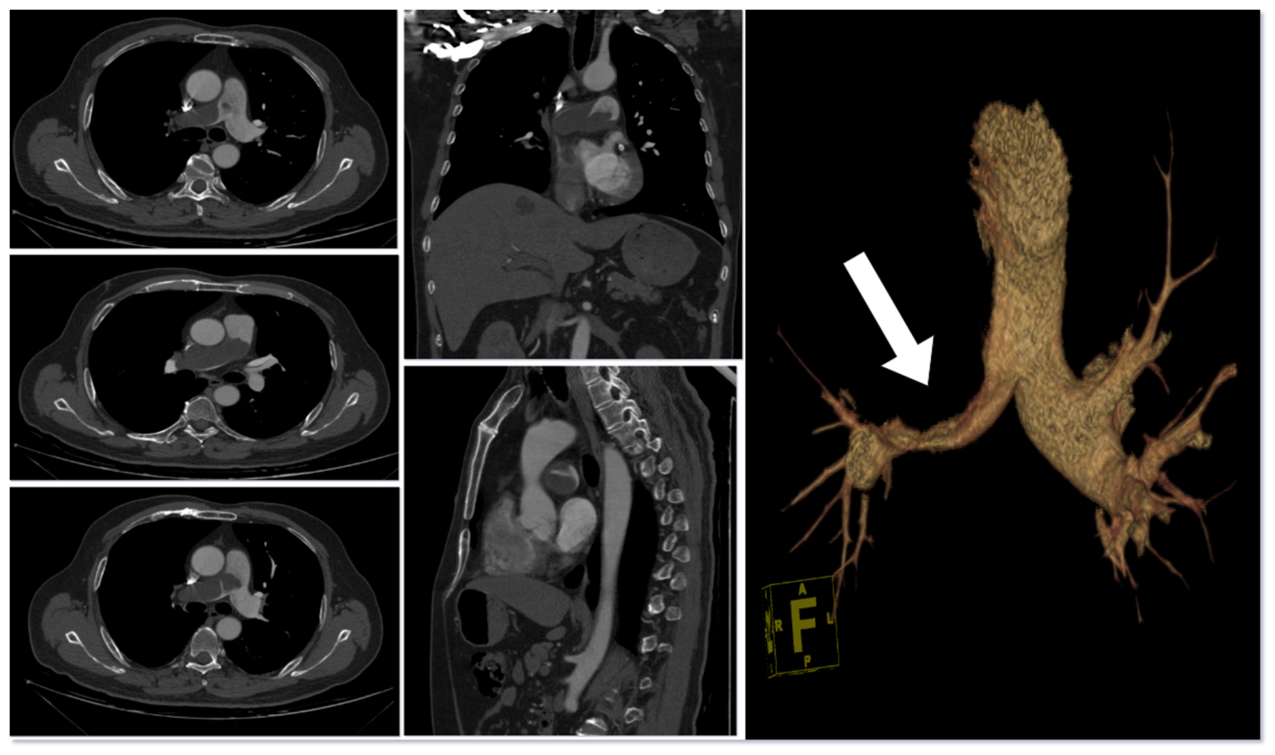
Figure 3.
The cell diagram of the tumor biopsy under the microscope ; A : HE staining (×200 ) can be seen spindle cells B : HE staining (×100 ) C : IHC staining.
Figure 3.
The cell diagram of the tumor biopsy under the microscope ; A : HE staining (×200 ) can be seen spindle cells B : HE staining (×100 ) C : IHC staining.
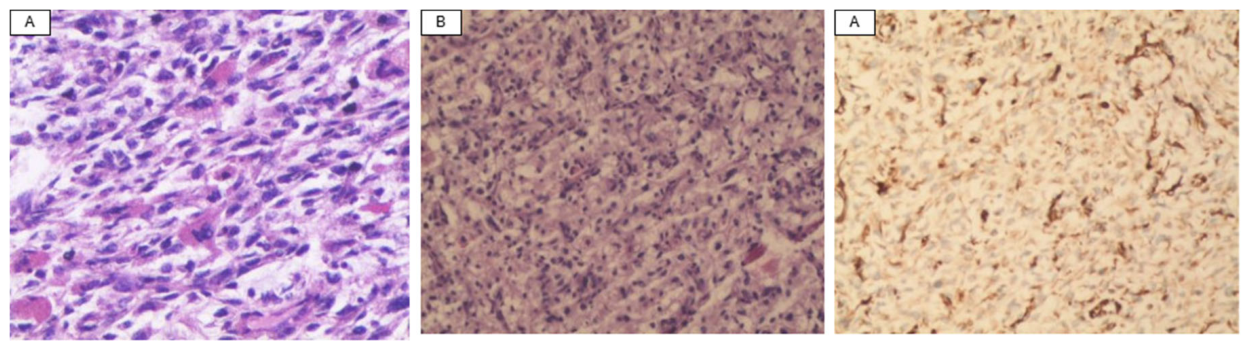
Figure 4.
A: Initial CTA of pulmonary artery; B: Chest CECT after 3 chemotherapy cycles, showing tumor progression; C: Follow-up CECT after 7 cycles; D: Follow-up CECT after 8 cycles; E: Follow-up CECT after 9 cycles, indicating further progression; F: Post-9-cycle CECT revealing cardiac compression, enlarged cardiac shadow, increased pericardial effusion, bilateral pulmonary exudates, pleural thickening, and effusion.
Figure 4.
A: Initial CTA of pulmonary artery; B: Chest CECT after 3 chemotherapy cycles, showing tumor progression; C: Follow-up CECT after 7 cycles; D: Follow-up CECT after 8 cycles; E: Follow-up CECT after 9 cycles, indicating further progression; F: Post-9-cycle CECT revealing cardiac compression, enlarged cardiac shadow, increased pericardial effusion, bilateral pulmonary exudates, pleural thickening, and effusion.
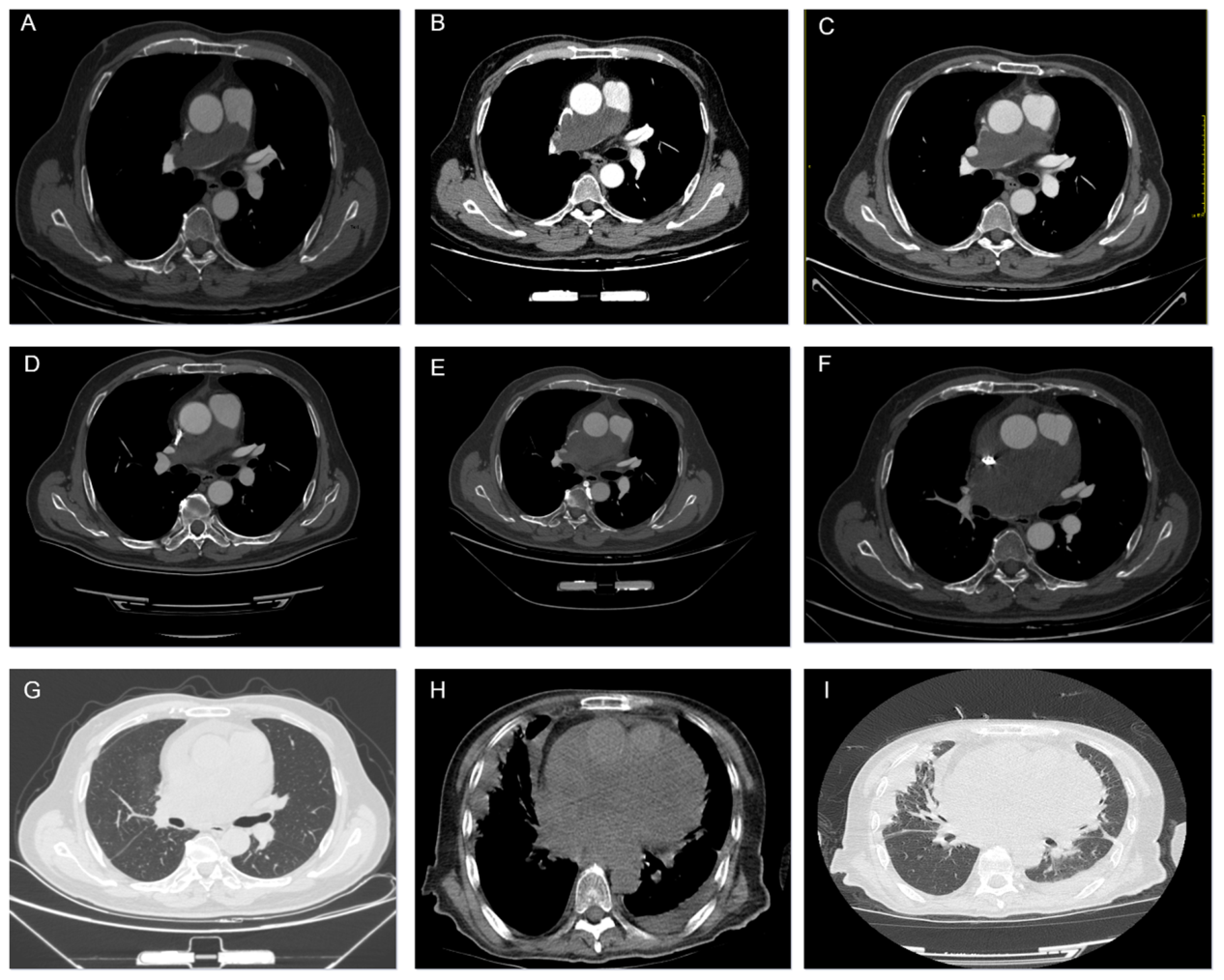
Figure 5.
A: Pulmonary artery sarcoma involving the right lung tissue (enhanced CT soft tissue window): right lung soft tissue mass with patchy enhancement; B: Pulmonary artery sarcoma involving the right lung tissue (enhanced CT soft tissue window): bilateral pulmonary artery filling defects; C: Pulmonary artery sarcoma involving the right lung tissue (enhanced CT lung window): soft tissue mass with unclear boundaries, no interstitial changes in surrounding lung tissue; D: Pulmonary artery sarcoma involving the right lung tissue (enhanced CT lung window): soft tissue mass along bronchial course without stenosis, reflecting sarcoma characteristics.
Figure 5.
A: Pulmonary artery sarcoma involving the right lung tissue (enhanced CT soft tissue window): right lung soft tissue mass with patchy enhancement; B: Pulmonary artery sarcoma involving the right lung tissue (enhanced CT soft tissue window): bilateral pulmonary artery filling defects; C: Pulmonary artery sarcoma involving the right lung tissue (enhanced CT lung window): soft tissue mass with unclear boundaries, no interstitial changes in surrounding lung tissue; D: Pulmonary artery sarcoma involving the right lung tissue (enhanced CT lung window): soft tissue mass along bronchial course without stenosis, reflecting sarcoma characteristics.
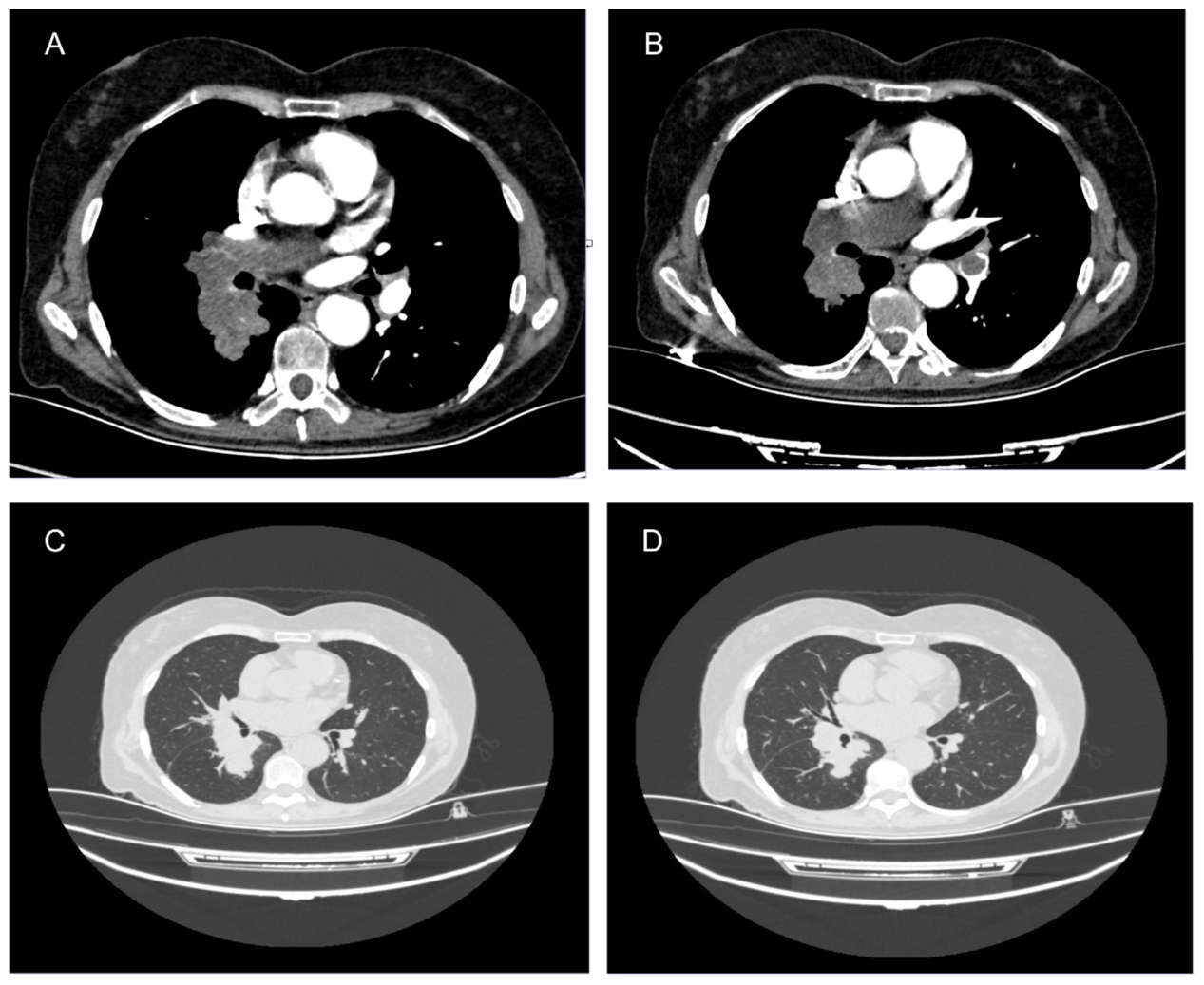
Figure 6.
Electrocardiogram A atrial flutter B sinus node dysfunction during hospitalization.
Disclaimer/Publisher’s Note: The statements, opinions and data contained in all publications are solely those of the individual author(s) and contributor(s) and not of MDPI and/or the editor(s). MDPI and/or the editor(s) disclaim responsibility for any injury to people or property resulting from any ideas, methods, instructions or products referred to in the content. |
© 2026 by the authors. Licensee MDPI, Basel, Switzerland. This article is an open access article distributed under the terms and conditions of the Creative Commons Attribution (CC BY) license (http://creativecommons.org/licenses/by/4.0/).
Copyright: This open access article is published under a Creative Commons CC BY 4.0 license, which permit the free download, distribution, and reuse, provided that the author and preprint are cited in any reuse.


