

Submitted:
22 May 2026
Posted:
25 May 2026
You are already at the latest version
Abstract
The use of medicinal plants to treat various conditions and illnesses represents an attractive alternative to conventional pharmaceutical drugs, harnessing ancestral knowledge from various indigenous communities. Mostly obtained through wild harvesting, these plants often lack comprehensive information on hydroponic production. With the aim to provide valuable insights into this knowledge gap, this study focused on evaluating the growth of milk thistle (Silybum marianum) and thyme (Thymus vulgaris) under greenhouse conditions. Two treatments were implemented: one using hydroponics (with inorganic substrate and nutrient solution) and another as control, employing organic substrate without any solution. The experimental design was completely randomized, with five repetitions per treatment. Statistical figures indicated that hydroponic cultivation significantly promoted growth in fresh and dry weight, as well as height, of both plant species. This finding points towards the potential of hydroponics as an effective production method for medicinal plants such as thyme and milk thistle.
Keywords:
medicinal plants
; organic production
; hydroponics
; thyme
; milk thistle
1. Introduction
Herbal medicine encompasses products derived from plants and used for therapeutic treatments, consisting of a wide variety of substances extracted from herbs and plants recognized for their medicinal properties. In some cases, these substances are regulated by the state with respect to their commercialization and use [1].
These herbal remedies, composed of medicinal plants or their parts—used individually or in combination—have traditionally been attributed, according to popular knowledge, to the alleviation of specific diseases or symptoms [2,3].
Medicinal plants, according to the definition of the World Health Organization (WHO), are plants that contain compounds that may be used for therapeutic purposes or whose active components may serve as a basis for the development of new drugs. It is estimated that approximately 80% of the population in less developed regions relies on traditional plant-based medicine to maintain health and well-being [4].
Mexico, owing to its rich biodiversity, ranks as the fifth country worldwide in terms of plant species diversity. Approximately 4,000 species with medicinal properties have been identified and documented, many of which are harvested from the wild. Of these, around 1,500 are used in their unprocessed form [4].
The therapeutic effects associated with medicinal plants are attributed to the presence of secondary metabolites (SMs), which are produced under stress conditions as defense mechanisms against insects and microorganisms and as adaptive responses to unfavorable environmental factors such as humidity, light availability, drought, and temperature, among others. However, these secondary metabolites are not examined in the present study [5].
Plant species are commonly prepared and used as infusions or decoctions, as well as in the form of juices, microdoses, tinctures, and capsules. Some plants are intended for topical use, whereas others are administered orally. The biological diversity of these plants ranges from shrubs and herbs to trees, and the plant parts utilized (the herbal drug) may include leaves, flowers, bulbs, fruits, bark, stems, seeds, roots, or the entire plant. Nevertheless, extensive research is required to identify, authenticate, and characterize the bioactive compounds present in these plants. Such efforts could add value to the pharmaceutical industry by providing cost-effective therapeutic alternatives with minimal side effects [6].
The plant species used in this study were milk thistle (Silybum marianum) and thyme (Thymus vulgaris).
Milk thistle is native to North Africa, Asia Minor, southern Europe, and southern Russia, and has been naturalized in North and South America, Australia, China, and Central Europe. It grows in poor, stony, or rocky soils, as well as in wastelands, infertile fields, and along roadsides. This plant has been shown to be rich in phenolic compounds and is widely used as a hepatoprotective agent. Silymarin, the only flavonoid complex extracted from its fruits and seeds, is the substance to which its medicinal properties are attributed [7].
It is important to note that, among all known medicinal plants, milk thistle is considered one of the most effective in protecting hepatic tissue. It stabilizes cell membranes and protects the liver against various types of toxins. Its most important component, as previously mentioned, is the silymarin complex of active principles. Notably, even when used over long periods, it is considered completely safe. Milk thistle is well known for its preventive effects against liver damage and is used in post-hepatitis treatment, fatty liver disease (especially in individuals who consume alcohol), and hepatic cirrhosis. In addition to these applications, it is also used for its beneficial effects on the digestive and biliary systems [8].
Plants belonging to the genus Thymus are perennial and typically grow in an erect or creeping habit, often emitting pleasant aromas and reaching heights between 10 and 40 cm. Their stems are generally quadrangular and upright, while the leaves, measuring between 4 and 10 mm in length, are elliptical and lack long petioles. The essential oil of these plants is mainly composed of monoterpenic phenols, such as thymol, limonene, and linalool, among others. It is noteworthy that the composition of the essential oil may vary depending on the time and location of harvest [9].
Thyme is widely used as a culinary seasoning and is attributed with digestive properties due to its ability to prevent gas formation and to relieve intestinal and gastric spasms, thereby promoting improved digestion [10].
The acquisition of medicinal plants for herbal use is commonly carried out through wild harvesting, as large-scale agricultural production of these species is not yet widely established. Nevertheless, their cultivation can be achieved through various methods, including open-field cultivation, urban gardens, greenhouses, and even hydroponic systems. It is essential to ensure plant safety and adequate concentrations of secondary metabolites (active principles) under each propagation method [11].
In this context, hydroponics is characterized by supplying plant roots with a nutrient solution containing a mixture of essential nutrients dissolved in water (nutrient solution; NS), rather than using organic soil as a substrate. Instead, an inert and sterile material—or even the nutrient solution itself—is used, allowing greater control over water parameters, safety, and nutrient supply. This approach represents an attractive alternative for the production of medicinal plants in general, as it enables more efficient management of water and nutrient consumption. Furthermore, this production system is commonly implemented under greenhouse conditions, which allow the creation of a favorable microclimate to enhance photosynthesis, reduce excessive water evaporation, and increase crop yields [12].
To date, there are relatively few studies establishing a relationship between hydroponic systems and the production of medicinal plants. This scarcity may be largely attributed to the fact that the growth of these plants is influenced by competition and allelopathic interactions with other species, particularly under natural conditions [13,14,15].
Given the limited availability of published information, the objective of the present study was to evaluate the growth of milk thistle (Silybum marianum) and thyme (Thymus vulgaris) produced under greenhouse conditions using hydroponic cultivation systems.
2. Results and Discussion
Plant height: Analysis of the data showed that the hydroponic treatment, using an inorganic substrate supplemented with a nutrient solution, resulted in greater plant height for both species, with statistically significant differences observed for thyme and milk thistle. For thyme, an average increase in height of 20.9% was recorded, while milk thistle exhibited an increase of 20.68%. These results suggest that the nutrient solution and inorganic substrate had a positive effect on this variable, as illustrated in Figure 1.
Although few studies have addressed the specific effects of nutrient solutions on milk thistle production, previous research on other species, such as epazote, has shown that a 100% Steiner nutrient solution can increase plant height due to the supply of essential nutrients in the substrate, thereby promoting cellular growth [16,17].
With respect to thyme, information on the use of hydroponic techniques is limited. However, a study evaluating the effect of hydroponic cultivation on the quality and yield of thyme essential oil reported increased plant height when a 100% Steiner nutrient solution was applied [18].
The increase in plant height may be attributed, among other factors, to the continuous supply of phosphorus and nitrogen, both of which are fundamental nutrients for plant growth. Furthermore, root development is favored by adequate phosphorus availability during the early stages of the vegetative cycle [19].
Fresh plant weight: Statistical analysis revealed significant differences between treatments, with the hydroponic system promoting greater fresh biomass accumulation in both species. In thyme, this treatment increased fresh plant weight by an average of 23.18% compared with the control, whereas in milk thistle the increase was 7.78%, as shown in Figure 2.
As previously mentioned, there are no specific studies directly linking the use of nutrient solutions to medicinal plants. Nevertheless, in other aromatic herbs such as epazote, it has been observed that higher concentrations of Steiner nutrient solution result in greater fresh weight production. Similarly, studies have reported that increasing the concentration of this nutrient solution leads to higher fresh matter accumulation in coriander plants [16,20].
In the case of thyme, cultivation under greenhouse conditions using a hydroponic system has been reported to yield 18.45 kg m⁻² year⁻¹ of fresh thyme, whereas open-field cultivation achieves only 3.79 kg m⁻² year⁻¹. This production system therefore provides a substantial increase in fresh weight yield of 386.8% [18].
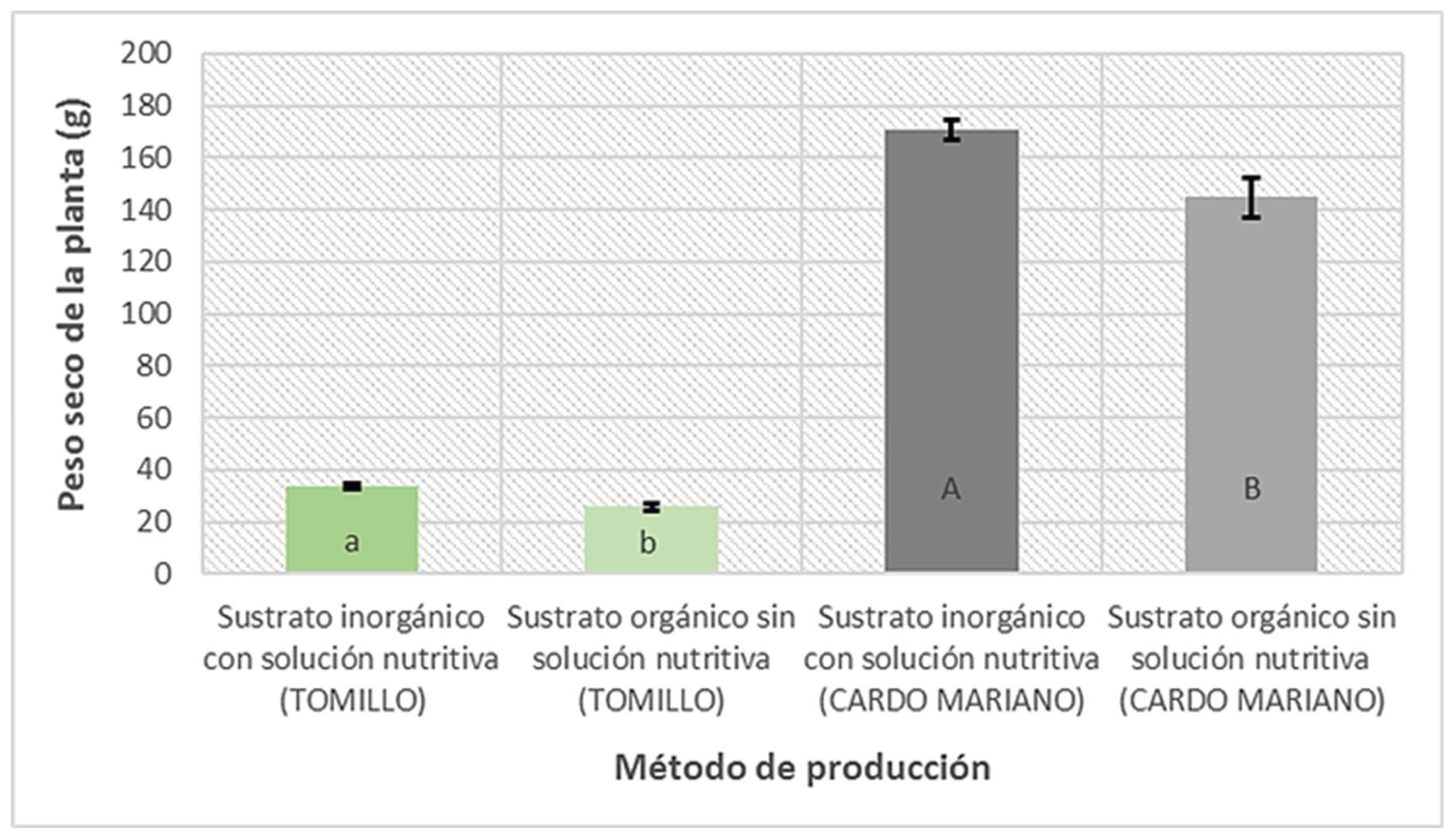
A trend similar to that observed for the previous variables was recorded for dry weight, with the hydroponic treatment using an inorganic substrate and nutrient solution resulting in a significant increase for both species. In thyme, this increase averaged 31.68% compared with the control treatment using an organic substrate without nutrient solution. For milk thistle, the increase was 18.04%, as shown in Figure 3.
These results are consistent with the findings reported by Cruz-Crespo et al. (2017), who observed that a 100% Steiner nutrient solution produced the highest dry weight in coriander plants [20].
3. Materials and Methods
The production of the medicinal plants was carried out between August and November 2025 in greenhouses equipped with both roof and side ventilation. These greenhouses are located within the facilities of the State University of the Valley of Ecatepec (UNEVE), situated at 19°30′ north latitude and 99°2′ west longitude, at an altitude of 2,250 m above sea level.
During this period, the average temperature inside the greenhouse was 22.5 °C, with a recorded maximum of 39 °C and a minimum of 1.5 °C. These measurements were obtained using a CONTROL COMPANY® digital thermo-hygrometer, model cc4154, which measures both temperature and relative humidity (RH) with an accuracy of ±0.1 °C and ±1% RH.
Plant establishment was carried out using seeds in both cases. For milk thistle, commercial seeds from the REDMAXPLAM brand were used, whereas thyme seeds were obtained from the HYDROENVIRONMENT® brand. The seeds were sown in seedbeds containing a substrate mixture of peat moss and perlite. Once the plants reached the second pair of true leaves (approximately 5–6 cm in height), they were transplanted to their final growth location. This transplanting was performed approximately two to three weeks after placement in the seed trays.
The plants were transferred to their final growth site, consisting of black polyethylene bags measuring 32 cm in length and with an approximate volume of 7 L. Red tezontle with a particle size of up to 1 cm was used as the inorganic substrate, while black soil obtained from the Xochimilco nurseries was employed as the organic substrate.
Two different treatments were applied during the study. The first treatment consisted of a hydroponic system using an inorganic substrate combined with a nutrient solution. The second treatment, which served as the control, involved a conventional production method using an organic substrate without the application of a nutrient solution.
For the hydroponic treatment, a balanced nutrient solution formulated for vegetables in general, from the HYDROENVIRONMENT® brand, was supplied. Strict control was maintained to ensure that the pH of the solution remained within the range of 5.5 to 6.5 and that electrical conductivity was maintained between 1.5 and 3.0 mS. This management was implemented to ensure optimal nutrient availability and uptake by the plants.
Under this treatment, an initial volume of 200 mL of nutrient solution was applied every three days to both species. However, this volume was adjusted throughout the growth cycle, increasing to a final volume of 300 mL for thyme and 400 mL for milk thistle. These adjustments were also applied every three days in both cases.
In the control treatment (organic substrate without nutrient solution), plant nutrition was provided through the application of vermicompost from the HORTAFLOR® brand every 20 days, along with irrigation using water following the same schedule as the hydroponic treatment. Specifically, irrigation was applied every three days, starting with an initial volume of 200 mL, which was gradually adjusted throughout the growth cycle to reach a final volume of 300 mL for thyme and 400 mL for milk thistle.
To maintain the plants free of pests and fungal diseases, preventive applications were carried out every 15 days using Tecto 60 fungicide at a concentration of 1 g L⁻¹ of water and imidacloprid insecticide at 0.5 mL L⁻¹ of water to prevent issues caused by fungi and aphids. These applications were performed as foliar sprays during the afternoon to minimize product evaporation.
The plant drying process was conducted inside the greenhouse after harvest. The plants were hung in a designated area and covered with perforated paper bags to prevent direct exposure to solar radiation, which could alter or volatilize the phytochemical compounds present. Complete moisture loss for subsequent storage or use was achieved within approximately 10 to 15 days, depending on plant size.
The variables evaluated included plant height, measured from the base of the stem to the apex; fresh plant weight (excluding the root); and dry plant weight after the drying process. Harvesting and subsequent measurements of these variables were performed approximately three to four months after transplanting the seedlings to their final growth location.
The experimental design was completely randomized with two treatments, where each experimental unit consisted of one bag containing a single plant. Five replicates per treatment were used, resulting in a total of 10 experimental units per species.
The data obtained were subjected to analysis of variance, and mean comparisons were performed using Tukey’s test (P ≤ 0.05) for continuous variables. Statistical analyses were conducted using Minitab® software version 18, and graphs were generated using Microsoft Excel 2010.
4. Conclusions
Based on the results obtained from the measurements performed on milk thistle (Silybum marianum) and thyme (Thymus vulgaris), superior vegetative development was observed when the hydroponic technique (using an inorganic substrate supplemented with a nutrient solution) was applied, compared with the conventional method (organic substrate without nutrient solution). This response was reflected in statistically significant differences in plant height, fresh weight, and dry weight.
It is important to emphasize that the available information regarding the hydroponic production of medicinal plants remains limited, and in the specific case of milk thistle, it is virtually nonexistent. This gap highlights the need and provides opportunities for more detailed research, not only on the vegetative growth of these species but also on the concentration of secondary metabolites, which may be influenced by the use of nutrient solutions and inorganic substrates.
Author Contributions
MAGN.: Writing—original draft, methodology, Project administration, Supervision; DCP.: Writing—Review and editing, Software, Project administration; ACB.: Writing—Review and editing; ART.: validation, formal analysis; LEHG.: formal analysis; AHS.: formal analysis; GVJ.: resources, data curation; JMRP.: resources, data curation; MCG.: Conceptualization, visualization; LERS.: Conceptualization, validation. All authors have read and agreed to the published version of the manuscript.
Funding
This research received no external funding.
Institutional Review Board Statement
Not applicable.
Informed Consent Statement
Not applicable.
Data Availability Statement
The original contributions presented in this study are included in the article. Further inquiries can be directed to the corresponding author.
Conflicts of Interest
The authors declare that they have no conflicts of interest.
References
- Claure-Del Granado R, Pérez-Irigoyen A. Formas especiales de injuria renal aguda (IRA) en Latinoamérica: IRA secundaria al uso de herbolaria. Nefrol Latinoam [Internet]. 2019,15,2. Disponible en. [CrossRef]
- Proyecto de Norma Oficial Mexicana PROY-NOM-221-SSA1-2002, Etiquetado de medicamentos homeopáticos y remedios herbolarios [Internet]. vLex. 2003 [citado el 1 de enero de 2026]. Disponible en: https://vlex.com.mx/vid/etiquetado-homeopaticos-remedios-herbolarios-28064590.
- Esper, R. C., Caldera, B. L., & Morales, J. M. R. Hierbas, medicina herbolaria y su impacto en la práctica clínica. Médica Sur, 2010, 17, 124-130.
- Loraine, S., & Mendoza-Espinoza, J. A. Las plantas medicinales en la lucha contra el cáncer, relevancia para México. Revista Mexicana de Ciencias Farmacéuticas, 2010, 41, 18-27.
- Wang, YS, Shen, CY y Jiang, JG. Ingredientes activos antidepresivos de hierbas y nutracéuticos utilizados en la medicina tradicional china: mecanismos farmacológicos y perspectivas para el descubrimiento de fármacos. Investigación farmacológica, 2019,150, 104.
- Akram, M., Riaz, M., Noreen, S., Shariati, M. A., Shaheen, G., Akhter, N., ... & Zainab, R. (2020). Therapeutic potential of medicinal plants for the management of scabies. Dermatologic Therapy, 2020,33,1. [CrossRef]
- Julián, C. M. J., Elizabeth, A. B. R., Marcos, C. V., & Concepción, G. L. (2018). Determinación De Fenólicos Totales y Capacidad Antioxidante De Medicamentos Y Suplementos Herbolarios A Base De Cardo Mariano Silybum Marianum. In XIV Congreso Nacional Sobre Recursos Bióticos De Zonas Áridas, 2018 (P. 111).
- Busch, E. Infusiones para vivir mejor: Aproveche todo el potencial de las plantas curativas para aliviar dolores, enfermedades y sentirse mejor. Buenos Aires: Robin Book, 2017; pp.150-200.
- Luengo, M. T. L. Tomillo: Propiedades farmacológicas e indicaciones terapéuticas. Offarm: farmacia y sociedad, 2006,25, 74-77.
- Enríquez, M. J., Mendoza de Jesús, V., & Tarín Ramírez, J. M. Farmacia viviente. Universidad Autónoma Metropolitana, Unidad Xochimilco, División de Ciencias Biológicas y de la Salud; 2015.
- Fetzner, A. Plantas medicinales: Sanos gracias al poder de la naturaleza. Babelcube Inc; 2019.
- Salazar-Moreno R, Rojano AA, López CL. La eficiencia en el uso del agua en la agricultura controlada. Tecnología y ciencias del agua, 2014, 5, 177-183.
- Giardini-Bonfim FP, Torres MG, Oliveira G, Jordany A, Aparecida TD, Solano MD, De Souza PN. Alelopatía: el potencial de las plantas medicinales en el control de espécies espontáneas. Centro Agrícola, 2018, 45, 78-87.
- Gutiérrez Nava, M.A., Reyes Espinosa, O.A., Gutiérrez Nava, F., Castañeda Duarte, A., López Gómez, R.E., García Piceno, Y., Nieto Vargas, N.D., Casas Patiño, D., Montiel Castillo, S.J., Durán López, M.E., Barbosa Montes de Oca, H.B., Martínez Martínez,G.A. (2022). Hydroponic production of the medicinal plants Artemisia ludoviciana and Tradescantia zebrina under greenhouse conditions. International Journal of Advanced Engineering Research and Science (IJAERS), 2022, 9, 140-146. [CrossRef]
- Gutiérrez-Nava, M. A., Reyes-Espinosa, O.A., Chairez-Sánchez, L.A., López-Gómez, R.E., García-Piceno, Y., Castañeda-Duarte, A. (2022). PRODUCCIÓN HIDROPÓNICA DE PLANTAS MEDICINALES EN CONDICIONES DE INVERNADERO. Revista Ciencia Universitaria, 2022, 1, 13-25. [CrossRef]
- Aguilar-Carpio, C., Maza, S. V. G., Juárez-López, P., Alia-Tejacal, I., Palemón-Alberto, F., Arenas-Julio, Y. R., & Escalante-Estrada, A. S. Análisis de crecimiento de epazote (Chenopodium ambrosioides L.) cultivado en invernadero. Biotecnia, 2021, 23(2). [CrossRef]
- Azcón-Bieto, J. y Talón, M. Fundamentos de Fisiología Vegetal (2ª. ed.). McGraw-Hill. Madrid, España, 2008; pp. 651.
- Guerrero-Lagunes, L. A., Ruiz-Posadas, L. D. M., Rodríguez-Mendoza, M. D. L. N., Soto-Hernández, M., & Castillo-Morales, A. (2011). Efecto del cultivo hidropónico de tomillo (Thymus vulgaris L.) en la calidad y rendimiento del aceite esencial. Revista Chapingo. Serie horticultura, 2008, 17, 141-149. [CrossRef]
- Luquet, M., Galatro, A., & Buet, A. participación del óxido nítrico en respuestas de aclimatación a la restricción de fósforo en plantas cultivadas. Investigación Joven, 2020, 7, 232-233.
- Cruz-Crespo, E., Can-Chulim, A., Loera-Rosales, J., Aguilar- Benítez, G., Pineda-Pineda, J. y Bugarín-Montoya, R. Extracción de N-P-K en Coriandrum sativum “Pakistan” en hidroponía. Revista Mexicana de Ciencias Agrícolas, 2017, 8, 355- 367.
Figure 1.
Plant height of thyme (Thymus vulgaris) and milk thistle (Silybum marianum) produced under greenhouse conditions. Treatments sharing the same letter are not statistically different for each species (Tukey, p < 0.05). Bars represent the standard deviation of the mean.
Figure 1.
Plant height of thyme (Thymus vulgaris) and milk thistle (Silybum marianum) produced under greenhouse conditions. Treatments sharing the same letter are not statistically different for each species (Tukey, p < 0.05). Bars represent the standard deviation of the mean.
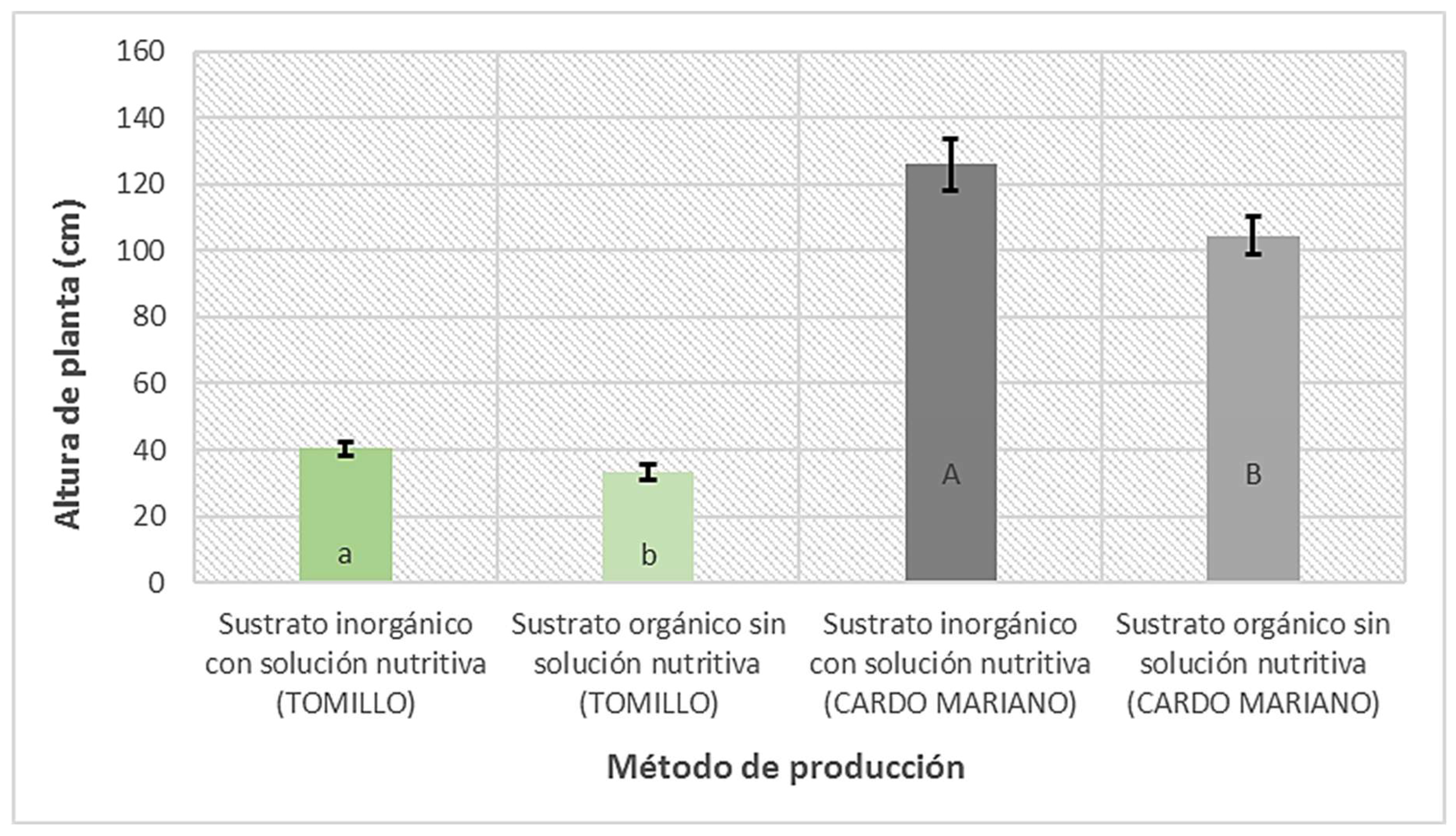
Figure 2.
Fresh weight of thyme (Thymus vulgaris) and milk thistle (Silybum marianum) produced under greenhouse conditions. Treatments sharing the same letter are not statistically different for each species (Tukey, p < 0.05). Bars represent the standard deviation of the mean.
Figure 2.
Fresh weight of thyme (Thymus vulgaris) and milk thistle (Silybum marianum) produced under greenhouse conditions. Treatments sharing the same letter are not statistically different for each species (Tukey, p < 0.05). Bars represent the standard deviation of the mean.
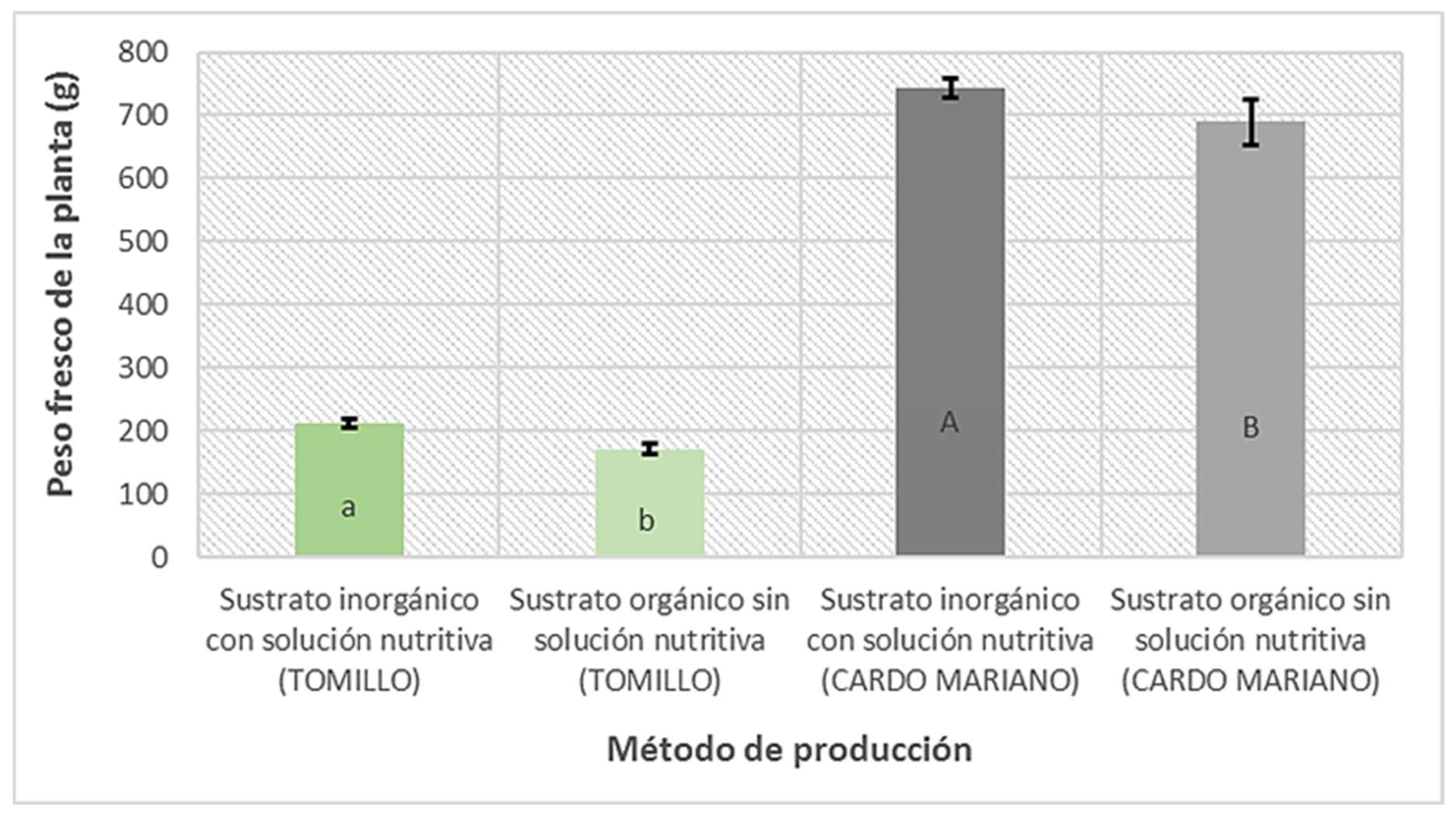
Figure 3.
Dry weight of thyme (Thymus vulgaris) and milk thistle (Silybum marianum) produced under greenhouse conditions. Treatments sharing the same letter are not statistically different for each species (Tukey, p < 0.05). Bars represent the standard deviation of the mean.
Figure 3.
Dry weight of thyme (Thymus vulgaris) and milk thistle (Silybum marianum) produced under greenhouse conditions. Treatments sharing the same letter are not statistically different for each species (Tukey, p < 0.05). Bars represent the standard deviation of the mean.
Disclaimer/Publisher’s Note: The statements, opinions and data contained in all publications are solely those of the individual author(s) and contributor(s) and not of MDPI and/or the editor(s). MDPI and/or the editor(s) disclaim responsibility for any injury to people or property resulting from any ideas, methods, instructions or products referred to in the content. |
© 2026 by the authors. Licensee MDPI, Basel, Switzerland. This article is an open access article distributed under the terms and conditions of the Creative Commons Attribution (CC BY) license (http://creativecommons.org/licenses/by/4.0/).
Copyright: This open access article is published under a Creative Commons CC BY 4.0 license, which permit the free download, distribution, and reuse, provided that the author and preprint are cited in any reuse.


