

Submitted:
25 May 2026
Posted:
26 May 2026
You are already at the latest version
Abstract
Groundwater is a critical freshwater resource in the western Himalaya, where increasing anthropogenic pressure and environmental variability are raising concerns regarding groundwater quality and water security. However, regionally integrated assessments of groundwater-quality variability across the western Himalayan states remain limited. This study evaluates groundwater quality across Jammu & Kashmir, Himachal Pradesh, and Uttarakhand using groundwater-monitoring data obtained from the Central Ground Water Board (CGWB). A total of 338 observation-well samples collected during 2019–2022 were analysed using the weighted arithmetic Water Quality Index (WQI) based on Bureau of Indian Standards (BIS) and World Health Organization (WHO) drinking-water guidelines. Spatial and temporal variability were examined through hydrochemical, correlation, and geospatial analyses. The results reveal substantial regional and district-level variability in groundwater quality across the western Himalaya. Groundwater in Himachal Pradesh and Uttarakhand is predominantly classified as “Excellent” to “Good”, whereas Jammu & Kashmir exhibits greater hydrochemical variability and localized groundwater deterioration. Elevated WQI values are concentrated within foothill and valley-transition districts, while high-altitude recharge zones maintain comparatively lower WQI values. Hydrochemical analyses indicate that groundwater-quality variability is primarily associated with mineralization processes, lithological control, and localized anthropogenic influence. Temporal trends further indicate moderate groundwater-quality improvement between 2019 and 2022, particularly in parts of Jammu & Kashmir. Overall, the findings demonstrate that western Himalayan aquifers retain considerable hydrogeological resilience, although localized deterioration is increasingly evident within densely populated and land-use-intensive environments. Strengthened groundwater monitoring and recharge-zone protection are therefore essential for sustaining long-term water security in this climate-sensitive mountain region.
Keywords:
anthropogenic influence
; groundwater quality assessment
; hydrochemical variability
; Water Quality Index
; Western Himalaya
; water security
1. Introduction
Groundwater is a critical freshwater resource for drinking, domestic use, and irrigation in mountain environments, where surface-water availability is often seasonally constrained and settlements frequently depend on local springs and shallow aquifers [8,10]. In the Himalaya, this dependence is particularly pronounced because steep terrain, dispersed habitations, and limited storage infrastructure increase reliance on groundwater as a relatively accessible and dependable source. However, the long-standing assumption that mountain groundwater systems remain naturally protected is becoming increasingly uncertain under rapid population growth, tourism expansion, agricultural intensification, land-use transformation, and climate-driven hydrological variability [7,17,24]. Consequently, groundwater quality has emerged as a major concern for water security, ecosystem integrity, and human health in environmentally fragile mountain regions [1,3,21,35,43].
The Western Himalaya presents a particularly sensitive hydrogeological setting because groundwater occurrence and chemistry are controlled by strong topographic gradients, fractured lithology, active tectonics, and highly variable recharge regimes [22,25,48]. Rock-water interaction, mineral dissolution, and weathering of carbonate and silicate formations define much of the regional hydrochemical background [15]. However, these natural controls are increasingly overprinted by anthropogenic inputs arising from sewage leakage, unregulated waste disposal, fertilizer use, expanding road networks, and land-use change in valleys and foothill settlements [5,23,43]. The interaction between lithological controls and anthropogenic pressures therefore produces substantial spatial heterogeneity in groundwater chemistry, making single-parameter evaluation insufficient for regional-scale assessment and management-oriented interpretation [26,30,32,40].
Water Quality Index (WQI) approaches, particularly the Weighted Arithmetic Water Quality Index (WQI), offer an effective means of integrating multiple physicochemical variables into a single and interpretable measure of groundwater suitability [11,12,19,20,27,29,37,47]. Previous studies from different parts of the Himalayan region generally report acceptable groundwater quality, but they also identify localized deterioration linked to mineralization, urban pressure, agricultural activity, and foothill transition zones [13,33,36,38,42,44]. Although these investigations provide important localized insights, a regionally integrated and comparable assessment of groundwater quality across the western Himalayan belt remains limited. In particular, few studies have jointly examined spatial heterogeneity, temporal variability, hydrochemical relationships, and localized clustering patterns across multiple Himalayan states using a harmonized analytical framework integrating WQI assessment, multivariate hydrochemical interpretation, and spatial analytical approaches.
Against this background, the present study undertakes a comparative spatio-temporal assessment of groundwater quality across Jammu & Kashmir, Himachal Pradesh, and Uttarakhand using Central Ground Water Board (CGWB) monitoring data and the weighted arithmetic Water Quality Index (WQI) method. The study specifically aims to (i) evaluate groundwater suitability for drinking purposes, (ii) compare regional and district-level groundwater-quality patterns, (iii) examine temporal variation during 2019–2022, and (iv) interpret dominant hydrochemical associations using distributional, correlation-based, multivariate, and spatial analytical approaches. We hypothesize that groundwater quality across the western Himalaya is characterized by substantial spatial heterogeneity, with relatively favourable conditions in high-altitude recharge environments and increasing hydrochemical deterioration within foothill and valley-transition districts subjected to greater anthropogenic pressure. By providing a regionally integrated comparative assessment, the study contributes new evidence for groundwater monitoring, recharge-zone protection, and sustainable water-resource planning across climate-sensitive Himalayan environments.
This regional perspective is important because groundwater-management strategies in mountain systems must account for both broad hydrogeological gradients and highly localized zones of deterioration. A comparative regional assessment can therefore help distinguish relatively resilient recharge environments from districts where intensified monitoring and targeted intervention are increasingly required. In this context, the present analysis is intended not only to characterize groundwater-quality conditions across the western Himalaya, but also to support more spatially targeted, hydro-geologically informed, and sustainability-oriented groundwater governance within a rapidly changing mountain environment.
2. Materials and Methods
2.1. Study Area
The present study covers the Western Himalayan region of India, encompassing the states of Jammu & Kashmir (Union Territory of Jammu & Kashmir, including the Kashmir Valley and Jammu region), Himachal Pradesh, and Uttarakhand. Geographically, the region extends approximately from 73°52′E to 80°40′E longitude and 30°N to 37°N latitude, forming a significant segment of the Indian Himalayan arc. The study area represents a pronounced north–south altitudinal gradient extending from the Greater Himalaya to the Siwalik foothills, as illustrated in Figure 1. The terrain is predominantly mountainous and characterized by steep slopes, deep river valleys, rugged topography, and complex geological formations shaped by active tectonic activity. The region forms part of an active convergent tectonic zone influenced by the ongoing Indian–Eurasian plate collision, which significantly controls structural discontinuities, groundwater occurrence, and regional flow regimes. Major river systems, including the Indus, Chenab, Ravi, Beas, Sutlej, and Ganga and their tributaries, drain the region and play a critical role in groundwater recharge, sediment transport, and regional hydrological dynamics.
The Western Himalaya exhibits substantial climatic variability associated with both altitude and seasonality, ranging from subtropical climatic conditions in foothill regions to temperate and alpine environments at higher elevations. Precipitation is primarily influenced by the southwest monsoon and western disturbances, resulting in considerable spatial and temporal variability in water availability. Snowfall and glacial melt at higher elevations additionally contribute to recharge processes, streamflow maintenance, and baseflow regulation. Hydrogeologically, the region is dominated by fractured and weathered rock formations composed primarily of carbonate and silicate lithologies that strongly influence groundwater occurrence, storage, and hydrochemical evolution. Aquifers are predominantly shallow, unconfined to semi-confined systems within alluvial plains, while mountainous areas are characterized mainly by fractured crystalline aquifers with variable storage potential and transmissivity.
The study utilizes groundwater observations from 338 monitoring wells distributed across the three states to assess regional groundwater characteristics and spatial variability. Figure 1 illustrates the spatial distribution of the monitoring network, with comparatively denser coverage in the Kashmir Valley, Himachal foothill districts, and the Tarai–Bhabar zone of Uttarakhand. The study region combines ecological fragility with increasing population pressure, agricultural intensification, tourism expansion, and rapid infrastructure development, all of which have important implications for groundwater sustainability and water-resource security. The monitoring network therefore captures a broad range of hydrogeological environments, including high-altitude recharge zones, intermontane valleys, densely populated foothill plains, and rapidly urbanizing transition districts.
2.2. Dataset Description
Groundwater-quality data were obtained from the Central Ground Water Board (CGWB) for major physicochemical parameters used in Water Quality Index (WQI) estimation, including pH, electrical conductivity (EC), total dissolved solids (TDS), total hardness (TH), calcium (Ca2+), magnesium (Mg2+), chloride (Cl−), sulphate (SO42−), nitrate (NO3−), and fluoride (F−). Additional hydrochemical variables, including bicarbonate (HCO3−), carbonate (CO32−), sodium (Na+), potassium (K+), and selected trace constituents, were retained for supplementary hydrochemical interpretation and data-quality assessment. The compiled dataset comprised groundwater samples from 338 observation wells distributed across Uttarakhand (150 wells), Himachal Pradesh (80 wells), and Jammu & Kashmir (108 wells), thereby providing broad spatial representation across the principal hydrogeological settings of the western Himalaya. Descriptive statistics for the groundwater-quality parameters used in WQI estimation are presented in Table 1.
2.3. Source: Authors’ Computation Based on CGWB Groundwater-Quality Data (2019–2022), Missing Data Treatment and Imputation
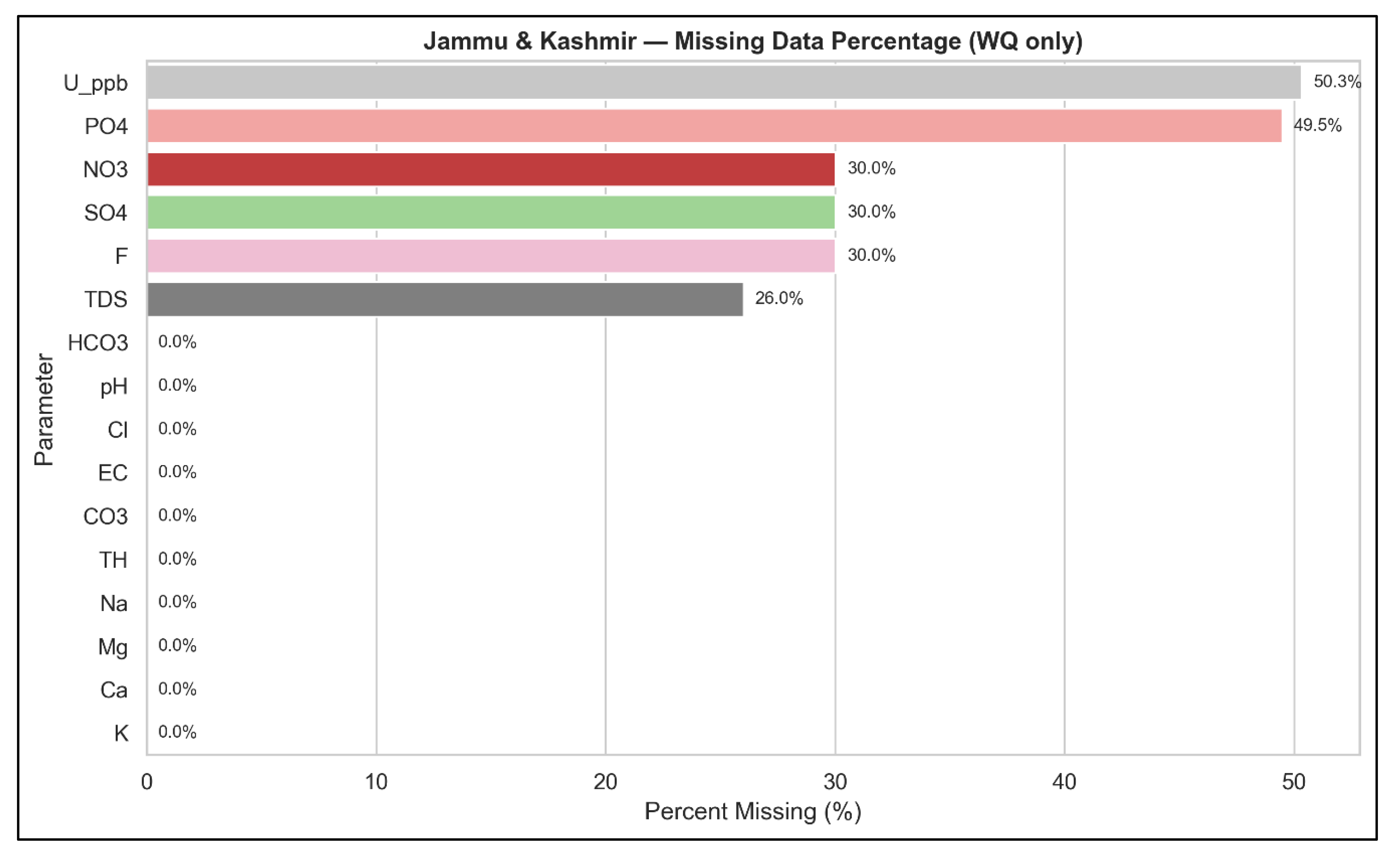
Groundwater-quality datasets frequently contain incomplete observations because of irregular monitoring frequency, analytical limitations, and inconsistencies in laboratory reporting. Prior to hydrochemical analysis, the compiled datasets for Uttarakhand, Himachal Pradesh, and Jammu & Kashmir were screened for missing values, duplicate entries, and inconsistent observations. Parameter-wise missingness was evaluated to assess the extent and distribution of incomplete records across the hydrochemical variables.
To minimize information loss while preserving the multivariate hydrochemical structure of the datasets, a two-stage imputation framework was implemented. All random seeds were fixed (random state = 42) to ensure reproducibility of the imputation workflow. In the first stage, provisional missing values were estimated using an Iterative Imputer with an ExtraTreesRegressor as the base estimator. In the second stage, parameter-specific Random Forest (RF) regression models were developed for variables containing missing observations, using the remaining hydrochemical variables as predictors. The RF approach was selected because of its ability to capture nonlinear hydrochemical relationships while remaining robust to outliers and collinearity among predictor variables.
To reduce spatial leakage and overoptimistic performance estimates, model validation was conducted using district-blocked GroupKFold cross-validation (K = 5), ensuring that samples from the same district were not simultaneously included in both training and validation subsets. Imputation performance was evaluated using out-of-fold predictions and standard validation metrics, including the coefficient of determination (R2), mean absolute error (MAE), and root mean squared error (RMSE). Any residual missing observations remaining after RF prediction were replaced using parameter-specific median values.
The imputation framework demonstrated strong predictive performance for major hydrochemical parameters exhibiting strong inter-parameter relationships, while sparsely distributed trace constituents showed comparatively lower predictive reliability. Parameters exhibiting unstable predictive performance were excluded from downstream Water Quality Index (WQI) estimation where appropriate. Detailed parameter-wise missingness distributions for Uttarakhand, Himachal Pradesh, and Jammu & Kashmir are provided in Supplementary Figures S1–S3.
2.4. Water Quality Index (WQI) Methodology
The Water Quality Index (WQI) framework adopted in this study follows the weighted arithmetic index approach and was used to synthesize multiple physicochemical parameters into a single interpretable measure of groundwater suitability for drinking purposes.
2.4.1. Parameters and Standards
The WQI was calculated using the weighted arithmetic method in accordance with the Bureau of Indian Standards (BIS IS 10500:2012) and WHO (2021) guidelines. The selected physicochemical parameters were considered based on their regulatory importance, hydrochemical relevance, and availability across the study datasets. The standard and ideal values used for WQI estimation are presented in Table 2.
2.4.2. Mathematical Formulation
For n measured parameters, the WQI is calculated as the weighted mean of sub-indices (qᵢ) using corresponding unit weights (Wᵢ). To maintain statistical robustness, only samples containing at least five valid parameters were assigned a WQI value.
The overall WQI is calculated using the formula:
The unit weight (Wi) for each parameter is inversely proportional to its standard limit:
where K is the proportionality constant, calculated as:
The quality rating (qi), or sub-index, for each parameter is given by:
where Cᵢ is the observed concentration of the parameter.
For pH, which has an ideal value and an acceptable range, the quality rating (qph) was calculated based on its deviation from the ideal value of 7.0:
where Cph is the observed pH, Iph is the ideal value (7.0), and Sph is the standard limit (8.5).
2.4.3. Classification Criteria
2.5. Data Aggregation, Visualization, and Interpretation
To facilitate consistent spatial analysis, district names were standardized using predefined normalization and alias-correction procedures. For spatial and temporal interpretation, median WQI values were calculated at both district and annual scales to reduce sensitivity to extreme observations and to evaluate interannual groundwater-quality variation. All statistical and spatial analyses were performed using Python-based geospatial and statistical libraries. Descriptive statistical analyses were performed to examine central tendency, variability, and inter-parameter relationships among the groundwater-quality variables. Pearson correlation analysis was conducted using pairwise complete observations to evaluate linear associations among physicochemical variables and to identify dominant hydrochemical relationships contributing to groundwater mineralization. The interpretation framework combined WQI-based classification with descriptive statistical and correlation analyses to assess spatial heterogeneity, temporal variability, and localized groundwater-quality anomalies across the western Himalayan region.
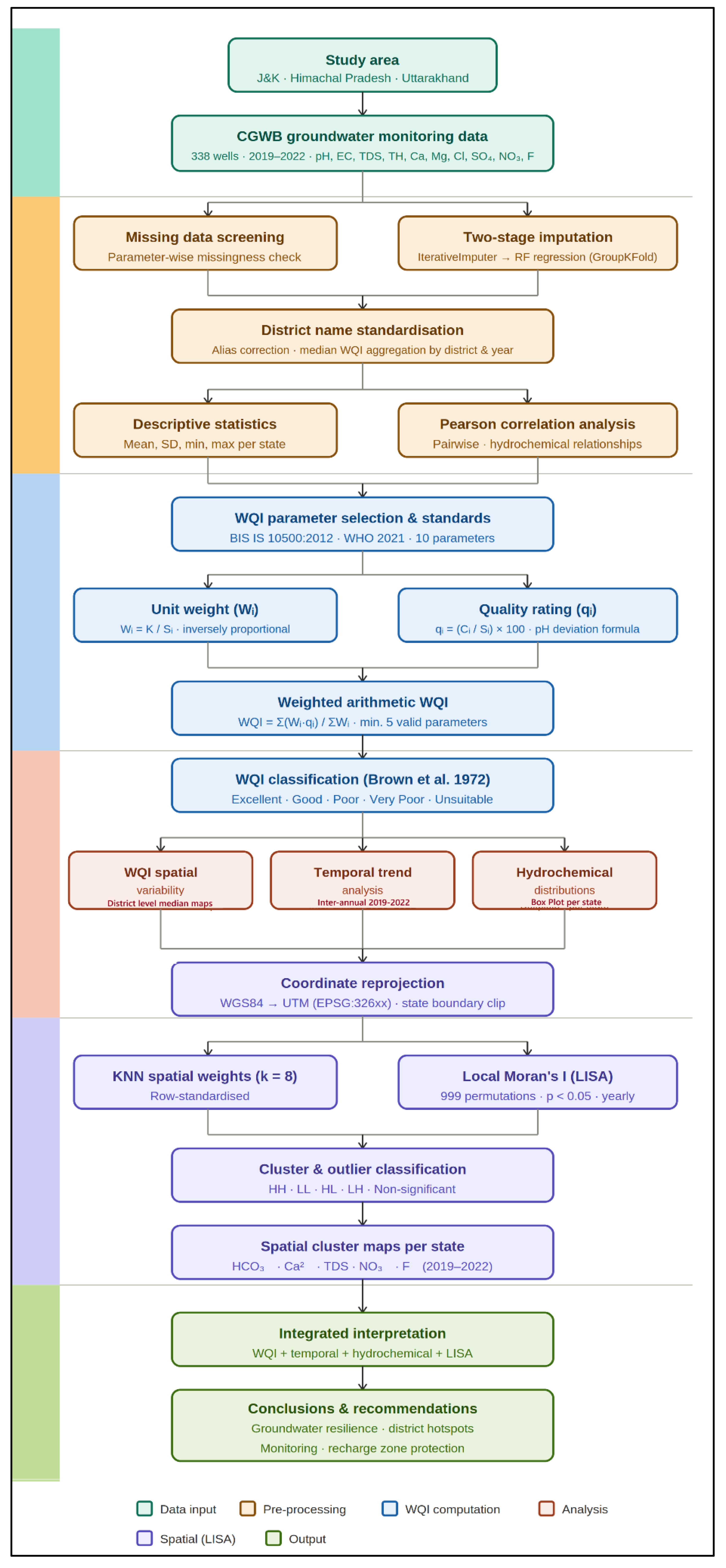
Figure 2.
Methodological framework for groundwater-quality assessment across the western Himalaya.
2.6. Spatial Analysis
This study employed a Local Indicators of Spatial Association (LISA) workflow to analyze groundwater chemistry observations from the Indian states of Uttarakhand, Himachal Pradesh, and Jammu & Kashmir. The dataset for each region contained geographic coordinates, the sampling year, and measured concentrations for a suite of analytes, including nitrate (NO3−), fluoride (F−), total dissolved solids (TDS), and calcium (Ca2+), among others. Before analysis, the data underwent a comprehensive pre-processing routine. This began with reprojecting the geographic coordinates from WGS84 (EPSG:4326) to an appropriate UTM zone (EPSG:326xx) to ensure that all distance-based calculations were accurate and meaningful. Following projection, a strict boundary clip was applied using the official state polygons to remove any data points outside the study areas. The analysis was conducted on a year-by-year basis for the period 2019-2022, with the year treated as a discrete variable. Finally, an inclusion rule was enforced, requiring at least eight finite observations for any given analyte in a particular year to ensure the statistical stability of the spatial neighbour structures.
The spatial relationships between sampling locations were defined using a k-nearest neighbor (KNN) weights matrix, with k set to 8, which was subsequently row-standardized. This standardization process enforces that the sum of weights for each location’s neighborhood equals one, guaranteeing comparable influence across all sites despite irregular sampling densities.
To identify local spatial patterns, the Local Moran’s I statistic was computed. This involved first standardizing the observed value of an analyte at each site i (xi) by subtracting the mean (x−) and dividing by the standard deviation (s). The standardized value (zi) and its spatial lag () are defined as:
The Local Moran’s statistic at location (i) is then the product of its standardized value and its spatial lag:
Significant local patterns were classified into four cluster and outlier types based on the Moran scatterplot interpretation, which considers the signs of the standardized value (zi) and its spatial lag (). These types are High-High (HH), representing a cluster of high values; Low-Low (LL), a cluster of low values; High-Low (HL), an outlier where a high value is surrounded by low values; and Low-High (LH), an outlier where a low value is surrounded by high values. The statistical significance of these local patterns was assessed using a Monte-Carlo permutation test with 999 permutations. This procedure involves holding the spatial graph fixed while randomly shuffling the attribute values across locations to generate a reference distribution. The p-value for each location i was computed based on this distribution, with a threshold of p < 0.05 used to identify statistically significant clusters and outliers.
Locations that did not meet this significance threshold were labelled as non-significant (NS).
In this section, where applicable, authors are required to disclose details of how generative artificial intelligence (GenAI) has been used in this paper (e.g., to generate text, data, or graphics, or to assist in study design, data collection, analysis, or interpretation). The use of GenAI for superficial text editing (e.g., grammar, spelling, punctuation, and formatting) does not need to be declared.
3. Results
The Water Quality Index (WQI) and associated hydrochemical analyses were used to evaluate groundwater quality across Uttarakhand, Himachal Pradesh, and Jammu & Kashmir. The results presented in this section describe the statistical distribution of WQI values, groundwater-quality classification patterns, district-level spatial variability, physicochemical parameter distributions, and inter-parameter correlation structures across the western Himalayan region.
3.1. Water Quality Index (WQI)
The distribution of Water Quality Index (WQI) values in Uttarakhand exhibits a strong right-skewed pattern, indicating that most groundwater samples fall within lower WQI ranges associated with better water quality (Figure 3). A large proportion of observations are concentrated below WQI 50, corresponding to excellent to good quality conditions, whereas the extended tail towards higher WQI values reflects the occurrence of localized hotspots of degraded water quality, highlighting substantial spatial heterogeneity across the state.
In Himachal Pradesh, the WQI distribution indicates that groundwater quality across the sampled districts is predominantly within safe and acceptable limits (Figure 4). The overall WQI distribution is tightly concentrated in the lower range, largely between 15 and 40, reflecting generally favorable groundwater quality conditions. Although the distribution is positively skewed, the right tail is driven by a limited number of extreme observations, implying that pockets of deterioration are localized rather than representative of the broader hydrochemical regime of the state.
In Jammu & Kashmir, the WQI distribution reveals considerable variability in groundwater quality across the sampled districts (Figure 5). The overall WQI distribution is positively skewed, with most values clustered between 20 and 80, while a long right tail extends beyond 200 and reaches nearly 700 in a few samples. This indicates that, although a large share of groundwater remains within acceptable limits, several localized settings experiences pronounced hydrochemical deterioration. The extreme outliers point to site-specific contamination or intensified mineralization associated with anthropogenic pressure, geogenic controls, or inadequate waste-management practices.
Across all three states, the predominance of lower WQI values indicates generally acceptable groundwater conditions in much of the western Himalayan region. Nevertheless, the presence of long right tails and extreme outliers demonstrates localized zones of groundwater-quality deterioration, emphasizing the uneven spatial distribution of hydrochemical stress across the study area.
3.2. Water Quality Classification
The classification of WQI values further confirms the predominance of good-quality groundwater resources in Uttarakhand (Figure 6). Among the analysed samples, 68.7% were categorized as “Excellent,” followed by 25.5% under the “Good” category. Together, these classes account for more than 94% of the total samples, indicating generally favorable groundwater quality conditions across the region. In contrast, the Poor (3.9%), Very Poor (0.9%), and Unsuitable (1.0%) categories constitute only a small fraction of the samples and are mainly associated with localized anthropogenic pressures such as urbanization, agricultural runoff, and industrial activities, particularly in the plains and peri-urban districts.
Similarly, in Himachal Pradesh, the categorical classification corroborates this pattern, with 60.5% of samples falling in the “Excellent” category and 37.6% in the “Good” category, together accounting for more than 98% of all samples (Figure 7). Only 1.0% of samples were classified as “Poor” and another 1.0% as “Unsuitable for human consumption”, while no sample fell in the “Very Poor” class. These results indicate that groundwater in Himachal Pradesh is largely suitable for drinking, with only limited local areas requiring close surveillance or remedial intervention.
In Jammu & Kashmir, more than half of the samples (54.7%) fall under the “Good” category and 22.2% under the “Excellent” category. However, compared with Uttarakhand and Himachal Pradesh, Jammu & Kashmir shows a substantially larger degraded fraction: 14.9% of samples are “Poor”, 5.6% are “Very Poor”, and 2.6% are “Unsuitable for human consumption” (Figure 8). Collectively, nearly one-fourth of the samples indicate varying levels of groundwater stress, confirming that water-quality deterioration is not isolated to a few exceptional observations but is embedded across several districts.
3.3. Spatial Variability in WQI
District-level analysis reveals pronounced spatial variability in WQI values across Uttarakhand (Figure 9). Pauri Garhwal and Dehradun exhibit comparatively lower median WQI values, reflecting better groundwater quality conditions, likely supported by higher forest cover and lower industrial intensity. Conversely, Udham Singh Nagar and Haridwar show relatively higher median WQI values, indicating greater groundwater quality deterioration due to intensive agriculture, industrial clusters, and higher population density in the Tarai-Bhabar and downstream Ganga plains. Intermediate WQI levels were observed in districts such as Almora, Nainital, Champawat, and Uttarkashi, suggesting combined influences of natural lithological controls and anthropogenic activities.
In Himachal Pradesh, district-wise median WQI values reveal limited but discernible spatial variation (Figure 10). Kullu records the lowest median WQI, indicating comparatively better groundwater quality, followed by Chamba and Hamirpur. In contrast, Solan and Una show relatively higher median WQI values, although these remain within the “Good” category. Such spatial differences most likely reflect variation in lithology, land use, settlement density, agricultural intensity, and localized industrial pressure along the foothill transition belt.
Similarly, district-wise median WQI values in Jammu & Kashmir demonstrate marked spatial heterogeneity (Figure 11). Districts such as Baramulla, Handwara, Kupwara, and Reasi exhibit comparatively lower median WQI values, whereas Budgam, Srinagar, and parts of the Jammu plain show relatively elevated values, suggesting stronger urban or land-use influence. Intermediate values in Rajouri, Pulwama, Kathua, Jammu, and Samba indicate mixed hydrochemical conditions. These inter-district contrasts likely arise from differences in population concentration, wastewater loading, agricultural activity, valley confinement, and local hydrogeological setting.
3.4. Distribution of Physicochemical Parameters
The parameter-wise boxplots for Uttarakhand (Figure 12) indicate that pH is comparatively stable, whereas EC, HCO3, total hardness, and TDS show much broader interquartile ranges and numerous upper-end outliers. This distribution suggests that most groundwater samples are weakly to moderately mineralized, but a smaller set of observations from specific districts experience pronounced ionic enrichment. Chloride, sulphate, nitrate, sodium, and potassium remain comparatively lower in central tendency, although their scattered outliers indicate localized anthropogenic influence or mixed lithological control.
Similarly, the boxplot analysis for Himachal Pradesh highlights considerable variability among groundwater-quality attributes across the study area (Figure 13). Parameters such as TDS, hardness, chloride, and nitrate exhibit wider interquartile ranges and the presence of several outliers, indicating localized hydrochemical enrichment and anthropogenic influence in certain districts. In contrast, parameters such as pH remain relatively stable within permissible limits, suggesting overall geochemical stability of groundwater systems in Himachal Pradesh.
The boxplot analysis for Jammu & Kashmir demonstrates the widest parameter spread among the three study states (Figure 14), with especially large dispersion and numerous upper-tail outliers in EC, HCO3, total hardness, TDS, and several dissolved ions. This pattern confirms that the groundwater system contains both relatively fresh and strongly mineralized water types, and that extreme values are not restricted to a single constituent. Compared with Himachal Pradesh and Uttarakhand, nitrate and chloride also show more pronounced scattered outliers, suggesting stronger localized anthropogenic loading in some districts.
3.5. Correlation Structure of Groundwater Parameters
The Pearson correlation heatmap of Uttarakhand (Figure 15) further shows that EC and TDS are positively associated with hardness and the major dissolved ions, especially Ca, Mg, HCO3, Cl, and SO4, pointing to a common mineralization process as the principal driver of groundwater-quality variation. By explaining the overall WQI pattern.
Similarly, the Pearson correlation matrix for Himachal Pradesh provides insights into the interrelationships among groundwater-quality parameters (Figure 16). Strong positive correlations among EC, TDS, hardness, chloride, and sulphate indicate a common geogenic origin and mineral dissolution processes controlling groundwater chemistry. Moderate correlations between nitrate and other ionic constituents may reflect localized agricultural and anthropogenic inputs.
For Jammu & Kashmir, the Pearson correlation heatmap (Figure 17) reveals a dense cluster of positive associations centres on EC and TDS and extending to HCO3, Cl, SO4, hardness, Ca, Mg, and Na. These relationships indicate that groundwater deterioration in Jammu & Kashmir is primarily linked to cumulative ionic enrichment, with urbanized valley settings and hydro-geochemically complex basins likely intensifying this pattern.
Overall, the results indicate that groundwater quality across the western Himalayan region remains generally suitable for drinking purposes, although important inter-state variations are evident. Jammu & Kashmir exhibits comparatively greater groundwater stress than Uttarakhand and Himachal Pradesh, as reflected by the higher proportion of poor and very poor WQI classes and the occurrence of extreme WQI observations. In contrast, Himachal Pradesh displays the most stable groundwater-quality conditions, while Uttarakhand shows moderate spatial heterogeneity with localized zones of deterioration. These findings highlight the importance of continued groundwater monitoring and targeted management interventions in districts exhibiting elevated WQI values and stronger hydrochemical enrichment patterns.
3.6. Spatial Analysis
The Local Moran’s I (LISA) analysis revealed significant local clusters and spatial outliers for numerous groundwater-quality parameters across the three study regions from 2019 to 2022. In Uttarakhand, the LISA analysis revealed extensive local clustering for several groundwater-quality parameters (Figure 18). Parameters directly related to geology, such as HCO3−, Ca2+, and Mg2+, consistently formed a large number of High-High (HH) clusters, which were primarily concentrated in the western and southern parts of the state. For example, HCO3− exhibited 63 HH clusters in 2020. Alongside these, a significant number of Low-High (LH) clusters were also identified for analytes like Ca2+ and TDS, indicating considerable local heterogeneity. The spatial patterns also exhibited notable temporal variation; the number of significant clusters for CO32−, for instance, fluctuated from 21 in 2019 to a peak of 108 in 2021 before declining sharply to just 10 in 2022.
In contrast, Himachal Pradesh exhibited fewer and less pronounced significant local clusters compared with Uttarakhand. A distinctive feature of the spatial pattern in this region was the clear predominance of Low-High (LH) spatial outliers for many parameters (Figure 19). In 2019, chloride (Cl−) had 29 LH clusters, which accounted for the majority of its 47 significant locations. High-High clusters were far less common, although analytes such as EC and Na+ each exhibited 10 HH clusters in 2019. The temporal coverage of the analysis for Himachal Pradesh was comparatively limited, as many analytes had an insufficient number of observations (n<8n < 8n<8) to be evaluated in 2021 and 2022.
In Jammu & Kashmir, the LISA analysis identified a moderate to high number of significant local clusters, indicating distinct spatial structuring for several groundwater-quality parameters (Figure 20). The region displayed a diverse mix of cluster types. In 2021, Ca2+ presented a complex pattern with 40 HH and 44 LH clusters, while TDS had 19 HH and 23 LH clusters in the same year. Parameters such as HCO3−, Ca2+, and Total Hardness (TH) demonstrated a large number of significant clusters throughout the study period, with HCO3− showing 100 significant locations in 2019. Spatially, these clusters were primarily concentrated in the southern and central parts of the Jammu & Kashmir region.
Overall, the LISA analysis demonstrates that groundwater quality across the western Himalayan region exhibits pronounced spatial heterogeneity, with localized clustering patterns varying substantially between states and over time. The predominance of High–High clusters for parameters such as HCO3−, Ca2+, Mg2+, and TDS suggests strong hydrogeological and lithological controls on groundwater chemistry, particularly in mineralized zones. In contrast, the occurrence of Low-High and High-Low outliers reflects localized variability associated with anthropogenic activities, differential recharge conditions, or isolated hydrochemical environments. The temporal fluctuation in cluster intensity further indicates that groundwater-quality dynamics are not spatially static and may respond to changing land-use practices, hydrological conditions, and localized environmental pressures.
4. Discussion
The present study evaluated groundwater suitability for drinking purposes across Uttarakhand, Himachal Pradesh, and Jammu & Kashmir using Water Quality Index (WQI), spatial clustering, and hydrochemical analyses. The findings indicate that groundwater quality across much of the western Himalaya remains within excellent to good categories, although substantial district-level variability, localized hydrochemical deterioration, and temporal fluctuations were observed across foothill and valley-transition regions. The combined interpretation of WQI patterns, hydrochemical relationships, temporal variation, and LISA-based spatial clustering demonstrates that groundwater-quality variability across the western Himalayan region is governed by both natural hydrogeological controls and localized anthropogenic pressures.
The predominance of excellent to good WQI classes across much of the study region suggests the strong influence of mountain recharge systems, fractured lithology, and relatively limited industrial pressure in upland Himalayan environments. At the same time, the observed spatial heterogeneity demonstrates that groundwater quality is increasingly modified by anthropogenic pressures, land-use transitions, urban expansion, and intensified agricultural activity in foothill and valley settings. These findings support the growing body of Himalayan groundwater research emphasizing the coexistence of hydrogeological resilience and localized vulnerability within mountain aquifer systems [33,35,44].
The comparatively stable and low WQI distribution observed in Himachal Pradesh suggests that groundwater chemistry remains primarily controlled by natural hydrogeological processes, including fractured crystalline aquifers, strong precipitation-driven recharge, and relatively low industrial activity in interior mountainous districts. Similar hydrochemical stability has been documented in the Soan Basin of outer Himachal Himalaya, where most groundwater samples were found suitable for drinking, with quality largely controlled by rock-water interaction processes rather than anthropogenic contamination [45]. Comparable results were observed in Kullu Valley, where groundwater quality was largely acceptable, though localized stress was noted near settlements [46]. More recently, hydrochemical investigations around Jawalamukhi in Himachal Pradesh reaffirmed that groundwater quality remains predominantly within safe limits, governed mainly by lithological factors [36]. However, the elevated WQI values observed in Solan and Una indicate that this hydrogeological resilience is spatially uneven. Similar deterioration patterns have been documented in the Baddi–Barotiwala–Nalagarh industrial belt, where groundwater contamination and associated health risks were linked to industrial effluents and intensified anthropogenic activity [2]. These findings reinforce the emerging understanding that Himalayan foothill transition zones represent hydrochemical stress interfaces where rapid industrialization, urbanization, and agricultural intensification increasingly modify naturally buffered mountain groundwater systems [4,33,41].
Compared with Uttarakhand and Himachal Pradesh, Jammu & Kashmir exhibits substantially greater hydrochemical heterogeneity and groundwater-quality variability, indicating a more complex interaction between geogenic controls and anthropogenic disturbance. Studies of spring and groundwater systems in Baramulla district revealed a wide spectrum of WQI values, from excellent to moderately degraded, influenced by land-use intensity and settlement density [6]. Broader regional assessments have similarly reported variable groundwater quality conditions across Kashmir, linking elevated nutrient and metal concentrations to urban effluents and agricultural runoff [31]. Hydrochemical evaluation in the Kathua region further confirmed mixed geogenic and anthropogenic influences, with certain pockets exhibiting declining water quality [28]. Similar heterogeneity has been documented in trans-Himalayan Ladakh, where groundwater chemistry is strongly controlled by lithology and climatic aridity but shows localized quality concerns [14].
The wider spread of WQI values and higher proportions of poor groundwater classes suggest that valley-floor aquifers and densely inhabited basins are under comparatively greater environmental stress. Strong associations among EC, TDS, bicarbonate, hardness, calcium, and magnesium indicate that groundwater chemistry across the study region is dominated by coherent hydrochemical evolution associated with mineral dissolution, water-rock interaction, and cumulative mineralization processes, while localized anthropogenic enrichment becomes increasingly pronounced within foothill and valley-transition environments. The pronounced district-level disparities observed in the present study are therefore consistent with the broader Himalayan understanding that intermontane valleys and urbanized basin environments are more susceptible to groundwater-quality degradation than sparsely inhabited upland recharge zones. The LISA-based clustering patterns further reinforce the WQI results by demonstrating that groundwater deterioration is spatially concentrated within foothill and valley-transition districts rather than uniformly distributed across the Himalayan region.
The observed temporal variability in groundwater quality further indicates that Himalayan aquifer systems remain dynamically responsive to changing environmental and anthropogenic conditions. GIS-based WQI assessments in the Basantar watershed demonstrated that spring water quality remained responsive to catchment conditions [44]. The temporal fluctuations observed between 2019 and 2022 suggest that groundwater-quality conditions across the western Himalaya respond to changing recharge dynamics, seasonal hydrological variability, and localized anthropogenic pressures. The comparatively greater temporal variability observed in Jammu & Kashmir suggests that valley-dominated aquifer systems may be more sensitive to short-term environmental and land-use changes than relatively stable mountainous recharge environments in Himachal Pradesh and Uttarakhand.
Uttarakhand similarly exhibits predominantly favourable groundwater-quality conditions, particularly within upper and middle Himalayan districts characterized by lower population density and relatively intact recharge environments. Studies in the Kumaun foothills confirm that most groundwater samples fall within acceptable drinking standards, though localized mineral enrichment occurs in transitional zones [34]. Hydrochemical assessments in Dehradun Valley similarly reported largely potable groundwater, while identifying localized anthropogenic signatures in urbanized sectors [38]. The comparatively elevated WQI values observed in Haridwar and Udham Singh Nagar indicate increasing hydrochemical vulnerability within the Tarai–Bhabar and plains-interface regions of Uttarakhand. Similar hydrochemical deterioration linked to agricultural intensification and expanding urbanization has been documented in foothill environments of the northwestern Himalaya [33]. Comparable WQI-based investigations in high-altitude lakes such as Dodi Tal and Hemkund have shown that remote recharge environments maintain excellent water quality, emphasizing the protective role of elevation and limited anthropogenic disturbance [18,29].
The broader regional consistency of these findings is further supported by comparable WQI-based groundwater investigations across other Himalayan environments. Studies from Nepal’s Himalayan foothills and Arunachal Himalaya similarly reported that groundwater quality generally remains suitable for drinking purposes but becomes increasingly vulnerable within peri-urban and intensively cultivated zones [16,39]. Comparable hydrochemical and multivariate investigations conducted across Himalayan and mountain aquifer systems have also emphasized the growing importance of anthropogenic pressures in modifying naturally mineralized groundwater regimes [17,30]. Collectively, these regional parallels suggest that many Himalayan aquifers exhibit substantial hydrogeological resilience due to strong recharge, fractured lithology, and mountain hydrological dynamics, while remaining increasingly sensitive to localized anthropogenic disturbances and rapidly changing land-use systems.
Overall, the findings indicate that groundwater systems across the western Himalaya remain fundamentally governed by lithological control, recharge intensity, and mountain hydrogeological structure, but are increasingly modified by localized anthropogenic pressures. The coexistence of generally favourable regional groundwater quality with sharply localized zones of deterioration highlights the fragmented and spatially uneven nature of hydrochemical stress within Himalayan aquifers. The relative stability observed in Himachal Pradesh and Uttarakhand, contrasted with the comparatively greater variability in Jammu & Kashmir, mirrors conclusions reported across multiple Himalayan hydrochemical investigations.
From a sustainability perspective, these findings demonstrate that groundwater management strategies in mountain environments cannot rely solely on broad regional assessments but instead require district-level monitoring frameworks integrating WQI assessment, multivariate hydrochemical analysis, spatial clustering approaches, and land-use evaluation. Recent Himalayan groundwater research increasingly emphasizes that proactive protection of recharge zones, strengthened wastewater regulation, and systematic groundwater-quality surveillance in urbanized valleys and foothill transition zones will be essential for sustaining potable groundwater resources under ongoing climatic variability and socio-economic transformation in the western Himalayan region [1,3,43].
The present study contributes to the comparatively limited regional groundwater-quality literature available for the western Himalaya by integrating WQI assessment, hydrochemical relationships, temporal variability, and LISA-based spatial clustering within a unified comparative framework across multiple Himalayan states. Although the present study integrates multi-year groundwater observations across three Himalayan states, the spatial density of observations varied between districts and years, particularly in Himachal Pradesh where several analytes had insufficient observations for certain years. Consequently, localized groundwater conditions in sparsely sampled areas may remain underrepresented. Nevertheless, the integration of WQI assessment, spatial analysis, hydrochemical relationships, and temporal evaluation provides a robust regional-scale understanding of groundwater-quality variability across the western Himalaya.
5. Conclusions
This study demonstrates substantial regional and district-level variability in groundwater quality across the western Himalaya using integrated WQI, hydrochemical, temporal, and spatial analyses. Groundwater quality in Himachal Pradesh and Uttarakhand remains predominantly within excellent to good categories, whereas Jammu & Kashmir exhibits comparatively greater hydrochemical heterogeneity and localized groundwater deterioration. Lower WQI values are generally associated with high-altitude recharge environments, while elevated WQI values are concentrated within foothill, peri-urban, and valley-transition districts experiencing greater anthropogenic pressure. The hydrochemical and spatial analyses further indicate that groundwater-quality deterioration is associated with cumulative mineralization processes, lithological control, and increasing anthropogenic influence within rapidly transforming districts. Spatial clustering patterns additionally demonstrate that groundwater deterioration is unevenly distributed and concentrated within specific hydrochemical and land-use settings. Temporal variations during 2019–2022 further indicate that Himalayan aquifer systems remain dynamically responsive to changing environmental and recharge conditions. Although moderate improvement was observed in parts of Jammu & Kashmir, the persistence of localized hotspots highlights the continuing vulnerability of foothill and valley-transition environments to groundwater-quality deterioration.
The present study contributes to the comparatively limited regional groundwater-quality literature on the western Himalaya by integrating WQI assessment, hydrochemical relationships, temporal variability, and LISA-based spatial analysis within a unified comparative framework across multiple Himalayan states. The findings collectively emphasize that groundwater-quality deterioration in Himalayan environments is spatially uneven and increasingly associated with rapid land-use transformation, urban expansion, and intensified human activity within transition zones.
From a policy and groundwater-management perspective, the results underscore the importance of establishing district-level monitoring systems that integrate hydrochemical assessment, spatial analysis, and land-use evaluation to identify emerging contamination hotspots and vulnerable recharge environments. Strengthening wastewater regulation, protecting mountain recharge zones, and improving land-use planning in foothill and peri-urban districts will be essential for sustaining groundwater security under ongoing climatic variability and socio-economic transformation in the western Himalaya. Future research should focus on expanding long-term groundwater monitoring networks, incorporating seasonal hydrochemical variability, and integrating isotopic, geochemical, and machine-learning approaches to improve understanding of groundwater evolution and contamination dynamics across Himalayan aquifer systems.
6. Patents
This research did not result in any patents.
Supplementary Materials
The following supporting information can be downloaded at the website of this paper posted on Preprints.org, Figure S1, Figure S2, Figure S3.
Author Contributions
Conceptualization, K.P. and S.K.; methodology, F.G. and V.A.; formal analysis, F.G.; investigation and field data collection, K.P.; data curation, F.G. and S.K.; visualization, F.G.; writing- original draft preparation, K.P. and S.K.; writing- review and editing, C.R., N.M., M.P., D.D., and S.K.; interpretation of results and critical revision, C.R. and S. K.; supervision, K.P and S.K. All authors have read and agreed to the published version of the manuscript.
Funding
This research received no external funding.
Data Availability Statement
The datasets generated and/or analyzed during the current study are available from the corresponding author upon reasonable request.
Conflicts of Interest
The authors declare no conflict of interest.
Appendix A
Figure A1.
Percentage of missing groundwater-quality observations across physicochemical parameters in Uttarakhand prior to imputation.
Figure A1.
Percentage of missing groundwater-quality observations across physicochemical parameters in Uttarakhand prior to imputation.
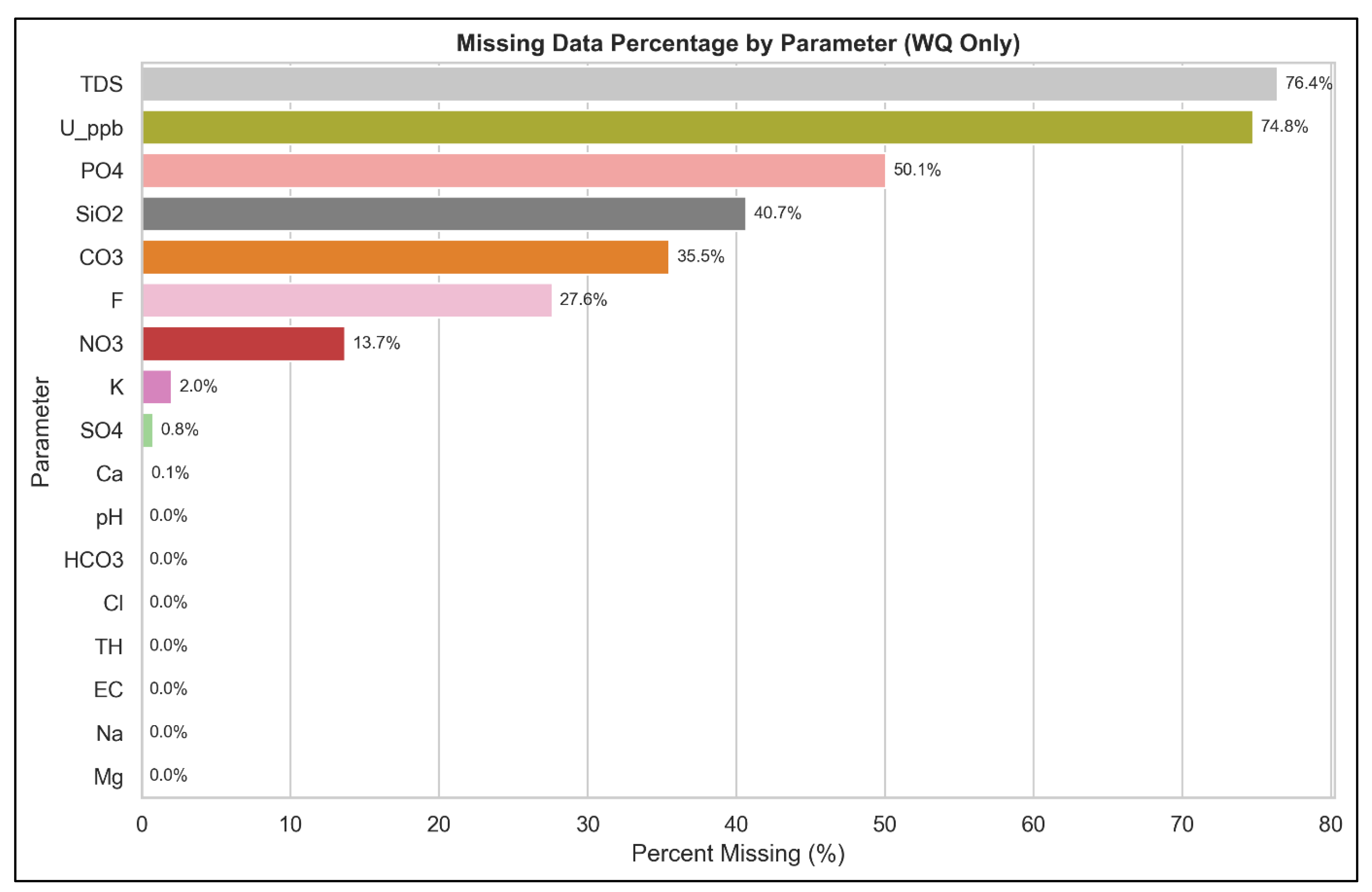
Figure A2.
Percentage of missing groundwater-quality observations across physicochemical parameters in Himachal Pradesh prior to imputation.
Figure A2.
Percentage of missing groundwater-quality observations across physicochemical parameters in Himachal Pradesh prior to imputation.
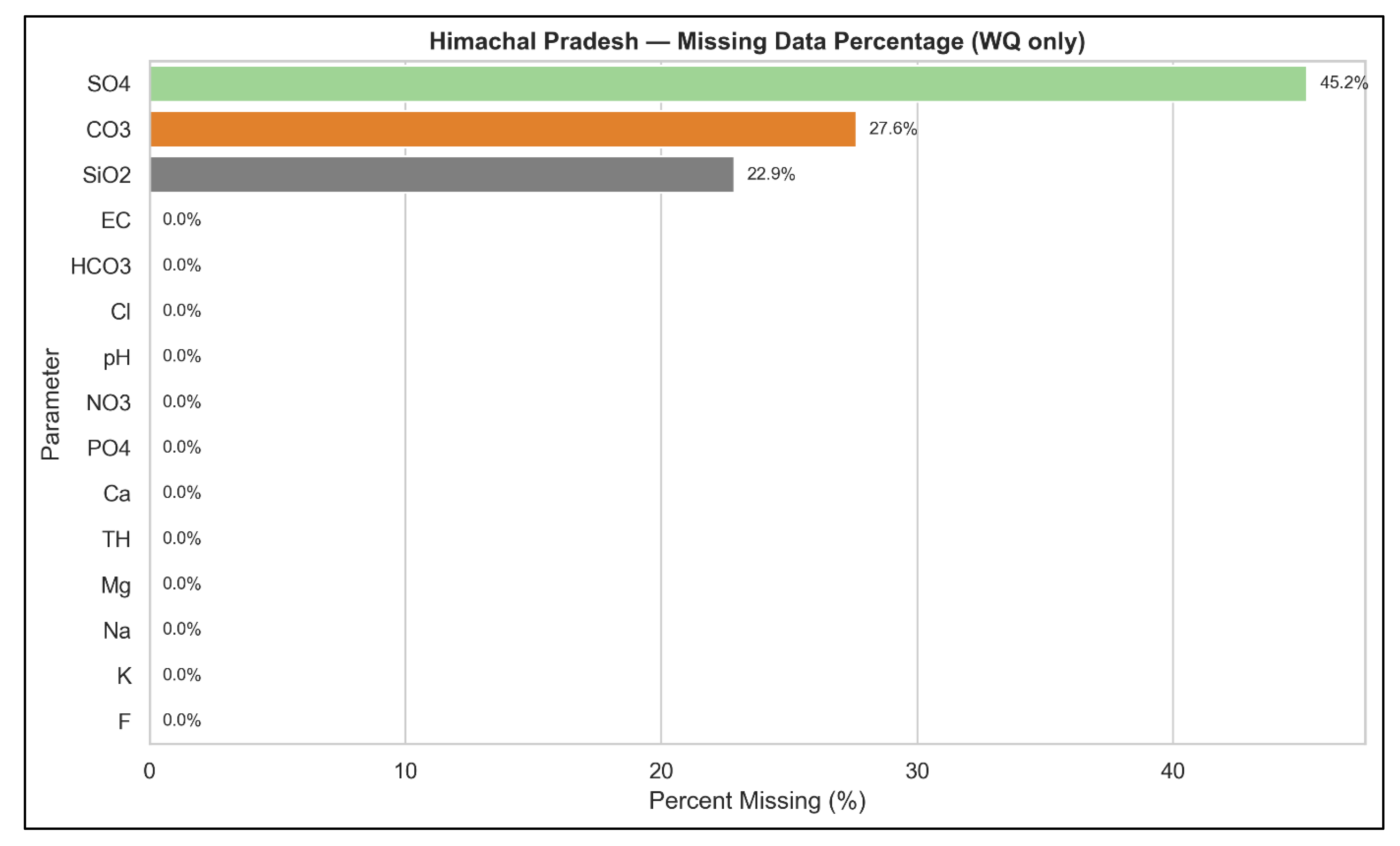
Figure A3.
Percentage of missing groundwater-quality observations across physicochemical parameters in Jammu & Kashmir prior to imputation.
Figure A3.
Percentage of missing groundwater-quality observations across physicochemical parameters in Jammu & Kashmir prior to imputation.
References
- Alao, J.O.; Bello, A.Y.; Lawal, H.A.; Abdullahi, D. Assessment of groundwater challenge and the sustainable management strategies. Results Earth Sci. 2024, 2, 100049. [Google Scholar] [CrossRef]
- Awasthi, A.; Rana, S.; Thakur, A.; Thakur, S.K.; Jaswal, D. Groundwater quality and health risk assessment in the Baddi-Barotiwala-Nalagarh industrial belt of the northwestern Himalayas. Sci. Rep. 2025, 16, 3388. [Google Scholar] [CrossRef] [PubMed]
- Baig, F.; Kassem, A.; Akhter, Z.; Kabeer, S.; Faiz, M.A.; Baig, M.F.; Sherif, M. Synergies and struggles: Water security and climate action in South Asia’s quest for SDG 6 and SDG 13. Gondwana Res. 2025, 148, 393–414. [Google Scholar] [CrossRef]
- Banerjee, P.; Ghose, M.K.; Pradhan, R. AHP-based spatial analysis of water quality impact assessment due to change in vehicular traffic caused by highway broadening in Sikkim Himalaya. Appl. Water Sci. 2018, 8, 72. [Google Scholar] [CrossRef]
- Berhanu, K.G.; Lohani, T.K.; Hatiye, S.D. Spatial and seasonal groundwater quality assessment for drinking suitability using index and machine learning approach. Heliyon 2024, 10, e30362. [Google Scholar] [CrossRef]
- Bhat, S.U.; Mushtaq, S.; Qayoom, U.; Sabha, I. Water quality scenario of Kashmir Himalayan springs—a case study of Baramulla district, Kashmir valley. Water Air Soil. Pollut. 2020, 231, 454. [Google Scholar] [CrossRef]
- Bhattarai, N.; Lobell, D.B.; Balwinder-Singh; Fishman, R.; Kustas, W.P.; Pokhrel, Y.; Jain, M. Warming temperatures exacerbate groundwater depletion rates in India. Sci. Adv. 2023, 9, eadi1401. [Google Scholar] [CrossRef]
- Bouselsal, B.; Satouh, A.; Egbueri, J.C.; Hashim, M.A.; Arafat, A.A.; Paramasivam, P.; Alzaed, A.; Hussein, E.E. Groundwater for drinking and sustainable agriculture and public health hazards of nitrate: Developmental and sustainability implications for an arid aquifer system. Results Eng. 2025, 25, 104160. [Google Scholar] [CrossRef]
- Brown, R.M.; McClelland, N.I.; Deininger, R.A.; O’Connor, M.F. A Water Quality Index—Crossing the Psychological Barrier. In Proceedings of the International Conference on Water Pollution Research, Jerusalem, Israel, 18–24 June 1972; Volume 6, pp. 787–797. [Google Scholar]
- Carrard, N.; Foster, T.; Willetts, J. Groundwater as a source of drinking water in southeast Asia and the Pacific: A multi-country review of current reliance and resource concerns. Water 2019, 11, 1605. [Google Scholar] [CrossRef]
- Chand, D.; Lata, R.; Rathore, S.; Singh, R.K. Assessment of Springs’ Water Quality Using Weighted Arithmetic Index in High-Altitude Areas of Chuhar Valley, Northwestern Himalaya, India. In Land and Water Nexus in South Asia: Exploring the Interplay of Resources; Springer Nature: Cham; Cham, Switzerland, 2025; pp. 369–385. [Google Scholar]
- Arifullah; Changsheng, H.; Akram, W.; Rashid, A.; Ullah, Z.; Shah, M.; Alrefaei, A.F.; Kamel, M.; Aleya, L.; Abdel-Daim, M.M. Quality Assessment of Groundwater Based on Geochemical Modelling and Water Quality Index (WQI). Water 2022, 14, 3888. [Google Scholar] [CrossRef]
- Chhimwal, M.; Kaur, S.; Srivastava, R.K.; Hagare, D.; Prasad, H.J.S. Water quality of springs and lakes in the Kumaon Lesser Himalayan Region of Uttarakhand, India. J. Water Heal. 2022, 20, 737–754. [Google Scholar] [CrossRef]
- Chorol, L.; Gupta, S.K. Hydrochemical investigation of groundwater in a trans-Himalayan region of Ladakh, India, using geochemical modelling and entropy technique. Environ. Geochem. Heal. 2023, 45, 6567–6583. [Google Scholar] [CrossRef] [PubMed]
- Dar, T.; Rai, N.; Jahan, A.; Bhat, M.A.; Kumar, S. An integrated geochemical and hydrological approach for the conceptualization of surface-water/groundwater interactions in a transboundary river basin of the western Himalayas. Geosci. Front. 2025, 17, 102203. [Google Scholar] [CrossRef]
- Das, B.D.; Choudhary, S.K. Application of Water Quality Index (WQI) for groundwater quality assessment of Biratnagar, Nepal. Our Nat. 2021, 19, 54–61. [Google Scholar] [CrossRef]
- Dass, B.; Rao, M.S.; Sen, S. Hydrogeochemical characterization and water quality assessment of mountain springs: Insights for strategizing water management in the lesser Indian Himalayas. J. Hydrol. Reg. Stud. 2025, 57, 102126. [Google Scholar] [CrossRef]
- Deep, A.; Gupta, V.; Bisht, L.; Kumar, R. Application of WQI for water quality assessment of high-altitude snow-fed sacred Lake Hemkund, Garhwal Himalaya. Sustain. Water Resour. Manag. 2020, 6, 89. [Google Scholar] [CrossRef]
- Dimri, D.; Daverey, A.; Kumar, A.; Sharma, A. Monitoring water quality of River Ganga using multivariate techniques and WQI (Water Quality Index) in Western Himalayan region of Uttarakhand, India. Environ. Nanotechnol. Monit. Manag. 2021, 15, 100375. [Google Scholar] [CrossRef]
- Dutta, N.; Thakur, B.K.; Nurujjaman, M.; Debnath, K.; Bal, D.P. An assessment of the water quality index (WQI) of drinking water in the Eastern Himalayas of South Sikkim, India. Groundw. Sustain. Dev. 2022, 17, 100735. [Google Scholar] [CrossRef]
- Gani, A.; Pathak, S.; Hussain, A.; Ahmed, S.; Singh, R.; Khevariya, A.; Banerjee, A.; Ayyamperumal, R.; Bahadur, A. Water quality index assessment of river Ganga at Haridwar stretch using multivariate statistical technique. Mol. Biotechnol. 2025, 67, 3130–3153. [Google Scholar] [CrossRef] [PubMed]
- Giri, A.; Bharti, V.K.; Kalia, S.; Kumar, K.; Khansu, M. Hydrochemical and quality assessment of irrigation water at the trans-himalayan high-altitude regions of Leh, Ladakh, India. Appl. Water Sci. 2022, 12, 197. [Google Scholar] [CrossRef]
- Guo, X.; Zuo, R.; Meng, L.; Wang, J.; Teng, Y.; Liu, X.; Chen, M. Seasonal and spatial variability of anthropogenic and natural factors influencing groundwater quality based on source apportionment. Int. J. Environ. Res. Public Health 2018, 15, 279. [Google Scholar] [CrossRef]
- Hamal, S.; Bist, R.; Pant, B.; Adhikari, B. Water quality index and human health risk assessment for heavy metals in groundwater of Bedkot Municipality, Kanchanpur, Nepal: A cross-sectional study. EQA-Int. J. Environ. Qual. 2025, 69, 73–86. [Google Scholar]
- Haque, S.; Kannaujiya, S.; Taloor, A.K.; Keshri, D.; Bhunia, R.K.; Ray, P.K.C.; Chauhan, P. Identification of groundwater resource zone in the active tectonic region of Himalaya through earth observatory techniques. Groundw. Sustain. Dev. 2020, 10, 100337. [Google Scholar] [CrossRef]
- Hinge, G.; Bharali, B.; Baruah, A.; Sharma, A. Integrated groundwater quality analysis using Water Quality Index, GIS and multivariate technique: A case study of Guwahati City. Environ. Earth Sci. 2022, 81, 412. [Google Scholar] [CrossRef]
- Hussein, E.E.; Derdour, A.; Zerouali, B.; Almaliki, A.; Wong, Y.J.; Santos, M.B.-D.L.; Ngoc, P.M.; Hashim, M.A.; Elbeltagi, A. Groundwater quality assessment and irrigation water quality index prediction using machine learning algorithms. Water 2024, 16, 264. [Google Scholar] [CrossRef]
- Kouser, B.; Bala, A.; Verma, O.; Prashanth, M.; Khosla, A.; Pir, R.A. Hydrochemistry for the assessment of groundwater quality in the Kathua region, Jammu and Kashmir, India. Appl. Water Sci. 2022, 12, 143. [Google Scholar] [CrossRef]
- Kumar, R.; Singh, S.; Sharma, R.C. Application of WQI for assessment of water quality of high-altitude lake Dodi Tal, Garhwal Himalaya, India. Sustain. Water Resour. Manag. 2019, 5, 1033–1042. [Google Scholar] [CrossRef]
- Masood, A.; Aslam, M.; Pham, Q.B.; Khan, W.; Masood, S. Integrating water quality index, GIS and multivariate statistical techniques towards a better understanding of drinking water quality. Environ. Sci. Pollut. Res. 2022, 29, 26860–26876. [Google Scholar] [CrossRef] [PubMed]
- Mir, R.A.; Lone, K.A. A recent scenario of groundwater quality in Kashmir, Northwest Himalaya, India. In Bioremediation and Biotechnology; Springer International Publishing: Cham; Cham, Switzerland, 2020; Vol 4, pp. 39–63. [Google Scholar]
- Mohapatra, P.; Paul, J.C.; Das, D.M.; Sahu, A.P.; Raul, S.K.; Singh, L.K.; Devi, S.R.; Singha, A.K.; Mohanty, A.K. Spatial analysis of groundwater quality and potential for irrigation using hydrogeological and water quality parameters: Insights from Bargarh Canal command area. Front. Water 2026, 7, 1674770. [Google Scholar] [CrossRef]
- Nayak, A.; Matta, G.; Uniyal, D.P. Hydrochemical characterization of groundwater quality using chemometric analysis and water quality indices in the foothills of Himalayas. Environ. Dev. Sustain. 2022, 25, 14229–14260. [Google Scholar] [CrossRef]
- Negi, R.S.; Negi, J.S.; Prasad, M.; Singh, K.P. Groundwater Quality Assessment in the Foothills of the Kumaun Himalaya, India. Water Environ. Res. 2025, 97, e70139. [Google Scholar] [CrossRef]
- Pandey, K.; Kumar, S.; Malik, A.; Kuriqi, A. Artificial Neural Network Optimized with a Genetic Algorithm for Seasonal Groundwater Table Depth Prediction in Uttar Pradesh, India. Sustainability 2020, 12, 8932. [Google Scholar] [CrossRef]
- Panjla, R.; Mahajan, A.K.; Pandey, S.; Kumar, P. Hydrochemistry and quality assessment of groundwater around Jawalamukhi Region, Himachal Pradesh, Northwest Himalaya, India. Environ. Sci. Pollut. Res. 2025, 32, 28784–28810. [Google Scholar] [CrossRef] [PubMed]
- Piyathilake, I.D.U.H.; Ranaweera, L.V.; Udayakumara, E.P.N.; Gunatilake, S.K.; Dissanayake, C.B. Assessing groundwater quality using the Water Quality Index (WQI) and GIS in the Uva Province, Sri Lanka. Appl. Water Sci. 2022, 12, 72. [Google Scholar] [CrossRef]
- Pundir, S.; Kandari, V.; Singh, P.; Singh, R.; Siddique, M.A. Assessment of groundwater quality of Dehradun Valley, Uttarakhand, India, for drinking purposes using multivariate statistical techniques. Environ. Dev. Sustain. 2022, 26, 1749–1779. [Google Scholar] [CrossRef]
- Rajkhowa, R.; Arya, O.P.; Lodhi, M.S. Hydrogeochemical Evaluation of Groundwater in a Micro-Watershed of Ranganadi River Basin in Arunachal Himalaya. Water Resour. 2024, 51, S320–S335. [Google Scholar] [CrossRef]
- Ram, A.; Tiwari, S.K.; Pandey, H.K.; Chaurasia, A.K.; Singh, S.; Singh, Y.V. Groundwater quality assessment using water quality index (WQI) under GIS framework. Appl. Water Sci. 2021, 11, 46. [Google Scholar] [CrossRef]
- Sharma, G.; Lata, R.; Thakur, N.; Bajala, V.; Kuniyal, J.C.; Kumar, K. Application of multivariate statistical analysis and water quality index for quality characterization of Parbati River, Northwestern Himalaya, India. Discov. Water 2021, 1, 5. [Google Scholar] [CrossRef]
- Singh, J.; Pant, M.; Ghoshal, T.; Srivastava, A.L.; Singh, S. Spatio-Seasonal Observations of Water Quality Index, Heavy-Metal Pollution Index and Microbial Contagion in Springs of Lower Indian Himalayan Zone. Environ. Claims J. 2025, 38, 286–321. [Google Scholar] [CrossRef]
- Sridhar, D.; Parimalarenganayaki, S. Review on urban groundwater pollution an Indian perspective: Sources, analysis, and management strategies. Desalin. Water Treat. 2025, 324, 101453. [Google Scholar] [CrossRef]
- Taloor, A.K.; Pir, R.A.; Adimalla, N.; Ali, S.; Manhas, D.S.; Roy, S.; Singh, A.K. Spring water quality and discharge assessment in the Basantar watershed of Jammu Himalaya using geographic information system (GIS) and water quality Index(WQI). Groundw. Sustain. Dev. 2020, 10, 100364. [Google Scholar] [CrossRef]
- Thakur, D.; Bartarya, S.K.; Nainwal, H.C. Groundwater quality assessment of the Soan basin in outer Himalaya, Himachal Pradesh, India. Himal. Geol. 2018, 39, 197–211. [Google Scholar]
- Thakur, N.; Rishi, M.; Sharma, D.A.; Keesari, T. Quality of water resources in Kullu Valley in Himachal Himalayas, India: Perspective and prognosis. Appl. Water Sci. 2018, 8, 20. [Google Scholar] [CrossRef]
- Thapa, B.; Pant, R.R.; Thakuri, S.; Pond, G. Assessment of spring water quality in Jhimruk River watershed, lesser Himalaya, Nepal. Environ. Earth Sci. 2020, 79, 504. [Google Scholar] [CrossRef]
- Verma, S.; Mukherjee, A.; Mahanta, C.; Choudhury, R.; Mitra, K. Influence of geology on groundwater–sediment interactions in arsenic enriched tectono-morphic aquifers of the Himalayan Brahmaputra river basin. J. Hydrol. 2016, 540, 176–195. [Google Scholar] [CrossRef]
Figure 1.
Study area map.
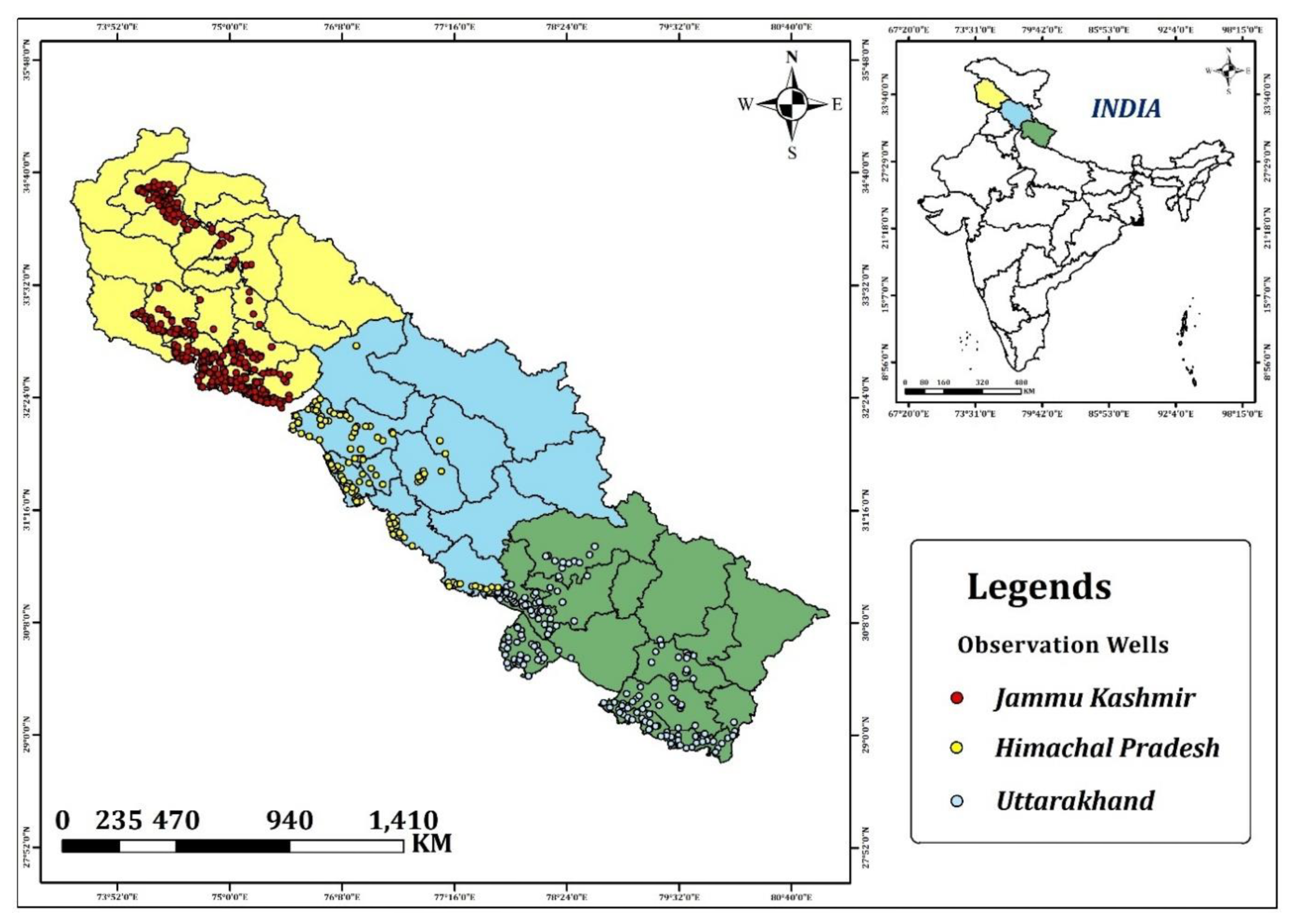
Figure 3.
Distribution of WQI in Uttarakhand.
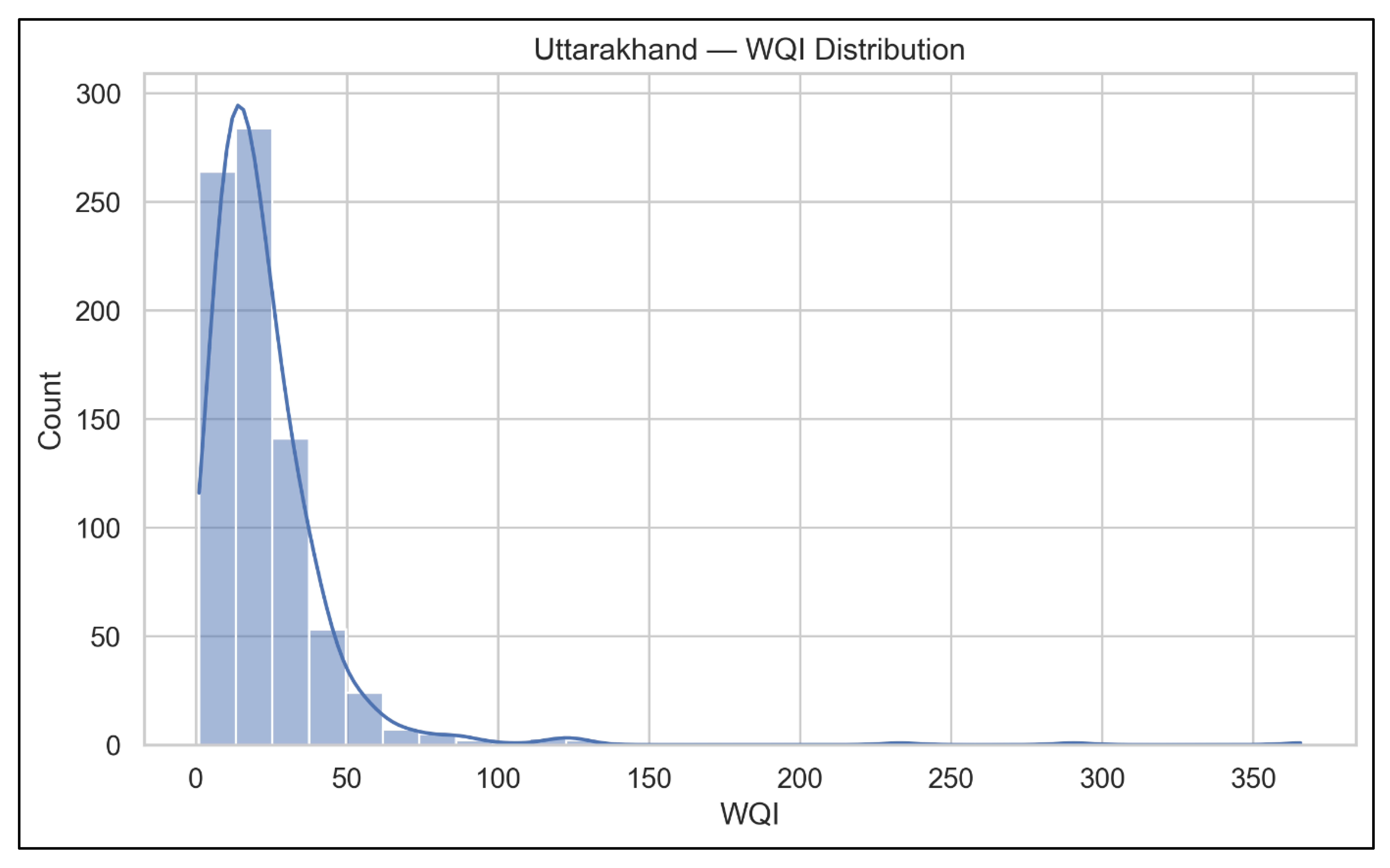
Figure 4.
Distribution of WQI in Himachal Pradesh.
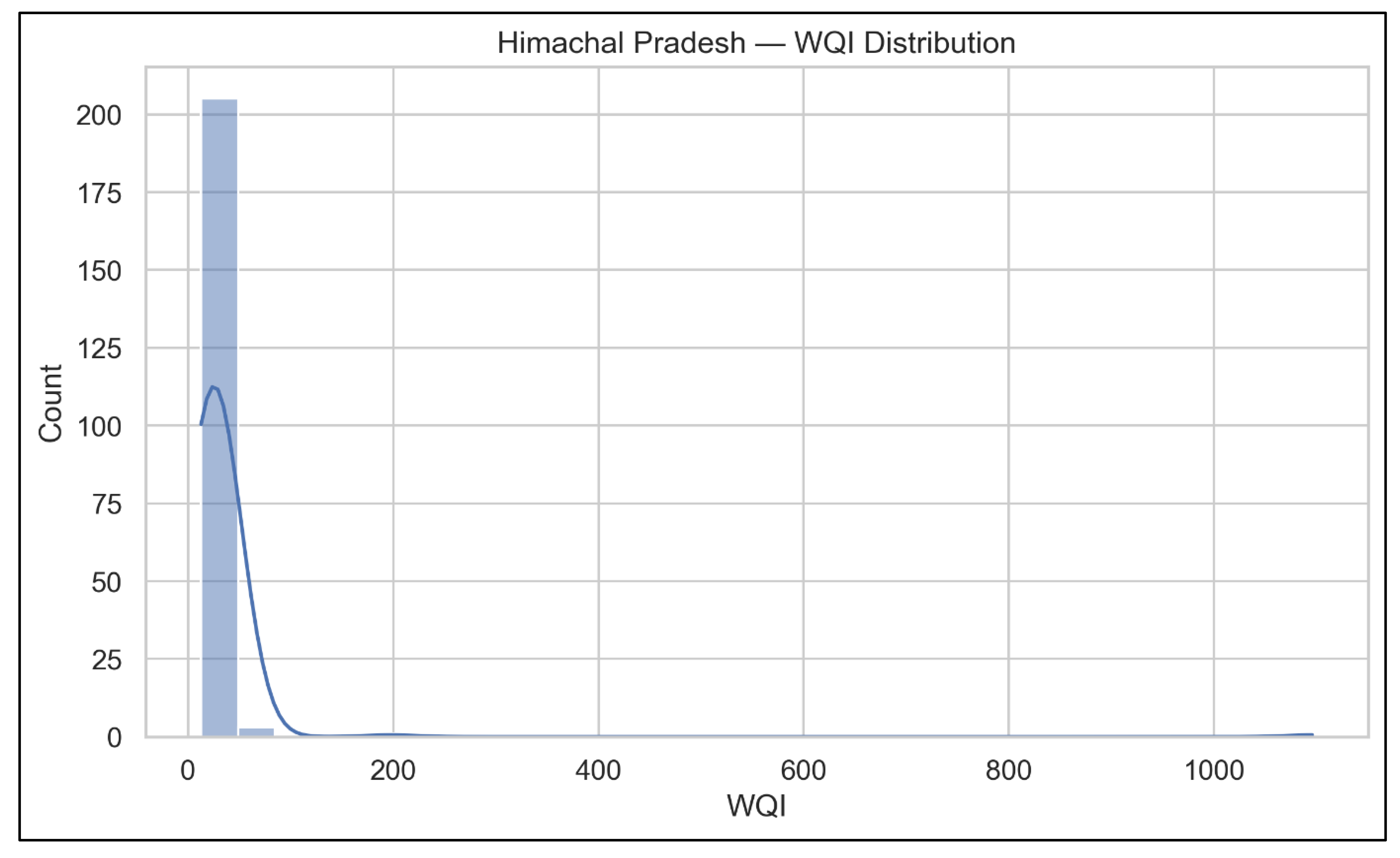
Figure 5.
Distribution of WQI in Jammu & Kashmir.
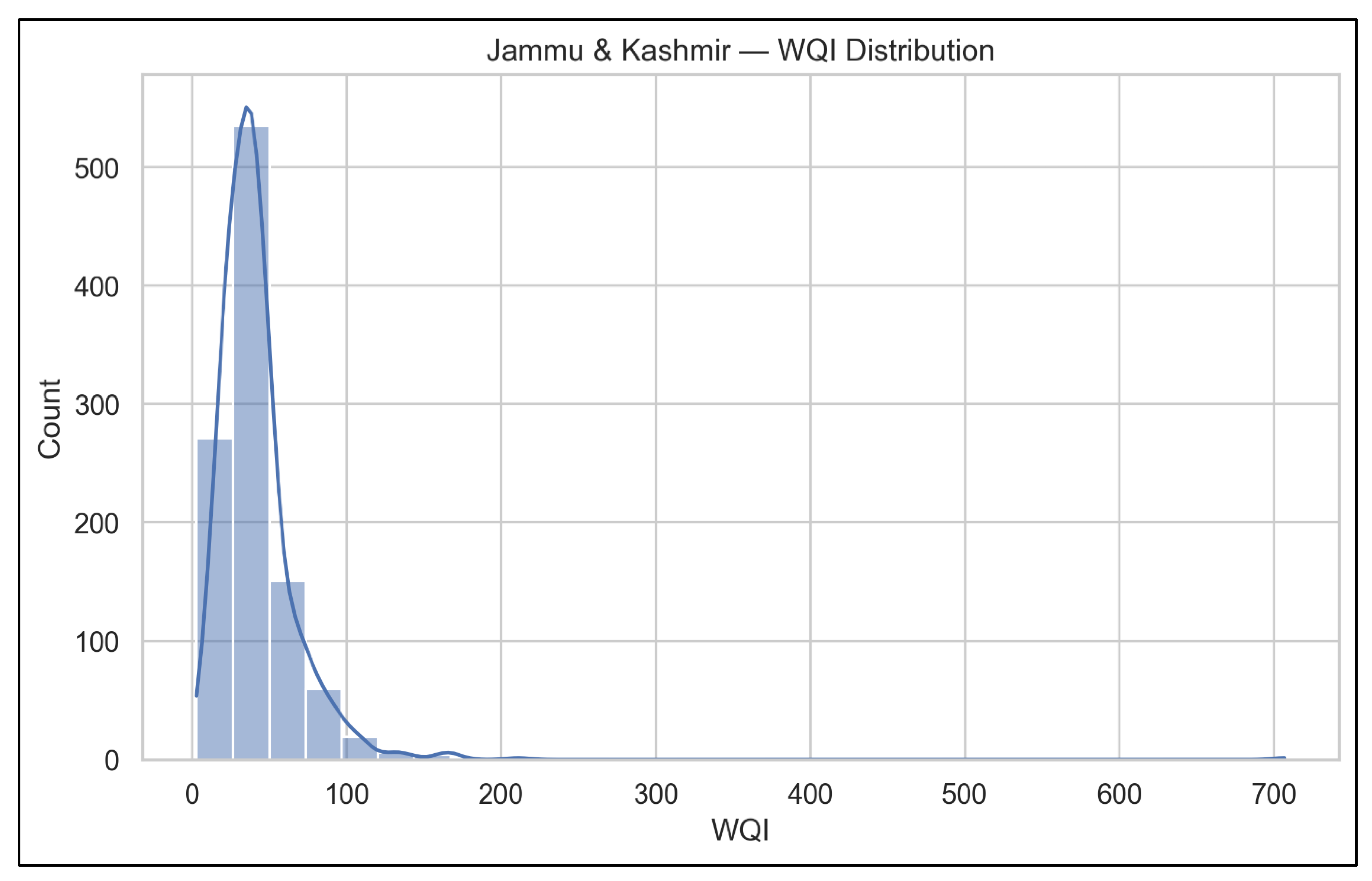
Figure 6.
Classification of WQI in Uttarakhand.
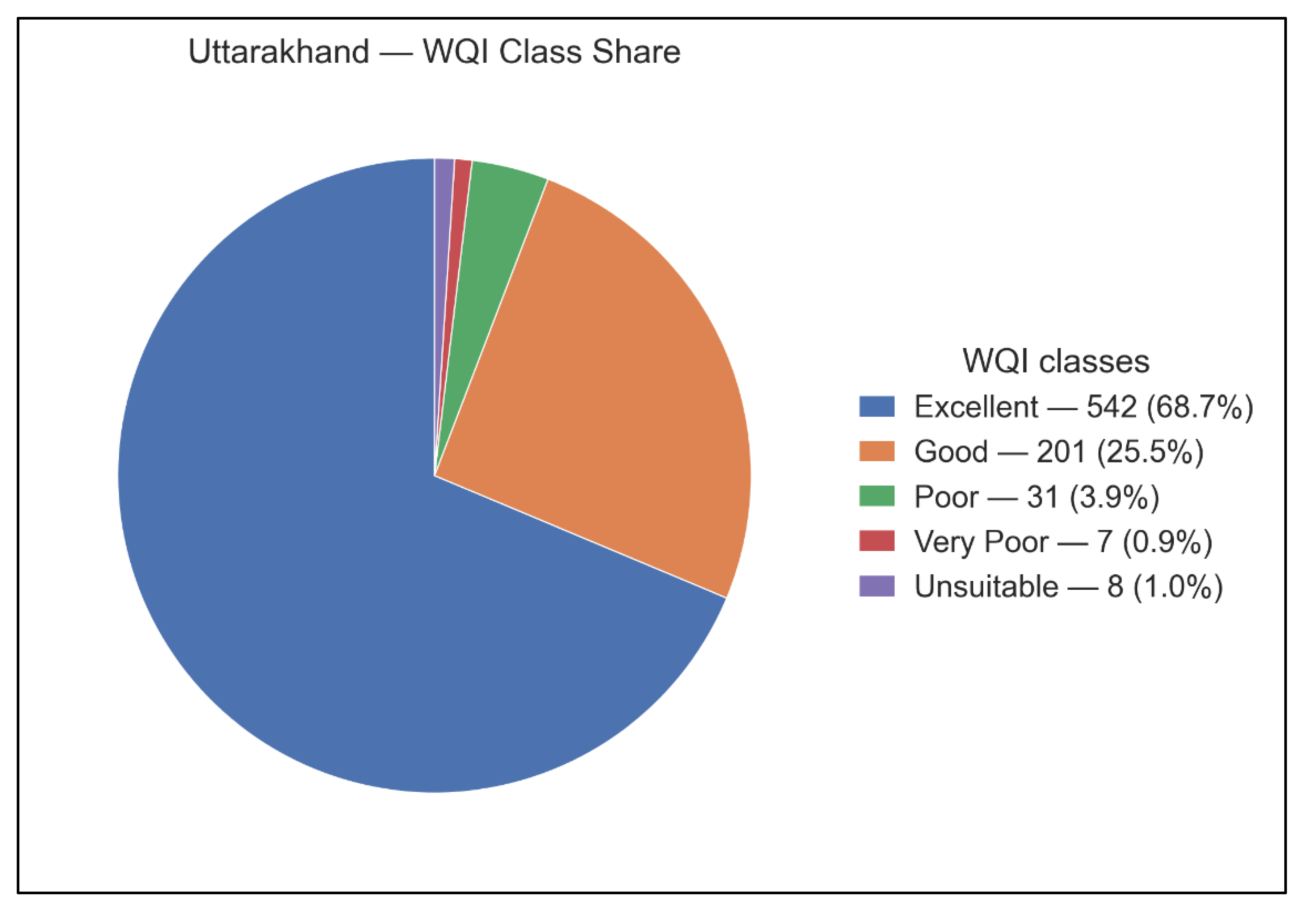
Figure 7.
Classification of WQI in Himachal Pradesh.
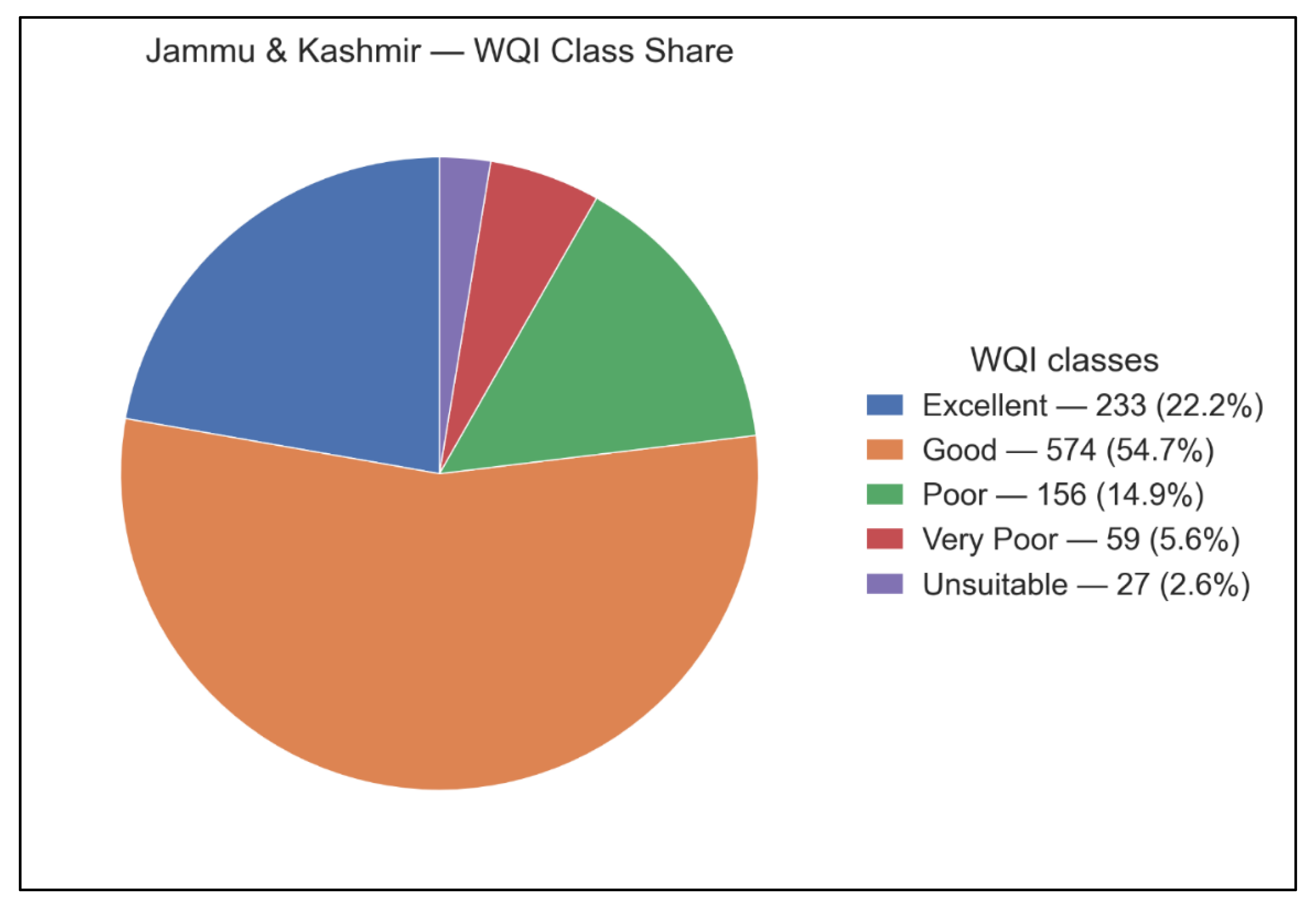
Figure 8.
Classification of WQI in Jammu & Kashmir.
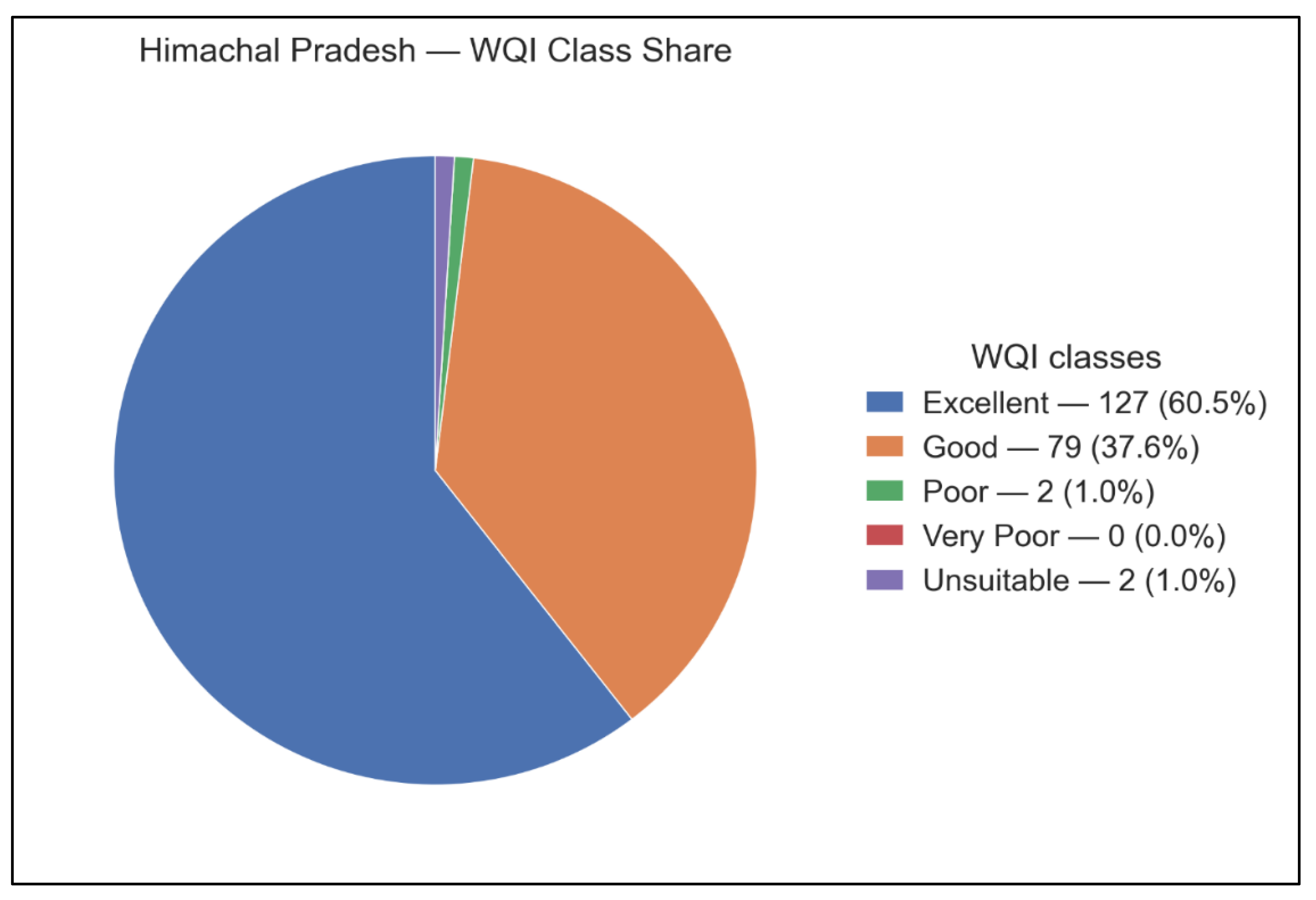
Figure 9.
District-level analysis of WQI in Uttarakhand.
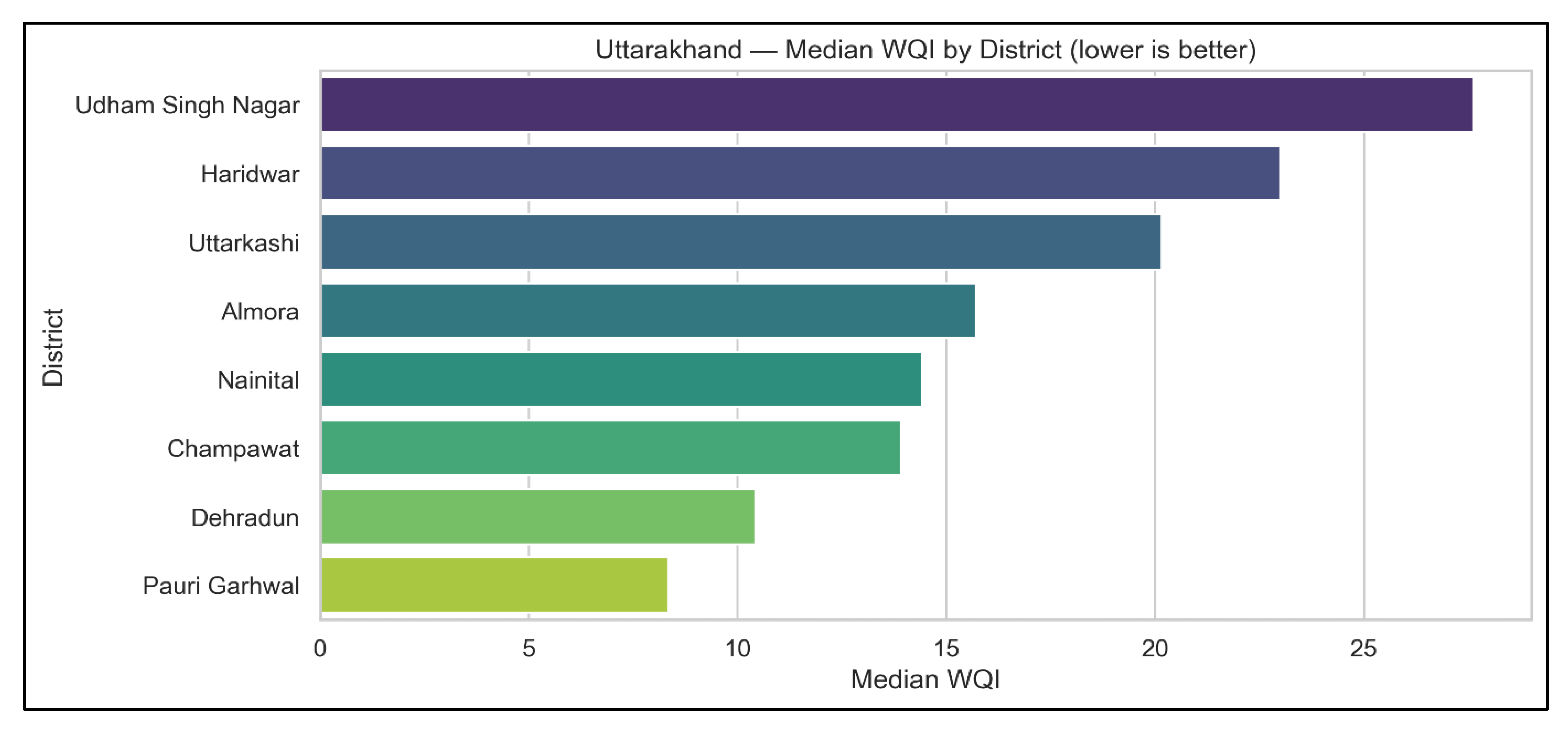
Figure 10.
District-level analysis of WQI in Himachal Pradesh.
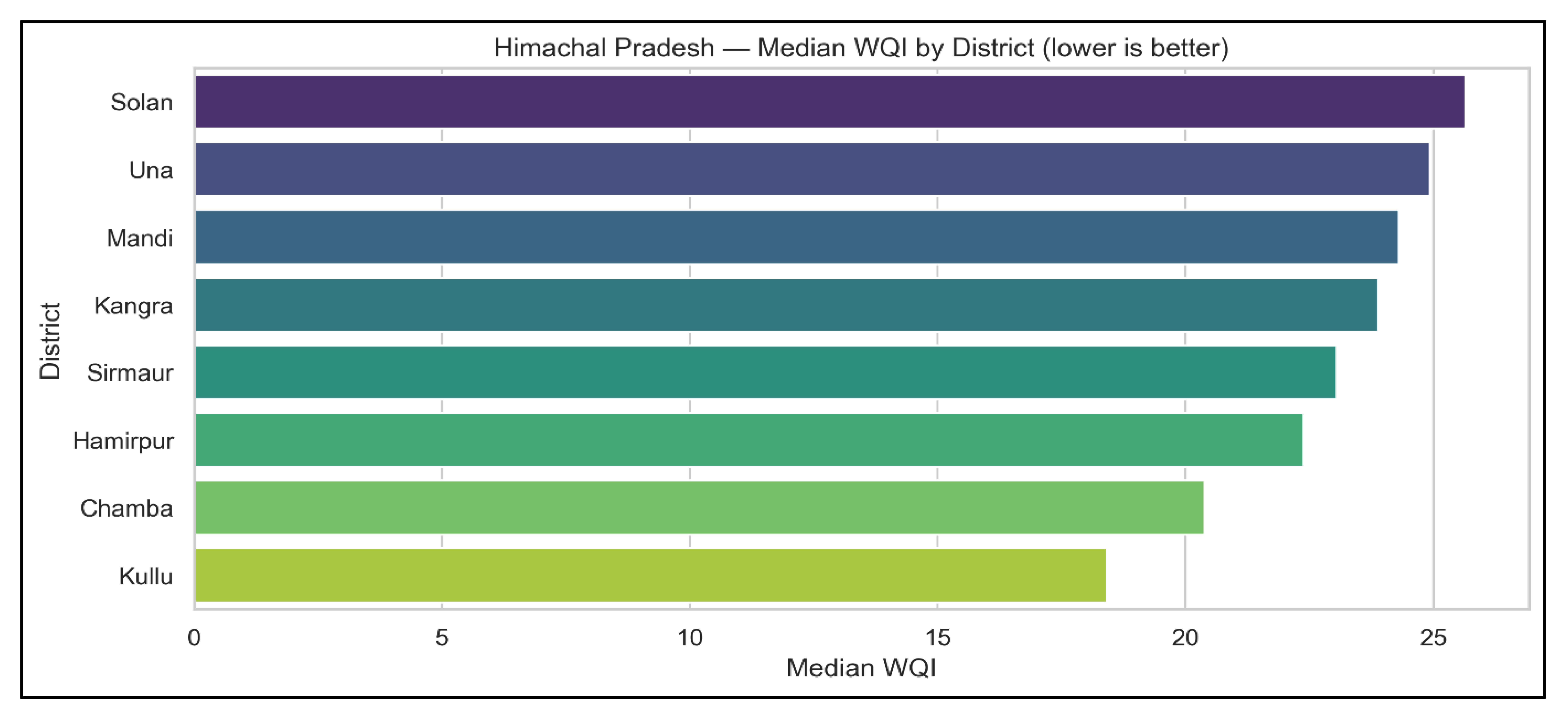
Figure 11.
District-level analysis of WQI in Jammu & Kashmir.
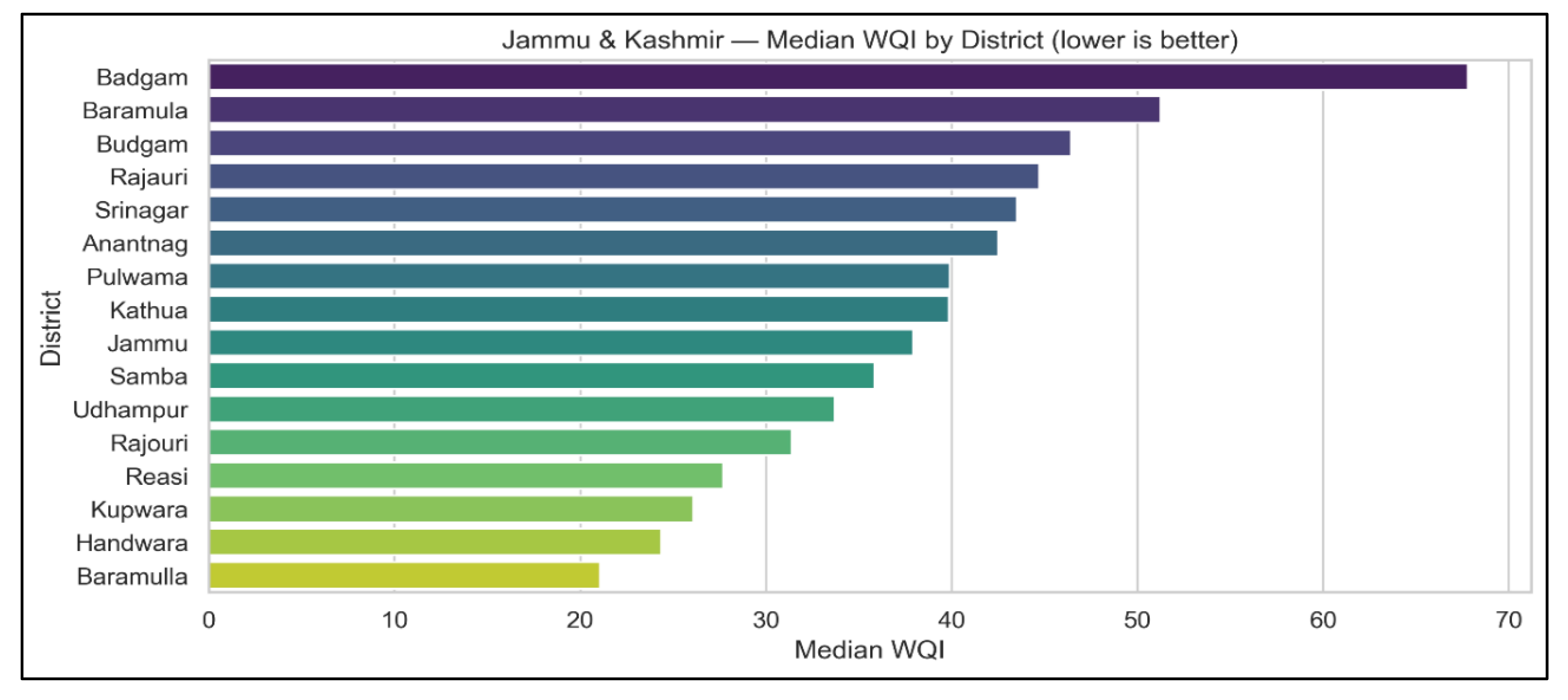
Figure 12.
Boxplot of physicochemical parameters of groundwater in Uttarakhand.
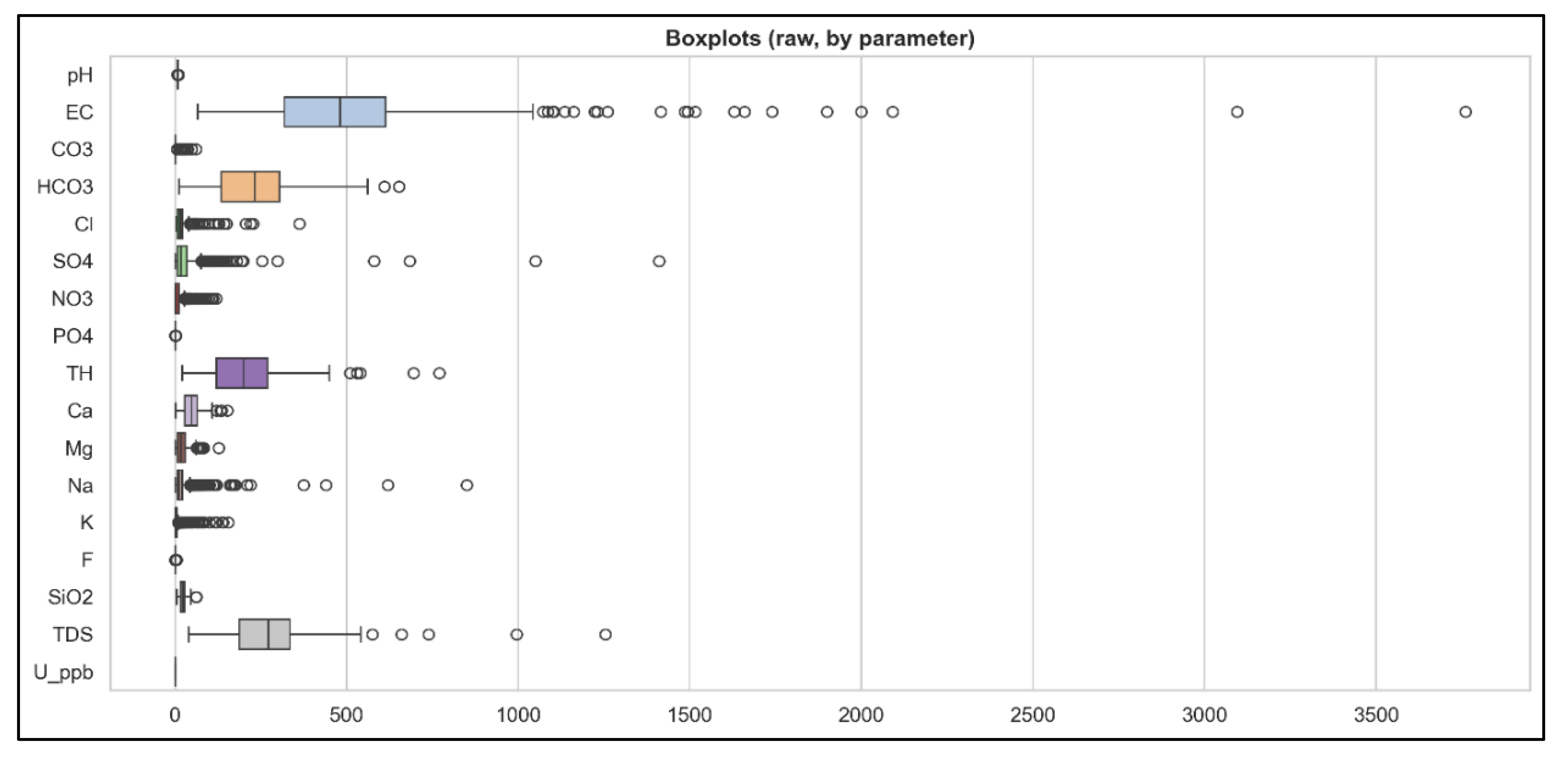
Figure 13.
Boxplot of physicochemical parameters of groundwater in Himachal Pradesh.
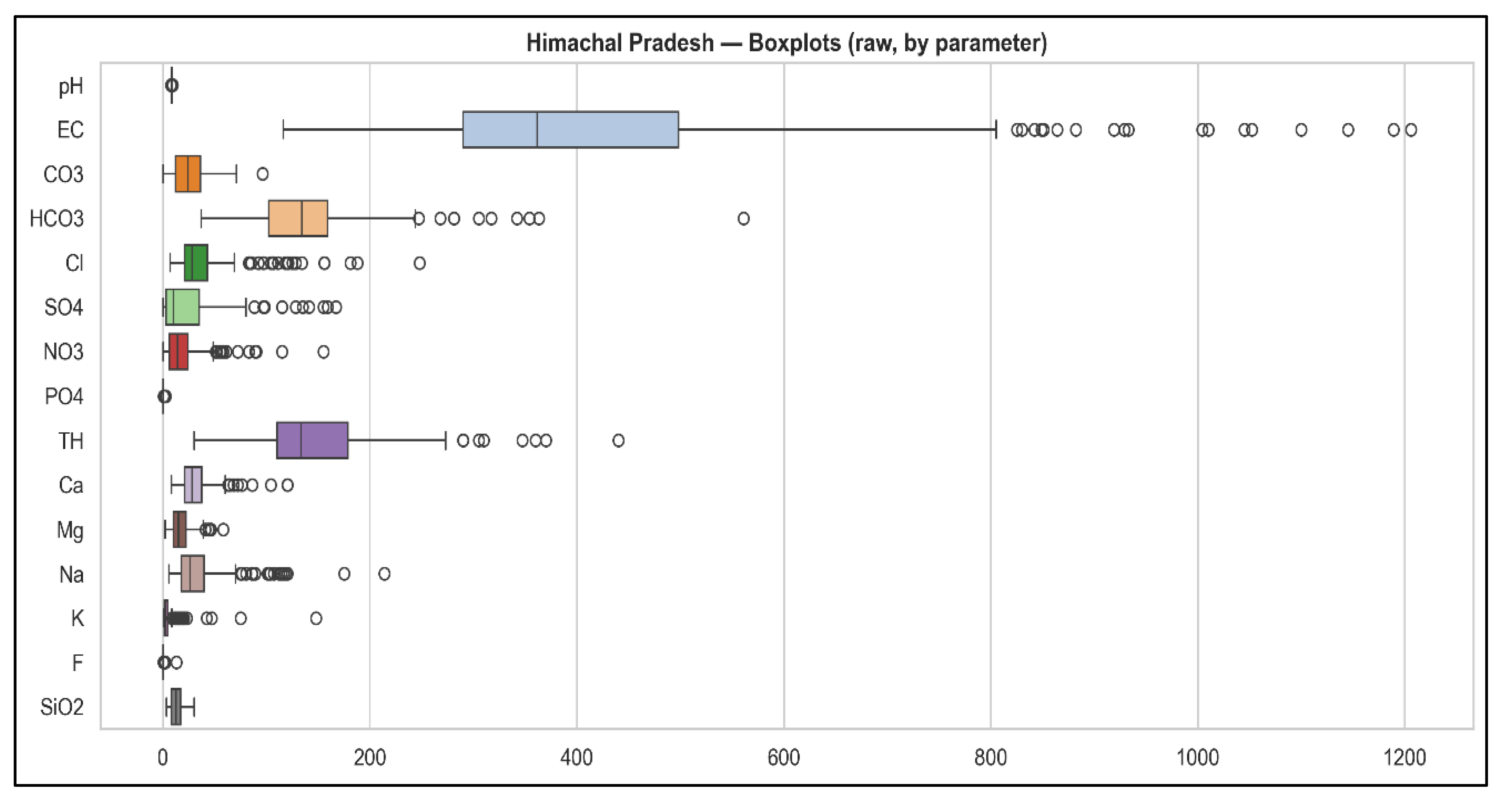
Figure 14.
Boxplot of physicochemical parameters of groundwater in Jammu & Kashmir.
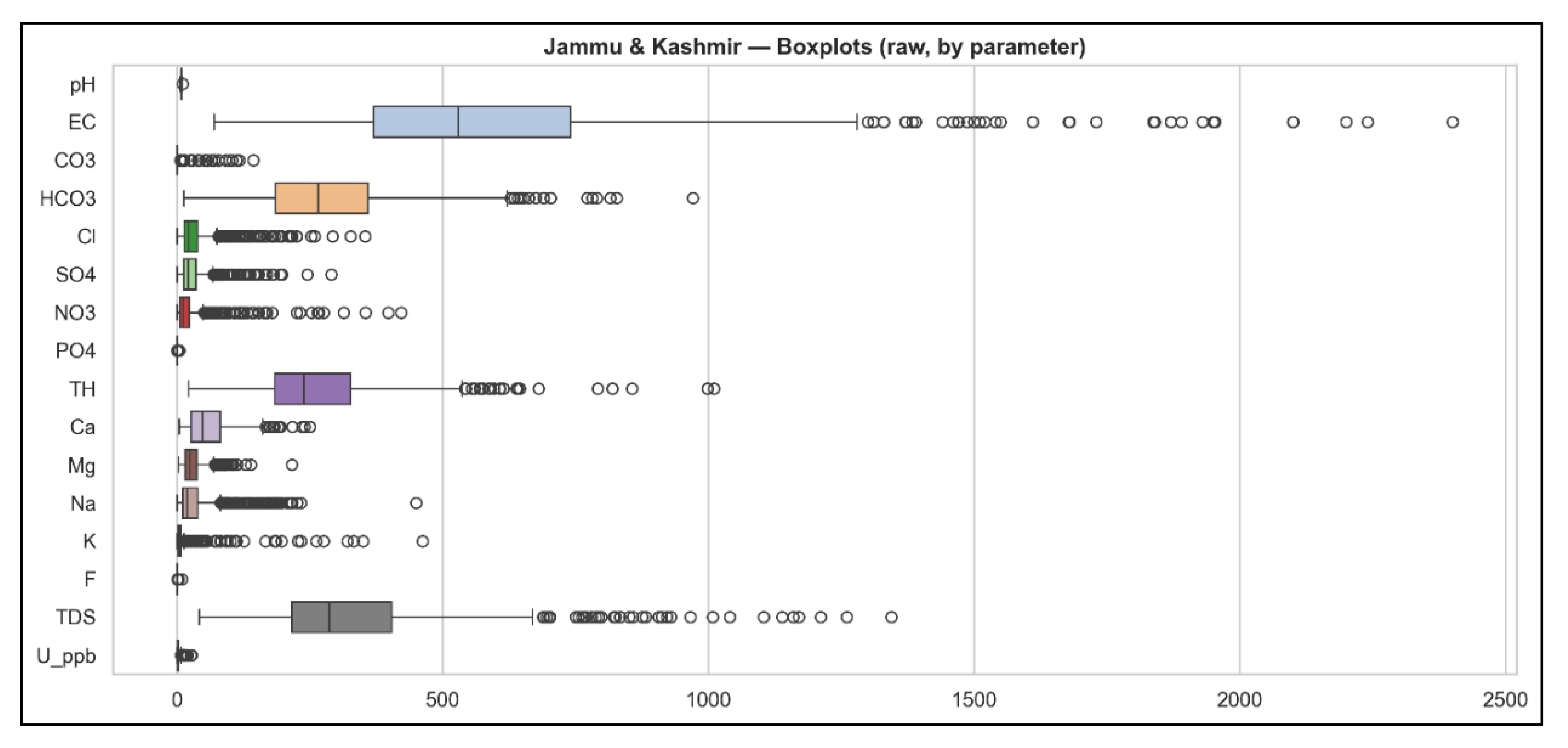
Figure 15.
Pearson correlation matrix of physicochemical parameters of groundwater in Uttarakhand.
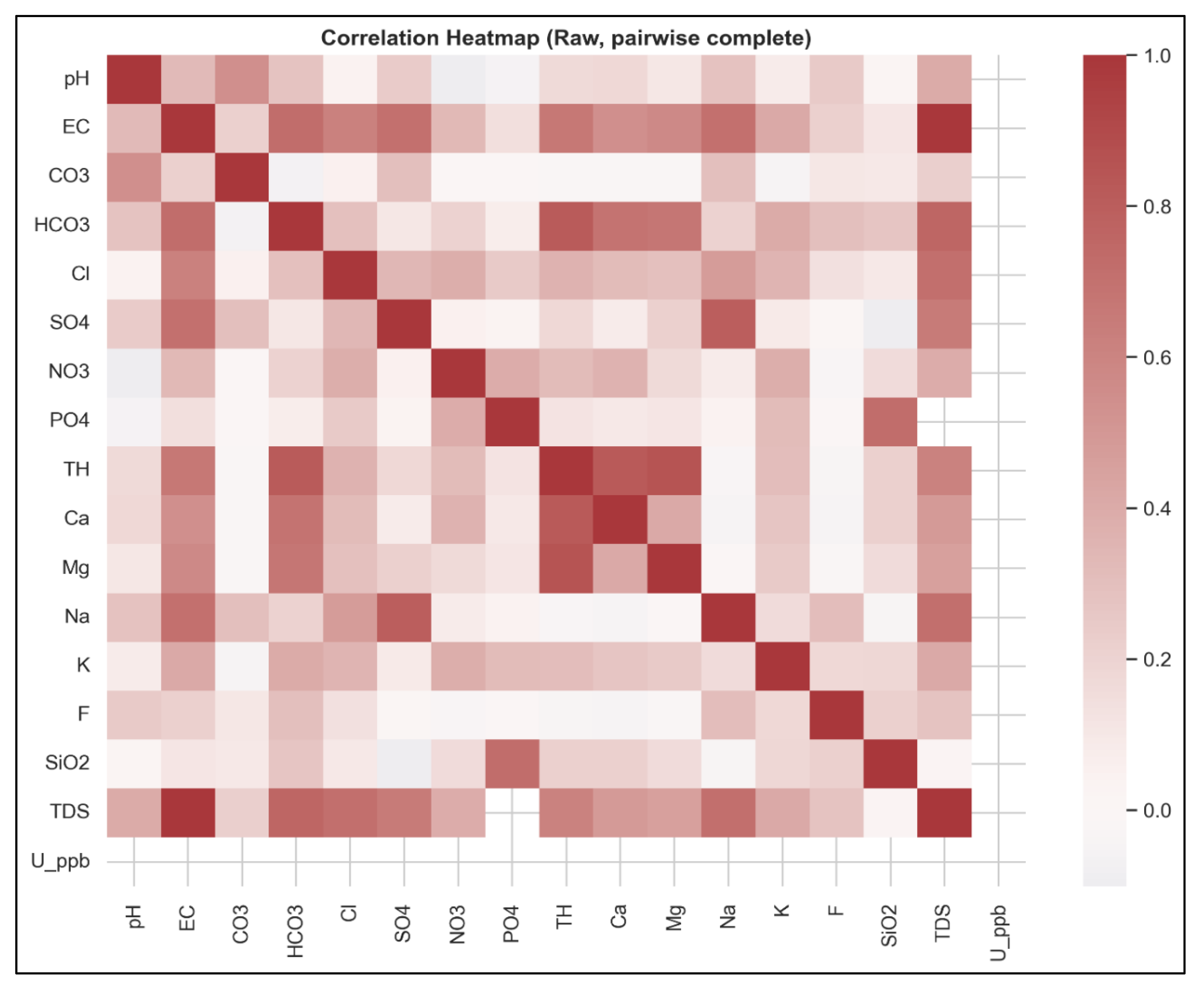
Figure 16.
Pearson correlation matrix of physicochemical parameters of groundwater in Himachal Pradesh.
Figure 16.
Pearson correlation matrix of physicochemical parameters of groundwater in Himachal Pradesh.
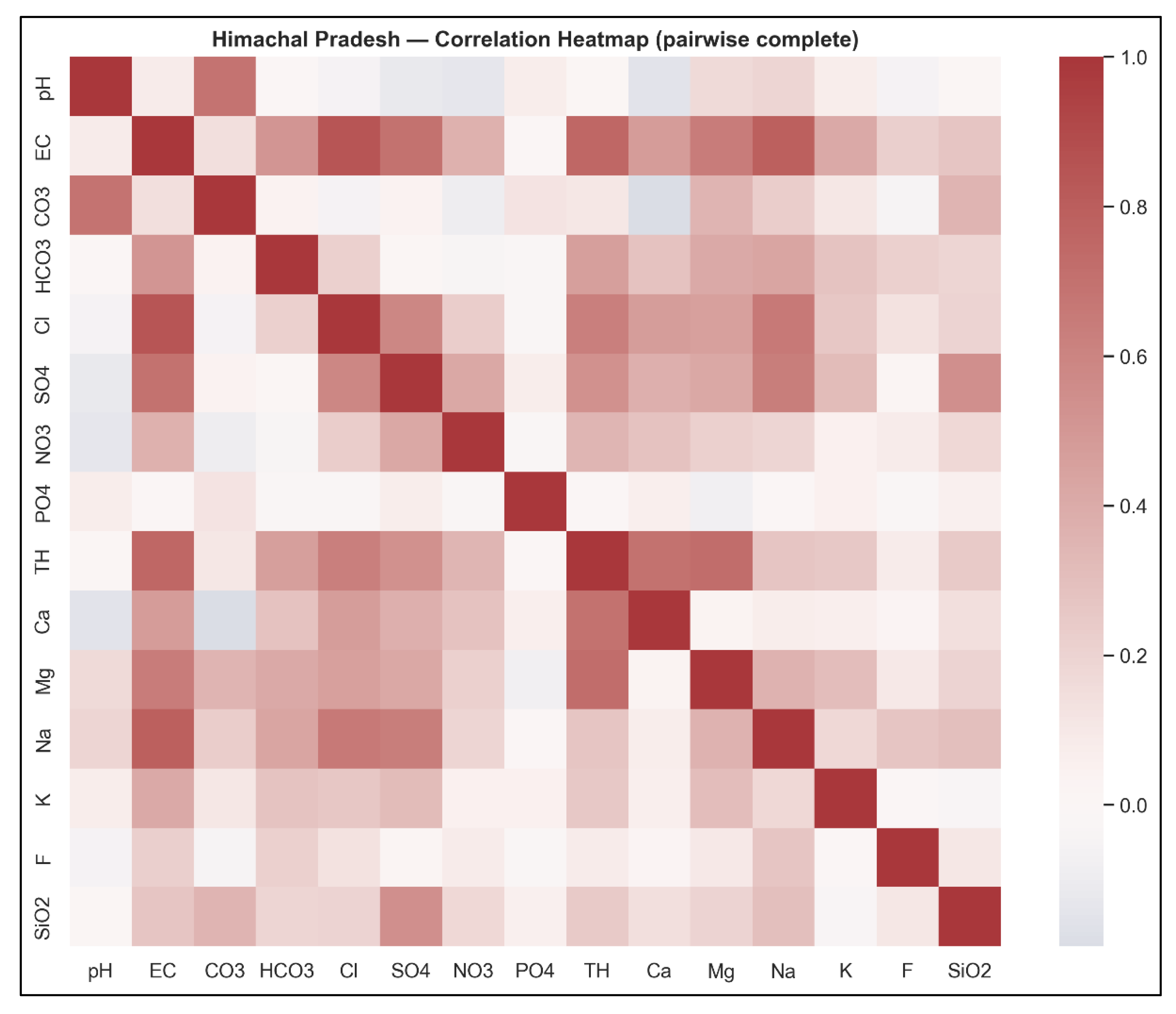
Figure 17.
Pearson correlation matrix of physicochemical parameters of groundwater in.Jammu & Kashmir.
Figure 17.
Pearson correlation matrix of physicochemical parameters of groundwater in.Jammu & Kashmir.
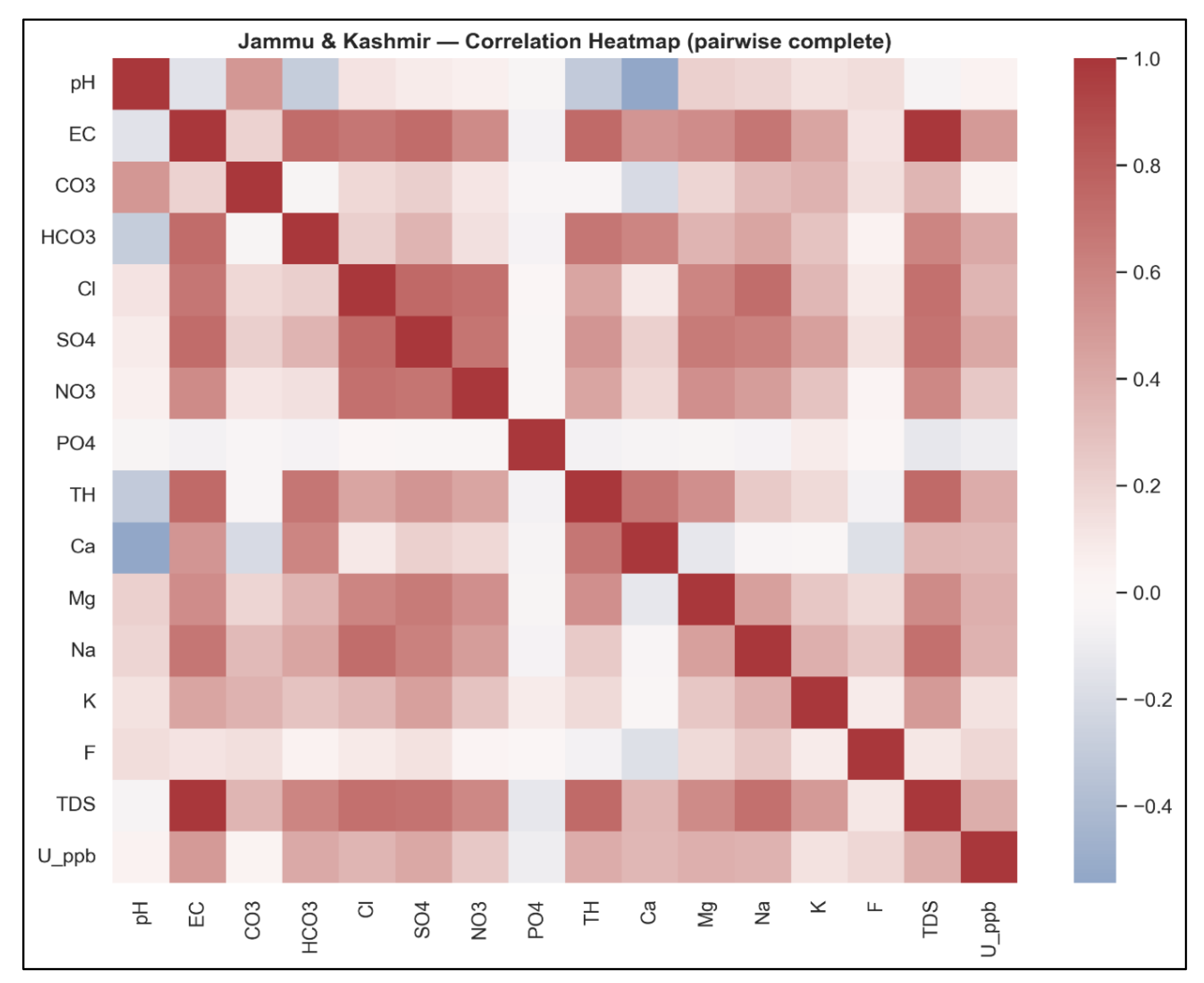
Figure 18.
Spatial variation of groundwater-quality clusters in Uttarakhand.
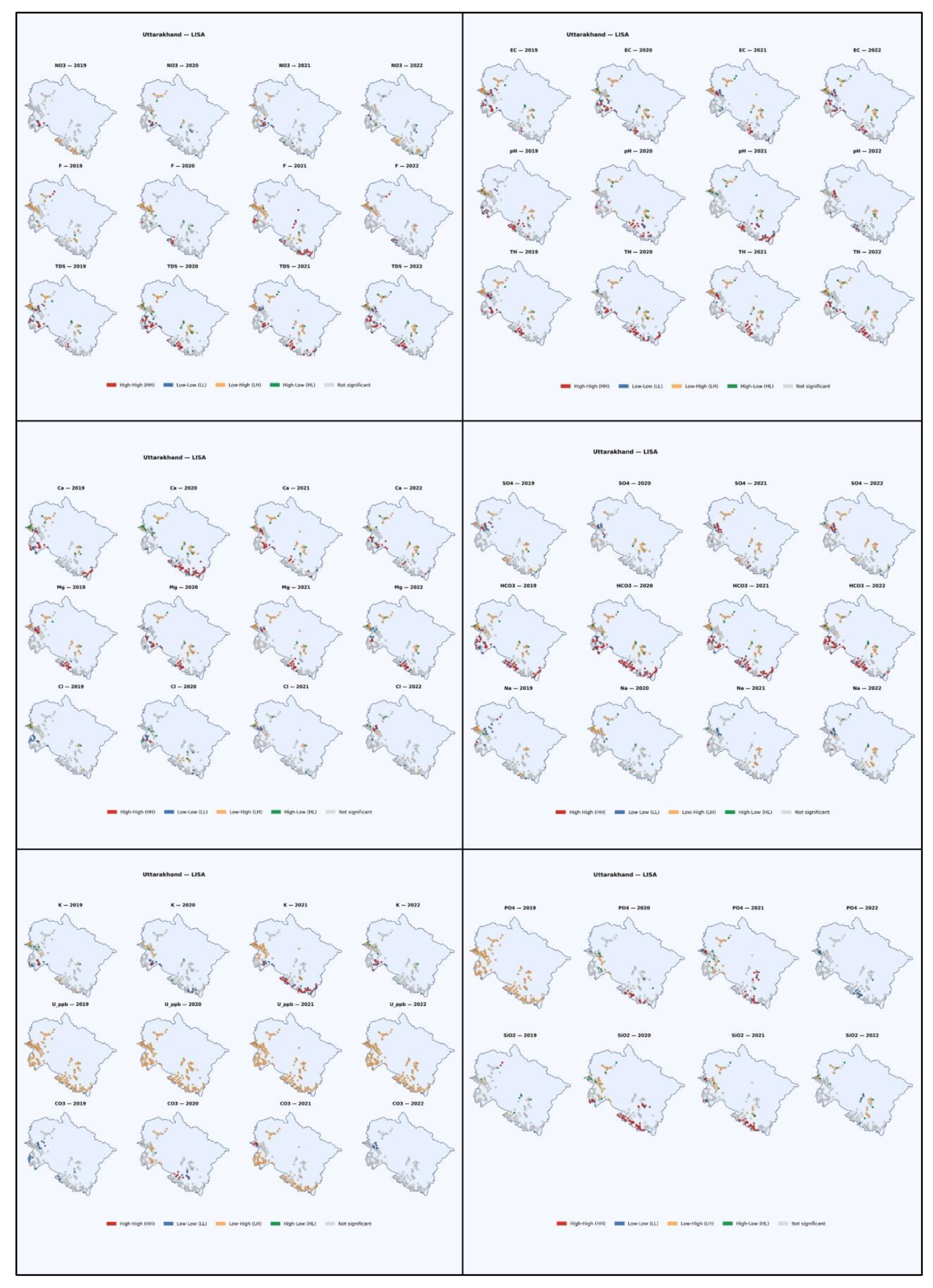
Figure 19.
Spatial variation of groundwater-quality clusters in Himachal Pradesh.
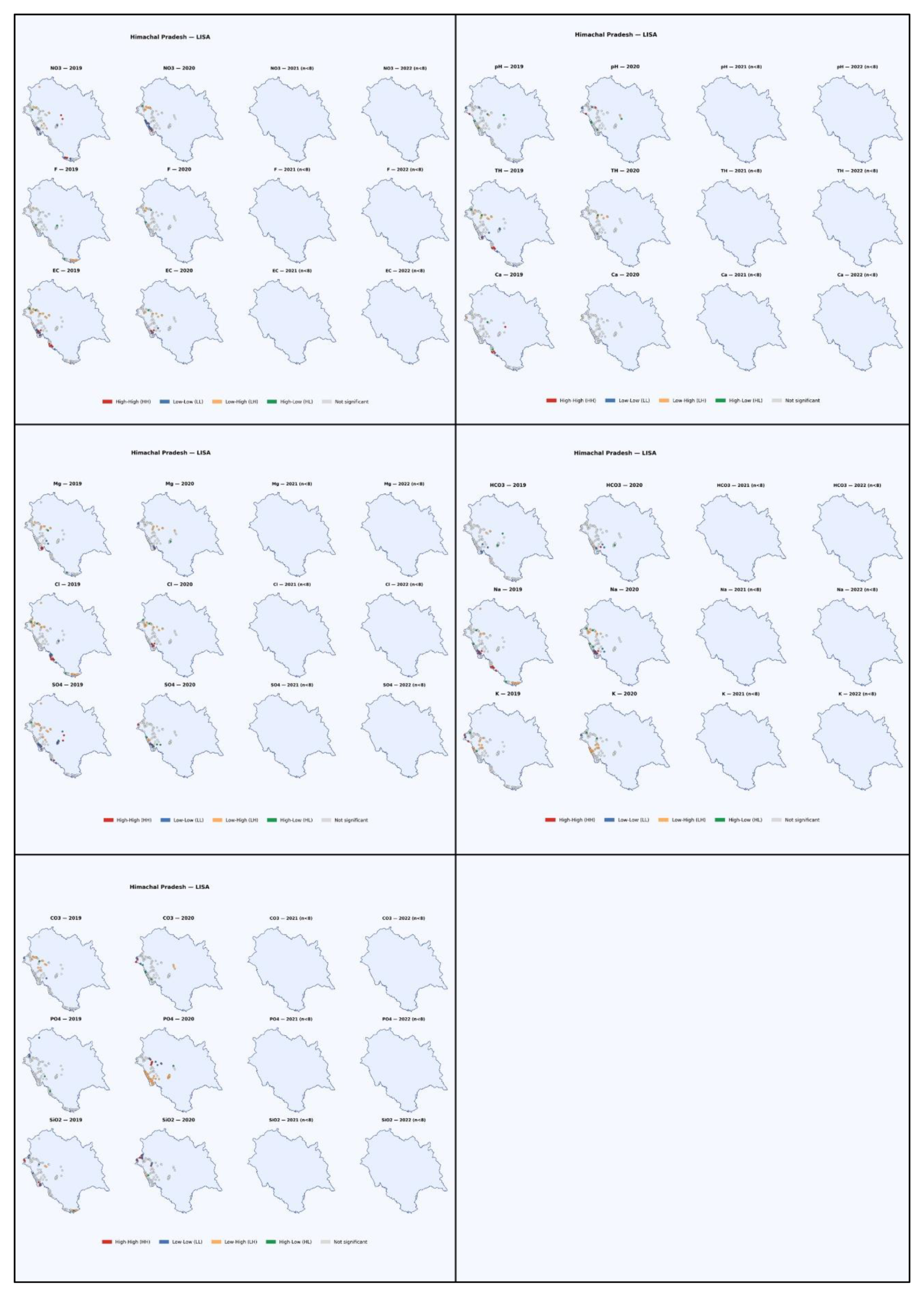
Figure 20.
Spatial variation of groundwater-quality clusters in Jammu & Kashmir.
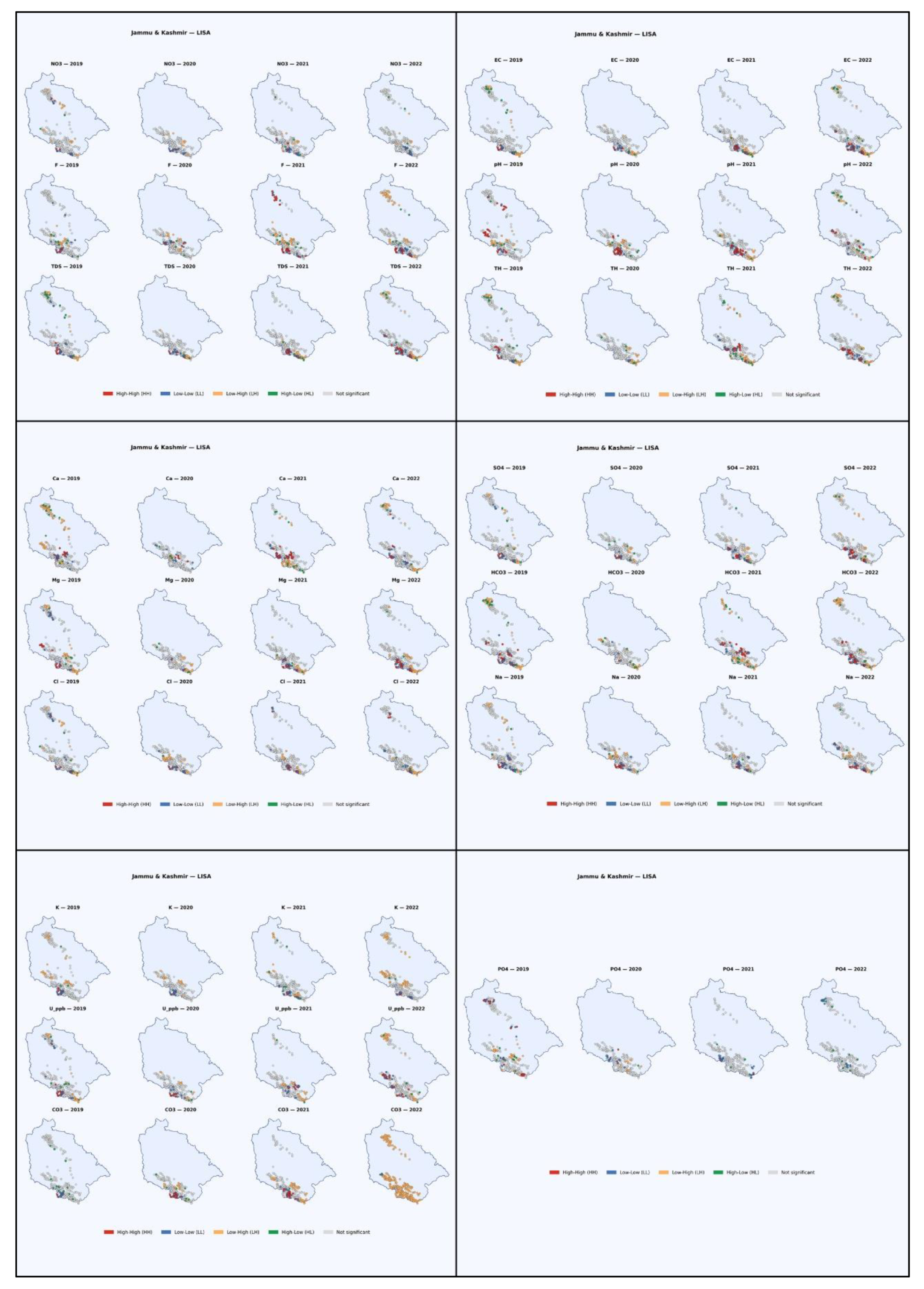

Table 1.
Descriptive statistics of groundwater-quality parameters across the western Himalayan study region.
Table 1.
Descriptive statistics of groundwater-quality parameters across the western Himalayan study region.
| Parameters / Indices | Max | Min | Mean | SD | ||||||||
|---|---|---|---|---|---|---|---|---|---|---|---|---|
| Uttarakhand | Himanchal Pradesh | Jammu and Kashmir | Uttarakhand | Himanchal Pradesh | Jammu and Kashmir | Uttarakhand | Himanchal Pradesh | Jammu and Kashmir | Uttarakhand | Himanchal Pradesh | Jammu and Kashmir | |
| pH | 9.2 | 9.1 | 9.99 | 6.91 | 7.1 | 6.15 | 7.76 | 8.1 | 7.78 | 0.29 | 0.33 | 0.62 |
| EC (µS/cm) | 2091 | 1145 | 2100 | 65 | 142 | 70 | 458.29 | 431.5 | 492.5 | 249.27 | 214.02 | 295.15 |
| TDS (mg/L) | 1254.6 | 922 | 1344 | 39 | 82.55 | 42 | 274.97 | 262.24 | 333.39 | 149.56 | 119.72 | 180.01 |
| TH (mg/L) | 770 | 440 | 1010 | 20 | 30 | 22 | 201.07 | 152.52 | 265.76 | 105.15 | 59.58 | 119.59 |
| Ca2+ (mg/L) | 152 | 120 | 250 | 2 | 6 | 4 | 47.43 | 33.86 | 58.3 | 23.88 | 15.84 | 38.07 |
| Mg2+ (mg/L) | 127 | 68 | 216 | 0 | 2 | 3 | 19.95 | 16.63 | 28.72 | 15.68 | 10.26 | 20.67 |
| Cl− (mg/L) | 362 | 248 | 354 | 3.5 | 6.7 | 0 | 19.41 | 36.52 | 34.09 | 24.38 | 31.11 | 38.58 |
| SO42− (mg/L) | 1410 | 167 | 290 | 0 | 0 | 0 | 30.99 | 21.77 | 30.63 | 75.03 | 29.04 | 30.8 |
| NO3− (mg/L) | 119 | 155 | 421.67 | 0 | 0 | 0 | 9.11 | 20.77 | 24.15 | 15.84 | 21.22 | 42.63 |
| F− (mg/L) | 4.42 | 13 | 8.58 | 0 | 0.01 | 0 | 0.18 | 0.2 | 0.37 | 0.33 | 0.71 | 0.42 |
Table 2.
Parameters and corresponding standard values used for WQI estimation.
| Parameter | Standard limit (Sᵢ) | Ideal value (Iᵢ) | Unit | Source |
|---|---|---|---|---|
| pH | 8.5 | 7 | – | BIS IS 10500:2012 |
| Electrical Conductivity (EC) | – | – | µS/cm | – |
| Total Dissolved Solids (TDS) | 500 | 0 | mg L−1 | BIS IS 10500:2012 |
| Total Hardness (TH) | 200 | 0 | mg L−1 | BIS IS 10500:2012 |
| Calcium (Ca2+) | 75 | 0 | mg L−1 | BIS IS 10500:2012 |
| Magnesium (Mg2+) | 30 | 0 | mg L−1 | BIS IS 10500:2012 |
| Chloride (Cl−) | 250 | 0 | mg L−1 | BIS IS 10500:2012 |
| Sulphate (SO42−) | 200 | 0 | mg L−1 | BIS IS 10500:2012 |
| Nitrate (NO3−) | 45 | 0 | mg L−1 | BIS IS 10500:2012 |
| Fluoride (F−) | 1 | 0 | mg L−1 | BIS IS 10500:2012 |
Note: Other available hydrochemical variables (e.g., Na+, K+, HCO3−, CO32−, SiO2, and PO43−) were retained for supplementary hydr chemical interpretation and data-quality assessment but were not directly incorporated into the WQI computation.
Table 3.
Water quality classification standards used in the study.
| Range | Water quality class | Description |
| ≤25 | Excellent | Suitable for drinking |
| 25 – 50 | Good | Minor treatment required |
| 50 – 75 | Poor | Major treatment required |
| 75 – 100 | Very Poor | Unsuitable without advanced treatment |
| >100 | Unsuitable | Unsafe for human consumption |
Disclaimer/Publisher’s Note: The statements, opinions and data contained in all publications are solely those of the individual author(s) and contributor(s) and not of MDPI and/or the editor(s). MDPI and/or the editor(s) disclaim responsibility for any injury to people or property resulting from any ideas, methods, instructions or products referred to in the content. |
© 2026 by the authors. Licensee MDPI, Basel, Switzerland. This article is an open access article distributed under the terms and conditions of the Creative Commons Attribution (CC BY) license.
Copyright: This open access article is published under a Creative Commons CC BY 4.0 license, which permit the free download, distribution, and reuse, provided that the author and preprint are cited in any reuse.


