

Submitted:
22 May 2026
Posted:
25 May 2026
You are already at the latest version
Abstract
Background: The aim of this study is to evaluate the influence of biomimetic remineralization on the performance of four universal adhesive systems applied to artificially caries-affected dentin before and after artificial aging. Methods: One hundred and four human molars were allocated to sixteen groups according to dentin condition (sound or biomimetically remineralized), adhesive system (FuturaBond® M+, Scotchbond™ Universal, Prime&Bond Active®, and One Coat7 Universal®), and aging (24h or 10,000 thermocycles). Artificially caries-affected dentin was prepared through pH cycling and then remineralized with CPP-ACP. Field-emission scanning electron microscopy (FEG-SEM) evaluated the adhesive interface. SBS testing assessed bond performance, and failure modes were classified under magnification. Results: Biomimetic remineralization modified the adhesive interface and influenced bond performance depending on adhesive system and aging. Scotchbond and Prime&Bond produced thicker adhesive layers than One Coat (p≤0.05), persisting after thermocycling (p<0.01). Futurabond showed greater resin tag formation in remineralized dentin compared with Scotchbond (p=0.04) and One Coat (p=0.004). Universal adhesives showed higher bond strength to sound dentin (p<0.001) than to biomimetic remineralized dentin. Failure patterns varied with substrate and aging. Conclusion: Biomimetic remineralization did not significantly alter bond strength among universal adhesives but positively influenced adhesive interface morphology.
Keywords:
biomimetics
; dentin
; dentin bonding agents
; dental caries
; shear strength
; tooth remineralization
1. Introduction
In recent years, operative dentistry has increasingly focused on biomimetic remineralization strategies aimed at improving dentin bond stability [1,2]. Adhesion stability is essential for the longevity of restorative treatments [3]. However, restorations with simplified adhesive systems often demonstrate limited long-term durability, particularly in caries-affected dentin, due to collagen and hydrolytic degradation of the adhesive interface [4,5,6,7].
Caries-affected dentin exhibits morphological, physical, and chemical alterations, including widened dentinal tubules and a disorganized collagen network, which tend to increase interface permeability and compromise effective monomer infiltration [7,8,9,10,11]. Biomimetic remineralization, by mimicking physiological mineralization mechanisms, has been proposed as a strategy to restore the demineralized collagen matrix and improve substrate integrity, leading to more stable and durable adhesion [12,13,14]. Several bioactive materials like hydroxyapatite, mineral trioxide aggregate (MTA), and bioactive glasses have been studied for their biocompatibility, biomimetic behaviour, and remineralization potential [15,16]. Among these, casein phosphopeptide–amorphous calcium phosphate (CPP-ACP) has demonstrated the ability to deliver calcium and phosphate ions, promoting mineral deposition, and enhancing adhesive interface strength [1,12].
In vitro models using artificially caries-like demineralized dentin allow standardized evaluation of adhesive performance by assessing shear bond strength, interface morphology, and failure patterns, with or without artificial aging procedures [7,17,18,19]. Controlled pH cycling is widely used to simulate caries-like demineralization, producing substrates with characteristics comparable to naturally affected dentin [20,21,22,23].
Therefore, this study aimed to evaluate the performance of four universal adhesive systems on artificially caries-affected dentin biomimetically remineralized with CPP-ACP,–, by assessing adhesive interface morphology, shear bond strength, and failure patterns after 24 hours or thermocycling.
2. Materials and Methods
A total of one hundred and four non-carious human permanent molars extracted for orthodontic or periodontal reasons were selected for the whole study. Teeth were disinfected using 0.5wt.% Chloramine-T solution (Merck, Germany) and stored in deionized water at 4°C. All the procedures were performed by a single experienced operator.
This two-step study included a morphological analysis and shear bond strength (SBS) testing.
Specimens allocated to intervention groups underwent pH cycling to create artificially caries-affected dentin (ACAD). The protocol lasted 15 days, consisting of daily cycles with solution renewal. Each cycle included immersion in 10 mL of demineralization solution for 8 hours, followed by 10 ml of remineralization solution for 16 hours [14]. – Table 1
After completion, specimens were rinsed with deionized water for 30 minutes. Subsequently, biomimetic remineralization was performed using CPP-ACP (MI Paste, GC, USA) – Table 2
A volume of 100 µL was applied to the dentin surface using a microbrush and gently rubbed for one minute. Specimens were then rinsed with deionized water for 10 seconds, and excess material was removed with absorbent paper [12].
For this study three variables were included: dentin condition, sound or artificially caries-affected dentin (ACAD) treated with CPP-ACP; adhesive system, Futurabond M+ (VOCO, Germany), Scotchbond Universal (3M, Germany), Prime&Bond Active (Dentsply, Germany), One Coat 7 Universal (Coltène, Switzerland); and evaluation time: 24h or 10,000 thermocycles (TMC)).
Morphology
To evaluate the morphology of the hybrid layer, twenty-four teeth were randomly selected. Two 1,5mm flat dentin discs were obtained from each tooth by making three parallel cuts perpendicular to the longitudinal axis using a hard tissue microtome (Struers Accutom-5, USA) under water cooling resulting in 48 specimens. The occlusal surface of each disc was polished with 120-grid silicon carbide (SiC) sandpaper (Struers, USA) under running water for 1minute to standardize the smear layer. Each disc was sectioned into two hemi-discs, resulting in 96 samples. Six specimens per group were considered adequate based on previous SEM-based studies with similar methodologies [1,2,12]. These were randomly distributed into eight groups (four control and four intervention groups) evaluated at two time points (24h and 10 000 thermocycles). (Figure A1)
All adhesive systems were applied in self-etch mode according to the instructions (Table 2). The same operator performed all procedures. For morphology analysis, adhesives were applied to the entire dentin surface.

Table 2.
Materials, manufactures, components and application mode of tested materials.
| Materials | Manufacturer | Classification | Main Components | Application Mode |
|---|---|---|---|---|
| FuturaBond® M+* | VOCO, Germany | Universal Adhesive (UA) | Bis-GMA, HEMA, ethanol, water, HEDMA, phosphoric acid methacrylate ester, polyallelic acid functionalized with methacrylate, UDMA, initiators and stabilisers. | Blot water excess. Apply 2 consecutive coats of adhesive for 20 s with gentle agitation. Gently air dry for 5 s. Light cure for 20 s |
| Scotchbond TM Universal | 3M ESPE, Seefeld, Germany | UA | 10-MDP, di-methacrylate resin, HEMA, methacrylate-modified polyalkenoic acid, nanofiller, ethanol, water, initiator, and silane | Blot water excess. Apply 2 consecutive coats of adhesive for 20 s with gentle agitation. Gently air dry for 5 s. Light cure for 20 s |
| Primer &Bond active® | Dentsply Sirona, Germany | UA | PENTA, 10-MDP, water, isopropanol, acrylic resin modified with phosphoric acid, initiator, and stabiliser. | Blot water excess. Apply 2 consecutive coats of adhesive for 20 s with gentle agitation. Gently air dry for 5 s. Light cure for 20 s |
| One Coat 7 Universal® | Coltène Whaledent AG, Switzerland | UA | 10-MDP, photo initiators, ethanol, and water | Blot water excess. Apply 2 consecutive coats of adhesive for 20 s with gentle agitation. Gently air dry for 5 s. Light cure for 20 s |
| Grandio® SO (A3) | VOCO, Germany | nanohybrid resin composite | Barium aluminium borosilicate glass, silicon oxide, Bis-GMA. TEGDMA, Bis-EMA, initiators, stabilisers, colour pigments. | Incremental insertion 2 mm. Light cure for 20s. |
| CPP-ACP (MI Paste) |
GC, USA | gel | Glycerol, CPP-ACP, D-Sorbitol, Propylene glycol, Titanium dioxide and silicon | Apply 10 µl |
* Legend: CPP-ACP: Casein Phosphopeptide-Amorphous Calcium Phosphate, HEMA: 2-Hydroxyethyl Methacrylate, Bis-GMA: Bisphenol A Glycidyl Methacrylate, Bis-EMA: bisphenol A diglycidyl methacrylate ethoxylated UDMA: Urethane Dimethacrylate, TEG-DMA: Triethylene Glycol Dimethacrylate; 10-MDP-10-metacriloiloxidecil di-hydrogenic fosfatase.
Shear Bond Strength
Eighty teeth were randomly selected for SBS testing. Two coronal dentin segments were prepared from each tooth using one parallel and one perpendicular cut relative to the longitudinal axis. Surfaces were standardized with 120-grit SiC paper under running water for 1 minute. Sample size was calculated using previously reported standard deviation values, considering an effect size of 10%, a statistical power of 80%, and a significance level of 5% [24,25,26]. Based on this calculation, a total of 160 specimens were randomly assigned to 16 experimental groups. (Figure A2).
For SBS testing, the bonding area was standardized using a polyester adhesive strip (Xerox Crystal Clear & Glossy White, USA) with a 3mm center hole. A nanohybrid resin composite (Grandio® SO, A3 shade, Voco, Germany) was applied in two 2-mm increments, each light-cured for 20 seconds using an LED curing unit, followed by a final curing of 40 seconds.
All specimens were stored in a humid chamber at 37°C for 24 hours. Groups assigned to aging underwent 10,000 thermocycles between 5°C and 55°C (25 seconds dwell time, 15 seconds transfer time) [27]. After thermocycling, specimens were stored again at 37°C for 24 hours before testing.
Sample Evaluation
Morphology
For morphology analysis, specimens were fixed in 3% buffered glutaraldehyde (Sigma-Aldrich, USA)for 24 hours at 4°C. After fixation, three consecutive 20-minute rinses in sodium cacodylate buffer (Thermo scientific, USA) were performed, followed by distilled water rinsing.
For cross-sectional analysis, samples were fractured after immersion in liquid nitrogen. To expose the hybrid layer, fragments were demineralized in 0.1 M hydrochloric acid (Merck, Germany)for 1 minute, followed by immersion in 10% sodium hypochlorite (VWR International, USA)for 1 minute. Samples were rinsed with distilled water and dehydrated in ascending ethanol (Merck, Germany) concentrations, treated with hexamethyldisilane (HMDS- Sigma-Aldrich, USA), air-dried, mounted on aluminium stubs, and sputter-coated with Au/Pd film using sputtering, with the SPI Module Sputter Coater
FEG ESEM examination was performed using a high-resolution (Schottky) environmental scanning electron microscope (FEI Quanta 400 FEG ESEM/EDAX Genesis X4M) at room temperature. Adhesive layer thickness and resin tag length were measured at three standardized locations per specimen (left, center, and right regions).
Shear Bond Strength
SBS testing was conducted using an Instron 4500 universal testing machine. A shear load was applied parallel to the adhesive interface at the base of the composite cylinder until failure. Bond strength values (MPa) were calculated based on failure load and bonded area using Instron Series IX Automated Materials Tester - Version 8.34.00 software.
Failure modes were evaluated under 10× magnification with a Nikon binocular magnifier and classified as adhesive, cohesive, or mixed.
Descriptive statistics (mean and standard deviation) were calculated for all groups. Normality was assessed using the Kolmogorov–Smirnov test, and homogeneity of variances was evaluated using Levene’s test.
Group comparisons were conducted using ANOVA (Brown-Forsythe test), with Bonferroni correction for multiple comparisons. Descriptive analysis was performed using IBM SPSS Statistics for Windows, Version 29.0.2.0 (Armonk, NY: IBM Corp), with a significance level set at 5%.
3. Results
3.1. FEG-ESEM
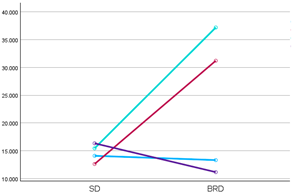
Representative FEG-ESEM images of the resin–dentin interface (Figure 1) showed significant differences in adhesive layer thickness were observed among adhesives at 24 hours and after aging, particularly on remineralized dentin (p < 0.05).
On remineralized dentin at 24 hours, Scotchbond and Prime&Bond produced thicker adhesive layers compared with One Coat. After thermocycling, Scotchbond and Prime&Bond maintained significantly greater thickness than Futurabond and One Coat. (Table 3).
Factorial ANOVA revealed that adhesive system, dentin type, and aging time significantly influenced adhesive layer thickness (p < 0.001). Remineralized dentin exhibited greater adhesive thickness than natural dentin, and values were significantly reduced after aging. No significant three-way interaction was detected. (Table A1).
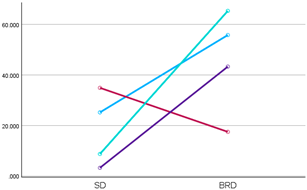
Significant differences in resin tag length were detected on remineralized dentin at 24 hours (p = 0.007). Futurabond produced longer resin tags than Scotchbond and One Coat. (Table 3).
Factorial analysis demonstrated significant effects of adhesive system, dentin type, and aging time (p < 0.05), as well as significant adhesive–dentin and three-way interactions. Resin tags were generally longer at 24 hours compared with aged specimens. Although tag length decreased after thermocycling, no adhesive consistently outperformed the others across all conditions. (Table A1).
3.2. Shear Bond Strength
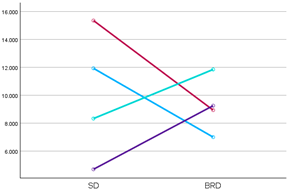
SBS values (Table 4) showed significant differences among adhesives on natural dentin at both 24 hours and after aging (p ≤ 0.05).
At 24 hours, Futurabond showed higher SBS than One Coat. After thermocycling, Futurabond and Scotchbond exhibited higher SBS compared with One Coat.
SBS values were significantly influenced by dentin type and aging time (p < 0.001). Bond strength was higher on natural dentin than on remineralized dentin and decreased significantly after thermocycling. A significant adhesive–dentin interaction was observed; however, no consistent superiority of one adhesive system across all experimental conditions was identified. (Table A1).
3.2.1. Failure Mode
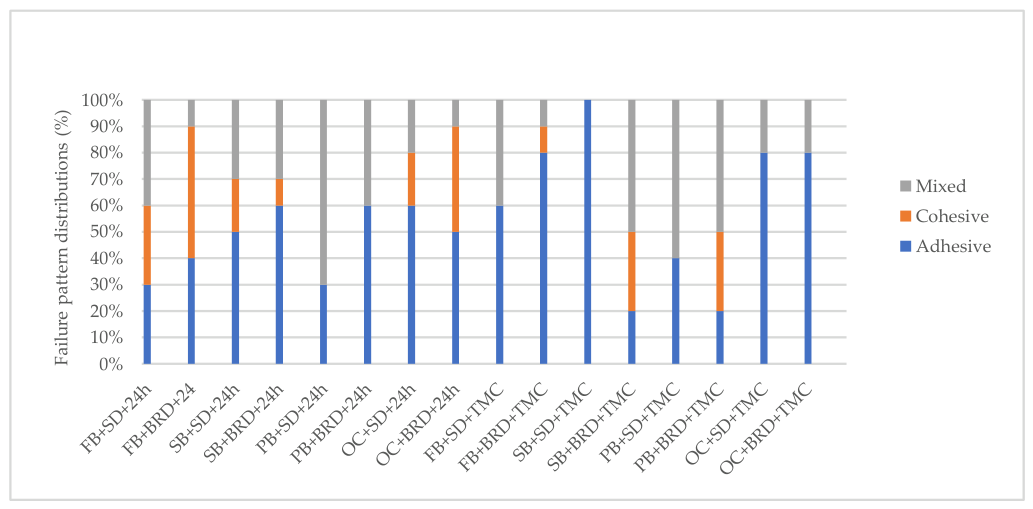
Failure mode distribution is shown in Graphic 1, where adhesive failures predominated across all groups (χ² = 62.33; p < 0.001). At 24 hours, Prime&Bond on natural dentin exhibited a higher proportion of mixed failures, whereas Futurabond and One Coat on remineralized dentin showed increased cohesive failures. After aging, adhesive failures became more prevalent in most groups. Failure patterns were significantly influenced by dentin type and aging time (p < 0.05).
Graph 1.
Distribution of the type of fracture according to the treatment of the dentin surface. *Legend: FB- Futurabond, SB- Scotchbond; PR- Prime&Bond; OC- One Coat; SD- Sound dentin; BRD- Biomimetic remineralized dentin; TMC- Thermocycling; AR-adjusted residuals. 1- ** Scotchbond exhibited a strong tendency for adhesive failures (75%; AR=2.0) in SD, while Prime&Bond showed a preference for mixed failures in both SD (65%, AR=3.2) and RBD (45%, AR=2.0). At 24h, Futurabond demonstrated a strong tendency for cohesive failures (40%, AR=2.4), whereas Prime&Bond exhibited a high frequency of mixed failures (55%, AR=2.6). After TMC, Prime&Bond continued to show a tendency for mixed failures (55%, AR=2.6), while One Coat exhibited a strong preference for adhesive failures (80%, AR=2.1).
Graph 1.
Distribution of the type of fracture according to the treatment of the dentin surface. *Legend: FB- Futurabond, SB- Scotchbond; PR- Prime&Bond; OC- One Coat; SD- Sound dentin; BRD- Biomimetic remineralized dentin; TMC- Thermocycling; AR-adjusted residuals. 1- ** Scotchbond exhibited a strong tendency for adhesive failures (75%; AR=2.0) in SD, while Prime&Bond showed a preference for mixed failures in both SD (65%, AR=3.2) and RBD (45%, AR=2.0). At 24h, Futurabond demonstrated a strong tendency for cohesive failures (40%, AR=2.4), whereas Prime&Bond exhibited a high frequency of mixed failures (55%, AR=2.6). After TMC, Prime&Bond continued to show a tendency for mixed failures (55%, AR=2.6), while One Coat exhibited a strong preference for adhesive failures (80%, AR=2.1).
A comparative summary of the adhesive interface characteristics, bond strength outcomes, and failure patterns observed among the evaluated adhesive systems under sound dentin and biomimetic remineralized dentin conditions, before and after thermocycling, is presented in Table 5.
4. Discussion
Simplified adhesive systems adhesion to dentin is known to deteriorate over time due to collagen and hydrolytic degradation, mainly as a result of the high permeability at the adhesive interface [4]. his degradation affects both the resin matrix and exposed collagen fibrils, compromising bond integrity and potentially leading to restoration failure [7]. Additionally, simplified systems may show lower in vitro bond strength values, partly due to their complex formulations and high solvent content, which can impair solvent evaporation and polymerization efficiency [28].
Optimizing the durability of the resin–dentin bond remains a major challenge in operative dentistry, particularly in carious dentin [29]. Demineralized dentin consistently exhibits lower adhesion values than sound dentin [30], primarily because of morphological alterations and changes in the physical and chemical properties of the substrate [8]. Minimally invasive approaches that preserve dentin structure are therefore essential. In this context, biomimetic remineralization agents such as CPP-ACP have been proposed as a strategy prior to the application of simplified adhesive systems [12].
This study aimed to assess the performance of four universal adhesive systems applied to artificially carious dentin following biomimetic remineralization with CPP-ACP, focusing on adhesive interface morphology, shear bond strength, and long-term performance.
The durability of the adhesive interface depends on the quality of the hybridization rather than its thickness [31]. A homogeneous hybrid layer, adequate resin tag penetration into dentin tubules, and the formation of lateral micro resin tags are key factor for effective micromechanical retention [32]. In this context, the morphological improvements observed in biomimetically remineralized dentin may contribute to a more uniform and better-integrated adhesive interface. These features may enhance resistance to degradation over time, even in the absence of significant differences in bond strength. Interface degradation is largely associated with hydrophilic domains within adhesive systems, which facilitate water sorption even after polymerization, compromising long-term stability [33].
Microscopic analysis showed that remineralization promoted calcium phosphate precipitation at the dentin surface without complete tubular occlusion. Although this superficial precipitation may influence resin infiltration, like report by Krithy et al. and Ishikawa et al., no direct correlation between mineral precipitation and increased bond strength was observed [34,35]. This finding suggests that bond performance may depend more on the structural quality of the adhesive interface than on isolated morphological characteristics, previous reported by Gateva et al. [31,36,37]. After thermocycling, adhesives exhibiting longer resin tags, tended to show higher SBS values, suggesting that interfacial morphology may influence aging performance.
In agreement with previous studies [12,34,38,39], remineralized dentin demonstrated lower bond strength than sound dentin. This reduction may be attributed to mineral loss from peritubular and intertubular dentin, resulting in altered tubule structure and reduced adhesive interaction [14,34]. However, remineralized dentin exhibited less pronounced bond strength degradation over time, suggesting a potential protective effect on interface durability [39].
Futurabond and Scotchbond showed the highest bond strength on sound natural dentin but reduced values on remineralized dentin, likely due to the presence of HEMA, which can accelerate hydrolytic degradation of the adhesive interface [40,41]. Prime&Bond and One Coat demonstrated comparatively more stable performance on remineralized dentin, likely due to the presence of 10-MDP, which forms stable bonds with calcium in dentin, and helps maintain adhesive stability even in altered dentin [42,43].
Adhesive failures predominated over mixed failures across all groups, in agreement with previous studies [5,39], whereas cohesive failures were more frequent in biomimetically remineralized dentin than in sound dentin. After thermocycling, adhesive failures increased in both conditions, reflecting the effect of aging on interface degradation [12,39]. The null hypothesis was rejected, as the biomimetic remineralization procedure influenced the morphology of the adhesive layer, shear bond strength (SBS), and adhesive failure patterns of the tested universal adhesives.
Overall, biomimetic remineralization with CPP-ACP promoted more favourable adhesive interface characteristics and influenced the bonding performance of the evaluated universal adhesive systems in artificially caries-affected dentin. Among the tested adhesive systems, Prime&Bond Active® demonstrated more consistent morphological and mechanical performance after aging, suggesting greater suitability for compromised dentin substrates. These findings point out the potential of biomimetic remineralization strategies to improve adhesive interface quality and contribute to bond stability over time.
Nevertheless, the present results should be interpreted considering the limitations inherent to in vitro studies. The use of artificially caries-affected dentin and thermocycling protocols may not fully reproduce the structural complexity and biological behaviour of naturally caries-affected dentin under clinical conditions [44]. Therefore, further studies using naturally caries-affected dentin are needed to better clarify the long-term effects of biomimetic remineralization on adhesive performance and interface durability.
5. Conclusions
This study demonstrated that biomimetic remineralization influenced the performance of universal adhesive systems, with variations depending on the substrate condition and aging. While bond strength remained lower in remineralized dentin compared with sound dentin, remineralization positively affected interfacial morphology and may contribute to improved interface stability after artificial aging. Adhesive performance varied according to formulation, underscoring the importance of considering both substrate characteristics and adhesive composition in restorative protocols.
Author Contributions
Rosário Costa contributed to concepts, design, the definition of intellectual content, literature search, data acquisition, and article preparation. Sofia Arantes-Oliveira contributed to the definition of intellectual content and article preparation. João Cardoso Ferreira contributed to the definition of intellectual content and article preparation.. Álvaro Azevedo Luís Filipe Azevedo contributed to concepts, design, the definition of intellectual content, and statistical analysis. Paulo Ribeiro de Melo contributed to concepts, design, the definition of intellectual content and critically revised the manuscript. All authors gave their final approval and agreed to be accountable for all aspects of the work.
Funding
This research received no external funding.
Institutional Review Board Statement
The study was approved by local “Comissão de Ética para a Saúde da Faculdade de Medicina Dentária da Universidade do Porto”.
Informed Consent Statement
Patient declaration of consent “Not applicable”.
Data Availability Statement
Data are available on valid request by contacting the corresponding author via mail.
Acknowledgments
The authors appreciate de help of Bone Lab, Faculty of Dentistry, University of Porto for support in laboratorial procedures.
Conflicts of Interest
The authors declare no conflicts of interest.
Appendix A
Appendix A.1
Figure A1.
- Specimen preparation for FEG ESEM.
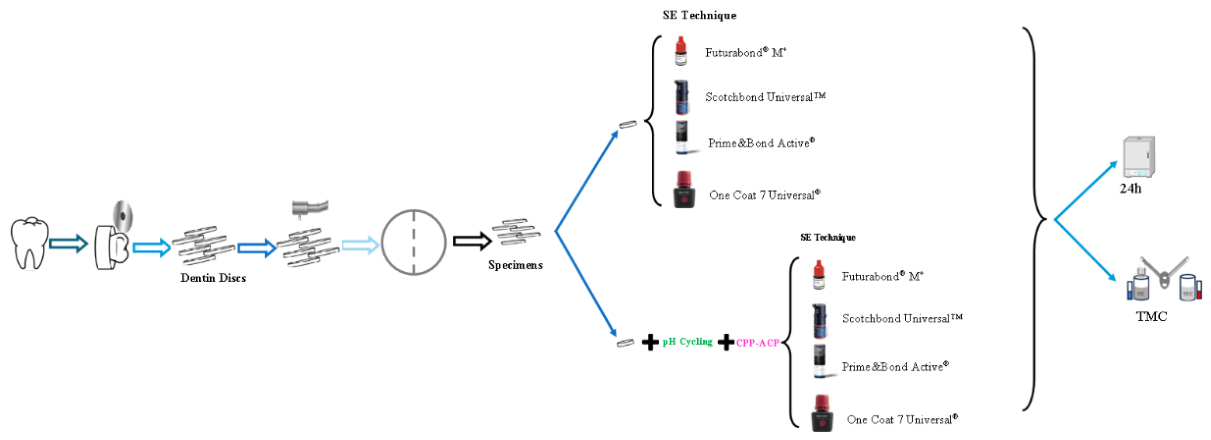
Figure A2.
- Specimen preparation for SBS.
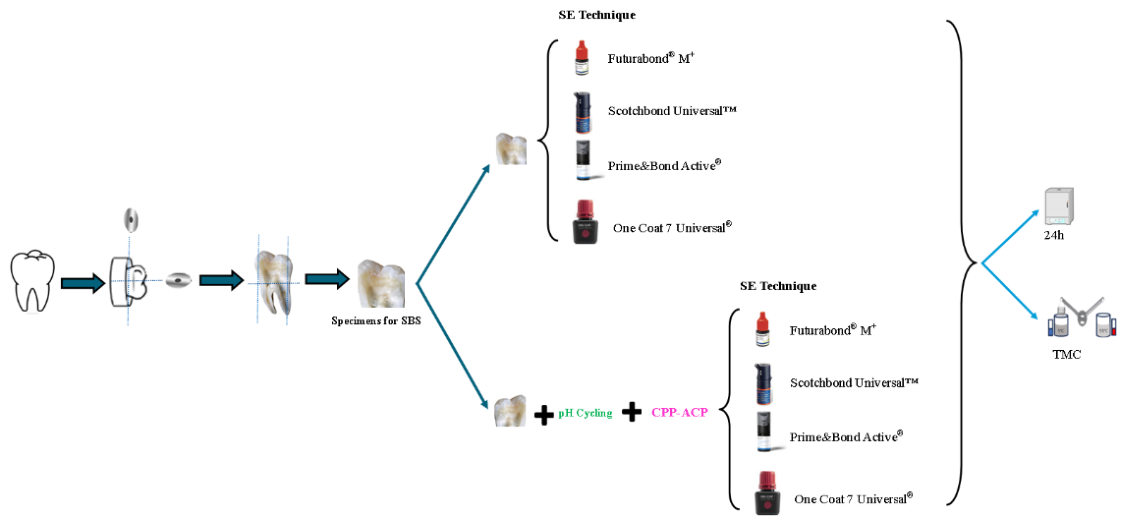
Table A1.
Representative graphical presentation of the obtained values according to dentin substrate and evaluation time.
Table A1.
Representative graphical presentation of the obtained values according to dentin substrate and evaluation time.
| Time | 24h | TMC |
|---|---|---|
| Adhesive Layer | 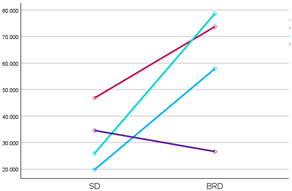 |
 |
| Resin Tags | 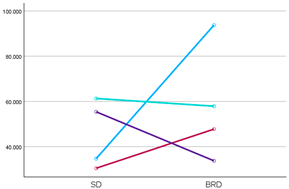 |
 |
| SBS | 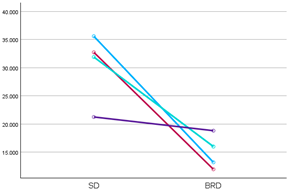 |
 |
* Legend: FB- Futurabond, SB- Scotchbond; PR- Prime&Bond; OC- One Coat; SD- Sound dentin; BRD- Biomimetic remineralized dentin; TMC- Thermocycling.
References
- Barbosa-Martins, L.F.; et al. Biomimetic Mineralizing Agents Recover the Micro Tensile Bond Strength of Demineralized Dentin. Materials 2018, 11(9), 1733. [Google Scholar] [CrossRef]
- Barbosa-Martins, L.F.; et al. Enhancing bond strength on demineralized dentin by pre-treatment with selective remineralising agents. J. Mech. Behav. BioMed Mater. 2018, 81, 214–221. [Google Scholar] [CrossRef]
- Pashley DH, T.F.; Yiu, C.; et al. Collagen degradation by host-derived enzymes during aging. J. Dent. Res. 2004, 83, 216–221. [Google Scholar] [CrossRef]
- Tjaderhane, L.; et al. Optimizing dentin bond durability: control of collagen degradation by matrix metalloproteinases and cysteine cathepsins. Dent. Mater. 2013, 29(1), 116–35. [Google Scholar] [CrossRef]
- Yang, Y. Mineralization strategy on dentin bond stability: a systematic review of in vitro studies and meta-analysis. J. Adhes. Sci. Technol. 2021, 15, 36, 1666–1680. [Google Scholar]
- Tay Fr, P.D.H.S.B.I. and et al., Single-step adhesives are permeable membranes. J Dent, 2002. 30: p. 371–382. [CrossRef]
- Van Landuyt KL, D.M.J.; Mine, A.; Cardoso, M.V.; Peumans, M.; Van Meerbeek, B. Filler debonding & subhybrid-layer failures in self-etch adhesives. J. Dent. Res. 2010, 89, 1045–50. [Google Scholar]
- Zanchi, C.H.L., R.G.; Perrone, L.R.; Ribeiro, G.A.; Del Pino, F.A.; Pinto, M.B.; Demarco, F.F., Microtensile bond strength of two-step etch-and-rinse adhesive systems on sound and artificial caries-affected dentin. Am. J. Dent., 2010. 23: p. 152–156. [PubMed]
- Ceballos, L.; et al. Microtensile bond strength of total-etch and self-etching adhesives to caries-affected dentine. J. Dent. 2003, 31(7), 469–477. [Google Scholar] [CrossRef] [PubMed]
- Fusayama, T.; Kurosaki, N. Structure and removal of carious dentin. Int. Dent. J. 1972, 22(3), 401–11. [Google Scholar]
- Tay, F.R.; et al. Single-step adhesives are permeable membranes. J. Dent. 2002, 30(7-8), 371–82. [Google Scholar] [CrossRef]
- Moreira, K.M.; et al. Impact of biomineralization on resin/biomineralized dentin bond longevity in a minimally invasive approach: An "in vitro" 18-month follow-up. Dent Mater 2021, e276–e289. [Google Scholar] [CrossRef]
- Poggio, C.; et al. Analysis of dentin/enamel remineralization by a CPP-ACP paste: AFM and SEM study. Scanning 2013, 35(6), 366–74. [Google Scholar] [CrossRef]
- Chen, R.; et al. Biomimetic remineralization of artificial caries dentin lesion using Ca/P-PILP. Dent Mater 2020, 1397–1406. [Google Scholar] [CrossRef]
- Sanz, J.L.R.-L., F.J.; Llena, C.; Sauro, S.; Forner, L. . , Bioactivity of bioceramic materials used in the dentin-pulp complex therapy: A systematic review. Materials, 2019,. 12: p. 1015. [CrossRef]
- Donnermeyer, D.; Bürklein, S.; Dammaschke, T.; et al. Endodontic sealers based on calcium silicates: a systematic review.; Odontology, 2019; pp. 421–436. [Google Scholar]
- Van Meerbeek, B.; et al. Relationship between bond-strength tests and clinical outcomes. Dent. Mater. 2010, 26(2), e100–21. [Google Scholar] [CrossRef]
- Braga, R.R.; et al. Adhesion to tooth structure: a critical review of "macro" test methods. Dent. Mater. 2010, 26(2), e38–49. [Google Scholar] [CrossRef] [PubMed]
- 11405, T.s.I.T., Dentistry — Testing of adhesion to tooth structure. ISO, 2015. Third edition(Art dentaire — Essais d’adhésion à la structure de la dent): p. 1-5.
- Erhardt, M.C.; et al. Histomorphologic characterization and bond strength evaluation of caries-affected dentin/resin interfaces: effects of long-term water exposure. Dent. Mater. 2008, 24(6), 786–98. [Google Scholar] [CrossRef]
- Joves GJ, I.G., Nakashima S, Sadr A, Nikaido T, Tagami J., Mineral density, morphology and bond strength of natural versus artificial caries-affected dentin. Dent Mater J, 2013. 32: p. 138-43. [CrossRef] [PubMed]
- Zanchi, C.H.; et al. Microtensile bond strength of two-step etch-and-rinse adhesive systems on sound and artificial caries-affected dentin. Am. J. Dent. 2010, 23(3), 152–6. [Google Scholar] [PubMed]
- Costa R., A.-O.S., Fernandes L., Figueiras F.G., Ferreira J.C., Ribeiro de Melo, P., Effectiveness of three biomimetic remineralization procedures in artificial caries-affected dentin – an in-vitro pilot study. Rev Port Estomatol Med Dent Cir Maxilofac, 2024. 65(4): p. 188-196. [CrossRef]
- Bauer, J.; et al. A niobophosphate bioactive glass suspension for rewetting dentin: Effect on antibacterial activity, pH and resin-dentin bonding durability. Int. J. Adhes. Adhes. 2018, 84, 178–183. [Google Scholar] [CrossRef]
- Gungormus, M.; Tulumbaci, F. Peptide-assisted pre-bonding remineralization of dentin to improve bonding. J. Mech. Behav. BioMed Mater. 2021, 113, 104119. [Google Scholar] [CrossRef]
- Priya, C.H.L.; et al. Evaluation of the bond strength of posterior composites to the dentin, treated with four different desensitizing agents – An In vitro study. J. Int. Clin. Dent. Res. Organ. 2020, 12(1). [Google Scholar] [CrossRef]
- Armstrong, S.; et al. Academy of Dental Materials guidance on in vitro testing of dental composite bonding effectiveness to dentin/enamel using micro-tensile bond strength (muTBS) approach. Dent. Mater. 2017, 33(2), 133–143. [Google Scholar] [CrossRef]
- Yoshihara K, N.N., Sonoda A, Maruo Y, Makita Y, Okihara T, Irie M, Yoshida Y, Van Meerbeek B., Effectiveness and stability of silane coupling agent incorporated in 'universal' adhesives. Dent Mater, 2016. 32: p. 1218-1225. [CrossRef]
- Liu RR, F.M., Zhang L, Tang CF, Dou Q, Chen JH. . 2014 Sep;6(3):. , Anti-proteolytic capacity and bonding durability of proanthocyanidin-biomodified demineralized dentin matrix. Int J Oral Sci, 2014. 6: p. 168-74. [CrossRef]
- Lenzi, T.L.; et al. Effect of method of caries induction on aged resin-dentin bond of primary teeth. BMC Oral. Health 2015, 15, 79. [Google Scholar] [CrossRef]
- Kharouf N, A.T.; Eid, A.; Maguina, L.; Zghal, J.; Sekayan, N.; Bourgi, R.; Hardan, L.; Sauro, S.; Haikel, Y. Does Adhesive Layer Thickness and Tag Length Influence Short/Long-Term Bond Strength of Universal Adhesive Systems? An In-Vitro Study. Appl. Sci. 2021, 11, 2635. [Google Scholar] [CrossRef]
- Hashimoto, M.; et al. In vitro degradation of resin-dentin bonds analyzed by microtensile bond test, scanning and transmission electron microscopy. Biomaterials 2003, 24(21), 3795–803. [Google Scholar] [CrossRef]
- Van Landuyt KL, Y.Y., Hirata I, Snauwaert J, De Munck J, Okazaki M, Suzuki K, Lambrechts P, Van Meerbeek B., Influence of the chemical structure of functional monomers on their adhesive performance. J Dent Res, 2008. 87: p. 757-61. [CrossRef]
- Krithi, B.; Vidhya, S.; Mahalaxmi, S. Microshear bond strength of composite resin to demineralized dentin after remineralization with sodium fluoride, CPP-ACP and NovaMin containing dentifrices. J. Oral. Biol. Craniofac Res. 2020, 10(2), 122–127. [Google Scholar] [CrossRef]
- Ishikawa K, S.T., Yoshiyama M, Kawasaki A, Asaoka K, Ebisu S., Occlusion of Dentinal Tubules with Calcium Phosphate Using Acidic Calcium Phosphate Solution Followed by Neutralization. Journal of Dental Research, 1994. 73: p. 1197-1204. [CrossRef]
- Yoshikawa T, S.A., Tagami J, Effects of C-factor on bond strength to floor and wall dentin. Dent Mater J, 2016. 35: p. 918-922. [CrossRef]
- Gateva N, K.R. Hybrid layer Thickness in primary and permanent teeth - a comparison between total etch adhesives. J. IMAB 2012, 18, 191–199. [Google Scholar] [CrossRef]
- Yang, H.Y.C., Z. Y.; Yan, H. Y.; Huang, C.;, Effects of calcium-containing desensitizers on the bonding stability of an etch-and-rinse adhesive against long-term water storage and pH cycling. Dental Materials Journal 2018. 37( 1): p. 122-129. [CrossRef]
- Pulidindi, H.M., J.; Borugadda, R.; Ravi, R.; Angadala, P.; Penmatsa, P.;, Effect of remineralizing agents on resin-dentin bond durability of adhesive restorations: An in vitro study. Journal of International Oral Health 2021. 13: p. 470-477.
- Hiraishi N, N.N., Ikemura K, et al, Water concentration in self-etching primers afects their aggressiveness and bonding efficacy to dentin. . J Dent Res 2005. 84: p. 653–658. [CrossRef]
- Siqueira, F.S.F.; et al. Effect of Silver Diamine Fluoride on the Bonding Properties to Caries-affected Dentin. J. Adhes. Dent. 2020, 22(2), 161–172. [Google Scholar]
- Yoshihara K, Y.Y., Hayakawa S, Nagaoka N, Kamenoue S, Okihara T, Ogawa T, Nakamura M, Osaka A, Van Meerbeek B, Novel fluoro-carbon functional monomer for dental bonding. J Dent Res, 2014. 93: p. 189-94. [CrossRef]
- Meng, Y.; et al. Bonding Performance of Universal Adhesives Applied to Nano-Hydroxyapatite Desensitized Dentin Using Etch-and-Rinse or Self-Etch Mode. Materials 2021, 14(16), 4746. [Google Scholar] [CrossRef]
- Breschi L, M.A., Ruggeri A, Cadenaro M, Di Lenarda R, De Stefano Dorigo E, Dental adhesion review: aging and stability of the bonded interface. Dent Mater, 2008. 24: p. 90-101. [CrossRef] [PubMed]
Figure 1.
-(A) FEG ESEM representative images of the Hybrid layer of the experimental groups (x2000).
Figure 1.
-(A) FEG ESEM representative images of the Hybrid layer of the experimental groups (x2000).
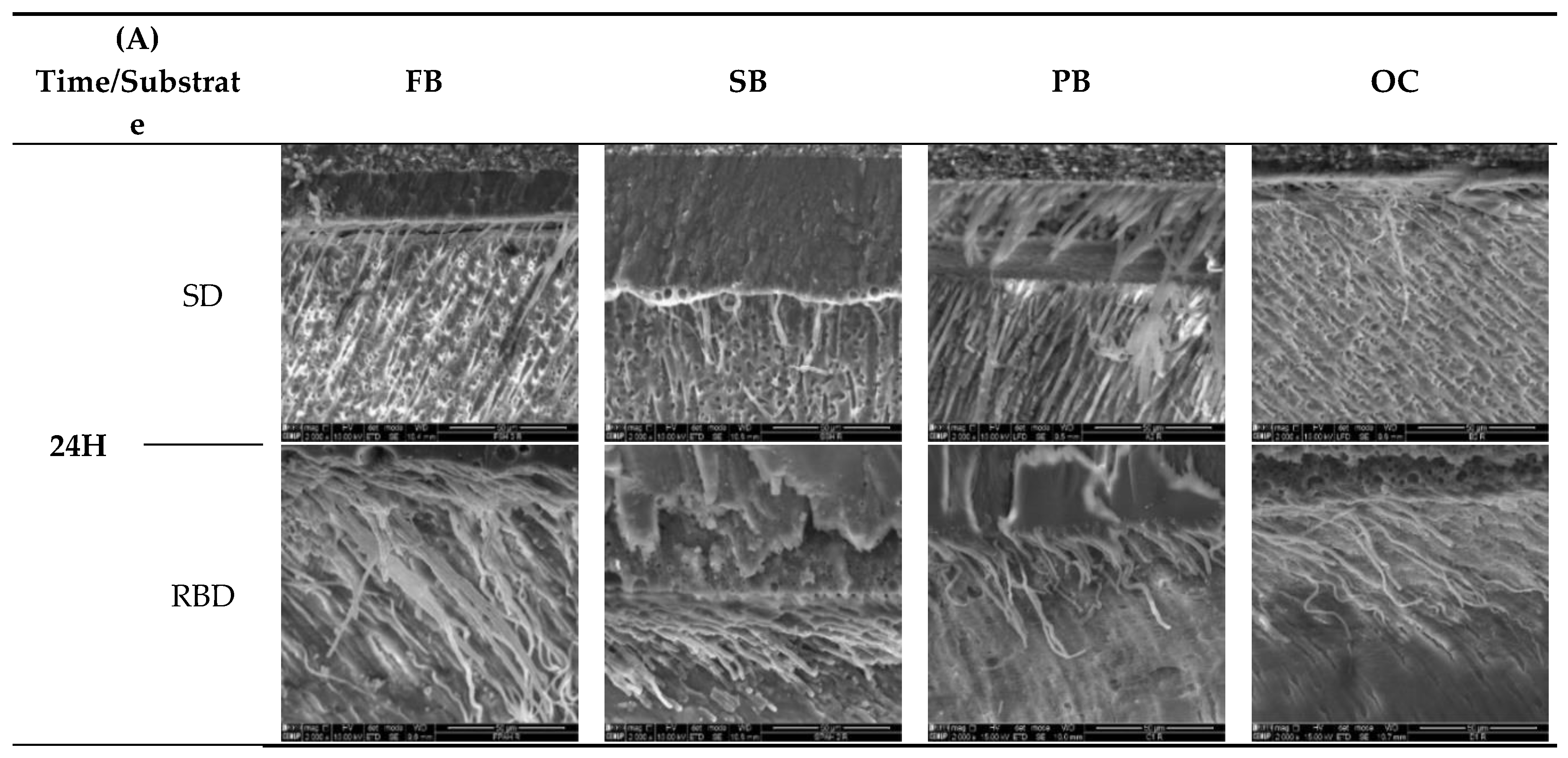
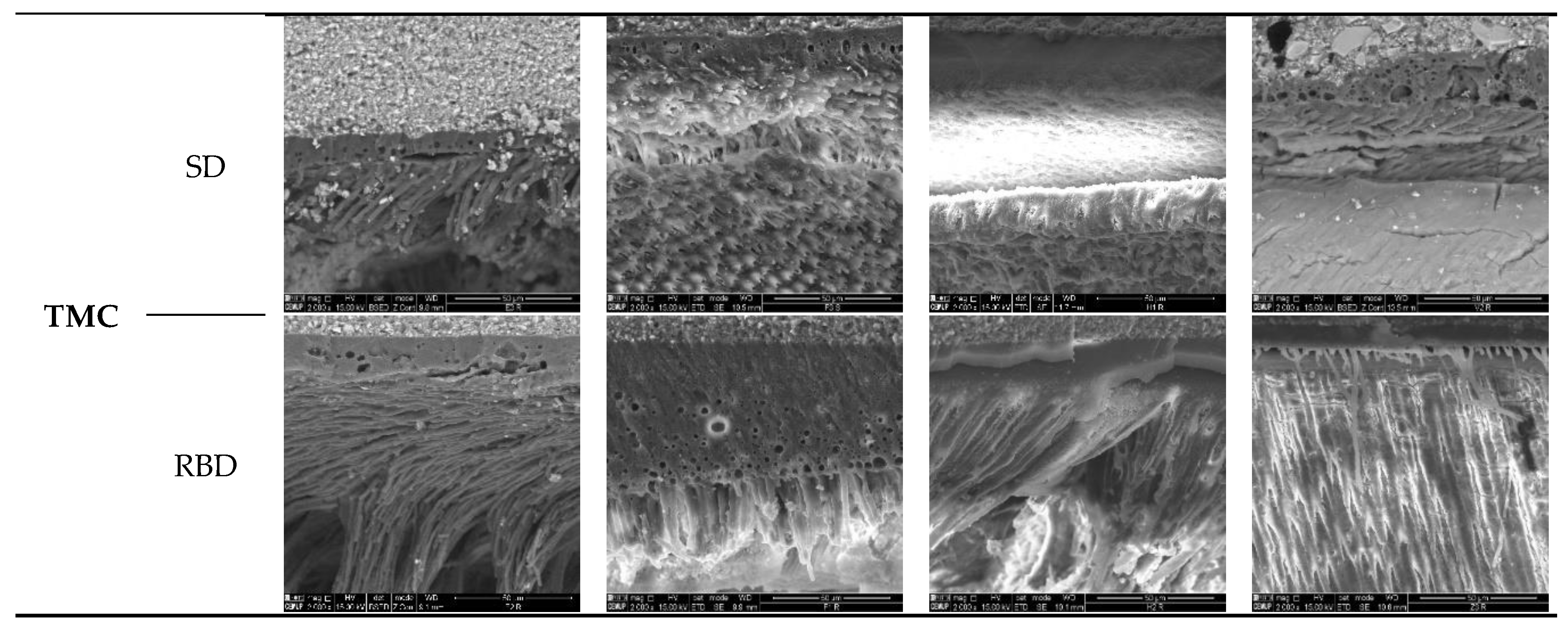
Table 1.
Laboratory Solutions.
| Solution | Protocol |
|---|---|
| Demineralization solution of pH Cycling | 50mM Acetic acid (Merck, Germany), 2.2mM Calcium chloride (Enzymatic, USA), 2.2mM Monosodium phosphate (Sigma-Aldrich, USA), at pH=4.8 |
| Remineralization solution of pH Cycling | 1,5mmol Calcium chloride and 0,9mmol Monopotassium phosphate, at pH=7.0 |
| 3% buffered Glutaraldehyde solution | Buffered with 0.2M Sodium cacodylate (pH=7.4) at room temperature |
Table 3.
(B) Quantitative analysis of adhesive layer and resin tags of dentin bonding interface, considering the experimental groups and times (24 h and TMC). At 24h in SD, Scotchbond exhibited a significantly thicker adhesive layer compared to Futurabond (p=0.04). In RBD at 24h, the One coat showed a significantly thinner adhesive layer compared to Scotchbond (p=0.04) and Prime&Bond (p=0.05). After artificial aging in RBD, Scotchbond presented a significantly thicker adhesive layer compared to Futurabond (p=0.04) and One Coat (p=0.005). Similarly, Prime&Bond exhibited a significantly thicker adhesive layer compared to Futurabond (p=0.007) and One Coat (p=0.001). In RBD at 24h, Futurabond exhibited significantly greater resin tag dimensions compared to Scotchbond (p=0.04) and One Coat ( p=0.004).
Table 3.
(B) Quantitative analysis of adhesive layer and resin tags of dentin bonding interface, considering the experimental groups and times (24 h and TMC). At 24h in SD, Scotchbond exhibited a significantly thicker adhesive layer compared to Futurabond (p=0.04). In RBD at 24h, the One coat showed a significantly thinner adhesive layer compared to Scotchbond (p=0.04) and Prime&Bond (p=0.05). After artificial aging in RBD, Scotchbond presented a significantly thicker adhesive layer compared to Futurabond (p=0.04) and One Coat (p=0.005). Similarly, Prime&Bond exhibited a significantly thicker adhesive layer compared to Futurabond (p=0.007) and One Coat (p=0.001). In RBD at 24h, Futurabond exhibited significantly greater resin tag dimensions compared to Scotchbond (p=0.04) and One Coat ( p=0.004).
| (B) Time/Substrate | Mean and standard deviation Adhesive layer (µm) | Mean and standard deviation Resin Tags (µm) | |||||||
|---|---|---|---|---|---|---|---|---|---|
| FB | SB | PB | OC | FB | SB | PB | OC | ||
| 24h | SD | 19,77 (15,15)Aa | 46,82 (10,51)Aa | 25,90 (12,71)A | 34,55 (32,71)A | 34,73 (20,24) | 30,48 (10,02) | 61,31 (30,80) | 55,41 (36,79) |
| RBD | 57,91 (15,65)B | 73,75 (40,28)Ba | 78,69 (61,29)Bb | 26,60 (9,97)Ba,b | 93,71 (13,77)Da | 47,76 (21,27)Da | 57,90 (29,63)D | 33,77 (37,28)Da | |
| TMC | SD | 14,12 (6,01) |
12,64 (6,28) |
15,46 (5,89) |
16,36 (8,60) |
25,14 (12,33) | 34,85 (32,55) | 8,69 (5,66) |
3,20 (1,00) |
| RBD | 13,34 (5,01)Ca | 31,19 (15,80)Ca,b | 37,17 (11,02)Ca,c | 11,18 (8,44)Cb,c | 55,76 (49,97) | 17,42 (5,28) | 65,30 (18,97) | 43,25 (32,16) | |
* Legend: FB- Futurabond, SB- Scotchbond; PR- Prime&Bond; OC- One Coat; SD- Sound dentin; BRD- Biomimetic remineralized dentin; TMC- Thermocycling. **Lower case letters indicate significant difference in columns and upper-case letters represent significant difference in lines, by ANOVA. *** The adhesive systems showed larger average adhesive layer values when associated with RBD, with significant differences. The adhesive systems on RBD had larger resin extensions than those obtained on natural dentin.
Table 4.
Mean and standard deviation of the resin/dentin SBS (MPa) values considering the experimental groups and times (24 h and TMC). In SD at 24h, Futurabond exhibited significantly higher mean adhesive strength values compared to One Coat (p=0.05). Also, in SD after TMC, Futurabond also showed higher mean SBS values than One Coat (p=0.03). Additionally, Scotchbond exhibited significantly higher mean adhesive strength values compared to Prime&Bond (p=0.04) and One Coat (p<0.001).
Table 4.
Mean and standard deviation of the resin/dentin SBS (MPa) values considering the experimental groups and times (24 h and TMC). In SD at 24h, Futurabond exhibited significantly higher mean adhesive strength values compared to One Coat (p=0.05). Also, in SD after TMC, Futurabond also showed higher mean SBS values than One Coat (p=0.03). Additionally, Scotchbond exhibited significantly higher mean adhesive strength values compared to Prime&Bond (p=0.04) and One Coat (p<0.001).
| Time/Substrate | Mean and standard deviation of the resin/dentin SBS (MPa) values | ||||
|---|---|---|---|---|---|
| FB | SB | PB | OC | ||
| 24h | SD | 35,60 (11,83)Aa | 32,75 (11,28)A | 31,91 (13,25)A | 21,27 (9,04)Aa |
| BRD | 13,22 (7,77) | 11,98 (3,70) | 16,01 (5,34) | 18,83 (6,87) | |
| TMC | SD | 11,93 (4,87)Ba | 15,35 (5,85)Bb | 8,34 (7,43)Bb | 4,71 (2,77)Ba, b |
| BRD | 7,01 (3,11) | 8,95 (6,26) | 11,85 (4,02) | 9,26 (5,77) | |
* Legend: FB- Futurabond, SB- Scotchbond; PR- Prime&Bond; OC- One Coat; SD- Sound dentin; BRD- Biomimetic remineralized dentin; TMC- Thermocycling. **Lower case letters indicate significant difference in columns and upper-case letters represent significant difference in lines, by ANOVA.*** The adhesive strength results for SD were statistically higher than those obtained with BRD. Additionally, adhesive strength values decreased over time, with the results at 24 hours being statistically higher.
Table 5.
Summary of results.
| Parameter | SD 24hours | SD after TMC | RBD 24hours | RBD after TMC |
|---|---|---|---|---|
| Adhesive Layer Thickness | Scotchbond (thickest) | One Coat | Prime&Bond (thickest) | Prime&Bond (thickest) |
|
Resin Tag Extensions |
Prime&Bond | Scotchbond | Futurabond (highest) | Prime&Bond |
| Adhesive Strength | Futurabond (highest) | Scotchbond (highest) | One Coat | Prime&Bond |
|
Overall Performance |
Scotchbond: Best adhesive strength, although small resin tags | Scotchbond: Best performance | One Coat: Best adhesive strength despite low other values | Prime&Bond: Best overall in RBD after aging |
| Failure Patterns | Predominance of adhesive failures and mixed failures also occurs | Adhesive failure increase, mixed decrease, cohesive disappear | Mixed failures prevalence and increase of cohesive | Mixed failure increase, adhesive decrease, cohesive disappear |
* Legend: FB- Futurabond, SB- Scotchbond; PR- Prime&Bond; OC- One Coat; SD- Sound dentin; BRD- Biomimetic remineralized dentin; TMC- Thermocycling.
Disclaimer/Publisher’s Note: The statements, opinions and data contained in all publications are solely those of the individual author(s) and contributor(s) and not of MDPI and/or the editor(s). MDPI and/or the editor(s) disclaim responsibility for any injury to people or property resulting from any ideas, methods, instructions or products referred to in the content. |
© 2026 by the authors. Licensee MDPI, Basel, Switzerland. This article is an open access article distributed under the terms and conditions of the Creative Commons Attribution (CC BY) license (http://creativecommons.org/licenses/by/4.0/).
Copyright: This open access article is published under a Creative Commons CC BY 4.0 license, which permit the free download, distribution, and reuse, provided that the author and preprint are cited in any reuse.


