
Submitted:
25 May 2026
Posted:
25 May 2026
You are already at the latest version
Abstract
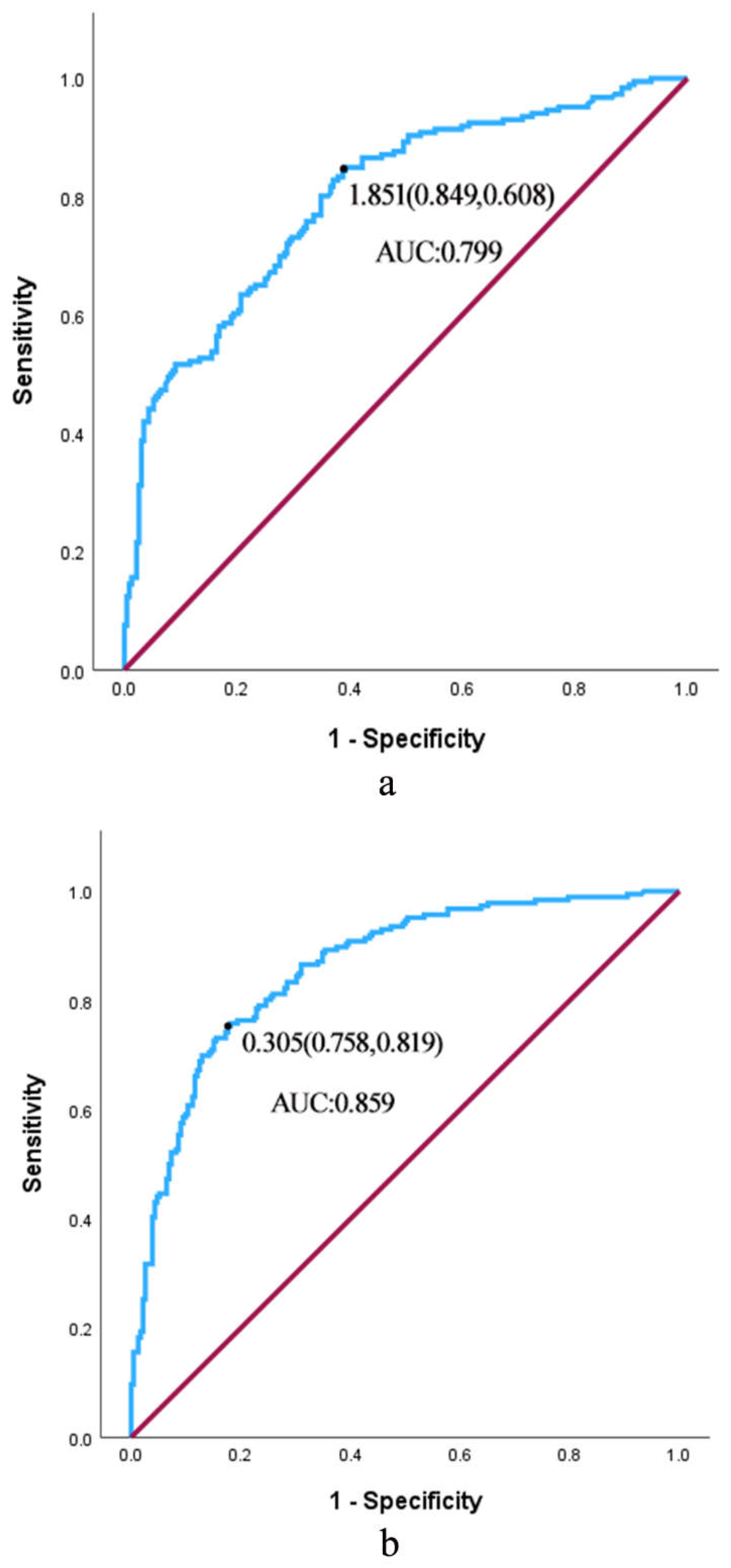
Purpose: This study aimed to investigate the association between the C-reactive protein (CRP)/high-density lipoprotein cholesterol (HDL-C) ratio and the occurrence of advanced colorectal adenoma (ACA). Methods: A retrospective case analysis was conducted; enrolling 712 patients with colorectal adenoma (CRA) who underwent colonoscopy. The patients were divided into an ACA group and a non-ACA group based on the definition of ACA. Clinical data were compared between the two groups; and we needed to calculate the CRP/HDL-C ratio. We performed multivariate logistic regression analysis to identify risk factors for ACA; and evaluated the predictive efficacy of the CRP/HDL-C ratio using the receiver operating characteristic (ROC) curve. Results: Finally; 712 subjects were included; with 401 cases in the non-ACA group and 311 cases in the ACA group. The CRP/HDL-C ratio level in the ACA group was significantly higher than that in the non-ACA group (2.91±1.38 vs. 1.93±0.82; p<0.001). After grouping according to the quartiles of the CRP/HDL-C ratio; the prevalence of ACA showed a clear increasing trend with rising quartiles (Q1: 14.6%; Q2: 33.7%; Q3: 59.5%; Q4: 70.2%, p<0.001). Multivariate logistic regression analysis showed that after adjusting for covariates; the risks of ACA in Q2; Q3; and Q4 were significantly higher compared with Q1; with values of (OR=3.089; 95% CI: 1.474–6.473; P=0.003); (OR=7.204; 95% CI: 3.487–14.882; P<0.001); and (OR=13.773; 95% CI: 6.476–29.289; P<0.001); respectively. Multivariate logistic regression also indicated that the CRP/HDL-C ratio (OR=3.375; 95% CI: 2.512–4.535; P<0.001) was an independent risk factor for the prevalence of ACA. The area under the ROC curve (AUC) of the CRP/HDL-C ratio for predicting ACA was 0.799 (95% CI: 0.756–0.841). Conclusion: The CRP/HDL-C ratio is significantly positively correlated with the risk of developing advanced colorectal adenoma (ACA); exhibits good clinical predictive value; and can serve as a potential biomarker for the early screening of ACA.
Keywords:
1. Introduction
2. Materials and Methods
2.1. Study Population
2.2. Data Collection
2.3. Diagnostic Criteria
2.4. Statistical Analysis
3. Results
4. Discussion
5. Conclusions
Author Contributions
Funding
Institutional Review Board Statement
Informed Consent Statement
Data Availability Statement
Conflicts of Interest
References
- Force, L.M. ; Kocarnik, J.M.; May, M.L.; et al. The global, regional, and national burden of colorectal cancer, 1990–2023, with forecasts to 2050: a systematic analysis for the Global Burden of Disease Study 2023. Lancet. 2025, 406(10512), 1565–1586. [Google Scholar] [CrossRef]
- Strum, W.B. Colorectal adenomas. N Engl. J. Med. 2016, 374(11), 1065–1075. [Google Scholar] [CrossRef]
- Bjerregaard, N.C.; King, K.; Rutter, M.D.; et al. Endoscopic treatment and surveillance of colorectal polyps: a review with special attention to the implementation of artificial intelligence and risk stratification. World J. Gastrointest. Endosc. 2025, 17(4), 103747. [Google Scholar] [CrossRef]
- Jahn, B.; Bundo, M.; Schaffner, M.; et al. One in three adenomas could be missed by white-light colonoscopy – findings from a systematic review and meta-analysis. BMC Gastroenterol. 2025, 25, 170. [Google Scholar] [CrossRef] [PubMed]
- Aceto, G.M.; Catalano, T.; Curia, M.C. Molecular aspects of colorectal adenomas: the interplay among microenvironment, oxidative stress, and predisposition. BioMed Res. Int. 2020, 2020, 1726309. [Google Scholar] [CrossRef]
- Silinskaite, U.; Valciukiene, J.; Jakubauskas, M.; Poskus, T. The immune environment in colorectal adenoma: a systematic review. Biomedicines 2025, 13(3), 699. [Google Scholar] [CrossRef]
- Vermandere, K.; Bostick, R.M.; Tran, H.Q.; et al. Effects of supplemental calcium and vitamin D on circulating biomarkers of gut barrier function in patients with colon adenoma: a randomized clinical trial. Cancer Prev. Res. (Phila) 2021, 14(3), 393–402. [Google Scholar] [CrossRef] [PubMed]
- Berechet, B.M.; Orășan, O.H.; Negrean, V.; et al. From adenoma to carcinoma: oxidative stress and lipidomic profile in colorectal cancer patients. J. Mind Med. Sci. 2025, 12(1), 16. [Google Scholar] [CrossRef]
- Passarelli, M.N.; Newcomb, P.A. Blood lipid concentrations and colorectal adenomas: a systematic review and meta-analysis of colonoscopy studies in Asia, 2000–2014. Am. J. Epidemiol. 2016, 183(8), 691–700. [Google Scholar] [CrossRef] [PubMed]
- Kim, S.; Song, S.; Kim, Y.S.; et al. The association between predicted inflammatory status and colorectal adenoma. Sci. Rep. 2020, 10, 5583. [Google Scholar] [CrossRef]
- Kolahi Ahari, R.; Akbari, N.; Babaeepoor, N.; et al. Association of three novel inflammatory markers: lymphocyte to HDL-C ratio, high-sensitivity C-reactive protein to HDL-C ratio and high-sensitivity C-reactive protein to lymphocyte ratio with metabolic syndrome. Endocrinol. Diabetes Metab. 2024, 7(3), e00479. [Google Scholar] [CrossRef]
- Li, S.; Liu, Y.; Sun, G.; et al. The predictive value of hsCRP/HDL-C ratio for cardiometabolic multimorbidity in middle-aged and elderly people: evidence from a large national cohort study. Front Nutr. 2025, 12, 1580904. [Google Scholar] [CrossRef]
- Zhao, Y.Y.; Du, D.J.; Liu, Z.H.I. High-sensitivity CRP to HDL-C ratio as a novel inflammatory-lipid biomarker for mortality risk prediction: a prospective population-based cohort study. Eur. Heart J. 2025, 46 (Suppl 1), ehaf784.3552. [Google Scholar] [CrossRef]
- Qi, H.U.A.; Li, F.A.N.; Zeng-Wu, W.; et al. 2023 guideline for the management of hypertension in the elderly population in China. J. Geriatr. Cardiol. 2024, 21(6), 589–630. [Google Scholar] [CrossRef] [PubMed]
- Bolwell, J.; Pun, C.; Bains, A.; et al. Risk factors associated with advanced colorectal neoplasia in adults younger than age 45. J. Clin. Gastroenterol. 2024, 58(10), 1018–1025. [Google Scholar] [CrossRef]
- Lei, Y.; Cai, Z.; Zheng, M.; et al. Modifiable lifestyle and metabolic risk factors for colorectal polyps: a systematic review and meta-analysis. Front Public Health 2025, 13, 1655750. [Google Scholar] [CrossRef] [PubMed]
- Jaruvongvanich, V.; Sanguankeo, A.; Upala, S. Association between investigator-measured body-mass index and colorectal adenoma: a systematic review and meta-analysis of 168,201 subjects. Eur. J. Epidemiol. 2017, 33(1), 15–26. [Google Scholar] [CrossRef]
- Dullea, A.; Visser, B.C. The interval for screening colonoscopy: is 15 the new 10? JAMA Oncol. 2024, 10(7), 876–877. [Google Scholar] [CrossRef]
- Chen, Y.; Zhang, Y.; Yan, Y.; et al. Global colorectal cancer screening programs and coverage rate estimation: an evidence synthesis. J. Transl. Med. 2025, 23(1), 811. [Google Scholar] [CrossRef]
- Bray, F.; Laversanne, M. Stat bite: recent trends in colon cancer incidence at ages 25-49 vs 50-74 in 50 countries. J. Natl. Cancer Inst. 2025, 117(10), 2146–2147. [Google Scholar] [CrossRef]
- Zheng, X.; Hur, J.; Nguyen, L.H.; et al. Comprehensive assessment of diet quality and risk of precursors of early-onset colorectal cancer. J. Natl. Cancer Inst. 2021, 113(5), 543–552. [Google Scholar] [CrossRef] [PubMed]
- Wang, C.; Du, M.; Kim, H.; et al. Ultraprocessed food consumption and risk of early-onset colorectal cancer precursors among women. JAMA Oncol. 2026, 12(1), 49–57. [Google Scholar] [CrossRef]
- Zhao, J.F.; Zhou, B.G.; Lv, Y.; et al. Association between metabolic dysfunction-associated steatotic liver disease and risk of colorectal cancer or colorectal adenoma: an updated meta-analysis of cohort studies. Front Oncol. 2024, 14, 1368965. [Google Scholar] [CrossRef]
- Xue, K.; Sun, M.; Zong, C.; et al. Non-linear association of a novel inflammation-lipid composite marker CRP/HDL with insulin resistance and type 2 diabetes: findings from a comprehensive national cross-sectional study. Diabetol. Metab. Syndr. 2025, 17(1), 125. [Google Scholar] [CrossRef]
- Li, L.; Huang, Y.; Wu, Z.; et al. UHPLC-HRMS-based serum untargeted lipidomics: phosphatidylcholines and sphingomyelins are the main disturbed lipid markers to distinguish colorectal advanced adenoma from cancer. J. Pharm. BioMed Anal. 2023, 233, 115311. [Google Scholar] [CrossRef]
- Ran, D.; Lu, Y.; Xin, C.; Ma, Y. Research progress on the correlation of dyslipidemia with colorectal serrated lesions and colorectal cancer. Chin. Gen. Pract. 2024, 27(12), 1424–1430. [Google Scholar] [CrossRef]
- Coppola, J.A.; Shrubsole, M.J.; Cai, Q.; et al. Plasma lipid levels and colorectal adenoma risk. Cancer Causes Control 2015, 26(4), 635–643. [Google Scholar] [CrossRef]
- Wang, X.T.; Li, X.F.; Liu, K.Z.; Yi, K.; Yang, Y.; Wu, D.W.; Liu, X.W. Targeting to high density lipoprotein cholesterol: new insights for inflammatory bowel disease treatment. J. Lipid Res. 2025, 66(7), 100836. [Google Scholar] [CrossRef]
- Xiong, J.; Wu, Y.; Chen, D.; et al. MAFLD with central obesity is associated with increased risk of colorectal adenoma and high-risk adenoma. BMC Gastroenterol. 2024, 24, 138. [Google Scholar] [CrossRef] [PubMed]
- Lee, H.M.; Cha, J.M.; Lee, J.L.; et al. High C-reactive protein level is associated with high-risk adenoma. Intest Res. 2017, 15(4), 511–517. [Google Scholar] [CrossRef] [PubMed]
- Crockett, S.D.; Mott, L.A.; Barry, E.L.; et al. C-reactive protein and risk of colorectal adenomas or serrated polyps: a prospective study. Cancer Prev. Res. (Phila) 2014, 7(11), 1122–1127. [Google Scholar] [CrossRef]
- Køstner, A.H.; Fuglestad, A.J.; Georgsen, J.B.; et al. Fueling the flames of colon cancer – does CRP play a direct pro-inflammatory role? Front Immunol. 2023, 14, 1170443. [Google Scholar] [CrossRef] [PubMed]

| Variables | NACA group(n=401) | ACAgroup(n=311) | t/Z/χ2 | p-value |
|---|---|---|---|---|
| Age(year) | 56.83±10.02 | 61.57±9.30 | 4.962 | <0.001*** |
| Male(n,%) | 202(50.43%) | 197(63.44%) | 7.099 | 0.008** |
| Smoking(n,%) | 116(28.87%) | 109(34.95%) | 1.759 | 0.185 |
| Drinking(n,%) | 105(26.29%) | 124 (39.78%) | 8.594 | 0.004** |
| HTNhistory(n,%) | 119(29.74%) | 97(31.18%) | 0.101 | 0.750 |
| T2DMhistory(n,%) | 66(16.37%) | 70(22.58%) | 2.565 | 0.109 |
| RBC(1012/L) | 4.97±0.61 | 4.94±0.50 | −1.071 | 0.284 |
| HGB(g/L) | 156.08±15.10 | 152.50±17.00 | −1.325 | 0.185 |
| WBC(109/L) | 5.33±1.52 | 5.42±1.50 | 0.325 | 0.745 |
| PLT(109/L) | 200.73±56.55 | 209.67±55.67 | 1.618 | 0.723 |
| ALC(109/L) | 1.57±0.52 | 1.59±0.52 | −0.826 | 0.409 |
| ANC(109/L) | 3.29±1.21 | 3.32±1.16 | −0.499 | 0.618 |
| AST(U/L) | 24.71±9.77 | 26.01±11.71 | −1.406 | 0.160 |
| ALT(U/L) | 26.09±17.52 | 28.12±16.90 | −2.591 | 0.010** |
| ALP(U/L) | 79.13±23.02 | 76.20±22.73 | −1.430 | 0.153 |
| GGT(U/L) | 27.20±14.26 | 31.65±22.60 | −1.398 | 0.162 |
| BUN(mmol/L) | 5.81±1.62 | 5.55±1.60 | −1.895 | 0.058 |
| Cr(µmol/L) | 72.79±14.46 | 71.29±14.03 | −1.240 | 0.215 |
| UA(µmol/L) | 332.94±83.45 | 333.41±82.15 | −0.320 | 0.749 |
| FPG(mmol/L) | 5.20±1.00 | 5.51±1.47 | −1.959 | 0.050 |
| TC(mmol/L) | 4.49±1.07 | 4.56±1.00 | 0.747 | 0.405 |
| TG(mmol/L) | 1.76±1.39 | 1.91±1.57 | −1.442 | 0.149 |
| HDL-C(mmol/L) | 1.27±0.30 | 1.16±0.29 | −4.070 | <0.001*** |
| LDL-C(mmol/L) | 2.87±0.75 | 2.95±0.73 | 1.086 | 0.521 |
| CRP(mg/L) | 2.33±0.84 | 3.23±1.35 | −7.735 | <0.001*** |
| BMI(kg/m2) | 23.33±2.87 | 25.20±2.51 | 6.947 | <0.001*** |
| CRP/HDL-C | 1.93±0.82 | 2.91±1.38 | −9.095 | <0.001*** |
| CRP/HDL-C Quartile | n (Total/CRA) | Model 1 | Model 2 | ||||
|---|---|---|---|---|---|---|---|
| β | OR (95% CI) | p-value | β | OR (95% CI) | p-value | ||
| Q1(<1.599) | 178/26 | - | 1.00 (Reference) | - | - | 1.00 (Reference) | - |
| Q2(1.600~2.095) | 178/60 | 1.087 | 2.967(1.501–5.862) | 0.002 | 1.128 | 3.089(1.474–6.473) | 0.003 |
| Q3(2.096~2.710) | 178/106 | 2.147 | 8.555(4.372–16.739) | <0.001 | 1.975 | 7.204(3.487–14.882) | <0.001 |
| Q4 (> 2.710) | 178/125 | 2.683 | 14.636(7.324–29.245) | <0.001 | 2.623 | 13.773(6.476–29.289) | <0.001 |
| Variables | Univariable regression | Multivariable regression | ||||||
|---|---|---|---|---|---|---|---|---|
| β | SE | OR (95% CI) | p-value | β | SE | OR (95% CI) | p-value | |
| Age | 0.052 | 0.011 | 1.053(1.030–1.076) | <0.001 | 0.061 | 0.013 | 1.062(1.036–1.090) | <0.001 |
| Male(n,%) | 0.534 | 0.201 | 1.706(1.150–2.529) | 0.008 | 0.204 | |||
| Drinking(n,%) | 0.616 | 0.211 | 1.852(1.224–2.803) | 0.004 | 0.581 | 0.259 | 1.787(1.075–2.972) | 0.025 |
| CRP (mg/l) | 0.980 | 0.125 | 2.652(2.076–3.387) | <0.001 | ||||
| HDL-C (mmol/l) | −1.306 | 0.364 | 0.271(0.133–0.552) | <0.001 | ||||
| ALT(U/L) | 0.007 | 0.006 | 1.007(0.996–1.018) | 0.237 | ||||
| BMI(kg/m2) | 0.260 | 0.042 | 1.297(1.195–1.408) | <0.001 | 0.275 | 0.049 | 1.316(1.196–1.449) | <0.001 |
| CRP/HDL-C | 0.964 | 0.133 | 2.622(2.020–3.403) | <0.001 | 0.902 | 0.141 | 2.464(1.870–3.246) | <0.001 |
Disclaimer/Publisher’s Note: The statements, opinions and data contained in all publications are solely those of the individual author(s) and contributor(s) and not of MDPI and/or the editor(s). MDPI and/or the editor(s) disclaim responsibility for any injury to people or property resulting from any ideas, methods, instructions or products referred to in the content. |
© 2026 by the authors. Licensee MDPI, Basel, Switzerland. This article is an open access article distributed under the terms and conditions of the Creative Commons Attribution (CC BY) license (http://creativecommons.org/licenses/by/4.0/).


