

Submitted:
22 May 2026
Posted:
22 May 2026
You are already at the latest version
Abstract
Reliable monitoring of power system equipment is essential for ensuring operational stability, minimizing unexpected outages, and improving grid reliability. Among various condition monitoring techniques, optical sensing technologies have attracted significant attention due to their high sensitivity, electromagnetic interference immunity, and suitability for harsh electrical environments. This paper presents the design and application of a photonic crystal fiber (PCF)-based sensing system for real-time monitoring in power systems, with particular emphasis on dissolved gas detection in oil-immersed transformers. The proposed sensing approach employs hollow-core photonic crystal fiber (HC-PCF) as an optical absorption chamber, enabling enhanced light–gas interaction while maintaining a compact and flexible sensor configuration. Based on infrared absorption spectroscopy and Beer–Lambert theory, the system is designed to achieve high-sensitivity detection of characteristic fault gases generated during transformer insulation degradation. The diffusion characteristics of gases inside the HC-PCF are theoretically analyzed and experimentally verified to evaluate sensor response performance. Experimental investigations demonstrate that the proposed PCF-based sensing system provides excellent linearity, strong selectivity, and improved detection sensitivity for low-concentration acetylene monitoring. Allan variance analysis indicates that the optimal signal-to-noise ratio is achieved with a 29 s averaging time, resulting in a minimum detection limit of 4.5 ppm. Furthermore, the compact structure and extended optical interaction length offered by the HC-PCF significantly improve the practicality of online transformer condition monitoring. The results confirm that photonic crystal fiber-based sensing technology offers a promising solution for next-generation real-time power system monitoring applications. Owing to its high sensitivity, compactness, and capability for continuous online operation, the proposed system demonstrates strong potential for deployment in intelligent grid monitoring and predictive maintenance of high-voltage electrical equipment.
Keywords:
photonic crystal fiber
; power system monitoring
; dissolved gas analysis
; optical sensing
; transformer diagnostics
; infrared absorption spectroscopy
; hollow‐core photonic crystal fiber
I. Introduction
Modern electrical power systems rely heavily on the reliable operation of high-voltage equipment such as power transformers, circuit breakers, and gas-insulated systems. Among these devices, oil-immersed power transformers are considered one of the most critical components due to their essential role in voltage regulation and power transmission[1]. Any unexpected transformer failure may result in significant economic losses, service interruptions, and safety risks. Therefore, real-time condition monitoring and early fault diagnosis are essential for ensuring stable and secure power system operation [2,3,4].
During transformer operation, thermal and electrical stresses can cause degradation of insulation materials and transformer oil, leading to the formation of dissolved gases such as methane (CH₄), acetylene (C₂H₂), ethylene (C₂H₄), and ethane (C₂H₆)[5]. The concentration and composition of these gases provide valuable information regarding internal transformer faults. Dissolved Gas Analysis (DGA) has therefore become one of the most widely adopted techniques for transformer condition assessment. Conventional DGA techniques primarily include gas chromatography, photoacoustic spectroscopy, Raman spectroscopy, and infrared absorption spectroscopy[6]. Although gas chromatography provides high analytical accuracy, its offline operation and maintenance complexity limit its capability for continuous monitoring. Photoacoustic spectroscopy and Raman spectroscopy have also been investigated; however, their practical implementation is often constrained by environmental interference and insufficient sensitivity for low-concentration gas detection [7,8].
Infrared absorption spectroscopy has emerged as a highly attractive alternative because of its excellent selectivity, rapid response, and non-invasive sensing capability [9]. Nevertheless, traditional infrared sensing systems generally require large gas chambers to achieve sufficient optical absorption path lengths, which reduces portability and complicates field implementation. To address these challenges, researchers have increasingly focused on photonic crystal fiber technologies[10,11].
Hollow-core photonic crystal fibers provide unique advantages for gas sensing applications[12,13]. Since light propagates through the hollow core filled with gas molecules, extremely long optical interaction paths can be achieved within compact dimensions. In addition, HC-PCFs exhibit excellent flexibility, compactness, and resistance to electromagnetic interference, making them highly suitable for power system monitoring environments[14].
This paper presents the design and application of an HC-PCF-based sensing system for real-time power system monitoring. The proposed system combines infrared absorption spectroscopy with photonic crystal fiber technology to enable highly sensitive dissolved acetylene detection. Both theoretical and experimental analyses are performed to investigate gas diffusion characteristics, sensing performance, and detection sensitivity. The study demonstrates the feasibility of employing PCF-based sensing technology for intelligent transformer diagnostics and online monitoring applications.
II. Operating Principles
a. Infrared Absorption Theory
The proposed sensing system operates based on infrared absorption spectroscopy and the Beer–Lambert law. Gas molecules absorb optical energy at specific wavelengths corresponding to their molecular vibration and rotational transitions [15]. When a laser beam passes through a gas medium, part of the optical energy is absorbed, causing attenuation of the transmitted light intensity[16].
According to the Beer–Lambert law, the relationship between transmitted light intensity and gas concentration can be expressed as[17]:
where I₀(λ) represents the incident optical intensity, I(λ) is the transmitted optical intensity, α(λ) denotes the gas absorption coefficient, c represents gas concentration, and L is the effective optical absorption length. By measuring the attenuation of optical intensity at a selected wavelength, the concentration of dissolved gases can be accurately determined. This principle forms the theoretical basis of the proposed sensing system.
b. Hollow -Core Photonic Crystal Fiber
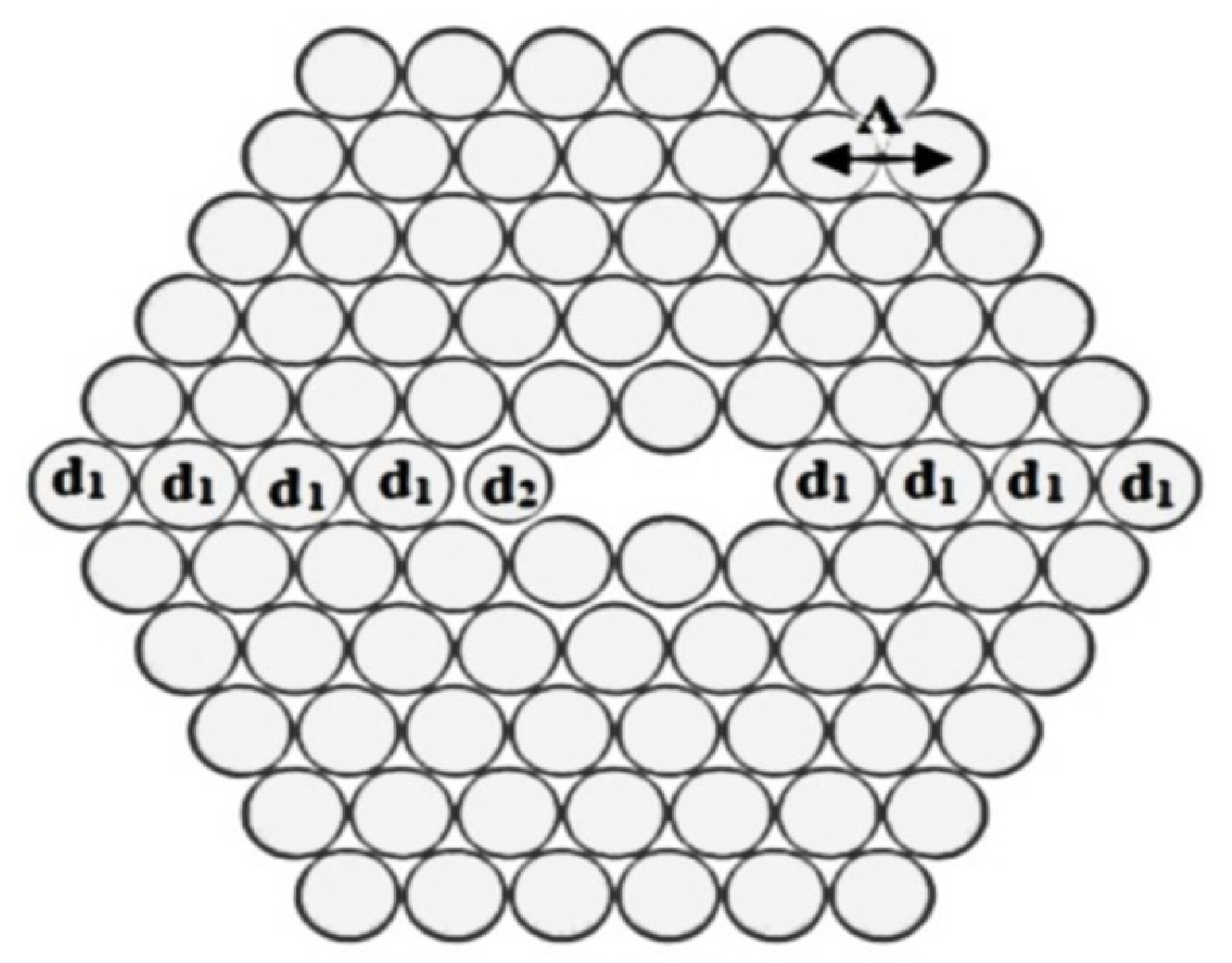
The HC-PCF used in this work functions simultaneously as an optical waveguide and gas absorption chamber. Unlike conventional optical fibers, HC-PCFs guide light through a hollow air core surrounded by a micro structured cladding [18,19].
This configuration significantly enhances the interaction between light and gas molecules while maintaining a compact sensor size. The sensing fiber employed in this study possesses a hollow core diameter of approximately 10 μm and a cladding diameter of about 120 μm. The micro structured geometry enables efficient optical confinement and low transmission loss around the selected sensing wavelength [11].
The compact structure of the HC-PCF allows long optical interaction lengths to be achieved without increasing the physical dimensions of the sensing chamber. Consequently, the proposed system provides improved sensitivity while remaining suitable for practical field applications [20,21].
Figure 1.
Cross Section of Photonic crystal fiber.
c. Wavelength Selection
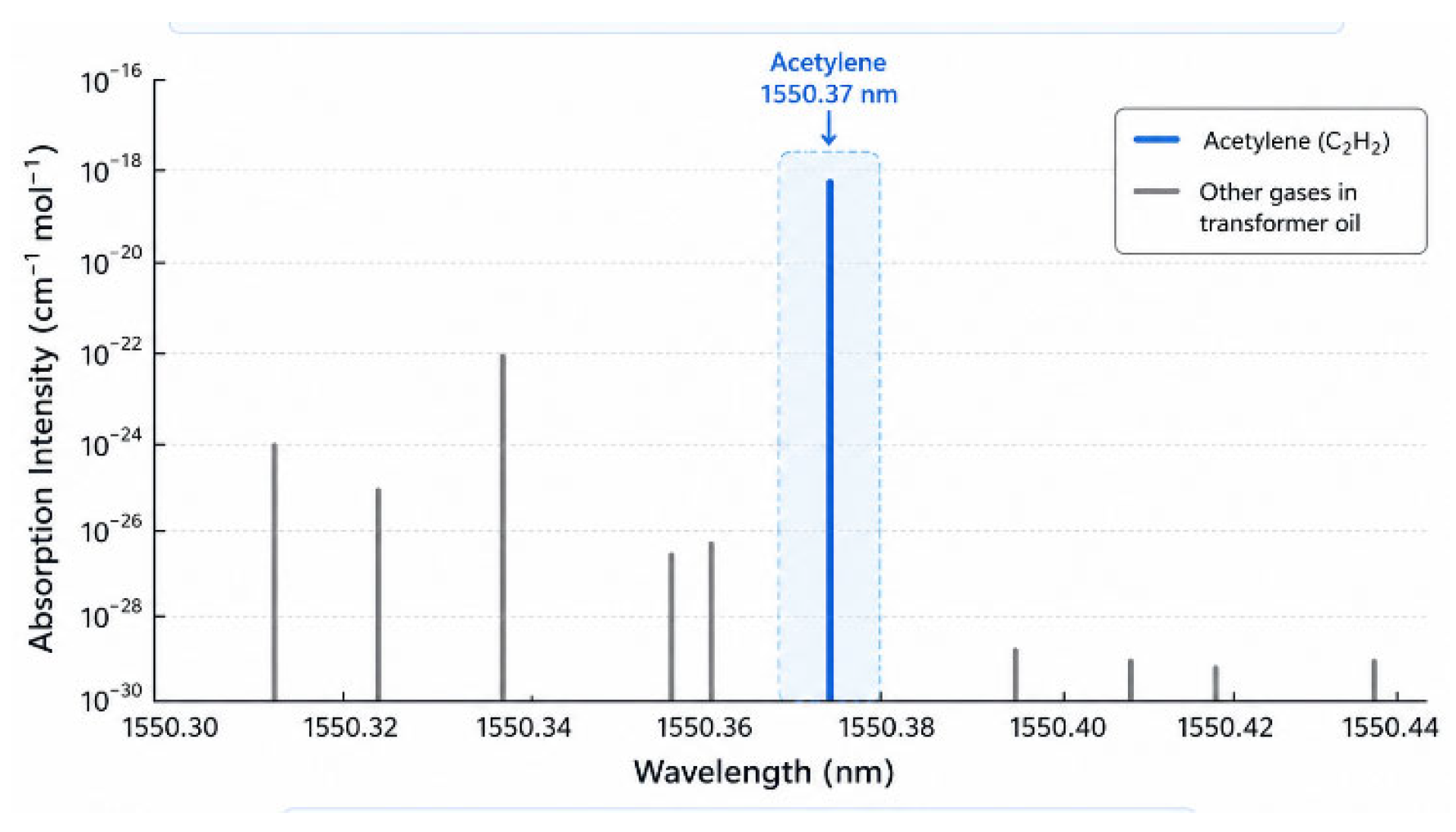
For acetylene detection, the operating wavelength was selected based on data obtained from the HITRAN molecular absorption database [21,22]. Acetylene exhibits a strong absorption peak near 1550.37 nm, whereas interference from other gases commonly found in transformer oil remains negligible at this wavelength.
Therefore, a tunable laser source operating around 1550.37 nm was employed to achieve selective and high-sensitivity acetylene detection.
Figure 2.
Image of acetylene absorption lines from HITRAN.
III. Experimental Arrangement
a. Oil -Gas Seperation
To perform dissolved gas analysis (DGA) effectively, the dissolved gases must first be separated from the transformer oil [23]. Figure 3 illustrates the process of acetylene separation from transformer oil. The dissolved gases are extracted using polymeric membranes, which allow gas molecules to permeate while preventing oil molecules from passing through. Additionally, a gas pump is employed to accelerate the oil–gas separation process.
The complete separation process requires approximately 5 minutes. This study primarily focuses on the detection of acetylene gas after the separation stage.
IV. Experimental Setup
The proposed experimental platform mainly consists of a gas mixing system, an optical sensing system, and a data acquisition unit. The gas mixing system is designed to prepare acetylene samples with precise concentrations illustrated in Figure 4. It includes mass flow controllers, pressure gauges, mixing chambers, and a vacuum pump. High-accuracy gas preparation is essential for evaluating sensor performance under different concentration levels. The optical sensing system employs a tunable laser source, photodetectors, reference optical paths, and the HC-PCF sensing chamber [24]. The laser beam is divided into reference and sensing channels to minimize measurement errors caused by laser power fluctuations and environmental disturbances. To improve optical coupling efficiency, the HC-PCF is connected to standard single-mode fibers using ceramic ferrules and mating sleeves. UV adhesive is applied to stabilize the fiber connections and minimize vibration-induced optical losses during experiments. Gas diffusion inside the HC-PCF plays an important role in determining sensor response time. The diffusion process occurs through the gaps formed at the fiber connection interfaces. Theoretical analysis indicates that the diffusion time depends strongly on fiber length and gas diffusion coefficient.
For a 1.0 m HC-PCF, the theoretical response time required for acetylene concentration inside the fiber core to reach 90% of the external concentration is approximately 3.47 hours.
V. Results and Discussion
The gas diffusion characteristics inside the hollow-core photonic crystal fiber (HC-PCF) were investigated to evaluate the dynamic response performance of the proposed sensing system. Since gas molecules enter the hollow core through the coupling interfaces between the single-mode fiber (SMF) and HC-PCF, the diffusion process significantly influences sensor response time and overall measurement stability.
Theoretical diffusion analysis was conducted using diffusion-based concentration models to estimate the variation of acetylene concentration inside the HC-PCF over time. For a 1.0 m HC-PCF sensing chamber, the theoretical response time required for the internal gas concentration to reach 90% of the external concentration was approximately 3.47 h. Experimental verification was performed using 1000 ppm acetylene gas samples under atmospheric conditions.
The measured optical transmittance gradually decreased as acetylene diffused into the hollow core region, eventually reaching a stable saturation state after approximately 2.91 h. The close agreement between theoretical prediction and experimental observation confirms the reliability of the diffusion model and validates the effectiveness of the proposed sensing structure. The slight discrepancy between theoretical and experimental response times may be attributed to residual vacuum conditions inside the chamber, environmental fluctuations, and minor variations in gas flow distribution during testing. Nevertheless, the results demonstrate that HC-PCF structures provide stable and repeatable gas diffusion behavior suitable for online dissolved gas monitoring applications.
The analysis also indicates that response time can be further improved by optimizing fiber length, coupling geometry, and gas injection mechanisms. Such improvements would enhance the real-time monitoring capability of HC-PCF-based sensing systems in future smart grid applications.
B. Acetylene Sensing Performance
To evaluate the sensing performance of the proposed photonic crystal fiber-based monitoring system, acetylene gas samples with concentrations ranging from 0 ppm to approximately 400 ppm were tested under room temperature and atmospheric pressure conditions.
The optical attenuation produced by gas absorption was determined by comparing the transmitted optical intensities of the sensing and reference channels. Experimental results revealed a strong linear relationship between acetylene concentration and optical attenuation. The sensing relationship can be expressed as:
|ln(I/I₀)| = 0.000132 × c(C₂H₂) + 0.0039 (2)
where c(C₂H₂) represents the acetylene concentration in ppm.
The sensing system achieved an excellent linear correlation coefficient of R² = 0.989, indicating high measurement accuracy and excellent repeatability. The strong linearity demonstrates that the proposed HC-PCF sensing platform can accurately quantify dissolved acetylene concentrations over a wide measurement range.
Compared with conventional dissolved gas sensing methods, the proposed system offers significant advantages including enhanced optical interaction length, compact sensor structure, reduced electromagnetic interference, and high selectivity. The selected sensing wavelength near 1550.37 nm effectively minimized interference from methane, carbon dioxide, carbon monoxide, and water vapor, thereby improving overall sensing accuracy.
Furthermore, the compact architecture of the HC-PCF significantly reduced the physical size of the sensing chamber while maintaining high sensitivity. This characteristic makes the system highly suitable for embedded transformer monitoring and portable diagnostic applications in modern power systems.
C. Allan Variance Analysis and Stability Evaluation
The stability and minimum detection capability of the proposed sensing system were evaluated using Allan deviation and Allan variance analysis. Since optical sensing systems are highly sensitive to environmental disturbances, thermal drift, and instrumental noise, Allan analysis was employed to determine the optimal averaging time for maximizing the signal-to-noise ratio (SNR).
Figure 5 illustrates the Allan deviation analysis of the HC-PCF-based gas sensing system. As shown in the figure, the Allan deviation continuously decreases with increasing integration time during the initial measurement region, indicating effective suppression of white noise through signal averaging. The deviation reaches its minimum value at an averaging time of approximately 28–29 s, corresponding to a minimum detectable acetylene concentration of nearly 4.5 ppm. Beyond this optimal averaging duration, the Allan deviation begins to increase gradually due to low-frequency drift noise and environmental fluctuations. This behavior demonstrates the transition from white-noise-dominated performance to drift-dominated instability at longer integration times.
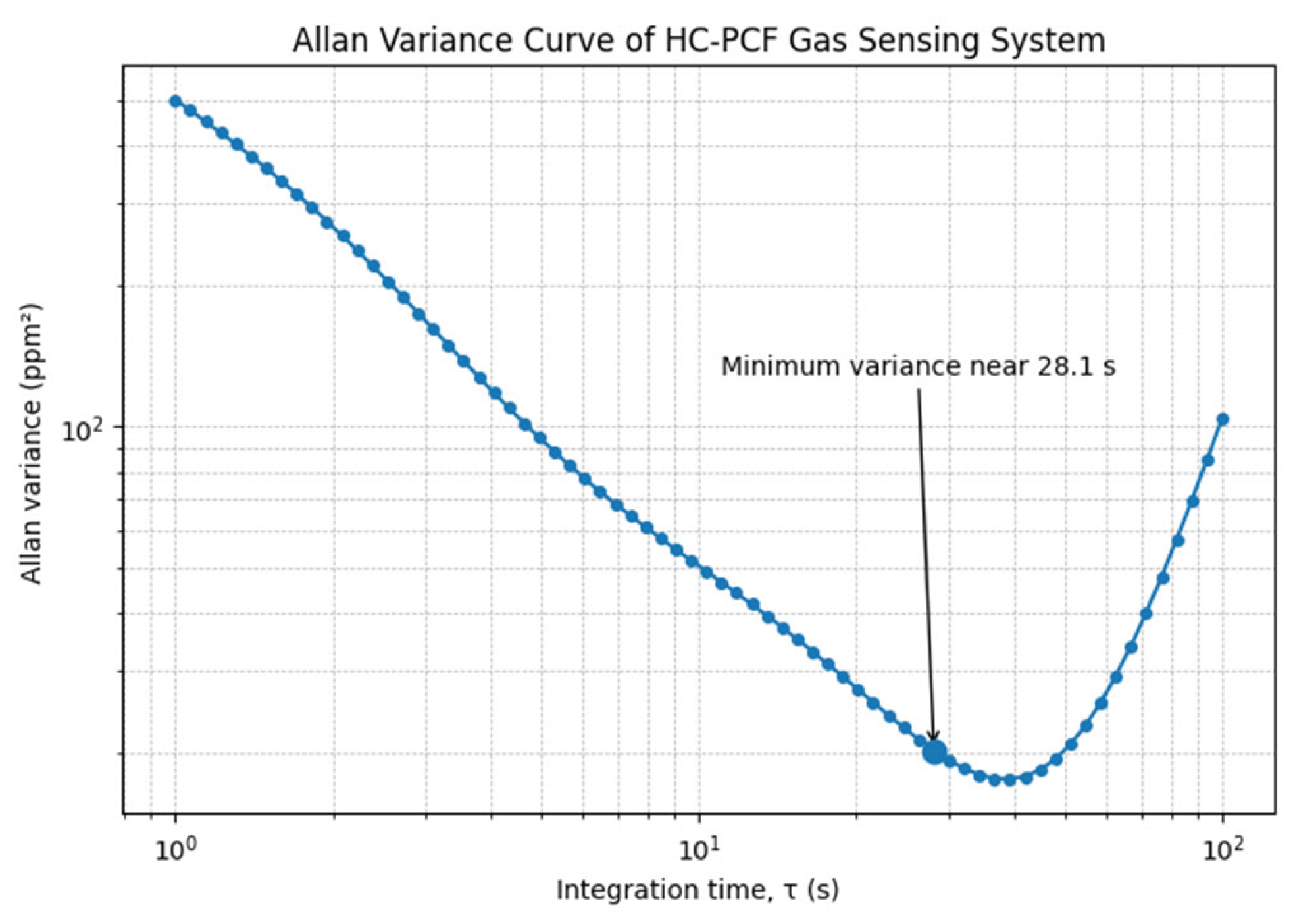
Figure 6 presents the corresponding Allan variance curve of the proposed photonic crystal fiber sensing system. The variance curve further confirms that the optimal measurement stability occurs near an integration time of 28 s, where the minimum Allan variance is achieved. The smooth behavior of the variance curve indicates excellent measurement consistency and strong long-term stability of the sensing platform.
The Allan analysis results demonstrate that the proposed sensing system provides highly stable low-concentration gas detection performance suitable for real-time transformer condition monitoring. Compared with previously reported HC-PCF-based sensing systems, the proposed approach achieved improved detection sensitivity and enhanced stability characteristics.
The minimum detection limit of approximately 4.5 ppm satisfies the practical requirements for dissolved acetylene monitoring in transformer oil. Since acetylene is a key indicator gas associated with electrical discharge faults and insulation degradation, the proposed sensing platform can provide early warning information for predictive transformer maintenance.
D. Implications for Real-Time Power System Monitoring
The experimental results confirm that photonic crystal fiber technology provides a highly promising solution for intelligent power system monitoring applications. The proposed HC-PCF-based sensing platform combines high sensitivity, compact structure, electromagnetic immunity, and continuous online monitoring capability within a single optical sensing architecture.
In practical transformer diagnostics, sudden increases in dissolved acetylene concentration often indicate partial discharge activity, insulation breakdown, or internal arcing faults. Therefore, the capability to detect low acetylene concentrations with high stability enables earlier identification of abnormal operating conditions before catastrophic transformer failure occurs.
Additionally, the compact and flexible structure of the HC-PCF sensor allows integration into distributed smart grid monitoring systems and Internet of Things (IoT)-enabled predictive maintenance platforms. The sensing architecture may also be extended to multi-gas monitoring applications through wavelength multiplexing and advanced spectral analysis techniques.
Overall, the proposed photonic crystal fiber-based sensing system demonstrates strong potential for next-generation real-time monitoring of high-voltage electrical equipment and intelligent power network infrastructures.
VI. Conclusions
This paper presented the design and application of a photonic crystal fiber-based sensing system for real-time power system monitoring. By integrating infrared absorption spectroscopy with hollow-core photonic crystal fiber technology, a compact and highly sensitive dissolved gas sensing platform was successfully developed.
Theoretical and experimental analyses demonstrated that gas diffusion characteristics significantly influence sensor response performance. Experimental acetylene sensing results confirmed excellent linearity and high detection sensitivity, with a minimum detection limit of approximately 4.5 ppm achieved through Allan variance optimization.
The proposed sensing technology offers strong potential for real-time transformer monitoring, predictive maintenance, and intelligent power system diagnostics. Future work may focus on improving gas diffusion speed, enhancing multi-gas sensing capability, and developing distributed optical sensing networks for smart grid applications.
References
- Wang, D.; Liu, Q.; Yang, J.; Xu, X.; Chen, X.; Shi, Y.; Huang, D.; Wang, Y.; Wang, K. Digital twin for power equipment: lifecycle framework, enabling technologies, and prospects in next-generation power systems. Computing 2026, 108, 62. [Google Scholar] [CrossRef]
- Singh, J.; Singh, S.; Singh, A. Distribution transformer failure modes, effects and criticality analysis (FMECA). Eng. Fail. Anal. 2019, 99, 180–191. [Google Scholar] [CrossRef]
- Biswas, S.K.; Islam, S.M.R.; Ahmed, M.; Halder, A.; Islam, R.; Hossain, M. Analytical model for coupling Whispering gallery mode silica microcavity for sensing application. 2017 2nd International Conference on Electrical & Electronic Engineering (ICEEE); LOCATION OF CONFERENCE, BangladeshDATE OF CONFERENCE; pp. 1–4.
- Biswas, S.K.; Islam, S.M.R.; Ahmed, M.; Halder, A.; Islam, R.; Hossain, M. Analytical model for coupling Whispering gallery mode silica microcavity for sensing application. 2017 2nd International Conference on Electrical & Electronic Engineering (ICEEE); LOCATION OF CONFERENCE, BangladeshDATE OF CONFERENCE; pp. 1–4.
- Badawi, M.; Ibrahim, S.A.; Mansour, D.-E.A.; El-Faraskoury, A.A.; Ward, S.A.; Mahmoud, K.; Lehtonen, M.; Darwish, M.M.F. Reliable Estimation for Health Index of Transformer Oil Based on Novel Combined Predictive Maintenance Techniques. IEEE Access 2022, 10, 25954–25972. [Google Scholar] [CrossRef]
- Gouda, O.E.; El-Hoshy, S.H.; E.L.-Tamaly, H.H. Condition assessment of power transformers based on dissolved gas analysis. IET Gener. Transm. Distrib. 2019, 13, 2299–2310. [Google Scholar] [CrossRef]
- Wijesinghe, D.R.; Zobair, A.; Esmaeelpour, M. A Review on Photoacoustic Spectroscopy Techniques for Gas Sensing. Sensors 2024, 24, 6577. [Google Scholar] [CrossRef] [PubMed]
- Barik, P.; Pradhan, M. Selectivity in trace gas sensing: recent developments, challenges, and future perspectives. Anal. 2022, 147, 1024–1054. [Google Scholar] [CrossRef]
- Li, D.; Xu, C.; Xie, J.; Lee, C. Research Progress in Surface-Enhanced Infrared Absorption Spectroscopy: From Performance Optimization, Sensing Applications, to System Integration. Nanomaterials 2023, 13, 2377. [Google Scholar] [CrossRef] [PubMed]
- Jha, R.K. Non-Dispersive Infrared Gas Sensing Technology: A Review. IEEE Sens. J. 2021, 22, 6–15. [Google Scholar] [CrossRef]
- Biswas, S.K.; Islam, S.M.R.; Islam, R.; Alam Mia, M.M.; Sayem, S.; Ahmed, F. Design of an Ultrahigh Birefringence Photonic Crystal Fiber with Large Nonlinearity Using All Circular Air Holes for a Fiber-Optic Transmission System. Photonics 2018, 5, 26. [Google Scholar] [CrossRef]
- Islam, S. M. R.; Islam, M. M.; Rahman, M. N. A.; Mia, M. M. A.; Hakim, M. S.; Biswas, S. K. Design of hexagonal photonic crystal fiber with ultra-high birefringent and large negative dispersion coefficient for the application of broadband fiber. Int. J. Eng. Sci. Tech 2017, vol. 2(no. 1), 9–16. [Google Scholar]
- Islam, S.M.R.; Mahmud; Islam, R.; Miah, S.; Munira, S.; Al Maimun, A.; Akash, M.R.; Wang, R. Advances in Photonic Crystal Fiber Biosensors for Multi-Organ Cancer Diagnostics: A Systematic Review. 22nd IEEE International Colloquium on Signal Processing & Its Applications (CSPA), 2026; LOCATION OF CONFERENCE, MalaysiaDATE OF CONFERENCE; pp. 102–107. [Google Scholar]
- Pinto, A.M.R.; Lopez-Amo, M. Photonic Crystal Fibers for Sensing Applications. J. Sens. 2012, 2012, 1–21. [Google Scholar] [CrossRef]
- Biswas, S.K.; al Noman, A.; Islam, S.M.R. Nonlinear coupling of whispering gallery mode silica microcavity for sensing application. 2017 3rd International Conference on Electrical Information and Communication Technology (EICT); LOCATION OF CONFERENCE, BangladeshDATE OF CONFERENCE; pp. 1–3.
- Islam, M. R.; Islam, S. R.; Opu, M. T. I.; Mia, M. M.; Biswas, S. K. Ultra high birefringent hexagonal photonic crystal fibers with ultra low confinement loss employing different sizes of elliptical air holes in the core. Asia Pac. J. Eng. Sci. Technol. 2017, vol. 3(no. 4), 141–150. [Google Scholar]
- Li, L.; Zhao, H.; Ni, N.; Wang, Y.; Gao, J.; Gao, Q.; Zhang, Y.; Zhang, Y. Study on the origin of linear deviation with the Beer-Lambert law in absorption spectroscopy by measuring sulfur dioxide. Spectrochim. Acta Part A Mol. Biomol. Spectrosc. 2022, 275, 121192. [Google Scholar] [CrossRef] [PubMed]
- Yu, R.; Chen, Y.; Shui, L.; Xiao, L. Hollow-Core Photonic Crystal Fiber Gas Sensing. Sensors 2020, 20, 2996. [Google Scholar] [CrossRef] [PubMed]
- Benabid, F.; Roberts, P. Linear and nonlinear optical properties of hollow core photonic crystal fiber. J. Mod. Opt. 2011, 58, 87–124. [Google Scholar] [CrossRef]
- Biswas, S. K.; Ahmed, T.; Islam, S. M. R.; Islam, M. R.; Mia, M. M. A.; Wahid, M. F. Highly Nonlinear Dispersion Compensating Octagonal Photonic Crystal Fiber: Design and Analysis. In 2019 International Conference on Electrical, Computer and Communication Engineering (ECCE); IEEE, 2019; pp. 1–5. [Google Scholar]
- Islam, R.; Islam, S.M.R.; Ahmed, M.; Ahmed, F.; Faruk, M.; Biswas, S.K. Analysis of Dispersion and Nonlinear Property in Defected Core Square Photonic Crystal Fiber. 2018 9th International Conference on Computing, Communication and Networking Technologies (ICCCNT); LOCATION OF CONFERENCE, IndiaDATE OF CONFERENCE; pp. 1–5.
- Al Maimun, A.; Islam, R.; Islam, S.M.R.; Mahmud; Munira, S.; Akash, M.R.; Miah, S.; Wang, R. Mahbubur A Numerical Simulation for the Diagnosis of Cancer Cells Using a Gold-Coated SPR-Boosted PCF Biosensor. 2026 22nd IEEE International Colloquium on Signal Processing & Its Applications (CSPA); LOCATION OF CONFERENCE, MalaysiaDATE OF CONFERENCE; pp. 356–359.
- Raj, R.A.; Venkatachary, S.K.; D, S.; A, S.S.; Andrews, L.J.B.; A, A. Extensive Critique on Blending Studies Conducted in Insulating Fluids for Transformer Applications. 2024 IEEE International Students' Conference on Electrical, Electronics and Computer Science (SCEECS); LOCATION OF CONFERENCE, IndiaDATE OF CONFERENCE; pp. 1–6.
- Zhao, Z.; Lu, Y.; Duan, L.; Wang, M.; Zhang, H.; Yao, J. Fiber ring laser sensor based on hollow-core photonic crystal fiber. Opt. Commun. 2015, 350, 296–300. [Google Scholar] [CrossRef]
Figure 3.
Schematic illustration of the oil–gas separation process for acetylene extraction from transformer oil.
Figure 3.
Schematic illustration of the oil–gas separation process for acetylene extraction from transformer oil.
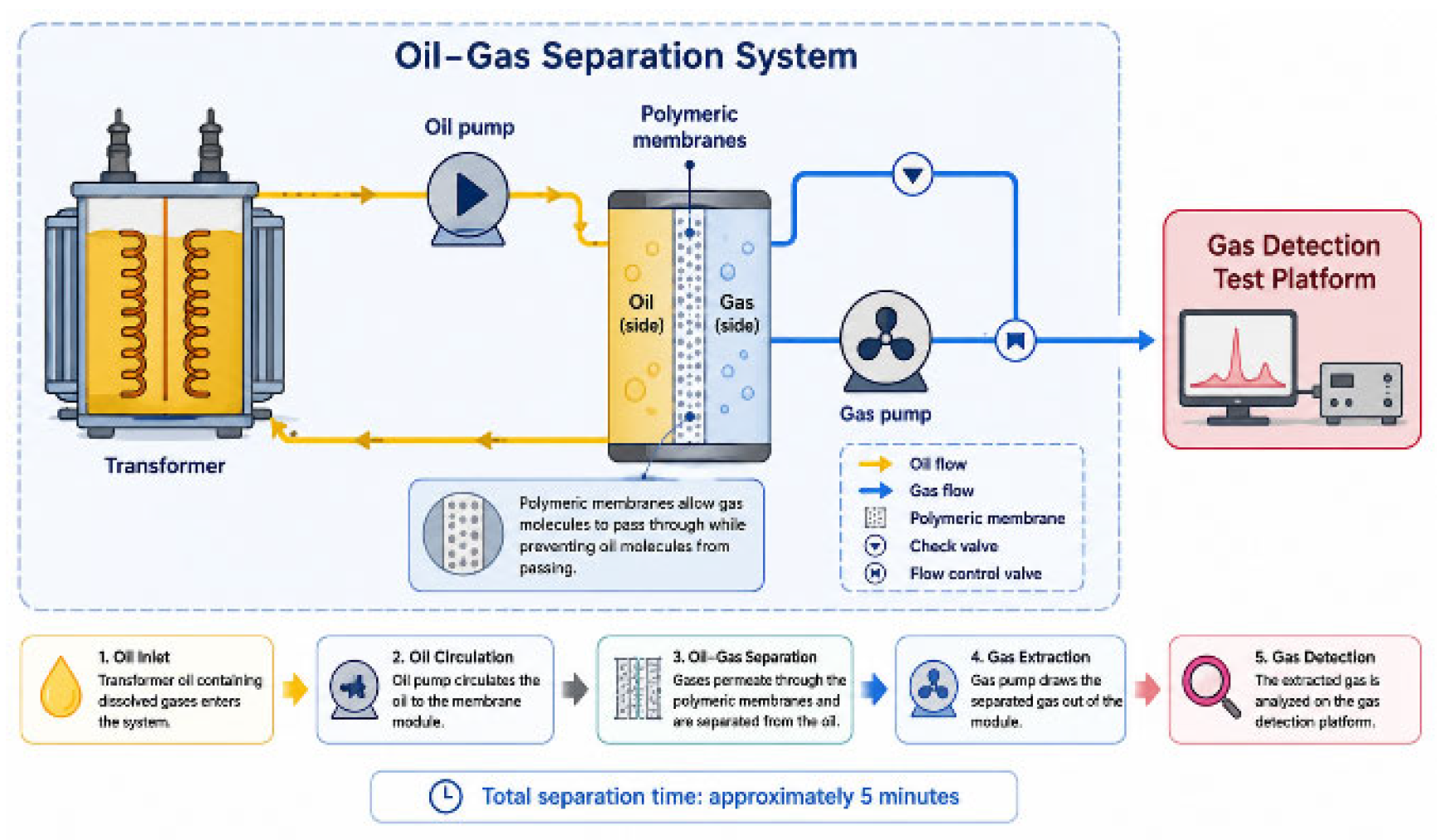
Figure 4.
Layout of the gas detection system test platform.
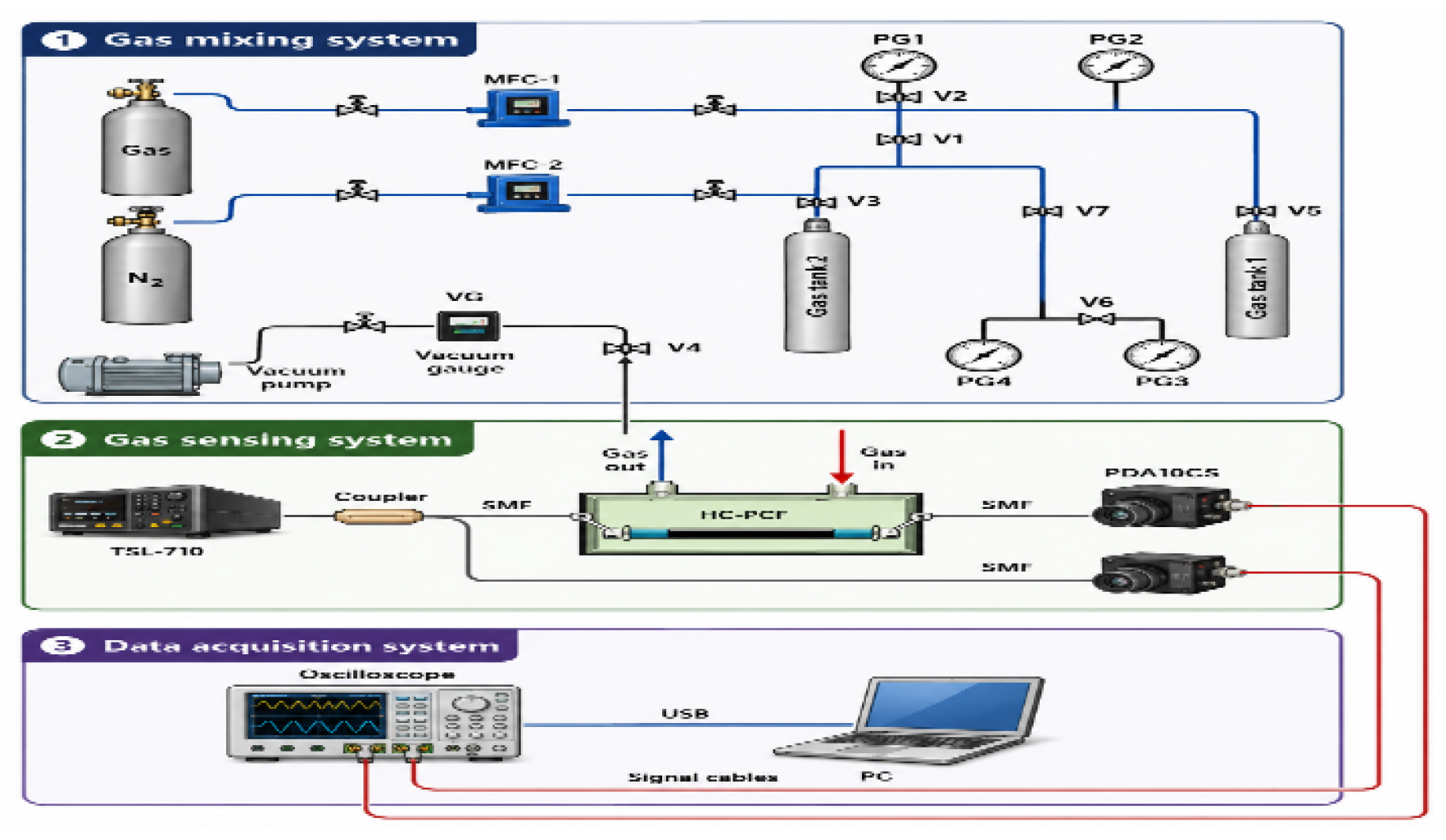
Figure 5.
Allan Deviation Analysis of the HC-PCF-Based Gas Sensing System.
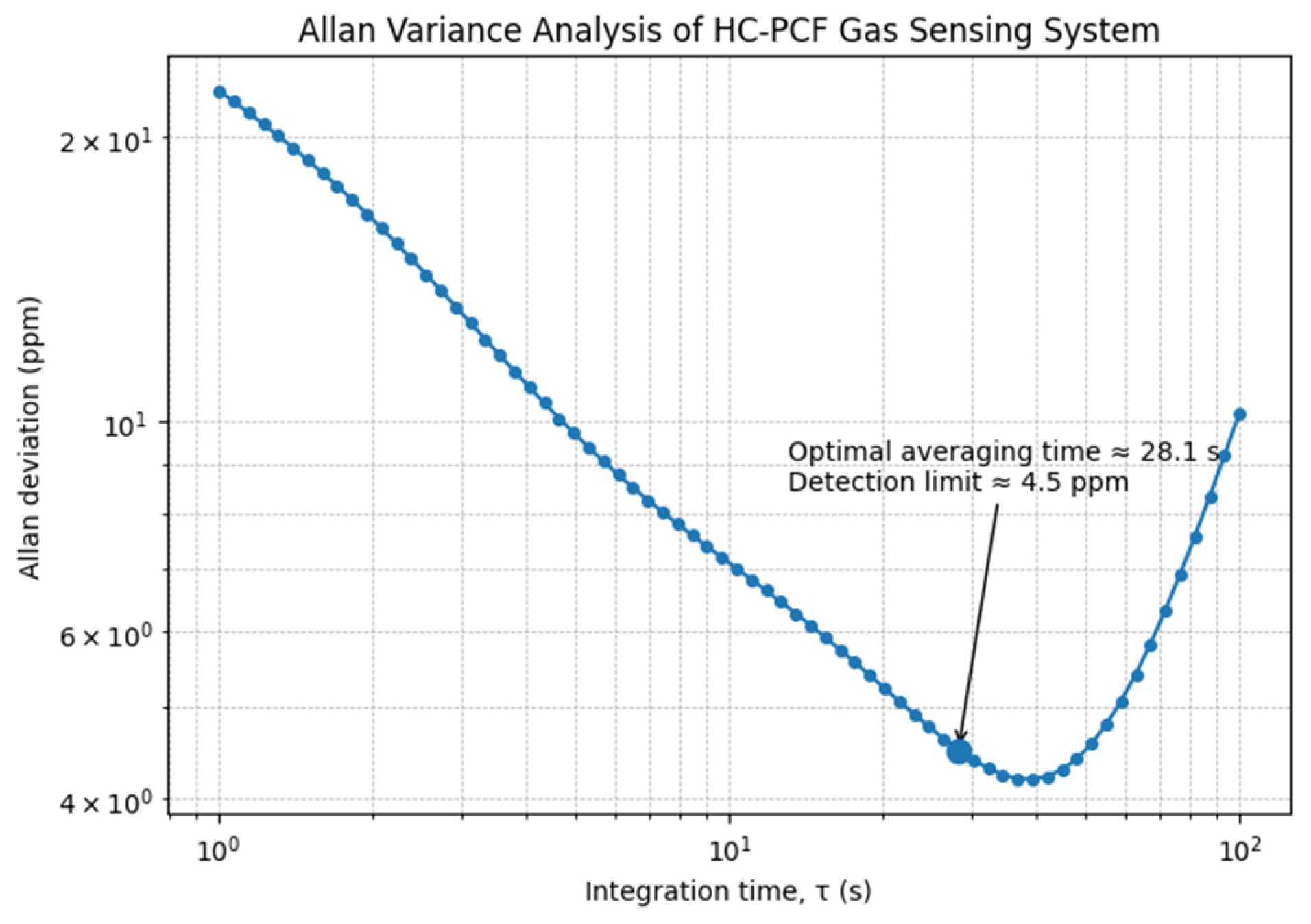
Figure 6.
Allan Variance Curve of the Proposed Photonic Crystal Fiber Sensor.
Disclaimer/Publisher’s Note: The statements, opinions and data contained in all publications are solely those of the individual author(s) and contributor(s) and not of MDPI and/or the editor(s). MDPI and/or the editor(s) disclaim responsibility for any injury to people or property resulting from any ideas, methods, instructions or products referred to in the content. |
© 2026 by the authors. Licensee MDPI, Basel, Switzerland. This article is an open access article distributed under the terms and conditions of the Creative Commons Attribution (CC BY) license.
Copyright: This open access article is published under a Creative Commons CC BY 4.0 license, which permit the free download, distribution, and reuse, provided that the author and preprint are cited in any reuse.