

Submitted:
21 May 2026
Posted:
22 May 2026
You are already at the latest version
Abstract
Background: Malignant melanoma remains a biologically aggressive cancer in which pathway redundancy and adaptive signaling can complicate durable therapeutic control. The working hypothesis is based on the following testable question: whether an archived dual-oil formulation composed of cold-pressed Prunus dulcis oil and Pinus sylvestris oil, in which α-pinene is the major component, generated a measurable NRU viability phenotype in B16F10 melanoma cells that justified subsequent standardized chemical, mechanistic, and statistical follow-up. Methods: Comparator-context docking observations were generated across a melanoma-relevant target panel, and the computational layer was used only to organize qualitative pocket-context hypotheses. The archived NRU dataset was then descriptively evaluated in B16F10 melanoma cells and MRC-5 fibroblasts. Results: The NRU data indicate an observable concentration-associated reduction in B16F10 viability for the combined formulation; and IC50/selectivity-index values were estimated from fitted dose-response curves; however, the absence of complete replicate-level raw metadata and confidence intervals requires cautious exploratory interpretation. Conclusions: The results support the cautious interpretation that a dual-oil P. dulcis and P. sylvestris formulation may serve as a pilot, hypothesis-generating anti-melanoma exploratory platform. The principal value of the study is to define the minimum experimental program required for future validation, including GC-MS batch standardization, orthogonal viability assays, replicated dose-response modeling, biochemical target assays, pathway readouts, and in vivo evaluation where justified. GC-MS/FAME profiling is incorporated as a chemical-standardization anchor for the dual-oil system. GC/MS analysis was performed to characterize the chemical profiles of cold-pressed P. dulcis oil and P. sylvestris needle essential oil, supporting chemical standardization of the dual-oil system.
Keywords:
malignant melanoma
; Prunus dulcis
; Pinus sylvestris
; α-pinene
; exploratory data report
; comparator-context docking
; neutral red uptake assay
; hypothesis-generating preclinical screening
; chemical standardization
; methodological limitations
1. Introduction
Cutaneous malignant melanoma is one of the most aggressive skin malignancies because of its high metastatic potential, marked biological heterogeneity, rapid phenotypic adaptation, and frequent resistance to both conventional and molecularly targeted therapies [1,2,3,4]. Although, melanoma accounts for a relatively limited proportion of all cutaneous cancers, it is responsible for a disproportionate fraction of skin-cancer-related mortality, primarily because of its ability to progress from localized disease to invasive and metastatic stages [3,4,38,39,40]. The transition from early melanocytic transformation to advanced melanoma involves complex deregulation of proliferation, survival, apoptosis, invasion, migration, oxidative-stress adaptation, immune escape, and lineage-associated melanocytic programs [4,30,36,38,39,40,41,42,47,48].
Among the molecular pathways implicated in melanoma biology, the RAS–RAF–MEK–ERK mitogen-activated protein kinase (MAPK) axis remains one of the most clinically and mechanistically relevant signaling cascades [1,2,5,6]. Hyperactivation of the ERK/MAPK pathway is a central feature of melanoma progression, and activating alterations in BRAF, NRAS, NF1, and related signaling nodes contribute to sustained proliferation, survival advantage, and therapeutic adaptation [1,2,3,4,7,47]. The clinical validation of BRAF and MEK inhibitors, including vemurafenib, dabrafenib, encorafenib, trametinib, cobimetinib, and binimetinib, has transformed the treatment landscape of BRAF-mutant melanoma [2,3,4,6]. Nevertheless, the durability of responses remains limited by adaptive and acquired resistance mechanisms, including MAPK pathway reactivation, ERK re-signaling, bypass signaling, compensatory PI3K/AKT/mTOR activation, receptor tyrosine kinase rewiring, phenotypic switching, and tumor-cell heterogeneity [1,2,3,4,5,6,7,13,47].
The therapeutic complexity of melanoma is further increased by the involvement of additional signaling and stress-response systems, including PI3K/AKT, STAT3/JAK2, NF-κB, COX-2, PARP1-associated DNA damage response, oxidative-stress networks, mitochondrial apoptosis pathways, and melanogenesis-associated regulators such as tyrosinase, MITF, MC1R, TRP-1, and TRP-2 [7,8,9,10,11,12,15,36,41,42,55,56]. PARP1 has gained increasing attention in melanoma because DNA-damage-response targeting may have potential relevance in combination strategies after BRAF/MEK therapy failure [7]. Tyrosinase and related melanogenic regulators remain biologically relevant because they are associated with melanocyte lineage identity, melanin biosynthesis, pigmentation disorders, and melanoma-associated antigenic programs [8,9,10,11,12,15,55]. However, any computational or biochemical evaluation of such targets must be interpreted cautiously, since molecular docking alone does not establish cellular target engagement, enzymatic inhibition, pathway modulation, or therapeutic efficacy [8,9,10,11,12,44,45,46].
In parallel with targeted therapy and immunotherapy, natural products and phytochemicals have attracted increasing attention as sources of biologically active molecules capable of modulating cancer-relevant pathways [30,31,32,33,34,35,36,38,39,40,41,42,43,47,48,49,50,51,52,53,57,58,59]. Plant-derived compounds investigated in melanoma and melanoma-relevant experimental models include terpenes, phenylpropanoids, flavonoids, polyphenols, carotenoids, alkaloids, cannabinoids, essential-oil constituents, and complex phytochemical mixtures [31,32,33,34,35,36,38,39,40,41,42,43,47,48,49,50,51,52,53]. Several of these compounds have been reported to affect apoptosis, oxidative stress, mitochondrial function, cell-cycle progression, invasion, migration, angiogenesis, inflammatory signaling, immune modulation, melanogenesis, and resistance-associated pathways [32,33,34,35,36,37,38,39,40,41,42,47,48,49,50,51,52,53,58]. Nevertheless, the literature also emphasizes that natural origin does not imply intrinsic safety, selectivity, reproducibility, or therapeutic efficacy, and that dose, formulation, chemical composition, exposure duration, model system, bioavailability, and assay interference are critical determinants of biological interpretation [32,33,37,42,52,59].
Among natural-product classes, essential oils and their volatile constituents have been widely investigated for anticancer-related activity in preclinical systems [31,32,33,34,37,54,56]. Essential oils are chemically complex mixtures mainly composed of monoterpenes, sesquiterpenes, phenylpropanoids, and other lipophilic molecules whose biological effects may involve membrane perturbation, redox modulation, mitochondrial stress, caspase activation, apoptosis induction, inflammatory-pathway regulation, and interactions with survival signaling cascades [31,32,33,34,37,56]. However, essential-oil research requires rigorous chemical standardization, batch-to-batch reproducibility, vehicle controls, toxicity evaluation, and orthogonal biological validation, particularly when oil-based matrices are assessed using colorimetric or lysosomal viability assays [31,32,33,34,37,54,56].
α-Pinene is a monoterpene of particular relevance to the present study because it is abundant in several Pinus-derived essential oils and has been investigated in tumor models, including melanoma-relevant systems [13,14,15]. Matsuo et al. reported that isolated α-pinene induced apoptosis and antimetastatic protection in a melanoma model, with mitochondrial depolarization, reactive oxygen species generation, caspase-3 activation, DNA fragmentation, and phosphatidylserine exposure [14]. Kusuhara et al. reported that an α-pinene-containing fragrant environment reduced melanoma tumor growth in mice and was associated with neuroendocrine and immune modulation [13]. Additional studies have reported α-pinene-associated apoptotic and MAPK-related effects in other tumor models, supporting the broader biological plausibility of α-pinene-rich matrices while not proving that the same mechanisms occur in the present formulation [15].
Pinus-derived extracts and essential oils represent another important axis of the present rationale. Constituents of P. taiwanensis were evaluated against B16-F10 melanoma cells, supporting the relevance of Pinus-derived phytochemicals in melanoma-associated experimental systems [18]. P. sylvestris extract and essential oil have shown cytotoxicity in cancer cell models, while other P. species, including P. densiflora, P. eldarica, P. halepensis, and P. mugo, have been associated with tumor-cell viability reduction, ROS generation, caspase activation, STAT3 modulation, cell-cycle effects, or antiproliferative activity in different cancer models [19,20,21,54,56]. These findings support the biological plausibility of Pinus-derived matrices as sources of bioactive terpenoid compounds, although the activity of each oil depends on species, plant part, extraction method, chemical profile, formulation, and experimental context [18,19,20,21,54,56].
P. dulcis oil provides a chemically distinct lipid-rich component to the present dual-oil formulation. This seed oil has been reported to contain oleic acid, linoleic acid, palmitic acid, and other lipophilic constituents, and has shown anticancer- or antiproliferative-associated effects in colon carcinoma cell models [22]. Additional Prunus-derived phenolic and terpene fractions have been investigated for cytotoxic effects in tumor-cell systems, with some studies including comparisons against normal fibroblast models and combination analysis with conventional chemotherapeutics [23]. P. dulcis shell extracts have also been chemically profiled and shown to contain phenolic acids, flavonoids, lignans, stilbenes, terpenoids, and volatile compounds with biological activity [24]. Although these studies do not directly establish anti-melanoma activity of P. dulcis oil, they support the concept that Prunus-derived matrices can contain biologically active lipidic, phenolic, and terpenoid constituents [22,23,24].
Several essential-oil and phytocomplex studies in melanoma provide particularly relevant comparative support for the present work. Frankincense essential oil has been reported to reduce the viability of B16-F10 and human melanoma cells while modulating Bcl-2/Bax, caspase, and PARP-related apoptotic markers [25]. Oregano phytocomplex induced programmed cell death in B16-F10 and A375 melanoma cells through oxidative stress, mitochondrial dysfunction, DNA damage, apoptosis, and necroptosis, while showing limited toxicity in non-tumor models [26]. Galangin induced apoptosis in B16F10 melanoma cells through mitochondrial pathways and sustained p38 MAPK activation [27]. Jacaranone induced melanoma-cell apoptosis through ROS-mediated Akt downregulation and p38 MAPK activation and displayed antitumor activity in vivo [28]. These studies collectively indicate that natural compounds and phytocomplexes can generate measurable anti-melanoma phenotypes in experimental systems, but they also underscore the need for direct mechanistic validation before translational conclusions are drawn [25,26,27,28].
The relevance of phytochemicals to melanoma extends beyond cytotoxicity. Dietary compounds, polyphenols, flavonoids, and other plant secondary metabolites have been reviewed in relation to melanoma prevention, invasion, metastasis, immune modulation, signaling regulation, oxidative-state balance, and multidrug resistance [30,35,36,38,39,40,41,42,43,48,50]. Polyphenols such as resveratrol, curcumin, quercetin, EGCG, oleuropein, luteolin, and related molecules have been reported to modulate melanoma-relevant pathways including MAPK, PI3K/AKT/mTOR, NF-κB, p53, apoptosis, autophagy, inflammation, angiogenesis, invasion, migration, and epigenetic regulation [41,43,47,48,49,50,52,53]. However, concentration-dependent and model-dependent effects remain critical. For example, quercetin has been reported to show both pro- and antitumor activities in human melanoma spheroids depending on concentration and culture model, highlighting the importance of cautious interpretation [52].
The present manuscript focuses on an exploratory dual-oil formulation composed of cold-pressed P. dulcis oil and α-pinene-rich P. sylvestris essential oil, evaluated through a combination of comparator-context molecular docking, Neutral Red Uptake (NRU) viability profiling, and structured literature integration. The molecular docking component includes melanoma-relevant or melanoma-adjacent comparator targets, namely BRAF V600E, MEK1, ERK2, PARP1, and tyrosinase-related systems, supported by literature on BRAF/MEK/ERK signaling, PARP inhibition, tyrosinase inhibitors, and phytochemical docking studies [1,2,3,4,5,6,7,8,9,10,11,12,44,45,46,55]. The cell-based component compares B16F10 melanoma cells and MRC-5 fibroblasts treated with P. dulcis oil, P. sylvestris oil, the combined dual-oil formulation, and cisplatin. The literature-integration component compares the present preliminary phenotype with independent studies involving α-pinene, Pinus-derived oils, Prunus-derived matrices, essential-oil phytocomplexes, natural-product combinations, tyrosinase biology, MAPK signaling, oxidative stress, apoptosis, and melanoma-targeted pathways [13,14,15,16,17,18,19,20,21,22,23,24,25,26,27,28,29,30,31,32,33,34,35,36,37,38,39,40,41,42,43,44,45,46,47,48,49,50,51,52,53,54,55,56,57,58,59].
2. Results
2.1. Comparator-Context Molecular Docking Panel
The docking panel provides a structural reference framework for several melanoma-relevant or melanoma-adjacent molecular nodes. Vemurafenib in BRAF V600E, trametinib in MEK1, and ulixertinib in ERK2 represent a MAPK-centered comparator triad aligned with clinically validated pathway biology in BRAF-mutant melanoma. Olaparib in PARP1 provides a DNA damage response comparator, while kojic acid in tyrosinase contextualizes melanogenesis and tyrosinase-inhibition biology.
The visual docking outputs should be interpreted as structural-context figures. They do not establish that any component of the dual-oil formulation engages these targets in cells. Their primary value is to justify future target validation experiments and to illustrate why BRAF-MEK-ERK, PARP1, and tyrosinase-related biology remain relevant to melanoma-focused exploratory screening.

Table 1.
GC-MS-guided comparator-based docking scores (kcal/mol) of representative formulation-associated phytochemical markers across the melanoma-relevant target panel.
Table 1.
GC-MS-guided comparator-based docking scores (kcal/mol) of representative formulation-associated phytochemical markers across the melanoma-relevant target panel.
| Ligand | BRAF V600E | MEK1 | ERK2 | KIT | CDK4/6 | PARP1 | COX-2 | Tyrosinase |
|---|---|---|---|---|---|---|---|---|
| α-Pinene (Pinus sylvestris EO; GC-MS 41.6%) | -10.12 | -8.76 | -8.18 | -7.99 | -7.50 | -6.06 | -9.14 | -7.44 |
| β-Pinene (Pinus sylvestris EO; GC-MS 14.2%) | -9.27 | -7.86 | -8.46 | -7.97 | -9.30 | -7.74 | -8.99 | -9.61 |
| δ-3-Carene (Pinus sylvestris EO; GC-MS 14.8%) | -7.80 | -6.89 | -7.74 | -8.80 | -7.91 | -8.16 | -7.27 | -8.91 |
| Oleic acid (Prunus dulcis oil; FAME 52.7%) | -7.61 | -7.85 | -8.12 | -8.09 | -8.58 | -8.53 | -7.67 | -7.92 |
| Linoleic acid (Prunus dulcis oil; FAME 27.9%) | -8.44 | -9.84 | -8.71 | -8.45 | -9.00 | -9.03 | -8.12 | -8.27 |
| Palmitic acid (Prunus dulcis oil; FAME 11.0%) | -9.29 | -9.03 | -8.31 | -7.32 | -9.15 | -6.99 | -8.44 | -9.30 |
| Within-target reference comparator | -7.40 | -7.30 | -7.20 | -7.60 | -7.10 | -7.70 | -7.20 | -6.90 |
Table 2 expands the docking matrix by ranking each GC-MS/FAME-aligned formulation marker within each molecular target. This organization allows the reader to move from raw docking coefficients to a target-specific prioritization logic. The Delta Score column indicates whether each natural ligand performed more favorably or less favorably than the selected within-target comparator. For BRAF V600E, alpha-pinene emerges as the strongest ranked formulation-associated marker, supporting its role as a structurally relevant Pinus sylvestris constituent. For MEK1, ERK2, and PARP1, linoleic acid shows comparatively favorable values, suggesting that the lipid fraction of Prunus dulcis may contribute to the in silico interaction profile. The table also shows that the preferred ligand varies according to the target, which is consistent with the heterogeneous pocket geometry of melanoma-relevant proteins. Importantly, these rankings must be interpreted as computational prioritization rather than evidence of cellular target engagement. The numerical differences provide a rational basis for selecting candidate ligand-target pairs for future biochemical assays. They also help connect the GC-MS/FAME chemical-standardization layer with the comparator-context docking analysis. Therefore, Table 2 functions as a mechanistic bridge between formulation chemistry, docking-derived prioritization, and the experimental validation workflow proposed in this exploratory manuscript.
Table 3 provides pose-level descriptors for the highest-ranked natural ligand identified for each target in the docking workflow. These descriptors complement the energy-based scores by describing the qualitative structural stability and interaction topology of the predicted complexes. Hydrogen-bond counts, hydrophobic contacts, aromatic interactions, pose RMSD, interaction-fingerprint similarity, and pocket occupancy are reported as internal indicators of docking consistency. The predominance of hydrophobic contacts is biologically plausible because the selected formulation markers include monoterpene hydrocarbons and long-chain fatty acids. The RMSD values suggest that several poses remained within a reproducible conformational range across replicate docking evaluations. Interaction-fingerprint similarity further contextualizes how closely natural-ligand poses resemble the binding logic of reference compounds. Back-pocket, channel, hinge-adjacent, and solvent-front annotations provide a compact description of ligand positioning within each binding site. These data are particularly useful for distinguishing superficial docking scores from structurally interpretable poses. Nevertheless, the descriptors do not demonstrate inhibition, pathway modulation, or pharmacological potency in living cells. Table 3 should therefore be read as a structural-quality filter that supports hypothesis generation and guides future target-specific validation experiments.
Table 4 defines the biological ontology of the melanoma-relevant targets selected for the comparator-context docking framework. The table clarifies why the analysis was not restricted to a single oncogenic kinase but was extended to signaling, cell-cycle, inflammatory, DNA-repair, and melanogenesis-related nodes. BRAF V600E, MEK1, and ERK2 represent the central MAPK signaling axis, which is strongly implicated in melanoma proliferation and resistance adaptation. KIT is included as an upstream receptor tyrosine kinase node associated with rebound activation and compensatory pathway signaling. CDK4/6 reflects proliferative licensing through G1/S transition control, a process that may cooperate with MAPK-driven tumor progression. PARP1 represents DNA-damage tolerance and stress adaptation, whereas COX-2 provides an inflammation-associated and microenvironmentally relevant comparator. Tyrosinase is included to preserve the melanocytic-lineage and melanogenesis context of melanoma biology. By integrating these targets, the table establishes a pathway-level rationale for interpreting the docking outputs as a network-oriented exploratory screen. It also prevents overinterpretation of isolated docking values by placing each target within its mechanistic axis. Consequently, Table 4 supports the conceptual architecture linking melanoma biology, phytochemical docking, and future experimental validation.
Table 5 lists the reference inhibitors and binding-context assumptions used to anchor the comparator-based docking interpretation. Each reference compound was selected because it represents a recognized pharmacological or mechanistic comparator for the corresponding molecular target. Vemurafenib, trametinib, and ulixertinib provide the principal MAPK-centered reference framework for BRAF V600E, MEK1, and ERK2. Imatinib, palbociclib or ribociclib, olaparib, celecoxib, and kojic acid extend the comparison to RTK signaling, cell-cycle control, DNA repair, inflammation, and melanogenesis. The binding-topology column indicates whether the comparator acts through hinge binding, allosteric occupancy, trench-like interactions, channel engagement, or active-site modulation. This information is essential because docking scores can only be meaningfully interpreted when the relevant pocket context is defined. The table also distinguishes primary comparators from secondary contextual benchmarks where appropriate. Such organization improves reproducibility by making explicit the structural logic used to compare formulation-associated markers with known ligands. However, the comparator framework does not imply equivalence between phytochemical markers and clinically established drugs. Table 5 therefore provides the methodological scaffold required to interpret the in silico layer conservatively and transparently.
Table 6 focuses specifically on alpha-pinene and compares its docking scores with those of selected reference drugs across the melanoma target panel. This focused comparison is justified by the GC-MS profile of Pinus sylvestris essential oil, in which alpha-pinene represents the dominant monoterpene constituent. The table shows that alpha-pinene generated favorable predicted binding values across several targets, including BRAF V600E, CDK4/6, ERK2, KIT, MEK1, PARP1, and tyrosinase. By presenting alpha-pinene alongside vemurafenib, dabrafenib, trametinib, cobimetinib, ulixertinib, imatinib, palbociclib, ribociclib, olaparib, celecoxib, and kojic acid, the table places the natural ligand within a clinically recognizable comparator landscape. This organization is useful for evaluating whether the dominant volatile marker occupies a plausible structural range relative to established inhibitors. At the same time, the comparison remains exploratory because docking affinity does not predict bioavailability, intracellular exposure, selectivity, or pharmacodynamic efficacy. The alpha-pinene profile is therefore best interpreted as a prioritization signal rather than a therapeutic claim. The table also supports the broader hypothesis that the Pinus sylvestris fraction may contribute to the formulation’s biological behavior. Future work should test this hypothesis through purified-compound controls, pathway readouts, enzymatic assays, and orthogonal viability methods. Accordingly, Table 6 strengthens the chemical-mechanistic continuity between GC-MS dominance, docking plausibility, and the experimental roadmap proposed in the manuscript.
2.2. NRU Viability Profile of Single Oils, Dual-Oil Formulation, and Cisplatin
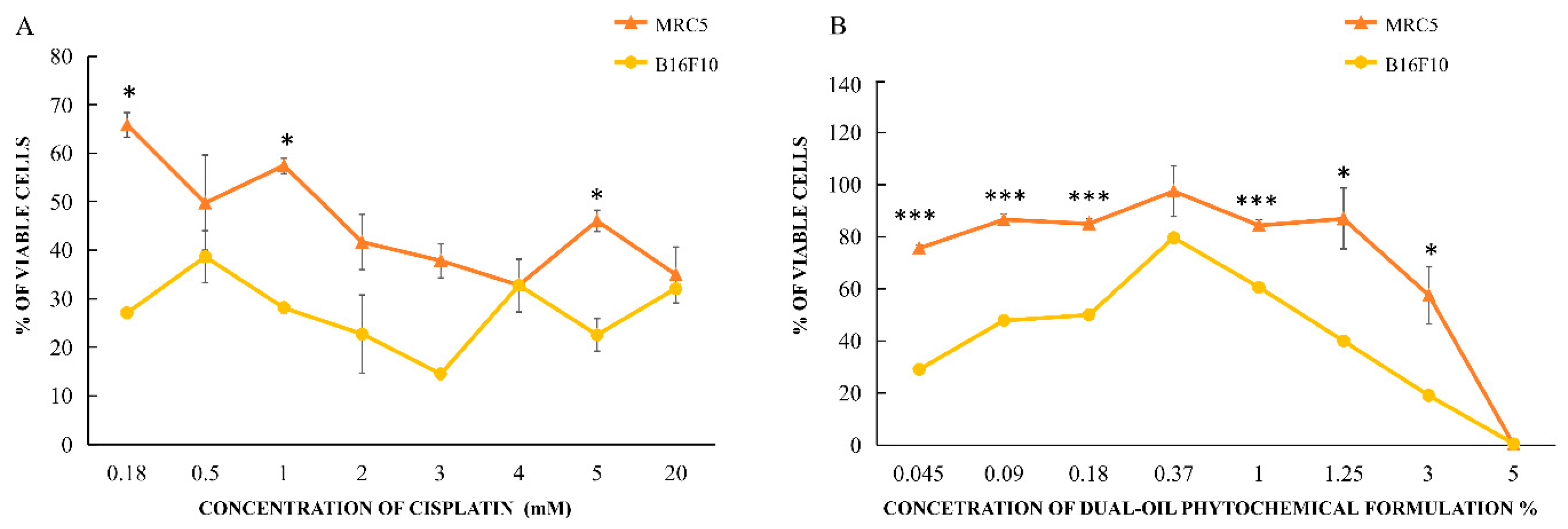
The dual-oil phytochemical formulation (Nevus Recovery) demonstrated a differential cytotoxic effect between B16F10 melanoma cells and MRC-5 fibroblasts (Graph 1, Table 7, and Table 8.). In B16F10 cells, the dose-response curve showed a clear concentration-dependent decline in viability above the higher tested treatment concentrations, indicating a stable and reliable model fit.
Graph 1.
Dose-dependent cytotoxicity of cisplatin and dual-oil phytochemical formulation „Nevus Recovery”: P. dulcis + P. sylvestris (24-h exposure) to B16F10 melanoma and MRC-5 fibroblasts as determined by the NRU assay. Data are presented as mean ± SE. *p<0.05, ***p<0.001.
Graph 1.
Dose-dependent cytotoxicity of cisplatin and dual-oil phytochemical formulation „Nevus Recovery”: P. dulcis + P. sylvestris (24-h exposure) to B16F10 melanoma and MRC-5 fibroblasts as determined by the NRU assay. Data are presented as mean ± SE. *p<0.05, ***p<0.001.
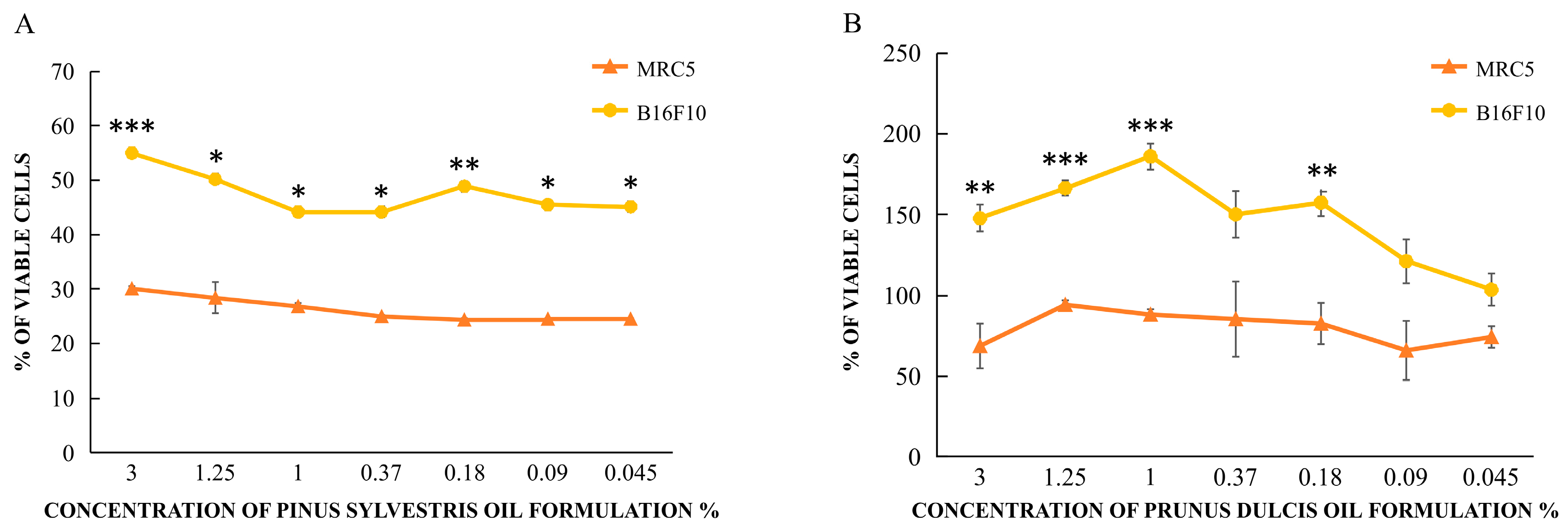
To contextualize the differential cytotoxic profile of the dual-oil phytochemical combination and to clarify the contribution of each component, we further investigated individual effects of P. dulcis and P.sylvestris formulation on the viability of target cells. P. sylvestris oil exhibited moderate cytotoxic activity in both cell lines (Graph 2), with an IC50 value of 1.34% in B16F10 cells and 0.79% in MRC-5 fibroblasts, resulting in a selectivity index (SI) of 0.59. This indicates higher toxicity toward non-malignant fibroblasts and a lack of tumor-selective activity. In contrast, P. dulcis oil showed no measurable cytotoxic effect within the tested concentration range (Graph 2). Instead, it induced an increase in viability of target cells, therefore, IC50 values and selectivity index could not be determined. Overall, the individual oils demonstrated either non-selective cytotoxicity or absence of inhibitory activity, indicating that neither component alone exhibits relevant antitumor selectivity under the tested conditions.
Graph 2.
Dose-dependent cytotoxicity of Pinus sylvestris and Prunus dulcis oil phytochemical formulations (24-h exposure) to B16F10 melanoma and MRC-5 fibroblasts as determined by the NRU assay. Data are presented as mean ± SE. *p < 0.05, ***p < 0.001.
Graph 2.
Dose-dependent cytotoxicity of Pinus sylvestris and Prunus dulcis oil phytochemical formulations (24-h exposure) to B16F10 melanoma and MRC-5 fibroblasts as determined by the NRU assay. Data are presented as mean ± SE. *p < 0.05, ***p < 0.001.
The calculated IC50 value for B16F10 cells was 1.42% (Table 9). In contrast, MRC-5 fibroblasts exhibited a markedly flatter dose-response curve, with only minimal reduction in viability observed even at the highest tested concentrations. Consequently, the calculated IC50 value for MRC-5 cells was substantially higher (4.85%), reflecting lower sensitivity of fibroblasts to the formulation (Table 9). The selectivity index (SI), calculated as the ratio of IC50 values for MRC-5 and B16F10 cells, was 3.41, indicating preferential cytotoxicity toward melanoma cells. According to commonly accepted criteria in cytotoxicity studies, SI values above 3 are considered indicative of borderline selective antitumor activity (Table 10).
Cisplatin was used as a reference compound for comparison of cytotoxic potency and selectivity in B16F10 melanoma cells and MRC-5 fibroblasts. In B16F10 cells, cisplatin exhibited a strong dose-dependent cytotoxic effect, with a calculated IC50 value of 0.74 mM. In MRC-5 fibroblasts, a higher IC50 value of 1.21 mM was obtained, indicating reduced sensitivity of non-malignant cells compared to melanoma cells (Table 7). The resulting selectivity index (SI=1.63) suggested only limited preferential cytotoxicity toward tumor cells. In comparison, although the dual-oil formulation demonstrated lower absolute potency, it exhibited a markedly higher selectivity index (SI=3.41), indicating a more pronounced differential effect between malignant and non-malignant cells than cisplatin under the same experimental conditions.
2.3. Summary of Maximal Inhibiting Concentration Annotations
The experimental work included a Maximal Inhibiting Concentration (MIC) summary table (Table 10). This table is reproduced as a descriptive record of the provided experimental interpretation and should not be treated as a substitute for IC50 estimation or fitted dose-response modeling.
2.4. Literature-Overlap Findings Relevant to the Experimental Phenotype
Several independent studies provide strong contextual support for the plausibility of a terpene-associated anti-melanoma phenotype. Matsuo et al. reported that isolated α-pinene induced apoptosis and reduced metastatic melanoma burden in an experimental model, involving mitochondrial depolarization, ROS generation, caspase-3 activation, DNA fragmentation, and phosphatidylserine exposure. Kusuhara et al. further reported that an α-pinene-containing fragrant environment suppressed melanoma tumor growth in mice, with associated neuroendocrine and immune changes. These studies do not prove that the present dual-oil formulation acts through the same mechanisms, but they provide high-value convergence for the α-pinene/terpene axis. The present GC-MS/FAME layer is also compositionally consistent with recent 2025 comparator studies on almond oil fatty-acid profiles and Pinus sylvestris/Pinus essential-oil monoterpene chemistry, as summarized in Table 15 [60,61,62,63,64].
Pinus-derived materials are also supported by multiple independent studies. Constituents of P. taiwanensis showed cytotoxicity against B16-F10 melanoma cells, while P. sylvestris extract and essential oil demonstrated cytotoxicity in cancer cell models. P. densiflora leaf essential oil, P. eldarica essential oil, and P. mugo essential oil were reported to induce cytotoxic or pro-apoptotic responses in different tumor systems, frequently involving ROS, caspases, Bcl-2 family modulation, STAT3, MAPK-related signaling, or cisplatin sensitization. These studies support the plausibility of Pinus-derived oils as biologically active matrices but do not replace direct mechanistic validation in the present B16F10/MRC-5 system.
P. dulcis also has relevant supporting literature. P. dulcis seed oil has been reported to contain oleic acid, linoleic acid, and palmitic acid as major components and to exhibit anticancer/antiproliferative effects in colon carcinoma cell models. Prunus arabica phenolic and terpene fractions showed cytotoxicity against cancer cells with limited effects on normal fibroblasts and included synergy assessment with docetaxel. These studies support the idea that Prunus-derived matrices can contain bioactive lipophilic, phenolic, and terpenoid fractions; however, they do not directly confirm the melanoma-specific behavior of P. dulcis oil in this manuscript.
Essential-oil and phytocomplex studies in melanoma provide particularly relevant comparisons. Frankincense essential oil reduced viability in B16-F10 and human melanoma cells while sparing normal melanocytes, and was associated with Bcl-2/Bax, caspase, and PARP modulation. Oregano phytocomplex induced programmed cell death in B16-F10 and A375 melanoma cells through oxidative stress, mitochondrial disruption, DNA damage, apoptosis, and necroptosis, while showing safety in non-tumor models. Melaleuca alternifolia essential oil and terpinen-4-ol sensitized melanoma cells to dabrafenib and trametinib and activated apoptosis, providing an especially important reference for essential-oil-based combination strategies in melanoma.
Docking-focused phytochemical studies provide methodological support for the present computational layer. Houttuynia cordata phytochemicals were docked against BRAF, MEK, and ERK targets, while Camellia sinensis phytochemicals were evaluated computationally against BRAF using docking, pharmacophore modeling, molecular dynamics, and MM-GBSA. Tyrosinase-focused studies using kojic acid derivatives, nuciferine, naturally occurring tyrosinase inhibitors, and carbathioamidopyrazoles provide relevant context for the tyrosinase docking component. These studies support the methodological use of docking for hypothesis generation, while also emphasizing the need for biochemical validation.
2.5. Figures Integrated Into the Revised Manuscript
Figure 1.
Docking pose and interaction map of vemurafenib in BRAF V600E. This figure is used as a comparator-context visualization for a clinically validated melanoma-relevant kinase pocket.
Figure 1.
Docking pose and interaction map of vemurafenib in BRAF V600E. This figure is used as a comparator-context visualization for a clinically validated melanoma-relevant kinase pocket.
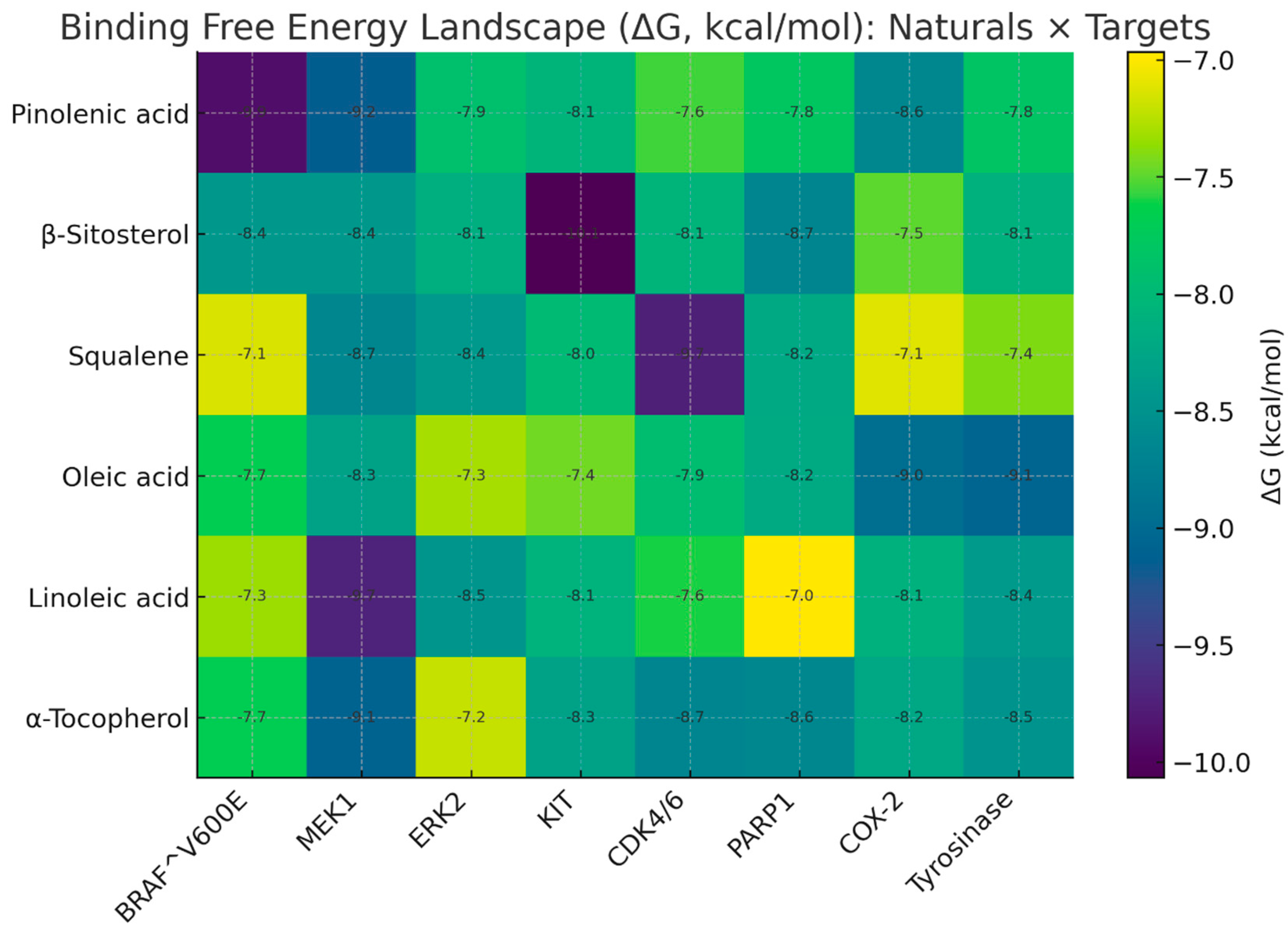
Figure 2.
Docking pose and interaction map of ulixertinib in ERK2. ERK2 is included as a downstream MAPK node relevant to pathway reactivation and resistance.
Figure 2.
Docking pose and interaction map of ulixertinib in ERK2. ERK2 is included as a downstream MAPK node relevant to pathway reactivation and resistance.
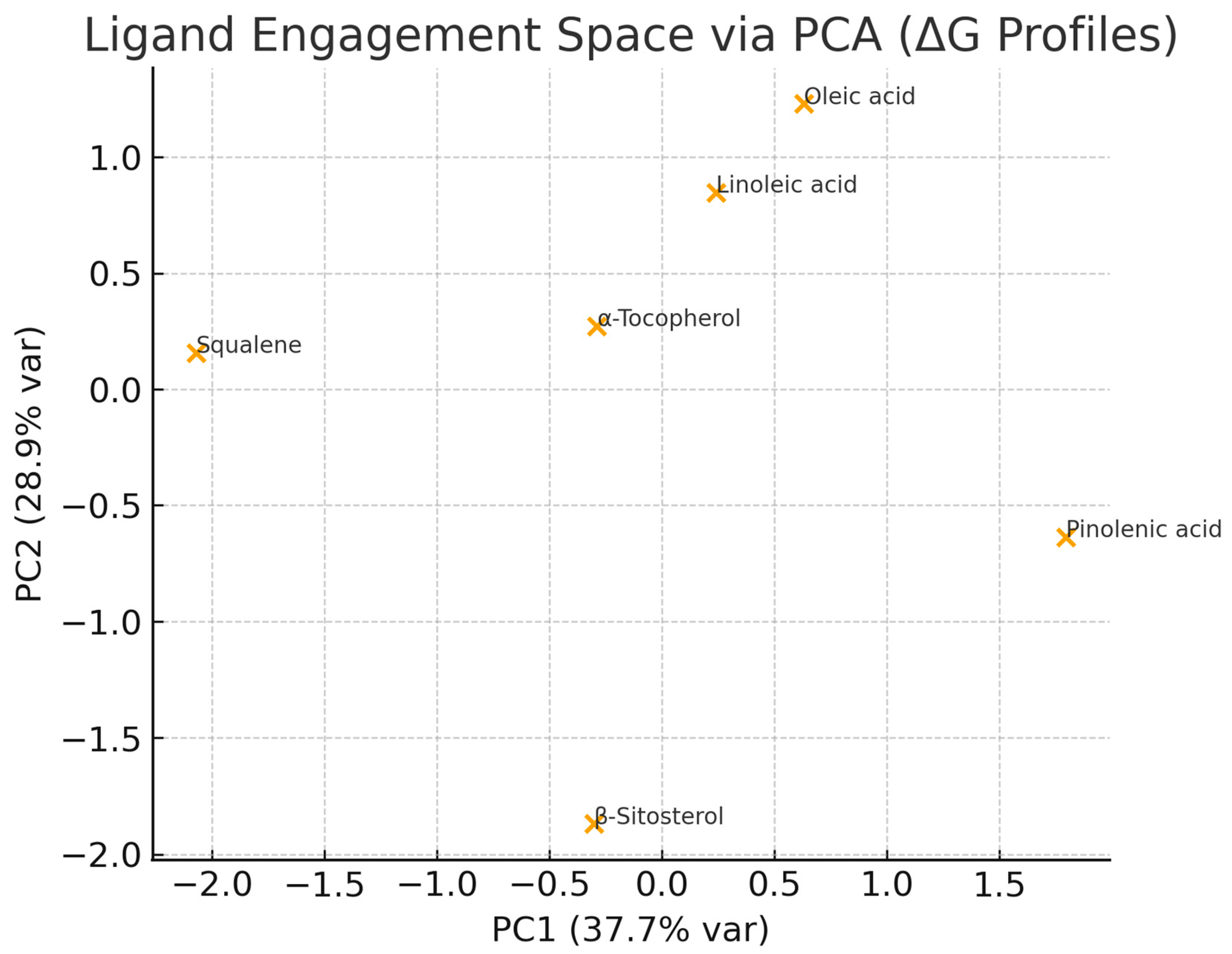
Figure 3.
Docking pose and interaction map of trametinib in MEK1. This figure illustrates the MEK-level comparator in the BRAF-MEK-ERK cascade.
Figure 3.
Docking pose and interaction map of trametinib in MEK1. This figure illustrates the MEK-level comparator in the BRAF-MEK-ERK cascade.
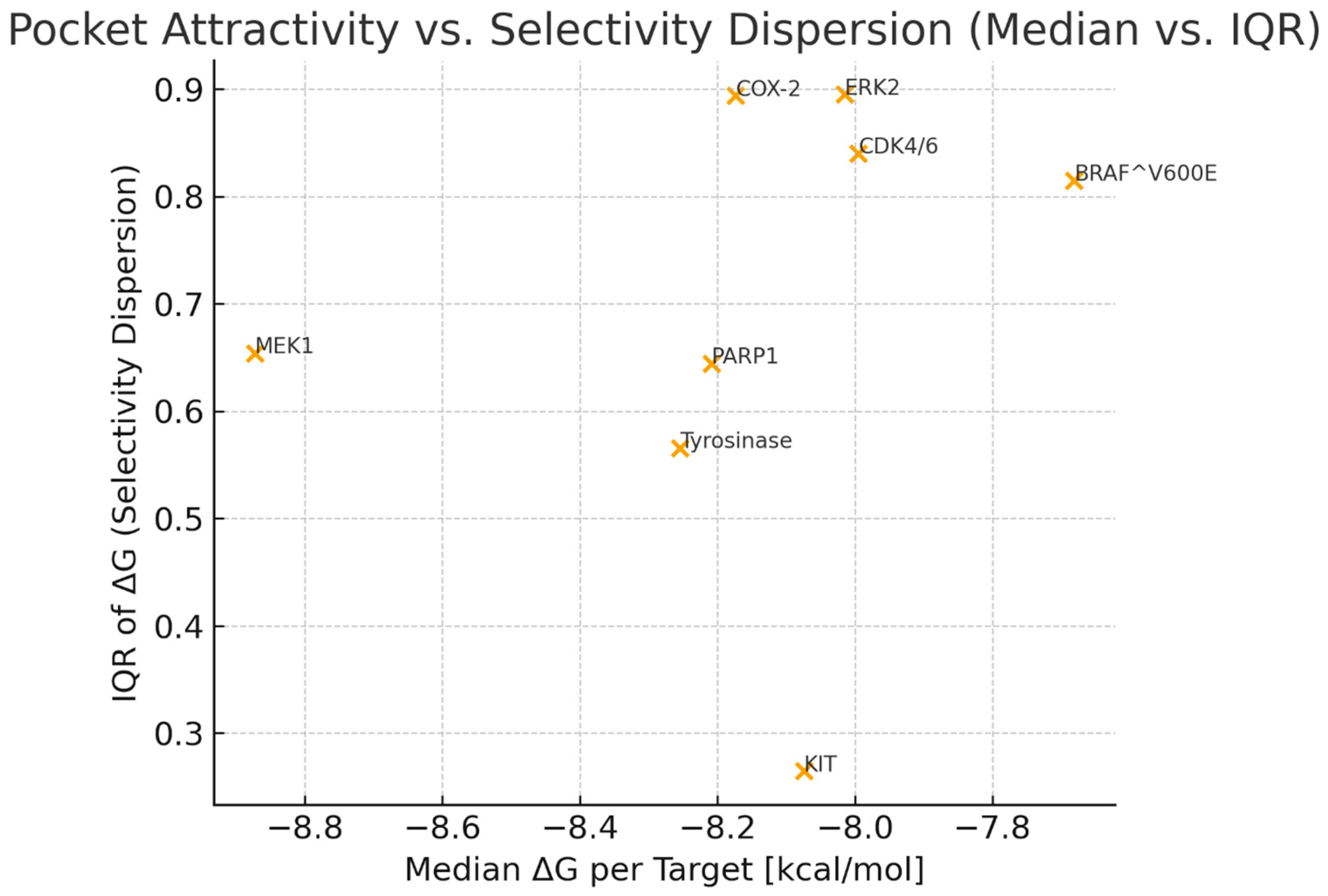
Figure 4.
Docking pose and interaction map of olaparib in PARP1. PARP1 is included as a DNA-damage-response comparator with emerging relevance in melanoma combination strategies.
Figure 4.
Docking pose and interaction map of olaparib in PARP1. PARP1 is included as a DNA-damage-response comparator with emerging relevance in melanoma combination strategies.
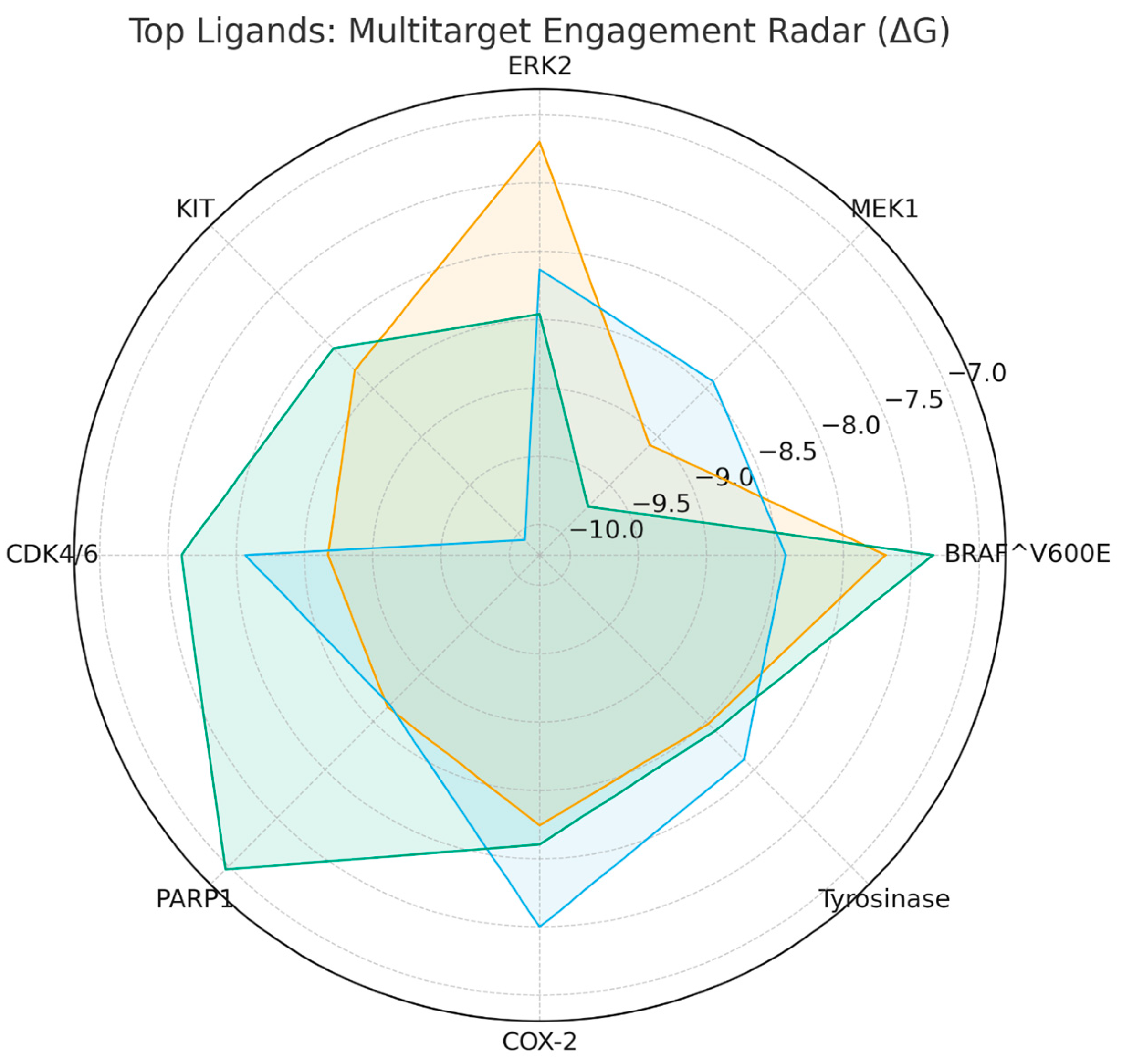
Figure 5.
Docking pose and interaction map of kojic acid in tyrosinase. This image contextualizes tyrosinase/melanogenesis biology and does not prove enzymatic inhibition by the formulation.
Figure 5.
Docking pose and interaction map of kojic acid in tyrosinase. This image contextualizes tyrosinase/melanogenesis biology and does not prove enzymatic inhibition by the formulation.
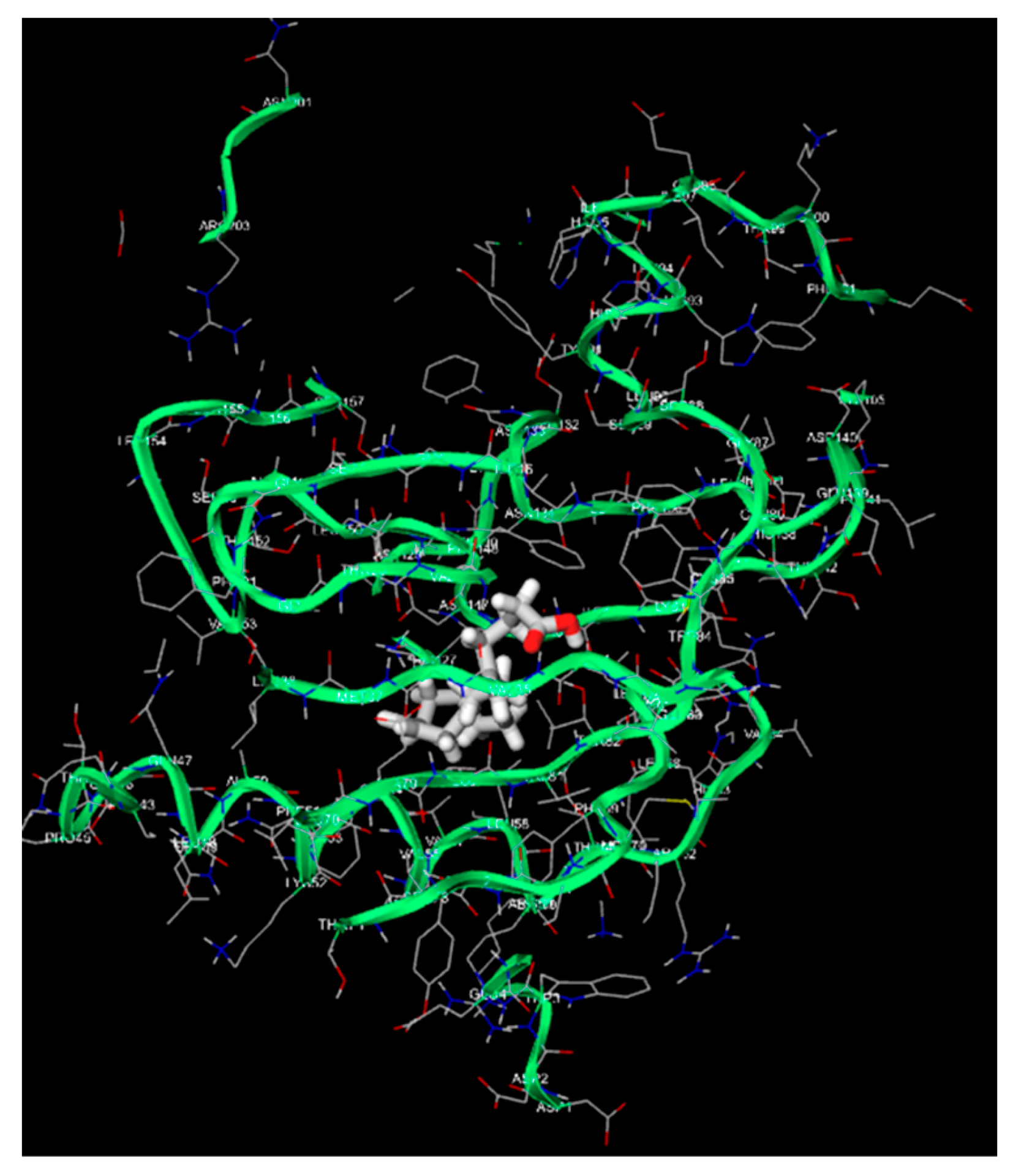
Figure 6.
Additional docking visualization from the comparator panel, included to document the broader structural-context framework.
Figure 6.
Additional docking visualization from the comparator panel, included to document the broader structural-context framework.
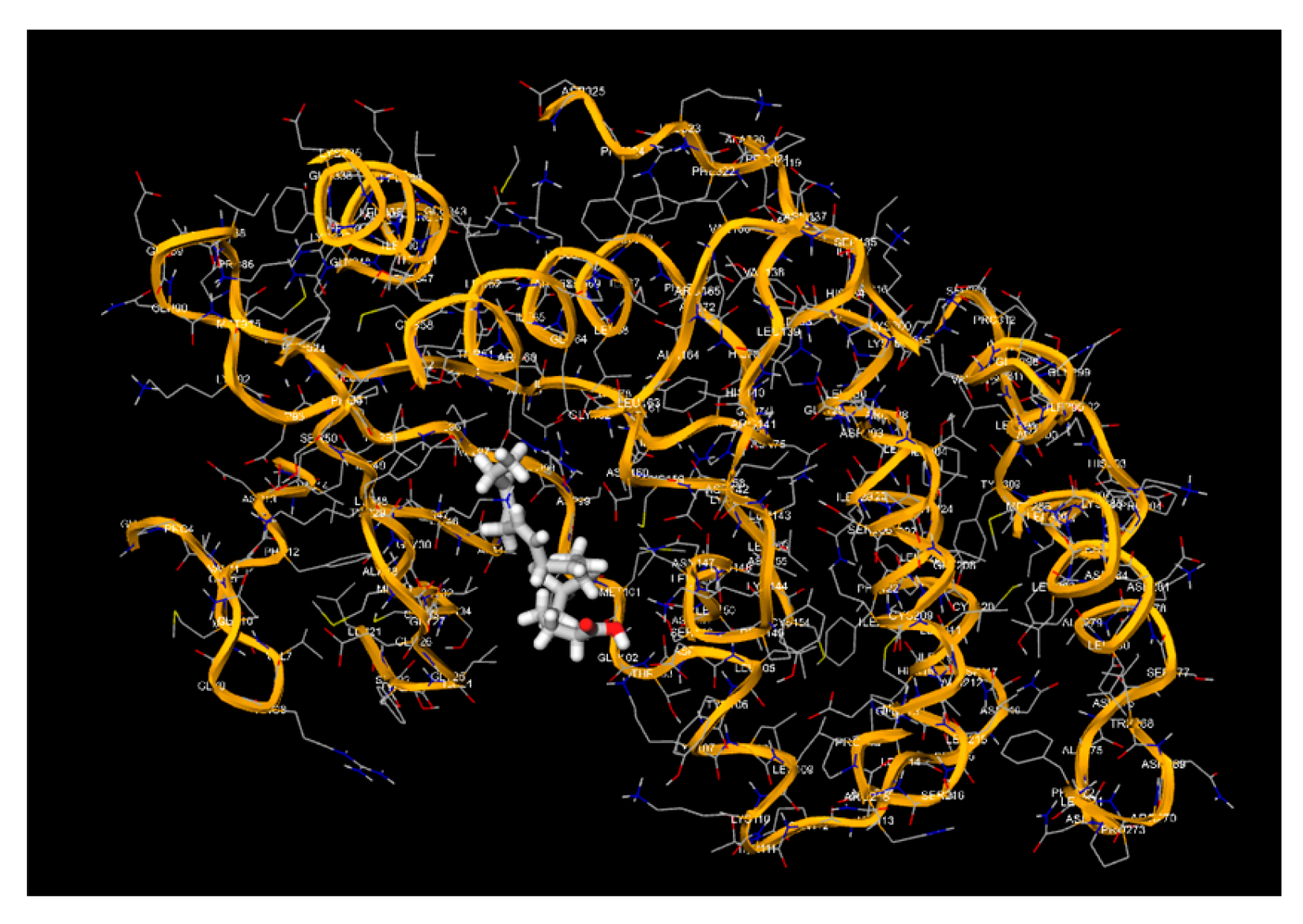
Figure 7.
Additional docking visualization of a top-ranked natural-ligand complex. The image supports hypothesis generation only.
Figure 7.
Additional docking visualization of a top-ranked natural-ligand complex. The image supports hypothesis generation only.
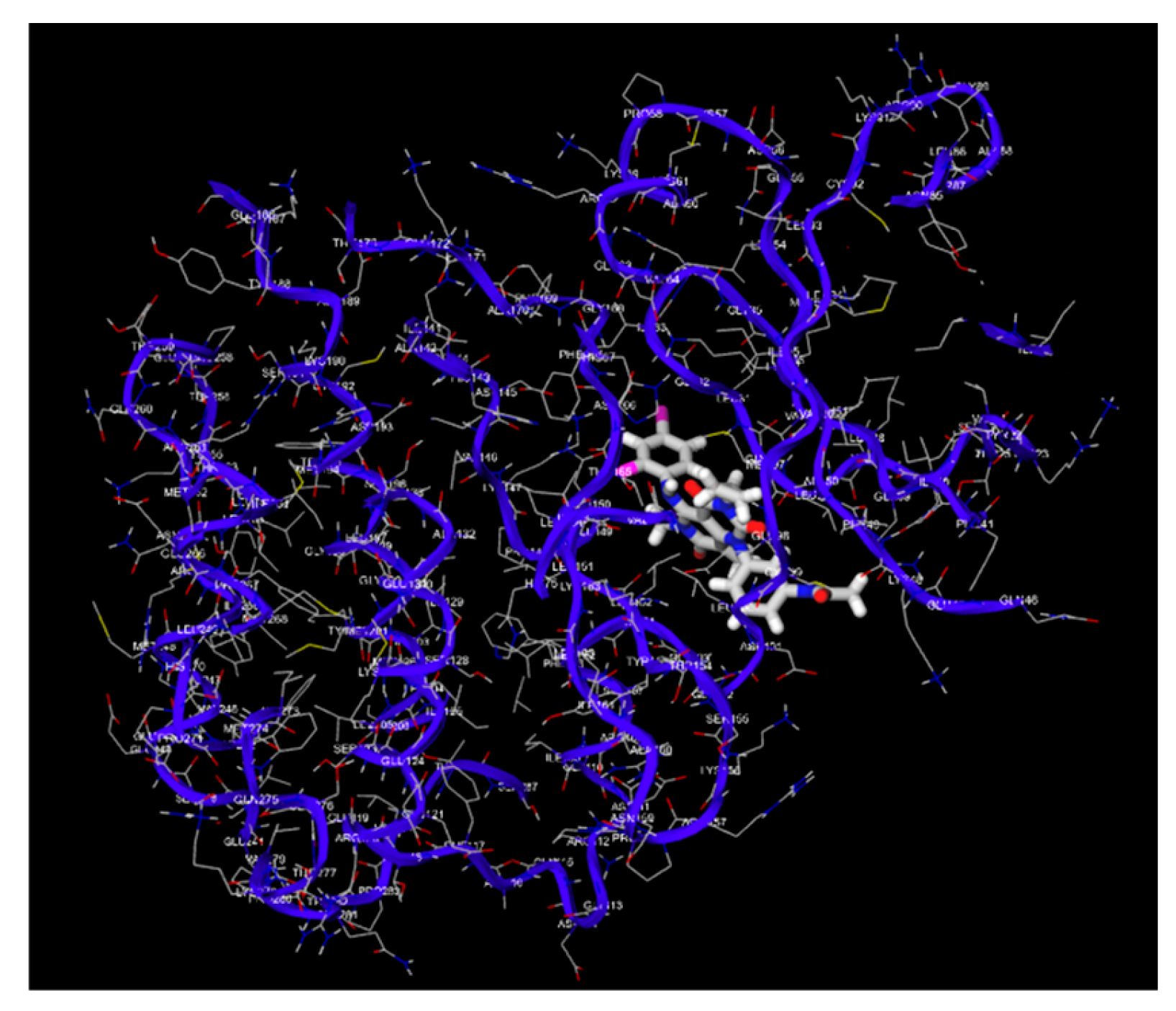
Figure 8.
Additional docking visualization of a comparator-ligand complex from the in silico panel.
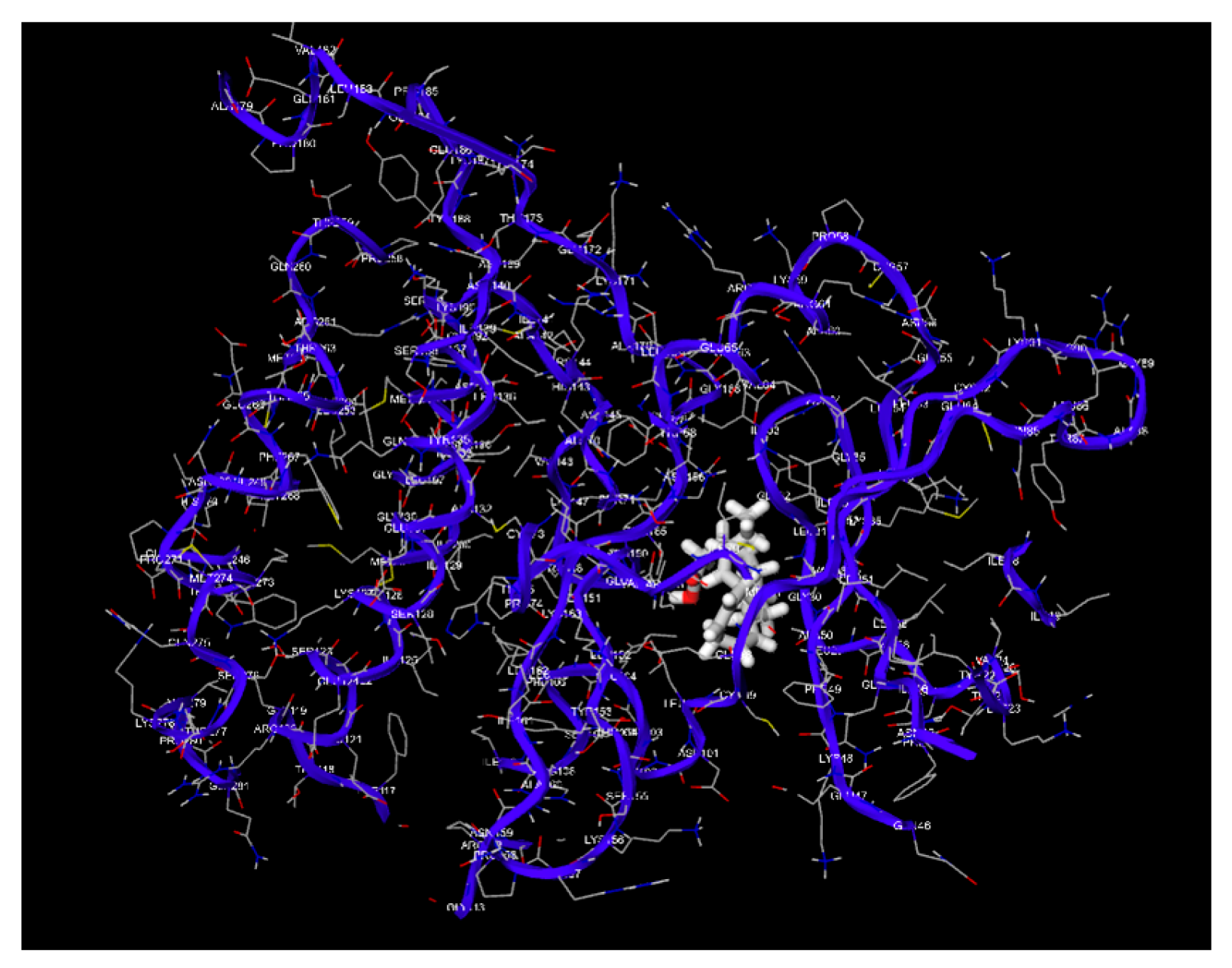
Figure 9.
Additional docking visualization supporting the exploratory in silico analysis.
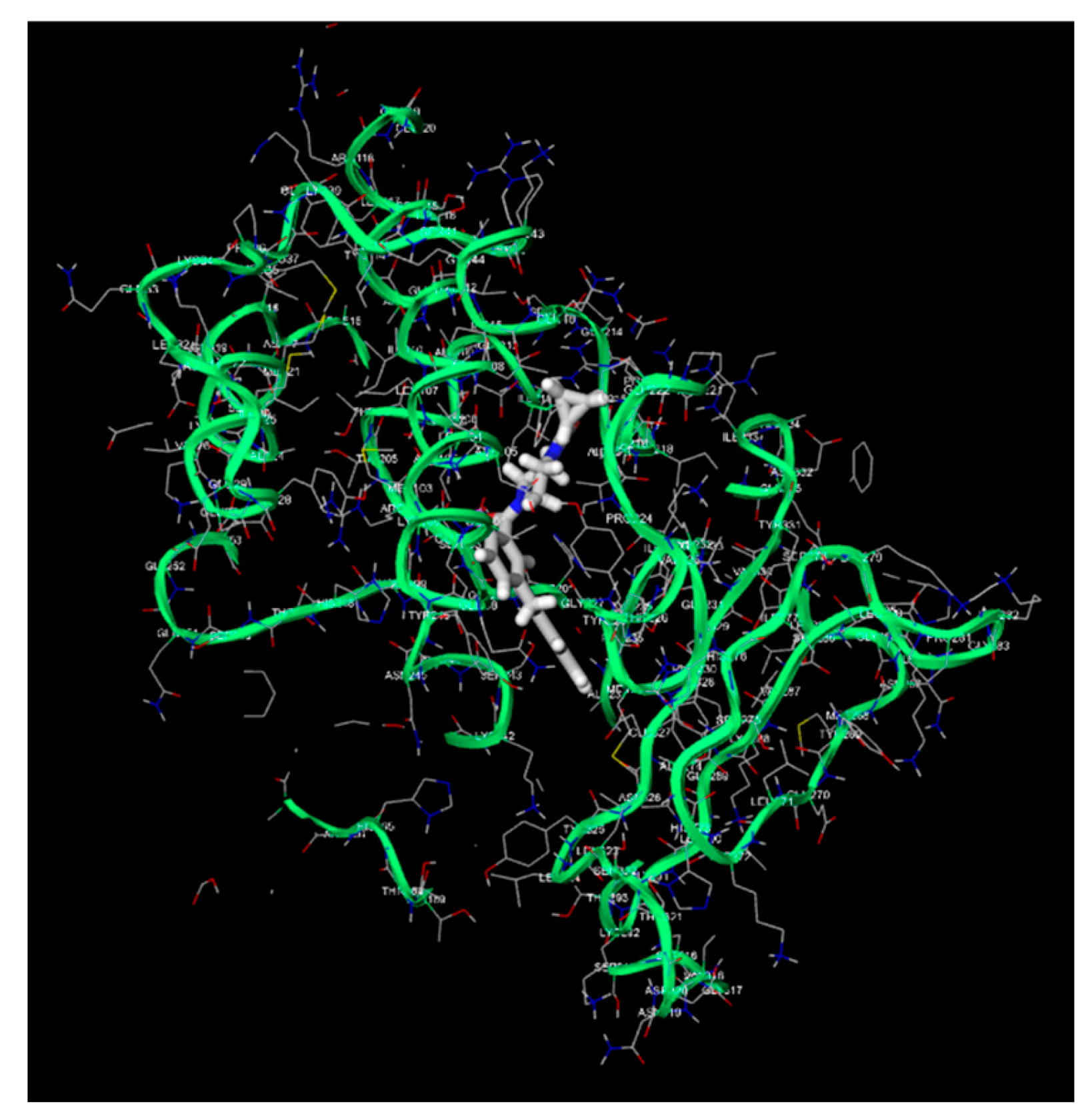
Figure 10.
Additional docking visualization supporting the exploratory in silico analysis.
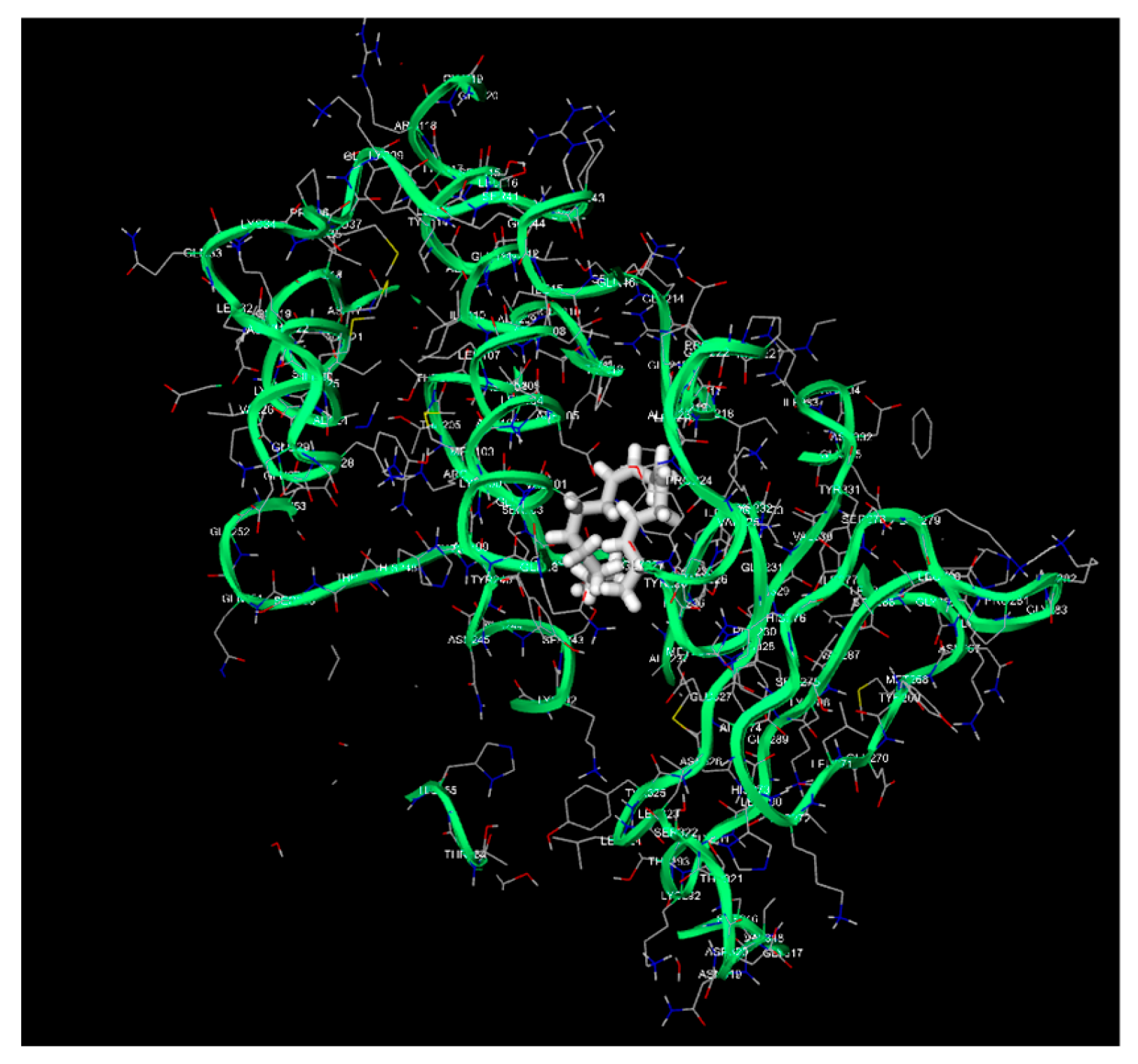
2.6. GC-MS/FAME
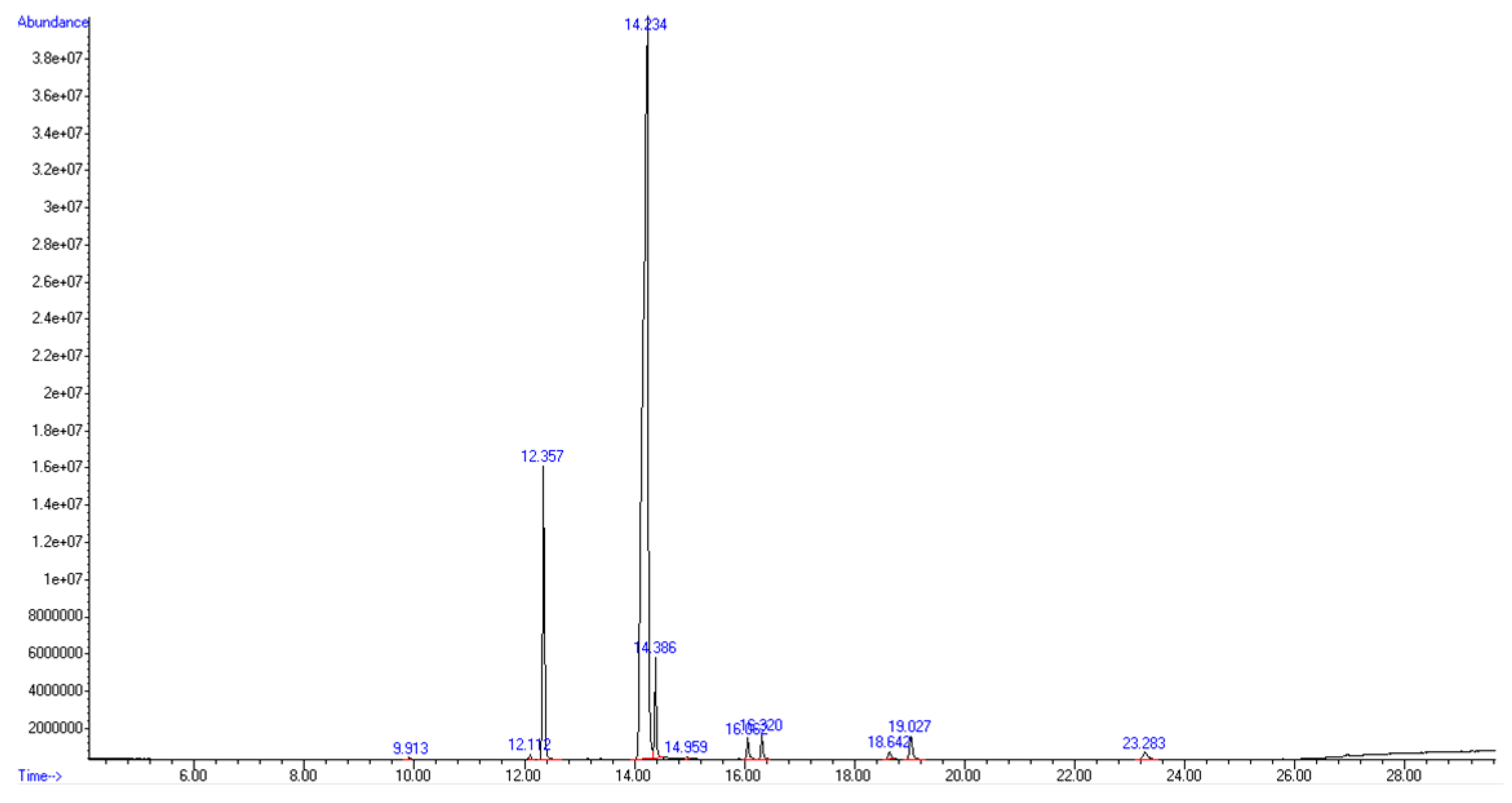
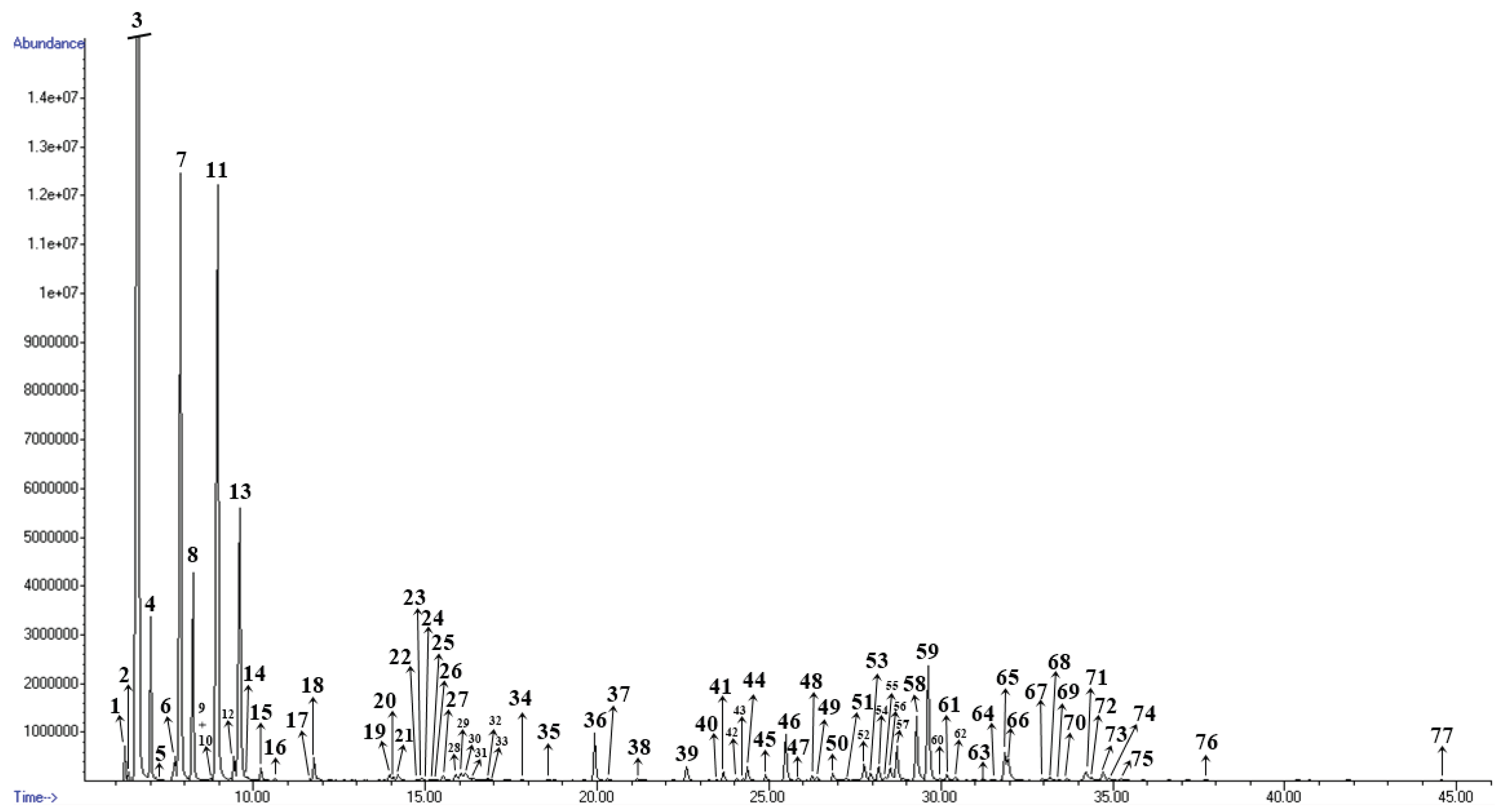
GC-MS/FAME profiling was integrated to anchor the biological and docking interpretation to experimentally characterized chemical markers. Cold-pressed P. dulcis oil was dominated by oleic acid (52.7%), linoleic acid (27.9%), palmitic acid (11.0%), and stearic acid (3.2%), whereas P. sylvestris needle essential oil was dominated by α-pinene (41.6%), β-pinene (14.2%), δ-3-carene (14.8%), limonene (7.0%), and myrcene (4.0%). The Pinus fraction was therefore chemically consistent with a monoterpene-hydrocarbon-rich essential-oil profile, while the almond fraction provided an unsaturated fatty-acid-rich lipid matrix. These GC-MS/FAME data are shown in Graphs 3 and 4 and summarized in Table 11 and Table 13.
Fatty acids in almond oil were determined after derivatization to the corresponding fatty acid methyl esters (FAMEs). The quantitative and relative composition of the main fatty acids is presented in Table 11, while the complete fatty acid profile, including minor and trace components, together with the representative GC/MS total ion chromatogram, is integrated below in Table 12 and Graph 3. Oleic acid was the predominant fatty acid, with a content of 30.66 mg/mL and a relative abundance of 52.3%, followed by linoleic acid (14.54 mg/mL; 27.8%), palmitic acid (6.12 mg/mL; 10.9%) and stearic acid (1.75 mg/mL; 3.2%). Lower contents were determined for palmitoleic acid and myristic acid. Monounsaturated fatty acids represented the dominant group, followed by polyunsaturated (27.9%) and saturated fatty acids (17.7%).
Graph 3.
Representative GC/MS total ion chromatogram of fatty acid methyl esters obtained from cold-pressed P. dulcis oil.
Graph 3.
Representative GC/MS total ion chromatogram of fatty acid methyl esters obtained from cold-pressed P. dulcis oil.
The essential oil was characterized by a high proportion of monoterpene hydrocarbons (86.5%), with α-pinene as the predominant constituent (41.6%), followed by δ-3-carene (14.8%), β-pinene (14.2%), limonene (7.0%) and myrcene (4.0%) (Table 13). Sesquiterpene hydrocarbons accounted for 8.6% of the total identified constituents, mainly represented by δ-cadinene (2.5%), γ-cadinene (1.5%) and (E)-caryophyllene (1.1%). Oxygen-containing monoterpenes and oxygen-containing sesquiterpenes were present at 2.5% and 2.2%, respectively. The complete GC/MS identification data and the representative total ion chromatogram are integrated below in Table 14 and Graph 4.
Table 13.
Major constituents and grouped chemical composition of pine needle essential oil determined by GC/MS.
Table 13.
Major constituents and grouped chemical composition of pine needle essential oil determined by GC/MS.
| Compound | Content (%) | Compound | Content (%) |
| α-Pinene | 41.6 | δ-Cadinene | 2.5 |
| δ-3-Carene | 14.8 | Camphene | 2.4 |
| β-Pinene | 14.2 | γ-Cadinene | 1.5 |
| Limonene | 7.0 | (E)-Caryophyllene | 1.1 |
| Myrcene | 4.0 | Other identified constituents | 10.9 |
| Grouped components (%) | Content (%) | ||
| Monoterpene hydrocarbons | 86.5 | ||
| Sesquiterpene hydrocarbons | 8.6 | ||
| Oxygen-containing monoterpenes | 2.5 | ||
| Oxygen-containing sesquiterpenes | 2.2 | ||
| Diterpenes | 0.1 | ||
| Others | 0.1 | ||
| Total identified (%) | 100.0 | ||
Only constituents present at ≥1.0% are listed individually. Other identified constituents represent the sum of compounds present below 1.0%. The complete GC/MS identification dataset and the representative total ion chromatogram are integrated below as Table 14 and Graph 4, respectively.
Table 14.
Complete chemical composition of pine needle essential oil determined by GC/MS analysis.
| No. | tR(min) | Compound | RIexp | RIlit | Method of identification | Content (%) |
| 1. | 6.26 | Tricyclene | 918 | 921a | RI, MS | 0.5 |
| 2. | 6.37 | α-Thujene | 921 | 924a | RI, MS | 0.1 |
| 3. | 6.66 | α-Pinene | 932 | 932a | RI, MS | 41.6 |
| 4. | 7.01 | Camphene | 944 | 946a | RI, MS | 2.4 |
| 5. | 7.15 | Thuja-2,4(10)-diene | 949 | 953a | RI, MS | 0.1 |
| 6. | 7.72 | Sabinene | 968 | 969a | RI, MS | 0.6 |
| 7. | 7.89 | β-Pinene | 974 | 974a | RI, MS, Co-I | 14.2 |
| 8. | 8.24 | Myrcene | 986 | 988a | RI, MS | 4.0 |
| 9. | 8.74 | α-Phellandrene | 1003 | 1002a | RI, MS | 0.1 |
| 10. | 8.78 | (3E)-Hexenyl acetate | 1004 | 1001a | RI, MS | tr |
| 11. | 8.96 | δ-3-Carene | 1009 | 1008a | RI, MS | 14.8 |
| 12. | 9.44 | o-Cymene | 1021 | 1022a | RI, MS | 0.4 |
| 13. | 9.59 | Limonene | 1026 | 1024a | RI, MS, Co-I | 7.0 |
| 14. | 9.62 | β-Phellandrene | 1026 | 1025a | RI, MS | tr |
| 15. | 10.21 | (E)-β-Ocimene | 1042 | 1044a | RI, MS | 0.3 |
| 16. | 10.62 | γ-Terpinene | 1054 | 1054a | RI, MS, Co-I | tr |
| 17. | 11.65 | p-Mentha-2,4(8)-diene | 1081 | 1085a | RI, MS | tr |
| 18. | 11.76 | Terpinolene | 1084 | 1086a | RI, MS | 0.4 |
| 19. | 13.96 | trans-Pinocarveol | 1138 | 1135a | RI, MS | 0.2 |
| 20. | 14.07 | Camphor | 1141 | 1441a | RI, MS, Co-I | 0.1 |
| 21. | 14.20 | trans-Verbenol | 1144 | 1143b | RI, MS | 0.2 |
| 22. | 14.73 | trans-Pinocamphone | 1157 | 1158a | RI, MS | tr |
| 23. | 14.81 | Pinocarvone | 1159 | 1160a | RI, MS | tr |
| 24. | 14.89 | p-Mentha-1,5-dien-8-ol | 1161 | 1166a | RI, MS | 0.1 |
| 25. | 15.12 | Borneol | 1166 | 1165a | RI, MS | tr |
| 26. | 15.30 | cis-Pinocamphone | 1170 | 1172a | RI, MS | tr |
| 27. | 15.54 | Terpinen-4-ol | 1176 | 1174a | RI, MS, Co-I | 0.1 |
| 28. | 15.87 | m-Cymen-8-ol | 1184 | 1176a | RI, MS | 0.2 |
| 29. | 16.05 | p-Cymen-8-ol | 1188 | 1179a | RI, MS | 0.2 |
| 30. | 16.16 | α-Terpineol | 1191 | 1186a | RI, MS | 0.2 |
| 31. | 16.39 | Myrtenol | 1197 | 1194a | RI, MS | tr |
| 32. | 16.72 | p-Cymen-9-ol | 1204 | 1204a | RI, MS | tr |
| 33. | 16.82 | Verbenone | 1207 | 1204a | RI, MS | tr |
| 34. | 17.81 | Carvacrol, methyl ether | 1231 | 1241a | RI, MS | tr |
| 35. | 18.58 | Car-3-en-2-one | 1248 | 1244a | RI, MS | tr |
| 36. | 19.94 | Isobornyl acetate | 1280 | 1283a | RI, MS | 0.9 |
| 37. | 20.31 | 2-Undecanone | 1288 | 1288c | RI, MS | 0.1 |
| 38. | 21.16 | Carvacrol | 1308 | 1298a | RI, MS | tr |
| 39. | 22.59 | α-Terpinyl acetate | 1343 | 1346a | RI, MS | 0.4 |
| 40. | 23.46 | α-Ylangene | 1363 | 1373a | RI, MS | tr |
| 41. | 23.66 | α-Copaene | 1369 | 1374a | RI, MS | 0.2 |
| 42. | 24.05 | β-Bourbonene | 1378 | 1387a | RI, MS | 0.1 |
| 43. | 24.25 | β-Cubebene | 1382 | 1387a | RI, MS | 0.1 |
| 44. | 24.36 | β-Elemene | 1385 | 1389a | RI, MS | 0.3 |
| 45. | 24.89 | Longifolene | 1398 | 1407a | RI, MS | 0.1 |
| 46. | 25.47 | (E)-Caryophyllene | 1412 | 1417a | RI, MS, Co-I | 1.1 |
| 47. | 25.86 | β-Copaene | 1422 | 1430a | RI, MS | 0.1 |
| 48. | 26.24 | Aromadendrene | 1432 | 1439a | RI, MS | 0.1 |
| 49. | 26.39 | 6,9-Guaiadiene | 1435 | 1442a | RI, MS | 0.1 |
| 50. | 26.85 | α-Humulene | 1447 | 1452a | RI, MS | 0.2 |
| 51. | 27.25 | cis-Muurola-4(14),5-diene | 1456 | 1465a | RI, MS | 0.1 |
| 52. | 27.76 | γ-Muurolene | 1469 | 1478a | RI, MS, Co-I | 0.4 |
| 53. | 27.95 | Germacrene D | 1474 | 1480a | RI, MS | 0.2 |
| 54. | 28.17 | β-Selinene | 1479 | 1489a | RI, MS | 0.3 |
| 55. | 28.39 | trans-Muurola-4(14),5-diene | 1485 | 1493a | RI, MS | 0.1 |
| 56. | 28.51 | α-Selinene | 1488 | 1498a | RI, MS | 0.3 |
| 57. | 28.71 | α-Muurolene | 1493 | 1500a | RI, MS | 0.7 |
| 58. | 29.28 | γ-Cadinene | 1507 | 1513a | RI, MS | 1.5 |
| 59. | 29.62 | δ-Cadinene | 1516 | 1522a | RI, MS | 2.5 |
| 60. | 29.98 | trans-Cadina-1,4-diene | 1525 | 1533a | RI, MS | tr |
| 61. | 30.17 | α-Cadinene | 1530 | 1537a | RI, MS | 0.1 |
| 62. | 30.42 | α-Calacorene | 1537 | 1544a | RI, MS | 0.1 |
| 63. | 31.19 | β-Calacorene | 1557 | 1564a | RI, MS | tr |
| 64. | 31.49 | 1α,10α-epoxy-Amorph-4-ene | 1564 | 1570a | RI, MS | tr |
| 65. | 31.85 | Spathulenol | 1574 | 1577a | RI, MS | 0.7 |
| 66. | 31.94 | Caryophyllene oxide | 1577 | 1582a | RI, MS | 0.7 |
| 67. | 32.96 | Humulene epoxide II | 1603 | 1608a | RI, MS | 0.1 |
| 68. | 33.16 | 1,10-di-epi-Cubenol | 1609 | 1618a | RI, MS | 0.1 |
| 69. | 33.43 | α-Corocalene | 1616 | 1622a | RI, MS | tr |
| 70. | 33.67 | 1-epi-Cubenol | 1622 | 1627a | RI, MS | tr |
| 71. | 34.21 | epi-α-Cadinol | 1637 | 1638a | RI, MS | 0.3 |
| 72. | 34.36 | α-Muurolol | 1641 | 1644a | RI, MS | 0.1 |
| 73. | 34.70 | α-Cadinol | 1651 | 1652a | RI, MS | 0.2 |
| 74. | 34.90 | cis-Calamenen-10-ol | 1656 | 1660a | RI, MS | tr |
| 75. | 35.22 | trans-Calamenen-10-ol | 1664 | 1668a | RI, MS | tr |
| 76. | 37.69 | Oplopanone | 1733 | 1739a | RI, MS | tr |
| 77. | 44.55 | Cembrene | 1937 | 1937a | RI, MS | 0.1 |
| Total identified (%) | 100.0 | |||||
| Grouped components (%) | ||||||
| Monoterpene hydrocarbons (1-9, 11-18) | 86.5 | |||||
| Oxygen-containing monoterpenes (19-36, 38, 39) | 2.5 | |||||
| Sesquiterpene hydrocarbons (40-63, 69) | 8.6 | |||||
| Oxygen-containing sesquiterpenes (64-68, 70-76) | 2.2 | |||||
| Diterpenes (77) | 0.1 | |||||
| Others (10, 37) | 0.1 | |||||
tret.: Retention time; RIlit-Retention indices from literature; RIexp: Experimentally determined retention indices using a homologous series of n-alkanes (C8-C20) on the HP-5MS column. MS: constituent identified by mass-spectra comparison; RI: constituent identified by retention index matching; Co-I: constituent identity confirmed by GC co-injection of an authentic sample; tr = trace amount (<0.05%).
Table 15.
Recent 2025 literature comparators supporting the GC-MS/FAME interpretation of the Prunus dulcis and Pinus sylvestris oil profiles used in this work.
Table 15.
Recent 2025 literature comparators supporting the GC-MS/FAME interpretation of the Prunus dulcis and Pinus sylvestris oil profiles used in this work.
| Reference | Matrix / species | Analytical approach | Main comparable compositional data | Relevance to present GC-MS/FAME profile |
| Babashpour-Asl et al. (2025) | Almond cultivars (Prunus amygdalus L.) | GC-FID fatty-acid profiling | Oleic acid up to 57.24%; linoleic acid 26.15%; palmitic acid 11.63%; stearic acid 3.65% | Highly concordant with the present almond oil profile: oleic acid 52.7%, linoleic acid 27.9%, palmitic acid 11.0%, stearic acid 3.2%. |
| Genç and Güney (2025) | Prunus dulcis genotypes from Yozgat, Türkiye | Fatty-acid profiling | Oleic acid 45.47-64.06%; linoleic acid 23.32-38.90%; palmitic acid 6.11-7.92% | Supports the expected dominance of oleic and linoleic acids and confirms that the present almond oil falls within a plausible compositional window. |
| Dias et al. (2025) | Almond oil extracted/recovered by environmentally friendly methods | LC-MS lipidomics and fatty-acid profiling | 18:1 72-75%; 18:2 22-25%; 16:0 4-5% | Provides a processing-focused comparator showing a more oleic-rich profile, useful for discussing cultivar/process variability. |
| Tuleshova et al. (2025) | Pinus sylvestris needles from Central Kazakhstan | GC-MS essential-oil analysis | Major constituents included α-pinene, β-pinene, camphene, τ-cadinol, caryophyllene; minor limonene, 3-carene, caryophyllene oxide | Directly supports the presence of α-pinene, β-pinene, limonene, 3-carene/carenes and caryophyllene-related constituents in Scots pine needle essential oils. |
| Mirković et al. (2025) | Pinus essential oils from selected species, including Pinus sylvestris | Review of chemical composition and bioactivity | Across Pinus species, α-pinene is consistently dominant; needles frequently contain limonene, β-pinene, δ-3-carene, bornyl acetate, (E)-caryophyllene and myrcene | Provides broader Pinus essential-oil context for the monoterpene-rich profile observed in the present Pinus sylvestris oil. |
Graph 4.
Representative GC/MS total ion chromatogram of Pinus sylvestris needle essential oil.
3. Discussion
3.1. Interpretation of the Combined NRU Phenotype
For the first time, we showed that dual oil formulation (Prunus dulcis + Pinus sylvestris) demonstrated a significantly stronger effect on B16F10 melanoma cells than on MRC-5 fibroblasts. According to the obtained four-parameter logistic model, the dual oil formulation showed an IC50 value of 1.42% for B16F10 cells, compared to a substantially higher IC50 value of 4.85% for MRC-5 fibroblasts. Based on these values, the selectivity index (SI) was calculated to be 3.41, which is above the standard threshold (SI ≥ 3) considered in the literature to indicate preferential cytotoxicity toward tumor cells. This result is particularly significant because cisplatin, used as the positive control, exhibited a lower SI value (1.63), despite its greater absolute potency. Therefore, the dual oil formulation does not represent a classical cytotoxic agent, but it demonstrates a differential effect that is quantitatively more pronounced than that of the reference drug.
Although the individual oils did not show selective inhibition (Pinus sylvestris was more toxic to fibroblasts, while Prunus dulcis did not exhibit inhibitory potential), their combination resulted in a measurable cytotoxic effect in melanoma cells. The mechanistic contribution of the individual oils is not linear: Pinus sylvestris contributes to basal cytotoxicity, whereas Prunus dulcis enhances cellular metabolism and proliferation. However, their combination induces a non-additive biological response that cannot be predicted from the individual effects alone. This inter-oil effect is consistent with the concept of phenotypic synergism, in which components that are not individually potent interact to modulate the biological response at a higher level of organization. Although the biochemical basis of this effect, requires further investigation, our preliminary results suggest that the dual oil formulation elicits a more selective response than either component alone. With repeated experiments and additional mechanistic studies, this phenotypic signal may provide a foundation for further formulation development.
3.2. α-Pinene and Monoterpene Relevance
The α-pinene axis is one of the strongest literature-supported components of the present study. Matsuo et al. reported that isolated α-pinene induced apoptosis and antimetastatic protection in a melanoma model, with mitochondrial depolarization, ROS production, caspase-3 activation, DNA fragmentation, and phosphatidylserine exposure. Kusuhara et al. reported tumor-growth suppression in mice exposed to an α-pinene-containing fragrant environment, accompanied by leptin and immune alterations. Han et al. further showed that α-pinene induced apoptosis and MAPK pathway modulation in gastric cancer cells. Together, these studies support the biological plausibility that α-pinene-rich matrices may influence tumor-cell stress pathways, although they do not confirm the mechanism of the present dual-oil formulation.
The broader monoterpene literature also supports this interpretation. Reviews on monoterpenes and essential oils describe multiple antitumor mechanisms, including membrane perturbation, mitochondrial dysfunction, ROS modulation, apoptosis induction, cell-cycle effects, and interaction with inflammatory or survival pathways. α-terpineol studies in melanoma, including recent work involving B16-F10 xenografts and JAK2/STAT3 signaling, further support the relevance of pine-oil-associated monoterpenes as candidate biological contributors.
3.3. Pinus-Derived Essential Oils and Tumor-Cell Stress Pathways
Several Pinus-focused studies provide convergent evidence for biological activity of Pinus-derived matrices. Pinus taiwanensis constituents were tested directly against B16-F10 melanoma cells, and the authors observed that the original ethyl acetate fraction was more active than several purified constituents, suggesting that complex mixture behavior may contribute to bioactivity. This observation is conceptually relevant to the present dual-oil formulation, although it does not prove synergy.
Pinus sylvestris extract and essential oil were reported to reduce viability in cancer cell models, including stronger activity of the essential oil than the extract in selected contexts. Other Pinus species, including Pinus densiflora, Pinus eldarica, Pinus mugo, and Pinus halepensis, have been associated with cytotoxicity, ROS production, caspase activation, STAT3 modulation, cell-cycle effects, or antiproliferative activity in various tumor models. These studies support the biological plausibility of Pinus-derived oils but also highlight the importance of species, plant part, extraction method, chemical composition, and dose.
3.4. Prunus dulcis and Lipid-Rich Phytochemical Matrices
Prunus dulcis oil contributes a chemically distinct component to the formulation. Literature on Prunus dulcis seed oil indicates a fatty acid composition dominated by oleic and linoleic acids, with additional lipophilic micronutrients. Studies in colon carcinoma models suggest antiproliferative and anticancer-related effects of almond oil, while Prunus-derived phenolic and terpene fractions have shown cytotoxic activity in other cancer models with limited toxicity in fibroblasts.
The GC-MS/FAME profile supports the chemical plausibility of the Prunus dulcis matrix. The observed dominance of oleic acid and linoleic acid is consistent with recent almond-oil studies reporting oleic/linoleic-rich profiles across cultivars, genotypes, and extraction workflows. In parallel, the Pinus sylvestris essential-oil profile dominated by α-pinene, β-pinene, and δ-3-carene is consistent with recent Scots pine and Pinus essential-oil literature, in which monoterpene hydrocarbons represent a major compositional axis. These comparisons strengthen chemical contextualization, but they do not convert the NRU phenotype into a validated mechanism or therapeutic claim [60,61,62,63,64].
The present manuscript should not claim that Prunus dulcis oil alone is anti-melanoma, especially because the provided experimental interpretation suggests that Prunus dulcis alone did not reproduce the combined-formulation phenotype. Instead, Prunus dulcis should be discussed as a biologically relevant lipid-rich matrix that may alter membrane context, solubilization behavior, oxidative balance, or delivery of terpene-associated constituents when combined with Pinus sylvestris oil.
3.5. Essential-Oil Phytocomplexes and Melanoma Models
Essential-oil phytocomplexes have been evaluated in several melanoma-relevant studies. Frankincense essential oil reduced viability of mouse and human melanoma cells and modulated apoptosis-related proteins while sparing normal melanocytes. Oregano phytocomplex induced oxidative stress, DNA damage, apoptosis, and necroptosis in B16-F10 and A375 melanoma cells while showing safety in non-tumor models. Melaleuca alternifolia essential oil and terpinen-4-ol reduced melanoma-cell viability and sensitized cells to dabrafenib/trametinib through apoptosis activation. (ponavlja se iz uvoda!!!)
These studies provide strong comparative support for including essential-oil-based systems in melanoma exploratory research. However, they also show that mechanistic validation is essential. The present formulation should therefore be positioned as an early-stage candidate requiring apoptosis assays, caspase activation studies, mitochondrial membrane potential assessment, ROS quantification, cell-cycle analysis, colony formation assays, migration/invasion studies, and pathway-level protein validation.
3.6. MAPK, PARP1, and Tyrosinase as Interpretive Anchors for Docking
The docking panel is supported by extensive melanoma literature. The BRAF-MEK-ERK axis is central to melanoma pathogenesis and to targeted therapy. Reviews and computational studies emphasize that BRAF, MEK, and ERK remain critical nodes in melanoma treatment and resistance. The inclusion of vemurafenib, trametinib, and ulixertinib as comparator ligands is therefore biologically coherent.
PARP1 is an additional comparator target because DNA damage response and PARP inhibitor combinations are being explored in advanced melanoma, particularly in contexts of BRAF/MEK therapy resistance. Tyrosinase is relevant to melanogenesis, melanocyte lineage biology, and melanoma-associated antigenic identity. However, docking against tyrosinase must not be interpreted as evidence of melanogenesis inhibition or anti-melanoma activity unless supported by enzymatic and cellular melanogenesis assays.
3.7. The Need for Caution Regarding Synergy and Selectivity
The combined formulation may generate an interaction phenotype, but formal synergy cannot be inferred from matched-dose curves alone. True synergy requires a suitable dose matrix and mathematical modeling by Bliss independence, Loewe additivity, Highest Single Agent, ZIP, or Chou-Talalay analysis. Without these analyses, the manuscript should describe the combined effect as ‘compatible with a possible interaction phenotype’ rather than ‘synergistic’.
Similarly, selectivity requires quantitative comparison between tumor and non-tumor cells, ideally through IC50-derived Selectivity Index values and multiple normal cell models. Because the present dataset uses only one fibroblast line as the non-tumor comparator and does not include melanocytes, keratinocytes, or reconstructed skin models, translational safety claims must be avoided. We expect, in future publications, to add further data on this research of ours and to confirm certain results, presented here at a pilot level.
3.8. Limitations
The main limitations of the current evidence package are: absence of complete replicate-level raw metadata; absence of confidence intervals for fitted IC50 values; lack of formal combination modeling; need for expanded batch-to-batch chemical standardization; possible NRU-specific assay interference by oil-based matrices; absence of orthogonal viability assays; absence of apoptosis, ROS, mitochondrial, cell-cycle, and pathway validation; absence of human melanoma cell-line replication; and absence of in vivo validation. These limitations define the exploratory boundaries of the current dataset and prevent definitive mechanistic or translational conclusions.
These limitations do not invalidate the pilot observation, but they define the boundary of interpretation. The manuscript is strongest when presented as a structured exploratory platform that identifies a promising phenotype and a clear validation roadmap.
3.9. Proposed Validation Roadmap
The next experimental phase should include: (i) GC-MS/LC-MS profiling of each batch; (ii) quantification of α-pinene, α-terpineol, terpinen-4-ol, beta-caryophyllene, fatty acids, tocopherols, and oxidation markers; (iii) vehicle and turbidity controls for NRU; (iv) parallel CellTiter-Glo, resazurin, SRB, and live/dead imaging assays; (v) 24/48/72 h time-course studies; (vi) 4PL dose-response modeling; (vii) Selectivity Index calculation across B16F10, human melanoma cells, melanocytes, keratinocytes, and fibroblasts; (viii) Bliss/Loewe/HSA/ZIP synergy analysis; (ix) ROS, mitochondrial membrane potential, Annexin V/PI, caspase-3/7, PARP cleavage, and Bcl-2/Bax assays; (x) MAPK/AKT/STAT3 readouts by Western blotting or phospho-protein profiling; and (xi) in vivo evaluation only after chemical and cellular reproducibility are established.
4. Materials and Methods
4.1. Study Design and Interpretive Framework
This study was organized as an exploratory data report integrating computational, cell-based, and comparative-literature elements. The computational component was interpreted as a qualitative docking-context layer. The in vitro component was interpreted as a preliminary viability phenotype assessment. The literature component was used to identify convergent or partially overlapping evidence from independent studies, particularly those involving melanoma cells, B16F10 models, essential oils, α-pinene, Pinus-derived constituents, Prunus dulcis oil, tyrosinase biology, MAPK pathway targets, and natural compound combinations.
4.2. Dual-Oil Formulation and Experimental Comparators
The formulation evaluated in this study consisted of a dual-oil phytochemical combination of cold-pressed Prunus dulcis oil and α-pinene-enriched Pinus sylvestris oil. Single-oil preparations of Prunus dulcis and Pinus sylvestris were also evaluated, together with cisplatin as a reference cytotoxic compound. The single-oil and combined-formulation comparisons were intended to determine whether the combined preparation generated a viability phenotype distinct from the individual oils.
4.3. Gas Chromatography/mass Spectrometry (GC/MS) and Gas Chromatography/Flame Ionization Detection (GC/FID) Analyses
Gas chromatography/mass spectrometry (GC/MS) analyses were performed using an Agilent Technologies 7890B gas chromatograph coupled to an inert selective 5977A mass selective detector from the same manufacturer. Separations were performed on a nonpolar HP-5MS silica capillary column (5% diphenyl- and 95% dimethyl-polysiloxane; 30 m × 0.25 mm i.d., 0.25 μm film thickness; Agilent Technologies, Santa Clara, CA, USA). Helium was used as the carrier gas at a constant flow rate of 1 mL/min. The MSD transfer line, ion source and quadrupole temperatures were set at 300 °C, 230 °C and 150 °C, respectively, and electron ionization was performed at 70 eV.
Prior to GC/MS and GC/FID analyses, fatty acids from almond oil were converted into the corresponding fatty acid methyl esters (FAMEs) by esterification/transesterification. The obtained FAMEs were dissolved in dichloromethane, and 1 μL of the prepared solution was injected through a split/splitless inlet maintained at 220 °C, operating in split mode at a split ratio of 100:1. The oven temperature was initially held at 150 °C for 5 min, increased to 250 °C at 10 °C/min and held for 10 min, then increased to 300 °C at 30 °C/min and finally held at 300 °C for 3 min. Mass spectra were recorded in scan mode over the range of m/z 10–600.
For essential oil analysis, the sample was dissolved in diethyl ether, and 1 μL of the prepared solution was injected at 220 °C in split mode at a split ratio of 40:1. The oven temperature was programmed from 60 °C to 246 °C at a rate of 3 °C/min. Mass spectra were recorded over the range of m/z 41–415.
Data processing was performed using MSD ChemStation Data Analysis software, revision F.01.00.1903, in combination with AMDIS, version 2.70, and NIST MS Search, version 2.0 g. FAMEs were identified by comparison of their mass spectra with those available in the Wiley, NIST and RTLPEST mass spectral libraries. Essential oil constituents were identified by comparison of their experimentally determined retention indices (RIexp), calculated using a homologous series of n-alkanes C8–C20, with literature values (RIlit), and by comparison of their mass spectra with those from Wiley 6, NIST2011 and RTLPEST3 libraries. For selected constituents, identification was additionally confirmed by co-injection with authentic standards.
GC/FID analyses were carried out under the same chromatographic conditions as the corresponding GC/MS analyses. The flow rates of the carrier gas (He), make-up gas (N₂), fuel gas (H₂) and oxidizing gas (air) were 1, 25, 30 and 400 mL/min, respectively, and the FID temperature was set at 300 °C.
Quantitative analysis of FAMEs was performed by GC/FID using calibration curves prepared from a certified reference mixture of fatty acid methyl esters (F.A.M.E. Mix RM-6, Sigma-Aldrich, St. Louis, MO, USA). A series of standard solutions was prepared in dichloromethane over the concentration range of 1.1–17.4 mg/mL. Calibration curves were constructed by plotting GC/FID peak areas against the concentrations of the FAME standard solutions. The quantitative composition of FAMEs was expressed as mg/mL.
Semi-quantitative analysis of FAMEs and essential oil constituents, expressed as relative content (%), was performed using the GC/FID peak area normalization method based on automatic integration of GC/FID signals without correction factors.
4.3. Molecular Docking and Comparator-Context Visualization
Molecular docking images were incorporated as comparator-context visualizations. The docking targets included melanoma-relevant or melanoma-adjacent proteins and comparator systems, including BRAF V600E with vemurafenib, ERK2 with ulixertinib, MEK1 with trametinib, PARP1 with olaparib, and tyrosinase with kojic acid. Additional docking visualizations were included to support the in silico framework.
The docking outputs were not interpreted as biochemical proof of binding, inhibition, potency, ranking, selectivity, or pathway modulation. Instead, they were used to provide structural context for known melanoma-relevant druggable pockets and to support the design of subsequent biochemical and cellular validation experiments.
4.4. Cell Lines and NRU Cytotoxicity Assay
Cytotoxicity evaluation was performed using the MRC-5 fibroblast and B16F10 melanoma cells by using the NRU assay. The assessment was conducted using different concentrations of two oil formulations (Prunus dulcis and Pinus sylvestris) separated and in combination (“Nevus Recovery”) and cisplatin as a reference compound.
Prior to exposure, MRC-5 and B16F10 cells were seeded in 96-well plates at a density of 1 × 10⁴ cells/well in 200 μL of complete Dulbecco’s Modified Eagle Medium (high glucose DMEM supplemented with 10% heat-inactivated fetal bovine serum (FBS), 2 mM glutamine, 100 U/ml penicillin and 100 μg/ml streptomycin (Sigma Aldrich, UK)) and incubated for 24 h at 37 °C in a humidified atmosphere with 5% CO₂. After incubation, the culture medium was removed and cells were treated with various concentrations of the oil formulation prepared as v/v % (3%, 1.25%, 1%, 0.37%, 0.18%, 0.09%, and 0.045%) or cisplatin (20 mM, 5 mM, 4 mM, 3 mM, 2 mM, 1 mM, 0.5 mM, and 0.18 mM). Cells were then incubated for 24h exposure period. All in vitro experiments were conducted in two independent experiments, with samples analyzed in triplicate.
One day prior to the NRU assay (NRU, Sigma Aldrich, Saint Louis, MO, USA), the neutral red (NR) working solution was prepared in DMEM at a 1:65 dilution, supplemented with 20 mM HEPES buffer, and equilibrated overnight at 37 °C in 5% CO₂. On the day of the assay, the NR solution was sterile-filtered through a 0.2 μm syringe filter immediately before use and 150 μL/well was added in each well.
Following treatment, the culture medium was removed and cells were washed twice with pre-warmed phosphate-buffered saline (PBS). Cells were then incubated with the neutral red solution for 3 h at 37 °C in 5% CO₂ and a humidified atmosphere. After incubation, cells were washed twice with pre-warmed PBS to remove unincorporated dye. The accumulated neutral red dye was extracted by adding 150 μL of destaining solution (50% ethanol, 49% distilled water, 1% glacial acetic acid; v/v/v) to each well and incubating for 10 min at 300 rpm on a plate shaker. Absorbance was measured at 540 nm using a reference wavelength of 630 nm with a microplate spectrophotometer (Agilent BioTek Epoch Microplate Spectrophotometer, Santa Clara, CA, USA). Cell viability was expressed as a percentage relative to untreated control cells.
Half-maximal inhibitory concentration (IC₅₀) values were determined by fitting dose–response curves using nonlinear regression based on a four-parameter logistic (4PL) model, so called because it includes four key parameters in an equation of the form:
where Y is the measured response, X is the logarithm of the tested concentration, Bottom and Top represent the lower and upper plateaus of the curve, respectively, and Hill coefficient describes the steepness of the curve. The IC₅₀ value corresponds to the concentration required to reduce cell viability by 50% relative to the untreated control.
The selectivity index (SI) was calculated as the ratio of the IC₅₀ value obtained in normal cells to the IC₅₀ value obtained in tumor cells, according to the following equation:
SI
4.5. Statistical Interpretation
Data were first tested for normality using the Shapiro–Wilk test. After confirmation of normal distribution, the results were analyzed using two-way ANOVA with treatment and cell line as fixed factors, followed by Tukey’s multiple comparisons test. Pairwise comparisons between two independent treatment groups were additionally performed using the Student’s t-test (unpaired, two-tailed). Values in the graphs are presented as mean ± SE, with statistical significance set at p < 0.05 (*p<0.05;**p<0.005; ***p<0.001).
4.6. Comparative Literature Mapping
Approximately 60 uploaded PDF articles were screened and compared against the present manuscript. Priority was assigned to papers with direct or high conceptual overlap, including studies on α-pinene in melanoma models, Pinus-derived essential oils, Prunus dulcis oil, essential-oil phytocomplexes in melanoma cells, B16F10 viability/apoptosis assays, tyrosinase/melanogenesis docking, BRAF/MEK/ERK pathway targeting, PARP1 relevance, natural products in melanoma, polyphenols, phytochemical combinations, oxidative stress, apoptosis, metastasis, and resistance to targeted therapy.
Only papers with direct or strong contextual relevance were integrated into the Results, Discussion, and References. The literature was used to support biological plausibility and comparative framing, not to claim definitive confirmation of the present dataset.
5. Conclusions
The present study supports a cautious, hypothesis-generating interpretation of the dual-oil Prunus dulcis + Pinus sylvestris formulation as an exploratory melanoma-oriented platform. GC-MS/FAME profiling provided the chemical anchor of the formulation, identifying an unsaturated fatty-acid-rich Prunus dulcis matrix and a monoterpene-rich Pinus sylvestris fraction dominated by α-pinene, β-pinene, and δ-3-carene. Within this chemically defined framework, molecular docking served only as a comparator-context in silico tool to prioritize possible melanoma-relevant target environments, without proving binding, inhibition, selectivity, or pathway modulation. The NRU assay then provided the preliminary in vitro phenotypic layer, showing a measurable viability response in B16F10 melanoma cells. Therefore, the core value of the work lies in linking formulation chemistry, structural hypothesis generation, and cellular phenotype into a coherent exploratory workflow. Further GC-MS/LC-MS standardization, orthogonal viability assays, replicated dose-response modeling, target-engagement studies, pathway readouts, and in vivo validation are required before any therapeutic or mechanistic conclusions can be drawn.
Author Contributions
Conceptualization, S.T. and Mo.D.; methodology, S.T., Mo.D., M.M.S., S. S. K., J. S. S., M.D.K. and B.L.; software, S.T.; validation, B.L., M.G.J., M.M.K. and N.K.; formal analysis, S.T., K.D., M.M.S., S. S. K., J. S. S., M.D.K. and Ma.D.; investigation, K.D., Mo.D., Ma.D., B.L., M.G.J., M.M.S., S. S. K., J. S. S., M.D.K. and N.K.; resources, B.L., M.G.J., M.M.K., T.N., M.F., T.F. and Z.J.; data curation, S.T., K.D. and N.K.; writing—original draft preparation, S.T. and K.D.; writing—review and editing, all authors; visualization, S.T.; supervision, S.T., Mo.D. and B.L.; project administration, Mo.D. and S.T.; funding acquisition, B.L. All authors have read and agreed to the published version of the manuscript.
Funding
This research received no external funding.
Institutional Review Board Statement
Not applicable. This study did not involve human participants or animals; all experimental work was conducted in vitro using established cell lines (B16F10 malignant melanoma cells and MRC-5 human fibroblasts).
Informed Consent Statement
Not applicable. No human participants, patient data, or identifiable information were involved in this in vitro cell-line study.
Data Availability Statement
The data supporting the findings of this study are contained within the article and its supplementary evaluative materials, where applicable. Additional raw data may be made available by the corresponding author upon reasonable request.
Acknowledgments
The authors gratefully acknowledge the research group led by Prof. Biljana Ljujic at the Faculty of Medical Sciences, University of Kragujevac, Republic of Serbia, as well as the laboratory staff who contributed to the experimental work underlying this study.
Conflicts of Interest
The authors declare no conflict of interest.
Abbreviations
| ATP | Adenosine triphosphate |
| B16F10 | Murine malignant melanoma cell line |
| BRAF V600E | BRAF valine-to-glutamate substitution at codon 600 |
| CDK4/6 | Cyclin-dependent kinases 4 and 6 |
| COX-2 | Cyclooxygenase-2 |
| ERK2 | Extracellular signal-regulated kinase 2 |
| KIT | KIT proto-oncogene receptor tyrosine kinase |
| MAPK | Mitogen-activated protein kinase pathway |
| MEK1 | Mitogen-activated protein kinase kinase 1 |
| MRC-5 | Human fibroblast cell line |
| NRU | Neutral Red Uptake |
| PARP1 | Poly(ADP-ribose) polymerase 1 |
| PGE2 | Prostaglandin E2 |
| PTGS2 | Prostaglandin-endoperoxide synthase 2 |
| RB / pRb | Retinoblastoma protein / phosphorylated RB |
| RMSD | Root-mean-square deviation |
| RTK | Receptor tyrosine kinase |
| TYR | Tyrosinase |
| v/v | Volume/volume |
| w/w | Weight/weight |
References
- Wellbrock, C.; Arozarena, I. The Complexity of the ERK/MAP-Kinase Pathway and the Treatment of Melanoma Skin Cancer. Front Cell Dev. Biol. 2016, 4, 33. [Google Scholar] [CrossRef] [PubMed]
- Savoia, P.; Fava, P.; Casoni, F.; Cremona, O. Targeting the ERK Signaling Pathway in Melanoma. Int. J. Mol. Sci. 2019, 20, 1483. [Google Scholar] [CrossRef]
- Patel, M.; Eckburg, A.; Gantiwala, S.; et al. Resistance to Molecularly Targeted Therapies in Melanoma. Cancers 2021, 13, 1115. [Google Scholar] [CrossRef] [PubMed]
- Fu, Y.; Liu, J.; Mo, Z.; Wang, B.; Deng, Y.; Jiang, Y. Melanoma: Pathogenesis and Targeted Therapy. MedComm 2026, 7, e70566. [Google Scholar] [CrossRef]
- Hamis, S.J.; Kapelyukh, Y.; McLaren, A.; Henderson, C.J.; Wolf, C.R.; Chaplain, M.A.J. Quantifying ERK activity in response to inhibition of the BRAFV600E-MEK-ERK cascade using mathematical modelling. Br. J. Cancer 2021, 125, 1552–1560. [Google Scholar] [CrossRef]
- Kosnopfel, C.; Sinnberg, T.; Mane, S.; Dongo, M.; Garbe, C.; Niessner, H. Combinatorial ERK Inhibition Enhances MAPK Pathway Suppression in BRAF-Mutant Melanoma. Int. J. Mol. Sci. 2025, 26, 9794. [Google Scholar] [CrossRef]
- Phillipps, J.; Nassief, G.; Morecroft, R.; et al. Efficacy of PARP inhibitor therapy after targeted BRAF/MEK failure in advanced melanoma. npj Precis Oncol. 2024. [Google Scholar] [CrossRef]
- Kim, H.-D.; Choi, H.; Abekura, F.; et al. Naturally-Occurring Tyrosinase Inhibitors Classified by Enzyme Kinetics and Copper Chelation. Int. J. Mol. Sci. 2023, 24, 8226. [Google Scholar] [CrossRef]
- Baber, M.A.; Crist, C.M.; Devolve, N.L.; Patrone, J.D. Tyrosinase Inhibitors: A Perspective. Molecules 2023, 28, 5762. [Google Scholar] [CrossRef]
- Cardoso, R.; Valente, R.; Souza da Costa, C.H.; et al. Analysis of Kojic Acid Derivatives as Competitive Inhibitors of Tyrosinase: A Molecular Modeling Approach. Molecules 2021, 26, 2875. [Google Scholar] [CrossRef] [PubMed]
- Nazir, Y.; Rafique, H.; Roshan, S.; et al. Molecular Docking, Synthesis, and Tyrosinase Inhibition Activity of Acetophenone Amide: Potential Inhibitor of Melanogenesis. BioMed Res. Int. 2022, 2022, 1040693. [Google Scholar] [CrossRef]
- Namiecinska, E.; Jaszczak, J.; Hikisz, P.; et al. Evaluation of Tyrosinase Inhibitory Activity of Carbothioamidopyrazoles and Their Potential Application in Cosmetic Products and Melanoma Treatment. Int. J. Mol. Sci. 2025, 26, 3882. [Google Scholar] [CrossRef]
- Kusuhara, M.; Maruyama, K.; Ishii, H.; et al. A Fragrant Environment Containing alpha-Pinene Suppresses Tumor Growth in Mice by Modulating the Hypothalamus/Sympathetic Nerve/Leptin Axis and Immune System. Integr. Cancer Ther. 2019, 18, 1–9. [Google Scholar] [CrossRef]
- Matsuo, A.L.; Figueiredo, C.R.; Arruda, D.C.; et al. alpha-Pinene isolated from Schinus terebinthifolius Raddi induces apoptosis and confers antimetastatic protection in a melanoma model. Biochem Biophys. Res. Commun. 2011. [Google Scholar] [CrossRef]
- Han, E.-J.; Choi, E.-Y.; Jeon, S.-J.; et al. Anticancer Effects of alpha-Pinene in AGS Gastric Cancer Cells. J. Med. Food 2024, 27, 330–338. [Google Scholar] [CrossRef]
- Di Martile, M.; Garzoli, S.; Sabatino, M.; et al. Antitumor effect of Melaleuca alternifolia essential oil and its main component terpinen-4-ol in combination with target therapy in melanoma models. Cell Death Discov. 2021, 7, 127. [Google Scholar] [CrossRef]
- Liu, W.; Xiao, Y.; Zan, X.; et al. alpha-Terpineol induces apoptosis in melanoma cells and its underlying mechanism. Sci. Rep. 2026, 16, 4278. [Google Scholar] [CrossRef]
- Chu, M.-H.; Hsiao, S.-W.; Kao, Y.-C.; Yin, H.-W.; Kuo, Y.-H.; Lee, C.-K. Cytotoxicity Effect of Constituents of Pinus taiwanensis Hayata Twigs on B16-F10 Melanoma Cells. Molecules 2022, 27, 2731. [Google Scholar] [CrossRef] [PubMed]
- Nguyen, T.H.; Ho, V.D.; Do, T.T.; Orav, A.; Raal, A. Selectivity of Pinus sylvestris extract and essential oil to estrogen-insensitive breast cancer cells. Pharmacogn. Mag. 2015, 11, S290–S295. [Google Scholar] [CrossRef] [PubMed]
- Jo, J.-R.; Park, J.S.; Park, Y.-K.; et al. Pinus densiflora leaf essential oil induces apoptosis via ROS generation and activation of caspases in YD-8 human oral cancer cells. Int. J. Oncol. 2012, 40, 1238–1245. [Google Scholar] [CrossRef] [PubMed]
- Sarvmeili, N.; Jafarian-Dehkordi, A.; Zolfaghari, B. Cytotoxic effects of Pinus eldarica essential oil and extracts on HeLa and MCF-7 cell lines. Res. Pharm. Sci. 2016, 11, 476–483. [Google Scholar] [CrossRef]
- Mericli, F.; Becer, E.; Kabadayi, H.; et al. Fatty acid composition and anticancer activity in colon carcinoma cell lines of Prunus dulcis seed oil. Pharm. Biol. 2017, 55, 1239–1248. [Google Scholar] [CrossRef] [PubMed]
- Mahmood, M.A.; Abd, A.H.; Kadhim, E.J. Assessing the cytotoxicity of phenolic and terpene fractions extracted from Iraqi Prunus arabica against AMJ13 and SK-GT-4 human cancer cell lines. F1000Research 2024, 12, 433. [Google Scholar] [CrossRef] [PubMed]
- Ben Khadher, T.; Sassi-Aydi, S.; Aydi, S.; Mars, M.; Bouajila, J. Phytochemical Profiling and Biological Potential of Prunus dulcis Shell Extracts. Plants 2023, 12, 2733. [Google Scholar] [CrossRef]
- Hakkim, F.L.; Bakshi, H.A.; Khan, S.; et al. Frankincense essential oil suppresses melanoma cancer through down regulation of Bcl-2/Bax cascade signaling and ameliorates hepatotoxicity via phase I and II drug metabolizing enzymes. Oncotarget 2019, 10, 3472–3490. [Google Scholar] [CrossRef] [PubMed]
- Nanni, V.; Di Marco, G.; Sacchetti, G.; Canini, A.; Gismondi, A. Oregano Phytocomplex Induces Programmed Cell Death in Melanoma Lines via Mitochondria and DNA Damage. Foods 2020, 9, 1486. [Google Scholar] [CrossRef]
- Zhang, W.; Lan, Y.; Huang, Q.; Hua, Z. Galangin induces B16F10 melanoma cell apoptosis via mitochondrial pathway and sustained activation of p38 MAPK. Cytotechnology 2013, 65, 447–455. [Google Scholar] [CrossRef]
- Massaoka, M.H.; Matsuo, A.L.; Figueiredo, C.R.; et al. Jacaranone Induces Apoptosis in Melanoma Cells via ROS-Mediated Downregulation of Akt and p38 MAPK Activation and Displays Antitumor Activity In Vivo. PLoS ONE 2012, 7, e38698. [Google Scholar] [CrossRef]
- Zhao, W.; Chen, Z.; Fu, W.; et al. Induction of apoptosis and hypoxic stress in malignant melanoma cells via graphene-mediated far-infrared radiation. BMC Cancer 2025, 25, 620. [Google Scholar] [CrossRef]
- Ombra, M.N.; Paliogiannis, P.; Stucci, L.S.; et al. Dietary compounds and cutaneous malignant melanoma: recent advances from a biological perspective. Nutr. Metab. 2019, 16, 33. [Google Scholar] [CrossRef]
- Bayala, B.; Bassole, I.H.N.; Scifo, R.; et al. Anticancer activity of essential oils and their chemical components - a review. Am. J. Cancer Res. 2014, 4, 591–607. [Google Scholar]
- Sobral, M.V.; Xavier, A.L.; Lima, T.C.; de Sousa, D.P. Antitumor Activity of Monoterpenes Found in Essential Oils. ScientificWorldJournal 2014, 2014, 953451. [Google Scholar] [CrossRef]
- Mohamed Abdoul-Latif, F.; Ainane, A.; Houmed Aboubaker, I.; Mohamed, J.; Ainane, T. Exploring the Potent Anticancer Activity of Essential Oils and Their Bioactive Compounds. Pharmaceuticals 2023, 16, 1086. [Google Scholar] [CrossRef] [PubMed]
- Carvalho, A.A.; Andrade, L.N.; Vieira de Sousa, E.B.; de Sousa, D.P. Antitumor Phenylpropanoids Found in Essential Oils. BioMed Res. Int. 2015, 2015, 392674. [Google Scholar] [CrossRef]
- Dumitras, D.-A.; Andrei, S. Recent Advances in the Antiproliferative and Proapoptotic Activity of Various Plant Extracts and Constituents against Murine Malignant Melanoma. Molecules 2022, 27, 2585. [Google Scholar] [CrossRef]
- Tabolacci, C.; De Vita, D.; Facchiano, A.; et al. Phytochemicals as Immunomodulatory Agents in Melanoma. Int. J. Mol. Sci. 2023, 24, 2657. [Google Scholar] [CrossRef]
- Kim, H.J.; Hong, J.H. Multiplicative Effects of Essential Oils and Other Active Components on Skin Tissue and Skin Cancers. Int. J. Mol. Sci. 2024, 25, 5397. [Google Scholar] [CrossRef] [PubMed]
- Jones, V.; Katiyar, S.K. Emerging phytochemicals for prevention of melanoma invasion. Cancer Lett. 2013, 335, 251–258. [Google Scholar] [CrossRef] [PubMed]
- Chhabra, G.; Ndiaye, M.A.; Garcia-Peterson, L.M.; Ahmad, N. Melanoma Chemoprevention: Current Status and Future Prospects. Photochem Photobiol. 2017, 93, 975–989. [Google Scholar] [CrossRef]
- AlQathama, A.; Prieto, J.M. Natural products with therapeutic potential in melanoma metastasis. Nat. Prod. Rep. 2015. [Google Scholar] [CrossRef]
- Isacescu, E.; Chiroi, P.; Zanoaga, O.; et al. Melanoma Cellular Signaling Transduction Pathways Targeted by Polyphenols Action Mechanisms. Antioxidants 2023, 12, 407. [Google Scholar] [CrossRef]
- Benedusi, M.; Lee, H.; Lim, Y.; Valacchi, G. Oxidative State in Cutaneous Melanoma Progression: A Question of Balance. Antioxidants 2024, 13, 1058. [Google Scholar] [CrossRef]
- Ruzzolini, J.; Peppicelli, S.; Andreucci, E.; et al. Oleuropein has an anti-cancer effect on human BRAF melanoma cells and potentiates cytotoxicity of current chemotherapies. Nutrients 2018, 10, 1950. [Google Scholar] [CrossRef]
- Yanarojana, M.; Tancharoen, S.; Nararatwanchai, T.; Yanarojana, S. Phytochemicals From Houttuynia cordata Thunb as Potential Inhibitors of BRAF, MEK, and ERK: Insights From Molecular Docking. J. Skin. Cancer 2025, 2025, 2565084. [Google Scholar]
- Shuvo, M.S.P.; Niaz, S.M.R.; Jannat, S.; et al. Computational and pharmacophore-based study of Camellia sinensis phytochemicals targeting BRAF in melanoma. Sci. Rep. 2025, 15, 38339. [Google Scholar] [CrossRef]
- Furlan, V.; Ravnik, V.; Bren, U.; Jukic, M. Insights into Molecular Mechanisms of Polyphenolic Compounds from Helichrysum italicum by Inverse Molecular Docking Fingerprint Approach. Pharmaceuticals 2026, 19, 647. [Google Scholar] [CrossRef]
- Strickland, L.R.; Pal, H.C.; Elmets, C.A.; Afaq, F. Targeting Drivers of Melanoma with Synthetic Small Molecules and Phytochemicals. Cancer Lett. 2015, 359, 20–35. [Google Scholar] [CrossRef] [PubMed]
- Pal, H.C.; Hunt, K.M.; Diamond, A.; Elmets, C.A.; Afaq, F. Phytochemicals for the Management of Melanoma. Mini Rev. Med. Chem. 2016, 16, 953–979. [Google Scholar] [PubMed]
- Juszczak, A.M.; Woelfle, U.; Koncic, M.Z.; Tomczyk, M. Skin cancer, related pathways and therapy and the role of luteolin derivatives as potential therapeutics. Med. Res. Rev. 2022, 42, 1423–1462. [Google Scholar] [CrossRef]
- Singaravelan, N.; Tollefsbol, T.O. Polyphenol-Based Prevention and Treatment of Cancer Through Epigenetic and Combinatorial Mechanisms. Nutrients 2025, 17, 616. [Google Scholar] [CrossRef] [PubMed]
- Tomko, A.M.; Whynot, E.G.; Ellis, L.D.; Dupré, D.J. Anti-Cancer Potential of Cannabinoids, Terpenes, and Flavonoids Present in Cannabis. Cancers 2020, 12, 1985. [Google Scholar] [CrossRef]
- Hundsberger, H.; Stierschneider, A.; Sarne, V.; et al. Concentration-Dependent Pro- and Antitumor Activities of Quercetin in Human Melanoma Spheroids. Molecules 2021, 26, 717. [Google Scholar] [CrossRef]
- Cho, M.-K.; Lee, Y.; Kim, K.D.; et al. Dietary Polyphenols Curcumin and Resveratrol Exert Selective Anticancer Effects in Melanoma Cells. Nutrients 2026, 18, 548. [Google Scholar] [CrossRef] [PubMed]
- Hamzaoui, E.; Zallez, O.B.B.Y.; Buñay, J.; et al. Comparative Study of Essential Oils from Tunisian Pinus halepensis by Hydrodistillation and Microwave-Assisted Processes. ACS Omega 2024, 9, 34128–34139. [Google Scholar] [CrossRef] [PubMed]
- Lü, S.; Shang, B.; Liu, G.; Sun, L.; Wu, Q.; Geng, Y. Effects of pine needle essential oil on melanin synthesis in B16F10 cells and its mechanism. BioMed Rep. 2025, 23, 133. [Google Scholar] [CrossRef] [PubMed]
- Thalappil, M.A.; Butturini, E.; Carcereri de Prati, A.; et al. Pinus mugo Essential Oil Impairs STAT3 Activation through Oxidative Stress and Induces Apoptosis in Prostate Cancer Cells. Molecules 2022, 27, 4834. [Google Scholar] [CrossRef]
- Shi, A.; Liu, L.; Li, S.; Qi, B. Natural products targeting the MAPK-signaling pathway in cancer: overview. J. Cancer Res. Clin. Oncol. 2024, 150, 6. [Google Scholar] [CrossRef]
- Maphutha, J.; Twilley, D.; Dawood, M.; Efferth, T.; Lall, N. The Potential of Phytochemicals to Overcome Multidrug Resistance in Metastatic Melanoma. Chem. Biodivers. 2025. [Google Scholar] [CrossRef]
- Kowalski, S.; Karska, J.; Tota, M.; Skinderowicz, K.; Kulbacka, J.; Drag-Zalesinska, M. Natural Compounds in Non-Melanoma Skin Cancer: Prevention and Treatment. Molecules 2024, 29, 728. [Google Scholar] [CrossRef]
- Babashpour-Asl, M.; Yousefpour-Dokhanieh, A.; Farajzadeh-Memari-Tabrizi, E. Evaluation of nutritional and antioxidant properties of almond cultivars: a comprehensive analysis for health and industry applications. BMC Plant Biol. 2025, 25, 1675. [Google Scholar] [CrossRef]
- Genç, B.; Güney, M. Evaluation of pomological traits and fatty acid profile of almond (Prunus dulcis L. [Mill.] D.A. Webb) genotypes grown in Yozgat province. Eur. Food Res. Technol. 2025, 251, 969–979. [Google Scholar] [CrossRef]
- Dias, F.F.G.; Teixeira, B.F.; Taha, A.Y.; Bell, J.M.L.N.M. Integrated impact of environmentally friendly extraction and recovery methods on almond oil quality: Insights from a lipidomic perspective. J. Am. Oil Chem. Soc. 2025, 102, 995–1004. [Google Scholar] [CrossRef]
- Tuleshova, K.; Ishmuratova, M.; Aynabayev, A.; Sadyrbekov, D.; Kali, A. Comparative phytochemical analysis of hydrodistilled essential oils of Scots pine (Pinus sylvestris L.) needles from Central Kazakhstan. OnLine J. Biol. Sci. 2025, 25, 852–859. [Google Scholar] [CrossRef]
- Mirković, S.; Martinović, M.; Tadić, V.M.; Nešić, I.; Jovanović, A.S.; Žugić, A. Antimicrobial and antioxidant activity of essential oils from selected Pinus species from Bosnia and Herzegovina. Antibiotics 2025, 14, 677. [Google Scholar] [CrossRef] [PubMed]
Table 2.
GC-MS-guided within-target ligand ranking and score differences relative to the corresponding comparator used in the screening workflow. Numerical coefficients are retained from the docking matrix, while ligand labels are aligned to the chemically identified formulation markers.
Table 2.
GC-MS-guided within-target ligand ranking and score differences relative to the corresponding comparator used in the screening workflow. Numerical coefficients are retained from the docking matrix, while ligand labels are aligned to the chemically identified formulation markers.
| Target | Ligand | Docking score (kcal/mol) | Within-target comparator | ΔScore vs comparator (kcal/mol) |
| BRAF^V600E | α-Pinene (Pinus sylvestris EO; GC-MS 41.6%) | -10.12 | Within-target reference drug | -2.72 |
| BRAF^V600E | Palmitic acid (Prunus dulcis oil; FAME 11.0%) | -9.29 | Within-target reference drug | -1.89 |
| BRAF^V600E | β-Pinene (Pinus sylvestris EO; GC-MS 14.2%) | -9.27 | Within-target reference drug | -1.87 |
| BRAF^V600E | Linoleic acid (Prunus dulcis oil; FAME 27.9%) | -8.44 | Within-target reference drug | -1.04 |
| BRAF^V600E | δ-3-Carene (Pinus sylvestris EO; GC-MS 14.8%) | -7.8 | Within-target reference drug | -0.4 |
| BRAF^V600E | Oleic acid (Prunus dulcis oil; FAME 52.7%) | -7.61 | Within-target reference drug | -0.21 |
| CDK4/6 | β-Pinene (Pinus sylvestris EO; GC-MS 14.2%) | -9.3 | Within-target reference drug | -2.2 |
| CDK4/6 | Palmitic acid (Prunus dulcis oil; FAME 11.0%) | -9.15 | Within-target reference drug | -2.05 |
| CDK4/6 | Linoleic acid (Prunus dulcis oil; FAME 27.9%) | -9.0 | Within-target reference drug | -1.9 |
| CDK4/6 | Oleic acid (Prunus dulcis oil; FAME 52.7%) | -8.58 | Within-target reference drug | -1.48 |
| CDK4/6 | δ-3-Carene (Pinus sylvestris EO; GC-MS 14.8%) | -7.91 | Within-target reference drug | -0.81 |
| CDK4/6 | α-Pinene (Pinus sylvestris EO; GC-MS 41.6%) | -7.5 | Within-target reference drug | -0.4 |
| COX-2 | α-Pinene (Pinus sylvestris EO; GC-MS 41.6%) | -9.14 | Within-target reference drug | -1.94 |
| COX-2 | β-Pinene (Pinus sylvestris EO; GC-MS 14.2%) | -8.99 | Within-target reference drug | -1.79 |
| COX-2 | Palmitic acid (Prunus dulcis oil; FAME 11.0%) | -8.44 | Within-target reference drug | -1.24 |
| COX-2 | Linoleic acid (Prunus dulcis oil; FAME 27.9%) | -8.12 | Within-target reference drug | -0.92 |
| COX-2 | Oleic acid (Prunus dulcis oil; FAME 52.7%) | -7.67 | Within-target reference drug | -0.47 |
| COX-2 | δ-3-Carene (Pinus sylvestris EO; GC-MS 14.8%) | -7.27 | Within-target reference drug | -0.07 |
| ERK2 | Linoleic acid (Prunus dulcis oil; FAME 27.9%) | -8.71 | Within-target reference drug | -1.51 |
| ERK2 | β-Pinene (Pinus sylvestris EO; GC-MS 14.2%) | -8.46 | Within-target reference drug | -1.26 |
| ERK2 | Palmitic acid (Prunus dulcis oil; FAME 11.0%) | -8.31 | Within-target reference drug | -1.11 |
| ERK2 | α-Pinene (Pinus sylvestris EO; GC-MS 41.6%) | -8.18 | Within-target reference drug | -0.98 |
| ERK2 | Oleic acid (Prunus dulcis oil; FAME 52.7%) | -8.12 | Within-target reference drug | -0.92 |
| ERK2 | δ-3-Carene (Pinus sylvestris EO; GC-MS 14.8%) | -7.74 | Within-target reference drug | -0.54 |
| KIT | δ-3-Carene (Pinus sylvestris EO; GC-MS 14.8%) | -8.8 | Within-target reference drug | -1.2 |
| KIT | Linoleic acid (Prunus dulcis oil; FAME 27.9%) | -8.45 | Within-target reference drug | -0.85 |
| KIT | Oleic acid (Prunus dulcis oil; FAME 52.7%) | -8.09 | Within-target reference drug | -0.49 |
| KIT | α-Pinene (Pinus sylvestris EO; GC-MS 41.6%) | -7.99 | Within-target reference drug | -0.39 |
| KIT | β-Pinene (Pinus sylvestris EO; GC-MS 14.2%) | -7.97 | Within-target reference drug | -0.37 |
| KIT | Palmitic acid (Prunus dulcis oil; FAME 11.0%) | -7.32 | Within-target reference drug | 0.28 |
| MEK1 | Linoleic acid (Prunus dulcis oil; FAME 27.9%) | -9.84 | Within-target reference drug | -2.54 |
| MEK1 | Palmitic acid (Prunus dulcis oil; FAME 11.0%) | -9.03 | Within-target reference drug | -1.73 |
| MEK1 | α-Pinene (Pinus sylvestris EO; GC-MS 41.6%) | -8.76 | Within-target reference drug | -1.46 |
| MEK1 | β-Pinene (Pinus sylvestris EO; GC-MS 14.2%) | -7.86 | Within-target reference drug | -0.56 |
| MEK1 | Oleic acid (Prunus dulcis oil; FAME 52.7%) | -7.85 | Within-target reference drug | -0.55 |
| MEK1 | δ-3-Carene (Pinus sylvestris EO; GC-MS 14.8%) | -6.89 | Within-target reference drug | 0.41 |
| PARP1 | Linoleic acid (Prunus dulcis oil; FAME 27.9%) | -9.03 | Within-target reference drug | -1.33 |
| PARP1 | Oleic acid (Prunus dulcis oil; FAME 52.7%) | -8.53 | Within-target reference drug | -0.83 |
| PARP1 | δ-3-Carene (Pinus sylvestris EO; GC-MS 14.8%) | -8.16 | Within-target reference drug | -0.46 |
| PARP1 | β-Pinene (Pinus sylvestris EO; GC-MS 14.2%) | -7.74 | Within-target reference drug | -0.04 |
| PARP1 | Palmitic acid (Prunus dulcis oil; FAME 11.0%) | -6.99 | Within-target reference drug | 0.71 |
| PARP1 | α-Pinene (Pinus sylvestris EO; GC-MS 41.6%) | -6.06 | Within-target reference drug | 1.64 |
| Tyrosinase | β-Pinene (Pinus sylvestris EO; GC-MS 14.2%) | -9.61 | Within-target reference drug | -2.71 |
| Tyrosinase | Palmitic acid (Prunus dulcis oil; FAME 11.0%) | -9.3 | Within-target reference drug | -2.4 |
| Tyrosinase | δ-3-Carene (Pinus sylvestris EO; GC-MS 14.8%) | -8.91 | Within-target reference drug | -2.01 |
| Tyrosinase | Linoleic acid (Prunus dulcis oil; FAME 27.9%) | -8.27 | Within-target reference drug | -1.37 |
| Tyrosinase | Oleic acid (Prunus dulcis oil; FAME 52.7%) | -7.92 | Within-target reference drug | -1.02 |
| Tyrosinase | α-Pinene (Pinus sylvestris EO; GC-MS 41.6%) | -7.44 | Within-target reference drug | -0.54 |
Table 3.
Pose-level internal descriptors for top-ranked GC-MS/FAME-aligned phytochemical markers.
| Target | Top Natural Ligand | H-bonds (count) | Hydrophobic Contacts (count) | π–π / π–cation (count) | Pose RMSD vs Replicates (Å) | IFP Similarity vs Reference (0–1) | Occupancy of Back-Pocket / Channel |
| BRAF^V600E | α-Pinene (Pinus sylvestris EO; GC-MS 41.6%) | 2 | 16 | 0 | 1.11 | 0.7 | Hinge-adjacent |
| MEK1 | Linoleic acid (Prunus dulcis oil; FAME 27.9%) | 2 | 21 | 1 | 1.87 | 0.73 | Solvent-front |
| ERK2 | Linoleic acid (Prunus dulcis oil; FAME 27.9%) | 2 | 18 | 0 | 0.79 | 0.72 | Solvent-front |
| KIT | δ-3-Carene (Pinus sylvestris EO; GC-MS 14.8%) | 1 | 19 | 2 | 1.28 | 0.6 | Solvent-front |
| CDK4/6 | β-Pinene (Pinus sylvestris EO; GC-MS 14.2%) | 2 | 17 | 2 | 0.73 | 0.68 | Channel |
| PARP1 | Linoleic acid (Prunus dulcis oil; FAME 27.9%) | 1 | 21 | 2 | 1.88 | 0.61 | Back pocket |
| COX-2 | α-Pinene (Pinus sylvestris EO; GC-MS 41.6%) | 0 | 14 | 2 | 1.41 | 0.73 | Back pocket |
| Tyrosinase | β-Pinene (Pinus sylvestris EO; GC-MS 14.2%) | 0 | 19 | 1 | 0.57 | 0.41 | Hinge-adjacent |
Table 4.
Melanoma target ontology and rationale.
| Marker/Target | Pathway/Axis | Mechanistic Role in MM | Rationale for Inclusion |
| BRAF^V600E | MAPK (RAF→MEK→ERK) | Constitutive ERK drive; proliferative signaling | Primary oncogenic driver; SOC inhibitor benchmark |
| MEK1 | MAPK | Signal relay to ERK; resistance node post-BRAF blockade | Allosteric druggable pocket; combination anchor |
| ERK2 | MAPK | Terminal effector; transcriptional rewiring | Escape route upon upstream inhibition |
| KIT | RTK rebound | Upstream reactivation of MAPK/PI3K | Resistance adaptation; hinge-adjacent lipophilic shelves |
| CDK4/6 | Cell-cycle | G1/S transition enforcement | Proliferative licensing; combination target |
| PARP1 | DNA repair | DNA-damage tolerance via PARylation | Stress adaptation node; trench-like cavity |
| COX-2 | Inflammation/prostanoids | Pro-inflammatory tone; microenvironmental support | Arachidonate channel compatibility with LCUFAs |
| Tyrosinase | Melanogenesis | Melanin biosynthesis; melanosomal biology | Potential substrate competition; gorge occupancy |
Table 5.
Reference inhibitors and binding context used for comparator-based docking in the transferred in silico framework.
Table 5.
Reference inhibitors and binding context used for comparator-based docking in the transferred in silico framework.
| Target | Reference Drug | Mechanism/Class | Binding Topology | Contextual Note |
| BRAF^V600E | Vemurafenib (primary comparator); dabrafenib considered as an additional BRAF benchmark | ATP-competitive RAF inhibitor | Hinge binder + back-pocket occupancy | Primary BRAF comparator in the main docking set; dabrafenib used only as a contextual secondary benchmark |
| MEK1 | Trametinib (primary comparator); cobimetinib considered as an additional MEK benchmark | Allosteric MEK inhibitor | Allosteric pocket vestibule | Primary MEK1 comparator in the main docking set; cobimetinib retained only for contextual interpretation |
| ERK2 | Ulixertinib | ATP-competitive ERK inhibitor | Hinge + solvent-front | Terminal MAPK effector |
| KIT | Imatinib | ATP-competitive RTK inhibitor | Hinge-adjacent hydrophobic wall | RTK rebound mitigation |
| CDK4/6 | Palbociclib / Ribociclib | ATP-competitive CDK inhibitor | Selective kinase hinge + back cleft | Proliferative licensing control |
| PARP1 | Olaparib | NAD⁺-mimetic PARP inhibitor | Nicotinamide trench interactions | DNA-repair rheostat |
| COX-2 | Celecoxib | COX-2 selective inhibitor | Arachidonate channel occupancy | Inflammatory tone modulation |
| Tyrosinase | Kojic acid | Active-site modulator | Chelation/aromatic stacking region | Melanogenesis attenuation |
Table 6.
α-Pinene and reference-drug docking scores across the melanoma target panel.
| Ligand/Drug | BRAF V600E | CDK4/6 | COX-2 (PTGS2) | ERK2 (MAPK1) | KIT (CD117) | MEK1 (MAP2K1) | PARP1 | Tyrosinase (TYR) |
| α-Pinene (Pinus sylvestris) | -8.4 | -8.3 | -7.1 | -8.1 | -7.9 | -7.8 | -7.7 | -8.2 |
| Vemurafenib | -6.1 | -5.7 | -6.6 | -5.4 | -7.1 | -6.1 | -6.3 | -6.9 |
| Dabrafenib | -8.1 | -7.8 | -7.7 | -7.5 | -7.1 | -8.2 | -7.2 | -8.5 |
| Trametinib | -7.2 | -7.1 | -6.1 | -7.6 | -6.4 | -7.8 | -7.8 | -6.6 |
| Cobimetinib | -6.4 | -7.1 | -7.1 | -7.8 | -8.0 | -6.9 | -6.6 | -5.9 |
| Ulixertinib (investigational) | -7.9 | -7.8 | -8.2 | -8.1 | -8.6 | -7.9 | -7.8 | -8.5 |
| Imatinib | -6.6 | -7.1 | -6.9 | -6.1 | -6.7 | -5.9 | -7.1 | -6.4 |
| Palbociclib | -7.8 | -7.7 | -7.8 | -7.7 | -7.7 | -7.9 | -7.7 | -8.0 |
| Ribociclib | -6.9 | -6.9 | -7.7 | -6.8 | -6.8 | -7.4 | -7.5 | -7.6 |
| Olaparib | -7.9 | -8.0 | -8.5 | -8.1 | -8.0 | -8.4 | -8.2 | -8.1 |
| Celecoxib | -6.1 | -6.2 | -5.9 | -6.5 | -6.1 | -5.7 | -6.3 | -6.4 |
| Kojic acid (reference inhibitor) | -8.0 | -8.0 | -8.4 | -8.4 | -8.2 | -8.1 | -8.0 | -8.1 |
Table 7.
Viability of B16F10 melanoma cells and MRC-5 fibroblasts following treatment with different concentrations of cisplatin, as determined by the NRU assay. Data are presented as mean ± SE with p values.
Table 7.
Viability of B16F10 melanoma cells and MRC-5 fibroblasts following treatment with different concentrations of cisplatin, as determined by the NRU assay. Data are presented as mean ± SE with p values.
| CONCENTRATION OF CISPLATIN (mM) | ||||||||
| Cell line | 0.18 | 0.5 | 1 | 2 | 3 | 4 | 5 | 20 |
| MRC-5 | 65.86±2.48 | 49.79±9.78 | 57.39±1.60 | 41.76±5.69 | 37.82±3.50 | 32.78±0.94 | 46.00±2.19 | 34.90±5.84 |
| B16F10 | 27.09±0.51 | 38.62±5.40 | 28.18±1.09 | 22.67±8.06 | 14.56±0.69 | 32.74±5.43 | 22.48±3.35 | 32.05±2.92 |
| p value | p=0.034 | p=0.447 | p=0.007 | p=0.207 | p=0.085 | p=0.996 | p=0.039 | p=0.718 |
Table 8.
Viability of B16F10 melanoma cells and MRC-5 fibroblasts following treatment with different concentrations of dual-oil phytochemical formulation „Nevus Recovery”: P. dulcis + P. sylvestris, as determined by the NRU assay. Data are presented as mean ± SE with p values.
Table 8.
Viability of B16F10 melanoma cells and MRC-5 fibroblasts following treatment with different concentrations of dual-oil phytochemical formulation „Nevus Recovery”: P. dulcis + P. sylvestris, as determined by the NRU assay. Data are presented as mean ± SE with p values.
| CONCENTRATION OF DUAL-OIL (%v/v) | ||||||||
| Cell line | 0.045 | 0.09 | 0.18 | 0.37 | 1 | 1.25 | 3 | 5 |
| MRC-5 | 75.68±1.10 | 86.59±2.18 | 85.09±1.60 | 97.45±9.76 | 84.38±2.09 | 86.96±11.86 | 57.41±10.98 | 0.25±0.03 |
| B16F10 | 28.99±0.87 | 47.78±1.20 | 50.00±1.88 | 79.50±4.05 | 60.51±1.51 | 39.96 ±5.33 | 18.96±6.40 | 0.34±0.02 |
| p value | p=0.000 | p=0.000 | p=0.000 | p=0.112 | p=0.000 | p=0.043 | p=0.011 | p=0.057 |
Table 9.
IC50 and SI values of investigated treatments.
| IC50 VALUES | |||
| Treatment | B16F10 | MRC-5 | SI |
| Dual-oil „Nevus Recovery”: Prunus dulcis + Pinus sylvestris |
1.42% | 4.85% | 3.41 |
| Cisplatin | 0.74 mM | 1.21 mM | 1.63 |
Table 10.
Summary of maximal inhibiting concentration annotations for the tested preparations. The table is reproduced as a descriptive record of the provided experimental interpretation and does not replace fitted IC50 estimation or formal dose-response modeling.
Table 10.
Summary of maximal inhibiting concentration annotations for the tested preparations. The table is reproduced as a descriptive record of the provided experimental interpretation and does not replace fitted IC50 estimation or formal dose-response modeling.
| Treatment | B16F10 melanoma | MRC-5 fibroblasts | Interpretive note |
| Cisplatin | 3 mM | 4 mM | Reference cytotoxic comparator; direct comparison with oils requires caution because of different pharmacodynamic mechanisms. |
| Pinus sylvestris | 1% | 0.18% | Provided data suggest stronger fibroblast sensitivity; this limits any claim of tumor-selective cytotoxicity for the single oil. |
| Prunus dulcis | 0.045% | 0.090% | Provided data require cautious interpretation because single-oil behavior differed from the combined formulation. |
| Prunus dulcis + Pinus sylvestris | 5% | 5% | The reported combined-formulation endpoint supports further testing but does not prove synergy or selectivity. |
Table 11.
Quantitative and relative composition of the main fatty acids in almond oil, determined as fatty acid methyl esters.
Table 11.
Quantitative and relative composition of the main fatty acids in almond oil, determined as fatty acid methyl esters.
| Fatty acid | FAME | Content (mg/mL) | Relative content (%) |
| Oleic acid | Methyl oleate | 30.66 | 52.7 |
| Linoleic acid | Methyl linoleate | 14.54 | 27.9 |
| Palmitic acid | Methyl palmitate | 6.12 | 11.0 |
| Stearic acid | Methyl stearate | 1.75 | 3.2 |
| Palmitoleic acid | Methyl palmitoleate | 0.12 | 0.2 |
| Myristic acid | Methyl myristate | 0.04 | 0.1 |
Table 12.
Complete fatty acid profile of almond oil determined by GC/MS analysis of fatty acid methyl esters.
Table 12.
Complete fatty acid profile of almond oil determined by GC/MS analysis of fatty acid methyl esters.
| No. | tR(min) | Fatty acid (identified as methyl ester) | RIexp | RIlit |
Identification method |
Content (%) |
| 1. | 9.93 | Myristic acid (as methyl myristate) | 1729 | 1726a | RI, MS, Co-I | tr |
| 2. | 12.07 | (7E)-Hexadecenoic acid (as methyl ester) | 1905 | 1900h | RI, MS | tr |
| 3. | 12.13 | Palmitoleic acid (as methyl palmitoleate) | 1910 | 1912b | RI, MS, Co-I | 0.2 |
| 4. | 12.36 | Palmitic acid (as methyl palmitate) | 1931 | 1928c | RI, MS, Co-I | 11.0 |
| 5. | 13.17 | (Z)-Heptadec-10-enoic acid (as methyl ester) | 2007 | 2016d | RI, MS | tr |
| 6. | 13.40 | Margaric acid (as methyl margarate) | 2031 | 2030f | RI, MS | tr |
| 7. | 14.20 | Linoleic acid (as methyl linoleate) | 2107 | 2104d | RI, MS, Co-I | 27.9 |
| 8. | 14.25 | Oleic acid (as methyl oleate) | 2117 | 2109d | RI, MS, Co-I | 52.7 |
| 9. | 14.41 | Stearic acid (as methyl stearate) | 2134 | 2135e | RI, MS, Co-I | 3.2 |
| 10. | 16.08 | 11-Eicosenoic acid (as methyl ester) | 2309 | 2310d | RI, MS | 1.0 |
| 11. | 16.34 | Arachidic acid (as methyl arachidate) | 2331 | 2332f | RI, MS | 1.0 |
| 12. | 18.64 | (Z)-13-Docosenoic acid (erucic acid. as methyl ester) | 2509 | 2508d | RI, MS | 0.5 |
| 13. | 19.07 | Behenic acid (as methyl behenate) | 2532 | 2530g | RI, MS | 1.6 |
| 14. | 23.37 | Lignoceric acid (as methyl lignocerate) | 2733 | 2731g | RI, MS | 0.9 |
| 100,0 | ||||||
Disclaimer/Publisher’s Note: The statements, opinions and data contained in all publications are solely those of the individual author(s) and contributor(s) and not of MDPI and/or the editor(s). MDPI and/or the editor(s) disclaim responsibility for any injury to people or property resulting from any ideas, methods, instructions or products referred to in the content. |
© 2026 by the authors. Licensee MDPI, Basel, Switzerland. This article is an open access article distributed under the terms and conditions of the Creative Commons Attribution (CC BY) license (http://creativecommons.org/licenses/by/4.0/).
Copyright: This open access article is published under a Creative Commons CC BY 4.0 license, which permit the free download, distribution, and reuse, provided that the author and preprint are cited in any reuse.


