

Submitted:
20 May 2026
Posted:
22 May 2026
You are already at the latest version
Abstract
Gastrointestinal dysfunction is common in critically ill patients and frequently com-promises the delivery and tolerance of enteral nutrition. Traditional bedside markers such as gastric residual volume or nonspecific abdominal symptoms provide only lim-ited diagnostic accuracy and often fail to capture dynamic alterations in gastrointesti-nal function. Gastrointestinal ultrasound (GIUS) has emerged as a noninvasive, bed-side-applicable method that enables structural and functional assessment of the gas-trointestinal tract and may support more individualized nutritional management in intensive care.
This narrative review summarizes the physiology and pathophysiology of gastric emptying and intestinal transit in critically ill patients, reviews established GIUS pro-tocols including Gastrointestinal and Urinary Tract Sonography (GUTS), Acute Gas-trointestinal Injury Ultrasound Scoring (AGIUS), the Lai protocol, and the Ultrasound Meal Accommodation Test (UMAT), and proposes pragmatic GIUS-based algorithms for enteral feeding decisions. Three clinical use cases are addressed: 8-hour monitoring during ongoing enteral nutrition, preprandial assessment of feeding readiness, and once-daily screening of gastrointestinal function.
Current evidence supports the clinical relevance of key sonographic parameters such as gastric antral cross-sectional area and small-bowel diameter, whereas other measures, including mucosal thickness, colonic wall thickness, and Doppler-derived resistive indices, require further validation. UMAT adds a dynamic component to static sonographic assessment and may improve evaluation of gastric accommodation and emptying in selected patients.
Structured GIUS protocols offer a promising, evidence-informed extension of bedside assessment for enteral nutrition management in the intensive care unit. However, the available literature remains heterogeneous and is largely based on physiological stud-ies, observational cohorts, and expert consensus. Prospective multicenter studies are needed to validate cut-off values, training standards, and outcome effects before GIUS-based algorithms can be adopted as stand-alone decision tools.
Keywords:
GIUS
; enteral nutrition
; feeding decision
1. Introduction
Monitoring gastrointestinal function remains one of the central challenges in modern intensive care medicine [1,2,3]. Disorders of the stomach, small intestine, and colon are common in critically ill patients and strongly influence clinical outcomes [1]. Traditional clinical markers - such as gastric residual volume, abdominal symptoms, or intra-abdominal pressure - are limited in their diagnostic accuracy and often fail to capture dynamic changes adequately [4]. To address these limitations and to provide this important clinical field with greater visibility and a more robust scientific framework, a Delphi consensus process was recently conducted; its results further supported the integration of imaging-based approaches into gastrointestinal function monitoring [5]. Gastrointestinal ultrasound (GIUS) has emerged as a novel, non-invasive, bedside-appropriate method that enables a differentiated assessment of gastrointestinal function by linking structural and functional information, and it is increasingly being integrated into intensive care treatment algorithms [1,6].
GIUS allows direct visualization of abdominal organs and their dynamic processes. It facilitates the detection of motility disorders, dilatation, wall abnormalities, and pathological fluid collections, while enabling a more objective assessment of enteral feeding tolerance and longitudinal monitoring [1]. Beyond improving the characterization of gastrointestinal dysfunction, GIUS-based protocols have been associated with established scores of gastrointestinal failure, feeding intolerance, and short-term mortality in critically ill patients, underlining the potential clinical relevance of GIUS-guided monitoring for patient outcomes [7]. In parallel, the Ultrasound Meal Accommodation Test (UMAT) has been developed as a dynamic functional tool that quantifies gastric accommodation and emptying after food intake [8,9].
The aim of this narrative review is to outline the physiological and pathophysiological mechanisms of intra-enteric nutrient transport in relation to ultrasound-based assessment. Building on this foundation, we propose pragmatic approaches that may serve as practical recommendations for monitoring enteral nutrition. To this end, established protocols such as Gastrointestinal and Urinary Tract Sonography (GUTS), Acute Gastrointestinal Injury Ultrasound Scoring (AGIUS), and the Lai protocol are integrated with the Ultrasound Meal Accommodation Test (UMAT) in a structured and clinically oriented framework [7,10,11].
First, we summarize the relevant gastrointestinal physiology and its clinical implications. We then review established gastrointestinal ultrasound protocols, including UMAT. Finally, we propose pragmatic GIUS-based algorithms for enteral feeding decisions and discuss their application using a representative case example. The proposed algorithms should be understood as a pragmatic, hypothesis-generating framework derived from the available literature and clinical reasoning.
2. Materials and Methods
We conducted a narrative review focusing on gastrointestinal ultrasound (GIUS) and enteral nutrition in critically ill adults, supplemented by key physiological and methodological literature. Relevant studies were identified through a non systematic search of PubMed/Medline using combinations of the terms ‘gastrointestinal ultrasound’, ‘gastric emptying’, ‘enteral nutrition’, ‘critical care’, ‘sonographic protocols’, and ‘Ultrasound Meal Accommodation Test’, restricted to human studies and English language publications. Additional references were obtained by screening bibliographies of pertinent reviews and guideline documents on critical care ultrasonography and nutrition support. Given the heterogeneity of study designs and outcomes, no formal quality grading or meta analysis was performed; instead, we prioritized studies that reported clearly defined GIUS parameters, cut off values, and clinically relevant endpoints related to feeding tolerance and patient outcomes.
3. Physiology of Gastric Emptying and Intestinal Transit
Gastric emptying is a highly complex, multiparametric process. Its reservoir function is essential for the rhythmic delivery of chyme into the small intestine, influencing not only nutrient absorption but also tolerance of enteral feeding - particularly in the intensive care setting [12,13,14,15,16].
3.1.1. Anatomy and Functional Segments
Morphologically, the stomach is divided into fundus, corpus, antrum, and pylorus. Following food intake, the fundus provides storage, the antrum provides mechanical trituration ("triturative function"), and the pylorus regulates outflow into the duodenum. Only finely triturated and sufficiently liquefied particles can pass through the narrow pyloric channel into the small intestine [15,17].
3.1.2. Neural Control
Neural regulation relies on the interaction of multiple systems. The enteric nervous system (ENS), consisting of the myenteric and submucosal plexuses, locally coordinates motility through excitatory (acetylcholine, substance P) and inhibitory (NO, VIP) signaling . Sensory neurons detect stretch and chemical changes, initiating reflex arcs. Parasympathetic input—primarily via the vagus nerve—stimulates motility, while sympathetic activation suppresses it. Central control centers such as the nucleus tractus solitarius (NTS) and the dorsal motor nucleus of the vagus (DMV) modulate motility based on peripheral and central input and are integral components of physiological reflex circuits .
3.1.3. Hormonal Regulation
Hormonal control reflects a balance between motility-promoting and inhibitory substances. During fasting, ghrelin and motilin stimulate antral contractions and initiate the migrating motor complex. Postprandially, inhibitory mediators predominate - including cholecystokinin (CCK), glucagon-like peptide-1 (GLP-1), peptide YY (PYY), and gastric inhibitory peptide (GIP) - thereby delaying gastric emptying and protecting the small intestine from overload [21,22].
3.1.4. Mechanical and Chemical Factors
The rate of gastric emptying correlates with the physical and chemical properties of gastric contents. Fat-rich and hyperosmolar meals slow emptying, whereas isotonic, carbohydrate-rich liquids pass more rapidly. Particle size determines whether ingested material can leave the stomach. Gastric distension and wall stretch modulate neural and hormonal reflexes. Medications - particularly opioids and anticholinergics - reduce gastric emptying, whereas prokinetic agents may accelerate it. In addition, the widespread use of GLP-1 receptor agonists introduces new challenges because these agents can markedly delay gastric emptying and may induce drug-related gastroparesis in some patients [13,23,24,25].
3.1.5. Physiology of Small Intestine and Colon
After entering the small intestine, chyme undergoes coordinated propulsion, mixing, and nutrient absorption. Motility is characterized by the migrating motor complex (MMC) during fasting [26] and by segmental and propulsive contractions after meals, regulated by enteric and vagal afferents as well as hormonal mediators such as secretin, CCK, and motilin. In critically ill patients, hypomotility, abnormal contraction patterns, and impaired absorptive capacity are common and may be driven by inflammation, medication, or metabolic dysregulation [27].
The colon serves the reabsorption of water and electrolytes and the final processing of non-absorbed material. Its motility is characterized by slower, mass-propulsive movements and local segmental mixing . Regulation is primarily enteric, with hormonal modulation and microbiota influence. In critically ill patients, motility disorders such as paralytic ileus, toxic megacolon, or colorectal organ failure frequently occur .
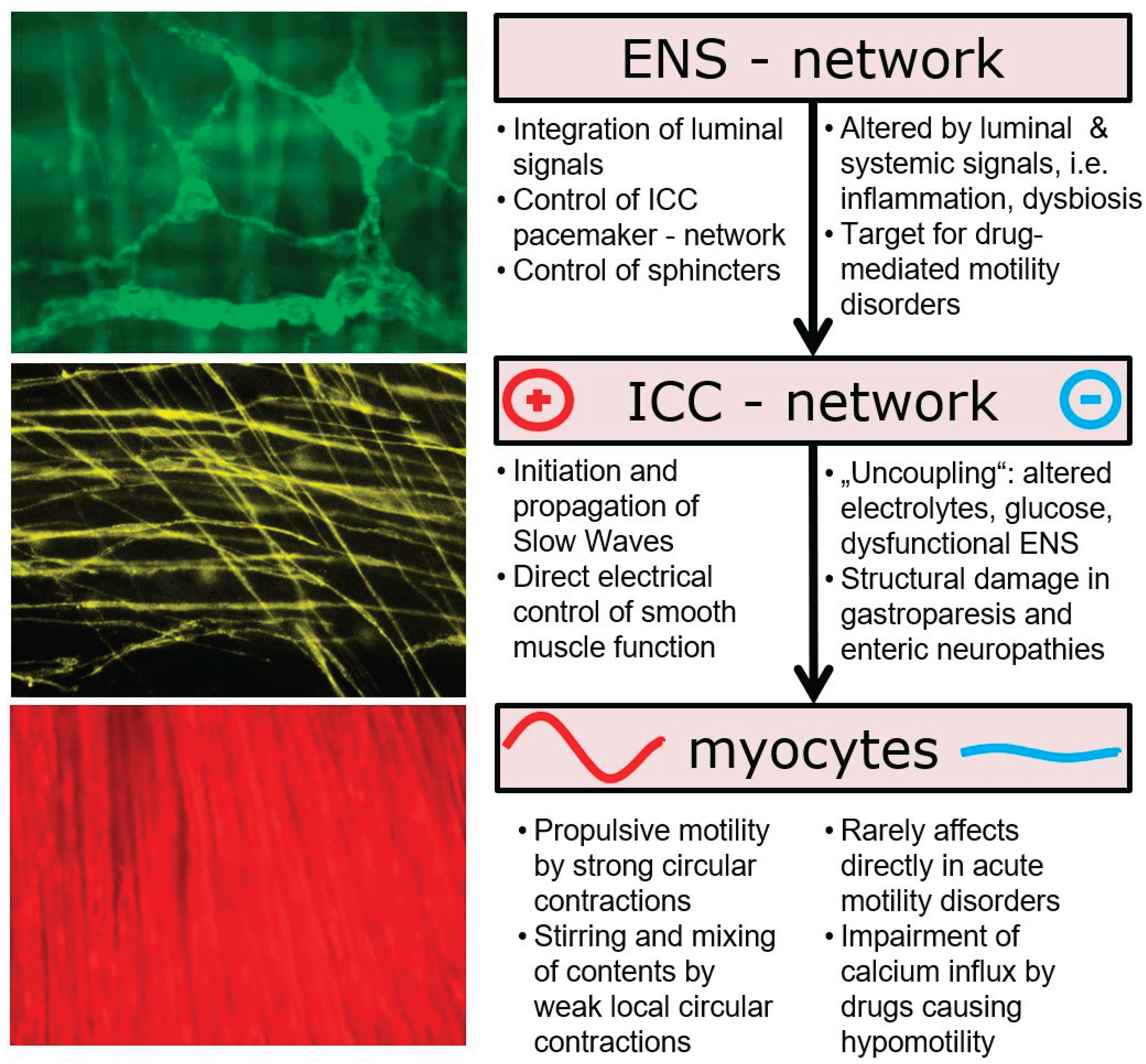
Figure 1.
The complex motor patterns of the gastrointestinal tract are generated within a multicellular network of smooth muscle cells, interstitial cells of Cajal (ICC), and the highly complex neuronal networks of the enteric nervous system (ENS). Continuous bidirectional communication with luminal contents, microbiota, the autonomic nervous system, endocrine pathways, and immune cells governs gastrointestinal motility. This network is physiologically altered by aging and during acute critical illness [30,31].
Figure 1.
The complex motor patterns of the gastrointestinal tract are generated within a multicellular network of smooth muscle cells, interstitial cells of Cajal (ICC), and the highly complex neuronal networks of the enteric nervous system (ENS). Continuous bidirectional communication with luminal contents, microbiota, the autonomic nervous system, endocrine pathways, and immune cells governs gastrointestinal motility. This network is physiologically altered by aging and during acute critical illness [30,31].
3.1.6. Clinical Relevance in Critical Illness
Disorders of gastric emptying and gastrointestinal motility are frequent, multifactorial phenomena in critically ill patients and are of substantial clinical relevance. Based on the physiological control mechanisms described above - the finely tuned interaction between neural, hormonal, and mechanical regulation - severe illness gives rise to specific pathophysiological patterns that directly shape clinical management [3,5,27,32].
In the intensive care setting, external modulation through analgosedation, catecholamine therapy, and systemic inflammatory processes leads to dysfunction of the enteric nervous system, resulting in inhibition of normal motility reflexes and predominance of inhibitory sympathetic input [33,34]. In parallel, central vagal control circuits appear to be impaired, disturbing synchronization between the corpus, antrum, and pylorus. At the same time, critical illness and therapeutic interventions alter the secretion and activity of gastrointestinal hormones: postprandial regulation is dominated by inhibitory mediators such as cholecystokinin, glucagon-like peptide-1, and peptide YY, whereas endogenous stimulation by prokinetic peptides such as motilin and ghrelin is blunted [32,35,36].
These pathophysiological alterations manifest as delayed or absent antral contractility, persistent pyloric opening or tonic closure, and reduced duodenal propulsive force [37,38]. Mechanical and chemical factors - including altered nutrient composition of artificial nutrition, increased osmolality, local edema, or microischemia of the gastric wall - may further amplify these functional disturbances [33].
Clinically, these processes may present as marked gastroparesis with prolonged gastric retention and accumulation of gastric contents. Patients often demonstrate high gastric residual volumes, gastric dilatation, and an increased risk of regurgitation and aspiration-associated pulmonary complications [33,37]. In the small intestine, disturbed motility may result in hypomotility and diffuse dilatation and may promote bacterial overgrowth up to translocation of microbes into the systemic circulation [39].
Therefore, feeding tolerance in critically ill patients is significantly reduced. The inability to achieve adequate enteral nutrition leads to caloric deficits, fosters a catabolic metabolic state, prolongs ICU stay, and correlates with increased morbidity and mortality . Current nutrition guidelines and scoring systems explicitly acknowledge these dysfunctions under the concept of gastrointestinal failure .
Against this background, a pathophysiological understanding of gastrointestinal function in critical illness is essential. It forms the basis for targeted functional diagnostics (e.g., GIUS and the Ultrasound Meal Accommodation Test [UMAT]), enables individualized nutritional management, and facilitates early recognition and treatment of potentially life-threatening complications [3,8,42,43,44].
3.2. Classical GIUS Protocols in Critical Care Medicine
3.2.1. Role of GIUS
Over recent years, gastrointestinal ultrasound (GIUS) has become a central tool for the structural and functional assessment of the gastrointestinal tract in critically ill patients [1]. In contrast to clinical indicators or laboratory parameters, GIUS provides immediate, visual, dynamic, and quantitatively assessable information regarding anatomical integrity, motility, and - depending on the protocol - even perfusion of gastrointestinal segments. The use of structured protocols supports reproducibility and comparability of findings across the interdisciplinary ICU setting [11,45].
3.2.2. The GUTS Protocol: Concept, Workflow, and Clinical Significance
The Gastrointestinal and Urinary Tract Sonography (GUTS) protocol is presented in Table 2. GUTS is a structured approach for systematic sonographic evaluation of the entire gastrointestinal tract in critically ill patients [10]. As described by Perez-Calatayud et al. [10], its focus lies on a stepwise examination with clearly defined imaging windows, measurement points, and diagnostic criteria. The overarching aim is objective documentation and comparability of pathological findings, thereby supporting therapeutic decision-making.
By condensing findings into a structured assessment, the GUTS protocol facilitates longitudinal monitoring and interdisciplinary communication within the ICU team. The application and interpretation of defined cutoff values allow rapid, targeted therapeutic action, particularly in the assessment of complex gastrointestinal complications such as ileus, megacolon, intra-abdominal sepsis, or ischemia. The integration of perfusion diagnostics adds an additional dimension and may support early detection and monitoring of clinically relevant circulatory disturbances.
Although the protocol requires a high degree of sonographic expertise, its clear structure, algorithmic workflow, and threshold logic support reproducibility and clinical applicability. Bedside portability further facilitates its use, which is why GUTS is frequently regarded as a reference protocol for routine ICU practice and clinical research. However, accurate performance and interpretation still require substantial operator training and experience.
The authors advocate routine daily use; however, with an estimated time requirement of 10-15 minutes to complete all measurements, feasibility may be limited in increasingly demanding clinical environments. In addition, artifacts may hamper assessment and further highlight the practical limitations of the protocol.
3.2.3. The AGIUS Protocol: Concept, Workflow, and Clinical Significance
The Acute Gastrointestinal Injury Ultrasound Score (AGIUS) protocol is a standardized scheme for the sonographic assessment of acute gastrointestinal dysfunction in critically ill patients. It was developed to transform ultrasound findings into a score-based evaluation system, thereby enabling more objective comparison and longitudinal monitoring, particularly in the intensive care context [1,3].
The AGIUS protocol is shown in Table 3. AGIUS comprises a systematic sonographic evaluation of the major gastrointestinal segments.
Each parameter evaluated by AGIUS is translated into a semiquantitative score reflecting the severity of acute gastrointestinal injury or dysfunction. The AGIUS score thereby facilitates longitudinal monitoring and objectifies dynamic clinical changes under therapy, such as during enteral nutrition, prokinetic treatment, or withdrawal of medications associated with gastrointestinal side effects. Importantly, its discriminative performance has been demonstrated by ROC analysis, with an area under the curve (AUC) of 0.827 for the prediction of feeding intolerance during the first week of ICU stay. Using a cutoff value of >=3.5, the score achieved a sensitivity of 87.7% and a specificity of 82.4%, underscoring its diagnostic accuracy in this context. Studies have shown that higher AGIUS scores are associated with an increased risk of feeding intolerance, systemic complications, and worse outcomes such as prolonged mechanical ventilation or increased mortality [46,47,48,49]. A major advantage lies in straightforward documentation and monitoring, which allows objective comparisons between patients, serial examinations, and treatment phases.
Limitations include operator dependency, the need for ultrasound expertise, and - in daily routine - the time required to perform the complete scoring. Nevertheless, the AGIUS score is increasingly used as a structured tool for differentiated assessment of gastrointestinal function in the ICU.
3.2.4. The Lai Protocol: Concept, Workflow, and Clinical Significance
The Lai protocol is a standardized framework for gastrointestinal ultrasound (GIUS) that emphasizes structured examination and precise definition of measurement sites. Its primary aim is to enhance reproducibility, comparability, and documentation quality of GIUS findings in both clinical and research contexts [50].
The protocol places particular emphasis on the standardized definition of anatomical segments and examination conditions:
- Stomach
- Systematic measurement of the antral cross-sectional area (CSA), wall thickness, and, when indicated, assessment of the fundus and corpus. Examinations are typically performed with the patient in the supine position and in the fasting state, using predefined scanning planes.
- Small intestine
- Standardized assessment of the duodenum (descending part), jejunum, and terminal ileum with respect to wall thickness, luminal diameter, and motility. Measurement points and scanning planes are explicitly defined.
- Colon
- Structured evaluation of the cecum, ascending, transverse, descending, and sigmoid colon according to predefined criteria. Wall thickness, diameter, and qualitative motility patterns are documented.
- (Optional) Rectum
- Additional measurements may be obtained when clinically indicated and technically feasible.
Technical execution includes the use of predefined transducer frequencies, ultrasound presets, and clearly documented device settings. Patient preparation (fasting, positioning) is standardized to ensure consistency.
Measurements of wall thickness, cross-sectional areas, diameters, and motility provide the basis for objective diagnosis. The strict definition of measurement sites and timing enhances reproducibility across investigators and study centers. Particular emphasis is placed on qualitative and quantitative motility assessment, including the number of contractions per minute and the quality of peristalsis.
3.2.4.1. Clinical Significance
The Lai protocol, as outlined in Table 4, has been applied in routine practice, clinical studies, and ongoing standardization efforts in intensive care and gastroenterology. It incorporates key sonographic parameters such as the gastric antrum cross-sectional area (CSA), bowel diameter, and motility indices to inform functional assessment of the upper and lower gastrointestinal tract. Diagnostic performance analyses reported for combinations of these variables suggest promising discriminative ability: using predefined thresholds (e.g., an antrum CSA <= 9 cm², a colon diameter <= 2 cm, and a peristaltic frequency > 3/min), the composite score yielded high sensitivity and specificity for predicting tolerance to enteral nutrition in critically ill patients in the original study. These findings support the potential utility of the Lai protocol for structured, reproducible sonographic evaluation and facilitate standardized comparison, training, and integration of dynamic functional measurements such as sonographically assessed motility. Limitations include reduced accessibility of certain anatomical regions and compromised image quality, particularly in critically ill patients. Nonetheless, the Lai protocol represents an important step toward more standardized GIUS practice and quality assurance.
3.3. Clinical Relevance of Sonographic Protocols for Nutritional Therapy - in Light of the Recommendations by Reintam Blaser et al. [1]
The structured and reproducible acquisition of gastrointestinal findings through standardized ultrasound protocols such as AGIUS, GUTS, and Lai represents a relevant advance in the guidance of enteral nutrition in critically ill patients. In contrast to the traditional reliance on gastric residual volume (GRV) - whose diagnostic validity and prognostic value have increasingly been questioned - these protocols allow integration of objective, therapeutically relevant parameters directly into clinical decision-making.
The publication by Reintam Blaser et al. [1] marked an important shift in the intensive care management of gastrointestinal function. The authors advocated a pragmatic approach and highlighted essential ultrasound parameters such as antral cross-sectional area, small- and large-bowel motility, detection of free intra-abdominal fluid, and assessment of wall abnormalities as decision aids for nutritional therapy. Their recommendations support moving beyond the limitations of traditional surrogate markers such as GRV and toward modern imaging-based diagnostics.
The three protocols operationalize these recommendations in different ways:
- AGIUS protocol: provides a score-based framework that semiquantitatively captures the severity of gastrointestinal dysfunction and enables objective longitudinal monitoring.
- GUTS protocol: combines a structured, algorithm-driven examination with integration of perfusion assessment and defined pathological cutoffs, thereby offering a basis for early detection and monitoring of complex complications.
- Lai protocol: standardizes measurement sites and techniques, thereby supporting reproducibility and comparability in both daily practice and clinical research.
In clinical practice, these protocols may facilitate earlier recognition of feeding intolerance, more targeted adaptation of therapeutic strategies, and prevention of complications such as gastroparesis, ileus, or aspiration pneumonia. The systematic integration of core sonographic parameters into therapeutic algorithms may also support rapid, needs-based, interdisciplinary management and is broadly aligned with current scientific recommendations.
In summary, the current evidence and consensus articulated by Reintam Blaser et al. [1] support the targeted use of pragmatic, multifactorial GIUS protocols as a promising framework for guiding enteral nutrition and preventing gastrointestinal complications in critically ill patients.
3.4. Dynamic Ultrasound Approaches and the Role of UMAT in Enteral Nutrition Therapy
The increasing demand for usability and dynamic application of sonographic protocols in intensive care medicine is reflected in the development and implementation of approaches such as AGIUS, GUTS, and Lai. Their clearly defined measurement points and reproducible scoring systems provide structured longitudinal data but, because of their complexity and their reliance on static single measurements, may be of only limited dynamic use in daily clinical practice. Particularly in the context of enteral nutrition, there is a growing need for flexible, easily adaptable, and course-oriented methods.
Against this background, the Ultrasound Meal Accommodation Test (UMAT) is of increasing interest. It has demonstrated clinically relevant diagnostic performance for detecting feeding intolerance, with a 60-minute change cutoff of 52% yielding a sensitivity of 50%, a specificity of 88.9%, a positive likelihood ratio of 4.50, and a negative likelihood ratio of 0.56 [9]. UMAT extends conventional, predominantly static ultrasound by adding a dynamic temporal component: it assesses the physiological adaptation and emptying capacity of the stomach after standardized nutrient intake by serial measurements of antral cross-sectional area (CSA) and gastric volume. The standardized protocol begins with a baseline fasting measurement, followed by ingestion of a defined test meal and subsequent ultrasound examinations at fixed time points. These serial measurements generate an individualized functional profile of gastric performance by documenting CSA and volume increase in the early postprandial phase and subsequent emptying, thereby providing a direct assessment of feeding tolerance.
Integration of UMAT into a pragmatic diagnostic algorithm introduces an additional, patient-centered dimension to enteral nutrition therapy:
- It may help objectify functional gastric adaptation and support earlier detection of pathological courses such as gastroparesis or motility disorders.
- In combination with baseline parameters from structured protocols (e.g., gastric CSA, small-bowel motility, and free intra-abdominal fluid), nutritional therapy may be tailored more closely to the individual patient, risks may be minimized, and complications may be identified at an earlier stage.
- UMAT is non-invasive, bedside-feasible, and flexible enough to be combined with different protocol approaches, resulting in a hybrid diagnostic framework that helps bridge scientific evidence and clinical practicality.
In summary, dynamic visualization of gastric accommodation and emptying by UMAT represents a potentially valuable extension of individualized, safe, and effective nutritional therapy in critically ill patients. By complementing the strengths of classical structured ultrasound protocols with a pragmatic longitudinal component, UMAT may contribute to a more nuanced management of gastrointestinal function in the intensive care setting.
4. Dynamic GIUS-Based Algorithms for Enteral Nutrition
Taken together, these considerations provide a strong rationale for simple, reproducible GIUS-based algorithms that translate dynamic gastric assessment into concrete feeding decisions at the bedside. Against this background, we propose the following three protocols, designed to be implementable both during daily ward rounds and as nurse-driven ultrasound measurements. These variants are intended as pragmatic, literature-informed decision aids rather than as prospectively validated standards.
4.1. Variant 1: Monitoring Ongoing Enteral Nutrition (Every 8 h)
For patients already receiving enteral nutrition, a structured GIUS protocol with assessments every eight hours may enable dynamic monitoring of feeding tolerance and early identification of gastrointestinal dysfunction. At each interval, sonographic parameters including gastric antral CSA, small-bowel diameter, mucosal thickness, preserved small- and large-bowel peristalsis, and free intra-abdominal fluid are assessed. Reference values are used pragmatically: gastric antrum CSA should remain below 9 cm² and stable; small-bowel diameter should remain below 3 cm; mucosal thickness should remain below 3 mm; bowel peristalsis should be preserved; and free fluid should be absent or <1 cm.
If all findings remain within physiological limits, enteral nutrition may be continued or advanced according to individual therapeutic targets. If an isolated increase in gastric CSA is observed with otherwise normal parameters, nutrition may be continued unchanged, but monitoring should be maintained at regular 8-hour intervals. However, if CSA increases and/or there is reduced peristalsis, if small-bowel diameter reaches or exceeds 3 cm, if mucosal thickness rises, or if free fluid >=1 cm is detected, nutrition should be reduced or temporarily paused and the situation further evaluated.
Measurement points (every 8 h):
- Gastric antrum CSA (supine): stable (<9 cm²) vs. increasing
- Small bowel diameter: <3 cm
- Mucosal thickness: <3 mm (physiological)
- Small- and large-bowel peristalsis: preserved
- Free intra-abdominal fluid: absent or <1 cm
- Decision criteria:
- All parameters within the reference range: continue or advance nutrition according to target
- Isolated increase in CSA with otherwise normal parameters: continue nutrition unchanged and repeat assessment every 8 h
- Increase in CSA and/or reduced peristalsis, diameter >=3 cm, increased mucosal thickness, or free fluid >=1 cm: reduce or pause nutrition
4.2. Variant 2: Assessing Readiness to Initiate Enteral Nutrition
Before initiating enteral or oral nutrition - particularly after periods of fasting, gastrointestinal dysfunction, or critical illness - a dedicated preprandial GIUS protocol may be useful. This protocol focuses on feeding readiness by assessing targeted sonographic parameters: gastric antrum CSA (preferably <9 cm²), small-bowel diameter (<3 cm), mucosal thickness (<3 mm), preserved bowel peristalsis, and absence of free intra-abdominal fluid.
If all parameters are within the reference range, enteral or oral nutrition can be initiated. If abnormal findings are detected, repeat evaluation and consideration of prokinetic therapy may be warranted, with subsequent adjustment according to the follow-up sonographic and clinical findings.
Measurement points (preprandial):
- Gastric antrum CSA: preferably <9 cm²
- Small bowel diameter: <3 cm
- Mucosal thickness: <3 mm
- Peristalsis: preserved
- Free intra-abdominal fluid: absent
Decision criteria:
- All parameters within the physiological range (including preserved motility and no clinical red-flag symptoms): initiate enteral and/or oral feeding as planned.
- One to two mildly abnormal parameters with preserved motility and no clinical red flags (e.g., borderline antral CSA or small-bowel diameter): consider a cautious start of enteral nutrition at reduced rates, combined with prokinetic therapy where appropriate, and repeat GIUS and clinical assessment within 24 hours.
- Multiple abnormal parameters and/or evidence of hypomotility or paralysis, relevant gastric retention, or red-flag symptoms (vomiting, regurgitation, relevant distension): postpone feeding, optimize underlying factors (e.g., prokinetics, hemodynamics), and repeat the readiness assessment. In unstable situations, switch directly to the 8-hourly monitoring protocol once feeding is initiated.
4.3. Variant 3: Once-Daily Assessment for Ongoing Enteral Nutrition
A standardized, once-daily GIUS protocol offers a pragmatic approach to monitoring enteral nutrition tolerance and gastrointestinal function in critically ill patients. This protocol provides a structured assessment each morning with the aim of facilitating consistent clinical decision-making and early identification of feeding intolerance.
During each daily evaluation, sonographic measurements are obtained for gastric antrum cross-sectional area (CSA), small-bowel diameter, mucosal thickness, small- and large-bowel peristalsis, free intra-abdominal fluid, colonic wall thickness (optional), and perfusion parameters (optional). Reference limits - such as a gastric antrum CSA below 9 cm², small-bowel diameter below 3 cm, mucosal thickness under 3 mm, preserved peristalsis at >=3 contractions/min, and free fluid <1 cm - are used to distinguish physiological from pathological findings.
If all parameters are within the physiological range, enteral or oral nutrition may be initiated or continued according to individual patient needs. In the presence of abnormal findings in any parameter, clinical re-evaluation is recommended, which may include adjustment of the nutrition regimen, consideration of prokinetic therapy, and more frequent reassessment.
This once-daily GIUS protocol supports workflow integration, interdisciplinary collaboration, and individualized nutrition management in accordance with current concepts of intensive care nutrition practice.
- Timing: once per day, ideally in the morning before initiating or advancing enteral nutrition.
- Parameters: gastric antrum CSA (supine, <9 cm²), small-bowel diameter (<3 cm), mucosal thickness (<3 mm), small-/large-bowel peristalsis (>=3/min), free intra-abdominal fluid (<1 cm), colonic wall thickness (<4 mm, optional), and resistive index (RI <1.2, optional).
Interpretation:
- All parameters within the physiological range: proceed with initiation or continuation of enteral and/or oral feeding as planned.
- Up to two mildly abnormal parameters with preserved motility and no red-flag symptoms (e.g., vomiting, regurgitation, progressive distension): re-evaluate the clinical status, consider prokinetic therapy, and repeat sonographic assessment within the next 24 hours.
- More than two abnormal parameters and/or evidence of hypomotility or paralysis, relevant gastric retention, or red-flag symptoms: switch to the 8-hourly monitoring protocol, perform earlier sonographic reassessment, and adapt enteral nutrition accordingly (reduction or temporary interruption).
This once-daily approach facilitates efficient workflow integration, minimizes unnecessary interventions, and maintains patient safety in accordance with current evidence and clinical recommendations.
4.4. Cutoff Values (Literature-Based [1,3,10,11,45,50])

Table 1.
Summary of measured variables and suggested protocols.
| Parameter | Suggested threshold | Interpretation | |
|---|---|---|---|
| Gastric antrum cross-sectional area (supine) | <9 cm² | Fasting marker of feeding readiness | |
| Small-bowel diameter | <3 cm | Physiological | |
| Small-bowel diameter | ≥3 cm | Pathological dilatation | |
| Mucosal thickness | <3 mm | Physiological | |
| Mucosal thickness | ≥3 mm | Pathological | |
| Peristalsis | ≥3/min | Normal | |
| Peristalsis | <3/min | Hypomotility | |
| Free intra-abdominal fluid | <1 cm | Physiological | |
| Free intra-abdominal fluid | ≥1 cm | Warning sign | |
| Colonic wall thickness | <4 mm | Normal | |
| Colonic wall thickness | ≥4 mm | Pathological | |
| Resistive index | <1.2 | Normal | |
| Resistive index | >1.2 | Suggestive of ischemia | |
| Parameter | 8-hour enteral feeding control | Feeding readiness assessment | Once-daily protocol |
| Gastric antrum CSA | Stability vs increase, <9 cm² | Preferably low, <9 cm² | <9 cm² |
| Small-bowel diameter | <3 cm | <3 cm | <3 cm |
| Small-bowel mucosal thickness | <3 mm | <3 mm | <3 mm |
| Small-/large-bowel peristalsis | Preserved | Preserved | ≥3/min |
| Free intra-abdominal fluid | Not detectable or <1 cm | Not detectable | <1 cm |
| Colonic wall thickness | ≥4 mm as warning sign | Optional | <4 mm (optional) |
| Resistive index (Doppler) | >1.2 as warning sign if impaired | Optional | <1.2 (optional) |
| Measurement interval | Every 8 hours | Single preprandial assessment | Once daily, preferably in the morning |
| Decision | Threshold- and trend-based | Start permission or re-evaluation | Routine screening; repeat if abnormalities |
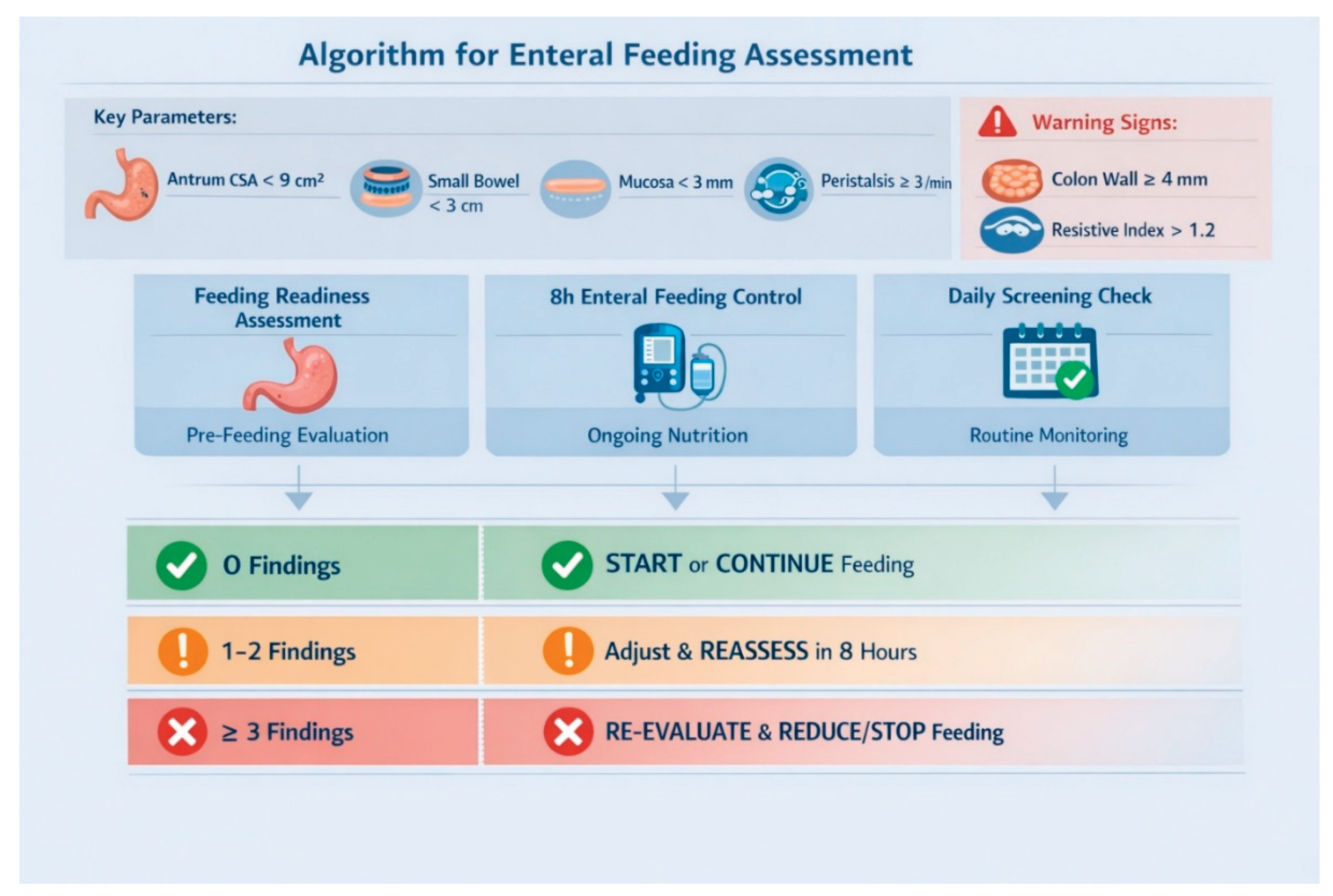
Figure 2.
Schematic visualization of the proposed GIUS-based algorithm for enteral feeding assessment.
Figure 2.
Schematic visualization of the proposed GIUS-based algorithm for enteral feeding assessment.
5. Discussion
This review establishes a pragmatic, structured approach to sonographic monitoring of enteral nutrition in critically ill patients by synthesizing three protocol variants - regular 8-hour assessments, preprandial readiness checks, and a once-daily standardized protocol - each defined by explicit, literature-based cutoff values for core GIUS parameters [1,7,10,50]. By operationalizing these measures, our framework aims to improve transparency and reproducibility and to support timely, individualized feeding decisions in intensive care practice [51].
Nevertheless, important unresolved questions underlie our protocol selection and the proposed measurement intervals. Probabilities of intolerance detection vary widely across patient populations, and the predictive accuracy of specific GIUS markers under routine clinical conditions remains incompletely validated. While elements such as gastric antrum CSA and small-bowel diameter are widely used, the reliability of additional markers - including mucosal thickness, colonic wall measurements, and Doppler indices - has yet to be substantiated by large-scale prospective trials. Much of the published evidence consists of expert consensus or retrospective data and lacks robust linkage to patient-centered outcomes, which limits generalizability and risk stratification [42,43,52,53,54,55,56,57,58].
Against this background, our structured protocol may provide a useful foundation for clinical monitoring, but the evidence gaps emphasize the need for ongoing research and multicenter collaboration to refine sonographic algorithms and clarify their impact on patient outcomes. As enteral nutrition protocols evolve, future work should validate measurement intervals, optimize parameter selection, and integrate GIUS findings with additional biomarkers for a more comprehensive assessment.
A major strength of our algorithmic approach lies in the explicit operationalization of cutoff values, which may facilitate reproducibility and interdisciplinary communication. The structured use of GIUS provides an immediate bedside assessment tool and may help clinicians react more promptly to evolving gastrointestinal conditions, thereby reducing the risks of underfeeding, aspiration, or unnecessary interruptions. By defining distinct time intervals - ranging from frequent (8-hourly) to pragmatic daily schedules - the protocol also offers flexibility that can be adapted to patient acuity, resource availability, and institutional workflow.
However, these potential advantages must be weighed against challenges inherent to GIUS methodology in the ICU setting. Not all parameters are supported by the same strength of evidence [11,45]. While gastric antrum CSA and small-bowel diameter have been more frequently validated as markers of gastric emptying and small-bowel dilatation, other variables - such as mucosal thickness, colonic wall thickness, and resistive index - are supported by more limited data and may be more susceptible to inter-operator variability [59,60]. Furthermore, direct correlations between these sonographic measurements and clinically meaningful outcomes (e.g., incidence of pneumonia, successful advancement of enteral nutrition, ICU length of stay) have not yet been robustly demonstrated in randomized multicenter trials [3].
An additional methodological limitation concerns patient positioning during gastric ultrasound. Many perioperative and diagnostic studies derive antral CSA cutoffs from measurements obtained in the right lateral decubitus position to optimize antral filling and visualization. In contrast, our proposed cutoff values are based on supine measurements, following the examination conditions described by Lai et al., which better reflect routine practice in critically ill patients who are predominantly managed in the supine position. Although supplementary assessment in the right lateral decubitus position may enhance image quality in selected cases, such positional changes are not always feasible in the ICU and may limit direct transferability of right-lateral-derived thresholds to critically ill populations.
Clinical implementation also encounters practical barriers. Variability in training, availability of equipment, and differences in patient anatomy can affect feasibility and reproducibility [52,53,61,62,63]. In addition, the relevance of individual parameters may vary in patients with comorbidities (e.g., chronic gastrointestinal disease, obesity, prior abdominal surgery) or under the influence of medications that affect motility or mucosal integrity [52,64,65].
Nevertheless, the structured daily protocol and its variable-frequency alternatives offer a promising step toward more harmonized practice, support standard operating procedures, and provide a reproducible basis for further innovation [61]. Continued outcome-driven research and collaborative multicenter trials are necessary to validate parameter selection, optimize cutoff values, and confirm the clinical benefits of GIUS protocols for enteral feeding monitoring in the ICU context [6].
Taken together, these findings underscore both the promise and the responsibility associated with structured GIUS protocols for enteral nutrition management in the ICU. While this approach promotes objectivity, workflow integration, and standardization, the utility of individual parameters and measurement intervals remains dependent on context, expertise, and evolving evidence. Current algorithmic frameworks provide a useful foundation for practice and research, yet the literature clearly highlights the need for large-scale validation, harmonized training, and outcome-focused studies. Until then, interdisciplinary collaboration and critical reappraisal remain essential to ensure that GIUS-based protocols enhance care without overreliance and that each decision is integrated with comprehensive clinical assessment.
6. Conclusions
Gastrointestinal ultrasound offers a feasible and non-invasive bedside method to support personalized enteral nutrition therapy in critically ill patients. When applied within a structured protocol, GIUS may help clinicians assess feeding readiness, monitor gastrointestinal tolerance and identify early signs of gastrointestinal dysfunction. Rather than replacing clinical judgment, GIUS should be integrated into a multimodal decision-making process including hemodynamic stability, metabolic markers, abdominal findings and the overall clinical course.
The proposed algorithm provides a pragmatic framework for translating GIUS findings into bedside nutritional decisions. However, the suggested thresholds and decision pathways require prospective validation before routine implementation can be recommended. Future studies should evaluate standardization, reproducibility and the effect of GIUS-guided nutrition strategies on feeding tolerance, caloric target achievement and patient-centered outcomes.
Funding
This research received no external funding.
Declaration of AI Use
During the preparation of this manuscript, generative artificial intelligence (AI) tools were used exclusively to assist with text translation, linguistic polishing, and the creation of one illustrative figure. No AI tool was used for data collection, data analysis, or independent scientific interpretation. All AI-generated or AI-assisted content was carefully reviewed, edited, and approved by the authors. The authors assume full responsibility for the final version of the manuscript and its scientific content.
Conflicts of Interest
The authors declare no conflicts of interest.
Abbreviations
The following abbreviations are used in this manuscript:
| Abbreviation | Full term |
| AGIUS | Acute Gastrointestinal Injury Ultrasound Score |
| AGI | Acute Gastrointestinal Injury |
| AUC | Area Under the Curve |
| BMI | Body Mass Index |
| CSA | Cross-Sectional Area |
| CT | Computed Tomography |
| EN | Enteral Nutrition |
| ESPEN | European Society for Clinical Nutrition and Metabolism |
| GI | Gastrointestinal |
| GIUS | Gastrointestinal Ultrasound |
| GRV | Gastric Residual Volume |
| GUTS | Gastrointestinal and Urinary Tract Sonography |
| ICU | Intensive Care Unit |
| I-FEED | Intolerance of Feeding, Food intolerance, Examination, Enteral nutrition, Duration of symptoms |
| NPV | Negative Predictive Value |
| POCUS | Point-of-Care Ultrasound |
| PN | Parenteral Nutrition |
| PPV | Positive Predictive Value |
| RI | Resistive Index |
| ROC | Receiver Operating Characteristic |
| SCCM | Society of Critical Care Medicine |
| SD | Standard Deviation |
| SOFA | Sequential Organ Failure Assessment |
| UMAT | Ultrasound Meal Accommodation Test |
| VExUS | Venous Excess Ultrasound |
Appendix A - Patient Example
In this section, we present a representative case to illustrate how the proposed algorithm may support bedside nutritional decision-making. The patient had pneumonia complicated by prolonged shock and initially required vasopressor support. GIUS assessment was performed after relative hemodynamic stabilization had been achieved and vasopressor therapy was already being stepwise de-escalated.Ultrasound examination was performed in the supine position and included standardized assessment of the gastric antrum and bowel, with the corresponding probe positions shown alongside the ultrasound images.
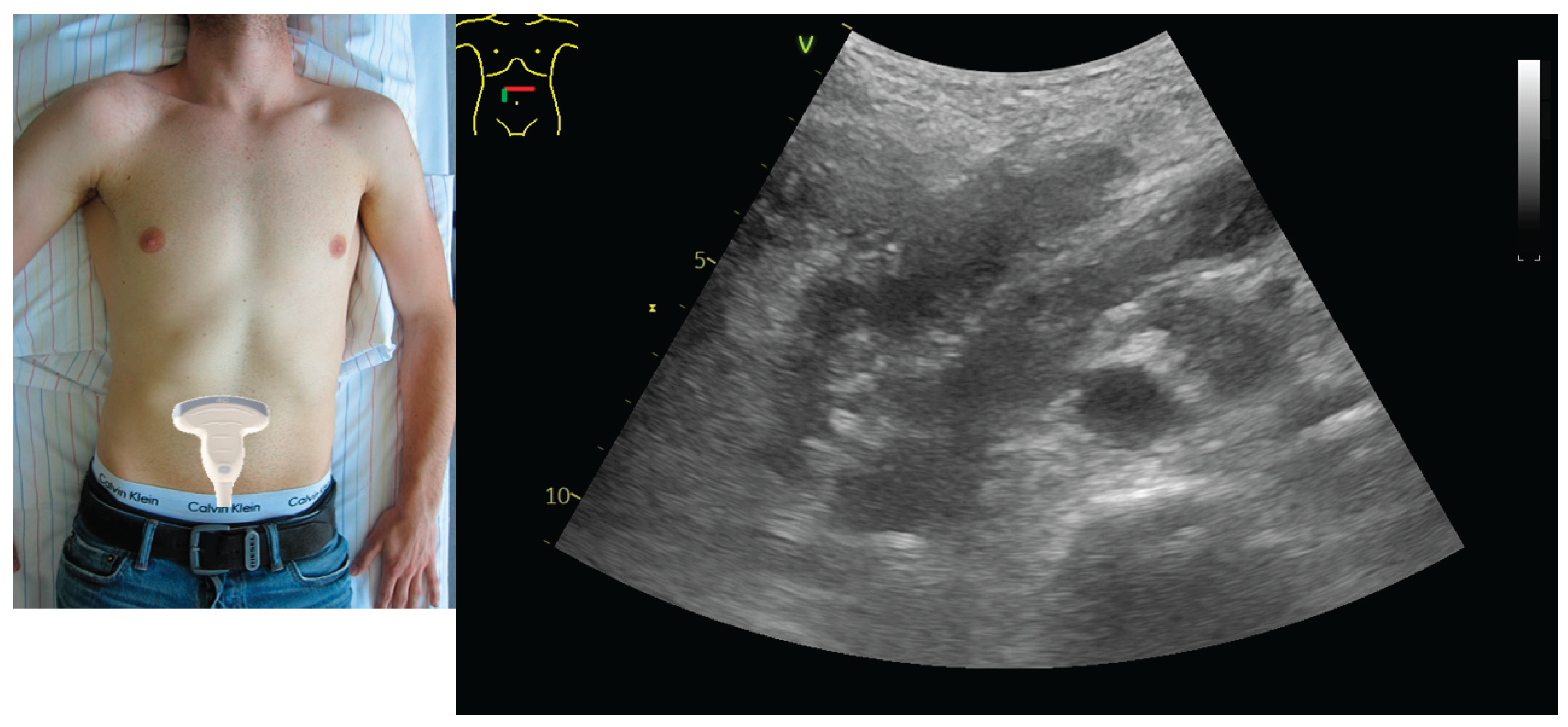
GIUS demonstrated marked gastric retention, with an antral cross-sectional area (CSA) of approximately 15.4 cm² (Figure 2), consistent with impaired gastric emptying. In addition, bowel ultrasound showed mildly distended and edematous small-bowel loops, with free intraperitoneal fluid visible between adjacent bowel loops (Figure 3). Quantitative assessment of the bowel further demonstrated a small-bowel diameter within the non-dilated range (d1 = 2.1 cm), while bowel wall thickness was increased (d2 = 0.42 cm), consistent with intestinal wall edema (Figure 4). Dynamic real-time assessment revealed variable luminal diameters in transverse view, supporting the presence of preserved, although reduced, peristaltic activity rather than complete paralytic ileus (Figure 5).
Taken together, these findings suggest relevant gastrointestinal dysfunction with impaired gastric emptying, bowel wall edema, and associated free intraperitoneal fluid, while residual intestinal motility appears to be preserved. Within the framework of the proposed algorithm, this pattern would favor reduction rather than complete cessation of enteral nutrition, combined with close reassessment and consideration of supplemental parenteral nutrition if caloric targets cannot be achieved.
Figure 3.
Representative gastric ultrasound finding from the illustrative case. The green dashed contour outlines the gastric antrum. The measured antral cross-sectional area (CSA) of 15.4 cm² is consistent with increased gastric retention.
Figure 3.
Representative gastric ultrasound finding from the illustrative case. The green dashed contour outlines the gastric antrum. The measured antral cross-sectional area (CSA) of 15.4 cm² is consistent with increased gastric retention.
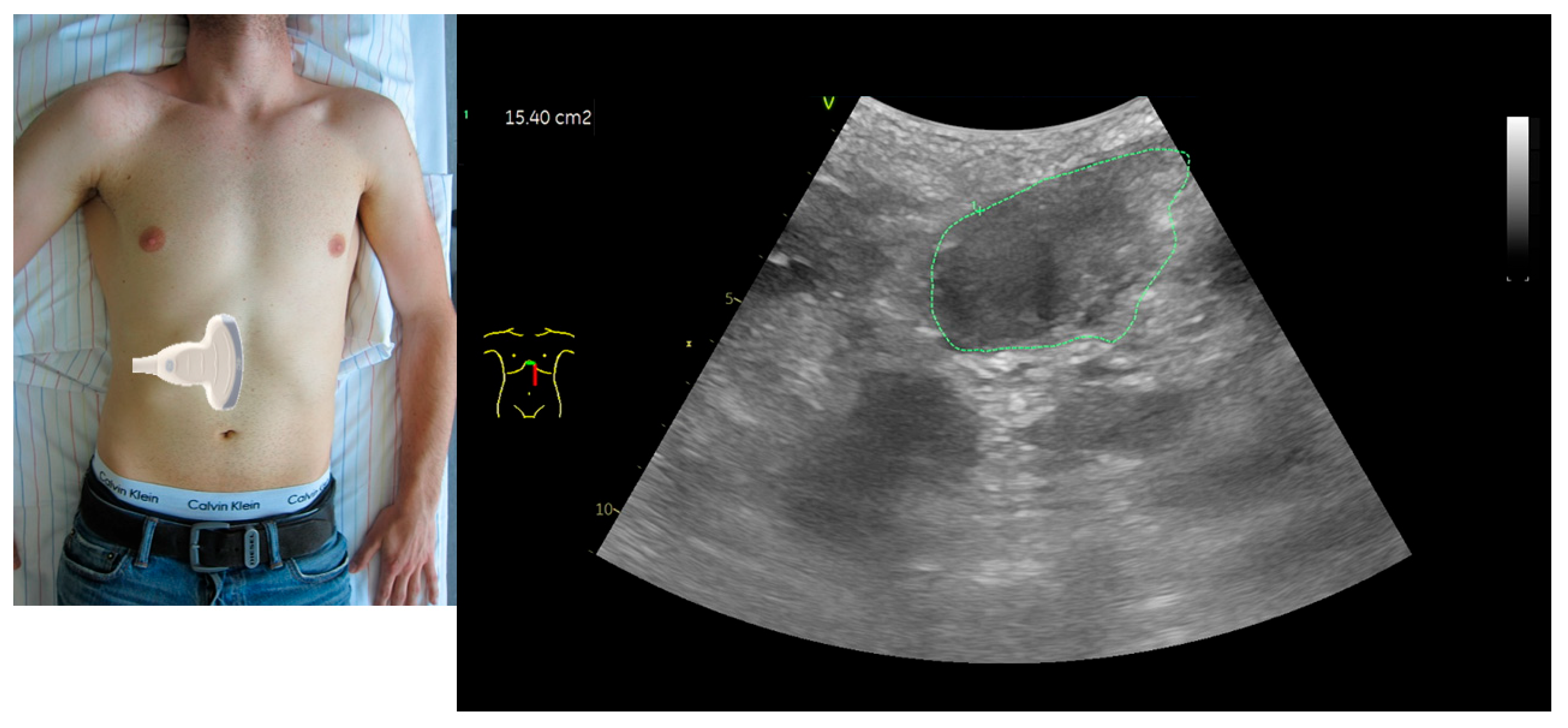
Figure 4.
Representative intestinal ultrasound views from the illustrative case. Upper panel: mildly distended bowel loop. Lower panel: free intraperitoneal fluid between bowel loops.
Figure 4.
Representative intestinal ultrasound views from the illustrative case. Upper panel: mildly distended bowel loop. Lower panel: free intraperitoneal fluid between bowel loops.
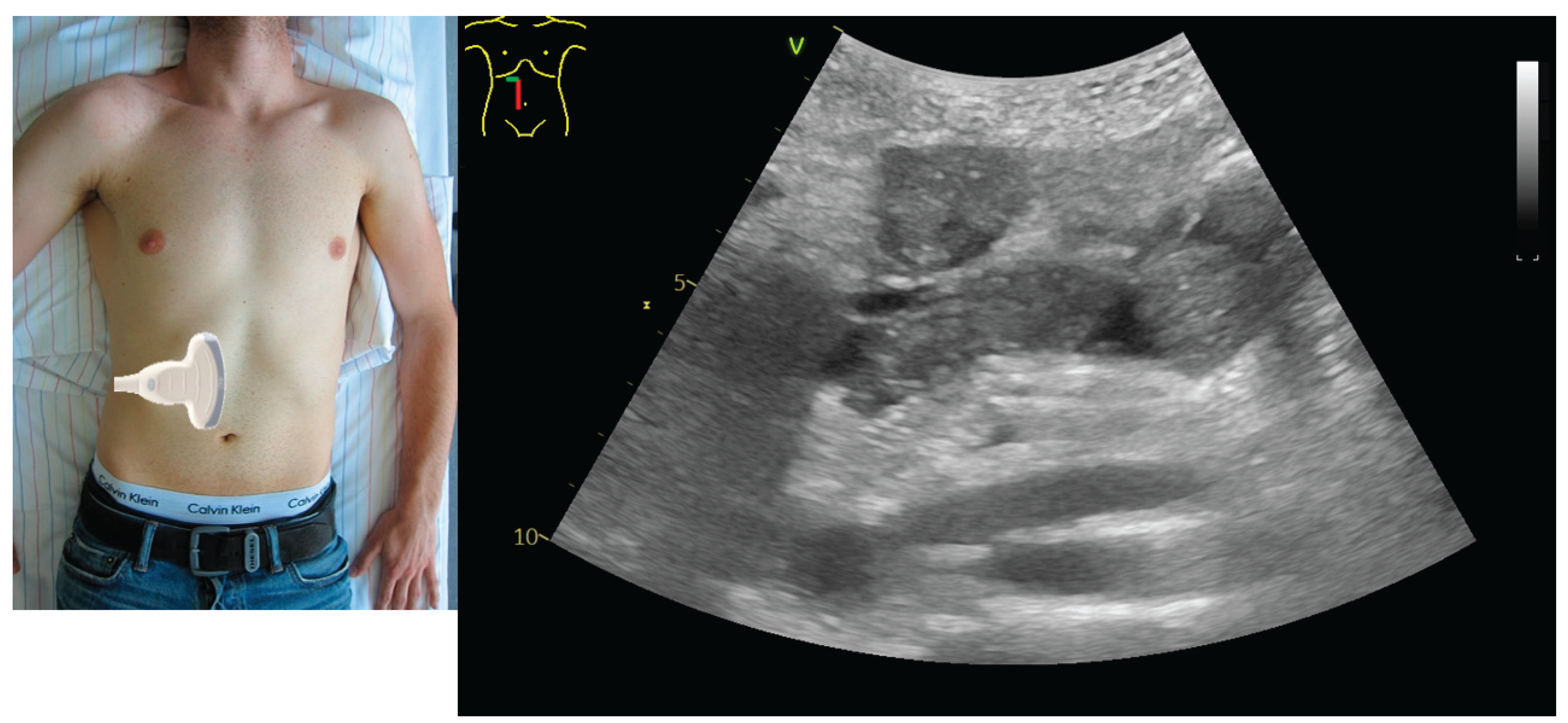
Figure 5.
Representative small-bowel ultrasound image. d1 indicates a small-bowel diameter within the normal range (2.1 cm), whereas d2 indicates increased small-bowel wall thickness.
Figure 5.
Representative small-bowel ultrasound image. d1 indicates a small-bowel diameter within the normal range (2.1 cm), whereas d2 indicates increased small-bowel wall thickness.
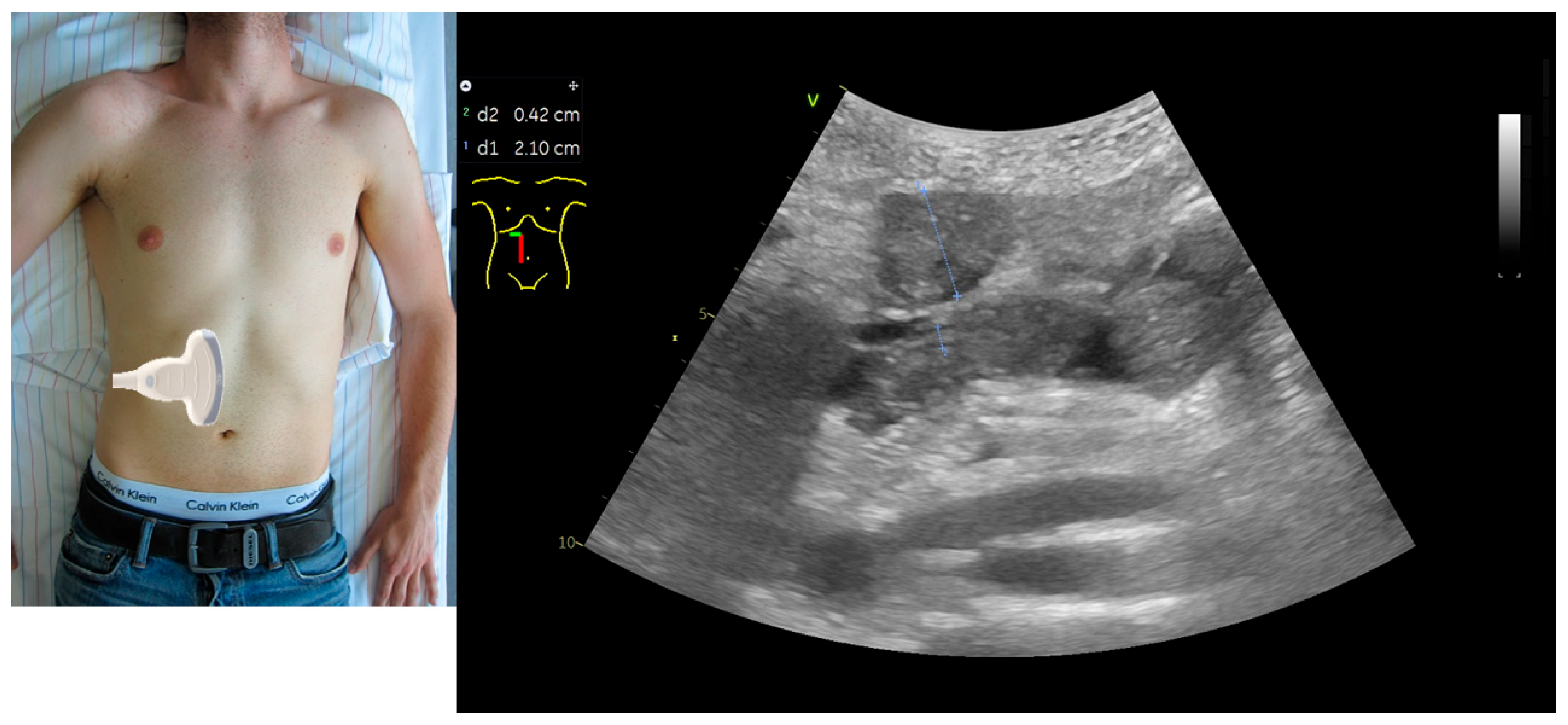
Figure 6.
Transverse intestinal ultrasound view demonstrating variable small-bowel diameters. In dynamic real-time assessment, differences in luminal diameter should be interpreted together with bowel wall motion and peristaltic activity. In this example, the varying diameters are consistent with preserved peristalsis.
Figure 6.
Transverse intestinal ultrasound view demonstrating variable small-bowel diameters. In dynamic real-time assessment, differences in luminal diameter should be interpreted together with bowel wall motion and peristaltic activity. In this example, the varying diameters are consistent with preserved peristalsis.
References
- Mihnovits, V.; et al. Gastrointestinal ultrasound in the critically ill: A narrative review and a proposal for a protocol. JPEN J. Parenter. Enter. Nutr. 2024, 48(8), 895–905. [Google Scholar] [CrossRef]
- Su, J.; et al. Critical care ultrasound: development, evolution, current and evolving clinical concepts in critical care medicine. Front Med. 2025, 12, 1622604. [Google Scholar] [CrossRef]
- Reintam Blaser, A.; et al. Gastrointestinal dysfunction in the critically ill: a systematic scoping review and research agenda proposed by the Section of Metabolism, Endocrinology and Nutrition of the European Society of Intensive Care Medicine. Crit. Care 2020, 24(1), 224. [Google Scholar] [CrossRef]
- El Khoury, D.; et al. Gastric Cross-Sectional Area to Predict Gastric Intolerance in Critically Ill Patients: The Sono-ICU Prospective Observational Bicenter Study. Crit. Care Explor 2023, 5(3), e0882. [Google Scholar] [CrossRef] [PubMed]
- Bachmann, K.F.; et al. Core outcome set of daily monitoring of gastrointestinal function in adult critically ill patients: a modified Delphi consensus process (COSMOGI). Crit. Care 2024, 28(1), 420. [Google Scholar] [CrossRef] [PubMed]
- Xu, X.Y.; et al. Effects of ultrasound monitoring of gastric residual volume on feeding complications, caloric intake and prognosis of patients with severe mechanical ventilation. World J. Gastrointest. Surg. 2023, 15(8), 1719–1727. [Google Scholar] [CrossRef]
- Pérez-Calatayud Á, A.; Carillo-Esper, R. Role of gastric ultrasound to guide enteral nutrition in the critically ill . Curr. Opin. Clin. Nutr. Metab. Care 2023, 26(2), 114–119. [Google Scholar] [CrossRef]
- Steinsvik, E.K.; Hausken, T.; Gilja, O.H. The ultrasound meal accommodation test in 509 patients with functional gastrointestinal disorders. Scand. J. Gastroenterol. 2016, 51(7), 788–94. [Google Scholar] [CrossRef] [PubMed]
- Pérez-Calatayud, A.A.; et al. Ultrasound meal accommodation test in critically ill patients with and without feeding intolerance UMAT-ICU. Clin. Nutr. ESPEN 2022, 51, 424–429. [Google Scholar] [CrossRef]
- Perez-Calatayud, A.A.; et al. Point-of-care gastrointestinal and urinary tract sonography in daily evaluation of gastrointestinal dysfunction in critically ill patients (GUTS Protocol). Anaesthesiol. Intensive Ther. 2018, 50(1), 40–48. [Google Scholar] [CrossRef]
- Gao, T.; et al. Predictive value of transabdominal intestinal sonography in critically ill patients: a prospective observational study. Crit. Care 2019, 23(1), 378. [Google Scholar] [CrossRef] [PubMed]
- Hammond, K.; et al. Validity and reliability of rectus femoris ultrasound measurements: Comparison of curved-array and linear-array transducers. J. Rehabil. Res. Dev. 2014, 51(7), 1155–64. [Google Scholar] [CrossRef]
- Goyal, R.K.; Guo, Y.; Mashimo, H. Advances in the physiology of gastric emptying . Neurogastroenterol. Motil. 2019, 31(4), e13546. [Google Scholar] [CrossRef] [PubMed]
- Wang, Z.; et al. Postoperative delayed gastric emptying: may gut microbiota play a role? Front Cell Infect. Microbiol. 2024, 14, 1449530. [Google Scholar] [CrossRef]
- Read, N.W.; Houghton, L.A. Physiology of gastric emptying and pathophysiology of gastroparesis . Gastroenterol. Clin. North Am. 1989, 18(2), 359–73. [Google Scholar] [CrossRef]
- Houghton, L.A.; et al. Relationship of the motor activity of the antrum, pylorus, and duodenum to gastric emptying of a solid-liquid mixed meal. Gastroenterology 1988, 94(6), 1285–91. [Google Scholar] [CrossRef]
- Di Natale, M.R.; et al. Functional and anatomical gastric regions and their relations to motility control. Neurogastroenterol. Motil. 2023, 35(9), e14560. [Google Scholar] [CrossRef]
- Sharkey, K.A.; Mawe, G.M. The enteric nervous system . Physiol. Rev. 2023, 103(2), 1487–1564. [Google Scholar] [CrossRef] [PubMed]
- Browning, K.N.; Travagli, R.A. Central control of gastrointestinal motility . Curr. Opin. Endocrinol. Diabetes Obes. 2019, 26(1), 11–16. [Google Scholar] [CrossRef]
- Valentino, R.J.; et al. Central Network Dynamics Regulating Visceral and Humoral Functions . J. Neurosci. 2017, 37(45), 10848–10854. [Google Scholar] [CrossRef] [PubMed]
- Steinert, R.E.; et al. Ghrelin, CCK, GLP-1, and PYY(3-36): Secretory Controls and Physiological Roles in Eating and Glycemia in Health, Obesity, and After RYGB. Physiol. Rev. 2017, 97(1), 411–463. [Google Scholar] [CrossRef]
- Camilleri, M. Gastrointestinal hormones and regulation of gastric emptying . Curr. Opin. Endocrinol. Diabetes Obes. 2019, 26(1), 3–10. [Google Scholar] [CrossRef]
- Celletti, F.; Farrar, J.; De Regil, L. World Health Organization Guideline on the Use and Indications of Glucagon-Like Peptide-1 Therapies for the Treatment of Obesity in Adults. JAMA 2026, 335(5), 434–438. [Google Scholar] [CrossRef] [PubMed]
- Corrigendum to “Fate of ingested fluids: factors affecting gastric emptying and intestinal absorption of beverages in humans.”. Nutr. Rev. 2015, 73 78(9) (Suppl. 2), 57–72 p. 781–781.
- van Zuylen, M.L.; et al. Perioperative management of long-acting glucagon-like peptide-1 (GLP-1) receptor agonists: concerns for delayed gastric emptying and pulmonary aspiration. Br. J. Anaesth. 2024, 132(4), 644–648. [Google Scholar] [CrossRef] [PubMed]
- Deloose, E.; et al. The migrating motor complex: control mechanisms and its role in health and disease. Nat. Rev. Gastroenterol. Hepatol. 2012, 9(5), 271–85. [Google Scholar] [CrossRef] [PubMed]
- Govil, D.; Pal, D. Gastrointestinal Motility Disorders in Critically Ill . Indian J. Crit. Care Med. 2020, 24 (Suppl 4), S179–s182. [Google Scholar] [CrossRef]
- Spencer, N.J.; et al. Insights into the mechanisms underlying colonic motor patterns. J. Physiol. 2016, 594(15), 4099–116. [Google Scholar] [CrossRef]
- Dinning, P.G., Colonic Response to Physiological, Chemical, Electrical and Mechanical Stimuli; What Can Be Used to Define Normal Motility? Adv. Exp. Med. Biol. 2022, 1383, 125–132.
- Patejdl, R. Gastrointestinal Motility Function and Dysfunction in the Elderly Patient: What Are the Effects of Aging? Visc. Med. 2024, 40(6), 325–330. [Google Scholar] [CrossRef]
- Patejdl, R.; et al. A novel ex vivo model for critical illness neuromyopathy using freshly resected human colon smooth muscle. Sci. Rep. 2021, 11(1), 24249. [Google Scholar] [CrossRef] [PubMed]
- Stojek, M.; Jasiński, T. Gastroparesis in the intensive care unit . Anaesthesiol. Intensive Ther. 2021, 53(5), 450–455. [Google Scholar] [CrossRef] [PubMed]
- Ladopoulos, T.; et al. Gastrointestinal dysmotility in critically ill patients . Ann. Gastroenterol. 2018, 31(3), 273–281. [Google Scholar] [CrossRef] [PubMed]
- Nguyen, N.Q.; et al. The effects of sedation on gastric emptying and intra-gastric meal distribution in critical illness. Intensive Care Med. 2008, 34(3), 454–60. [Google Scholar] [CrossRef]
- Deane, A.M.; et al. Effects of exogenous glucagon-like peptide-1 on gastric emptying and glucose absorption in the critically ill: relationship to glycemia. Crit. Care Med. 2010, 38(5), 1261–9. [Google Scholar] [CrossRef]
- Wang, L.; et al. Potential implications of long-acting GLP-1 receptor agonists for critically ill. Crit. Care 2024, 28(1), 159. [Google Scholar] [CrossRef]
- Atasever, A.G.; et al. The frequency, risk factors, and complications of gastrointestinal dysfunction during enteral nutrition in critically ill patients. Ther. Clin. Risk Manag 2018, 14, 385–391. [Google Scholar] [CrossRef]
- Chapman, M.; et al. Antro-pyloro-duodenal motor responses to gastric and duodenal nutrient in critically ill patients. Gut 2005, 54(10), 1384–90. [Google Scholar] [CrossRef]
- Dickson, R.P. The microbiome and critical illness . Lancet Respir. Med. 2016, 4(1), 59–72. [Google Scholar] [CrossRef]
- Shen, C.; et al. Comparing gastrointestinal dysfunction score and acute gastrointestinal injury grade for predicting short-term mortality in critically ill patients. World J. Gastroenterol. 2024, 30(42), 4523–4531. [Google Scholar] [CrossRef]
- Lobo, D.N.; et al. Perioperative nutrition: Recommendations from the ESPEN expert group. Clin. Nutr. 2020, 39(11), 3211–3227. [Google Scholar] [CrossRef]
- Perlas, A.; Arzola, C.; Van de Putte, P. Point-of-care gastric ultrasound and aspiration risk assessment: a narrative review. Can. J. Anaesth. 2017. [Google Scholar] [CrossRef]
- Perlas, A.; et al. Ultrasound assessment of gastric content and volume . Anesthesiology 2009, 111(1), 82–9. [Google Scholar] [CrossRef]
- Perlas, A.; et al. Validation of a mathematical model for ultrasound assessment of gastric volume by gastroscopic examination. Anesth. Analg. 2013, 116(2), 357–63. [Google Scholar] [CrossRef]
- Yu, G.; et al. Transabdominal gastro-intestinal ultrasonography (TGIU) for predicting feeding intolerance in critically ill patients: A prospective observational study. Clin. Nutr. ESPEN 2023, 55, 76–82. [Google Scholar] [CrossRef]
- Hu, B.; et al. Severity of acute gastrointestinal injury grade is a predictor of all-cause mortality in critically ill patients: a multicenter, prospective, observational study. Crit. Care 2017, 21(1), 188. [Google Scholar] [CrossRef]
- Zhong, M.; et al. Association of Changes in Acute Gastrointestinal Injury Grade with Prognosis in Critically Ill Patients: A Prospective, Single-Center, Observational Study. J. Multidiscip. Healthc. 2021, 14, 279–286. [Google Scholar] [CrossRef] [PubMed]
- Drakos, P.; et al. Acute Gastrointestinal Injury and Feeding Intolerance as Prognostic Factors in Critically Ill COVID-19 Patients. J. Gastrointest. Surg. 2022, 26(1), 181–190. [Google Scholar] [CrossRef]
- Padar, M.; et al. Gastrointestinal failure affects outcome of intensive care . J. Crit. Care 2019, 52, 103–108. [Google Scholar] [CrossRef] [PubMed]
- Lai, J.; et al. Bedside gastrointestinal ultrasound combined with acute gastrointestinal injury score to guide enteral nutrition therapy in critically patients. BMC Anesthesiol. 2022, 22(1), 231. [Google Scholar] [CrossRef] [PubMed]
- Vernieuwe, L.; et al. Gastric ultrasound for feeding intolerance in the ICU: close but not quite right. BMC Gastroenterol. 2022, 22(1), 33. [Google Scholar] [CrossRef]
- Alakkad, H.; et al. Point-of-care ultrasound defines gastric content and changes the anesthetic management of elective surgical patients who have not followed fasting instructions: a prospective case series. Can. J. Anaesth. 2015, 62(11), 1188–95. [Google Scholar] [CrossRef] [PubMed]
- Arzola, C.; et al. Interrater reliability of qualitative ultrasound assessment of gastric content in the third trimester of pregnancy. Br. J. Anaesth. 2014, 113(6), 1018–23. [Google Scholar] [CrossRef] [PubMed]
- Cubillos, J.; et al. Bedside ultrasound assessment of gastric content: an observational study. Can. J. Anaesth. 2012, 59(4), 416–23. [Google Scholar] [CrossRef] [PubMed]
- Van de Putte, P.; Perlas, A. Gastric sonography in the severely obese surgical patient: a feasibility study. Anesth. Analg. 2014, 119(5), 1105–10. [Google Scholar] [CrossRef]
- Van de Putte, P.; Perlas, A. Ultrasound assessment of gastric content and volume . Br. J. Anaesth. 2014, 113(1), 12–22. [Google Scholar] [CrossRef]
- Van de Putte, P.; Perlas, A. What is the evidence that twenty-five millilitres of gastric fluid puts patients at risk of aspiration? Anaesth. Intensive Care 2017, 45(1), 127–128. [Google Scholar]
- Van de Putte, P.; et al. When fasted is not empty: a retrospective cohort study of gastric content in fasted surgical patientsdagger. Br. J. Anaesth. 2017, 118(3), 363–371. [Google Scholar] [CrossRef]
- Kucharzik, T.; Maaser, C. Intestinal ultrasound and management of small bowel Crohn's disease . Ther. Adv. Gastroenterol. 2018, 11, 1756284818771367. [Google Scholar] [CrossRef]
- Brusasco, C.; et al. Splenic Doppler Resistive Index Variation Mirrors Cardiac Responsiveness and Systemic Hemodynamics upon Fluid Challenge Resuscitation in Postoperative Mechanically Ventilated Patients. In Biomed Res Int; 2018; p. 1978968. [Google Scholar]
- Adelman, M.H.; Deshwal, H.; Pradhan, D. Critical Care Ultrasound Competency of Fellows and Faculty in Pulmonary and Critical Care Medicine: A Nationwide Survey. Pocus J. 2023, 8(2), 202–211. [Google Scholar] [CrossRef]
- Patrawalla, P.; et al. A Regional, Cost-Effective, Collaborative Model for Critical Care Fellows' Ultrasonography Education. J. Intensive Care Med. 2020, 35(12), 1447–1452. [Google Scholar] [CrossRef] [PubMed]
- Arzola, C.; et al. Anesthesiologists' learning curves for bedside qualitative ultrasound assessment of gastric content: a cohort study. Can. J. Anaesth. 2013, 60(8), 771–9. [Google Scholar] [CrossRef] [PubMed]
- Coriat, R.; et al. Gastric emptying evaluation by ultrasound prior colonoscopy: an easy tool following bowel preparation. World J. Gastroenterol. 2014, 20(37), 13591–8. [Google Scholar] [CrossRef] [PubMed]
- van de Putte, P.; van Hoonacker, J.; Perlas, A. Gastric ultrasound to guide anesthetic management in elective surgical patients non-compliant with fasting instructions. A retrospective cohort study. Minerva Anestesiol. 2017. [Google Scholar] [CrossRef]
Table 2.
GUTS protocol.
| Segment | Parameters / measurements | Pathological cut-offs | Ancillary diagnostics | Remarks |
|---|---|---|---|---|
| Stomach | Antral CSA, wall thickness, motility, residual volume | Wall thickness >3 mm; diameter >25 mm; residual volume >500 mL fasting | — | Assessment of filling state |
| Small intestine | Wall thickness, luminal diameter, peristalsis | Wall thickness >3 mm; diameter >25 mm; hypomotility <3/min | — | Detection of inflammation, dilatation, ischemia |
| Colon | Wall thickness, luminal diameter, motility | Wall thickness >4 mm; diameter >60 mm; hypomotility | — | Identification of megacolon and inflammatory changes |
| Ancillary | Free fluid, pneumatosis, Doppler perfusion | RI >1.0–1.2; free fluid >1 cm; pneumatosis | Doppler perfusion assessment | Complications including ischemia and sepsis |
Table 3.
AGIUS protocol.
| Segment | Parameters / measurements | Scoring (0–3) | Thresholds (physiological/pathological) | Remarks |
|---|---|---|---|---|
| Stomach | Wall thickness, motility, filling state | 0–3 depending on findings | Wall thickness <3 mm; peristalsis ≥3/min | Includes antral contraction and residual volume |
| Small intestine | Wall thickness, diameter, peristalsis, free fluid | 0–3 depending on findings | Wall thickness <3 mm; diameter <25 mm; peristalsis ≥3/min | Detection of free fluid |
| Colon | Wall thickness, diameter, motility, stratification | 0–3 depending on findings | Wall thickness <4 mm; diameter <60 mm | Assessment for inflammation and ileus |
| Free fluid | Quantification | 0–3 depending on volume | — | Evaluation for peritonitis and edema |
Table 4.
Lai protocol.
| Segment | Parameters / measurements | Examination conditions | Evaluation criteria | Key features / applications |
|---|---|---|---|---|
| Stomach | Antral CSA, wall thickness, fundus/corpus | Supine, fasting, ultrasound presets | Physiological vs pathological | Standardized scanning planes and reproducibility |
| Small intestine | Duodenum, jejunum, terminal ileum; wall thickness, diameter, motility | Defined scanning planes, standardized points | Reference values per protocol | Comparability in routine care and studies |
| Colon | Cecum, ascending, transverse, descending, sigmoid colon; wall thickness, diameter, motility | Fixed anatomical sites | Qualitative and quantitative motility assessment | Integration with dynamic functional tests |
| Rectum (optional) | Wall thickness, diameter, motility | If accessible | — | Situation- and indication-dependent |
Disclaimer/Publisher’s Note: The statements, opinions and data contained in all publications are solely those of the individual author(s) and contributor(s) and not of MDPI and/or the editor(s). MDPI and/or the editor(s) disclaim responsibility for any injury to people or property resulting from any ideas, methods, instructions or products referred to in the content. |
© 2026 by the authors. Licensee MDPI, Basel, Switzerland. This article is an open access article distributed under the terms and conditions of the Creative Commons Attribution (CC BY) license (http://creativecommons.org/licenses/by/4.0/).
Copyright: This open access article is published under a Creative Commons CC BY 4.0 license, which permit the free download, distribution, and reuse, provided that the author and preprint are cited in any reuse.


