

Submitted:
21 May 2026
Posted:
21 May 2026
You are already at the latest version
Abstract
Waste lubricating oils (WLOs) represent a major stream of hazardous petroleum-based residues, with global generation exceeding 24 million tons annually. Improper disposal of WLOs poses risks to soil, water, and air quality, while their chemical composition makes them a potential secondary resource within circular economy frameworks. This review summarizes conventional, advanced, and emerging technologies reported for the recycling and valorization of WLOs into high-value petrochemicals and carbon-based materials. Established processes such as acid–clay treatment, solvent extraction, and vacuum distillation are discussed together with more recent approaches, including catalytic upgrading, hydrotreatment, membrane separation, and thermochemical conversion methods such as pyrolysis and catalytic cracking. Reported data on process performance, environmental considerations, and economic aspects are comparatively analyzed to outline current trends and technical challenges in WLO recycling. Particular attention is given to thermochemical pathways capable of generating carbonaceous materials, including carbon black, porous carbons, and functional carbon nanostructures with potential applications in adsorption, catalysis, electrochemical systems, and tribological formulations. Hybrid and integrated process configurations described in the literature are highlighted for their potential to improve recovery efficiency, enhance product quality, and reduce environmental burdens. In addition, recent life cycle assessment (LCA) and techno-economic analysis (TEA) studies are reviewed to provide insight into the environmental and economic implications of advanced re-refining systems. Overall, the reviewed literature indicates that WLO recycling represents not only an important element of sustainable lubricant management, but also a promising waste-to-carbon strategy for the production of value-added carbon-based materials and petrochemical products.
Keywords:
waste lubricating oils
; recycling
; base oils
; carbon‐based materials
; porous carbon
; carbon black
; pyrolysis
; fuel fractions
; circular economy
; sustainable development
1. Introduction
Lubricating oils (LOs) are refined products derived from crude oil and synthetic bases. They consist mainly of high-molecular paraffins, naphthenes, and aromatic hydrocarbons with carbon numbers from C20 to C40+ and boiling points above 340 °C [1,2]. Owing to their physicochemical properties, LOs play a vital role in reducing friction and wear, preventing corrosion, sealing, and dissipating heat in automotive, marine, and industrial engines [3,4]. They also aid in the removal of by-products such as soot and sludge formed during combustion. Key quality indicators include viscosity, viscosity index (VI), flash point, pour point, and oxidative stability [5].
Global demand for lubricants remains high, reflecting their indispensable role in transportation and industry. In 2021, the lubricants market was valued at USD 157.6 billion, and it is projected to reach USD 182.6 billion by 2025. Approximately 50% of the consumed lubricants end up as waste lubricating oils (WLOs), while the remainder is lost through combustion, evaporation, leakage, and container residues [6]. Each year, about 24 million metric tons of WLOs are generated from railways, automotive workshops, shipyards, and industrial equipment [7].
During service, lubricants undergo severe thermal and mechanical stresses. Additives degrade, viscosity decreases, and contaminants such as heavy metals, polycyclic aromatic hydrocarbons (PAHs), and soot accumulate [1,8]. As a result, WLOs are classified as hazardous wastes. Their uncontrolled disposal leads to soil and water contamination, long-term persistence of toxic components, and greenhouse gas emissions. For example, a single liter of WLO can contaminate up to one million liters of water, emphasizing the urgency of environmentally sound management [7,9].
At the same time, WLOs represent a valuable secondary resource. They can be recycled into base oils, regenerated into motor oils, or converted into valuable by-products such as carbon black and fuel fractions [8,10]. Studies show that 1 L of motor oil can be regenerated from only 1.6 L of WLOs, highlighting the efficiency of closed-loop recycling [9]. In the European Union, annual lubricant consumption is approximately 5.7 million tons, with 2.7 million tons considered technically recyclable [10].
Recent studies also indicate that waste lubricating oils can serve as alternative feedstocks for the production of carbon-containing materials through thermochemical conversion processes such as pyrolysis and catalytic cracking. Depending on the process conditions, these technologies can generate carbonaceous products including carbon black, solid carbon residues, and porous carbon materials alongside liquid fuel fractions [11,12]. Such products are of growing interest due to their potential applications in adsorption, catalysis, environmental remediation, and other industrial fields. Therefore, in addition to conventional recovery of fuels and base oils, the conversion of WLOs into carbon-based materials is increasingly considered a promising route for waste valorization and sustainable resource utilization.
The management of WLOs is aligned with the principles of the circular economy, which promotes resource efficiency, waste minimization, and emission reduction. Recycling reduces dependence on virgin crude oil, lowers environmental risks, and contributes to sustainable industrial development [10]. Consequently, the valorization of WLOs is both a technological challenge and a strategic opportunity for integrating economic and environmental objectives (Figure 1).
Despite numerous studies and implemented technological schemes for the re-refining of waste lubricating oils (WLOs), the literature still lacks a comprehensive and systematized assessment of available technologies in terms of techno-economic performance, life cycle assessment (LCA) indicators, and industrial readiness. Most existing reviews either concentrate on individual methods (e.g., hydrotreatment or pyrolysis) or provide qualitative comparisons without a unified set of quantitative metrics. In this work, we aim to address this gap by: (i) systematically comparing major and hybrid technologies using key performance indicators, (ii) categorizing WLO valorization pathways according to commercial attractiveness and sustainability, and (iii) highlighting priority directions for future research and scale-up.
2. Methods of Waste Lubricating Oil Recycling
The recycling of waste lubricating oils (WLOs) involves a series of technological processes aimed at restoring valuable fractions, primarily base oils, suitable for reuse in lubricant formulations or conversion into alternative products such as fuels and carbon materials. Several recycling technologies have been developed and implemented at various scales, ranging from traditional acid–clay treatment to advanced hybrid systems that combine distillation, extraction, and catalytic upgrading.
2.1. Acid–Clay Treatment
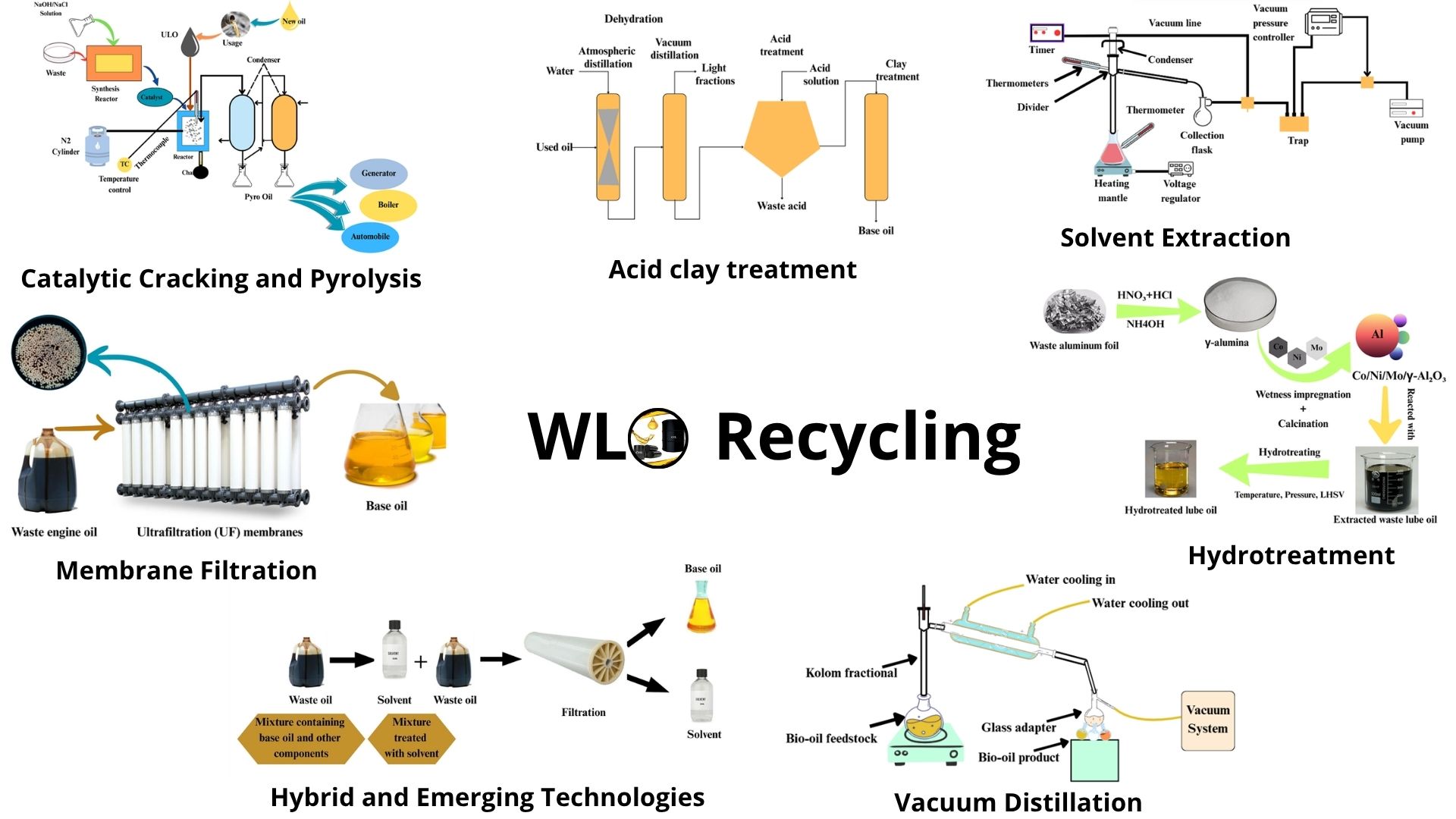
Acid–clay treatment remains one of the most widely applied methods for regenerating waste lubricating oils (WLOs) due to its efficiency, simplicity, and low cost [13]. The process includes filtration, dehydration, acid treatment, clay adsorption, and neutralization. Initially, filtration and centrifugation remove coarse impurities such as sand, metal particles, and sludge [14]. The oil is then dehydrated through atmospheric or vacuum distillation to eliminate water and low-boiling fractions, which prevents emulsion formation and reduces corrosive salts [15]. At the acid stage, asphaltenes, metal salts, resins, and other contaminants precipitate, producing an acid sludge that is separated and removed [16,17]. Commonly used acids include oxalic, sulfuric, acetic, and nitric acid (Table 1, often combined with activated clays for improved performance [18].
Subsequent clay treatment adsorbs mercaptans, improves color, and enhances oil stability. Typically, about 0.4 lb of clay is applied per gallon of oil [19]. Neutralization is achieved with alkalis such as sodium hydroxide or lime, followed by water washing and filtration to remove residual acids and spent clay (Figure 2). In some cases, additional distillation or blending with additives restores properties to near-virgin quality [20].
Despite its simplicity and low cost, acid–clay treatment produces significant quantities of hazardous sludge that require careful disposal. The method achieves moderate oil recovery (~65–70%) and improves color and stability, but residual heteroatoms can limit product quality. Economically, the process is favorable at small-to-medium scale, but scaling up requires management of acid waste and additional neutralization steps. Hybrid combinations with solvent extraction or membranes can enhance both recovery efficiency and environmental performance [21].
2.2. Solvent Extraction
Solvent extraction relies on solubility differences to separate base oil from contaminants, enabling regeneration under relatively mild conditions [22]. Its main advantage lies in resource conservation and reduced environmental impact compared with destructive disposal methods [23]. Pre-treated WLOs are first freed from water, sludge, and coarse solids via settling, filtration, or distillation (Figure 3) [24]. Solvent selection is critical; it should dissolve base oils effectively but exhibit low affinity for additives and carbonaceous residues [25].
Common solvents include furfural combined with N-methyl-2-pyrrolidone, methyl ethyl ketone (MEK), isopropanol, and heptane. MEK is reported as the most efficient, while isopropanol is particularly effective in sludge removal. The oil–solvent mixture is processed in counter-current extractors or stirred reactors, yielding an oil-rich phase and a contaminant-rich phase. Experimental studies with heptane and 2-propanol have shown that 2-propanol exhibits superior sludge removal efficiency under optimized conditions (S/O ratio 1:6, 40 °C, 35 min), whereas heptane requires higher temperature and longer mixing time to achieve comparable results as illustrated in Figure 4, adapted from [24].
Phase separation is achieved by gravity settling or centrifugation [27]. The solvent is then recovered by low-pressure distillation, condensed, and recycled. Further polishing treatments such as hydrocracking, hydrotreating, deaeration, or adsorption on activated clay or carbon can enhance stability, remove metals, and improve color [28]. Solvent extraction reduces oil losses in the sludge phase by 10–14%, thereby increasing overall recovery efficiency [29].
Quantitative analysis shows solvent extraction achieves 70–80% base oil recovery. Trade-offs between solvent efficiency and operational cost must be considered, with MEK offering higher yield and 2-propanol superior sludge removal. Combining solvent extraction with vacuum distillation or membranes improves overall recovery and product quality, making it a viable method for hybrid recycling systems.
2.3. Vacuum Distillation
Vacuum distillation is among the most widely applied modern methods for large-scale WLO re-refining. Operating under reduced pressure lowers boiling points, allowing the separation of lube fractions without excessive thermal cracking [30,31]. The process involves pre-treatment (dehydration and degassing), atmospheric distillation to remove light fractions, followed by vacuum distillation to obtain lube cuts [32]. Residual heavy fractions may be used as bitumen modifiers or fuel oils.
Figure 4.
The schematic of vacuum distillation process of preparation of lubricating oil from waste oil, redrawn and adapted from [33].
Figure 4.
The schematic of vacuum distillation process of preparation of lubricating oil from waste oil, redrawn and adapted from [33].
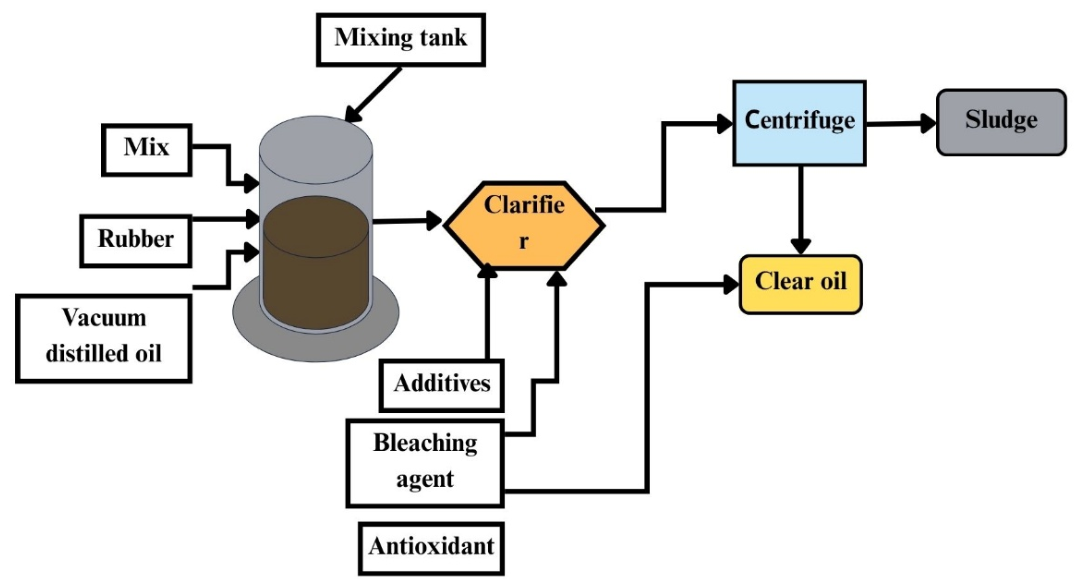
Distillates are typically subjected to post-treatment (e.g., clay adsorption or solvent refining) to meet base oil specifications. Vacuum distillation achieves recovery yields up to 84% of the original WLO, producing base oils that may meet API Group I–II standards [32]. When combined with hydrotreatment, the output can reach Group II–III quality. Its main disadvantages are high energy demand and capital investment, but it remains the backbone of industrial WLO re-refining plants worldwide. Vacuum distillation has also found wide application beyond lubricating oil re-refining, particularly in the upgrading of bio-oils derived from plastic and food waste. A schematic representation of the process is shown in Figure 4, where operation under reduced pressure enables the separation of fractions at lower temperatures, thus preventing thermal degradation and improving product quality. Such examples highlight the versatility of vacuum distillation and reinforce its importance across diverse waste valorization pathways, including WLO re-refining [34].
Despite its high energy requirements and capital costs, vacuum distillation provides consistently high recovery (~84%) and high-quality base oils. TEA studies indicate that large-scale plants remain economically viable due to favorable yield and product value. Environmental assessments show that emissions are lower than chemical-based treatments, though energy-related CO₂ must be managed.
2.4. Hydrotreatment and Hydrofinishing
Hydrotreatment involves reacting WLO distillates with hydrogen in the presence of catalysts (Ni–Mo, Co–Mo, or noble metals) at elevated pressures (up to 15 MPa) and temperatures (350–450 °C). This process removes sulfur, nitrogen, oxygen, and metallic impurities, while simultaneously saturating aromatics [35]. Hydrofinishing further improves color, stability, and volatility characteristics, enabling production of base oils meeting API Group II–III standards, comparable to virgin refinery products [36]. Hydrotreatment significantly reduces PAHs and enhances oil performance in modern engines, making it the preferred upgrading method in advanced re-refining facilities [37]. However, high hydrogen consumption and expensive catalysts remain major challenges. Recent research highlights the potential of renewable hydrogen sources and nanostructured catalysts to reduce operational costs. A schematic representation of the hydrotreatment and hydrofinishing process is shown in Figure 5, adapted from [38].
The use of a trimetallic CoNiMo/γ-Al₂O₃ catalyst derived from waste aluminum foil under optimized conditions (400 °C, 60 bar) significantly improved oil quality, reducing sulfur and acidity while increasing the viscosity index, thereby producing base oils comparable to API Group II–III. LCA studies indicate reduced environmental impacts compared with conventional chemical treatments. Despite higher operational costs due to hydrogen and catalysts, advances in renewable hydrogen and nano-catalysts can improve techno-economic feasibility.
2.5. Membrane Filtration
Membrane-based technologies such as microfiltration, ultrafiltration, and nanofiltration are increasingly applied as pre-treatment or polishing steps in WLO recycling. These processes rely on selective pore sizes to separate suspended solids, water, and polar compounds without chemical additives [39]. Ceramic and polymeric membranes have demonstrated high efficiency in removing trace metals, oxidation products, and particulates, thereby extending catalyst life in downstream hydrotreatment [40].
While membrane fouling and high costs remain challenges, integrating membranes into hybrid systems with distillation or solvent extraction offers promising results in terms of energy savings and process intensification. Recent studies have demonstrated that hydrophobic polypropylene ultrafiltration membranes can effectively remove water, ash, carbon residue, acidity, and trace metals from WLO, thereby improving viscosity, density, and color quality of the treated oil [41]. As illustrated in Figure 6, such membrane systems highlight the potential of polymeric membranes not only as polishing units but also as standalone treatment steps under optimized operating conditions. Membrane filtration can achieve metal retention up to ~96% and maintain permeate flux at ~79% after cleaning, improving overall oil quality. Although membrane fouling and high costs are challenges, combining membranes with distillation or solvent extraction enhances energy efficiency and recovery rates. This makes membranes valuable both as polishing units and in hybrid recycling systems.
2.6. Pyrolysis and Catalytic Cracking
Thermochemical conversion processes such as pyrolysis and catalytic cracking decompose WLOs into lighter hydrocarbons under oxygen-free conditions [42]. The products include liquid fuel fractions (diesel- and gasoline-like), carbon black, and combustible gases. Catalysts such as zeolites, silica–alumina, and metal oxides improve product selectivity and reduce process temperature [43].
Although primarily employed for fuel production rather than lubricant re-refining, pyrolysis contributes to waste minimization and resource recovery, aligning with circular economy principles. Recent studies emphasize that reactor configuration and catalyst selection strongly influence the efficiency and sustainability of these thermochemical conversion processes. Figure 7 shows conventional and catalytic pyrolysis processes, emphasizing reactor configurations and catalyst effects on product yields and environmental performance. Fixed-bed reactors are often highlighted for their cost-effectiveness and simplicity, while catalytic systems, particularly with zeolite-based materials, improve liquid fuel quality and reduce emissions. In this review, detailed discussion of pyrolysis products such as carbon black and fuel fractions is presented in Section 3. Moreover, emerging alternatives such as electrically heated pyrolysis show promise in enhancing combustion efficiency and lowering environmental impacts compared to conventional thermal processes [44]. Pyrolysis yields ~80–87% liquid products and generates valuable carbon black. Catalytic pyrolysis improves selectivity and reduces emissions but increases capital costs. TEA studies show fuel production is economically viable, while re-refining for lubricants remains preferable when high-quality base oils are targeted. Emerging electrically heated pyrolysis can further enhance energy efficiency and lower environmental impacts.
2.7. Hybrid and Emerging Technologies
Recent research emphasizes the combination of traditional methods with advanced innovations. Examples include solvent extraction coupled with vacuum distillation, hydrotreatment integrated with membrane polishing, and plasma-assisted processes for contaminant degradation [45]. These hybrid approaches enhance product yields, minimize waste generation, and improve the sustainability of re-refining [46]. Novel methods such as supercritical fluid extraction and ionic liquid-based separation are under investigation, offering potential breakthroughs in selectivity and energy efficiency [47]. An illustrative example of such integration is the sequential application of solvent treated followed by membrane filtration, which combines efficient sludge removal with fine purification of oil fractions (Figure 8). This hybrid configuration demonstrates how coupling conventional and membrane-based techniques can significantly improve overall recovery efficiency and product quality.
To provide a comprehensive comparison of the principal Waste Lubricating Oil (WLO) recycling methods, Table 2 summarizes their key advantages, limitations, typical product quality, and scale/economic indicators. This comparative overview facilitates a critical evaluation of process efficiency, product characteristics, and techno-economic feasibility based on recent studies. The summarized data highlight the evolution from conventional regeneration routes toward advanced hybrid and circular-economy-driven systems.
As illustrated in Table 2, conventional approaches such as acid–clay treatment and solvent extraction remain low-cost and technically simple but generate substantial waste and offer limited oil quality improvement. In contrast, hydrotreatment, membrane filtration, and hybrid systems achieve higher recovery rates (up to 90 %), improved product quality (API Group II–III), and better environmental performance. However, these advanced methods demand higher energy input, catalyst costs, or complex process integration.
Overall, the comparative analysis demonstrates that while traditional techniques remain relevant for small-scale applications, emerging plasma-assisted, hybrid, and circular-economy-integrated processes offer the most promising pathway toward sustainable, high-quality WLO re-refining. To complement the comparative overview presented in Table 2, Table 3 provides detailed descriptions of the principal WLO recycling processes, highlighting their main technological steps, scientific contributions, quantitative results, and obtained products. This synthesis illustrates recent advances in process optimization, catalyst development, and circular-economy-oriented integration, reflecting the transition from conventional regeneration routes to data-driven, energy-efficient, and sustainable systems.
The comparative evaluation of the reviewed recycling technologies (see Table 2 and Table 3) highlights clear trends in cost, efficiency, environmental performance, and scalability. Processes such as acid–clay treatment remain the simplest and lowest-cost option, yet they generate substantial hazardous sludge and offer limited scalability [13,14]. Solvent extraction improves oil recovery and product purity, but it demands solvent-recovery systems and careful emissions control [26]. Vacuum distillation and hydrotreatment deliver higher-grade base oils, but at the expense of high energy input, hydrogen consumption, and capital cost [33].
In contrast, pyrolysis and catalytic cracking technology emerge as the most promising direction for sustainable recovery of waste lubricating oils (WLO), because they permit conversion into both liquid fuels and carbon-rich by-products while minimising the use of chemical reagents and generating minimal effluent streams [66]. For instance, a two-step pyrolysis process achieved yields up to ~96.5 % WLO conversion with a sulphur content of only 0.24 wt % in the product [67]. Additionally, the pyrolysis route enables internal reuse of gaseous effluents for process heating, enhancing process efficiency and reducing overall environmental burden [68]. Thus, among the methods examined, pyrolysis stands out as offering the best balance of efficiency, environmental compatibility, and product valorisation — making it a key technology for further development in circular economy frameworks [32,69]. Economic considerations play a pivotal role in selecting suitable waste lubricating oil (WLO) recycling technologies. Low-cost approaches, such as acid–clay treatment and solvent extraction, generally achieve moderate oil recovery (50–70 %) and produce relatively low-quality products. Their main advantages lie in minimal capital investment—typically 3–5 M USD—and simple operational procedures, which require limited operator training and basic equipment [14,25]. These methods also feature comparatively low energy demands (≈50–100 kWh per ton of WLO processed), making them attractive for small- to medium-scale operations. However, the lower quality of recovered products restricts their market value, and profitability may be sensitive to feedstock availability and fluctuations in product prices. In contrast, advanced technologies, such as vacuum distillation, hydrotreatment, and pyrolysis, enable the production of high-value base oils (API Group II–III) and carbon-rich by-products suitable for industrial applications. These technologies require substantial capital investment—for example, large-scale vacuum distillation or pyrolysis units processing 1000–1500 t/day may cost 4–7 M USD—and high energy input (≈300–500 kWh per ton) [107,108]. Additionally, specialized catalysts, precise process control, and strict operational conditions are necessary to ensure optimal conversion and product quality [33,67,69]. For instance, a two-step pyrolysis process can achieve up to 96.5 % WLO conversion while reducing sulfur content to as low as 0.24 wt % [68]. Nevertheless, the economic feasibility of such high-efficiency methods depends heavily on continuous large-scale operation, optimized recycling of process gases, and stable market demand for recovered oils.
Therefore, selecting the most suitable recycling strategy involves balancing process complexity, product value, energy consumption, and overall costs. Integrated or hybrid processes—which combine simple, low-cost pretreatment (e.g., acid–clay treatment) with advanced methods (e.g., hydrotreatment or pyrolysis)—offer a promising approach to maximize both economic performance and product quality. Such strategies allow for effective WLO recovery while maintaining manageable capital and operational expenditures, providing a practical solution for industrial-scale recycling with enhanced sustainability.
3. Valuable Products Obtained from Waste Lubricating Oils
Pyrolysis and catalytic cracking are key thermochemical technologies applied to WLOs, as discussed in Section 2.6, These processes generate several valuable products that can be recovered and utilized.
The major valuable products obtained from WLOs can be broadly classified into four groups: carbon black, regenerated base oils, fuel fractions, and secondary by-products (Figure 9). The subsequent discussion focuses on each of these categories individually, highlighting their properties, production methods, and industrial relevance.
3.1. Carbon Black
Carbon black is a fine, amorphous carbon material obtained from the partial combustion or thermal decomposition of hydrocarbons [70]. Its micro- and nanoscale structure imparts unique reinforcing, conductive, and adsorptive properties, making it indispensable in the production of tires, rubber goods, coatings, and plastics. Recent research highlights the strategic potential of producing carbon black from WLOs, oily sludge, and waste tires as alternative feedstocks [71]. Such valorization not only addresses environmental concerns but also supports the demand for sustainable materials [72]. In addition to conventional applications, carbon black derived from waste streams such as waste lubricating oils is increasingly considered a valuable functional carbon material with potential use in advanced composites, energy systems, and environmental technologies. This shift reflects a broader transition from petroleum-derived fillers toward circular carbon resources obtained via waste-to-carbon pathways. Structurally, carbon black consists of more than 90% elemental carbon with surface-bound oxygen-containing functional groups such as carboxyl, quinone, lactone, phenolic, and ketonic groups [73]. These functionalities influence its reactivity and surface interactions. The primary particles, typically spherical and 10–100 nm in diameter, form fused aggregates in the range of 100–800 nm or larger, resulting in branched, three-dimensional morphologies [74,75]. This nanoscale architecture underpins its technological versatility across diverse sectors, including its role as a pigment, reinforcing filler, and conductive agent and precursor for functional carbon materials [76,77]. The predominant method for producing carbon black from WLOs is pyrolysis, a thermochemical process performed in the absence of oxygen. Unlike combustion, pyrolysis prevents complete oxidation of carbon to CO₂, yielding solid carbon residues and liquid hydrocarbons [78]. In recent studies, such carbonaceous residues have also been explored as precursors for further activation processes to obtain porous and high-surface-area carbon materials, expanding their value beyond traditional carbon black applications. Accordingly, pyrolysis is regarded as a resource recovery pathway rather than a waste disposal method, aligning with sustainable development principles [79].
3.2. Base Oils
Base oils are complex mixtures of paraffinic and naphthenic hydrocarbons with minor amounts of nitrogen- and sulfur-containing species [80]. They account for 70–90% of lubricating oil formulations and determine critical performance parameters such as viscosity, oxidation stability, and load-bearing capacity [81]. The re-refining of WLOs into base oils involves dehydration, vacuum distillation to obtain lube cuts, and subsequent hydrotreating to remove heteroatoms and improve product stability [82]. Re-refining technologies achieve yields of 75–84% of high-quality base oil from the initial WLO volume, meeting API Group I–III standards [83]. Vacuum distillation offers yields of approximately 84%, while solvent extraction provides around 78% [84]. Solvent-based approaches, using methyl ethyl ketone (MEK), 2-propanol, or 1-butanol, enable selective recovery of base oils followed by adsorption or filtration steps, achieving yields of 75–78% [85]. These methods demonstrate that regenerated base oils can fully replace virgin products in lubricant formulations while conserving natural resources.
3.3. Fuel Products from Pyrolysis and Co-Pyrolysis
Fuel fractions obtained from WLO recycling include diesel-like and gasoline-like liquids, light hydrocarbons, and heating oils. These are primarily produced via pyrolysis or co-pyrolysis with polymeric wastes, which improve liquid yield and fuel quality [65]. For instance, co-pyrolysis of WLOs with waste plastics at 450 °C can achieve up to 92.5% liquid yield with octane numbers reaching 96, surpassing conventional gasoline [86]. Thermal and catalytic pyrolysis under optimized conditions yield ~60% diesel-like fractions, while additives such as CaO effectively reduce sulfur and improve combustion properties [87]. Microwave-assisted pyrolysis can further increase oil recovery to 88%, yielding fuels with high calorific value and reduced PAH content [88].
3.4. Secondary By-Products
Besides base oils, fuels, and carbon, WLO processing can generate valuable secondary products. These include bituminous residues that may serve as modifiers in asphalt binders, improving rutting resistance and durability of pavements [91]. Additive recovery, though less common, offers another avenue for resource efficiency, since antioxidants, detergents, and anti-wear agents can sometimes be separated and reused in lubricant formulations [92]. Moreover, sulfur compounds extracted during re-refining can be converted into elemental sulfur or sulfuric acid, both of which are in demand in the chemical industry [93].
The integration of WLO-derived products into industrial chains contributes to circular economy principles. Life cycle assessment (LCA) studies indicate that regeneration of waste lubricating oils into base oils results in substantial greenhouse gas emission savings—approximately 344–537 kg CO₂-eq per tonne of WLO—compared with other waste oil management routes such as combustion or conversion to fuel [94]. Although direct comparisons with virgin base oil production depend on system boundaries, regeneration consistently demonstrates lower life cycle greenhouse gas emissions and energy demand [94]. Similarly, substituting WLO-derived fuels reduces dependency on fossil feedstocks and minimizes solid waste generation [95]. Economically, the valorization of 1 ton of WLOs can yield products worth USD 600–900, depending on the technology and market conditions [96]. This dual benefit of environmental protection and resource recovery positions WLO recycling as both an ecological necessity and a profitable industrial practice.
3.5. Functional Carbon-Based Materials Derived from Waste Lubricating Oils
Thermochemical conversion of waste lubricating oils (WLOs), particularly via pyrolysis and catalytic cracking, generates carbonaceous solid residues that can serve as precursors for functional carbon-based materials. Depending on reaction conditions and catalyst type, these materials range from amorphous carbon and carbon black-like structures to partially graphitized and porous carbon frameworks with tunable physicochemical properties.
Recent studies further demonstrate that waste-derived hydrocarbons, including waste engine oils, heavy oil residues, waste plastics, scrap tires, and glycerol, can serve as alternative low-cost carbon precursors for the synthesis of nanostructured carbon materials. Depending on synthesis conditions and catalytic systems, these feedstocks can be converted into carbon nanotubes, carbon nanofibers, nanowhiskers, carbon microspheres, and porous carbon materials with tunable structural and surface properties. Such approaches are attracting increasing attention because they simultaneously address waste management and reduce the production cost of advanced carbon nanomaterials compared with conventional fossil-derived precursors [97].
The formation of such carbon materials is governed by dehydrogenation, aromatization, and polycondensation reactions occurring during thermal decomposition of hydrocarbons. At elevated temperatures, progressive structural rearrangement promotes the development of aromatic and microcrystalline carbon domains, whereas catalytic systems facilitate graphitization and pore formation. Consequently, the physicochemical properties of WLO-derived carbons strongly depend on process temperature, residence time, catalyst composition, and activation strategy.
WLO-derived carbon residues can be further upgraded through physical and chemical activation processes using CO₂, steam, KOH, or H₃PO₄, leading to a significant increase in surface area, porosity, and surface functionality. Recent studies demonstrated that phosphoric acid activation of oil-containing sludge at relatively low temperatures (600 °C) produced mesoporous carbon materials with BET surface areas of approximately 70 m²/g after only 30 min of treatment. The pore development was strongly dependent on the H₃PO₄ impregnation ratio, while acid-washing further enhanced pore structure compared with water-washing due to more efficient removal of residual minerals and inorganic phases. In addition, activated carbons derived from hydrocarbon-rich waste streams may achieve significantly higher surface areas (>500–1200 m²/g) under optimized activation conditions [11,98]
Morphological and compositional analyses using SEM and EDS revealed that the obtained carbon materials possessed porous structures enriched with iron oxides, imparting magnetic properties to the resulting adsorbents. Such characteristics are particularly attractive for environmental applications, since magnetic carbon materials can be easily separated and regenerated after adsorption processes. Due to their developed pore structure and surface reactivity, WLO-derived carbon materials demonstrate strong potential for adsorption of heavy metals, dyes, and organic pollutants, as well as for capture of CO₂ and volatile organic compounds (VOCs). Furthermore, their conductive carbon framework and defect-rich structure make them promising candidates for electrochemical applications, including supercapacitors and battery electrodes.
Beyond adsorption and electrochemical applications, waste-derived carbon materials also demonstrate strong potential as functional lubricant additives in tribological systems. Recent studies reported that activated carbon nanoparticles (ACNPs) produced from recycled waste streams significantly improved the tribological performance of lithium grease formulations. The incorporation of 0.025–1 wt.% ACNPs reduced the coefficient of friction from 0.15–0.17 for base grease to as low as 0.03–0.06, while simultaneously decreasing wear scar diameter by 30–36% and improving load-carrying capacity by approximately 20–30%. These results indicate that waste-derived carbon nanomaterials can contribute to friction reduction, energy savings, and sustainable lubrication technologies while simultaneously valorizing hydrocarbon-containing waste streams [99].
From a sustainability perspective, the conversion of WLOs into functional carbon materials represents an advanced waste-to-carbon strategy aligned with circular economy principles. Unlike conventional disposal or combustion routes, this approach enables simultaneous waste minimization and production of value-added carbon materials with potential industrial applications. However, challenges related to feedstock heterogeneity, reproducibility of carbon structure, and optimization of large-scale activation processes still limit broader industrial implementation.
Overall, waste lubricating oils should be regarded not only as a source of fuels and regenerated base oils, but also as a promising precursor for high-value functional carbon-based materials, thereby significantly expanding the valorization potential of petroleum-derived waste streams.
4. Technological Innovations in Waste Lubricating Oil (WLO) Recycling
Recent studies increasingly integrate life cycle assessment (LCA) and techno-economic assessment (TEA) to evaluate the feasibility of modern WLO recycling technologies. Advanced processes, including plasma-assisted conversion and membrane-based separation, are under investigation in various industrial contexts and may offer potential environmental benefits. Further research is needed to quantify their performance specifically for WLO recycling [100]. Hybrid systems combining solvent extraction with catalytic upgrading have also been shown to offer environmental benefits relative to conventional treatment routes, although specific reductions depend on system boundaries and impact categories [101]. TEA analyses highlight that the cost structure of recycling strongly depends on plant scale, feedstock quality, and input prices—particularly hydrogen and electricity [102]. At large capacities (>50,000 t/year), nanocatalyst-assisted hydroprocessing and integrated hybrid systems become cost-competitive with conventional refining, achieving estimated production costs of 350–450 USD per ton of base oil [103]. Sensitivity analyses indicate that profitability is most affected by fluctuations in electricity prices and catalyst lifetime, underscoring the importance of energy integration and catalyst regeneration strategies [104]. From an industrial perspective, the technology readiness levels (TRLs) of these methods vary: plasma-assisted and membrane-based technologies are mostly at pilot or demonstration scale, while hydrotreatment and vacuum distillation are closer to commercial deployment. Integration with existing refinery infrastructure is feasible for catalytic and distillation processes, leveraging current equipment. Key barriers to commercialization include catalyst deactivation, feedstock variability, process scalability, and strict operational control requirements [21,32]. Overall, combining LCA and TEA perspectives provides a comprehensive framework for evaluating not only the technical performance but also the environmental and economic sustainability of emerging WLO recycling technologies.
Plasma-assisted pyrolysis and gasification are emerging as highly efficient methods for converting WLOs into valuable fuels and carbonaceous materials. Plasma technologies use high-energy arcs or microwave-induced plasmas to decompose complex hydrocarbons into light fractions and solid carbon black [105]. Unlike conventional pyrolysis, plasma methods achieve higher reaction rates, lower residual waste, and enhanced control of product composition [106]. Pilot-scale studies have demonstrated yields of over 80% liquid hydrocarbons, with reduced sulfur and nitrogen content, making the products suitable for blending with conventional fuels [107]. In addition, plasma reactors minimize the formation of toxic by-products, contributing to improved environmental performance [108]. However, industrial deployment requires careful consideration of energy consumption, reactor scale-up, and long-term operational stability.
The use of nanostructured catalysts has significantly advanced the efficiency of hydrocracking and hydrotreating processes in WLO recycling. Catalysts based on transition metal nanoparticles (Ni, Mo, Co, Fe) supported on mesoporous materials (e.g., SBA-15, MCM-41, zeolites) enhance cracking activity, sulfur removal, and aromatic hydrogenation [109]. These catalysts increase selectivity toward middle distillates and base oils, while reducing energy consumption compared to conventional heterogeneous catalysts [110]. Moreover, the high surface area and tunable pore structure of nanocatalysts enable superior contact between active sites and WLO feedstocks, facilitating cleaner product streams [111]. For commercialization, maintaining catalyst activity over extended runs and regenerating spent catalysts are crucial to ensure cost-effectiveness and continuous operation. Hybrid approaches that combine two or more processes—such as solvent extraction with vacuum distillation, or pyrolysis with catalytic upgrading—are gaining traction as scalable solutions [112]. Such systems improve product yields, enhance removal of additives, and reduce operating costs by integrating energy recovery. For example, combining solvent extraction with hydrofinishing produces API Group II+ base oils with oxidative stability comparable to virgin oils [67]. Similarly, catalytic pyrolysis using zeolite-based catalysts generates gasoline- and diesel-like fuels with reduced polyaromatic content, while simultaneously recovering carbon black as a co-product [113]. The main industrial challenge remains achieving consistent product quality and process stability at large scale.
Membrane-based technologies, including ultrafiltration, nanofiltration, and pervaporation, are increasingly applied in pre-treatment and final polishing of WLOs [114]. Membrane processes allow the selective removal of water, asphaltenes, and metal-containing additives, thereby improving feedstock quality for downstream refining [115]. Recent developments in ceramic and polymeric membranes with enhanced thermal stability have enabled continuous operation under harsh chemical conditions [115]. When integrated with other refining steps, membrane systems can reduce overall process energy consumption by 20–30% [116]. Nevertheless, scale-up, membrane fouling, and long-term operational reliability are key considerations for industrial adoption [117]. In recent years, conventional recycling approaches such as acid–clay treatment, solvent extraction, and vacuum distillation have been complemented and, in some cases, replaced by advanced technologies. These innovations aim to improve process efficiency, reduce environmental impact, and produce high-quality target products that meet international standards. Table 4 provides an overview of modern WLO recycling technologies and highlights global trends and case studies, illustrating how different regions adopt innovative approaches to enhance resource recovery and sustainability.
Digitalization and artificial intelligence (AI) tools are now being introduced to optimize WLO recycling processes. Machine learning models predict product yields, optimize catalyst performance, and monitor reactor conditions in real time [124]. These tools enable predictive maintenance of recycling plants, reducing downtime and operational costs. Coupling AI with advanced sensors and process automation creates a pathway for fully digitized, low-carbon WLO recycling facilities [125]. However, industrial readiness depends on robust integration with existing plant systems and validation under continuous operation.
The convergence of plasma technologies, nanocatalysis, hybrid processing, and digital tools marks the beginning of a new generation of WLO recycling. These innovations not only enhance product quality and process efficiency but also align with global sustainability agendas. Recent assessments indicate that most advanced WLO recycling technologies currently operate at pilot to demonstration scales (TRL 5–6), demonstrating technical feasibility but still requiring optimization for industrial-scale deployment [3]. Integration with existing refining infrastructure is increasingly achievable, particularly through hybrid configurations that combine solvent extraction, hydroprocessing, and vacuum distillation, enabling direct blending of recycled base oils with conventional refinery streams [21]. However, several barriers to commercialization remain, including catalyst deactivation, feedstock variability, high energy consumption, and challenges in process control and scalability. Ongoing research focuses on overcoming these limitations via catalyst regeneration, energy recovery, and digital optimization tools that improve process stability and economic feasibility [126]. Addressing these technological and operational challenges will be essential for the transition from pilot plants to full-scale industrial implementation. Nanocatalysts derived from acid activation, plasma-assisted modification, and pyrolytic treatment demonstrate strong potential for advancing waste lubricating oil processing and are anticipated to make a substantial contribution to both nanotechnology and environmental sustainability.
5. Conclusions
The recycling of petroleum-based lubricants has been increasingly addressed in the literature as an element of sustainable waste management and resource recovery. Conventional processes, including acid–clay treatment and distillation, continue to be applied; however, numerous studies report environmental and regulatory limitations associated with these approaches. Advanced recycling techniques such as hydrotreatment, solvent extraction, membrane separation, and catalytic cracking have been investigated for improving base oil quality and reducing environmental impacts. Reported results indicate that, under optimized conditions, these processes can produce re-refined oils meeting higher performance classifications, although outcomes strongly depend on feedstock variability and process configuration. In parallel, thermochemical pathways, including pyrolysis and plasma-assisted conversion, have been explored for the generation of fuels, carbonaceous materials, and other co-products, expanding the range of potential valorization routes for WLOs. Recent studies further demonstrate that waste lubricating oils can serve not only as a secondary source of fuels and regenerated base oils, but also as promising precursors for functional carbon-based materials, including carbon black, porous carbons, and nanostructured carbon materials. The development of waste-to-carbon strategies opens new opportunities for the production of adsorbents, catalyst supports, electrochemical materials, and tribological additives from petroleum-derived waste streams. Comparative analysis of the reviewed studies highlights the importance of process integration and hybrid systems in enhancing recovery efficiency and mitigating environmental burdens. Recent LCA and TEA investigations suggest that advanced WLO recycling technologies may offer environmental benefits and economic potential; however, reported results remain case-specific and sensitive to system boundaries, scale, and regional conditions. Overall, the literature indicates that WLO valorization represents a technically feasible pathway for reducing hazardous waste generation and recovering valuable resources. Future research should focus on improving process scalability, energy efficiency, catalyst stability, and reproducibility of carbon material properties in order to facilitate industrial implementation of integrated waste-to-carbon and re-refining technologies within circular economy frameworks.
Author Contributions
S. Tanirbergenova and A. Aitugan contributed to the conceptualization and design of the review. Literature search and collection of sources were performed by S. Tanirbergenova, D. Tugelbaeva, N. Zhilybayeva, and A. Akimbek. Formal analysis, interpretation, and synthesis of the literature were conducted by S. Tanirbergenova and A. Aitugan. The original draft of the manuscript was prepared by S. Tanirbergenova. D. Tugelbaeva, N. Zhilybayeva, A. Akimbek, K. Tazhu, and G. Moldazhanova contributed to writing—review and editing. Visualization and figure preparation were carried out by A. Aitugan. Supervision was provided by S. Tanirbergenova and Z. Mansurov. Project administration was undertaken by S. Tanirbergenova. Funding acquisition was the responsibility of Z. Mansurov. All authors have read and agreed to the published version of the manuscript.
Funding
This research was funded by the Science Committee of the Ministry of Science and Higher Education of the Republic of Kazakhstan,1 Grant No. BR24992915 “Development of technology for producing high-strength asphalts based on elastomer- and polymer-bitumen binders and plasma-chemical processing of liquid carbon-containing wastes.
Data Availability Statement
We encourage all authors of articles published in MDPI journals to share their research data. In this section, please provide details regarding where data supporting reported results can be found, including links to publicly archived datasets analyzed or generated during the study. Where no new data were created, or where data is unavailable due to privacy or ethical restrictions, a statement is still required. Suggested Data Availability Statements are available in section “MDPI Research Data Policies” at https://www.mdpi.com/ethics.
Acknowledgments
This research was funded by the Science Committee of the Ministry of Science and Higher Education of the Republic of Kazakhstan,1 Grant No. BR24992915 “Development of technology for producing high-strength asphalts based on elastomer- and polymer-bitumen binders and plasma-chemical processing of liquid carbon-containing wastes.
Conflicts of Interest
The authors declare no conflicts of interest.
Abbreviations
The following abbreviations are used in this manuscript:
| WLOs | Waste lubricating oils |
| PAHs | Polycyclic aromatic hydrocarbons |
| MEK | Methyl ethyl ketone |
| API | American Petroleum Institute |
| LCA | Life cycle assessment |
| TEA | Techno-economic assessment |
References
- Sadeek A. Sadeek, Hoda S. Ahmed, Ebaa A. ElShamy, Hussien A. El Sayed, Asma A. Abd El Rahman / Hydrotreating of waste lube oil by rejuvenated spent hydrotreating catalyst // Egyptian Journal of Petroleum. Volume 23, Issue 1, March 2014, Pages 53-60. [CrossRef]
- Zhendi Wang, Chun Yang, Zeyu Yang, Carl E. Brown, Bruce P. Hollebone, Scott A. Stout / 4 - Petroleum biomarker fingerprinting for oil spill characterization and source identification // Standard Handbook Oil Spill Environmental Forensics (Second Edition). Fingerprinting and Source Identification. 2016, Pages 131-254. [CrossRef]
- Md Rahatul Islam Sazzad, Md Mizanur Rahman, Tafsirul Hassan, Abdullah Al Rifat, Abdullah Al Mamun, Abidur Rahman Adib, Redoy Masum Meraz, Minhaz Ahmed / Advancing sustainable lubricating oil management: Re-refining techniques, market insights, innovative enhancements, and conversion to fuel // Heliyon. Volume 10, Issue 20, 30 October 2024. [CrossRef]
- Barbara Apicella, Francesco Catapano, Silvana Di Iorio, Agnese Magno, Carmela Russo, Paolo Sementa, Antonio Tregrossi, Bianca Maria Vaglieco / Impact of fuel and lubricant oil on particulate emissions in direct injection spark ignition engines: A comparative study of methane and hydrogen // Fuel Processing Technology. Volume 265, 1 December 2024. [CrossRef]
- Sarkar, S., Datta, D., Deepak, K.S. Comprehensive investigation of various re-refining technologies of used lubricating oil: a review. J Mater Cycles Waste Manag 25, 1935–1965 (2023). [CrossRef]
- Chun Yang, Marcus Kim, Carl E. Brown, Zhendi Wang, Zeyu Yang, Bruce P. Hollebone, Patrick Lambert / Chapter 9 - Oil fingerprinting analysis using gas chromatography-quadrupole time-of-flight (GC–QTOF) // Standard Handbook Oil Spill Environmental Forensics (Second Edition). Fingerprinting and Source Identification. 2016, Pages 449-480. [CrossRef]
- Shan, Ll., Tan, Z., Chen, Y. et al. Biodegradability enhancement of waste lubricating oil regeneration wastewater using electrocoagulation pretreatment. Environ Sci Pollut Res 30, 106421–106430 (2023). [CrossRef]
- Su Shiung Lam, Alan D. Russell, Howard A. Chase / Pyrolysis Using Microwave Heating: A Sustainable Process for Recycling Used Car Engine Oil // nd. Eng. Chem. Res. 2010, 49, 21, 10845–10851. [CrossRef]
- Juan A. Botas, Jovita Moreno, Juan J. Espada, David P. Serrano, Javier Dufour / Recycling of used lubricating oil: Evaluation of environmental and energy performance by LCA // Resources, Conservation and Recycling. Volume 125, October 2017, Pages 315-323. [CrossRef]
- Pinheiro, C. T., Quina, M. J., & Gando-Ferreira, L. M. (2020). Management of waste lubricant oil in Europe: A circular economy approach. Critical Reviews in Environmental Science and Technology, 51(18), 2015–2050. [CrossRef]
- Li-An Kuo, Wen-Tien Tsai, Chien-Chen Pan, Ya-Chen Ye, Chi-Hung Tsai / Conversion of Oil-Containing Residue from Waste Oil Recycling Plant into Porous Carbon Materials Through Activation Method with Phosphoric Acid // Materials. Volume 17, Issue 24, 2024, Article 6161. [CrossRef]
- Wen-Tien Tsai, Yu-Quan Lin / Preparation and Characterization of Porous Carbon Composites from Oil-Containing Sludge by a Pyrolysis-Activation Process // Processes. Volume 10, Issue 5, 2022, Article 834. [CrossRef]
- Patrick Opoku-Mensah, James Nana Gyamfi, Adjei Domfeh, Emmanuel Awarikabey, Emmanuela Kwao-Boateng / Assessment of the Conventional Acid-Clay Method in Reclaiming Waste Crankcase Lubricating Oil // Advances in Tribology. 2023. [CrossRef]
- Udonne Joseph / Recycling of Used Lubricating Oil Using Three Samples of Acids and Clay as a Method of Treatment // 2013.
- Basel Convention Technical Guidelines on Used Oil Re-Refining of Other Re-Uses of Previously Used Oil / 2002.
- Contractor, E. D., Patel, V. B., Visavadia, S., Patel, S. K., & Magodara, A. R. (2025). A comparative analysis of techniques for refining waste lubricating oil: identifying the optimal method. Indian Chemical Engineer, 1–20. [CrossRef]
- Abbas Abbas, H., Manasrah, A. D., Carbognani, L., Sebakhy, K. O., El Hariri El Nokab, M., & Hacini, M. (2022). A study on the characteristics of Algerian Hassi-Messaoud asphaltenes: Solubility and precipitation. Petroleum Science and Technology, 40(11), 1279–1301. [CrossRef]
- M.U. Dabai, N. Bello / Comparative study of regeneration of used lubricating oil using sulphuric and oxalic acids/clay treatment process // Int J Innov Sci Eng Technol., 6 (2019), pp. 13-23.
- Rustiah, W., & Arisanti, D. (2022). Lead (Pb) Reduction Efficiency in Used Lubricating Oil in Ship Using The Acid Clay Treatment Method: Perspective of Environmental Pollution Control at Paotere Port, South Sulawesi, Indonesia. Al-Kimia, 10(2). [CrossRef]
- Emmanuela Kwao-Boateng, Terza Anokye-Poku, Anthony N. P. Agyemang, Michael Kwadwo Fokuo / Re-refining Used Engine Oil in Ghana Using Solvent Extraction and Acid-Clay Treatment // International Journal of Chemical Engineering 2022(2). [CrossRef]
- Cabrera-Escobar C, Moreno-Gutiérrez J, Rodríguez-Moreno R, Pájaro-Velázquez E, Calderay-Cayetano F, Durán-Grados V. / A Review on Global Recovery Policy of Used Lubricating Oils and Their Effects on the Environment and Circular Economy // Environments. 2025; 12(5):135. [CrossRef]
- K. Naima, A. Liazid / Waste oils as alternative fuel for diesel engine: A review // Journal of Petroleum Technology and Alternative Fuels Vol. 4(3), pp. 30-43, March 2013. [CrossRef]
- Doaa I. Osman, Sayed K. Attia, Afaf R. Taman / Recycling of used engine oil by different solvent // Egyptian Journal of Petroleum. Volume 27, Issue 2, June 2018, Pages 221-225. [CrossRef]
- Solvent Extraction of Used Engine Oil: Process, Types, Innovations / January 14, 2024.
- Dinesh keloth Kaithari, Pradeep Kumar Krishnan, Abdullah Al-Riyami / Recycling of Used Lubricating Engine Oil by A Solvent Extraction Process // International Journal of Mechanical and Production. Engineering Research and Development (IJMPERD). Vol. 11, Issue 1, Feb 2021, 151-158.
- Altaee, T., Rashid, S. A., & Abdul Jabbar, M. F. (2022). Treatment of Used Lubricant Oil by Solvent Extraction. Iraqi Journal of Chemical and Petroleum Engineering, 23(1), 43-50. [CrossRef]
- José C. Velasco-Calderón, Arturo A. Garcia-Figueroa, José Luis Lopez Cervantes, Jesús Gracia-Fadrique / Regeneration of used lubricating oil by solvent extraction and phase diagram analysis // Current Research in Green and Sustainable Chemistry. Volume 3, June 2020. [CrossRef]
- Aftab Hasnat Khan, Nadia Batool, Abdul Aziz / Recovery of Base Oil from Used Oil through Solvent Extraction Followed by Adsorption: A Review // Environmental Protection Research. Volume 3 Issue 2. 2023. 319-340. [CrossRef]
- H.A. Durrani, M.I. Panhwar, R.A. Kazi / Determining an efficient solvent extraction parameters for re-refining of waste lubricating oils // Mehran Univ. Res. J. Eng. Tech., 31 (2012), pp. 265-270.
- Ratiu, S.A.; Tirian, G.O.; Mihon, N.L.; Armioni, M.D. Overview on globally applied used engine oil recycling technologies. IOP Conf. Ser.: Mater. Sci. Eng. 2022, 1220, 012034. [CrossRef]
- Kumawat, A.S. Managing Waste by Generation of Lubricants from Waste Oils. In: Pradhan, S.; Prasad, L.; Madankar, C.; Naik, S.N. (Eds.) Recent Trends in Bio-based Sustainable Waste Management. Wiley, 2024. [CrossRef]
- Moses, K.K.; Aliyu, A.; Hamza, A.; Mohammed-Dabo, I.A. Recycling of waste lubricating oil: A review of the recycling technologies with a focus on catalytic cracking, techno-economic and life cycle assessments. J. Environ. Chem. Eng. 2023, 11, 111273. [CrossRef]
- Emam, E.A.; Shoaib, A. Re-refining of used lube oil, I: By solvent extraction and vacuum distillation followed by hydrotreating. Petrol. Coal 2013, 55(3), 179–187.
- Lau, P.J.; Ng, W.P.Q.; How, B.S.; Lim, C.H.; Lam, H.L. Paving a way toward circular economy for oil and gas industry: A conceptual modelling of re-refining process through solvent extraction and hydrofinishing pathway. J. Clean Prod. 2022, 370, 134839. [CrossRef]
- Irawansyah, H.; Amrullah, A.; Prayogi, S.; Alfahri, S. The effects of distillation temperature and plastic loading on the improvement of waste-derived bio-oil properties. Indonesian Physical Review 2023, 6(1), 155–162. [CrossRef]
- Sarkar, S.; Datta, D.; Das, B. Advance recovery approach for efficient recovery of waste lubricating oil by different material formulations. Mater. Today: Proc. 2021, 46, 1401–1407. [CrossRef]
- Yeo, L.S.; Tiang, C.W.P.; Teng, S.Y.; Ng, W.P.Q.; Lim, C.H.; Leong, W.D.; Lam, H.L.; Sunarso, J.; How, B.S. Rethinking circularity with re-refineries and supply chains reintegration via multi-objective Pareto graph theoretical approach. Energy 2023, 271, 127814. [CrossRef]
- Abdelrahman, A. A.; Sayed, M. A.; Menoufy, M. F.; Rabie, A. M. Fabrication of CoNiMo/γ-Al₂O₃ from waste aluminum foil to convert waste lube oil to hydrotreated oil. Egyptian Journal of Petroleum 2022, 31(2), 43–49. [CrossRef]
- Widodo, S.; Khoiruddin, K.; Ariono, D.; Subagjo, S.; Wenten, I.G. Re-refining of waste engine oil using ultrafiltration membrane. J. Environ. Chem. Eng. 2020, 8, 103789. [CrossRef]
- Widodo, S.; Ariono, D.; Khoiruddin, K.; Wenten, I.G. Recent advances in waste lube oils processing technologies. Environ. Prog. Sustain. Energy 2018, 37(2), 715–725. [CrossRef]
- Usman, M.; Jamil, M.K.; Riaz, F.; Hussain, H.; Hussain, G.; Shah, M.H.; Qyyum, M.A.; Salman, C.A.; Lee, M. Refining and reuse of waste lube oil in SI engines: A novel approach for a sustainable environment. Energies 2021, 14(10), 2937. [CrossRef]
- Attia, S.K.; Rashad, A.M.; Ghobashy, M.M.; Elsayed, A.E.; Osman, D.I. The pyrolytic distillation of waste lubricants with waste oilfield scale into value-added fuel. Fuel 2024, 374, 132896. [CrossRef]
- Singh, V.K.; Chatterjee, A.; Maiti, P.; Parmar, P.; Mukherjee, S.; Meikap, B.C. Pyrolysis of used lubricating oil using industrial waste-based catalyst for energy efficient fuel generation: A comprehensive review. Fuel 2025, 398, 134751. [CrossRef]
- Wang, Y.; Yang, Q.; Ke, L.; Peng, Y.; Liu, Y.; Wu, Q.; Tian, X.; Dai, L.; Ruan, R.; Jiang, L. Review on the catalytic pyrolysis of waste oil for the production of renewable hydrocarbon fuels. Fuel 2020, 280, 119170. [CrossRef]
- Gorka Gabiña, Leopoldo Martin, Oihane C. Basurko, Manuel Clemente, Sendoa Aldekoa, Zigor Uriondo / Waste oil-based alternative fuels for marine diesel engines // Fuel Processing Technology. Volume 153, 1 December 2016, Pages 28-36. [CrossRef]
- Liu, Y.; Cheng, J.; Shen, W.; Song, Y. Regeneration of used lubricating oils by supercritical fluid extraction. Petrol. Sci. Technol. 2005, 23(7–8), 909–914. [CrossRef]
- Mishra, A.; Siddiqi, H.; Kumari, U.; Meikap, B.C. Pyrolysis of waste lubricating oil/waste motor oil to generate high-grade fuel oil: A comprehensive review. Renew. Sustain. Energy Rev. 2021, 150, 111446. [CrossRef]
- Andargachew, H. Recycling of Used Lubricating Oil Using Acid-Clay Treatment Process. Master’s Thesis, Addis Ababa University, Addis Ababa, Ethiopia, 2014. Available online: https://etd.aau.edu.et/server/api/core/bitstreams/7db8896b-7f90-4465-a8bb-fd3b51987a9a/content.
- Sadraddin, A.S.; Jalal, A. Regeneration of Engine Used Oils by Solvent Extraction. Iraqi Journal of Science 2022, 63(12), 5119–5130. [CrossRef]
- Cholke, S.; Tambe, S.; Tambe, T.; Dabhade, K.; Nibe, R.L. Regeneration of Used Lube Oil by Using Solvent Ex-traction Method. International Journal of Advanced Research in Science, Communication and Technology (IJARSCT) 2022, 2(2), 40–47. [CrossRef]
- Al-Nidawi, M.R.; Ahmed, D.J.; Chali, M.; Bahjat, A. Purification of Used Lubricating Oils Using Vacuum Dis-tillation. Journal of Petroleum Research and Studies 2024, 14(1), 111–130. [CrossRef]
- Larrain, M.; Van Passel, S.; Thomassen, G.; Kresovic, U.; Alderweireldt, N.; Moerman, E.; Billen, P. Economic Performance of Pyrolysis of Mixed Plastic Waste: Open-Loop versus Closed-Loop Recycling. Journal of Cleaner Produc-tion 2020, 270, 122442. [CrossRef]
- El-Sawy, M.S.; Hanafi, S.A.; Ashour, F.; Aboul-Fotouh, T.M. Co-hydroprocessing and Hydrocracking of Al-ternative Feed Mixture (Vacuum Gas Oil/Waste Lubricating Oil/Waste Cooking Oil) with the Aim of Producing High Quality Fuels. Fuel 2020, 269, 117437. [CrossRef]
- EL-Seesy, A.I.; El-Zoheiry, R.M.; Hassan Ali, M.I. Recycling of waste lubricant oil using two-step pyrolysis to produce fuel-like diesel and enhancing its combustion and emission parameters in diesel engines using linseed biodiesel. Energy Convers. Manag.: X 2025, 26, 100924. [CrossRef]
- Hamid, K.; Sabir, R.; Hameed, K.; Ansari, M.U. Economic Analysis of Fuel Oil Production from Pyrolysis of Waste Plastic. Austin Environmental Sciences 2021, 6(1), 1053. [CrossRef]
- Taherkhani, S.; Dehghani, M.H.; Khani, A.; Mahvi, A.H.; Yaghmaeian, K.; Momeniha, F. A Review of Innovative Methods for Recycling Oily Sludge: Technological Advances, Challenges, and Environmental Benefits. Desalination and Water Treatment 2025, 324, 101503. [CrossRef]
- Mabrouk, M.A.; Eid, Y.; Tarek, M.; Aly, S.T. Optimization of Waste Lubricating Oil Regeneration Using Acid–Clay Process. Environmental Progress & Sustainable Energy 2023, 42(6), e14194. [CrossRef]
- Rahman, M.M.; Akter, M.; Siddik, A.B.W.; Al-Mamun, M. Purification of Waste Engine Oil Using Raw Clay, Acid-Treated Clay and Clay/Activated Charcoal. Journal of Bangladesh Academy of Sciences 2024, 48(1), 1–10. [CrossRef]
- Johanna Aguilar, Cristina Almeida-Naranjo, María B. Aldás, Víctor H. Guerrero / Acid activation of bentonite clay for recycled automotive oil purification // E3S Web of Conferences. – 2020. – 191, 03002. [CrossRef]
- Teng-You Wei, Yuan-Feng Pan, Guo-Qing Lu, Zhang-Fa Tong, and Hui-Ning Xiao / Activated Clay Prepared by Waste Acid Recycling: Technology and Mechanism // Environmental Engineering Science. – 2010. – Vol. 27, No. 6. [CrossRef]
- Lins S., Pisoler G., Druzian G.T. et al. / Base oil recovery from waste lubricant oil by polar solvent extraction intensified by ultrasound // Environ Sci Pollut Res. – 2021. – 28. – P. 66000–66011 (2021). [CrossRef]
- Tran Minh Man, Nguyen Thi Thu Thao, Nguyen Tuan Kiet, et. al. / Recovery of waste lubricating oil by extraction using n-butanol and dea // HUIT Journal of Science. – 2025. – 25 (S1-ICA). – P. 208-217. [CrossRef]
- You Fang, Peng Zhang, Mengya Guo, Shuke Guo, Fujiang Wang, Mingxing Tang / Application of the three-reactor hydrogenation process in the recycling utilization of waste lubricating oil and study on the catalyst deactivation mechanism // React. Chem. Eng. – 2024. – 9. – P. 3257-3266. [CrossRef]
- Luo, Y.; Pan, H.; Zhou, X.; Du, Z.; Li, G.; Wu, J.; Zhang, X.; Zhang, C. Effects of CoMo/γ-Al2O3 Catalysts on Product Hydrocarbon and Phenol Distribution during Hydrodeoxygenation of Oxidized Bio-Oil in a Batch Reactor Processes 2021, 9, 2138. [CrossRef]
- Thong, O., Ibrahim, A., Rahim, H.A., Jun, Y.W., & Ismail, N. (2021). A Review of Crude Oil Extraction Methods from Petroleum Sludge. International Journal of Engineering Technology and Sciences (IJETS), 8(1). [CrossRef]
- Phetyim N, Pivsa-Art S. Prototype Co-Pyrolysis of Used Lubricant Oil and Mixed Plastic Waste to Produce a Diesel-Like Fuel. Energies. 2018; 11(11):2973. [CrossRef]
- Muhbat, S.; Tufail, M.; Hashmi, S. Production of Diesel-Like Fuel by Co-Pyrolysis of Waste Lubricating Oil and Waste Cooking Oil. Biomass Conversion and Biorefinery 2021, 15(15), 22103–22113. [CrossRef]
- Yaqoob, H.; Ali, H. M.; Khalid, U. Pyrolysis of Waste Plastics for Alternative Fuel: A Review of Key Factors. RSC Sustainability 2025, 3, 208–218. [CrossRef]
- Barahmand, Z.; Wang, L.; Holm-Nielsen, J. B.; Eikeland, M. Significance of Pyrolysis in the Circular Economy: An Integrative Review of Technologies, Potential Chemicals, and Separation Techniques. Fuel 2025, 398, 135539. [CrossRef]
- Carbon Black. Production of Rubber Products and Polymers. Accessed on August 11, 2025. Available online: http://ntcrti.ru/poleznye-materialy/tehnicheskiy-uglerod.
- Production of Carbon Black. Accessed on August 11, 2025. Available online:https://blms-neftehim.ru/proizvodstvo-tekhnicheskogo-ugleroda.
- CN105086526A - Method for producing spray carbon black by using. https://patents.google.com/patent/CN105086526A/en.
- K. Song / 2 - Micro- and nano-fillers used in the rubber industry // Progress in Rubber Nanocomposites. Woodhead Publishing Series in Composites Science and Engineering. 2017, Pages 41-80. [CrossRef]
- Elmaghraby, N.A., Hassaan, M.A., Zien, M.A. et al. Fabrication of carbon black nanoparticles from green algae and sugarcane bagasse. Sci Rep 14, 5542 (2024). [CrossRef]
- Justin George, Anesh Manjaly Poulose, Anoop Chandran, Arcot A Somashekar / Influence of plasticizer on the dielectric properties of polypropylene/carbon black composites // Materials today: proceedings. 2023. [CrossRef]
- Hamna Siddiqui, Usama Ali, Iftikhar Ali Sahito, Samandar Ali Malik, Kyung Chul Sun, Naveed Mengal / Comprehensive review of carbon materials as counter electrodes in dye-sensitized solar cells: Efficiency assessment and deposition methods // Materials Science in Semiconductor Processing. Volume 172, 15 March 2024. [CrossRef]
- Shaohua Jiang, Li Jin, Haoqing Hou, Lin Zhang / Chapter 8 - Polymer-Based Nanocomposites with High Dielectric Permittivity // Polymer-Based Multifunctional Nanocomposites and Their Applications. 2019, Pages 201-243. [CrossRef]
- Waste Recycling by Pyrolysis Method. Accessed on August 11, 2025. Available online: https://7universum.com/ru/tech/archive/item/11752.
- Briones-Hidrovo, A.; Costa, S.M.R.; Maganinho, C.; Silva, C.M.C.; Rocha, J.; Dias, A.C.; Portugal, I.; Silva, C.M. Recovering carbon black from end-of-life tires: A consequential life cycle assessment. Environ. Impact Assess. Rev. 2025, 115, 108044. [CrossRef]
- Lacroix-Andrivet O, Hubert-Roux M, Loutelier Bourhis C, Moualdi S, Mendes Siqueira AL, Afonso C. Characterization of Base Oil and Additive Oxidation Products from Formulated Lubricant by Ultra-High Resolution Mass Spectrometry. Lubricants. 2023; 11(8):345. [CrossRef]
- Vinay Saini, Jayashree Bijwe, Sarita Seth, S.S.V. Ramakumar / Role of base oils in developing extreme pressure lubricants by exploring nano-PTFE particles // Tribology International. Volume 143, March 2020. [CrossRef]
- Zgheib, N., Takache, H. Recycling of used lubricating oil by solvent extraction: experimental results, Aspen Plus simulation and feasibility study. Clean Techn Environ Policy 23, 65–76 (2021). [CrossRef]
- Martin R. MacDonald / Method for producing base lubricating oil from waste oil // US20090223862A1. 2009. https://patents.google.com/patent/US20090223862A1/en.
- Daham, G.R., AbdulRazak, A.A., Hamadi, A.S. et al. Re-refining of used lubricant oil by solvent extraction using central composite design method. Korean J. Chem. Eng. 34, 2435–2444 (2017). [CrossRef]
- Murillo HA, Juiña E, Vizuete K, Debut A, Echeverría D, Taco-Vasquez S, Ponce S. Rapid Waste Motor Oil Conversion into Diesel-Range Hydrocarbons Using Hydrochar as Catalyst: Kinetic Study and Product Characterization. Recycling. 2024; 9(3):39. [CrossRef]
- Orhan Arpa, Recep Yumrutas, Ayhan Demirbas / Production of diesel-like fuel from waste engine oil by pyrolitic distillation // Applied Energy. Volume 87, Issue 1, January 2010, Pages 122-127. [CrossRef]
- Demirbas, A. (2008). Gasoline-like Fuel from Waste Engine Oil via Catalytic Pyrolysis. Energy Sources, Part A: Recovery, Utilization, and Environmental Effects, 30(16), 1433–1441. [CrossRef]
- Balat M. Diesel-Like Fuel Obtained by Catalytic Pyrolysis of Waste Engine Oil. Energy Exploration & Exploitation. 2008;26(3):197-208. [CrossRef]
- Hussain Gulab, Shahi Malik, Khadim Hussain, Zahid Hussain, Muhammad Naeem Khan, Muhammad Idrees, Muhammad Hussain / Catalytic co-pyrolysis of waste rubber and waste lubricants with waste copper catalyst into value-added fuel // International Journal of Energy Research. 2023. [CrossRef]
- Mehmood, R.; Jakarni, F.M.; Muniandy, R.; Hassim, S.; Nik Daud, N.N.; Ansari, A.H. Waste engine oil as a sustainable approach for asphalt rejuvenation and modification: A review. Heliyon 2024, 10, e40737. [CrossRef]
- Owaid, K. A.; Hamdoon, A. A.; Matti, R. R.; Saleh, M. Y.; Abdelzaher, M. A. Waste Polymer and Lubricating Oil Used as Asphalt Rheological Modifiers. Materials 2022, 15(11), 3744. [CrossRef]
- Li, F.; Xu, M.; Wang, T.; Fang, Y.; Ma, M. An investigation on the fusibility characteristics of low-rank coals and biomass mixtures. Fuel 2015, 159, 434–441. [CrossRef]
- Foley, A.M.; Ó Gallachóir, B.P.; Hur, J.; Baldick, R.; McKeogh, E.J. A strategic review of electricity systems models. Energy 2010, 35, 4527–4535. [CrossRef]
- García-Gutiérrez, P.; Tonini, D.; Klenert, D.; Marschinski, R.; Saveyn, H.G.M. Environmental and economic assessment of waste lubricant oil management in the EU. J. Clean. Prod. 2025, 415, 144878. [CrossRef]
- Duđak, L.; Milisavljević, S.; Jocanović, M.; Kiss, F.; Šević, D.; Karanović, V.; Orošnjak, M. Life cycle assessment of different waste lubrication oil management options in Serbia. Appl. Sci. 2021, 11(14), 6652. [CrossRef]
- Dereli, B.; Gürel, B.; Karaca Dolgun, G.; Keçebaş, A. Comprehensive study on incineration-based disposal of hazardous gas and liquid wastes from used lubricating oil refineries. Process Saf. Environ. Prot. 2024, 184, 79–95. [CrossRef]
- Suhufa Alfarisa, Suriani Abu Bakar, Azmi Mohamed, Mohamad Rusop / Carbon Nanostructures Production from Waste Materials: A Review // Advanced Materials Research. Volume 1109, 2015, Pages 25–29. [CrossRef]
- Wang, J., Liu, T. L., Huang, Q. X., Ma, Z. Y., Chi, Y., Yan, J. H. / Production and characterization of high quality activated carbon from oily sludge // Fuel Processing Technology. Volume 162, 2017, Pages 13–19. [CrossRef]
- Mohamed G. A. Nassef, Hassan Shokry Hassan, Galal A. Nassef, Belal Galal Nassef, Mina Soliman, Marwa F. Elkady / Activated Carbon Nano-Particles from Recycled Polymers Waste as a Novel Nano-Additive to Grease Lubrication // Lubricants. Volume 10, Issue 9, 2022, Article 214. [CrossRef]
- Delikonstantis, E.; Igos, E.; Augustinus, M.; Benetto, E.; Stefanidis, G.D. Life cycle assessment of plasma-assisted ethylene production from rich-in-methane gas streams. Sustain. Energy Fuels 2020, 4(2), 851–864. [CrossRef]
- Institute for Energy and Environmental Research Heidelberg. LCA for regeneration of waste oil to base oil: Final version, corrected. Heidelberg: ifeu, 2018. Available at: https://www.ifeu.de/fileadmin/uploads/ifeu-GEIR-LCA-regeneration-waste-oil_final-version-2018corr.pdf.
- Taylor Nelson Sofres Consulting; Bio Intelligence Service. Critical Review of Existing Studies and Life Cycle Analysis on the Regeneration and Incineration of Waste Oils. European Commission, DG Environment: Markt-Umwelt-Studien, December 2001. Available at: https://ec.europa.eu/environment/pdf/waste/studies/oil/waste_oil.pdf.
- Wang, M.; Yu, X. An Overview of the Sustainable Aviation Fuel: LCA, TEA, and the Sustainability Analysis. Engineering Proceedings 2024, 80(1), 3. [CrossRef]
- Khosravi, A.; Khani, M.; Shokri, B. Plasma-assisted synthesis of carbon black with enhanced surface area and crystallinity from pyrolysis fuel oil: Optimizing process parameters. Chem. Eng. Res. Des. 2025, 206, 215–227. [CrossRef]
- Larionov, K.B.; Povalyaev, P.V.; Bolatova, Zh.S.; Stovpets, D.E.; Li, Yu.V.; Kaltaev, A.; Pak, A.Ya. Plasma gasification of frying oil to produce hydrogen-rich synthesis gas and nanodispersed carbon material. Biomass Bioenergy 2025, 192, 107645. [CrossRef]
- Nanda, S.; Sarker, T.R.; Kang, K.; Li, D.; Dalai, A.K. Perspectives on thermochemical recycling of end-of-life plastic wastes to alternative fuels. Materials 2023, 16(13), 4563. [CrossRef]
- Kaushal, R.; Rohit; Dhaka, A.K. A comprehensive review of the application of plasma gasification technology in circumventing the medical waste in a post-COVID-19 scenario. Biomass Conv. Bioref. 2022. [CrossRef]
- Aitugan, A.N.; Tanirbergenova, S.K.; Tileuberdi, Ye.; Yucel, O.; Tugelbayeva, D.; Mansurov, Z.; Ongarbayev, Ye.K. A carbonised cobalt catalyst supported by acid-activated clay for the selective hydrogenation of acetylene. React. Kinet. Mech. Catal. 2021, 133(1), 277–292. [CrossRef]
- Tanirbergenova, S.; Tagayeva, A.; Rossi, C.O.; Porto, M.; Caputo, P.; Kanzharkan, E.; Tugelbayeva, D.; Zhylybayeva, N.; Tazhu, K.; Tileuberdi, Y. Studying the Characteristics of Tank Oil Sludge. Processes 2024, 12(9), 2007. [CrossRef]
- Aitugan, A.; Tanirbergenova, S.; Tileuberdi, Y.; Yucel, O. Co catalysts supported on activated clay for selective hydrogenation of acetylene to ethylene. Int. J. Chem. 2025, . [CrossRef]
- Anisuzzaman, S.M.; Jumaidi, M.H.; Nasir, N.N.M. Used lubricating oil recovery process and treatment methods: A review. IOP Conf. Ser.: Mater. Sci. Eng. 2021, 1195, 012031. [CrossRef]
- Waly, M.M.; Mickovski, S.B.; Thomson, C. Application of circular economy in oil and gas produced water treatment. Sustainability 2023, 15(3), 2132. [CrossRef]
- Alessandro, F.; Macedonio, F. A critical review of membrane distillation using ceramic membranes: Advances, opportunities and challenges. Materials 2025, 18(14), 3296. [CrossRef]
- Ezugbe, E.O.; Rathilal, S. Membrane technologies in wastewater treatment: A review. Membranes 2020, 10(5), 89. [CrossRef]
- Chen, M.; Heijman, S.G.J.; Rietveld, L.C. R. State-of-the-art ceramic membranes for oily wastewater treatment: Modification and application. Membranes 2021, 11(11), 888. [CrossRef]
- Belkhode, P.N.; Ganvir, V.N.; Shende, A.C.; Shelare, S.D. Utilization of waste transformer oil as a fuel in diesel engine. Mater. Today: Proc. 2022, 49(2), 262–268. [CrossRef]
- Acosta-López, J.G.; de Lasa, H. Artificial intelligence for hybrid modeling in fluid catalytic cracking (FCC). Processes 2024, 12(1), 61. [CrossRef]
- Ungureanu, N.; Vlăduț, N.-V.; Biriș, S.-Ș.; Gheorghiță, N.-E.; Ionescu, M. Biomass Pyrolysis Pathways for Renewable Energy and Sustainable Resource Recovery: A Critical Review of Processes, Parameters, and Product Valorization. Sustainability 2025, 17(17), 7806. [CrossRef]
- Lin C.-Y. Evaluation of Adequate Type of Non-Thermal Plasma for Treating Oily Sludge to Produce Refined Fuel // Processes. – 2025. – 13(6), 1822. [CrossRef]
- Saad A. AwadSaba A. Gheni, Ghassan H. AbdullahS.M.R. Ahmed. Design and Evaluation of a Co–Mo-Supported Nano Alumina Ultradeep Hydrodesulfurization Catalyst for Production of Environmentally Friendly Diesel Fuel in a Trickle Bed Reactor // ACS Omega 2020, 5, 21, 12081–12089. [CrossRef]
- Setyo Widodo, Danu Ariono, Khoiruddin Khoiruddin, Ahmad N. Hakim, I Gede Wenten. Recent advances in waste lube oils processing technologies // Environmental Progress & Sustainable Energy. – 2018. – Vol.37, No.6. – P. 1867-1881. [CrossRef]
- Setyo Widodo, Khoiruddin Khoiruddin, Danu Ariono, Subagjo Subagjo, I Gede Wenten. Re-refining of waste engine oil using ultrafiltration membrane // Journal of Environmental Chemical Engineering. Volume 8, Issue 3, June 2020. [CrossRef]
- Fotovvatikhah, F., Ahmedy, I., Noor, R. M., & Munir, M. U. (2025). A Systematic Review of AI-Based Techniques for Automated Waste Classification. Sensors, 25(10), 3181. [CrossRef]
- Francesco NegriAndrea GaleazziFrancesco GalloFlavio Manenti. Reshaping Industrial Maintenance with Machine Learning: Fouling Control Using Optimized Gaussian Process Regression // Ind. Eng. Chem. Res. 2025, 64, 12, 6633–6654. [CrossRef]
- Ma, Y.; Zhang, X.; Zhu, L.; Feng, X.; Kowah, J.A.H.; Jiang, J.; Wang, L.; Jiang, L.; Liu, X. Machine learning and quantum calculation for predicting yield in Cu-catalyzed P–H reactions. Molecules 2023, 28(16), 5995. [CrossRef]
- Fadzil, M.A.M.; Razali, A.A.; Zabiri, H. Machine Learning-Based Modeling and Optimization Analysis for an Integrated Industrial Base Oil Production Complex. Industrial & Engineering Chemistry Research 2023, 62(47), 20280-20299. [CrossRef]
Figure 1.
Circular economy concept for WLO management [10].
Figure 1.
Circular economy concept for WLO management [10].
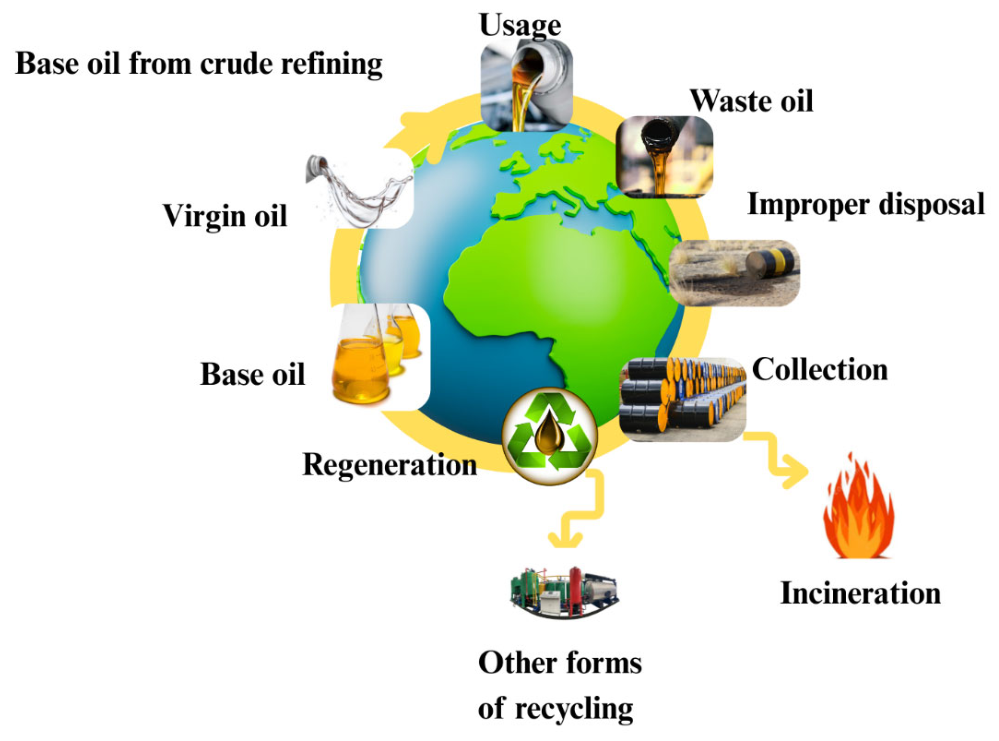
Figure 2.
Process flow diagram of acid–clay treatment for waste lubricating oil regeneration [13].
Figure 2.
Process flow diagram of acid–clay treatment for waste lubricating oil regeneration [13].
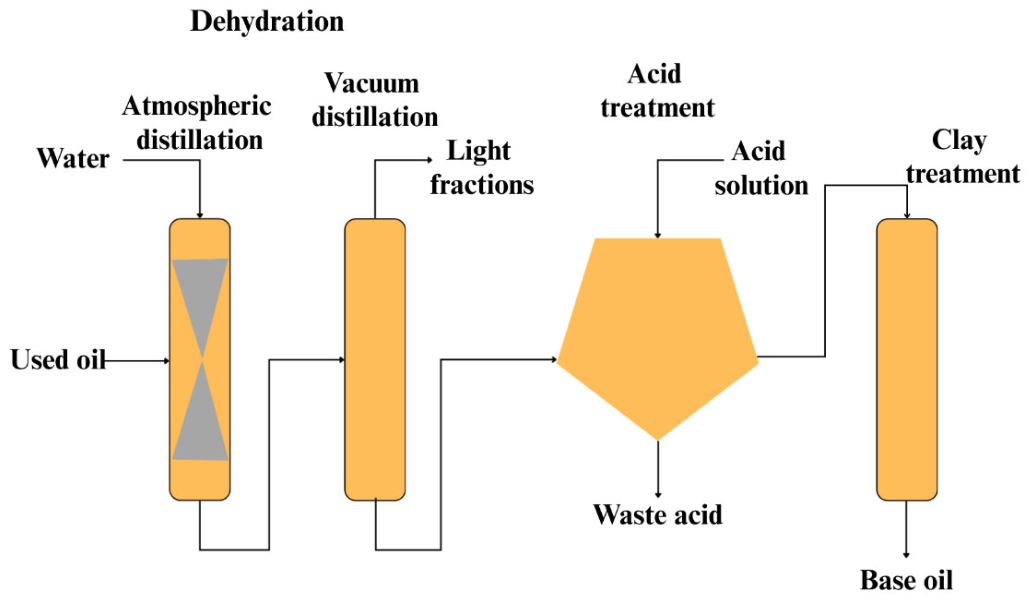
Figure 3.
Pretreatment and solvent extraction methods for waste lubricating oil regeneration, redrawn and adapted from [26].
Figure 3.
Pretreatment and solvent extraction methods for waste lubricating oil regeneration, redrawn and adapted from [26].
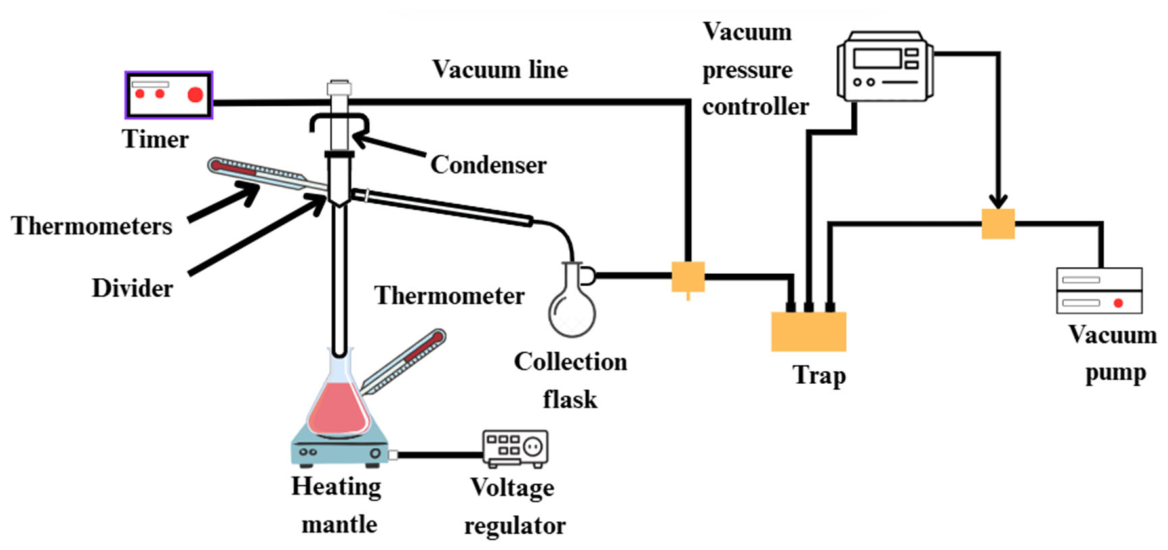
Figure 5.
Schematic illustration of hydrotreatment and hydrofinishing of waste lubricating oil (WLO), redrawn and adapted from [38].
Figure 5.
Schematic illustration of hydrotreatment and hydrofinishing of waste lubricating oil (WLO), redrawn and adapted from [38].
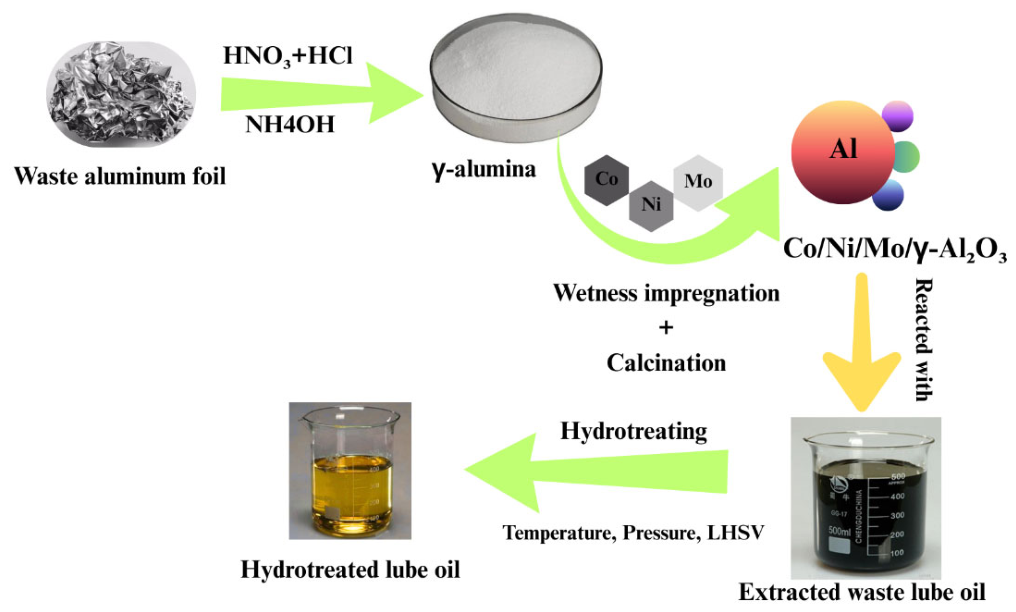
Figure 6.
Schematic representation of waste engine oil ultrafiltration using hydrophobic polypropylene membranes [41].
Figure 6.
Schematic representation of waste engine oil ultrafiltration using hydrophobic polypropylene membranes [41].
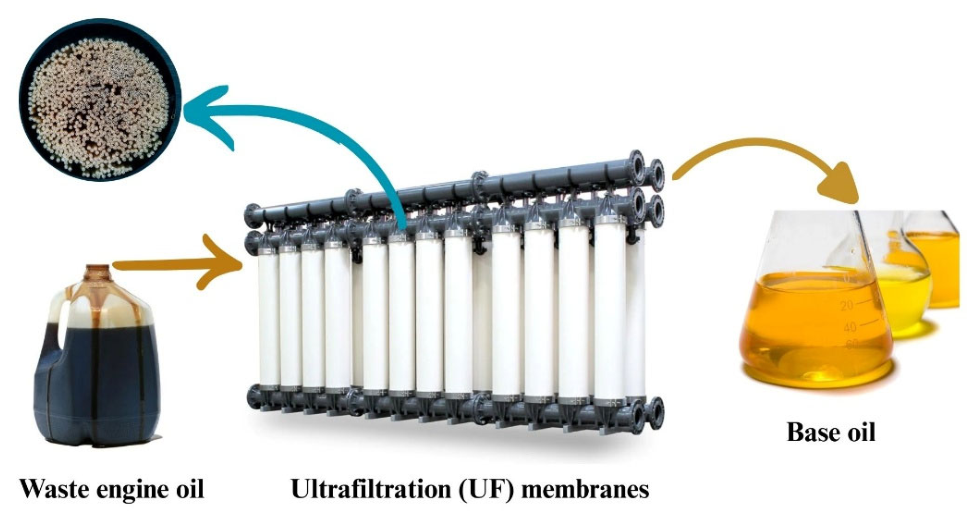
Figure 7.
Schematic representation of pyrolysis and catalytic cracking pathways for waste lubricating oil conversion into liquid fuels, redrawn and adapted from [43].
Figure 7.
Schematic representation of pyrolysis and catalytic cracking pathways for waste lubricating oil conversion into liquid fuels, redrawn and adapted from [43].
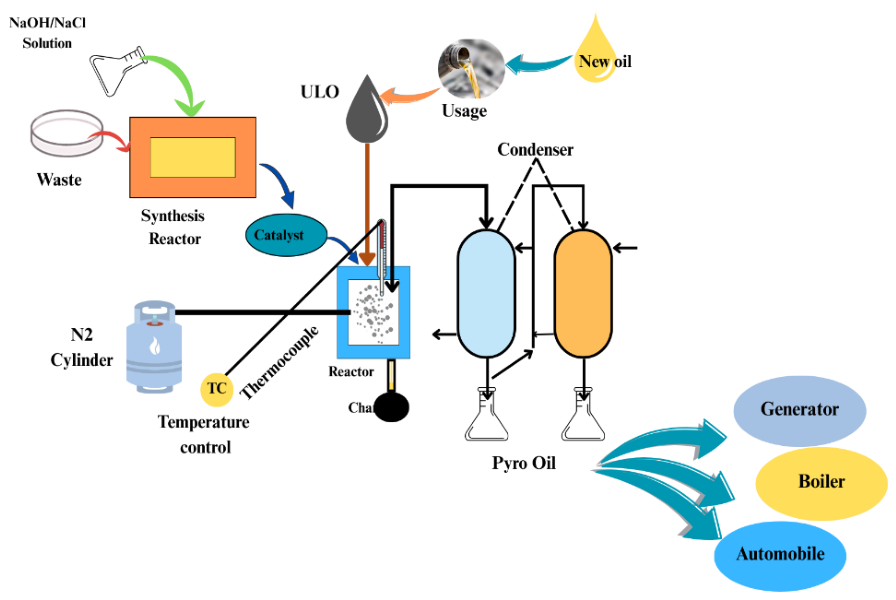
Figure 8.
Hybrid re-refining process combining solvent extraction and membrane filtration [47].
Figure 8.
Hybrid re-refining process combining solvent extraction and membrane filtration [47].
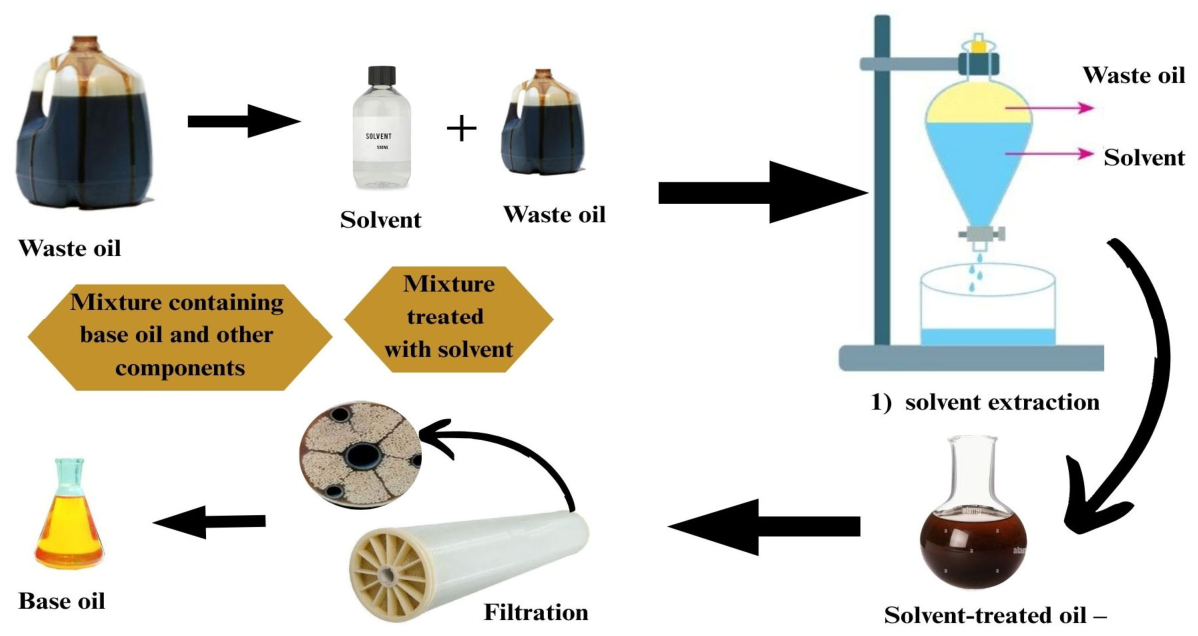
Figure 9.
Valuable petrochemical products and carbon-based materials obtained from waste lubricating oils (WLOs).
Figure 9.
Valuable petrochemical products and carbon-based materials obtained from waste lubricating oils (WLOs).
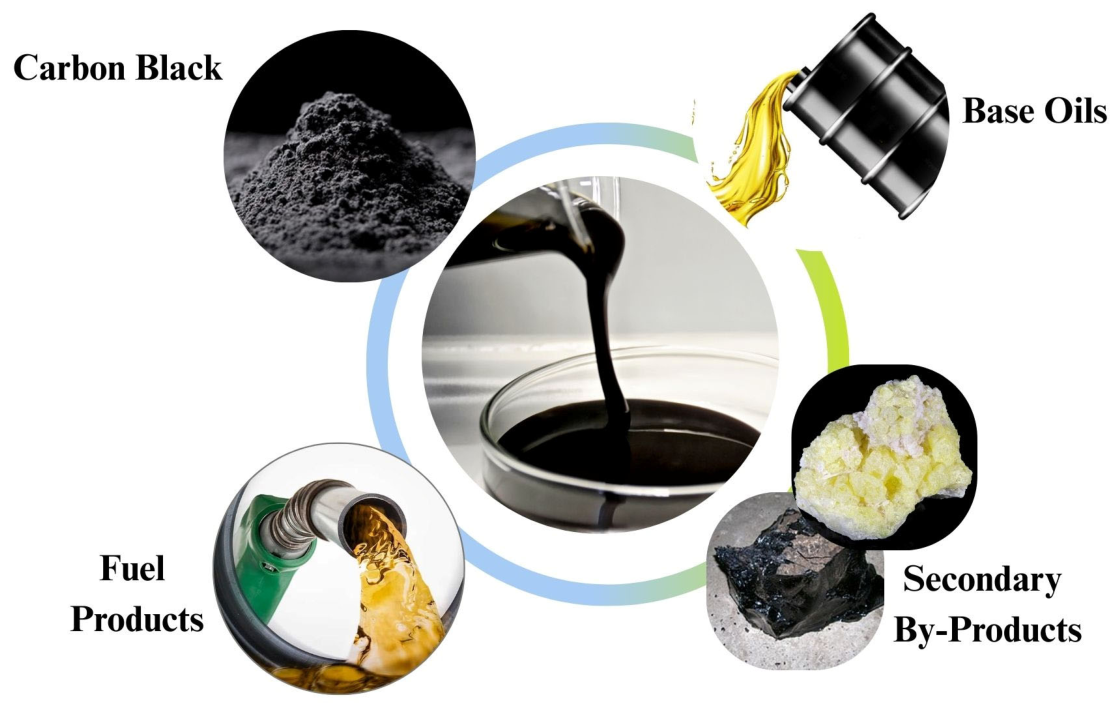

Table 1.
Common acids applied in acid–clay treatment of waste lubricating oils.
| Acid | Optimal conditions | Clay activation method |
|---|---|---|
| Oxalic acid | 45–50 °C; settling time 24 h | Sulfuric acid treatment |
| Sulfuric acid | Clarification at 110 °C; settling time 24 h | – |
| Acetic acid (glacial) | 50 °C; settling time 24 h | 1 mL oil per 4 g clay |
| Nitric acid | Settling time 24 h | Calcination at 800 °C for 5 h |
Table 2.
WLO Recycling Methods.
| Method | Advantages | Limitations | Typical Product Quality | Scale and Economic Indicators |
|---|---|---|---|---|
| Acid–Clay Treatment | Technically simple and low-cost process widely applied in developing regions. Efficient for removing contaminants (oxidation products, fuel residues, solid particles) from used oils. Capable of recovering valuable base oil fractions with moderate yield. | Generates large quantities of acid–clay sludge; handling and disposal cause serious environmental issues. Poor reproducibility and limited oil stability. Not suitable for high-throughput or continuous systems. | API Group I base oils. | Preliminary cost: 0.15 USD to recover usable oil — 0.4 USD lower than imported fresh oil (0.55 USD) [48]. Primarily used in small and medium-scale re-refining units |
| Solvent Extraction (e.g., MEK, NMP, butanol) | Provides up to 90 % oil recovery with superior quality compared to acid–clay treatment. Reduces sludge generation and environmental impact. MEK gives the highest yield at feed-to-solvent ratio 1:4 (35–45 °C, 30–40 min, settling time 24 h). Use of activated charcoal, alumina, or silica gel improves color and purity. [49]. | Dependent on solvent type and recovery efficiency; solvent losses and equipment costs may be significant. | API Group I–II (up to II with hybrid extraction systems). | Economically feasible at laboratory scale; short settling time (2 h) and moderate operating conditions [50]. |
| Vacuum Distillation | High oil recovery (up to 80–85%); commercially mature and scalable; suitable for base oil regeneration [51]. Recycled oil comparable to SN150–SN200 base oils after modification. | Energy-intensive process; high capital and operating expenditures; requires post-treatment for higher oil groups. | API Group I–II (up to III after hydrotreatment). | Simple, economical, solvent-free, and environmentally friendly; suitable for pilot- to industrial-scale application [51] |
| Hydrotreatment & Hydrofinishing | Enables efficient upgrading of mixed waste and petroleum feeds into high-quality transportation fuels. Blending WLO and WCO with VGO improves conversion and fuel yield while reducing environmental pollution and feed cost. Achieves high diesel yield at 400 °C and complete WCO conversion at 380 °C over commercial Ni–Mo/Al₂O₃ and Ni–W/SiO₂–Al₂O₃ catalysts [52]. | High hydrogen demand; expensive catalysts (Ni–Mo, Co–Mo); catalyst deactivation by feed impurities. Requires high hydrogen pressure (≈ 7 MPa) and elevated temperature (380–440 °C); catalyst deactivation and hydrogen cost remain significant challenges. | API Group II–III base oils. | Industrially feasible using existing hydroprocessing infrastructure; energy-efficient after process optimisation [53]. |
| Integrated Solvent Extraction–Hydrotreatment (Circular Economy Model) | Combines solvent extraction (35% n-hexane/35% n-butanol/30% MEK) with hydrofinishing to recover up to 80% of WLO. Produces high-quality base oil suitable for reuse. Reduces dependence on virgin crude and supports circular economy principles. | Requires dual-unit integration and process optimization; moderate hydrogen demand at 30 bar and 270 °C. | Base oil comparable to commercial Group II | 22.7% lower overall annualized cost (OAC) than linear model; solvent-to-oil ratio 3:1; viable for industrial CE implementation [34]. |
| Membrane Filtration (Micro/Ultra/Nano) | Efficient removal of impurities from waste engine oils: ash (90–99 %), water (78–82.5 %), carbon residue (52.6–65.9 %), acidity (44.9–73.3 %), Ca (50.1–58.9 %), Zn (28.9–43.8 %). Improves viscosity, density, and color; enables reuse and reduces environmental load. | Limited oil flux (0.09–0.19 L·m⁻²·h⁻¹); requires temperature (30–60 °C) and pressure (0.4–1.2 bar) control; membrane fouling possible. | Treated oil with significantly reduced impurities and improved physicochemical properties. | Lab-scale system; simple, low-energy process suitable for pre-treatment or polishing stage [34]. |
| Pyrolysis & Catalytic Cracking | Converts waste lubricating oil to fuel-like diesel (FLDR2) with yield up to 96.5 %; sulfur content 0.24 wt %; viscosity 3.4 cSt; heating value 42.9 MJ kg⁻¹. Blending with linseed biodiesel (B20, B30) improves combustion and reduces smoke opacity by 32–50 % [54]. | Slight increase in brake-specific fuel consumption (+5 %) and smoke opacity for pure FLDR2; reduced BTE for blends; long-term performance yet to be assessed. | Liquid fuels and carbon products (char, carbon black). | Lab-scale; economically viable at ≥70 kt/year capacity; profitability sensitive to feedstock supply and oil prices [55]. |
| Hybrid & Emerging Technologies (e.g., Distillation–Solvent, Hydro–Membrane, Plasma, ILs, SCF) | Synergistic integration enhances hydrocarbon recovery (up to 90 %), reduces sludge volume, and allows selective separation of hydrocarbons, water, and solids. Ultrasonic treatment destabilizes emulsions; solvent extraction recovers light fractions; pyrolysis converts residuals to fuels; freeze-thaw improves dewatering; thermal decomposition produces valuable byproducts. | Energy-intensive for pyrolysis/thermal steps; large-scale optimization required; longer processing time for freeze-thaw cycles. | High-quality recovered oil and hydrocarbon fractions; reduced residual sludge (<5–10 %). | Laboratory to pilot scale; environmentally friendly; improved process economics compared to conventional disposal [56]. |
Table 3.
Main Process Description, Scientific Contributions, and Key Performance Results for WLO Recycling Methods.
Table 3.
Main Process Description, Scientific Contributions, and Key Performance Results for WLO Recycling Methods.
| Method | Main Process Description | Scientific Contribution | Key Results | Products | Reference |
|---|---|---|---|---|---|
| Acid–Clay Treatment (H₂SO₄, HCl, HNO₃) | Filtration, centrifugation (10,000 rpm, 20 min), preheating, acid treatment (10 mL acid / 100 mL oil, 30 min), followed by clay adsorption and NaOH neutralization. | Compared efficiency of different acids and clays for WLO purification; optimized pre-treatment and adsorption sequence. | Flash point, cloud point, and viscosity index increased; sulfur and water contents decreased; regenerated oil comparable to fresh lubricating oil. | Recovered base oil (API Group I) | [57] |
| Acid–Clay Treatment (Ethiopian study) | Used engine oil treated with 15–25 % acid and bentonite clay; nine combinations tested; followed by vacuum distillation. | Statistical optimization of acid–clay ratios to maximize yield and quality; integrated cost–benefit evaluation. | Optimum: 20 % acid + 15 % clay → 69 % yield, density 0.886 g/mL, viscosity 94 cSt (40 °C), ash 0.34 %; 8–10 % light fuel recovered; cost 0.15 USD, 0.4 USD cheaper than new oil. | Recovered base oil and light fuel | [58] |
| Waste Acid Recycling Activation | Activated clay prepared using recycled waste acid under optimized conditions (H₂SO₄ 22 %, liquid–solid ratio 3.5, 4 h, 90 °C). | Developed an eco-efficient process for clay activation using waste acid; identified structural mechanisms of activation. | Acid consumption ↓ 21 %, Al leaching ↓, improved montmorillonite integrity and uniformity; enhanced adsorption performance compared with traditional activation. | High-performance activated clay | [59,60] |
| Ultrasound–Assisted Solvent Extraction | Base oil recovered from used truck lubricants (32 500 km) using ethanol, propan-2-ol, 2-methylpropan-1-ol, and butan-1-ol with mechanical stirring (220 rpm) and ultrasound (25 °C, 24 kHz, 400 W). | Introduced a greener intensification of base oil recovery via combined mechanical–ultrasound system and low-toxicity solvents. | Recovery yield (MS–US): ethanol 3.1 %, propan-2-ol 25.6 %, 2-methylpropan-1-ol 71.6 %, butan-1-ol 85.5 %; metals removed: Ca 85–93 %, Mg 67–83 %, Zn 0–72 %, Fe, Al, Cr, Mo ≈ 100 %. | Recovered eco-friendly base oil | [61] |
| n-Butanol + DEA Solvent–Flocculant Extraction | Waste lubricating oil treated with n-butanol (1:5 v/m) and diethanolamine (DEA, 1:500 v/m); solvent recovered by vacuum rotary evaporation. | Demonstrated a feasible, recyclable solvent–flocculant system for industrial-scale WLO regeneration with reduced environmental impact. | Recovery efficiency 85.27 %; flash point 238 °C; regenerated oil transparent and yellow; quality met commercial standards except for slightly higher dynamic viscosity. | Regenerated base oil (API Group II) | [62] |
| Three-Reactor Hydrotreating Process | Waste lubricating oil refined through a three-reactor hydrogenation system, enhancing HDS, HDCl, HDN, decolorization, and demetallization compared with the conventional two-reactor process. | Proposed an improved multi-reactor hydrogenation route to mitigate catalyst deactivation and extend operational lifespan; revealed mechanisms of Si and B poisoning prevention. | Catalyst life doubled; S, N, and Cl removal > 80 % for 10 weeks (vs. 4 weeks in two-reactor); decolorization sustained up to 7 weeks; Si and B effectively removed, preventing pore blockage. | High-purity base oil; regenerated catalysts | [63] |
| Solvent Extraction + CoNiMo/γ-Al₂O₃ Hydrotreating | γ-Al₂O₃ synthesized from waste aluminum foil; used as support for CoNiMo catalyst (co-impregnation method); hydrotreating of solvent-extracted WLO at 400 °C, 60 bar, 0.75 h⁻¹ LHSV. | Developed a circular-economy route by converting aluminum foil waste to catalyst support; optimized hydrotreating parameters for refined base oil recovery. | Refractive index ↓ 1.480 → 1.460, total acid number ↓ 8.16 → 0.46, viscosity index ↑ 78 → 129, sulfur ↓ 6752 → 543 ppm; sludge removal highest at solvent/oil = 3. | High-quality base oil; reusable γ-Al₂O₃ catalyst | [64] |
| Hybrid Method | Integration of centrifugation with solvent extraction, ultrasonic treatment, pyrolysis, freeze-thaw cycles, and thermal decomposition to enhance separation and recovery of hydrocarbons, water, solids, and contaminants from oily sludge. | Demonstrated synergistic hybrid methods for maximizing hydrocarbon recovery, minimizing environmental impact, and valorizing oily sludge; evaluated pilot-scale and semi-industrial applications. | Oil recovery rates: 90–94 %; solvent extraction + centrifugation: 93 % (USD 200/ton); ultrasonic + centrifugation: 90 % (USD 180/ton); ultrasonic + freeze-thaw: 91 %; centrifugation + thermal decomposition: 94 %, with reusable gel byproduct. Energy consumption: 400–600 kWh/ton; capital costs: USD 4–7 million (1500 t/day). | Recovered base oil and reusable gel; reduced sludge volume | [65] |
Table 4.
Modern WLO recycling technologies.
| Technology/ Approach | Principle / Method | Advantages | Target Products /Outcomes |
Notes / Innovations |
|---|---|---|---|---|
| Plasma-Assisted Processing | High-energy plasma pyrolysis/gasification of WLO and oily sludge at voltages from 0 to 20 kV, frequencies from 15 to 25 kHz and operating time from 0.5 to 8 minutes during the experiment. | Non-thermal plasma forms active radicals, which accelerates cracking without a catalyst; Plasma processes reduce residues and allow you to control the composition of gas-liquid products. |
Liquid fuels, carbon black, syngas. The content of elemental carbon and oxygen in the target product for 8 minutes was 1.96% less by weight and 1.38% less by weight.% more than in commercial diesel fuel, the calorific value can reach 44.38 MJ/kg |
Studies with plasma technology for oil sludge have shown the production of fuel raffinate and effective pre-filtration/extraction before processing [118] Liquid yields >80%, low S & N content |
| Nanocatalysts in Re-Refining |
Hydrotreating/hydrocracking of WLO using promoted sulfide catalysts on mesoporous substrates (for example, NiMo/CoMo on SBA-15/MCM-41/Al₂o₃). In the ranges of operating conditions: temperature (250-350 °C), pressure (6-10 bar), hourly volumetric fluid velocity (LHSV) (1-3 h -1) | Mesoporous/promoted systems increase active-site exposure and HDS/HDN performance relative to conventional supports. | Middle distillates and Group II/III base-oil cuts after hydroprocessing/finishing. | Ni, Mo on mesoporous supports. [119] |
| Hybrid & Integrated Systems | Integrated flowsheets combine solvent extraction (MEK, 1-butanol, 2-propanol. Extraction temp: 20, 30 and 50 °C. Stirred at 275–300 rpm for 30 min. Gravity settlement for 24 h. +vacuum distillation at 80 °C+hydrofinishing/ to remove additives and recover base oil. |
Improved yields, additive removal, reduced costs |
Light fuel, diesel, lube base oil, and residue. |
Wiped-film (thin-film) evaporators are a key energy-efficient separation prior to hydroprocessing. [120] |
| Membrane Filtration & Separation | UF/NF/pervaporation to pre-treat WLO or oily feeds: remove water, colloidal metals, asphaltenes/oxidation products without phase change. Using operating pressure (0.4-1.2 bar) and temperature (30-60°C) | Continuous operation is feasible; membranes can protect downstream hydrotreaters by lowering metals/solids and improving feed stability. | Pre-treated WLO with reduced fouling tendency for refining or finishing; improved flash point and particle removal shown in studies. The kinematic viscosities were decreased around 2.1-14.2 % and the densities were decreased by 0.3-0.6 % from their initial values |
Use of ceramic or polymeric membranes (PAN, PVDF, PP) with regeneration cycles; studies show improved flash point, reduced fouling, higher permeate quality. [121] |
| Artificial Intelligence & Process Optimization | Machine learning + sensor data for predicting maintenance and optimizing technological processes at refineries | Reduced downtime, optimized yield and energy efficiency | Optimized outputs across all processing lines (WLO collection, pre-treatment, upgrading, finishing) | Recent PdM work shows hybrid physics-ML outperforming single-method baselines for process asset health monitoring. [122,123] |
Disclaimer/Publisher’s Note: The statements, opinions and data contained in all publications are solely those of the individual author(s) and contributor(s) and not of MDPI and/or the editor(s). MDPI and/or the editor(s) disclaim responsibility for any injury to people or property resulting from any ideas, methods, instructions or products referred to in the content. |
© 2026 by the authors. Licensee MDPI, Basel, Switzerland. This article is an open access article distributed under the terms and conditions of the Creative Commons Attribution (CC BY) license (http://creativecommons.org/licenses/by/4.0/).
Copyright: This open access article is published under a Creative Commons CC BY 4.0 license, which permit the free download, distribution, and reuse, provided that the author and preprint are cited in any reuse.