

Submitted:
21 May 2026
Posted:
21 May 2026
You are already at the latest version
Abstract
MODIS satellite images were used together weather data for large-scale water balance assessments in rainfed sugarcane crops, with a long-term data set from 2007 to 2024 in Northeast Brazil. Precipitation (P) was spatially quantified from interpolated pluviometer data and actual evapotranspiration (ET) estimated by applying the SAFER (Simple Algorithm for Evapotranspiration Retrieving). Considering the sugarcane cropped areas for each year, the mean annual P ranged from 3,172 million cubic meters in 2021 to 8,555 million cubic meters in 2009, while for ET this range was from 3,375 million cubic meters in 2017 to 5,869 million cubic meters in 2007. The assessments showed gaps between rainfall water supplies and the root-zone moisture levels, highlighting the evaporative fraction (Ef), i.e. the ratio of ET to reference evapotranspiration (ET0), as the best root-zone moisture indicator, which showed benefits of supplementary irrigation during the transition from grand growth to maturation stages. It was demonstrated that the assessments of large-scale sugar cane water balance using long-term series of data has potential to subsidize public policies which aim the sustainable crop management as well as for its rational expansion in areas with environmental aptitude under the actual climate and land-use changes scenarios.
Keywords:
precipitation
; actual evapotranspiration
; evaporative fraction
; land-use changes
; sustainable agriculture
; bioenergy
1. Introduction
Sugarcane crop (Saccharum officinarum) is significant in several parts of the world, particularly in tropical and subtropical regions. Apart from sugar, it is also used to produce ethanol, an alternative fuel source that is gaining popularity as a cleaner and more sustainable energy option. Ethanol from sugarcane is considered more environmentally friendly compared to fossil fuels, reducing the carbon footprint significantly. As countries seek to reduce their reliance on traditional fuels, sugarcane-derived ethanol offers a viable solution [1,2,3,4,5]. However, it is crucial to manage water and soil resources wisely in sugarcane fields to prevent negative environmental impacts for its coexistence with natural ecosystems [6,7,8,9]. Under these global scenarios, Brazil is highlighted as one of the main sugarcane producing countries, expanding for both sugar and ethanol production, but also under the perspective of renewable energy generation [10,11].
The seek for sugarcane sustainable managements improving biomass growth is crucial for sugar and ethanol production from sugarcane fields, mainly under the actual scenarios of climate and land-use changes which affect productivity [3,4,9,12]. On the one hand, sugarcane satisfies the requirement of fast growth and high biomass production for yielding bioenergy [5]. On the other hand, its cultivation increases the regional water demand, due to its high-water requirements [1,13,14], besides its impacts on large-scale energy, water and carbon balances [6,15,16,17]. Increases in evapotranspiration rates affecting water balance and water quality due to sugarcane crop expansion have been reported [8,18,19].
Sugarcane is a crucial crop in Northeast Brazil, contributing significantly to its economy. The climate in this region is well-suited for its cultivation, because of the warm conditions and seasonal rainfall, allowing the crop to grow producing high biomass levels. However, the environmental impacts, such as deforestation and monoculture, pose risks to environment, demanding research to manage these impacts by implementing more sustainable agricultural practices [7,20]. Geotechnologies are powerful tools to monitor sugarcane growth patterns and to optimize its water management, enhancing sustainability while meeting the rising demand for sugar and its derivatives [17,21,22]. By balancing economic interests with ecological concerns, the Brazilian Northeast region aims to maintain its position as one of the leaders in the sugar and ethanol industry of the country [9,19].
Sugarcane needs a lot of water during its growing cycles, but rainfall water is not always available in the same amounts every year in the agricultural growing regions of Northeast Brazil [22,23,24]. Because of this, assessments on the long-term water balance in sugarcane fields are important to understand how water enters and leaves the system over long-term periods. Water balance accounts for water inputs, mainly rainfall and irrigation, with water outputs, such as evapotranspiration, runoff, and deep percolation. When water input is greater than output, there is a positive water balance and possible water surplus in the root-zones. When output is greater than input, there is a negative water balance and a water deficit for the crop [17,22,25]. By analyzing many years of water balance data, it is possible to identify patterns of drought, excess rain, and normal years, helping producers to plan planting dates, irrigation strategies, and even the choice of varieties more tolerant to water stress.
The difficulties of measurements and analysis the water balance components with only local point measurements, highlighted the integrated use of parameters retrieved from spatialized remote sensing and weather data, being these tools successfully applied in different agroecosystems and environmental conditions of Brazil [19,22]. With remote sensing techniques, one can estimate actual evapotranspiration across the sugarcane fields, which is fundamental for the water balance, because it represents the main water output from these fields, being possible to detect periods of water stress and crop performance. Instead of measuring only a few experimental plots, it becomes possible to analyze entire regions of sugarcane production [17,21,22,26].
The integration of remote sensing and climate databases allows the construction of long time series of the water balance components, with evaluations of water conditions for several years within the same sugarcane fields in a region, identifying trends of increasing water deficit, shifts in rainy season onset, or more frequent extreme events [27,28,29,30] , allowing farmers to adjust the sugarcane crop cycles to avoid water stress during the highest water requirements periods, preserving yield and sugar content. Furthermore, applying these tools helps in designing more sustainable sugarcane water management, reducing waste and protecting water resources [17,21,22,31]. This broader view improves regional planning and supports public policies related to agriculture and water security, being useful for adaptation of climate change in the sugarcane sector, also supporting practical decision making, as definitions of priority areas for irrigation investment based on environmental conditions [7,9,32].
For large-scale sugarcane water balance assessments, distinct remote-sensing algorithms can be used to obtain actual evapotranspiration (ET) [21,22,31,32]. In the current study, the SAFER (Simple Algorithm for Evapotranspiration Retrieving) algorithm is applied to estimate ET in sugarcane fields inside a Brazilian agricultural growing region called SEALBA, while to quantify precipitation (P), pluviometer data were interpolated by geostatistical tools. The SAFER was developed and validated with advanced energy and water balance under different thermal and moisture conditions in distinct agroecosystems of Northeast Brazil [22,33,34]. In SEALBA, an agricultural growing region bordered by the states of Sergipe (SE), Alagoas (AL) and Bahia (BA), Northeast Brazil, natural vegetation is being replaced by agricultural crops, mostly sugarcane under rainfed conditions, what has affected the large-scale water balance [23,24]. With land-use shapes demarcating sugarcane fields within SEALBA for each year from 2007 to 2024 and crossing them with information of its sugarcane producing counties, reflectance MODIS images and weather data were integrated for long-term water balance assessments.
The authors expect that, with the success of these specific applications for sugarcane commercial fields in Northeast Brazil, the models could be used in other regions probably only requiring corrections for the calibration coefficients of the modelling equations to infer distinct environmental and local sugarcane management conditions. Our hypothesis is that long term sugarcane water balance components can be monitored with the reflective bands of the MODIS sensor together with weather data and these assessments can be useful to support sustainable sugarcane managements and generation of rational criteria for its sustainable commercial expansion while maintaining sugar and ethanol yields, key issues under the actual scenarios of water competitions with other water users as consequences of climate and land-use changes.
2. Materials and Methods
2.1. Study Area, Weather Stations and Sugarcane Fields
Figure 1 presents the location of the SEALBA region in Northeast Brazil (Figure 1a); its sugarcane producing counties together with the weather stations from the National Meteorological Institute (INMET – https://www.gov.br/agricultura/pt-br/assuntos/inmet) (Figure 1b); and the extension of the sugarcane fields in 2024 obtained crossing the shapes from MapBiomas (https://brasil.mapbiomas.org) and sugarcane yield information from the Brazilian Geography and Statistic Institute (IBGE – www.ibge.gov.br) (Figure 1c).
The climate of sugarcane fields in the SEALBA region is tropically humid, occasioned by moist air masses coming from the Atlantic Ocean, with high both average air temperature and air humidity under well distributed rainfall throughout the year [23]. Following [35], for a generalized sugarcane growing cycle of 12 months in Northeast Brazil, the crop phases can be divided into four: Phase 1: Germination; Phase 2 – Tillering, with duration until 120 days, starting 40 days after germination; Phase 3: Grand growth, from 120 days after germination until 270 days after; and Phase 4 – Maturation, from 270 days after germination until 360 days after.
In Phase 1, the crop is influenced by moisture, temperature and aeration of the soil; during Phase 2 the most important parameters are cultivar, solar radiation, air temperature, root-zone moisture and fertilization; ; in Phase 3, the exigence is large both solar radiation and root-one moisture levels to favor stalk elongations; and during Phase 4, high solar radiation values are desirable but low root-zone moisture levels are favorable being this last phase characterized by low vegetative growth activity [36].
2.2. Long-Term Water Balance Modelling
The weather data were interpolated by the Ordinary Kriging method, crossing the sugarcane fields from the land-use shapes and producing counties within SEALBA for the long-term period from 2007 to 2024. For reference evapotranspiration (ET0) the data used were daily values of incident global solar radiation (RG); air temperature (Ta), relative humidity of air (RH); and wind speed at 2 m heigh (u2) [25]. Together with the reflectance from bands 1 and 2 of the MOD13Q1 product, these data were also input for ET modelling, and with interpolated P data the large-scale water balance components were assessed at the respectively 250 m and of 16 days spatial and temporal resolution of the MODIS images, later up scaling to annual pixel values [22]. The water balance modeling steps as well as the previous calibrations and validations, are well detailed in [22,33,34], being here only presented the main equations.
With the SAFER algorithm the daily values of evaporative fraction (Ef = ET/ET0) were modeled:
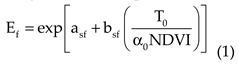
where asf and bsf are regression coefficients taken respectively as 1.9 and -0.008 for Northeast Brazil, T0 is the surface temperature, α0 is the surface albedo, and NDVI is the Normalized Difference Vegetation Index.
The α0 values were calculated as:
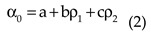
where ρ1 and [22,33,34ρ2 are the reflectances from bands 1 and 2 of the MODIS images and a, b and c are regression coefficients of 0.08, 0.41, and 0.14 for Northeast Brazil.
Being NDVI the ratio of the difference by the sum of ρ2 and ρ1 and T0 acquired by applying the Stefan-Boltzman equation to the long wave balance components:
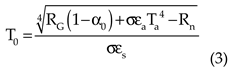
where Ɛa and ƐS are the atmospheric and surface emissivities, respectively; Rn the net radiation; and σ = 5.67 10 -8 W m -2 K -4 the Stefan-Boltzmann constant.
The ET daily values were retrieved by:
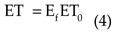
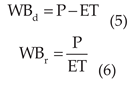
For quantification of the moisture degree at the vicinities of the sugarcane fields, the water balance (WB) indicators difference (subscript d) and ratio (subscript r) were used:
3. Results and Discussion
3.1. Thermal Conditions
Figure 2 shows the daily average values, at the 16-day MODIS timescale, of the incident global solar radiation – RG and air temperature – Ta (Figure 2a); and reference evapotranspiration – ET0 (Figure 2b), in the sugarcane fields within the producing counties of SEALBA, for the long-term period from 2007 to 2024, in terms of Day of the Year (DOY).
Considering that the thermal dynamics presented in Figure 2 represent interpolated mean pixel values for 18 years of data (2007 to 2024), they may be considered historical averages for each 16-day MODIS periods. The hottest period and under the highest solar radiation levels in the sugarcane fields occur from September to April (DOY 257 to 096), with the respective mean RG and Ta values above 20.00 MJ m-2 d-1 and 24.00 oC, period involving the zenith position of the Sun outside the rainy season in the region. The lower limits for both climatic parameters happen in the middle of the year, reaching to average RG of 14.00 MJ m-2 d-1 from June to July (DOY 161-192), while for Ta, it is 23,00 oC, between July and August, moments involving the winter solstice in South hemisphere. The gap of one month regarding the magnitudes of RG and Ta shows the time differences between heating and cooling and maximums and minimums solar radiation levels, respectively.
In case of the atmospheric demand, ET0 follows the energy and thermal tendencies throughout the year, however, as the climatic parameter that most act on this demand is RG, the upper and the lower limits for ET0, above 4.00 mm d-1 and bellow 3.00 mm d-1, are also respectively from September to March and between June and July, as for RG. The highest thermal conditions affecting the atmospheric demand happen at the start and at the end of the year, involving respectively the Phases 1 and 4 of the sugarcane fields, however, as the region is close to the Equator (Figure 1), the amplitudes of ET0 are not so large, limiting somewhat its effects on the water balance, even under high rainfall amounts.
3.2. Moisture Conditions
Figure 3 presents the spatial dynamics of the precipitation (P) values, pixel averages and standard deviations (SD), at the annual scale, for the sugarcane fields in the producing counties within SEALBA, regarding the long-term period from 2007 to 2024.
Throughout the years from 2007 to 2024, spatial and temporal variations in P pixels are noticeable within the sugarcane fields. The strongest contrast is observed comparing 2007, with average below 800 mm yr-1, and 2009 when it was above 1,850 mm yr-1. Considering the ranges represented by the averages and SDs, P rates were between 500 mm yr-1 in 2021 and 2,063 mm yr-1 in 2009. The largest spatial variations occurred in 2021, when SD represented 38% of the mean pixel value, while the lowest ones, with this percentual being 10%, happened in 2008, 2010 and 2013.
Figure 4 shows the spatial dynamics of the actual evapotranspiration (ET) values, pixel averages and standard deviations (SD), at the annual scale, for the sugarcane fields in the producing counties within SEALBA, regarding the long-term period from 2007 to 2024.
As for P, also several spatial and temporal variations are clear on ET annual values along the years from 2007 to 2024 in the sugarcane fields within the producing counties of SEALBA. However, the upper and lower limits of ET and P values throughout the years didn’t coincide. For ET, the maximums occurred in 2007, with annual average total above 1,260 mm yr-1, even under the lowest P for this year in the time series; while the lowest ET rates, below 900 mm yr-1, were in 2017. These differences between the occurrences of maximums and minimums in the P and ET values are because soil remains wet after the high rainfall amounts, even under large RG and Ta levels [22,23].
Earlier studies with field measurements with field measurements in irrigated sugarcane from Florida (USA) [37] resulted in a total ET of 1,060 mm for a sugarcane growing cycle, within the ranges for the generalized 12-month growing cycle in SEALBA. In most recent research in Ethiopia, from Landsat satellite measurements, an annual ET annual for irrigated sugarcane ranging from 1,312 to 1,682 mm was reported [26]. However, [21] found lower growing cycle totals between 690 and 829 mm from remote sensing measurements under rainfed conditions in Southeast Brazil.
3.3. Long-Term Water Balance Accounting
To assess the water balance dynamics for the long-term period from 2007 to 2024 at the 16-day MODIS timescale, men pixel P and ET values were used, together with their standard deviations (SD). Figure 5 presents the average pixel values and SDs for P (Figure 5a) and for ET (Figure 5b) throughout the year at this timescale, in the sugarcane fields within the producing counties in SEALBA, in terms of Day of the Year (DOY).
Accounting for the water input in the long-term water balance, the highest mean P values (Figure 5a), with average total above 100 mm 16d-1, occur from April to July (DOY 097 to 192), while the lowest ones, below 30 mm 16d-1, are between September and January (DOY 257 to 016). Considering the water output from the sugarcane fields, the maximum ET rates (Figure 5b), with average total higher than 50 mm 16d-1, are at the end of the rainiest period, from June to October (DOY 161 to 288), under good levels of root-zone moisture promoted by the previous rains, while the minimum ones, 30 mm 16d-1 are at the start and at the end of the year (DOY 305 to 080), outside the rainy period.
Considering the sugarcane daily mean ET values in SEALBA, they are between 1.10 mm d-1 during the climatically driest period to 4.50 mm d-1 within the rainy season. These rates are slightly above those reported by [38], who found averages from 1.60 to 2.90 mm d-1 for distinct cultivars and root-zone moisture conditions in South Africa, but lower than those reported for irrigated sugarcane in Ethiopia from Landsat measurements, between 2,00 and 6,60 mm d-1 [26]. However, for an irrigated sugarcane field in Florida (USA) in an earlier study, [37] reported minimum daily ET rate of 0.70 mm d-1 and maximum of 4.60 mm d-1 , while from Bowen ratio measurements in irrigated sugarcane located in Southeast Brazil, ET peaks ranged from 3.70 to 4.40 mm d-1 [39]. Also in Southeast Brazil, from remote sensing measurements in rainfed sugarcane reported ET daily ranged between 0.30 to 5.80 mm d-1 for the dry and rainy periods, respectively [21]. The similarity on ET values of the current study with those from literature gives confidence of SAFER applications integrating MODIS images and weather data for large-scale estimations of sugarcane water consumptions.
Figure 6 shows the average dynamics for the sugarcane moisture indicators WBd and WBr (Figure 6a) and Ef (Figure 6b), at the 16-day MODIS timescale, in the sugarcane fields of the producing counties within SEALBA, in terms of Day of the Year (DOY).
By accounting WBr e WBd (Figure 6a), it is noticed that the periods with the largest climatic water deficits are between August and November (DOY 241 to 320), when WBd is below -20 mm 16d-1. However, regarding WBr, it only drops beyond 0.50, e.g., P attending less than half of ET, from October to the start of December (DOY 289 a 336), evidencing that even with reduction on rainfall amounts after the end of August, the sugarcane root-zones are still under good available moisture for crop growth until the end of September (DOY 273).
The gaps between rainfall and sugarcane root-zone moisture are much clearer when assessing the Ef dynamics (Figure 6b). The highest Ef values, above 1.00 are during the generalized sugarcane transition phases of grand growth to maturation, from June to September (DOY 161-257), while the lowest ones, below 0.50 are from November to March (DOY 321-080), involving the phases maturation and transition from germination to tillering. The Ef values characterize the moisture status of the plant root zones [40,41] and under optimum levels this indicator can be considered as crop coefficient (Kc), used in irrigation management [14,31,32,39,42], and agroclimatic zoning [22]. Although the Ef values in the current study are for rainfed sugarcane, the range between 0.35 to 1.25, averaging 0.71, shows that in general, the plants were under good root-zone moisture conditions with these values similar to the standard FAO Kc tabled ones for irrigated sugarcane [25], differing only for the Kc_end of 0.75 against 0.40 for the producing areas in SEALBA under rainfed conditions.
In the SEALBA agricultural growing region, considering the generalized sugarcane growing cycle of 12 months, it is observed from the ET values from Figure 5b and Ef from Figure 6b, this cycle starting from February to March (DOY 049-065), indicates that the farmers strategically adjust the sugarcane phases with rainfall water availability and crop water requirements. The WBd ranges from - 31 mm 16d-1 in September (DOY 257-272) to 72 mm 16d-1 in May (DOY 129-144), while the limits for WBr are of 0.39 in December to 2.50 in May (DOY 129-144). This last month is climatically characterized by rainfall amounts being three times the crop water consumed, bringing possibilities of negative effect from water excesses to plants and opportunities for root-zone water storage techniques to be used on occasions of rainfall water scarcity conditions [22,23].
With these planting dates, the period with the highest rainfall water availability for the sugarcane producing counties in SEALBA matches phases 2 (tillering) and 3 (grand growth), while the period with some water scarcity occurs in phase 4 (maturation). During the active growth, the water deficit reduces foliar area, affecting the number of tillers and leaves per stalk [42], however, in phase 4 rains are not desirable because they are in favor of low-quality sugarcane products [36]. It can be concluded that rainfall amounts in the sugarcane producing areas of SEALBA in general attend well its water requirements for good yields, however, supplementary irrigation and rainfall water storage techniques are recommended in some areas with rainfall water deficit periods.
Considering the variation of sugarcane crop areas from 2007 to 2024 in the producing counties of SEALBA, Table 1 describes an overview for the water balance components in million cubic meters of water for each year in this long-term period.
From Table 1, there were variations in sugarcane cropped areas (ASC) throughout the years between 2007 and 2024. From 2007 to 2012, ASC is stable, around 462,744 ha, hereafter dropping until 2017, at a rate of 15%, stabilizing again with an average of 393,245 ha until 2021, dropping 7% in 2022. From this last year, ASC rose until 2024, when reached to the biggest size above 493,000 ha, 7% larger than that for 2007. These changes in ASC, together with the differences between rainfall and atmospheric demands, affect the total sugarcane water consumption at the regional scale. By making these considerations, the water balance assessments were also carried out in cubic meters of water, inserting the crop expansion throughout the analyzed years.
The largest rainfall water input in the regional water balance was in 2009, with P higher than 8,500 million cubic meters under an ASC above 460,000 ha, corresponding to the maximum WBd and WBr values, larger than 4,300 million cubic meters and 2.00, respectively, although with a not so high Ef of 0.60, given that the Ef maximum value of 0.80 was in 2007. The lowest rainfall amounts occurred in 2021, under an ASC below 400,000 ha, a total P of 3,200 million cubic meters, WBd lower than -700 million cubic meters but WBr above 0.80 and Ef still higher than 0.65, indicating that even under low rainfall conditions, the root-zone moisture was still at good levels for crop growth.
Considering sugarcane water consumption, the highest water outlet was in 2007, with ET above 5,800 million cubic meters at an ASC above 463,000 ha, but with the largest water deficit, being WBd below -2,200 million cubic meters, although WBr higher than 0.60. In this situation, the largest ET, even with big water deficit, are justified by the highest Ef of 0.80, indicating that the high soil moisture promoted large water fluxes. The lowest ET, below 3,400 million cubic meters, was in 2017, under an ASC lower than 395,.000 ha, even with high WBd values above 2,400 million cubic meters and WBr higher than 1,70, but Ef below 0.60, evidencing no good root-zone moisture levels besides a smaller ASC comparing with the previous years. From the long-term regional water balance, it is noticed that the gap between the rainfall water supplies and the root-zone moisture levels cause also a delay between water consumption and rainfall.
4. Conclusions
The integrated of MODIS remote sensing parameters with weather data allowed assessments of the long-term regional sugarcane water balance, in the producing areas of the SEALBA agricultural growing region, Northeast Brazil. The evaporative fraction showed to be a good root-zone moisture indicator, evidencing that sugarcane rainfall water in SEALBA in general attends its water requirements and that farmers strategically adjust the crop phases to water availability, mainly during the tillering and grand growth phases, while the period with some rainfall water scarcity occurs in the maturation phase what is in favor for sugar content. However, the water balance during the periods of precipitation higher than water consumption showed possibilities of negative effects from water excesses to plants opportunities for root-zone water storage techniques and benefits of supplementary irrigations. However, during periods when water output is greater than water input, there is a negative water balance and a water deficit for the crop.
The similarity on evapotranspiration values of the current study with those from literature gives confidence of SAFER applications integrating MODIS images and weather data for large-scale estimations of sugarcane water consumptions. The modelling can be implemented for sustainable management of established sugarcane fields as well as for monitoring the environmental effects of the crop expansion under the scenarios of climate and land-use changes. The long-term water balance helps to understand how water enters and leaves the systems over many years. By analyzing many years of data, it is possible to identify patterns of drought, excess rain, and normal years. These patterns can help producers plan planting dates, irrigation strategies, and even make the choice of varieties more tolerant to water stress, however, the success of the model applications in the reference Brazilian Northeast agricultural growing region highlighted possibilities for replication of the methos in other environmental conditions, with probable calibrations for the regression coefficients of the modelling equations, what can do by simultaneous evapotranspiration measurements by coupling remote sensing parameters and agrometeorological data.
Author Contributions
Conceptualization, Antônio Teixeira, Inajá Sousa, Janice Leivas; methodology, Antônio Teixeira, Janice Leivas; software, Antônio Teixeira, Celina Takemura; formal analysis, Antônio Teixeira; investigation, Antônio Teixeira, Inajá Sousa, Thiago Santos; resources, Antônio Teixeira, Inajá Sousa; data curation, Antônio Teixeira, Celina Takemura; writing—original draft preparation, Antônio Teixeira; writing—review and editing, Antônio Teixeira, Inajá Sousa, Janice Leivas; visualization, Antônio Teixeira, Celina Takemura, Thiago Santos; supervision, Antônio Teixeira, Inajá Sousa; project administration, Antônio Teixeira, Inajá Sousa; funding acquisition, Antônio Teixeira, Inajá Sousa. All authors have read and agreed to the published version of the manuscript.
Funding
This research was funded by Foundation for Support of Research and Technological Innovation of the State of Sergipe (FAPITEC), grant number 019203.01252/2024-0 and by National Council for Scientific and Technological Development (CNPq), grant number 311532/2021-7. The APC will be free if approved, as the first author is guest editor of the special issue where the paper will be submitted.
Data Availability Statement
Dataset available on request from the authors.
Conflicts of Interest
The authors declare no conflicts of interest. The funders had no role in the design of the study; in the collection, analyses, or interpretation of data; in the writing of the manuscript; or in the decision to publish the results.
Abbreviations
The following abbreviations are used in this manuscript:
| SAFER | Simple Algorithm for Evapotranspiration Retrieving |
| INMET | Instituto Nacional de Meteorologia (in portuguese) |
| IBGE | Instituto Brasileiro de Geografia e Estatística (in portuguese) |
References
- Chooyok, P.; Pumijumnog, N.; Ussawarujikulchai, A.T. The water footprint assessment of ethanol production from molasses in Kanchanaburi and Supanburi province of Thailand. Procedia APCBEE 2013, 5, 283–287. [Google Scholar] [CrossRef]
- Cristóbal, J.; Matos, C.T.; Aurambout, J.-P.; Manfredi, S.; Kavalov, B. Environmental sustainability assessment of bioeconomy value chains. Biomass Bioenergy 2016, 89, 159–171. [Google Scholar] [CrossRef]
- Rosa, J.M.; Junior, I.M.F.; de Melo, M.L.A.; Marin, F.R. Remote Sensing–driven ensemble smoother assimilation of LAI for regional sugarcane yield estimation. Remote Sens. App. Soc. Environ. 2016, 41, 101952. [Google Scholar] [CrossRef]
- Rudorf, B.F.T.; de Aguiar, D.A.; da Silva, W.F.; Sugawara, L.M.; Adami, M.; Moreira, M. A. Studies on the rapid expansion of sugarcane for ethanol production in São Paulo State (Brazil) using Landsat Data. Remote Sens. 2010, 2, 1057–1076. [Google Scholar] [CrossRef]
- Waclawovsky, A.J.; Sato, P.M.; Lembke, C.G.; Moore, P.H.; Souza, G.M. Sugarcane for bioenergy production: an assessment of yield and regulation of sucrose content. Plant Biotechnol. J. 2010, 8, 1–14. [Google Scholar] [CrossRef]
- Cerri, C.C.; Galdos, M.V.; Maia, S.M.F.; Bernoux, M.; Feigl, B.J.; Powlson, D.; Cerri, C.E.P. Effect of sugarcane harvesting systems on soil carbon stocks in Brazil: an examination of existing data. Eur. J. Soil. Sci. 2011, 62, 23–28. [Google Scholar] [CrossRef]
- Jesus, K.R.E.; Torquato, S.A.; Machado, P.G.; Zorzo, C.R.B.; Cardoso, B.O.; Leal, M.R.L.V.; Picoli, M.C.A.; Ramos, R.C.; Dalmago, G.A.; Capitani, D.; H, D.; Duft, D.,G.; Suárez, J.F.G.; Pierozzi, Jr. I.; Trevelin, L.C.; Moreira, D.A. Sustainability assessment of sugarcane production systems: SustenAgro Decision Support System. Environ. Dev. 2019, 32, 1–16. [Google Scholar] [CrossRef]
- Loarie, S.; Lobell, D.; Asner, G.; Mu, Q.; Field, C. Direct impacts on local climate of sugarcane expansion in Brazil. Nat. Clim. Change 2011, 2, 105–109. [Google Scholar] [CrossRef]
- Oliveira, M. R.; Pasqualetto, A.; Vieira, J. de C.; de Castro, S.D. Os Impactos ambientais do setor sucroenergético e uso de indicadores de sustentabilidade. RDE-Rev. Desenvolv. Econ. 2022, 2, 315–341. [Google Scholar] [CrossRef]
- Godoi Neto, A. H.; Silva, E.F. de F.; de Morais, J.E.F.; de Andrade, L.G.L.; Cutrim, W. de O.; de Lacerda, C. F. Water potential, biochemical indicators and yield of sugarcane irrigated with brackish water and leaching. Rev. Bras. De Eng. Agr. Amb. 2020, 24, 312–318. [Google Scholar] [CrossRef]
- Goldemberg, J.; Mello, F.; Cerri, C.P.; Davies, C.; Cerri, C.C. Meeting the global demand for biofuels in 2021 through sustainable land use change policy. Energy Policy 2014, 69, 14–18. [Google Scholar] [CrossRef]
- Mello, C.O.; Esperancini, M.S.T. Análise econômica da eficiência da produção de cana-de-açúcar de fornecedores do Estado do Paraná. Rev. Energy Agr. 2012, 27, 48–60. [Google Scholar] [CrossRef]
- Scarpare, F.V.; Hernandes, T.A.D.; Ruiz-Correa, S.T.; Kolln, O.T.; Gava, G.J.C.; Santos, L.N.S.; Victoria, R.L. Sugarcane water footprint under different management practices in Brazil: Tietê/Jacaré watershed assessment. J. Clean. Prod. 2016, 112, 4576–4584. [Google Scholar] [CrossRef]
- Zhang, H.; Anderson, R.G.; Wang, D. Satellite-based crop coefficient and regional water use estimates for Hawaiian sugarcane. Field Crops Res. 2015, 180, 143–154. [Google Scholar] [CrossRef]
- Beringer, T.; Lucht, W.; Schaphoff, S. Bioenergy production potential of global biomass plantations under environmental and agricultural constraints. GCB Bioenergy 2011, 3, 299–312. [Google Scholar] [CrossRef]
- Pacca, S.; Moreira, J. R. Historical carbon budget of the Brazilian ethanol program. Energy Policy 2009, 37, 4863–4873. [Google Scholar] [CrossRef]
- Rampazo, N.A.M.; Picoli, M.C.A.; Teixeira, A.H. de C.; Cavaliero, C.K.N. Water Consumption Modeling by Coupling MODIS Images and Agrometeorological Data for Sugarcane Crops. Sugar Tech. 2020, 23, 524–535. [Google Scholar] [CrossRef]
- Anderson-Teixeira, K.J.; Snyder, P.K.; Twine., T.E.; Cuadra, S.V.; Costa, M.H.; DeLucia, E.H. Climate-regulation services of natural and agricultural ecoregions of the Americas. Nat. Clim. Change 2012, 2, 177–181. [Google Scholar] [CrossRef]
- Gunkel, G.; Kosmol, J.; Sobral, M.; Rohn, H.; Montenegro, S.; Aureliano, J. Sugar cane industry as a source of water pollution-case study on the situation in Ipojuca River, Pernambuco, Brazil. Water Air Soil. Pollut. 2007, 180, 261–269. [Google Scholar] [CrossRef]
- Meyer, M. A.; Priess, J.A. Indicators of bioenergy-related certification schemes – an analysis of the quality and comprehensiveness for assessing local/regional environmental impacts. Biomass Bioenergy 2014, 65, 151–169. [Google Scholar] [CrossRef]
- Oliveira, B.; Moraes, E.; Benavides, M.C.; Mataveli, G. Improved Albedo estimates implemented in the METRIC model for modeling energy balance fluxes and evapotranspiration over agricultural and natural areas in the Brazilian Cerrado. Remote Sens. 2018, 10, 1181. [Google Scholar] [CrossRef]
- Teixeira, A.H. de C.; Leivas, J.F.; Takemura, C.M.; Pacheco, E.P.; Garçon, E.A.M.; Sousa, I.F.; Almeida, A.Q.; Thenkabail, P. S.; Azevedo, A.F.M. S. Modeling and Monitoring Water Productivity by Using Geotechnologies. In Remote Sensing Handbook, 2nd ed; Thenkabail, P.S., Ed.; CRC Press- Taylor & Francis, 2024; Volume 5, pp. 383–421. [Google Scholar] [CrossRef]
- Farias, de J..; Teixeira, A. H.de C.; de Sousa, I.F.; Leivas, J.F.; Takemura, C.M.; Garçon, E.A.M. Large-scale water balance modeling using remote sensing and weather data: Application in an agricultural growing region of the coastal northeast Brazil. Remote Sens. Appl. Soc. Environ. 2023, 32, 101072. [Google Scholar] [CrossRef]
- Procopio, S. de O.; Cruz, M.A.S.; de Almeida, M.R.M.; de Jesus Junior, L.A.; Nogueira Junior, L.R.; de Carvalho, H.W.L. SEALBA: Região de Alto Potencial Agrícola no Nordeste Brasileiro. In Embrapa Tabuleiros Costeiros; 2019; p. 62. [Google Scholar]
- Allen, R.G.; Pereira, L.S.; Raes, D.; Smith, M. Crop evapotranspiration-Guidelines for computing crop water requirements-FAO Irrigation and drainage paper 56; Fao, Rome, 1998; Volume 300, 9, p. D05109. [Google Scholar]
- Woldemarian, G.W.; Awoke, B.G.; Maretto, R.V. Satellite-based energy balance for estimating actual sugarcane evapotranspiration in the Ethiopian Rift Valley. ISPRS J. Photogramm. Remote Sens. 2025, 223, 109–130. [Google Scholar] [CrossRef]
- Hao, Z.; AghaKouchak, A. Multivariate Standardized Drought Index: a parametric multi-index model. Adv. Water Resour. 2013, 57, 12–18. [Google Scholar] [CrossRef]
- Kim., D.; Rhee, J. A drought index based on actual evapotranspiration from the Bouchet hypothesis. Geophys. Res. Lett. 2016, 43, 10277–10285. [Google Scholar] [CrossRef]
- Teixeira, A.H. de C.; Leivas, J.F.; Pacheco, E.P.; Garçon, E.A.M.; Takemura, C.M. Biophysical characterization and monitoring large-Scale water and vegetation anomalies by remote sensing in the agricultural growing areas of the Brazilian semi-arid region. In Advances in remote sensing for natural resource monitoring; Pandey, P.C., Sharma, L.K., Eds.; Wiley Online Library: New Jersey, 2021; pp. 94–109. [Google Scholar] [CrossRef]
- Zhang, G.; Su, X.; Singh, V.P.; Ayantobo, O. Appraising standardized moisture anomaly index (SZI) in drought projection across China under CMIP6 forcing scenarios. J. Hydrol. Reg. Stud. 2021, 37, 100898. [Google Scholar] [CrossRef]
- Gonçalves, I.Z.; Ruhoff, A.; Laipelt, L.; Bispo, R.C.; Hernandez, F.B.T.; Neale, C.M.U.; Teixeira, A.H. de C.; Marin, F.R. Remote sensing-based evapotranspiration modeling using geeSEBAL for sugarcane irrigation management in Brazil. Agric. Water Manag. 2022, 274, 107965. [Google Scholar] [CrossRef]
- Bispo, R.C.; Hernandez, F.B.T.; Gonçalves, I. Z.; Neale, C.M.U.; Teixeira, A.H. de C. Remote sensing-based evapotranspiration modeling for sugarcane in Brazil using a hybrid approach. Agric. Water Manag. 2022, 271, 107763. [Google Scholar] [CrossRef]
- Teixeira, A.H. de C. Determining regional actual evapotranspiration of irrigated and natural vegetation in the São Francisco River basin (Brazil) using remote sensing and Penman-Monteith equation. Remote Sens. 2010, 2, 1287–1319. [Google Scholar] [CrossRef]
- Teixeira, A.H. de C.; Scherer-Warren, M.; Hernandez, F.B.T.; Andrade, R.G.; Leivas, J.F. Large-scale water productivity assessments with MODIS Images in a changing Semi-Arid environment: a Brazilian case study. Remote Sens. 2013, 5, 5783–5804. [Google Scholar] [CrossRef]
- da Silva, T.G.F.; Moura, M.S,B.; de Zolnier, S.; Soares, J.M.; Vieira, V.J. de S.; Júnior, W.F.G. Demanda hídrica e eficiência do uso da água da cana-de-açúcar irrigada no semiárido brasileiro. Rev. Bras. De Eng. Agr. Amb. 2011, 15, 1257–1265. [Google Scholar] [CrossRef]
- Tejera, N.A.; Rodes, R.; Ortega, E.; Campos, R.; Lluch, C. Comparative analysis of physiological characteristics and yield components in sugarcane cultivars. Field Crops Res. 2007, 102, 64–72. [Google Scholar] [CrossRef]
- Omary, M.; Izuno, F.T. Evaluation of sugar-cane evapotranspiration from water table data in the everglades agricultural area. Agric. Water Manag. 1995, 27, 309–319. [Google Scholar] [CrossRef]
- Eksteen, A.; Singels, A.; Ngxaliwe, S. Water relations of two contrasting sugarcane genotypes. Field Crops Res. 2014, 168, 86–100. [Google Scholar] [CrossRef]
- Nassif, D.S.P.; Marin, F.R.; Costa, L.G. Evapotranspiration and transpiration coupling to the atmosphere of sugarcane in Southern Brazil: Scaling up from leaf to field. Sugar Tech. 2014, 16, 250–254. [Google Scholar] [CrossRef]
- Inman-Bamber, N.G.; McGlinchey, M.G. Crop coefficients and water-use estimate for sugarcane based on long-term Bowen ratio energy balance measurements. Field Crops Res. 2003, 83, 125–38. [Google Scholar] [CrossRef]
- Lu, N.; Chen, S.; Wilske, B.; Sun, G.; Chen, J. Evapotranspiration and soil water relationships in a range of disturbed and undisturbed ecosystems in the semi-arid Inner Mongolia, China. J. Plant Ecol. 2011, 4, 49–60. [Google Scholar] [CrossRef]
- Inman-Bamber, N.G.; Smith, D.M. Water relations in sugarcane and response to water deficits. Field Crops Res. 2005, 92, 185–202. [Google Scholar] [CrossRef]
Figure 1.
Location of the SEALBA region in Northeast Brazil (a); sugarcane producing counties together with the weather stations (b); and the sugarcane fields in 2024 within these counties (c).
Figure 1.
Location of the SEALBA region in Northeast Brazil (a); sugarcane producing counties together with the weather stations (b); and the sugarcane fields in 2024 within these counties (c).
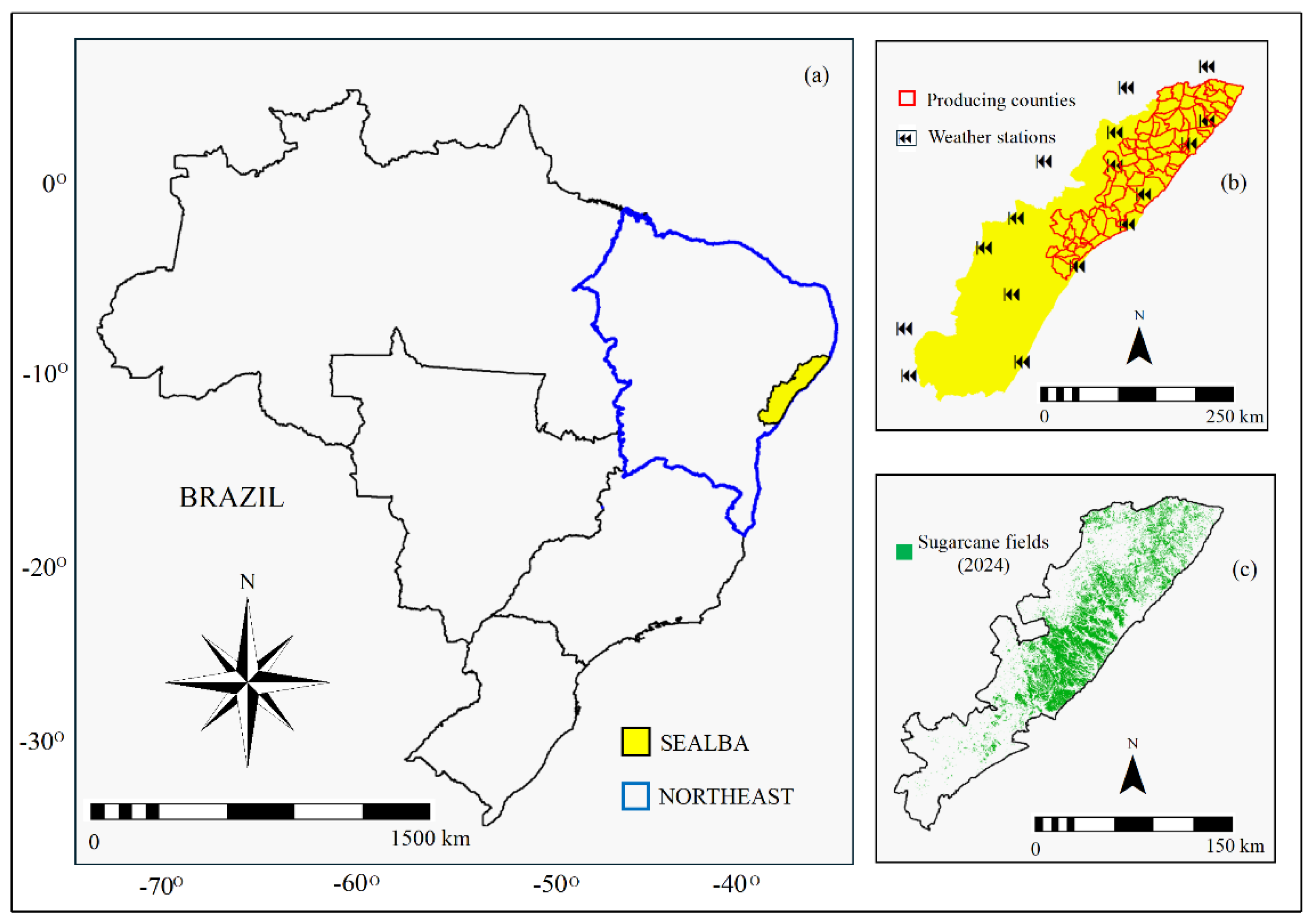
Figure 2.
Average daily values, at the 16-day MODIS timescale, for the long-term period from 2007 to 2024, of incident global solar radiation – RG and air temperature – Ta (a); and reference evapotranspiration – ET0 (b), in the sugarcane fields within the producing counties of SEALBA, for the long-term period from 2007 to 2024, in terms of Day of the Year (DOY).
Figure 2.
Average daily values, at the 16-day MODIS timescale, for the long-term period from 2007 to 2024, of incident global solar radiation – RG and air temperature – Ta (a); and reference evapotranspiration – ET0 (b), in the sugarcane fields within the producing counties of SEALBA, for the long-term period from 2007 to 2024, in terms of Day of the Year (DOY).
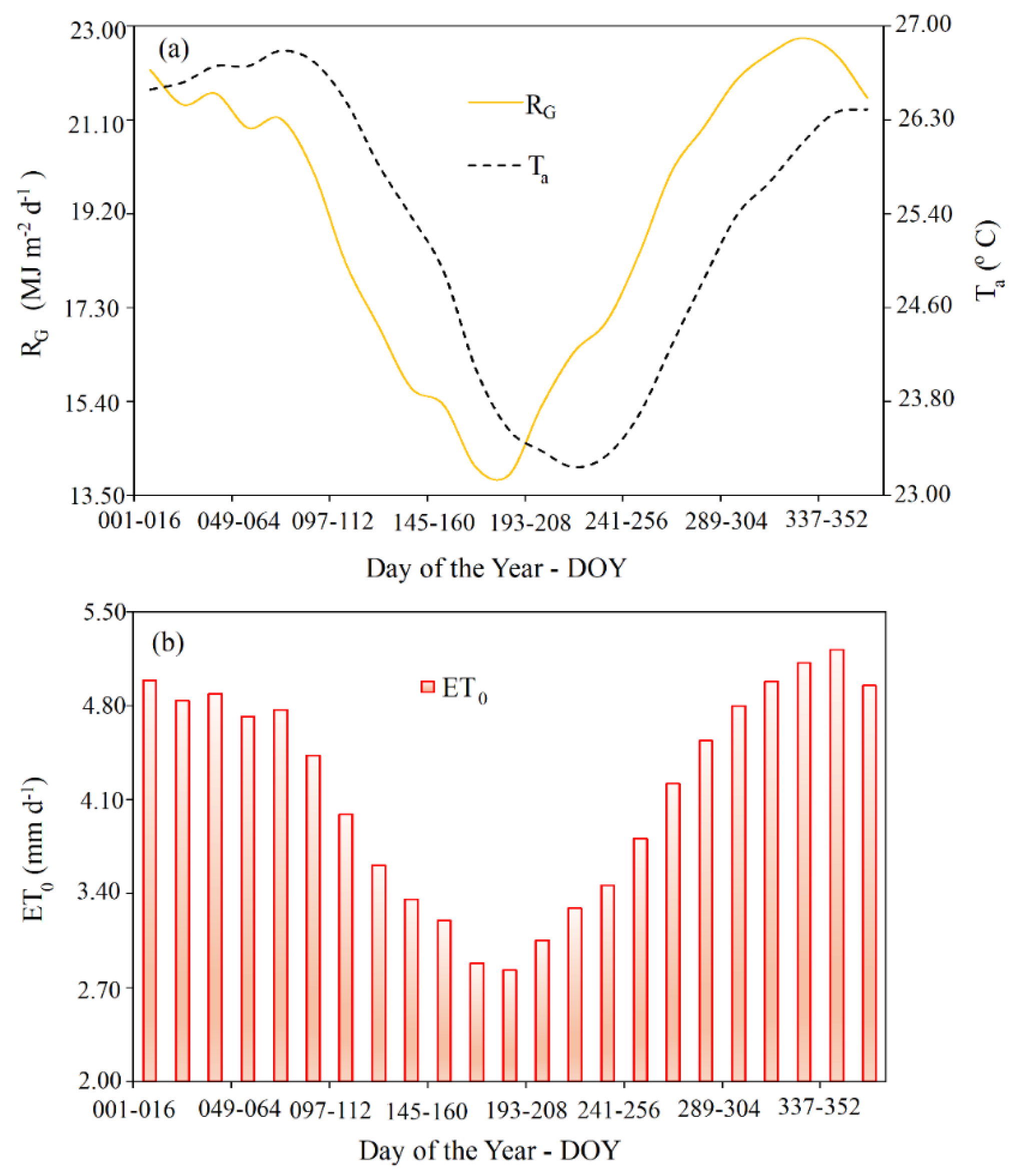
Figure 3.
Long-term dynamics of the annual precipitation (P) values, pixel averages and standard deviations (SD), for sugarcane fields in the producing counties within the SEALBA agricultural growing region, regarding the period from 2007 to 2024.
Figure 3.
Long-term dynamics of the annual precipitation (P) values, pixel averages and standard deviations (SD), for sugarcane fields in the producing counties within the SEALBA agricultural growing region, regarding the period from 2007 to 2024.
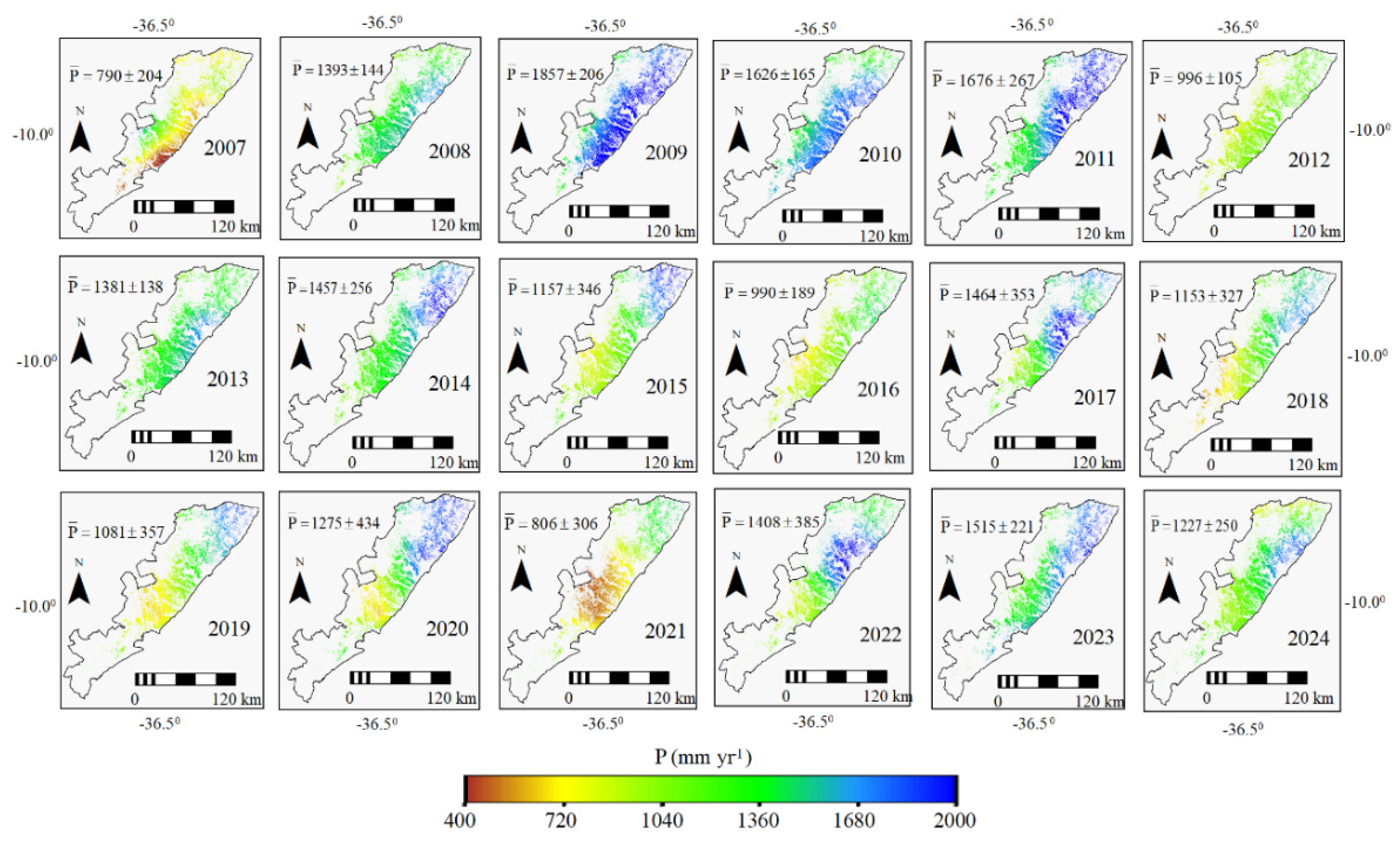
Figure 4.
Long-term dynamics of the annual actual evapotranspiration (ET) values, pixel averages and standard deviations (SD), for sugarcane fields in the producing counties within SEALBA, regarding the period from 2007 to 2024.
Figure 4.
Long-term dynamics of the annual actual evapotranspiration (ET) values, pixel averages and standard deviations (SD), for sugarcane fields in the producing counties within SEALBA, regarding the period from 2007 to 2024.
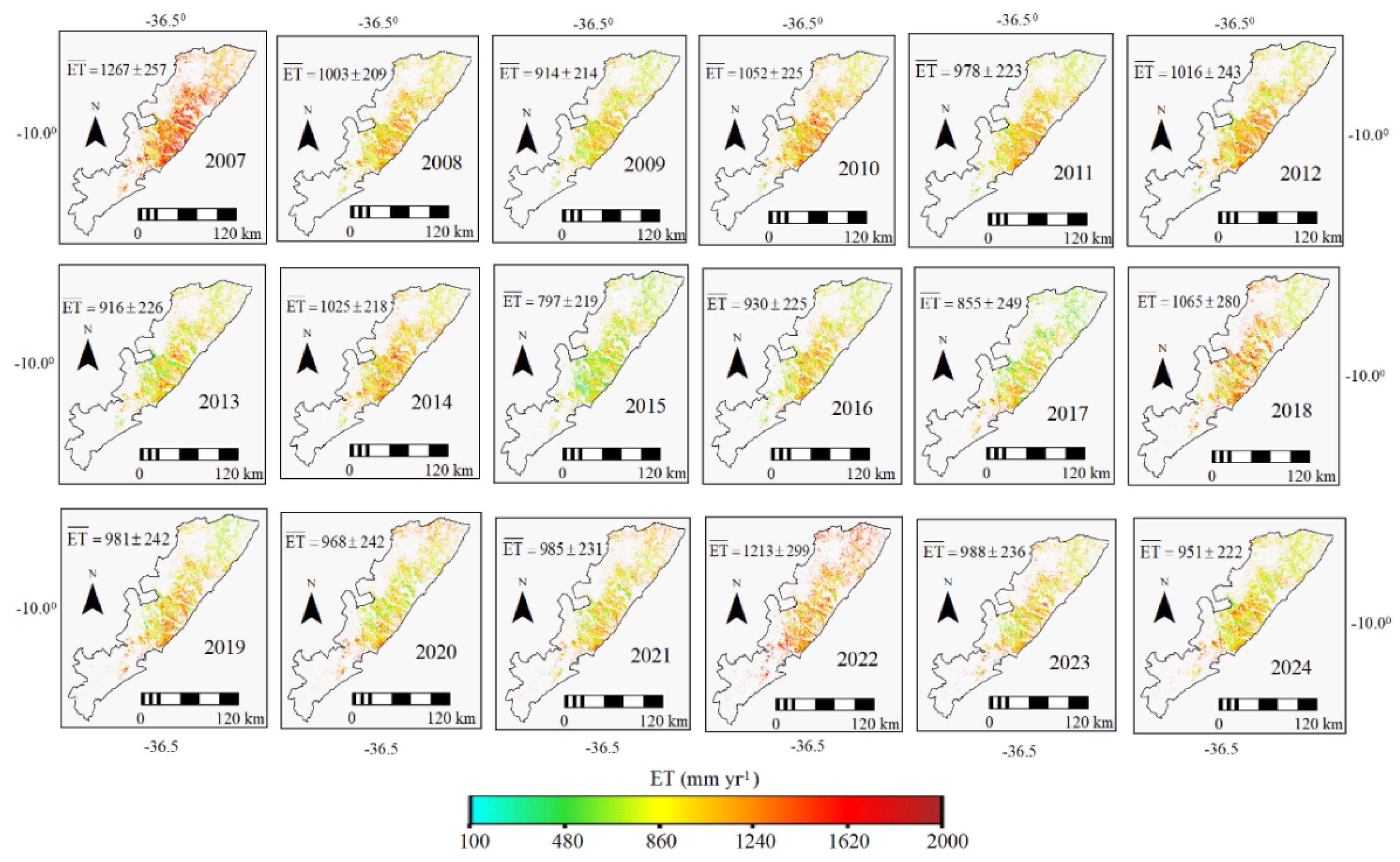
Figure 5.
Pixel averages and standard deviations (SD) for precipitation – P (a) and actual evapotranspiration – ET (b) at the 16-day MODIS timescale, in the sugarcane fields of the producing counties within SEALBA, in terms of Day of the Year (DOY).
Figure 5.
Pixel averages and standard deviations (SD) for precipitation – P (a) and actual evapotranspiration – ET (b) at the 16-day MODIS timescale, in the sugarcane fields of the producing counties within SEALBA, in terms of Day of the Year (DOY).
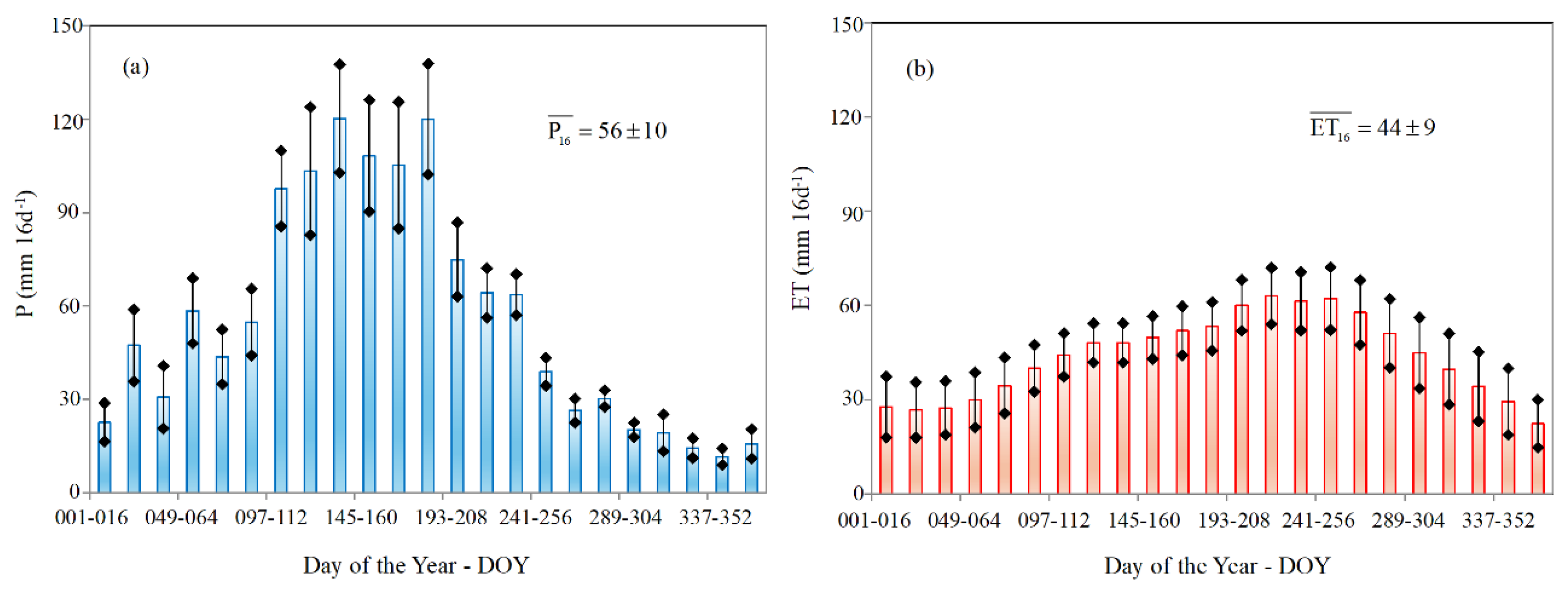
Figure 6.
Dynamics of pixel averages for the water balance indicators difference – WBd and ratio – WBr (a) together with evaporative fraction – Ef (b), at the 16-day MODIS timescale, in the sugarcane fields of the producing counties within SEALBA, in terms of Day of the Year (DOY).
Figure 6.
Dynamics of pixel averages for the water balance indicators difference – WBd and ratio – WBr (a) together with evaporative fraction – Ef (b), at the 16-day MODIS timescale, in the sugarcane fields of the producing counties within SEALBA, in terms of Day of the Year (DOY).
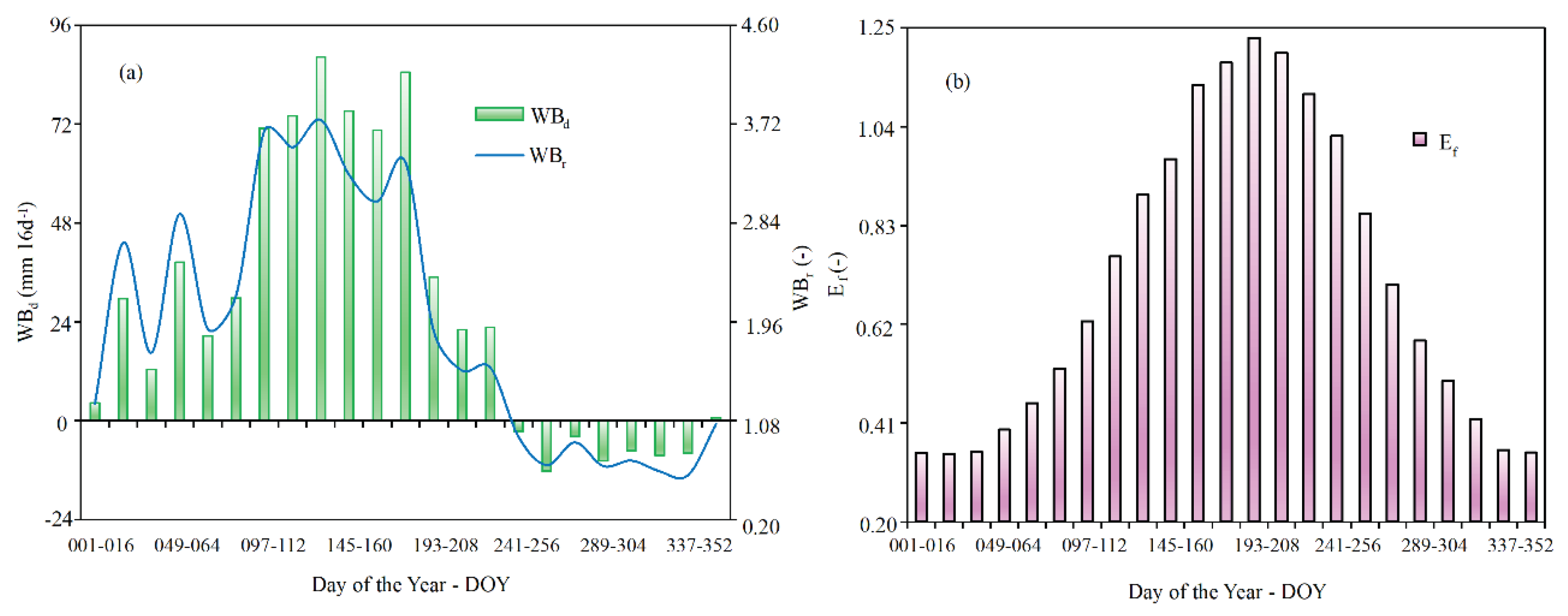

Table 1.
Overview of the water balance components in million cubic meters of water, considering the total area for each year from 2007 to 2024 in the producing counties of SEALBA.
Table 1.
Overview of the water balance components in million cubic meters of water, considering the total area for each year from 2007 to 2024 in the producing counties of SEALBA.
| Year |
ASC (ha) |
P (m3 106) |
ET (m3 106) |
ET0 (m3 106) |
WBd (m3 106) |
WBr (-) |
Ef (-) |
| 2007 | 463,125 | 3,660 | 5,869 | 7,336 | -2,208 | 0.62 | 0.80 |
| 2008 | 462,925 | 6,451 | 4,645 | 7,099 | 1,806 | 1.39 | 0.65 |
| 2009 | 460,650 | 8,555 | 4,208 | 7,045 | 4,347 | 2.03 | 0.60 |
| 2010 | 461,463 | 7,502 | 4,853 | 6,906 | 2,648 | 1.55 | 0.70 |
| 2011 | 464,225 | 7,782 | 4,540 | 6,829 | 3,242 | 1.71 | 0.66 |
| 2012 | 464,075 | 4,623 | 4,717 | 7,151 | -94 | 0.98 | 0.66 |
| 2013 | 451,406 | 6,236 | 4,135 | 6,887 | 2,101 | 1.51 | 0.60 |
| 2014 | 447,713 | 6,524 | 4,591 | 6,586 | 1,933 | 1.42 | 0.70 |
| 2015 | 440,225 | 5,093 | 3,510 | 7,134 | 1,583 | 1.45 | 0.49 |
| 2016 | 428,381 | 4,240 | 3,985 | 6,758 | 255 | 1.06 | 0.59 |
| 2017 | 394,650 | 5,777 | 3,375 | 5,992 | 2,402 | 1.71 | 0.56 |
| 2018 | 392,119 | 4,522 | 4,177 | 5,911 | 345 | 1.08 | 0.71 |
| 2019 | 392,950 | 4,249 | 3,853 | 6,024 | 396 | 1.10 | 0.64 |
| 2020 | 392,775 | 5,008 | 3,802 | 5,980 | 1,206 | 1.32 | 0.64 |
| 2021 | 393,731 | 3,172 | 3,877 | 5,978 | -705 | 0.82 | 0.65 |
| 2022 | 369,681 | 5,204 | 4,482 | 5,694 | 722 | 1.16 | 0.79 |
| 2023 | 385,938 | 5,847 | 3,811 | 5,536 | 2,036 | 1.53 | 0.69 |
| 2024 | 493,375 | 6,055 | 4,691 | 7,313 | 1,364 | 1.29 | 0.64 |
| Mean | 431,078 | 5,583 | 4,284 | 6,564 | 1,299 | 1.32 | 0.65 |
*ASC – Sugarcane cropped area for the year; P – Precipitation; ET – Actual Evapotranspiration; WBd – Difference Water Balance indicator; WBr – Ratio Water Balance indicator; Ef – Evaporative Fraction.
Disclaimer/Publisher’s Note: The statements, opinions and data contained in all publications are solely those of the individual author(s) and contributor(s) and not of MDPI and/or the editor(s). MDPI and/or the editor(s) disclaim responsibility for any injury to people or property resulting from any ideas, methods, instructions or products referred to in the content. |
© 2026 by the authors. Licensee MDPI, Basel, Switzerland. This article is an open access article distributed under the terms and conditions of the Creative Commons Attribution (CC BY) license.
Copyright: This open access article is published under a Creative Commons CC BY 4.0 license, which permit the free download, distribution, and reuse, provided that the author and preprint are cited in any reuse.


