

Submitted:
20 May 2026
Posted:
21 May 2026
You are already at the latest version
Abstract
This longitudinal, randomized, controlled clinical study investigates the efficacy of different methods of rapid maxillary post-expansion containment (RME) in children. The post-MRE containment phase is critical to prevent recurrences and ensure the stability of the results obtained. Traditionally, restraint methods include maintaining the Hyrax-type expander or using removable appliances such as the Hawley plate. This study compares these two methods in terms of maxillary transverse stability, evidencing the patients’ adaptation and quality of life. Forty children aged 6 to 12 years were selected and randomly divided into two groups: Group 1 (maintenance of the Hyrax expander for 6 months) and Group 2 (replacement of the removable Hawley plate appliance for 6 months). Three questionnaires performed on quality of life were applied at Time 0 (T0: initial assessment) and Time 1 [T1: use of restraint (G1: Hyrax; G2: Removable retainer)]. Data analysis was carried out using observational methods referring to the graphs obtained from the answers to the questionnaires. The results of this study provide evidence on better clinical practices, promoting health and quality of life of orthodontically treated children.
Keywords:
palatal expansion technique
; quality of life
; removable orthodontic appliances
; orthodontics
1. Introduction
Transverse deficiency of the maxillary bones is manifested by unilateral or bilateral, partial or total crossbite, in addition to cases in which crossbite is not present [1]. Maxillary atresia is commonly accompanied by excessive vertical alveolar development, dental crowding, deep and narrow palate, with a width of less than 31 mm (intermolar distance measured at the cervical limit) and contracted in the anterior region, in addition to large dark spaces in the oral corridor, during smiling, characterizing the syndrome of transverse maxillary deficiency. It affects most of our orthodontic patients and is one of the most prevalent malocclusions in orthodontic practice, because it is generally associated with other types of malocclusions, such as Class II and III [3,4].
By considering the influence of a malocclusion in the various areas involved in an individual’s routine, we can verify the development of functional problems, with regard to changes in mastication, mandibular movements and deviations, and the passage of air in the nasal airways. Structural problems can also be observed, such as changes in the temporomandibular joint and asymmetries [5].
In the literature, the possibility of spontaneous correction of the posterior crossbite is observed as being remote, between 0 and 9% in the deciduous dentition, which indicates a low percentage for not indicating treatment [6], even if it involves an adaptation in the child’s routine after the installation of the palatal expander. One should ask how functional the solution proposed by the use of devices, such as the Hyrax expander, is. Thus, it is possible to analyze the impacts that it can have in other areas in the child’s life, such as impaired quality of life due to poor hygiene, periodontal diseases, restriction on feeding, interference in swallowing, speech difficulties.
The installation of an orthodontic appliance involves care that was previously neglected or not suggested and taught to children, who need attention to improve oral health, which consequently impacts their quality of life and interpersonal relationships daily.
It is possible to verify the need for possible alternatives to continue the maxillary expansion treatment and its subsequent containment in order to bring greater comfort and general well-being to the children, such as in the physiological, emotional, biological and social spheres. Thus, treating maxillary transverse deficiency in children with appliances, such as those used in the research and the studies it involves, suggests a possibility of improving the quality of life related to children’s oral health, although this treatment may have a negative repercussion in some aspects among the research participants, in addition to stimulating interaction between parents and children on a daily basis and in the follow-up of each case [5].
Although rapid maxillary expansion (RME) is effective for correction of transverse deficiency and for functional gains that may include improvement of airway and sleep symptoms, its use has been associated with discomfort and pain during the active expansion phase. Recent systematic reviews demonstrate that pain is a common effect of RME, with a tendency to progressively reduce in the days and weeks after activations [7]. Simultaneously, longitudinal studies with quality of life measures have shown that, despite the initial negative impact, there is an improvement in oral health-related quality of life scores over the course of treatment (3–9 months) [8].
However, there is a gap in the literature regarding the direct comparison of the perception of quality of life between post-MRI restraint strategies — Hyrax maintenance versus replacement with removable retainer — in randomized studies with CPQ8-10. The present study aims to fill this gap by evaluating not only the transversal stability, but also the adaptation and impact on the quality of life of children submitted to different restraint protocols.
2. Materials and Methods
This study compared two methods of retainer after rapid maxillary expansion, with one group maintaining the Hyrax expander and the other group replaced by removable retainer. The transverse stability of the maxilla was verified between the initial moment and 6 months after the use of both types of retainers, in addition to evidencing the adaptation of the patients to the use of the device and their quality of life, part of the study from which the present study was derived.
2.1. Ethical aspects
The study was approved by the Research Ethics Committee (CAAE: 82384624.6.0000.5420) and conducted in accordance with the standards established by the Declaration of Helsinki and by the Resolution of the National Health Council No. 466, of December 12, 2012. The Informed Consent Form was obtained from all the legal guardians of the adolescents, as well as the Informed Consent Form from the participants.
2.2. Sample calculation
The sample size calculated for each group was based on a significance level of 0.05 percent and power of 80 percent (alpha of 1.5 mm) to detect a minimum difference of 1.5 mm (SD ± 1.5) of recurrence of median palatal suture expansion between the groups. The standard deviation has been adapted from previous studies [9]. The sample size calculation indicated that it would be necessary to 16 patients in each group. To compensate for dropouts, it was decided to establish a potential loss of 20% in each group, including 4 more patients in each group, totaling 40 patients for the two groups included in the study.
2.3. Type and location of the study
This is a longitudinal, randomized and controlled clinical study, carried out with children from 6 to 12 years of age, who attend clinical care at the Faculty of Dentistry, in the discipline of Orthodontics, as well as referred with the need for treatment by the various disciplines, as well as indicated by possible screenings in the municipality.
2.4. Study population
The study population was composed of children aged 6 to 12 years, of both sexes, who met the following inclusion criteria: presenting a Free and Informed Consent Form (ICF) duly signed by their legal guardian; and sign the Term of Free and Informed Assent (TALE); need for rapid expansion of the maxilla; not having periodontal involvement; not presenting contraindications to the treatment itself; patients with incomplete maxillary bone maturation and transverse maxillary deficiency. For the exclusion criteria, the following will be adopted: patients who did not accept the treatment, as well as did not sign the ICF and TALE; patients who have previously undergone MRE; bone consolidation of the median palatal suture; patients who have periodontal involvement.
2.5. Data collection
The clinical examinations to assess the oral condition and assess the need for treatment were performed by a single researcher (FVM), a specialist in Orthodontics, with previous experience in diagnosis and treatment, as well as the execution of the same and installation of the proposed appliances, in the FOA/UNESP clinics. When the need for treatment was exposed to the patient’s guardian, an anamnesis was instituted, obtaining information on socioeconomic characteristics and medical history, including the variables age, gender, family income, diet, access to dental services, need for special care, eating disorders, use of medications, medical treatment, previous oral health care and/or orthodontic treatment.
2.6. Treatment plan
Complete orthodontic documentation was requested from the patients, and they should be carried out with their own resources, outside the University, in places indicated for their performance. The patient attended the examination at the Faculty, so that the person responsible for the research could be realize o plano de tratamento adequado para o caso, o qual envolveu a etapa de investigação com a ERM e posterior período de contenção.
2.7. Making and Installing the Appliance
The Hyrax type Circuit Breaker device was used for the MRE, composed of a metal expander screw, which is centered on the palatal roughness of the model obtained in the patient’s plaster, or three-dimensional (3D) printing. This device was designed by Biederman and is made entirely of stainless steel and does not include the acrylic palatal plates, which makes it much more hygienic.
The appliance is of the dento-supported type and should be constructed with rigid wires and a screw as close as possible to the palate, so that the transmitted force is close to the center of resistance of the maxilla [10].
2.8. Allocation and Initiation of Containment
After the active period of use of the Hyrax expander, the patients were randomly allocated, through randomization performed in the ‘’Research Randomizer’’ (www.randomizer.org) and the numbers obtained were sequentially placed in brown envelopes, being retrieved at the time of dental treatment, determining in which of the two groups the patient will be allocated:
- -
- Group 1: The Hyrax expander was kept in the mouth, as a retainer, after immobilization of the screw, for 6 months.
- -
- Group 2: Removal of the Hyrax expander, alginate molding, obtaining the plaster model, cementing the same device in the mouth, or 3D scanning, until the removable retainer ready for installation is made, resulting from the removal of the Hyrax circuit breaker. This period should not exceed 7 days.
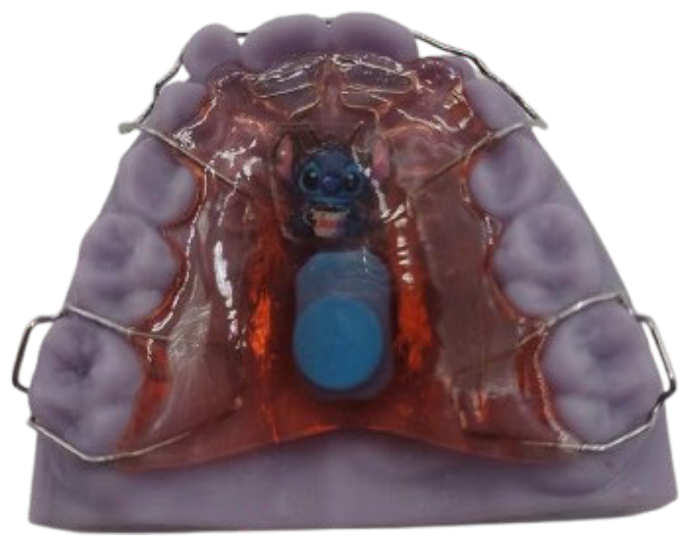
For Group 2, verbal and written instructions were given on the importance of using the retainer for as long as possible, measured by the completion of a diary to be performed by the patient, as well as their report. Within this group (n = 20), 10 patients also used the Theramon® microsensor included in the acrylic resin as a form of monitoring (Figure 2).
Figure 1.
3D printed upper arch model with Hyrax expander device with key used for activation. Source: Vicioni-Marques F, 2025.
Figure 1.
3D printed upper arch model with Hyrax expander device with key used for activation. Source: Vicioni-Marques F, 2025.
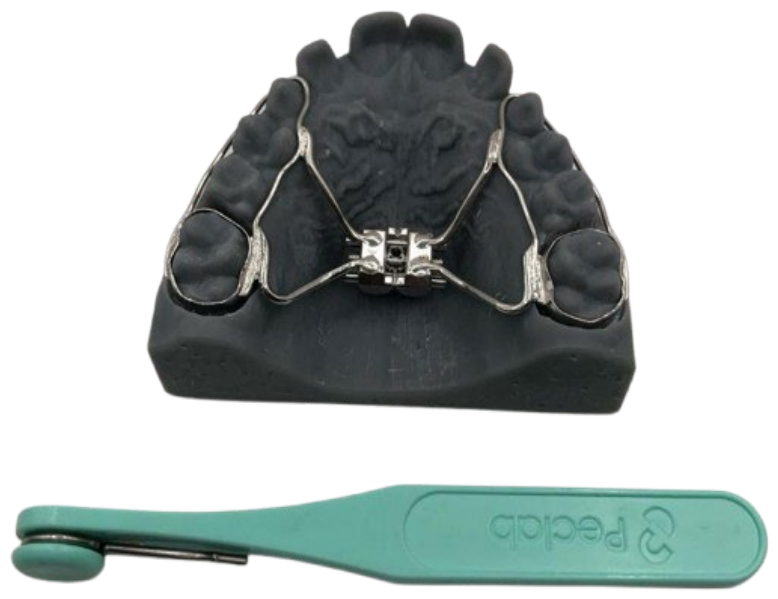
Figure 2.
Removable retainer after removal of the Hyrax expander, with the inclusion of a Theramon monitoring microsensor. Source: Vicioni-Marques F, 2025.
Figure 2.
Removable retainer after removal of the Hyrax expander, with the inclusion of a Theramon monitoring microsensor. Source: Vicioni-Marques F, 2025.
2.9. Blinding
Due to clinical limitations, only the outcome evaluators are unaware of the groups to which the patients were allocated.
2.10. Evaluations
Monthly evaluations of patients allocated to both Group 1 and Group 2 were carried out to verify the stability of the devices and reinforce instructions in the first 6 months of retention. Afterwards, the patients will come every 3 months to check them, if there are no incidents with the devices, such as the need to re-cement the Hyrax circuit breaker, or make a new removable retainer.
Cone Beam Computed Tomography (CBCT) was performed at the beginning of treatment, with diagnostic documentation and 6 months after the start of treatment.
2.11. Questionnaires
The questionnaires “Children Perception Questionnaire 8-10 (CPQ 8-10)” [11] were applied to the patients and their guardians, in its translated and validated version for the Portuguese language. The CPQ8-10 is a questionnaire that presents 29 multiple questions, involving the impacts of oral diseases on the quality of life of children aged 8 to 10 years. The issues are understood in relation to the frequency of impacts during the four weeks prior to the assessment.
Oral symptoms (questions 5 to 9), functional limitations (questions 10 to 14), emotional well-being (questions 15 to 19) and social well-being (questions 20 to 29) are the factors that comprise the questionnaire. Questions 1 and 2 refer to the child’s gender and age; Questions 3 and 4 refer to the global perception of oral health and general well-being, with answer options from zero (0) to three (3).
Questions 5 to 29 include scores from zero to four points (0 = never; 1 = once or twice; 2 = a few times; 3 = several times; 4 = every day or almost every day). The total score is the sum of the scores of all the questions, and the higher the score, the greater the impact on the child’s quality of life [11].
2.12. Statistical analysis
The data were analyzed using descriptive statistics techniques and the results were presented through graphs. Due to the ordinal nature of the frequency variables of the “CPQ 8-10” and the non-adherence to the normal distribution, it was decided to use non-parametric statistical tests to compare the variations at the two evaluation moments.
For the comparison between the independent groups (HYRAX x RETAINER) at T0 and T1, the Mann-Whitney U test was applied; for comparisons of repeated measures within each group (T0 x T1), the Wilcoxon test was used for paired samples. In all analyses, a significance level of 0.05 was adopted
3. Results
A total of 22 children were included in these analyses, and the exclusions were made at the time of the analysis together with the development of the containment period, which some children had not yet reached 6 months until now, as well as for normalization of the data, such as those questionnaires that were filled out incorrectly. The evaluations were performed at two times (T0: before the start of treatment; T1: post-MRE containment period), in person at the clinics and/or with the sending of the questionnaires by text message.
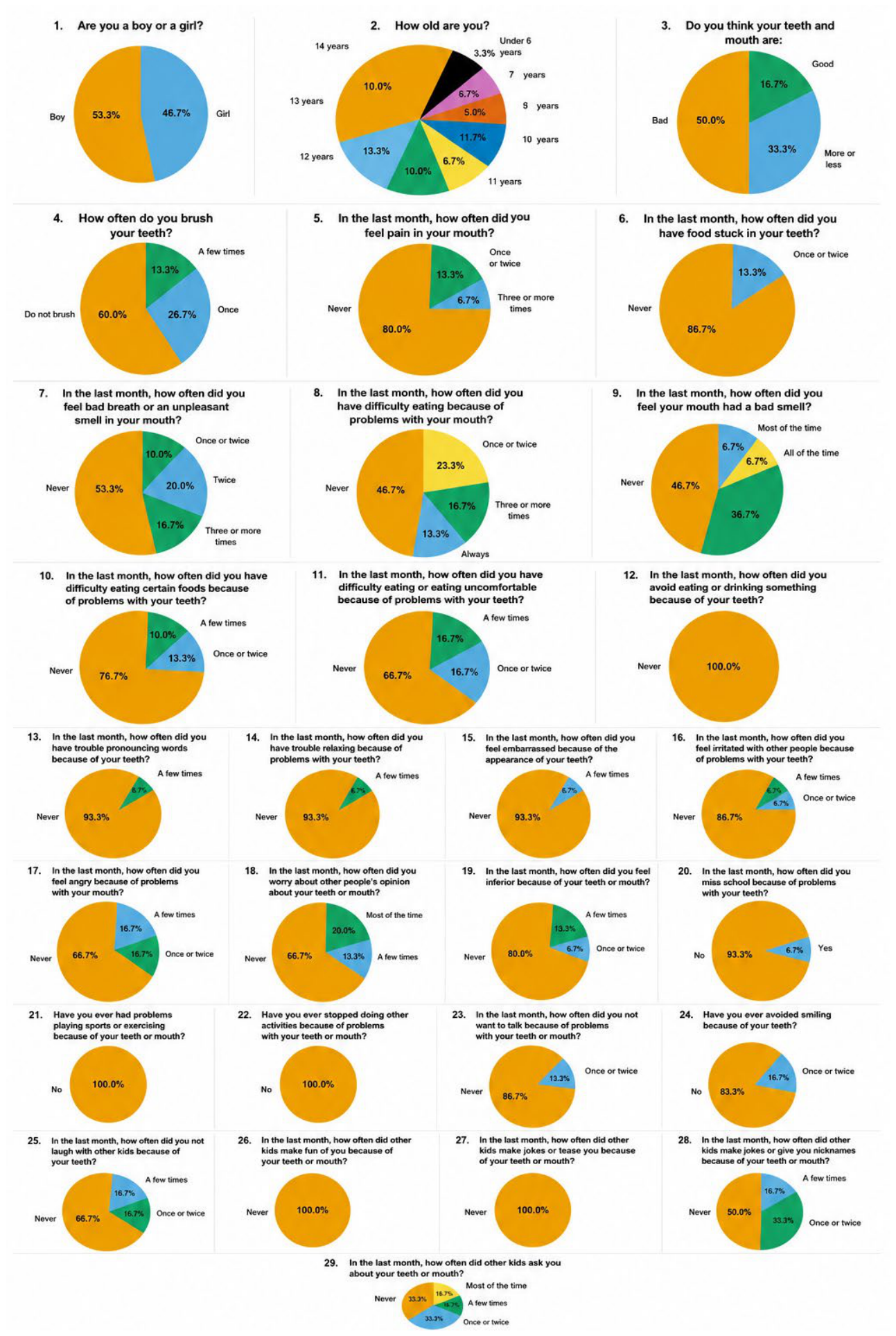
The graphs generated according to the answers obtained in the two stages for both groups are shown below (Figure 3,Figure 4,Figure 5,Figure 6).
Evaluating the charts
In the T0 evaluation (pre-treatment), the Hyrax group presented a higher report of pain, occasional difficulties when chewing and aesthetic concern compared to the Retainer group, which already showed more favorable scores in the questionnaire answers. At T1 (containment period), both groups showed improvements, but the Retainer group maintained advantages in comfort scores, absence of pain and lower emotional impact; the Hyrax group improves sharply from T0 to T1 but has a residual emotional impact in some of the children.
Statistical evaluation
At baseline (T0), the CPQ Total Score 8-10 did not show a significant difference between the groups (Mann-Whitney U; however, for the question on Ice Cream Sensitivity (Q7), the HYRAX group had significantly higher frequency medians than the RETAINER group.
In T0 to T1 comparisons (Treatment Effect): Paired analysis showed that the HYRAX group showed a statistically significant reduction in Total Score, with the median dropping from 12 (IQR: 7-21) to 5 (IQR: 2-13). Improvements were observed in specific items (Wilcoxon test): Toothache (Q5) (T0 x T1), Sensitivity to ice cream (Q7) (T0 x T1), Food grabbed (Q8) (T0 x T1) and Time to eat (Q10) (T0 x T1). The RESTRAINT group did not show significant changes in the Total Score from T0 to T1 or in any individual item of the questionnaire.
4. Discussion
By revisiting the literature, it is possible to denote the positive impact of rapid maxillary expansion in the pediatric population with obstructive sleep apnea and adverse respiratory symptoms, considering these as a narrow and high palate reflex, in addition to tonsillar hypertrophy [12]. Still on sleep disorders in children with maxillary atresia, a study was carried out with different evaluation moments, considering the process of installation of the expander device and subsequent use of restraint, obtaining a significant reduction in sleep-disordered breathing, sleep-wake transition disorders, and excessive sleepiness disorders. There are also records of dental and skeletal changes, especially on the dimensions of the nasal cavity, nasal floor, and maxilla in patients who used Hyrax, whether it is supported to the bone and tooth or only to the bone [13].
The effects of RME on the pain felt by research participants during the initial period of activation of the Hyrax device were observed and how it can reflect on their daily lives, whether when talking, chewing, cleaning or sleeping. In the literature, we see a significant inverse correlation between days after insertion and pain, as well as all children reported having felt some pain during the expansion period [14].
These results corroborate the literature, which points to rapid maxillary expansion as a safe and effective procedure, but associated with a temporary impact on children’s quality of life during their active phase. The use of removable restraints, on the other hand, as it is less invasive and better accepted by children, tends not to negatively interfere with daily activities or emotional well-being.
The results observed — higher reporting of pain and emotional impact in the Hyrax group at T0 and significant improvement at T1, with consistently more favorable scores in the group that received removable restraint — are in line with the evidence that points to a transient effect of discomfort during the active phase of ERM and for better acceptance of removable devices. Recent reviews and clinical studies indicate that perceived pain is common in the expansion phase and tends to decrease over time, which corroborates the reduction in pain reports in the Hyrax group from T0 to T1. In addition, while the Hawley remains a standard for removable retainers, recent comparative studies show that different types of removable retainers have good efficacy and, in many cases, better patient acceptability, which explains the greater subjective adaptation observed in the Retainer group. However, direct comparison between methods of restraint in terms of quality of life is still scarce; Thus, our findings broaden the understanding by demonstrating that replacement by removable restraint can reduce negative impacts on the child’s emotional and functional well-being during the retention period. It should be considered, however, that methodological differences (sample size, age group, time of evaluation) may explain variations between studies [7,15].
The findings of the Hyrax group — greater pain, discomfort, and emotional impact at T0 — can be explained by known biological mechanisms: the rapid expansion of the maxilla promotes gradual separation of the median palatal suture, generating tensions in the periodontal, vascular, and bone structures, which triggers a local inflammatory response and the release of mediators such as prostaglandins and inflammatory cytokines (IL-1β, TNF-α); this inflammatory cascade is directly associated with the perception of pain and discomfort reported during the first days or weeks of device activation (Barone et al., 2023); discomfort decreases over time due to tissue adaptation and bone reorganization, which explains the noticeable improvement between T0 and T1 observed in the graphs [16,17,18].
The Retainer group, on the other hand, presents occlusal stability without active expansive forces, resulting in less nociceptive stimulus and greater comfort, also allowing better oral hygiene, reduction of biofilm accumulation and limitation of micro traumas, factors that favor the maintenance of children’s well-being and self-esteem [16,17,18].
5. Conclusions
The study enabled an understanding of the way in which the individuals targeted by the research see themselves and the way that maxillary atresia can impact the various areas involved in their daily routine. It is possible to report a significant improvement in physiological issues, if mouth breathing, sleep problems, events in which the participants were questioned or excluded by other children and/or classmates from the school.
Thus, it was possible to observe how the process of adaptation and discipline in the use of the appliance, whether due to the benefits of rapid maxillary expansion or the use of post-MRE retainer, reflected on the quality of life and interpersonal relationships involved in their daily lives.
Funding
This research was funded by Kika Digital Orthodontics, with the donation of hyrax-type expansion devices and removable retainers, and by the company PecLab, which supplied the expansion screws for the manufacture of the devices.
Informed Consent Statement
Informed consent was obtained from all subjects involved in the study.
Conflicts of Interest
The authors declare no conflicts of interest.
References
- Lima, A.L.; Lima Filho, R.M.; Bolognese, A.M. Long-term clinical outcome of rapid maxillary expansion as the only treatment performed in Class I malocclusion. Angle Orthod. 2005, 75(3), 416–20. [Google Scholar] [CrossRef] [PubMed]
- McNamara, J.A. Maxillary transverse deficiency. Am. J. Orthod. Dentofac. Orthop. 2000, 117(5), 567–70. [Google Scholar] [CrossRef] [PubMed]
- McNamara, J.A., Jr. An orthopedic approach to the treatment of Class III malocclusion in young patients. J. Clin. Orthod. Erratum in: J Clin Orthod. 1987 Nov;21(11):804. 1987, 21(9), 598–608. [Google Scholar] [PubMed]
- Baccetti, T.; Franchi, L.; Toth, L.R.; McNamara, J.A., Jr. Treatment timing for Twin-block therapy. Am. J. Orthod. Dentofac. Orthop. 2000, 118(2), 159–70. [Google Scholar] [CrossRef] [PubMed]
- Silva Filho, O.G.; Garib, D.G.; Lara, T.S. Ortodontia interceptiva: protocolo de tratamento em duas fases; Artes Médicas: Porto Alegre, 2012; p. 354 p. [Google Scholar]
- Barone, M.; De Stefani, A.; Cavallari, F.; Gracco, A.; Bruno, G. Pain during rapid maxillary expansion: a systematic review. Children 2023, 10(4), 666. [Google Scholar] [CrossRef] [PubMed]
- Malik, R.; K, T.; Singh, V.; Jain, A.; Mitra, S.; Singh, S. Impact of dental treatment on oral health-related quality of life of patients. Cureus 2023, 15(5), e38625. [Google Scholar] [CrossRef]
- Garrett, B.J.; Caruso, J.M.; Rungcharassaeng, K.; Farrage, J.R.; Kim, J.S.; Taylor, G.D. Skeletal effects to the maxilla after rapid maxillary expansion assessed with cone-beam computed tomography. Am. J. Orthod. Dentofac. Orthop. 2008, 134(1), 8–9. [Google Scholar] [CrossRef]
- Ferreira, C.M.P.; Ursi, W.; Atta, J.Y.; Lyra, M.C.O.; Lyra, F.A. Efeitos dentais e esqueletais mediatos da expans√£o r√°pida da maxila utilizando o disjuntor Hyrax. Rev. Dent. Press Ortod. Ortop. Facial 2007, 12(4), 36–48. [Google Scholar] [CrossRef]
- Barbosa, T.S.; Vicentin, M.D.S.; Gavi√£o, M.B.D. Qualidade de vida e sa√∫de bucal em crian√ßas—Parte I: vers√£o brasileira do Child Perceptions Questionnaire 8-10. Cien Saude Colet. 2011, 16(10), 4077–85. [Google Scholar] [CrossRef] [PubMed]
- Yoon, A.; Abdelwahab, M.; Bockow, R.; Vakili, A.; Lovell, K.; Chang, I.; et al. Impact of rapid palatal expansion on adenoid and tonsil size in children. Sleep Med. 2022, 92, 96–102. [Google Scholar] [CrossRef] [PubMed]
- Carter, A.; Mohamed, A. Dento-skeletal effects of different rapid maxillary expanders for growing patients-which is better? Evid. Based Dent. 2023, 24(3), 104–105. [Google Scholar] [CrossRef] [PubMed]
- de Ara√∫jo, M.C.; Bocato, J.R.; Berger, S.B.; Oltramari, P.V.P.; de Castro Ferreira Conti, A.C.; de Almeida, M.R.; et al. Perceived pain during rapid maxillary expansion in children with different expanders. Angle Orthod. 2021, 91(4), 484–9. [Google Scholar] [CrossRef] [PubMed]
- Ashari, A.; Nik Mustapha, N.M.; Yuen, J.J.X.; Saw, Z.K.; Lau, M.N.; Xian, L.; et al. A two-year comparative assessment of retention of arch width increases between modified vacuum-formed and Hawley retainers: a multicenter randomized clinical trial. Prog. Orthod. 2022, 23(1), 40. [Google Scholar] [CrossRef] [PubMed]
- Pasqua, B.P.M.; André, C.B.; Paiva, J.B.; Rino-Neto, J. Short-term assessment of pain and discomfort during rapid maxillary expansion with tooth-bone-borne and tooth-borne appliances: randomized clinical trial. Dent. Press J. Orthod. 2023, 28(4), e2322220. [Google Scholar] [CrossRef] [PubMed]
- Inchingolo, F.; Inchingolo, A.M.; Malcangi, G.; Ferrante, L.; Trilli, I.; Di Noia, A.; et al. The interaction of cytokines in orthodontics: a systematic review. Appl. Sci. 2024, 14(12), 5133. [Google Scholar] [CrossRef]
- Kitaura, H.; Ohori, F.; Marahleh, A.; Ma, J.; Lin, A.; Fan, Z.; et al. The role of cytokines in orthodontic tooth movement. Int. J. Mol. Sci. 2025, 26(14), 6688. [Google Scholar] [CrossRef] [PubMed]
Figure 3.
First assessment (Time 0 = before the start of treatment) [HYRAX GROUP].
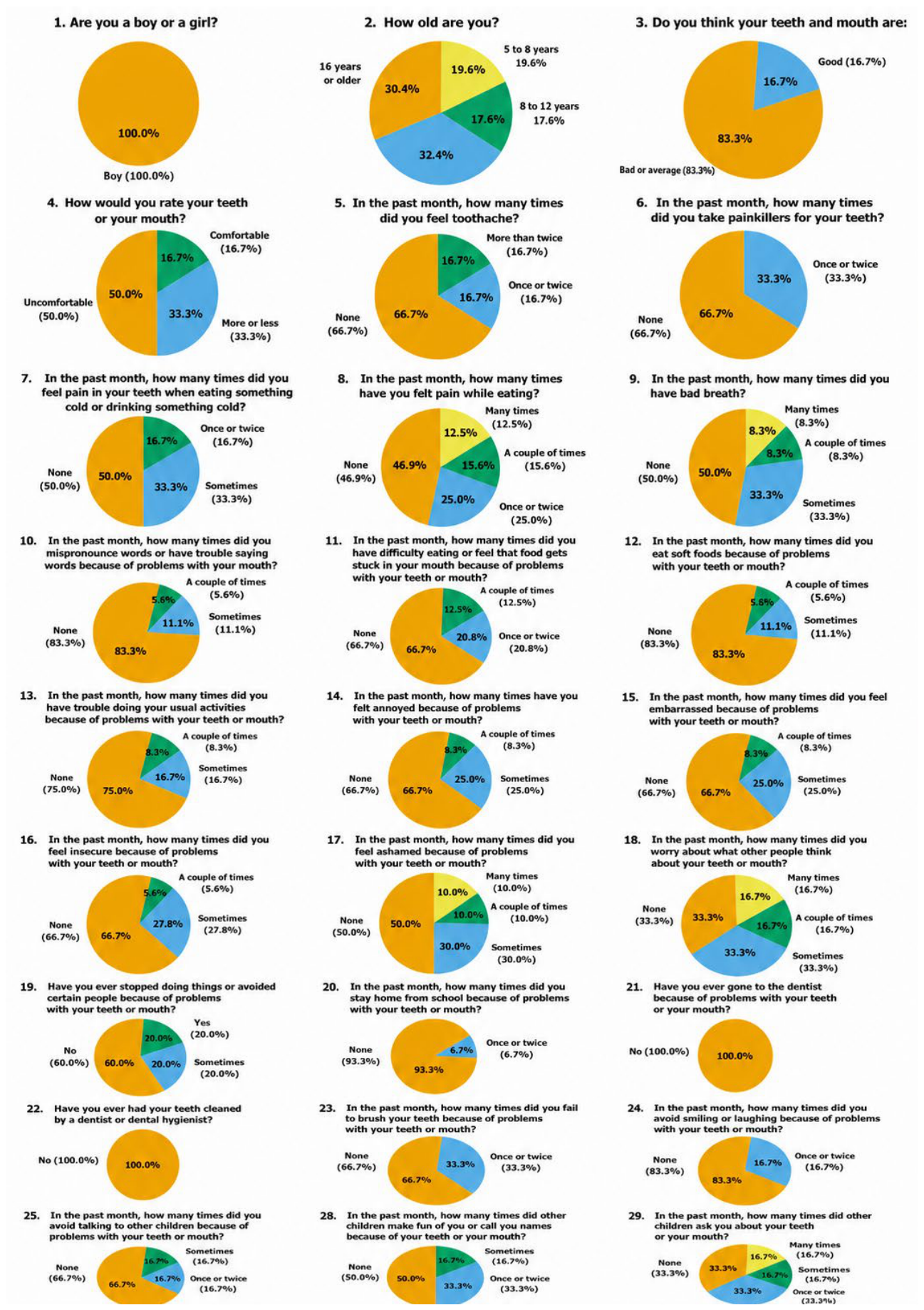
Figure 4.
First assessment (Time 0 = before the start of treatment) [RETAINER GROUP].
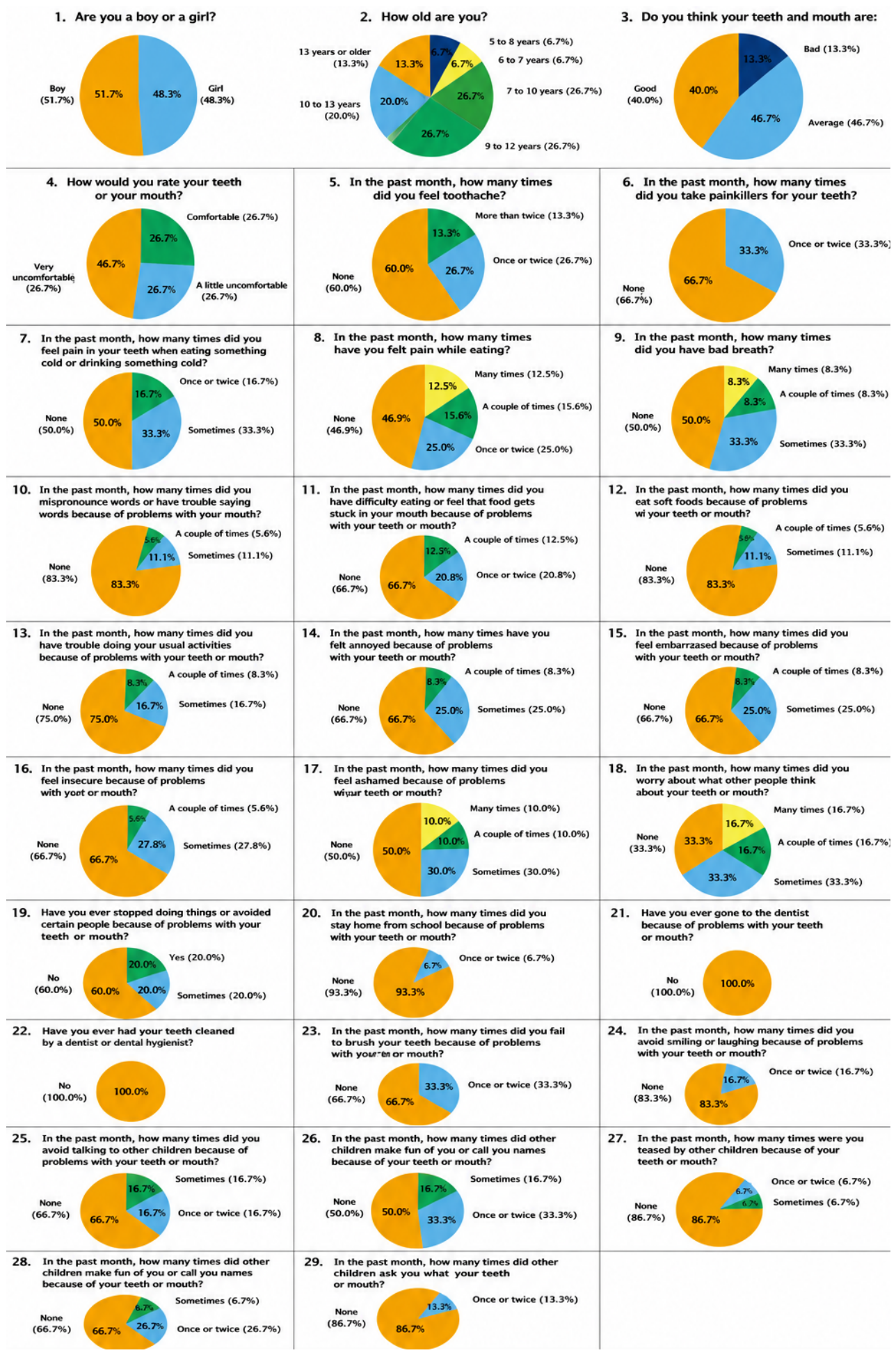
Figure 5.
Second assessment (Time 1 = post-MRE containment period) [HYRAX GROUP].
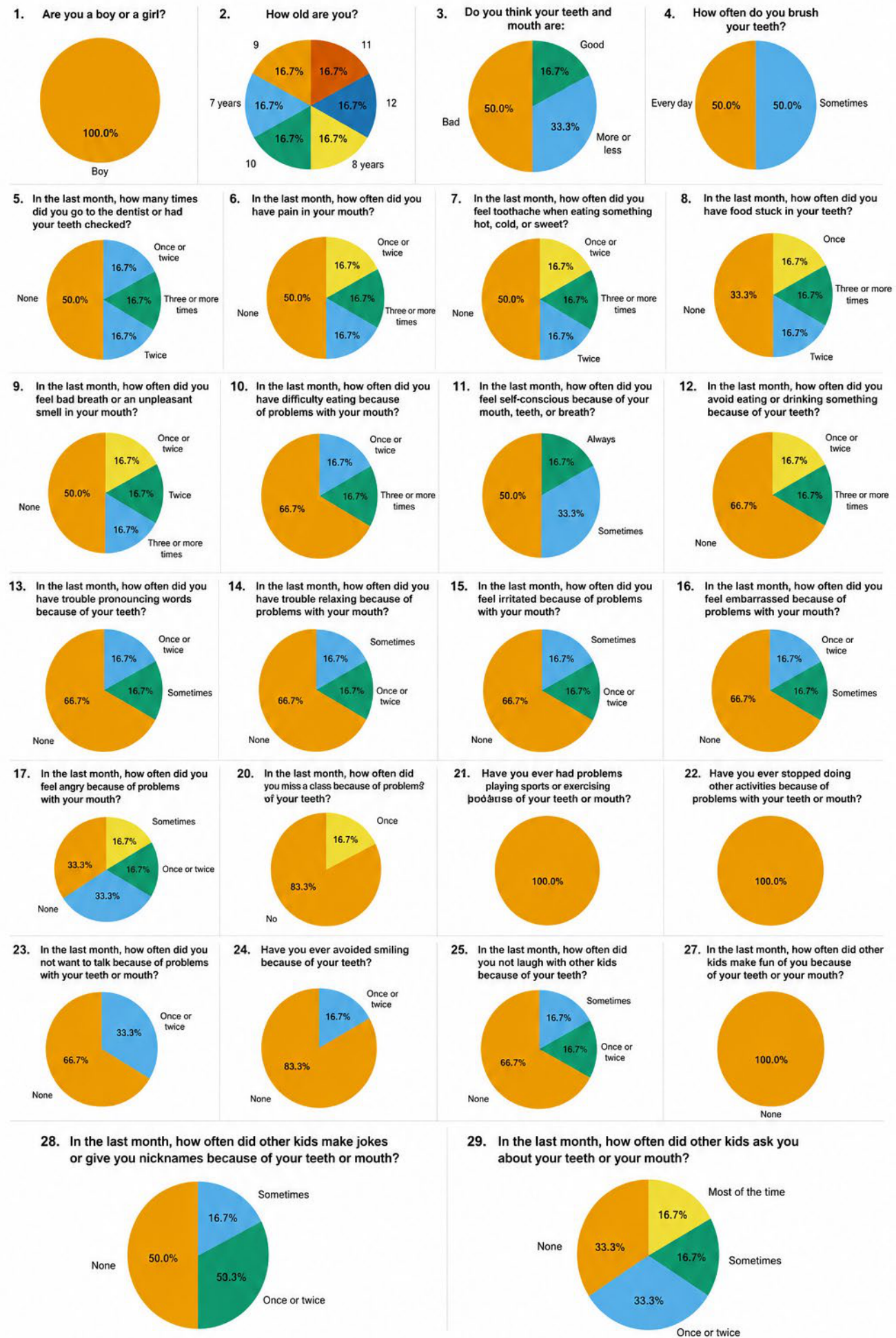
Figure 6.
Second assessment (Time 1 = post-MRE retention period) [RETAINER GROUP].
Disclaimer/Publisher’s Note: The statements, opinions and data contained in all publications are solely those of the individual author(s) and contributor(s) and not of MDPI and/or the editor(s). MDPI and/or the editor(s) disclaim responsibility for any injury to people or property resulting from any ideas, methods, instructions or products referred to in the content. |
© 2026 by the authors. Licensee MDPI, Basel, Switzerland. This article is an open access article distributed under the terms and conditions of the Creative Commons Attribution (CC BY) license (http://creativecommons.org/licenses/by/4.0/).
Copyright: This open access article is published under a Creative Commons CC BY 4.0 license, which permit the free download, distribution, and reuse, provided that the author and preprint are cited in any reuse.


