

Submitted:
20 May 2026
Posted:
21 May 2026
You are already at the latest version
Abstract
Neurodegenerative diseases such as Alzheimer's disease (AD) and Parkinson's disease (PD) are increasingly understood as systemic disorders driven by chronic neuroinflammation, metabolic dysregulation, and barrier dysfunction, which interact dynamically along the gut–immune–brain axis. The Mediterranean diet rich in plant-based foods, olive oil, and fish, is consistently associated with reduced cognitive decline and neurodegeneration risk. This review synthesizes recent advances to present a comprehensive framework illustrating how the Mediterranean diet functions as a systems-level modulator. Mechanistically, the Mediterranean diet remodels the gut microbiota, enhancing the production of bioactive metabolites like SCFA-producing bacteria (SCFAs). These metabolites serve as key signaling mediators that reinforce intestinal barrier integrity, reduce systemic inflammation, and subsequently modulate central processes. Within the central nervous system, diet-derived cues influence neuroinflammation by reprogramming microglial and astrocytic states, support mitochondrial function and proteostasis, and help maintain blood–brain barrier (BBB) stability. Disease-specific insights for AD and PD highlight the diet's role in modulating hallmark pathologies such as Amyloid Beta (Aβ), tau, and α-synuclein aggregation. Emerging multi-omics technologies—including single-cell/spatial transcriptomics and microbiome profiling—are reshaping the field, offering unprecedented resolution to dissect these pleiotropic effects. Ultimately, while the Mediterranean diet presents a promising neuroprotective strategy, individual responses vary based on genetics, microbiome, and metabolic context. The integration of these technologies is pivotal for transitioning from generalized dietary advice to precision nutrition approaches tailored to individual patient profiles, positioning the Mediterranean diet not merely as a diet but as a programmable intervention for neuro-immune and metabolic network modulation. Key challenges remain, including the need for more randomized controlled trials (RCTs) and standardized frameworks for multi-omics integration.
Keywords:
neurodegenerative diseases
; Mediterranean diet
; neuroinflammation
; gut–immune–brain axis
; gut microbiota
; precision nutrition
; multi-omics
; systems biology
1. Introduction
Neurodegenerative diseases, such as Alzheimer's disease (AD) and Parkinson's disease (PD), have complex pathogenesis and are closely associated with chronic inflammation and oxidative stress [1]. Represented by AD, neurodegenerative diseases have become a major global public health challenge. According to the 2025 Alzheimer’s Disease Facts and Figures, approximately 7.2 million individuals aged 65 years and older in the United States are currently living with AD, and this number is projected to increase to 13.8 million by 2060. Between 2000 and 2022, the reported mortality rate from AD increased by more than 142%, whereas mortality rates from heart disease, stroke, and AIDS declined during the same period [2].
Notably, neurodegenerative diseases represented by AD are not determined solely by genetic factors, but rather arise from the interplay between genetic predisposition and multiple modifiable factors. Epidemiological studies have demonstrated that nutrition, environmental exposures, and lifestyle can significantly influence the onset, progression, and treatment response of these disorders. These modifiable factors affect central nervous system homeostasis through shared pathways, including oxidative stress, neuroinflammation, mitochondrial dysfunction, and dysregulation of the gut–brain axis, thereby providing a theoretical basis for multitarget dietary interventions [3].
As a modifiable dietary pattern, the Mediterranean diet is of particular importance for brain health in middle-aged and older adults. Both the Dietary Approaches to Stop Hypertension (DASH) diet and the Mediterranean-DASH Intervention for Neurodegenerative Delay (MIND) diet have been shown to benefit cognitive function; however, the neuroprotective effects of the Mediterranean diet appear to be the most consistent, whereas the Western diet is associated with an increased risk of cognitive decline. Given the shared mechanisms underlying stroke, dementia, and related disorders—including inflammation, oxidative stress, and vascular injury—the Mediterranean diet may exert neuroprotective effects through multiple targets, thus providing a nutritional basis for disease prevention [4].
Although the Mediterranean diet harbors well-recognized direct neuroprotective properties, including polyphenols and unsaturated fatty acids, this review focuses on synthesizing recent breakthroughs centered on gut microbiota as a key mediator within the gut–immune–brain axis, providing a novel framework for its systemic neuroprotection.
The Mediterranean diet should therefore be viewed not merely as a nutritional pattern but as a modifiable systems-level intervention. This review aims to synthesize recent epidemiological and mechanistic evidence to evaluate its impact on neurodegenerative diseases, summarize its bioactive components and protective mechanisms, and propose future research directions.
2. Mediterranean diet: A Systems-Level Regulation Approach Through the Gut–Immune–Brain Axis
2.1. Gut Microbiota Remodeling: From Compositional Shifts to Functional Reprogramming
Dietary fiber, polyphenols, and omega-3 fatty acids in the Mediterranean diet can optimize the structure of the gut microbiota [5]. A recent systematic review showed that the Mediterranean diet increases the abundance of beneficial bacteria such as Faecalibacterium prausnitzii and Bifidobacterium, while reducing pro-inflammatory taxa, promoting butyrate production, and improving verbal memory. A 6-year cohort study further confirmed that individuals with high adherence to the Mediterranean diet exhibited an increased abundance of SCFA-producing bacteria (SCFAs) and a reduced abundance of pro-inflammatory microorganisms; both dietary adherence and microbial features were associated with slower cognitive decline [6].
Importantly, butyrate not only serves as a microbial metabolite but also functions as a histone deacetylase inhibitor, thereby influencing gene expression in the gut, associated immune tissues, and even the nervous system. In animal models of PD, sodium butyrate treatment has been shown to prevent neuronal cell death; in models of AD and traumatic brain injury, it has also been associated with improvements in learning and memory [7]. It should be emphasized that the microbiota changes promoted by the Mediterranean diet fundamentally represent a shift in the microbial metabolic network from a pro-inflammatory profile toward an SCFA-producing profile. This form of functional reprogramming is biologically more meaningful than changes in the abundance of individual genera alone.
In addition, specific genera such as Bacteroides possess anti-inflammatory properties and have been identified as protective factors against cognitive impairment. Reduced abundance of Bacteroides has been observed in the gut microbiota of patients with AD, whereas the fiber and polyphenols characteristic of the Mediterranean diet can promote its growth [8]. Collectively, these microbiota alterations provide the microbial foundation for regulation along the gut–brain axis.
2.2. Microbiota-Derived Metabolites: Key Messengers Linking Diet and the Host
By modulating both the composition and function of the gut microbiota, the Mediterranean diet induces the production of distinct secondary metabolites, which in turn regulate three major metabolic networks.
2.2.1. SCFAs
SCFAs are composed predominantly of butyrate, propionate, and acetate. They enhance intestinal barrier function, suppress systemic inflammation, and exert neuroprotective effects through the vagus nerve-mediated gut–brain axis [6]. In addition to their local actions within the gut, SCFAs—particularly butyrate—can directly cross the blood–brain barrier (BBB) and participate in central epigenetic regulation by inhibiting histone deacetylase activity, thereby promoting synaptic plasticity and neurogenesis [9].
2.2.2. Bile Acids and Trimethylamine N-Oxide (TMAO)
However, the effects of gut microbiota-derived metabolites on AD are complex. Under specific conditions, such as in the germ-free state, SCFAs may promote Amyloid Beta (Aβ) deposition. In contrast, TMAO exacerbates AD pathology by promoting Aβ aggregation and disrupting the BBB. Meanwhile, indole-3-propionic acid (IPA) exerts neuroprotective effects through activation of the aryl hydrocarbon receptor (AhR) pathway. Clinical studies have shown that patients with AD exhibit reduced levels of SCFAs and indole-derived metabolites, along with elevated TMAO levels. These alterations are significantly correlated with cognitive test scores [10].
2.2.3. Tryptophan Metabolites
Tryptophan metabolism proceeds through three principal pathways: the kynurenine pathway, the serotonin pathway, and the microbiota-derived indole pathway. Metabolites generated via the microbial indole pathway, such as IPA and indole-3-acetic acid, can regulate intestinal barrier integrity, immune signaling, and host–microbiota interactions. The Mediterranean diet, which is rich in dietary fiber and polyphenols, may promote the production of beneficial indole metabolites and, through anti-inflammatory mechanisms, suppress excessive activation of the kynurenine pathway, thereby increasing tryptophan bioavailability and enhancing serotonin synthesis. In particular, the Mediterranean diet—especially when supplemented with extra virgin olive oil (EVOO)—contains polyphenols and other bioactive components that may directly increase plasma tryptophan levels; meanwhile, the anti-inflammatory effects mediated by diet-induced microbial metabolites, such as SCFAs, may indirectly modulate the kynurenine metabolic pathway [11].
2.3. Intestinal Barrier and Systemic Inflammatory Response
The Mediterranean diet may also exert neuroprotective effects through modulation of the gut–brain axis. Its high content of dietary fiber, polyphenols, and omega-3 fatty acids can optimize gut microbial composition, stimulate microbial production of SCFAs, enhance the integrity of both the intestinal barrier and the BBB, and reduce lipopolysaccharide-induced systemic inflammation, thereby suppressing neuroinflammation, promoting Aβ clearance, and regulating neurotransmitter synthesis, thus delaying the progression of neurodegenerative changes through multiple pathways [6]. In addition, phytosterols may indirectly reduce the risk of vascular dementia by lowering cholesterol levels [8]. This attenuation of peripheral inflammation further suppresses central neuroinflammation.
Recent studies have identified microglia as key effector cells linking gut microbiota alterations to cognitive function. Human intervention studies and fecal microbiota transplantation studies have demonstrated that exosomes derived from obesity-associated gut microbiota can transiently activate microglia after 1 hour of acute stimulation; however, chronic exposure for 24 hours leads to functional exhaustion, characterized by downregulation of triggering receptor expressed on myeloid cells 2 (TREM2), release of inflammatory cytokines including tumor necrosis factor-α (TNF-α), interleukin-6 (IL-6), and interleukin-1β (IL-1β), and impaired phagocytic and reparative capacity. By contrast, microbiota transplantation following an alternate-day fasting intervention induces a healthy “ramified, small-soma” phenotype in hippocampal microglia in mice, accompanied by enhanced cluster of differentiation 68-mediated phagocytosis, increased cellular renewal (Ki67⁺), reduced levels of the senescence marker p16 and the glycolysis overactivation marker PFKFB3, decreased IL-6 and IL-1β levels, and improved cognitive performance. These findings position microglia as a critical relay node within the gut–immune–brain axis and provide cellular-level evidence for the neuroprotective effects of dietary interventions such as the Mediterranean diet [12] (Figure 1).
In addition to the microbiota-mediated effects described above, polyphenols and other bioactive components inherent to the Mediterranean diet may also act directly on the central nervous system. In vitro and animal studies have shown that polyphenols may promote the proliferation of neural stem cells.
2.4. Neuroinflammation and Glial Cell State Reprogramming
Neuroinflammation, particularly chronic microglia-mediated neuroinflammation, is one of the central pathological mechanisms driving the progression of neurodegenerative diseases. In disorders such as AD, microglia undergo phenotypic transformation and functional reprogramming in response to pathological proteins, including Aβ and tau. Single-cell transcriptomic studies have revealed that disease-associated microglial subpopulations are driven by the TREM2 signaling pathway and exhibit a protective phenotype; however, chronic stimulation may lead to functional exhaustion, characterized by impaired phagocytosis and increased release of pro-inflammatory cytokines. Evidence indicates that the fine balance between anti-inflammatory and pro-inflammatory activation states of microglia, regulated by shared upstream modulators, represents a critical node in determining the course of chronic neuroinflammation in AD [13,14].
In addition, astrocytes also undergo phenotypic transformation in AD pathology and may exhibit either the neurotoxic A1 phenotype or the neuroprotective A2 phenotype [15]. The A1 phenotype is induced by interleukin-1α, tumor necrosis factor (TNF), and complement component 1q secreted by activated microglia [16]. In terms of adaptive immunity, Aβ-specific Th1 cells can infiltrate the brain parenchyma, where they secrete interferon-gamma, thereby enhancing microglial activation and Aβ deposition, and ultimately leading to impaired cognitive function [17]. This framework of “glial reprogramming” provides a cellular-level theoretical basis for understanding the systemic neuroprotective effects of dietary interventions such as the Mediterranean diet. In vitro and animal studies have shown that polyphenols can promote neural stem cell proliferation and increase the expression of brain-derived neurotrophic factor, thereby enhancing neuroplasticity. Olive polyphenols may also suppress neuroinflammation by modulating the silent information regulator 1/AMP-activated protein kinase and phosphoinositide 3-kinase/protein kinase B (Akt)/mammalian target of rapamycin signaling pathways, while also chelating metal ions and reducing oxidative damage caused by iron deposition in the brain [18].
Other studies have shown that docosahexaenoic acid (DHA) may inhibit amyloidogenic processing by suppressing β-secretase 1 (BACE1) and presenilin 1, directly inhibit fibril aggregation by binding to the Aβ16-21 amino acid fragment of Aβ, and reduce tau phosphorylation through the c-Jun N-terminal kinase/glycogen synthase kinase-3β (GSK-3β) pathway. In addition, its metabolites, specialized pro-resolving mediators, can promote Aβ clearance and exert anti-inflammatory effects. Clinical subgroup analyses suggest that the benefits may be more pronounced in carriers of the apolipoprotein E ε4 allele (APOE ε4) and in individuals receiving long-term supplementation at doses of ≥500 mg/day [19].
2.5. Mitochondrial Function, Oxidative Stress, and Protein Homeostasis
Olive oil polyphenols in the Mediterranean diet, such as hydroxytyrosol (HT) and oleuropein, may exert indirect neuroprotective effects through improvement of metabolic syndrome. These compounds can regulate glucose and lipid metabolism, alleviate insulin resistance and chronic low-grade inflammation, and thereby reduce cerebral oxidative stress and neuroinflammation, helping to maintain a stable internal environment for neurons [20]. Collectively, these actions contribute to the suppression of neuroinflammation and the delay of neurodegenerative progression.
Computational biology studies further suggest that polyphenols in EVOO can activate the Nuclear factor erythroid 2-related factor 2 (NRF2) pathway, thereby reducing BACE1 and Aβ deposition, whereas β-sitosterol may stabilize mitochondrial function through binding to Aβ and downregulating GSK-3β, among other targets. Population-based studies have also confirmed the benefits of β-carotene and lycopene for brain health. Taken together, oleuropein, HT, and oleocanthal appear to act through complementary mechanisms to preserve proteostasis and mitochondrial function [14].
Molecular simulation has further confirmed that oleuropein aglycone (OA) can disaggregate Aβ fibrils, HT can promote the formation of non-toxic Aβ conformations, and oleocanthal (OC) can facilitate Aβ clearance while also inhibiting tau fibrillization [21]. In addition, polyphenols such as oleuropein can upregulate hepatic expression of low-density lipoprotein receptor-related protein 1, a key mediator of circulating Aβ uptake and clearance, suggesting that polyphenols in the Mediterranean diet may indirectly reduce cerebral Aβ deposition by enhancing peripheral hepatic clearance of Aβ [22].
Computational biology studies have identified the NRF2 pathway as a major target of EVOO polyphenols. Apigenin and luteolin may activate NRF2, reduce BACE1, β-carboxyl-terminal fragment, and Aβ deposition, and improve cognitive function. Luteolin may also suppress Aβ production through peroxisome proliferator-activated receptor-γ, while caffeic acid may reduce amyloid precursor protein (APP) and BACE1 expression, thereby lowering amyloid-β1-42 levels. These compounds exhibit high structural similarity to clinically relevant NRF2 activators (Tanimoto coefficient > 0.9) and are enriched in pathways related to neuroimmune reprogramming, indicating that NRF2 is a key target mediating the diet-induced, system-level neuroprotective effects of these bioactive compounds [23].
Molecular docking studies have shown that β-sitosterol exhibits strong binding affinity for Aβ aggregates, with a binding free energy of −8.4 kcal/mol. In animal models of AD, dietary supplementation with wheat germ oil enriched in β-sitosterol was found to downregulate GSK-3β and amyloid APP expression, upregulate Akt, reduce levels of the neuroimmune reprogramming-related inflammatory cytokine TNF-α and the oxidative stress marker malondialdehyde, and stabilize mitochondrial–metabolic coupling efficiency [24].
A cross-sectional neuroimaging study including 132 participants aged 30 to 50 years reported that higher plasma β-carotene levels were associated with a “younger” brain age as predicted by magnetic resonance imaging, with a standardized regression coefficient of −0.23. This corresponded to a 1.46-year reduction in brain age for each 1-log-unit increase in β-carotene, suggesting that the neuroprotective effects of β-carotene may be related to a healthy gut microbiota and may help stabilize mitochondrial–metabolic coupling and delay biological brain aging [25]. In addition, a Japanese longitudinal study including 199 participants aged 39 to 90 years with 5 years of follow-up found that low serum lycopene levels were significantly associated with accelerated decline in attention, with a slope coefficient of −3.17 (p = 0.002) on the Digit Cancellation Test, version 3. By contrast, β-carotene was not significantly associated with attention decline. These findings suggest that lycopene may specifically protect attentional function by modulating microglial state transitions and attenuating aberrant neuroimmune reprogramming [26].
Phospholipids and omega-3 phospholipids also represent sustainable sources of long-term omega-3 fatty acid supplementation within the Mediterranean dietary pattern. After cooking, mussels (Mytilus edulis) contain a mean eicosapentaenoic acid (EPA) + DHA content of 518.9 ± 155.7 mg/100g. Consumption of mussels three times per week for two weeks has been shown to significantly increase the Omega-3 Index and whole-blood EPA levels in humans. The omega-3 fatty acids they provide may exert direct anti-inflammatory and antioxidant effects, while also indirectly reinforcing the homeostatic foundation of the gut–immune–brain axis through modulation of the gut microbiota. Moreover, farmed mussels generate substantially lower carbon emissions than conventional meats and marine fish and do not exacerbate pressure on fishery resources, making them consistent with the green and sustainable nutrition intervention principles embodied in the Mediterranean diet [27].
Taken together, current preclinical evidence indicates that EVOO polyphenols counteract AD pathology through multiple targets. HT and oleuropein inhibit Aβ and tau aggregation, whereas oleocanthal promotes Aβ clearance across the BBB. Verbascoside and oleocanthal suppress neuroinflammation through the nuclear factor-κB (NF-κB) and NOD-like receptor family pyrin domain-containing protein 3 (NLRP3) pathways. HT and related compounds help restore mitochondrial homeostasis and reduce oxidative stress. Multiple polyphenols also enhance neuroplasticity and synaptic function [28]. Collectively, these mechanisms preserve mitochondrial–metabolic coupling, mitigate oxidative stress, and regulate proteostasis. According to evidence from systematic reviews, oleuropein/OA, HT, and oleocanthal exhibit complementary mechanisms of action: oleuropein primarily targets protein aggregation, mitochondrial protection, and autophagy; HT mainly modulates oxidative stress, neuroinflammation, and mitochondrial bioenergetics; and oleocanthal displays the strongest anti-amyloid and anti-tau activities, including promotion of Aβ clearance across the BBB [29].
2.6. BBB and Neurovascular Unit
The tryptophan–aryl hydrocarbon receptor (Trp–AhR) pathway is a major signaling axis within the gut–immune–brain network. AhR expression is significantly upregulated in the hippocampus of patients with AD, and uremic toxins such as indoxyl sulfate, generated in the context of gut microbiota dysbiosis, can activate AhR, disrupt the BBB, and induce cognitive impairment. The Mediterranean diet, which is rich in tryptophan and dietary fiber, may optimize microbial metabolism and reduce the generation of harmful AhR agonists; moreover, its polyphenolic constituents, such as resveratrol, possess AhR antagonistic activity. Therefore, modulation of the Trp–AhR pathway may represent a novel mechanism through which the Mediterranean diet exerts neuroprotective effects via the gut–brain axis [30]. The Mediterranean diet may also enhance BBB integrity [5].
In addition, its diet-induced, system-level regulatory effects arise from the coordinated modulation of multiple pathways. Polyphenols, unsaturated fatty acids, and other bioactive components abundant in the Mediterranean diet can reduce pro-inflammatory cytokines, thereby alleviating aberrant activation of neuroimmune reprogramming. At the same time, the Mediterranean diet can optimize remodeling of the gut microbial ecosystem and, through the gut–immune–brain axis, mitigate dysregulated neuroimmune reprogramming and protect BBB integrity. It may also improve metabolic status and reduce vascular risk factors, thereby indirectly lowering the risk of neurodegenerative diseases [31].
Beyond these core pathways, the Mediterranean diet may also suppress BACE1 activity through the Wnt/β-catenin/TCIM pathway, thereby reducing Aβ production and tau hyperphosphorylation. It may further promote Aβ clearance by improving insulin resistance and enhancing the efficiency of insulin-degrading enzyme. In parallel, it may regulate the expression of cognition-related genes in the brain, enhance cognitive resilience, and delay the progression of dementia [32]. These mechanisms do not operate independently; rather, they constitute a cascading network extending from the gut to the central nervous system, collectively mediating the multitarget neuroprotective effects of the Mediterranean diet (Figure 2).
4. Emerging Technologies Reshaping the Field
4.1. Multi-Omics Technologies: From Single-Cell to Spatially Resolved In Situ Analysis
Multi-omics refers to a research strategy that integrates and analyzes high-throughput biological data from the genome, transcriptome, proteome, metabolome, microbiome, and related layers. In the fields of nutrition and neuroscience, the core value of multi-omics lies in advancing research on the Mediterranean diet from population-level descriptions of “whether it works” to mechanistic elucidation of “how it works” and “in which cell types and at which anatomical sites it exerts its effects.” In other words, it enables the transition from macroscopic associations with dietary patterns to systematic regulation at the microscopic levels of molecular pathways, cellular subpopulations, and spatial microenvironments. The applications of single-cell transcriptomics, spatial transcriptomics, and microbiome multi-omics in this field are outlined below.
4.1.1. Single-Cell Transcriptomics: Precise Analysis of Cell Subpopulations
Single-cell transcriptomics refers to a high-throughput sequencing approach that analyzes the complete transcriptome of individual cells at single-cell resolution. Unlike conventional bulk RNA sequencing (bulk RNA-seq), which measures average gene expression across pooled cell populations, this technique reveals the gene expression profile of each individual cell, thereby enabling the identification and characterization of distinct cellular subtypes and functional states within heterogeneous populations. In research on neurodegenerative diseases, single-cell transcriptomics can be used to dissect the cell type-specific mechanisms through which the Mediterranean diet exerts its regulatory effects. Its core value lies in separating critical responsive cellular subpopulations from population-averaged signals. Specifically, this approach enables subtype-resolved analysis and the direct identification of key glial cell types and functional state transitions regulated by the Mediterranean diet [48].
4.1.2. Spatial Transcriptomics: From Spatial Localization to Functional Dissection
Spatial transcriptomics is a technique that enables high-throughput measurement of gene expression while preserving the spatial localization of cells within intact tissue. Unlike conventional transcriptomic sequencing, which requires tissue homogenization and thereby results in the loss of spatial information, spatial transcriptomics can directly visualize the spatial expression patterns of specific genes on tissue sections, allowing simultaneous determination of both “where genes are expressed” and “to what extent they are expressed.” In the study of neurodegenerative diseases, this technology can identify inflammatory niches surrounding Aβ plaques in situ, demonstrate that pathological injury is concentrated in the upper cortical layers, and directly assess whether dietary interventions improve the pathological microenvironment by quantitatively evaluating changes in the expression of inflammatory genes in plaque-adjacent regions. Thus, it provides spatially resolved evidence for the neuroprotective effects of dietary interventions [49].
The SpaHDmap framework integrates spatial transcriptomic data with histological images and upgrades spot-level expression data to pixel-level high-resolution embeddings. This approach enables precise localization of mouse brain hippocampal subregions, including CA1 to CA3 and the dentate gyrus, as well as cortical layers L1 to L6b, and allows reconstruction of gene expression profiles at pixel resolution for quantitative evaluation of gene expression in specific microenvironments, such as tumor boundaries. This method provides critical technical support for elucidating the effects of dietary interventions on the pathological microenvironment in AD [50].
4.1.3. Microbiome Multi-Omics: Multi-Layer In-Depth Interrogation of Gut Microbiota
Microbiome multi-omics refers to a research strategy that systematically integrates multiple high-throughput approaches, including metagenomics, metatranscriptomics, metaproteomics, and metabolomics, to characterize the composition, functional activity, and metabolic products of microbial communities. Unlike traditional 16S rRNA gene sequencing, which is primarily limited to taxonomic identification and thus addresses the question of “who is there,” microbiome multi-omics advances investigation to the level of functional interpretation, namely, “what the microbiota are doing.” This approach can directly identify key functional metabolites, such as SCFAs, produced by diet-driven gut microbial activity, and can further integrate multi-omics data to establish associations between these metabolites and host health protection [51].
4.1.4. Validation and Application of Multi-omics Integration Strategies
Multi-omics integration strategy refers to a research approach in which multidimensional high-throughput data—such as genomics, transcriptomics, proteomics, metabolomics, and microbiomics—are jointly analyzed to elucidate interactive regulatory networks across molecular layers from a systems biology perspective, rather than interpreting any single omics dataset in isolation. In the fields of nutrition and neuroscience, the core value of this strategy lies in its ability to clarify how dietary interventions influence central nervous system function through coordinated actions on multiple targets and pathways.
The value of this multi-omics approach is underscored by the genetic resources generated from the MIND trial. A genetic substudy performed genome-wide genotyping on MIND trial participants and refined the quality-control procedures. After stringent quality control, high-quality genetic data were retained for 494 participants of European ancestry and 58 participants of African ancestry. Critically, by comparing DNA extracted from serum and whole blood from the same individuals, the study demonstrated a concordance rate exceeding 99.2%, validating serum as a reliable alternative DNA source when whole blood is unavailable. These resources provide an important foundation for constructing genome-wide polygenic risk scores, conducting gene–diet interaction analyses, and performing multi-omics integration studies [52].
Interestingly, data from the same MIND trial challenge the simplistic view of stratifying individuals solely by APOE ε4 carrier status. A genome-wide analysis of 604 participants found that APOE ε4 itself did not show a significant effect-modifying role on the MIND diet's cognitive benefits, suggesting that stratification based exclusively on APOE ε4 may be overly simplistic. The study therefore called for more comprehensive gene–diet interaction analyses using genome-wide data and advocated a shift from "single-gene stratification" toward "genome-wide polygenic risk score-based stratification"[53].
Beyond optimization of front-end data collection, back-end data correction also warrants attention. The METRIC model serves as an illustrative example. As a microbiome-based correction tool, METRIC utilizes gut metagenomic profiles—a form of multi-omics data—to reduce random errors inherent in self-reported dietary assessments, such as 24-hour recalls or food records. Importantly, this correction does not rely on any external gold-standard measures of true dietary intake. The model employs a skip-connection architecture, wherein the input "noisy" nutrient profile is directly added to the network output, a design that prevents the corrected estimates from deviating excessively from the original observations. Validation studies have demonstrated that this approach is particularly effective for correcting nutrients metabolizable by the gut microbiota. Moreover, even when microbiome data are not included as input, the model retains robust correction performance. Collectively, these features offer a scalable solution for improving dietary data quality in large cohort studies, illustrating how multi-omics data can enhance nutritional assessment reliability by anchoring self-reports to microbial functional profiles[54].
4.2. Precision Nutrition and Artificial Intelligence (AI): From Population Stratification to Personalized Intervention
In recent years, the integration of precision nutrition and nutritional neuroscience has formed a novel research framework. Its core purpose is to formulate tailored dietary intervention schemes according to individual multi-omic profiles and daily living habits, so as to improve neural resilience, which refers to the brain’s ability to preserve physiological function and cognitive flexibility under stress, tissue damage and pathological stimulation [55]. Centered on multi-omics technology, this research mode breaks away from simple population-based efficacy verification of the Mediterranean diet. For example, relevant studies have further explored its specific action mechanisms and applicable populations at the individual level. By combining genomics, microbiomics and metabolomics data, researchers can achieve precise population classification and targeted intervention, which provides solid theoretical and technical support for the development and clinical application of precision nutritional neuroscience [51].
4.2.1. Multi-omics Based Individual Stratification Strategies
Notably, the neuroprotective effects of dietary polyphenols, such as ellagic acid and ellagitannins, depend on the capacity of the gut microbiota to metabolize them into urolithins. Based on microbial metabolic capacity, individuals can be classified into distinct metabotypes, including urolithin A producers, urolithin B producers, and non-producers. The urolithin A–producing metabotype is associated with a healthier and more youthful microbiota profile, whereas the urolithin B–producing metabotype becomes more prevalent with aging and is associated with dysbiosis. Urolithin A has been shown to improve muscle strength, modulate neuroinflammation, and enhance cognitive function. Similarly, the ability to metabolize soy isoflavones into equol also varies across individuals; only those harboring specific gut microbial communities are able to produce equol and thereby derive its cognitive protective effects. These findings suggest that interindividual differences in response to polyphenolic components of the Mediterranean diet fundamentally depend on the metabolic capacity of the gut microbiota, providing a novel basis for stratification in precision nutrition [56].
4.2.2. Computational Nutrition and AI -Assisted Technologies
AI and computational nutrition integrate multi-omics data, including genomics, microbiomics, and metabolomics, to construct predictive models that assess interindividual variability in responses to the Mediterranean diet. Population stratification and personalized precision interventions can then be implemented on the basis of APOE ε4 genotype, gut microbial enterotype, and baseline metabolic status, thereby providing core support for precision nutritional strategies in neurodegenerative diseases [57]. This integrated analytical framework has also been methodologically validated in functional food research.
In one study, network pharmacology was used to identify 45 AD-related targets of Pueraria lobata (kudzu root), which were enriched in synaptic plasticity pathways; Mendelian randomization further confirmed a significant association between PFKFB3 and AD, and molecular docking verified strong binding affinity of the active compounds, illustrating a complete “food–target–disease” research pipeline [58]. AI can integrate multi-source data within computational nutrition to identify high-risk phenotypes. Image recognition enables real-time assessment of dietary intake, wearable devices facilitate the acquisition of digital phenotypes, and machine learning is capable of analyzing neuroimaging biomarkers. AI also presents application potential in food classification and cognitive modeling. Nevertheless, it is necessary to address challenges including algorithmic bias, data privacy and model interpretability, so as to ensure equitable calibration across diverse populations [59].
5. Limitations and Future Directions
5.1. Current Status and Future Perspectives of Randomized Controlled Trials (RCTs)
Current research is predominantly observational, while large-scale, long-term RCTs remain relatively scarce. As a result, causal evidence regarding the effects of the Mediterranean diet on the progression of neurodegenerative diseases is still insufficient. The synergistic neuroprotective mechanisms among different bioactive components—such as polyphenols, omega-3 fatty acids, and dietary fiber—as well as their optimal intake levels, proportions, and interactive effects, remain to be clarified through large-scale prospective studies [60]. Notably, a 6-month RCT has provided preliminary evidence that daily consumption of 30 mL of EVOO can significantly improve cognitive function in patients with mild cognitive impairment, while also reducing the plasma Aβ42/Aβ40 ratio and the p-tau/tau ratio, and improving BBB permeability as well as brain functional connectivity [61]. These findings provide both a rationale and a basis of feasibility for conducting larger-scale, long-term RCTs.
5.2. Genetic Polymorphisms and Individual Heterogeneity
Large-scale prospective cohort studies have confirmed that carriers of the APOE ε4 allele differ in their neuroprotective response to the Mediterranean diet, suggesting that future dietary strategies should be tailored according to genotype [62]. Beyond APOE ε4, the catechol-O-methyltransferase () Val158Met polymorphism (rs4680) also influences individual cognitive responses to the MIND diet, showing a significant interaction with dietary intervention (p = 0.002). Individuals with the Met/Met genotype, characterized by lower enzymatic activity, exhibited greater improvement in perceptual speed under the MIND diet, whereas no significant dietary differences were observed among Val carriers. This gene is involved in the metabolism of both dopamine and dietary polyphenols, such as HT and anthocyanins. Enzymatic activity in the Met/Met genotype is reduced by approximately 40%, which may decrease methylation-mediated inactivation of polyphenols and thereby enhance their bioavailability. These findings suggest that future precision nutrition approaches may benefit from stratification according to COMT genotype, with enhanced polyphenol intake being particularly advantageous for Met/Met carriers [53].
5.3. Complementary Mechanisms of Functional Components: A Case Study of Olive Oil Polyphenols
The various functional components of the Mediterranean diet exhibit intrinsic mechanistic complementarity. For example, oleuropein/OA, HT, and oleocanthal target distinct neuroprotective pathways. Oleuropein primarily acts on protein aggregation, mitochondrial protection, and autophagy. HT mainly regulates oxidative stress, neuroinflammation, and mitochondrial bioenergetics. Oleocanthal, in contrast, demonstrates the strongest anti-Aβ and anti-tau activities, including promotion of Aβ clearance across the BBB [63]. In addition, neuroimaging studies have shown that diet may exert complementary structural effects by modulating white matter connectivity, hippocampal volume, and cortical thickness, although the underlying mechanisms remain to be further elucidated [64]. Therefore, in-depth investigation of the complementary mechanisms among different dietary components may help enhance neuroprotective efficacy at the level of precision nutrition in the future.
5.4. Precision Nutrition Strategies: From Multi-omics to Chrononutrition
Precision nutrition is an emerging discipline that formulates personalized dietary intervention strategies based on individual differences in genetic background, gut microbiota, metabolic characteristics, lifestyle and environmental exposures. It emphasizes the integration of characteristics of nutrigenomics, metabolomics and microbiomics, enabling individualized dietary interventions according to genotypes and microbial profiles. Chrononutrition strategies, represented by time-restricted eating, can regulate gut microbiota, increase the abundance of beneficial bacteria such as Bifidobacterium pseudolongum, and promote propionate production, thereby activating free fatty acid receptor 3 and improving cognitive function. These findings indicate that dietary rhythm plays a key regulatory role in neuroprotection [57].
5.5. The "Double-Edged Sword" Effect: Caveats Regarding "One-Size-Fits-All" Intervention Strategies
Precision nutrition interventions require careful vigilance against the risks of a “one-size-fits-all” approach. The same microbial taxa or metabolite targets may exert entirely opposite effects under different disease contexts. For example, gut microbiota–derived SCFAs may paradoxically promote Aβ deposition under germ-free conditions. TMAO produced through microbial metabolism of substrates such as red meat, can exacerbate AD pathology, whereas IPA, a tryptophan-derived microbial metabolite, exerts protective effects. In addition, Akkermansia appears to be protective in AD but is positively associated with disease risk in PD. These “double-edged sword” effects underscore that future precision nutrition research should establish differential microbial or metabolite intervention targets according to specific neurodegenerative diseases, genetic backgrounds, and baseline physiological states, rather than pursuing a supposedly universal optimal solution [65].
5.6. International Expert Consensus and Future Research Priorities
A recent international expert consensus systematically summarized research priorities in the field of nutrition and brain health. These priorities include establishing standardized cognitive assessments and core outcome sets; conducting long-term follow-up studies to determine the optimal timing for early intervention; integrating multidomain strategies—such as the FINGER model—that combine diet, physical activity, cognitive training, and vascular risk monitoring; focusing on vulnerable populations, including rural residents, malnourished older adults, women, and ethnic minorities; and leveraging AI and digital technologies to develop novel dietary assessment tools and early biomarkers. The consensus further emphasized the importance of incorporating the lived experiences of patients and caregivers into study design to ensure the cultural adaptability and sustainability of interventions. Together, these recommendations provide an overarching framework for transitioning from “single-component, short-term” approaches toward “multidomain, life-course” precision nutrition strategies [66] (Figure 3).
6. Conclusions
Current epidemiological and mechanistic studies consistently indicate that the Mediterranean diet exerts clear neuroprotective effects against neurodegenerative diseases such as AD and PD through anti-inflammatory, antioxidant, gut–brain axis modulation, and multitarget synergistic mechanisms. Among its components, olive oil polyphenols, omega-3 fatty acids, and dietary fiber appear to be the most critical bioactive constituents. Their effects involve molecular mechanisms such as inhibition of the NF-κB/NLRP3 inflammatory pathway, activation of the NRF2 antioxidant system, promotion of SCFA production, and regulation of the tryptophan–AhR axis.
However, the current body of evidence remains dominated by observational studies, while large-scale, long-term RCTs are still lacking. Protective effects are significantly influenced by factors such as genetic background (including APOE ε4 status), gut microbiota characteristics, and food processing methods, which limit both the standardization and personalization of intervention strategies. Future research should integrate nutrigenomics, metabolomics, and microbiomics to advance precision nutrition strategies and the development of functional foods, while also paying close attention to the impact of cooking and processing on bioactive compounds. Such efforts will help move the Mediterranean diet from a broad “dietary pattern” toward an evidence-based neuroprotective intervention.
Author Contributions
Conceptualization, F.X.; methodology, F.X., J.D. and J.W; software, F.X., J.D.; validation, F.X., J.D. and J.W; formal analysis, J.D.; investigation, F.X.; resources, F.X., J.D. and J.W; data curation, J.D., F.X.; writing—original draft preparation, F.X., J.D.; writing—review and editing, F.X., J.D. and J.W; visualization, J.D.; supervision, F.X.; project administration, F.X.; funding acquisition, F.X. All authors have read and agreed to the published version of the manuscript.
Funding
This research was funded by the funding from the Ministry of Industry and Information Technology of the People's Republic of China (to F.X.), the National Natural Science Foundation of China (81301404, to F.X.), and the Scientific Research Fund of Zhejiang Wanli University (SC1032511980070, to F.X.).
Institutional Review Board Statement
Not applicable.
Informed Consent Statement
Not applicable.
Data Availability Statement
No new data were created or analyzed in this study..
Conflicts of Interest
The authors declare no conflicts of interest.
Abbreviations
The following abbreviations are used in this manuscript:
| AD | Alzheimer's disease |
| AhR | Aryl hydrocarbon receptor |
| Akt | Protein kinase B |
| ALS | Amyotrophic lateral sclerosis |
| APOE ε4 | Apolipoprotein E ε4 allele |
| APP | Amyloid precursor protein |
| Aβ | Amyloid beta |
| BACE1 | Beta-secretase 1 |
| BBB | Blood-brain barrier |
| COMT | Catechol-O-methyltransferase |
| DASH | Dietary Approaches to Stop Hypertension |
| DHA | Docosahexaenoic acid |
| EPA | Eicosapentaenoic acid |
| EVOO | Extra virgin olive oil |
| GSK-3β | Glycogen synthase kinase-3β |
| HT | Hydroxytyrosol |
| IL-1β | Interleukin-1β |
| IL-6 | Interleukin-6 |
| IPA | Indole-3-propionic acid |
| MIND | Mediterranean-DASH Intervention for Neurodegenerative Delay |
| MS | Multiple sclerosis |
| NF-κB | Nuclear factor-κB |
| NLRP3 | NOD-like receptor family pyrin domain-containing protein 3 |
| NRF2 | Nuclear factor erythroid 2-related factor 2 |
| OA | Oleuropein aglycone |
| OC | Oleocanthal |
| PD | Parkinson's disease |
| RCT | Randomized controlled trial |
| SCFAs | Short-chain fatty acids |
| TMAO | Trimethylamine N-oxide |
| TNF | Tumor necrosis factor |
| TNF-α | Tumor necrosis factor-α |
| TREM2 | Triggering receptor expressed on myeloid cells 2 |
| Trp–AhR | Trp–AhR Tryptophan–Aryl Hydrocarbon Receptor |
| RCTs | Randomized Controlled Trials |
References
- Valls-Pedret, C.; Sala-Vila, A.; Serra-Mir, M.; Corella, D.; de la Torre, R.; Martínez-González, M.; Martínez-Lapiscina, E.; Fitó, M.; Pérez-Heras, A.; Salas-Salvadó, J.; et al. Mediterranean Diet and Age-Related Cognitive Decline A Randomized Clinical Trial. Jama Intern. Med. 2015, 175, 1094–1103. [Google Scholar] [CrossRef] [PubMed]
- Alzheimer's disease facts and figures. Alzheimers Dement. 2025, 21, 119. [CrossRef]
- Chakif, D.; Furrer, J. The impact of nutritional, environmental, and lifestyle factors on neurological disorders: therapeutic implications and mechanistic insights. Front. Pharmacol. 2026, 17, 20. [Google Scholar] [CrossRef]
- Seabrook, J.; Avan, A.; O'Connor, C.; Prapavessis, H.; Nagamatsu, L.; Twynstra, J.; Stranges, S.; MacDougall, A.; Hachinski, V. Dietary Patterns and Brain Health in Middle-Aged and Older Adults: A Narrative Review. Nutrients 2025, 17, 22. [Google Scholar] [CrossRef]
- Mafe, A.; Buesselberg, D. Could a Mediterranean Diet Modulate Alzheimer's Disease Progression? The Role of Gut Microbiota and Metabolite Signatures in Neurodegeneration. Foods 2025, 14, 36. [Google Scholar] [CrossRef]
- Ni, J.; Hernández-Cacho, A.; Nishi, S.; Babio, N.; Belzer, C.; Konstati, P.; Vioque, J.; Corella, D.; Castañer, O.; Vidal, J.; et al. Mediterranean diet, gut microbiota, and cognitive decline in older adults with obesity/overweight and metabolic syndrome: a prospective cohort study. Bmc Med. 2025, 23, 17. [Google Scholar] [CrossRef]
- Milosevic, M.; Arsic, A.; Cvetkovic, Z.; Vucic, V. Memorable Food: Fighting Age-Related Neurodegeneration by Precision Nutrition. Front. Nutr. 2021, 8, 13. [Google Scholar] [CrossRef]
- Mateo, D.; Carrión, N.; Cabrera, C.; Heredia, L.; Marquès, M.; Forcadell-Ferreres, E.; Pino, M.; Zaragoza, J.; Moral, A.; Cavallé, L.; et al. Gut Microbiota Alterations in Alzheimer's Disease: Relation with Cognitive Impairment and Mediterranean Lifestyle. Microorganisms 2024, 12, 16. [Google Scholar] [CrossRef]
- Ibeas-Pérez, M.; Agüí-Ruiz, B.; Arias-Sánchez, S.; Martín-Monzón, I. Mediterranean diet and gut microbiota: impact on memory and other cognitive functions: a systematic review. Front. Mol. Neurosci. 2026, 19, 12. [Google Scholar] [CrossRef] [PubMed]
- Ji, X.; Wang, J.; Lan, T.; Zhao, D.; Xu, P. Gut microbial metabolites and the brain-gut axis in Alzheimer's disease: A review. Biomol. Biomed. 2026, 26, 240–250. [Google Scholar] [CrossRef] [PubMed]
- Buhurcu, C.; Karadag, M. Dietary patterns and tryptophan metabolism: mechanistic insights and health implications. Br. J. Nutr. 2026, 8. [Google Scholar] [CrossRef]
- Mela, V.; Heras, V.; Iesmantaite, M.; García-Martín, M.; Bernal, M.; Posligua-García, J.; Subiri-Verdugo, A.; Martínez-Montoro, J.; Gómez-Pérez, A.; Banderas, B.; et al. Microbiota fasting-related changes ameliorate cognitive decline in obesity and boost ex vivo microglial function through the gut-brain axis. Gut 2025, 74, 1828–1846. [Google Scholar] [CrossRef] [PubMed]
- Xue, F.; Du, H. TREM2 Mediates Microglial Anti-Inflammatory Activations in Alzheimer's Disease: Lessons Learned from Transcriptomics. Cells 2021, 10, 14. [Google Scholar] [CrossRef] [PubMed]
- Zhou, Y.; Huang, Y.; Fan, Y.; Xue, F. Co-regulation of microglial subgroups in Alzheimer's amyloid pathology: Implications for diagnosis and drug development. PLoS ONE 2025, 20, 23. [Google Scholar] [CrossRef]
- Sarkar, S.; Biswas, S. Astrocyte subtype-specific approach to Alzheimer?s disease treatment. Neurochem. Int. 2021, 145, 15. [Google Scholar] [CrossRef] [PubMed]
- Liddelow, S.; Guttenplan, K.; Larke, L.; Bennett, F.; Bohlen, C.; Schirmer, L.; Bennett, M.; Münch, A.; Chung, W.; Peterson, T.; et al. Neurotoxic reactive astrocytes are induced by activated microglia. Nature 2017, 541, 481–487. [Google Scholar] [CrossRef]
- González, H.; Pacheco, R. T-cell-mediated regulation of neuroinflammation involved in neurodegenerative diseases. J. Neuroinflamm. 2014, 11, 11. [Google Scholar] [CrossRef]
- Kezele, T.; Curko-Cofek, B. Neuroprotective Panel of Olive Polyphenols: Mechanisms of Action, Anti-Demyelination, and Anti-Stroke Properties. Nutrients 2022, 14, 21. [Google Scholar] [CrossRef]
- Chávez-Castillo, M.; Gotera, M.; Duran, P.; Díaz, M.; Nava, M.; Cano, C.; Díaz-Camargo, E.; Cano, G.; Cano, R.; Rivera-Porras, D.; et al. Neuroprotective Role of Omega-3 Fatty Acids: Fighting Alzheimer's Disease. Molecules 2025, 30, 19. [Google Scholar] [CrossRef]
- Farias-Pereira, R.; Zuk, J.; Khavaran, H. Plant bioactive compounds from Mediterranean diet improve risk factors for metabolic syndrome. Int. J. Food Sci. Nutr. 2023, 74, 403–423. [Google Scholar] [CrossRef]
- Cañuelo, A. Olive polyphenols as modulators of amyloid aggregation: mechanisms and implications for neurodegenerative diseases. Food Funct. 2025, 16, 8658–8679. [Google Scholar] [CrossRef]
- Ullah, R.; Park, T.; Huang, X.; Kim, M. Abnormal amyloid beta metabolism in systemic abnormalities and Alzheimer's pathology: Insights and therapeutic approaches from periphery. Ageing Res. Rev. 2021, 71, 24. [Google Scholar] [CrossRef]
- Bourdakou, M.; Loizidou, E.; Spyrou, G. Exploring the Impact of Bioactive Compounds Found in Extra Virgin Olive Oil on NRF2 Modulation in Alzheimer's Disease. Antioxidants 2025, 14, 24. [Google Scholar] [CrossRef] [PubMed]
- Mohamed, D.; Mohamed, R.; Fouda, K.; Mabrok, H. Dietary supplements for prevention of Alzheimer's disease: In vivo and in silico molecular docking studies. Iran. J. Basic Med. Sci. 2025, 28, 170–180. [Google Scholar] [CrossRef]
- Lower, M.; DeCataldo, M.; Kraynak, T.; Gianaros, P. Circulating Antioxidant Nutrients and Brain Age in Midlife Adults. Biopsychosoc. Sci. Med. 2025, 87, 362–371. [Google Scholar] [CrossRef] [PubMed]
- Okumiyama, H.; Tsuboi, Y.; Fujii, R.; Iwahara, A.; Hatta, T.; Sato, S.; Yamada, H.; Suzuki, K. Associations of serum carotene levels and decline for the ability of attention: a longitudinal study in the Japanese general population. Environ. Health Prev. Med. 2025, 30, 8. [Google Scholar] [CrossRef]
- Carboni, S.; Kaur, G.; Pryce, A.; McKee, K.; Desbois, A.; Dick, J.; Galloway, S.; Hamilton, D. Mussel Consumption as a "Food First" Approach to Improve Omega-3 Status. Nutrients 2019, 11, 11. [Google Scholar] [CrossRef]
- Wei, L.; Li, Z.; Shi, M.; Song, W.; Teng, Z.; Zhang, C. Neuroprotective properties of extra virgin olive oil polyphenols in Alzheimer's disease: a multi-target mechanistic review. Front. Nutr. 2025, 12, 10. [Google Scholar] [CrossRef]
- Omar, S.; Ghani, M. Olive Components (Biophenols or Polyphenols) in Neurodegenerative Disease Models and Clinical Studies: A Systematic Review of Evidence and Translational Barriers. Biomedicines 2026, 14, 25. [Google Scholar] [CrossRef] [PubMed]
- Salminen, A. Activation of aryl hydrocarbon receptor (AhR) in Alzheimer's disease: role of tryptophan metabolites generated by gut host-microbiota. J. Mol. Med. 2023, 101, 201–222. [Google Scholar] [CrossRef]
- Nucci, D.; Sommariva, A.; Degoni, L.; Gallo, G.; Mancarella, M.; Natarelli, F.; Savoia, A.; Catalini, A.; Ferranti, R.; Pregliasco, F.; et al. Association between Mediterranean diet and dementia and Alzheimer disease: a systematic review with meta-analysis. Aging Clin. Exp. Res. 2024, 36, 21. [Google Scholar] [CrossRef]
- Kachouei, A.; Singar, S.; Wood, A.; Flatt, J.; Rosenkranz, S.; Rosenkranz, R.; Akhavan, N. Cardiovascular Risk Factors, Alzheimer's Disease, and the MIND Diet: A Narrative Review from Molecular Mechanisms to Clinical Outcomes. Nutrients 2025, 17, 25. [Google Scholar] [CrossRef] [PubMed]
- Soest, A.; Beers, S.; Rest, O.; Groot, L. The Mediterranean-Dietary Approaches to Stop Hypertension Intervention for Neurodegenerative Delay (MIND) Diet for the Aging Brain: A Systematic Review. Adv. Nutr. 2024, 15, 26. [Google Scholar] [CrossRef]
- Abdala, B.; Gajardo, J.; Zamorano, M.; López-Espinoza, M. Effects of the MIND diet on cognitive decline in older adults: a systematic review. Arch. Latinoam. De Nutr. 2024, 74, 88. [Google Scholar] [CrossRef]
- Youn, J.; Kwon, Y.; Lee, Y.; Heo, S.; Lee, J. Association of Mediterranean, high-quality, and anti-inflammatory diet with dementia in UK Biobank cohort. J. Nutr. Health Aging 2025, 29, 11. [Google Scholar] [CrossRef]
- Shannon, O.; Ranson, J.; Gregory, S.; Macpherson, H.; Milte, C.; Lentjes, M.; Mulligan, A.; McEvoy, C.; Griffiths, A.; Matu, J.; et al. Mediterranean diet adherence is associated with lower dementia risk, independent of genetic predisposition: findings from the UK Biobank prospective cohort study. Bmc Med. 2023, 21, 13. [Google Scholar] [CrossRef]
- Kim, Y.; Je, M.; Kang, K.; Kim, Y. Impact of Diverse Dietary Patterns on Cognitive Health: Cumulative Evidence from Prospective Cohort Studies. Nutrients 2025, 17, 79. [Google Scholar] [CrossRef] [PubMed]
- Christodoulou, C.; Pitsillides, M.; Hadjisavvas, A.; Zamba-Papanicolaou, E. Dietary Intake, Mediterranean and Nordic Diet Adherence in Alzheimer's Disease and Dementia: A Systematic Review. Nutrients 2025, 17, 58. [Google Scholar] [CrossRef]
- Zhang, R.; Shu, L.; Zhu, Q.; Li, N. Adherence to a priori and a posteriori dietary patterns and risk of Parkinson's disease: a systematic review and meta-analysis of observational studies. Front. Nutr. 2025, 12, 13. [Google Scholar] [CrossRef]
- Tresserra-Rimbau, A.; Thompson, A.; Bondonno, N.; Jennings, A.; Kühn, T.; Cassidy, A. Plant-Based Dietary Patterns and Parkinson's Disease: A Prospective Analysis of the UK Biobank. Mov. Disord. 2023, 38, 1994–2004. [Google Scholar] [CrossRef] [PubMed]
- Sobral, J.; Empadinhas, N.; Esteves, A.; Cardoso, S. Impact of Nutrition on the Gut Microbiota: Implications for Parkinson's Disease. Nutr. Rev. 2025, 83, 713–727. [Google Scholar] [CrossRef] [PubMed]
- Seelarbokus, B.; Menozzi, E.; Schapira, A.; Kalea, A.; Macnaughtan, J. Mediterranean Diet Adherence, Gut Microbiota and Parkinson's Disease: A Systematic Review. Nutrients 2024, 16, 20. [Google Scholar] [CrossRef] [PubMed]
- Wang, X.; Xin, Z.; Li, X.; Wu, K.; Wang, W.; Guo, L.; Wang, L.; Mo, X.; Liu, X.; Guo, Z.; et al. Mediterranean diet and dementia: MRI marker evidence from meta-analysis. Eur. J. Med. Res. 2025, 30, 18. [Google Scholar] [CrossRef]
- Motataianu, A.; Ion, V.; Dumitreasa, M.; Ormenisan, I.; Farczadi, L.; Andone, S.; Balasa, R.; Roman, M. Short-Chain Fatty Acid Profiles in Amyotrophic Lateral Sclerosis: Longitudinal Effects of Disease and Mediterranean Diet Intervention. Biomolecules 2025, 15, 18. [Google Scholar] [CrossRef]
- Papiri, G.; Paci, C.; D'Andreamatteo, G.; Membrino, V.; Di Crescenzo, T.; Cacchiò, G.; Cagnetti, C.; Vignini, A. Mediterranean Pattern Diet in Multiple Sclerosis: A Review Focusing on Immunometabolites. Curr. Neuropharmacol. 2025, 32. [Google Scholar] [CrossRef] [PubMed]
- Kahraman, T.; Yilmaz, M.; Aslan, K.; Canatan, H.; Kara, A.; Nalbantoglu, O.; Gundogdu, A.; Eken, A. Lycopene Supplemented Mediterranean Diet Ameliorates Experimental Autoimmune Encephalomyelitis (EAE) in Mice and Changes Intestinal Microbiome. J. Neuroimmune Pharm. 2025, 20, 17. [Google Scholar] [CrossRef]
- Gunning, J.; Converse, M.; Gudarzi, B.; Lotfallah, W.; Racette, S. Dietary Patterns Influence Chronic Disease Risk and Health Outcomes in Older Adults: A Narrative Review. Nutrients 2025, 17, 23. [Google Scholar] [CrossRef]
- Wang, Q.; Antone, J.; Alsop, E.; Reiman, R.; Funk, C.; Bendl, J.; Dudley, J.; Liang, W.; Karr, T.; Roussos, P.; et al. Single cell transcriptomes and multiscale networks from persons with and without Alzheimer's disease. Nat. Commun. 2024, 15, 16. [Google Scholar] [CrossRef]
- Miyoshi, E.; Morabito, S.; Henningfield, C.; Das, S.; Rahimzadeh, N.; Shabestari, S.; Michael, N.; Emerson, N.; Reese, F.; Shi, Z.; et al. Spatial and single-nucleus transcriptomic analysis of genetic and sporadic forms of Alzheimer's disease. Nat. Genet. 2024, 56, 2704–2717. [Google Scholar] [CrossRef]
- Tang, J.; Chen, Z.; Qian, K.; Huang, S.; He, Y.; Yin, S.; He, X.; Ye, B.; Zhuang, Y.; Meng, H.; et al. The interpretable multimodal dimension reduction framework SpaHDmap enhances resolution in spatial transcriptomics. Nat. Cell Biol. 2026, 28, 36. [Google Scholar] [CrossRef]
- Nourazarain, A.; Vaziri, Y. Nutrigenomics meets multi-omics: integrating genetic, metabolic, and microbiome data for personalized nutrition strategies. Genes Nutr. 2025, 20, 36. [Google Scholar] [CrossRef]
- Liu, Y.; Fowler, H.; Wang, D.; Barnes, L.; Cornelis, M. Mediterranean-DASH Intervention for Neurodegenerative Delay (MIND) Trial: Genetic Resource for Precision Nutrition. Nutrients 2025, 17, 14. [Google Scholar] [CrossRef]
- Cornelis, M.; Barnes, L. Genetic Variation in Response to the Mediterranean-DASH Intervention for Neurodegenerative Delay (MIND): A Randomized Controlled Trial. Nutrients 2026, 18, 12. [Google Scholar] [CrossRef]
- Liu, Y. Deep learning for microbiome-informed precision nutrition. Natl. Sci. Rev. 2025, 12, 4. [Google Scholar] [CrossRef]
- Bhuiyan, M.; Saha, B.; Satter, M. Harnessing Artificial Intelligence and Precision Diets for Brain Health and Cognitive Resilience. J. Nutr. 2025, 155, 3179–3190. [Google Scholar] [CrossRef]
- Ticinesi, A.; Nouvenne, A.; Cerundolo, N.; Parise, A.; Mena, P.; Meschi, T. The interaction between Mediterranean diet and intestinal microbiome: relevance for preventive strategies against frailty in older individuals. Aging Clin. Exp. Res. 2024, 36, 17. [Google Scholar] [CrossRef]
- Tuigunov, D.; Sinyavskiy, Y.; Nurgozhin, T.; Zholdassova, Z.; Smagul, G.; Omarov, Y.; Dolmatova, O.; Yeshmanova, A.; Omarova, I. Precision Nutrition and Gut-Brain Axis Modulation in the Prevention of Neurodegenerative Diseases. Nutrients 2025, 17, 39. [Google Scholar] [CrossRef]
- Ye, K.; Li, L.; Guan, L.; Qin, M.; Xu, X.; Wu, J.; Huang, L.; Gao, J. Exploring the molecular mechanisms of Pueraria in Alzheimer's disease treatment using machine learning and network pharmacology. Front. Nutr. 2025, 12, 14. [Google Scholar] [CrossRef]
- Loomba, M.; Bansal, S.; Singh, K.; Mishra, P.; Ghosh, S.; Raghunath, M.; Mishra, A.; Sinha, J. The Diet-Obesity-Brain Axis: Metabolic, Epigenetic, and DNA-Repair Pathways Linking Eating Patterns to Cognitive Aging, with an AI-Enabled Translational Perspective. Nutrients 2025, 17, 20. [Google Scholar] [CrossRef]
- Wu, L.; Sun, D. Adherence to Mediterranean diet and risk of developing cognitive disorders: An updated systematic review and meta-analysis of prospective cohort studies. Sci. Rep. 2017, 7, 9. [Google Scholar] [CrossRef]
- Kaddoumi, A.; Denney, T.; Deshpande, G.; Robinson, J.; Beyers, R.; Redden, D.; Praticò, D.; Kyriakides, T.; Lu, B.; Kirby, A.; et al. Extra-Virgin Olive Oil Enhances the Blood-Brain Barrier Function in Mild Cognitive Impairment: A Randomized Controlled Trial. Nutrients 2022, 14, 17. [Google Scholar] [CrossRef]
- Halloway, S.; Aggarwal, N.; Arfanakis, K.; Sacks, F.; Barnes, L.; Dhana, K. Effect modifiers of the MIND diet for cognition in older adults: The MIND diet trial. Alzheimers Dement. 2025, 21, 8. [Google Scholar] [CrossRef] [PubMed]
- Cuenca-Ortola, M.; Gandía, M.; Chaji, S.; El Mossaid, F.; Ennahli, S.; Ajal, E.; Filice, S.; Ammar, A.; Gamero, A.; Cilla, A. Antioxidant Capacity and Polyphenolic Profile of Extractable and Non-Extractable Fractions of Traditional Mediterranean Diet Recipes from Different Regions. Antioxidants 2026, 15, 44. [Google Scholar] [CrossRef] [PubMed]
- Liu, X.; Yang, B.; Liu, Q.; Gao, M.; Luo, M. The long-term neuroprotective effect of MIND and Mediterranean diet on patients with Alzheimer's disease. Sci. Rep. 2025, 15, 13. [Google Scholar] [CrossRef]
- Pontifex, M.; Connell, E.; Le Gall, G.; Lang, L.; Pourtau, L.; Gaudout, D.; Angeloni, C.; Zallocco, L.; Ronci, M.; Giusti, L.; et al. A novel Mediterranean diet-inspired supplement ameliorates cognitive, microbial, and metabolic deficits in a mouse model of low-grade inflammation. Gut Microbes 2024, 16, 19. [Google Scholar] [CrossRef]
- Johnstone, A.; Albanese, E.; Crabtree, D.; Dalile, B.; Grabrucker, S.; Gregory, J.; Grosso, G.; Holliday, A.; Hughes, C.; Itsiopoulos, C.; et al. Consensus statement on exploring the Nexus between nutrition, brain health and dementia prevention. Nutr. Metab. 2025, 22, 18. [Google Scholar] [CrossRef] [PubMed]
Figure 1.
Mediterranean diet-mediated gut–immune–brain axis remodeling in neurodegenerative disorders. Dietary bioactive compounds reshape gut microbiota composition by increasing beneficial microbial populations and suppressing pathobionts, thereby enhancing microbial diversity and metabolic homeostasis. These alterations promote the production of neuroprotective microbial metabolites, including SCFAs, polyphenol-derived metabolites, bile acid intermediates, and tryptophan metabolites. Subsequently, improved intestinal barrier integrity and immune regulation reduce systemic inflammation and metabolic dysregulation, leading to decreased neuroinflammatory signaling and enhanced brain protection. Downstream pathological processes influenced by these mechanisms include oxidative stress, protein aggregation, mitochondrial dysfunction, synaptic degeneration, and vascular/metabolic impairment. Collectively, these coordinated effects contribute to cognitive protection, delayed neurodegeneration, and improved quality of life.
Figure 1.
Mediterranean diet-mediated gut–immune–brain axis remodeling in neurodegenerative disorders. Dietary bioactive compounds reshape gut microbiota composition by increasing beneficial microbial populations and suppressing pathobionts, thereby enhancing microbial diversity and metabolic homeostasis. These alterations promote the production of neuroprotective microbial metabolites, including SCFAs, polyphenol-derived metabolites, bile acid intermediates, and tryptophan metabolites. Subsequently, improved intestinal barrier integrity and immune regulation reduce systemic inflammation and metabolic dysregulation, leading to decreased neuroinflammatory signaling and enhanced brain protection. Downstream pathological processes influenced by these mechanisms include oxidative stress, protein aggregation, mitochondrial dysfunction, synaptic degeneration, and vascular/metabolic impairment. Collectively, these coordinated effects contribute to cognitive protection, delayed neurodegeneration, and improved quality of life.
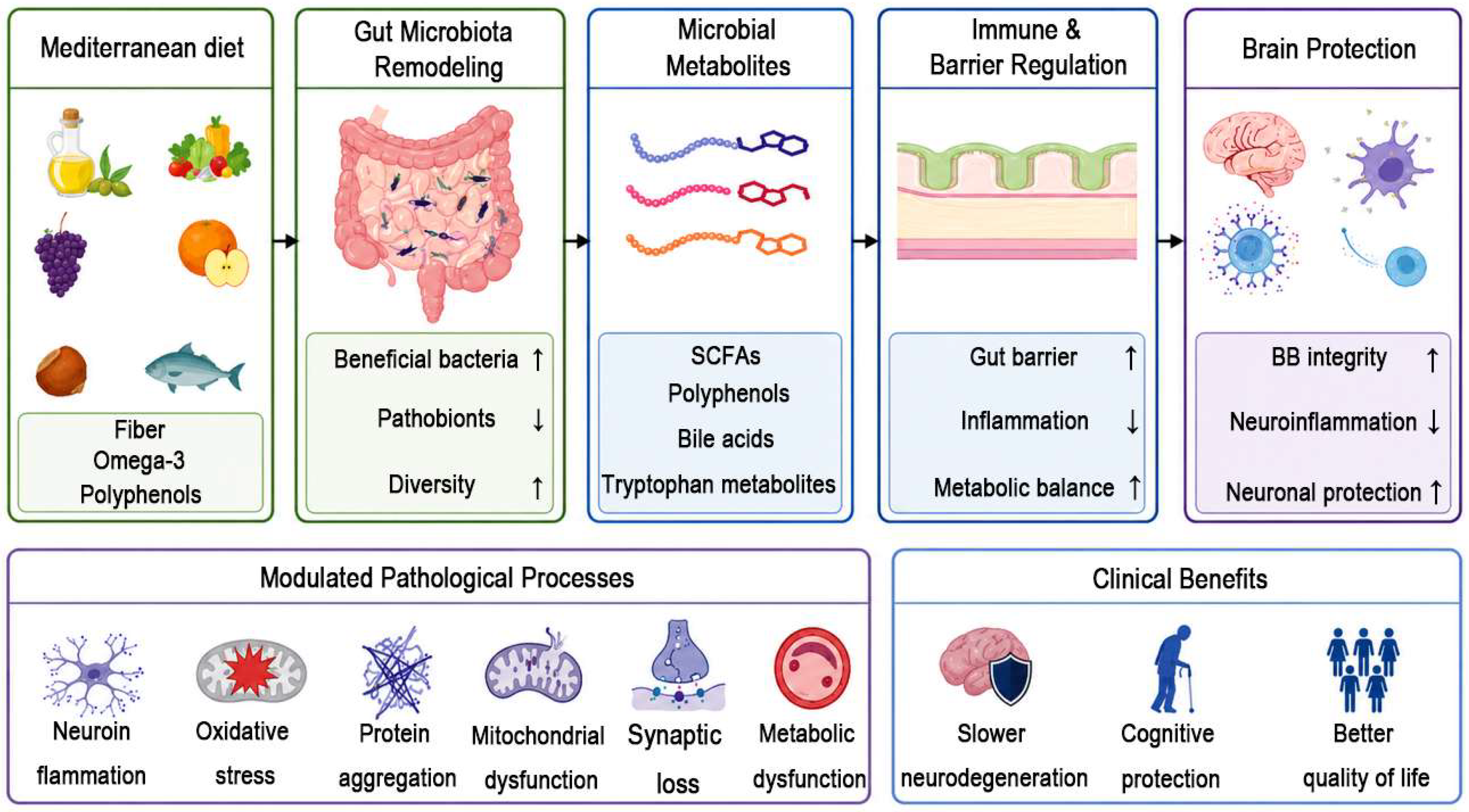
Figure 2.
Synergistic neuroprotective mechanisms of Mediterranean diet-derived bioactive components in neurodegenerative disorders. Distinct dietary factors, including EVOO-derived polyphenols, omega-3 fatty acids, dietary fiber, plant sterols, and mixed polyphenolic compounds, modulate complementary biological pathways associated with oxidative stress reduction, neuroinflammation suppression, gut–brain axis regulation, Aβ clearance, and direct neuronal protection. These interconnected mechanisms converge to promote synergistic neuroprotection through attenuation of reactive oxygen species, suppression of microglial activation and pro-inflammatory cytokine production, enhancement of SCFA generation and BBB integrity, facilitation of Aβ clearance pathways, and improvement of autophagic and mitochondrial homeostasis. Collectively, these integrated effects contribute to preserved cognitive function, delayed cognitive decline, maintenance of BBB integrity, reduced Aβ/tau pathology, and improved mitochondrial function during neurodegenerative disease progression.
Figure 2.
Synergistic neuroprotective mechanisms of Mediterranean diet-derived bioactive components in neurodegenerative disorders. Distinct dietary factors, including EVOO-derived polyphenols, omega-3 fatty acids, dietary fiber, plant sterols, and mixed polyphenolic compounds, modulate complementary biological pathways associated with oxidative stress reduction, neuroinflammation suppression, gut–brain axis regulation, Aβ clearance, and direct neuronal protection. These interconnected mechanisms converge to promote synergistic neuroprotection through attenuation of reactive oxygen species, suppression of microglial activation and pro-inflammatory cytokine production, enhancement of SCFA generation and BBB integrity, facilitation of Aβ clearance pathways, and improvement of autophagic and mitochondrial homeostasis. Collectively, these integrated effects contribute to preserved cognitive function, delayed cognitive decline, maintenance of BBB integrity, reduced Aβ/tau pathology, and improved mitochondrial function during neurodegenerative disease progression.
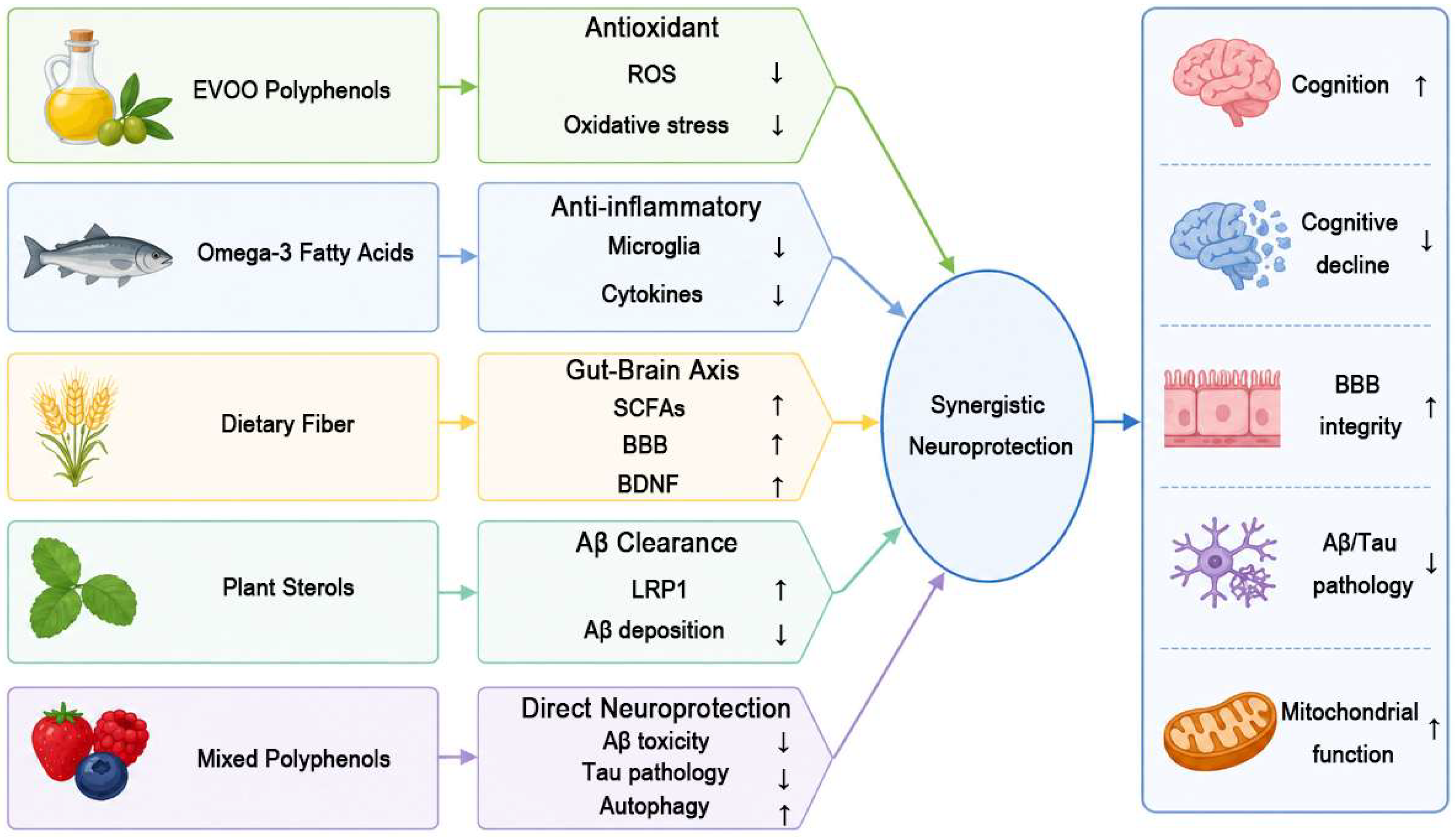
Figure 3.
Precision nutrition framework integrating multi-omics profiling and personalized Mediterranean diet intervention for neurodegenerative disease management. Comprehensive patient characterization incorporates genetic background, lifestyle factors, clinical phenotypes, gut microbiome composition, metabolomic signatures, and immune status to establish multidimensional disease-associated profiles. Patients are subsequently stratified into distinct pathological or risk-associated subgroups, including low-risk, inflammatory-dominant, metabolic-risk, and advanced-stage phenotypes. Based on these classifications, personalized Mediterranean diet intervention strategies are designed through optimization of dietary quality, targeted nutrient supplementation, precision dietary adjustment, and synergistic lifestyle interventions. Longitudinal monitoring is achieved through clinical assessment, biomarker evaluation, digital health tracking, and adaptive feedback-based optimization to dynamically refine intervention efficacy. Collectively, this integrated framework aims to reduce neuroinflammation, improve metabolic homeostasis, preserve cognitive function, and delay neurodegenerative disease progression through individualized dietary modulation and systems-level precision medicine approaches.
Figure 3.
Precision nutrition framework integrating multi-omics profiling and personalized Mediterranean diet intervention for neurodegenerative disease management. Comprehensive patient characterization incorporates genetic background, lifestyle factors, clinical phenotypes, gut microbiome composition, metabolomic signatures, and immune status to establish multidimensional disease-associated profiles. Patients are subsequently stratified into distinct pathological or risk-associated subgroups, including low-risk, inflammatory-dominant, metabolic-risk, and advanced-stage phenotypes. Based on these classifications, personalized Mediterranean diet intervention strategies are designed through optimization of dietary quality, targeted nutrient supplementation, precision dietary adjustment, and synergistic lifestyle interventions. Longitudinal monitoring is achieved through clinical assessment, biomarker evaluation, digital health tracking, and adaptive feedback-based optimization to dynamically refine intervention efficacy. Collectively, this integrated framework aims to reduce neuroinflammation, improve metabolic homeostasis, preserve cognitive function, and delay neurodegenerative disease progression through individualized dietary modulation and systems-level precision medicine approaches.
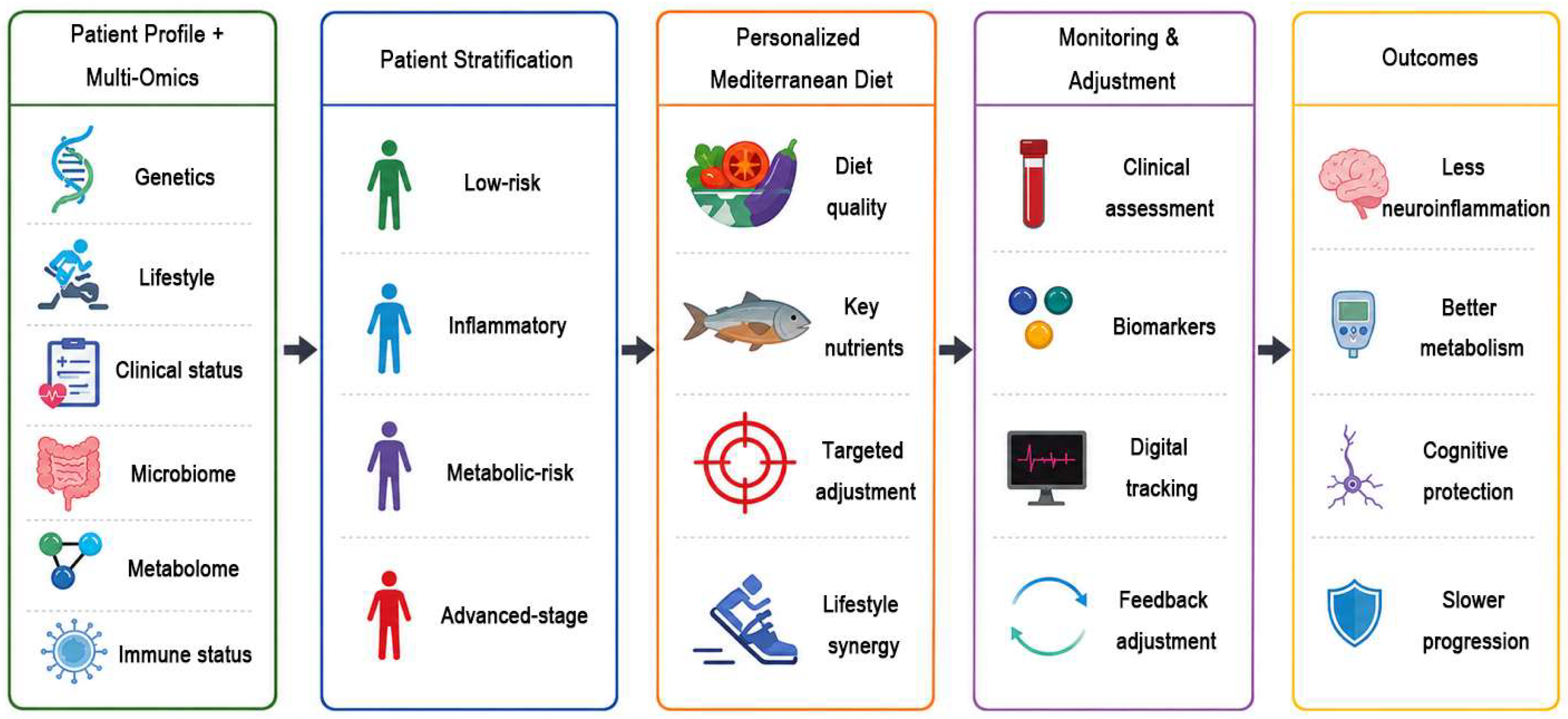

Table 1.
Summary of epidemiological evidence regarding the Mediterranean diet across different neurodegenerative diseases.
Table 1.
Summary of epidemiological evidence regarding the Mediterranean diet across different neurodegenerative diseases.
| Disease | Key Findings | Study Design |
|---|---|---|
| AD | Lower risk of AD onset; improved cognitive scores [31]. | Cohort studies, meta-analysis |
| All-cause dementia | 23% lower risk; greater benefit in ≥60 years, females, non-carriers of APOE ε4[36]. | Prospective cohort (n=131,209) |
| PD | 13% lower risk; plant-based diet also protective[39,40]. | Meta-analysis of cohort studies |
| Other Neurodegenerative diseases | Anti-inflammatory diet may alleviate neuroinflammation[44,46]. | Observational studies |
Disclaimer/Publisher’s Note: The statements, opinions and data contained in all publications are solely those of the individual author(s) and contributor(s) and not of MDPI and/or the editor(s). MDPI and/or the editor(s) disclaim responsibility for any injury to people or property resulting from any ideas, methods, instructions or products referred to in the content. |
© 2026 by the authors. Licensee MDPI, Basel, Switzerland. This article is an open access article distributed under the terms and conditions of the Creative Commons Attribution (CC BY) license (http://creativecommons.org/licenses/by/4.0/).
Copyright: This open access article is published under a Creative Commons CC BY 4.0 license, which permit the free download, distribution, and reuse, provided that the author and preprint are cited in any reuse.


