
Submitted:
20 May 2026
Posted:
20 May 2026
You are already at the latest version
Abstract
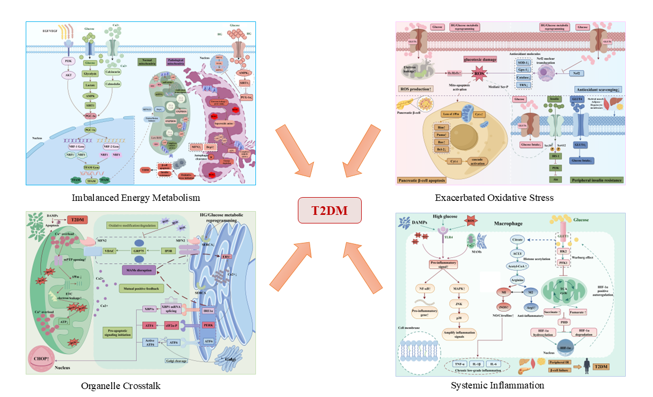
Type 2 diabetes mellitus (T2DM) is a highly prevalent and devastating chronic metabolic disease worldwide, with its pathogenesis centrally characterized by insulin resistance and pancreatic β-cell dysfunction. Accumulating evidence has demonstrated that glucose metabolic reprogramming represents an adaptive metabolic shift from oxidative phosphorylation to aerobic glycolysis in cells in response to a hyperglycemic microenvironment, which acts as an upstream core event driving the initiation and progression of T2DM. This review systematically elaborates the characteristics of glucose metabolic reprogramming in insulin-sensitive target organs under T2DM conditions, including the liver, skeletal muscle, adipose tissue and pancreatic β-cells, and further dissects four major downstream effector mechanisms: mitochondrial energy metabolism disturbance, augmented oxidative stress, disruption of mitochondria-associated endoplasmic reticulum membranes (MAMs) coupled with calcium homeostasis imbalance, and systemic inflammatory response. On this basis, we summarize the intervention strategies targeting the above signaling pathways, including antioxidant therapy, restoration of MAMs integrity and calcium homeostasis, systemic anti-inflammatory intervention, and multi-target regulatory effects of traditional Chinese medicine. Current studies have indicated that early intervention in downstream stress events induced by glucose metabolic reprogramming, particularly the preservation of MAMs integrity, restoration of calcium homeostasis, and inhibition of NLRP3 inflammasome activation, is expected to block or delay the progression from prediabetes to clinical T2DM. Nevertheless, substantial gaps still remain in the understanding of the dynamic regulatory mechanisms of MAMs, tissue-specific therapeutic targets, and relevant clinical translational research. Future integration of multi-omics technologies will provide novel therapeutic strategies and theoretical foundations for the early prevention and treatment of T2DM.
Keywords:
type 2 diabetes mellitus
; glucose metabolic reprogramming
; insulin resistance
; mitochondria‐associated endoplasmic reticulum membranes
; oxidative stress
Copyright: This open access article is published under a Creative Commons CC BY 4.0 license, which permit the free download, distribution, and reuse, provided that the author and preprint are cited in any reuse.


