

Submitted:
19 May 2026
Posted:
20 May 2026
You are already at the latest version
Abstract
Inflammasomes arise from complex protein assembly mechanisms and play a fundamental role in managing inflammation and the innate immune response. The molecules that trigger inflammasome assembly and activation are molecules derived from pathogens or DNA fragments released following cellular damage. The phenomena resulting from inflammasome activation range from the activation of caspases, such as caspase-1, to the secretion of pro-inflammatory cytokines, to cellular death by apoptosis or pyroptosis. Various pathologies have been linked to aberrant inflammasome activation, including several autoimmune diseases, leading scientists to direct experiments toward identifying the mechanisms responsible for aberrant inflammasome activation to develop new therapeutic strategies. In this review, we summarize the assembly mechanisms and involvement of two specific inflammasomes, NLRP3 and AIM2, in the autoimmune disease Sjögren's syndrome (SjD); NLRP3 and AIM2 aberrant activations appear to be involved in the exacerbation of inflammation, which becomes chronic, leading to dry mouth and dry eye and to an increased risk of developing B-cell non-Hodgkin's lymphoma in these patients. Understanding how different inflammasomes contribute to the pathogenesis of SjD could be fundamental to understanding the complex molecular mechanisms underlying this disease.
Keywords:
Sjögren’s syndrome
; inflammasomes
; NLRP3
; AIM2
; inflammation
1. Introduction
The inflammasome is an intracellular complex of oligomers that detects and responds to PAMPs (Pathogen-Associated Molecular Patterns) and DAMPs (Damage-Associated Molecular Patterns); PAMPs and DAMPs are signal molecules recognized by the innate immune system via pattern recognition receptors. Specifically, PAMPs are derived from microbic LPS or viral RNA, while DAMPs are endogenous molecules released by damaged or necrotic cells [1]. Four main types of inflammasomes have been identified: AIM2 (absent in melanoma 2), NLRP1 (NOD-, LRR-, and pyrin domain-containing protein 1), NLRP3, and the NLRP4 inflammasome. The assembly and activation of inflammasomes involves the activation of caspases and pro-inflammatory cytokines, which, present in inactive forms in cells, are cleaved and activated [1].
Sjögren’s syndrome (SjD) is a chronic and systemic autoimmune disease characterized by lymphocytic infiltration in the exocrine glands. Primary Sjögren's syndrome (pSjD) is characterized by dysfunction and destruction of salivary (SGs) and lachrymal glands associated with chronic lymphoepithelial lesions, not related to clinical manifestations affecting other organs, which occurs in secondary SjD [2]. pSjD has a broad clinical spectrum extending from disease confined to exocrine glands to systemic disease and B-cell lymphoma development [2]. Although an association between inflammasome activation in peripheral blood cells and disease complexity in SjD has been reported, little is known about inflammasome activation in exocrine glands and its underlying mechanisms. Dysregulated inflammasome activation is responsible for several autoinflammatory diseases associated with high levels of proinflammatory cytokine secretion, including SjD. Significant progress has been made in understanding inflammasome assembly and activation, although molecular data are still lacking, making this research a rapidly developing field. This review describes the structural and biomolecular understanding of the activation mechanisms of NLRP3 and AIM2 inflammasomes, focusing on discoveries regarding the role of these molecular complexes in SjD. The concept that glandular epithelia play a critical role in the activation of NLRP3 and AIM2 inflammasomes, which are involved in the chronic inflammation that characterizes this autoimmune disease, is clarified and emphasized in this review.
2. Summary of the Main Pathogenetic Features of Sjögren’s Syndrome
SjD is a complex systemic autoimmune condition primarily characterized by chronic inflammation of the SGs and lachrymal glands and a widespread plethora of extra-glandular features and immunological anomalies [3]. SjD is a recognized model of multifactorial diseases triggered by the overlap of environmental, hormonal, and genetic events [4]. The disease involves many organs and systems, with possibly severe manifestations and increased risk of B-cell lymphoma as non-Hodgkin’s lymphoma of the mucosa-associated lymphoid tissue (MALT). Unfortunately, SjD is a heterogeneous and disabling condition that negatively affects the quality of life of the patient with an enhancement of both morbidity and mortality compared to the worldwide population [5]. During the 15th International Symposium on Sjögren's Syndrome (Rome, 2022), the complexity of the disease, which currently leads to the use of the term "syndrome," was highlighted, emphasizing the multiple clinical aspects and the variety of long-term outcomes [6]. Factors originating outside of the body, playing a role in the development of SjD, include viral infections, female hormones, solvents, and inorganic chemical agents [7,8]. The genetic factors associated with SjD were specifically explored in the initial genome-wide association study of the disease conducted in 2013, which affirmed a significant link between SjD and HLA-DQB1 [9,10]. Moreover, those findings emphasized polymorphisms in IRF5, STAT4, BLK (B-lymphoid kinase), IL12A, TNIP1, and CXCR5 genes, which appeared to be linked with greater susceptibility to SjD [11]. The products of these genes are involved in important pathophysiological steps of the disease. Since then, large-scale genetic and epigenetic findings have evidenced interplay between SjD and genes involved in both innate and adaptive immune systems. Epigenetic modifications such as DNA hypomethylation, histone acetylation, and microRNA expression also concur with SjD pathophysiology [12].
In the last decade, different interested studies have considered the epithelial cells derived from the SGs (SGECs) not “innocent bystander” targets of cellular and humoral autoreactivity against cellular antigens [13]. In fact, the epithelium, considered classically as physical barriers, is now recognized as a dynamic tissue in which the cells are involved actively in the constitutive or inducible expression of numerous factors and implicated in innate and acquired immunological responses [14]. Such a notion underlines the inherent capacity of these SGECs to trigger and progress chronic inflammatory reactions [13]. The SGECs in the glandular lesions of SjD release molecules that promote persistent inflammatory reactions and direct lymphocyte chemoattraction. This finding supports the proposed description of SjD as an “autoimmune epithelitis” [15,16]. Immunohistochemical data of inflamed SG tissues derived from SjD patients have suggested that ductal and acinar SGECs produce high levels of several immunoactive molecules that are known to mediate lymphoid cell homing, antigen presentation, and the amplification of epithelial–immune cell interactions [16,17]. Therefore, SGECs next to sites of strong inflammation have been shown to express high levels of major histocompatibility complex (MHC) proteins class I (HLA-ABC) and class II (HLA-DR) molecules, CD54/ICAM1, CD106/VCAM, and E-selectin adhesion molecules [18]. Numerous investigations in SjD patients have shown an increased epithelial production of pro-inflammatory cytokines. In particular, researchers have shown a significant release of IL-1β, IL-6, IFN-γ, and TNF-α, not only by infiltrating lymphocytes infiltrating but also by ductal cells in SjD SGs [17,19]. IL-1α, IL-1β, IL-8, TGF-β, and granulocyte macrophage-colony-stimulating factor (GM-CSF) productions were revealed in both acinar and ductal cells. Furthermore, the SGECs can act as antigen-presenting cells, producing lymphoid chemokines, an increased expression of the CD40/CD40L complex, adhesion molecules, and the release of cytokines and BAFF [14]. This demonstrates their potential role in the recruitment of immune cells, including T, B, and dendritic cells, in the severe inflammatory lesions of SjD SGs and in the production of lymphoid tissue. In addition, SjD SGECs have recently been shown to express high constitutive TLR protein expression, suggesting intrinsic activation of epithelial cells in SjD and further supporting the role of this type of tissue in the pathogenesis of the disorder [20,21]. Altogether, these data demonstrate that, upon activation, the SGECs appear to be suitably equipped to participate in various aspects of inflammation, including the recruitment and activation of immune cells.
Ultimately, in the last few years, the research has been focused on the involvement of multiprotein complexes called 'inflammasomes' within the autoimmune picture, such as SjD. Crucial is, for example, the NLRP3 inflammasome to amplify tissue inflammation through the involvement of interleukin-1β and IL-18, which are overexpressed in SjD. A deregulated NLRP3 inflammasome activation occurs in the serous acini of salivary and lacrimal glands prone to SjD [22]. These findings can provide novel biomarkers and new therapeutic targets for the management of SjD patients with adverse outcomes.
3. The NLRP3 Inflammasome Complex: An Overview
The inflammasomes are cytosolic supramolecular complexes constituted by a signaling machinery composed of three components: sensor, adaptor, and effector [23]. This platform can induce the proteolytic maturation of proinflammatory cytokines and pyroptotic cell death in response to endogenous stimuli known as DAMPs, which originate from the host, and exogenous stimuli known as PAMPs, such as bacterial toxins [24,25]. Other triggers include reactive oxygen species, oxidized mitochondrial DNA, and lysosomal disruption [24].
One of the most extensively studied is the NLRP3 inflammasome, a tripartite protein composed of NLRP3, ASC (apoptosis-associated speck-like protein containing a caspase recruitment domain), and caspase-1, respectively [26,27].
The sensor NLRP3 (also known as cryopyrin) is formed by three parts: an amino (N)-terminal pyrin domain (PYD), a carboxy (C)-terminal LRR, and a central NBD-containing ATPase domain named NACHT [23,24]. PYDs typically engage in homotypic interactions to modulate downstream signalling pathways. LRR domains are primarily responsible for facilitating protein-protein interactions, and the LRR segment of NLRP3 has also been associated with preserving its stability. The NACHT domain has ATPase activity that is necessary for NLRP3 self-association following its activation, leading to self-interactions between PYDs that, subsequently, recruit ASC, which represents the adaptor [24]. The ASC adaptor features an N-terminal PYD and a C-terminal caspase recruitment domain (CARD). It is brought to the clustered PYDs of the oligomerized NLRP3 proteins through homotypic PYD-PYD interactions, resulting in the creation of a prion-like ASC filament [24]. These nucleated filaments assemble the C-terminal CARDs of ASC, which serve as a platform to recruit caspase-1, the effector [26]. Caspase-1 is composed of an N-terminal CARD, a major catalytic unit referred to as “p20”, and a smaller catalytic unit at the C-terminal known as “p10” [23]. The CARDs of caspase-1 engage with the aggregate ASC CARDs and experience analogous nucleated filament development [28,29]. These filaments promote proximity-induced dimerization of the p20 and p10 catalytic subunits of caspase-1 and lead to self-cleavage at the junction between p20 and p10, rendering caspase-1 completely proteolytically active [30,31]. While there isn't a biophysical constraint on the variety of stoichiometries these proteins can take, the estimated relative abundance of ASC to caspase-1 in cells is about 1:3.5 according to quantitative Western blot analysis [30]. When activated, caspase-1 cleaves and activates gasdermin D (GSDMD), which triggers pyroptosis, and transforms the pro-cytokines in the IL-1 family into mature proinflammatory cytokines crucial for immune response regulation [31]. A detailed overview of NLRP3 structure and mechanism of assembly is shown in Figure 1.
3.1. Mechanism of NLRP3 Inflammasome Activation: Canonical Pathway
The activation of the NLRP3 inflammasome is a multifaceted mechanism triggered by various stimuli such as microorganisms, environmental factors, and endogenous stress signals. Three mechanisms are known to trigger the NLRP3 inflammasome, including canonical, non-canonical, and alternative pathways [32]. Primarily, in the resting cells, the NLRP3 inflammasome is mostly found in an inactive state that becomes activated upon stimulation and subsequently assembles into a large cytosolic complex. In this scenario, the classical canonical activation requires two independent signal steps: priming (signal 1) and assembly (signal 2) [1]. The priming step of inflammasome activation requires the recognition of an NLRP3 activator that induces full activation and inflammasome formation. NLRP3 is activated by bacterial, viral, and fungal infections, as well as in sterile inflammation mediated by the recognition of various PAMPs or DAMPs that engage pattern-recognition receptors (PRRs) such as Toll-like receptors (TLRs) or nucleotide-binding oligomerization domain-containing protein 2 (NOD2), or through cytokines such as tumor necrosis factor (TNF), and also on exposure to environmental irritants [33]. The trigger of the priming signal by TLR or TNF through MyD88 leads to NF-kB activation, and it is commonly associated with ‘‘danger signals,”such as bacterial LPS, which are found at their surfaces and can bind to TLR4. To prepare NLRP3 for the subsequent assembly phase, priming signals also entail either preventing degradation or releasing self-inhibition by inducing post-translational modifications (PTMs) [34]. These activators are able to induce cellular stress, that is subsequently detected by NLRP3 [35]. The precise mechanisms by which NLRP3 detects cellular stress and the specific pathways that lead to its activation and the formation of the inflammasome have yet to be fully clarified. It is believed that several upstream signals contribute to this process, many of which can occur simultaneously, such as the efflux of potassium ions (K+) or chloride ions (Cl−), fluctuations in calcium ions (Ca2+), lysosomal disruption, mitochondrial dysfunction, metabolic alterations, and disassembly of the trans-Golgi [36]. While there is a wealth of information regarding the upstream signaling events, many of the pathways are interconnected and overlapping, and the findings can sometimes be contradictory.
Following the priming phase, the second step is oligomerization, where the NLRP3 inflammasome forms a mature multiprotein complex made up of NLRP3, ASC, and procaspase-1, which can activate the processing and release of IL-1β and IL-18 [37]. Upon activation of NLRP3, it is expressed, and the monomers attach to the intracellular membrane, assembling into oligomers that encase the PYD, indicating the inactive state; these oligomers are taken up by the dynein adapter histone deacetylase 6 (HDAC6) and subsequently moved to the Microtubule Organizing Center (MTOC) through dynein along microtubules [38]. Inside the MTOC, NLRP3 interacts with NEK7 to create a heterodimer, resulting in a structural change in NLRP3 that reorganizes the oligomer and reveals the PYD. Following this, NLRP3 attracts ASC through a PYD-PYD interaction, prompting ASC oligomerization, which subsequently enables ASC to recruit pro-caspase-1 through CARD-CARD binding. Ultimately, all three elements were combined to create a complete and extremely active NLRP3 inflammasome [39]. At this stage, active caspase-1 cuts the cytokine precursors pro-IL-1β and pro-IL-18 to generate the active cytokines IL-1β and IL-18, respectively. It also cleaves gasdermin D (GSDMD), releasing its N-terminal domain, which moves to the cell membrane to create pores, resulting in the release and pyroptosis of mature inflammatory cytokines [40]. Figure 2 clarifies the canonical pathway of NLRP3 activation.
3.2. NLRP3 Non-Canonical Activation and Alternative Pathway
The non-canonical inflammasome activation varies considerably from the classical mechanism of NLRP3 activation, yet both result in cell lysis and the release of proinflammatory cytokines [41]. In the non-canonical pathway (Figure 2), the activation of caspase-4/5 takes place in humans and caspase-11 in mice. Cytosolic LPS can activate the noncanonical inflammasome independently of the priming step [32]. Additional research indicated that the conserved lipid A region of LPS is accountable for noncanonical inflammasome activation [32]. Lipid A is recognized directly by the CARD domain of caspase-4/5/11, resulting in its oligomerization, which is followed by the cleavage of the pore-forming protein gasdermin D at the linker connecting the N-terminal and C-terminal domains by active caspases [32]. The released N-terminal domain of GSDMD interacts with the plasma membrane and creates membrane pores with an inner diameter of 10–14 nm, enabling potassium efflux, pyroptosis, and subsequent activation of the NLRP3 inflammasome [42]. Consequently, caspase-4/5/11 do not cleave interleukins; instead, they trigger pyroptosis, and the ensuing potassium efflux-induced NLRP3 inflammasome activation is accountable for caspase-1 activation and IL-1β secretion [43]. These data indicate the relationships between the canonical and non-canonical pathways involved in inflammasome activation [43]. The alternative pathway only exists in human monocytes, in which TLR4 recognizes extracellular LPS and induces NLRP3 activation and cytokine maturation through the caspase-8/FADD/RIPK3 signaling pathway, but neither apoptosis-associated speck formation nor pyroptosis is induced (Figure 2) [24].
4. The NLRP3 Inflammasome in Sjögren's Disease
The NLRP3 inflammasome is a prominent regulator of innate immunity, and its aberrant activation exacerbates pathological injury by promoting the release of inflammatory factors, cellular pyroptosis, and fibrosis [44]. The NLRP3 inflammasome is closely associated with several systemic diseases; growing scientific findings confirm its critical involvement in various autoimmune diseases, such as rheumatoid arthritis (RA), systemic lupus erythematosus (SLE), systemic sclerosis, and ankylosing spondylitis, where its activation appears to correlate with worsening disease activity [45]. Recent years have seen increasing evidence of the implication of the NLRP3 inflammasome in SjD [46]. Studies have demonstrated that the NLRP3 inflammasome and its downstream factors are upregulated in peripheral blood mononuclear cells isolated from SjD patients; these levels correlate with disease activity, contributing to xerostomia and glandular dysfunction [46,47,48]. Baldini et al. first demonstrated that NLRP3 and caspase-1 mRNA expression was enhanced in labial SG tissue specimens from patients with SjD compared to those with sicca syndrome [47]. Deregulated NLRP3 inflammasome activation also occurs in the lachrymal glands of SjD, and in particular, tear fluid from SjD patients revealed higher mRNA expression of NLRP3 and caspase-1 compared to healthy controls [47]. Recently, various pathogen-derived and endogenous molecules, including nucleic acids released following tissue injury, have been shown to induce inflammasome activation [32,48,49]. These undegraded DNAs serve as DAMPs to activate the NLRP3 inflammasome [50]. High cell-free DNA levels and impaired DNase I activity have been detected in the serum of patients suffering from severe SjD. Notably, SjD patients manifest aberrant clearance of apoptotic cells by phagocytes and impaired serum DNase I-mediated degradation of necrotic cell remnants; these factors are associated with increased amounts of circulating nucleosomes and cell-free DNA [51]. Furthermore, findings reveal that peripheral monocytes and SG-infiltrating macrophages in SjD patients exhibit NLRP3 inflammasome activation. This is particularly evident in severe cases and is likely induced by widespread accumulation of extranuclear DNA in serum, cells, and tissues, where deficient DNA degradation by deoxyribonucleases plays a major role [51]. Compelling evidence indicates that inflammatory processes in the salivary lesions of SjD patients can also be attributed to the activation of the P2X7R-inflammasome axis, a component of the NLRP3 machinery [52]. Interestingly, the involvement of the P2X7R-inflammasome axis was confirmed in a large cohort of SjD patients: P2X7R–inflammasome complex was significantly overexpressed compared to controls, particularly in patients positive for anti-Ro/SSA with higher focus scores in salivary gland biopsies [53]. The expression of both P2X7R and inflammasome components was significantly higher in pSjD gland specimens, paralleled by increased levels of mature IL-18 in saliva samples compared to non-SjD sicca syndrome and healthy subjects. These data correlated with anti-Ro/SSA positivity and lymphocytic sialadenitis focus scores, establishing a link between P2X7R signaling and pSjD exocrinopathy [52]. Moreover, elevated expression of P2X7R, NLRP3, caspase-1, and IL-18 has been observed in SjD patients developing mucosa-associated lymphoid tissue (MALT) non-Hodgkin's lymphoma [52]. Consequently, the P2X7R/NLRP3 axis-driven inflammation contributes to glandular epithelial injury and secretory dysfunction [46]. From this perspective, it is hypothesized that the P2X7R/NLRP3 complex might represent a hallmark of distinct immunohistopathological features and the varying complexity of lymphocytic infiltrate in SjD, ultimately contributing to the degenerative processes leading to MALT-NHL development [3,54]. In addition, NLRP3 activation is triggered by mitochondrial dysfunction and DNA damage-associated DAMPs, which amplify IL-1β–driven acinar cell death and fibrosis, whereas pharmacological inhibition of NLRP3 partially restores salivary flow in animal models [55]. DAMP-induced NLRP3 activation in obstructive and chronic sialadenitis has also been reported to induce macrophage recruitment, polarization, and glandular tissue remodeling [46]. Taken together, these data confirm that NLRP3 inflammasome activation exacerbates disease activity. Accordingly, the inhibition of upstream and downstream factors of the NLRP3 inflammasome represents a promising therapeutic strategy.
5. Discovery and Structure of AIM2 Inflammasome
Absent in melanoma 2 (AIM2) was discovered about 10 years ago. Among the already known "canonical" inflammasomes, which include the NLR family pyrin domain-containing (NLRP)1, NLRP3, NAIP/NLRC4 (NLR family apoptosis inhibitory protein/caspase activation and recruitment domain (CARD) containing (NLRC)4), and pyrin, AIM2 is currently the only one capable of detecting the presence of scattered DNA in the cytosol thanks to its ability to bind free DNA [56]. The first indication of the existence of an inflammasome capable of sensing dsDNA came from experiments evaluating virally induced inflammatory responses. Researchers discovered that inflammasome activation resulted from the simple transfection of bacterial, viral, and mammalian DNA into the cytosol [57]. It was also noted that inflammasome activation depended on ASC but not on NLRP3, a well-known inflammasome component. Furthermore, it was concluded that the formation of this inflammasome capable of sensing dsDNA also functioned independently of Toll-like receptor 9 (TLR9), another sensor of the presence of circulating DNA known to act in endolysosomes [56]. AIM2 belongs to the PYHIN family. Proteins of the mammalian PYHIN (IFI200/HIN-200) family are involved in defence against infection through recognition of foreign DNA. They have more recently been annotated as the “PYHIN” family, acknowledging the defining features of one pyrin domain (PYD) at the N-terminus and one or two hematopoietic, interferon-inducible, and nuclear (HIN) domains at the C-terminus. There are four human PYHIN proteins: IFI16 (interferon-inducible protein 16) [58], MNDA (myeloid nuclear differentiation antigen) [59], AIM2 [60,61], and IFIX (interferon-inducible protein X) [61]. AIM2 binds cytosolic DNA via its HIN domain and initiates inflammasome formation via its pyrin domain. In addition to AIM2, the PYHIN family also includes interferon-inducible protein 16 (IFI16) in humans and p204 in mice. AIM2 was initially discovered as an interferon-inducible tumor suppressor [60] but was later identified as a cytosolic double-stranded DNA (dsDNA) sensor that can assemble into an inflammasome with ASC and procaspase-1 [63,64,65,66]. ASC (apoptosis-associated granule-shaped protein containing a CARD domain) is critical for inflammasome assembly, which occurs using its N-terminal pyrin (PYD) domain. In the case of AIM2, it binds to dsDNA via its C-terminal HIN domain, releasing the N-terminal PYD domain, allowing it to interact with ASC. Following this interaction, ASC recruits procaspase-1, forming the AIM2 inflammasome. In 2009, four groups of researchers independently identified AIM2 as a molecule capable of sensing the cytosolic presence of dsDNA that was able to form inflammasomes with ASC, activate caspase-1, and ultimately lead to maturation of the inactive form of IL-1β or cellular apoptosis [63,64,65,66]. Building on these findings, the researchers used two parameters like those that had allowed the identification of AIM2 to identify other molecules involved in inflammasome formation. The parameters were the search for proteins that exhibit both DNA-binding domains and the PYD domain for homotypic interaction with ASC [64,65,66] and, second, the search for proteins whose transcription is regulated by IFN-β [63]. Many proteins of the PYHIN family met both criteria, but, surprisingly, AIM2 was found to be the only one that interacts with ASC [64] and is present exclusively in the cytoplasm [65]. AIM2 has been shown to bind preferentially to DNA rather than RNA, and with greater affinity to dsDNA than to single-stranded DNA (ssDNA) [63,66]. Furthermore, the dsDNA recognized by AIM2 must possess a specific sequence, since the sequence poly(dA:dT) has been shown to bind to AIM2 and induce the formation of the ASC-binding site, known as the "ASC spot," in an AIM2-dependent manner [64,65]. It was subsequently established that the C-terminal HIN domain of AIM2 is responsible for interaction with dsDNA, while the N-terminal PYD domain can interact with ASC [64,65]. An interesting finding was that, although a specific sequence is not required for the activation of the AIM2 inflammasome, the DNA length is a determining factor and is approximately 80 base pairs for an optimal AIM2 response [67] (for details on the AIM2 structure, see Figure 3).
6. Mechanisms of AIM2 Inflammasome Assembly
It follows, therefore, that the core structure of the AIM2 inflammasome is well known and represents the first inflammasome structure to be evaluated and examined at the atomic level [30]. With these assumptions, the AIM2 structure has served as a model for understanding how other inflammasomes assemble and activate. Surprisingly, the components of the AIM2 inflammasome do not use a simple stoichiometric model for assembly but rather through the formation of nucleated filaments originating from molecules upstream of the assembly interactions. The first step is the binding of AIM2 to dsDNA via the HIN domain; this binding determines the activation of AIM2 or a sort of loss of an auto-inhibitory state or determines conformational changes that lead to the oligomerization of AIM2 [67,68]. The binding and assembly mechanism of the AIM2 inflammasome follows a precise molecular sequence: the first step involves the detection of circulating DNA via the C-terminal HIN domain of AIM2, which binds dsDNA [68,69]. In the absence of stimuli, AIM2 is in a state of self-inhibition in which its PYD and HIN domains interact with each other. Binding to dsDNA displaces the PYD domain (pyrin domain), freeing it to interact. The free PYD domain of AIM2 then interacts with the PYD domain of an ASC-recruiting adaptor protein, causing ASC polymerization [30]. AIM2, importantly, acts as a nucleus for the polymerization of ASC, which self-assembles into long helical filaments known as "ASC specks." The inactive pro-caspase-1 zymogen forms are subsequently recruited into these multimolecular complexes via the CARD-CARD interaction and subsequently made active by cleavage and autoproteolysis into heterodimers consisting of the two p10-p20 subunits [28] (The AIM2 assembly is reported in Figure 4). The fate of this caspase activation may be represented by the triggering of apoptosis, pyroptosis, or chronic inflammation [70,71].
7. Molecular Factors Involved in AIM2 Activation in Autoimmunity
In eukaryotes, self-DNA is physiologically constrained in the nucleus and mitochondria, thus preventing the uncontrolled induction of pro-inflammatory pathways by cytoplasmic DNA-sensing mechanisms [72]. The detection of cytoplasmic DNA has been observed following various situations of alteration of cellular balance caused by pathogenic agents, DNA damage, aberrant cellular mechanisms involving chromatin reorganization, mitochondrial alterations, and ineffective demolitions of senescent cells [73]. Such accumulations of cytoplasmic DNA have been identified as probable triggers of inflammatory reactions in various tumor cell lines [74], as well as in tissues obtained from patients with chronic inflammatory diseases, such as in the case of psoriatic lesions; often not only genomic DNA is found but also duplex RNA/DNA [75]. As has already been demonstrated for glandular epithelial cells in patients with SjD, also in psoriasis keratinocytes are able to release abundant amounts of pro-inflammatory cytokines such as IL-1β, which accumulates in inflamed psoriatic skin lesions; this mechanism seems to involve a free DNA-dependent assembly and activation of the AIM2 inflammasome [76]. These findings have led to the consideration of the release of inflammatory cytokines by keratinocytes in psoriatic lesions as a determining factor for the activation of AIM2 [77]. It remains to be clarified whether the keratinocytes present in psoriatic lesions present an intrinsic upregulation of AIM2, since there is not yet sufficient experimental data deriving from primary cultures of psoriatic keratinocytes. The data collected so far point in the direction of considering the phenomenon of the presence of cytoplasmic DNA with consequent inflammation to be based on an anomalous or altered behavior of DNases such as DNase2 and TREX1/DNase3 [78]. A close correlation between the development of an inflammatory condition and the presence of cell-free DNA in the cytoplasm has been widely demonstrated [79]. DNA derived from host cells in the cytosol may be related to the presence of DNA from damaged neighbouring cells or may result from defects in the degradation and removal processes of DNA itself. A correlation between AIM2 assembly and autoimmune diseases, characterized by chronic inflammatory conditions, has been demonstrated for various pathologies. In RA, AIM2 is associated with synovitis, vascular changes, cartilage destruction, and bone loss. Cytoplasmic dsDNA accumulation represents one of the factors triggering the fibroblast-mediated inflammatory response in RA [80]. The initiation of inflammatory responses seems to involve, among other mechanisms, intracellular activation of AIM2, consequently enhancing the detection of cytoplasmic dsDNA and corroborating the inflammatory process in the synovium [78]. Analyzing the mRNA and protein levels of AIM2 and its downstream protein ASC, they were found to be altered in RA [78], with a higher or lower serum expression of ASC and AIM2, respectively, in RA patients compared to healthy subjects [78]. Furthermore, ASC and AIM2 expression are positively correlated with ESR and CRP levels, suggesting that AIM2 is involved in the inflammatory pathogenesis of RA [81]. Furthermore, since AIM2 belongs to the genes whose transcription depends on interferon-gamma (IFN-γ) levels, and IFN-γ is certainly involved in AIM2 activation, regulates the production of various cytokines such as the release of IL-1β, IL-18, IL-6, and TNF-α, and appears to be crucial in the process of cell death (pyroptosis) [82], these data highlight the role played by AIM2 in the chronic inflammation that characterizes RA. A positive feedback mechanism is established in which chronic inflammation continuously activates fibroblasts, which in turn release large amounts of pro-inflammatory factors and cytokines [83]. The experimental efficacy of AIM2 gene silencing in RA fibroblasts has also been demonstrated, resulting in an inhibition of their proliferation without preventing their migration and apoptosis [81]. Furthermore, some studies have demonstrated the anti-inflammatory efficacy of myricetin (MYR), which seems to act precisely by reducing the gene and protein expression of AIM2 in RA patient fibroblasts [84]. Kassem et al. have demonstrated [85] that MYR has the ability to protect DNA from damage and cells from oxidative stress; therefore, the protective effect of MYR may be due to a reduction of dsDNA in the cytoplasm by indirectly inhibiting the activation of the AIM2 inflammasome. In psoriasis, for example, IL-1β release has been detected following AIM2 activation by the presence of cytosolic DNA in skin cells [86]. In systemic lupus erythematosus (SLE), increased AIM2 expression in macrophages has been reported, and this upregulation appears to be related to the sex of the patients, since an increase has been detected only in males; conversely, female SLE patients show a decrease in AIM2 expression level concomitant with an increase in anti-dsDNA autoantibody titers [87]. Dysregulation of type I IFN signalling is known in SLE [88,89]. Recent studies have demonstrated a correlation between this dysregulation and altered formation of the AIM2 inflammasome. This correlation appears to be determined by both excessive production of IFN-β [90] and IFN-α, which modulates AIM2 levels in murine models [91]. Reduced levels of AIM2 within immune cells, correlated with a concomitant overproduction of IFN-β, have been described in mouse strains predisposed to the development of SLE [90]. Further studies have indicated a role for B-cell-activating factor (BAFF), highly expressed in circulating CD3+ T cells and in the serum of SLE patients, in the reduction of AIM2 expression [92]. In addition, the DNA-dependent activation of the AIM2 inflammasome is also widely implicated in a wide range of inflammatory diseases, for which an autoimmune aetiology has often been identified, including chronic kidney diseases, metabolic diseases, and neurodegenerative diseases [93,94].
8. AIM2 Activation in Sjögren’s Syndrome
8.1. AIM2 Activation in SjD Salivary Glands
In pSjD, the AIM2 inflammasome is characteristically activated within SGECs, triggering autoimmune responses [95]. Indeed, elevated constitutive expression of the AIM2, NLRP3, and ASC/PYCARD genes has been found [51]. This process is driven by the accumulation of damaged cytoplasmic DNA and the reduction or alteration of DNase1 activity, found predominantly in ductal cells, which appears to lead to excessive IL-1β production [95]. In particular, the elevated AIM2 inflammasome activity in SGECs from pSjD patients, could be due to a malfunctioning of DNase1 leading to an accumulation of circulating cell-free DNA (cfDNA) [95]. In addition, pSjD patients who have developed MALT lymphoma, or who are at high risk of developing MALT lymphomas present high serum levels of cfDNA, and the SGs are characterized by the presence of extranuclear DNA in the form of accumulations localized, predominantly, between the striated ducts and lymphocytic foci [51]. The presence of this extracellular DNA appears to be a potent stimulus for AIM2 activation when it enters the striated ducts. Consequently, AIM2 activation in SjD appears to involve salivary gland epithelial cells as the main player, which, as demonstrated by various authors, displays a persistently active intrinsic inflammatory state [19]. A recent study demonstrated that AIM2, ASC, and even caspase-1 and IL-18 levels were increased in the saliva of patients with pSjD compared to salivary levels in healthy subjects. Furthermore, the number of AIM2-ASC speck cells was also elevated in SGEC from patients with SjD [96]. The activation of AIM2 could be explained based on some clinical findings in patients with SjD. These patients are, in fact, characterized by the presence of serum antinuclear autoantibodies (ANA), in addition to the classically SjD-associated anti-Ro/SSA and anti-La/SSB antibodies [97]. As reported, high levels of cell-free DNA have been found in the serum [98]. Furthermore, the presence of circulating DNA seems to be crucial in the production of type 1 interferons (IFN-1) by glandular epithelial cells. These molecules would then be released into the bloodstream of patients with SjD [99]. Based on these findings, it seems likely that circulating DNA detection pathways, whether this DNA derives from cellular damage or from pathogens, could play a key role in the activation of inflammasomes. Following the entry of circulating DNA into the cytoplasm of glandular cells, various cytosolic pattern recognition receptors (PRRs) may be activated, such as toll-like 9 (TLR9) [100], AIM2 [95], and cyclic GMP-AMP synthase (cGAS) [101]. The binding of these receptors appears to be specific for the type of circulating DNA, as DNA deriving from cellular self-damage activates AIM2 and cGAS [102], while TLR9 binds more specifically to viral DNA [103]. Experimental data collected in recent years clearly demonstrate the fundamental role played by glandular epithelia in triggering and, above all, in maintaining an inflammatory state that tends to become chronic in SjD [63]. These findings have been corroborated by experiments performed on primary cultures of SGECs derived from minor salivary glands of SjD patients that demonstrated an abnormal state of activation of epithelial cells from SjD patients that appears closely correlated with the tissue and systemic characteristics of the disease [17,21]. Furthermore, analyzing the transcriptome of SGEC cells derived from SjD patients at various stages of disease progression, they showed gene alterations in various inflammatory pathways implicated in signalling modulation or the activation of transduction cascades, which appeared to be more altered in patients with higher levels of inflammation [17,21]. Among the aberrations found, some concern the mechanisms of inflammasome activation, as demonstrated and supported by the constitutive activation of caspase-1 and the elevated synthesis of IL-1β in SGEC cells of SjD patients [51]. Furthermore, an increased expression of the P2X7 receptor correlated with inflammasome activation was also observed in the salivary glands of patients [47]. The state of inflammasome activation in the salivary epithelium of patients remains partially understood. It is now widely accepted in the scientific community that salivary gland epithelial cells from SjD patients are not mere bystanders but rather actors in the initiation and maintenance of a chronic inflammatory state [17,21]. It is now widely accepted by the scientific world that epithelial cells of the salivary glands of SjD patients are not simple spectators but actors in the triggering and maintenance of a chronic inflammatory state [2,17,19,20,21,53], which often involves the activation of signal transduction pathways mediated by the activation of NF-κB and by an elevated production of IL-1β [104,105]. These epithelial cells, and especially those of the ducts, present, in addition, a cell-autonomous activation of the AIM2 inflammasome and an altered activation of the ASC assembly-dependent pyroptosis pathways; these anomalous activations would be at the basis of a constitutive activation of caspase-1 and of the production of IL-1β observed in these SGEC from SjD patients [51]. These experimental data were confirmed by the analysis of salivary biopsies from SjD patients, which confirmed an overexpression of the AIM2 inflammasome (but not of NLRP3), together with the proteins ASC/PYCARD and IL-1β. In addition, very recent data report an altered expression of the AIM2-related protein IFI16 (interferon-gamma inducible protein 16) in the form of cytoplasmic aggregates in the ductal cells of SjD patients so much so that this protein has been considered an autoantigen associated with SjD [106]. The mechanism of AIM2 activation in SjD has also been further elucidated, and it seems due to the appearance of endogenous or foreign DNA in the cytosol, where it is perceived by the cell as a destabilizing signal [107]. Using experimental models of cellular stress induction that have led to altered DNA replication mechanisms, a close correlation has been demonstrated between cytoplasmic DNA accumulations and AIM2 activation in the ductal epithelium of SjD patients, likely driven by aberrant DNase activity. The main culprit in AIM2 activation seems to be the damaged double-stranded DNA of genomic origin, although further investigations are underway to better define the role of foreign DNA, such as viral DNA. An association between the amount of damaged DNA accumulating within the cytoplasm and the degree of inflammation in the salivary glands of SjD patients, assessed in terms of lymphocytic infiltrates, has also been demonstrated. The reasons that make the DNA of glandular epithelial cells of SjD patients so unstable are, however, not fully clarified; an association between in situ oxidative processes [108,109] and the development of MALT B-cell lymphoma was, however, identified. The role of impaired DNase1 function in the formation of cytoplasmic DNA clumps has been further explored, demonstrating a reduction in DNase1 activity in ductal cells in pSjD SGs. Although this finding needs further experimental confirmation, it has been shown that in vitro activation of normal SGECs by pro-inflammatory molecules is correlated with a down-regulation of DNase1 expression. This observation is not exclusive to pSjD, but low DNase1 expression has also been detected in renal and thyroid epithelium of patients with lupus and in autoimmune thyroid diseases [110,111]. In this context, a distinction must be made between serum and intracellular DNase1. Secreted DNase1 has as its main function the degradation of circulating DNA derived from cell death or neutrophil activity [112], and, in patients with SLE or pSjD, it has an altered activity that leads to an ineffective degradation of circulating DNA, causing inflammatory reactions [100,113]. Intracellular DNase1 is responsible for DNA digestion in apoptotic and necrotic cells [114]; in particular, the malfunctioning of intracellular DNase1 in renal epithelial cells is, for example, related to the development of severe lupus nephritis, and is characterized by massive deposits of intracellular DNA [110]. A distinct role for intracellular and serum DNase 1 has also been demonstrated in SGs, where DNase 1 appears to limit the onset of intrinsic inflammatory reactions in ductal cells, and this also appears to occur for AIM2 activation; indeed, in vitro silencing of DNase 1 in ductal cells results in activation of the AIM2 inflammasome [95]. Although further experimental confirmation is needed, it is hypothesized that DNase1 may perform its activity alone or in collaboration with other DNases, given the abundance of these enzymes in renal, intestinal, or salivary epithelia [115]. The cellular aberrations observed in the ductal epithelium of SjD patients resemble those physiologically occurring during cellular senescence, with loss of nuclear membrane integrity and intracellular DNA accumulation and the activation of NF-κB- and IL-1-dependent pro-inflammatory pathways [115]. The chronic, cell-autonomous inflammatory state that predominantly affects the ductal epithelial cells of patients with SjD could therefore be explained by a deficient DNase 1 activity.
8.2. AIM2 Activation in SjD Lachrymal Glands
The lachrymal gland is a tubuloacinar exocrine gland that produces tears, composed essentially of water, proteins, and electrolytes [116], and represents one of the main organs affected by pSjD. The lachrymal gland epithelium is composed of ductal, acinar, and myoepithelial cells (MEC). The MEC cells, specifically, arrange themselves around the acinar cells, which constitute the glandular secretory epithelium itself, and thanks to the contraction of the myofibrils (containing alpha-SMA), they facilitate secretion. The MEC cells, moreover, facilitate the secretion of the extracellular matrix to form the basement membrane of the acini and regulate the exchanges between secretory cells and stroma, which are essential in the repair processes of tissue damage [117]. Altered AIM2 gene expression has been demonstrated in cultured MECs derived from the lachrymal gland in a mouse model of pSjD [118]. In lachrymal MECs, homologous gDNA activates both the AIM2 inflammasome and cGAS-STING (Stimulator of Interferon Genes) pathways, reducing MECs contractility and inducing the secretion of pro-inflammatory cytokines that cause cell death. Studies performed using in vitro cultures of cells derived from lachrymal gland epithelium have refined the understanding of the relationship between the sensing of endogenous intracellular DNA and the initiation and perpetuation of pSjD. Indeed, recent studies have demonstrated that internalized endogenous DNA causes inflammation and cellular dysfunction in the lacrimal gland MECs [102]. The cGAS protein binds to DNA, exploiting electrical charges, via its nucleotidyltransferase domain. This binding mechanism is valid for any type of DNA in an undifferentiated manner. The AIM2 binding site, however, has a high affinity for nucleotides A and T [119]. This is supported by experiments conducted in vitro, which have shown that using a positive control represented by a poly AnT, an oligonucleotide containing A and T, a strong activation of the pathway mediated by the activation of AIM2 and a simultaneous reduction of the contractility of the MECs are obtained. In vivo, the situation could be more complex than the system appropriately miniaturized in vitro, due to the great variability of pathological intracellular or extracellular DNA. Endogenous extracellular DNA, for example, is a complex mixture of DNA combined with proteins, but it can also be present in extracellular vesicles, circulating mitochondrial DNA, and DNA fragments [79]. These heterogeneous DNAs are still able to activate the inflammatory pathways mediated by AIM2 or cGAS [120]. Therefore, further investigations are inevitably needed to clarify whether there are differences in the triggering of inflammation depending on the type of triggering DNA. Data on inflammasome activation in lacrimal glands in SjD are limited and essentially demonstrate the role of exogenous DNA in chronic inflammation [102]. These are either neutrophil-derived exogenous DNA, including increased release of neutrophil extracellular traps (NETs) composed of DNA, histones, and antimicrobial proteins [121], or result from impaired clearance of post-apoptosis cellular debris or ineffective DNase I [51,99]. An important role, however, is played by endogenous DNA, which appears to be able to activate lachrymal gland MECs following tissue damage or chronic inflammation [122]. This appears to be related to a decrease in the efficacy of DNase2b and the overexpression of multiple endogenous DNA-activated signalling molecules in the lachrymal gland. These recent data indicate a reduced ability to clear cytoplasmic DNA from lachrymal gland cells in pSjD. Among the molecules capable of modulating the mechanisms of free endogenous DNA detection, inhibitors of AIM2 or the STING protein appear to have promised prospects, appearing to effectively attenuate inflammation during in vitro experimental procedures. To confirm this efficacy, it is essential to further investigate the mechanisms of identification and removal of endogenous or exogenous DNA and to conduct in vivo efficacy studies that will confirm the use of these molecules as potential therapeutic agents in SjD. In addition, the inflammasome activation, involving caspase-1 and IL-1beta, appears to be dependent on the level of IFN-β in lachrymal gland MECs. In fact, when cells are stimulated with endogenous DNA, only when IFN-β reaches a certain threshold value does IL-1β secretion increase. Type I IFN activates the transcription of genes dependent on it only following binding to its type I IFN receptor (IFNAR) [123] and only after it has reached values that potentiate positive feedback responsible for the exacerbation of the inflammatory response [102]. Researchers subsequently wondered whether this inflammasome activation originates exclusively from MECs in the lachrymal glands, where these cells undoubtedly play a key role in promoting the regular secretion of tear fluid. Interestingly, a molecular communication between MECs and acinar epithelial cells leading to the activation of AIM2 and STING has been observed. This cellular communication probably also involves infiltrating immune cells and the paracrine regulation carried out by cGAMP [120]. This paracrine communication mechanism occurs via the purinergic receptor P2X7 [124], expressed in the lachrymal gland [125]. However, the data obtained are related to genetically modified experimental mouse models that develop a pathology like SjD, but with limitations. Currently, in vivo data confirming these mechanisms in SjD are lacking, although there is strong evidence that MECs respond to endogenous genomic DNA released following damage, inducing activation of inflammatory mechanisms with activation of AIM2 and STING inflammasomes and apoptosis, involving epithelial and glandular immune cells.
9. Conclusion
In conclusion, this review highlights the regulatory role of NLRP3 and AIM2 and the molecules involved in their activation in the chronic inflammation that characterizes SjD. This manuscript summarizes recent data highlighting how dysregulated assembly and activation of NLRP3 and AIM2 may play a key role in the pathogenesis of SjD and in the abnormal activation of the immune response underlying this autoimmune disease. We hope this review will encourage researchers to further explore this field of investigation to clarify inflammasome targets and activating molecules in the search for new therapies.
Author Contributions
M. S. and S. L. were involved in drafting the article or revising it critically for important intellectual content and approved the final version for publication. M.S. and S.L. had full access to the data collected in the review, took responsibility for their integrity and performed a critical reading. M. S. and S. L. have read and agreed to the published version of the manuscript.
Funding
This research received no external funding.
Institutional Review Board Statement
Not applicable.
Informed Consent Statement
Not applicable.
Conflicts of Interest
the authors declare no conflict of interest.
References
- Kelley, N.; Jeltema, D.; Duan, Y.; He, Y. The NLRP3 Inflammasome: An Overview of Mechanisms of Activation and Regulation. Int. J. Mol. Sci. 2019, 20, 3328. [Google Scholar] [CrossRef]
- Meudec, L.; Nocturne, G.; Mariette, X. Update on the Aetiopathogenesis of Sjögren Disease: From Interferon Signaling to Epithelial Dysfunction. J. Clin. Med. 2026, 15, 1945. [Google Scholar] [CrossRef]
- Baldini, C.; Chatzis, L.G.; Fulvio, G.; La Rocca, G.; Pontarini, E.; Bombardieri, M. Pathogenesis of Sjögren's disease: one year in review 2024. Clin. Exp. Rheumatol. 2024, 42, 2336–2343. [Google Scholar] [CrossRef] [PubMed]
- Ono-Minagi, H.; Ohnishi, T.; Atyeo, N.; Okuno, K.; Burbelo, P.D.; Chiorini, J.A. Familial and genetic overlap between Sjögren's disease and other autoimmune diseases. Front. Immunol. 2026, 17, 1740360. [Google Scholar] [CrossRef]
- Nocturne, G.; Pontarini, E.; Bombardieri, M.; Mariette, X. Lymphomas complicating primary Sjögren's syndrome: from autoimmunity to lymphoma. Rheumatology 2021, 60, 3513–3521. [Google Scholar] [CrossRef]
- Ramos-Casals, M.; Baer, A.N.; Brito-Zerón, M.D.P.; et al. 2023 International Rome consensus for the nomenclature of Sjögren disease. Nat. Rev. Rheumatol. 2025, 21, 426–437. [Google Scholar] [CrossRef]
- Maslinska, M.; Kostyra-Grabczak, K. The role of virus infections in Sjögren's syndrome. Front. Immunol. 2022, 13, 823659. [Google Scholar] [CrossRef]
- Björk, A.; Mofors, J.; Wahren-Herlenius, M. Environmental factors in the pathogenesis of primary Sjögren's syndrome. J. Intern. Med. 2020, 287, 475–492. [Google Scholar] [CrossRef]
- Li, Y.; Zhang, K.; Chen, H.; Sun, F.; Xu, J.; Wu, Z.; Li, P.; Zhang, L.; Du, Y.; Luan, H.; et al. A genome-wide association study in Han Chinese identifies a susceptibility locus for primary Sjogren’s syndrome at 7q11.23. Nat. Genet. 2013, 45, 1361–1365. [Google Scholar] [CrossRef] [PubMed]
- Radziszewski, M.; Tessneer, K.L.; Lessard, C.J. The power of genetics in decoding Sjögren's disease: current status and future development. Curr. Opin. Immunol. 2026, 98, 102690. [Google Scholar] [CrossRef]
- Chen, H.; Kaneko, N.; Ohyama, Y.; Moriyama, M. Deciphering Sjögren's disease: New insights and perspectives extend from advanced omics approaches and immunology. J. Autoimmun. 2026, 158, 103521. [Google Scholar] [CrossRef]
- Chatzis, L.G.; Pontarini, E.; Fulvio, G.; La Rocca, G.; Bombardieri, M.; Baldini, C. Evolving mechanisms in the pathogenesis of Sjögren's disease: one year in review 2025. Clin. Exp. Rheumatol. 2025, 43, 2020–2028. [Google Scholar] [CrossRef]
- Kapsogeorgou, E.K.; Tzioufas, A.G. Autoantibodies in Autoimmune Diseases: Clinical and Critical Evaluation. Isr. Med. Assoc. J. 2016, 18, 519–524. [Google Scholar] [PubMed]
- Filika, M.; Katsiougiannis, S. The 'target tissues' as orchestrators of autoimmune responses: the paradigm of Sjögren's syndrome. Clin. Exp. Immunol. 2026, 220. [Google Scholar] [CrossRef]
- Mitsias, D.I.; Kapsogeorgou, E.K.; Moutsopoulos, H.M. Sjögren's syndrome: why autoimmune epithelitis? Oral. Dis. 2006, 12, 523–532. [Google Scholar] [CrossRef] [PubMed]
- Desvaux, E.; Pers, J.O. Autoimmune epithelitis in primary Sjögren’s syndrome. Jt. Bone Spine 2023, 90, 105479. [Google Scholar] [CrossRef]
- Sisto, M.; Ribatti, D.; Lisi, S. Molecular Mechanisms Linking Inflammation to Autoimmunity in Sjögren's Syndrome: Identification of New Targets. Int. J. Mol. Sci. 2022, 23, 13229. [Google Scholar] [CrossRef] [PubMed]
- Rizzo, C.; Grasso, G.; Destro Castaniti, G.M.; Ciccia, F.; Guggino, G. Primary Sjogren Syndrome: Focus on Innate Immune Cells and Inflammation. Vaccines 2020, 8, 272. [Google Scholar] [CrossRef]
- Verstappen, G.M.; Pringle, S.; Bootsma, H.; Kroese, F.G.M. Epithelial-immune cell interplay in primary Sjögren syndrome salivary gland pathogenesis. Nat. Rev. Rheumatol. 2021, 17, 333–348. [Google Scholar] [CrossRef]
- Spachidou, M.P.; Bourazopoulou, E.; Maratheftis, C.I.; Kapsogeorgou, E.K.; Moutsopoulos, H.M.; Tzioufas, A.G.; Manoussakis, M.N. Expression of functional Toll-like receptors by salivary gland epithelial cells: increased mRNA expression in cells derived from patients with primary Sjögren's syndrome. Clin. Exp. Immunol. 2007, 147, 497–503. [Google Scholar] [CrossRef]
- Sisto, M.; Lisi, S. Updates on Inflammatory Molecular Pathways Mediated by ADAM17in Autoimmunity. Cells 2024, 13, 2092. [Google Scholar] [CrossRef]
- Carnazzo, V.; Rigante, D.; Restante, G.; Basile, V.; Pocino, K.; Basile, U. The entrenchment of NLRP3 inflammasomes in autoimmune disease-related inflammation. Autoimmun. Rev. 2025, 24, 103815. [Google Scholar] [CrossRef]
- Fu, J.; Wu, H. Structural Mechanisms of NLRP3 Inflammasome Assembly and Activation. Annu. Rev. Immunol. 2023, 41, 301–316. [Google Scholar] [CrossRef]
- Sharma, M.; de Alba, E. Structure, Activation and Regulation of NLRP3 and AIM2 Inflammasomes. Int. J. Mol. Sci. 2021, 22, 872. [Google Scholar] [CrossRef]
- Wang, H.; Ma, L.; Su, W.; Liu, Y.; Xie, N.; Liu, J. NLRP3 inflammasome in health and disease (Review). Int. J. Mol. Med. 2025, 55, 48. [Google Scholar] [CrossRef]
- Gaidt, M.M.; Hornung, V. The NLRP3 inflammasome renders cell death pro-inflammatory. J. Mol. Biol. 2018, 430, 133–141. [Google Scholar] [CrossRef] [PubMed]
- Broz, P.; Dixit, V.M. Inflammasomes: mechanism of assembly, regulation and signalling. Nat. Rev. Immunol. 2016, 16, 407–20. [Google Scholar] [CrossRef]
- Lu, A.; Li, Y.; Schmidt, F.I.; Yin, Q.; Chen, S.; Fu, T.M.; Tong, A.B.; Ploegh, H.L.; Mao, Y.; Wu, H. Molecular basis of caspase-1 polymerization and its inhibition by a new capping mechanism. Nat. Struct. Mol. Biol. 2016, 23, 416–25. [Google Scholar] [CrossRef]
- Li, Y.; Fu, T.M.; Lu, A.; Witt, K.; Ruan, J.; Shen, C.; Wu, H. Cryo-EM structures of ASC and NLRC4 CARD filaments reveal a unified mechanism of nucleation and activation of caspase-1. PNAS 2018, 115, 10845–52. [Google Scholar] [CrossRef] [PubMed]
- Lu, A.; Magupalli, V.G.; Ruan, J.; Yin, Q.; Atianand, M.K.; Vos, M.R.; Schroder, G.F.; Fitzgerald, K.A.; Wu, H.; Egelman, E.H. Unified polymerization mechanism for the assembly of ASC-dependent inflammasomes. Cell. 2014, 156, 1193–1206. [Google Scholar] [CrossRef] [PubMed]
- Li, J.; Wang, M.; Zhou, H.; Jin, Z.; Yin, H.; Yang, S. The role of pyroptosis in the occurrence and development of pregnancy-related diseases. Front. Immunol. 2024, 15, 1400977. [Google Scholar] [CrossRef]
- Dubey, S.R.; Turnbull, C.; Pandey, A.; et al. Molecular mechanisms and regulation of inflammasome activation and signaling: sensing of pathogens and damage molecular patterns. Cell Mol. Immunol. 2025, 22, 1313–1344. [Google Scholar] [CrossRef]
- Bauernfeind, F.G.; Horvath, G.; Stutz, A.; Alnemri, E.S.; MacDonald, K.; Speert, D.; Fernandes-Alnemri, T.; Wu, J.; Monks, B.G.; Fitzgerald, K.A.; Hornung, V.; Latz, E. Cutting Edge: NF-κB Activating Pattern Recognition and Cytokine Receptors License NLRP3 Inflammasome Activation by Regulating NLRP3 Expression. J. Immunol. 2009, 183, 787–791. [Google Scholar] [CrossRef]
- Weber, A.N.R.; Bittner, Z.A.; Shankar, S.; Liu, X.; Chang, T.H.; Jin, T.; Tapia-Abellán, A. Recent insights into the regulatory networks of NLRP3 inflammasome activation. J. Cell Sci. 2020, 133, 248344. [Google Scholar] [CrossRef]
- Swanson, K.V.; Deng, M.; Ting, J.P. The NLRP3 inflammasome: molecular activation and regulation to therapeutics. Nat. Rev. Immunol. 2019, 19, 477–489. [Google Scholar] [CrossRef]
- Vanaja, S.K.; Rathinam, V.A.; Fitzgerald, K.A. Mechanisms of inflammasome activation: recent advances and novel insights. Trends Cell Biol. 2015, 25, 308–315. [Google Scholar] [CrossRef]
- Akbal, A.; Dernst, A.; Lovotti, M.; Mangan, M.S.J.; McManus, R.M.; Latz, E. How location and cellular signaling combine to activate the NLRP3 inflammasome. Cell Mol. Immunol. 2022, 19, 1201–14. [Google Scholar] [CrossRef] [PubMed]
- Paik, S.; Kim, J.K.; Shin, H.J.; Park, E.J.; Kim, I.S.; Jo, E.K. Updated insights into the molecular networks for NLRP3 inflammasome activation. Cell Mol. Immunol. 2025, 22, 563–596. [Google Scholar] [CrossRef] [PubMed]
- Zhan, X.; Li, Q.; Xu, G.; Xiao, X.; Bai, Z. The mechanism of NLRP3 inflammasome activation and its pharmacological inhibitors. Front. Immunol. 2023, 13, 1109938. [Google Scholar] [CrossRef] [PubMed]
- Kovacs, S.B.; Miao, E.A. Gasdermins: Effectors of Pyroptosis. Trends Cell Biol. 2017, 27, 673–684. [Google Scholar] [CrossRef]
- He, Y.; Hara, H.; Núñez, G. Mechanism and Regulation of NLRP3 Inflammasome Activation. Trends Biochem. Sci. 2016, 41, 1012–1021. [Google Scholar] [CrossRef]
- Huang, Y.; Xu, W.; Zhou, R. NLRP3 inflammasome activation and cell death. Cell Mol. Immunol. 2021, 18, 2114–2127. [Google Scholar] [CrossRef] [PubMed]
- Yang, Y.; Wang, H.; Kouadir, M.; Song, H.; Shi, F. Recent advances in the mechanisms of NLRP3 inflammasome activation and its inhibitors. Cell Death Dis. 2019, 10, 128. [Google Scholar] [CrossRef] [PubMed]
- Xiao, S.Y.; Lv, Y.H.; Ji, Y.M.; Dong, Y.; Liu, M.C.; Li, T.; Cui, X.R.; Hu, Y. The NLRP3 inflammasome: a pivotal orchestrator of multisystem diseases—from molecular mechanisms to therapeutic innovation. Mol. Biol. Rep. 2025, 52, 1026. [Google Scholar] [CrossRef] [PubMed]
- Li, Z.; Guo, J.; Bi, L. Role of the NLRP3 inflammasome in autoimmune diseases. Biomed. Pharmacother. 2020, 130, 110542. [Google Scholar] [CrossRef]
- Alam, M.I.; Farhana, F.; Sakai, E. Emerging Role of the NLRP3 Inflammasome in the Onset of Oral Diseases and Its Potential as a Therapeutic Target. Int. J. Mol. Sci. 2026, 27, 1098. [Google Scholar] [CrossRef]
- Baldini, C.; Santini, E.; Baldini, C.; Rossi, C.; Ferro, F.; Santini, E.; Seccia, V.; Donati, V.; Solini, A. The P2X7 receptor-inflammasome complex has a role in modulating the inflammatory response in primary Sjögren's syndrome. J. Intern. Med. 2013, 274(5), 480–489. [Google Scholar] [CrossRef]
- Kim, S.K.; Choe, J.Y.; Lee, G.H. Enhanced expression of NLRP3 inflammasome-related inflammation in peripheral blood mononuclear cells in Sjögren's syndrome. Clin. Chim. Acta. 2017, 474, 147–154. [Google Scholar] [CrossRef]
- Zhuang, D.; Misra, S.L.; Mugisho, O.O.; Rupenthal, I.D.; Craig, J.P. NLRP3 Inflammasome as a Potential Therapeutic Target in Dry Eye Disease. Int. J. Mol. Sci. 2023, 24, 10866. [Google Scholar] [CrossRef]
- Qiu, Y.; Huang, Y.; Chen, M.; Yang, Y.; Li, X.; Zhang, W. Mitochondrial DNA in NLRP3 inflammasome activation. Int. Immunopharmacol. 2022, 108, 108719. [Google Scholar] [CrossRef]
- Vakrakou, A.G.; Boiu, S.; Ziakas, P.D.; Xingi, E.; Boleti, H.; Manoussakis, M.N. Systemic activation of NLRP3 inflammasome in patients with severe primary Sjögren's syndrome fueled by inflammagenic DNA accumulations. J. Autoimmun. 2018, 91, 23–33. [Google Scholar] [CrossRef]
- Baldini, C.; Santini, E.; Rossi, C.; Donati, V.; Solini, A. The P2X7 receptor-NLRP3 inflammasome complex predicts the development of non-Hodgkin's lymphoma in Sjogren's syndrome: a prospective, observational, single-centre study. J. Intern. Med. 2017, 282, 175–186. [Google Scholar] [CrossRef] [PubMed]
- Khalafalla, M.G.; Woods, L.T.; Camden, J.M.; Khan, A.A.; Limesand, K.H.; Petris, M.J.; Erb, L.; Weisman, G.A. P2X7 receptor antagonism prevents IL-1β release from salivary epithelial cells and reduces inflammation in a mouse model of autoimmune exocrinopathy. J. Biol. Chem. 2017, 292, 16626–16637. [Google Scholar] [CrossRef]
- Üstündağ, H. The P2X7 receptor/NLRP3 inflammasome signaling axis in sepsis: molecular mechanisms, organ-specific pathophysiology, and emerging therapeutic strategies. Purinergic Signal. 2026, 22, 26. [Google Scholar] [CrossRef]
- Pereira, C.A.; Carlos, D.; Ferreira, N.S.; Silva, J.F.; Zanotto, C.Z.; Zamboni, D.S.; Garcia, V.D.; Ventura, D.F.; Silva, J.S.; Tostes, R.C. Mitochondrial DNA Promotes NLRP3 Inflammasome Activation and Contributes to Endothelial Dysfunction and Inflammation in Type 1 Diabetes. Front Physiol. 2020, 10, 1557. [Google Scholar] [CrossRef]
- Wang, L.; Sun, L.; Byrd, K.M.; Ko, C.C.; Zhao, Z.; Fang, J. AIM2 Inflammasome's First Decade of Discovery: Focus on Oral Diseases. Front. Immunol. 2020, 11, 1487. [Google Scholar] [CrossRef] [PubMed]
- Muruve, D.A.; Pétrilli, V.; Zaiss, A.K.; White, L.R.; Clark, S.A.; Ross, P.J.; Parks, R.J.; Tschopp, J. The inflammasome recognizes cytosolic microbial and host DNA and triggers an innate immune response. Nature 2008, 452, 103–107. [Google Scholar] [CrossRef] [PubMed]
- Trapani, J.A.; Browne, K.A.; Dawson, M.J.; Ramsay, R.G.; Eddy, R.L.; Show, T.B.; White, P.C.; Dupont, B. A novel gene constitutively expressed in human lymphoid cells is in-ducible with interferon-gamma in myeloid cells. Immunogenetics 1992, 36, 369–76. [Google Scholar] [CrossRef]
- Briggs, J.A.; Burrus, G.R.; Stickney, B.D.; Briggs, R.C. Cloning and expression of the human myeloid cell nuclear differentiation antigen: regulation by interferon alpha. J. Cell Biochem. 1992, 49, 82–92. [Google Scholar] [CrossRef]
- DeYoung, K.L.; Ray, M.E.; Su, Y.A.; Anzick, S.L.; Johnstone, R.W.; Trapani, J.A.; Meltzer, P.S.; Trent, J.M. Cloning a novel member of the human interferon-inducible gene family associated with control of tumorigenicity in a model of human melanoma. Oncogene 1997, 15, 453–457. [Google Scholar] [CrossRef]
- Ding, Y.; Wang, L.; Su, L.K.; Frey, J.A.; Shao, R.; Hunt, K.K.; Yan, D.H. Antitumor activity of IFIX, a novel interferon-inducible HIN-200 gene, in breast cancer. Oncogene 2004, 23, 4556–4566. [Google Scholar] [CrossRef]
- Baldini, T.; Baumann, C.; Blüml, S.; Dixit, E.; Dürnberger, G.; Jahn, H.; Planyavsky, M.; Bilban, M.; Colinge, J.; Bennett, K.L.; Superti-Furga, G. An orthogonal proteomic-genomic screen identifies AIM2 as a cytoplasmic DNA sensor for the inflammasome. Nat. Immunol. 2009, 10, 266–272. [Google Scholar] [CrossRef]
- Bürckstümmer, T.; Baumann, C.; Blüml, S.; Dixit, E.; Dürnberger, G.; Jahn, H.; Planyavsky, M.; Bilban, M.; Colinge, J.; Bennett, K.L.; Superti-Furga, G. An orthogonal proteomic-genomic screen identifies AIM2 as a cytoplasmic DNA sensor for the inflammasome. Nat. Immunol. 2009, 10, 266–72. [Google Scholar] [CrossRef]
- Fernandes-Alnemri, T.; Wu, J.; Yu, J.W.; Datta, P.; Miller, B.; Jankowski, W.; Rosenberg, S.; Zhang; J. Alnemri, E.S. The pyroptosome: a supramolecular assembly of ASC dimers mediating inflammatory cell death via caspase-1 activation. Cell Death Differ. 2007, 14, 1590–604. [Google Scholar] [CrossRef] [PubMed]
- Hornung, V.; Ablasser, A.; Charrel-Dennis, M.; Bauernfeind, F.; Horvath, G.; Caffrey, D.R.; Latz, E.; Fitzgerald, K.A. AIM2 recognizes cytosolic dsDNA and forms a caspase-1-activating inflammasome with ASC. Nature 2009, 458, 514–518. [Google Scholar] [CrossRef]
- Roberts, T.L.; Idris, A.; Dunn, J.A.; Kelly, G.M.; Burnton, C.M.; Hodgson, S.; Hardy, L.L.; Garceau, V.; Sweet, M.J.; Ross, I.L.; Hume, D.A.; Stacey, K.J. HIN-200 proteins regulate caspase activation in response to foreign cytoplasmic DNA. Science. 2009, 323, 1057–1060. [Google Scholar] [CrossRef]
- Jin, T.; Perry, A.; Jiang, J.; Smith, P.; Curry, J.A.; Unterholzner, L.; Jiang, Z.; Horvath, G.; Rathinam, V.A.; Johnstone, R.W.; Hornung, V.; Latz, E.; Bowie, A.G.; Fitzgerald, K.A.; Xiao, T.S. Structures of the HIN domain:DNA complexes reveal ligand binding and activation mechanisms of the AIM2 inflammasome and IFI16 receptor. Immunity. 2012, 36, 561–571. [Google Scholar] [CrossRef] [PubMed]
- Morrone, S.R.; Matyszewski, M.; Yu, X.; Delannoy, M.; Egelman, E.H.; Sohn, J. Assembly-driven activation of the AIM2 foreign-dsDNA sensor provides a polymerization template for downstream ASC. Nat. Commun. 2015, 6, 7827. [Google Scholar] [CrossRef]
- Lu, A.; Li, Y.; Yin, Q.; Ruan, J.; Yu, X.; Egelman, E.; Wu, H. Plasticity in PYD assembly revealed by cryo-EM structure of the PYD filament of AIM2. Cell Discov. 2015, 1. [Google Scholar] [CrossRef] [PubMed]
- Gao, J.; Peng, S.; Shan, X.; Deng, G.; Shen, L.; Sun, J.; Jiang, C.; Yang, X.; Chang, Z.; Sun, X.; Feng, F.; Kong, L.; Gu, Y.; Guo, W.; Xu, Q.; Sun, Y. Inhibition of AIM2 inflammasome-mediated pyroptosis by Andrographolide contributes to amelioration of radiation-induced lung inflammation and fibrosis. Cell Death Dis. 2019, 10, 957. [Google Scholar] [CrossRef]
- Poh, L.; Razak, S.M.B.A.; Lim, H.M.; Lai, M.K.P.; Chen, C.L.; Lim, L.H.K.; Arumugam, T.V.; Fann, D.Y. AIM2 inflammasome mediates apoptotic and pyroptotic death in the cerebellum following chronic hypoperfusion. Exp. Neurol. 2021, 346, 113856. [Google Scholar] [CrossRef]
- Abe, T.; Shapira, S.D. Negative Regulation of Cytosolic Sensing of DNA. Int. Rev. Cell Mol. Biol. 2019, 344, 91–115. [Google Scholar]
- Molès, J.P.; Griez, A.; Guilhou, J.J.; Girard, C.; Nagot, N.; Van de Perre, P.; Dujols, P. Cy-tosolic RNA: DNA Duplexes Generated by Endogenous Reverse Transcriptase Activity as Autonomous Inducers of Skin Inflammation in Psoriasis. PLoS ONE 2017, 12, e0169879. [Google Scholar] [CrossRef]
- Leonard, J.M.; Abramczuk, J.W.; Pezen, D.S.; Rutledge, R.; Belcher, J.H.; Hakim, F.; et al. Development of disease and virus recovery in transgenic mice containing HIV proviral DNA. Science 1988, 242, 1665–1670. [Google Scholar] [CrossRef] [PubMed]
- Mahmoud, M.A.; Mohamed, R.W.; Attia, F.M.; Atwa, M.A.; Abdel-Moneim, S.M. Expression of telomerase reverse transcriptase in psoriatic lesional skin. Dis. Markers 2006, 22, 265–269. [Google Scholar] [CrossRef]
- Jurisic, D.; Kirin, I.; Rabic, D.; Dojcinovic, B.; Coklo, M.; Zamolo, G. The role of telomerase activity in psoriatic skin lesions. Med. Hypotheses. 2007, 68, 1093–1095. [Google Scholar] [CrossRef] [PubMed]
- Zhang, Y.; Xu, X.; Cheng, H.; Zhou, F. AIM2 and Psoriasis. Front. Immunol. 2023, 14, 1085448. [Google Scholar] [CrossRef]
- Xu, C.; Jing, W.; Liu, C.; Yuan, B.; Zhang, X.; Liu, L.; Zhang, F.; Chen, P.; Liu, Q.; Wang, H.; Du, X. Cytoplasmic DNA and AIM2 inflammasome in RA: where they come from and where they go? Front. Immunol. 2024, 15, 1343325. [Google Scholar] [CrossRef]
- Mondelo-Macía, P.; Castro-Santos, P.; Castillo-García, A.; Muinelo-Romay, L.; Di-az-Peña, R. Circulating Free DNA and Its Emerging Role in Autoimmune Diseases. J. Pers. Med. 2021, 11, 151. [Google Scholar] [CrossRef] [PubMed]
- Wang, J.; Li, R.; Lin, H.; Qiu, Q.; Lao, M.; Zeng, S.; Wang, C.; Xu, S.; Zou, Y.; Shi, M.; Liang, L.; Xu, H.; Xiao, Y. Accumulation of cytosolic dsDNA contributes to fibroblast-like synoviocytes-mediated rheumatoid arthritis synovial inflammation. Int. Im.-Munopharmacol. 2019, 76, 105791. [Google Scholar] [CrossRef]
- Chen, Y.; Fujuan, Q.; Chen, E.; Yu, B.; Zuo, F.; Yuan, Y.; Zhao, X.; Xiao, C. Expression of AIM2 in rheumatoid arthritis and its role on fibroblast-like synoviocytes. Mediat. Inflamm. 2020, 1–10. [Google Scholar] [CrossRef]
- Tang, H.; Tang, X.; Guo, Z.; Cheng, H.; Zheng, X.; Chen, G.; Huang, H.; Wang, W.; Gao, J.; Sheng, Y.; Fan, X.; Sun, L. AURKA Facilitates the Psoriasis-Related Inflammation by Impeding Autophagy-Mediated AIM2 Inflammasome Suppression. Immunol. Lett. 2021, 240, 98–105. [Google Scholar] [CrossRef]
- He, L.; Luan, H.; He, J.; Zhang, M.; Qin, Q.; Hu, Y.; Cai, Y.; Sun, D.; Shi, Y.; Wang, Q. Shikonin attenuates rheumatoid arthritis by targeting SOCS1/JAK/STAT signaling pathway of fibroblast like synoviocytes. Chin. Med. 2021, 16, 96. [Google Scholar] [CrossRef]
- Shen, C.; Xu, M.; Xu, S.; Zhang, S.; Lin, W.; Li, H.; Zeng, S.; Qiu, Q.; Liang, L.; Xiao, Y.; Xu, H. Myricitrin inhibits fibroblast-like synoviocyte-mediated rheumatoid synovial inflammation and joint destruction by targeting AIM2. Front. Pharmacol. 2022, 13, 905376. [Google Scholar] [CrossRef] [PubMed]
- Kassem, M.E.S.; Ibrahim, L.F.; Hussein, S.R.; El-Sharawy, R.; El-Ansari, M.A.; Hassanane, M.M.; Booles, H.F. Myricitrin and bioactive extract of albizia amara leaves: DNA protection and modulation of fertility and antioxidant-related genes expression. Pharm. Biol. 2016, 54, 2404–2409. [Google Scholar] [CrossRef]
- Dombrowski, Y.; Peric, M.; Koglin, S.; Kammerbauer, C.; Göss, C.; Anz, D.; Simanski, M.; Gläser, R.; Harder, J.; Hornung, V.; Gallo, R.L.; Ruzicka, T.; Besch, R.; Schauber, J. Cytosolic DNA triggers inflammasome activation in keratinocytes in psoriatic lesions. Sci. Transl. Med. 2011, 3, 2ra38. [Google Scholar] [CrossRef]
- Kimkong, I.; Avihingsanon, Y.; Hirankarn, N. Expression profile of HIN200 in leukocytes and renal biopsy of SLE patients by real-time RT-PCR. Lupus 2009, 18, 1066–1072. [Google Scholar] [CrossRef] [PubMed]
- Yang, C. A.; Huang, S. T.; Chiang, B. L. Sex-dependent differential activation of NLRP3 and AIM2 inflammasomes in SLE macrophages. Rheumatology 2015, 54, 324–331. [Google Scholar] [CrossRef] [PubMed]
- Katsiari, C.G.; Liossis, S.N.; Sfikakis, P.P. The pathophysiologic role of monocytes and macrophages in systemic lupus erythematosus: a reappraisal. Semin. Arthritis Rheum. 2010, 39, 491–503. [Google Scholar] [CrossRef] [PubMed]
- Panchanathan, R.; Duan, X.; Arumugam, M.; Shen, H.; Liu, H.; Choubey, D. Cell type and gender-dependent differential regulation of the p202 and Aim2 proteins: im-plications for the regulation of innate immune responses in SLE. Mol. Immunol. 2011, 49, 273–280. [Google Scholar] [CrossRef]
- Panchanathan, R.; Duan, X.; Shen, H.; Rathinam, V.A.; Erickson, L.D.; Fitzgerald, K.A.; Choubey, D. AIM2 deficiency stimulates the expression of IFN-inducible Ifi202, a lupus susceptibility murine gene within the Nba2 autoimmune susceptibility locus. J. Immunol. 2010, 185, 7385–7393. [Google Scholar] [CrossRef]
- Chen, Y.; Yang, M.; Long, D.; Li, Q.; Zhao, M.; Wu, H.; Lu, Q. Abnormal expression of BAFF and its receptors in peripheral blood and skin lesions from systemic lupus erythematosus patients. Autoimmunity 2020, 53, 1–9. [Google Scholar] [CrossRef]
- Sharma, B.R.; Karki, R.; Kanneganti, T.D. Role of AIM2 inflammasome in inflammatory diseases, cancer and infection. Eur. J. Immunol. 2019, 49, 1998–2011. [Google Scholar] [CrossRef]
- Zhu, H.; Zhao, M.; Chang, C.; Chan, V.; Lu, Q.; Wu, H. The complex role of AIM2 in autoimmune diseases and cancers. Immun. Inflamm. Dis. 2021, 9, 649–666. [Google Scholar] [CrossRef]
- Vakrakou, A.G.; Svolaki, I.P.; Evangelou, K.; Gorgoulis, V.G.; Manoussakis, M.N. Cell-autonomous epithelial activation of AIM2 (absent in melanoma-2) inflam-masome by cytoplasmic DNA accumulations in primary Sjögren’s syndrome. J. Autoimmun. 2020, 108, 102381. [Google Scholar] [CrossRef] [PubMed]
- Hong, S.M.; Lee, J.; Jang, S.G.; Lee, J.; Cho, M.L.; Kwok, S.K.; Park, S.H. Type I Interferon Increases Inflammasomes Associated Pyroptosis in the Salivary Glands of Patients with Primary Sjögren's Syndrome. Immune Netw. 2020, 20, e39. [Google Scholar] [CrossRef]
- Ogawa, Y.; Takeuchi, T.; Tsubota, K. Autoimmune Epithelitis and Chronic In-flammation in Sjögren’s Syndrome-Related Dry Eye Disease. Int. J. Mol. Sci. 2021, 22, 11820. [Google Scholar] [CrossRef] [PubMed]
- Peng, Y.; Wu, X.; Zhang, S.; Deng, C.; Zhao, L.; Wang, M.; Wu, Q.; Yang, H.; Zhou, J.; Peng, L.; Luo, X.; Chen, Y.; Wang, A.; Xiao, Q.; Zhang, W.; Zhao, Y.; Zeng, X.; Fei, Y. The potential roles of type I interferon activated neutrophils and neutrophil extracellular traps (NETs) in the pathogenesis of primary Sjögren's syndrome. Arthritis Res. Ther. 2022, 24, 170. [Google Scholar] [CrossRef]
- Manoussakis, M.N.; Fragoulis, G.E.; Vakrakou, A.G.; Moutsopoulos, H.M. Impaired clearance of early apoptotic cells mediated by inhibitory IgG antibodies in patients with primary Sjögren's syndrome. PLoS ONE 2014, 9, e112100. [Google Scholar] [CrossRef] [PubMed]
- Fragoulis, G.E.; Vakrakou, A.G.; Papadopoulou, A.; Germenis, A.; Kanavakis, E.; Moutsopoulos, H.M.; Manoussakis, M.N. Impaired degradation and aberrant phagocytosis of necrotic cell debris in the peripheral blood of patients with primary Sjögren's syndrome. J. Autoimmun. 2015, 56, 12–22. [Google Scholar] [CrossRef] [PubMed]
- Ka, Y.; Tan, T.; Fan, Y.; Liu, W.; Wang, A.; Wang, W.; Yuzhen, G.; Zhang, J.; Yao, X.; Lin, X.; Wu, Y. STING pathways and Sjögren’s syndrome: Exploration from mechanism to treatment. Front. Immunol. 2025, 16, 1649046. [Google Scholar] [CrossRef]
- Yang, M.; Delcroix, V.; Lennikov, A.; Wang, N.; Makarenkova, H.P.; Dartt, D.A. Genomic DNA activates the AIM2 inflammasome and STING pathways to induce inflammation in lacrimal gland myoepithelial cells. Ocul. Surf. 2023, 30, 263–275. [Google Scholar] [CrossRef]
- Hemmi, H.; Takeuchi, O.; Kawai, T.; Kaisho, T.; Sato, S.; Sanjo, H.; Matsumoto, M.; Hoshino, K.; Wagner, H.; Takeda, K.; Akira, S. A Toll-like receptor recognizes bacterial DNA. Nature 2000, 408, 740–5. [Google Scholar] [CrossRef]
- Manoussakis, M.N.; Kapsogeorgou, E.K. The role of intrinsic epithelial activation in the pathogenesis of Sjögren's syndrome. J. Autoimmun. 2010, 35, 219–24. [Google Scholar] [CrossRef]
- Vakrakou, A.G.; Polyzos, A.; Kapsogeorgou, E.K.; Thanos, D.; Manoussakis, M.N. Perturbation of transcriptome in non-neoplastic salivary gland epithelial cell lines derived from patients with primary Sjögren's syndrome. Data Brief. 2017, 17, 194–199. [Google Scholar] [CrossRef]
- Antiochos, B.; Matyszewski, M.; Sohn, J.; Casciola-Rosen, L.; Rosen, A. IFI16 filament formation in salivary epithelial cells shapes the anti-IFI16 immune response in Sjögren's syndrome. J.C.I Insight. 2018, 3, e120179. [Google Scholar] [CrossRef]
- Di Micco, A.; Frera, G.; Lugrin, J.; Jamilloux, Y.; Hsu, E.T.; Tardivel, A.; De Gassart, A.; Zaffalon, L.; Bujisic, B.; Siegert, S.; Quadroni, M.; Broz, P.; Henry, T.; Hrycyna, C.A.; Martinon, F. AIM2 inflammasome is activated by pharmacological disruption of nu-clear envelope integrity. Proc. Natl. Acad. Sci. U S A. 2016, 113, E4671-80. [Google Scholar] [CrossRef]
- Norheim, K.B.; Jonsson, G.; Harboe, E.; Hanasand, M.; Gøransson, L.; Omdal, R. Oxidative stress, as measured by protein oxidation, is increased in primary Sjøgren's syndrome. Free Radic. Res. 2012, 46, 141–146. [Google Scholar] [CrossRef]
- Guo, K.; Major, G.; Foster, H.; Bassendine, M.; Collier, J.; Ross, D.; Griffiths, I. Defective repair of O6-methylguanine-DNA in primary Sjögren's syndrome patients predisposed to lymphoma. Ann. Rheum. Dis. 1995, 54, 229–32. [Google Scholar] [CrossRef]
- Seredkina, N.; Rekvig, O.P. Acquired loss of renal nuclease activity is restricted to DNaseI and is an organ-selective feature in murine lupus nephritis. Am. J. Pathol. 2011, 179, 1120–8. [Google Scholar] [CrossRef]
- Dittmar, M.; Woletz, K.; Kahaly, G.J. Reduced DNASE1 gene expression in thyroid autoimmunity. Horm. Metab. Res. 2013, 45, 257–60. [Google Scholar] [CrossRef]
- Hartmann, G. Nucleic Acid Immunity. Adv. Immunol. 2017, 133, 121–169. [Google Scholar]
- Hakkim, A.; Fürnrohr, B.G.; Amann, K.; Laube, B.; Abed, U.A.; Brinkmann, V.; Herrmann, M.; Voll, R.E.; Zychlinsky, A. Impairment of neutrophil extracellular trap degradation is associated with lupus nephritis. Proc. Natl. Acad. Sci. U S A. 2010, 107, 9813–8. [Google Scholar] [CrossRef]
- Peitsch, M.C.; Polzar, B.; Stephan, H.; Crompton, T.; MacDonald, H.R.; Mannherz, H.G.; Tschopp, J. Characterization of the endogenous deoxyribonuclease involved in nuclear DNA degradation during apoptosis (programmed cell death). EMBO J. 1993, 12, 371–7. [Google Scholar] [CrossRef]
- Dou, Z.; Ghosh, K.; Vizioli, M.G.; Zhu, J.; Sen, P.; Wangensteen, K.J.; Simithy, J.; Lan, Y.; Lin, Y.; Zhou, Z.; Capell, B.C.; Xu, C.; Xu, M.; Kieckhaefer, J.E.; Jiang, T.; Shoshkes-Carmel, M.; Tanim, K.M.A.A.; Barber, G.N.; Seykora, J.T.; Millar, S.E.; Kaestner, K.H.; Garcia, B.A.; Adams, P.D.; Berger, S.L. Cytoplasmic chromatin triggers inflammation in senescence and cancer. Nature 2017, 550, 402–406. [Google Scholar] [CrossRef]
- Dartt, D.A. Neural regulation of lacrimal gland secretory processes: relevance in dry eye diseases. Prog. Retin Eye Res. 2009, 28, 155–77. [Google Scholar] [CrossRef]
- Makarenkova, H.P.; Dartt, D.A. Myoepithelial cells: their origin and function in lacrimal gland morphogenesis, homeostasis, and repair. Curr. Mol. Biol. Rep. 2015, 1, 115–23. [Google Scholar] [CrossRef]
- Yang, M.; Dartt, D. A. Self-DNA induces inflammation in myoepithelial cells of the lacrimal gland by AIM2 inflammasome activation. Invest. Ophthalmol. Vis. Sci. 2022, 63, 2000–A0330. [Google Scholar]
- Lugrin, J.; Martinon, F. The AIM2 inflammasome: sensor of pathogens and cellular perturbations. Immunol. Rev. 2018, 281, 99–114. [Google Scholar] [CrossRef]
- Decout, A.; Katz, J.D.; Venkatraman, S.; Ablasser, A. The cGAS-STING pathway as a therapeutic target in inflammatory diseases. Nat. Rev. Immunol. 2021, 21, 548–569. [Google Scholar] [CrossRef]
- Pisetsky, D.S. The origin and properties of extracellular DNA: from PAMP to DAMP. Clin. Immunol. 2012, 144, 32–40. [Google Scholar] [CrossRef]
- Delcroix, V.; Mauduit, O.; Yang, M.; Srivastava, A.; Umazume, T.; de Paiva, C.S.; Shestopalov, V.I.; Dartt, D.A.; Makarenkova, H.P. Lacrimal gland epithelial cells shape immune responses through the modulation of inflammasomes and lipid metabolism. Int. J. Mol. Sci. 2023, 24, 4309. [Google Scholar] [CrossRef]
- Duncan, C.J.A.; Randall, R.E.; Hambleton, S. Genetic lesions of type I interferon signalling in human antiviral immunity. Trends Genet. 2021, 37, 46–58. [Google Scholar] [CrossRef]
- Zhou, Y.; Fei, M.; Zhang, G.; Liang, W.C.; Lin, W.; Wu, Y.; et al. Blockade of the phagocytic receptor MerTK on tumor-associated macrophages enhances P2X7R-dependent STING activation by tumor-derived cGAMP. Immunity 2020, 52, 357–73. [Google Scholar] [CrossRef]
- Hodges, R.R.; Vrouvlianis, J.; Shatos, M.A.; Dartt, D.A. Characterization of P2X7 purinergic receptors and their function in rat lacrimal gland. Invest. Ophthalmol. Vis. Sci. 2009, 50, 5681–9. [Google Scholar] [CrossRef]
Figure 1.
NLRP3 inflammasome machinery A): NLRP3 structure: NLRP3 is constituted by three regions: an N-terminal PYD domain, 12 repeat LRR domains at the C-terminal end, and a central NACHT domain. The NACHT domain can be divided into four subdomains, marked as NBD, HD1, WHD, and HD2. The adaptor ASC is composed of an N-terminal PYD domain, and a C-terminal CARD. Caspase-1 consists of an N-terminal CARD, a large catalytic subunit (p20), and a C-terminal small catalytic subunit (p10). B): NLRP3 inflammasome disk: schematic representation of the assembly of mature NLRP3. NLRP3 interacts with ASC via its PYD, and ASC interacts with caspase-1 through its CARD. This leads to the cleavage of the p20 and p10 segments of pro-Caspase-1, activating Caspase-1. (ASC, apoptosis-associated speck-like protein containing a caspase recruitment domain; CARD, C-terminal caspase recruitment domain; HD1, helical domain 1; LRR, leucine-rich repeat; NBD, nucleotide-binding domain; NEK7, NIMA-related kinase 7; PYD, pyrin domain; WHD, winged helix domain).
Figure 1.
NLRP3 inflammasome machinery A): NLRP3 structure: NLRP3 is constituted by three regions: an N-terminal PYD domain, 12 repeat LRR domains at the C-terminal end, and a central NACHT domain. The NACHT domain can be divided into four subdomains, marked as NBD, HD1, WHD, and HD2. The adaptor ASC is composed of an N-terminal PYD domain, and a C-terminal CARD. Caspase-1 consists of an N-terminal CARD, a large catalytic subunit (p20), and a C-terminal small catalytic subunit (p10). B): NLRP3 inflammasome disk: schematic representation of the assembly of mature NLRP3. NLRP3 interacts with ASC via its PYD, and ASC interacts with caspase-1 through its CARD. This leads to the cleavage of the p20 and p10 segments of pro-Caspase-1, activating Caspase-1. (ASC, apoptosis-associated speck-like protein containing a caspase recruitment domain; CARD, C-terminal caspase recruitment domain; HD1, helical domain 1; LRR, leucine-rich repeat; NBD, nucleotide-binding domain; NEK7, NIMA-related kinase 7; PYD, pyrin domain; WHD, winged helix domain).
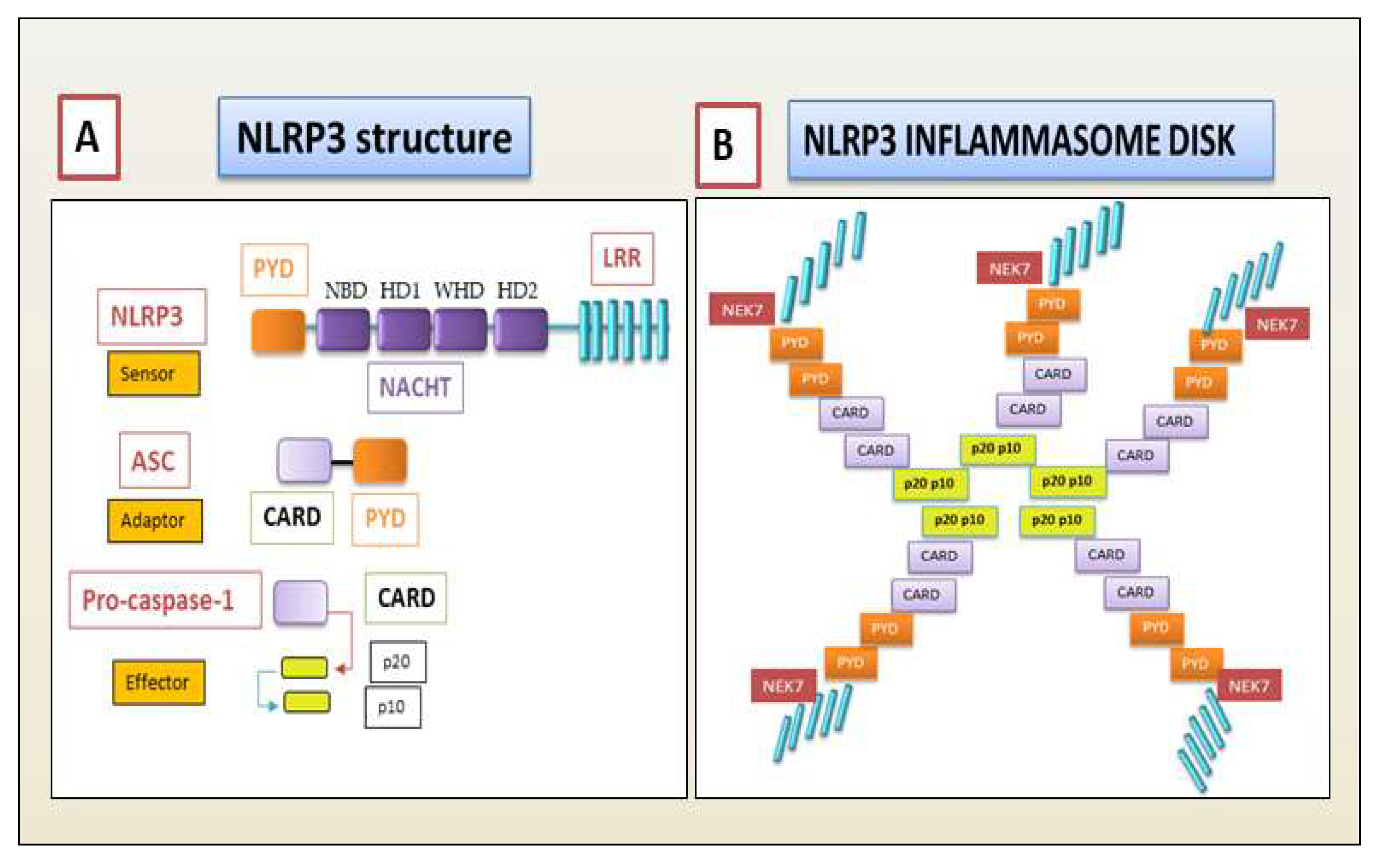
Figure 2.
mechanism of NLRP3 inflammasome activation. The NLRP3 inflammasome can be activated through canonical, non-canonical, and alternative pathways. The canonical activation of the NLRP3 inflammasome is composed of two signals. Step 1, the priming signal, is induced by cytokines like TLR4 or TNF, and then it activates the NF-κB pathway, triggering the upregulation of NLRP3 protein, pro-caspase-1, pro-IL-1β, and pro-IL-18 expression. During step 2, the assembly signal, numerous PAMPs or DAMPs promote NLRP3 inflammasome assembly, triggering pro-caspase-1 self-cleavage and activation. Extracellular ATP and K+ efflux through the P2X7 receptor and Cl- efflux promote the NLRP3 inflammasome activation. Active caspase-1 cleaves the immature cytokines, such as pro-IL-1β and pro-IL-18, to produce active cytokines IL-1β and IL-18, respectively. It also cleaves gasdermin D and releases its N-terminal domain, determining the pyroptosis process and the release of the mature inflammatory cytokines. Non-canonical NLRP3 inflammasome activation occurs in response to cytosolic LPS induced by caspase-4/5/11. Induction of NLRP3 inflammasome activation is triggered by K+ efflux that leads to activation of gasdermin D. Alternative NLRP3 inflammasome activation requires a signal TLR4 activation-dependent in monocytes through the RIP1-FADD-caspase-8 pathway. (FADD, Fas-associated protein with death domain; NF-κB - nuclear factor kappa-light-chain-enhancer of activated B cells; IL-1β, interleukin-1β; IL-18, interleukin-18; RIP, receptor-interacting protein; TLR, Toll-like receptor).
Figure 2.
mechanism of NLRP3 inflammasome activation. The NLRP3 inflammasome can be activated through canonical, non-canonical, and alternative pathways. The canonical activation of the NLRP3 inflammasome is composed of two signals. Step 1, the priming signal, is induced by cytokines like TLR4 or TNF, and then it activates the NF-κB pathway, triggering the upregulation of NLRP3 protein, pro-caspase-1, pro-IL-1β, and pro-IL-18 expression. During step 2, the assembly signal, numerous PAMPs or DAMPs promote NLRP3 inflammasome assembly, triggering pro-caspase-1 self-cleavage and activation. Extracellular ATP and K+ efflux through the P2X7 receptor and Cl- efflux promote the NLRP3 inflammasome activation. Active caspase-1 cleaves the immature cytokines, such as pro-IL-1β and pro-IL-18, to produce active cytokines IL-1β and IL-18, respectively. It also cleaves gasdermin D and releases its N-terminal domain, determining the pyroptosis process and the release of the mature inflammatory cytokines. Non-canonical NLRP3 inflammasome activation occurs in response to cytosolic LPS induced by caspase-4/5/11. Induction of NLRP3 inflammasome activation is triggered by K+ efflux that leads to activation of gasdermin D. Alternative NLRP3 inflammasome activation requires a signal TLR4 activation-dependent in monocytes through the RIP1-FADD-caspase-8 pathway. (FADD, Fas-associated protein with death domain; NF-κB - nuclear factor kappa-light-chain-enhancer of activated B cells; IL-1β, interleukin-1β; IL-18, interleukin-18; RIP, receptor-interacting protein; TLR, Toll-like receptor).
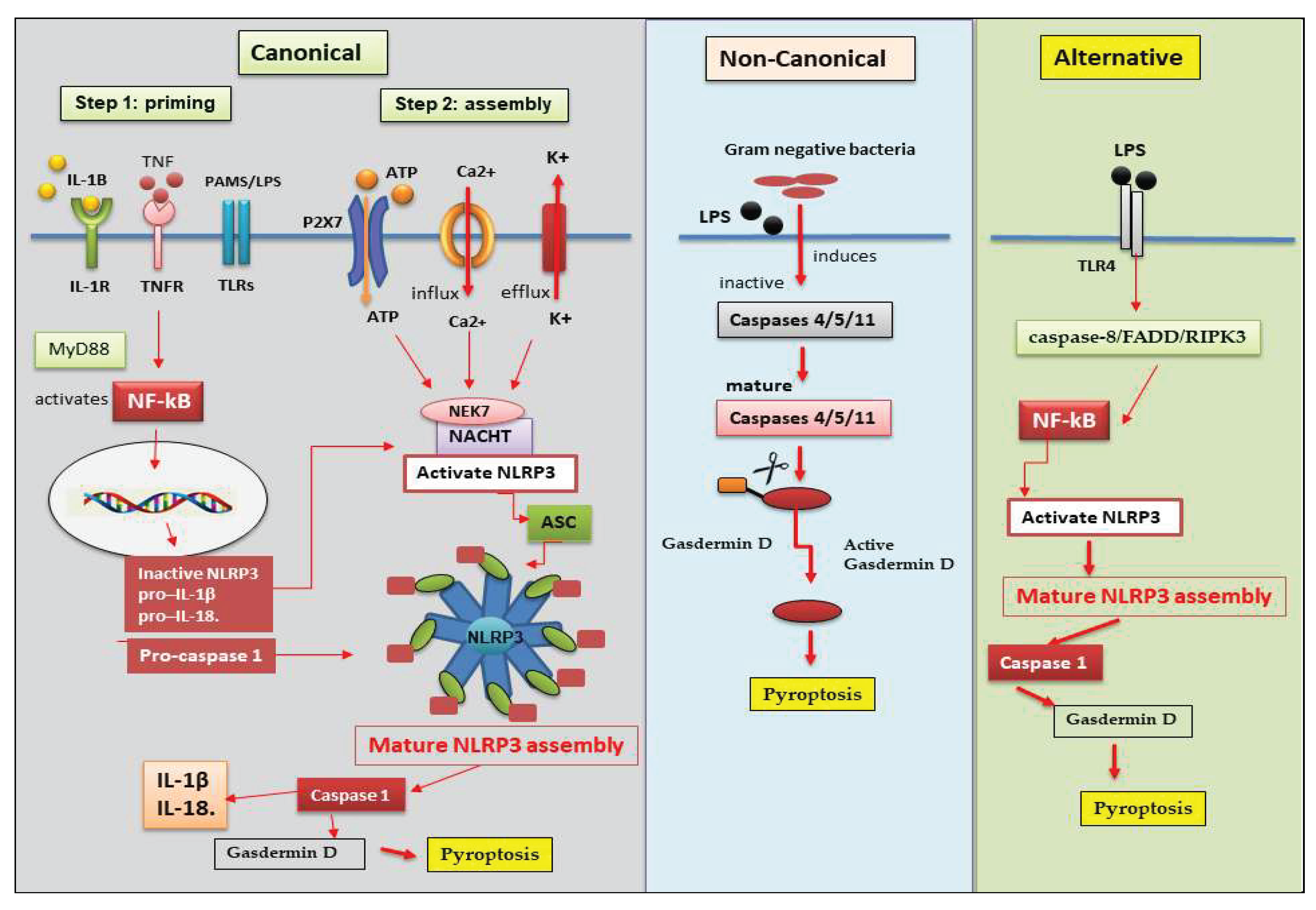
Figure 3.
schematic representation of AIM2 domain organization. The AIM2 inflammasome is composed by AIM2, ASC, and pro-caspase-1. AIM2 includes one pyrin domain (PYD) at the N-terminus and one or two hematopoietic interferon-inducible and nuclear (HIN) domains at the C-terminus. The pyrin and HIN-200 domains of AIM2 form a complex and are maintained in an autoinhibitory state. The HIN domain binds to cytosolic dsDNA derived from bacteria and viruses. (AIM2: absent in melanoma 2; CARD, C-terminal caspase recruitment domain; HIN, hematopoietic interferon-inducible and nuclear domain. (PYD, pyrin domain.).
Figure 3.
schematic representation of AIM2 domain organization. The AIM2 inflammasome is composed by AIM2, ASC, and pro-caspase-1. AIM2 includes one pyrin domain (PYD) at the N-terminus and one or two hematopoietic interferon-inducible and nuclear (HIN) domains at the C-terminus. The pyrin and HIN-200 domains of AIM2 form a complex and are maintained in an autoinhibitory state. The HIN domain binds to cytosolic dsDNA derived from bacteria and viruses. (AIM2: absent in melanoma 2; CARD, C-terminal caspase recruitment domain; HIN, hematopoietic interferon-inducible and nuclear domain. (PYD, pyrin domain.).
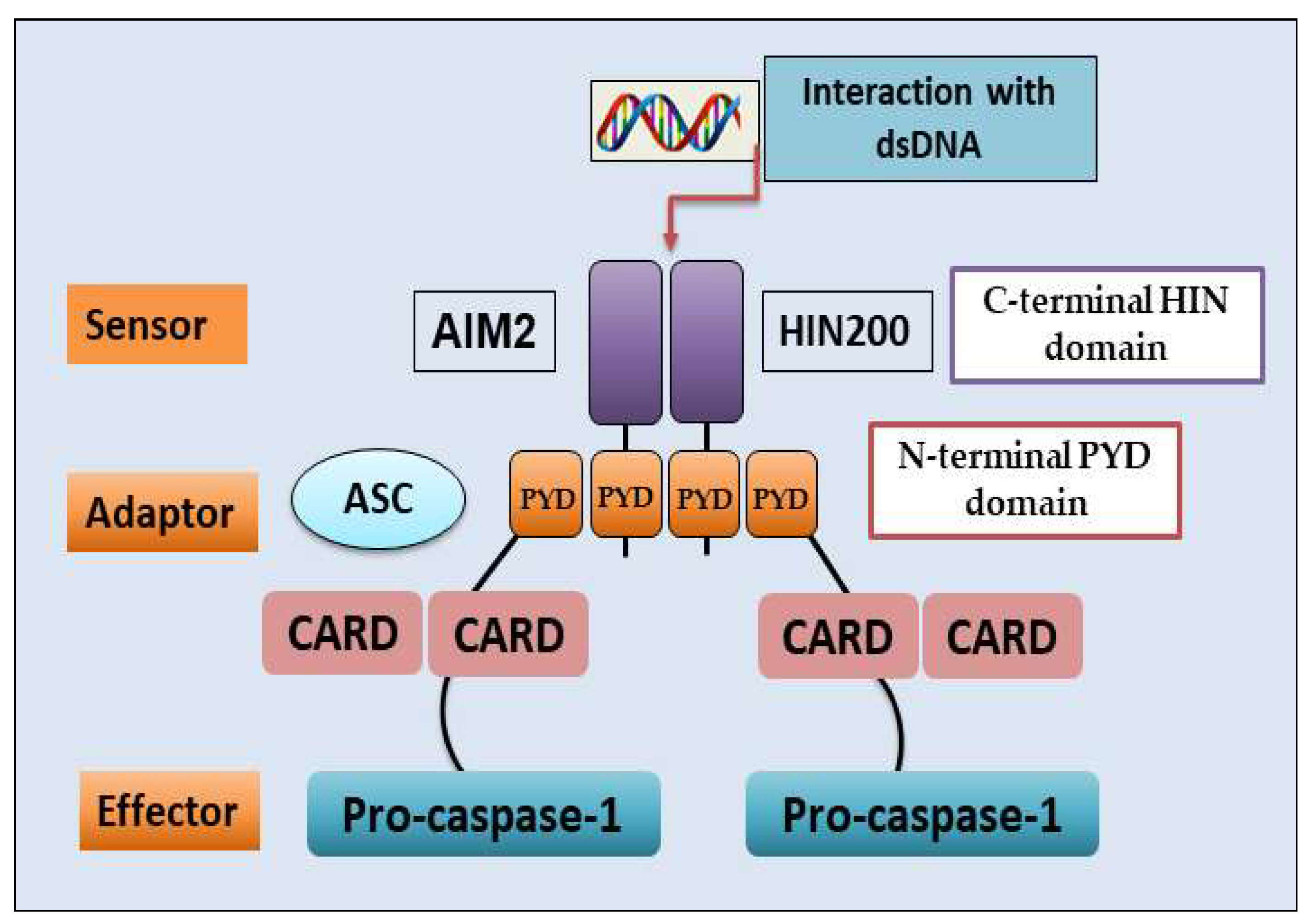
Figure 4.
model of AIM2 inflammasome activation. Double-stranded DNA released from bacteria and viruses, binds to AIM2, inducing assembly of the AIM2 inflammasome that consists of AIM2, ASC, and pro-caspase-1. Activated caspase-1 then cleaves pro-interleukin-1β and gasdermins to mediate inflammation and pyroptosis, respectively. (AIM2: Absent in melanoma 2).
Figure 4.
model of AIM2 inflammasome activation. Double-stranded DNA released from bacteria and viruses, binds to AIM2, inducing assembly of the AIM2 inflammasome that consists of AIM2, ASC, and pro-caspase-1. Activated caspase-1 then cleaves pro-interleukin-1β and gasdermins to mediate inflammation and pyroptosis, respectively. (AIM2: Absent in melanoma 2).
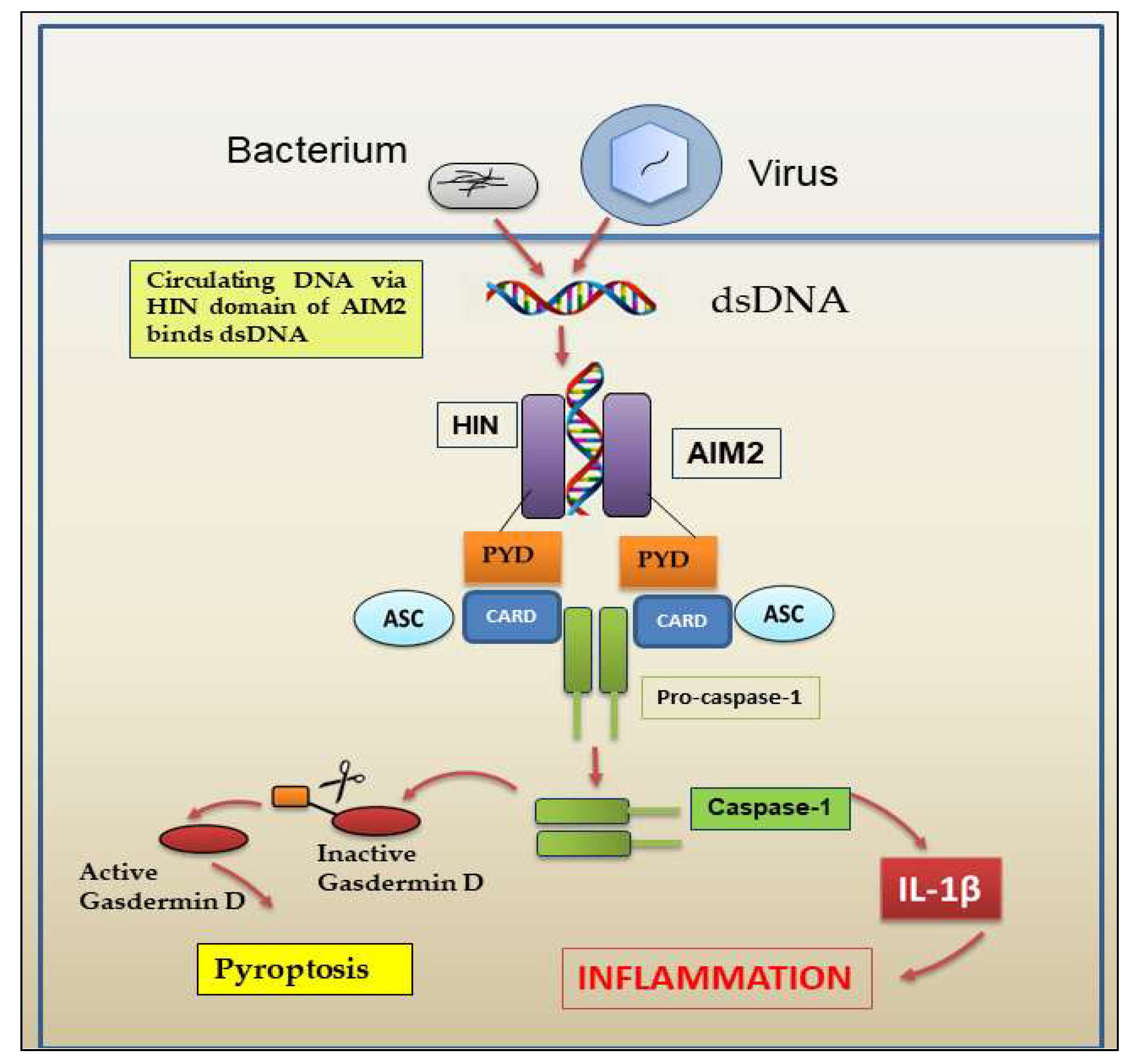
Disclaimer/Publisher’s Note: The statements, opinions and data contained in all publications are solely those of the individual author(s) and contributor(s) and not of MDPI and/or the editor(s). MDPI and/or the editor(s) disclaim responsibility for any injury to people or property resulting from any ideas, methods, instructions or products referred to in the content. |
© 2026 by the authors. Licensee MDPI, Basel, Switzerland. This article is an open access article distributed under the terms and conditions of the Creative Commons Attribution (CC BY) license.
Copyright: This open access article is published under a Creative Commons CC BY 4.0 license, which permit the free download, distribution, and reuse, provided that the author and preprint are cited in any reuse.


