
Submitted:
15 May 2026
Posted:
18 May 2026
You are already at the latest version
Abstract
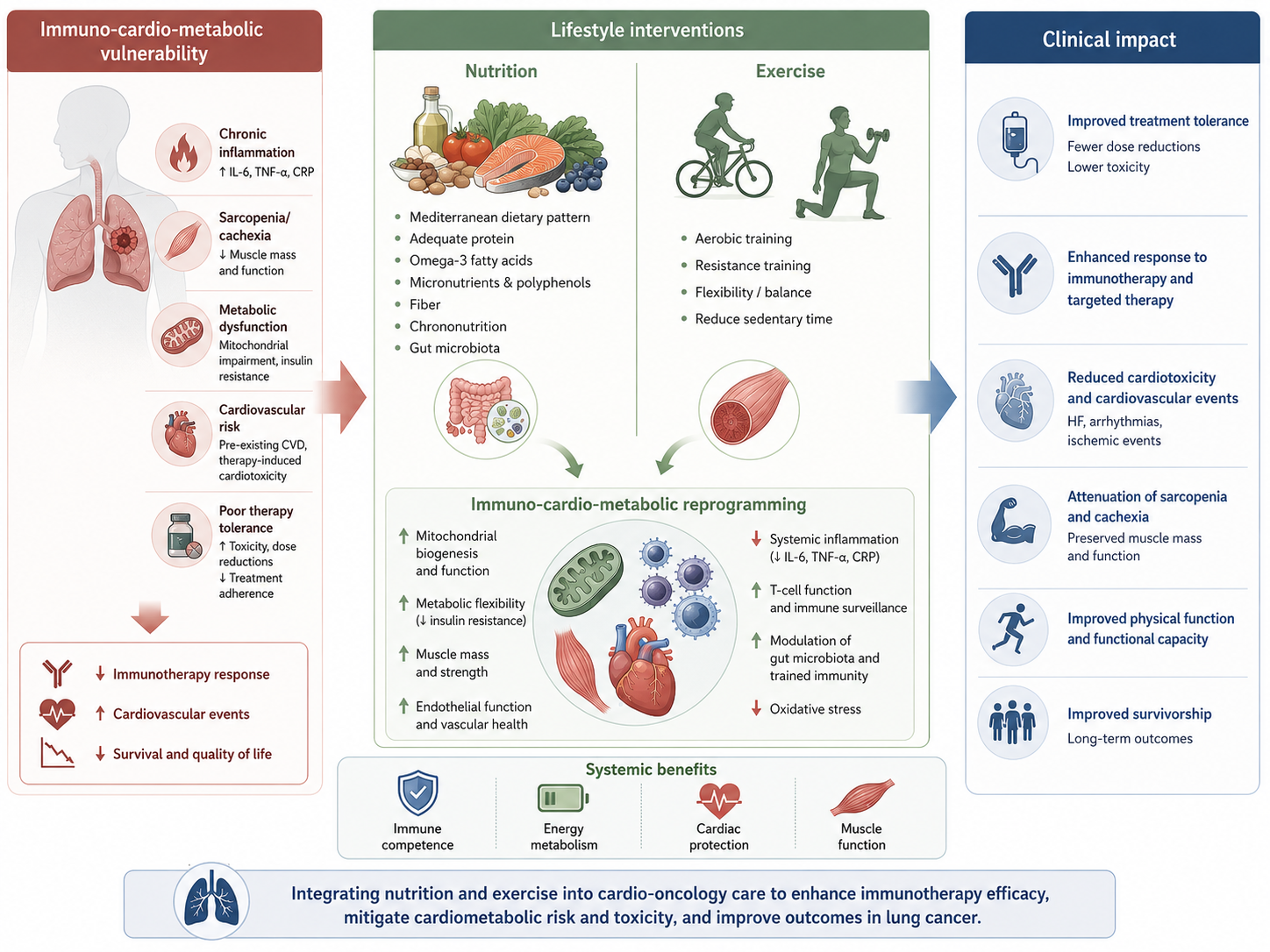
Growing evidence suggests that optimized nutritional status and regular physical activity enhance immunotherapy responsiveness by modulating immunometabolism, improving T-cell function, reducing chronic inflammation, and favorably shaping the gut microbiota. Cancer-related metabolic dysfunction and treatment-induced cardiotoxicity converge to impair both skeletal and cardiac muscle energetics, thereby limiting treatment tolerance and effectiveness. Lung cancer (LC) patients frequently present with malnutrition, systemic inflammation, sarcopenia, and pre-existing cardiovascular disease (CVD), conditions that not only compromise functional status and survival but also represent significant competing risks to oncologic outcomes. By counteracting sarcopenia and malnutrition, lifestyle interventions may also reduce immune-related adverse events (irAEs) and mitigate cardiovascular (CV) toxicity, ultimately allowing patients to sustain effective treatment intensity. This narrative review examines the emerging role of targeted nutritional strategies and structured physical exercise as integral components of supportive care in LC, with a specific focus on their impact on cardiac metabolism, CV risk, and response to anticancer therapies, including immunotherapy. In this context, exercise and appropriate dietary interventions emerge as modifiable factors capable of restoring metabolic flexibility, improving mitochondrial function, and reducing systemic inflammation. These effects are particularly relevant in patients receiving immune checkpoint inhibitors (ICIs), where metabolic health and immune competence are tightly interconnected and trained immunity may be a key issue. Finally, the review discusses future challenges and perspectives, emphasizing the impact of CVD on long-term LC survivors’ outcome and of allostatic load and financial toxicity on adherence to lifestyle interventions. The integration of personalized nutrition and exercise programs into cardio-oncology care pathways is proposed as a key strategy to enhance immunotherapy efficacy, improve cardiometabolic resilience, and translate prolonged survival into better quality of life.
Keywords:
lung cancer
; nutrition
; exercise
; cardiac metabolism
; sarcopenia
; malnutrition
; cardiovascular risk
; therapy response
; lifestyle intervention
; inflammation
; immune system
; immunotherapy
; targeted therapy
Copyright: This open access article is published under a Creative Commons CC BY 4.0 license, which permit the free download, distribution, and reuse, provided that the author and preprint are cited in any reuse.


