

Submitted:
15 May 2026
Posted:
18 May 2026
You are already at the latest version
Abstract
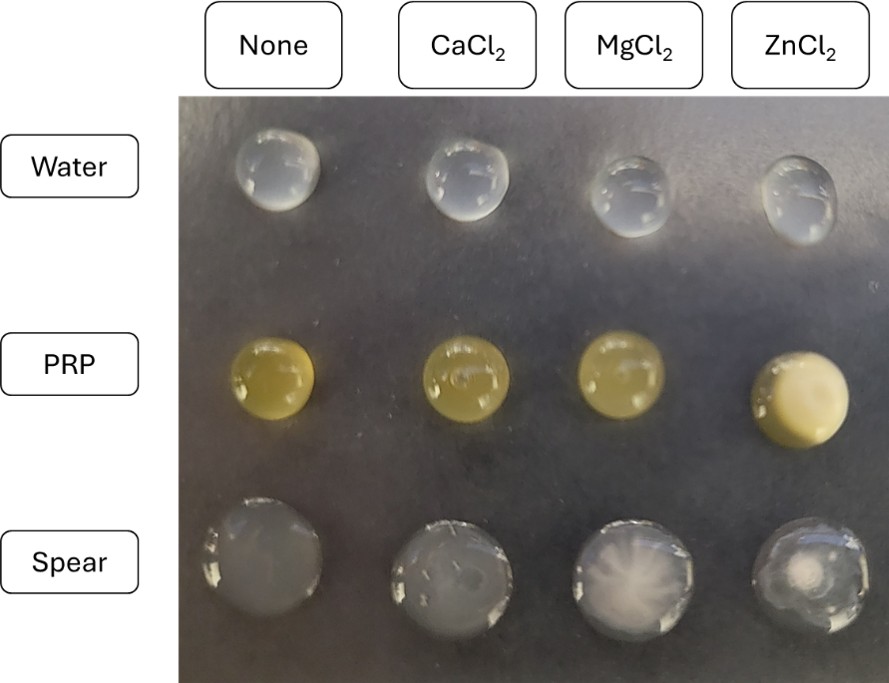
The coagulation cascade depends on the active participation of several elements present in the blood as well as signals arising from the endothelial cells. A platelet plug is a temporary, fast-response seal formed by platelets at the site of a damaged blood vessel to initiate hemostasis. It acts as the first step in primary hemostasis, where platelets stick to exposed collagen, activate, and aggregate to create a plug that temporarily prevents blood loss. Among changes platelets undergo is the degranulation step. Platelet degranulation is the process where activated platelets release stored chemical mediators from their internal alpha and dense granules into the bloodstream to promote hemostasis and immune responses. Platelet degranulation results in the release of substances like ADP, serotonin, fibrinogen, and zinc. In the present work we provide evidence that the high local concentration of zinc is intended to target junctional adhesion molecule A (JAM-A) that remains inactive (inhibited cell-adhesion and cytoskeleton dynamics) when coagulation is not needed and platelets move through the blood stream as single units. Zinc-activated JAM-A leads the platelets to aggregate. Our experimentation includes work with platelets, and a synthetic biology small peptide to quench the effects of zinc. We suggest that further exploring this mechanism of zinc-activated JAM-A can be advantageous for better understanding hemostasis, its role in antithrombotic therapy, coagulation inhibition, or thrombosis prevention.
Keywords:
primary hemostasis
; zinc
; platelet degranulation
; platelet plug
Copyright: This open access article is published under a Creative Commons CC BY 4.0 license, which permit the free download, distribution, and reuse, provided that the author and preprint are cited in any reuse.


