
Submitted:
13 May 2026
Posted:
14 May 2026
You are already at the latest version
Abstract
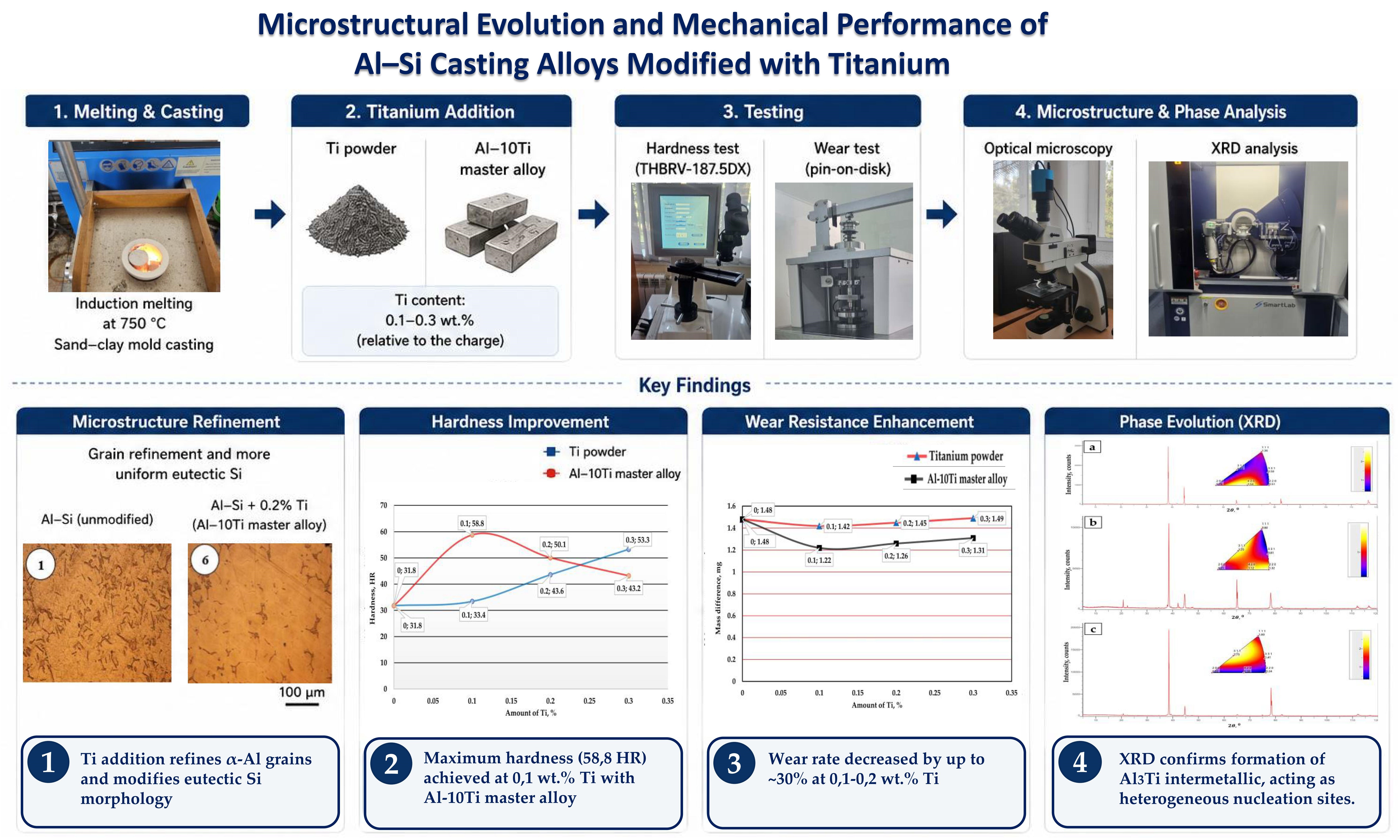
One of the most common ways to improve the properties of aluminum casting alloys is through their modification. This study investigates the influence of titanium modification on the mechanical properties of Al-Si casting alloys. In this research, the Al-Si alloy which is widely used in the foundry industry, was selected as an object. The samples were liquefied in an induction furnace, and the liquid alloy was poured into sand-clay molds. The casting temperature was 750 °C. The titanium element was added to the liquid Al-Si foundry alloy in special packaging in the form of a powder from 0.1% to 0.3% of the charge and in the form of Al-10Ti master alloy from 0.1% to 0.2%. Then, samples were machined to prepare further investigations. During the research, mechanical properties including hardness and wear resistance analysis were conducted. Moreover, X-ray diffraction and microstructural analysis of the Ti modified Al-Si samples were carried out. Experimental results showed that the addition of titanium improved the mechanical properties of the samples. That is, the highest hardness was obtained at 0.1 wt.% Ti modified Al–10Ti master alloy, while titanium powder resulted in a more gradual increase in hardness. According to the wear resistance evaluations, addition of titanium within the range of 0.1–0.2 wt.% content was performed an optimal result. After, microstructural analysis, it is found that titanium promoted grain refinement and improved structural homogeneity, especially it is added in the form of Al-10Ti master alloy. The introduction of titanium into the aluminum alloy led to the formation of the Al₃Ti intermetallic compound, which contributed to the improvement of mechanical properties. These results demonstrate that the modification of Al–Si alloys with titanium can be reliably used to predict and improve mechanical properties based on comprehensive experimental analysis.
Keywords:
titanium
; aluminum
; microstructure
; mechanical properties
; phases
; master alloy
; silicon
1. Introduction
Aluminum is one of the most abundant metals in the world, and consequently, aluminum and its alloys are widely utilized across various industrial sectors. In recent years, the production of casted components from aluminum alloys has become increasingly widespread in industries such as mechanical engineering, aerospace, automotive manufacturing, and agricultural machinery [1,2,3,4]. The distinctive properties of aluminum alloys—namely their low density, high strength, and good machinability—have made them highly suitable for extensive industrial applications [5,6,7,8].
Accordingly, extensive research has been conducted worldwide to enhance the performance of aluminum alloys [9,10,11]. In particular, the incorporation of modifying elements has proven to be an effective approach for tailoring microstructure and significantly improving mechanical properties [12,13,14].
For instance, M.S. Węglowski and S. Dymek investigated the modification of the microstructure of the cast aluminum alloy AlSi9Mg through friction-based processing. They found that friction-modified treatment significantly fragmented coarse needle-like silicon particles and primary aluminum dendrites, ensuring a more uniform distribution of silicon particles within the aluminum matrix. Moreover, casting porosity was almost completely eliminated [15].
Furthermore, Konstantin Borodianskiy and Michael studied the WC modified Aluminum and Al–Si casting alloys. Their primary objective was to determine and characterize the effect of adding a small number of nanoparticles to molten metal. The experiments were carried out using 1 kg of molten aluminum. The results demonstrated that the modification of pure aluminum with WC nanoparticles has a significant influence on microstructure formation. Based on fundamental principles of materials science and the obtained findings, it was concluded that grain refinement leads to an improvement in the mechanical properties of materials [16].
Li, Q. et al. experimentally determined that the addition of Sm (samarium) has a significant effect on the microstructure and mechanical properties of the Al–20%Si alloy. The study revealed that modifying the aluminum alloy with a small amount of samarium (up to 0.6 wt%) transforms the primary and eutectic silicon phases from coarse, needle-like structures into fine, smooth, and fibrous morphologies, which in turn improves the mechanical properties. As a result, both the tensile strength and ductility of the alloy increased significantly. They found that 0.8 wt% samarium content caused the phase coarsening and led to deterioration of mechanical properties. The accumulation of extra modifier and the interruption of the solidification process provided an explanation for this event [17].
According to above mentioned date, it can be concluded that improving the microstructure of aluminum alloys is a key factor in enhancing their mechanical properties. Studies have shown that titanium is one of the most effective grain-refining elements in aluminum alloys. The alloy's strength and hardness greatly increase as a result of the grain refinement procedure. The impact of Ti on aluminum alloys has been the subject of numerous investigations to date.
Yu, F. et al. studied the influence of an Al–5Ti–B master alloy on the microstructure and electrochemical properties of 1060 aluminum alloy. They found that α-Al grains were noticeably refined after adding 0.05 wt.% of Al–Ti–B, it transformed them from a dendritic structure into a more uniform morphology. In addition, iron-rich phases underwent a transformation from long, rod-like forms to small, spherical particles. These microstructural changes reduced galvanic corrosion effects and improved the overall stability of the alloy [18].
Bermingham, M. J. et al. found that alloying elements such as aluminum and vanadium influence nucleation and growth kinetics during solidification, and they lead to a reduction in grain size. Based on theoretical models and phase diagram analyses, it was demonstrated that these elements play a significant role in the grain refinement process and can be used to predict microstructural evolution [19].
Hu, K. et al. investigated the role of alloying elements in controlling the microstructure of Al–Cu alloys, with particular emphasis on titanium. They found that Ti improves the mechanical properties of the alloy through the grain refinement and formation of strength phases. On the other hand, although an increase in Ti content led to some degree of grain refinement, it was observed that in certain cases the thermal stability of the primary strengthening phase did not improve significantly [20].
Wei, Q et al. studied the modification of the hypoeutectic A357 (Al–Si–Mg–Ti) alloy with Sc, and found a noticeable reduction in the size of primary α-Al dendrites. As a result, the ultimate tensile strength and hardness increased by 28% and 19%, respectively, while elongation to failure increased by 165% [21].
Although the conducted studies constitute the majority, the studies comparing them specifically by adding the Ti modificator in various methods constitute a minority. This confirms the relevance of research in this direction and the importance of such study in achieving significant results. In this study, the modification process of aluminum alloys with titanium is analyzed. Moreover, the influence of Ti modification content on the hardness, wear resistance, and microstructure of Al-Si casting alloys were comprehensively investigated. The addition of small amounts of titanium to aluminum casting alloys has a significant effect on the solidification process, leading to grain refinement and promoting a more uniform micro segregation distribution. In particular, titanium forms intermetallic compounds that hinder dislocation movement, resulting in increased hardness and wear resistance. Moreover, the addition of titanium enhances the overall strength and service performance of the alloy. Based on the obtained results, the study seeks to determine the optimal titanium content and to develop scientific conclusions for producing high-performance, strong, and durable aluminum alloys.
2. Materials and Methods
In the experiments, an Al–Si casting alloy, (AK7 silumin) widely used in the foundry industry, was selected as the research object. Its chemical composition is presented in Table 1. Because of it’s good casting properties, good weldability, machinability, and corrosion resistance, AK7 silumin stand out from other Al–Si alloys [22]. It is typically employed to produce castings of complex shapes with high density, good fluidity, low porosity, and low susceptibility to hot cracking
Induction melting process was used to prepare the samples (Figure 1). The molten alloy was poured into sand–clay molds. In the experiments, titanium was introduced into the aluminum–silicon alloy using two different methods. In the first method, titanium powder was added in special packages in an amount ranging from 0.1% to 0.3% relative to the charge. In the second method, an Al–10Ti master alloy was used. In this case as well, titanium was introduced so that its content in the Al–Si alloy ranged from 0.1% to 0.3% relative to the charge. Figure 2 shows the titanium and the Al–10Ti master alloy used in the study.
After all samples were cast into sand–clay molds, they were removed from the molds and subjected to machining in order to evaluate their mechanical properties. Among the mechanical properties, hardness and wear resistance were analyzed. Hardness measurements were carried out using a THBRV-187.5DX hardness testing device (Figure 3). The THBRV-187.5DX is a high-precision universal hardness tester equipped with a closed-loop load control system, designed to determine hardness according to Brinell, Rockwell, and Vickers methods. Prior to testing, the surface of the machined samples was ground using abrasive paper to ensure proper surface quality, subsequently, hardness tests were performed.
Initially, the hardness of the unmodified sample (without titanium addition) was measured. Then, the hardness of the samples modified with titanium powder and those modified using an aluminum–titanium master alloy were determined. The Rockwell method was used to measure hardness. In the Rockwell hardness test, a diamond cone indenter with a 120° apex angle or hardened steel balls (with diameters of 1/16 inch = 1.5875 mm or 1/8 inch = 3.175 mm) were used as indenters.
Wear resistance was evaluated using a Hengxu MPX-3 device, where the wear resistance of the samples was determined based on their mass loss during testing (Figure 4). This wear testing device is an integrated electromechanical system distinguished by its compact and refined design. The main unit is an independent tabletop mechanism, and the measurement and control system, operated via computer software, is located on one side of the main unit.
3. Results
3.1. Hardness Analysis
Hardness measurements were performed at multiple locations on each sample surface, and the average values were calculated. The results are summarized in Table 2.
Based on the obtained results, following graph showing the dependence of hardness on titanium content in the composition was developed (Figure 5).
As can be seen from Figure 5, the average hardness results indicate that the hardness of Al-Si alloys strongly depend on the titanium content, and different trends are observed depending on the type of modifier used. At a low titanium content (0.1%), the use of an Al–10Ti master alloy leads to a sharp increase in hardness (about 58.8 HR), reaching the maximum value. However, when the titanium content is increased to 0.2–0.3% relative to the charge, a decrease in hardness is observed for the master alloy. In contrast, for samples modified with titanium powder, a gradual and steady increase in hardness is observed. The maximum value (about 53.3 HR) is recorded at 0.3% Ti. This behavior can be explained by the gradual dissolution and more uniform distribution of titanium powder in the melt. The results demonstrate that not only the titanium content but also the method of its introduction (i.e., the type of modifier used) has a significant influence on the hardness of Al–Si alloys.
3.2. Analysis of the Wear Resistance
In the next stage of the study, the wear resistance, one of the key mechanical properties, was analyzed. The machined samples were mounted on the testing device, and the experiments were carried out accordingly. Before testing, the initial mass of each sample was measured using a precision balance and later compared with the mass after testing. The amount of wear was determined based on the difference between the initial and final masses of the samples. The duration of each wear test was 10 minutes. During the experiments, the friction force, mass loss, and applied load were recorded, and the coefficient of friction was calculated using these parameters. For this purpose, the following formula was used:
where, μ — coefficient of friction, F — friction force (N, Newton), and N is a normal load (applied force, Newton). The friction coefficient was calculated using Eq.1, and the corresponding results are presented in Table 3. The relationships between titanium content, mass loss, and the coefficient of friction are shown in Figure 6 and Figure 7.
Figure 6 shows that the results indicate that the wear resistance of the Al-Si alloy (selected as the research object) strongly depends on both the titanium content and the method of its modification. The graph reveals that in the unmodified condition (0% Ti), the samples exhibit the highest mass loss, indicating poor wear resistance. In contrast, samples modified with titanium show a significant reduction in mass loss, with the minimum value observed at 0.1% Ti content. In particular, the lowest mass loss (1.22 mg) was achieved when modification was carried out using the Al–10Ti master alloy, demonstrating the high efficiency of this modification method.
An increase in titanium content to 0.2% and 0.3% relative to the melt resulted in a rise in mass loss once again. This can be explained by the presence of excess titanium in the aluminum alloy, which leads to the formation of coarse intermetallic phases. As shown in Figure 6 and Figure 7, the coefficient of friction exhibits the most favorable values when titanium is added in the range of 0.1% to 0.2% relative to the charge. However, at 0.3% content of Ti, the coefficient of friction increases again.
3.3. Microstructural Analysis
The microstructural analysis of the samples was carried out using an optical metallographic microscope [23]. An AmScope 50X–500X metallographic microscope was used to study the microstructure of the samples. The micrographs of the polished and etched samples are presented in Figure 8.
The microstructural analysis presented in Figure 8 shows that modifying the aluminum casting alloy with different amounts of titanium (0.1–0.3% relative to the charge), introduced either in powder form or via an Al–10Ti master alloy, has a significant effect on grain refinement. The results indicate that the dispersion and refinement efficiency of the microstructure strongly depend on both the titanium content and the method of its introduction.
The microstructure of the unmodified Al–Si alloy (Figure 8.1) is characterized by a coarse and non-uniform structure, where α-Al grains are relatively large and eutectic silicon is irregularly distributed. Such a microstructure is typical for unmodified casting alloys and is generally associated with inferior mechanical properties due to the limited number of effective nucleation sites during solidification.
When the alloy is modified with 0.1% of titanium powder (Figure 8.2), elongated and needle-like phases appeared in the microstructure, indicating the presence of intermetallic compounds. However, these phases were distributed non-uniformly, suggesting that the titanium powder was not evenly dispersed in the melt. As a result, the degree of grain refinement remains limited, and microstructural anisotropy persists.
Increasing the titanium content to 0.2% (Figure 8.3) resulted in a more homogeneous microstructure. The α-aluminum grains became finer and more evenly distributed, indicating enhanced nucleation. This suggests that a moderate titanium addition effectively contributes to grain refinement in the Al–Si alloy.
At a higher titanium content (0.3%) introduced in powder form (Figure 8.4), no significant additional grain refinement was observed. The microstructure remained similar to that at lower additions. This can be explained by the limited effectiveness of excess titanium powder in forming additional nucleation sites, possibly due to particle agglomeration or insufficient dissolution in the melt.
In contrast, when titanium is introduced in the form of an Al–10Ti master alloy, distinctly different results were observed. At 0.1% Ti (Figure 8.5), the number of fine and uniformly distributed intermetallic particles increased. These particles act as heterogeneous nucleation sites, resulting in a finer and more homogeneous microstructure compared to powder-modified samples.
The most optimal result was achieved at 0.2% of Ti added via the master alloy (Figure 8.6). In this condition, α-Al grains were significantly refined and uniformly distributed, this provided an optimal grain size distribution in Al-Si alloy. This occurred as a result of efficiently formed and evenly distributed Al3Ti intermetallics, as they are strong nucleation centers during solidification.
However, when the titanium content was increased to 0.3% (Figure 8.7), excessive intermetallic phases were formed. Such phases tend to agglomerate in certain areas, causing local non-uniformity and a slight coarsening of the microstructure. Consequently, adding too much titanium begins to negatively affect the microstructure of aluminum alloys.
3.4. XRD Analysis
In the next stage, XRD analyses of the obtained samples were carried out. For this purpose, a Rigaku SmartLab system was used (Figure 9). Based on the previous experimental results [24,25], XRD analyses were performed on three types of samples: unmodified samples, samples modified with 0.2% titanium added in powder form, and samples modified with titanium introduced as a master alloy. The XRD patterns are presented in Figure 10.
The XRD results presented in Figure 10 demonstrate that the modification of Al–Si binary alloys with titanium has a significant influence on their phase composition and structure. For the unmodified Al–Si alloy showed in Figure 10a, the diffraction pattern shows that the dominant phases are α-Al and Si. The strong diffraction peaks corresponding to the α-Al phase are observed at approximately 2θ ≈ 38°, 44°, and 65°, indicating that the aluminum matrix is the primary phase. In addition, low-intensity peaks associated with the Si phase confirm the presence of a eutectic structure in the alloy. In Figure 10b, where 0.2% titanium is added in powder form, new low-intensity peaks appeared in the diffractogram. These peaks correspond to the Al₃Ti intermetallic phase formed between Al and Ti. However, the relatively low intensity of these peaks indicates that titanium powder is not fully dissolved or uniformly distributed in the melt. As a result, the amount of Al₃Ti formed was limited, and these particles acted only partially as nucleation sites. As a result, grain refinement was limited. However, when Ti was in the form of an Al–10Ti master alloy at 0.2% of the charge, the XRD results showed more noticeable changes. The diffraction peaks for the Al₃Ti phase became clearer and stronger. Consequently, the solubility of titanium in Al-Si is improved and evenly distributed. As a result, a large number of fine-dispersed and evenly distributed Al3Ti intermetallic particles are formed. These particles are highly efficient heterogeneous nucleation points, leading to a significant granularity of the α-Al phase. Furthermore, the slight expansion of peaks and changes in intensity in α-Al reflections indicate a decrease in the crystallite size.This observation can be explained by the Scherrer equation, which relates peak broadening to smaller crystallite sizes [26,27]. Thus, the addition of titanium improves the microstructure of the Al-Si alloys, especially, especially Ti modification by an Al–10Ti master alloy better enhances mechanical properties.
4. Discussions
The comprehensive analysis of hardness, wear resistance, microstructure, and phase composition showed that titanium modification is an effective approach for improving the performance of Al–Si casting alloys. Method of adding Ti in the form of Al–10Ti master alloy showed high efficiency because of its ability to provide more uniform titanium distribution and enhanced formation of Al₃Ti intermetallic phases. The most important contribusion of the study are explained as follows:
- -
- The highest hardness was achieved when Ti was added to the Al-Si alloy via the Al-10Ti master alloy in an amount of 0.1 wt.%. Microstructural analysis showed that the reason for this is the superior grain-refining efficiency of the master alloy compared to direct Ti powder addition.
- -
- The addition of a large amount of Ti (0.3 wt.%) to the Al-Si alloy leads to the enlargement of the intermetallic phases, resulting in a deterioration of the alloy's tribological properties. The added Ti content in the range of 0.1-0.2 wt.% yielded the best results in the alloy's wear resistance tests and reduced the friction coefficient.
- -
- The Al-10Ti master alloy yielded a homogeneous and improved microstructure (0.2 wt.% of Ti), which is better than Tital powder. This, in turn, confirms the importance of uniform titanium distribution for effective grain refinement in Al-Si cast alloys.
- -
- The formation of Al3Ti intermetallic phases after titanium addition was determined by XRD analysis. This shows that these phases act as effective heterogeneous nucleation sites, which are important for cleaning and improving the mechanical properties of the grains.
To sum up, it is found that the hardness and tribological behavior of Al–Si casting alloys can be controlled by Ti modified microstructural refinement. These findings offer a clear scientific foundation for improving how titanium is used in industrial aluminum casting. Furthermore, these findings corresponds with previous studies indicating that Ti-containing master alloys enhance the mechanical properties of Al–Si alloys by promoting grain refinement and intermetallic phase formation [18,28,29,30,31]. The enhanced performance of the Al–10Ti master alloy, relative to direct titanium powder modification, performs that the titanium addition method noticeably influences the resulting microstructure and hardness of the alloy.
5. Conclusions
The maximum hardness of the aluminum–silicon alloy was achieved at 0.1% Ti when using the Al–10Ti master alloy. In contrast, titanium powder resulted in a more gradual and stable increase in hardness. Based on the results, it is recommended to introduce titanium into the Al–Si alloy within the range of 0.1% to 0.2% relative to the charge.
According to the wear resistance analysis, the optimal titanium content for Al–Si alloys was also determined to be in the range of 0.1% to 0.2%. Furthermore, it was confirmed that modification using the Al–10Ti master alloy is more effective than using titanium powder, as evidenced by the obtained graphs.
Microstructural analysis demonstrated that titanium modification is a key factor governing the microstructural evolution of aluminum alloys. Compared to titanium powder, the Al–10Ti master alloy ensures a more effective and uniform distribution of nucleation particles. It was established that the addition of 0.2% Ti provides optimal conditions for achieving a fine and homogeneous microstructure in Al–Si alloys.
In addition, XRD analysis revealed that the addition of titanium leads to the formation of a new Al₃Ti intermetallic phase, confirming its critical role in structural modification. The use of the Al–10Ti master alloy further enhances this process, creating favorable conditions for improving structural uniformity and mechanical properties of the alloy.
Author Contributions
Conceptualization, Sarvar Tursunbaev; methodology, Sarvar Tursunbaev and Nigora Rizaeva; software, Umidjon Mardonov, and Sarvar Tursunbaev; validation, Umidjon Mardonov, and Sarvar Tursunbaev; formal analysis, Nigora Rizaeva; investigation, Nuritdin Tadjiev and Sarvar Tursunbaev; resources, Nuritdin Tadjiev, Salima Xashimova, and Javlon Bekpulatov; data curation, Abdulaziz Yusupov, and Bekzod Yusupov; writing—original draft preparation, Sarvar Tursunbaev; writing—review and editing, Umidjon Mardonov; visualization, Furkat Odilov; supervision, Umidjon Mardonov; project administration, Sarvar Tursunbaev. All authors have read and agreed to the published version of the manuscript.
Funding
This research received no external funding.
Institutional Review Board Statement
Not applicable.
Informed Consent Statement
Not applicable.
Data Availability Statement
The original contributions presented in this study are included in the article. Further inquiries can be directed to the corresponding author
Acknowledgments
During the preparation of this manuscript, the author(s) used GPT 5.5, OpenAI for the purposes of grammar correction and language editing. The authors have reviewed and edited the output and take full responsibility for the content of this publication. The authors express their gratitude to the technical team of the Department of Mechanical Engineering Technology of Tashkent state technical university for their close assistance during the experiments.
Conflicts of Interest
The authors declare no conflicts of interest.
References
- Zhu, H.; Xia, C.; Zhang, H.; Zhao, D.; Wang, M.; Wang, H. Design of Non-Heat Treatable High Pressure Die Casting Al Alloys: A Review. J. Mater. Eng. Perform. 2024, 33, 17. [Google Scholar] [CrossRef]
- Pius, K.K.; Ongwen, N.O.; Mageto, M.; Odari, V.; Gaitho, F.M. Mechanical Properties of Al–Mg–Si Alloys (6xxx Series): A DFT-Based Study. Alloys 2023, 2, 3. [Google Scholar] [CrossRef]
- Ferraro, S.; Palumbo, M.; Baricco, M.; Castellero, A. Solidification Window in Al-Based Casting Alloys. Metals 2025, 15, 5. [Google Scholar] [CrossRef]
- Shi, C.; Xu, M.; Guo, X.; Zhu, S.; Zou, D. Characteristics, Encapsulation Strategies, and Applications of Al and Its Alloy Phase Change Materials for Thermal Energy Storage: A Comprehensive Review. Adv. Funct. Mater. 2025, 35, 2. [Google Scholar] [CrossRef]
- Tursunbaev, S.; Mardonov, U.; Chen, D.; Turkoglu, T.; Rizaeva, N.; Saidkhodjaeva, S.; Tadjiev, N.; Odilov, F.; Pushanov, A. Influence of Nickel and Germanium on the Mechanical Properties of Aluminum Alloys. Int. J. Mechatron. Appl. Mech. 2026, 23, 150–158. [Google Scholar] [CrossRef]
- Niu, G.; Mao, J.; Wang, J. Effect of Ce Addition on Fluidity of Casting Aluminum Alloy A356. Metall. Mater. Trans. A 2019, 50, 5935–5944. [Google Scholar] [CrossRef]
- Tursunbaev, S.; Turakhodjaev, N.; Mardonakulov, S.; Toshmatova, S. Effect of Germanium Oxide on the Properties of Aluminum Casting Details in Agricultural Machinery. BIO Web Conf. 2024, 85. [Google Scholar] [CrossRef]
- Ahmed, M.S.; Anwar, M.S.; Islam, M.S.; Arifuzzaman, M. Experimental Study on the Effects of Three Alloying Elements on the Mechanical, Corrosion and Microstructural Properties of Aluminum Alloys. Results Mater. 2023, 20. [Google Scholar] [CrossRef]
- Gursoy, O.; Timelli, G. Lanthanides: A Focused Review of Eutectic Modification in Hypoeutectic Al–Si Alloys. J. Mater. Res. Technol. 2020, 9, 4. [Google Scholar] [CrossRef]
- Tursunbayev, S.; Turakhodjayev, N.; Mardanokulov, S.; Zokirov, R.; Odilov, F. The Effect of Lithium on the Mechanical Properties of Alloys in the Al-Li System. E3S Web Conf. 2023, 390. [Google Scholar] [CrossRef]
- de Giovanni, M.; Kaduk, J.A.; Srirangam, P. Modification of Al-Si Alloys by Ce or Ce with Sr. JOM 2019, 71, 1. [Google Scholar] [CrossRef]
- Jie, L.L.; Baig, M.F.; Mhd Noor, E.E. Effects of Strontium Modification on Corrosion Resistance of Al-Si Alloys in Various Corrosive Environments. Materials 2024, 17, 19. [Google Scholar] [CrossRef]
- Xue, L.W.; Jia, H.L.; Ma, P.K.; Song, J.W.; Zha, M.; Wang, H.Y. Influence of Mg and Cu on Precipitation Behaviors and Mechanical Properties of Al–Si Alloys. Mater. Sci. Eng. A 2024, 908. [Google Scholar] [CrossRef]
- Riener, K.; Nagler, A.; Letofsky-Papst, I.; Leichtfried, G. Processing of Aluminum Alloy 6182 with High Scanning Speed in LPBF by In-Situ Alloying with Zr and Ti Powder. Alloys 2022, 1, 3. [Google Scholar] [CrossRef]
- Węglowski, M.; Dymek, S. Microstructural Modification of Cast Aluminium Alloy AlSi9Mg via Friction Modified Processing. Arch. Metall. Mater. 2012, 57, 1. [Google Scholar] [CrossRef]
- Borodianskiy, K.; Zinigrad, M. Modification Performance of WC Nanoparticles in Aluminum and an Al-Si Casting Alloy. Metall. Mater. Trans. B 2016, 47, 2. [Google Scholar] [CrossRef]
- Li, Q.; Li, J.; Li, B.; Lan, Y.; Xia, T. Effect of Samarium (Sm) Addition on the Microstructure and Tensile Properties of Al–20%Si Casting Alloy. Int. J. Met. 2018, 12, 3. [Google Scholar] [CrossRef]
- Yu, F.; Liu, Z.; Zhao, R.; Yang, J.; Qiao, J.; Hu, W. Effect of Al–Ti–B Master Alloy on Microstructure and Properties of Aluminum-Air Battery Anode Materials. J. Mater. Res. Technol. 2023, 27. [Google Scholar] [CrossRef]
- Bermingham, M.J.; McDonald, S.D.; Dargusch, M.S.; St. John, D.H. Grain-Refinement Mechanisms in Titanium Alloys. J. Mater. Res. 2008, 23, 1. [Google Scholar] [CrossRef]
- Hu, K.; Zou, C.; Wang, H.; Wei, Z. Influence of Ti Elements on the Evolution of Microstructure, Mechanical Properties and Thermal Stability of Al-Cu Alloy. J. Alloys Compd. 2023, 952. [Google Scholar] [CrossRef]
- Wei, Q.; Xu, H.; Bai, X.; Lian, P.; Wang, Y.; Mao, H.; Wang, C. Effect of Sc on Microstructure and Properties of A357 Alloy under Different Casting Conditions. J. Mater. Res. Technol. 2022, 20. [Google Scholar] [CrossRef]
- Romankiewicz, R. Changes in the Structure of the AK7 Alloy in Terms of Modification. Syst. Saf. 2024, 6, 1. [Google Scholar] [CrossRef]
- Tursunbaev, S.; Turakhodjaev, N.; Odilov, F.; Mardanokulov, S.; Zokirov, R. Change in Wear Resistance of Alloy when Alloying Aluminium Alloy with Germanium Oxide. E3S Web Conf. 2023, 401. [Google Scholar] [CrossRef]
- Utyaganova, V.; Goncharov, A.; Sliva, A.; Shishkin, D.; Zotov, B.; Fedorenko, L.; Semin, V. Structural, Mechanical and Corrosion Properties of AZ31 Alloy Produced by Electron-Beam Additive Manufacturing. Alloys 2025, 4, 4. [Google Scholar] [CrossRef]
- Caraveo-Castro, C.R.; Rodríguez-Guerra, Y.; Fuentes-Montero, L.; González-Jacquez, A.I.; Fuentes-Cobas, L.E.; Montero-Cabrera, M.E. Procedures for X-Ray Diffraction Phase Analysis: The Case of Fine Sediments from Peña Blanca, Chihuahua, Mexico. Crystals 2025, 15, 2. [Google Scholar] [CrossRef]
- Miranda, M.A.R.; Sasaki, J.M. The Limit of Application of the Scherrer Equation. Acta Crystallogr. A 2018, 74, 1. [Google Scholar] [CrossRef]
- Lim, D.J.; Marks, N.A.; Rowles, M.R. Universal Scherrer Equation for Graphene Fragments. Carbon 2020, 162. [Google Scholar] [CrossRef]
- Yu, F.; Liu, Z.; Zhao, R.; Yang, J.; Qiao, J.; Hu, W. Effect of Al–Ti–B master alloy on microstructure and properties of aluminum-air battery anode materials. J. Mater. Res. Technol. 2023, 27, 4908–4919. [Google Scholar] [CrossRef]
- Liu, Y.; Liu, X.; Xiufang, B. Grain refinement of Mg–Al alloys with Al4C3–SiC/Al master alloy. Mater. Lett. 2004, 58(7-8), 1282–1287. [Google Scholar] [CrossRef]
- Li, P.; Liu, S.; Zhang, L.; Liu, X. Grain refinement of A356 alloy by Al–Ti–B–C master alloy and its effect on mechanical properties. Mater. Des. 2013, 47, 522–528. [Google Scholar] [CrossRef]
- Ding, W.; Zhao, X.; Chen, T.; Zhang, H.; Liu, X.; Cheng, Y.; Lei, D. Effect of rare earth Y and Al–Ti–B master alloy on the microstructure and mechanical properties of 6063 aluminum alloy. J. Alloys Compd. 2020, 830, 154685. [Google Scholar] [CrossRef]
Figure 1.
Induction furnace.
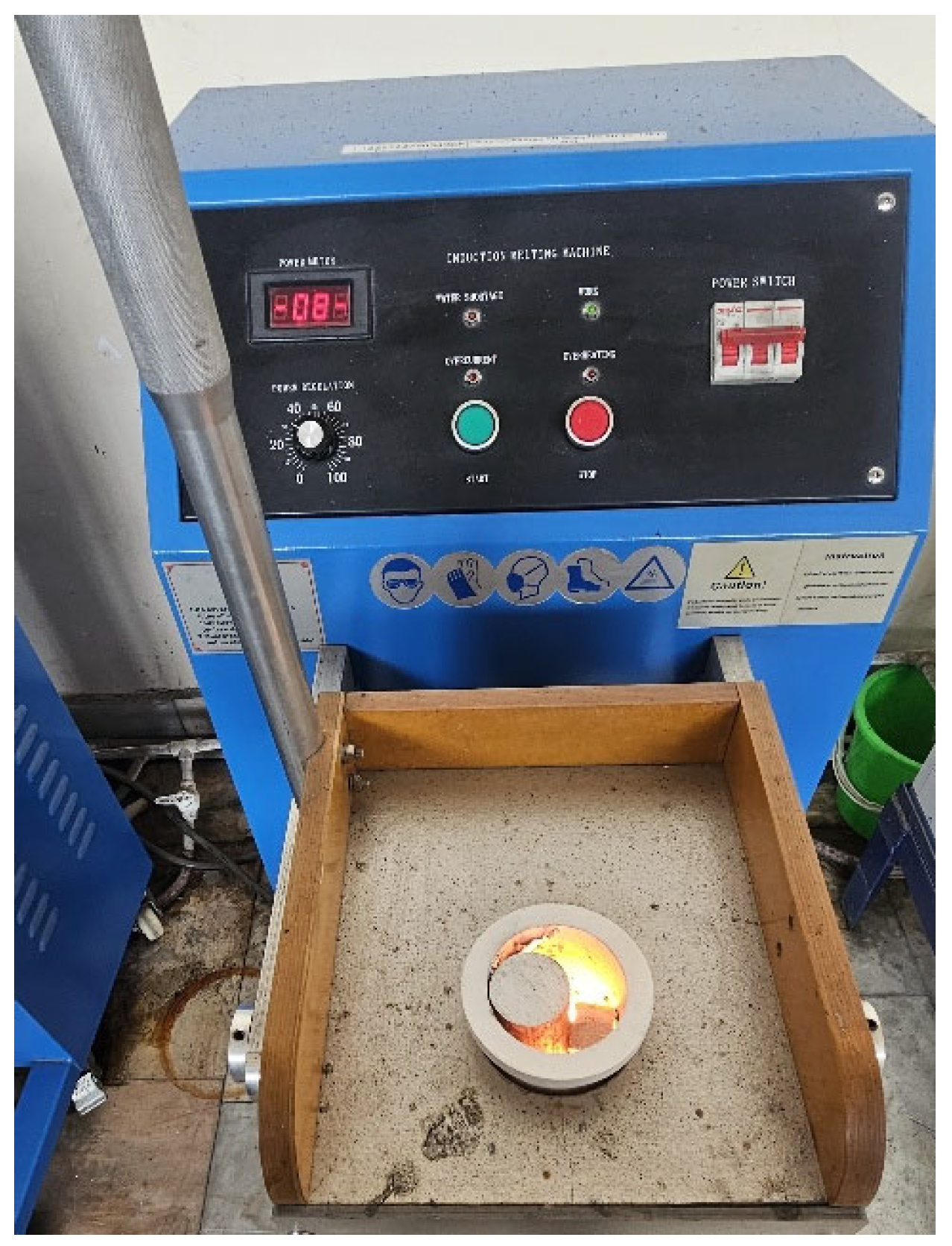
Figure 2.
Pure titanium powder (a) and Al–10Ti master alloy (b).
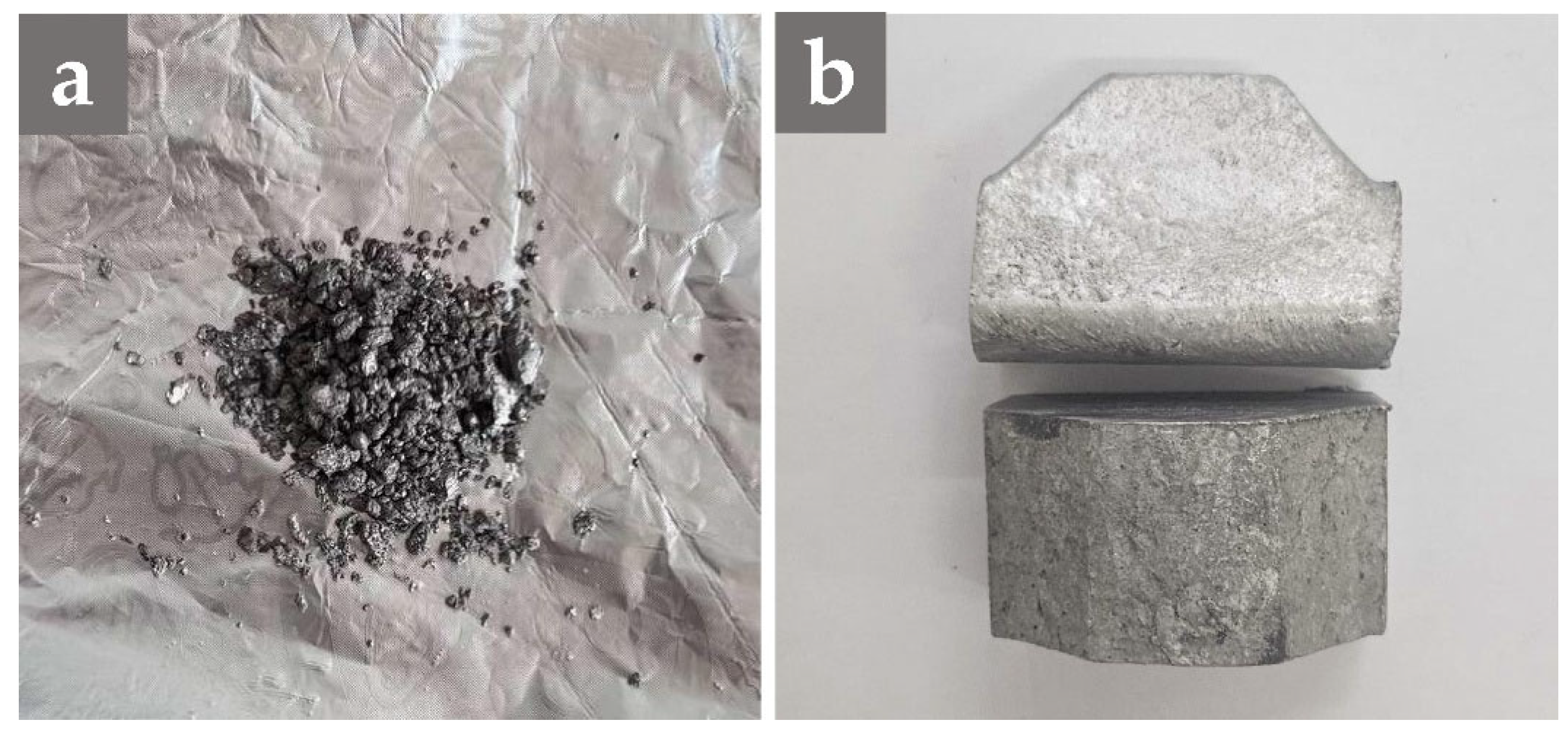
Figure 3.
Hardness measurement process of samples using the THBRV-187.5DX hardness testing device.
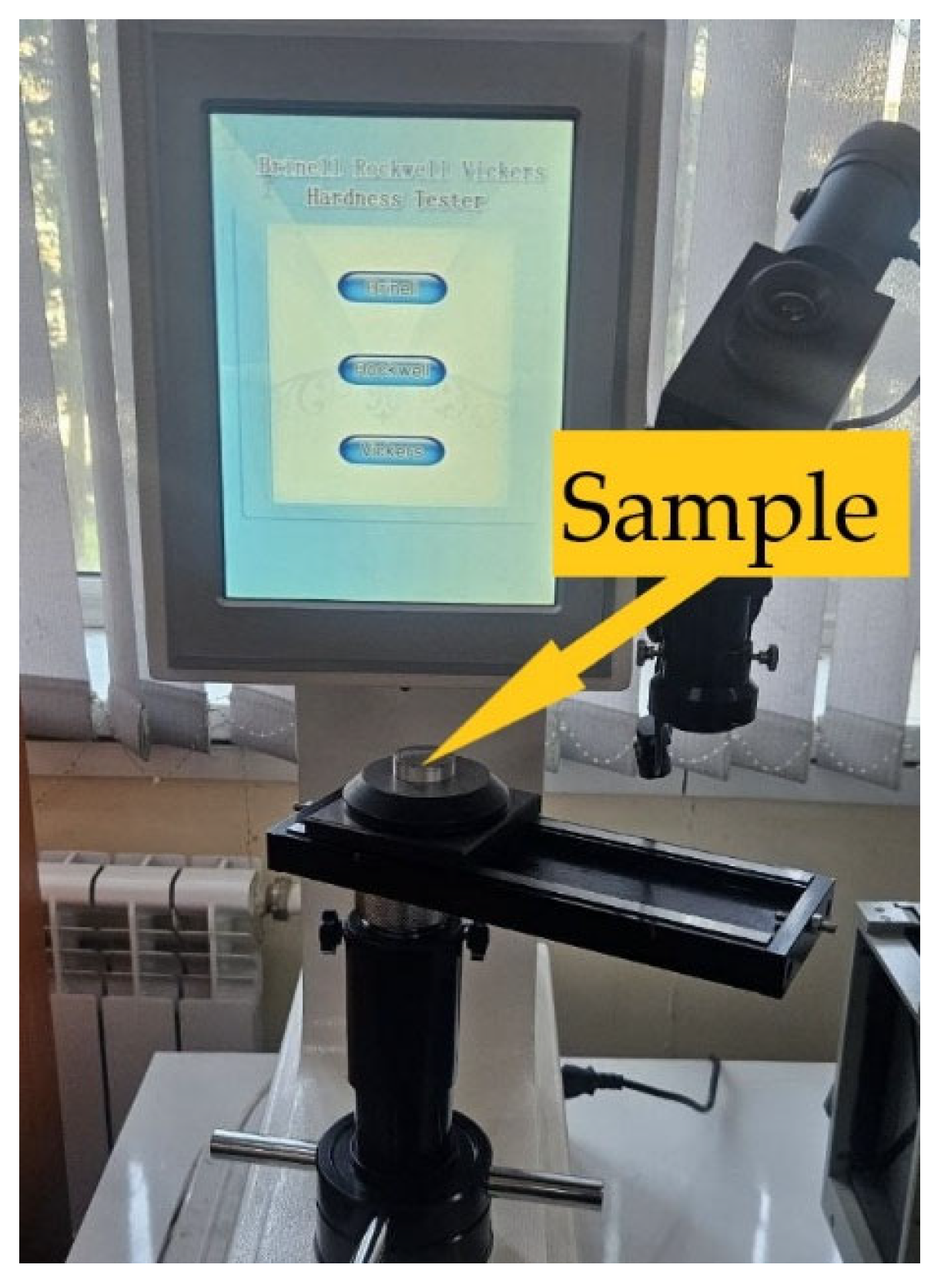
Figure 4.
Hengxu MPX-3 device for determining wear resistance.
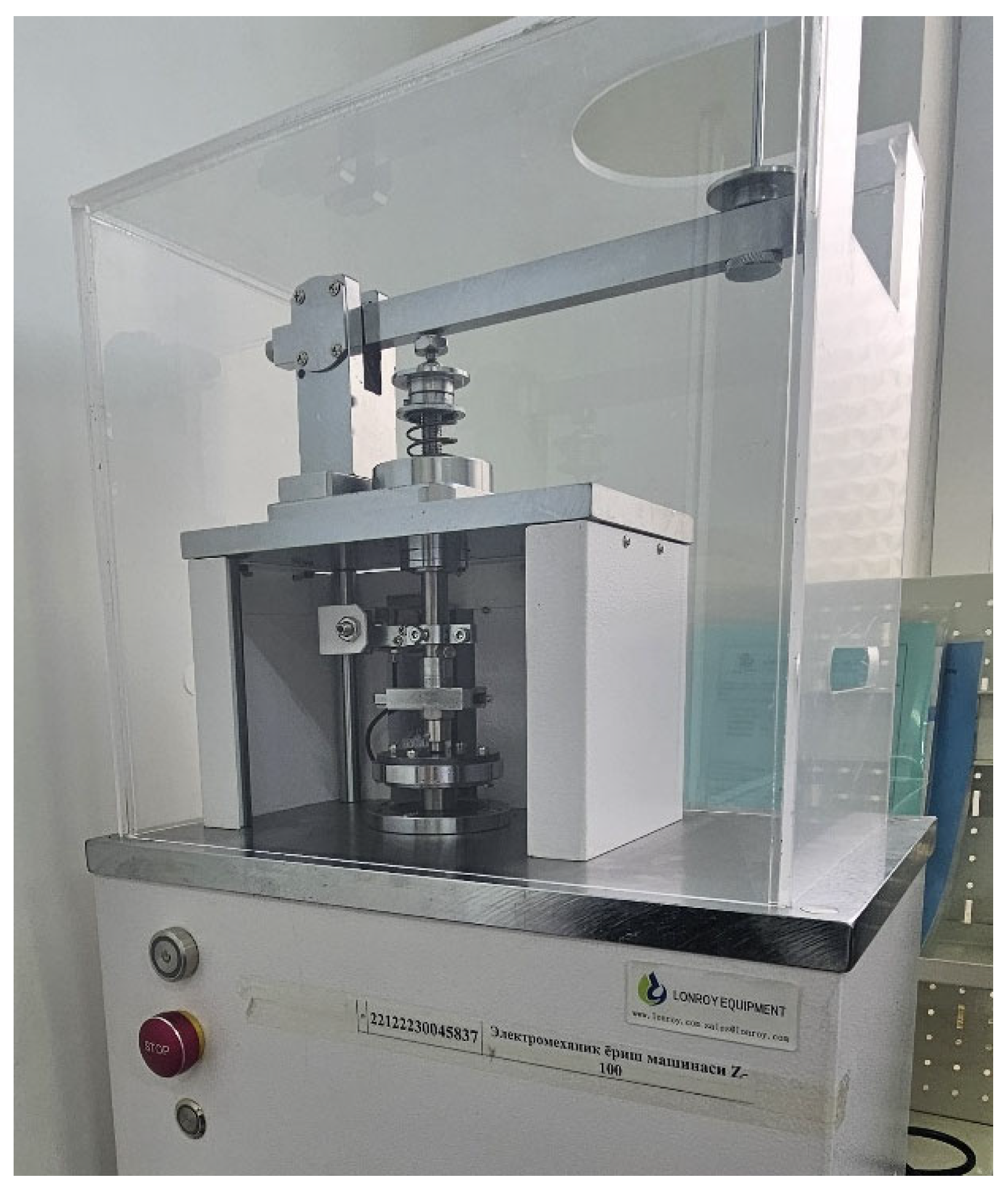
Figure 5.
Relationship between hardness and titanium content.
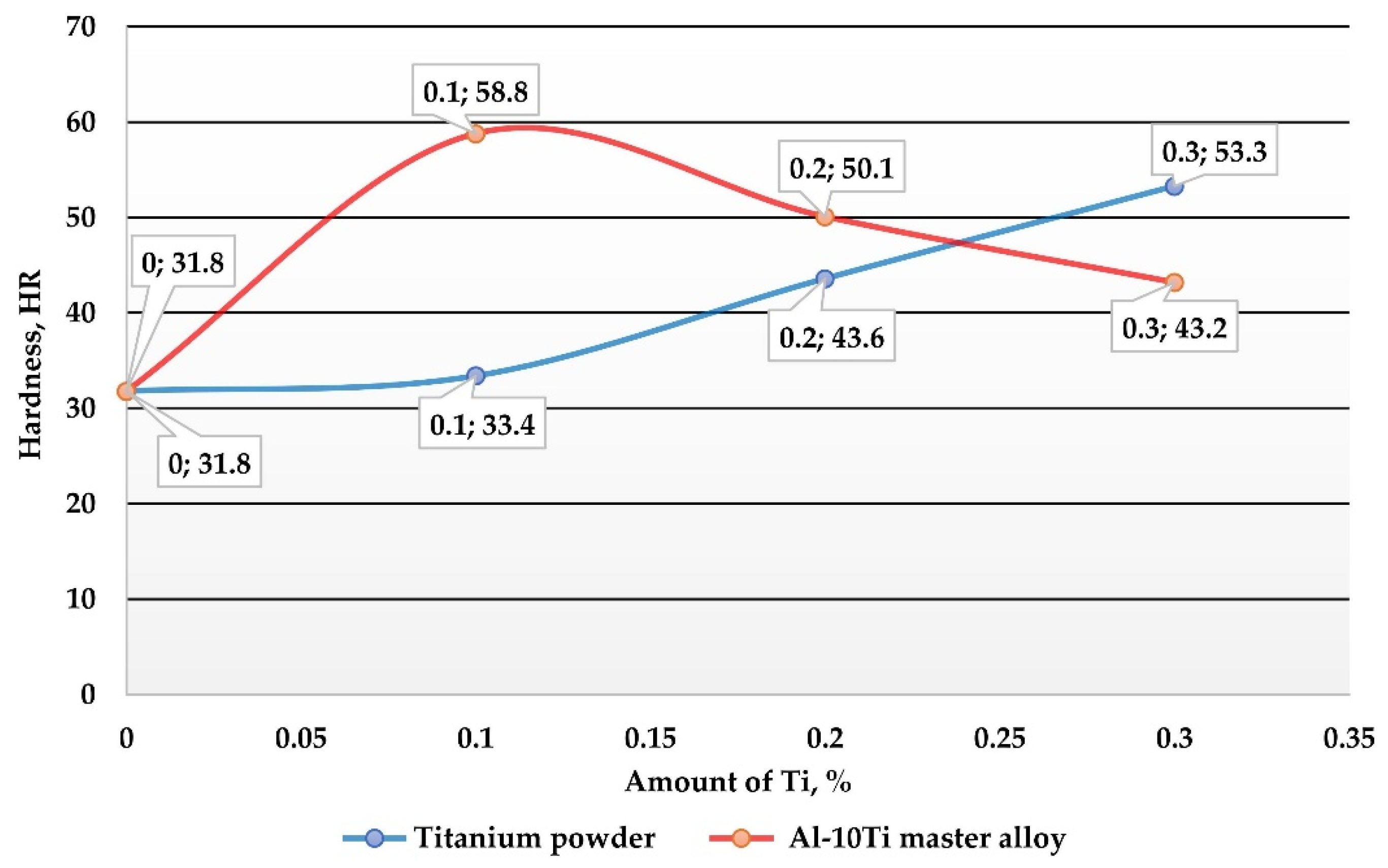
Figure 6.
Effect of titanium content on mass loss of aluminum alloys modified with titanium powder and Al–10Ti master alloy.
Figure 6.
Effect of titanium content on mass loss of aluminum alloys modified with titanium powder and Al–10Ti master alloy.
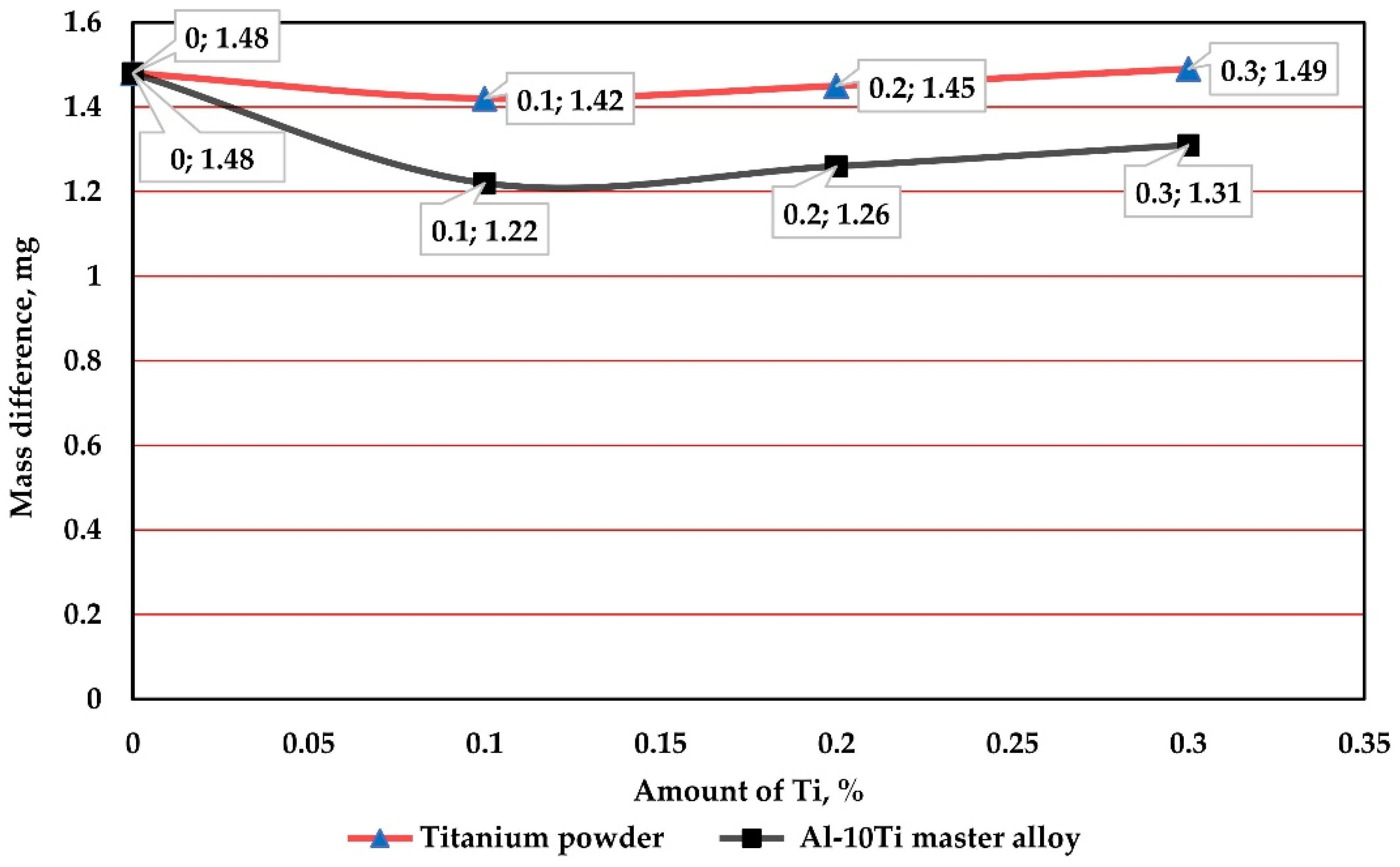
Figure 7.
Graph of the dependence of mass difference of the samples on titanium content.
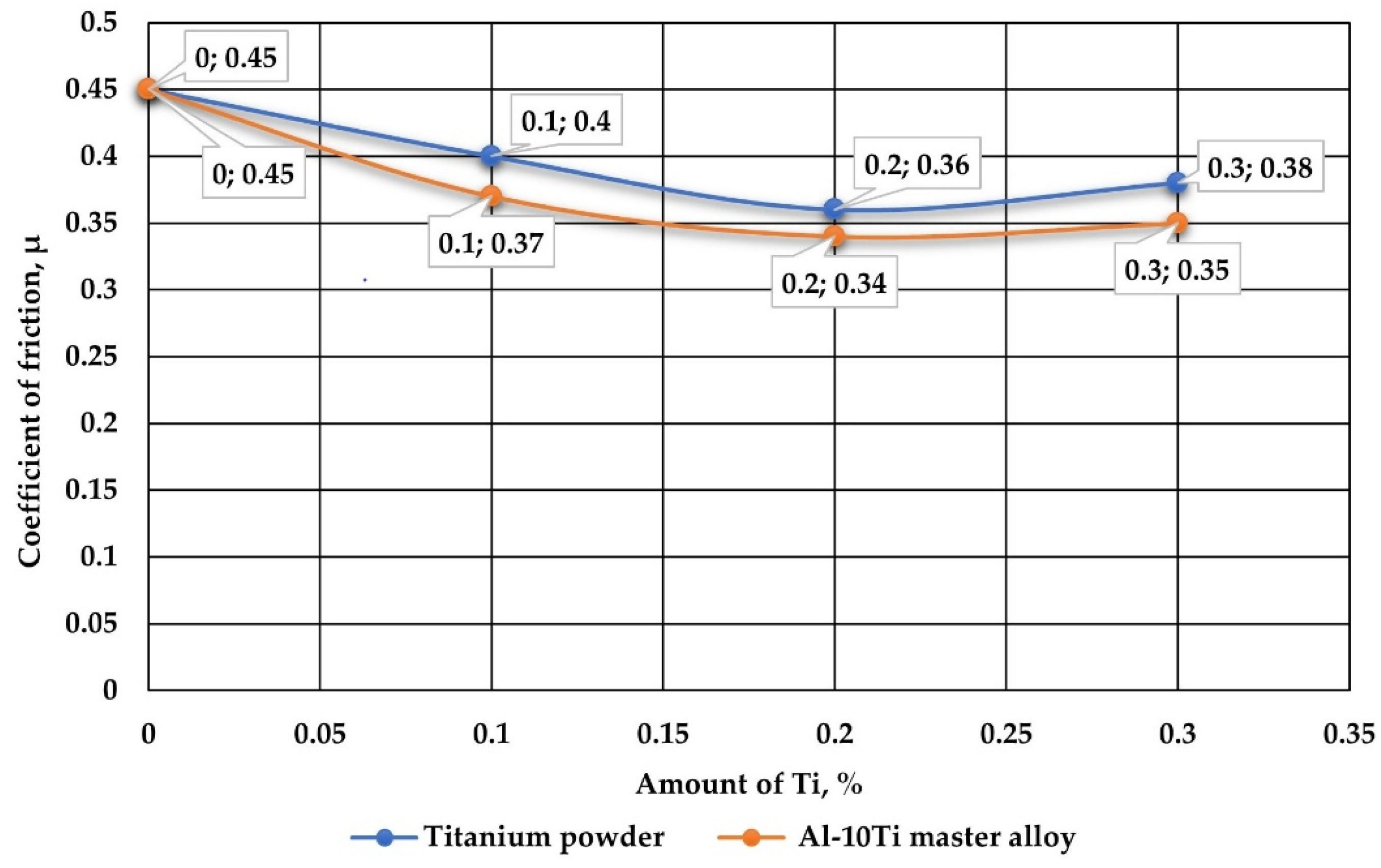
Figure 8.
Microstructure of the samples: 1 – Al–Si; 2 – Al–Si + 0.1% Ti (powder); 3 – Al–Si + 0.2% Ti (powder); 4 – Al–Si + 0.3% Ti (powder); 5 – Al–Si + 0.1% Ti (master alloy); 6 – Al–Si + 0.2% Ti (master alloy); 7 – Al–Si + 0.3% Ti (master alloy).
Figure 8.
Microstructure of the samples: 1 – Al–Si; 2 – Al–Si + 0.1% Ti (powder); 3 – Al–Si + 0.2% Ti (powder); 4 – Al–Si + 0.3% Ti (powder); 5 – Al–Si + 0.1% Ti (master alloy); 6 – Al–Si + 0.2% Ti (master alloy); 7 – Al–Si + 0.3% Ti (master alloy).
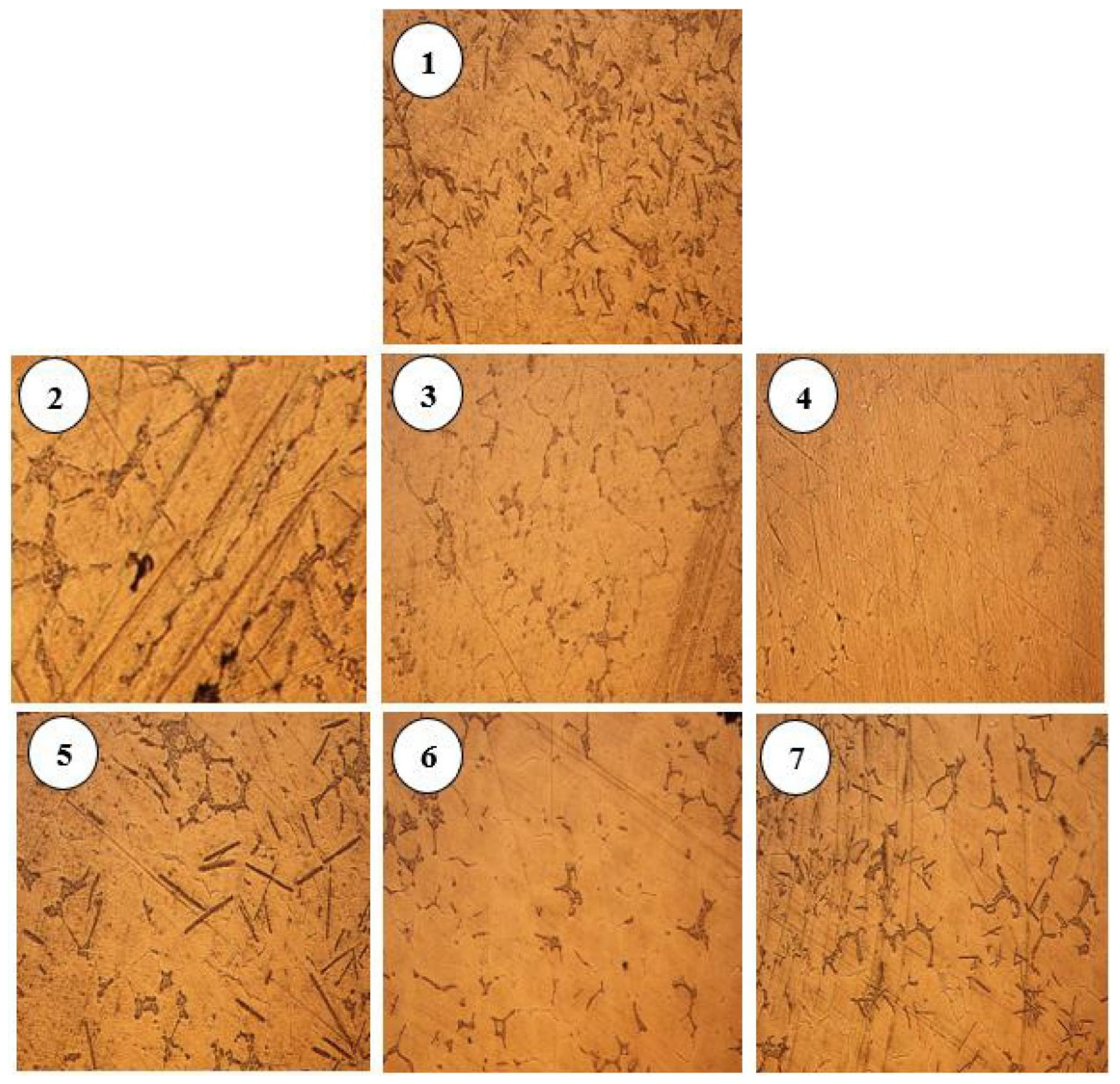
Figure 9.
Rigaku SmartLab system for XRD analysis.
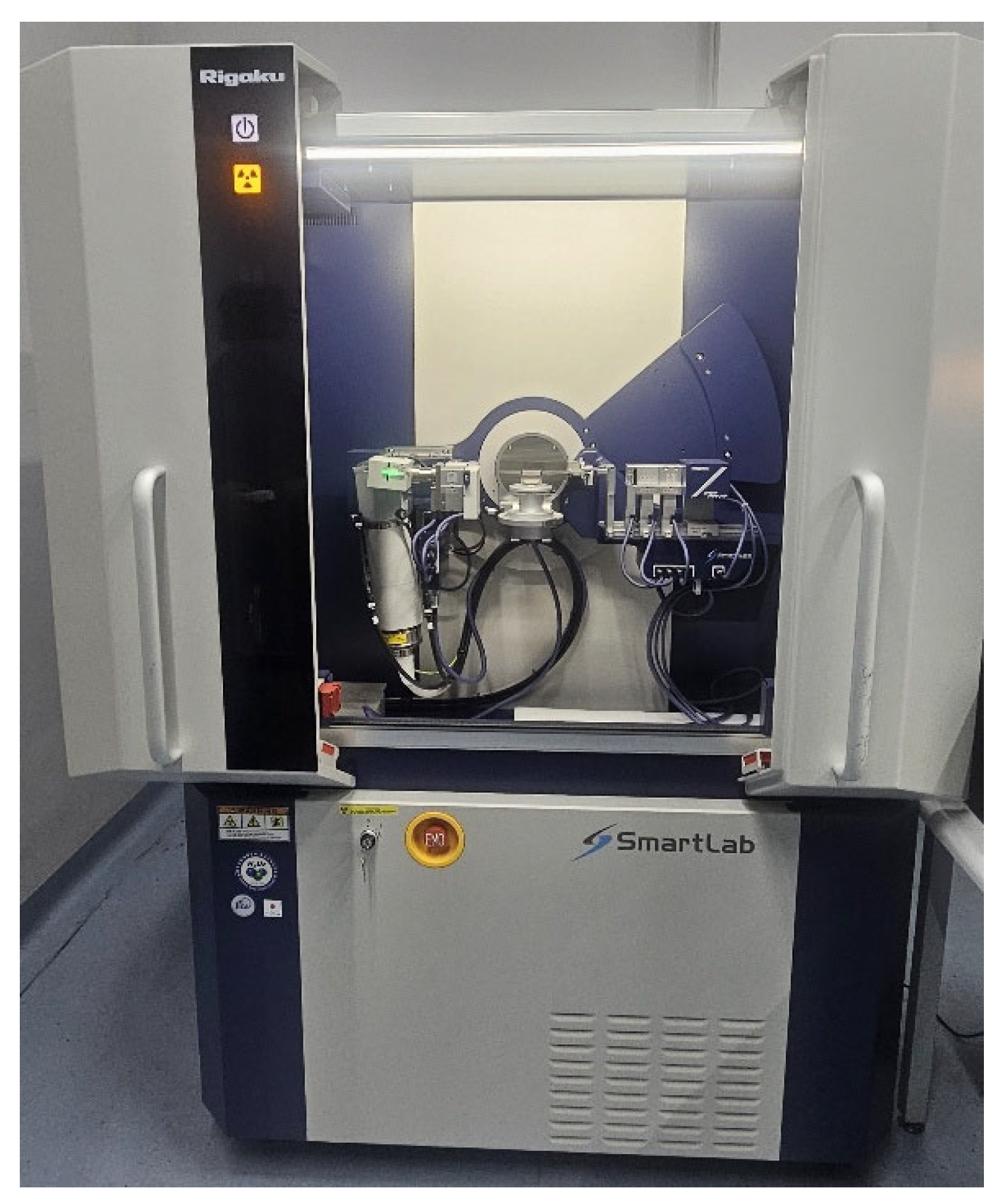
Figure 10.
XRD patterns of the samples. a) Al-Si; b) Al-Si-0.2%Ti powder; c) Al-Si-0.2%Ti master alloy.
Figure 10.
XRD patterns of the samples. a) Al-Si; b) Al-Si-0.2%Ti powder; c) Al-Si-0.2%Ti master alloy.
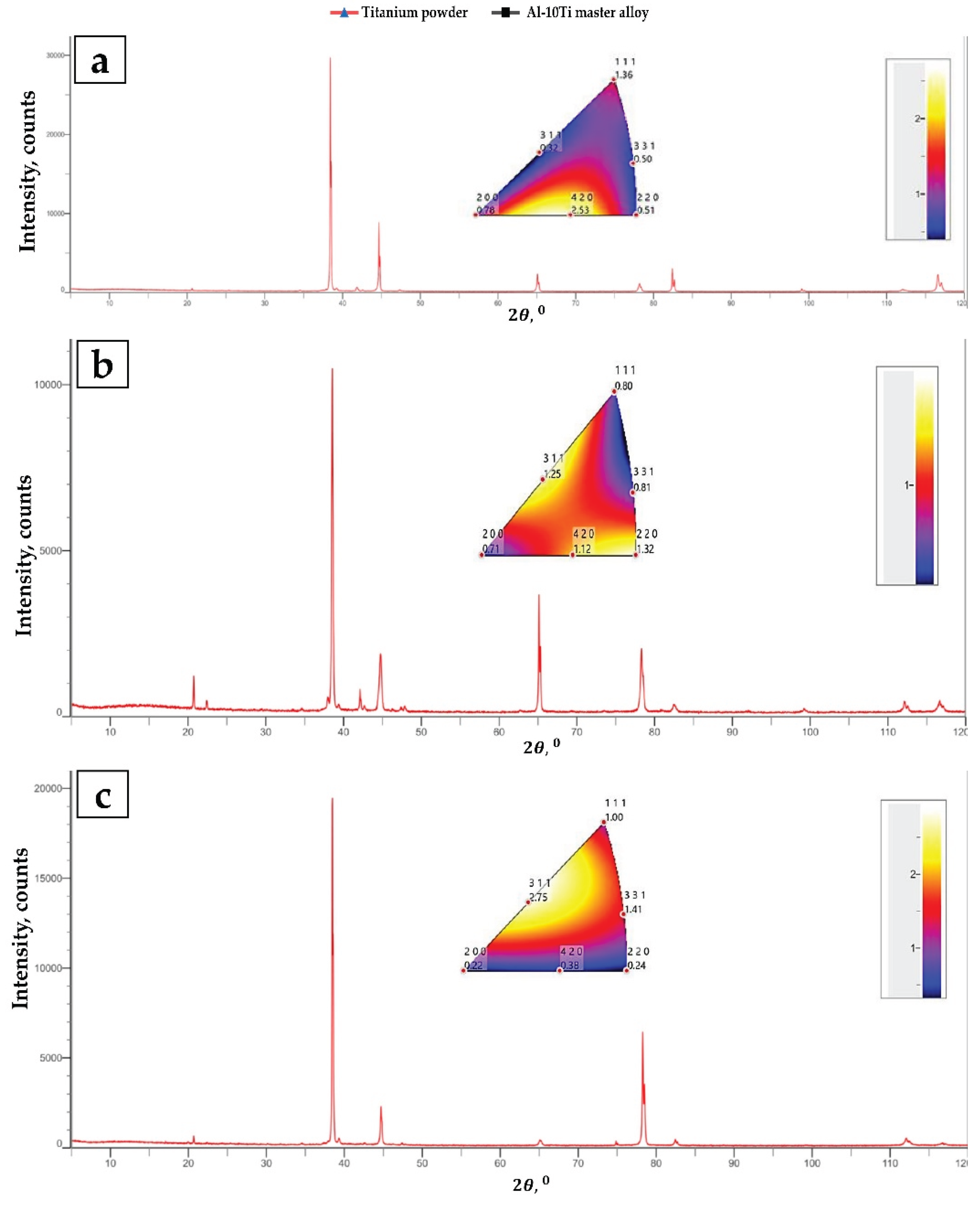

Table 1.
Chemical composition of the Al–Si alloy (%).
| Fe | Si | Mn | Ni | Al | Cu | Mg | Zn |
|---|---|---|---|---|---|---|---|
| < 1.3 | 6-8 | 0.2-0.6 | < 0.3 | 87.6-93.6 | < 1.5 | 0.2-0.5 | < 0.5 |
Table 2.
Hardness measurement results of the samples.
| No. | Sample composition | HR-1 | HR-2 | HR-3 | Average hardness (HR) |
|---|---|---|---|---|---|
| 1 | Al-Si | 31.5 | 21.5 | 42.6 | 31.8 |
| 2 | Al-Si+0.1%Ti powder | 27.0 | 35.5 | 37.8 | 33.4 |
| 3 | Al-Si+0.2%Ti powder | 39.5 | 53.8 | 37.7 | 43.6 |
| 4 | Al-Si+0.3%Ti powder | 45.2 | 66.1 | 48.8 | 53.3 |
| 5 | Al-Si+0.1%Ti master alloy | 59.1 | 56.5 | 60.9 | 58.8 |
| 6 | Al-Si+0.2%Ti master alloy | 50.9 | 46.8 | 52.6 | 50.1 |
| 7 | Al-Si+0.3%Ti master alloy | 40.8 | 41.1 | 47.9 | 43.2 |
Table 3.
Calculated and measured wear parameters of the samples.
| No. | Ti, (%) | Mass loss, mg. |
Friction force, F (N) |
Normal load, N |
μ = F/N |
|---|---|---|---|---|---|
| 1 | 0 % | 1.48 | 4.5 N | 10 N | 0.45 |
| 2 | 0.1 % (Ti powder) | 1.42 | 4.0 N | 10 N | 0.40 |
| 3 | 0.2 % (Ti powder) | 1.45 | 3.6 N | 10 N | 0.36 |
| 4 | 0.3 % (Ti powder) | 1.49 | 3.8 N | 10 N | 0.38 |
| 5 | 0.1 % (Ti master alloy) | 1.22 | 3.9 N | 10 N | 0.37 |
| 6 | 0.2 % (Ti master alloy) | 1.26 | 3.4 N | 10 N | 0.34 |
| 7 | 0.3 % (Ti master alloy) | 1.31 | 3.6 N | 10 N | 0.35 |
Disclaimer/Publisher’s Note: The statements, opinions and data contained in all publications are solely those of the individual author(s) and contributor(s) and not of MDPI and/or the editor(s). MDPI and/or the editor(s) disclaim responsibility for any injury to people or property resulting from any ideas, methods, instructions or products referred to in the content. |
© 2026 by the authors. Licensee MDPI, Basel, Switzerland. This article is an open access article distributed under the terms and conditions of the Creative Commons Attribution (CC BY) license (http://creativecommons.org/licenses/by/4.0/).
Copyright: This open access article is published under a Creative Commons CC BY 4.0 license, which permit the free download, distribution, and reuse, provided that the author and preprint are cited in any reuse.