
Submitted:
10 May 2026
Posted:
11 May 2026
You are already at the latest version
Abstract
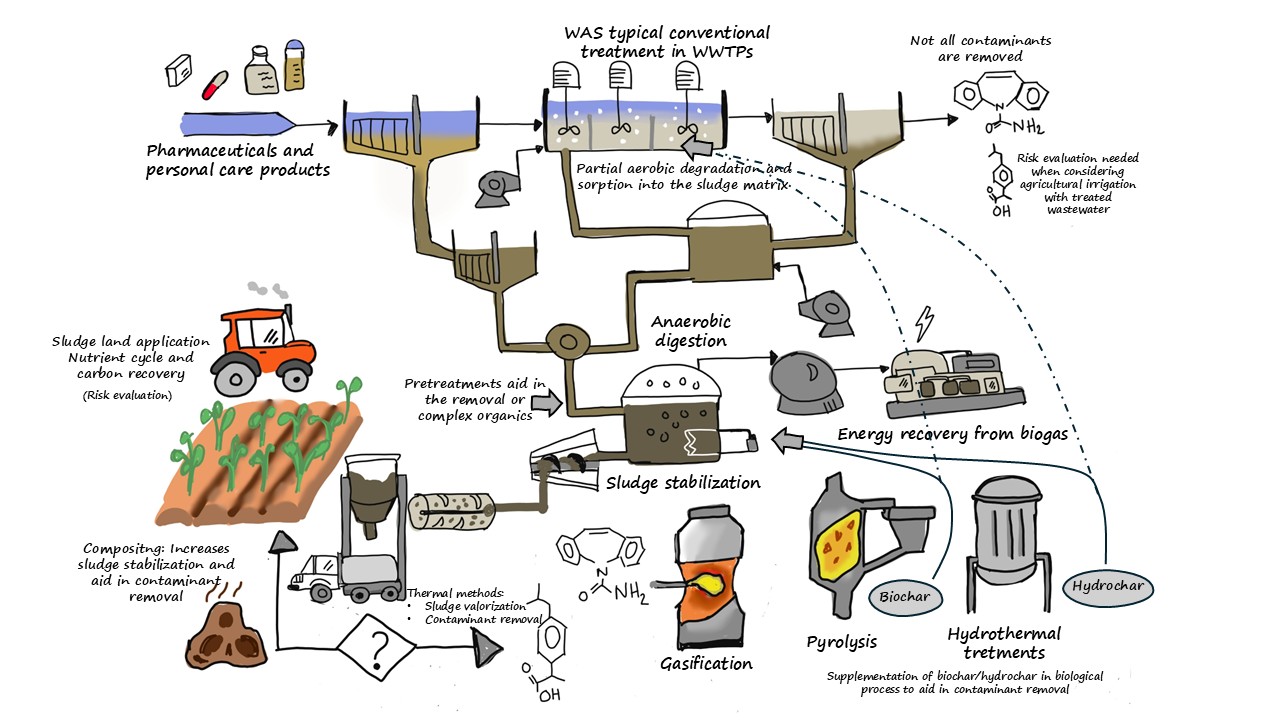
The transition to a circular economy requires the safe management of sewage sludge through nutrient and energy recovery. However, the presence of pharmaceuticals and personal care products (PPCPs) poses a critical obstacle, as these compounds tend to accumulate in the sludge matrix through sorption processes, thereby shifting the environmental problem from the water stream to the sludge stream. This manuscript provides a comprehensive review of the scientific literature on technical alternatives for valorizing sewage sludge and removing emerging contaminants. The study evaluates the limitations of conventional biological methods, such as anaerobic digestion and composting, which exhibit variable efficacy and are often insufficient to degrade recalcitrant molecules, including some commonly used pharmaceuticals. On the contrary, thermal treatments (pyrolysis, gasification, and hydrothermal processes) are considered robust alternatives capable of achieving removals exceeding 90-99% thanks to the thermal degradation of contaminants. Furthermore, the article emphasizes the innovative potential of utilizing carbon-based byproducts (biochar and hydrochar) as adsorbents or catalysts to enhance the removal of PPCPs within the treatment infrastructure itself. The integration of advanced thermal technologies is essential to mitigate the risks of contaminant transfer to the food chain and ensure a safe and sustainable nutrient cycle.
Keywords:
thermal treatment
; emerging contaminant removal
; energy demand
; advanced treatment technologies
Copyright: This open access article is published under a Creative Commons CC BY 4.0 license, which permit the free download, distribution, and reuse, provided that the author and preprint are cited in any reuse.


