

Submitted:
20 May 2026
Posted:
21 May 2026
You are already at the latest version
Preprints on COVID-19 and SARS-CoV-2
Abstract
We propose a new clinical entity termed recovery-phase viral pancreatitis (RVP), characterized by acute pancreatitis arising during the recovery phase of viral infection. RVP frequently develops after apparent symptom improvement or hospital discharge. Although acute pancreatitis associated with viral infections, particularly coronavirus disease 2019 (COVID-19), has been increasingly recognized, most previous studies have focused on pancreatic injury occurring during the acute infectious phase. However, accumulating reports have described pancreatic inflammation and acute pancreatitis arising during apparent clinical recovery and even after hospital discharge. These manifestations are difficult to explain solely by direct viral cytopathic injury during acute infection and instead suggest the presence of a distinct recovery-associated inflammatory process. We performed a focused narrative literature review to identify cases of acute pancreatitis arising during the recovery phase of viral infections. Representative cases demonstrated a reproducible temporal pattern in which pancreatitis developed approximately 1–3 weeks after the onset of viral illness, frequently during convalescence or after hospital discharge. Similar acute pancreatitis during recovery-phase patterns were observed not only in SARS-CoV-2 infection but also in dengue virus, Epstein–Barr virus, and hepatitis A virus infections. Potential mechanisms may involve transient immune suppression during acute viral infection, permitting pancreatic viral infection and antigen persistence. Recovery-associated immune responses may subsequently trigger pancreatic inflammation and acute pancreatitis during the recovery phase or after hospital discharge. Although RVP shares certain conceptual similarities with immune reconstitution inflammatory syndrome (IRIS), it differs in that it appears to arise during the natural course of viral infection without external immune manipulation or profound baseline immunodeficiency. We therefore propose that RVP should be distinguished from classical IRIS.Because RVP may arise even after apparent recovery or hospital discharge, its association with preceding viral infection may be overlooked, leading to potential misclassification as conventional acute pancreatitis. Recognition of RVP may improve clinical awareness of post-viral pancreatic complications.
Keywords:
recovery-phase viral pancreatitis
; acute pancreatitis
; COVID-19
; SARS-CoV-2
; viral pancreatitis
; post-recovery viral pancreatitis
; post-recovery pancreatitis
; post-discharge viral pancreatitis
; post-discharge pancreatitis
; immune reconstitution inflammatory syndrome
; IRIS
Introduction
Acute pancreatitis associated with viral infections has long been recognized in diseases such as mumps, coxsackievirus infection, hepatitis viruses, cytomegalovirus, Epstein–Barr virus, and, more recently, coronavirus disease 2019 (COVID-19) [1,2]. Since the emergence of the COVID-19 pandemic, numerous reports have described pancreatic injury and acute pancreatitis associated with severe acute respiratory syndrome coronavirus 2 (SARS-CoV-2) infection [2,3,4].
Most previous studies have focused on pancreatic injury occurring during the acute phase of infection. However, increasing numbers of reports have described delayed-onset pancreatitis occurring after apparent clinical recovery, symptom resolution, or hospital discharge [5,6,7,8,9,10,11,12]. Notably, several patients developed pancreatitis after improvement of respiratory or systemic viral symptoms and, in some cases, after discharge from hospital. These delayed and post-discharge presentations are difficult to explain solely by direct viral cytopathic injury during the acute infectious phase and instead suggest the possibility of a distinct recovery-associated inflammatory process.
Classical immune reconstitution inflammatory syndrome (IRIS) is generally defined as an exaggerated inflammatory response occurring after restoration of immune function following external immunological intervention, particularly after initiation of antiretroviral therapy or withdrawal of immunosuppressive therapy [19,20,21,22,23,24]. Importantly, classical IRIS is typically associated with profound baseline immunosuppression followed by rapid immune restoration after therapeutic intervention. In contrast, many reported recovery-phase viral pancreatitis (RVP) cases occurred in patients without known chronic immunodeficiency.
Although the proposed concept of RVP shares certain similarities with IRIS, including delayed inflammation during the recovery phase, RVP appears to arise during the natural course of viral infection without external immune manipulation. These observations raise the possibility that delayed pancreatitis occurring after viral recovery may represent a reproducible temporal inflammatory pattern rather than isolated coincidental events.
We therefore propose recovery-phase viral pancreatitis (RVP) as a distinct clinical entity characterized by delayed acute pancreatitis arising during the recovery phase of viral infection.
Methods
A focused narrative literature review was performed to identify delayed-onset acute pancreatitis occurring during the recovery phase of viral infections, particularly after symptom resolution or hospital discharge, using PubMed, Scopus, Embase, and Google Scholar through April 2026. Search terms included combinations of “COVID-19,” “SARS-CoV-2,” “viral infection,” “acute pancreatitis,” “delayed pancreatitis,” “post-discharge pancreatitis,” “recovery phase,” “immune reconstitution inflammatory syndrome,” and “dengue pancreatitis.”
Cases were considered potential RVP candidates when acute pancreatitis developed after apparent improvement of viral infection, including symptom resolution, convalescent phase, or hospital discharge, and when alternative etiologies were not clearly identified.
Representative high-confidence cases demonstrating characteristic recovery-phase timing patterns were selected for the main table. Particular attention was paid to cases in which pancreatitis developed approximately 1–3 weeks after viral illness onset or after hospital discharge.
Results
Representative cases are summarized in Table 1. Most reported cases demonstrated delayed onset of acute pancreatitis approximately 1–3 weeks after viral illness onset, frequently during the recovery phase rather than the acute infectious phase.
Several representative cases developed pancreatitis after apparent clinical recovery or hospital discharge, suggesting a characteristic post-recovery temporal pattern. Post-discharge onset was observed in multiple SARS-CoV-2-associated cases as well as in representative dengue virus-associated cases.
Although most currently reported cases involved SARS-CoV-2 infection, similar delayed recovery-phase presentations were also identified in hepatitis A virus, Epstein–Barr virus, and dengue virus infections. Across multiple reports, temporal clustering of pancreatitis onset during the recovery phase was a consistent finding.
Across multiple viral infections, delayed pancreatitis demonstrated a reproducible temporal clustering during the recovery phase, supporting the possibility that recovery-phase viral pancreatitis represents a distinct recovery-associated inflammatory pattern rather than isolated coincidental events.
Proposed Mechanisms of RVP
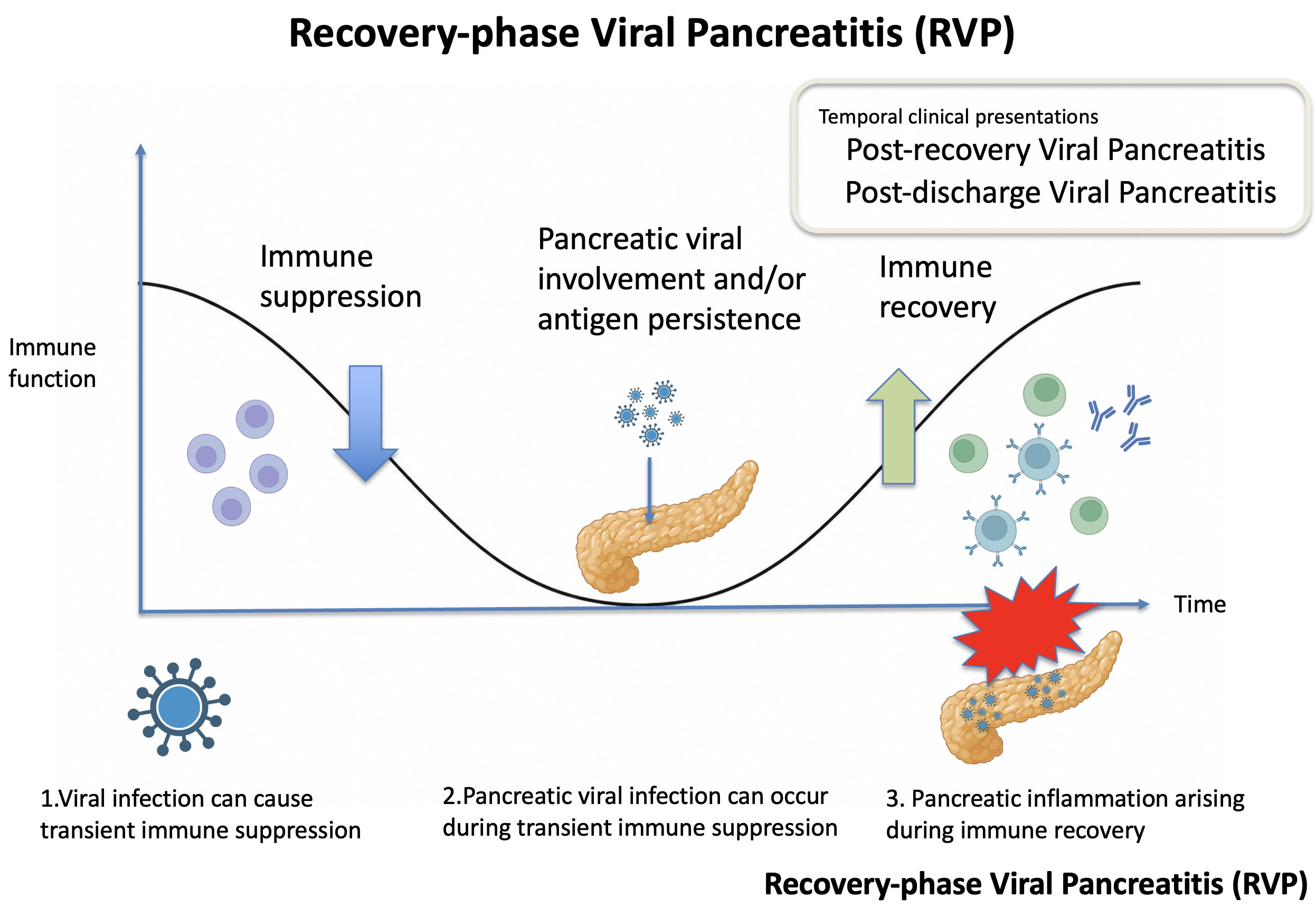
The pathogenesis of RVP is likely multifactorial and may involve a sequential immunopathological process consisting of transient immune suppression during acute viral infection, pancreatic viral infection and/or antigen persistence, and delayed recovery-associated immune responses leading to pancreatic inflammation.
Transient immune suppression has been widely documented during acute viral infections, particularly COVID-19 [13,14,15,16,17,18]. Lymphopenia, impaired CD4/CD8 T-cell responses, and reduced antiviral immune surveillance may permit viral dissemination beyond the primary infection site. The pancreas represents a plausible target organ because ACE2, the major entry receptor for SARS-CoV-2, is expressed in pancreatic exocrine and endocrine tissues [17,18].
Importantly, pancreatic viral involvement may occur without clinically overt pancreatitis during the acute phase. Viral infection or antigens can persist after apparent clinical recovery [14,15,16], and pancreatic tissue may serve as a potential target organ [17,18]. During the recovery phase, recovery-associated immune responses may trigger pancreatic inflammation directed against residual viral antigens or previously infected tissue.
Several reported cases developed pancreatitis after symptom resolution or hospital discharge [5,6,7,8,9,10,11,12], suggesting that the recovery phase itself may represent a vulnerable immunological window. This delayed presentation may create a clinical blind spot in post-viral care.
Notably, many cases demonstrated pancreatitis onset approximately 1–3 weeks after viral illness onset, frequently after apparent clinical recovery or hospital discharge.
Although RVP shares certain conceptual similarities with immune reconstitution inflammatory syndrome (IRIS), important differences exist. Classical IRIS is typically associated with external immune restoration interventions such as antiretroviral therapy initiation or withdrawal of immunosuppressive agents [19,20,21,22,23,24], whereas RVP appears to arise during the natural course of viral infection. We believe RVP should be distinguished from classical IRIS.
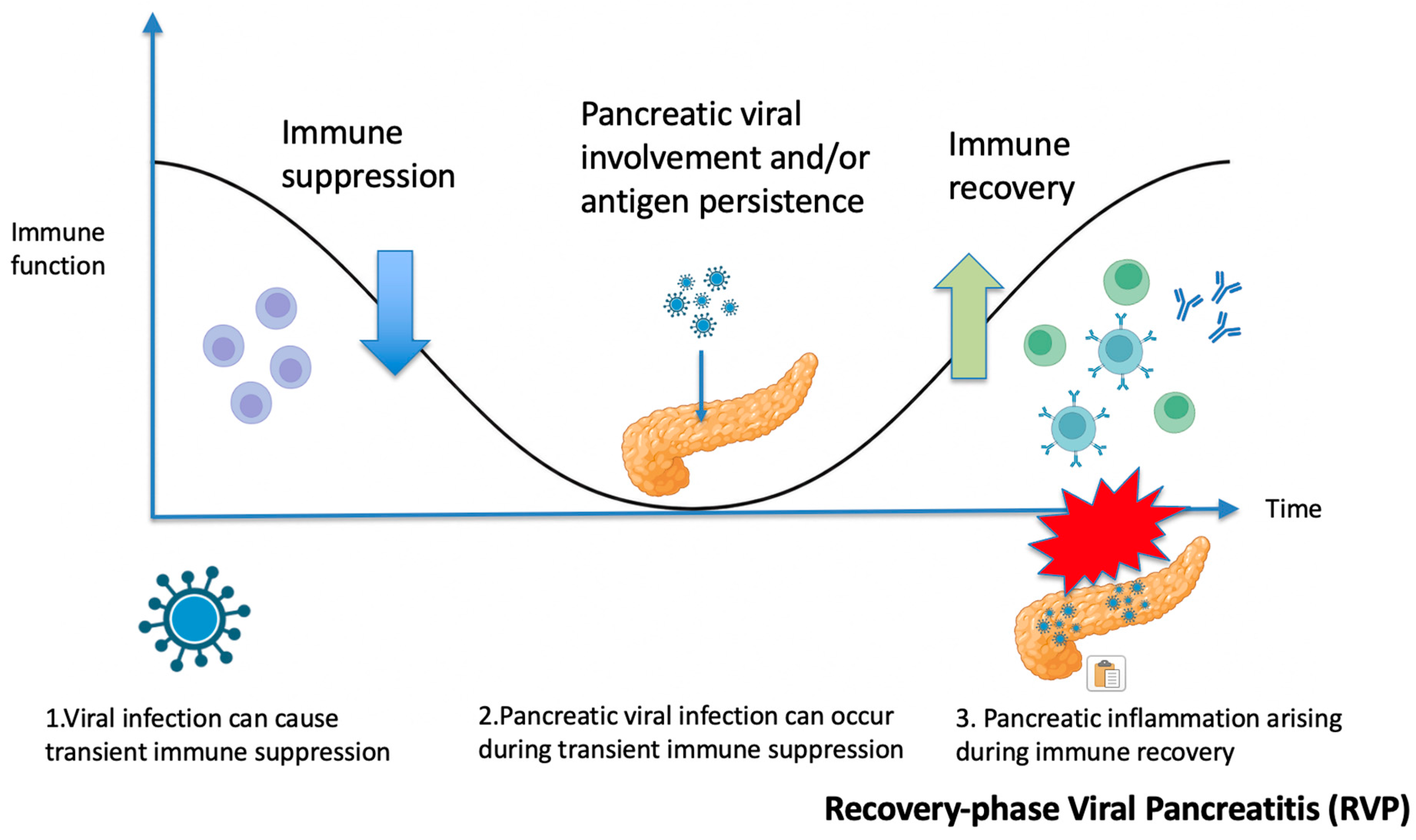
Figure 1.
Proposed mechanism and time course of recovery-phase viral pancreatitis (RVP). Schematic illustration of the proposed immunopathological mechanism of RVP. During acute viral infection, transient immune suppression can permit pancreatic viral infection and/or antigen persistence. During the recovery phase, recovery-associated immune responses may trigger pancreatic inflammation, resulting in acute pancreatitis after apparent clinical recovery or hospital discharge. Unlike classical immune reconstitution inflammatory syndrome (IRIS), RVP is proposed to occur during the natural course of viral infection without external immunological intervention. Figure created using BioRender.com.
Discussion
The present review identified a reproducible temporal pattern of delayed acute pancreatitis arising during the recovery phase of viral infections. Across multiple reports, pancreatitis frequently developed approximately 1–3 weeks after viral illness onset, often after apparent clinical recovery or hospital discharge. This characteristic timing pattern was observed not only in SARS-CoV-2 infection but also in dengue virus, hepatitis A virus, and Epstein–Barr virus infections, suggesting a potentially shared recovery-associated inflammatory mechanism across diverse viral pathogens.
Several mechanisms may contribute to RVP. Acute viral infection can initially induce transient immune suppression or immune dysregulation, followed by delayed inflammatory reactivation during recovery. Persistent pancreatic viral infection and/or viral antigens can trigger pancreatic inflammation arising during the recovery phase of viral infection. Experimental studies demonstrating pancreatic inflammatory-cell infiltration after viral infection may support this hypothesis [29].
The proposed concept of RVP shares several similarities with immune reconstitution inflammatory syndrome (IRIS), including delayed inflammatory manifestations occurring during the recovery phase. However, important mechanistic differences should be emphasized. Classical IRIS typically develops after therapeutic immune restoration in profoundly immunocompromised patients, whereas most reported RVP cases occurred during the natural course of viral infection without external immune manipulation or known severe baseline immunodeficiency. We believe RVP should be distinguished from classical IRIS.
Importantly, the present review does not establish causality. The proposed RVP concept remains hypothesis-generating and requires future validation through larger clinical studies, prospective temporal analyses, and mechanistic investigations. Publication bias and incomplete exclusion of alternative causes may also influence currently available reports.
Nevertheless, recognition of characteristic recovery-phase temporal clustering across multiple viral infections may help clinicians identify delayed inflammatory pancreatic injury after apparent viral recovery.
Conclusion
We propose recovery-phase viral pancreatitis (RVP) as a new recovery-associated inflammatory pattern characterized by delayed acute pancreatitis arising after apparent improvement of viral infection, frequently during convalescence or after hospital discharge. Similar temporal clustering patterns were observed across multiple viral infections, including SARS-CoV-2, dengue virus, Epstein–Barr virus, and hepatitis A virus infections.
Although RVP shares certain similarities with immune reconstitution inflammatory syndrome (IRIS), we believe RVP should be distinguished from classical IRIS.
Acknowledgments
AI-assisted language support was used during manuscript preparation. The authors reviewed and verified all content.
References
- Wang, F.; Wang, H.; Fan, J.; Zhang, Y.; Wang, H.; Zhao, Q. Pancreatic injury patterns in patients with coronavirus disease 19 pneumonia. Gastroenterology 2020, 159, 367–370. [Google Scholar] [CrossRef] [PubMed]
- Inamdar, S.; Benias, P.C.; Liu, Y.; Sejpal, D.V.; Satapathy, S.K.; Trindade, A.J. Prevalence, risk factors, and outcomes of hospitalized patients with coronavirus disease 2019 presenting as acute pancreatitis. Gastroenterology 2020, 159, 2226–2228.e2. [Google Scholar] [CrossRef]
- Jabłońska, B.; Olakowski, M.; Mrowiec, S. Association between acute pancreatitis and COVID-19 infection: What do we know? World J. Gastrointest. Surg. 2021, 13, 548–562. [Google Scholar] [CrossRef]
- Hadi, A.; Werge, M.; Kristiansen, K.T.; Pedersen, U.G.; Karstensen, J.G.; Novovic, S.; et al. Coronavirus disease-19 (COVID-19) associated with severe acute pancreatitis: Case report on three family members. Pancreatology 2020, 20, 665–667. [Google Scholar] [CrossRef] [PubMed]
- Almutairi, F.; Rabeie, N.; Awais, A.; Elsayad, W. COVID-19 induced acute pancreatitis after resolution of the infection. J. Infect. Public Health 2022, 15, 282–284. [Google Scholar] [CrossRef] [PubMed]
- Cheung, S.; Delgado Fuentes, A.; Fetterman, A.D. Recurrent acute pancreatitis in a patient with COVID-19 infection. Am. J. Case Rep. 2020, 21, e927076. [Google Scholar] [CrossRef]
- Jeelani, H.M.A.; Sheikh, M.M.; Samuel, S.S.; Omotosho, Y.B.; Sharko, A.; et al. Acute pancreatitis in a patient with COVID-19 after the resolution of respiratory symptoms. J. Investig. Med. High Impact Case Rep. 2021, 9, 23247096211024773. [Google Scholar] [CrossRef]
- Wifi, M.N.; Nabil, A.; Awad, A.; Eltatawy, R. COVID-induced pancreatitis: Case report. Egypt J. Intern Med. 2021, 33, 10. [Google Scholar] [CrossRef]
- Anand, E.R.; Major, C.; Pickering, O.; Nelson, M. Acute pancreatitis in a COVID-19 patient. Br. J. Surg. 2020, 107, e182. [Google Scholar] [CrossRef]
- Krithika, A.P.; Ramya, R. Acute pancreatitis: A late complication of dengue fever. Int. J. Contemp. Pediatr. 2018, 5, 676–677. [Google Scholar] [CrossRef]
- Hammami, M.B.; Aboushaar, R.; Musmar, A.; Hammami, S. Epstein-Barr virus-associated acute pancreatitis. BMJ Case Rep. 2019, 12, e231744. [Google Scholar] [CrossRef] [PubMed]
- Krishnan, A.; Goyal, R. Acute pancreatitis in a case of hepatitis A virus-related prolonged cholestasis: Case report and review of literature. Exclus. Real. World Evid. J. (ERWEJ) 2024, 4, 118–125. [Google Scholar] [CrossRef]
- Chen, G.; Wu, D.; Guo, W.; et al. Clinical and immunological features of severe and moderate coronavirus disease 2019. J. Clin. Invest. 2020, 130, 2620–2629. [Google Scholar] [CrossRef] [PubMed]
- Nalbandian, A.; Sehgal, K.; Gupta, A.; et al. Post-acute COVID-19 syndrome. Nat. Med. 2021, 27, 601–615. [Google Scholar] [CrossRef]
- Wang, Y.; Wang, Y.; Chen, Y.; Qin, Q. Unique epidemiological and clinical features of the emerging 2019 novel coronavirus pneumonia (COVID-19). J. Med. Virol. 2020, 92, 568–576. [Google Scholar] [CrossRef]
- Lucas, C.; Wong, P.; Klein, J.; et al. Longitudinal analyses reveal immunological misfiring in severe COVID-19. Nature 2020, 584, 463–469. [Google Scholar] [CrossRef]
- Liu, F.; Long, X.; Zhang, B.; Zhang, W.; Chen, X.; Zhang, Z. ACE2 expression in pancreas may cause pancreatic damage after SARS-CoV-2 infection. Clin. Gastroenterol. Hepatol. 2020, 18, 2128–2130.e2. [Google Scholar] [CrossRef]
- Müller, J.A.; Groß, R.; Conzelmann, C.; et al. SARS-CoV-2 infects and replicates in cells of the human endocrine and exocrine pancreas. Nat. Metab. 2021, 3, 149–165. [Google Scholar] [CrossRef]
- Barber, D.L.; Andrade, B.B.; Sereti, I.; Sher, A. Immune reconstitution inflammatory syndrome: The trouble with immunity when you had none. Nat. Rev. Microbiol. 2012, 10, 150–156. [Google Scholar] [CrossRef]
- Müller, M.; Wandel, S.; Colebunders, R.; Attia, S.; Furrer, H.; Egger, M. Immune reconstitution inflammatory syndrome in patients starting antiretroviral therapy for HIV infection: A systematic review and meta-analysis. Lancet Infect. Dis. 2010, 10, 251–261. [Google Scholar] [CrossRef] [PubMed]
- Haddow, L.J.; Colebunders, R.; Meintjes, G.; et al. Cryptococcal immune reconstitution inflammatory syndrome in HIV-1-infected individuals: Proposed clinical case definitions. Lancet Infect. Dis. 2010, 10, 791–802. [Google Scholar] [CrossRef]
- Murdoch, D.M.; Venter, W.D.; Van Rie, A.; Feldman, C. Immune reconstitution inflammatory syndrome (IRIS): Review of common infectious manifestations and treatment options. AIDS Res. Ther. 2007, 4, 9. [Google Scholar] [CrossRef]
- Meintjes, G.; Lawn, S.D.; Scano, F.; et al. Tuberculosis-associated immune reconstitution inflammatory syndrome: Case definitions for use in resource-limited settings. Lancet Infect. Dis. 2008, 8, 516–523. [Google Scholar] [CrossRef]
- French, M.A. HIV/AIDS: Immune reconstitution inflammatory syndrome: A reappraisal. Clin. Infect. Dis. 2009, 48, 101–107. [Google Scholar] [CrossRef]
- Gupta, N.; Srivastava, S.; Jain, A.; Chaturvedi, U.C. Dengue in India. Indian J. Med. Res. 2012, 136, 373–390. [Google Scholar]
- Tayal, A.; Kabra, S.K.; Lodha, R. Management of dengue: An updated review. Indian J. Pediatr. 2023, 90, 168–177. [Google Scholar] [CrossRef]
- Karoli, R.; Fatima, J.; Singh, G.; Maini, S. Acute pancreatitis: An unusual complication of dengue fever. J. Assoc. Physicians India 2012, 60, 64–65. [Google Scholar] [PubMed]
- Kumar, K.J.; Chandrashekar, A.; Basavaraja, C.K.; Kumar, H.C. Acute pancreatitis complicating dengue hemorrhagic fever. Rev. Soc. Bras. Med. Trop. 2016, 49, 656–659. [Google Scholar] [CrossRef] [PubMed]
- Jung, S.; Nguyen, H.T.; Lim, Y.S.; et al. Experimental hepatitis E virus infection induces pancreatic inflammatory-cell infiltration. Sci. Rep. 2020, 10, 13963. [Google Scholar] [CrossRef] [PubMed]

Table 1.
Representative delayed recovery-phase and post-discharge cases of proposed recovery-phase viral pancreatitis (RVP).
Table 1.
Representative delayed recovery-phase and post-discharge cases of proposed recovery-phase viral pancreatitis (RVP).
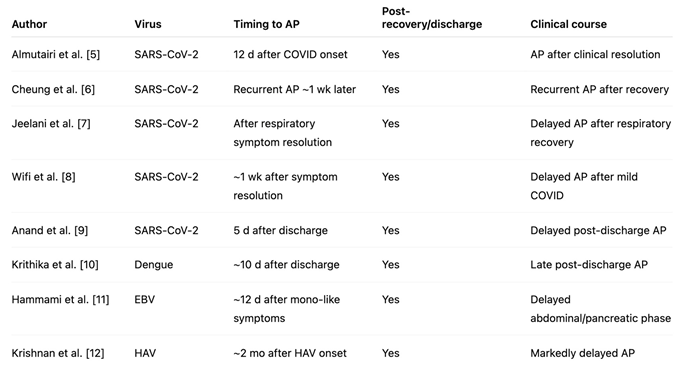 |
Abbreviations: AP, acute pancreatitis; EBV, Epstein–Barr virus; HAV, hepatitis A virus.
Disclaimer/Publisher’s Note: The statements, opinions and data contained in all publications are solely those of the individual author(s) and contributor(s) and not of MDPI and/or the editor(s). MDPI and/or the editor(s) disclaim responsibility for any injury to people or property resulting from any ideas, methods, instructions or products referred to in the content. |
© 2026 by the authors. Licensee MDPI, Basel, Switzerland. This article is an open access article distributed under the terms and conditions of the Creative Commons Attribution (CC BY) license (http://creativecommons.org/licenses/by/4.0/).
Copyright: This open access article is published under a Creative Commons CC BY 4.0 license, which permit the free download, distribution, and reuse, provided that the author and preprint are cited in any reuse.