

Submitted:
11 May 2026
Posted:
11 May 2026
You are already at the latest version
Abstract
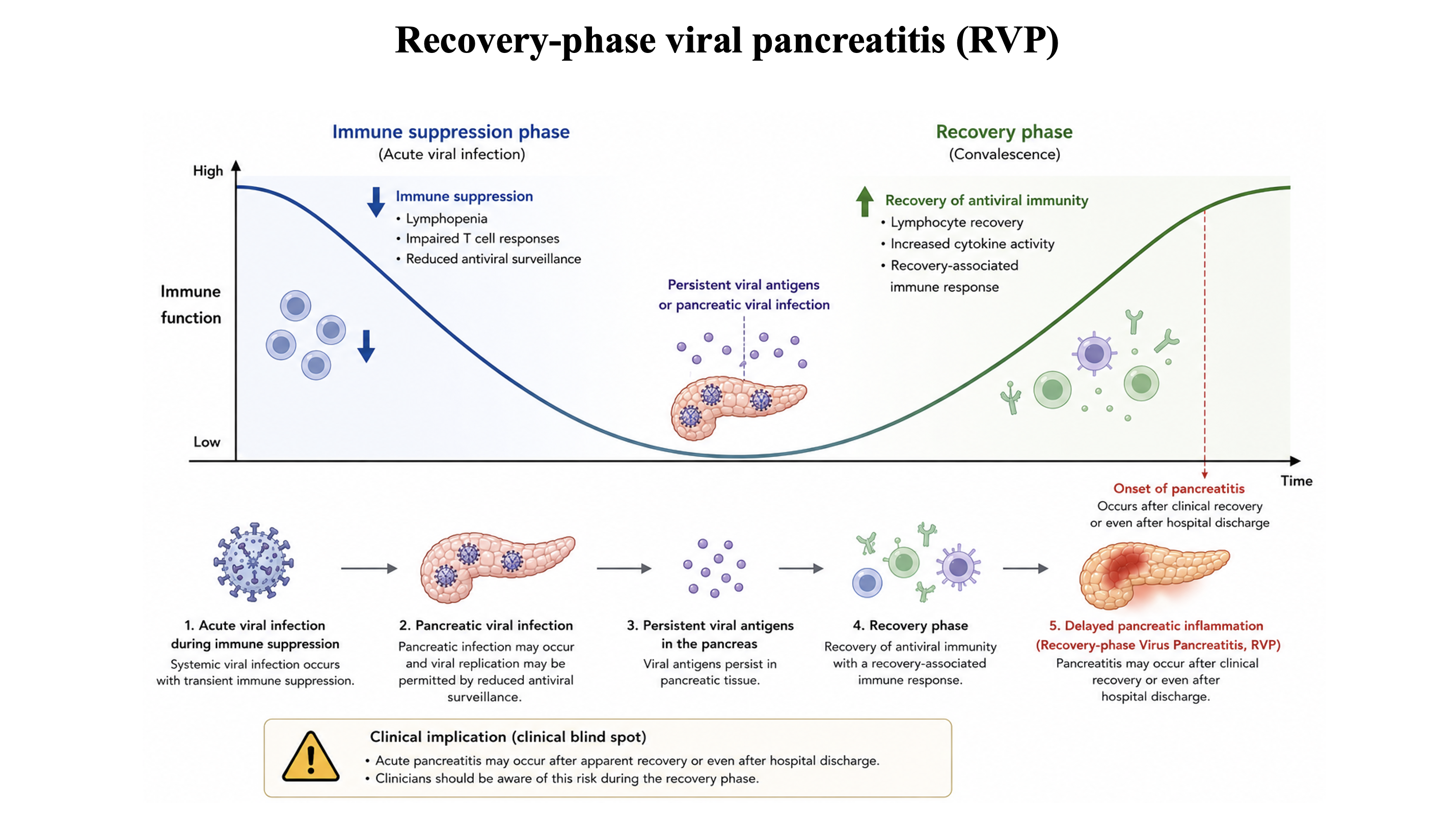
We propose a new clinical entity termed recovery-phase viral pancreatitis (RVP), characterized by delayed-onset acute pancreatitis arising during the recovery phase of viral infection, frequently after symptom resolution or hospital discharge.Although acute pancreatitis associated with viral infections, particularly coronavirus disease 2019 (COVID-19), has been increasingly recognized, most previous studies have focused on pancreatic injury occurring during the acute infectious phase. However, accumulating reports have described delayed pancreatitis developing after apparent clinical recovery, including post-discharge presentations. These delayed manifestations are difficult to explain solely by direct viral cytopathic injury during acute infection and instead suggest a distinct recovery-associated inflammatory process.A focused narrative literature review was performed to identify delayed-onset pancreatitis occurring during the recovery phase of viral infections. Representative cases demonstrated a reproducible temporal clustering of pancreatitis onset approximately 1-3 weeks after viral illness onset, frequently during convalescence or after hospital discharge. Similar delayed recovery-phase patterns were observed not only in SARS-CoV-2 infection but also in dengue virus, Epstein-Barr virus, and hepatitis A virus infections.Potential mechanisms may include transient immune suppression during acute infection, persistent viral antigens or pancreatic viral reservoirs, and delayed immune-mediated pancreatic inflammation during recovery. Although RVP shares certain conceptual similarities with immune reconstitution inflammatory syndrome (IRIS), important mechanistic differences exist because RVP appears to arise during the natural course of viral infection without external immune manipulation or profound baseline immunodeficiency. We believe RVP should be distinguished from classical IRIS.The recognition of RVP may provide a new clinical framework for understanding delayed inflammatory pancreatic injury after viral infection and may improve awareness of post-recovery and post-discharge pancreatitis.
Keywords:
recovery-phase viral pancreatitis
; acute pancreatitis
; COVID-19
; SARS-CoV-2
; viral pancreatitis
; post-discharge pancreatitis
; delayed pancreatitis
; immune reconstitution inflammatory syndrome
; IRIS
Copyright: This open access article is published under a Creative Commons CC BY 4.0 license, which permit the free download, distribution, and reuse, provided that the author and preprint are cited in any reuse.


