
Submitted:
06 May 2026
Posted:
07 May 2026
You are already at the latest version
Abstract
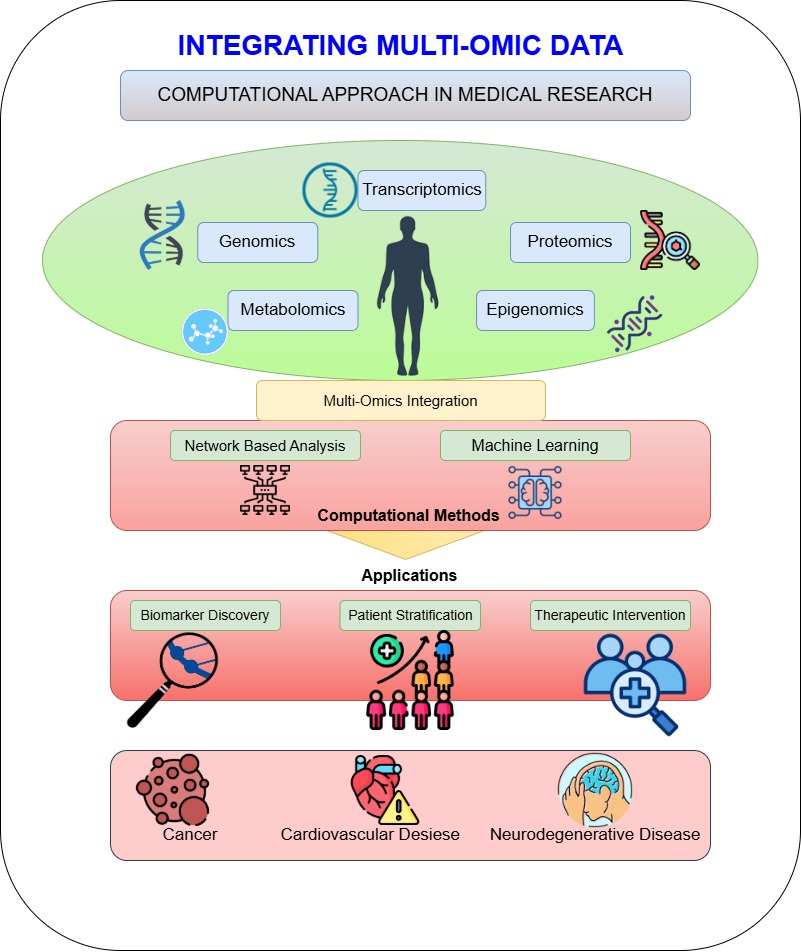
Background: Epigenomics has emerged as an essential technique of modern molecular biology, providing a critical layer of gene regulation. DNA methylation, histone modi-fications and alterations to the chromatin accessibility of DNA have been widely associated with complex diseases including cancer. The most recent developments in high-throughput sequencing technology have made it possible to profile epigenetic landscapes genomically on a large scale. However, these techniques often mask endogenous cellular heterogeneity essential for understanding complex disease stages. Objective: The purpose of the review is to assemble accessible tools and algorithms to conduct an Epigenomic study in the field of biomedical research, from bulk tissue analysis to the high-resolution frontier of single-cell epigenomics. Methods: We performed a comparative analysis of common methods used to analyze DNA methylation, chromatin immunoprecipitation, sequencing analysis and chromatin accessibility profiling. We described the standardized bioinformatics tools and pipelines required to transform raw sequencing data into mechanistic biological understanding, highlight-ing the role of quality control, peak calling, and differential analysis. Furthermore, we explore the integration of epigenomic with other "omics" layers through advanced computational frameworks, including machine learning and network-based modeling. Results: These advanced multi-omics techniques demonstrate efficient clinical utility by enabling biomarker discovery, disease subtyping, and the identification of novel therapeutic targets. Conclusions: Despite challenges with data complexity, the fusion of Artificial Intelligence (AI) and single-cell technologies will speed up the transition toward precision medicine. This review serves as a blueprint for providing the technical and computational complexities of epigenomics to uncover the mechanisms controlling human health and disease.
Keywords:
epigenomics
; histone modification
; DNA methylation
; ChIP-seq
; ATAC-seq
; bioinformatics tools
; epigenetic regulation
; multi-omics integration
; single-cell epigenomics
; machine learning
; clinical epigenetic biomarkers
Copyright: This open access article is published under a Creative Commons CC BY 4.0 license, which permit the free download, distribution, and reuse, provided that the author and preprint are cited in any reuse.


