

Submitted:
06 May 2026
Posted:
07 May 2026
You are already at the latest version
Abstract
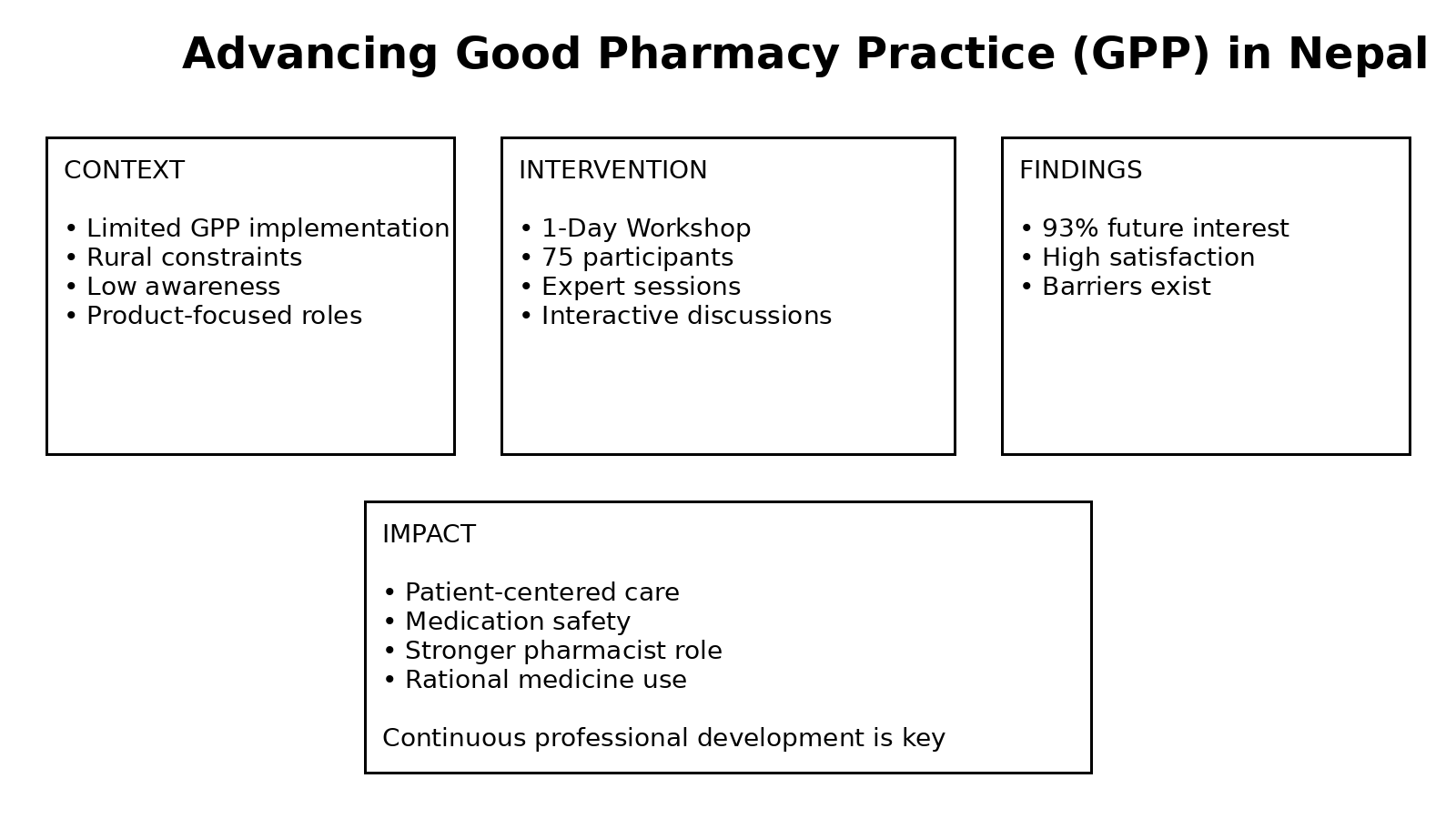
Background: Good Pharmacy Practice (GPP) provides a globally recognized framework to promote the safe, effective, and rational use of medicines while strengthening the role of pharmacists in patient-centered health care. To enhance awareness and practical understanding of GPP principles in the local context, a one-day workshop titled “GPP: Strengthening the Role of Pharmacists in Health Care Delivery” was conducted. Methods: The workshop was facilitated by subject experts and faculty members and included focused presentations and interactive discussions addressing key components of GPP, such as rational use of medicines, medication counseling, professional ethics, and the evolving responsibilities of pharmacists. Particular emphasis was placed on the current status, challenges, and opportunities for GPP implementation in Nepal in comparison with international standards. Participant feedback was collected at the end of the program. Results: Participants reported a high level of satisfaction with the workshop, highlighting the relevance and clarity of the content as well as its perceived professional and career-related benefits. Interactive discussions enabled participants to identify context-specific challenges and opportunities in pharmacy practice in Nepal. Minor logistical limitations, including sound system and internet connectivity issues, were noted but did not significantly affect overall engagement. Conclusion: The workshop underscored the importance of continuous professional development initiatives to strengthen the implementation of GPP and enhance pharmacists’ contributions to health care delivery. Conducting similar capacity-building programs, particularly in remote and underserved regions, may support the promotion of standardized pharmacy practice and contribute to improved health care outcomes in Nepal.
Keywords:
good pharmacy practice
; pharmacy practice
; role of pharmacists
; continuing professional development
; health care delivery
1. Introduction
Good Pharmacy Practice (GPP) establishes standards to ensure the safe, effective, and rational use of medicines and pharmaceutical services. Although pharmacy practice varies across countries according to economic development and national regulations, the core principles of GPP are intended to be universally applicable. The World Health Organization (WHO), in collaboration with the International Pharmaceutical Federation (FIP), issued joint GPP guidelines in 2011 to promote ethical, patient-centered, and quality-assured pharmacy practice worldwide. [1]
In Nepal, pharmacy practice is regulated by the Department of Drug Administration (DDA) [2], which oversees the registration, regulation, and rational use of medicines and allied pharmaceutical products.[3] All medicines intended for use in Nepal, whether locally manufactured or imported, must be registered with the DDA, while the National Medicines Laboratory (NML) functions as the principal government medicines testing facility.[4] The Nepal Pharmacy Council (NPC), established under the NPC Act, 2000, is responsible for the registration and regulation of pharmacists and pharmacy assistants.[5] Despite the presence of regulatory and professional bodies, gaps remain in the implementation of GPP, particularly in remote and underserved regions of the country.[6,7,8]
Pharmacy practice in Nepal has gradually evolved from a traditional product-oriented role focused primarily on dispensing and supply of medicines toward a more patient-centered approach. In addition to community pharmacy services, hospital pharmacies are increasingly involved in medication management, drug information services, procurement and inventory control, and support for rational medicine use. In some tertiary hospitals, pharmacists are beginning to participate in clinical pharmacy activities such as medication review, patient counseling, pharmacovigilance, and antimicrobial stewardship programs. However, the extent of these services varies widely across institutions and geographic regions, with rural areas often facing shortages of trained personnel and limited infrastructure to support expanded pharmacy services.[9,10,11]
This workshop was designed as a professional capacity-building and quality improvement initiative to strengthen the implementation of GPP through education, discussion, and professional engagement among pharmacists and pharmacy students. The following section presents a brief report of the workshop and its key outcomes.
2. Brief Report
A one-day workshop on Good Pharmacy Practice (GPP) was organized by the School of Pharmacy, KAHS, on 5th June 2025 at the Multipurpose Hall (Rara Hall), KAHS. The program was conducted through the joint efforts of KAHS faculty members, students, staff, and national and local sponsors, under the theme “Strengthening the Role of Pharmacists in Health Care Delivery.”
2.1. Objectives of the Workshop
The workshop aimed to introduce the principles of GPP in line with national and international standards; enhance understanding of ethical and professional responsibilities related to patient safety, confidentiality, and rational use of medicines; and strengthen practical knowledge on medication management, including procurement, storage, dispensing, labeling, and documentation. Additional objectives included familiarizing participants with quality assurance practices, improving communication skills for patient counseling and interprofessional collaboration, bridging the gap between theory and practice through expert interaction, promoting continuous professional development, and motivating pharmacists to adopt evidence-based, patient-centered practice. The workshop also addressed the current status of pharmacy practice in Jumla, future directions for the profession, the role of public awareness in promoting GPP, and the contribution of pharmacy curricula and faculty in strengthening GPP implementation.
2.2. Participants and Inauguration
The program was attended by 75 participants, including faculty members and students from the School of Pharmacy, KAHS, as well as second- and third-year pharmacy students and faculty from Karnali Technical School (KTS), Jumla. The workshop was inaugurated by the Acting Vice-Chancellor and Rector of the academy, followed by a formal address from a faculty member who served as the program coordinator and outlined the objectives and significance of the program. Participation in the feedback survey was voluntary and anonymous. As the activity involved the evaluation of an educational workshop and did not collect personal or sensitive data, formal institutional ethical approval was not required.
2.3. Technical Sessions
The workshop was structured around a series of expert presentations integrated with interactive discussions and question-and-answer sessions to promote active participant engagement. Each session included time for moderated discussion, during which participants were encouraged to share their experiences, ask questions, and reflect on practical challenges related to pharmacy practice and the implementation of Good Pharmacy Practice (GPP) in Nepal. This interactive format facilitated knowledge exchange among pharmacists, faculty members, and students while linking theoretical concepts with real-world pharmacy practice, particularly within resource-limited and remote healthcare settings.
The keynote address was delivered by Dr. Raj Kumar Thapa, Senior Pharmacist at Patan Academy of Health Sciences (PAHS). His presentation provided an overview of the current status of pharmacy practice in Nepal, highlighting PAHS as a pioneer institution in structured hospital pharmacy services and sharing practical experiences related to GPP implementation. The session generated active discussion among participants regarding the applicability of similar models in other healthcare institutions across the country.
This was followed by a session led by a faculty member who served as the program coordinator, who discussed the importance of public awareness and community engagement in strengthening the implementation of Good Pharmacy Practice (GPP). The session emphasized the role of pharmacists in promoting rational use of medicines and improving public understanding of pharmaceutical care through community outreach and education initiatives.
Assistant Professor Badri K.C., a PhD candidate in Good Pharmacy Practice from Kathmandu University, delivered a presentation focusing on the role of pharmacy education in advancing GPP. His session highlighted the importance of curriculum design, experiential learning, and faculty involvement in preparing future pharmacists to adopt patient-centered pharmacy practice. Participants discussed how academic institutions can integrate practical training and professional development activities to strengthen pharmacy practice standards.
Mr. Nibandha Chaulagain, Faculty at Karnali Technical School (KTS), Jumla, presented an overview of the current pharmacy practice scenario in the Jumla region and discussed future prospects for strengthening hospital pharmacy services. The session addressed local challenges such as resource limitations, workforce constraints, and geographic barriers, while encouraging participants to consider practical strategies for improving pharmacy service delivery in remote areas.
The final technical session was conducted by Associate Professor Ramesh Raj Padhaya, who addressed effective communication strategies and patient counseling in pharmacy practice. His presentation emphasized patient-centered communication, empathy, and the importance of adapting counseling approaches to local language and cultural contexts. The session concluded with an interactive discussion facilitated by a faculty member, where participants shared practical experiences and discussed strategies for improving pharmacist–patient communication in everyday practice.
2.4. Conclusion
The workshop concluded with certificate distribution, collection of participant feedback, and a formal closing session. Overall, the program emphasized the importance of GPP, professional competence, and continued capacity-building initiatives, particularly in remote regions of Nepal.
3. Key Point of the Session
The key points presented in this section were derived from major themes emerging from the workshop presentations, interactive discussions, and questions raised by participants during the sessions. These themes were identified by reviewing the presentation content and participant feedback and were summarized to highlight the major issues related to GPP implementation in Nepal.
3.1. GPP Implementation and Challenges in Nepal
In alignment with WHO recommendations[12], the DDA drafted National GPP Standards in 2003, which were later developed into national guidelines by the NPC in 2005.[13] Despite the availability of national guidelines, GPP implementation in Nepal remains limited, with partial adoption in government hospital pharmacies and minimal compliance in the private sector, where GPP is often misunderstood or neglected.[6]
During the interactive discussions and question–answer sessions, participants and speakers collectively highlighted several barriers to GPP implementation. These included limited awareness, inadequate incentives, heavy workload, weak pharmacy management systems, insufficient professional recognition, limited use of modern technologies, and gaps in pharmacists’ clinical knowledge.
3.2. Regulatory Accountability
Although DDA and NPC are responsible for regulating pharmacy practice and monitoring GPP compliance, their effectiveness is constrained by limited manpower, funding, digital infrastructure, and coordination mechanisms.[3,5] Insufficient dissemination of GPP guidelines and weak inter-agency coordination further hinder consistent regulatory oversight and enforcement.
3.3. Communication and Patient-Centered Counseling
Pharmacy communication traditionally follows a biomedical (transmission) model focused on information delivery; however, patient-centered care relies on a transactional, two-way communication approach that enhances shared understanding and therapeutic outcomes.[14,15]
Participants emphasized that adapting communication to local language, culture, and patient expectations, along with simple practices such as empathetic behavior and a welcoming attitude, can significantly improve patient trust and counseling effectiveness.
3.4. Public Perception and Community Pharmacy Practice
Although pharmacists are among the most accessible healthcare professionals, limited professional visibility and communication practices reduce public confidence, particularly in community pharmacies dominated by over-the-counter (OTC) medicine use. Similar challenges have been reported internationally, where patient attitudes limit effective pharmacist-patient interactions.[16,17]
3.5. Nepal’s GPP Status in the Global Context
Compared to countries with well-established GPP systems, such as the United Kingdom, Australia, Canada, and several European nations where pharmacists play active roles in clinical services, medication review, and patient counseling, Nepal remains at an early stage of GPP implementation.
Geographic isolation, poor transportation, and weak logistics systems further challenge GPP adoption in remote regions such as Jumla.[6]
Speakers highlighted that strengthening patient counseling, drug information services, interprofessional collaboration, and ward-based clinical pharmacy activities are feasible steps even within existing resource constraints.
3.6. Opportunities and Future Directions
Participants identified GPP as a major opportunity to improve medication safety, reduce adverse drug events, enhance patient trust, and promote cost-effective, patient-centered care. Effective GPP implementation could also position Nepal as a regional leader in herbal and Ayurvedic medicines, given the country’s rich biodiversity and long-standing traditions of herbal medicine use. Strengthening pharmacy practice standards, quality assurance systems, and research capacity could support the safe development, regulation, and rational use of traditional medicines in both national and international markets.
3.7. GPP, Professional Development and Leadership
GPP promotes lifelong learning, ethical professionalism, and continuous skill development through training, updated guidelines, and evidence-based practice. Pharmacists were recognized as key leaders in medication safety, quality improvement, and health policy implementation, with a growing role in strengthening sustainable medication management systems.[12,18]
4. Statistical Analysis of Feedbacks
The effectiveness of the workshop was evaluated using participant feedback, collected through a semi-structured questionnaire immediately after the session, following methodologies from previous workshop evaluations[19]. The questionnaire consisted of both closed-ended and open-ended questions designed to assess participants’ satisfaction with different aspects of the workshop, including content relevance, organization, venue, materials, interactive sessions, and overall learning experience. Closed-ended questions used a Likert-type response scale (e.g., very satisfied, satisfied, neutral, dissatisfied) to measure participant satisfaction, while open-ended questions allowed participants to provide qualitative comments and suggestions. For exploratory purposes, Likert-scale responses were coded numerically and used to examine correlations between evaluation variables. The correlation analysis was conducted only to explore general relationships among satisfaction indicators rather than to infer causal relationships. Completed questionnaires were first entered into Microsoft Excel for data cleaning and organization. Quantitative data were summarized using descriptive statistics, including frequencies and percentages, to describe participant responses. The cleaned dataset was exported as a CSV file and analyzed using Python 3.13.0 programming with Pandas (v2.3.1) and NumPy (v2.3.1), while Matplotlib and Seaborn were used to generate graphical representations of response distributions and correlations among evaluation variables. Qualitative responses were analyzed using a simple thematic analysis approach, where similar responses were grouped into common themes to identify key strengths of the workshop and areas for improvement. The resulting themes were summarized and presented narratively in the qualitative feedback section.
4.1. Feedback Overview
The questionnaire assessed participants’ satisfaction with various aspects of the workshop, including content, organization, venue, materials, and interactive sessions. Out of 75 attendees, 50 (71.4%) responses were received. After data cleaning, 44 (58.7%) complete responses were included in the analysis.
- a.
- Quantitative Results
Future participation: Among 44 respondents, 41 (93.2%) expressed interest in attending similar workshops, 1 (2.3%) was not interested, and 2 (4.5%) were unsure.
Satisfaction levels: Eight aspects of the workshop were evaluated (Figure 1). The majority of responses indicated “very satisfied”, particularly for Q&A sessions, hospitality, printed materials, workshop content, and overall organization. Some aspects received “satisfied” ratings, with a few participants selecting “neutral.”
Workshop duration: 43 (97.7%) participants considered the duration appropriate, while 1 (2.3%) suggested extending it to 2-3 days.
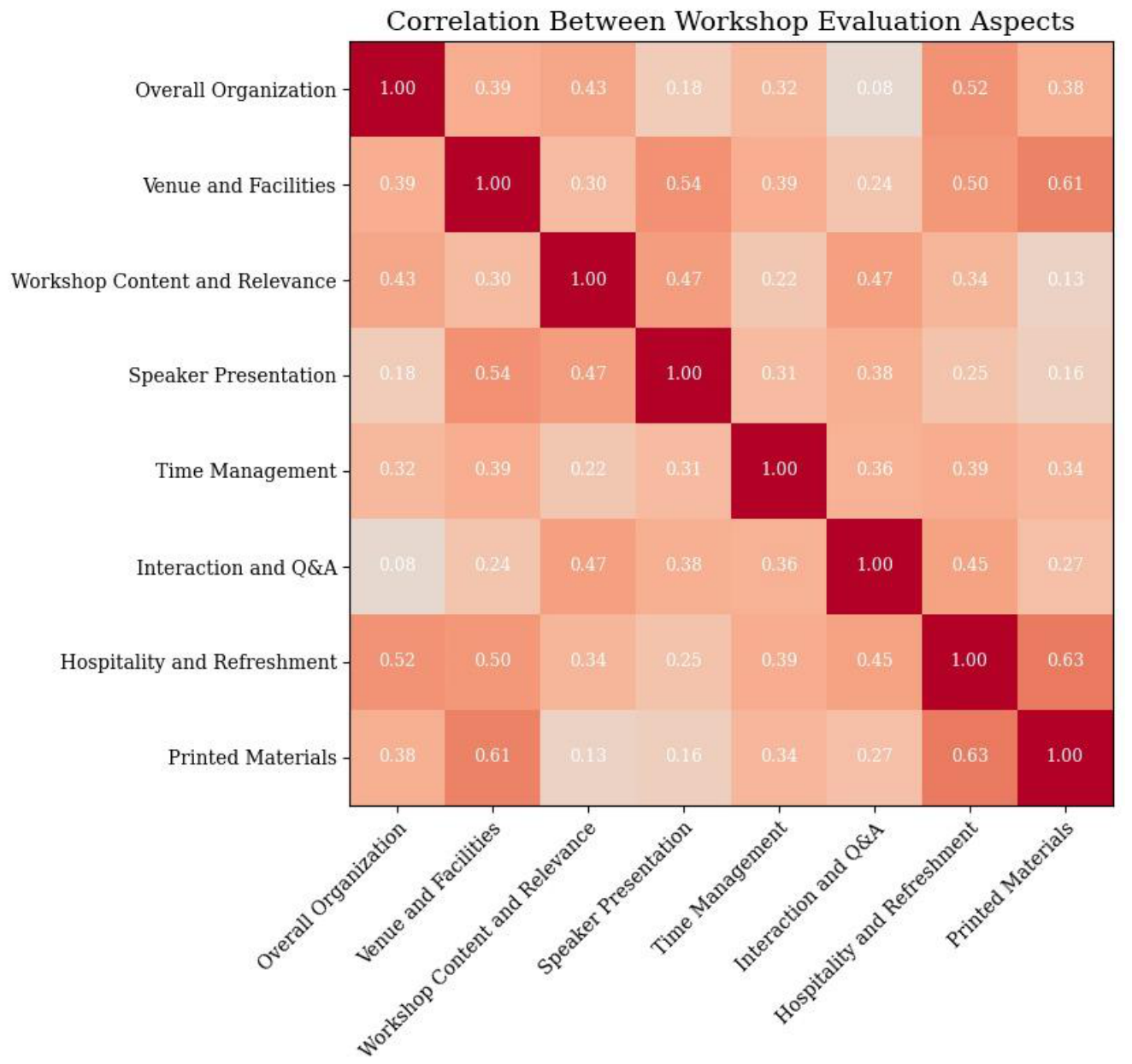
Correlation analysis: Quantitative variables were analyzed for correlation (Figure 2), with values ranging from 0 (no correlation) to 1 (high correlation), providing insights into relationships among satisfaction measures. Likert-scale responses were coded numerically for analysis. Pairwise correlations between satisfaction variables were calculated using the Pearson correlation coefficient to explore relationships among evaluation indicators. The heatmap (Figure 2) illustrates the strength and direction of correlations among satisfaction variables. Darker color intensities indicate stronger positive relationships between variables, suggesting that participants who rated one aspect of the workshop highly were also likely to rate other aspects positively.
5. Major Qualitative Feedback
Qualitative feedback was obtained from open-ended questions included in the post-workshop feedback questionnaire. Participants were invited to share their opinions regarding the most valuable aspects of the workshop, suggestions for improvement, and any additional comments. The responses were reviewed and compiled after data collection. A simple thematic analysis approach was applied in which similar responses were grouped into common categories to identify recurring themes. The themes were then summarized to reflect participants’ experiences, perceptions, and recommendations regarding the workshop.
5.1. What Participants Liked Most
Analysis of open-ended responses revealed several recurring themes:
- Interactive Sessions and Two-Way Communication: Participants valued the active engagement during Q&A sessions, group discussions, and panel interactions, which kept the workshop lively and participatory. One participant noted: “Interactive discussions with experts were particularly valuable and allowed us to learn from real experiences.”
- Quality of Speakers and Presentations: The expertise, clarity, and approachability of speakers were frequently praised. The combination of physical and virtual presentations from multiple institutions enriched the learning experience.
- Workshop Content and Learning on GPP: Attendees reported improved understanding of GPP, including patient counseling, medication safety, and pharmacy curriculum integration. For many, GPP was a new concept. Several participants mentioned that the workshop introduced them to new perspectives on pharmacy practice. For example: “The workshop was very informative and helped us understand the importance of GPP in everyday pharmacy practice.”
- Professional Interaction and Networking: Participants appreciated opportunities to interact with pharmacists, faculty, and students from different institutions, facilitating experience sharing and professional insights.
- Organization and Conduct: The workshop was commended for smooth coordination, effective time management, and session flow, despite limited resources.
- Hospitality and Support: Provision of meals, printed materials, and facilities contributed to a comfortable and conducive learning environment.
- Novelty and Memorable Experience: Many described the workshop as a unique, enriching, and memorable experience beneficial for future professional practice.
5.2. Suggestions for Improvement
Participants also provided constructive feedback for future workshops:
- Technical and IT Infrastructure: Enhancements in internet connectivity, sound systems, microphones, and virtual session coordination were suggested.
- Preference for In-Person Sessions: Many attendees preferred physical presentations over virtual ones to enhance engagement and interaction.
- Time Management and Scheduling: Better adherence to session start times and smooth transitions were recommended.
- Workshop Duration and Scope: Some suggested extending the workshop, including more presenters, practical exercises (role-play, simulations), and broader stakeholder participation.
- Coordination and Stakeholder Involvement: Improved communication among organizers, faculty, and stakeholders was advised.
- Focus on Practical Implementation: Participants emphasized linking GPP training with real-world application and professional practice. One participant suggested: “More practical sessions or role-play activities would make future workshops even more engaging.”
Despite these suggestions, most participants noted that the workshop was well-managed, informative, and highly beneficial.
5.3. Other Comments
- Gratitude and Positive Feedback: Participants frequently expressed appreciation, describing the workshop as “fruitful,” “motivating,” and “well-organized.”
- Desire for Future Workshops: Many suggested holding similar workshops regularly to strengthen GPP knowledge.
- Minor Logistical Improvements: Suggestions included better sound systems, break management, refreshments, and promoting active participation.
6. Discussion
The one-day workshop on “Good Pharmacy Practice (GPP): Strengthening the Role of Pharmacists in Health Care Delivery” highlighted the evolving scope of the pharmacist’s role beyond traditional dispensing to include patient counseling, medication safety, rational use of medicines, and broader clinical responsibilities. This aligns with global pharmacy practice frameworks where pharmacists are recognized as accessible healthcare professionals and key contributors to patient education and public health outcomes.[20]
Participants demonstrated increased awareness of GPP principles and expressed that the workshop content was highly relevant to their professional development, indicating the value of such educational interventions in strengthening pharmacy practice. Educational interventions have been shown to significantly improve pharmacists’ knowledge and practice related to dispensing procedures, prescription handling, and patient counseling, emphasizing the importance of continuous professional development.[21]
Despite these positive outcomes, logistical challenges such as internet connectivity and sound system issues were reported, especially in remote settings. Participants nevertheless considered the workshop impactful, even when keynote speakers participated virtually due to geographic constraints. The generally favorable feedback regarding venue, hospitality, and organization suggests that context-appropriate planning is critical for successful professional events in resource-limited settings.[22,23,24]
Consistent with recent national research, GPP implementation in Nepal remains inconsistent, with community pharmacies often failing to comply fully with national and international standards due to limited awareness, weak regulatory enforcement, and structural gaps.[20] Nepal’s pharmacy practice is in a transitional stage where regulatory frameworks (including national GPP guidelines) exist but have not been uniformly adopted, reflecting wider patterns seen in low- and middle-income countries.[25]
The feedback also highlighted the need to engage broader institutional participation and to foster greater public understanding of pharmacists’ roles. Poor public awareness of pharmacists’ clinical functions has been identified as a barrier to effective GPP implementation, since many patients continue to view pharmacies primarily as retail outlets.[20]
Workshop discussions emphasized practical, resource-sensitive strategies to strengthen GPP, including enhancing patient counseling services, integrating pharmacists into interprofessional healthcare teams, and promoting local public education on medication safety. These strategies support the rational use of medicines by enabling pharmacists to provide clear, accurate information and engage patients in shared decision-making, a key component of effective pharmaceutical care. WHO includes public education about medicines as a core intervention to promote rational use of medicines and improve health outcomes.[26]
Raising public awareness about rational medicine use is critical because even high-quality pharmacy practice cannot achieve optimal outcomes without patient understanding and engagement. Studies show that community pharmacists play a central role in promoting rational use of medicines through counseling and patient education, yet gaps in public awareness and compliance persist, highlighting the need for targeted interventions.[27]
7. Conclusions
Participant feedback indicated increased awareness and improved understanding of Good Pharmacy Practice (GPP) principles and the expanding roles of pharmacists in healthcare delivery. The workshop highlighted the importance of patient-centered practice, professional competence, and continuous professional development in strengthening pharmacy services. Participants particularly valued the interactive learning environment, suggesting that similar programs should be expanded to involve more institutions and regions. Broader efforts, including strengthened regulatory implementation, professional training, public awareness initiatives, and context-specific strategies, are necessary to support the adoption of GPP and align pharmacy practice in Nepal with international standards, ultimately contributing to improved healthcare outcomes.
Author Contributions
DRJ: Conceptualization, Supervision, Writing – Review & Editing. SK: Data Curation, Formal Analysis, Investigation, Writing – Original Draft. NA: Writing – Review & Editing. AA: Writing – Review & Editing. DM: Data Curation, Investigation. PNJ: Data Curation, Investigation. DRJ: Writing – Review & Editing, Final Approval. All authors have read and approved the final version of the manuscript.
Funding
No funding was received for this work.
Informed Consent Statement
Informed consent was obtained from all participants prior to collecting feedback. All responses were anonymized to ensure confidentiality. As this study involved anonymized feedback from a workshop and posed minimal risk, formal ethical approval was not required.
Data Availability Statement
All data supporting the findings of this study are available within the paper.
Acknowledgments
We sincerely thank all participants for their engagement and feedback. Special appreciation to Dr. Raj Kumar Thapa and Badri K.C. for joining as virtual resource persons. We are grateful to the faculty and staff of the School of Pharmacy, KAHS for their support. We also acknowledge the Public Health Service Office, Jumla; Lomus Pharmaceuticals Pvt. Ltd.; Chandannath Municipality, Jumla; Association of Faculties of Pharmacy of Nepal; Vivan Pharmacy, Butwal; Karnali Technical School, Jumla; and JCI Parsa Khairahani Junior for their sponsorship and in-kind contributions, which were vital to the workshop’s success. The authors used ChatGPT only to improve language clarity. All scientific content and interpretations are the authors’ own and were carefully verified.
Conflicts of Interest
The authors declare no conflict of interest related to this manuscript.
References
- WHO. Joint FIP/WHO Guidelines on GPP. (https://www.who.int/docs/default-source/medicines/norms-and-standards/guidelines/distribution/trs961-annex8-fipwhoguidelinesgoodpharmacypractice.pdf).
- Phattanawasin P, Burana-Osot J, Sotanaphun U, Kumsum A. Stability-indicating TLC—image analysis method for determination of andrographolide in bulk drug and andrographis paniculata formulations. Acta Chromatographica 2016;28(4):525-540.
- Role of DDA. (https://dda.gov.np/pages/about-us/).
- National Medicine Laboratory. (https://www.nml.gov.np/).
- Nepal Pharmacy Council. (https://nepalpharmacycouncil.org.np/).
- Ranjit E. Pharmacy Practice in Nepal. Can J Hosp Pharm 2016;69(6):493-500. [CrossRef]
- Joshi DR. Strengthening post-market drug surveillance in Nepal: evidence, gaps, and pathways forward. Journal of Patan Academy of Health Sciences 2025;12(2):94-97.
- Parajuli S, Adhikari N, Joshi DR. Evaluating Nepal’s National Health Policy 2019: Strengths, Gaps, and Future Directions. International Journal of Tropical Disease & Health 2025;46(12):29-43.
- Shrestha S, Shakya D, Palaian S. Clinical Pharmacy Education and Practice in Nepal: A Glimpse into Present Challenges and Potential Solutions. Adv Med Educ Pract 2020;11:541-548. (In eng). [CrossRef]
- Ansari M, Alam K. Chapter 8 - Pharmacy Practice in Nepal. In: Fathelrahman AI, Ibrahim MIM, Wertheimer AI, eds. Pharmacy Practice in Developing Countries. Boston: Academic Press; 2016:147-168.
- Pathak N, Basyal B, Dhungana S, et al. Navigating Mental Health Pharmacy Practice in Nepal. Hosp Pharm 2025;61(1):00185787251356128. (In eng). [CrossRef]
- NPC. National Good Pharmacy Practice Guidelines. In: NPC, ed.
- Naughton CA. Patient-Centered Communication. Pharmacy (Basel) 2018;6(1):18. [CrossRef]
- Wolters M, van Hulten R, Blom L, Bouvy ML. Exploring the concept of patient centred communication for the pharmacy practice. Int J Clin Pharm 2017;39(6):1145-1156. [CrossRef]
- Ojha A, Bista D, Kc B. Patients’ Perceptions on Community Pharmacy Services of a Ward (10) of Kathmandu Metropolitan. Patient Prefer Adherence 2023;17:1487-1499. (In eng). [CrossRef]
- El-Kholy AA, Abdelaal K, Alqhtani H, Abdel-Wahab BA, Abdel-Latif MMM. Publics’ Perceptions of Community Pharmacists and Satisfaction with Pharmacy Services in Al-Madinah City, Saudi Arabia: A Cross Sectional Study. Medicina (Kaunas) 2022;58(3) (In eng). [CrossRef]
- Kusynova Z, van den Ham HA, Leufkens HGM, Mantel-Teeuwisse AK. Longitudinal study of Good Pharmacy Practice roles covered at the annual world pharmacy congresses 2003-2019. J Pharm Policy Pract 2022;15(1):94. (In eng). [CrossRef]
- Shrestha S, Danekhu K, Sharma N, et al. Workshop on proposal writing on research for health care professionals: a brief report. J Multidiscip Healthc 2019;12:565-572. [CrossRef]
- Sankhi S, Marasine NR. Need for good pharmacy practice compliance in community pharmacies of nepal: its challenges and opportunities. Discover Public Health 2025;22(1):472.
- Shakya S, Taha NA, Karkee SB, Shankar PR. An Educational Intervention to Strengthen Community Pharmacy Practice in Nepal. Inquiry 2025;62:469580251398371. (In eng). [CrossRef]
- St Clair NE, Pitt MB, Bakeera-Kitaka S, et al. Global Health: Preparation for Working in Resource-Limited Settings. Pediatrics 2017;140(5):e20163783. [CrossRef]
- Hudspeth J, Curry CL, Sacks Z, Surena C. Continuing professional development in low-resource settings: Haiti as example. Annals of global health 2015;81(2):255-259.
- Charitonos K, Littlejohn A. Professional learning in healthcare settings in resource-limited environments: what are the tensions for professionals’ knowing and learning about antimicrobial resistance? Studies in Continuing Education 2022;44(3):475-492.
- Shrestha R, Ghale A. Study of good pharmacy practice in community pharmacy of three districts of Kathmandu valley, Nepal. Int J Sci Rep 2018;4(10):240-245.
- Promoting rational use of medicines. WHO. (https://www.who.int/activities/promoting-rational-use-of-medicines/promoting-rational-use-of-medicines?utm_source).
- Mwita S, Mgaya E, Haule A. Awareness of the rational use of medicines and the medication counseling practice in community pharmacies in Nyamagana district, Mwanza: A cross-sectional study. J Med Access 2024;8:27550834241261852. (In eng). [CrossRef]
Figure 1.
Distribution of participant responses across satisfaction categories (very satisfied, satisfied, and neutral) for workshop evaluation criteria.
Figure 1.
Distribution of participant responses across satisfaction categories (very satisfied, satisfied, and neutral) for workshop evaluation criteria.
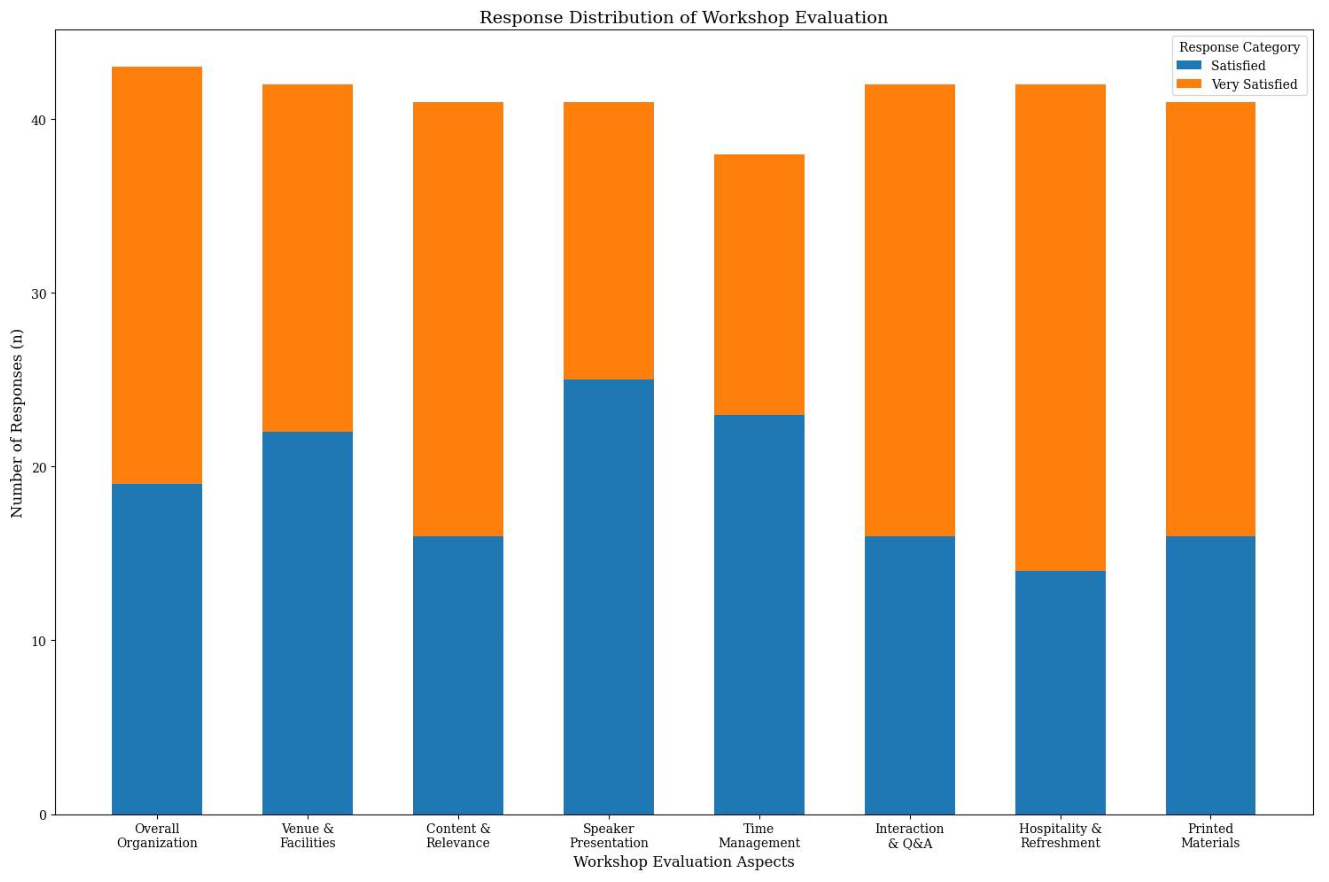
Figure 2.
Heat map correlation between eight different workshop evaluation aspects.
Disclaimer/Publisher’s Note: The statements, opinions and data contained in all publications are solely those of the individual author(s) and contributor(s) and not of MDPI and/or the editor(s). MDPI and/or the editor(s) disclaim responsibility for any injury to people or property resulting from any ideas, methods, instructions or products referred to in the content. |
© 2026 by the authors. Licensee MDPI, Basel, Switzerland. This article is an open access article distributed under the terms and conditions of the Creative Commons Attribution (CC BY) license.
Copyright: This open access article is published under a Creative Commons CC BY 4.0 license, which permit the free download, distribution, and reuse, provided that the author and preprint are cited in any reuse.


