
Submitted:
05 May 2026
Posted:
06 May 2026
You are already at the latest version
Abstract
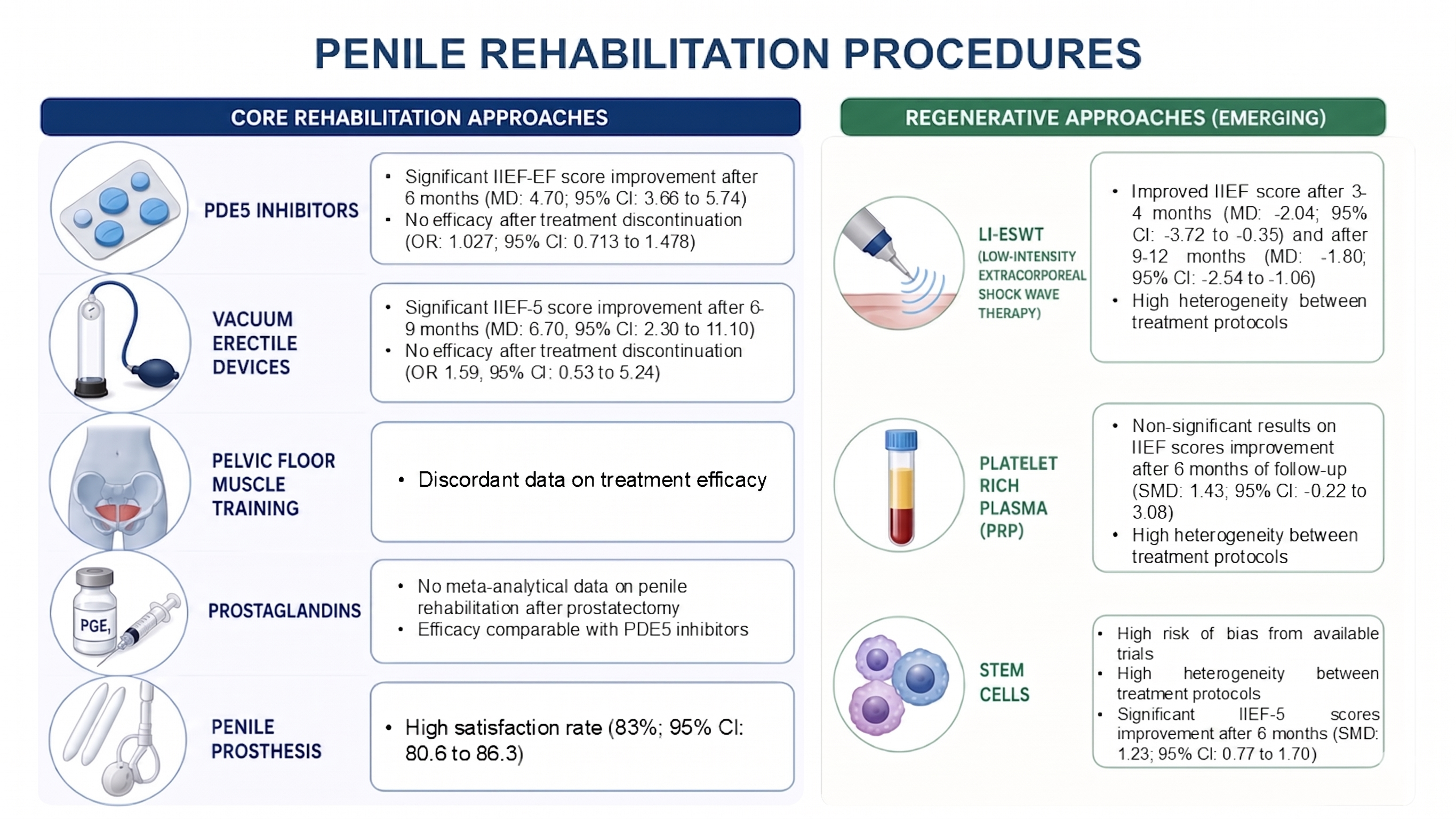
Background/Objectives: Penile rehabilitation (PR) techniques are claimed to counteract chronic degenerative processes of cavernous tissue such as penile hypoxia, neurovascular damage, and cavernous fibrosis. The objective of this umbrella review is to synthesize findings from existing meta-analyses to evaluate the efficacy of traditional and emerging PR strategies, providing an evidence-based roadmap for clinical management after surgery for prostate cancer. Methods: Conducted in accordance with PRIOR guidelines, a comprehensive literature search of PubMed, The Cochrane Library, and Scopus was performed through April 2026. The review included primarily systematic reviews and meta-analyses investigating pharmacological, physical, surgical, and regenerative interventions for post-prostatectomy erectile dysfunction (ED). Methodological quality was independently assessed using standardized tools. Results: PDE5 inhibitors (PDE5-is) significantly improve erectile function during active treatment, yet evidence supporting their role in promoting spontaneous, "unassisted" recovery remains limited. Vacuum erectile devices demonstrate high efficacy for assisted intercourse but show minimal impact on returning to baseline function compared to placebo. Penile prosthesis (PP) implantation maintains robust efficacy with exceptionally high satisfaction rates (83–85%), proving independent of prior pelvic surgery. Although early-phase trials suggest clinical potential for regenerative therapies like low-intensity extracorporeal shockwave therapy, platelet-rich plasma, and stem cell interventions, the evidence is currently undermined by substantial heterogeneity in study protocols and concerns regarding methodological quality. Conclusions: PR following radical prostatectomy remains a complex challenge characterized by poor evidence. While PDE5-Is are established first-line therapy for assisted function, PP remains the most reliable definitive treatment for refractory ED cases. Regenerative approaches show promise but remain investigational until standardized protocols and large-scale trials are established.
Keywords:
radical prostatectomy
; erectile dysfunction
; penile rehabilitation
; PDE5 inhibitors
; vacuum erectile device
; penile prosthesis
; platelet‐rich plasma
; low intensity extracorporeal shockwave therapy
; regenerative medicine
Copyright: This open access article is published under a Creative Commons CC BY 4.0 license, which permit the free download, distribution, and reuse, provided that the author and preprint are cited in any reuse.


