

Submitted:
04 May 2026
Posted:
05 May 2026
You are already at the latest version
Abstract
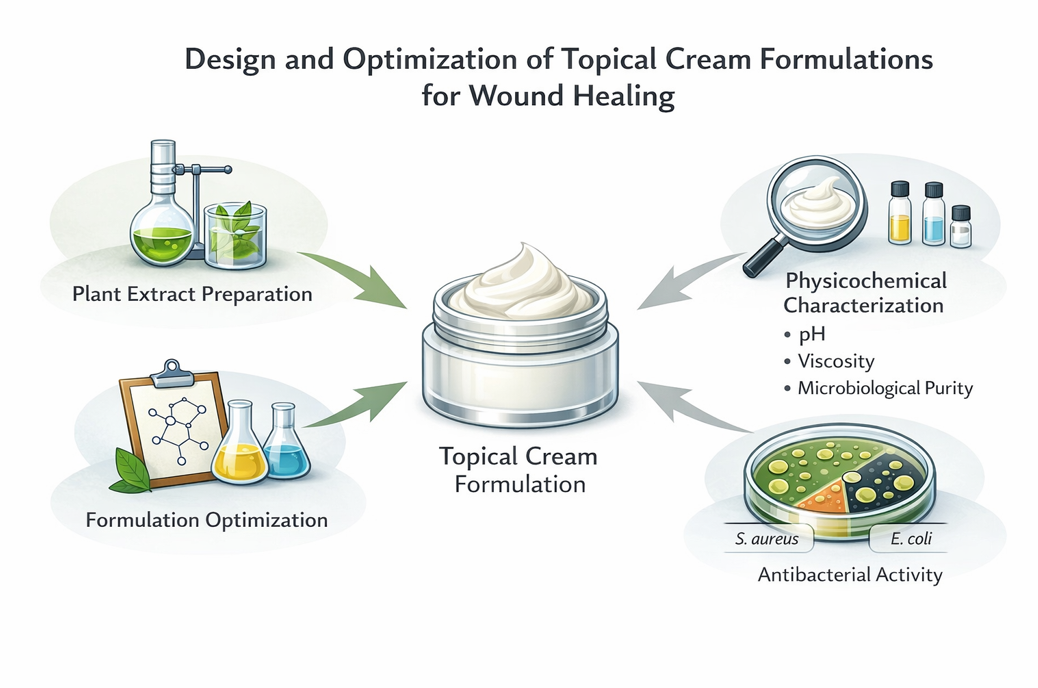
Topical semisolid formulations based on biopolymers and plant-derived components have attracted increasing attention for wound healing applications. However, their physicochemical stability and biological performance are strongly influenced by formulation composition and structural organization, which necessitates further systematic investigation. The aim of this study was to develop and optimize oil-in-water cream formulations based on biopolymer systems containing chitosan, xanthan gum, and plant extracts of Hypericum perforatum and Calendula officinalis. The formulations were prepared using a conventional emulsification method and evaluated in terms of pH, viscosity, rheological behavior, microbiological purity, and antimicrobial activity. Initial systems exhibited low viscosity and insufficient structural stability, which were improved by the incorporation of xanthan gum as a stabilizer. The optimized formulations demonstrated non-Newtonian shear-thinning behavior and pH values of 6.35 ± 0.08, indicating suitability for topical application. Formulations containing plant extracts did not exhibit antimicrobial activity against Staphylococcus aureus ATCC 6538 and Pseudomonas aeruginosa ATCC 9027. In contrast, the formulation containing naringin demonstrated selective bactericidal activity against Staphylococcus aureus up to a dilution of 1:16, with no effect observed against Pseudomonas aeruginosa. Overall, the developed systems showed appropriate physicochemical and rheological properties for dermal application. The study demonstrates that physicochemical optimization does not necessarily correlate with antimicrobial performance, highlighting the importance of formulation composition.
Keywords:
topical cream
; biopolymer
; gellan gum
; chitosan
; xanthan gum
; plant extracts
; wound healing
; rheology
; viscosity
; physicochemical properties
1. Introduction
Wound healing is a complex and tightly regulated biological process involving overlapping phases of hemostasis, inflammation, proliferation, and tissue remodeling. Disturbances at any of these stages may lead to the development of chronic wounds, which remain a significant clinical and economic burden worldwide. Such conditions are frequently associated with underlying diseases, including diabetes, vascular disorders, and infections, resulting in impaired tissue regeneration and an increased risk of complications [1,2].
One of the key obstacles in wound management is the persistence of an excessive inflammatory response, which disrupts the normal progression of healing and contributes to tissue damage. In addition, microbial infection plays a crucial role in delaying wound closure, particularly due to the formation of biofilms and the emergence of antibiotic resistance [3,4]. These factors complicate treatment and indicate the need for therapeutic approaches capable of addressing several aspects of wound healing simultaneously.
Topical formulations such as creams and gels remain among the most commonly used treatment options, primarily because of their ease of application and direct action at the site of injury. However, their effectiveness is often limited by insufficient drug penetration, instability of active compounds, and the lack of sustained release. As a result, repeated application is required, which may reduce treatment efficiency and patient compliance [5].
In developing and transitional economies, including Kazakhstan, these challenges are further compounded by limited access to advanced pharmaceutical technologies. The local market is largely dependent on imported medicines, while domestic production remains restricted in both scale and diversity [6,7]. Consequently, available wound care products are not always optimized for regional clinical needs or storage conditions. These circumstances highlight the importance of developing locally adaptable formulations based on accessible and multifunctional materials.
One promising approach involves the use of biopolymers as functional components in drug delivery systems. Polymers such as chitosan, gellan gum, alginate, and agar are of particular interest due to their biocompatibility, biodegradability, and low toxicity [8,9]. In addition to serving as structural matrices, these materials can influence drug release and improve formulation stability.
Chitosan, in particular, has attracted considerable attention in wound healing applications. Its intrinsic antimicrobial activity, hemostatic properties, and ability to promote cell adhesion and proliferation make it a suitable candidate for topical systems. At the same time, its cationic nature allows interaction with negatively charged biological structures and bioactive molecules. However, the use of chitosan in semi-solid formulations may be complicated by its limited solubility and tendency to aggregate under certain conditions, which can affect formulation homogeneity and stability [10].
Other polysaccharides, such as gellan gum, are widely used as structuring agents due to their ability to form stable gel networks. These materials contribute to desirable rheological properties and can support controlled release of active compounds. In cream systems, such characteristics are particularly important, as consistency, spreadability, and retention at the application site directly influence therapeutic outcomes [11].
Alongside the choice of carrier materials, the selection of active compounds is equally important. Plant-derived substances are of particular interest in wound care because they combine several pharmacological effects relevant to tissue repair. These include antioxidant, anti-inflammatory, and antimicrobial activities, which are essential for reducing oxidative stress, regulating inflammation, and preventing infection at the wound site [12,13,14].
Flavonoids represent one of the most extensively studied groups of plant-derived compounds in this context. They have been shown to enhance collagen synthesis, stimulate angiogenesis, and promote epithelialization, while also protecting tissues from oxidative damage through scavenging of reactive oxygen species [15].
Among medicinal plants, Hypericum perforatum L. and Calendula officinalis Linn are well known for their wound healing properties. Extracts of Hypericum perforatum contain compounds such as hyperforin, flavonoids, and phenolic acids, which contribute to antimicrobial and anti-inflammatory effects and support tissue regeneration. Calendula officinalis is rich in triterpenoids, flavonoids, and carotenoids, which are associated with anti-inflammatory activity, stimulation of granulation tissue formation, and acceleration of wound contraction [16,17,18,19].
Despite ongoing research in this field, the development of stable cream-based systems that simultaneously incorporate biopolymers and plant-derived active compounds remains limited. In particular, the relationship between formulation composition, physicochemical stability, and biological performance is not fully understood, especially for semisolid systems containing structurally complex components such as chitosan and multiple plant extracts.
Therefore, the aim of this study was to develop and comparatively evaluate oil-in-water cream formulations based on biopolymer systems containing chitosan, xanthan gum, and selected plant-derived compounds. Particular attention was given to the influence of formulation composition on structural stability, rheological behavior, and antimicrobial activity. This work provides a systematic comparison of different formulation strategies and highlights that physicochemical optimization does not necessarily correlate with biological performance.
2. Materials and Methods
2.1. Materials
Herbal extracts of Calendula officinalis and Hypericum perforatum were obtained from local pharmacies (Leovit LLP, Kazakhstan). Xanthan gum was supplied by Frymaker (China). Glycerin (PK-94 grade) was purchased from Glycerin.ru LLC (Russia). Polysorbate 80 (Tween 80) was of Indian origin. Petrolatum, natural beeswax, and paraffin were sourced from Russian manufacturers, including Lukoil-Nizhegorodnefteorgsintez (Kstovo, Russia). Methylparaben (Sharon Personal Care, Israel) and cetylstearyl alcohol (Edenor Technology, Malaysia) were used as received. Sunflower oil (refined, food-grade, compliant with GOST 1129-93) was obtained from a commercial supplier and used without further purification. Gellan gum and chitosan were acquired from Sigma-Aldrich (Darmstadt, Germany). Distilled water was used in all experiments. No additional purification of the materials was performed prior to use.
2.2. Methods
Cream formulations of the oil-in-water type were prepared using a conventional emulsification method with separate preparation of the aqueous and oil phases. The aqueous phase consisted of glycerin, polysorbate 80, methylparaben, and distilled water, while the oil phase included beeswax, sunflower oil, petrolatum, paraffin, and cetylstearyl alcohol. Both phases were heated separately to 70 °C and stirred using a heated magnetic stirrer (HS-Pro DT, Stegler, China) at 1000 rpm for 30 min until complete melting and uniform distribution of components were achieved. The aqueous phase was gradually added to the oil phase under continuous stirring, followed by further mixing for 15 min to ensure complete emulsification. The resulting emulsion was homogenized using a high-shear homogenizer (S-10, Stegler, China) for 5 min to obtain a uniform structure and then cooled at room temperature (25 ± 3 °C) to form a stable cream. A total of five formulations were prepared. Initial formulations exhibited low viscosity; therefore, xanthan gum was incorporated as a thickening agent to improve structural properties and stability. In modified formulations, distilled water was partially replaced with a hydroalcoholic plant extract, serving both as a solvent and an active component [20]. Additionally, samples with gellan gum were obtained, where petroleum jelly was replaced with gellan gum.
2.3. pH Measurement
The pH of the formulations was determined at 25 ± 2 °C using a calibrated pH meter (pH-150MI, Russia). Prior to measurements, the instrument was calibrated in accordance with the requirements of the State Pharmacopoeia of the Republic of Kazakhstan using standard buffer solutions, including a potassium hydrogen phthalate buffer (pH 4.00 at 25 °C). Calibration was verified using an additional buffer solution of different pH. For pH determination, 1 g of each formulation was dispersed in 10 mL of distilled water and mixed until a uniform dispersion was obtained. The electrode was then immersed in the sample, and the pH value was recorded after stabilization of the reading. All measurements were performed in triplicate, and the results were expressed as mean ± standard deviation.
2.4. Viscosity Measurement
Viscosity measurements were carried out using a rotational viscometer (NDJ-5T) at 25 ± 1 °C. Prior to analysis, the instrument was set up in accordance with the manufacturer’s instructions. An appropriate spindle was selected depending on the viscosity range of the samples. For each measurement, a sufficient amount of the formulation was placed in a clean cylindrical vessel to ensure complete immersion of the spindle without air entrapment. The spindle was immersed up to the designated mark and allowed to equilibrate in the sample for 1–2 min before measurement. Measurements were performed at rotational speeds ranging from 3 to 200 rpm to evaluate the flow behavior of the formulations. Apparent viscosity values were recorded directly from the instrument after stabilization of the readings. All measurements were conducted in triplicate, and the results were expressed as mean ± standard deviation.
2.5. Antimicrobial Activity
The antimicrobial activity of the developed cream formulations was evaluated in vitro using broth microdilution and agar diffusion methods in accordance with Clinical and Laboratory Standards Institute (CLSI) guidelines. The experiments were conducted in a specialized microbiology laboratory of JSC Scientific Center for Anti-Infectious Drugs (Kazakhstan). The study was performed using reference strains of microorganisms, including Gram-positive Staphylococcus aureus ATCC 6538 and Gram-negative Pseudomonas aeruginosa ATCC 9027. For inoculum preparation, bacterial cultures were grown under standard conditions and adjusted to 0.5 McFarland standard (approximately 1.5 × 10⁸ CFU/mL). The working suspension was prepared by diluting the stock culture to approximately 1.5 × 10⁶ CFU/mL for the microdilution assay. Antimicrobial activity was first evaluated using a broth microdilution method in Mueller–Hinton broth. Serial twofold dilutions of the formulations were prepared in sterile 48-well plates in the range from 1:1 to 1:128 (sample:broth). Each well contained 500 µL of medium, followed by the addition of 50 µL of the bacterial suspension to achieve a final concentration of approximately 1.5 × 10⁵ CFU/mL. The plates were incubated at 37 ± 1 °C for 18–24 h. The minimum bactericidal concentration (MBC) was determined by subculturing samples from each well onto agar plates and assessing microbial growth. In parallel, antimicrobial activity was assessed using the agar diffusion method. Mueller–Hinton agar plates were inoculated with the bacterial suspension using sterile swabs. Wells with a diameter of 6 mm were created in the agar, and approximately 200 µL of the test formulation was introduced into each well. The plates were incubated at 37 ± 1 °C for 18–24 h. Antimicrobial activity was evaluated by measuring the diameter of inhibition zones. All experiments were performed under aseptic conditions in accordance with standard microbiological procedures [21,22,23].
2.6. Microbiological Purity
Microbiological purity of the developed cream formulations was evaluated to assess the absence of microbial contamination and compliance with requirements for topical pharmaceutical preparations. The analysis was performed using standard microbiological methods under aseptic conditions. Samples were tested for total aerobic microbial count (TAMC) and for the presence of pathogenic microorganisms. For the analysis, a defined amount of each formulation was aseptically transferred into sterile diluent and homogenized to obtain a uniform suspension. Serial dilutions were prepared and plated onto appropriate culture media. Mueller–Hinton agar and other standard nutrient media were used for microbial cultivation. The inoculated plates were incubated at 30–35 °C for bacteria and 20–25 °C for fungi for the required incubation period. Microbial growth was assessed by visual inspection and colony counting where applicable. The obtained results were compared with acceptable microbiological limits for topical dosage forms.
3. Results and Discussion
The development of the cream formulation was preceded by a systematic analysis of published studies on topical wound healing systems. This analysis revealed a consistent pattern in the composition of conventional cream-based formulations, particularly regarding the selection of excipients responsible for structural stability, hydration, and protection of the skin barrier [5,24]. Based on this analysis, a model formulation was designed, incorporating key functional components commonly used in dermal preparations (Table 1). The selected components were chosen according to their technological roles and the concentration ranges reported in the literature [25]. Occlusive agents such as petrolatum and liquid paraffin were included to reduce transepidermal water loss and maintain a moist environment, which is essential for effective wound healing [5]. Lipid components, including sunflower oil, were incorporated to improve skin elasticity and support restoration of the lipid barrier [26].
The concentration ranges of the selected components were defined based on literature data and adjusted to achieve optimal physicochemical properties and stability of the cream system. This approach allowed the establishment of a rational formulation strategy prior to the incorporation of biopolymers and plant-derived active compounds. Structural integrity of the formulation was achieved through the use of beeswax and cetostearyl alcohol, which function as structuring agents and co-emulsifiers, contributing to the formation of a stable semi-solid system with appropriate consistency [24]. In addition, xanthan gum was incorporated as a stabilizer to enhance viscosity and prevent phase separation [27].
The aqueous phase was supplemented with glycerol as a humectant, promoting moisture retention in the stratum corneum [26]. Polysorbate 80 (Tween-80) was used as a nonionic emulsifier to ensure the formation and stability of an oil-in-water emulsion [25]. Methylparaben was included as a preservative to prevent microbial contamination and improve the shelf life of the formulation [28].
The compositions of Samples 1–5 were developed based on literature-guided selection of excipients and their functional roles in semisolid dermal systems. The formulations were designed to investigate the effect of varying ratios of lipid components, emulsifiers, humectants, and stabilizing agents on the formation, structure, and stability of cream systems.
In all formulations, petrolatum and beeswax were used as primary structuring and occlusive agents, contributing to the formation of a semi-solid matrix and reduction of transepidermal water loss. Sunflower oil was incorporated as a lipid component to support skin barrier restoration, while glycerin served as a humectant to enhance hydration. Polysorbate 80 (Tween 80) was employed as a nonionic emulsifier to promote the formation and stabilization of the oil–water interface.
The compositions of Samples 1–3 were primarily varied in terms of lipid phase and emulsifier ratios to establish a baseline understanding of emulsion formation. In contrast, Samples 4 and 5 additionally included xanthan gum as a stabilizing agent to enhance viscosity and improve resistance to phase separation. This systematic variation in composition enabled evaluation of the relationship between excipient ratios, structural organization, and subsequent physicochemical behavior of the formulations.

Table 2.
Composition of the developed cream formulations expressed as wt.%.
| Component | Sample 1 (wt.%) | Sample 2 (wt.%) | Sample 3 (wt.%) | Sample 4 (wt.%) | Sample 5 (wt.%) |
|---|---|---|---|---|---|
| Petrolatum | 10.50 | 7.00 | 13.00 | 4.00 | – |
| Beeswax | 3.00 | 2.00 | 10.00 | 2.00 | 3.00 |
| Sunflower oil | 15.00 | 10.00 | – | 3.00 | 6.00 |
| Cetearyl alcohol | 1.50 | 3.00 | 3.00 | 4.53 | – |
| Glycerin | 3.00 | 2.00 | 2.52 | 2.00 | 3.00 |
| Polysorbate 80 (Tween 80) | 2.25 | 1.49 | 2.65 | 3.36 | 3.36 |
| Xanthan gum | – | – | – | 1.41 | 1.41 |
| Methylparaben | 0.10 | 0.20 | 0.20 | 0.10 | 0.10 |
| Purified water | 64.65 | 74.30 | 68.63 | 79.60 | 83.13 |
Note: The compositions were expressed as weight percentages (wt.%) relative to the total formulation mass. Liquid components originally measured in milliliters were converted to grams using reference density values prior to calculation.
The preliminary preparation and organoleptic evaluation of the cream formulations revealed pronounced differences in consistency, homogenization behavior, absorption, and short-term physical stability. Such differences are expected for emulsion-based semisolid systems, since their quality is governed not only by composition, but also by processing parameters including homogenization speed, mixing time, temperature, cooling conditions, and the order of phase addition. According to recent analyses of topical semisolid dosage forms, the microstructure of cream systems directly affects their viscosity, texture, spreadability, skin feel, drug release, and overall physical stability; moreover, emulsion creams are thermodynamically unstable systems that may undergo flocculation, coalescence, creaming, sedimentation, or phase inversion when formulation and process parameters are not appropriately balanced [29] (Таблица 3) .
Sample 1 thickened rapidly during homogenization and formed a visually homogeneous cream with good spreadability and relatively fast absorption. At the same time, its consistency remained comparatively fluid, which is consistent with the absence of a dedicated polymeric thickener in the composition. This observation is in agreement with the literature indicating that polymer-thickened semisolid systems generally exhibit improved control over viscosity and structural stabilization, whereas formulations relying mainly on classical lipidic consistency agents may remain more sensitive to process conditions and composition ratios. In addition, occlusive lipidic excipients such as petrolatum are known to reduce transepidermal water loss and support barrier protection, which may explain the satisfactory emollient character and skin-feel properties observed for this sample [30].
Sample 2 did not reach the desired consistency immediately after homogenization and required intermediate cooling followed by repeated homogenization. After this additional processing, the formulation became more structured, although its absorption was slower than that of Sample 1. This behavior can be explained by the progressive structuring of the dispersed system during cooling, because in semisolid creams the solidification and crystallization behavior of waxes and petrolatum-like components strongly influence the formation of the internal network and, consequently, the final viscosity and stability. Recent work also emphasizes that cooling history and shear conditions are critical for obtaining the target droplet-size distribution and the desired semisolid microstructure [31].
Samples 4 and 5 showed the greatest technological difficulties during manufacture. In both cases, pronounced foaming was observed during homogenization, and in Sample 4 additional aggregate formation occurred. From a formulation perspective, such behavior is plausible because surfactant-containing systems are especially sensitive to mechanical agitation: the amount of foam generated increases with mixing intensity and time, while incorporated air may destabilize the emulsion microstructure and compromise uniformity [32]. In addition, incomplete dispersion of structural components may have contributed to aggregate formation in Sample 4, indicating insufficient development of a uniform internal network during emulsification and cooling.
The behavior of Sample 4 after storage further supports the conclusion that the system remained structurally unstable. Although classical phase separation was not immediately evident, the sample developed a heterogeneous structure characterized by a gel-like upper layer and a more fluid lower phase. Literature data indicate that even in the absence of visible phase separation, emulsions may undergo microstructural rearrangements that later manifest as viscosity gradients, creaming, or local destabilization phenomena [29].
Table 3.
Technological observations and preliminary physicochemical characteristics of the developed cream formulations.
Table 3.
Technological observations and preliminary physicochemical characteristics of the developed cream formulations.
| Property | Sample 1 | Sample 2 | Sample 4 | Sample 5 |
|---|---|---|---|---|
| Homogenization behavior | Immediate thickening during homogenization | No immediate thickening; required cooling and repeated homogenization | Intensive foaming; aggregate formation observed | Pronounced foaming; repeated phase separation after cooling |
| Consistency after preparation | Semi-liquid, relatively low viscosity | Moderately viscous, more structured system | Heterogeneous; gel-like upper layer and liquid lower phase | Greasy, ointment-like (water-in-oil type behavior) |
| Absorption characteristics | Rapid absorption | Slower absorption | Non-uniform absorption | Slow absorption |
| Appearance / Color | Light yellow, milky | White | White to milky | Bright yellow → milky after mixing |
| Short-term physical stability | No visible phase separation; low structural strength | Physically stable; no phase separation | No clear separation, but strong viscosity gradient | Unstable; persistent phase separation |
| Remarks | Lack of thickener low viscosity | Cooling improved structuring and stability | Incomplete emulsification and structural heterogeneity | Insufficient emulsifier-phase balance; instability despite xanthan gum |
Sample 5 exhibited the lowest physical stability among the tested formulations. Following homogenization and cooling, repeated phase separation was observed despite re-homogenization and additional emulsifier incorporation. The greasy, ointment-like consistency indicates a possible shift toward a water-in-oil system with insufficient interfacial stabilization. This behavior suggests that the emulsifier-to-phase ratio was not optimal for maintaining a stable oil-in-water structure. Although xanthan gum is known to increase viscosity and reduce droplet mobility, it cannot compensate for an inadequate interfacial balance, as stable emulsion formation depends on the overall colloidal design of the system [33].
Overall, the comparative evaluation demonstrated that Samples 1 and 2 exhibited the most acceptable technological and physicochemical characteristics, whereas Samples 4 and 5 were limited by foaming, heterogeneity, and insufficient stability. These observations are consistent with literature reports indicating that the performance of topical semisolid emulsions is governed by the combined effects of formulation composition, processing conditions, and resulting microstructure [29].
Despite the relatively favorable performance of selected formulations, all systems exhibited low viscosity and insufficient structural stability, indicating the need for further optimization. To address these limitations, xanthan gum was incorporated as a polymeric stabilizing and thickening agent. Modified formulations based on Samples 2, 4, and 5 were prepared with adjusted ratios of lipid components and emulsifiers.
The incorporation of xanthan gum contributed to increased viscosity, improved structural integrity, and reduced phase separation tendency, primarily by restricting droplet mobility within the continuous phase. The compositions of the modified formulations are presented in Table 4.
The introduction of xanthan gum significantly altered the rheological behavior of the formulations. As a high-molecular-weight polysaccharide, xanthan gum increases viscosity and forms a weak three-dimensional network within the aqueous phase, which reduces droplet mobility and contributes to improved physical stability of emulsion systems.
The modified formulations (Samples 2a, 4a, and 5a) were therefore expected to exhibit enhanced resistance to phase separation compared to the initial systems. However, the extent of stabilization remained dependent on the overall balance between the oil phase, emulsifier concentration, and structuring agents, indicating that the addition of a single stabilizer alone is not always sufficient to ensure complete emulsion stability.
The effect of xanthan gum incorporation on the consistency and stability of the cream formulations was further evaluated using modified samples (2a, 4a, and 5a). Xanthan gum was introduced stepwise into previously prepared 50 g cream systems to assess its impact on viscosity enhancement and structural stabilization.
In Sample 2a, the initial addition of 0.2 g xanthan gum followed by magnetic stirring did not result in sufficient thickening after 24 h of storage at refrigerated conditions. However, subsequent addition of an additional 0.1 g xanthan gum, followed by mixing and homogenization, led to the formation of a cream with satisfactory consistency after further storage. This result indicates that a threshold concentration of xanthan gum is required to establish an effective stabilizing network within the system.
In contrast, Sample 4a did not exhibit significant viscosity improvement despite the stepwise addition of xanthan gum (total 0.3 g). Although the formulation became visually homogeneous and maintained a uniform white appearance, it remained relatively fluid even after repeated mixing and 24 h storage. Notably, no gel-like structuring was observed at the surface, suggesting insufficient network formation within the continuous phase.
Similarly, Sample 5a demonstrated limited response to xanthan gum addition. Despite achieving improved homogeneity and elimination of visible phase separation compared to the initial formulation, the system remained relatively low in viscosity. The presence of small dispersed particles was also observed, indicating incomplete dispersion or local aggregation within the formulation. The cream exhibited a light yellow color and improved uniformity but did not reach the desired semisolid consistency.
Overall, the results demonstrate that while xanthan gum contributes to improved homogeneity and reduction of phase separation, its thickening efficiency strongly depends on the overall composition of the formulation. In particular, the balance between lipid phase components, emulsifier concentration, and structuring agents appears to play a critical role in enabling effective viscosity enhancement and stabilization.
Table 5.
Effect of xanthan gum addition on the physicochemical properties of modified cream formulations.
Table 5.
Effect of xanthan gum addition on the physicochemical properties of modified cream formulations.
| Property | Sample 2a | Sample 4a | Sample 5a |
|---|---|---|---|
| Xanthan gum addition | Stepwise: 0.2 g → +0.1 g | Stepwise: 0.2 g → +0.1 g | Stepwise: 0.2 g → +0.1 g |
| Mixing conditions | Magnetic stirring + homogenization | Magnetic stirring | Magnetic stirring |
| Consistency after 24 h | Initially low viscosity → improved to acceptable consistency | Remained relatively fluid | Remained slightly fluid |
| Homogeneity | Homogeneous | Homogeneous | Homogeneous with small particles |
| Appearance / Color | White | White | Light yellow |
| Phase separation | Not observed | Not observed | Not observed (improved vs initial sample) |
| Structural behavior | Formation of stable structure after second addition | No gel-like structuring observed | Weak structuring; incomplete network formation |
| Remarks | Threshold xanthan concentration required for stabilization | Xanthan insufficient to induce thickening | Improved stability but inadequate viscosity |
These findings indicate that the effectiveness of xanthan gum as a stabilizing agent is strongly formulation-dependent and cannot be considered a universal solution for viscosity enhancement. The optimal structuring of cream systems requires a synergistic balance between polymeric stabilizers, emulsifiers, and lipid phase components.
Based on these results, a comparative assessment of the developed formulations was performed to identify the most promising composition with respect to physicochemical properties and stability. The selected formulation served as the basis for further modification.
Following optimization of the cream base, plant extracts were incorporated to introduce biological functionality and to evaluate their influence on formulation properties. Hydroalcoholic extracts of Hypericum perforatum and Calendula officinalis were selected due to their well-documented wound-healing, anti-inflammatory, and antimicrobial activities.
Three formulations were prepared to assess the effect of extract composition: a combined extract system (Sample 1e), a formulation containing only Hypericum perforatum extract (Sample 2e), and a formulation containing only Calendula officinalis extract (Sample 3e). In all cases, the hydroalcoholic extract phase partially replaced the aqueous phase while maintaining the overall composition of the base formulation. The compositions of the extract-loaded formulations are presented in Table 6.
The incorporation of hydroalcoholic plant extracts into the cream formulations resulted in noticeable changes in organoleptic properties, while maintaining acceptable consistency across all samples. In all cases, the aqueous phase was replaced with plant extracts, which influenced the color, odor, and, to some extent, the structural characteristics of the emulsions.
Sample 1e, containing a combination of Hypericum perforatum and Calendula officinalis extracts, exhibited a satisfactory consistency but showed signs of incomplete homogenization, as indicated by insufficient mixing between the aqueous and oil phases. The formulation was characterized by a light grayish-olive color and a distinct herbal odor. To improve the sensory profile, a small amount of vanillin was added as a fragrance agent. It should be noted that the final yield of this formulation was lower than expected (approximately 30 g instead of 50 g), suggesting possible processing losses or instability during preparation.
Sample 2e, containing only Hypericum perforatum extract, demonstrated a uniform and stable consistency with improved visual homogeneity compared to Sample 1e. The formulation exhibited a pearlescent golden color and a characteristic plant-derived odor. The addition of vanillin contributed to a more acceptable sensory profile. No visible signs of phase separation or structural heterogeneity were observed in this sample.
Similarly, Sample 3e, formulated with Calendula officinalis extract, showed a consistent semi-solid structure comparable to Sample 2e. The cream displayed a sand-yellow color and a mild herbal odor. The formulation remained homogeneous after preparation, indicating adequate emulsification and compatibility of the extract with the base system.
Overall, the results indicate that the incorporation of plant extracts did not adversely affect the consistency of the formulations, although it significantly influenced their sensory characteristics. The observed differences between the samples suggest that extract composition may affect emulsion stability and homogenization efficiency, particularly in multi-component extract systems such as Sample 1e.
Table 7.
Organoleptic and technological characteristics of cream formulations containing plant extracts.
Table 7.
Organoleptic and technological characteristics of cream formulations containing plant extracts.
| Property | Sample 1e | Sample 2e | Sample 3e |
|---|---|---|---|
| Extract composition | Hypericum perforatum + Calendula officinalis | Hypericum perforatum | Calendula officinalis |
| Consistency | Good, but slightly heterogeneous | Good, homogeneous | Good, homogeneous |
| Homogeneity | Incomplete emulsification | Uniform | Uniform |
| Appearance / Color | Light grayish-olive | Pearlescent golden | Sand-yellow |
| Odor | Pronounced herbal | Herbal, milder after vanillin addition | Mild herbal |
| Phase behavior | Partial mixing issues | No phase separation | No phase separation |
| Remarks | Possible insufficient emulsification; reduced yield (~30 g) | Good compatibility with base formulation | Stable system with acceptable properties |
The results suggest that formulations containing single plant extracts (Samples 2e and 3e) exhibited better structural homogeneity compared to the combined extract system (Sample 1e), indicating that increased compositional complexity may negatively affect emulsification efficiency and overall system stability.
These observations highlight the sensitivity of emulsion systems to compositional variations and emphasize the need for additional strategies to further improve structural integrity. In this context, an alternative formulation approach based on the incorporation of biopolymers was investigated to modify the structural and physicochemical properties of the cream systems.
Gellan gum was selected due to its ability to form gel-like three-dimensional networks and enhance structural stability, whereas chitosan was incorporated owing to its biocompatibility, film-forming capacity, and potential wound-healing activity.
Two formulations were prepared: Sample 1g containing gellan gum and Sample 2h containing chitosan. The compositions of these formulations are presented in Table 8.
The incorporation of biopolymers significantly influenced the structural and physicochemical properties of the developed formulations. In the case of Sample 1g, containing gellan gum, the system exhibited enhanced structuring due to the formation of a three-dimensional polymeric network within the aqueous phase. This behavior is consistent with the well-established gel-forming ability of gellan gum, which contributes to increased viscosity and improved stability of semisolid systems.
In contrast, Sample 2h, containing chitosan, demonstrated less favorable structural characteristics. At the preliminary stage of formulation development, chitosan was selected due to its well-documented biocompatibility, bioadhesive behavior, and antimicrobial potential. However, the obtained formulation exhibited inadequate physicochemical stability, manifested by polymer aggregation, loss of homogeneity, and subsequent sedimentation with formation of a clear supernatant phase. This behavior is consistent with the pH-dependent solubility profile of chitosan, which remains stable primarily under mildly acidic conditions, whereas reduced protonation at near-neutral pH may lead to precipitation and coagulation phenomena [34,35].
An additional factor contributing to instability may be the interaction between positively charged chitosan chains and anionic polysaccharides such as xanthan gum present in the formulation. It has been reported that such systems can form polyelectrolyte complexes, significantly affecting rheological behavior and structural organization of semisolid formulations [36,37]. Furthermore, technological parameters including polymer concentration, degree of pre-solubilization, and the sequence of component incorporation are known to play a crucial role in determining the stability and consistency of chitosan-based topical systems [35,38]. Therefore, the observed phase separation can be attributed to the combined effect of pH-dependent chitosan insolubility and interpolymer complexation.
In contrast, formulations containing gellan gum demonstrated superior technological performance during preliminary screening. These systems were characterized by satisfactory homogeneity, acceptable consistency, and absence of visible phase separation under short-term storage conditions. As an anionic polysaccharide with high hydration capacity and strong gel-forming ability, gellan gum facilitates the formation of coherent three-dimensional networks, thereby enhancing the structural stability of semisolid dosage forms [39,40].
From a therapeutic perspective, maintaining a hydrated microenvironment at the wound site is recognized as a key factor for efficient epithelialization and tissue regeneration [5]. Considering the instability of chitosan-based systems and the favorable physicochemical characteristics observed for gellan-containing formulations, further stages of this study were focused on the evaluation of gellan-based wound-healing cream systems.
The pH values of the developed formulations were within the range suitable for topical application, with an average value of 6.35 ± 0.08. This pH range is considered compatible with the physiological pH of the skin and is unlikely to cause irritation upon application. The relatively narrow variation in pH values indicates good reproducibility of the formulation process and uniform distribution of components within the system.
The viscosity measurements demonstrated that the developed formulations exhibited non-Newtonian flow behavior, with viscosity values dependent on the applied shear rate. An increase in rotational speed resulted in a decrease in apparent viscosity, indicating shear-thinning characteristics typical for semisolid cream systems. The incorporation of xanthan gum significantly increased viscosity and improved structural consistency of the formulations. In contrast, formulations without polymeric stabilizers exhibited lower viscosity and reduced resistance to flow. The obtained results confirm the effectiveness of xanthan gum in enhancing rheological properties and contributing to the stability of the cream systems.
The rheological behavior of the developed cream formulations was evaluated to assess their structural organization and suitability for topical application. The viscosity profiles as a function of rotational speed and shear rate are presented in Figure 1 and Figure 2, respectively. All formulations exhibited non-Newtonian flow behavior characterized by a decrease in viscosity with increasing shear rate, indicating shear-thinning properties typical of semisolid cream systems. This behavior is advantageous for topical application, as it facilitates spreading under mechanical stress while maintaining sufficient viscosity at rest to ensure structural stability and retention on the skin surface. Variations in viscosity among the samples were observed, reflecting differences in internal structure and the degree of network formation within the cream matrix. In particular, formulations containing xanthan gum demonstrated significantly higher apparent viscosity and improved structural consistency compared to systems without polymeric stabilizers, indicating its effectiveness in enhancing rheological properties and contributing to formulation stability. The incorporation of plant extracts did not significantly alter the overall rheological behavior of the formulations. However, minor variations in viscosity profiles were observed, likely due to differences in extract composition and their interactions with the emulsion system.
Overall, the obtained rheological characteristics confirm that the developed formulations possess appropriate flow properties for topical application.
The antimicrobial activity of the developed cream formulations was evaluated against Staphylococcus aureus ATCC 6538 and Pseudomonas aeruginosa ATCC 9027 using broth microdilution and agar diffusion methods. The formulation containing Hypericum perforatum and Calendula officinalis extracts did not exhibit detectable antimicrobial activity under the tested conditions. In the broth microdilution assay, microbial growth was observed at all dilution levels, indicating the absence of bacteriostatic and bactericidal effects. These findings were further confirmed by the agar diffusion method, where no inhibition zones were detected for either test strain.
In contrast, the formulation containing naringin demonstrated selective antimicrobial activity. A bactericidal effect was observed against Staphylococcus aureus ATCC 6538, with activity retained up to a dilution of 1:16. However, no antimicrobial effect was detected against Pseudomonas aeruginosa ATCC 9027 under the same experimental conditions. The absence of antimicrobial activity in formulations containing plant extracts may be attributed to insufficient concentrations of active phytochemical constituents or limited release and diffusion of these compounds from the semisolid matrix into the surrounding medium. The structural characteristics of the cream base may restrict the mobility of active substances, thereby reducing their interaction with microbial cells.
The observed selective activity of the naringin-containing formulation indicates that antimicrobial efficacy is strongly dependent on both the nature of the active compound and the susceptibility of the target microorganism. The lack of activity against Pseudomonas aeruginosa can be explained by its intrinsic resistance mechanisms, including low membrane permeability and active efflux systems, which are known to reduce susceptibility to antimicrobial agents. Overall, the obtained results represent a preliminary evaluation of the antimicrobial properties of the developed formulations and highlight the need for further optimization, particularly with respect to increasing the concentration of active components and improving their release from the formulation matrix.
The microbiological purity assessment demonstrated that all developed formulations complied with the acceptable limits for topical preparations. No significant microbial contamination was detected. The total aerobic microbial count was within permissible limits, and no pathogenic microorganisms were identified in the tested samples. These results indicate that the formulations were prepared under appropriate hygienic conditions and are microbiologically stable.
4. Conclusions
This study focused on the development and optimization of topical cream formulations based on biopolymer systems and plant-derived components for potential wound healing applications. The results showed that the physicochemical and rheological properties of the formulations were strongly dependent on the composition and structural organization of the system. The incorporation of xanthan gum improved viscosity and structural stability, confirming its role as a polymeric stabilizing agent, although its performance remained formulation-dependent.
The incorporation of plant extracts influenced formulation properties, with single-extract systems showing better homogeneity compared to combined extract formulations. However, no antimicrobial activity was observed for formulations containing Hypericum perforatum and Calendula officinalis under the tested conditions. In contrast, the formulation containing naringin exhibited selective antimicrobial activity against Staphylococcus aureus, while no effect was observed against Pseudomonas aeruginosa, indicating strain-dependent efficacy.
Overall, the findings suggest that physicochemical optimization of semisolid systems may not necessarily correlate with antimicrobial performance, highlighting the importance of formulation composition. The developed formulations showed suitable physicochemical and rheological characteristics for topical application; however, further optimization is required to enhance biological activity.
Author Contributions
Conceptualization, G.B.; methodology, G.B., M.G. and M.N.; validation, G.B., M.G.; formal analysis, G.B.; investigation, M.G., M.N., and A.M.; resources, G.B., M.N. and A.M.; data curation, M.G. and A.M.; writing—original draft preparation, G.B. and M.G.; writing—review and editing, G.B.; visualization, M.G.; supervision, G.B.; project administration, G.B. All authors have read and agreed to the published version of the manuscript.
Funding
This research received no external funding.
Institutional Review Board Statement
Not applicable.
Informed Consent Statement
Not applicable.
Data Availability Statement
The data presented in this study are available on request from the corresponding author.
Acknowledgments
During the preparation of this manuscript, the authors used ChatGPT (OpenAI) for language editing and text refinement. The authors reviewed and edited the output and take full responsibility for the content of this publication.
Conflicts of Interest
The authors declare no conflicts of interest.
References
- Guo, S.; DiPietro, L. A. Factors Affecting Wound Healing. J. Dent. Res. 2010, 89(3), 219–229. [Google Scholar] [CrossRef]
- Frykberg, R. G.; Banks, J. Challenges in the Treatment of Chronic Wounds. Adv. Wound Care 2015, 4(9), 560–582. [Google Scholar] [CrossRef] [PubMed]
- Zhao, G.; Usui, M. L.; Lippman, S. I.; James, G. A.; Stewart, P. S.; Fleckman, P.; Olerud, J. E. Biofilms and Inflammation in Chronic Wounds. Adv. Wound Care 2013, 2(7), 389–399. [Google Scholar] [CrossRef]
- Bjarnsholt, T. The Role of Bacterial Biofilms in Chronic Infections. APMIS 2013, 121(s136), 1–58. [Google Scholar] [CrossRef] [PubMed]
- Boateng, J. S.; Matthews, K. H.; Stevens, H. N. E.; Eccleston, G. M. Wound Healing Dressings and Drug Delivery Systems: A Review. J. Pharm. Sci. 2008, 97(8), 2892–2923. [Google Scholar] [CrossRef]
- Akhmetova, A.; Saliev, T.; Kulsharova, G.; Nurgozhin, T.; Mikhalovsky, S. Current State of Chronic Wound Care in Kazakhstan: Focus on Topical Treatments. RusOMJ 2015, 4(1), e0104. [Google Scholar] [CrossRef]
- Zhakipbekov, K.; Posylkina, O.; Zhumabayev, N.; Datkhayev, U.; Zhumabayev, N.; Almurzaeva, A.; Mukanova, A. Analysis of the Current State of the Pharmaceutical Market of the Republic of Kazakhstan. SR. PS. 2023, No. 2(42), 57–67. [Google Scholar] [CrossRef]
- Dash, M.; Chiellini, F.; Ottenbrite, R. M.; Chiellini, E. Chitosan—A Versatile Semi-Synthetic Polymer in Biomedical Applications. Prog. Polym. Sci. 2011, 36(8), 981–1014. [Google Scholar] [CrossRef]
- Boateng, J. S.; Pawar, H. V.; Tetteh, J. Polyox and Carrageenan Based Composite Film Dressing Containing Anti-Microbial and Anti-Inflammatory Drugs for Effective Wound Healing. Int. J. Pharm. 2013, 441(1–2), 181–191. [Google Scholar] [CrossRef] [PubMed]
- Jayakumar, R.; Prabaharan, M.; Sudheesh Kumar, P. T.; Nair, S. V.; Tamura, H. Biomaterials Based on Chitin and Chitosan in Wound Dressing Applications. Biotechnol. Adv. 2011, 29(3), 322–337. [Google Scholar] [CrossRef]
- Morris, E. R.; Nishinari, K.; Rinaudo, M. Gelation of Gellan – A Review. Food Hydrocoll. 2012, 28(2), 373–411. [Google Scholar] [CrossRef]
- Gurtner, G. C.; Werner, S.; Barrandon, Y.; Longaker, M. T. Wound Repair and Regeneration. Nature 2008, 453(7193), 314–321. [Google Scholar] [CrossRef]
- Agyare, C.; Boakye, Y. D.; Bekoe, E. O.; Hensel, A.; Dapaah, S. O.; Appiah, T. Review: African Medicinal Plants with Wound Healing Properties. J. Ethnopharmacol. 2016, 177, 85–100. [Google Scholar] [CrossRef]
- Kumar, B.; Vijayakumar, M.; Govindarajan, R.; Pushpangadan, P. Ethnopharmacological Approaches to Wound Healing—Exploring Medicinal Plants of India. J. Ethnopharmacol. 2007, 114(2), 103–113. [Google Scholar] [CrossRef]
- Middleton, E.; Kandaswami, C.; Theoharides, T.C. The effects of plant flavonoids on mammalian cells. Pharmacol. Rev. 2000, 52, 673–751. [Google Scholar] [CrossRef]
- Süntar, I. P.; Akkol, E. K.; Yılmazer, D.; Baykal, T.; Kırmızıbekmez, H.; Alper, M.; Yeşilada, E. Investigations on the in Vivo Wound Healing Potential of Hypericum Perforatum L. J. Ethnopharmacol. 2010, 127(2), 468–477. [Google Scholar] [CrossRef] [PubMed]
- Preethi, K.C.; Kuttan, G.; Kuttan, R. Anti-inflammatory activity of flower extract of Calendula officinalis Linn. Indian J. Exp. Biol. 2009, 47, 113–120. [Google Scholar] [PubMed]
- Saddiqe, Z.; Naeem, I.; Maimoona, A. A Review of the Antibacterial Activity of Hypericum Perforatum L. J. Ethnopharmacol. 2010, 131(3), 511–521. [Google Scholar] [CrossRef]
- Parente, L. M. L.; Lino Júnior, R. D. S.; Tresvenzol, L. M. F.; Vinaud, M. C.; De Paula, J. R.; Paulo, N. M. Wound Healing and Anti-Inflammatory Effect in Animal Models of Calendula Officinalis L. Growing in Brazil. Evid.-Based Complement. Altern. Med. 2012, 2012, 1–7. [Google Scholar] [CrossRef]
- Sezen, S.; Sevinc Ozakar, R.; Bayram, C.; Burul, F.; Ozkaraca, M.; Karadayi, M.; Ekimci Deniz, F.; Hacımuftuoglu, A.; Gulluce, M. A Plantago Lanceolata L. Extract-Based Cream Enhances Wound Healing by Modulating Inflammatory Mediators and Growth Factors in a Full-Thickness Wound Model: In Vivo and In Silico Evidence. J. Drug Deliv. Sci. Technol. 2026, 115, 107635. [Google Scholar] [CrossRef]
- Methods for Dilution Antimicrobial Susceptibility Tests for Bacteria That Grow Aerobically; Approved Standard-Tenth Edition. CLSI document M07-A10. Wayne, PA: Clinical and Laboratory Standards Institute; 2015.
- Performance Standards for Antimicrobial Susceptibility Testing. In CLSI supplement M100, 28th ed.; Clinical and Laboratory Standards Institute: Wayne, PA, 2018.
- Andrews, Jennifer. Determination of Minimum Inhibitory Concentration. J. Antimicrob. Chemother. 2001, 48, 1. 5–16. [Google Scholar] [CrossRef] [PubMed]
- Emulsion Formation and Stability, 1st ed.; Tadros, T. F., Ed.; Wiley, 2013. [Google Scholar] [CrossRef]
- Florence, A. T.; Attwood, D. Physicochemical Principles of Pharmacy, 3rd ed.; Bloomsbury Publishing Plc, 1998. [Google Scholar] [CrossRef]
- Topical and Transdermal Drug Delivery: Principles and Practice, 1st ed.; Benson, H. A. E., Watkinson, A. C., Eds.; Wiley, 2011. [Google Scholar] [CrossRef]
- Sworn, G. Xanthan Gum. In Handbook of Hydrocolloids; Elsevier, 2009; pp. 186–203. [Google Scholar] [CrossRef]
- Rowe, R. C.; Sheskey, P. J.; Quinn, M. E. Handbook of Pharmaceutical Excipients, 6th ed.; Pharmaceutical press: London, 2009; Available online: https://www.pharmpress.com/product/9780853697923/handbook-of-pharmaceutical-excipients.
- Badruddoza, A. Z. M.; Yeoh, T.; Shah, J. C.; Walsh, T. Assessing and Predicting Physical Stability of Emulsion-Based Topical Semisolid Products: A Review. J. Pharm. Sci. 2023, 112(7), 1772–1793. [Google Scholar] [CrossRef]
- Herbig, M. E.; Evers, D.-H.; Gorissen, S.; Köllmer, M. Rational Design of Topical Semi-Solid Dosage Forms-How Far Are We? Pharmaceutics 2023, 15(7), 1822. [Google Scholar] [CrossRef]
- Chow, P. S.; Lim, R. T. Y.; Cyriac, F.; Shah, J. C.; Badruddoza, A. Z. M.; Yeoh, T.; Yagnik, C. K.; Tee, X. Y.; Wong, A. B. H.; Chia, V. D.; Wang, G. The Effect of Process Parameters on the Microstructure, Stability, and Sensorial Properties of an Emulsion Cream Formulation. Pharmaceutics 2024, 16(6), 773. [Google Scholar] [CrossRef]
- Bois, R.; Adriao, O.; Delaplace, G.; Pezron, I.; Nesterenko, A.; van-Hecke, E. Influence of Process Variables on Foaming Ability of Surfactants: Experimental Study and Dimensional Analysis. Chem. Eng. Res. Des. 2021, 165, 40–50. [Google Scholar] [CrossRef]
- Meng, Y.; Nicolai, T.; Benyahia, L.; Nicol, E. Utilization of Xanthan to Stabilize Water in Water Emulsions and Modulate Their Viscosity. Carbohydr. Polym. 2022, 277, 118812. [Google Scholar] [CrossRef] [PubMed]
- Rinaudo, M. Chitin and Chitosan: Properties and Applications. Prog. Polym. Sci. 2006, 31(7), 603–632. [Google Scholar] [CrossRef]
- Aranaz, I.; Alcántara, A. R.; Civera, M. C.; Arias, C.; Elorza, B.; Heras Caballero, A.; Acosta, N. Chitosan: An Overview of Its Properties and Applications. Polymers 2021, 13(19), 3256. [Google Scholar] [CrossRef] [PubMed]
- Ćirić, A.; Medarević, Đ.; Čalija, B.; Dobričić, V.; Mitrić, M.; Djekic, L. Study of Chitosan/Xanthan Gum Polyelectrolyte Complexes Formation, Solid State and Influence on Ibuprofen Release Kinetics. Int. J. Biol. Macromol. 2020, 148, 942–955. [Google Scholar] [CrossRef]
- Hamman, J. H. Chitosan Based Polyelectrolyte Complexes as Potential Carrier Materials in Drug Delivery Systems. Mar. Drugs 2010, 8(4), 1305–1322. [Google Scholar] [CrossRef]
- Berger, J.; Reist, M.; Mayer, J. M.; Felt, O.; Peppas, N. A.; Gurny, R. Structure and Interactions in Covalently and Ionically Crosslinked Chitosan Hydrogels for Biomedical Applications. Eur. J. Pharm. Biopharm. 2004, 57(1), 19–34. [Google Scholar] [CrossRef] [PubMed]
- Abdl Aali, R.; Al-Sahlany, S. Gellan Gum as a Unique Microbial Polysaccharide: Its Characteristics, Synthesis, and Current Application Trends. Gels 2024, 10(3), 183. [Google Scholar] [CrossRef] [PubMed]
- Carmona-Moran, C. A.; Zavgorodnya, O.; Penman, A. D.; Kharlampieva, E.; Bridges, S. L.; Hergenrother, R. W.; Singh, J. A.; Wick, T. M. Development of Gellan Gum Containing Formulations for Transdermal Drug Delivery: Component Evaluation and Controlled Drug Release Using Temperature Responsive Nanogels. Int. J. Pharm. 2016, 509(1–2), 465–476. [Google Scholar] [CrossRef] [PubMed]
Figure 1.
Viscosity as a function of rotational speed for the developed cream formulations.
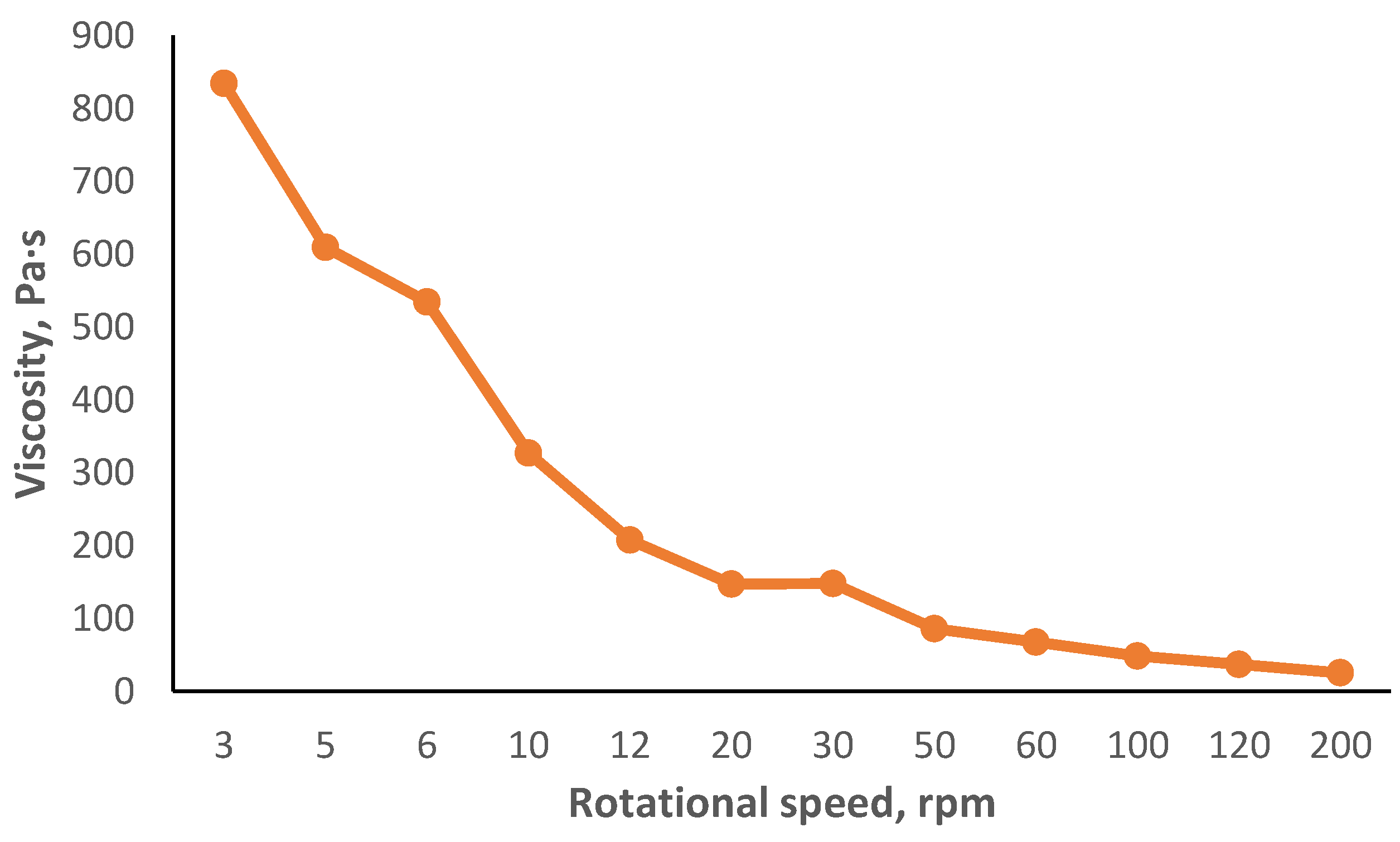
Figure 2.
Viscosity as a function of shear rate for the developed cream formulations.
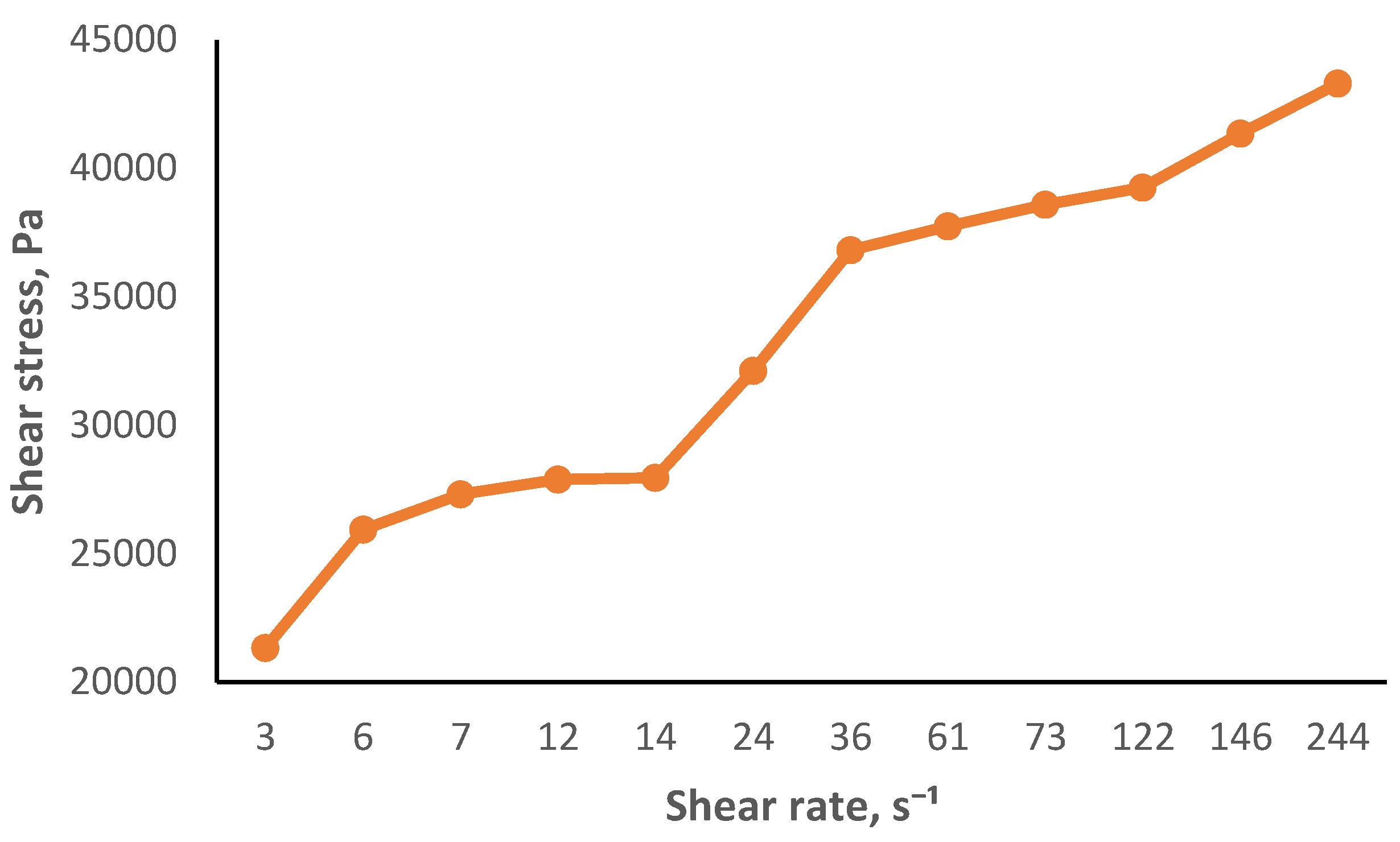
Table 1.
Representative composition and functional roles of excipients in cream formulations based on literature data.
Table 1.
Representative composition and functional roles of excipients in cream formulations based on literature data.
| Component | Pharmaceutical function | Concentration range (%) | Technological / therapeutic role | |
|---|---|---|---|---|
| Petrolatum | Occlusive agent, emollient | 7–21 | Forms a protective barrier on the skin surface, reduces transepidermal water loss, improves skin softness and hydration |
|
| Beeswax | Structuring agent, emollient | 2–25 | Provides consistency, enhances stability of the cream system, contributes to protective and barrier-forming properties |
|
| Liquid paraffin | Lipophilic structuring and occlusive component | 6–20 | Increases viscosity and physical stability, forms a hydrophobic film on the skin, supports moisture retention |
|
| Sunflower oil | Lipid emollient | 10–20 | Nourishes the skin, improves elasticity, supports restoration of the epidermal lipid barrier |
|
| Glycerin | Humectant | 2–20 | Attracts and retains moisture in the stratum corneum, enhances hydration and skin comfort |
|
| Polysorbate 80 (Tween-80) | Non-ionic emulsifier | 1.5–5 | Stabilizes oil-in-water emulsions, improves dispersion of lipophilic components |
|
| Cetearyl alcohol | Co-emulsifier, thickening agent | 1–5 | Enhances viscosity, improves texture and structural stability of the formulation |
|
| Xanthan gum | Thickener, stabilizer | 0.5 | Increases viscosity of the aqueous phase, prevents phase separation during storage |
|
| Methylparaben | Preservative | 0.06–0.6 | Inhibits microbial growth and prolongs shelf life of the topical preparation |
|
| Purified water | Solvent, hydrating phase | 19–82 | Dissolves hydrophilic components and provides adequate hydration of damaged skin |
|
Table 4.
Composition of modified cream formulations expressed as wt.% (normalized to 100 g).
| Component | Sample 2a (wt.%) | Sample 4a (wt.%) | Sample 5a (wt.%) |
|---|---|---|---|
| Petrolatum | 7.00 | 4.00 | – |
| Beeswax | 2.00 | 2.00 | 3.00 |
| Paraffin | – | 3.00 | 6.00 |
| Sunflower oil | 10.00 | 5.08 | – |
| Cetearyl alcohol | 3.00 | 2.00 | 3.00 |
| Glycerin | 2.00 | 4.00 | 4.00 |
| Polysorbate 80 (Tween 80) | 1.49 | 1.49 | 1.49 |
| Xanthan gum | 0.60 | 0.60 | 0.60 |
| Methylparaben | 0.20 | 0.10 | 0.10 |
| Purified water | 73.71 | 77.73 | 81.81 |
Note: The compositions were normalized to 100 g and expressed as weight percentages (wt.%). Liquid components initially measured in milliliters were converted to grams using reference density values prior to calculation.
Table 6.
Composition of cream formulations containing plant extracts (wt.%).
| Component | Sample 1e (wt.%) | Sample 2e (wt.%) | Sample 3e (wt.%) |
|---|---|---|---|
| Petrolatum | 7.00 | 7.00 | 7.00 |
| Beeswax | 2.00 | 2.00 | 2.00 |
| Sunflower oil | 10.00 | 10.00 | 10.00 |
| Cetearyl alcohol | 3.00 | 3.00 | 3.00 |
| Glycerin | 2.00 | 2.00 | 2.00 |
| Polysorbate 80 (Tween 80) | 1.49 | 1.49 | 1.49 |
| Xanthan gum | 0.60 | 0.60 | 0.60 |
| Methylparaben | 0.20 | 0.20 | 0.20 |
| Hydroalcoholic extract | 73.71 | 73.71 | 73.71 |
Table 8.
Organoleptic and technological characteristics of cream formulations containing plant extracts.
Table 8.
Organoleptic and technological characteristics of cream formulations containing plant extracts.
| Component | Gellan-based formulation (Sample 1) | Chitosan-based formulation (Sample 2) |
|---|---|---|
| Biopolymer | Gellan gum (7.00 wt.%) | Chitosan (0.13 wt.%)* |
| Beeswax (wt.%) | 2.00 | 2.00 |
| Cetearyl alcohol (wt.%) | 3.00 | 3.00 |
| Glycerin (wt.%) | 2.52 | 2.52 |
| Polysorbate 80 (Tween 80) (wt.%) | 2.12 | 2.12 |
| Xanthan gum (wt.%) | 0.60 | 0.60 |
| Sodium benzoate (wt.%) | 0.20 | 0.20 |
| Purified water (wt.%) | 82.56 | Balance to 100 |
* Chitosan was introduced as a 1.25% (w/v) solution prepared in dilute acetic acid. The final concentration of chitosan in the formulation was approximately 0.13 wt.%.
Disclaimer/Publisher’s Note: The statements, opinions and data contained in all publications are solely those of the individual author(s) and contributor(s) and not of MDPI and/or the editor(s). MDPI and/or the editor(s) disclaim responsibility for any injury to people or property resulting from any ideas, methods, instructions or products referred to in the content. |
© 2026 by the authors. Licensee MDPI, Basel, Switzerland. This article is an open access article distributed under the terms and conditions of the Creative Commons Attribution (CC BY) license (http://creativecommons.org/licenses/by/4.0/).
Copyright: This open access article is published under a Creative Commons CC BY 4.0 license, which permit the free download, distribution, and reuse, provided that the author and preprint are cited in any reuse.


