

Submitted:
05 May 2026
Posted:
05 May 2026
You are already at the latest version
Abstract
Background/Objectives: Clinical management of uterine fibroids in the context of infertility is characterised by significant heterogeneity. The aim of our study was to record the participants’ views and clinical practices regarding minimally invasive, fertility-sparing management of fibroids, focusing on fertility outcomes. Methods: Online survey distributed to members of the European Society of Gynecology (ESG), using a questionnaire comprising 27 questions. Questions 1 to 5 related to the participants’ background, while questions 6 to 27 related to the clinical management of fibroids. Results: 98 participants completed the survey, 83% (n=82) of which practice in European countries. 43% (n=42) had completed specialist training in minimally invasive gynecological surgery. For FIGO 0–II fibroids, 94% of participants recommended hysteroscopic removal in infertile patients. 50% may use anti-adhesion agents after hysteroscopic removal of FIGO 0–II fibroids. For FIGO III fibroids, 57% of participants (n=56) believe they have a detrimental impact on fertility while, for FIGO IV fibroids, 51% (n=50) believe the same. 48% of participants (n=49) stated that the distance between the inner portion of an intramural, non-cavity distorting fibroid and the junctional zone does not affect their decision for removal in infertile patients, and 51% (n=50) stated that it does, with variable cut-off values given. The majority of participants favour minimal access approaches over traditional laparotomy; however, the use of robot-assisted laparoscopy was limited. Conclusions: Our results confirm the significant variation in clinical practice associated with fibroid management and underline the need for standardised care, based on high-quality evidence.
Keywords:
fibroids
; myomectomy
; infertility
; laparoscopy
; hysteroscopy
1. Introduction
Fibroids are the most common benign tumours of the female genital tract, with a prevalence ranging from 4.5% to 68.6% during female reproductive years [1]. Also known as leiomyomas (or myomas), fibroids arise in the myometrium and are stimulated by oestrogen and progesterone; therefore, they may progress following menarche and before menopause, whereas they are more likely to regress in the post-menopausal period [2]. Although the majority of patients with fibroids are asymptomatic [3], patients may also experience a variety of symptoms such as heavy menstrual bleeding (HMB), pelvic pain or pressure symptoms [4]. Certain fibroids may also negatively affect female fertility and increase the risk of recurrent pregnancy loss [5], possibly due to a variety of mechanisms such as increased uterine peristalsis, neuroendocrine actions of the myoma pseudocapsule, and altered gene expression involved in endometrial receptivity [6]. The size and location of the fibroid may influence its impact on fertility [7]. Fibroids are also responsible for a significant financial burden, with direct healthcare costs estimated to range between 4 and 10 billion dollars in the USA [8].
Fibroids may vary greatly in terms of size, number and localisation. Depending on their location in relation to the endometrium, myometrium and uterine serosa, fibroids are commonly subclassified from 0 to 8, according to the widely-used International Federation of Gynaecology and Obstetrics (FIGO) “leiomyoma subclassification system” [9,10]: fibroids 0–2 are ‘‘submucous’’, fibroids 3–8 are ‘‘other’’ (intramural: 3 and 4, subserosal: 5–7, other: 8), while the classification also recognises hybrid fibroids that impact both the serosa and the endometrium (two numbers listed, separated by a hyphen). Given the heterogeneity of the condition and associated clinical picture, a “one size fits all” approach for patients with fibroids would be unrealistic.
In recent years, we have witnessed an undeniable increase in the uptake of minimally invasive, uterus-sparing approaches for the management of fibroids [11]. Although evidence supports the role of myomectomy in improving myoma-related symptoms and quality of life [12], the evidence is less clear regarding the impact of fibroids per se, as well as their removal, on fertility outcomes [5,13]. Following this, considerable variations worldwide have been documented on fibroid management in the context of fertility [14,15,16], while a recent systematic review highlighted the urgent need for high-quality guidelines to guide clinical practice [17].
The aim of our study, an online survey using a 27-question questionnaire distributed to gynaecologists who are members of the European Society of Gynecology (ESG), was to capture their views and clinical practices regarding minimally invasive, fertility-sparing management of fibroids, focusing on fertility outcomes.
2. Materials and Methods
This was a prospective cohort study. The initial questionnaire consisted of 30 questions that, following review by all authors, was reduced to 27 questions in the final form. An anonymous, online survey was subsequently designed on the platform ‘’SurveyPlanet’’ (app.surveyplanet.com), including those 27 questions, which was approved by the board members of the ESG. An invitation link was automatically created by the aforementioned platform and shared with members of the ESG via email. Surveys were electronically completed and answers prospectively collected, while survey administrators had real-time access to data. Institutional Review Board (IRB) approval was not required for this study; however, approval by the ESG board of directors was sought and granted in advance of initiating the online survey.
Questions 1 to 5 related to the participants’ background, aiming to capture their relevant training and surgical experience (Table 1). Questions 6 to 27 related to the clinical management of fibroids (Table 2). Answering all questions, except question 8, was mandatory in order to proceed with the next question and submit the answers. For all questions except question 16, only one answer was possible. For question 16, multiple answers were acceptable.
Sample size calculation in advance was not applicable for this study. The survey was closed by the survey administrators at 3 months following initiation of the survey. Therefore, the size of our availability sample was merely based on the number of participants that responded to our invitation and answered all questions of our online survey. Statistical analysis was performed using simple statistics, namely percentages for each answer. Since answers were anonymous, it was not possible to group answers per country or geographical region.
3. Results
98 participants completed our online survey. This corresponded to 19.6% of the 500 invitations sent. The majority (83%) of participants resided in Europe. Answers to questions 1 to 5 (with numbers and percentages per answer) are shown in Table 3, while answers for questions 6 to 27 are shown in Table 4.
4. Discussion
The results of our online survey among gynaecologists, members of the ESG, reflect the paucity of high-quality evidence and lack of standardised care on many aspects of fertility-sparing management of fibroids. In line with this, a recent Cochrane review of four RCTs revealed uncertainty regarding the benefits of myomectomy over no-intervention, in terms of clinical pregnancy rates and pregnancy loss risk reduction [5].
For FIGO 0–II fibroids, the majority of participants recommended hysteroscopic removal in infertile patients (94%), however, only 27% would remove them in all cases, regardless of size and proportion of submucosal component. Submucous fibroids present a number of unique features compared to outer myometrium fibroids: firstly, they are likely to originate in the junctional zone (JZ) of the myometrium [14]. Furthermore, submucous fibroids appear to have higher numbers of oestrogen and progesterone receptors [18], as well as fewer karyotype aberrations compared to outer myometrium fibroids [19], which may explain why they are less likely to exhibit significant increases in size over time. Submucous fibroids are believed to have a negative effect on fertility through a variety of possible mechanisms, such as anatomical distortion of the uterine cavity [20], impaired junctional zone peristalsis [21], altering levels of inflammation [22], and molecular changes at the level of the endometrium [23]. A systematic review demonstrated that patients with submucous myomas had significantly lower clinical pregnancy and implantation rates compared to infertile controls, while hysteroscopic removal of submucous fibroids led to improved clinical pregnancy rates (but not livebirth rates) compared to submucous fibroids left in situ [24]. According to American Society of Reproductive Medicine (ASRM) clinical guidance, removal of cavity-distorting fibroids (submucous or intramural with submucous component) should be considered in order to improve pregnancy rates even in asymptomatic patients, albeit there is insufficient evidence of its impact on livebirth rates [13]. International Federation of Fertility Societies (IFFS) suggests that removal should be considered in patients presenting with infertility [25]. Although there is insufficient evidence that removal of submucous fibroids reduces the chances of early pregnancy loss in infertile patients [13], it should be acknowledged that patients with recurrent pregnancy losses form a distinct clinical entity. A retrospective cohort study of patients with myoma and recurrent early pregnancy losses observed a reduction in pregnancy losses following laparoscopic myomectomy; however, the number of patients with pregnancy losses was low [26].
With regards to measures to reduce the risk of adhesion formation following hysteroscopic myomectomy, half of the participants never use such measures (49%). A meta-analysis identified no benefit of using gel barriers on clinical or livebirth rate; however, it reduced the presence of intra-uterine adhesions at second-look hysteroscopy [27]. Again, significant heterogeneity was noted among participants on which method should be followed to reduce adhesion formation risk, reflecting the lack of high-quality evidence comparing available methods [28]. Similarly, responses varied on the role of second-look hysteroscopy, with 35% of participants never performing it. The American Association of Gynecologic Laparoscopists (AAGL) practice guidelines on submucosal fibroids state that second-look hysteroscopy may be effective for post-operative adhesions and could reduce the long-term risk of adhesion formation, particularly in cases of multiple submucosal myomectomies [14].
Non-cavity distorting, FIGO III and IV fibroids pose a unique fertility management challenge to the clinician, due to the lack of high-quality evidence guiding practice [29]. 57% (for FIGO III fibroids) and 51% (for FIGO IV fibroids) of participants believe that they have a detrimental impact on fertility, stating a number of different sizes as cut-off values. It needs to be acknowledged, however, that FIGO III fibroids, although anatomically-speaking intramural, abut the JZ and, therefore, may impair mechanisms critical to implantation independent of cavity distortion, likely having a more profound impact on fertility [29]. ASRM practice committee guideline (2017) states there is insufficient evidence that a certain size, number or location of non-cavity distorting fibroids is associated with a reduced likelihood of achieving pregnancy or an increased risk of early pregnancy loss [13]. Similarly, the IFFS standard 10 and Australasian CREI Consensus Expert Panel on Trial evidence (ACCEPT) consensus statement suggest that the impact of multiple fibroids and variation in size is uncertain [25,30]. 37% of participants would not routinely remove FIGO III or IV fibroids in couples trying to conceive. The IFFS Standard 10 states that there is no convincing evidence supporting the routine removal of intramural fibroids and decision to treat should be individualised, taking into account a multitude of factors [25]. Similarly, according to the ACCEPT consensus statement, there is insufficient evidence to determine whether myomectomy for intramural fibroids improves fertility outcomes [30], while the ASRM states that myomectomy is generally not advised to improve pregnancy outcomes in asymptomatic, infertile patients with non-cavity distorting myomas [13]. Considerable variation was noted regarding the fibroid size cut-off to trigger removal prior to IVF, with nearly one fourth of participants stating that the size of FIGO III/IV fibroids is not relevant: despite results of a recent meta-analysis identifying that patients with intramural, non-cavity distorting fibroids of 2–6 centimetres have lower live birth rates (LBR) following IVF compared to controls without fibroids [31], whether removal pre-IVF is indicated remains a matter of debate among experts [32], reflecting the conflicting evidence [5,33].
The preferable modality to diagnose and map fibroids in infertile patients also varied significantly between participants, likely reflecting variations in local availability and protocols. 23% utilise hysteroscopy, while the IFFS standard 10 recommends hysteroscopy in all patients suspected of having a submucous fibroid and those whose cavity is obscured by the presence of an intramural fibroid [25]. The majority utilise conventional laparoscopic myomectomy for FIGO III and IV fibroids, in line with the well-established benefits of minimal access surgery over laparotomy [34], although evidence suggesting superiority in terms of fertility outcomes is currently lacking [5].
The vast majority of participants check the integrity of the uterine cavity intra-operatively, following removal of FIGO III fibroids. Taking into account that such fibroids abut the endometrial cavity and a considerable risk of breaching the cavity during surgery exists, leading to intra-uterine adhesion formation and potentially serious gynaecological and obstetric sequelae [35], this approach may seem reasonable.
Asked about the duration of GnRH-agonist/antagonist treatment before removal of FIGO III and IV fibroids, the most popular answer was “3 months”: relevant guidelines confirm the need for “short-term” use only; however, no guidance on exact course duration is given [25,30]. Of note, half of the participants stated that the distance between the inner portion of the intramural, non-cavity distorting fibroid and the JZ does not affect their decision for removal and the other half stated that it does, with variable cut-off values given. Although fibroids with shorter distance to the JZ may be linked to reduced chances of clinical pregnancy in women undergoing Assisted Reproductive Technology (ART), available guidance does not recommend removal solely based on distance from JZ, nor does it provide cut-off values. Regarding the time period required between myomectomy and attempting natural conception or IVF, most responded that their decision would depend on factors like number, size and surgical route. Although relevant guidelines do not provide a single answer and individualisation appears reasonable, a systematic review identified no relationship between the risk of uterine rupture and the period of time between myomectomy and pregnancy [36].
The majority of participants use barbed sutures in laparoscopic or robotic myomectomy. Although their use may be associated with less operative time and blood loss and ease of use, international society guidelines do not recommend their use over conventional sutures, as no evidence of superior fertility outcomes has been observed [37].
Almost 8 out of 10 participants have never used the robotic approach for minimally-invasive myomectomy, a figure likely secondary to lack of availability and training in certain healthcare settings. No clear guidance exists suggesting that the robotic approach is preferable to conventional laparoscopy for myomectomy, although a number of inherent advantages of the robotic approach need to be recognised [38].
Our study provides a realistic snapshot of fibroid-related care with a focus on fertility. Including a diverse population of participants, both in terms of experience, training and country of practice, it is reflective of the actual heterogeneity in the assessment and management of fibroids internationally. At the same time, a number of limitations need to be acknowledged: firstly, the relatively small number of participants. Furthermore, only half of the participants had undergone specialist training and 4 in 10 performed more than 10 laparoscopic or robot-assisted myomectomies per annum, suggesting that our sample comprised mostly of clinicians with, at least, limited experience in the surgical management of fibroids. However, since the management of fibroids in many countries is undertaken by generalists, this may also be viewed as a potential strength of our study, increasing generalisability of the results. Lastly, our survey was anonymous; therefore, we were unable to group answers according to the participants’ background, with practices likely differing significantly among different levels of expertise and healthcare settings.
5. Conclusions
The results of our online survey among gynaecologists from variable backgrounds, members of ESG, demonstrate a significant heterogeneity of opinion regarding most aspects of the assessment and management of fibroids in the fertility context, reflecting the lack of high-quality evidence and relevant formal society guidance. Evidence from future, high-quality studies is eagerly awaited in order to guide uniform care for fibroids in the context of fertility and sterility.
Author Contributions
Conceptualization, all authors; methodology, all authors; software, G.G.; validation, M.N., A.D., G.P., U.K. and S.A.; formal analysis, G.G., V.C. and L.M.; data curation, C.C.-B., G.G., U.K. and L.M.; writing—original draft preparation, G.G., U.K. and L.M.; writing—review and editing, A.D., M.N., V.C., C.C.-B. and G.P.; supervision, A.D., M.N., G.P. and S.A. All authors have read and agreed to the published version of the manuscript.
Funding
This research did not receive any specific grant from funding agencies in the public, commercial, or not-for-profit sectors.
Institutional Review Board Statement
Ethical review and approval were waived for this study as IRB approval was not required for an online survey of this nature. Approval by the board of directors of the European Society of Gynecology (ESG) was sought and granted in advance of initiating the survey.
Informed Consent Statement
Not applicable.
Data Availability Statement
Data supporting the results of this study are available from the corresponding author upon reasonable request.
Acknowledgments
The authors wish to thank the survey participants, members of the ESG, for their valuable contributions by responding to the online survey questions.
Conflicts of Interest
The authors declare no conflicts of interest.
Abbreviations
The following abbreviations are used in this manuscript:
| FIGO | International Federation of Gynaecology and Obstetrics |
| ESG | European Society of Gynecology |
| IVF | In Vitro Fertilisation |
| ASRM | American Society for Reproductive Medicine |
| AAGL | American Association of Gynecologic Laparoscopists |
| IFFS | International Federation of Fertility Societies |
| ACCEPT | Australasian CREI Consensus Expert Panel on Trial evidence |
| HMB | Heavy Menstrual Bleeding |
| JZ | Junctional Zone |
| ART | Assisted Reproductive Technology |
| LBR | Live Birth Rate |
| GnRH | Gonadotrophin-Releasing Hormone |
| IUD | Intra-Uterine Device |
| MRI | Magnetic Resonance Imaging |
| TVU | Transvaginal Ultrasound |
| 2D | 2-Dimensional |
| 3D | 3-Dimensional |
| RCT | Randomised Controlled Trial |
| IRB | Institutional Review Board |
References
- Stewart, E.A.; Cookson, C.L.; Gandolfo, R.A.; Schulze-Rath, R. Epidemiology of uterine fibroids: a systematic review. BJOG 2017, 124(10), 1501–1512. [Google Scholar] [CrossRef] [PubMed]
- Moravek, M.B.; Bulun, S.E. Endocrinology of uterine fibroids: steroid hormones, stem cells, and genetic contribution. Curr. Opin. Obstet. Gynecol. 2015, 27(4), 276–283. [Google Scholar] [CrossRef]
- Stewart, E.A. Clinical practice. Uterine fibroids. N Engl. J. Med. 2015, 372(17), 1646–1655. [Google Scholar] [CrossRef]
- Stewart, E.A.; Laughlin-Tommaso, S.K.; Catherino, W.H.; Lalitkumar, S.; Gupta, D.; Vollenhoven, B. Uterine fibroids. Nat. Rev. Dis. Prim. 2016, 2, 16043. [Google Scholar] [CrossRef] [PubMed]
- Metwally, M.; Raybould, G.; Cheong, Y.C.; Horne, A.W. Surgical treatment of fibroids for subfertility. Cochrane Database Syst. Rev. 2020, 1(1), CD003857. [Google Scholar] [CrossRef] [PubMed]
- Donnez, J.; Dolmans, M.M. Hormone therapy for intramural myoma-related infertility from ulipristal acetate to GnRH antagonist: a review. Reprod. BioMed Online 2020, 41(3), 431–442. [Google Scholar] [CrossRef]
- Tinelli, A.; Kosmas, I.; Mynbaev, O.A.; et al. Submucous fibroids, fertility, and possible correlation to pseudocapsule thickness in reproductive surgery. BioMed Res. Int. 2018, 2018, 2804830. [Google Scholar] [CrossRef]
- Soliman, A.M.; Yang, H.; Du, E.X.; Kelkar, S.S.; Winkel, C. The direct and indirect costs of uterine fibroid tumors: a systematic review of the literature between 2000 and 2013. Am. J. Obstet. Gynecol. 2015, 213(2), 141–160. [Google Scholar] [CrossRef]
- Munro, M.G.; Critchley, H.O.; Broder, M.S.; Fraser, I.S. FIGO Working Group on Menstrual Disorders. FIGO classification system (PALM-COEIN) for causes of abnormal uterine bleeding in nongravid women of reproductive age. Int. J. Gynaecol. Obstet. 2011, 113(1), 3–13. [Google Scholar] [CrossRef]
- Munro, M.G.; Critchley, H.O.D.; Fraser, I.S.; FIGO Menstrual Disorders Committee. The two FIGO systems for normal and abnormal uterine bleeding symptoms and classification of causes of abnormal uterine bleeding in the reproductive years: 2018 revisions. Int. J. Gynaecol. Obstet. 2018, 143(3), 393–408. [Google Scholar] [CrossRef]
- Chandrakumar, D.L.; Aref-Adib, M.; Odejinmi, F. Advancing women’s health: The imperative for public health screening of uterine fibroids for personalized care. Eur. J. Obstet. Gynecol. Reprod. Biol. 2024, 299, 266–271. [Google Scholar] [CrossRef]
- Spies, J.B.; Bradley, L.D.; Guido, R.; Maxwell, G.L.; Levine, B.A.; Coyne, K. Outcomes from leiomyoma therapies: comparison with normal controls. Obstet. Gynecol. 2010, 116(3), 641–652. [Google Scholar] [CrossRef]
- Practice Committee of the American Society for Reproductive Medicine. Removal of myomas in asymptomatic patients to improve fertility and/or reduce miscarriage rate: a guideline. Fertil. Steril. 2017, 108(3), 416–425. [Google Scholar] [CrossRef] [PubMed]
- American Association of Gynecologic Laparoscopists (AAGL): Advancing Minimally Invasive Gynecology Worldwide. AAGL practice report: practice guidelines for the diagnosis and management of submucous leiomyomas. J. Minim. Invasive Gynecol. 2012, 19(2), 152–171. [CrossRef] [PubMed]
- Sirkeci, R.F.; Belli, A.M.; Manyonda, I.T. Treating symptomatic uterine fibroids with myomectomy: current practice and views of UK consultants. Gynecol. Surg. 2017, 14(1), 11. [Google Scholar] [CrossRef] [PubMed]
- Chapman, L.; Magos, A. Surgical and radiological management of uterine fibroids in the UK. Curr. Opin. Obstet. Gynecol. 2006, 18(4), 394–401. [Google Scholar] [CrossRef]
- Amoah, A.; Joseph, N.; Reap, S.; Quinn, S.D. Appraisal of national and international uterine fibroid management guidelines: a systematic review. BJOG 2022, 129(3), 356–364. [Google Scholar] [CrossRef]
- Marugo, M.; Centonze, M.; Bernasconi, D.; Fazzuoli, L.; Berta, S.; Giordano, G. Estrogen and progesterone receptors in uterine leiomyomas. Acta Obstet. Gynecol. Scand. 1989, 68(8), 731–735. [Google Scholar] [CrossRef]
- Brosens, I.; Deprest, J.; Dal Cin, P.; Van den Berghe, H. Clinical significance of cytogenetic abnormalities in uterine myomas. Fertil. Steril. 1998, 69(2), 232–235. [Google Scholar] [CrossRef]
- Casini, M.L.; Rossi, F.; Agostini, R.; Unfer, V. Effects of the position of fibroids on fertility. Gynecol. Endocrinol. 2006, 22(2), 106–109. [Google Scholar] [CrossRef]
- Nishino, M.; Togashi, K.; Nakai, A.; et al. Uterine contractions evaluated on cine MR imaging in patients with uterine leiomyomas. Eur. J. Radiol. 2005, 53(1), 142–146. [Google Scholar] [CrossRef] [PubMed]
- Zepiridis, L.I.; Grimbizis, G.F.; Tarlatzis, B.C. Infertility and uterine fibroids. Best Pract. Res. Clin. Obstet. Gynaecol. 2016, 34, 66–73. [Google Scholar] [CrossRef] [PubMed]
- Rackow, B.W.; Taylor, H.S. Submucosal uterine leiomyomas have a global effect on molecular determinants of endometrial receptivity. Fertil. Steril. 2010, 93(6), 2027–2034. [Google Scholar] [CrossRef]
- Pritts, E.A.; Parker, W.H.; Olive, D.L. Fibroids and infertility: an updated systematic review of the evidence. Fertil. Steril. 2009, 91(4), 1215–1223. [Google Scholar] [CrossRef] [PubMed]
- International Federation of Fertility Societies (IFFS); Standards and Practice Committee. Global Standards of Infertility Care: Standard 10. Management of leiomyoma (fibroids) in a patient presenting with infertility. Available online: www.iffsreproduction.org (accessed on 01 January 2026).
- Bulletti, C.; De Ziegler, D.; Polli, V.; Flamigni, C. The role of leiomyomas in infertility. J. Am. Assoc. Gynecol. Laparosc. 1999, 6(4), 441–445. [Google Scholar] [CrossRef]
- Bosteels, J.; Weyers, S.; Mol, B.W.; D’Hooghe, T. Anti-adhesion barrier gels following operative hysteroscopy for treating female infertility: a systematic review and meta-analysis. Gynecol. Surg. 2014, 11(2), 113–127. [Google Scholar] [CrossRef]
- Healy, M.W.; Schexnayder, B.; Connell, M.T.; et al. Intrauterine adhesion prevention after hysteroscopy: a systematic review and meta-analysis. Am. J. Obstet. Gynecol. 2016, 215(3), 267–275.e7. [Google Scholar] [CrossRef]
- Favilli, A.; Mazzon, I.; Etrusco, A.; et al. The challenge of FIGO type 3 leiomyomas and infertility: Exploring therapeutic alternatives amidst limited scientific certainties. Int. J. Gynaecol. Obstet. 2024, 165(3), 975–987. [Google Scholar] [CrossRef]
- Kroon, B.; Johnson, N.; Chapman, M.; Yazdani, A.; Hart, R.; ACCEPT group. Fibroids in infertility--consensus statement from ACCEPT (Australasian CREI Consensus Expert Panel on Trial evidence). Aust. N Z. J. Obstet. Gynaecol. 2011, 51(4), 289–295. [Google Scholar] [CrossRef]
- Erden, M.; Uyanik, E.; Polat, M.; et al. The effect of ≤6 cm sized noncavity-distorting intramural fibroids on in vitro fertilization outcomes: a systematic review and meta-analysis. Fertil. Steril. 2023, 119(6), 996–1007. [Google Scholar] [CrossRef]
- Dolmans, M.M.; Isaacson, K.; Zhang, W.; et al. Intramural myomas more than 3–4 centimeters should be surgically removed before in vitro fertilization. Fertil. Steril. 2021, 116(4), 945–958. [Google Scholar] [CrossRef]
- Han, Y.; Yao, R.; Zhang, Y.; et al. Hysteroscopic resection of type 3 fibroids could improve the pregnancy outcomes in infertile women: a case-control study. BMC Pregnancy Childbirth 2022, 22(1), 522. [Google Scholar] [CrossRef] [PubMed]
- Jin, C.; Hu, Y.; Chen, X.C.; et al. Laparoscopic versus open myomectomy--a meta-analysis of randomized controlled trials. Eur. J. Obstet. Gynecol. Reprod. Biol. 2009, 145(1), 14–21. [Google Scholar] [CrossRef]
- Donnez, J.; Taylor, H.S.; Marcellin, L.; Dolmans, M.M. Uterine fibroid-related infertility: mechanisms and management. Fertil. Steril. 2024, 122(1), 31–39. [Google Scholar] [CrossRef]
- Margueritte, F.; Adam, C.; Fauconnier, A.; Gauthier, T. Time to conceive after myomectomy: should we advise a minimum time interval? A systematic review. Reprod. BioMed Online 2021, 43(3), 543–552. [Google Scholar] [CrossRef]
- Kathopoulis, N.; Prodromidou, A.; Douligeris, A.; et al. Barbed Sutures Compared With Conventional Sutures During Laparoscopic Myomectomy: A Systematic Review and Meta-analysis. Obstet. Gynecol. 2024, 144(4), e81–e100. [Google Scholar] [CrossRef] [PubMed]
- Sheng, Y.; Hong, Z.; Wang, J.; et al. Efficacy and safety of robot-assisted laparoscopic myomectomy versus laparoscopic myomectomy: a systematic evaluation and meta-analysis. World J. Surg. Oncol. 2023, 21(1), 230. [Google Scholar] [CrossRef] [PubMed]
Figure 1.
Pie chart for question 6: preferred management of FIGO 0-II fibroids in infertile patients.
Figure 1.
Pie chart for question 6: preferred management of FIGO 0-II fibroids in infertile patients.
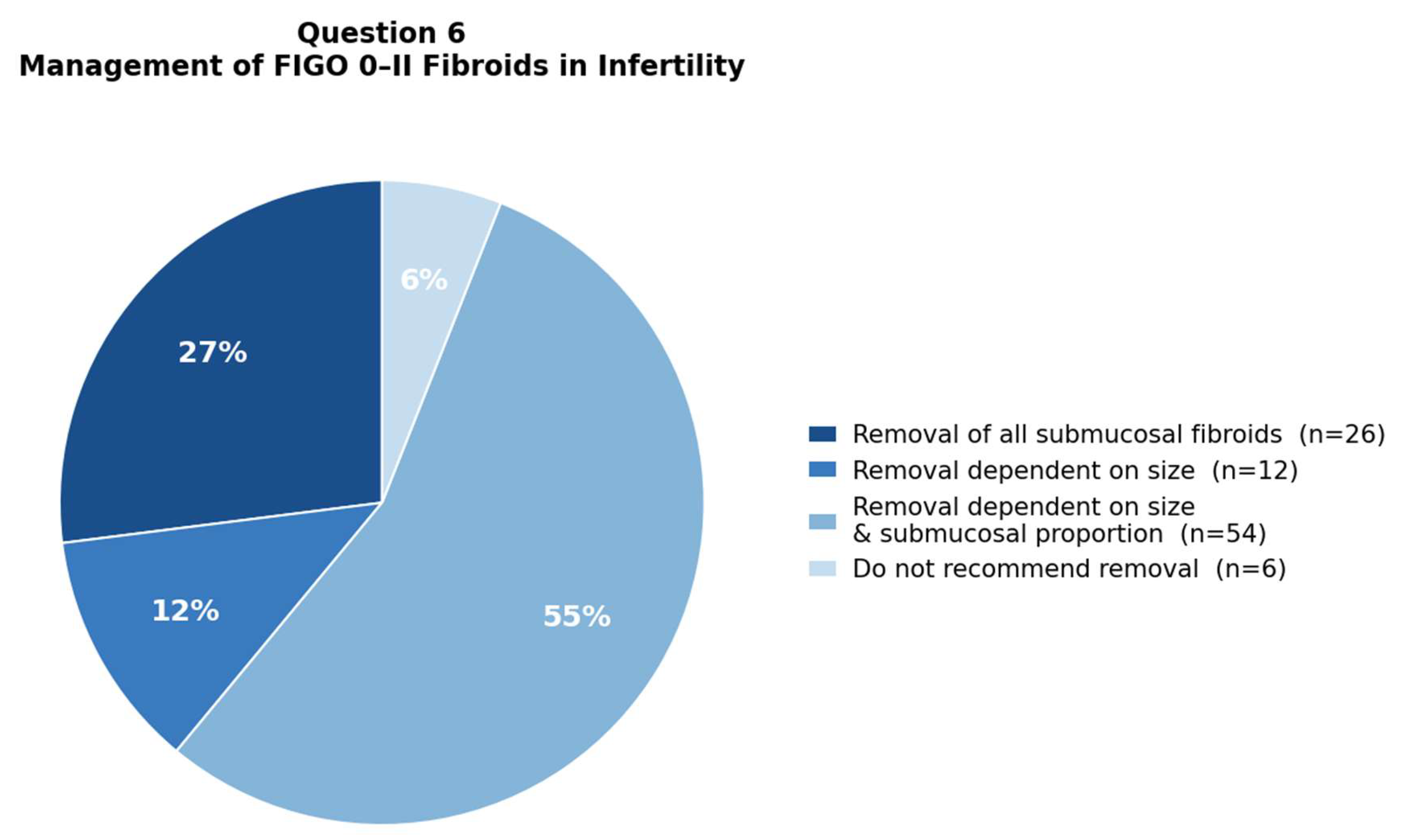
Figure 2.
Pie chart for question 12: recommendation for surgical removal of FIGO III fibroids in couples trying to conceive.
Figure 2.
Pie chart for question 12: recommendation for surgical removal of FIGO III fibroids in couples trying to conceive.
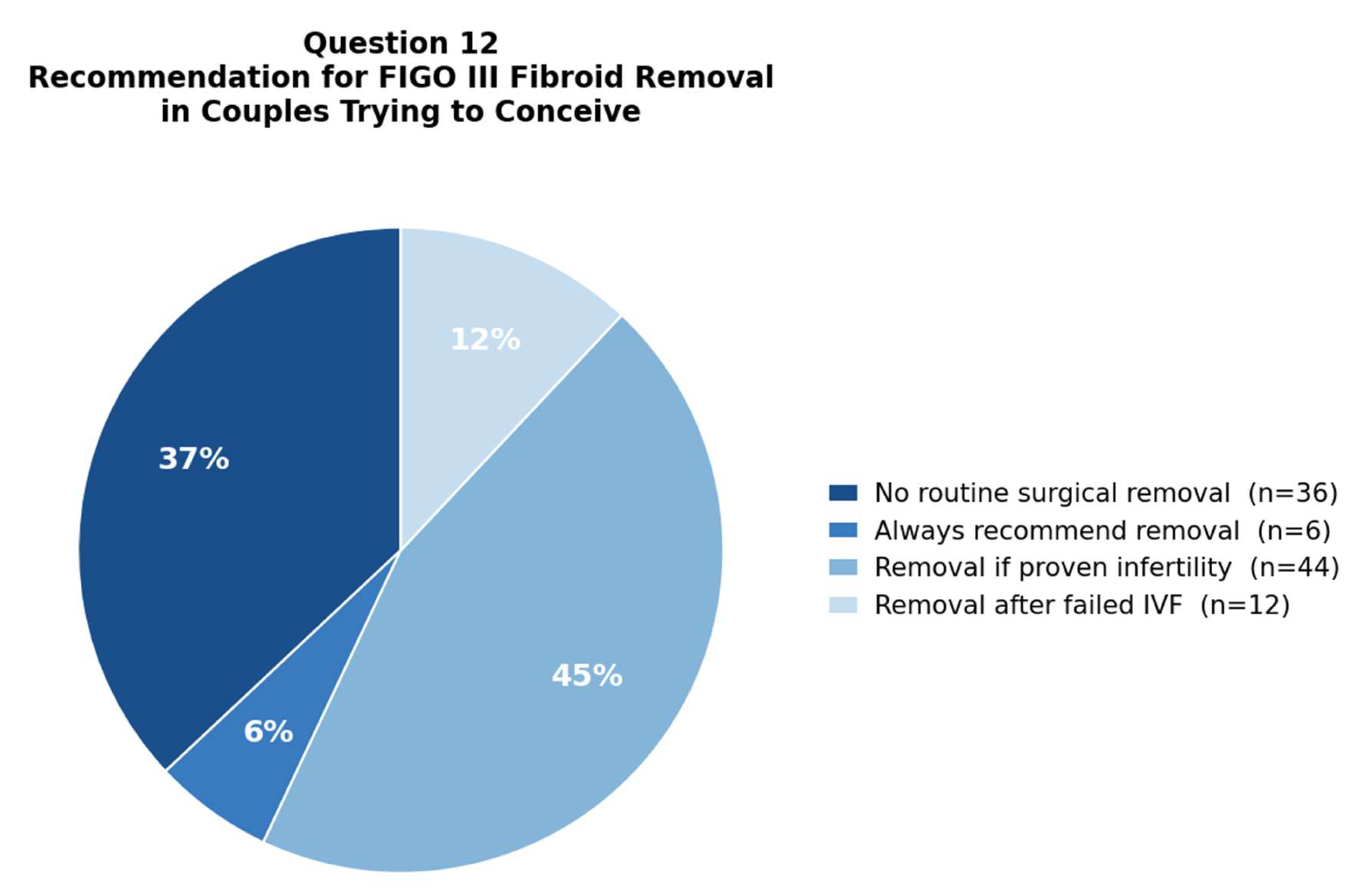
Figure 3.
Pie chart for question 18: most commonly employed surgical route for FIGO IV fibroid removal in infertile patients.
Figure 3.
Pie chart for question 18: most commonly employed surgical route for FIGO IV fibroid removal in infertile patients.
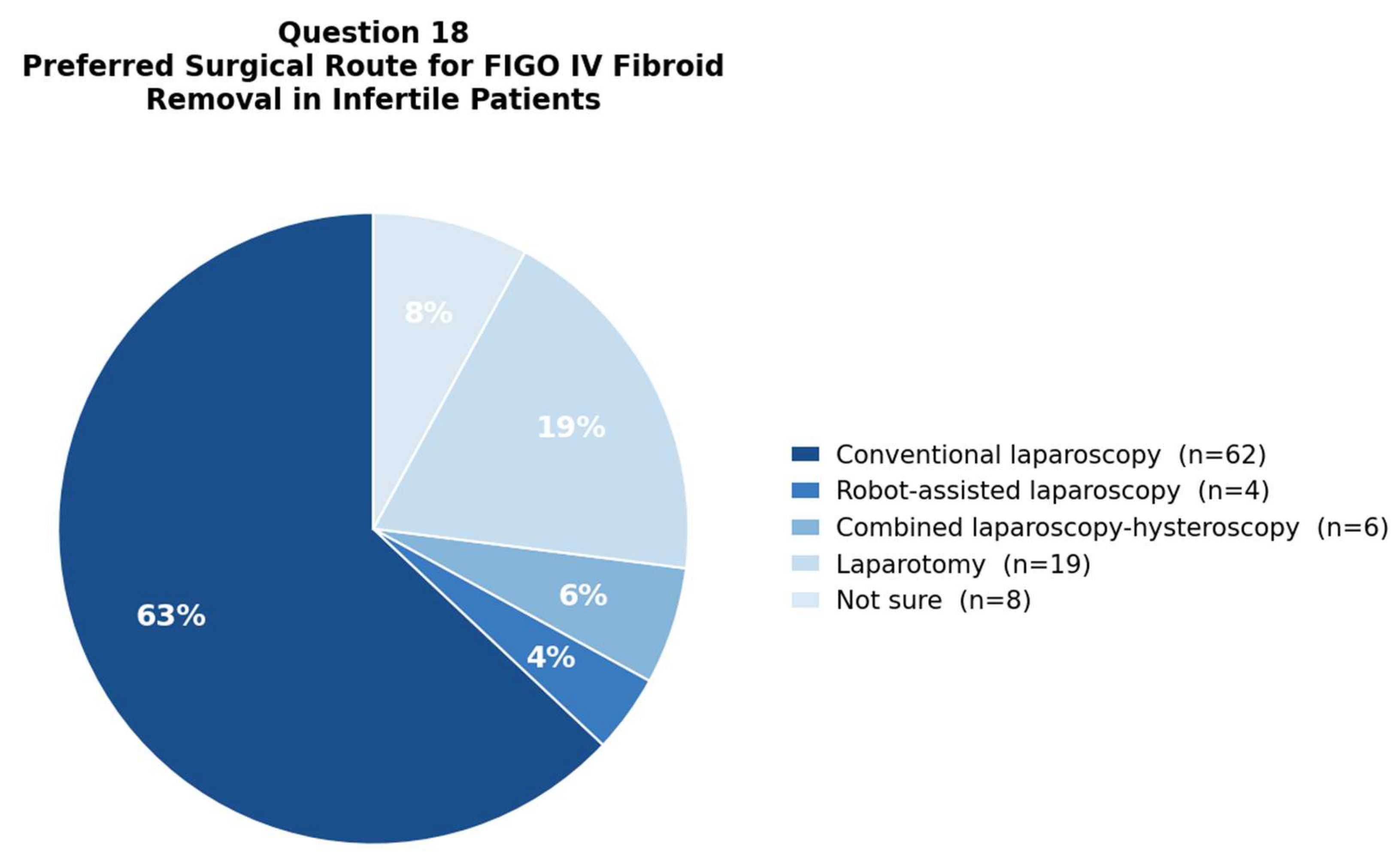
Figure 4.
Pie chart for question 23: effect of junctional zone distance on decision for removal of intramural non-cavity distorting fibroids.
Figure 4.
Pie chart for question 23: effect of junctional zone distance on decision for removal of intramural non-cavity distorting fibroids.
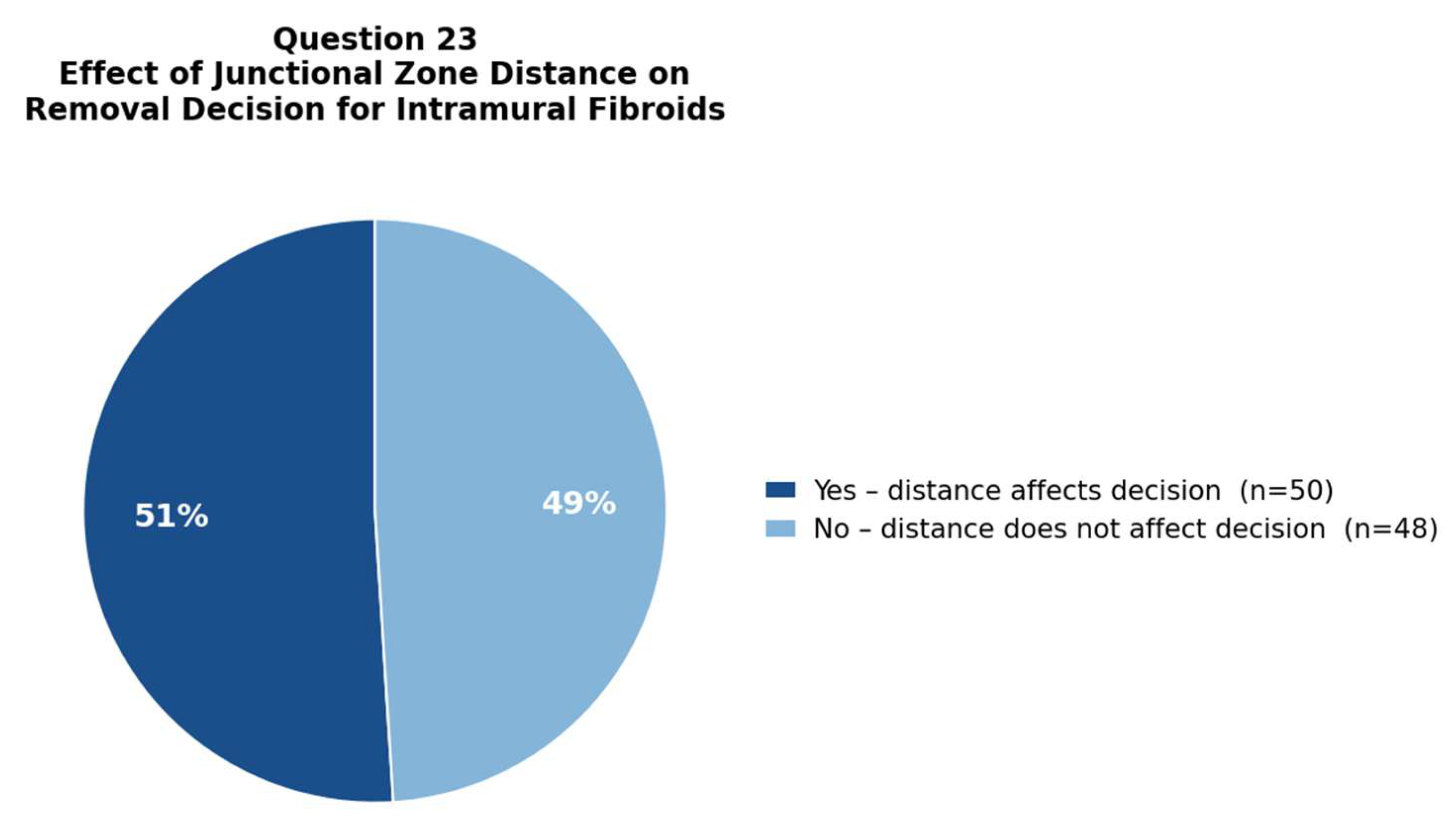

Table 1.
Questions 1 to 5.
| Question 1 | Please clarify your professional status |
| Question 2 | Please clarify your years of experience post-training/fellowship |
| Question 3 | Have you completed a specialist training/certification in minimally invasive gynecological surgery? |
| Question 4 | How many laparoscopic/robot-assisted myomectomies do you perform per annum (on average, in the last 5 years)? |
| Question 5 | How many hysteroscopic myomectomies do you perform per annum (on average, in the last 5 years)? |
Table 2.
Questions 6 to 27.
| Question 6: | In your clinical practice, which of the following principles do you follow in a patient with a FIGO 0-II fibroid and infertility? |
| Question 7: | In your clinical practice, if hysteroscopic removal of a FIGO 0-II fibroid is decided, do you routinely use anti-adhesion agents? |
| Question 8: | If answer is no for the previous question, go directly to question number 9. If answer is yes for the previous question, what type of anti-adhesion do you usually use? |
| Question 9: | In your clinical practice, in case of hysteroscopic removal of a fibroid, do you routinely perform second-look hysteroscopic assessment of the endometrial cavity to assess for intra-uterine adhesions? |
| Question 10: | What size of a FIGO III fibroid do you consider to be significant in patients with fibroid-associated infertility? |
| Question 11: | What size of a FIGO IV do you consider to be significant in patients with fibroid associated infertility? |
| Question 12: | In your clinical practice, would you recommend surgical removal of a FIGO III fibroid in couples trying to conceive? |
| Question 13: | In your clinical practice, would you recommend surgical removal of a FIGO IV fibroid in couples trying to conceive? |
| Question 14: | In your clinical practice, if you recommend surgical removal of a FIGO III fibroid in infertile patients planned to undergo IVF, what fibroid size do you use as a cut-off? |
| Question 15: | In your clinical practice, if you recommend surgical removal of a FIGO IV fibroid in infertile patients planned to undergo IVF, what fibroid size do you use as a cut-off? |
| Question 16: | What modalities do you usually use to diagnose and map fibroids in patients with infertility? |
| Question 17: | In your clinical practice, should you decide to remove a FIGO III fibroid in an infertile patient, what is your most commonly employed surgical route? |
| Question 18: | In your clinical practice, should you decide to remove a FIGO IV fibroid in an infertile patient, what is your most commonly employed surgical route? |
| Question 19: | In your clinical practice, should you decide to remove a FIGO III fibroid in an infertile patient, do you routinely check during surgery the integrity of the uterine cavity following fibroid removal? |
| Question 20: | In your clinical practice, should you decide to remove a FIGO 0-II fibroid, do you use pre-treatment with gonadotrophin-releasing hormone agonist/antagonist? |
| Question 21: | In your clinical practice, should you decide to remove a FIGO III fibroid, for how long would you use pre-treatment with gonadotrophin-releasing hormone agonist/antagonist before the operation? |
| Question 22: | In your clinical practice, should you decide to remove a FIGO IV fibroid, for how long would you use pre-treatment with gonadotrophin-releasing hormone agonist/antagonist before the operation? |
| Question 23: | Regarding intramural, non cavity-distorting fibroids in infertile patients, does the distance from the junctional zone affect your decision for the removal? |
| Question 24: | If the answer to the previous question is yes, what is the distance of the fibroid from the junctional zone that would affect your decision? |
| Question 25: | Following myomectomy in infertile patients, how long do you advise your patients to wait before attempting to conceive/undergoing IVF? |
| Question 26: | In your clinical practice, do you use barbed sutures following laparoscopic/robot-assisted myomectomy? |
| Question 27: | Do you use the robotic approach for myomectomies and, if so, what percentage of myomectomies are done via the robotic approach? |
Table 3.
List of questions 1 to 5 (1st column, in bold) with possible answers per question in each row (numbers and percentages per answer). Abbreviations: N = number; NA = not applicable.
Table 3.
List of questions 1 to 5 (1st column, in bold) with possible answers per question in each row (numbers and percentages per answer). Abbreviations: N = number; NA = not applicable.
| Question | Answer A | Answer B | Answer C | Answer D | Answer E | Answer F | Answer G/NA |
|---|---|---|---|---|---|---|---|
| Q1 | Trainee gynecologist (N=6, 6%) | Consultant in private practice (N=30, 31%) | Consultant in public hospital (N=34, 35%) | Academic (N=18, 18%) | Retired gynecologist (N=6, 6%) | Other (N=4, 4%) | NA (N=0) |
| Q2 | <5 (N=8, 8%) | 5–10 (N=16, 16%) | >10 (N=74, 76%) | ||||
| Q3 | No (N=56, 57%) | Yes (N=42, 43%) | |||||
| Q4 | <10 (N=32, 33%) | 10–30 (N=16, 16%) | 30–50 (N=10, 10%) | >50 (N=14, 14%) | NA (N=26, 27%) | ||
| Q5 | <10 (N=26, 27%) | 10–20 (N=20, 20%) | 20–30 (N=6, 6%) | >30 (N=32, 33%) | NA (N=14, 14%) |
Table 4.
List of questions 6 to 27 (1st column, in bold) with possible answers per question in each row (numbers and percentages per answer). Abbreviations: N = number; NA = not applicable; IUD = intra-uterine device; cm = centimetres; 2D = 2-dimensional; 3D = 3-dimensional; TVU = transvaginal ultrasound; mm = millimetres.
Table 4.
List of questions 6 to 27 (1st column, in bold) with possible answers per question in each row (numbers and percentages per answer). Abbreviations: N = number; NA = not applicable; IUD = intra-uterine device; cm = centimetres; 2D = 2-dimensional; 3D = 3-dimensional; TVU = transvaginal ultrasound; mm = millimetres.
| Question | Answer A | Answer B | Answer C | Answer D | Answer E | Answer F | Answer G |
|---|---|---|---|---|---|---|---|
| Q6 | Hysteroscopic removal of all submucosal fibroids (N=26, 27%) | Removal dependent on size (N=12, 12%) | Removal dependent on size and submucosal proportion (N=54, 55%) | Do not recommend hysteroscopic removal (N=6, 6%) | |||
| Q7 | Yes, always (N=12, 12%) | Yes, sometimes (N=38, 39%) | No, never (N=48, 49%) | ||||
| Q8 (54 answers) | Copper IUD (N=0) | Progesterone-releasing IUD (N=20, 37%) | Foley’s balloon (N=2, 4%) | Anti-adhesion agents (N=20, 37%) | Oral hormonal treatment (N=12, 22%) | ||
| Q9 | Yes, always (N=18, 18%) | No, never (N=34, 35%) | Yes, selected cases by fibroid size (N=34, 35%) | Yes, selected cases by fibroid site (N=12, 12%) | |||
| Q10 | >1cm (N=2, 2%) | >2cm (N=2, 2%) | >3cm (N=26, 27%) | >4cm (N=10, 10%) | >5cm (N=6, 6%) | All sizes (N=10, 10%) | Size irrelevant (N=42, 43%) |
| Q11 | >1cm (N=0) | >2cm (N=6, 6%) | >3cm (N=2, 2%) | >4cm (N=22, 23%) | >5cm (N=16, 16%) | All sizes (N=4, 4%) | Size irrelevant (N=48, 49%) |
| Q12 | No routine removal (N=36, 37%) | Always recommend (N=6, 6%) | Removal if proven infertility (N=44, 45%) | Removal after failed IVF (N=12, 12%) | |||
| Q13 | No routine removal (N=36, 37%) | Always recommend (N=10, 10%) | Removal if proven infertility (N=38, 39%) | Removal after failed IVF (N=14, 14%) | |||
| Q14 | >1–2cm (N=16, 16%) | 3–4cm (N=34, 35%) | >5cm (N=22, 22%) | Size not relevant (N=26, 27%) | |||
| Q15 | >1–2cm (N=6, 6%) | 3–4cm (N=34, 35%) | >5cm (N=34, 35%) | Size not relevant (N=24, 24%) | |||
| Q16 | 2D TVU (N=28, 29%) | 3D TVU (N=21, 21%) | Hysterosonography (N=9, 9%) | Hysteroscopy (N=22, 23%) | MRI (N=17, 17%) | Other (N=1, 1%) | |
| Q17 | Conventional laparoscopy (N=40, 41%) | Robot-assisted laparoscopy (N=4, 4%) | Combined laparoscopy-hysteroscopy (N=26, 27%) | Laparotomy (N=14, 14%) | Not sure (N=14, 14%) | ||
| Q18 | Conventional laparoscopy (N=62, 63%) | Robot-assisted laparoscopy (N=4, 4%) | Combined laparoscopy-hysteroscopy (N=6, 6%) | Laparotomy (N=18, 19%) | Not sure (N=8, 8%) | ||
| Q19 | Yes, always (N=68, 70%) | No, never (N=14, 14%) | Sometimes (N=16, 16%) | ||||
| Q20 | Always (N=6, 6%) | Occasionally (N=38, 39%) | Never (N=28, 29%) | Depending on size (N=26, 26%) | |||
| Q21 | 1 month (N=10, 10%) | 2 months (N=8, 8%) | 3 months (N=60, 62%) | 4 months (N=0) | 5 months (N=2, 2%) | 6 months (N=8, 8%) | Other (N=10, 10%) |
| Q22 | 1 month (N=8, 8%) | 2 months (N=10, 10%) | 3 months (N=58, 59%) | 4 months (N=0) | 5 months (N=2, 2%) | 6 months (N=6, 6%) | Other (N=14, 15%) |
| Q23 | Yes, always (N=50, 51%) | No, never (N=48, 49%) | |||||
| Q24 (73 answers) | Distance <3mm (N=14, 19%) | Distance 3–5mm (N=14, 19%) | Distance 5–10mm (N=12, 17%) | Any distance 1–2cm (N=5, 7%) | N/A (N=28, 38%) | ||
| Q25 | Up to 3 months (N=12, 12%) | 3–6 months (N=24, 25%) | >6 months (N=22, 22%) | Depends on size/number/route (N=38, 39%) | Other (N=2, 2%) | ||
| Q26 | No, never (N=28, 29%) | Yes but rarely (N=18, 18%) | Yes, sometimes (N=26, 27%) | Yes, most of the times (N=20, 20%) | Yes, always (N=6, 6%) | ||
| Q27 | No, never (N=76, 78%) | Yes, <1/3 (N=16, 16%) | Yes, 1/3–2/3 (N=2, 2%) | Yes, >2/3 (N=4, 4%) |
Disclaimer/Publisher’s Note: The statements, opinions and data contained in all publications are solely those of the individual author(s) and contributor(s) and not of MDPI and/or the editor(s). MDPI and/or the editor(s) disclaim responsibility for any injury to people or property resulting from any ideas, methods, instructions or products referred to in the content. |
© 2026 by the authors. Licensee MDPI, Basel, Switzerland. This article is an open access article distributed under the terms and conditions of the Creative Commons Attribution (CC BY) license (http://creativecommons.org/licenses/by/4.0/).
Copyright: This open access article is published under a Creative Commons CC BY 4.0 license, which permit the free download, distribution, and reuse, provided that the author and preprint are cited in any reuse.


