

Submitted:
03 May 2026
Posted:
05 May 2026
You are already at the latest version
Abstract
Rationale: Female sex workers (FSWs) are a key population at high risk of HIV infection, yet uptake of HIV testing remains low due to stigma, limited access, and knowledge gaps. Mobile phone-based education (MPBE) offers a potential strategy to improve awareness and self-testing behaviors in this population. Objectives: This study evaluated the effect of MPBE on HIV and HIV self-testing (HIVST) knowledge, and on HIVST uptake among FSWs in Bayelsa State, Nigeria. Methods: A quasi-experimental design was employed, with 282 FSWs enrolled into intervention (n = 137) and control (n = 145) groups. Baseline and endline assessments measured socio-demographic characteristics, HIV knowledge, HIVST knowledge, and HIVST uptake. The intervention involved structured mobile-based educational messaging over five weeks. Data were analyzed using chi-square, Fisher’s exact test, independent t-tests, and difference-in-difference (DID) analysis, with statistical significance set at P < 0.05. Results: Baseline socio-demographics were largely comparable, although educational level and marital status differed between groups. HIV knowledge improved markedly in the intervention group, with good knowledge increasing from 57.0% to 99.3% (DID = 38.7 percentage points, 95% CI: 0.25–0.53, P < 0.001), compared with minimal change in the control group (61.2% to 64.8%, P = 0.296). HIVST knowledge increased from 1.2% to 97.1% (DID = 84.9 percentage points, 95% CI: 0.79–0.91, P < 0.001). HIVST uptake rose from 2.4% to 74.5% in the intervention group versus 1.2% to 22.1% in the control group (DID = 51.2 percentage points, 95% CI: 0.41–0.61, P < 0.001). Conclusion: MPBE significantly improved HIV and HIVST knowledge and substantially increased HIVST uptake among FSWs. Recommendations: Integrating mobile-based education into HIV prevention programs can enhance early testing, linkage to care, and reach high-risk populations. Long-term strategies should ensure equitable access to mobile technology and evaluate sustainability. Thus, this intervention offers a scalable approach to empower FSWs, reduce undiagnosed HIV infections, and strengthen HIV prevention efforts in resource-limited settings.
Keywords:
HIV
; HIV self-testing
; mobile health
; female sex workers
; knowledge
; uptake
; digital intervention
; Nigeria
; quasi-experimental
; public health
1. Introduction
The global HIV/AIDS epidemic remains an entrenched public health crisis, with an estimated 40.8 million people living with HIV (PLHIV) by the end of 2024, nearly two-thirds of whom reside in sub-Saharan Africa (World Health Organization [WHO], 2025). Within this region, Nigeria carries the fourth-largest HIV burden worldwide, home to over 1.8 million PLHIV, where profound gender disparities persist, women are twice as likely to be living with HIV as men (1.9% versus 0.9%) (Joint United Nations Programme on HIV/AIDS [UNAIDS], 2020; NACA, 2024). Among the most heavily affected subgroups, female sex workers (FSWs) drive a disproportionate share of new infections; the Integrated Biological and Behavioural Surveillance Survey (2020-2021) documented an HIV prevalence of 15.5% among FSWs in Nigeria, compared with just 1.3% among the general adult population aged 15-49 years (Emmanuel et al., 2025; NACA, 2024). These epidemiological realities underscore that FSWs are not merely a high-risk group but a critical vector in sustaining Nigeria’s HIV epidemic. Consequently, routine HIV testing, recommended by the WHO every three months for FSWs, is non-negotiable for early diagnosis, treatment linkage, and prevention of onward transmission (Atuhaire et al., 2022; UNAIDS, 2021). Yet, despite sustained scale-up of facility-based testing services, awareness of HIV status among FSWs remains alarmingly low due to persistent structural and social barriers, including stigma, confidentiality concerns, time constraints, and transportation costs (Sibanda & Taegtmeyer, 2020; Tokar et al., 2018; Wang et al., 2020). These obstacles demand innovative, client-centred strategies that are accessible, acceptable, and responsive to the lived realities of FSWs to meaningfully expand testing coverage (Raimi & Ochayi, 2017; Kumwenda et al., 2021; Merga et al., 2025). HIV self-testing (HIVST) has emerged as a transformative, person-centred approach that enables individuals to conduct and interpret rapid tests autonomously using oral fluid or blood-based kits in private settings of their choice (Witzel et al., 2021; Mekonnen et al., 2023). Across multiple African contexts, HIVST has demonstrated high acceptability among FSWs, with documented increases in recent and repeat testing uptake (Shava et al., 2020; Boisvert Moreau et al., 2022; Nnko et al., 2020). By offering autonomy, privacy, convenience, and reduced exposure to stigma, HIVST directly addresses many barriers that deter FSWs from facility-based testing (Ayele et al., 2025; Lora et al., 2020; Harichund et al., 2019). However, access to test kits alone is insufficient; effective HIVST uptake requires users to possess adequate HIV and HIVST-specific knowledge to promote preventive behaviours, avoid procedural errors, and correctly interpret results (Ma et al., 2023; Eskezia et al., 2023). Evidence from Uganda powerfully illustrates this gap: among 104 FSWs relying solely on manufacturer instructions, only 33% completed four critical testing steps, while 86% struggled with at least one procedural element, leading to potential misinterpretation and false reassurance (Ortblad et al., 2018). Similarly, FSWs in Botswana explicitly recommended HIVST education as an essential prerequisite to enable reliable autonomous testing (Shava et al., 2020). Although conventional educational interventions, peer education, web-based modules, and mass media campaigns, have improved HIV-related knowledge in sub-Saharan Africa, their reach and effectiveness are limited by high operational costs, restricted accessibility, and challenges with sustained engagement over time (Grant et al., 2023; Ezelote et al., 2024; Akankunda et al., 2022; Janssen et al., 2020; Janssen et al., 2021).
Mobile phone-based education (MPBE) offers a compelling alternative by leveraging the near-ubiquity of mobile phones to deliver timely, contextualized, cost-effective, and private HIV-related information directly to hard-to-reach populations (Gous et al., 2020; Fischer et al., 2021; Garg et al., 2020). For FSWs who frequently face mobility constraints, stigma, and precarious living conditions, MPBE provides flexible opportunities for continued learning, on-demand content reinforcement, and autonomy over when and where to engage with educational materials (Janssen et al., 2021; Kelvin & Akasreku, 2020; McGuire et al., 2021). Pilot digital HIVST interventions in South Africa, using smartphone applications to guide users, have shown improved competency in performing and interpreting self-tests, alongside enhanced linkage to care (Pai et al., 2021; Janssen et al., 2020). However, most existing digital HIVST studies have focused on men who have sex with men or general adult populations, with limited attention to FSWs (Zhu et al., 2019; Balán et al., 2020). Critically, no study to date has systematically evaluated the effect of a dedicated mobile phone-based educational intervention on both HIV and HIVST knowledge and on actual HIVST uptake among FSWs in the Niger Delta region of Nigeria, where Bayelsa State characterized by high poverty (Odubo & Raimi, 2019; Morufu et al., 2022; Raimi et al., 2022a, b; Mordecai et al., 2024; Tano et al., 2024; Oweibia et al., 2024; Agusomu et al., 2025), low literacy, and fragmented health infrastructure, presents unique socio-ecological challenges (Michael-Olomu et al., 2025; Christopher et al., 2025; Aziba-anyam & Morufu, 2025; Christopher et al., 2024; City Population, 2022; Raimi et al., 2021; Atobauka & Jacob, 2021; Tuebi et al., 2021; Raimi & Raimi, 2020; Eduweb, 2020; Raimi et al., 2020). The absence of such evidence represents a significant research gap, given that Bayelsa’s FSW population operates under elevated vulnerability due to oil-industry-related migration, gender-based violence, and weak enforcement of health protections (Folayan et al., 2014; Ochonye et al., 2019; Morufu et al., 2021a, b, c; Raimi et al., 2022c; Anthony et al., 2025; Perekibina et al., 2025; Abiye et al., 2026). Therefore, this study is both timely and necessary: timely because Nigeria is actively pursuing the 95-95-95 UNAIDS targets, and necessary because without evidence-based, scalable educational strategies, HIVST will remain underutilized among FSWs who need it most (UNAIDS, 2021; Conserve et al., 2017). Recent systematic reviews confirm that digital interventions can bridge knowledge-practice gaps, but they also call for context-specific randomized and quasi-experimental studies targeting key populations in high-burden, low-resource settings (Ogar et al., 2026; Promise et al., 2026; Ezekiel & Raimi, 2026; Abdulraheem et al., 2025a, b, c; Kakwi et al., 2025; Promise et al., 2025; Adaka et al., 2024; Promise et al., 2024; Kakwi et al., 2024a, b; Mhando et al., 2024; Mshweshwe-Pakela et al., 2022). By delivering HIV and HIVST education directly to participants’ mobile phones, content can be revisited asynchronously and privately, this study provides rigorous evidence on the effectiveness of MPBE in improving knowledge of HIV and HIVST and in increasing HIVST uptake among FSWs in Bayelsa State, Nigeria. Evidence generated will directly inform programme stakeholders, including the National Agency for the Control of AIDS (NACA) and civil society organizations, offering a low-cost, replicable model to reach underserved FSWs. The specific objective of this study is to evaluate the effect of a mobile phone-based educational intervention on HIV knowledge, HIV self-testing knowledge, and HIV self-testing uptake among female sex workers in Yenagoa, Bayelsa State, Nigeria, compared with a standard-of-care control group. The primary hypothesis is that FSWs receiving MPBE will demonstrate significantly higher post-intervention HIV and HIVST knowledge scores and greater HIVST uptake at four-week follow-up than those receiving no educational intervention.
2. Methods
2.1. Study Design
This two-arm quasi-experimental study was conducted among female sex workers (FSWs) in Bayelsa State, Nigeria, between 1st November 2022 and 6th March 2023. Individual-level randomisation was infeasible due to the clustered, brothel-based social networks of the target population; ward-level allocation minimised contamination risk while preserving ecological validity. The study comprised three phases: pre-intervention (baseline characterisation, 1-28 November 2022), intervention (educational exposure, 29th November 2022 - 6th February 2023), and post-intervention (endline assessment, 7th February - 6th March 2023). The study flowchart is presented in Figure 1 below.
2.2. Setting
Bayelsa State, located in Nigeria’s South-South geopolitical zone, was selected because of its disproportionately high HIV burden among key populations. According to the 2024 Key Population Programme mapping estimation study, approximately 6,284 FSWs (brothel-based and non-brothel-based) reside in the state (NACA, 2024). The state capital, Yenagoa Local Government Area (LGA), comprises 15 administrative wards (Eduweb, 2020). A geographic and population mapping exercise conducted in the first quarter of 2022 by a community-based organisation serving local FSWs identified five of these 15 wards as major brothel corridors, each containing three or more brothels with population densities ranging from 79 to 200 FSWs per brothel (City Population, 2022). The distance between the selected intervention and control wards was approximately 15 km, substantially reducing the likelihood of cross-arm interaction and information spillover (Kelvin et al., 2019).
2.3. Participants
The target population comprised brothel-based FSWs aged ≥18 years permanently residing in Yenagoa LGA. Eligibility required ownership of an internet-enabled mobile phone with the WhatsApp application installed or willingness to install it. Exclusion criteria were: (1) self-disclosed HIV-positive status, to avoid potential misinterpretation of HIV self-testing (HIVST) results, as antiretroviral therapy-induced viral suppression can produce false-negative rapid test results that might lead to inappropriate treatment discontinuation (Harichund et al., 2019; Ortblad et al., 2018); and (2) visual or auditory impairments that could compromise safe HIVST use or engagement with mobile educational content (Janssen et al., 2021).
2.4. Sample Size
Sample size was calculated using the standard two-proportion formula with 5% significance level and 80% power. Using a baseline HIVST uptake estimate of 10.8% from a prior mHealth intervention among FSWs (Kelvin et al., 2019) and hypothesising a post-intervention uptake of 30.8% in the intervention group, a 20-percentage-point absolute increase considered clinically meaningful, the minimum sample size was 62 participants per arm. This was multiplied by a design effect of 2 to account for clustering within brothels (Emmanuel et al., 2025). After adjusting for an anticipated 20% attrition rate (Merga et al., 2025), the final sample size was 155 per group, rounded up to 165.
2.5. Sampling Procedure
A multi-stage sampling technique was employed. In the first stage, simple random sampling by balloting selected two wards from the five wards with high brothel concentrations (NACA, 2024). The first randomly selected ward (Ekpetiama II) was designated the intervention arm; the second (Attisa I), the control arm. In the second stage, simple random sampling by balloting selected three brothels from the 12 brothels in the intervention ward and three brothels from the eight brothels in the control ward. All consenting, eligible FSWs within selected brothels were recruited consecutively until the required sample size was achieved. If a selected brothel had no eligible participants, it was replaced by another brothel from the same ward using the same balloting procedure.
2.6. Participant Recruitment
Brothel leaders facilitated sensitisation meetings with FSWs to secure cooperation. Two trained female research assistants (post-secondary degree holders with prior experience working with FSWs) advertised the study, screened potential participants against eligibility criteria, and obtained written informed consent. All recruitment and baseline activities were conducted in quiet, private spaces within brothels to ensure confidentiality (Atuhaire et al., 2022).
2.7. Pre-Intervention Phase and Baseline Data Collection
Baseline data were collected over four weeks (1-28 November 2022) using an interviewer-administered questionnaire adapted from validated instruments (National Population Commission [NPC] & ICF, 2019; Ogunyemi et al., 2020). The questionnaire assessed socio-demographic characteristics, HIV knowledge, HIVST knowledge, and self-reported HIVST uptake. HIV knowledge was evaluated using 21 items covering prevention, transmission routes, myths, and misconceptions as defined by the 2018 Nigeria Demographic and Health Survey (NPC & ICF, 2019). Scores were categorised as poor (<15, <70%) or good (≥15, 70–100%). HIVST knowledge was assessed using 11 items covering pre-test actions, testing steps, correct interpretation of four standardised result images, and post-test actions (Vara et al., 2020). Scores were categorised as poor (<6, <55%) or good (≥6, 55–100%). HIVST uptake was defined as the proportion of respondents who reported having self-tested for HIV. The questionnaire was deployed via the KoboToolbox application on internet-enabled mobile devices, with skip logic programmed to ensure complete responses. The instrument was face-validated by two public health experts and demonstrated excellent test-retest reliability (r = 0.90) in a pretest conducted among 33 FSWs in a non-study location. All participants received one OraQuick HIV self-test kit (OraQuick Rapid HIV-1/2 Antibody Test, OraSure Technologies; LOT HIVCO-2121; EXP 2024-11-03) accompanied by manufacturer-written and pictorial instructions, plus pre-test counselling delivered by trained research assistants (Ortblad et al., 2018). Participants’ mobile numbers were collected for WhatsApp platform integration and verified by sending a welcome message requiring a “YES” response. Intervention-arm participants were added to an intervention WhatsApp group; control-arm participants, to a separate control group.
2.8. Intervention
The intervention group received mobile phone-based education (MPBE) on HIV and HIVST in addition to routine care (education on personal hygiene and correct condom use). The control group received routine care alone. MPBE content covered HIV/AIDS definitions, transmission modes, prevention strategies, misconceptions, the importance of routine HIV testing, and step-by-step oral HIVST performance, including kit handling, pre-test requirements, interpretation of strong/weak positive, negative, or invalid results, and post-test actions. Educational materials were delivered via WhatsApp over five weeks using video-based didactic lectures, video demonstrations, and pictorial illustrations to accommodate varying literacy levels. All materials were provided in English and Pidgin to ensure cultural relevance. Content was guided by national HIV testing guidelines (NPC & ICF, 2019) and the FSW training manual for HIV prevention (Ghana AIDS Commission, 2014). Participants could download materials for future reference. Confidentiality was maintained by restricting platform access to the lead researcher. A 30-minute question-and-answer session followed each weekly session. Participants submitted HIVST result photos privately via WhatsApp; reactive results triggered immediate referral to certified HIV testing counsellors for confirmatory testing and psychosocial support, with proactive well-being follow-ups at weeks 2 and 5 (Pai et al., 2021). Participants were instructed not to share educational content to minimise contamination.
2.9. Outcome Measures
The primary outcome was HIVST uptake, measured as the proportion of participants who self-tested for HIV during the study period (assessed at endline). Secondary outcomes were: (1) HIV knowledge score (dichotomised as poor [<15] or good [≥15]); and (2) HIVST knowledge score (dichotomised as poor [<6] or good [≥6]). All outcomes were assessed using the same questionnaire at baseline and endline.
2.10. Post-Intervention Assessment
Endline data were collected immediately after the ten-week intervention phase (7th February - 6th March 2023) using the same questionnaire administered at baseline. Control group participants received the full HIV and HIVST education via WhatsApp after study completion and were encouraged to use their previously provided HIVST kits if they had not yet done so.
2.11. Statistical Analysis
Data were analysed using IBM SPSS version 22.0 (Armonk, NY: IBM Corp) after cleaning in Microsoft Excel. Descriptive statistics summarised categorical variables as frequencies and proportions, and continuous variables as means and standard deviations. Baseline comparability between arms was assessed using Pearson’s chi-square or Fisher’s exact tests. Within-group pre-post changes were evaluated using McNemar’s chi-square test. Between-group post-intervention differences were assessed using chi-square or Fisher’s exact tests. Net intervention effects were quantified using difference-in-difference (DID) estimates calculated as absolute changes in proportions. Statistical significance was set at p < 0.05. Outcome assessors were blinded to group allocation; participants could not be blinded owing to the nature of the intervention.
2.12. Ethics Approval
Ethical approval was obtained from the University of Port Harcourt Ethical Review Board (UPH/CEREMAD/REC/MM79/053) and the Bayelsa State Ministry of Health (BSHREC/Vol.1/21/12/002). All participants provided written informed consent.
3. Results
The socio-demographic characteristics of the study participants are summarized in Table 1 & Figure 2. The study included 282 female sex workers (FSWs), with 145 in the control group and 137 in the intervention group. The mean age of participants was 23.26 ± 3.18 years in the control group and 24.32 ± 3.94 years in the intervention group, with a statistically significant difference between groups (T = 2.509, P = 0.013). Most participants were aged 18-24 years (57.8%), and this distribution did not differ significantly between groups (P = 0.810). Educational attainment varied significantly, with the intervention group having a higher proportion of participants with no formal education (8.0% vs 1.4%) and primary education (21.9% vs 6.9%) compared with the control group (P < 0.001). Secondary education was the most common level across both groups (70.9%), and the distribution of religious affiliation was largely homogeneous, with Christianity predominating (91.8%, P = 0.536). Ethnic composition was comparable between groups (P = 0.703), with Igbo (37.2%) and Yoruba (27.7%) representing the majority. Marital status differed between groups, with a higher proportion of single participants in the control group (84.8%) compared with the intervention group (73.0%) (P = 0.017). Average weekly income from sex work did not differ significantly between groups, though a trend toward higher earnings (<₦15,000 vs ≥₦15,000) was observed in the intervention group (P = 0.060). Engagement in other vocations was significantly higher in the control group (8.3% vs 1.5%, P = 0.011), and among those engaged, the distribution of income from these vocations was also significantly different (P = 0.011). Overall, the two groups were broadly comparable in age, ethnicity, and primary occupation, but differed in educational attainment, marital status, and secondary economic activities.
HIV knowledge among participants improved markedly in the intervention group following the mobile phone-based educational program (Table 2 & Figure 3). At baseline, 43.0% of participants in the intervention group demonstrated poor HIV knowledge, compared with 38.8% in the control group. By the endline assessment, only 0.7% of participants in the intervention group had poor knowledge, representing a 42.3 percentage point increase in those with good knowledge (from 57.0% to 99.3%, P < 0.001). In contrast, the control group showed minimal change in knowledge levels, with a non-significant 3.6 percentage point increase in good knowledge (61.2% to 64.8%, P = 0.296). The difference-in-difference (DID) estimate confirmed a significant intervention effect, with an adjusted increase of 38.7 percentage points in good HIV knowledge attributable to the mobile phone-based education program (95% CI: 0.25-0.53, P < 0.001). Baseline comparability between groups was supported by a chi-square test (χ² = 0.614, P = 0.433). These findings indicate that the intervention was highly effective in improving HIV knowledge among female sex workers, while knowledge levels in the control group remained largely unchanged over the same period.
Knowledge of HIV self-testing (HIVST) increased substantially among participants in the intervention group following the mobile phone-based education (Table 3 & Figure 4). At baseline, nearly all participants in the intervention group exhibited poor HIVST knowledge (98.8%), compared with 100% in the control group. By endline, only 2.9% of the intervention group remained with poor knowledge, reflecting a 95.9 percentage point increase in those with good knowledge (from 1.2% to 97.1%, P < 0.001). The control group showed a smaller but statistically significant improvement, with 11.0% demonstrating good knowledge at endline, representing an 11.0 percentage point increase (P < 0.001). The difference-in-difference (DID) analysis indicated that the mobile phone-based intervention was associated with an 84.9 percentage point increase in HIVST knowledge (95% CI: 0.79-0.91, P < 0.001), confirming a strong and significant intervention effect. Baseline comparability between groups was confirmed (P = 0.498). These results demonstrate that the educational intervention was highly effective in enhancing knowledge of HIV self-testing among female sex workers, whereas knowledge gains in the control group were minimal.
The uptake of HIV self-testing (HIVST) increased substantially in the intervention group following the mobile phone-based educational program (Table 4 & Figure 5). At baseline, only 2.4% of participants in the intervention group and 1.2% in the control group had utilized HIVST. Post-intervention, uptake rose sharply to 74.5% in the intervention group, compared with 22.1% in the control group, representing absolute increases of 72.1 and 20.9 percentage points, respectively (P < 0.001 for both groups). The difference-in-difference (DID) analysis confirmed that the intervention led to a significant improvement in HIVST uptake, with an estimated effect size of 51.2 percentage points (95% CI: 0.41–0.61, P < 0.001). These findings demonstrate that the mobile phone-based educational program was highly effective in promoting the adoption of HIV self-testing among female sex workers, while uptake in the control group remained comparatively low.
4. Discussion
The present quasi-experimental study demonstrates that a mobile phone-based educational intervention significantly improved HIV knowledge, HIV self-testing (HIVST) knowledge, and HIVST uptake among female sex workers (FSWs) in Bayelsa State, Nigeria. The finding that good HIV knowledge increased from 57.0% to 99.3% in the intervention group (difference-in-difference [DID] = 38.7 percentage points) aligns with previous mobile health (mHealth) interventions among key populations. Ochalek et al. (2018) reported similar improvements in HIV knowledge using a mobile application among individuals with opioid use disorder, while Garg et al. (2020) documented enhanced HIV prevention knowledge among young Indonesian key populations following a self-learning mobile health app. In the Nigerian context, Ezelote et al. (2024) demonstrated that peer health education improved HIV knowledge among in-school adolescents, though the effect size was modest compared with our MPBE approach. Conversely, Patrício et al. (2019) found persistent knowledge gaps among sex workers in Brazil despite educational efforts, suggesting that intervention intensity and delivery modality critically influence outcomes. The magnitude of improvement observed in this study exceeds that reported by Budhwani et al. (2021) among Haitian FSWs, where baseline knowledge was substantially higher (approx. 70%), leaving less room for improvement. This discrepancy likely reflects the very low baseline knowledge among our participants (57.0% good), which is consistent with findings from Ekholuenetale et al. (2022) among South African women, where socio-economic marginalisation correlated with poor HIV knowledge. The near-universal knowledge attainment (99.3%) post-intervention surpasses levels reported by Terefe et al. (2024) across 21 sub-Saharan African countries (pooled good knowledge approx. 65%), underscoring the potential of targeted, digitally delivered education to overcome structural barriers that conventional mass campaigns cannot address (Akankunda et al., 2022; Ma et al., 2023). Regarding HIVST knowledge, our intervention produced a remarkable 95.9 percentage point increase in good knowledge (from 1.2% to 97.1%; DID = 84.9 percentage points), while the control group showed only an 11.0 percentage point improvement despite receiving HIVST kits with manufacturer instructions. This finding corroborates the work of Ortblad et al. (2018) in Kampala, Uganda, where only 33% of FSWs relying solely on written instructions completed all critical testing steps, highlighting the inadequacy of unsupervised, text-only guidance. Similarly, Shava et al. (2020) reported that FSWs in Botswana explicitly requested educational support to perform HIVST accurately, a finding echoed by Ayele et al. (2025) in Ethiopia, where participants expressed concerns about procedural errors without proper training. The modest improvement in the control group (11.0%) aligns with observations by Eskezia et al. (2023) in northwest Ethiopia, where only 12.4% of FSWs demonstrated good HIVST knowledge despite kit access, suggesting that written instructions alone are insufficient for populations with limited health literacy. These findings contradict the assumption that HIVST is inherently intuitive; as Figueroa et al. (2018) demonstrated in a meta-analysis, self-test performance approximates provider-administered testing accuracy only when users receive adequate pre-test counselling or visual aids. The success of our MPBE intervention supports the recommendations of Mekonnen et al. (2023), who advocated for digital support tools to accompany HIVST distribution in high-burden African settings. Furthermore, the 97.1% post-intervention knowledge level exceeds that reported by Babatunde et al. (2022) among Nigerian university students (64.4%), indicating that even higher-literacy populations benefit less from passive information dissemination than from structured, interactive digital education. This finding has profound implications for HIVST scale-up: distributing kits without parallel educational investment may waste resources and, more critically, generate false reassurance from improperly performed or misinterpreted tests (Harichund et al., 2019; Janssen et al., 2021). The most consequential finding of this study is the dramatic increase in HIVST uptake from 2.4% at baseline to 74.5% post-intervention in the MPBE group (DID = 51.2 percentage points), compared with a modest rise from 1.2% to 22.1% in the control group. This 51.2-percentage-point net effect is substantially larger than previous mHealth interventions among FSWs. Kelvin et al. (2019) reported that text message announcements of HIVST availability increased testing demand by approximately 20 percentage points among Kenyan FSWs, less than half the effect observed here. Similarly, Merga et al. (2025) found that community-based distribution of HIVST among Ethiopian FSWs achieved 30.8% uptake without structured education, a figure comparable to our control group’s 22.1% but far below the intervention group’s 74.5%. The superior performance of our MPBE intervention likely stems from its dual mechanism: education simultaneously enhances self-efficacy (knowing how to test correctly) and motivation (understanding why regular testing is essential), whereas distribution alone addresses only access (Wang et al., 2020; Tokar et al., 2018). In support of this interpretation, Kumwenda et al. (2021) found that peer-led HIVST distribution in Malawi achieved 68% uptake when combined with pre-test education, closely matching our 74.5% result. Conversely, Boisvert Moreau et al. (2022) reported lower uptake (approx. 50%) among FSWs in Benin despite high acceptability, suggesting that educational content must be culturally tailored, a consideration we addressed by using English and Pidgin with visual demonstrations. These findings also align with those of Pai et al. (2021), who demonstrated that an app-based digital HIVST program in South African townships achieved 73% linkage to care when personalised support was provided. The 22.1% uptake in our control group, while lower, remains consistent with routine HIVST distribution studies; Nnko et al. (2020) in Tanzania and Lora et al. (2020) in Malawi reported unsupervised HIVST uptake between 15% and 25% among FSWs, reinforcing that access without education yields only modest behaviour change. Critically, our intervention achieved uptake levels approaching the 95% testing coverage target set by UNAIDS (2021) for key populations, demonstrating that MPBE can bridge the implementation gap between policy aspirations and on-the-ground realities (Conserve et al., 2017; Mhando et al., 2024; Nimisingha et al., 2024; Abaya et al., 2024; Okechukwu et al., 2024; Elemuwa et al., 2024; Promise et al., 2024; 2025; 2026).
Similarly, the socio-demographic characteristics of our sample warrant discussion, as they may moderate the generalisability of our findings. The mean age of participants (23-24 years) is younger than that reported in other Nigerian FSW studies; Emmanuel et al. (2025) found a mean age of 28 years in the national Integrated Biological and Behavioural Surveillance Survey, while Ogunyemi et al. (2020) reported a mean of 27 years among Lagos FSWs. This younger age profile in Bayelsa State may reflect the state’s relatively recent oil-industry-driven urbanisation, which attracts younger migrants into sex work (Atobauka & Jacob, 2021; Ochonye et al., 2019). The higher proportion of participants with no formal education (8.0%) or only primary education (21.9%) in the intervention group compared with the control group (1.4% and 6.9%, respectively) is notable, as lower educational attainment is typically associated with poorer health literacy and lower intervention uptake (Ekholuenetale et al., 2022; Terefe et al., 2024; Yusuf et al., 2025; Olaniyi & Morufu, 2025; Henry & Morufu, 2025). That our MPBE intervention succeeded despite this disadvantage, indeed, the intervention group started with lower education yet achieved superior outcomes, speaks to the accessibility of video- and image-based content over text-heavy materials. This aligns with recommendations from Figueroa et al. (2018) and Ayele et al. (2025) that visual and translated instructions are essential for populations with limited literacy. The predominance of Christianity (91.8%) reflects the religious demography of Nigeria’s South-South region, and the absence of religious differences between groups (P = 0.536) strengthens internal validity (NACA, 2024). The higher proportion of single participants in the control group (84.8%) versus intervention group (73.0%) may influence social support networks, though the direction of any bias is unclear (Atuhaire et al., 2022). Importantly, engagement in other vocations was significantly higher in the control group (8.3% vs. 1.5%), potentially indicating greater economic stability, which might have reduced motivation for health-seeking behaviour, a hypothesis supported by Wang et al. (2020), who found that economic vulnerability paradoxically increased HIV testing uptake among Chinese FSWs owing to risk perception. The comparability of sexual debut age and condom use patterns between groups further supports the appropriateness of the quasi-experimental design. Taken together, these findings position mobile phone-based education as a transformative strategy for HIV prevention among FSWs in resource-limited settings. The magnitude of improvement in HIVST uptake (74.5% vs. 22.1%) surpasses that reported in systematic reviews of mHealth interventions for HIV testing. Conserve et al. (2017) reviewed 15 mHealth studies and found a median effect size of 12 percentage points for testing uptake, while Adaka et al. (2024) reported that mHealth interventions in sub-Saharan Africa achieved average increases of 15-25 percentage points. Our 51.2-percentage-point DID exceed these estimates, likely because most prior interventions focused on facility-based testing rather than self-testing, and fewer provided comprehensive education alongside test distribution. McGuire et al. (2021), in a systematic review of digital HIVST supports (2010-2021), identified only six studies that integrated educational components, with pooled uptake of approximately 60%, still below our 74.5%. The WhatsApp-based delivery modality proved feasible, with no reported technical barriers, consistent with findings from Fischer et al. (2021) and Gous et al. (2020) in South Africa, where mobile apps achieved high engagement among key populations. Furthermore, the post-intervention knowledge gains were sustained immediately after the ten-week intervention, though longer-term durability remains unknown, a limitation also noted by Zhu et al. (2019) in their mHealth trial among Chinese men who have sex with men. The proactive linkage to confirmatory testing for reactive results, mirrors successful digital linkage strategies described by Balán et al. (2020) and Pai et al. (2021). From a health policy perspective, MPBE offers compelling advantages: low marginal cost per user after content development, scalability across Nigeria’s 36 states, and adaptability for other key populations such as men who have sex with men and people who inject drugs (Tun et al., 2018; Washington et al., 2017). The World Health Organization (2025) has explicitly called for innovative, client-centred testing approaches to reach the 10% of PLHIV who remain undiagnosed globally; our study provides a replicable model. However, several caveats merit consideration. First, the quasi-experimental design, while necessary, cannot entirely exclude selection bias, though the DID approach mitigates this concern (Goyal, 2010). Second, the study was conducted in a single state with relatively high mobile phone ownership (facilitated by oil-industry infrastructure), which may limit generalisability to more rural or poorer regions of northern Nigeria where phone ownership and literacy are lower (City Population, 2022; Eduweb, 2020). Third, self-reported HIVST uptake may be subject to social desirability bias, though the private WhatsApp reporting mechanism likely reduced this (Janssen et al., 2020). Fourth, the 10-week intervention period, while sufficient for immediate uptake assessment, cannot address the critical question of repeat testing behaviour, a limitation acknowledged by Harichund et al. (2019) in the South African context. Future research should evaluate longer-term retention of knowledge and sustained testing behaviour over 6-12 months, as well as the effectiveness of MPBE when delivered at scale through existing community-based organisation networks rather than research-specific infrastructure (Guillamet et al., 2024). In conclusion, this study provides compelling evidence that mobile phone-based education significantly improves HIV knowledge, HIVST knowledge, and HIVST uptake among female sex workers, achieving a 74.5% testing rate that approaches UNAIDS 95-95-95 targets. The 51.2-percentage-point net increase in HIVST uptake represents one of the largest effects reported for any mHealth intervention targeting key populations in sub-Saharan Africa. These findings are timely given Nigeria’s commitment to ending AIDS by 2030 (UNAIDS, 2021) and the recognition that conventional facility-based testing strategies have consistently failed to reach FSWs (Sibanda & Taegtmeyer, 2020; Tokar et al., 2018). Policymakers and programme implementers should prioritise the integration of MPBE into national HIV self-testing distribution programmes, particularly for populations with low health literacy and limited access to facility-based services (NACA, 2024; WHO, 2025). The WhatsApp-based delivery model offers a low-cost, rapidly scalable platform that leverages existing telecommunications infrastructure without requiring new application development. As digital health continues to evolve (Beecroft et al., 2024; Mhando et al., 2024), MPBE for HIVST represents a paradigm shift from passive kit distribution to active, learner-centred health promotion. Future implementation science research should focus on optimising intervention intensity, assessing cost-effectiveness, and evaluating integration with existing community-based HIV services.
5. Implications for Policy and Interventions
The study demonstrates that mobile phone-based education can substantially improve HIV and HIV self-testing (HIVST) knowledge, as well as uptake, among female sex workers in Bayelsa State. The significant increases in knowledge and adoption observed in the intervention group indicate that digital health interventions can serve as effective, scalable tools to reach high-risk populations with limited access to traditional health education programs. Policies that integrate mobile phone-based educational strategies into existing public health programs could enhance awareness, reduce barriers to self-testing, and strengthen early detection efforts. Furthermore, the differential outcomes between intervention and control groups highlight the importance of targeted interventions that consider socio-demographic factors such as educational level, marital status, and secondary income activities. Programs that are tailored to the unique circumstances of female sex workers, leveraging mobile technology for flexible, confidential delivery, can maximize reach and uptake. Integrating such interventions into national HIV prevention strategies could improve coverage, reduce HIV transmission, and contribute to achieving broader public health objectives in resource-limited settings.
6. Summary of Findings
Participants in the intervention group demonstrated marked improvements in HIV knowledge, with good knowledge increasing from 57.0% at baseline to 99.3% at endline, compared with minimal changes in the control group. Knowledge of HIV self-testing followed a similar pattern, with the proportion demonstrating good knowledge rising from 1.2% to 97.1% post-intervention. Correspondingly, the uptake of HIVST increased dramatically in the intervention group, from 2.4% at baseline to 74.5% at endline, while the control group showed a modest increase from 1.2% to 22.1%. Difference-in-difference analyses confirmed that these changes were statistically significant and attributable to the mobile phone-based educational intervention. These findings indicate that a structured mobile phone-based education program can simultaneously enhance both knowledge and health-seeking behaviors among high-risk populations. The intervention’s effectiveness across multiple domains; general HIV knowledge, HIVST knowledge, and actual self-testing uptake, underscores the potential for digital strategies to transform public health outreach in similar contexts, particularly where conventional education or service delivery is limited.
7. Study Limitations
This study has several limitations that should be acknowledged. First, its focus on oral-based HIV self-testing (HIVST) kits may limit the generalizability of findings to other HIVST modalities. Second, HIVST uptake relied partly on self-reported data, which may be affected by underreporting or social desirability bias. To mitigate this, participants in the intervention group were asked to upload photographic evidence of test results, and follow-up calls were made to non-responders to verify usage without influencing their decision to test. Third, eligibility was restricted to female sex workers who owned a mobile phone, which may exclude the most marginalized individuals and limit the applicability of results to all FSWs. Despite these limitations, the study provides robust evidence of the effectiveness of mobile phone-based education (MPBE) in improving both HIV knowledge and self-testing uptake among female sex workers. It addresses key barriers to HIV testing and offers practical insights for digital health interventions targeting high-risk populations. Future research should explore ways to optimize MPBE content for specific populations, integrate mobile education with broader healthcare systems to ensure linkage to care, enhance access to mobile technology among marginalized groups, and assess the long-term sustainability of behavioral changes.
8. Conclusions
Mobile phone-based education is a highly effective strategy for improving HIV knowledge, HIV self-testing knowledge, and the uptake of self-testing among female sex workers in Bayelsa State. The intervention’s success demonstrates the potential of digital health tools to reach high-risk populations in low-resource settings, overcome barriers to testing, and contribute to broader HIV prevention goals. These findings support the integration of mobile education into national HIV programs as a scalable approach to advancing early diagnosis, informed health decision-making, and progress toward global HIV targets.
9. Health Significance
The findings of this study have important implications for public health, particularly for high-risk populations such as female sex workers. By demonstrating that mobile phone-based education can dramatically improve HIV and HIV self-testing knowledge as well as testing uptake, the study highlights a practical, scalable strategy to enhance early diagnosis and reduce undetected HIV infections. Improved awareness and self-testing behaviors among female sex workers can contribute to earlier linkage to care, reduce onward transmission, and support broader community-level HIV prevention efforts. Furthermore, the study underscores the potential of digital interventions to overcome structural barriers, including stigma, limited access to health facilities, and educational disparities, as evidenced by the marked improvements across different socio-demographic groups. Integrating mobile education into HIV prevention programs can strengthen outreach, empower individuals to take informed health actions, and accelerate progress toward national and global targets for HIV testing and treatment coverage. Thus, graphically it is represented (Figure 6 below) as:
10. Recommendations
- a.
-
Short-term recommendations:
- Scale up mobile phone-based educational programs targeting female sex workers to rapidly improve HIV and HIVST knowledge and testing uptake.
- Provide clear guidance and visual aids for oral-based HIVST kits to ensure correct usage and interpretation of results.
- Implement follow-up support via calls or messaging to verify testing and address user questions, leveraging the high engagement seen in the intervention group.
- b.
-
Mid-term recommendations:
- Integrate mobile education programs with local health services to ensure seamless linkage from self-testing to confirmatory testing and treatment.
- Tailor educational content to address socio-demographic variations, including literacy levels and secondary occupations, to maximize reach and engagement.
- Develop community-based campaigns to reduce stigma and normalize HIV self-testing among female sex workers and similar key populations.
- c.
-
Long-term recommendations:
- Expand digital health strategies to include multiple forms of HIVST kits and other preventive health tools to enhance overall health literacy and self-care capacity.
- Establish sustainable mobile health infrastructure, ensuring equitable access for marginalized populations without mobile phones.
- Conduct longitudinal studies to assess long-term behavioral change, HIV incidence reduction, and the cost-effectiveness of mobile phone-based interventions in broader populations.
Funding
This study was self-funded.
Data Availability Statement
The data supporting the results are available upon reasonable request from the corresponding author.
Acknowledgments
We appreciate all the respondents who participated in the research.
Conflicts of Interest
The authors declare no conflict of interest.
References
- Abaya, S.T.; Ogoina, D.; Stow, J.; Abaye, B.B.; Emeka, C.; Raimi, M.O. Beyond the Epidemic: Effective Public Health Strategies in Response to Nigeria’s First Lassa Fever Outbreak in a Non-Endemic Region. JMIR Preprints 2024, 19/08/2024, 65539. Available online: https://preprints.jmir.org/preprint/65539. [CrossRef]
- Abdulraheem, A.F.; Ononokpono, D.N.; Raimi, M.O. Breaking Barriers: How Socio-Demographic, Cultural, and Geographic Factors Shape Skilled Birth Attendance in Nigeria – A Call for Equity and Empowerment. JMIR Preprints 2025a, 78050. Available online: https://preprints.jmir.org/preprint/78050.
- Abdulraheem, A.F.; Raimi, M.O.; Ononokpono, D.N. (2025b) Who Delivers Safely? The Hidden Role of Transport and Education in Nigeria’s Maternal Health Crisis. JMIR Preprints. 21/06/2025, 79460. Available online: https://preprints.jmir.org/preprint/79460. [CrossRef]
- Abdulraheem, A.F.; Ononokpono, D.N.; Raimi, M.O. Breaking barriers to safe motherhood: how social, cultural, and geographic inequalities shape skilled birth attendance in Nigeria. Sociol Int J. 2025c, 9(5), 188‒200. [Google Scholar] [CrossRef]
- Abiye, T.; Tano, D. A.; Morufu, O. R (2026) Extractive Economies, Invisible Burdens: Reframing Environmental Degradation in the Niger Delta as a Public Health Emergency. Preprints. [CrossRef]
- Adaka, O. A.; Owoaje, E. T.; Tella, A. O. Feasibility of mHealth interventions towards promoting HIV self-testing uptake in sub-Saharan Africa: A systematic review of literature. International Journal of Current Science Research and Review 2024, 7(1), 609–632. [Google Scholar] [CrossRef]
- Agusomu, T.D.; Ohwo, O.; Raimi, M.O. Living with the waters: perception, adaptation, and policy implications of flooding in Yenagoa metropolis, Nigeria. Open Access J Sci. 2025, 8(1), 117‒131. [Google Scholar] [CrossRef]
- Akankunda, S.; Nambi Najjuma, J.; Tayebwa, S.; Byamugisha, B.; Ariho, S.; Bahati, R. The role of mass media campaigns in improving adherence to antiretroviral therapy among adolescents living with HIV in southwestern Uganda. HIV/AIDS (Auckland, N.Z.) 2022, 14, 397–407. [Google Scholar] [CrossRef]
- Anthony, B.P.; Charles, O.; Raimi, M.O. 2025) Black Gold, Empty Plates: How Oil and Gas Are Destroying Food Security in the Niger Delta. JMIR Preprints. 13/05/2025, 77458. Available online: https://preprints.jmir.org/preprint/77458. [CrossRef]
- Atobauka, I.; Jacob, O. N. Poverty and women prostitution in Nigeria: A study of Wukari Local Government Area, Taraba State. International Journal of Integrative Education 2021, 4(9), 42–54. Available online: https://media.neliti.com/media/publications/352271-poverty-and-women-prostitution-in-nigeri-75ff2b39.pdf.
- Atuhaire, L.; Shumba, C. S.; Mapahla, L.; Maposa, I.; Nyasulu, P. S. Factors associated with adherence to HIV testing guidelines among HIV-negative female sex workers in Kampala, Uganda. IJID Regions 2022, 4, 25–32. [Google Scholar] [CrossRef] [PubMed]
- Ayele, M.; Alamrew, A.; Lake, E. S.; Yilak, G.; Tilahun, B. D.; Tenaw, L. A.; et al. Female sex workers’ perceptions, concerns and acceptability of OraQuick HIV self-test in Woldia town, North Wollo, Ethiopia: A qualitative study. BMJ Open 2025, 15(5), e096645. [Google Scholar] [CrossRef]
- Aziba-anyam, G.R.; Morufu, O.R. Leveraging Digital Platforms for Community-Driven Public Health Surveillance in the Niger Delta: A Feasibility Study from Bayelsa State, Nigeria. Oral Presentation Presented at the ACS-FUO Conference of the Faculty of Science, Federal University Otuoke, Bayelsa State on the theme: Harnessing Green Chemistry & Artificial Intelligence for Sustainable Development, which held Tuesday, 4th - Thursday 7th November; 2025; p. Pg. 124. [Google Scholar]
- Babatunde, A. O.; Agboola, P.; Babatunde, Y.; Ilesanmi, E. B.; Ayodele, H.; Ezechi, O. C. Assessment of knowledge and acceptability of HIV self-testing among students of selected universities in southwest Nigeria: An online cross-sectional study. Pan African Medical Journal 2022, 43, 94. [Google Scholar] [CrossRef]
- Balán, I. C.; Lopez-Ríos, J.; Nayak, S.; Lentz, C.; Arumugam, S.; Kutner, B. A.; et al. SMARTtest: A smartphone app to facilitate HIV and syphilis self- and partner-testing, interpretation of results, and linkage to care. AIDS and Behavior 2020, 24(5), 1560–1573. [Google Scholar] [CrossRef]
- Beecroft, A.; O, V.; N, P. P. Digital HIV self-testing as an exemplar: A perspective on benefits, challenges, and opportunities. Expert Review of Molecular Diagnostics 2024, 24(10). [Google Scholar] [CrossRef]
- Boisvert Moreau, M.; Kintin, F. D.; Atchekpe, S.; Batona, G.; Béhanzin, L.; Guédou, F. A.; et al. HIV self-testing implementation, distribution and use among female sex workers in Cotonou, Benin: A qualitative evaluation of acceptability and feasibility. BMC Public Health 2022, 22(1), 589. [Google Scholar] [CrossRef]
- Budhwani, H.; KR, H.; J, H.; J, W. HIV knowledge among cisgender female sex workers of Haitian descent working at the border of Haiti and Dominican Republic. Frontiers in Reproductive Health 2021, 3, 700861. [Google Scholar] [CrossRef]
- Christopher, O.E.; Teddy, C.A.; Uchenna, G.E.; Aziba-anyam, G.R.; Morufu, O.R. 2025) Digital Science Observatory (DSO) Web Application: Advancing Data Science for Sustainability. Oral Presentation Presented at the 1st International Conference of the Faculty of Science, Federal University Otuoke, Bayelsa State on the theme: Revolutionizing a Sustainable Tomorrow: Harnessing Science, Innovation and Community Power to Drive Circular Economy Solutions, Climate Resilience, and a Thriving Green Economy, which held Tuesday, 4th – Friday 7th March; 2025; p. Pp. 21. [Google Scholar]
- Christopher, O.E.; Muyi, A.; Teddy, C.A.; Rotifa, S.U.; Oyeyemi, A.S.; Uchenna, G.E.; Ansa, H.; Oyindiepreye, L.A.; Akinloye, B.O.; Morufu, O.R. Transforming Primary Healthcare in Nigeria: Enhancing Universal Health Coverage through Strong and Sustainable Primary Healthcare Laboratories; Qeios, 2024. [Google Scholar] [CrossRef]
- City Population. Bayelsa State, Nigeria - Population statistics, charts, map and location. 2022. Available online: https://citypopulation.de/en/nigeria/admin/NGA006__bayelsa/.
- Conserve, D. F.; Jennings, L.; Aguiar, C.; Shin, G.; Handler, L.; Maman, S. Systematic review of mobile-health behavioral interventions to improve uptake of HIV testing for vulnerable and key populations. Journal of Telemedicine and Telecare 2017, 23(2), 347–359. [Google Scholar] [CrossRef] [PubMed]
- Eduweb. Yenagoa wards - New and existing polling unit. 2020. Available online: https://www.eduweb.com.ng/yenagoa-wards-new-and-existing-polling-unit/.
- Ekholuenetale, M.; Nzoputam, C. I.; Okonji, O. C. Association between socio-economic factors and HIV self-testing knowledge amongst South African women. Southern African Journal of HIV Medicine 2022, 23(1), 1347. [Google Scholar] [CrossRef] [PubMed]
- Elemuwa, C.O.; Raimi, M.O.; Ainu, M.; Adias, T.C.; Ufuoma, R.S.; Elemuwa, U.G.; Oginifolunnia, O.C.; Rath, B.A.; Obermeier, P.E. Conquering Mpox: A Comprehensive Public Health Strategy for Addressing Mpox and Poxvirus Infections in Nigeria – Understanding Global Trends, Transmission Dynamics, and Effective Prevention and Control Measures in Nigeria. JMIR Preprints 2024, 14/10/2024, 67534. Available online: https://preprints.jmir.org/preprint/67534. [CrossRef]
- Emmanuel, F.; Ejeckam, C. C.; Green, K.; Adesina, A. A.; Aliyu, G.; Ashefor, G.; et al. HIV epidemic among key populations in Nigeria: Results of the integrated biological and behavioural surveillance survey (IBBSS), 2020–2021. Sexually Transmitted Infections 2025, 101(1). Available online: https://sti.bmj.com/content/101/1/10. [CrossRef]
- Eskezia, B. N.; Tafere, Y.; Aschale, A.; Moges, N. A. Uptake of HIV self-testing and associated factors among female sex workers at non-governmental HIV testing facilities in Debre Markos and Bahir Dar towns, Northwest Ethiopia, 2022. HIV/AIDS (Auckland, N.Z.) 2023, 15, 279–291. [Google Scholar] [CrossRef]
- Ezekiel, A.A.; Raimi, M.O. Pandemic Preparedness and the Infodemic: Communication Strategies to Mitigate Misinformation and Improve Public Compliance. JMIR Preprints 2026, 13/04/2026, 98088. Available online: https://preprints.jmir.org/preprint/98088. [CrossRef]
- Ezelote, C. J.; Nj, O.; Aj, M.; Ck, O.; Om, O.; Cj, O.; et al. Effect of peer health education intervention on HIV/AIDS knowledge amongst in-school adolescents in secondary schools in Imo State, Nigeria. BMC Public Health 2024, 24(1), 1029. [Google Scholar] [CrossRef]
- Figueroa, C.; Johnson, C.; Ford, N.; Sands, A.; Dalal, S.; Meurant, R.; et al. Reliability of HIV rapid diagnostic tests for self-testing compared with testing by health-care workers: A systematic review and meta-analysis. The Lancet HIV 2018, 5(6), e277–e290. [Google Scholar] [CrossRef]
- Fischer, A. E.; Phatsoane, M.; Majam, M.; Shankland, L.; Abrahams, M.; Rhagnath, N.; et al. Uptake of the Ithaka mobile application in Johannesburg, South Africa, for human immunodeficiency virus self-testing result reporting. Southern African Journal of HIV Medicine 2021, 22(1), 1197. [Google Scholar] [CrossRef]
- Folayan, M. O.; Odetoyinbo, M.; Harrison, A.; Brown, B. Rape in Nigeria: A silent epidemic among adolescents with implications for HIV infection. Global Health Action 2014, 7(1), 25583. [Google Scholar] [CrossRef]
- Garg, P. R.; Uppal, L.; Mehra, S.; Mehra, D. Mobile health app for self-learning on HIV prevention knowledge and services among a young Indonesian key population: Cohort study. JMIR mHealth and uHealth 2020, 8(9), e17646. [Google Scholar] [CrossRef] [PubMed]
- Ghana AIDS Commission (GAC). HIV and AIDS prevention program in Ghana: Training manual: Peer educator workshop. 2014. Available online: https://www.fhi360.org/wpcontent/uploads/drupal/documents/Manual%20FSW%20Peer%20Educators_reduced.pdf.
- Gous, N.; Fischer, A. E.; Rhagnath, N.; Phatsoane, M.; Majam, M.; Lalla-Edward, S. T. Evaluation of a mobile application to support HIV self-testing in Johannesburg, South Africa. Southern African Journal of HIV Medicine 2020, *21*(1), 1088. [Google Scholar] [CrossRef] [PubMed]
- Goyal, R. C. Research methodology for health professionals; Jaypee Brothers Medical Publishers, 2010. [Google Scholar]
- Grant, W.; Adan, M. A.; Samurkas, C. A.; Quigee, D.; Benitez, J.; Gray, B.; et al. Effect of participative web-based educational modules on HIV and sexually transmitted infection prevention competency among medical students: Single-arm interventional study. JMIR Medical Education 2023, 9, e42197. [Google Scholar] [CrossRef]
- Guillamet, L. J. V.; Babey, M. M.; Njah, M.; Blake, H.; Jasani, A.; Kyeng, R.; et al. Acceptability, feasibility and potential of an intervention using secret Facebook groups to complement existing HIV prevention strategies among female sex workers in Cameroon, a randomized pilot study. AIDS Care 2024, 36(4), 517–527. [Google Scholar] [CrossRef] [PubMed]
- Harichund, C.; Karim, Q. A.; Kunene, P.; Simelane, S.; Moshabela, M. HIV self-testing as part of a differentiated HIV testing approach: Exploring urban and rural adult experiences from KwaZulu-Natal, South Africa using a cross-over study design. BMC Public Health 2019, 19(1). [Google Scholar] [CrossRef]
- Harichund, C.; Kunene, P.; Simelane, S.; Karim, Q. A.; Moshabela, M. Repeat HIV testing practices in the era of HIV self-testing among adults in KwaZulu-Natal, South Africa. PLOS ONE 2019, 14(2), e0212343. [Google Scholar] [CrossRef]
- Henry, O.S.; Morufu, O.R. 2025) Surveillance in the Shadows: Reinventing Community-Based Disease Monitoring Systems in Rural Nigeria. Oral Presentation Presented at the 3rd Ku8+International Conference, Kwara State University, Malete with the theme “Innovation and Sustainability of Higher Education in a Changing World.”, which held on Wednesday, 6th – Friday 8th August; 2025. [Google Scholar]
- Janssen, R.; Engel, N.; Esmail, A.; Oelofse, S.; Krumeich, A.; Dheda, K.; et al. Alone but supported: A qualitative study of an HIV self-testing app in an observational cohort study in South Africa. AIDS and Behavior 2020, 24(2), 467–474. [Google Scholar] [CrossRef] [PubMed]
- Janssen, R.; Engel, N.; Pant Pai, N.; Esmail, A.; Dheda, K.; Thomas, R.; et al. ‘You’re only there on the phone’? A qualitative exploration of community, affect and agential capacity in HIV self-testing using a smartphone app. Sociology of Health & Illness 2021, *43*(3), 591–606. [Google Scholar] [CrossRef]
- Janssen, R.; Krumeich, A.; Esmail, A.; Thomas, R.; Dheda, K.; Pant Pai, N.; Engel, N. Moments of uncertainty: Exploring how an app-based oral HIV self-testing strategy fits in communities “living under” HIV risk. Medicine Anthropology Theory 2021, 8(2), 1–24. [Google Scholar] [CrossRef]
- Joint United Nations Programme on HIV/AIDS (UNAIDS). Country progress report - Nigeria. 2020. Available online: https://www.unaids.org/sites/default/files/country/documents/NGA_2020_countryreport.pdf.
- Joint United Nations Programme on HIV/AIDS (UNAIDS). Ending inequalities and getting on track to end AIDS by 2030. 2021. Available online: https://www.unaids.org/sites/default/files/media_asset/2021-political-declaration_summary-10-targets_en.pdf.
- Kakwi, J.D.; Yakasai, K.M.; Kakwi, J.D.; Raimi, M.O. Promotion over pixels: a mixed-methods analysis of vaccine communication strategies in Plateau State, Nigeria. BMJ Open 2025, e094029. [Google Scholar] [CrossRef]
- Kakwi, J.D.; Yakasai, K.M.; Raimi, M.O.; Kakwi, J.D. Understanding the Dynamics of COVID-19 Vaccine Uptake in Plateau State, Nigeria: Analyzing Socioeconomic, Cultural, and Communication Influences. JMIR Preprints 2024a, 30/12/2024, 70702. Available online: https://preprints.jmir.org/ojs/index.php/preprints/preprint/70702. [CrossRef]
- Kakwi, J.D.; Yakasai, K.M.; Kakwi, J.D.; Raimi, M.O. Campaigning Against Vaccine Hesitancy: Evaluating the Effectiveness of Health Communication on COVID-19 Vaccination Uptake in Plateau State, Nigeria. JMIR Preprints 2024b, 22/09/2024, 66755. Available online: https://preprints.jmir.org/preprint/66755. [CrossRef]
- Kelvin, E. A.; Akasreku, B. The evidence for HIV self-testing to increase HIV testing rates and the implementation challenges that remain. Current HIV/AIDS Reports 2020, 17(4), 281–289. [Google Scholar] [CrossRef]
- Kelvin, E. A.; George, G.; Mwai, E.; Kinyanjui, S.; Romo, M. L.; Odhiambo, J. O.; et al. A randomized controlled trial to increase HIV testing demand among female sex workers in Kenya through announcing the availability of HIV self-testing via text message. AIDS and Behavior 2019, 23(1), 116–125. [Google Scholar] [CrossRef] [PubMed]
- KoboToolbox KoboToolbox. n.d. Available online: https://www.kobotoolbox.org/.
- Merga, Kotu; Benti, T.; Edea, G.; Regea, F.; Zewdu, T.; Merga, H. Exploring HIV self-testing as an early detection strategy among female sex workers in Waliso town, Ethiopia: A community based cross sectional study. AIDS Research and Therapy 2025, 22(1), 36. [Google Scholar] [CrossRef] [PubMed]
- Kumwenda, M. K.; Mavhu, W.; Lora, W. S.; Chilongosi, R.; Sikwese, S.; Taegtmeyer, M.; et al. Feasibility and acceptability of a peer-led HIV self-testing model among female sex workers in Malawi: A qualitative study. BMJ Open 2021, 11(12), e049248. [Google Scholar] [CrossRef]
- Lora, W.; Desmond, N.; Obasi, A.; Kumwenda, M.; Taegtmeyer, M.; Tolhurst, R.; et al. “I wanted evidence that my status had changed, so that is why I tested”: Experiences with HIV self-testing among female sex workers in Malawi. AIDS Care 2020, 32(sup2), 206–213. [Google Scholar] [CrossRef]
- Ma, Z.; Guo, L.; Zhou, M.; Zuo, H. HIV/AIDS-related knowledge and attitudes towards HIV rapid testing among Chinese college students: Findings from a cross-sectional survey. Preventive Medicine Reports 2023, 9(36), 102409. [Google Scholar] [CrossRef]
- McGuire, M.; de Waal, A.; Karellis, A.; Janssen, R.; Engel, N.; Sampath, R.; et al. HIV self-testing with digital supports as the new paradigm: A systematic review of global evidence (2010–2021). EClinicalMedicine 2021, 39, 101059. [Google Scholar] [CrossRef]
- Mekonnen, H.; Manyazewal, T.; Kajogoo, V. D.; Getachew Assefa, D.; Gugsa Bekele, J.; Tolossa Debela, D. Advances in HIV self-testing: Systematic review of current developments and the road ahead in high-burden countries of Africa. SAGE Open Medicine 2023, 12, 20503121231220788. [Google Scholar] [CrossRef]
- Merga, K.; Benti, T.; Edea, G.; Regea, F.; Zewdu, T.; Merga, H. Exploring HIV self-testing as an early detection strategy among female sex workers in Waliso town, Ethiopia: A community based cross sectional study. AIDS Research and Therapy 2025, 22(1), 36. [Google Scholar] [CrossRef]
- Mhando, F.; M, N.; C, H.; K, O.; M, H.; S, J.; et al. Digital intervention services to promote HIV self-testing and linkage to care services: A bibliometric and content analysis-global trends and future directions. Frontiers in Public Health 2024, 16(45), 1606354. [Google Scholar] [CrossRef]
- Michael-Olomu, Oyintonyo; Gift, Raimi Aziba-anyam; Olalekan, Raimi Morufu. Strengthening Green Health System Sustainability through Enrollee-Centered Policy Reform: Insights from the National Health Insurance Scheme (NHIS) in Nigeria. Oral Presentation Presented at the ACS-FUO Conference of the Faculty of Science, Federal University Otuoke, Bayelsa State on the theme: Harnessing Green Chemistry & Artificial Intelligence for Sustainable Development, which held Tuesday, 4th - Thursday 7th November; 2025; p. Pg. 137. [Google Scholar]
- Mordecai, O.; Uchenna, G.E.; Emma, A.; Elemuwa, T.D.; Gabriel, J.O.; Egberipou, T.; Etim, E.O.; Christopher, O.E.; Morufu, O.R.; Anuoluwapo, B. Analyzing Nigeria’s Journey Towards Sustainable Development Goals: A Comprehensive Review From Inception to Present; Qeios, 2024. [Google Scholar] [CrossRef]
- Morufu, O.R.; Christopher, O.; Emeka, C.L.; Ebikapaye, O.; Alabo, A.F. Beyond Palliatives: Responding to the Current Flooding and Preventing the Next One from Kogi to Bayelsa State, 4th Edition ed; Bayelsa State Judiciary Magazine, 2022. [Google Scholar]
- Morufu, O.R.; Aziba-anyam, G.R.; Teddy, C.A. Evidence-based Environmental and Public Health Practices to Respond to the COVID-19 Crisis, 07 May 2021, PREPRINT (Version 1) available at Research Square; EMSID:EMS123969, 2021a. Available online: https://europepmc.org/article/PPRID/PPR335534. [CrossRef]
- Morufu, O.R.; Ebikapaye, O.; Tuebi, M.; Aziba-anyam, G.R.; Adedoyin, O.O.; Aishat, F.A.; Mariam, O.R.; Beatrice, O.J. Do Weak Institutions Prolong Crises? [#ENDSARs] in the Light of the Challenges and opportunities beyond COVID-19 Pandemic and the Next Normal in Nigeria. In Communication, Society and Media. ISSN 2576-5388 (Print) ISSN 2576-5396 (Online); 2021c; Vol. 4, No. 2, Available online: http://www.scholink.org/ojs/index.php/csm/article/view/3790. [CrossRef]
- Mshweshwe-Pakela, N.; Mabuto, T.; Shankland, L.; Fischer, A.; Hoffmann, C. J.; Tsukudu, D. Digitally supported HIV self-testing increases facility-based HIV testing capacity in Ekurhuleni, South Africa. Southern African Journal of HIV Medicine 2022, 23(1), 1352. [Google Scholar] [CrossRef] [PubMed]
- NACA. Report of the Key Population Programme Review in Nigeria; 2024. Available online: https://naca.gov.ng/wp-content/uploads/2024/09/Signed-KPPR-Draft-Final-Report-27082024DG-Director-RM-E.pdf.
- National Population Commission (NPC) [Nigeria]; ICF. Nigeria demographic and health survey 2018; NPC and ICF, 2019. [Google Scholar]
- Nimisingha, J.A.; Morufu, O.R.; Lawan, M.I.; Alina, P.; Anuoluwapo, A.B.; Sarah, S.J.; Funmilayo, A.A. 2024) Advancements in Disaster Response through Telemedicine and Emergency Medical Operating System (TELEMED-EMOS) Integration: A Narrative Review; Advance., 20 August 2024. [Google Scholar] [CrossRef]
- Nnko, S.; Nyato, D.; Kuringe, E.; Casalini, C.; Shao, A.; Komba, A.; et al. Female sex workers perspectives and concerns regarding HIV self-testing: An exploratory study in Tanzania. BMC Public Health 2020, 20(1), 959. [Google Scholar] [CrossRef]
- Ochalek, T. A.; Heil, S. H.; Higgins, S. T.; Badger, G. J.; Sigmon, S. C. A novel mHealth application for improving HIV and Hepatitis C knowledge in individuals with opioid use disorder: A pilot study. Drug and Alcohol Dependence 2018, 190, 224–228. [Google Scholar] [CrossRef]
- Ochonye, B.; Folayan, M. O.; Fatusi, A. O.; Bello, B. M.; Ajidagba, B.; Emmanuel, G.; et al. Sexual practices, sexual behavior and HIV risk profile of key populations in Nigeria. BMC Public Health 2019, 19(1), 1210. [Google Scholar] [CrossRef]
- Odubo, T.R.; Raimi, M.O. 2019) Resettlement and Readjustment Patterns of Rural Dwellers During and After Flood Disasters in Bayelsa State Nigeria. British Journal of Environmental Sciences 2019, Vol.7(No.3), Pp. 45–52. Available online: www.eajournals.org.
- Ogar, O. O.; Iruo, L. A.; Raimi, M. O. Evaluating public health education for the prevention of mother-to-child HIV transmission among pregnant women in Cross River State, Nigeria. Preprints 2026. [Google Scholar] [CrossRef]
- Ogunyemi, D.; Ogunmefun, O. T.; Oluwole, E.; Ekundayo, A. Knowledge, attitude, and utilization of HIV counseling and testing by female sex workers in Lagos State, Nigeria. Babcock University Medical Journal 2020, 3(2), 1–9. [Google Scholar] [CrossRef]
- Okechukwu, C.O.; Ainu, M.; Adias, T.C.; Elemuwa, C.O.; Rotifa, S.U.; Ogbointuwei, C.; Raimi, M.O.; Oweibia, M.; Alabo, A.F.; Okoyen, E.; Appah, W.W. Evaluating the Impact of Rotavirus Vaccination on Childhood Diarrhea Incidence in Bayelsa State, Nigeria: Achievements, Challenges, and Future Directions. JMIR Preprints 2024, 27/07/2024, 64822. Available online: https://preprints.jmir.org/preprint/64822. [CrossRef]
- Olaniyi, A.O.; Morufu, O.R. From Crisis to Catalyst: Leveraging Public Health Emergencies to Redesign Urban Health Policy in Nigerian Megacities. Oral Presentation Presented at the 3rd Ku8+International Conference, Kwara State University, Malete with the theme “Innovation and Sustainability of Higher Education in a Changing World.”, which held on Wednesday, 6th – Friday 8th August; 2025. [Google Scholar]
- Ortblad, K. F.; Kibuuka Musoke, D.; Ngabirano, T.; Nakitende, A.; Taasi, G.; Barresi, L. G.; et al. HIV self-test performance among female sex workers in Kampala, Uganda: A cross-sectional study. BMJ Open 2018, 8(11), e022652. [Google Scholar] [CrossRef] [PubMed]
- Oweibia, M.; Elemuwa, U.G.; Akpan, E.; et al. Analyzing Nigeria’s Journey Towards Sustainable Development Goals: A Comprehensive Review From Inception To Present [version 1; peer review: awaiting peer review]. F1000Research 2024, 13, 984. [Google Scholar] [CrossRef]
- Pai, N.; Esmail, A.; Chaudhuri, P. S.; Oelofse, S.; Pretorius, M.; Marathe, G.; et al. Impact of a personalised, digital, HIV self-testing app-based program on linkages and new infections in the township populations of South Africa. BMJ Global Health 2021, 6(9), e006032. [Google Scholar] [CrossRef]
- Patrício, A. C. F. A.; Bezerra, V. P.; Nogueira, J. A.; Moreira, M. A. S. P.; Camargo, B. V.; Santos, J. S. Knowledge of sex workers about HIV/AIDS and its influence on sexual practices. Revista Brasileira de Enfermagem 2019, 72(5), 1311–1317. [Google Scholar] [CrossRef]
- Perekibina, A.B.; Charles, O.; Morufu, O.R. Beyond Compliance: Evaluating Environmental Standards for oil Spills and their implications for Environmental Protection in the Niger Delta, Nigeria; Authorea., 2025. [Google Scholar] [CrossRef]
- Promise, V.I.; Alabere, I.; Abdulraheem, I.; Raimi, M.O. Improving Childhood Immunization Completion in Rural Bayelsa State, Nigeria: A Pragmatic Cluster Randomized Trial of Mobile Phone Reminders and Home Visits. Open Journal of Preventive Medicine 2026, 16, 1–20. [Google Scholar] [CrossRef]
- Promise, V.I.; Alabere, I.; Abdulraheem, I.; Raimi, M.O. The Effect of Mobile Phone and Home Visit on Childhood Vaccination Uptake in Rural Communities of Bayelsa State Nigeria. A Pragmatic Cluster Randomized Control Trial. JMIR Preprints 2025, 01/04/2025, 75332. Available online: https://preprints.jmir.org/preprint/75332. [CrossRef]
- Promise, V.I.; Macauley, T.; Alabere, I.; Abdulraheem, I.; Raimi, M.O. Closing the Gap: Assessment of Vaccination Coverage Among Under Two Children in Bayelsa State, Nigeria. JMIR Preprints. 2024, 29/12/2024, 70671. Available online: https://preprints.jmir.org/preprint/70671. [CrossRef]
- Raimi, M. O.; Ochayi, E. O. Assessment of the rate of sexually transmitted diseases in Kubwa F.C.T. Abuja, Nigeria. Science Journal of Public Health 2017, 5(5), 365–376. [Google Scholar] [CrossRef]
- Raimi, M.O.; Raimi, A.G. The Toughest Triage in Decision Impacts: Rethinking Scientific Evidence for Environmental and Human Health Action in the Times of Concomitant Global Crises. CPQ Medicine 2020, 11(1), 01–05. [Google Scholar]
- Raimi, M.O.; Moses, T.; Okoyen, E.; Sawyerr, H.O.; Joseph, B.O.; Oyinlola, B.O. A Beacon for Dark Times: Rethinking Scientific Evidence for Environmental and Public Health Action in the Coronavirus Diseases 2019 Era. In Medical and Research Microbiology; 2020; Vol. 1, p. 3. [Google Scholar]
- Raimi, M.O.; Mcfubara, K.G.; Abisoye, O.S.; Ifeanyichukwu, E.C.; Henry, S.O.; Raimi, G.A. Responding to the call through Translating Science into Impact: Building an Evidence-Based Approaches to Effectively Curb Public Health Emergencies [COVID-19 Crisis]. Global Journal of Epidemiology and Infectious Disease 2021, 1(1). Available online: https://www.scipublications.com/journal/index.php/gjeid/article/view/72. [CrossRef]
- Raimi, M.O.; Odubo, T.R.; Ogah, A. Women, Water and Development in the Global South. Oral Presentation Presented at the Multidisciplinary International Conference on Water in Africa (ICWA 2022) on the theme: Towards Successful Delivery of SDGs 3 & 6, which held February 09 – 11; 2022. [Google Scholar]
- Raimi, M.O.; Odubo, T.R.; Odubo, T.V.; Omidiji, A.O. (2022b) Gender and Sustainability in the Niger Delta. Oral Presentation Presented at the Multidisciplinary International Conference on Water in Africa (ICWA 2022) on the theme: Towards Successful Delivery of SDGs 3 & 6, which held February 09 – 11; 2022. [Google Scholar]
- Raimi, O.M.; Sunday, O.A.; Mcfubara, K.G.; Adias, T.C.; Raimi, G.A.; Daniel, A.A.; Izah, S.C.; Okoyen, E.; Ogbointuwei, C.; Clement, A.; Godspower, A.; Funmilayo, A.A. Raimi, M. O., Sunday, O. A., Sawyerr, H. O., Adias, T. C., Eds.; Perspective Chapter: Applying Innovative Research as a Tool to Advance Immunization Coverage in Bayelsa State, Nigeria. In Emerging Issues in Environmental Epidemiology and Its Reflection [Working Title]. IntechOpen.; 2022c. [Google Scholar] [CrossRef]
- Shava, E.; Manyake, K.; Mdluli, C.; Maribe, K.; Monnapula, N.; Nkomo, B.; et al. Acceptability of oral HIV self-testing among female sex workers in Gaborone, Botswana. PLOS ONE 2020, 15(7), e0236052. [Google Scholar] [CrossRef]
- Sibanda, E.; Taegtmeyer, M. Inequalities in uptake of HIV testing despite scale-up. The Lancet Global Health 2020, 8, e744–e745. [Google Scholar] [CrossRef]
- Tano, D.A.; Odafivwotu, O.; Morufu, O.R. Residents’ Perception and Adjustment to Floods in Yenagoa Metropolis, Nigeria; Advance., 12 September 2024. [Google Scholar] [CrossRef]
- Terefe, B.; Jembere, M. M.; Reda, G. B.; Asgedom, D. K.; Assefa, S. K.; Lakew, A. M. Knowledge and utilization of HIV self-testing, and its associated factors among women in sub–Saharan Africa: Evidence from 21 countries demographic and health survey. BMC Public Health 2024, 24(1), 1960. [Google Scholar] [CrossRef]
- Tokar, A.; Broerse, J. E. W.; Blanchard, J.; Roura, M. HIV testing and counseling among female sex workers: A systematic literature review. AIDS and Behavior 2018, 22(8), 2435–2457. [Google Scholar] [CrossRef] [PubMed]
- Tuebi, M.; Franco, A.; Raimi, M.O.; Chidubem, O.; Sampou, W.D. The Quality and Acceptance of Family Planning Services in Improving Bayelsa State: Lessons Learnt From a Review of Global Family Planning Programs. Greener Journal of Medical Sciences 2021, 11(2), 212–225. [Google Scholar]
- Tun, W.; Vu, L.; Dirisu, O.; Sekoni, A.; Shoyemi, E.; Njab, J.; et al. Uptake of HIV self-testing and linkage to treatment among men who have sex with men (MSM) in Nigeria: A pilot programme using key opinion leaders to reach MSM. Journal of the International AIDS Society 2018, 21 (Suppl 5), e25124. [Google Scholar] [CrossRef] [PubMed]
- Vara, P. A.; Buhulula, L. S.; Mohammed, F. A.; Njau, B. Level of knowledge, acceptability, and willingness to use oral fluid HIV self-testing among medical students in Kilimanjaro region, Tanzania: A descriptive cross-sectional study. AIDS Research and Therapy 2020, 17(1), 56. [Google Scholar] [CrossRef]
- Wang, C.; Wang, Y. J.; Tucker, J. D.; Xiong, M. Z.; Fu, H. Y.; Smith, M. K.; et al. Correlates of HIV self-testing among female sex workers in China: Implications for expanding HIV screening. Infectious Diseases of Poverty 2020, 9(1). Available online: https://pubmed.ncbi.nlm.nih.gov/33092641/. [CrossRef]
- Washington, T. A.; Applewhite, S.; Glenn, W. Using Facebook as a platform to direct young black men who have sex with men to a video-based HIV testing intervention: A feasibility study. Urban Social Work 2017, 1(1), 36–52. [Google Scholar] [CrossRef]
- Witzel, T. C.; Wright, T.; McCabe, L.; Gabriel, M. M.; Wolton, A.; Gafos, M.; et al. Impact and acceptability of HIV self-testing for trans men and trans women: A mixed-methods subgroup analysis of the SELPHI randomised controlled trial and process evaluation in England and Wales. EClinicalMedicine 2021, 32, 100700. [Google Scholar] [CrossRef]
- World Health Organization (WHO). HIV and AIDS. 2025. Available online: https://www.who.int/news-room/fact-sheets/detail/hiv-aids.
- Yusuf, B.A.; Morufu, O.R.; Agbebaku, H.U. Echoes of Outbreaks Past: Rethinking Public Health Preparedness in Sub-Saharan Africa in the Age of Emerging Pandemics. Oral Presentation Presented at the 3rd Ku8+International Conference, Kwara State University, Malete with the theme “Innovation and Sustainability of Higher Education in a Changing World.”, which held on Wednesday, 6th – Friday 8th August; 2025. [Google Scholar]
- Zhu, X.; Zhang, W.; Operario, D.; Zhao, Y.; Shi, A.; Zhang, Z.; et al. Effects of a mobile health intervention to promote HIV self-testing with MSM in China: A randomized controlled trial. AIDS and Behavior 2019, 23(11), 3129–3139. [Google Scholar] [CrossRef] [PubMed]
Figure 1.
Figure 1. CONSORT flow diagram detailing participant numbers at screening, enrolment, allocation, follow-up, and analysis for each arm.
Figure 1.
Figure 1. CONSORT flow diagram detailing participant numbers at screening, enrolment, allocation, follow-up, and analysis for each arm.
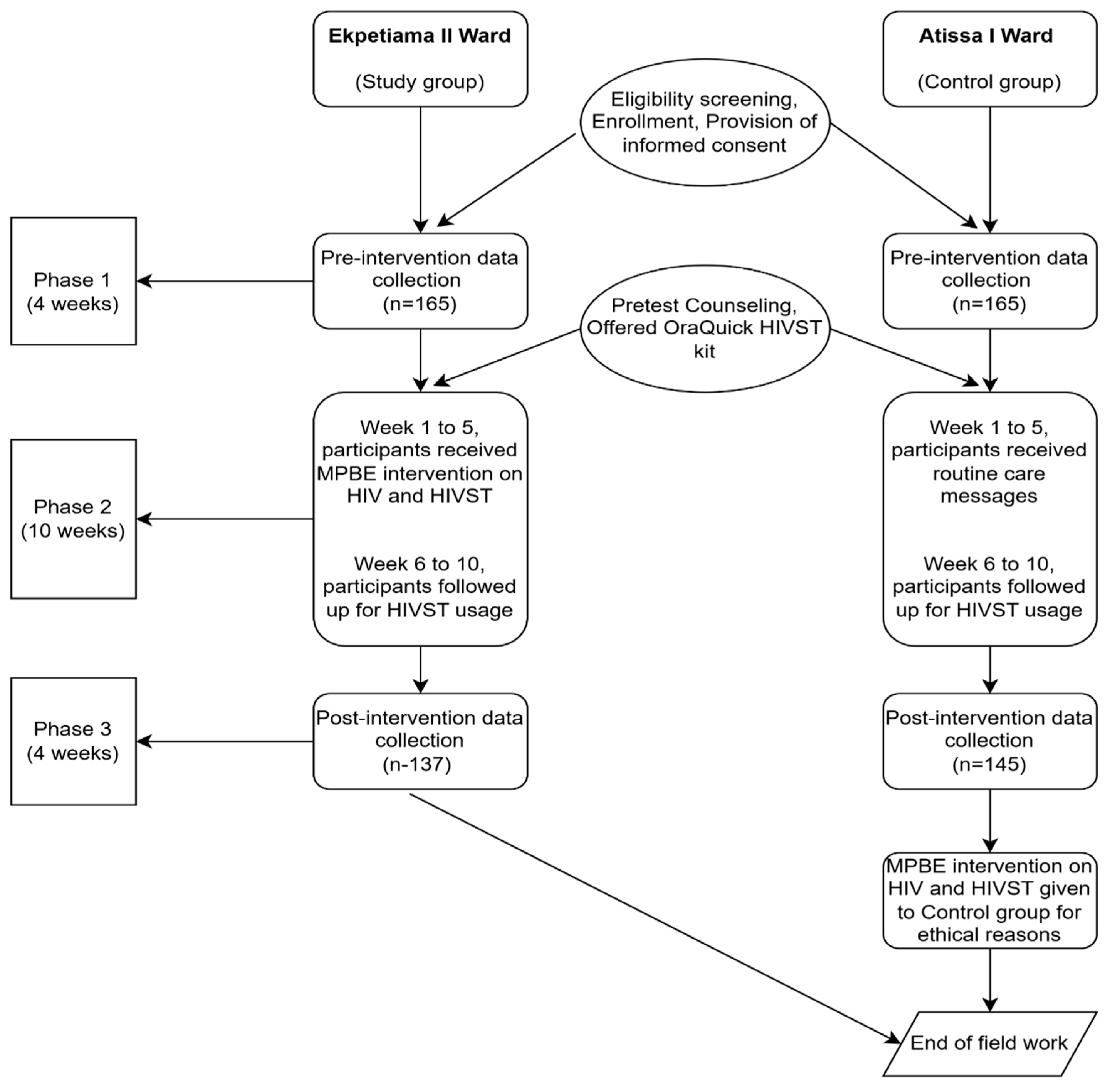
Figure 2.
Socio-demographic characteristics of Participants.
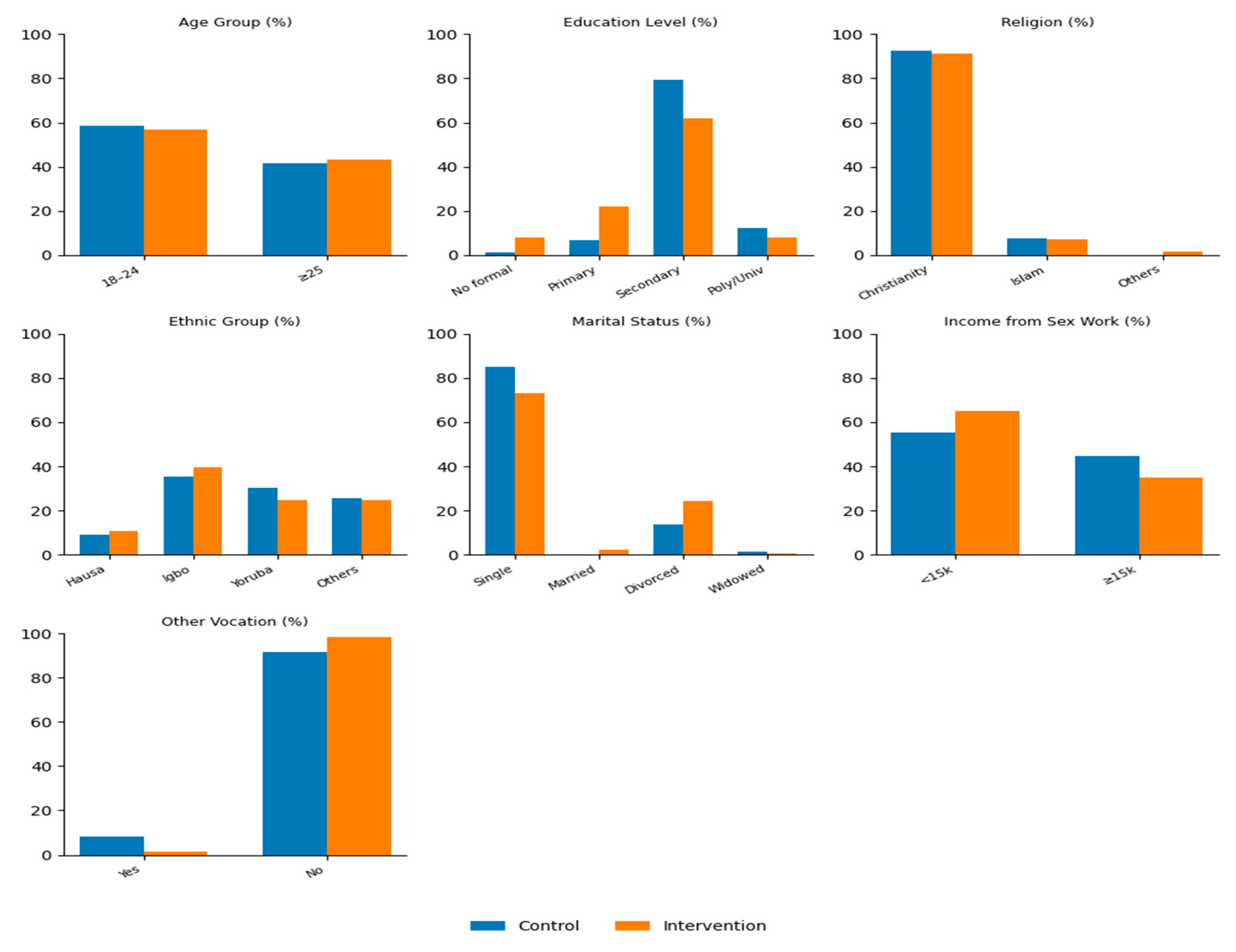
Figure 3.
Changes in HIV knowledge levels (poor vs. good) between baseline and endline among intervention and control groups, demonstrating a significant improvement in the intervention group relative to the control group (difference-in-differences = 38.7%, p < 0.001).
Figure 3.
Changes in HIV knowledge levels (poor vs. good) between baseline and endline among intervention and control groups, demonstrating a significant improvement in the intervention group relative to the control group (difference-in-differences = 38.7%, p < 0.001).
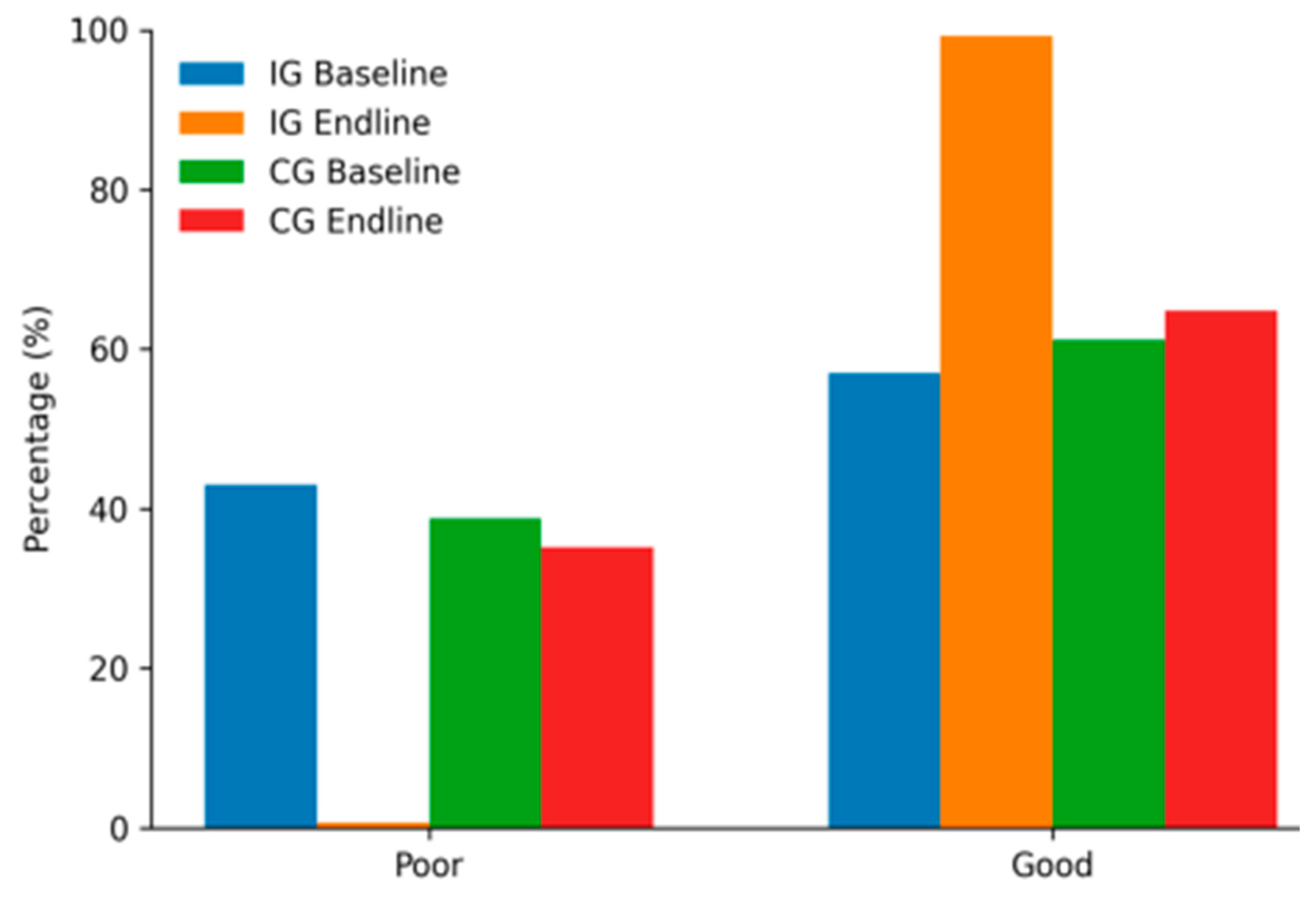
Figure 4.
Change in HIV self-testing knowledge levels between intervention and control groups: baseline versus endline.
Figure 4.
Change in HIV self-testing knowledge levels between intervention and control groups: baseline versus endline.
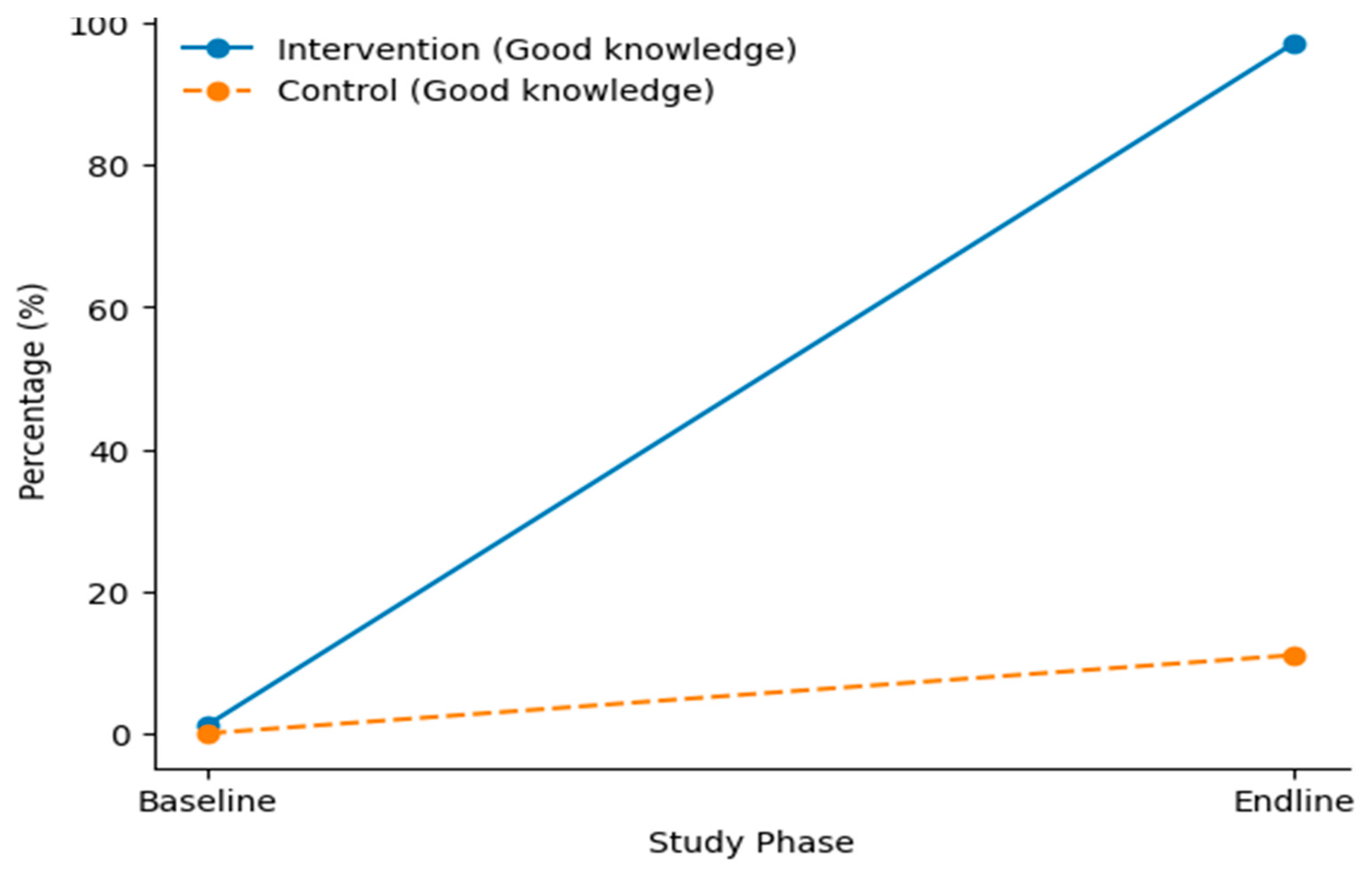
Figure 5.
Pre- and post-intervention comparison between intervention and control groups.
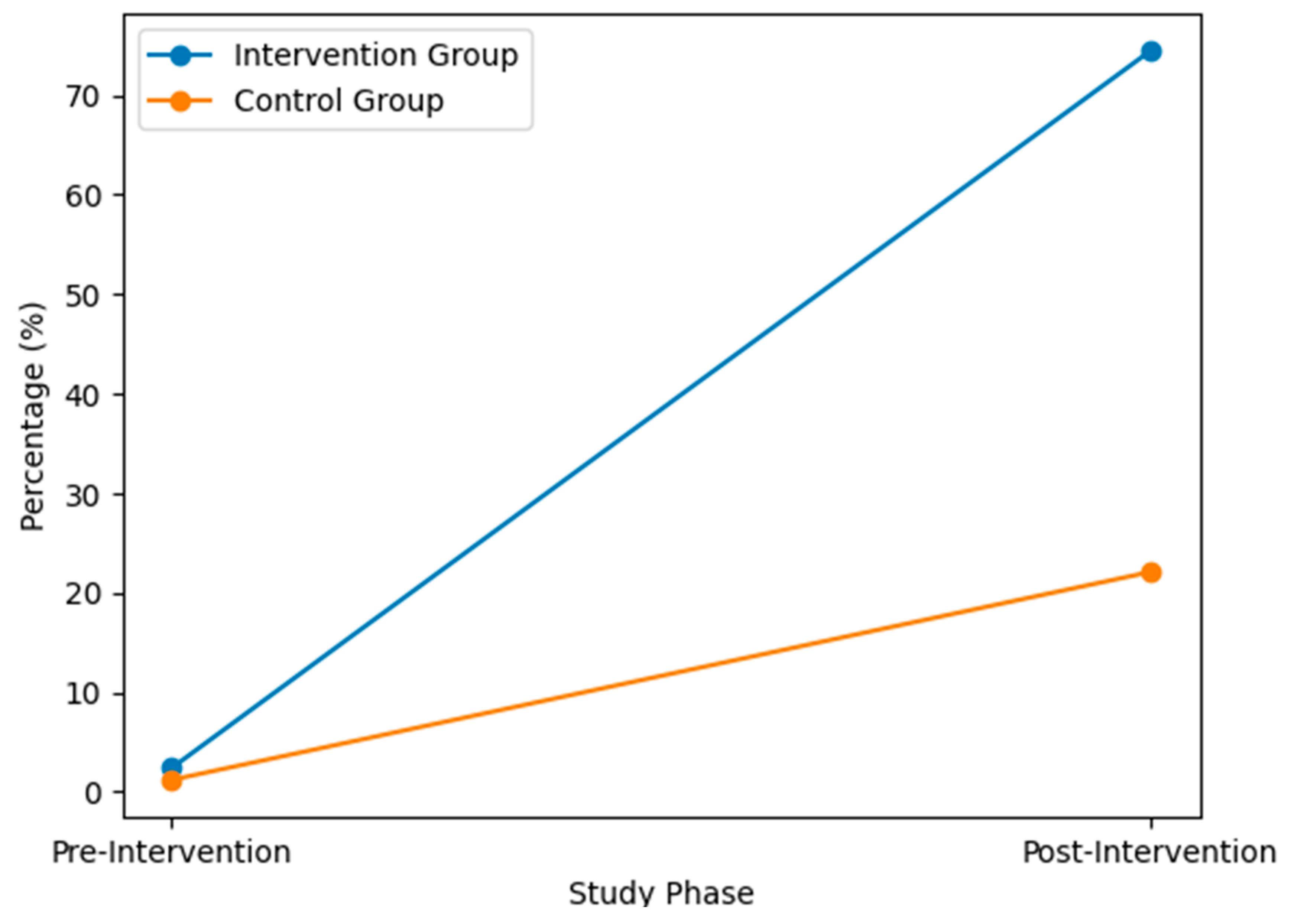
Figure 6.
Health Significance for high-risk populations such as female sex workers.
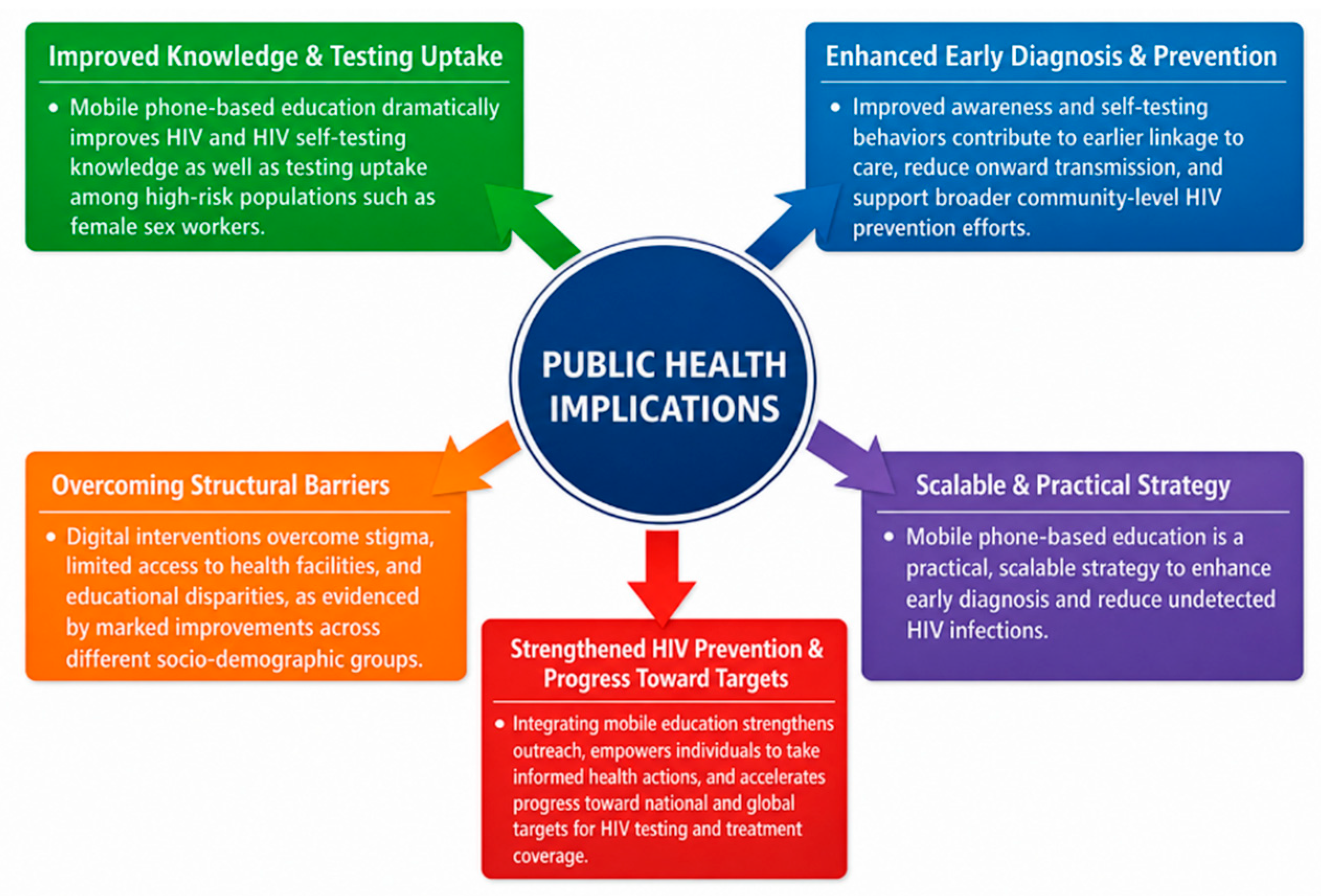

Table 1.
Socio-demographic characteristics.
| Variables | Control group | Intervention group | Total | Test Statistic | P value |
|---|---|---|---|---|---|
| n = 145 (%) | n = 137 (%) | N=282 | |||
| Age in years | |||||
| Mean SD | 23.26 ± 3.177 | 24.32 ± 3.935 | 2.509 T | 0.013T | |
| Age group of respondents (Years) | |||||
| 18-24 | 85 (58.6) | 78 (56.9) | 163 (57.8) | 0.082 X | 0.810 X |
| ≥ 25 | 60 (41.4) | 59 (43.1) | 119 (42.2) | ||
| Educational level | |||||
| No formal education | 2 (1.4) | 11 (8.0) | 13 (4.6) | <0.001 F | |
| Primary | 10 (6.9) | 30 (21.9) | 40 (14.2) | ||
| Secondary | 115 (79.3) | 85 (62.0) | 200 (70.9) | ||
| Polytechnic/University | 18 (12.4) | 11 (8.0) | 29 (10.3) | ||
| Religion | |||||
| Christianity | 134 (92.4) | 125 (91.2) | 259 (91.8) | 0.536 F | |
| Islam | 11 (7.6) | 10 (7.3) | 21 (7.4) | ||
| Others a | 0 (0.0) | 2 (1.5) | 2 (0.7) | ||
| Ethnic group | |||||
| Hausa | 13 (9.0) | 15 (10.9) | 28 (9.9) | 1.412X | 0.703X |
| Igbo | 51 (35.2) | 54 (39.4) | 105 (37.2) | ||
| Yoruba | 44 (30.3) | 34 (24.8) | 78 (27.7) | ||
| Others b | 37 (25.5) | 34 (24.8) | 71 (25.2) | ||
| Marital Status | |||||
| Single | 123 (84.8) | 100 (73.0) | 223 (79.1) | 0.017 F | |
| Married | 0 (0.0) | 3 (2.2) | 3 (1.1) | ||
| Divorced | 20 (13.8) | 33 (24.1) | 53 (18.8) | ||
| Widowed | 2 (1.4) | 1 (0.7) | 3 (1.1) | ||
| Average weekly income from sex work (₦) | |||||
| Less than ₦15,000 | 80 (55.2) | 89 (65.0) | 169 (59.9) | 2.812 X | 0.060 X |
| ₦15,000 and above | 65 (44.8) | 48 (35.0) | 113 (40.1) | ||
| Other vocation apart from sex work | |||||
| Yesc | 12 (8.3) | 2 (1.5) | 14 (5.0) | 0.011 F | |
| No | 133 (91.7) | 135 (98.5) | 268 (95.5) | ||
| Average weekly income from other vocation (₦) | |||||
| Less than ₦15,000 | 12 (100.0) | 0 (0.0) | 12 (85.7) | 0.011 F | |
| ₦15,000 and above | 0 (0.0) | 2 (100.0) | 2 (14.3) | ||
TIndependent sample T-test; FFisher’s exact; XPearson Chi square; Statistically significant in bold at p< 0.05; a Traditionalist, etc.; bUrhobo, Ijaw, Igala, Tiv, Ikwere, Calabari, etc.; cHair dresser, Trader, etc.
Table 2.
Participants’ HIV knowledge levels.
| HIV knowledge level | Baseline n (%) IG=165 CG= 165 |
Endline n (%) IG=137 CG= 145 |
% Change |
P-value |
DID estimate (95% CI, P-value) | |
|---|---|---|---|---|---|---|
| Intervention group | Poor knowledge | 71 (43.0) | 1 (0.7) | -42.3 | ||
| Good knowledge | 94 (57.0) | 136 (99.3) | 42.3 | <0.001 | ||
| 38.7(95% CI 0.25-0.53, p< 0.001) | ||||||
| Control group | Poor knowledge | 64 (38.8) | 51 (35.2) | -3.6 | ||
| Good knowledge | 101 (61.2) | 94 (64.8) | 3.6 | 0.296 | ||
| χ² (p-value) | 0.614 (0.433) X | (<0.001) F |
IG intervention group; CG control group; DID difference-in-difference; FFisher’s exact; XPearson chi square; CI-Confidence interval; Statistically significant in bold at p< 0.05.
Table 3.
Participants’ HIVST knowledge levels.
| HIVST knowledge level | Baseline n (%) IG=165 CG= 165 |
Endline n (%) IG=137 CG= 145 |
% Change |
P-value | DID estimate (95% CI, P-value) | |
|---|---|---|---|---|---|---|
| Intervention group | Poor knowledge | 163 (98.8) | 4 (2.9) | -95.9 | ||
| Good knowledge | 2 (1.2) | 133 (97.1) | 95.9 | <0.001 | ||
| 84.9(95% CI: 0.79-0.91, p< 0.001) | ||||||
| Control group | Poor knowledge | 165 (100.0) | 129 (89.0) | -11.0 | ||
| Good knowledge | 0 (0.0) | 16 (11.0) | 11.0 | <0.001 | ||
| χ² (p-value) | (0.498)F | (0.000)F |
IG intervention group; CG control group; DID difference-in-difference; FFisher’s exact; XPearson chi square; CI-Confidence interval; Statistically significant in bold at p< 0.05.
Table 4.
HIVST Uptake.
| Intervention Group |
Control Group |
|
|---|---|---|
| Pre-Intervention | 4 (2.4) | 2 (1.2) |
| Post -intervention | 102 (74.5) | 32 (22.1) |
| χ²(p-value) | < 0.001F | < 0.001F |
| D | 72.1 | 20.9 |
| DID estimate (95% CI, p-value) | 51.2 (95% CI 0.41-0.61, p< 0.001) | |
D difference of proportions; DID difference-in-difference; FFisher’s exact; XPearson chi square; CI-Confidence interval; Statistically significant in bold at p< 0.05.
Disclaimer/Publisher’s Note: The statements, opinions and data contained in all publications are solely those of the individual author(s) and contributor(s) and not of MDPI and/or the editor(s). MDPI and/or the editor(s) disclaim responsibility for any injury to people or property resulting from any ideas, methods, instructions or products referred to in the content. |
© 2026 by the authors. Licensee MDPI, Basel, Switzerland. This article is an open access article distributed under the terms and conditions of the Creative Commons Attribution (CC BY) license (http://creativecommons.org/licenses/by/4.0/).
Copyright: This open access article is published under a Creative Commons CC BY 4.0 license, which permit the free download, distribution, and reuse, provided that the author and preprint are cited in any reuse.


