

Submitted:
04 May 2026
Posted:
05 May 2026
You are already at the latest version
Abstract
Background/Objectives: Oxidative stress is a key pathogenic factor in gastric diseases (GDs). Nutraceuticals with antioxidant activity derived from macroalgae represent promising preventive strategies. However, Chilean macroalgae remains poorly explored in the context of GDs, particularly associated with oxidative stress. This study evaluated the antioxidant and cytoprotective properties of crude aqueous and ethanolic extracts from green, brown, and red macroalgae collected along the north-central coast of Chile. Methods: Crude extracts were prepared from green, brown, and red macroalgae and evaluated for antioxidant activity via ABTS, DPPH, and FRAP assays. Using hydrogen peroxide-induced oxidative stress in GES-1 gastric epithelial cells, we assessed cell viability (MTS assay), intracellular reactive oxygen species (ROS) levels (time-lapse confocal microscopy), and apoptosis (active caspase-3 detection). Results: All extracts exhibited antioxidant activity; the red macroalgae Gracilaria chilensis displayed the highest flavonoid content (up to 2.236 mg QE/g dw). Notably, extracts from G. chilensis, S. gaudichaudii, and M. canaliculata preserved GES-1 cell viability under hydrogen peroxide-induced stress, outperforming green and brown species, demonstrating the superior cytoprotective capacity of red macroalgae compared to other groups. Furthermore, G. chilensis extracts significantly reduced intracellular ROS levels and attenuated ROS-induced apoptosis. Conclusions: Red macroalgae extracts, particularly G. chilensis, exhibit strong antioxidant and cytoprotective effects. Our findings demonstrate that these species outperform green and brown macroalgae, addressing a gap in knowledge regarding Chilean marine resources. These results support their potential development as nutraceuticals for the prevention of oxidative stress-related gastric diseases and highlight red macroalgae as a valuable source of bioactive compounds for diet-based preventive strategies.
Keywords:
macroalgae extracts
; oxidative stress
; antioxidants
; gastric epithelial cells
; polyphenols
; gastric diseases
1. Introduction
Gastric diseases (GDs) are a significant public health problem that requires new treatment approaches. GDs represent a spectrum of disorders, including chronic gastritis, gastric ulcers, functional dyspepsia, and gastric cancer (GC), which are highly prevalent [1]. Currently, GC ranks as the fourth leading cause of cancer death and the fifth most common cancer with over one million new cases annually [2,3,4,5]. Although conventional pharmacological treatments for gastric disorders, such as H2 receptor antagonists and proton pump inhibitors, are widely used, their long-term administration can lead to adverse effects, emphasizing the need for safer and natural alternatives [6]. Historically, plant-derived natural products have demonstrated therapeutic efficacy and safety, representing a promising basis for the development of novel nutritional supplements and functional foods [7]. Nutraceuticals (foods or food-derived compounds with health-promoting and medicinal properties) have gained increasing attention for their ability to maintain gastric homeostasis and prevent disease onset [8]. In GDs, oxidative stress is the central pathological mechanism and a potential therapeutic target [9,10,11]. Oxidative stress arises from a redox imbalance between the increased production of reactive oxygen species (ROS) and/or decreased antioxidant defenses [9,12,13]. In low levels, ROS -superoxide, hydroxyl radical, and hydrogen peroxide (H2O2)-, play key roles in cell signaling, immune defense, tissue repair, and the regulation of apoptosis [10,11,12,14]. However, in GDs, factors such as cigarette smoking, chronic alcohol consumption, nonsteroidal anti-inflammatory drug (NSAID), and Helicobacter pylori (H. pylori) infection can trigger excessive ROS production and oxidative stress [11,12,15]. Oxidative stress can induce apoptosis in gastric epithelial cells, thereby compromising mucosal integrity and barrier function [11,16,17,18]. In addition, oxidative stress increases mucosal permeability, driving the pathogenesis and progression of chronic gastrointestinal disorders, including H. pylori-associated gastritis, reflux esophagitis, and gastric carcinogenesis [18,19,20,21,22]. Therefore, oxidative stress represents a therapeutic target for GDs, with exogenous antioxidants from natural products being an effective and economical approach to prevent these diseases [8,12].
Several studies worldwide have reported that macroalga extracts exhibit gastroprotective effects. Extracts from brown and red macroalgae collected in the Americas and Asia have been shown to enhance the gastric mucosal defense and protect against mucosal injury in both cellular and murine models [23,24,25,26,27]. For example, an extract from red macroalgae Gracilaria changii (Malaysia) demonstrated strong gastroprotective and anti-ulcerogenic effects in rats, significantly reducing lesion size in ethanol-induced gastric injury [23]. Extracts from Gracilaria caudata collected along the Brazilian coast, enriched with a sulfated-polysaccharide (PLS), have shown protective effects against ethanol-induced gastric damage in mice [25,28]. Similarly, an extract from the brown macroalgae Sargassum polycystum (India) reversed ethanol/HCl-induced gastric damage in rat models [24]. In addition, an extract from Spanish macroalgae Gongolaria baccata has shown protective effects in Caco-2 cells [29]. However, the bioactivity of macroalgae is often site-dependent, as geographic location, seasonality, and local environmental conditions can significantly influence their chemical composition and biological activity, thereby affecting reproducibility and standardization [30,31,32,33]. Although Chile possesses extensive macroalgal resources along its coastline [34], comparative evidence across macroalgal groups under standardized conditions in gastric epithelial models of oxidative stress remains scarce, and their nutraceutical potential is still poorly understood.
In this study, we prepared crude ethanolic and aqueous extracts from green (Ulva sp.), brown (Lessonia spicata, Macrocystis pyrifera), and red (Gracilaria chilensis, Sarcodiotheca gaudichaudii, and Mazzaella canaliculate) Chilean macroalgae to perform a comparative analysis of their antioxidant capacity both in vitro and over a human gastric epithelial cell line (GES-1) exposed to oxidative stress. We found that, despite all macroalgae extracts possessing antioxidant capacity, the ethanolic fractions -particularly from G. chilensis- showed the most pronounced protective effects on GES-1 cells under peroxide-induced oxidative stress, enhancing cell viability, reducing intracellular ROS, and apoptosis. These findings highlight the superior cytoprotective potential of red macrolagae and support their development as nutraceuticals for the prevention of oxidative stress-related gastric diseases.
2. Materials and Methods
2.1. Materials
Hydrogen peroxide (#107210) and Cisplatin (#15663, Calbiochem) were purchased from Merck Millipore (Darmstadt, Germany). Hydrogen peroxide is soluble in aqueous solutions, such as water and culture media. On the other hand, Cisplatin was solubilized in PBS 1X (140 mM NaCl). MTS assay was purchased from Promega (Madison, WI, USA). Anti-Cleaved Caspase 3 (#D175) was purchased from Cell Signaling Technologies (Danvers, MA, USA). The Alexa Fluor 488 anti-rabbit secondary antibody (#A11008) and DCFH-DA (2’,7’-dichlorofluorescein diacetate) (#D6883) were obtained from Thermo Fisher Scientific (Eugene, OR, USA).
To obtain the macroalgae extracts, an Elma ultrasonic bath (model D-78224 Singen), a Daihan Scientific Wisemix orbital shaker, a Büchi rotary evaporator (model R-210), and an Ilshin freeze dryer (model FD 8508) were used. Ethanolic extracts were performed with Ethanolic pa. and with pure water. Trolox (#53188-07-1), gallic acid (#149-91-7), and quercetin (#6151-25-3) were used as antioxidant, phenol, and flavonoid standards provided by Sigma-Aldrich. All standard solutions were prepared using distilled and deionized water. Absorbance measurements for each method were performed on a BIOTEK Synergy LX multiplate reader (Biotek Instruments, Winooski, VT, USA).
2.2. Macroalgae Collection and Crude Extracts Preparation
Green, brown, and red macroalgae were collected from different sites in central-northern Chile (Table 1). The samples were transported to the laboratory in thermal containers and subsequently washed with distilled water to remove salts and adhering particles. The macroalgae were dried at 50 °C and then pulverized for analysis and extract generation.
As previously mentioned, ethanolic extracts of macroalgae were obtained from dried and ground biomass. Ten grams of dried sample were weighed and extracted with 70% (v/v) aqueous ethanol at a solid/solvent ratio of 1:10 (g/mL) using ultrasound-assisted extraction in a Singer D-78224 ultrasonic bath (Elma) for 15 min, followed by shaking on a Wisemix orbital shaker (Daihan Scientific) at 130 rpm for 24 h, according to methodologies described for the extraction of phenolic compounds from macroalgae with aqueous ethanol. The extracts were separated by filtration, and the solvent was removed under reduced pressure in an R 210 rotary evaporator (Büchi) to dryness. The resulting solid was subjected to solubility separation to obtain a water-soluble fraction and an absolute ethanol-soluble fraction, which were lyophilized and stored at −20 °C.
2.3. Antioxidant Capacity
Antioxidant activities of six macroalgae species were evaluated using ABTS, DPPH, and FRAP assays [35,36]. The results were expressed as Trolox equivalents (TEAC, µmol/g of dry algae) by constructing a calibration curve with Trolox standard solutions (Sigma Aldrich) (0-120 mg L-1). All measurements were replicated three times.
In the case of extracts, the antioxidant activities were assayed only with DPPH following [36]. Briefly, free radical scavenging activity was determined using the DPPH assay, which is based on the decrease in DPPH- radical absorbance in the presence of antioxidant compounds. Lyophilized and ground samples (100 mg) were extracted with 70% (v/v) ethanol, and the extracts were mixed with a DPPH-in-methanol solution and kept in the dark before reading at 517 nm. The antioxidant capacity was calculated by comparing the absorbance of the sample-DPPH mixtures with a control.
The ABTS assay was based on the decolorization of the ABTS-+ radical cation in the presence of compounds capable of donating electrons or hydrogen [37]. The ABTS-+ radical was generated by reacting ABTS and potassium persulfate solutions for 12–16 h and then diluting them in methanol until an appropriate absorbance was obtained at 734 nm. Extracts were prepared from 50 mg of the sample extracted with 70% (v/v) ethanol. An aliquot of the supernatant was mixed with the ABTS+ solution and incubated in the dark for 120 min before spectrophotometric reading at 734 nm.
Ferric reducing capacity was assessed using the FRAP assay, which measures the reduction of the ferric complex TPTZ–Fe3+ to its ferrous form TPTZ–Fe2+, evidenced by an increase in absorbance at 593 nm [37]. The FRAP reagent was prepared by mixing an acetate buffer (pH 3.6), a TPTZ solution in HCl, and a FeCl3 solution, maintaining the mixture at 37 °C before analysis. 70% ethanolic extracts were obtained from 50 mg of the sample, and an aliquot of the supernatant was incubated with the FRAP reagent for 30 min in the dark, after which the absorbance at 593 nm was recorded.
2.4. Cell Culture and Treatment Conditions
GES-1 cells were donated by Dr. Dawid Kidane-Mulat (Austin, TX, USA). The culture conditions were as described in previous publications [38]. Cells were maintained in high-glucose Dulbecco’s Modified Eagle Medium (DMEM) supplemented with 10% fetal bovine serum (FBS) (#SV30160.03, Hyclone-Cytiva, Pasching, Austria) for GES-1 cells. The cells were maintained with penicillin/streptomycin (1X) (#15140122, Thermo Fisher Scientific, Canada) at 37 ◦C in a humidified 5% CO2 incubator. On the other hand, for algal treatment conditions, GES-1 cells were incubated in DMEM medium containing 5% FBS (control) and treated with different concentrations of algal extracts (50, 100, and 200 µg/mL) for 24 h in the same medium (5% FBS). Furthermore, for the oxidative-stress-induced model, the cells were treated with 100µM H2O2 for 3 h at 37 ◦C according to previous publications [38].
2.5. Cell Viability Assay
We used the tetrazolium reduction assay with MTS reagent to assess cell viability based on standard manufacturer protocols [39]. GES-1 cells (10,000 cells/mL) were seeded in a 96-well plate. Once GES-1 cells reached 70% confluence, the cells were treated with different concentrations of algae extracts (50, 100, and 200 µg/mL) for 24 h, and were also exposed to 100µM H2O2 for 3 h. After the elapsed time, 20 µL MTS/PMS was added to each well (the final concentration of MTS was 333 µg/mL and that of PMS was 25 µM) for 1 h at 37 ◦C. The absorbance was measured at 490 nm using a microplate reader (NOVOstar, BMG LabTech, Ortenberg, Germany). The viability was expressed as the percentage of reduced MTS; the absorbance of control cells represented 100% cell viability.
2.6. Cellular ROS Level by Time-Lapse in Confocal Microscopy
We assessed reactive oxygen species (ROS) levels using the fluorescent probe DCFH-DA (2’,7’-dichlorofluorescein diacetate) in an in vivo confocal microscopy assay according to previous work [38]. GES-1 cells (200,000 cells/mL) were seeded in a glass-bottom cell culture dish (NEST, Labmed, Wuxi, China). Once GES-1 cells reached 70% confluence, they were incubated with DMEM medium containing 5% FBS (control) and with the algal ethanolic extract of Gracillaria chilensis 200 µg/mL in the same medium (5% FBS). After 24 h, cells were loaded with 10 µM DCFH-DA for 20 min at 37 °C, washed three times with 1X PBS, and maintained in 1X HBSS buffer. Samples were examined using an LSCM-800 with excitation wavelengths of 485 nm (emission at 536 nm) and a 63×/1.46 oil immersion Plan-Apochromat objective. First, the basal state of both control and algal extract-treated cells was visualized. Once the basal condition image was taken, 100 µM peroxide was added to both samples, and a record was taken every 30 seconds for 7 continuous minutes to evaluate the activity of the DCFH-DA probe. Confocal images were obtained at 1024 × 1024 pixels (202.83 µm2) and processed to produce regions of interest (ROIs) per cell using ZEN-2.1 software. Its expression was calculated as the integrated mean intensity of green fluorescence (channel 488) per cell (n = 30-40 cells). For each treatment, the mean of the integrated intensity was calculated using the following formula:
Average Integrated Intensity = (ΣNPc×Mean intensity)/n, where NPc = number of pixels per cell, MIc = mean intensity per cell, and n = number of cells.
2.7. Apoptotic Assay by Cleaved Caspase 3 and Confocal Analysis
GES-1 cells were seeded on coverslips in 24-well plates. Immunofluorescence analysis was performed on 70% confluent GES-1 cells. The cells (control or treated with extracts, H2O2, Extracts/H2O2, and Cisplatin) were fixed with 4% paraformaldehyde for 10 min and washed with PBS1X. The cells were permeabilized with 0.2% Triton™ X-100 for 15 min and blocked with 2% BSA for 1 h at room temperature. Cells were incubated with primary antibodies anti-caspase (1:500, Cell Signaling) overnight at 4 ◦C and washed three times for 15 min each time with PBS1X. This was followed by incubation with the secondary antibody Alexa Fluor 488 (1:500, Thermo Fisher Scientific) for 1 h at room temperature, then labeling with DAPI for 10 min. Cells were rinsed three times with PBS1X, and the coverslips were mounted on microscope slides using Fluoromount. The samples were examined with laser scanning confocal microscopy (LSCM-800) using 405 and 488 nm lasers and Plan Apochromat 63×/1.46 oil immersion objective. The confocal images were obtained with a size of 1024 × 1024 pixels (202.83 µm2).
2.8. Statistical Analysis
All experiments were performed in triplicate, and results were estimated as mean ± S.E.M. Statistical parametric analyses were performed with GraphPad Prism 8. Data were compared using a T-test for two-group comparisons and a one-way ANOVA for group comparisons, with significance levels of p (* p < 0.05, ** p < 0.05, *** p < 0.03, **** p < 0.0001).
3. Results
3.1. Macroalgae Extracts Exhibit Antioxidant Capacity with Significant Polyphenol Levels
Crude aqueous and ethanolic extracts were prepared from green, brown, and red macroalgae collected along the Chilean coast during summer. The antioxidant profiles of the seaweeds were characterized by FRAP, ABTS, and DPPH assays (Table 2). All seaweeds exhibited significantly higher ABTS values compared with DPPH or FRAP. No significant differences in antioxidant capacity were observed between aqueous and ethanolic extracts, except for L. spicata (Table 3). These results suggest the presence of hydrophilic and lipophilic/organic antioxidants -such as polyphenols- that operate through mixed-mode reaction mechanisms [40,41]. Based on these results, the analysis of phenolic and flavonoid content in aqueous and ethanolic extracts (Table 4 and Table 5) shows that brown macroalgae M. pyrifera and red macroalgae G. chilensis have significantly higher phenol levels compared with the other species (Table 4). Furthermore, the aqueous and ethanolic extracts of G. chilensis exhibited significantly higher flavonoid levels (1.7 and 2.2 mgEq Quercetin/g, respectively) compared with corresponding extracts of all other species.
3.2. Red Macroalgae Extract Protects the Cell Viability of Epithelial Gastric Cells Exposed to Oxidative Stress
To evaluate the protective effect of macroalgae extracts on gastric epithelial cell viability under oxidative stress, the GES-1 cell line was preincubated with the extracts in the presence or absence of 100 μM hydrogen peroxide, following the method described in [38]. All aqueous and ethanolic extracts, at concentrations of 50, 100, and 200 μg/mL for 24 h, were non-toxic to GES-1 (Table 6). Notably, only red macroalgae extracts significantly protected GES-1 cell viability exposed to 100 μM hydrogen peroxide (Figure 1 and Figure 2). Specifically, the M. canaliculata aqueous extract, and the G. chilensis and S. gaudichaudii ethanolic extracts maintained cell viability during hydrogen peroxide exposure (Table 7). Preincubation with M. canaliculata increased GES-1 cell viability by 9,95% (p<0.05), while S. gaudichaudii aqueous extracts led to a 17.78% increase in cell viability (p<0.003) during peroxide exposure. Furthermore, G. chilensis ethanolic extracts, across all concentrations, increased GES-1 cell viability by 20.25% (p<0.01), 17.99% (p<0.05), and 21.33% (p<0.01) during peroxide exposure. Consequently, preincubation of GES-1 cells with red macroalgae extracts for 24 h enhanced cell viability under oxidative stress.
3.3. Extract from Gracilaria chilensis Reduces Cellular Oxidative Stress and Apoptosis Induced by Peroxide
Given that ethanolic extracts of G. chilensis provided superior protection of GES-1 cell viability against hydrogen peroxide, we evaluated whether these extracts could directly reduce ROS levels using the DCFH-DA fluorescent probe and time-lapse confocal microscopy (Figure 3). GES-1 cells preincubated with 200 μg/mL of G. chilensis ethanolic extracts for 24 h showed a decrease in ROS levels after incubation with 100 μM hydrogen peroxide over a 7 min time-lapse period (Figure 3B). Furthermore, preincubated GES-1 cells exhibited significantly reduced intracellular ROS levels (42%, p<0.0001) compared to control cells (Figure 3C). A similar trend was observed in GES-1 cells preincubated with S. gaudichaudii ethanolic extracts (Supplementary Figure 1). Collectively, these findings demonstrate that preincubation with red macroalgae extracts, such as those from G. chilensis, decreases intracellular ROS levels, suggesting a protective mechanism against oxidative stress.
In light of the observed reduction in intracellular ROS levels, we further investigated whether this antioxidant effect correlates with a decrease in programmed cell death, as oxidative stress has been shown to induce apoptosis [42]. We evaluated apoptosis by assessing the cleaved caspase-3 levels in GES-1 cells preincubated with the macroalgae extracts and subsequently exposed, or not, to hydrogen peroxide (Figure 4). The G. chilensis ethanolic extracts showed a trend toward reduced apoptosis, as indicated by active caspase 3 immunolabeling (Figure 4E), compared to positive controls with 60 μM cisplatin or 100 μM hydrogen peroxide.
4. Discussion
Oxidative stress is a recognized pathogenic driver of gastric diseases, including gastritis, ulcer development, and gastric cancer [43]. While current pharmacological treatments primarily target acid secretion or Helicobacter pylori eradication, they do not directly address oxidative injury to the gastric mucosa [39]. In this context, marine macroalgae-derived bioactive compounds, particularly when developed as nutraceuticals [8], represent a valuable complementary approach. Our findings address this gap by demonstrating the antioxidant and cytoprotective potential of Chilean macroalgae in a gastric epithelial cell model of oxidative stress. Red macroalgal crude extracts, through combined cytoprotective, ROS-reducing, and anti-apoptotic effects, emerge as promising nutraceutical candidates for the prevention of oxidative stress-related gastric diseases.
In the present study, we defined two criteria to identify macroalgae crude extracts with potential for preventing oxidative stress-related gastric diseases: in vitro antioxidant capacity (cell-free assays) and the antioxidant activity within the gastric epithelial cell line GES-1 exposed to hydrogen peroxide. We demonstrated that i) Both aqueous and ethanolic extracts from macroalgae collected along the Chilean coast exhibit antioxidant properties in chemical assays, ii) extracts obtained from red macroalgae, in contrast to green and brown species, provided significantly greater protection of GES-1 cell viability under oxidative stress; and iii) extracts from G. chilensis significantly attenuated apoptosis induced by oxidative stress, likely by reducing intracellular reactive oxygen species (ROS). Together, these results provide comparative evidence of the superior cytoprotective capacity of red macroalgae as a promising natural source of bioactive compounds for the prevention of gastric diseases associated with oxidative damage.
Our results showed that all macroalgae extracts exhibited antioxidant activity. In general, crude extracts exhibited antioxidant properties consistent with previous reports of similar macroalgae species from other regions [35,44,45,46,47,48,49]. Consequently, all macroalgae extracts contain compounds with antioxidant activity. Several antioxidant compounds have been identified in macroalgae, including sulfated polysaccharides (e.g., carrageenan, porphyran), carotenoids (lutein, zeaxanthin), lectins, phycobiliproteins, and polyphenols [46,50,51,52,53,54,55,56]. These substances may help preserve gastric mucosal integrity and maintain homeostasis by scavenging ROS, chelating metal ions, and inhibiting lipid peroxidation [22,53,57]. In this study, we focused on polyphenols (phenols and flavonoids) due to their known gastroprotective effects and their role in reducing gastric cancer risk [57,58]. Although both M. pyrifera and G. chilensis exhibit elevated phenolic content, only red macroalgae consistently exerted cytoprotective effects, indicating that chemical antioxidant capacity alone does not fully predict biological efficacy.
Preincubation with extracts from G. chilensis, S. gaudichaudii, and M. canaliculata, significantly preserved GES-1 cell viability under oxidative stress. The protective effect of G. chilensis ethanolic extracts correlates with their higher levels of phenol and flavonoid content, which could have a potential role in the prevention of different human diseases [59,60]. Although polyphenols often exhibit limited systemic bioavailability, they may reach high local concentrations in the gastrointestinal tract after oral administration, exerting protective effects on the gastric epithelium [58,61]. In addition, G. Chilensis ethanolic extracts reduced intracellular ROS levels and apoptosis in GES-1 cells, supporting their cytoprotective role. These results are consistent with previous in vivo studies on Gracilaria species [62,63,64,65] and extend them by providing comparative evidence across macroalgal groups under standardized conditions. The observed effects are likely not solely attributable to polyphenols alone. Other bioactive compounds, such as sulfated polysaccharides, carotenoids, and phycobiliproteins, may act synergistically with polyphenols to regulate redox homeostasis [50,66]. Future studies should focus on the isolation and characterization of these compounds and their potential synergistic interactions.
This study demonstrates the superior cytoprotective and antioxidant effects of red macroalgal extracts, although some limitations should be noted. The analysis was limited to in vitro assays using a single gastric epithelial cell line. Nevertheless, this work provides one of the first comparative evaluations of Chilean macroalgae in a gastric epithelial model of oxidative stress. Further studies are needed to characterize the active compounds and validate their efficacy in vivo. In addition, bioavailability, safety, and stability must be assessed to support their development as nutraceuticals. Overall, red macroalgae represents a promising source of bioactive compounds for the prevention of oxidative stress-induced gastric diseases and for diet-based preventive strategies.
5. Conclusions
Red macroalgal extracts showed superior antioxidant and cytoprotective effects compared to green and brown macroalgal extracts, as evidenced by enhanced cell viability, reduced ROS accumulation, and attenuated apoptosis in the gastric epithelial cell line.
The observed bioactivity suggests that red macroalgae contain unique metabolites, including polyphenols, which modulate ROS levels and apoptotic signaling pathways.
These findings support the potential of red macroalgal extracts as promising candidates for the development of nutraceuticals or preventive therapies targeting oxidative stress–related gastric disorders.
Author Contributions
Conceptualization, methodology, and writing—original draft preparation: S.A., P.H, F.T., and E.d.l.F.-O.; performed the experiments: S.A., F.A., M.A, E.d.l.F.-O.; provided the equipment and reagents: F.T., and E.d.l.F.-O.; Editing: S.A., P.A.H., F.T., and E.d.l.F.-O. All authors have read and agreed to the published version of the manuscript.
Funding
This research was funded by Fondo de Inversión para la Competitividad Región de Coquimbo, Chile (FIC-R BIP 40041173-0), Fondo Regional para la Productividad y el Desarrollo Región de Coquimbo, Chile (FRPD, BIP 40064892-0), Fondo ANID Cod. 86220018.
Institutional Review Board Statement
Not applicable.
Informed Consent Statement
Not applicable.
Acknowledgments
We would like to thank the Faculty of Medicine, Universidad Católica del Norte (Coquimbo, Chile) for the use of its confocal microscopy facility (FONDEQUIP, EQM140100) and Odyssey M Imaging System (FONDEQUIP, EQM220103).
Conflicts of Interest
The authors declare no conflicts of interest.
References
- Xu, Y.; Chen, F.; Wen, H. Global Incidence and Prevalence of Gastritis and Duodenitis from 1990 to 2019: A Systematic Analysis for the Global Burden of Disease Study 2019. J. Gastroenterol. Hepatol. 2024, 39, 1563–1570. [Google Scholar] [CrossRef]
- Zhou, L.; Han, B.; Yuan, Y.; Dong, Z.; Shi, Y.; Zheng, R. The Global Burden of Stomach Cancer and Its Risk Factors from 1990 to 2021: Findings from the Global Burden of Disease Study 2021. BMC Public Health 2025, 25, 2678. [Google Scholar] [CrossRef]
- Bray, F.; Laversanne, M.; Sung, H.; Ferlay, J.; Siegel, R.L.; Soerjomataram, I.; Jemal, A. Global Cancer Statistics 2022: GLOBOCAN Estimates of Incidence and Mortality Worldwide for 36 Cancers in 185 Countries. CA A Cancer J. Clin. 2024, 74, 229–263. [Google Scholar] [CrossRef]
- Thrift, A.P.; El-Serag, H.B. Burden of Gastric Cancer. Clin. Gastroenterol. Hepatol. 2020, 18, 534–542. [Google Scholar] [CrossRef] [PubMed]
- Mülder, D.T.; Hahn, A.I.; Huang, R.J.; Zhou, M.J.; Blake, B.; Omofuma, O.; Murphy, J.D.; Gutiérrez-Torres, D.S.; Zauber, A.G.; O’Mahony, J.F.; et al. Prevalence of Gastric Precursor Lesions in Countries with Differential Gastric Cancer Burden: A Systematic Review & Meta-Analysis. Clin. Gastroenterol. Hepatol. 2024, 22, 1605–1617.e46. [Google Scholar] [CrossRef]
- Protective Effect of Snail Secretion Filtrate against Ethanol-Induced Gastric Ulcer in Mice | Scientific Reports. Available online: https://www.nature.com/articles/s41598-021-83170-8 (accessed on 14 October 2025).
- Hu, X.-T.; Ding, C.; Zhou, N.; Xu, C. Quercetin Protects Gastric Epithelial Cell from Oxidative Damage in Vitro and in Vivo. Eur. J. Pharmacol. 2015, 754, 115–124. [Google Scholar] [CrossRef] [PubMed]
- Qiao, K.; Song, Z.; Liang, L.; Zhou, X.; Feng, X.; Xu, Y.; Yang, R.; Sun, B.; Zhang, Y. Exploring the Underlying Mechanisms of Preventive Treatment Related to Dietary Factors for Gastric Diseases. J. Agric. Food Chem. 2024, 72, 17782–17801. [Google Scholar] [CrossRef] [PubMed]
- Suzuki, H.; Nishizawa, T.; Tsugawa, H.; Mogami, S.; Hibi, T. Roles of Oxidative Stress in Stomach Disorders. J. Clin. Biochem. Nutr. 2011, 50, 35–39. [Google Scholar] [CrossRef]
- Kwiecien, S.; Jasnos, K.; Magierowski, M.; Sliwowski, Z.; Pajdo, R.; Brzozowski, B.; Mach, T.; Wojcik, D.; Brzozowski, T. LIPID PEROXIDATION, REACTIVE OXYGEN SPECIES AND ANTIOXIDATIVE FACTORS IN THE PATHOGENESIS OF GASTRIC MUCOSAL LESIONS AND MECHANISM OF PROTECTION AGAINST OXIDATIVE STRESS - INDUCED GASTRIC INJURY.
- Bhattacharyya, A.; Chattopadhyay, R.; Mitra, S.; Crowe, S.E. Oxidative Stress: An Essential Factor in the Pathogenesis of Gastrointestinal Mucosal Diseases. Physiol. Rev. 2014, 94, 329–354. [Google Scholar] [CrossRef]
- Wang, Y.; Chen, Y.; Zhang, X.; Lu, Y.; Chen, H. New Insights in Intestinal Oxidative Stress Damage and the Health Intervention Effects of Nutrients: A Review. J. Funct. Foods 2020, 75, 104248. [Google Scholar] [CrossRef]
- Gutteridge, J.M.C.; Halliwell, B. Free Radicals and Antioxidants in the Year 2000: A Historical Look to the Future. Ann. N. Y. Acad. Sci. 2000, 899, 136–147. [Google Scholar] [CrossRef]
- Valko, M.; Leibfritz, D.; Moncol, J.; Cronin, M.T.D.; Mazur, M.; Telser, J. Free Radicals and Antioxidants in Normal Physiological Functions and Human Disease. Int. J. Biochem. Cell Biol. 2007, 39, 44–84. [Google Scholar] [CrossRef]
- Huang, Y.; Wang, Q.; Cheng, D.; Xu, W.; Lu, N. Adhesion and Invasion of Gastric Mucosa Epithelial Cells by Helicobacter Pylori. Front. Cell. Infect. Microbiol. 2016, 6. [Google Scholar] [CrossRef]
- Kim, Y.J.; Kim, E.-H.; Hahm, K.B. Oxidative Stress in Inflammation-Based Gastrointestinal Tract Diseases: Challenges and Opportunities. J. Gastroenterol. Hepatol. 2012, 27, 1004–1010. [Google Scholar] [CrossRef]
- Hashimoto, K.; Oshima, T.; Tomita, T.; Kim, Y.; Matsumoto, T.; Joh, T.; Miwa, H. Oxidative Stress Induces Gastric Epithelial Permeability through Claudin-3. Biochem. Biophys. Res. Commun. 2008, 376, 154–157. [Google Scholar] [CrossRef] [PubMed]
- Olguín-Martínez, M.; Mendieta-Condado, E.; Contreras-Zentella, M.; Escamilla, J.E.; Aranda-Fraustro, A.; El-Hafidi, M.; Hernández-Muñoz, R. Rate of Oxidant Stress Regulates Balance between Rat Gastric Mucosa Proliferation and Apoptosis. Free Radic. Biol. Med. 2006, 41, 1325–1337. [Google Scholar] [CrossRef]
- Handa, O.; Naito, Y.; Yoshikawa, T. Redox Biology and Gastric Carcinogenesis: The Role of Helicobacter Pylori. Redox Rep. 2011, 16, 1–7. [Google Scholar] [CrossRef]
- Butcher, L.D.; den Hartog, G.; Ernst, P.B.; Crowe, S.E. Oxidative Stress Resulting From Helicobacter Pylori Infection Contributes to Gastric Carcinogenesis. Cell. Mol. Gastroenterol. Hepatol. 2017, 3, 316–322. [Google Scholar] [CrossRef] [PubMed]
- Zavros, Y.; Merchant, J.L. The Immune Microenvironment in Gastric Adenocarcinoma. Nat. Rev. Gastroenterol. Hepatol. 2022, 19, 451–467. [Google Scholar] [CrossRef] [PubMed]
- Nie, S.; Yuan, Y. The Role of Gastric Mucosal Immunity in Gastric Diseases. J. Immunol. Res. 2020, 2020, 7927054. [Google Scholar] [CrossRef]
- Shu, M.-H.; Appleton, D.; Zandi, K.; AbuBakar, S. Anti-Inflammatory, Gastroprotective and Anti-Ulcerogenic Effects of Red Algae Gracilaria Changii (Gracilariales, Rhodophyta) Extract. BMC Complement Altern. Med. 2013, 13, 61. [Google Scholar] [CrossRef]
- Raghavendran, H.R.B.; Sathivel, A.; Devaki, T. Efficacy of Brown algae Hot Water Extract against HCl-Ethanol Induced Gastric Mucosal Injury in Rats. Arch. Pharm. Res. 2004, 27, 449–453. [Google Scholar] [CrossRef]
- Silva, R.O.; dos Santos, G.M.P.; Nicolau, L.A.D.; Lucetti, L.T.; Santana, A.P.M.; de Souza Chaves, L.; Barros, F.C.N.; Freitas, A.L.P.; Souza, M.H.L.P.; Medeiros, J.-V.R. Sulfated-Polysaccharide Fraction from Red Algae Gracilaria Caudata Protects Mice Gut Against Ethanol-Induced Damage. Mar. Drugs 2011, 9, 2188–2200. [Google Scholar] [CrossRef] [PubMed]
- Cheong, K.-L.; Liu, K.; Chen, W.; Zhong, S.; Tan, K. Recent Progress in Porphyra Haitanensis Polysaccharides: Extraction, Purification, Structural Insights, and Their Impact on Gastrointestinal Health and Oxidative Stress Management. Food Chem. X 2024, 22, 101414. [Google Scholar] [CrossRef]
- Silva, R.O.; Santana, A.P.M.; Carvalho, N.S.; Bezerra, T.S.; Oliveira, C.B.; Damasceno, S.R.B.; Chaves, L.S.; Freitas, A.L.P.; Soares, P.M.G.; Souza, M.H.L.P.; et al. A Sulfated-Polysaccharide Fraction from algae Gracilaria Birdiae Prevents Naproxen-Induced Gastrointestinal Damage in Rats. Mar. Drugs 2012, 10, 2618–2633. [Google Scholar] [CrossRef] [PubMed]
- Siddik, M.A.B.; Francis, P.; Foysal, M.J.; Francis, D.S. Dietary algae Extract Mitigates Oxidative Stress in Nile Tilapia by Modulating Inflammatory Response and Gut Microbiota. Front Immunol. 2024, 15, 1471261. [Google Scholar] [CrossRef]
- Martínez, M.-A.; Ares, I.; Martínez, M.; Lopez-Torres, B.; Maximiliano, J.-E.; Rodríguez, J.-L.; Martínez-Larrañaga, M.-R.; Anadón, A.; Peteiro, C.; Rubiño, S.; et al. Brown Marine Algae Gongolaria Baccata Extract Protects Caco-2 Cells from Oxidative Stress Induced by Tert-Butyl Hydroperoxide. Food Chem. Toxicol. 2021, 156, 112460. [Google Scholar] [CrossRef]
- Bogdan, C.; Molnar, M.; Dima, E.I.; Olteanu, A.A.; Safta, D.A.; Moldovan, M.-L. Marine Macroalgae in Topical Formulations: Bioactive Compounds, Variability, Analytical Challenges and Skin Benefits. Pharmaceutics 2025, 17, 1143. [Google Scholar] [CrossRef]
- Bouafir, Y.; Bouhenna, M.M.; Nebbak, A.; Belfarhi, L.; Aouzal, B.; Boufahja, F.; Bendif, H.; Bruno, M. Algal bioactive compounds: A review on their characteristics and medicinal properties. Fitoterapia 2025, 183, 106591. [Google Scholar] [CrossRef] [PubMed]
- Stengel, D.B.; Connan, S.; Popper, Z.A. Algal Chemodiversity and Bioactivity: Sources of Natural Variability and Implications for Commercial Application. Biotechnol. Adv. 2011, 29, 483–501. [Google Scholar] [CrossRef]
- Tanniou, A.; Vandanjon, L.; Incera, M.; Serrano Leon, E.; Husa, V.; Le Grand, J.; Nicolas, J.-L.; Poupart, N.; Kervarec, N.; Engelen, A.; et al. Assessment of the Spatial Variability of Phenolic Contents and Associated Bioactivities in the Invasive Alga Sargassum Muticum Sampled along Its European Range from Norway to Portugal. J. Appl. Phycol. 2013. [Google Scholar] [CrossRef]
- Arrieche, D.; Carrasco, H.; Olea, A.F.; Espinoza, L.; San-Martín, A.; Taborga, L. Secondary Metabolites Isolated from Chilean Marine Algae: A Review. Mar. Drugs 2022, 20, 337. [Google Scholar] [CrossRef]
- Álvarez-Gomez, F.; Korbee, N.; Figueroa, F.L. Analysis of Antioxidant Capacity and Bioactive Compounds in Marine Macroalgal and Lichenic Extracts Using Different Solvents and Evaluation Methods. Cienc. 2016, 42. [Google Scholar] [CrossRef]
- Brand-Williams, W.; Cuvelier, M.E.; Berset, C. Use of a Free Radical Method to Evaluate Antioxidant Activity. LWT-Food Sci. Technol. 1995, 28, 25–30. [Google Scholar] [CrossRef]
- Dudonné, S.; Vitrac, X.; Coutière, P.; Woillez, M.; Mérillon, J.-M. Comparative Study of Antioxidant Properties and Total Phenolic Content of 30 Plant Extracts of Industrial Interest Using DPPH, ABTS, FRAP, SOD, and ORAC Assays. J. Agric. Food Chem. 2009, 57, 1768–1774. [Google Scholar] [CrossRef]
- Acevedo, S.; Covarrubias, A.A.; Haeger, P.; Pancetti, F.; Tala, F.; De La Fuente-Ortega, E. Alginate Oligosaccharides Protect Gastric Epithelial Cells against Oxidative Stress Damage through Induction of the Nrf2 Pathway. Antioxidants 2024, 13, 618. [Google Scholar] [CrossRef] [PubMed]
- Sitarz, R.; Skierucha, M.; Mielko, J.; Offerhaus, J.; Maciejewski, R.; Polkowski, W. Gastric Cancer: Epidemiology, Prevention, Classification, and Treatment. CMAR 2018, Volume 10, 239–248. [Google Scholar] [CrossRef] [PubMed]
- Lang, Y.; Gao, N.; Zang, Z.; Meng, X.; Lin, Y.; Yang, S.; Yang, Y.; Jin, Z.; Li, B. Classification and Antioxidant Assays of Polyphenols: A Review. J. Future Foods 2024, 4, 193–204. [Google Scholar] [CrossRef]
- Apak, R.; Özyürek, M.; Güçlü, K.; Çapanoğlu, E. Antioxidant Activity/Capacity Measurement. 2. Hydrogen Atom Transfer (HAT)-Based, Mixed-Mode (Electron Transfer (ET)/HAT), and Lipid Peroxidation Assays. J. Agric. Food Chem. 2016, 64, 1028–1045. [Google Scholar] [CrossRef] [PubMed]
- Circu, M.L.; Aw, T.Y. Reactive Oxygen Species, Cellular Redox Systems, and Apoptosis. Free Radic. Biol. Med. 2010, 48, 749–762. [Google Scholar] [CrossRef]
- Contreras-Zentella, M.L.; Olguín-Martínez, M.; Sánchez-Sevilla, L.; Hernández-Muñoz, R. Gastric Mucosal Injury and Oxidative Stress. In Gastrointestinal Tissue; Elsevier, 2017; pp. 65–79. ISBN 978-0-12-805377-5. [Google Scholar]
- Gamboa-Barraza, L.G.; Bolan-Mejía, M.D.C.; Osuna-Ruiz, I.; Martínez-Rodríguez, I.E.; Calvario-Martínez, O.; Morales-Covarrubias, M.S. Evaluation of Aqueous Extracts of Gracilaria vermiculophylla and Ulva Flexuosa as Treatment in Challenged Penaeus Vannamei with Vibrio Parahaemolyticus. Lat. Am. J. Aquat. Res. 2021, 49, 739–749. [Google Scholar] [CrossRef]
- Zhong, B.; Robinson, N.A.; Warner, R.D.; Barrow, C.J.; Dunshea, F.R.; Suleria, H.A.R. LC-ESI-QTOF-MS/MS Characterization of algae Phenolics and Their Antioxidant Potential. Mar. Drugs 2020, 18, 331. [Google Scholar] [CrossRef]
- Carpena, M.; Garcia-Perez, P.; Garcia-Oliveira, P.; Chamorro, F.; Otero, P.; Lourenço-Lopes, C.; Cao, H.; Simal-Gandara, J.; Prieto, M.A. Biological Properties and Potential of Compounds Extracted from Red algaes. Phytochem Rev. 2022, 1–32. [Google Scholar] [CrossRef]
- Jang, H.; Lee, J.; Park, Y.-K.; Lee, J.-Y. Exploring the Health Benefits and Concerns of Brown algae Consumption: A Comprehensive Review of Bioactive Compounds in Brown algae and Its Potential Therapeutic Effects. J. Agric. Food Res. 2024, 17, 101215. [Google Scholar] [CrossRef]
- Fidelis, G.; Camara, R.; Queiroz, M.; Costa, M.; Santos, P.; Rocha, H.; Costa, L. Proteolysis, NaOH and Ultrasound-Enhanced Extraction of Anticoagulant and Antioxidant Sulfated Polysaccharides from the Edible algae, Gracilaria Birdiae. Molecules 2014, 19, 18511–18526. [Google Scholar] [CrossRef]
- Agatonovic-Kustrin, S.; Morton, D.W. High-Performance Thin-Layer Chromatography-Direct Bioautography as a Method of Choice for Alpha-Amylase and Antioxidant Activity Evaluation in Marine Algae. J. Chromatogr. A 2017, 1530, 197–203. [Google Scholar] [CrossRef] [PubMed]
- Wang, T.; Shi, W.; Mao, Z.; Xie, W.; Wan, G. Neuroprotective Mechanisms of Red Algae-Derived Bioactive Compounds in Alzheimer’s Disease: An Overview of Novel Insights. Mar. Drugs 2025, 23, 274. [Google Scholar] [CrossRef]
- Zubia, M.; Fabre, M.-S.; Kerjean, V.; Deslandes, E. Antioxidant and Cytotoxic Activities of Some Red Algae (Rhodophyta) from Brittany Coasts (France). botm 2009, 52, 268–277. [Google Scholar] [CrossRef]
- Hussain, T.; Tan, B.; Yin, Y.; Blachier, F.; Tossou, M.C.B.; Rahu, N. Oxidative Stress and Inflammation: What Polyphenols Can Do for Us? Oxidative Med. Cell. Longev. 2016, 2016, 7432797. [Google Scholar] [CrossRef]
- Ismail, M.M.; Kanaan, H.M. Chemodiversity of Galactans from Different Red algae Species with Emphasis on Their Antioxidant and Antiproliferative Activities in Vitro. Braz. arch. biol. technol. 2022, 65, e22210122. [Google Scholar] [CrossRef]
- Mahendran, S.; Maheswari, P.; Sasikala, V.; Rubika, J.J.; Pandiarajan, J. In Vitro Antioxidant Study of Polyphenol from Red Seaweeds Dichotomously Branched Gracilaria Gracilaria Edulis and Robust Sea Moss Hypnea Valentiae. Toxicol. Rep. 2021, 8, 1404–1411. [Google Scholar] [CrossRef]
- Chakraborty, K.; Joseph, D.; Praveen, N.K. Antioxidant Activities and Phenolic Contents of Three Red Seaweeds (Division: Rhodophyta) Harvested from the Gulf of Mannar of Peninsular India. J. Food Sci. Technol. 2015, 52, 1924–1935. [Google Scholar] [CrossRef]
- El-Majnaoui, S.; Lekrati, M.; El Broudi, S.; Benkhalti, F.; Zehhar, N.; Belmouden, A.; Houari, A.; El-Kadmiri, N. A Comparative Study on Macronutrients Content and Antioxidant Activity of Four Wild and Cultivated Seaweeds from the Moroccan Atlantic Coast. Biosci. Biotech. Res. Asia 2023, 20, 1317–1325. [Google Scholar] [CrossRef]
- Cheong, K.-L.; Liu, K.; Chen, W.; Zhong, S.; Tan, K. Recent Progress in Porphyra Haitanensis Polysaccharides: Extraction, Purification, Structural Insights, and Their Impact on Gastrointestinal Health and Oxidative Stress Management. Food Chem. X 2024, 22, 101414. [Google Scholar] [CrossRef] [PubMed]
- Chiu, H.-F.; Venkatakrishnan, K.; Golovinskaia, O.; Wang, C.-K. Gastroprotective Effects of Polyphenols against Various Gastro-Intestinal Disorders: A Mini-Review with Special Focus on Clinical Evidence. Molecules 2021, 26, 2090. [Google Scholar] [CrossRef]
- Zahra, M.; Abrahamse, H.; George, B.P. Flavonoids: Antioxidant Powerhouses and Their Role in Nanomedicine. Antioxidants 2024, 13, 922. [Google Scholar] [CrossRef]
- Stachelska, M.A.; Karpiński, P.; Kruszewski, B. A Comprehensive Review of Biological Properties of Flavonoids and Their Role in the Prevention of Metabolic, Cancer and Neurodegenerative Diseases. Appl. Sci. 2025, 15, 10840. [Google Scholar] [CrossRef]
- Williamson, G. Bioavailability of Food Polyphenols: Current State of Knowledge. Annu. Rev. Food Sci. Technol. 2025, 16, 315–332. [Google Scholar] [CrossRef]
- Shu, M.-H.; Appleton, D.; Zandi, K.; AbuBakar, S. Anti-Inflammatory, Gastroprotective and Anti-Ulcerogenic Effects of Red Algae Gracilaria Changii (Gracilariales, Rhodophyta) Extract. BMC Complement Altern. Med. 2013, 13, 61. [Google Scholar] [CrossRef] [PubMed]
- Silva, R.O.; Santos, G.M.P.D.; Nicolau, L.A.D.; Lucetti, L.T.; Santana, A.P.M.; Chaves, L.D.S.; Barros, F.C.N.; Freitas, A.L.P.; Souza, M.H.L.P.; Medeiros, J.-V.R. Sulfated-Polysaccharide Fraction from Red Algae Gracilaria Caudata Protects Mice Gut Against Ethanol-Induced Damage. Mar. Drugs 2011, 9, 2188–2200. [Google Scholar] [CrossRef]
- Barros-Gomes, J.A.C.; Nascimento, D.L.A.; Silveira, A.C.R.; Silva, R.K.; Gomes, D.L.; Melo, K.R.T.; Almeida-Lima, J.; Camara, R.B.G.; Silva, N.B.; Rocha, H.A.O. In Vivo Evaluation of the Antioxidant Activity and Protective Action of the algae Gracilaria Birdiae. Oxidative Med. Cell. Longev. 2018, 2018, 9354296. [Google Scholar] [CrossRef] [PubMed]
- Olasehinde, T.A.; Olaniran, A.O.; Okoh, A.I. Sulfated Polysaccharides of Some Algae Exhibit Neuroprotection via Mitigation of Oxidative Stress, Cholinergic Dysfunction and Inhibition of Zn – Induced Neuronal Damage in HT-22 Cells. BMC Complement Med. Ther. 2020, 20, 251. [Google Scholar] [CrossRef] [PubMed]
- Singh, D.D.; Yadav, D.K.; Shin, D. Phytochemicals and REDOX Modulation: Molecular Mechanisms, Clinical Relevance, and Therapeutic Perspectives. Antioxidants 2026, 15, 272. [Google Scholar] [CrossRef] [PubMed]
Figure 1.
Effects of aqueous algae extracts on the viability of GES-1 cells exposed to hydrogen peroxide. Cell viability was assessed using the MTS assay in GES-1 cells. GES-1 cells were treated with different concentrations (50, 100, and 200 μg/mL) for 24 h of aqueous extracts of algae, such as Ulva, Lessonia spicata, Macrocystis pyrifera, Gracilaria chilensis, Sarcodiotheca gaudichaudii, and Mazzaella canaliculata, and exposed to 100 μM of hydrogen peroxide. Cell viability was expressed as a percentage of cell viability relative to the control. Data are expressed as mean ± S.E.M., N=3. #P<0,05 vs. H2O2, ####P< 0,0001 vs. H2O2, *P<0.05 vs Control, **P<0,01 vs. Control, ****P<0,0001 vs Control.
Figure 1.
Effects of aqueous algae extracts on the viability of GES-1 cells exposed to hydrogen peroxide. Cell viability was assessed using the MTS assay in GES-1 cells. GES-1 cells were treated with different concentrations (50, 100, and 200 μg/mL) for 24 h of aqueous extracts of algae, such as Ulva, Lessonia spicata, Macrocystis pyrifera, Gracilaria chilensis, Sarcodiotheca gaudichaudii, and Mazzaella canaliculata, and exposed to 100 μM of hydrogen peroxide. Cell viability was expressed as a percentage of cell viability relative to the control. Data are expressed as mean ± S.E.M., N=3. #P<0,05 vs. H2O2, ####P< 0,0001 vs. H2O2, *P<0.05 vs Control, **P<0,01 vs. Control, ****P<0,0001 vs Control.
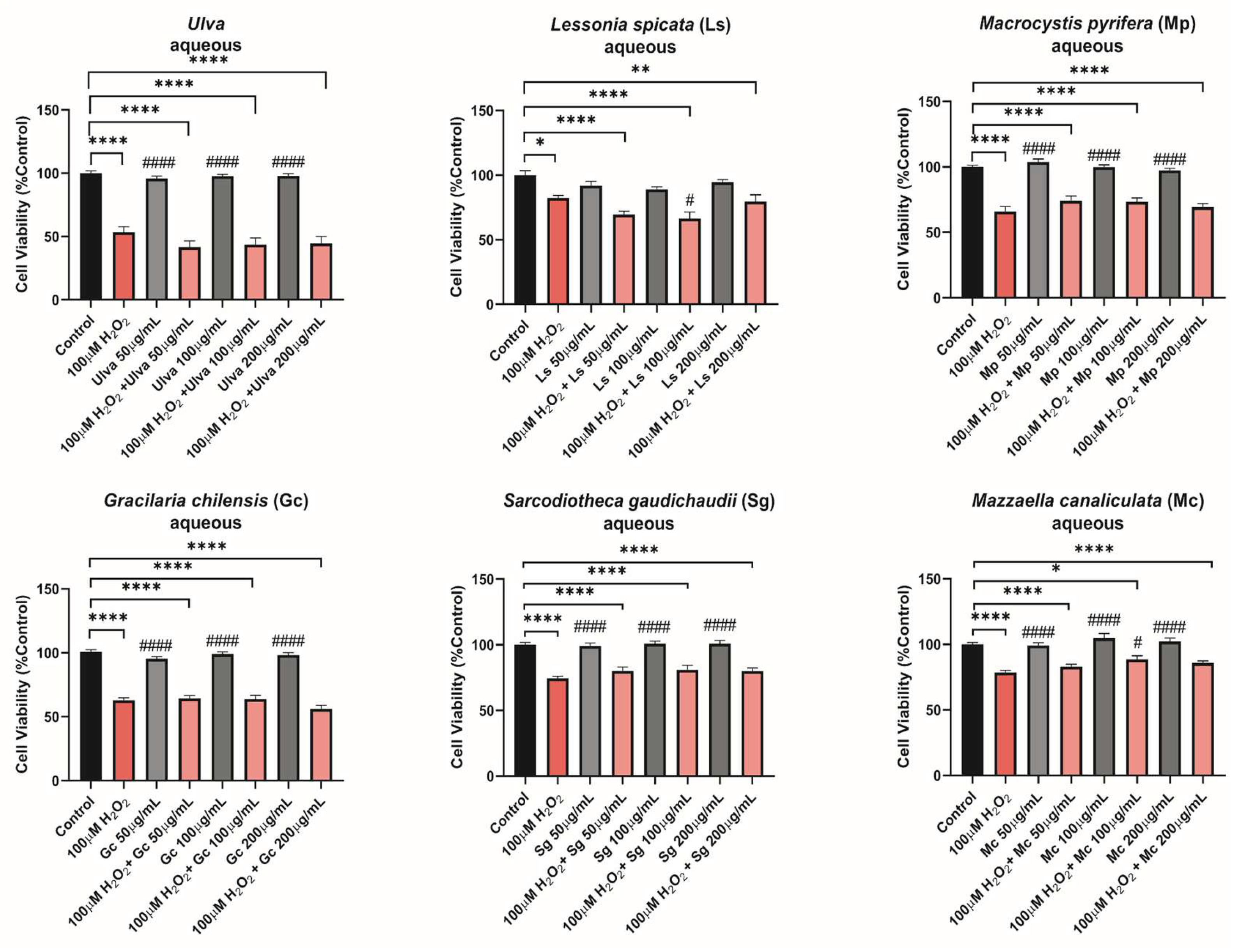
Figure 2.
Effects of ethanolic algae extracts on the viability of GES-1 cells exposed to hydrogen peroxide. Cell viability was assessed using the MTS assay in GES-1 cells. GES-1 cells were treated with different concentrations (50, 100, and 200 μg/mL) for 24 h of ethanolic extracts of algae, such as Ulva, Lessonia spicata, Macrocystis pyrifera, Gracilaria chilensis, Sarcodiotheca gaudichaudii, and Mazzaella canaliculata, and exposed to 100 μM of hydrogen peroxide. Cell viability was expressed as a percentage of cell viability relative to the control. Data are expressed as mean ± S.E.M., N=3. #P<0,05 vs. H2O2, ##P<0,01 vs. H2O2, ####P< 0,0001 vs. H2O2, *P<0.05 vs Control, ***P<0,003 vs Control, ****P<0,0001 vs Control.
Figure 2.
Effects of ethanolic algae extracts on the viability of GES-1 cells exposed to hydrogen peroxide. Cell viability was assessed using the MTS assay in GES-1 cells. GES-1 cells were treated with different concentrations (50, 100, and 200 μg/mL) for 24 h of ethanolic extracts of algae, such as Ulva, Lessonia spicata, Macrocystis pyrifera, Gracilaria chilensis, Sarcodiotheca gaudichaudii, and Mazzaella canaliculata, and exposed to 100 μM of hydrogen peroxide. Cell viability was expressed as a percentage of cell viability relative to the control. Data are expressed as mean ± S.E.M., N=3. #P<0,05 vs. H2O2, ##P<0,01 vs. H2O2, ####P< 0,0001 vs. H2O2, *P<0.05 vs Control, ***P<0,003 vs Control, ****P<0,0001 vs Control.
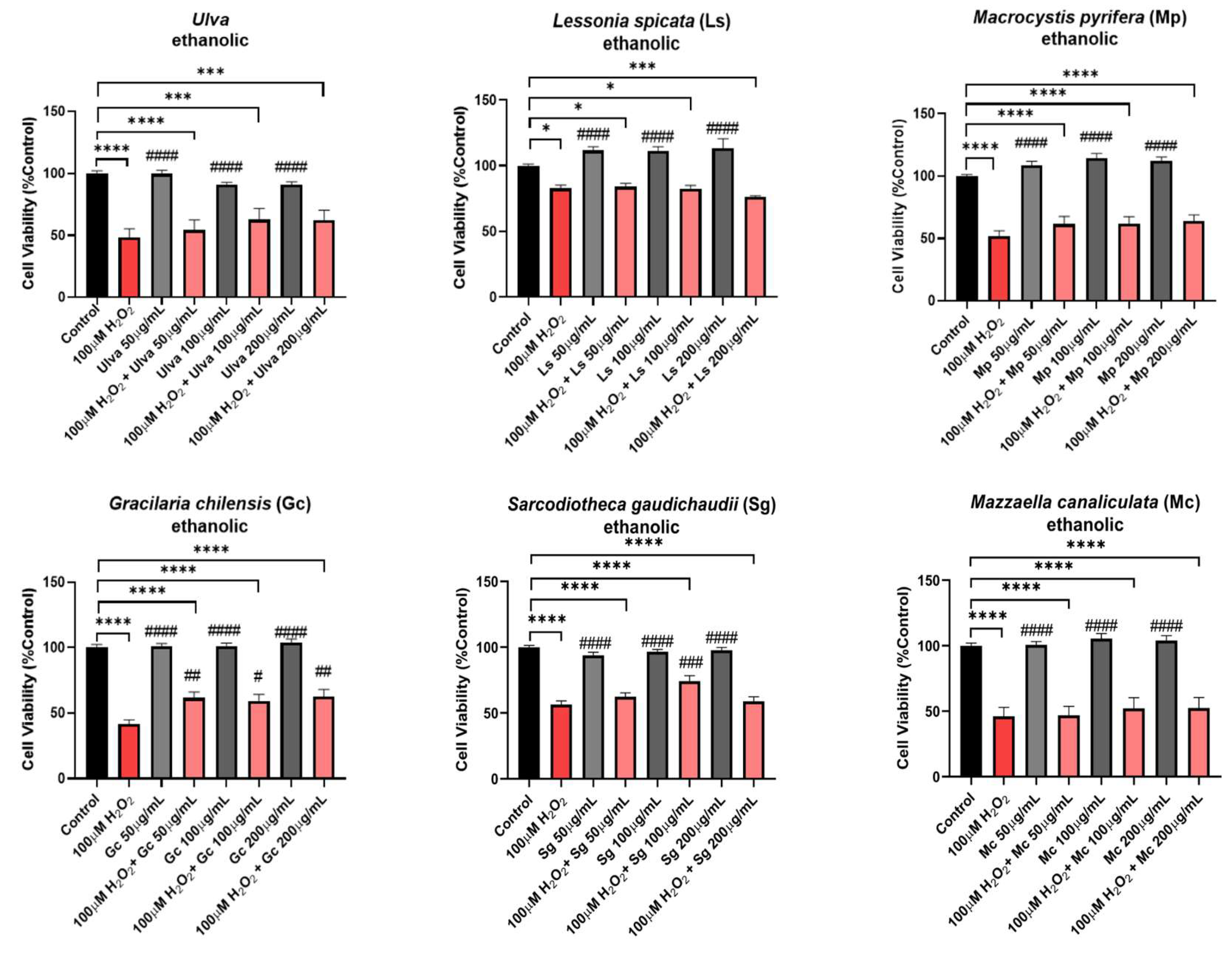
Figure 3.
Gracilaria chilensis ethanolic extracts decrease intracellular ROS levels in GES-1 exposed to hydrogen peroxide. A) The GES-1 cells were pretreated with 200 μg/mL G. chilensis ethanol extracts for 24 h and exposed to 100 μM of hydrogen peroxide for 3 h. The ROS levels were visualized using the DCFH-DA fluorescent probe, and images were acquired by confocal microscopy. Scale Bar: 20μm. B) The ROS levels were calculated by the integrated intensity of green fluorescence. The fluorescence intensity was expressed as the average integrated intensity per minute for each measurement (7 Minutes). C) The integrated intensity was expressed as a percentage relative to the control, with n = 20-40 cells per treatment. Data are expressed as mean ± S.E.M., N=20-40 cells. ####P< 0,0001 vs. H2O2, ****P<0,0001 vs Control.
Figure 3.
Gracilaria chilensis ethanolic extracts decrease intracellular ROS levels in GES-1 exposed to hydrogen peroxide. A) The GES-1 cells were pretreated with 200 μg/mL G. chilensis ethanol extracts for 24 h and exposed to 100 μM of hydrogen peroxide for 3 h. The ROS levels were visualized using the DCFH-DA fluorescent probe, and images were acquired by confocal microscopy. Scale Bar: 20μm. B) The ROS levels were calculated by the integrated intensity of green fluorescence. The fluorescence intensity was expressed as the average integrated intensity per minute for each measurement (7 Minutes). C) The integrated intensity was expressed as a percentage relative to the control, with n = 20-40 cells per treatment. Data are expressed as mean ± S.E.M., N=20-40 cells. ####P< 0,0001 vs. H2O2, ****P<0,0001 vs Control.
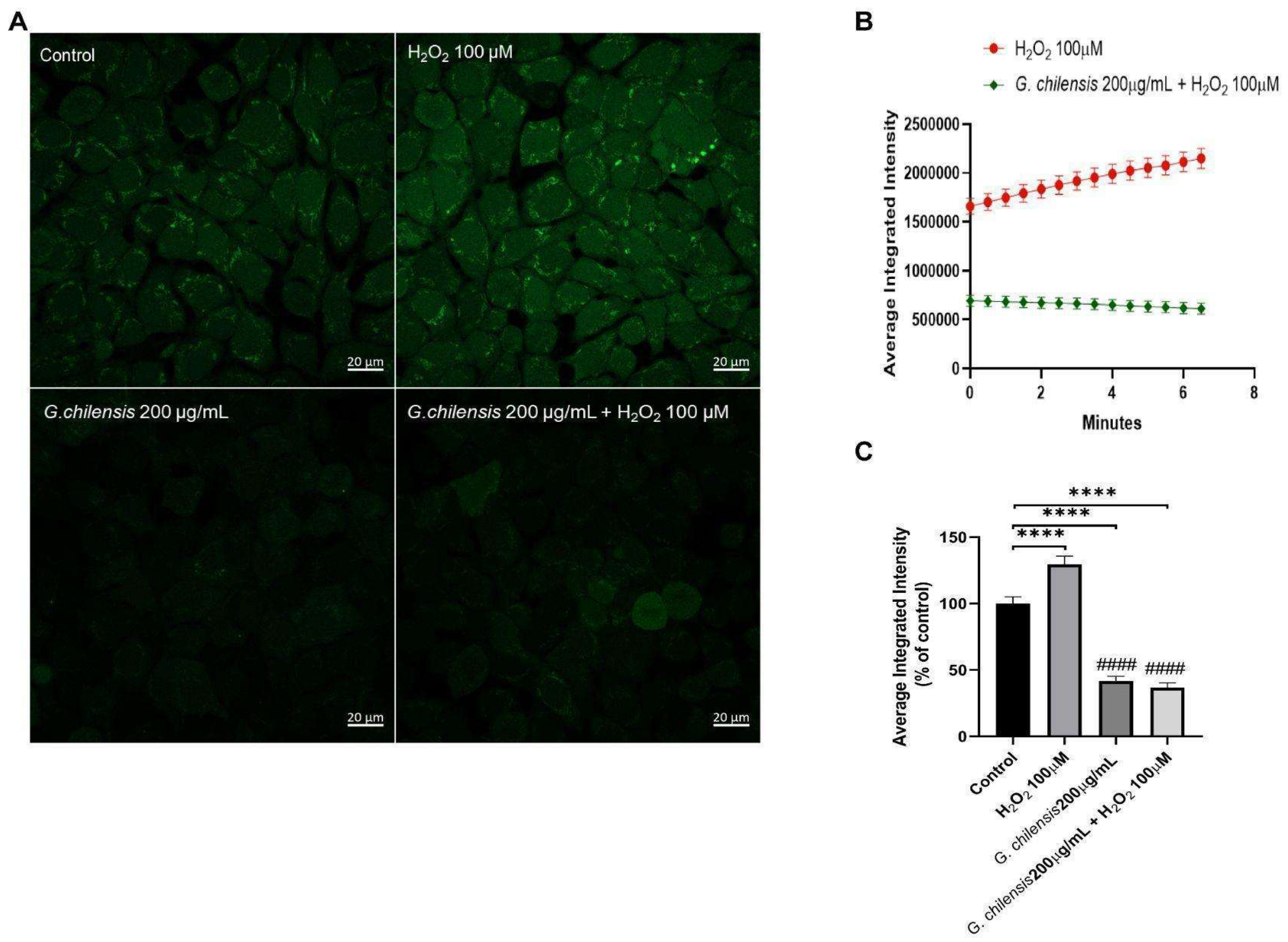
Figure 4.
Gracilaria chilensis ethanolic extract protects against apoptosis in GES-1 cells exposed to hydrogen peroxide. A) Control cells without algae extracts; B) Cells treated with 60 μM Cisplatin for 16h (positive control); C) Cells treated with 100 μM hydrogen peroxide for 3 h; D) Cells treated with 200 μg/mL G. chilensis for 24 h; E) Cells treated with 200 μg/mL G. chilensis for 24 h and exposed for 3 h to 100 μM hydrogen peroxide. The cells were fixed and immunolabeled with anti-caspase 3 (Green) and DAPI (Blue). Images were viewed by confocal microscopy. Scale bar: 20 μm.
Figure 4.
Gracilaria chilensis ethanolic extract protects against apoptosis in GES-1 cells exposed to hydrogen peroxide. A) Control cells without algae extracts; B) Cells treated with 60 μM Cisplatin for 16h (positive control); C) Cells treated with 100 μM hydrogen peroxide for 3 h; D) Cells treated with 200 μg/mL G. chilensis for 24 h; E) Cells treated with 200 μg/mL G. chilensis for 24 h and exposed for 3 h to 100 μM hydrogen peroxide. The cells were fixed and immunolabeled with anti-caspase 3 (Green) and DAPI (Blue). Images were viewed by confocal microscopy. Scale bar: 20 μm.
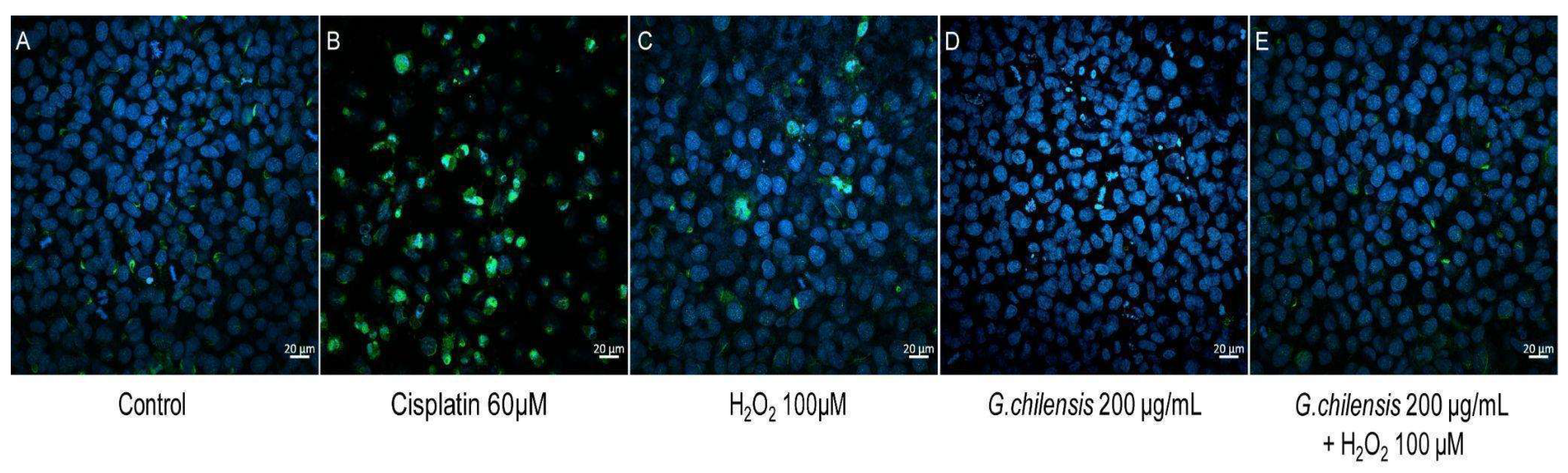

Table 1.
Macroalgae species, site, and date of collection.
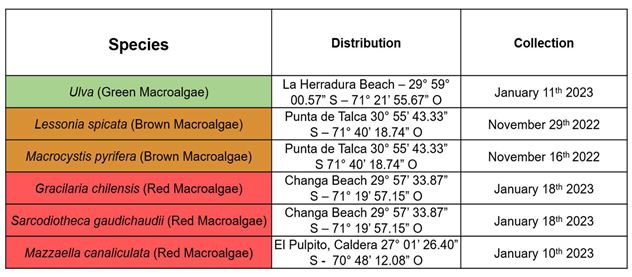 |
Table 2.
Antioxidant capacity of macroalgae measured by FRAP, ABTS, and DPPH methods.
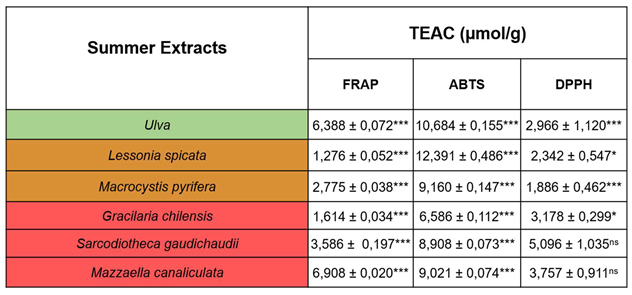 |
Mean SD, N=3. *P<0.05 DPPH Method vs. FRAP Method, ***P<0,001 FRAP Method vs. ABTS Method, ***P<0,001 ABTS Method vs. DPPH Method, and ns, not significant DPPH Method vs. FRAP Method.
Table 3.
Antioxidant activity of aqueous and ethanolic macroalgae extracts by DPPH assay.
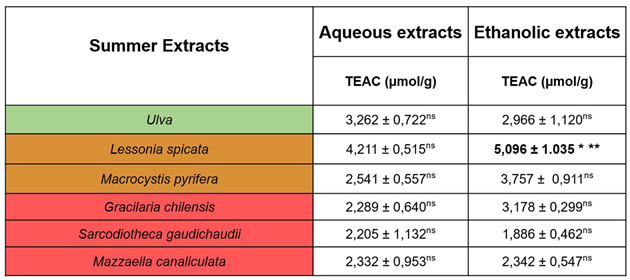 |
Mean SD, N=3. *P<0.05 L. spicata EtOH vs. M. pyrifera AQ,**P<0,01 L. spicata EtOH vs. M. canaliculata AQ, **P<0,01 L. spicata EtOH vs. S. gaudichaudii, and **P<0,01 L. spicata EtOH vs. G. chilensis AQ. ns, not significant.
Table 4.
Phenol levels in aqueous and ethanolic macroalga extracts.
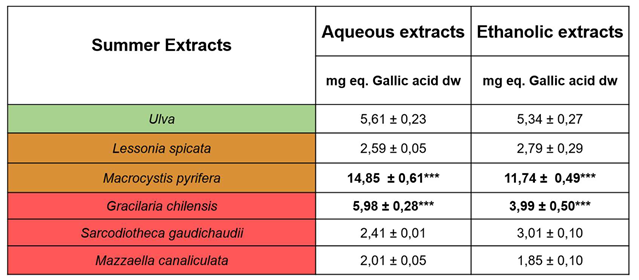 |
Mean SD, N=3. ***P<0,001 M. pyrifera AQ vs M. pyrifera EtOH, ***P<0,001 M. pyrifera AQ and EtOH vs. All other Extracts AQ and EtOH, ***P<0,001 G. chilensis AQ vs. G. chilensis EtOH, and ***P<0,001 G. chilensis AQ and EtOH vs. All other Extracts AQ and EtOH.
Table 5.
Flavonoid levels in aqueous and ethanolic macroalgae extracts.
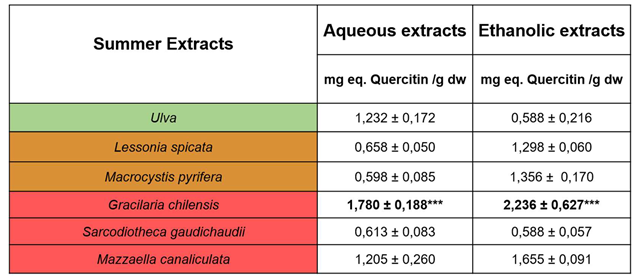 |
Mean SD, N=3.***P<0,001 G. chilensis AQ vs. All other Extracts AQ, and **P<0,001 G. chilensis EtOH vs. All other Extracts EtOH.
Table 6.
Summary of GES-1 cell viability following exposure to aqueous or ethanolic macroalgae extract for 24h.
Table 6.
Summary of GES-1 cell viability following exposure to aqueous or ethanolic macroalgae extract for 24h.
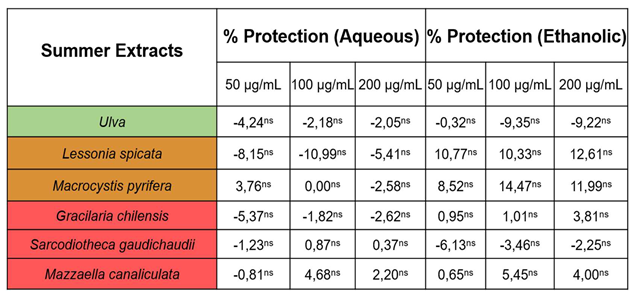 |
Mean ± S.E.M, N=3. ns, not significant.
Table 7.
Summary of GES-1 cell viability following 24 h preincubation of aqueous or ethanolic macroalgae extract and exposure to 100 μM hydrogen peroxide.
Table 7.
Summary of GES-1 cell viability following 24 h preincubation of aqueous or ethanolic macroalgae extract and exposure to 100 μM hydrogen peroxide.
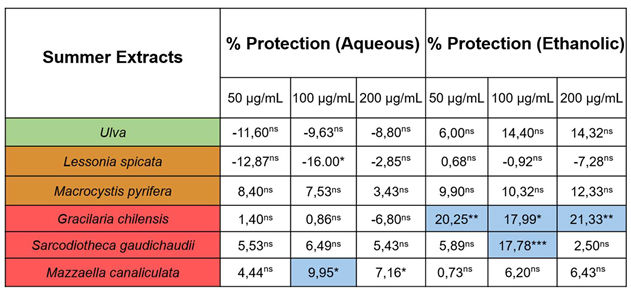 |
Mean ± S.E.M, N=3. *P<0.05 H2O2 vs. Extract + H2O2, **P<0,01 H2O2 vs. Extract + H2O2, ***P<0,003 H2O2 vs. Extract + H2O2, ns, not significant.
Disclaimer/Publisher’s Note: The statements, opinions and data contained in all publications are solely those of the individual author(s) and contributor(s) and not of MDPI and/or the editor(s). MDPI and/or the editor(s) disclaim responsibility for any injury to people or property resulting from any ideas, methods, instructions or products referred to in the content. |
© 2026 by the authors. Licensee MDPI, Basel, Switzerland. This article is an open access article distributed under the terms and conditions of the Creative Commons Attribution (CC BY) license.
Copyright: This open access article is published under a Creative Commons CC BY 4.0 license, which permit the free download, distribution, and reuse, provided that the author and preprint are cited in any reuse.


